“When he was in eighth grade, Steve Jobs decided to build a frequency counter for a school project and needed parts. Someone suggested that he call Bill Hewlett. Finding a William Hewlett in the telephone book, the 12-year-old Jobs called and asked, “Is this the Bill Hewlett of Hewlett-Packard?” “Yes,” said Bill. Jobs made his request. Bill spent some time talking to him about his project. Several days later, Jobs went to HP and picked up a bag full of parts that Bill had put together for him.”
More HP stories: http://www.hp.com/retiree/history/founders/hewlett/quotes.html
Our book: “SolderSmoke — Global Adventures in Wireless Electronics”http://soldersmoke.com/book.htmOur coffee mugs, T-Shirts, bumper stickers: http://www.cafepress.com/SolderSmokeOur Book Store: http://astore.amazon.com/contracross-20
Category: radio history
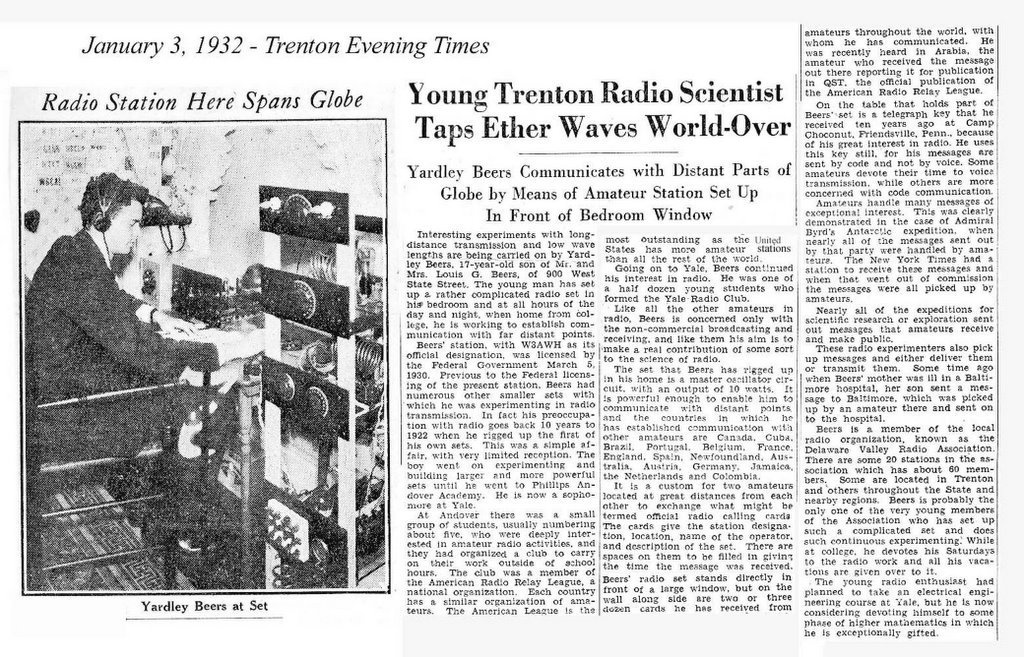
Better Link to 1932 Yardley Beers Article
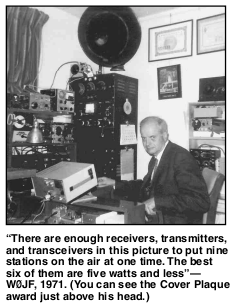 (From the November 2004 issue of QST)
I hear that picture I posted of the 1932 newspaper article was pretty much illegible. Sorry about that. Try this one from the Delaware Valley Radio Association. Scroll down a bit until you see OM Yardley in his front bedroom shack (the one with a window on the world!). On my Firefox browser I was able to click on it and get an easily read-able view.
https://www.homebrewradio.us/blog/wp-content/uploads/2011/10/Yardley20Beer20DVRA1.jpg
Thanks DVRA!
BTW: Did you catch the name of the fellow who taught young Yardley the Morse Code? Atherton Noyes. Such good strong names!
Our book: “SolderSmoke — Global Adventures in Wireless Electronics”http://soldersmoke.com/book.htmOur coffee mugs, T-Shirts, bumper stickers: http://www.cafepress.com/SolderSmokeOur Book Store: http://astore.amazon.com/contracross-20
More on Yardley Beers
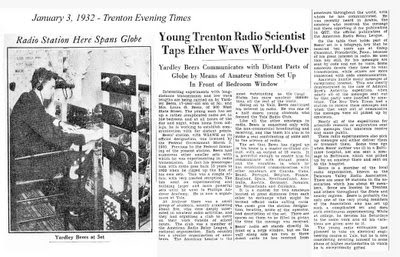 Just click on the article and use the zoom feature of your browser to visit the teenage shack of Yardley Beers.
Our book: “SolderSmoke — Global Adventures in Wireless Electronics”http://soldersmoke.com/book.htmOur coffee mugs, T-Shirts, bumper stickers: http://www.cafepress.com/SolderSmokeOur Book Store: http://astore.amazon.com/contracross-20
Homebrew Hero: Yardley Beers
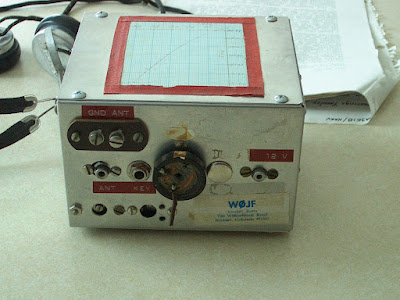
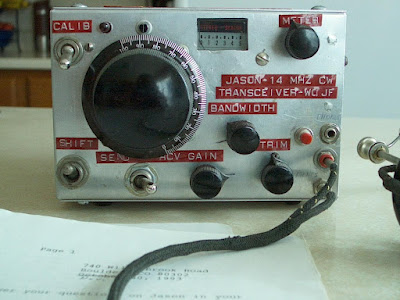 How’s that for a beautiful homebrew rig! Prompted by our discussion of distinctive ham radio names, Harv, WA3EIB, sent us a very nice report on Yardley Beers, W0JF. The rig pictured is Yardley’s “Jason” 20 meter QRP transceiver. Yardley had named the rig for his cousin. Harv met Yardley at a Colorado hamfest in 1993:
“On the table in front of Yardley was an Aluminum Box fashioned into a QRP radio named, “Jason”, 2 broken and worn head phones from the 1920’s, a few 1980’s QST and, several odd radio parts. My bulb of brilliance was not working that day. I said, “I don’t know what I’m looking for!” Somehow Yardley must have studied my eyes. I had locked my vision onto his very elaborate QRP rig. He paused for a few moments and said, “You into QRP?” By this time I felt more relaxed because he was now on my wavelength. I said, “Why yes, I would rather work with a homebrew radio that the ones with features that no one seems to know what they do!”
Harv bought the Jason (and everything else on Yardley’s table) and established a lasting friendship with W0JF.
There is a nice article about OM Yardley’s life in the November 2004 issue of QST.
 Our book: “SolderSmoke — Global Adventures in Wireless Electronics”http://soldersmoke.com/book.htmOur coffee mugs, T-Shirts, bumper stickers: http://www.cafepress.com/SolderSmokeOur Book Store: http://astore.amazon.com/contracross-20
Party Like its 1957! (with the Sputniks on 21.060 MHz)
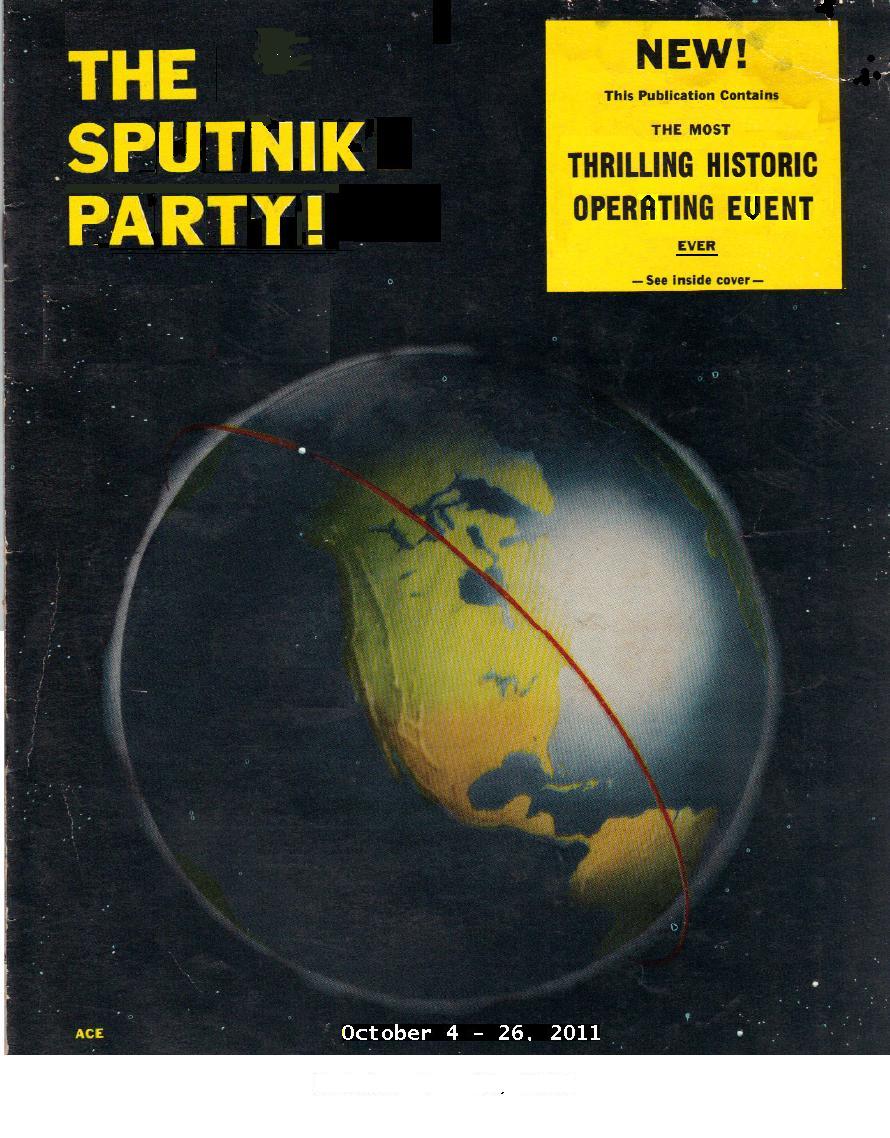 Steve “Snort Rosin” Smith sent me this very creative reminder that the Sputnik Replica On-The-Air event is scheduled to continue for the same length of time that the original transmitter was on the air. That means we have until October 26 to work or to listen to these magnificent replica rigs. (Hey, maybe I’ll get my HW-7 into the action!) See you on 21.060 MHz Comrades! 73 and DSW!
Our book: “SolderSmoke — Global Adventures in Wireless Electronics”http://soldersmoke.com/book.htmOur coffee mugs, T-Shirts, bumper stickers: http://www.cafepress.com/SolderSmokeOur Book Store: http://astore.amazon.com/contracross-20
“Spine Tingling” Sputnik Recordings From 1957
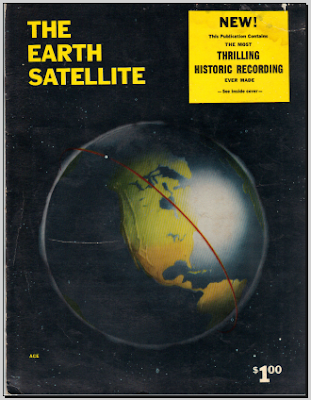 Doug, W8NFT, sent me this booklet and copies of the recordings that came with it. Below you will find links to the booklet itself and the two mp3 files. Note that the signals were captured using an HRO receiver. Side A is a “re-creation” of the launch (“spine tingling in its realism!!!!”) Side B is an actual recording of the sat’s iconic beeping.
http://soldersmoke.com/Sputnik Booklet.PDF
http://soldersmoke.com/Sputnik Side A.mp3
http://soldersmoke.com/Sputnik Side B.mp3
Our book: “SolderSmoke — Global Adventures in Wireless Electronics”http://soldersmoke.com/book.htmOur coffee mugs, T-Shirts, bumper stickers: http://www.cafepress.com/SolderSmokeOur Book Store: http://astore.amazon.com/contracross-20
ALL the Bell System Tech Journals — FREE!
Thanks to Dave, N8SBE, for alerting us to yet another tech treasure trove:
http://www.alcatel-lucent.com/bstj/
Our book: “SolderSmoke — Global Adventures in Wireless Electronics”http://soldersmoke.com/book.htmOur coffee mugs, T-Shirts, bumper stickers: http://www.cafepress.com/SolderSmokeOur Book Store: http://astore.amazon.com/contracross-20
Getting Ready to Listen for Sputniks
 October 4 is approaching and I DO NOT have a homebrew Sputnik transmitter in the works. I hang my head in shame. AA1TJ sent me the parts, but they went to one of my many APO or FPO addresses, so I suspect they are orbiting around the Azores, or London, or Lisbon, or Rome. I’m sure they will reach me eventually.
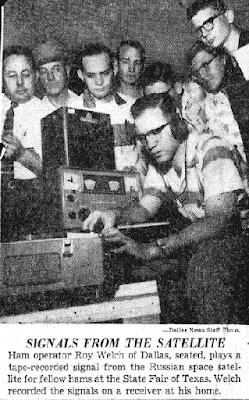
But I have come up with a way to participate in this historic event even without a homebrew replica transmitter: I will be listening for the Sputnik transmitters, and I will be doing so with a receiver of that era, a receiver that could have been used by some earnest teenager eagerly tuning for the beeps of the overhead RED MENACE. Like the intrepid young man in the picture. What a great shot! Wow, that’s Roy Welch W0SL, then W5SLL! When I got into satellites in the Dominican Republic in 1994, the first tracking program that we used was Orbits II… by Roy Welch. We loved that software. From the AMSAT page: “Roy and his two-year-old daughter would put the radio speaker in a window and then go outside and listen to the strong signals while they watched the third stage booster tumbling end over end like a bright pulsating star as it passed over in the evening sky.“
I will be using a Hammarlund. Moore’s “Communication Receivers” says my HQ-100 was made between 1956 and 1960. PERFECT! (Mine was probably in the Dominican Republic on October 4, 1957.)
By the way, I got into the old Electric Radio magazines again, reading some more of Lew McCoy’s wonderful reminiscences. He reports that during the Sputnik period he — and apparently others — were asked by their Uncle Sam to use their skills to monitor Soviet space activities.
Let the beeping begin! (Sputnik signals recorded by Roy Welch:
http://www.amsat.org/amsat/features/sounds/Sputnk1b-144.ra)
Our book: “SolderSmoke — Global Adventures in Wireless Electronics”http://soldersmoke.com/book.htmOur coffee mugs, T-Shirts, bumper stickers: http://www.cafepress.com/SolderSmokeOur Book Store: http://astore.amazon.com/contracross-20
Homebrew Hero: John Rollins, W1FPZ
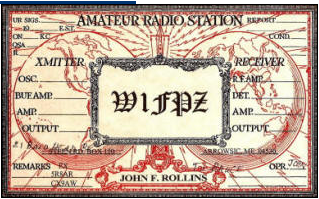 Ted, AJ8T, alerted me to the life and work of John Rollins, W1FPZ. As you can see from the text below, John was definitely part of the International Brotherhood of Electronic Wizards. I especially like the bit about his taking license exams in foreign languages, and about winding his own transformers in Madagascar. Great stuff. The videos about John and his workshop are really encouraging and inspirational. I laughed out loud when I heard John admit that he was surprised when one of his rigs worked the first time he fired it up. He said that he usually had to spend 3-4 months struggling to get his creations to work! Be sure to listen to the story about how John caught a Navy helicopter with his Vee beam. Thanks Ted, and thanks to Bruce, W1UJR, who took the time to make these wonderful videos.
Here are videos:
From John’s QRZ listing. This was written by Tim, W1GIG. (Thanks Tim!):
John passed away on March 18, 2008. It was 11 years ago that Bruce Kelly asked John to take over the Amateur Radio column in the OTB as Bruce himself was winding down. John was a man of many talents and had a most interesting life. Because he was always so busy helping others, he rarely took time to talk about himself, so I am going to take this opportunity to tell you a bit more about him.John was born in Guatemala of American parents where his father worked for United Fruit Company (think bananas). At an early age, his father died of malaria and his mother moved the family back to New England. He also lived with an Aunt and later with his much older brother, an airline pilot, who lived on Long Island. As a teenager John discovered radio and his brother bought him a $5.00 two tube regenerative radio kit to build. John built the kit, but it was another 6 months before he got another kit for the power supply. With the help of a ham who lived nearby, he got the radio working which opened up a whole new world for him. John was in High School when his brother went with him into NYC to test for a ham license at the FCC Field Office. For the next couple of years he was active on 40 M. CW using the regen receiver and a Hartley oscillator.
At this point, WW II got in the way. John enlisted in the Army and was trained in radio repair, shipped off to New Guinea, and assigned to be a telephone lineman. The Army moved John steadily North to the Philippines and then to Japan where he was finally sent back to the States for discharge. John enrolled at the University of New Hampshire where he discovered his love of geology. He liked it so much he went on to get a Masters at the University of Nebraska and several years later, a Doctorate also from the University of Nebraska. He continued to work for Chevron exploring for oil in Africa, Madagascar, Spain, Denmark and many other countries including the US.
While he was in college, John remembered his love of radio, but unfortunately his ham license had expired, so he went back in 1954 to test again receiving the call W1FPZ which he held ever since. Later, he tested for his ham license in Madagascar (in French) and in Uruguay (in Spanish). Not many of us have tested for our licenses in three languages! While he was in Madagascar he built many of the transmitters that are still in use at his home. He even wound his own power and filament transformers to get the voltages he wanted.
John also discovered that he was an excellent pistol marksman, but that his results could be substantially improved by reworking the guns themselves, so he taught himself to be a gunsmith. His skills at woodworking, carving, machining, precision casting of bullets and loading target shells were such that this became a major hobby business for him which he pursued right up to recent months.
John was a survivor. While in the Army he survived a major brush with a 3,300 volt power line and later a plane crash while in Africa. Since small planes were the only way for John to get to his job sites, he decided that he’d rather trust his own skills as a pilot than rely on the brush pilots that the oil company had hired. Back in the States, recuperating from his injuries, he got a private pilot’s license, then went on to a multi-engine commercial license with full instrument ratings. Just before he retired, he was working out of Denver and flying his own twin engine Queen Air to Maine to work on his retirement home. He even flew from Maine to the AWA conference one year picking up Marshall Etter, W2ER from Long Island on the way.
Preparing for retirement, John and his wife Liz doubled the size of their new home in Maine. As part of the project, John wanted reliable ham communications with his friends around the world. Limited by normal power regulations, he decided to build a BIG antenna. His final choice was a horizontal V beam aimed at the Southeast. The beam legs were 1,100 feet long and supported on three 100 foot towers. Looking for wire strong enough to span the distance he ran across an ad for #6 phosphor bronze wire run by Marshall, W2ER who had salvaged the wire when he was closing the RCA site at Rocky Point. The two men became fast friends and co-conspirators. Marshall provided quality parts left over from RCA and John, using his metal and woodworking skills, customized the parts to suit his projects. The result was a long series of radio projects that he gave to friends with the caveat that they were required to use them on the air in AWA events.
John always had a fascination with the products of Jerry Gross of NYC. He built a Gross replica transmitter for Marshall who used it for many years. Parker Heinemann, W1YG found an original Gross and had John restore it along with the receiver, station monitor and antenna tuner. They set up an entry in the 1991 AWA contest that exactly duplicated a Gross add from the 30’s and took first place. After the conference, John got a call from Bill Orr who offered John his Gross if John would restore it. That transmitter is part of John’s home station.
Not satisfied with the Hartley oscillator, John discovered that if he used the Colpitts circuit with a split stator condenser and grounded rotor, he could eliminate the hand capacity effect. One of his last projects was to set up the tuned circuit for me and share several of his other construction secrets. The circuit is rock stable on 40 meters.
Thanks for the opportunity to fill you in on some of the less well known aspects of John’s life. It was an honor to know him and he will be missed by all.
Our book: “SolderSmoke — Global Adventures in Wireless Electronics”http://soldersmoke.com/book.htmOur coffee mugs, T-Shirts, bumper stickers: http://www.cafepress.com/SolderSmokeOur Book Store: http://astore.amazon.com/contracross-20
9 Volt Superhet with Russian Sputnik Tubes
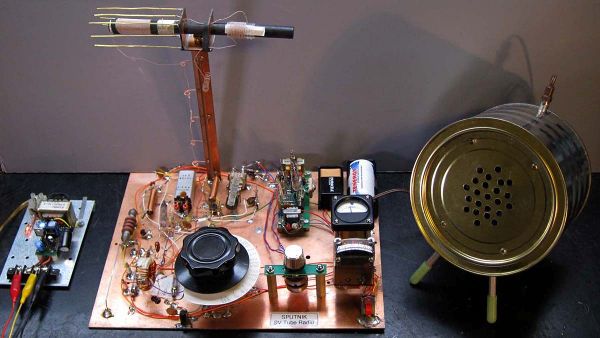 Wow! Now that’s what I call a Manhattan breadboard! Joe Sousa has an excellent article on a broadcast band superhet that he built with Russian rod-type tubes, the same kind of tubes that flew in Sputnik.
http://www.radiomuseum.org/forum/sputnik_9v_superheterodyne_tube_radio.html
Lots of other great homebrew projects on this site also. Thanks to Bob, WA1EDJ, for alerting us to this.
Joe’s research may be of use to those radio fiends among us who are feverishly building their Sputnik transmitters. October 4 is almost upon us! Onward Fellow Travelers!
Our book: “SolderSmoke — Global Adventures in Wireless Electronics”http://soldersmoke.com/book.htmOur coffee mugs, T-Shirts, bumper stickers: http://www.cafepress.com/SolderSmokeOur Book Store: http://astore.amazon.com/contracross-20
Bud Waite, W2ZK, Antarctic Ham Hero
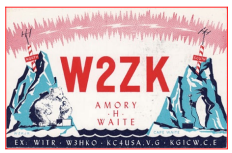 I really blew it in SS137, and in the original version of yesterday’s blog post. I can’t believe I actually reported that McMurdo Base was named for McMurdo Silver! This is like some weird self-inflicted payback for all my April 1 hoaxes. Sorry guys. McMurdo base is unfortunately not named for McMurdo Silver.
OM Armand, WA1UQO, came to my rescue! He provides a wonderful story (a TRUE story) about a ham who actually did have some Antarctic terrain features named for him. And deservedly so. Be sure to read the story of W2ZK in the links below.
By the way, we see here two additional examples of strong, distinctive names in the radio world: Armand Hamel and Amory H. Waite. Thanks to Steve “Snort Rosin” Smith for reminding me of another one: Philo T. Farnsworth. (Billy and I have long had plans for a kids novel built around a character named Excelsior G. Whiz — the G stand for GADZOOKS!)
Hi Bill!
Listened to Soldersmoke #137 Sunday evening and was intrigued by the McMurdo Silver piece. It immediately brought to mind another Ham that was associated with Antarctica and had a Point of land and four islands named in his honor. His name was Amory “Bud” Waite (W2ZK). There was a nice write up about him in the November 2009 QST Vintage Radio Column by K2TQN. There is also a wealth of information about him on the Antarctican Organization website. I have a fond spot for Bud even though I never met him. As a novice in 1975 I responded to an advertisement in QST for a used Heathkit TX-1. My first transmitter! Bud was selling it as a favor for the widow of a SK. Had a really nice conversation with him one evening and he mentioned that he had once been on an expedition with Admiral Byrd! WOW! Little did I realize then that he had been one of the three men that had rescued Byrd from a forward camp. The story is amazing and can be found on these links. The first link is a video of a presentation that he gave to a New Jersey radio club in 1974. It’s a little long but well worth the effort. You can see what McMurdo Sound looked like when he revisited it during the IGY (knew you would love that!). Anyway thought you would like to read about someone who really had the Knack. If you are looking for nominees for the Soldersmoke Ham Heros Hall Of Fame, I nominate Bud Waite ( and Doug DeMaw and Wes Hayward and Jean Shepherd). By the way, I still have the Heathkit Apache and hope to get it back on the air. As always keep the solder flowing and smoking and the podcasts comming.
73’s
Armand (WA1UQO)
………………………………..
Our book: “SolderSmoke — Global Adventures in Wireless Electronics”http://soldersmoke.com/book.htmOur coffee mugs, T-Shirts, bumper stickers: http://www.cafepress.com/SolderSmokeOur Book Store: http://astore.amazon.com/contracross-20
McMurdo Silver — A Man with The Knack
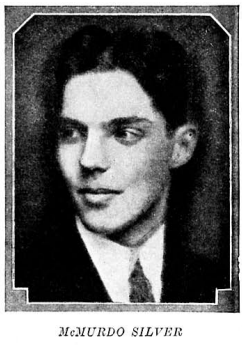 In the latest podcast I talked about McMurdo Silver. I noted that many radio pioneers (and many modern-day radio wizards) have very strong and distinctive names. This guy’s name is clearly in that category. Here is a 1929 bio on OM McMurdo:
http://durenberger.com/resources/documents/MCMURDOSILVER0629.pdf
And here is some additional info. From http://hhscott.com/e_h_scott_2.htm:
E.H. Scott had several competitors. The most significant among them was a dashing young genius named McMurdo Silver. Silver was a continuous contributor to technical articles to Radio News magazine (the predecessor of Popular Electronics) throughout the 1930’s. He was a polo player, gun collector, and is said to have been quite a bon vivant. Formerly the president of Silver-Marshall, Inc., he set up the McMurdo Silver Corp. and began building custom high-fidelity receivers in competition with Scott.
While good, his receivers were never quite the equal of Scott’s. One of Silver’s most famous owners was Dr. Lee DeForest, inventor of the vacuum tube. DeForest owned a Silver Masterpiece V and praised it in the final chapters of his autobiography. Throughout the 1930s, Scott’s and Silver’s advertisements would do battle trying to “one up” the other’s in technical achievement. Features were stolen and lawsuits initiated. Finally, Scott won the battle and bought out the failing Silver in 1940. Scott then introduced a new, bottom-of-the-line receiver and designated it as the Scott Masterpiece. I do not know if the gesture was meant as a tribute to his archenemy or to rub salt in the wounds. Silver eventually committed suicide in 1947.
Our book: “SolderSmoke — Global Adventures in Wireless Electronics”http://soldersmoke.com/book.htmOur coffee mugs, T-Shirts, bumper stickers: http://www.cafepress.com/SolderSmokeOur Book Store: http://astore.amazon.com/contracross-20
SolderSmoke Podcast #137
http://soldersmoke.com/soldersmoke137.mp3
10 September 2011
Earthquake! Hurricane! Tropical Storm!
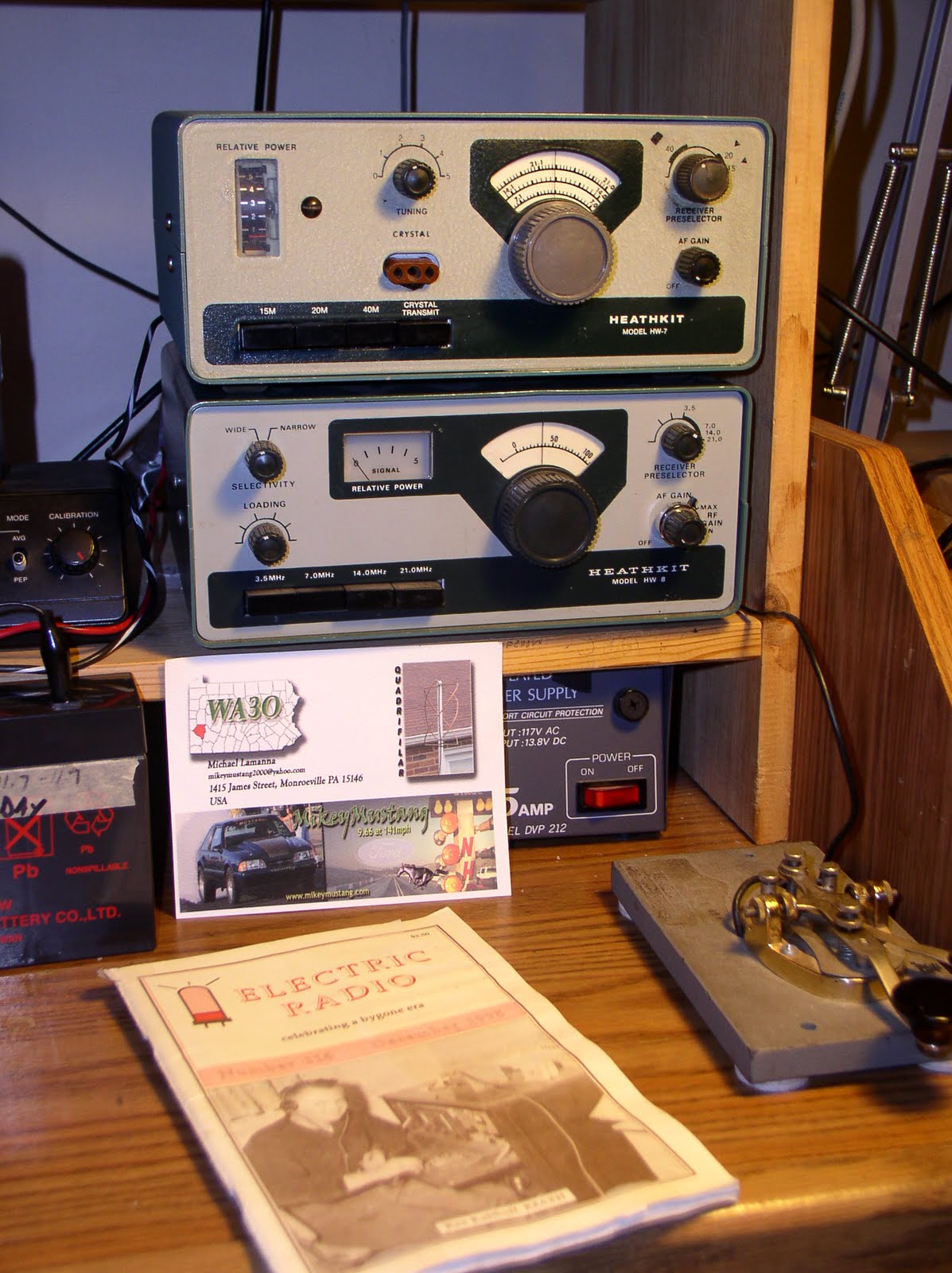
The Heathkit HW-7 — An Undeserved Bad Reputation
Over-the-counter saltpeter
Movie review: Green Hornet, Captain America
How many 2-Bs? (11,571)
Ubuntifying dead laptops
Get the SolderSmoke blog by e-mail
Replacing a diode ring mixer with a diode…
…then trying the NT7S MOSFET detector
Where is boatanchor wizard Walt Hutchins KJ4JV ?
GREAT NAMES IN RADIO: MCMURDO SILVER
Sputnik update
Lew McCoy wrote about one of my projects
MAILBAG (with mail from Farhan and Wes)
Our book: “SolderSmoke — Global Adventures in Wireless Electronics”http://soldersmoke.com/book.htmOur coffee mugs, T-Shirts, bumper stickers: http://www.cafepress.com/SolderSmokeOur Book Store: http://astore.amazon.com/contracross-20
The Oldest 2-B? (I say it’s a 10!)


…………………………..
Hi Bill,
What makes a radio a 10 out of 10?
Good question. A real 10 to me means the radio is flawless, clean, not repainted and the best example possible based upon age and general appearance.
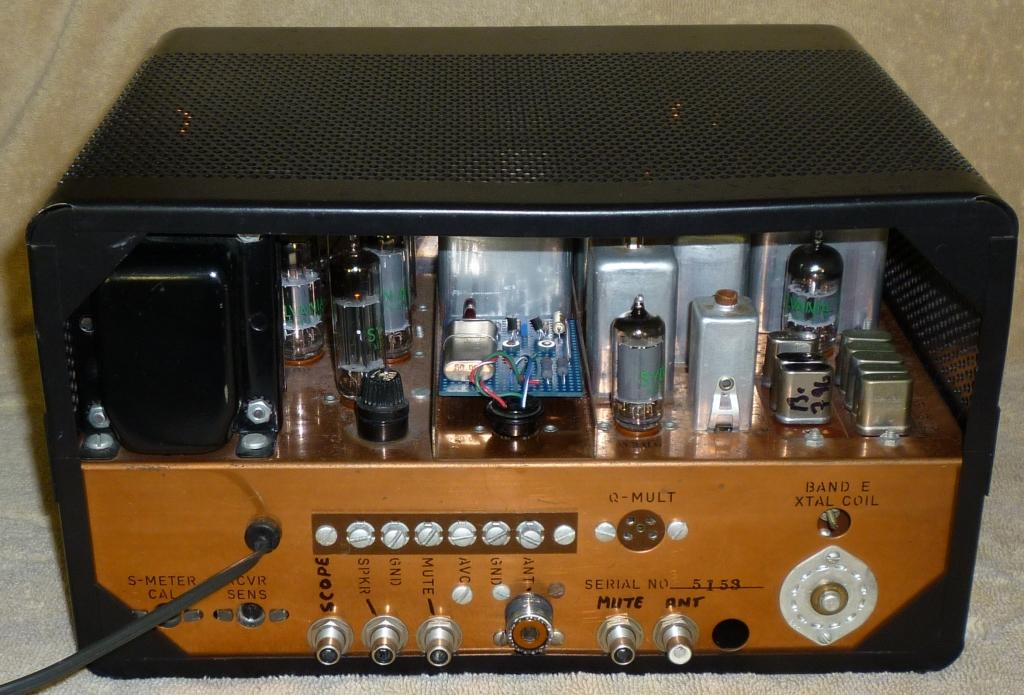
Here is one of my Drake 2B Communication Receivers with the matching Speaker/Q Multiplier.
This one has the S/N 2532 which, places the production of this radio close to early Spring 1961. The radio is not flawless. It has very minor metal edge dings in the paint.
I have the original Owners Manual and lots of special notes. At best my pictured radio above is a 9.5.
In my collection is also; S/N 4226 which was built near the end of 1961. I rate S/N 4226 as a 9.8 radio.
I’m impressed with the AVG recovery, general receiver sensitivity and the combination selectivity afforded by the Q-Multiplier.
I believe the Drake web site is spot on with the dating of the production runs for Drake equipment.
From talking to other Hams, it looks like the 2B started with S/N 2000 on their first full run of production in early April 1961.
It would be interesting to see if others find radios with a serial number less than mine still out there pulling duty.
I’m sure some pilot radios are out there in private collections. Let me know if someone finds an earlier serial number.
Keep up the great work Bill!!!
ENJOY
HARV -=WA3EIB=-
Albuquerque, NM.
——————————————————-
Our book: “SolderSmoke — Global Adventures in Wireless Electronics”http://soldersmoke.com/book.htmOur coffee mugs, T-Shirts, bumper stickers: http://www.cafepress.com/SolderSmokeOur Book Store: http://astore.amazon.com/contracross-20
Russia, Vermont, Sputnik, Old Parts
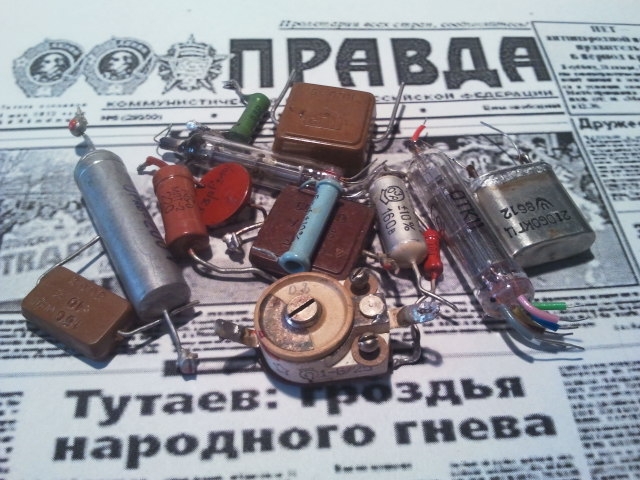 When I heard of the terrible floods in Vermont, I thought immediately of OM Michael, AA1TJ (aka Comrade Mikhail, the Chief Designer) and his underground hamshack. I heard this morning that Michael is high and dry, up at his mountain top lair (the TV transmitter). Here is an update on the Sputnik project:
Fellas,
This morning DL3PB was kind enough to bring Peter, DL3JIN’s recent work to my attention.
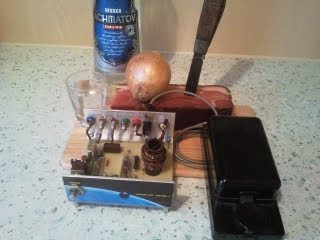
I think you will agree that Peter has made a beautiful job of it! He not only used Russian tubes (valves), he even had a 21.060MHz Russian-made quartz crystal on-hand. Many of the passive components appear to be ex-Soviet surplus as well. His front panel really shows great spirit. With 96Vdc on the PA anode he’s seeing an RF output power of 650mW.
It should be great fun come October 4!
73/72,
Mike, AA1TJ
Our book: “SolderSmoke — Global Adventures in Wireless Electronics”http://soldersmoke.com/book.htmOur coffee mugs, T-Shirts, bumper stickers: http://www.cafepress.com/SolderSmokeOur Book Store: http://astore.amazon.com/contracross-20
German Tanks and Drake 2-Bs: We Have the Number!
Hi Bill,
Finally getting back to you. I crunched the numbers… I saw a total of 23 serial numbers reported. The important thing is that these numbers be reported somewhat randomly with no biases etc. I think this is the case, and the fact we have 23 numbers is very very good in terms of the power of this experiment. The highest number reported was 12955. Let m = 12955. The number of reports was 23 so let k = 23. The equation to use (from wikipedia) is below…

Simply applying this equation we get an estimate highest serial number of 13517. So we can estimate that between 13000 and 14000 Drake 2Bs where made. I think I remember someone mentioning that the Drake 2B serial numbers did not start at zero. This is not really a problem. You just need to know at what number they did start, then subtract that number from 13517, and that would be the number of Drake 2Bs ever manufactured.
The lowest serial number reported to SolderSmoke was 2008, so you wouldn’t need to subtract more than that. You can think of this equation intuitively (a very SolderSmoke thing to do!). Imagine what happens when we have a single observation. k = 1, so our estimate is about 2 times what our highest observation is. This makes sense because you would guess your observation is most likely to be about half way between 0 and the true top number. If k = 2, then our estimate is about 1.5 times our highest observation. If k = 3, then our estimate is about 1.333 times our highest observation…. as we observe more numbers, we are more likely to have observed the top number so as k goes to infinity, our estimate moves towards our top observed number, which it should.
I hope my explanation made sense. Anyway I highly recommend SolderSmoke listeners who want to know more, to read the wikipedia page. Its quite well written and offers a lot for people who like hard formal explanations and an intuitive description. Keep up the good work!
I love the podcast – hopefully we may catch each other one day on the bands.
73 Scott (K6AUS)
Our book: “SolderSmoke — Global Adventures in Wireless Electronics”http://soldersmoke.com/book.htmOur coffee mugs, T-Shirts, bumper stickers: http://www.cafepress.com/SolderSmokeOur Book Store: http://astore.amazon.com/contracross-20
Fessenden’s Music from the Outer Banks
 George, KB3ODH, found this about 1/2 mile from the Cape Hatteras Lighthouse.
 Our book: “SolderSmoke — Global Adventures in Wireless Electronics”http://soldersmoke.com/book.htmOur coffee mugs, T-Shirts, bumper stickers: http://www.cafepress.com/SolderSmokeOur Book Store: http://astore.amazon.com/contracross-20
Royal Order of the Sputnik Clone Chasers
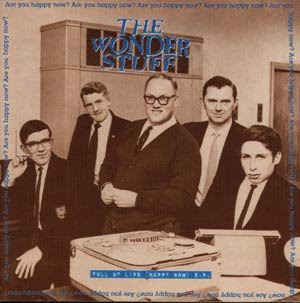 Kettering Group, UK
From the Chief Designer (AA1TJ):
Fellas,
I came across an online blurb for the recent book, Sputnik: The Shock of the Century, by Paul Dickson; a worthwhile read, judging from the introduction and first chapter.
http://www.sputnikbook.net/intro.php
“Someone brought out a shortwave radio, and soon a beeping noise filled the room. A Russian scientist, Anatoli Blagonravov, confirmed it was Sputnik. “That is the voice,” he said dramatically. “I recognize it.” John Townsend Jr., one of the scientists at the party, recalled watching Blagonravov: “I knew him quite well, and I could tell that he was a little surprised and quite proud. My reaction was ‘Damn!'”
And so an abstraction now had a voice. It also had a name – Sputnik.
Many of those at the party adjourned to the Soviet Embassy’s rooftop, attempting to view Sputnik with the naked eye. Several of the American scientists drifted over to the American IGY headquarters in Washington, where they began speculating on what impact the satellite would have. They feared that the American people would be disappointed.
It also dawned on them that they had better start tracking the satellite’s orbit. They got in touch with the American Radio Relay League in West Hartford, Connecticut, asking its 70,000 members-all “ham” radio operators-to lend a hand and help track the Sputnik. In less than twenty-four hours, reports on the satellite were coming back to the National Science Foundation, where a temporary control room had been established. Eventually, these hams and other amateur and professional trackers would consider themselves part of a great international fellowship known as ROOSCH, or the Royal Order of Sputnik Chasers.”
That’s right guys…ROOSCH…the Royal Order of Sputnik Chasers. And to think that fifty four years later a second great international fellowship would rise from the ashes…ROOSCCH, or the Royal Order of Sputnik Clone Chasers! ;o)
(BTW, October 4, 1957 is an important date in American history for a second reason. On that evening the first episode of Leave it to Beaver made its debut.)
………………………………………..
I thought we should also at this point remember the intrepid lads of the Kettering Group, pictured above. (Some of those dudes look like they would have been right at home in “Leave it to Beaver.”) For more info on their amazing Sputnik adventures go here:
http://www.svengrahn.pp.se/trackind/getstart/oldcyts.htm
and here
http://www.svengrahn.pp.se/trackind/trackin1.htm#KEttrack
Check out “SolderSmoke — Global Adventures in Wireless Electronics”
http://soldersmoke.com/book.htm
Sputnik QSL from the Soviet IGY Committee
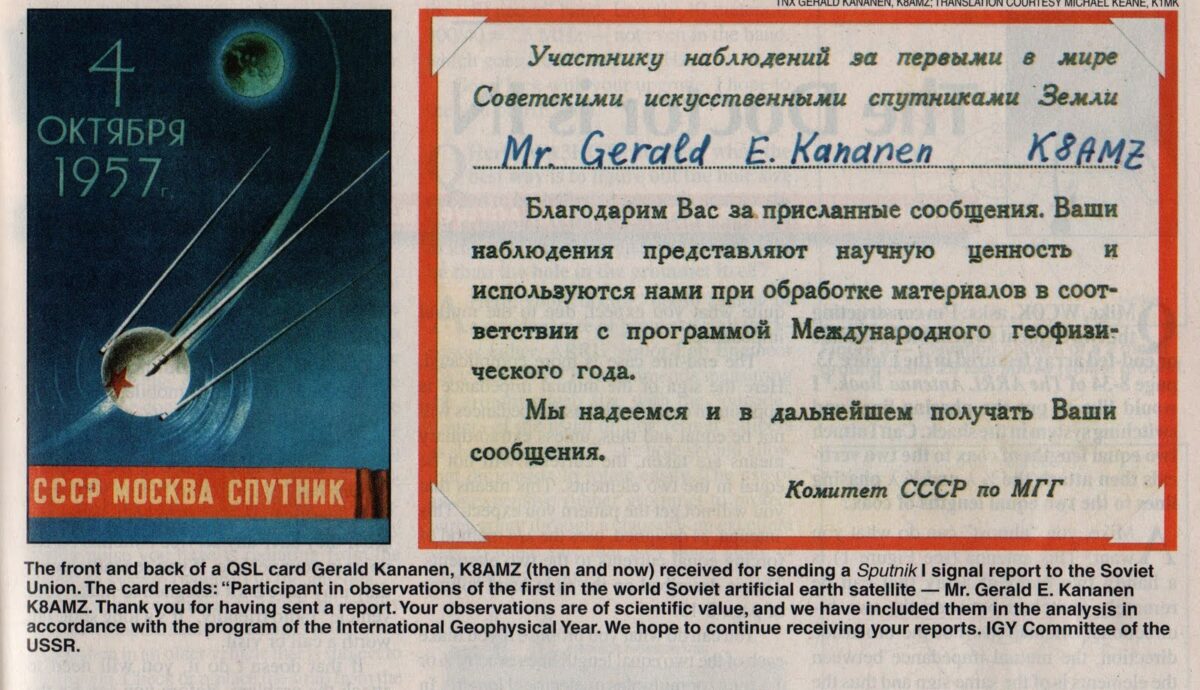
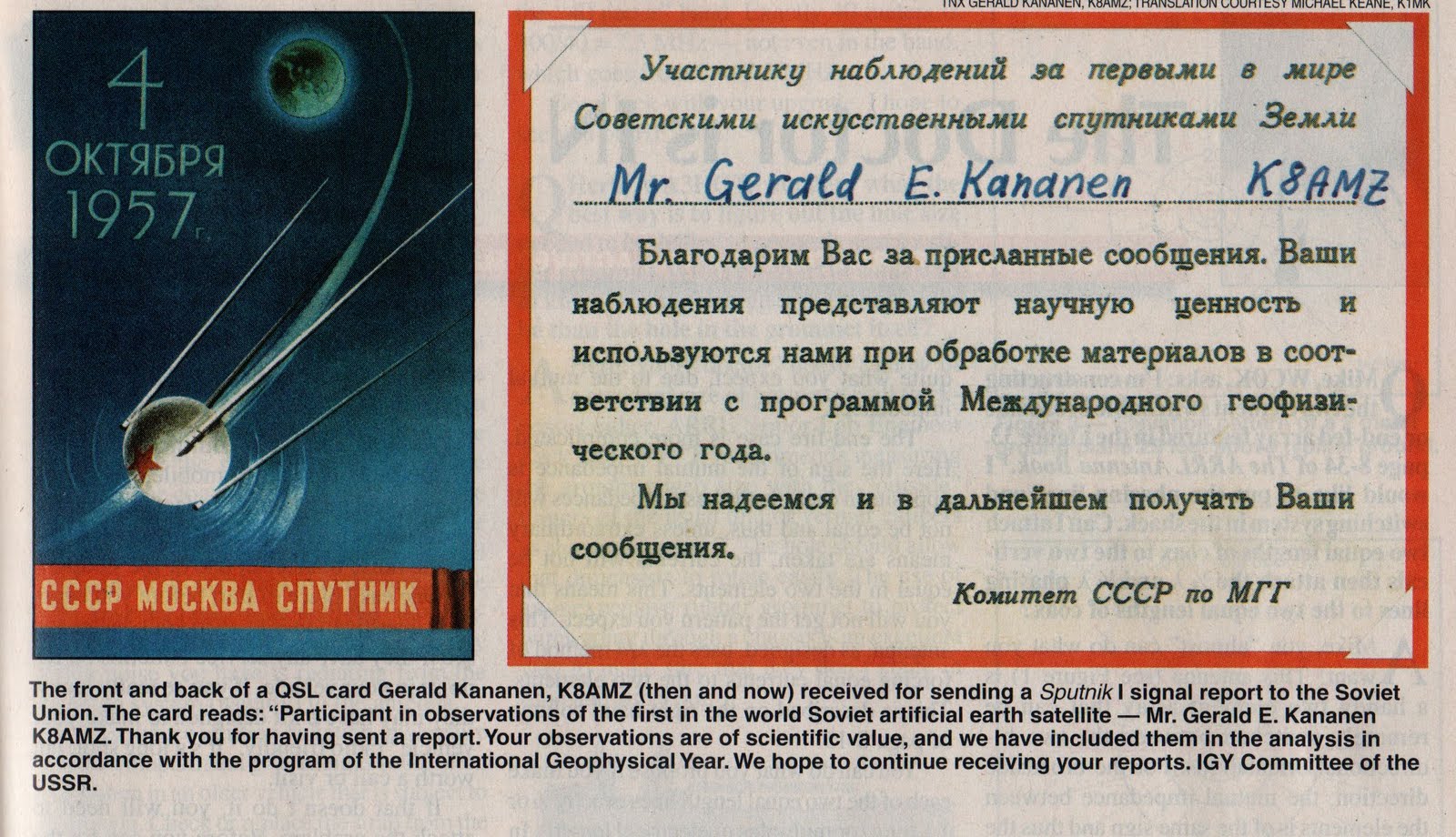 I like the reminder of Sputnik’s IGY connection. This is from an article by John Foley. W7ETS, in the October 2007 issue of QST. Be sure to read the translation in the caption.
Yesterday Billy and I were at the Smithsonian Air and Space Museum’s Dulles Airport center. (We volunteer to take visiting relatives to the airport IF we get to go to the Smithsonian afterwards.) We checked for Sputniks. Nyet. I think they have one on display in the main Air and Space building.
I was thinking that listening to a signal from a spacecraft should be part of the Sputnik event. The packet 2-meter signals from the International Space Station are probably the easiest to receive these days.
Check out “SolderSmoke — Global Adventures in Wireless Electronics”http://soldersmoke.com/book.htm
“The Early Days of SSTV” by Copthorne MaDonald
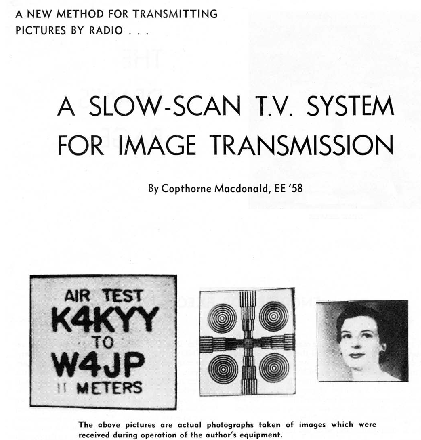 The Early Days of Amateur Radio Slow-Scan TV
by Copthorne Macdonald
I got my ham license in 1951 at age 15, and like many hams of that era, the bug hit hard. I worked my way through the University of Kentucky’s engineering school, taking 5 years to go through, working nights and weekends out at the transmitter of a local 5 kW AM station. Naturally, I was hamming on the way to and from work in my oil-guzzling 1948 Chrysler. The rig was a 15 watt surplus WWII AM rig that took up most of the leg room under the dash.
One day in 1957 I was in the engineering school’s library, thumbing through the Bell System Technical Journal, when I came across an article on some Bell Labs signature transmission experiments using ordinary phone lines. For the first time I realized that picture transmission didn’t necessarily mean extremely wide bandwidth. And being the ardent ham I was, I instantly wondered if some sort of practical SSTV system could be worked out for ham radio.
I spent my spare time during the next few months looking into the feasibility of the idea. What sort of display tubes were available? (Ans: P7 phosphor.) How did you get frequency response down to DC if ham rig audio response cut off at 300 Hz? (Ans: Modulate an audio subcarrier.) I kept waiting for the fatal flaw to appear, but I saw none. The idea looked feasible.
I took my paper feasibility study to the head of the EE Department, and asked him if I could design and build such a system as part of an independent problem course. (This would give me a few credits as well as legitimize my use of school facilities for the project.) He agreed, and I ordered surplus CRTs and power transformers and such from surplus houses like Fair Radio Sales in Lima, Ohio. During the next 6 months I designed the unit stage by stage, built a “tank” of a flying-spot scanner in the school’s machine shop, and put it all together. I still kept waiting for the fatal flaw to appear, but it never did. The system worked!
What is now the Citizen’s Band was at that time the 11 meter ham band. All sorts of strange emissions were allowed on 11 meters then, and the first on-air tests were conducted on that band. Since only one set of SSTV equipment existed, audio tape recordings of the SSTV signal were transmitted on the air by one ham station. At the receiving station we listened to this weird sound coming out of the receiver’s loudspeaker as we watched the transmitted pictures being painted in light on the screen of the P7 (long-persistence phosphor, radar-type) cathode ray tube.
I wrote a paper describing the system, and entered it in the American Institute of Electrical Engineers (now IEEE) student paper competition in 1958. It won national first prize that year. The ham community first heard about the system in articles that appeared in the August and September 1958 issues of QST magazine.
Shortly thereafter we hams lost the 11 meter band to CB, and had no long-distance HF frequencies on which to use SSTV. I spent the next 10 years working with hams like Don Miller, W9NTP, and Robert Gervenack, W7FEN in specially authorized on-air tests to convince the FCC that slow-scan would cause no problems to regular ham activities and should be permitted in the 75- to 10-meter voice bands as a regular operating activity. In 1968 the FCC finally authorized SSTV operation on a regular basis in the HF bands. In the 1970s my interests shifted to the USES of ham radio — to “New Directions Radio” — ham radio for personal growth and social change. Since 1985, I’ve been spending most of my time writing — some of it for rent and food money, some on dear-to-my-heart subjects like the development of wisdom, and strategies for living the most effective life possible.