Category: QRP
SolderSmoke Podcast #195: (We need some help!) BITX, 60, SSB History, Tribal Socketry
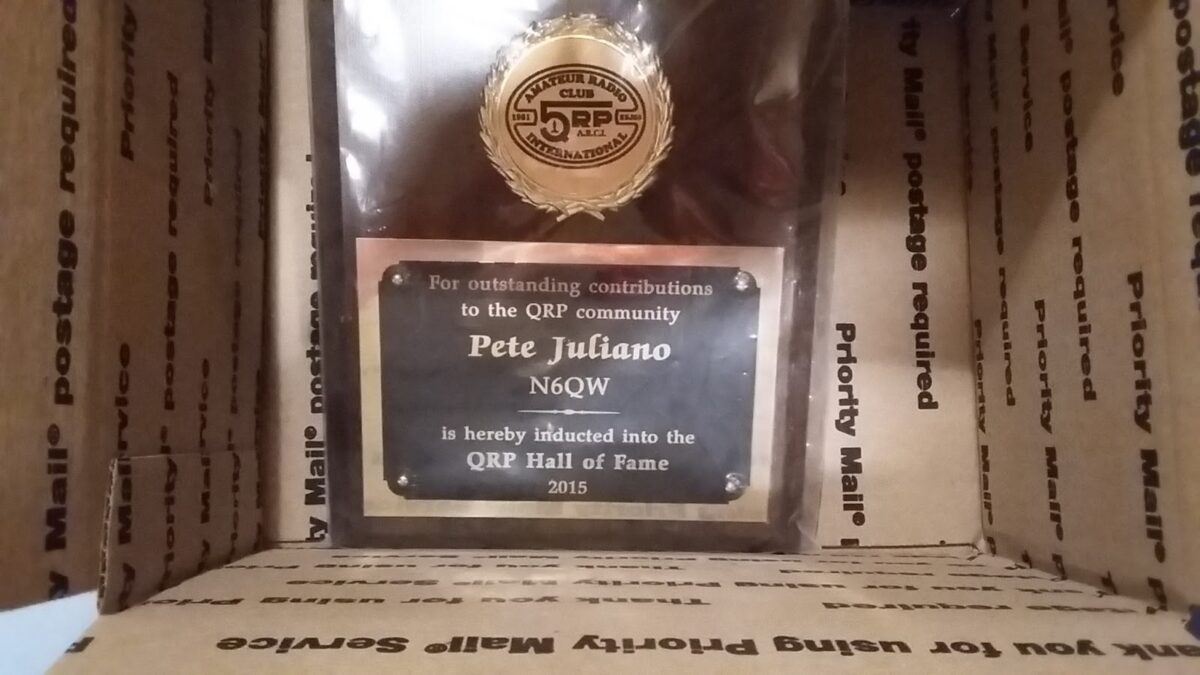
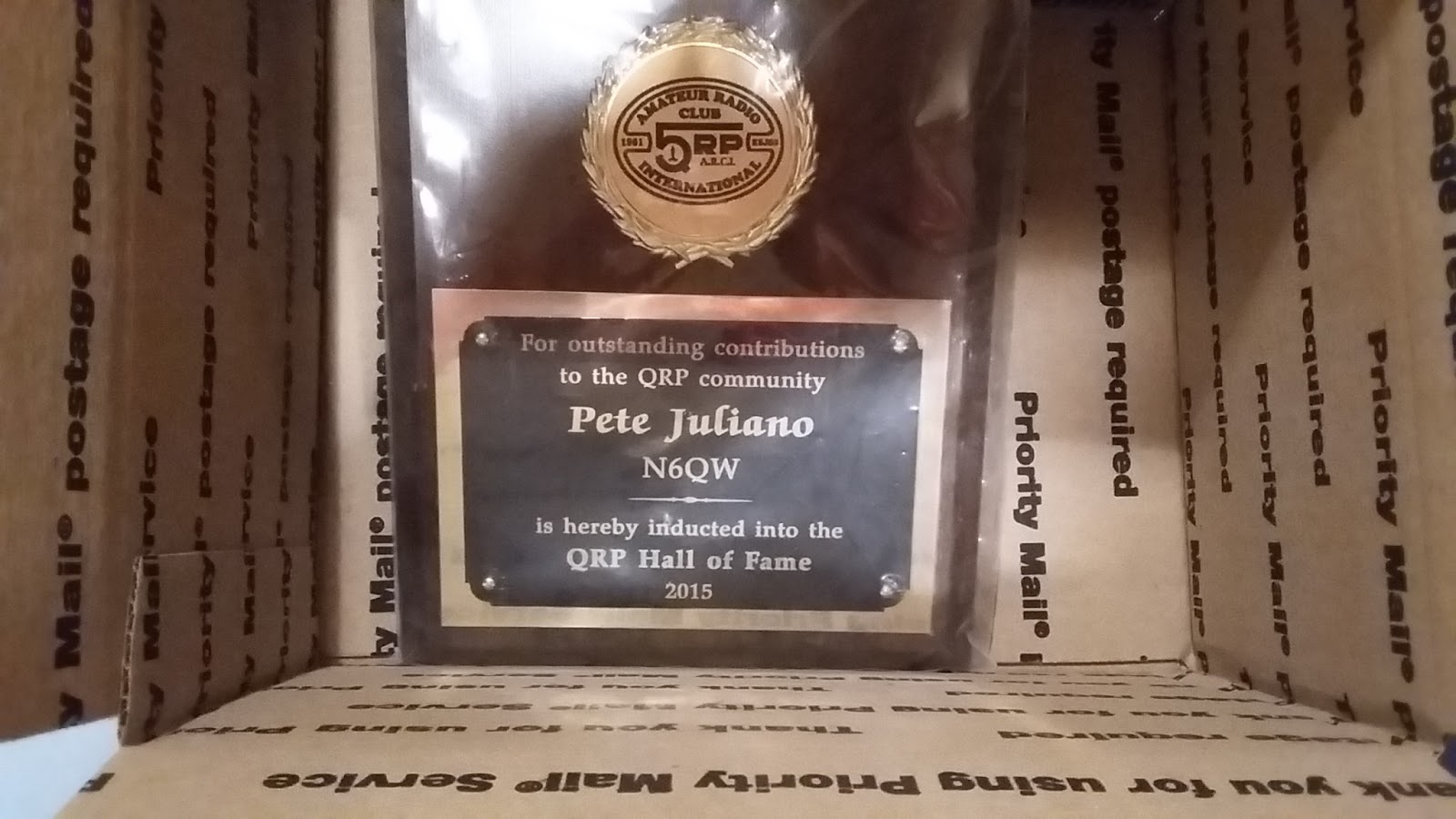
SENDING IT BACK
SolderSmoke Podcast #195 is available. Link appears below (scroll down)
We’ve got a problem: Pete Juliano and the QRP Hall of Fame 🙁 PLEASE HELP!
BENCH REPORTS
Pete Releases Smoke (wiring harness)
Pete’s DifX on 60
Architecture and Dual Conversion (uBITX: uses ALL THREE clocks on the Si5351)
The Big Kahuna
ON HACKADAY with Philco SB100 SEE! QRP!!!!!
BITX60
Cap Stack Hack mod (with leads)
Let the smoke out of an Si5351 (shorted output) Several actually.
(Same day delivery zone for Amazon — but no drones or parachutes yet.)
Installed scanning switch
Observations on 60. All the weird bands have a 6 in them: 160, 60, 6
The good: 100 watt limit, wire antennas
The bad: Kind of cliquish– like 75, not much of a CQ band. Channels. Not much activity.
The bad: Kind of cliquish– like 75, not much of a CQ band. Channels. Not much activity.
Met Josh KE8CPD on 40. BITX 40!
TRIBAL KNOWLEDGE:
Socketry: How to keep BNC jacks from spinning loose?
Do you heat shrink?
Feel Tech Sig Gen might not have blocking cap at the output.
Speaking of which, when I spoke of the Ne602, I mostly meant blocking caps, not bypass caps.
How come they don’t have a cable TV channel devoted to radios? They have HGTV? Why not HBTV?
REPORT FROM WINTERFEST
Bad weather. Tailgaters wimped out!
Combined forces with Armand WA1UQO.
Met up with Charles AI4OT.
Acquisitions: 1/4 phono jacks, carbon mic, vero board, disc caps, weather radio,
LARGE collection of Electric Radios from Armand. Wow.
Electric Radio notes: 1st Fifty Years of Sideband 1991 articles by Jim Musgrove K5BZH
Why LSB on 75? — so AMers couldn’t follow to top of band
W2, W6, W8s liked phasing, W3, W4, W0 more into filter rigs.
Early SSB guys turning on carrier and talking AM hams into SSB RX.
Kelvinator Refrigerator rigs.
A reading on the homebrewing of SSB rigs.
Tony Fishpool on QSO Today! Pete mentioned prominently.
Good Hacks from ND6T on BITXHacks, Stockton Bridge
MAILBAG
WU2D’s Wonderful Video on Retro-QRP
(Link to video appears below.)
Stephen G7VFY sent me the link to Mike WU2D’s Retro-QRP video. In the last month spoken to Mike at least twice on 40 and 75 meter AM. Stephen was responding to a post I did about a 1958 18 milliwatt solid state QRP rig.
Mike’s video is really wonderful. I’ve never been into military surplus, but this video made me think I might want an ARC-5. The rig Mike builds and tests is very similar to our beloved Michigan Mighty Mite. His description of the build and the testing procedures he used will be of great interest to those who’ve built the MMM rigs. And he made some contacts. Finally, there is a cameo appearance by Paris Hilton. And she is holding a HOT transistor! Wow!
Mike has a real talent for making these kinds of videos. Thanks a lot Mike — see you on 40. And thanks Stephen (Stephen has sent us so much great stuff over the years, including a fantastic box of British valves.) Pete: See how nice it is to get back to QRP?
Here’s Mike’s YouTube Channel. I love the intro:
https://www.youtube.com/channel/UCN7RQv_qmzhzuJV1HhJ4OEA
“CQ Transistor” — The 1958 Mighty Milliwatt
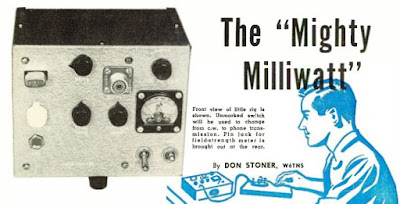
I think it is time that we get back to our QRP roots. Perhaps under the influence of the wizard of Newbury Park (N6QW), we’ve all been drifting into the world of high power. It starts innocently: you hook up a second gel cell to the IRF-510 and suddenly you are at 20 watts out from the BITX. Before you know it, you have an uncontrollable urge for 3-500Z’s. Here is a story that will get us back on the QRP track:
It was September 1958. On the 14th of that month I began my first orbit of the Sun. Band conditions were VERY good. OM Don Stoner was on 10 meters with a homebrew solid-state milliwatt rig calling CQ TR, CQ TR (CQ Transistor). Jarno PA3DMI in Amsterdam sent me the link to a Radio News article by Don Stoner. The article (and the entire magazine) is a lot of fun. Check it out. The QRP fun begins on page 51. Thanks Jarno!
http://www.americanradiohistory.com/Archive-Radio-News/50s/Radio-News-1958-09-R.pdf
VK3YE’s GREAT “QRP by the Bay” Event
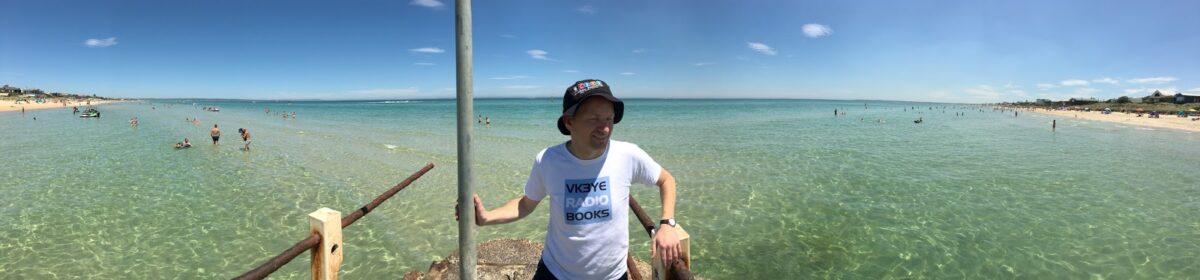
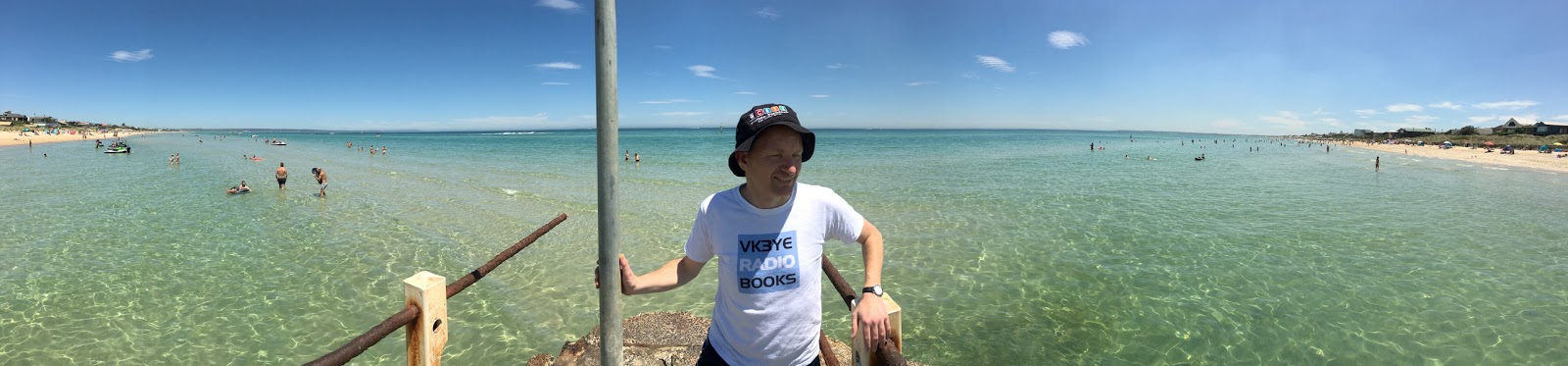
Last weekend Homebrew Hero Peter Parker VK3YE hosted another of his amazing twice-yearly QRP events. It was at a park near the iconic Chelsea Pier in Melbourne. Peter Marks VK2TPM sent a very nice write-up with pictures:
http://blog.marxy.org/2017/02/qrp-by-bay.html
And a nice audio report:
http://s3.marxy.org.s3.amazonaws.com/audio/QRP_By_the_Bay_2017.wav
Peter Marks reports that most of the on-the-air activity was on the 120 foot ham band (40 meters for you modernists). Many BITX40’s were on display.
Colin M1BUU Achieves SOTA “Mountain Goat” Status — With Rig Built ON THE MOUNTAIN TOP
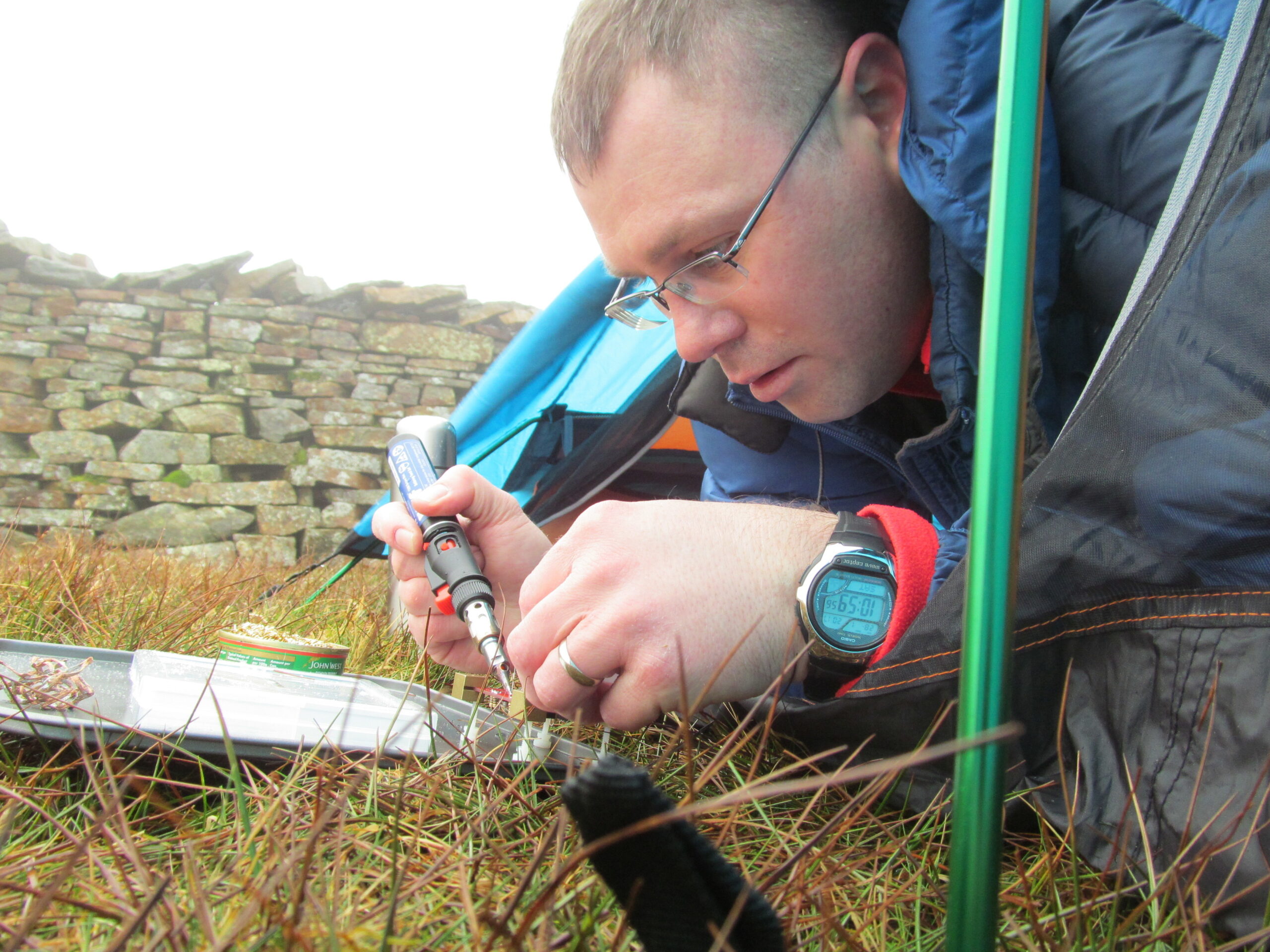 |
Our friend and BITX builder Colin M1BUU has opened up a new area for ham radio masochism: EXTREME MOUNTAIN-TOP RIG BUILDING. That’s right my friends. You read that right. Colin has taken the solder smoke to new heights. Soon, these guys will be pouring scorn on those of us using “shack built” rigs. Congratulations Colin! Well done!
Colin’s write up from http://reflector.sota.org.uk/t/colin-m1buu-mountain-goat/14559 :
The general story goes something like this –
I started with SOTA way back in 2004, aged 24. Just after I found SOTA, I also found love – Fiona and I will celebrate our 10th wedding anniversary in April. You know how the story goes……….
Winter time has generally been quiet in terms of family stuff, so it’s generally this time of year when I activate, usually January to March.
You’ve heard of extreme ironing, right? 

I started with SOTA way back in 2004, aged 24. Just after I found SOTA, I also found love – Fiona and I will celebrate our 10th wedding anniversary in April. You know how the story goes……….
Winter time has generally been quiet in terms of family stuff, so it’s generally this time of year when I activate, usually January to March.
You’ve heard of extreme ironing, right?
Being a prolific builder of radio kits, I thought I would do my own twist on Extreme Ironing – Extreme Solder Ironing!
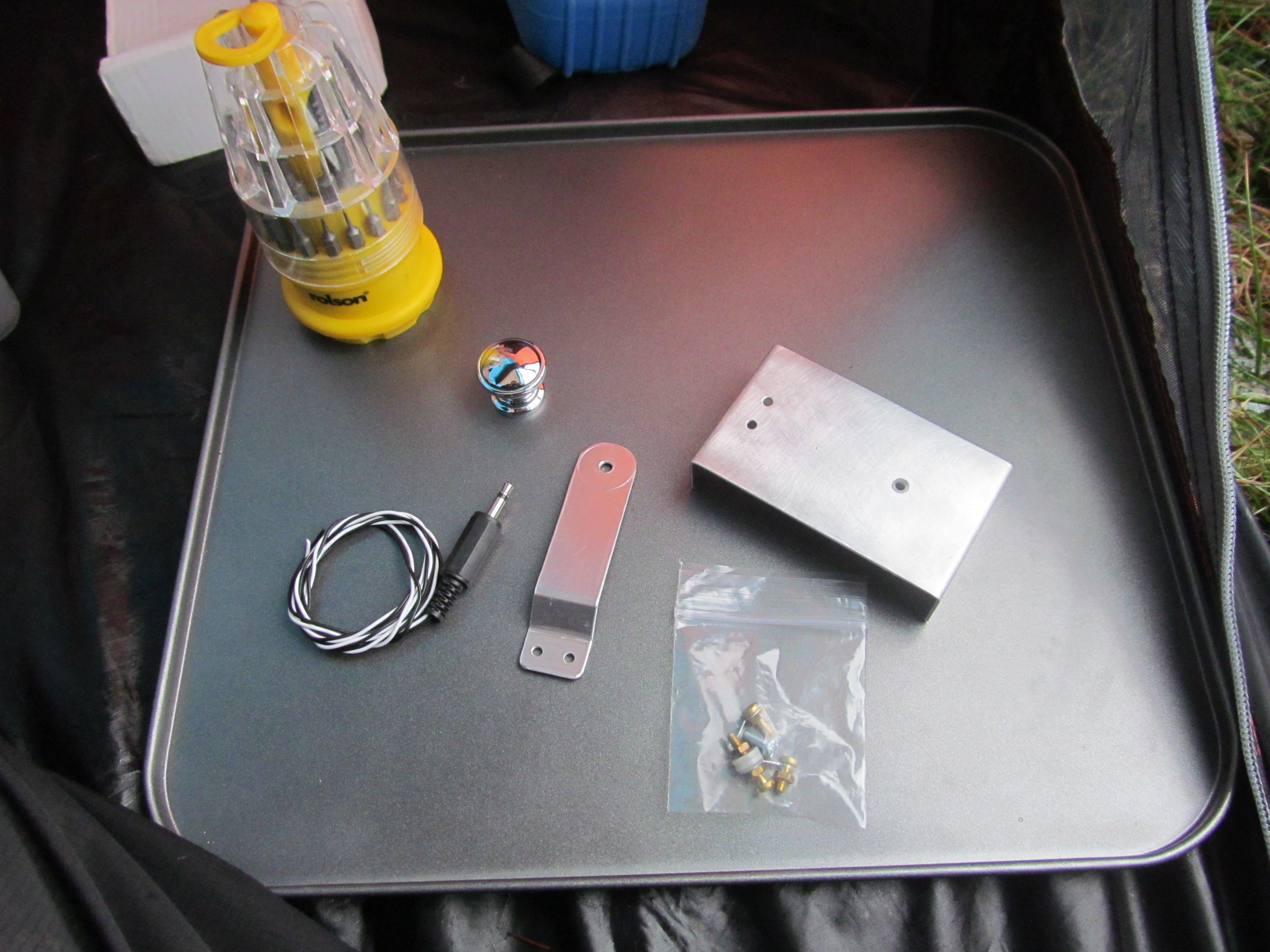
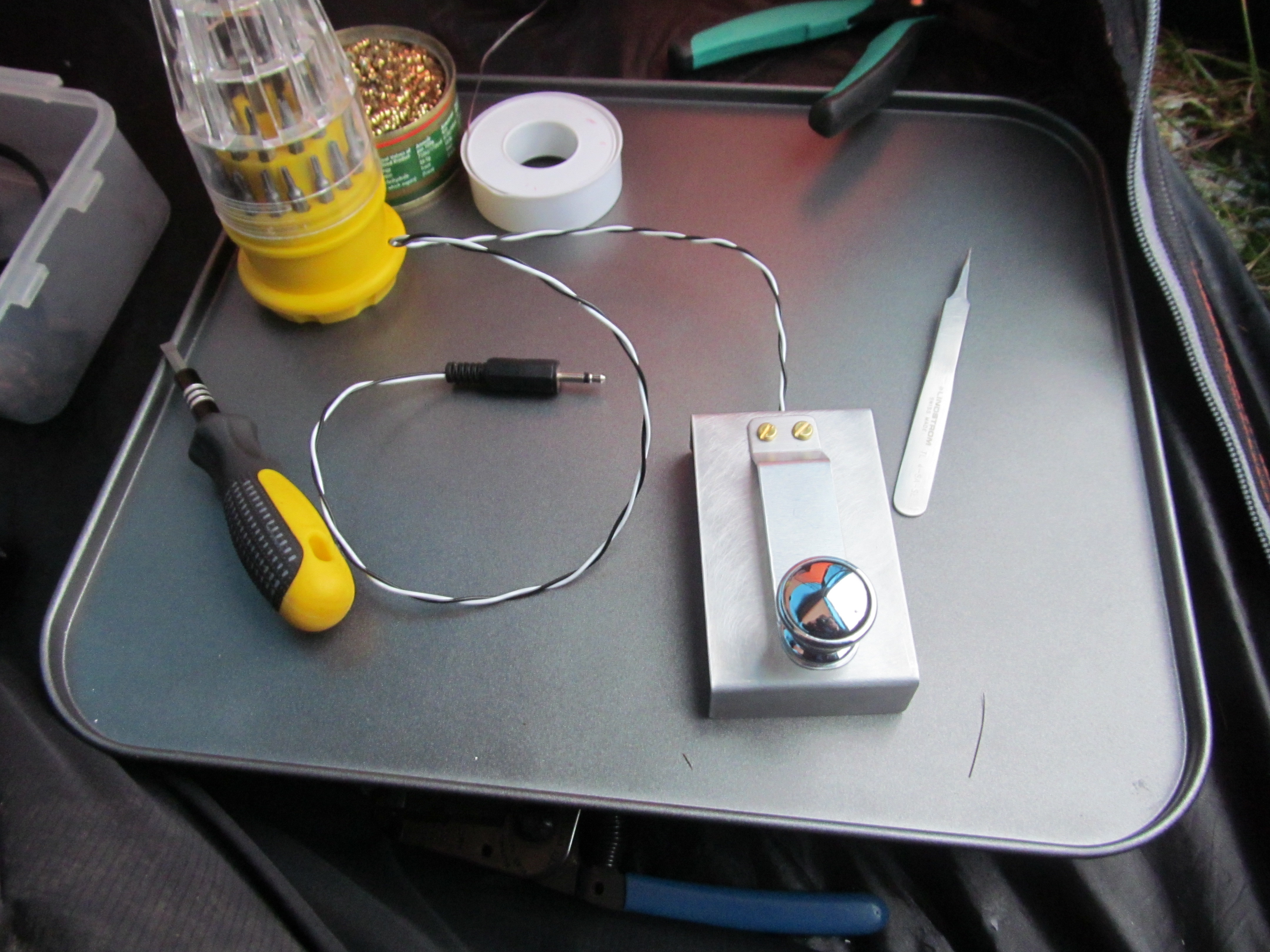
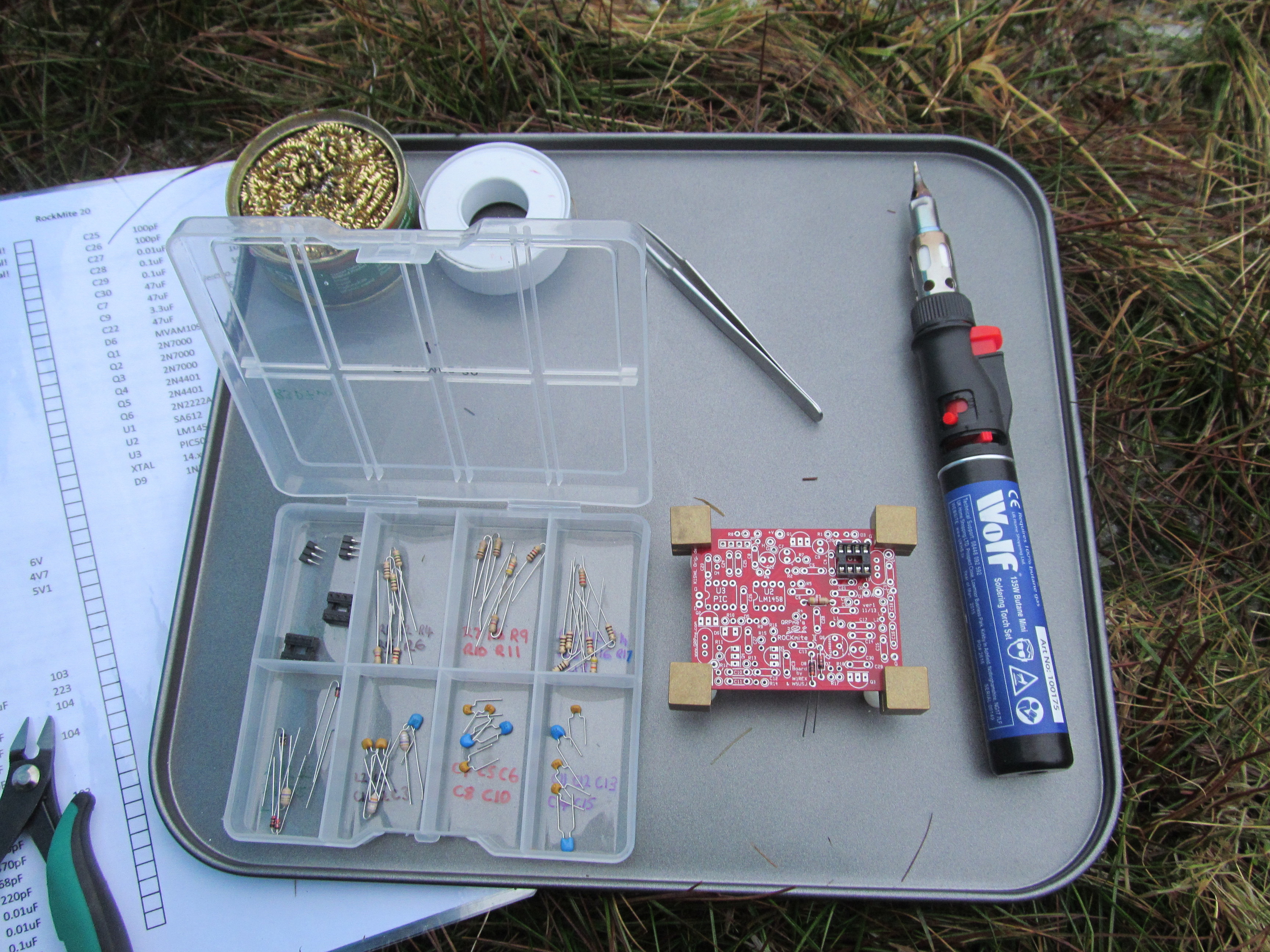
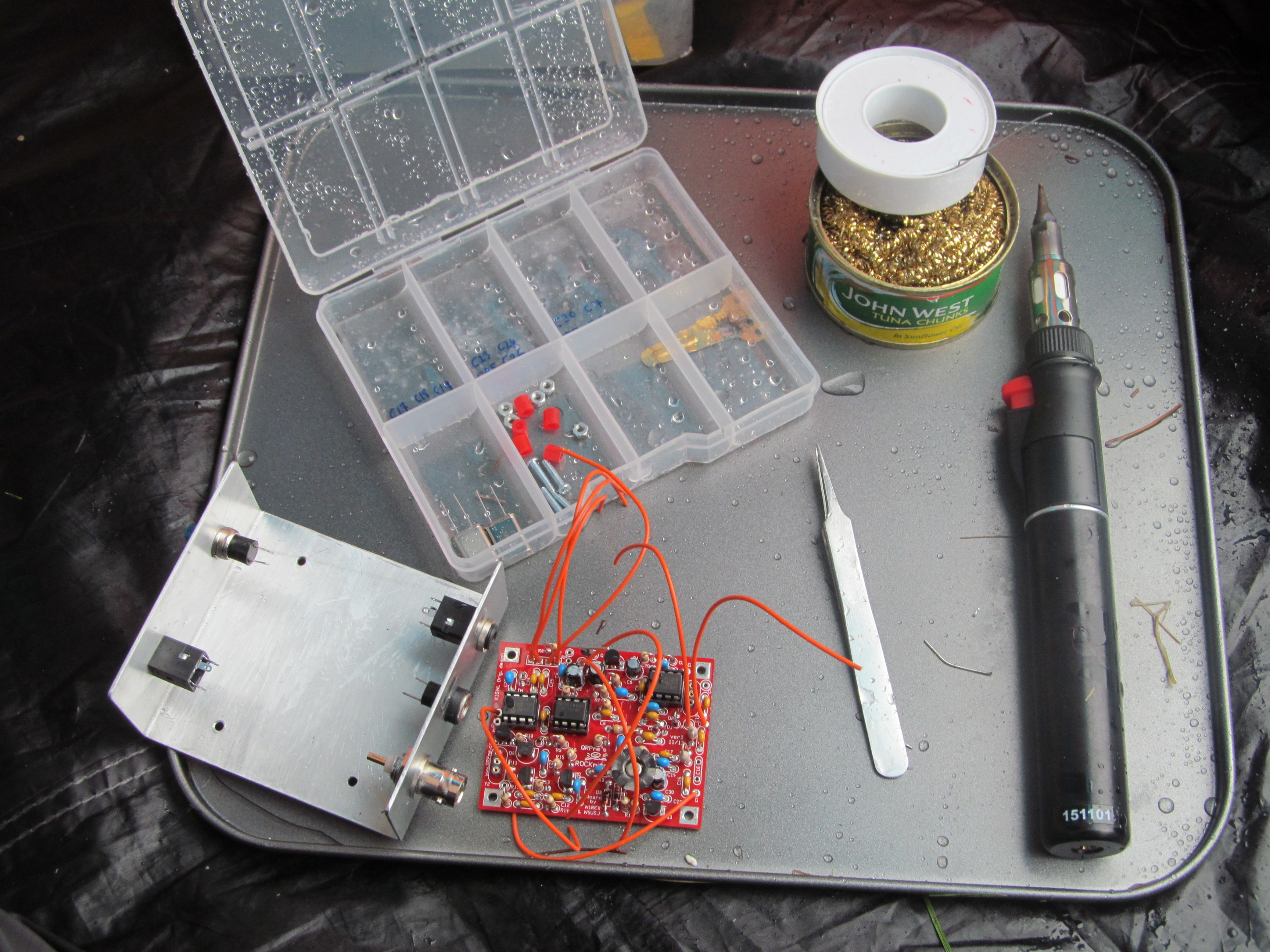
Today was the day. I took a RockMite kit, a home made key kit and a home made vertical antenna kit up to the summit of Whernside G/NP-004. I assembled the kits using a gas powered soldering iron. Thankfully I took my little tent with me, the weather wasn’t exactly tropical.
The kits went together well and the RockMite fired up first time without any debugging, although the building took much longer than I had reckoned.
I was late on air, but eventually Barry N1EU found me for my first contact. Shortly after followed SP9AMH, OH9XX and finally EU2MM to earn me my needed points. Mountain Goat was in the bag! The QSB was very evident today, QSO’s were tough, except with OH9XX, who was ear blasting. 
Firing up the FT817 (I intended to share my success with as many as possible!), I worked a handful more stations on CW and SSB, but my time was rapidly dwindling.
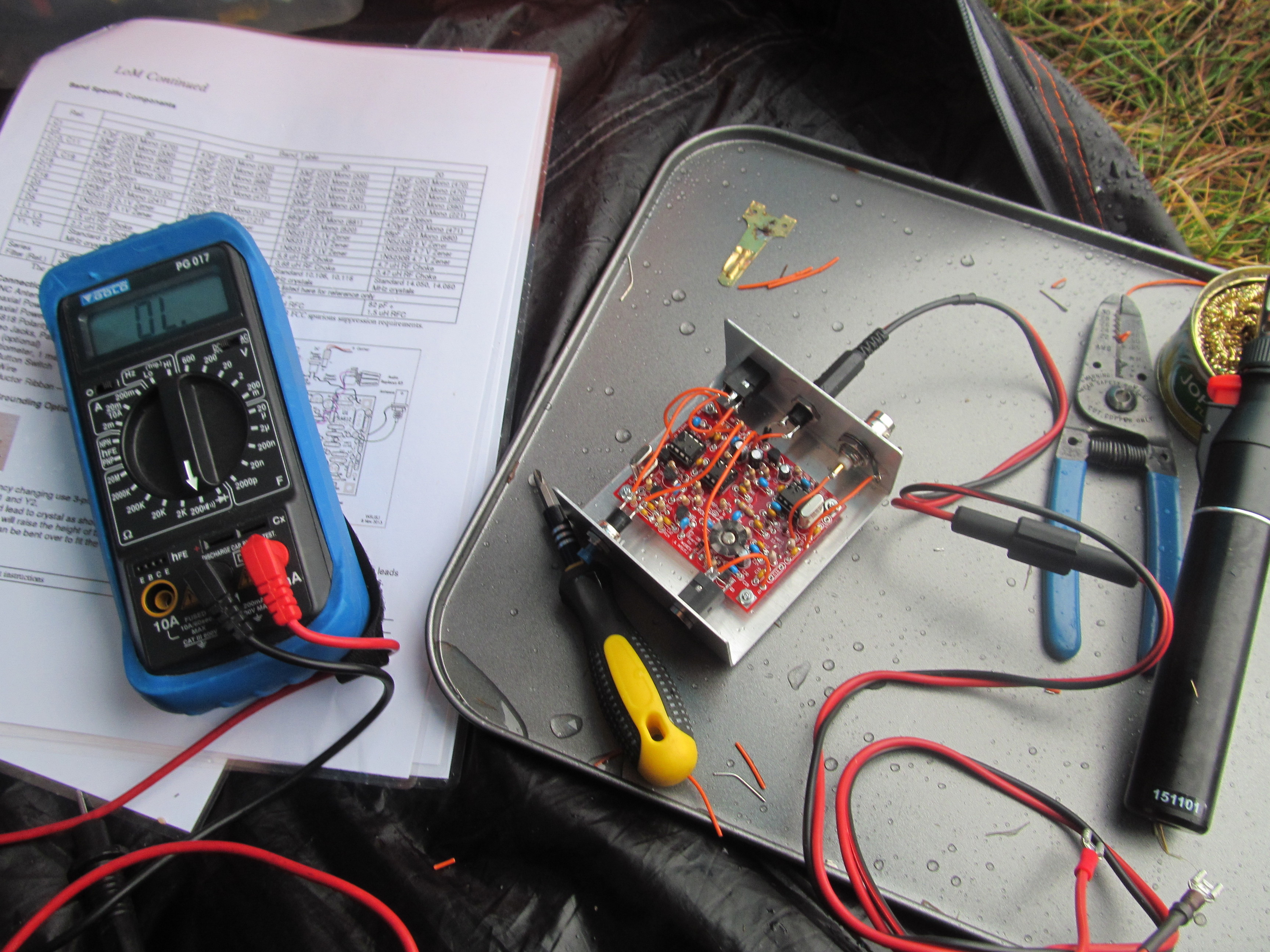
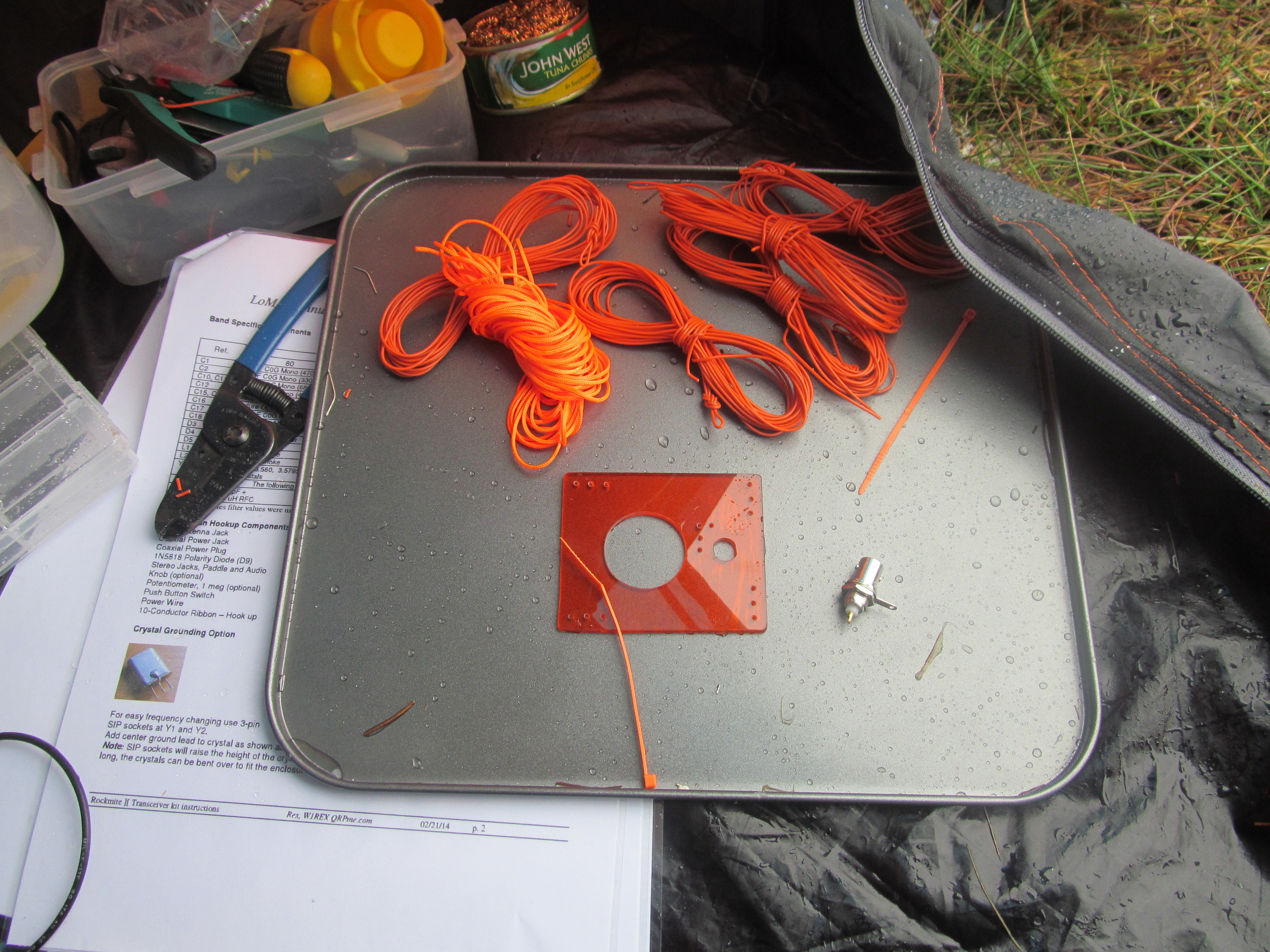
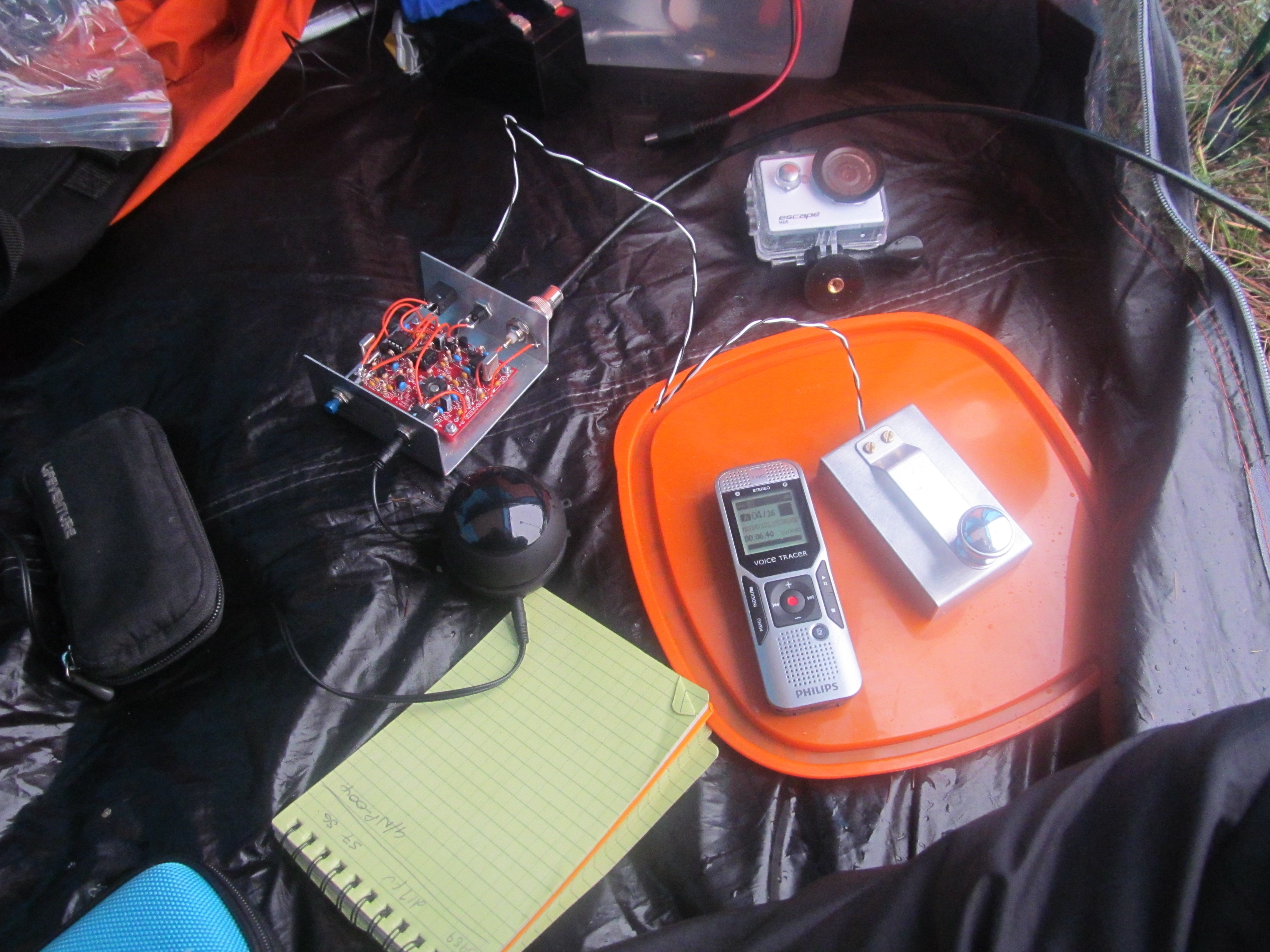

Finally, I’d like to say thanks for all the support given by numerous SOTA participants over the years, There’s a number of great, inspirational people we’ve lost in that time and I think about lots of them all the time. Roger G4OWG was particularly on my mind today as I learned of the route I took today from one of his posts. I never met Roger in person, but he was a keen chaser and fairly local to me.
73, Colin
Edit – I forgot to put forward my thanks –
Thanks to Dennis G6YBC (Kanga Products) for sponsoring a RockMite ][ ver. 1 PCB
Also thanks to Pete G4ISJ for supplying the solder!
From Mountaineer to the KX1 — N6KR on Trail-Friendly Rigs
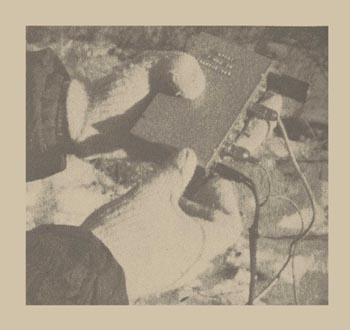
This is from 2014, but I stumbled upon Wayne Burdick’s article just this morning. Great stuff. That picture of Wes had a big impact on many of us.
Wayne’s article:
http://www.elecraft.com/KX1/N6KR_KX1_History.html
VK3HN: SOTA, HB, SSB, and QRP FB!
Peter VK3YE sent me the link to this amazing site. Wow, Paul VK3HN does great work, both with the homebrew rigs and in describing his work on them. Check it out:
https://vk3hn.wordpress.com/2016/10/25/summit-prowler-one-a-homebrew-7mhz-ssb-qrp-transceiver-for-sota/
Great stuff. Thanks Peter! Thanks Paul!
Smoke-Free! On the Air with the W1REX Dayton Hamfest Buddy
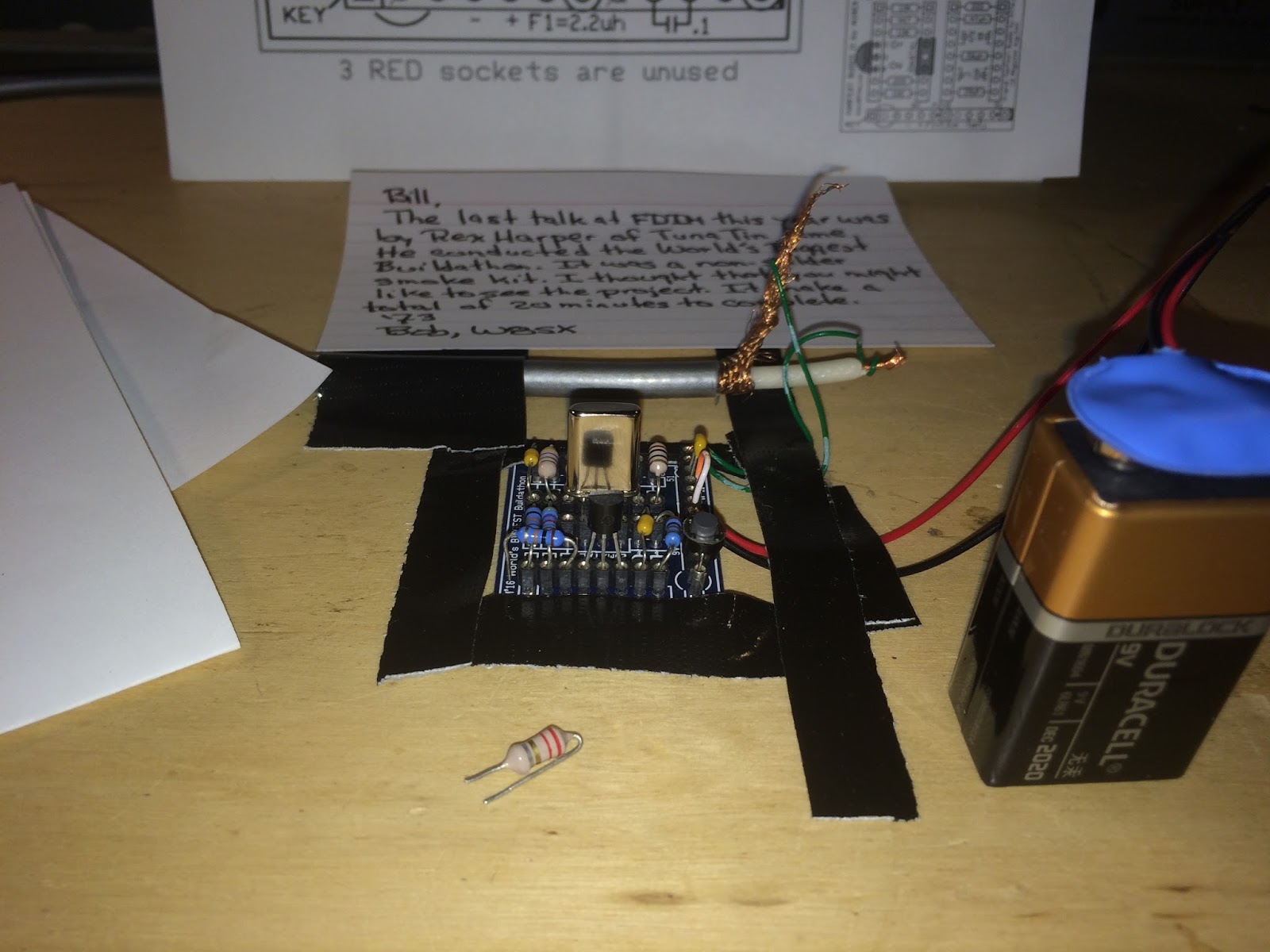
After the Dayton Hamvention, our ace correspondent Bob Crane (W8SX) sent me the “Hamfest Buddy” kit that Rex Harper W1REX had put together and used in “The World’s Biggest Build-a-Thon.”
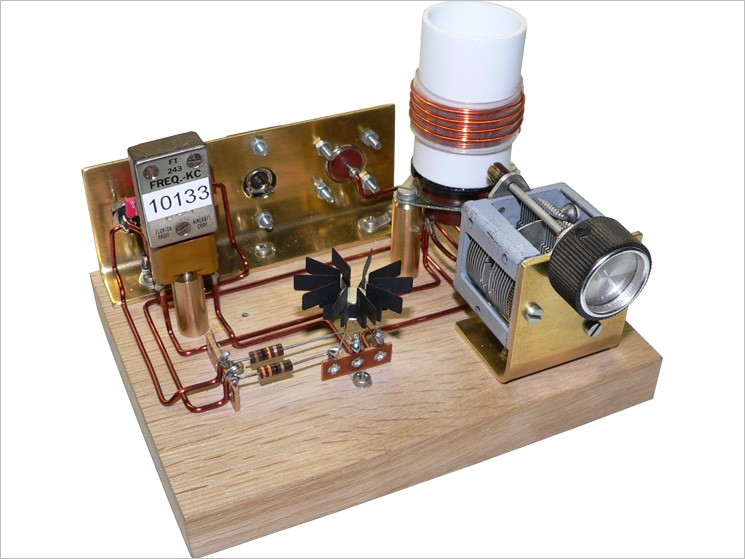
It is a single 2N2222 crystal-controlled oscillator for 20 meters. All the parts are plug-in — no solder smoke is released. Mine went together in about 15 minutes and fired right up. You can see it above. It runs off the 9V battery. I had to hold it down with tape. You can see the key button in the lower right. That little inductor in the foreground is used to shift the frequency a bit. I had to remove the 10K resistor in the emitter circuit because with my antenna the circuit was going into low-level oscillation even in key-up. With the 10K resistor removed, this problem disappeared.
I hooked it up to my 20 meter dipole and called CQ. With only about 60 milliwatts into a dipole under poor conditions, I really didn’t think I’d get any answers. But I figured the Reverse Beacon Network might pick me up. It did:
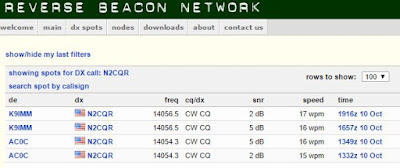
Thanks Bob! Thanks Rex!
From the Wizard of Wimbledon: Matchbox Junkbox Rig
Dear Bill
I hope that life’s treating you kindly over the left side of the pond. Your latest podcast really resonated with me as I’m hugely fond of junk box projects on a rainy afternoon. Fortunately Her Majesty’s weather men are generous…
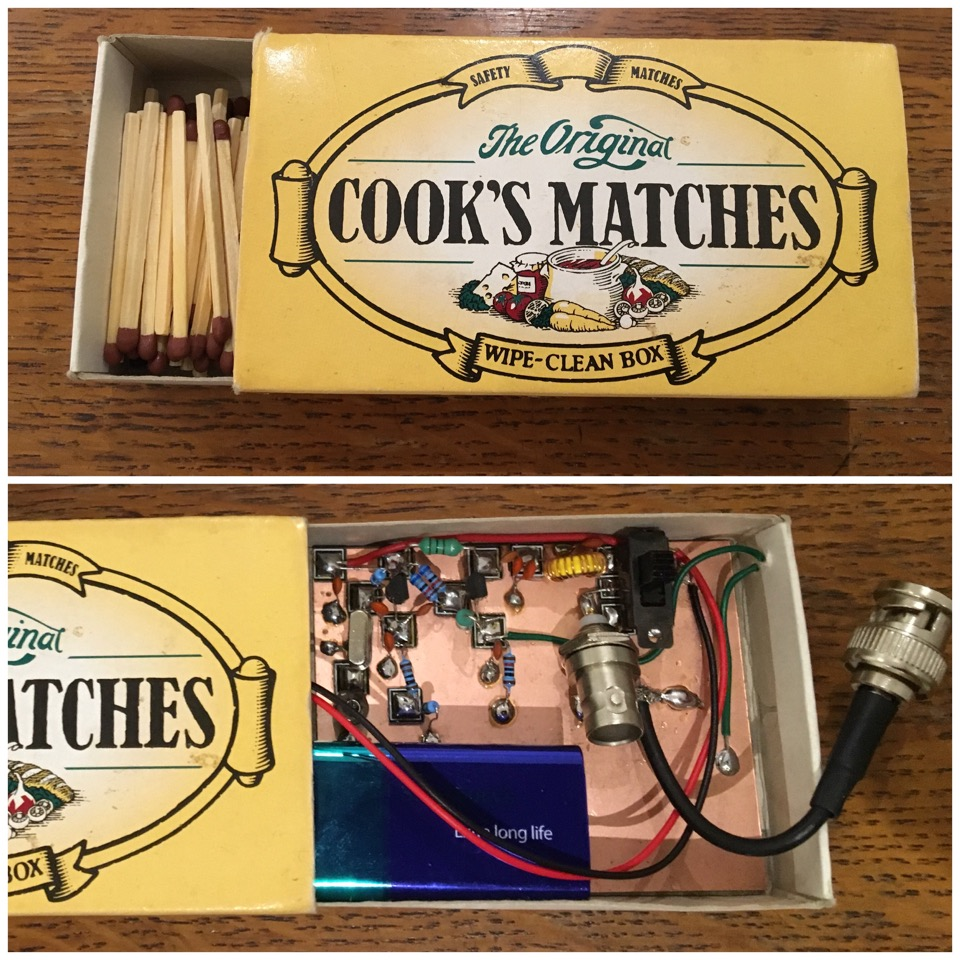
Spy gadgets have long been a fascination of mine, particularly those disguised as harmless everyday objects. I remembered a Soldersmoke blog post a few months back showing a radio hidden inside a book. That got me thinking… then one rainy afternoon I stumbled across a half-used box of matches – surely an ideal enclosure for a covert spy transmitter!
Objectives:
1. The matchbox should remain fully functional and pass casual inspection
2. Transmitter, Morse key and battery should be hidden within the box
3. All parts should be cobbled-together from what I can find around the house
4. To build using “Manhattan style” construction for the first time
The transmitter borrows heavily from the Pixie 2 circuit and is based around two PN2222A transistors: the first forms a Colpitts oscillator for 7030kHz (plus/minus a smidgen of capacitor trim), the second acts as a modest Class C power amplifier (approximately 170mW out) – keying occurs here, to minimise chirp, before feeding a simple low-pass filter.
Discrete contacts set in the cardboard allow Morse to be keyed with my grandmother’s old sewing thimble – not only is this beautifully stealthy but it’s remarkably ergonomic too!
The transmitter can be easily teamed with an external receiver, selectable via a double-pole-double-throw switch. The switch simultaneously disconnects the battery, eliminating the audible whistle from the constantly-running oscillator.
This was my first experiment with “Manhattan style” construction and I can see why you swear by it. Even though I sketched the circuit’s layout before I started, I still found myself occasionally popping-off a square with a blade so as to optimise the tight packaging; Manhattan made this trivial, and fault-finding would have been easy with all connections on one side…
But remarkably the transmitter worked first time! Bench testing by calling CQ whilst monitoring the Reverse Beacon Network demonstrated that its tiny signal could be picked up as far away as northern France when driving my resonant end-fed antenna!
Ever since I discovered the magic of QSL cards I have always wanted to send one showing a hand-drawn diagram of my transmitter; perhaps I’ll now have a chance!
Please keep up the great work: you, Pete and the global brotherhood never cease to throw up new tricks for me to try. It’s a shame that this is perhaps one radio which I’d be best advised to not try to carry through airport security when my ever-patient girlfriend grants me permission for a holiday-time QRP operation…
73
Jonathan
M0JGH
——————————–
Earlier post about Jonathan: http://soldersmoke.blogspot.com/search?q=M0JGH
From the DSB-SSB Pier In Melbourne, Australia: SolderSmoke Book Reviewed by VK3YE
It is a real honor to have my book reviewed by DSB guru Peter Parker VK3YE, and to have him do the review from the iconic “DSB-SSB” pier in Melbourne, Australia. Check out the video (above). Thanks Peter.
Listen to Keith Ranger G0KJK on “QSO Today”
http://www.qsotoday.com/podcasts/g0kjk
Wow Eric,
I just listened to all of the Keith Ranger interview and was struck by the eerie parallels between YOUR 24 September podcast and OUR 24 September SolderSmoke podcast:
— Both shows discussed the involvement of Anglican clergy in the hobby.
— Both discussed the joys of simple QRP gear.
— George Dobbs G3RJV came up in both.
— BOTH featured discussion of the BD139 transistor (!!!)
— Both discussed the use of ceramic resonators in ham circuits.
Great minds think alike!
I really enjoyed your interview with Keith. I have enjoyed reading in SPRAT about his projects — years ago I built his MB4 receiver. I listened while I worked on my homebrew receiver. It was the ideal accompaniment. I also like the stickers on his transmitter.
Please pass this on to Keith if you can.
Thanks and 73 Bill
———————
I also liked Keith’s comments on the joys and perils of amateur electronic engineering.
QRPp Back Issues (and some new ones too!)
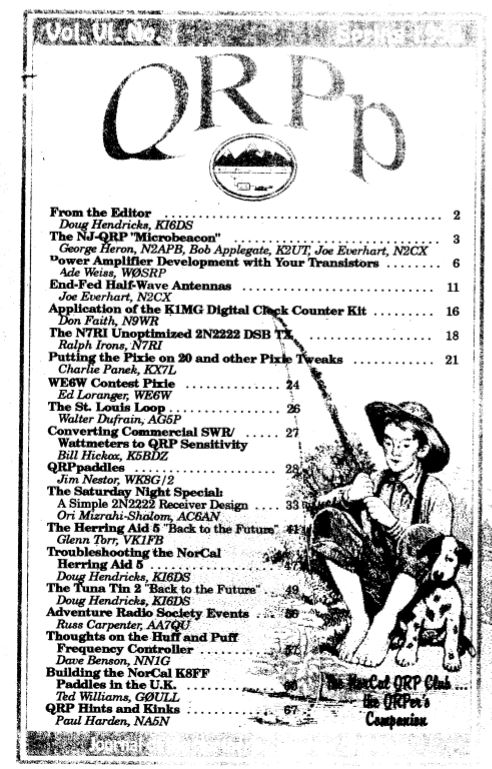
Here’s an index:
http://www.k7qo.net/qrpp_toc_de_k7qo.pdf
And here are lot of the back issues:
http://www.ncqrpp.org/
And I see there are August and September 2016 editions available in the Files section (KI6DS) of the qrp-tech Yahoo group. Did I see articles there from Steve “Snort Rosin” Smith?
QRP Wisdom from George Dobbs, G3RJV
This video makes me want to destroy my amplifier…
Pilgrim’s Progress: A Peregrino Rig Concealed in a Book
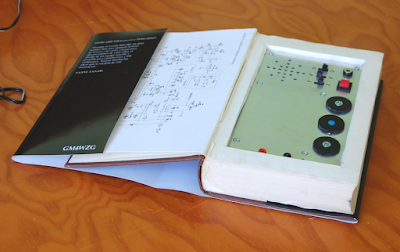
On the G-QRP list guys have been talking about the Peregrino. This is a nice little homebrew rig out of Spain. Peregrino = Pilgrim and usually refers to people who are hiking along the Trail of Santiago that runs through the North of Spain to Santiago de Compostela.
I’m normally averse to chips, but this little rig uses two very understandable NE602s and an equally understandable LM386. It has a homebrew crystal filter. I like it.
GM4WZG came up with a really wonderful enclosure for his rig. This reminded me of the time I put a QRSS transmitter inside a copy of “The DaVinci Code.”
The Spanish guys have a nice site that describes the rig. Google Translate should help, but even without it you can get most of the info you need from the schematic, chart, and foto gallery. Check it out: http://ea3ghs.qrp.cat/peregrino.html
Enhorabuena!
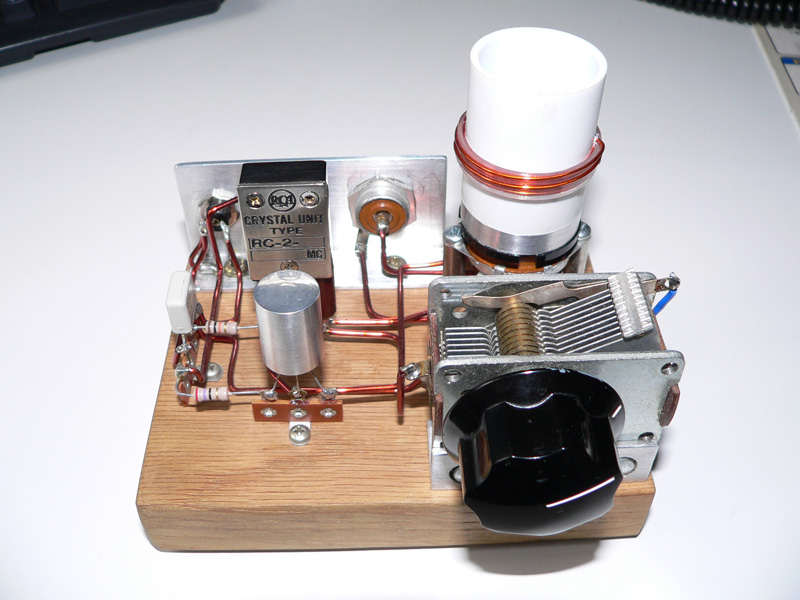
Swedish Michigan Mighty Mite Beacon Project
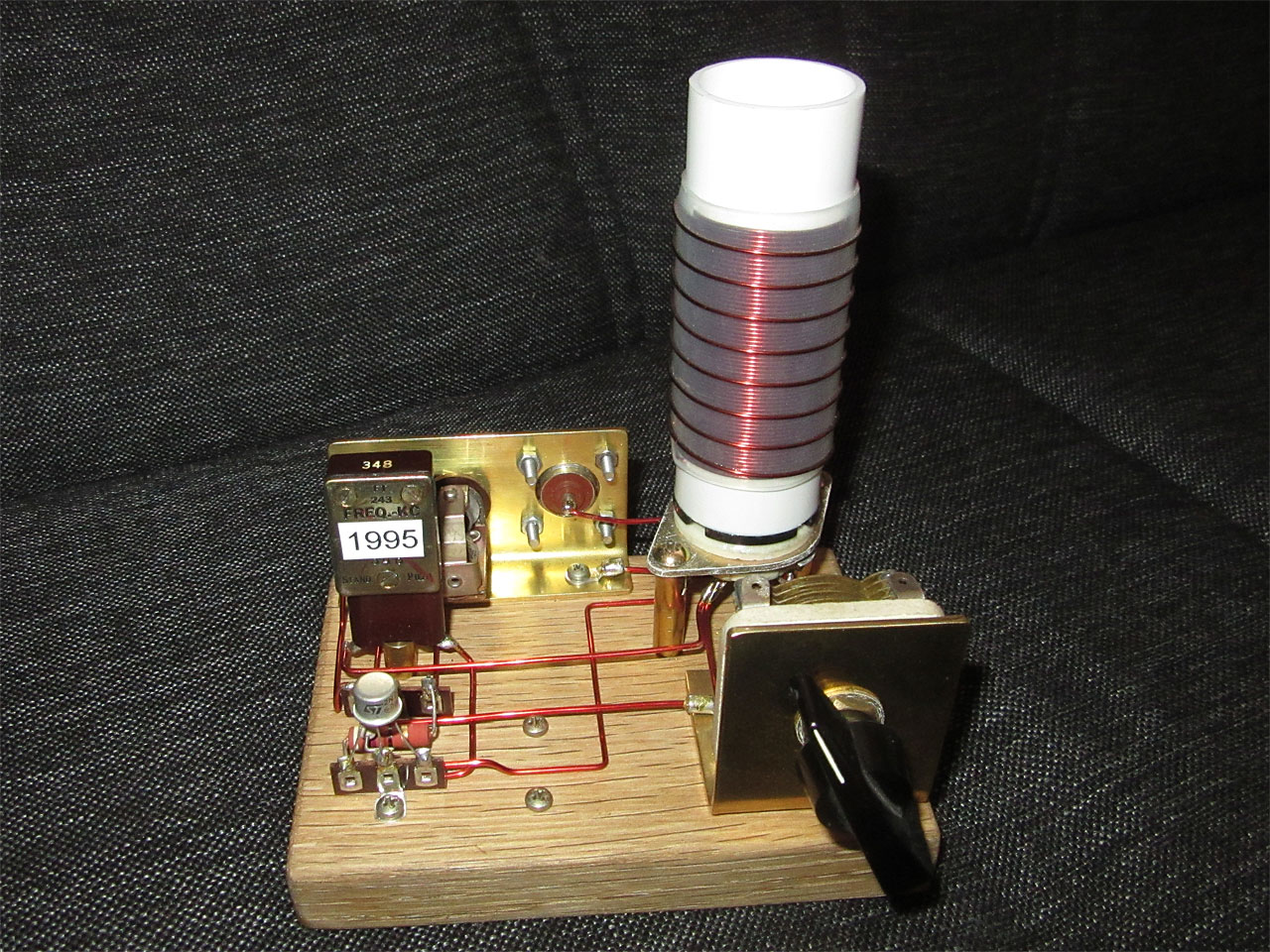
sTef DL1FDF/VY1QRP alerted us to this multi-band Michigan Mighty Mite beacon project out of Sweden. They certainly have some fine looking rigs!
Check out the reports:
http://www.radiorud.se/fyren.php
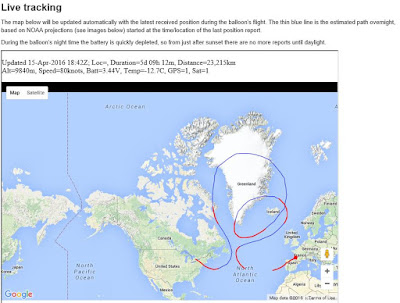
WSPR Party Balloons Make it Across the Pond
 |
|
|||
|
||||
The Wizard of Wimbledon writes of Emperor Hadrian’s QTH, HMS Belfast, JFK and QRP

Dear Bill
I write this to you from my shack in Wimbledon, south west London, with the crackle of the bands slowly waking up across Europe, having just devoured the final few pages of your excellent Soldersmoke book; an intriguing and entertaining tale to which many of us can relate, a highly-accessible technical primer which certainly helped me to clarify a few niggling “Yes, but why?” questions, and a compendium of handy tricks to try during future projects – thank you for sharing your story.
I was amused to read that GB2RN, on HMS Belfast in London, where I am now one of the “new boy” volunteers, was an inaugural contact for your Azorean 17m DSB rig. As it turns out, 12000 tonnes of British warship seems to play an crucial role in testing QRP radios:
Enjoying a peaceful hilltop picnic in December 2014 with my girlfriend, gazing out over the idyllic Italian countryside above Frascati, it occurred to me that what the situation really called for was a 40m QRP CW transceiver (I was possibly alone in this thought). Soon after returning home I set about researching small, reliable kits which could slip into my jacket pocket but still tune across the band.
The EGV-40 (in memory of Miguel EA3EGV, EA-QRP co-founder) seemed ideal: a “tutti frutti” architecture of well-proven designs, based around a VXO for high stability.
My construction schedule was leisurely, paced for enjoyment and attention to detail. At all times I looked to maximise reliability, crucial when operating from a hilltop, far from a workbench. To pre-harmonise the radio with an outdoor life, on sunnier occasions I often found myself soldering in the garden. For a personal touch, I made sure to instill plenty of “soul”, reminiscent of my electronics journey so far: my late grandfather’s tools and solder were used throughout, alongside my own, together with reclaimed parts from old school projects and my elmer’s junk box; finally, in a shameless attempt at appeasement, my remarkably understanding girlfriend even helped to solder the final capacitor… and may be invited to recommend the paint colour!
In mid-December 2015 we once again flew out to Rome for our pre-Christmas break. Our first day was spent exploring the stunning Villa D’Este (stunning to behold, an ideal high radio QTH but far too beautiful for my wires to pollute the scenery without getting into trouble…) and Villa Adriana, near Tivoli. It was only right at the end of the afternoon, and annoyingly lower down towards the plains, when I stopped for a few minutes for an attempted sked with GB2RN.
Lesson 1: trees with lots of branches and twigs are a real pain for throwing wires through! I had guessed this already, but it truly is an exponential problem.
After conquering a geometric puzzle, I had my EFHW strung so that the point of maximum radiation was about 4m in the air – not exactly ideal for DX but theoretically reasonable for a nice high angle of radiation, like I needed. The feed point (fortunately a current null) was at roughly half this… time to get on the air!
Lesson 2: when operating outdoors – beware of the locals!
Rather than a comfortable bench I resorted to operating whilst sitting cross-legged on the grass, balancing my ex-German military miniature key on my thigh as I tapped it with my finger and attempted to steady it with my left hand.
The ambient sound of the 40m band seemed very different in I-land – that was the busiest I’d heard it outside of contests, riddled with deafening Eastern-bloc calls but not a single station from any of the British nations, which I presume must have largely been in the shade of the skip; apart from booming GB2RN beaconing to me high on the band 🙂
The Villa closes at 1700 and from past experience the wardens come around at 1630 to chase stragglers out from the far corners. Annoyingly one such woman decided that my guy wire and its supporting tent peg looked highly out of place and must be interfered with. My Italian is woefully incompetent at the best of times, so I resorted to gesticulating at her wildly with my left hand as my right attempted to stay faithful to sending clear CW.
Perhaps it was for the best; had she understood that I was “Making a scheduled contact with a British warship via Morse code using home-built equipment which I had smuggled into the country by air last night”, the tale might have taken an entirely different twist…
Cold hands, fading light and a dead leg from sitting in an awkward cross-legged position which is frankly impractical for anybody beyond the age of 8, but I was utterly thrilled to have enjoyed my first QSO from overseas, and particularly so since it was with my Elmer on the ship using a station which I had diligently put together myself over a number of months.
The first wisps of solder smoke have already left my iron this morning as I embark on the next stage of my QRP apprenticeship – to make the jump from a kit operator to a scratch-built home brew. All my life I have yearned to understand from first principles, and our remarkable hobby offers us a unique privilege to do so whilst sharing experience along the way.
Our objectives are decidedly more modest in scale, but I’m often reminded of President Kennedy’s famous quote: “We choose to go to the Moon in this decade and do the other things, not because they are easy, but because they are hard”.
72/3
Jonathan
M0JGH
PS Should you or any of the Soldersmoke brotherhood ever be in London and wish to operate from GB2RN, please don’t hesitate to contact me.
72/3
Jonathan
M0JGH
PS Should you or any of the Soldersmoke brotherhood ever be in London and wish to operate from GB2RN, please don’t hesitate to contact me.
A Major Change For SolderSmoke: Introducing the WireWrapRap Podcast!

A New Direction for SolderSmoke
Introducing Our New Podcast: “WireWrapRap”
Attentive listeners have probably noticed that for some time now the podcast has been drifting in a new direction. Some have been concerned by this change. I myself, as you know, have shared in many of these misgivings. But I have become convinced that it is time for a major change in direction. We’ve been doing this for more than ten years — we are one of the oldest ham radio podcasts. It is time for a change.
A number of people have encouraged me to make to this change. My co-host Pete Juliano N6QW is clearly the main influence. Pete has made me see the errors of my Ludite ways. He taught me that it is time to put away the Dymo tape and get with it with glowing numerals. Whenever I started getting enthused about VXOs or about Permeability Tuned Oscillators using brass screws moving through hand-wound coils, Pete was there to remind me of the beauty, simplicity, and efficiency of Arduino Microcontrollers and Si5351 chips. Paul Darlington M0XPD contributed an element of old world legitimacy to this push for modernity. Tom Hall AK2B was another influence — whenever I was on the verge of quitting, he’d Skype in from the Big Apple and get me back on the digital track. And we can’t forget Farhan over in India – as soon as he started putting Arduinos and Si570s in his Minima, I knew this was really, as the kids say, “a thing.”
So anyway, it is time for a change. I know many of you may find this shocking, so it is probably best for me to just go ahead and say it: We are changing the name of the podcast and we are changing its focus.
n Instead of SolderSmoke, the new name will be “WireWrapRap.” Wire wrap is the solder-less wiring technique often used in computer circuitry. We hope that the “Rap” thing will be especially helpful in attracting young people – especially those Maker Millennials — to the show. And, you know, soldering just seems so 20th century.
n Instead of traditional homebrew radio, the show will be focused on Mini Computers (especially the Raspberry Pi), Software Defined Radio, Digital Signal Processing, Microcontrollers (especially the Arduino), and the use of smart phones in ham radio
n Obviously this implies a move away from minimalist radio and QRP. So yes, we are going maximalist and we are going QRO. And we are getting more involved in contesting (see below).
Now I know what some of you are thinking – that this must be part of our long-standing quest for sponsorship and that this is all about money. But that’s only part of it. Yes, we have secured a lucrative sponsorship arrangement with a company involved in microcontrollers, small computers and smart phones that is focused on the millennial market. But we’re really doing this for the good of our listeners.
Don’t worry, you will find many of your favorite parts of SolderSmoke in the new show. They will be the same, only different. For example, instead of the “Bandsweep” segments that we used to do, now we are going to have “Codesweep” (and it’s not about Morse). Where we used to have SolderSmoke Mailbag, well, don’t worry — we are going to continue to have a segment that will allow for listener input. We going to call it “Pi Hole.” We’ll only be accepting listener input via TEXT messages or Tweets – we are, after all, trying to be modern. Along the same lines, we will be distributing the podcast exclusively via Soundcloud. So get with it gentlemen! Get into the cloud!
In the new and improved podcast we want to explore the new and exciting digital modes. We plan segments on all the new ones: PSK-99, Opera, WSPR, SNICKR, Throb, Thor, Piccolo, Oreo, Oregano, you know, all those weird sounds you’ve been hearing near what used to be considered the CW portion of the band. It will be such fun! I can’t wait to decode some Oregano!
Smart phones, are, of course, the future of ham radio, and we intend to be fully into those little magic boxes. I don’t know if you guys realize it, but all of that ugly dusty junk in your shack can be replaced by a few lines of code from the App Store. That room you used to call “the shack” can be converted into the Yoga studio or knitting room that your wife has been longing for! Now you can carry your station with you wherever you go and autonomously participate in contests from stations around the world. Imagine the thrill of learning that while you were playing golf or bowling, you were also WINNING a major DX contest from a “station” in Ulan Bator. And that ALL of your reports were 59! It’s like owning your own ham radio drone! Congrats old man. YOU WON! Welcome to the 21st century! That’s the kind of operation we are going to explore on WireWrapRap!
For those of you who are worrying that we might be abandoning our microphones, have no fear my friends, Pete and I remain committed phone operators. Only now, it will be DIGITAL VOICE. We’ll be squeezing our dulcet tones into a mere 800 Hz of bandwidth. This way we both sound exactly the same. Heck with this new technology everybody will sounds the same. How cool is that! We’ll all sound like a mix of Stephen Hawking’s synthesizer, Apple’s Siri, and MTV’s Max Headroom. The AM guys and the Enhanced SSB crew may need some time to get used to this, but c’mon fellas, it is time to get with it! There will be no more need to tweak all those menus for “presence” and “brightness” and “mid-range.” Heck no, we’ll all sound the same! Progress my friends, PROGRESS!
As I said, I had my doubts about this. But over the weekend I walked into the TV room and Elisa happened to be watching one of those “inspirational self-help” speakers on Direct TV, and you know what? He made a lot of sense. Change IS good! We have to EMBRACE the future! Impossible = “I’m possible!” Yea! So thank you Deepak Chopra! Thank you Pete Juliano! And welcome — all of you — to the WireWrapRap!