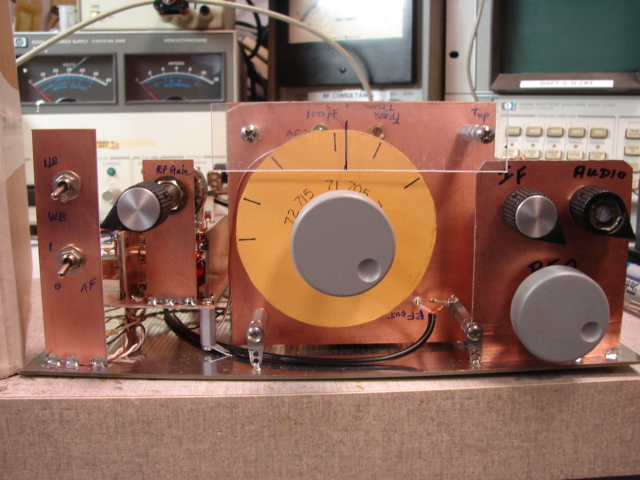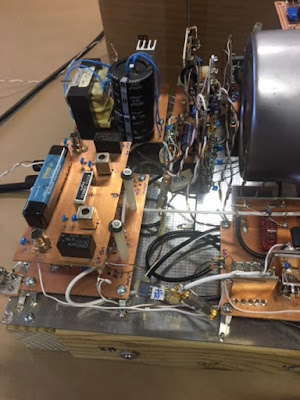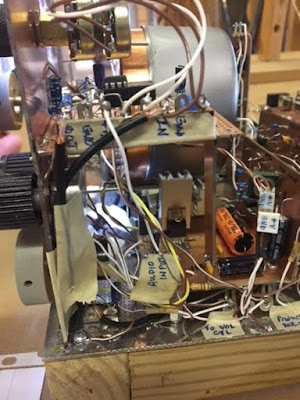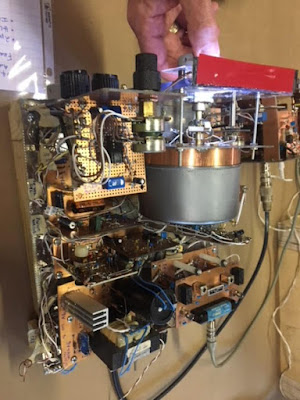
Mike WU2D on QSO Today with Eric Guth 4Z1UG

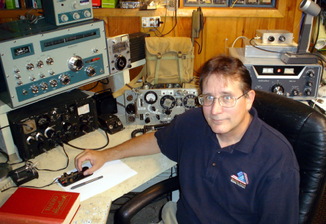
Eric Guth has a great interview with homebrew and boatanchor guru Mike WU2D.

Listen here:

https://www.qsotoday.com/podcasts/WU2D

Wow: “My receiver was from a Sherman tank.”

His story about getting in trouble after “borrowing” his friend’s callsign was really great.

I also liked his wise comment about how anyone who homebrews simple gear will collect some “wallpaper” from official observers and the FCC. Mike is right: we shouldn’t get too concerned about minor transgressions. If we do, we run the risk of becoming so careful, cautious, and fearful that we never BUILD anything.

There is a wonderful discussion of the Paraset.

Mike coins a term that we might want to add to the SolderSmoke lexicon: RetroQRP. (Over to you Steve Silverman. Your call OM.)
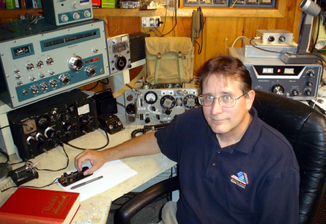
Mike WU2D on QSO Today with Eric Guth 4Z1UG

Eric Guth has a great interview with homebrew and boatanchor guru Mike WU2D.

Listen here:

https://www.qsotoday.com/podcasts/WU2D

Wow: “My receiver was from a Sherman tank.”

His story about getting in trouble after “borrowing” his friend’s callsign was really great.

I also liked his wise comment about how anyone who homebrews simple gear will collect some “wallpaper” from official observers and the FCC. Mike is right: we shouldn’t get too concerned about minor transgressions. If we do, we run the risk of becoming so careful, cautious, and fearful that we never BUILD anything.

There is a wonderful discussion of the Paraset.

Mike coins a term that we might want to add to the SolderSmoke lexicon: RetroQRP. (Over to you Steve Silverman. Your call OM.)
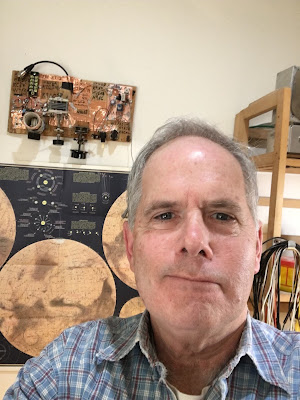
Hangin’ it up (the ET-2)

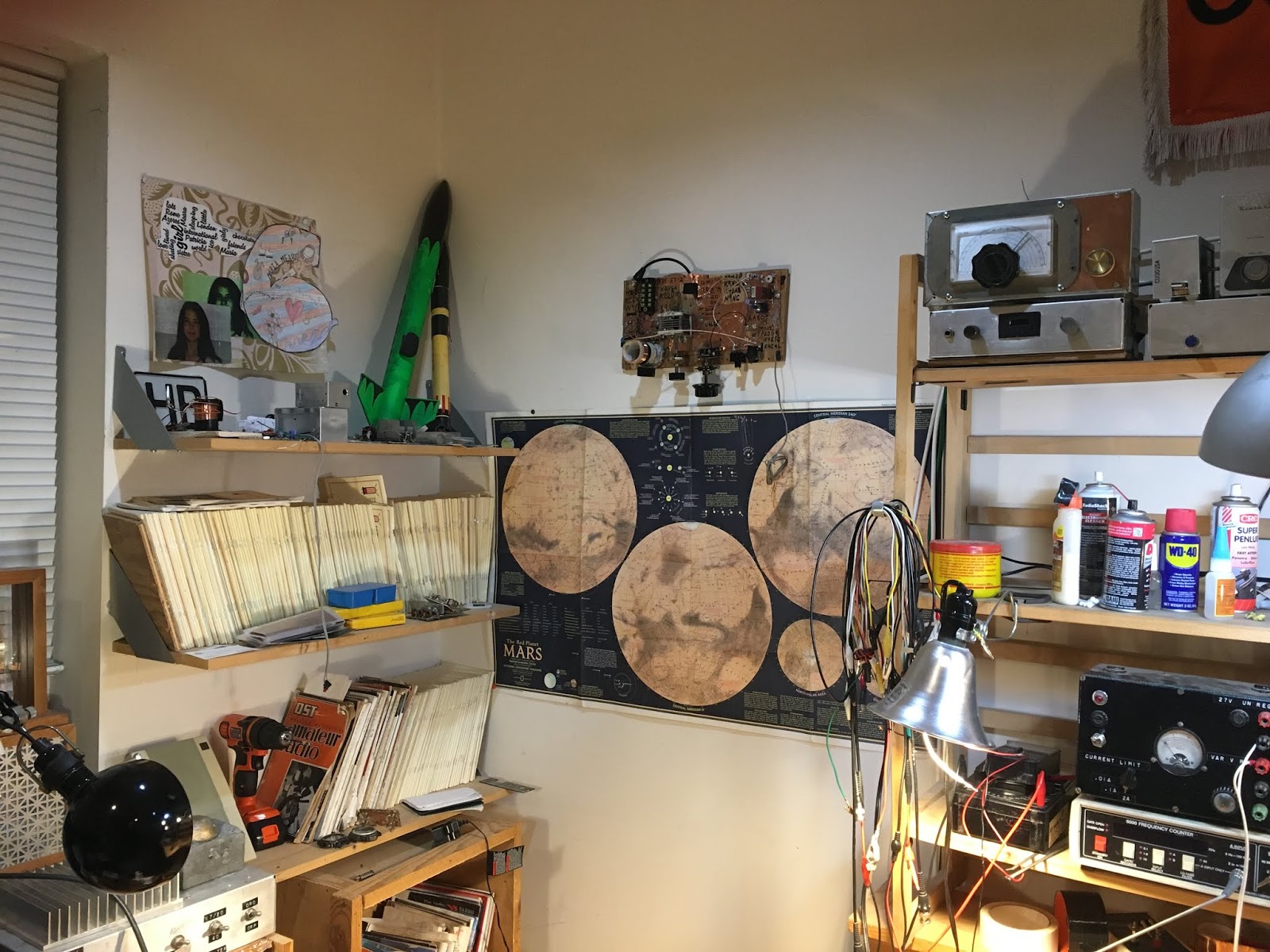
My ET-2 minimalist QRP CW adventure is (for now) officially over. I have taken the rig – festooned with the callsigns of all the stations I contacted — and have put it up on the wall. This may be a new form of art. I think I am the first radio amateur to do this. I think it is pretty cool.
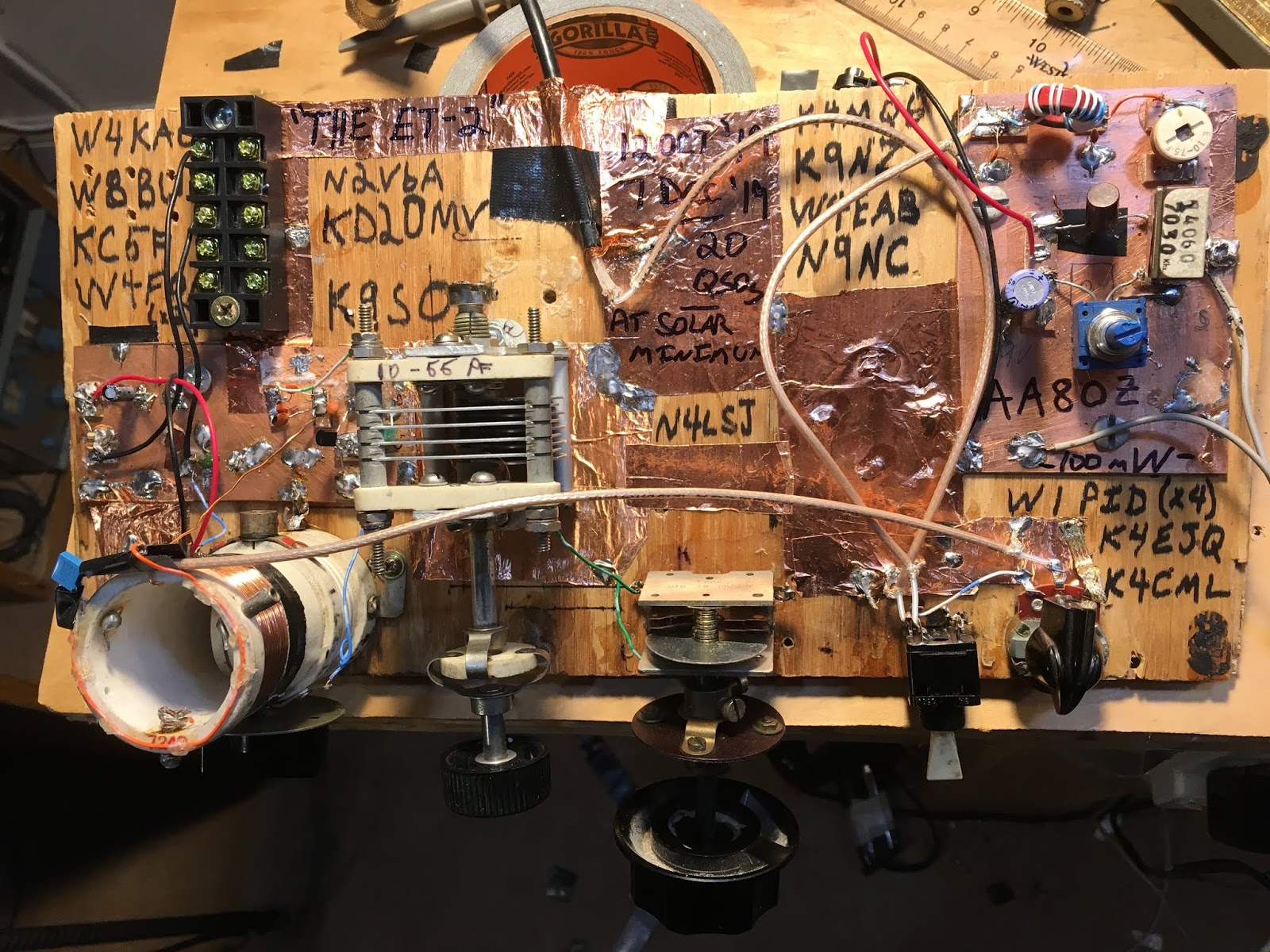
Here are the stats: I made 20 contacts with the rig. I had it on the air from 12 October 2019 to 7 December 2019. Seventeen of the contacts were the result of my posting pleas for help on the SKCC Sked page and/or the Summit DX page. Three of the contacts were completely random. One station — W1PID — provided four of the contacts. Thanks Jim.

My power out was usually around 100 milliwatts. I used either a 40 meter coax fed dipole or a 135 foot doublet fed with window line.

My best distances were Wisconsin and Georgia.

Crystal control was the real limiting factor. 100 milliwatts didn’t seem to be much of an impediment. The most amazing thing about this rig is the N0WVA regen receiver. It took a lot of peaking and tweaking, and it took some skill to operate. but once I got it going it was an amazingly good receiver. Really Amazing for just ONE J-310 FET.

The last contact was really nice. I was calling CQ and AA8OZ came back. He was in a cabin on a trip with some scouts. He too was on a wire antenna. He was one of those guys who said WOW! when I told him about the rig. We had a nice long conversation on 40. It was a great way to wrap up the ET-2 adventure.

Thanks to all who helped me make contacts and for all those who tried to work me. Thanks to N0WVA for the regen inspiration. And thanks to Glen Yingling W2UW (SK) for the ET-1 idea.

The rig is standing by. On the wall. Perhaps it will return to service, maybe during solar max.


My QRPp Signal Arrived in Utah — 100 mW, 1950 miles, 26 db Above the Noise!

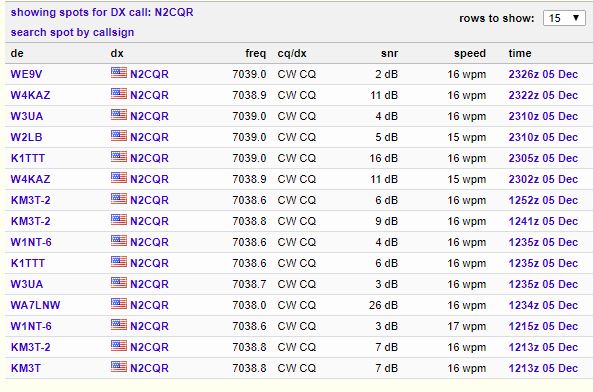
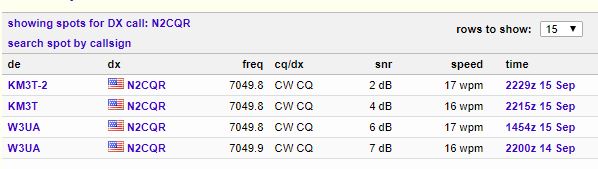
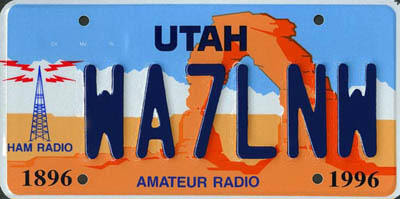
So yesterday morning I was calling CQ on 40 meters with my ET2 two-transistor 100 mW rig. Later, I took a look at the Reverse Beacon Network (RBN). Among the East Coast skimmer stations that regularly pick me up I saw an outlier: WA7LNW in Utah. He’s 1950 miles from me. And the RBN reported that his receiver had me at 26 db above the noise.

Here is a screen shot of the RBN report. Note the time: 1234 UTC. Around sunrise here — so gray line conditions.


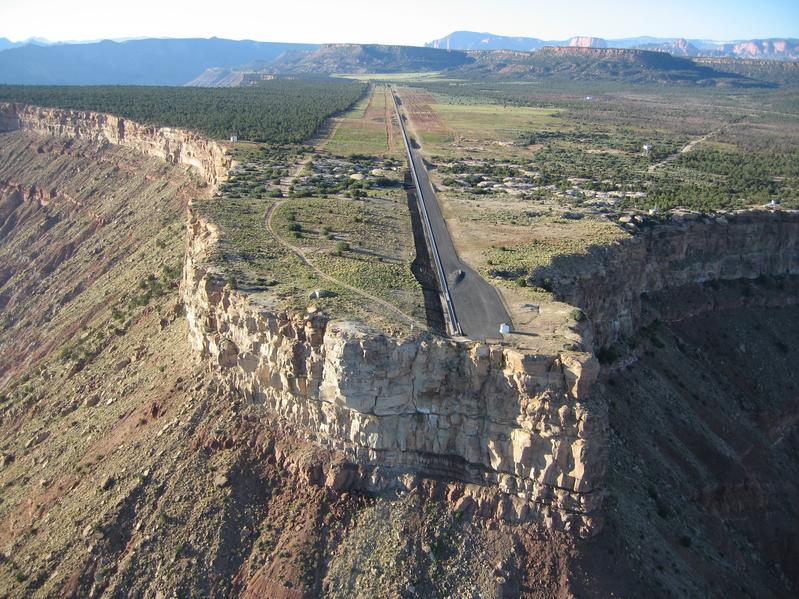
But the really BIG factor explaining that 26db s/n ratio is WA7LNW’s location:

“Realtime spots are being received at this location and uploaded to the Reverse Beacon Network.”
“CW Skimmer antenna is located on cliff edge overlooking the Virgin River Valley, 1,200 ft. below.”

We reported on the WA7LNW RBN station back in 2013: https://soldersmoke.blogspot.com/2013/03/edgy-skimmer-antenna.html


Check out Jack’s QRZ.com page:

RBN is an important resource for QRPers and homebrewers. Three cheers for Jack and all the skimmer stations. Thank you all.

ET-2 Contact #18 W4FOA — RANDOM, UNSCHEDULED, AND NOT SPOTTED (Video)

On December 1, 2019, my 100 milliwatt signal flew more than 500 miles to reach Tony W4FOA in Chickamauga, Georgia. And — icing on the cake — this was a random contact. Tony just heard my CQ on 7038 kHz — he had not been alerted to my CQ by any spotting site or by the SKCC Sked page. I made a quick video of my side of the contact (above).

In a follow-up e-mail Tony explained how my CQ sounded to him:

“I was just listening on the 40 meter band and having been a QRP’er for 50+ years, I tend to notice the weaker stations, thus explains my calling you. Also, your signal had that little “sound” of “yesteryear” when signals were not all pure, hi. Had it not been for the QSB and QRN we could have had a long chat despite the weak signal from your QRPp. Over the years I have QRP DXCC, 2 way QRPARCI WAS, and my best DX was two QSO’s with 2 different VK7 stations on 40 when I was running 1 watt. I’ve had a lot of different QRP rigs and still have some home brew stuff plus a couple of HW8s, HW9, Elecraft K2, etc…”


From Tony’s QRZ.com page, we learn more about his ham radio activities (note his homebrew rigs and his obvious affection for the Drake 2B and 2BQ)

First licensed as WN4FOA in April 1954. Other calls held include EL2AD, 7Q7AA, PY1ZBA. Prefer to work CW but I do work some SSB, primarily DX-related. Enjoy chasing DX on all HF bands. Have 9BDXCC and I now have worked and confirmed all of the current DXCC countries . I enjoy QRP operation and currently use an Elecraft K2 (#2213),Ameco AC-1, Kenwood TS-130V SW-40, DC-40, HW-8 (2), Heathkit HW-9 Deluxe (WARC) PSA-9 HFT-9B SP-99 HM-9 HD-420 VLF, MFJ 40T and MFJ 40V VFO, and a homebrew 6AG7/6L6 or a 6C4/5763 etc. I also enjoy operating boatanchor gear which includes a Johnson Viking Adventurer, Viking Challenger, an Eico 720 and an Eico 723 with a HG-10B VFO and a Heath AT-1 and a Drake 2NT. Recently added a neat Lysco 600 transmitter and a Knight Kit T-60, Johnson Viking II, and a Ten Tec 544. Boatanchor receivers include a Hallicrafters SX-100, SX-110, SX-71, Drake R4C and the incredible Drake 2B/2BQ combo. Recently added a Kenwood TS-830S, VFO-240, AT-230 and SP-230.
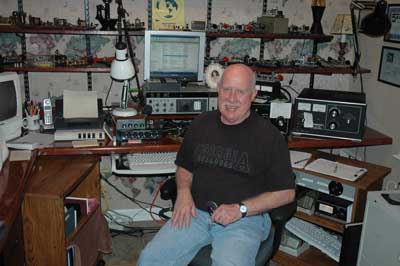
Tony W4FOA

Thanks a lot Tony. 73

Notes and Video on Doug N0WVA’s Amazing Single Transistor Regenerative Receiver

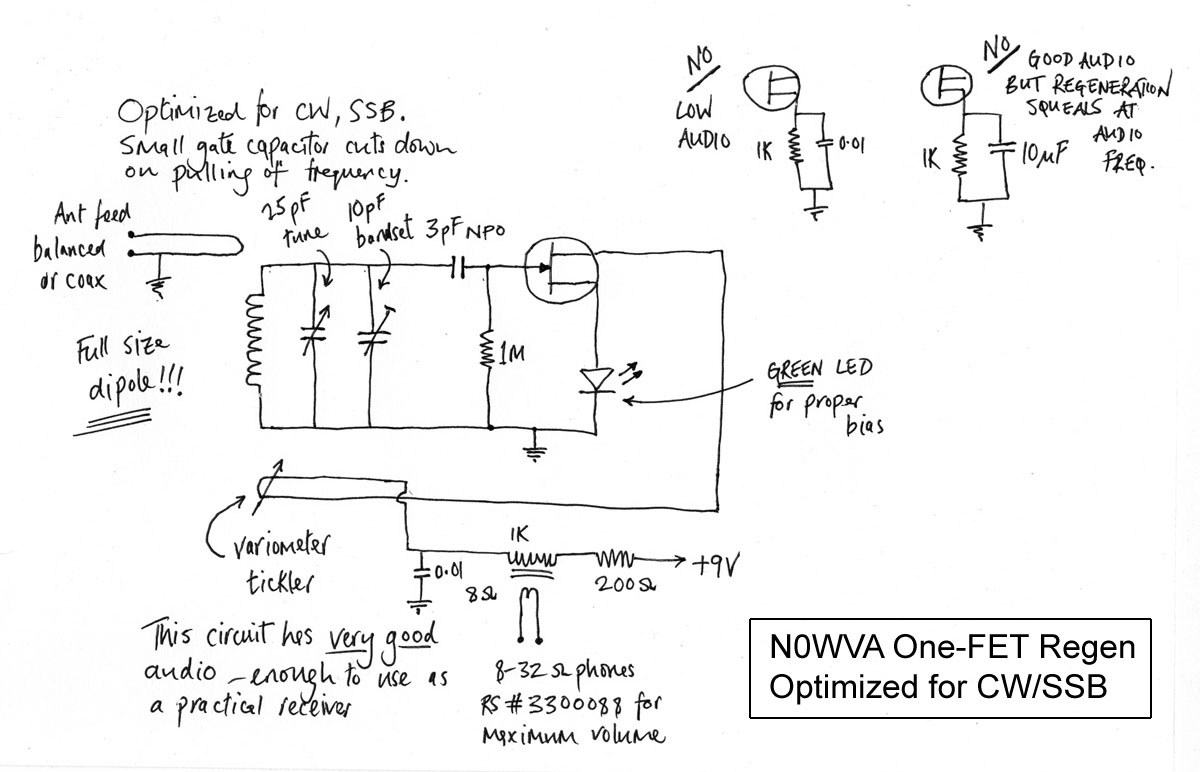
When I had trouble getting the regen receiver in W2UW’s ET-1 circuit to work, I turned to the internet and — through AA7EE’s site — found the circuit of Doug N0WVA. This circuit has completely changed my attitude toward regen receivers. I have been exchanging e-mails with Doug — below is a compilation of the info and regen-wisdom that he has shared. More to follow… Thanks Doug.

From Doug N0WVA:


I came up with the diode after exploring ways to ditch the source r/c combo. The thinking was the closer I could get the source to ground the less voltage/capacitance fluctuations the gate would see. Also I hated seeing everyone using .01 bypass to avoid audio oscillations and also losing audio gain.

The green LED works good but even better is directly grounding the source. Then feed a small negative bias through the gate leak resistor , adjustable via a potentiometer.

On video, the audio is taken straight from the radio shack headphones that are connected to the audio transformer. The headphones are held directly to the phones case ( no hole for the microphone seen on the phone)

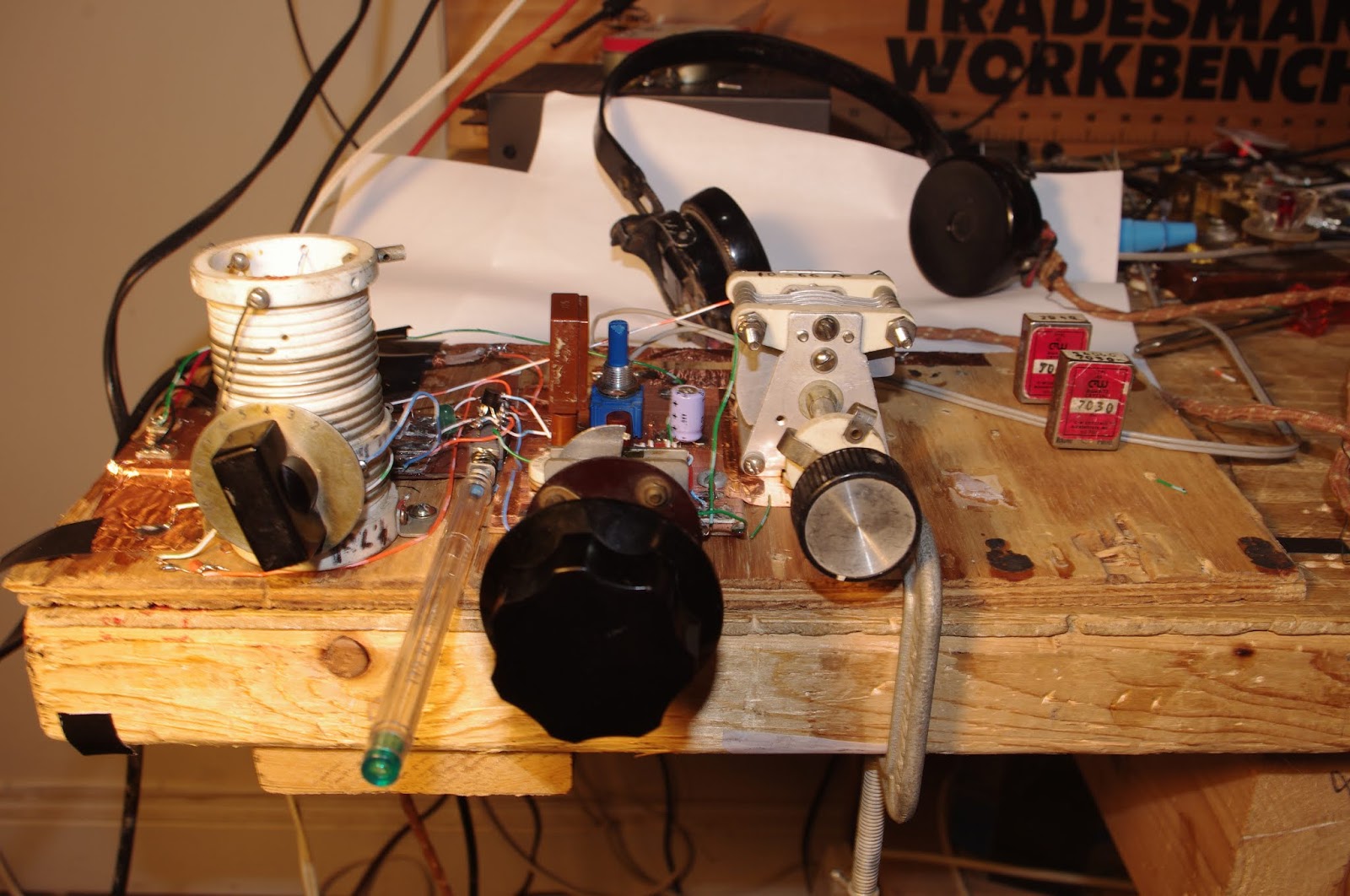
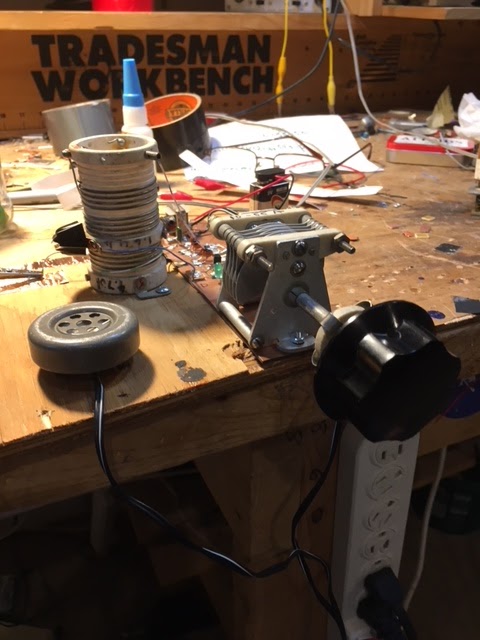
The variometer is made with I think a 1.25 inch pill bottle and the tickler inside is around an inch in diameter pill bottle. I used a pharmaceutical syringe’s outside tube for a shaft. The tickler form has a couple holes cut for the shaft to pass through, it is a friction fit, more like slits cut and the rod pushed through. I used the soldering iron to melt round holes on the actual outside coil form for the shaft to turn on. On the back of the shaft is a small screw that goes through the outside coil form and screws into the syringe center hole that holds it in place. The tickler is one turn, I think, and routed through the inside of the shaft via small holes melted with the soldering iron.

A couple tweeks to mention is instead of a resistor in the gate, use a choke for less noise, makes a big difference, especially if you listen to AM. Also I have been using a gimmick for the gate cap. Just maybe a #36 enamel wire wrapped around the hot tank lead 5 or 6 times and then I remove turns till the thing stops oscillating, then add a turn. This helps cut down even more on strong signal pulling.


I have always been on a quest for more performance out of the least parts. This design was about as far as it could go, I think….

I have never done any real sensitivity tests on the regen, so you have gone farther than me already. One thing was noticed though is the gate resistor does add a lot of noise, especially noticeable just under oscillation in AM detection mode. So I took a one meg 1/4 watt resistor and wound as many turns of #38 wire on as I could, probably around 80 turns, then subbed it out for the gate leak. This dramatically improved the noise level just under oscillation. This was with a simple antenna band noise test. I think it also improved the noise under oscillating conditions.

Adding extra antenna coupling will probably help a lot, but, there is a point where we start getting too much strong signal pulling. The strong external bias battery trick will also improve this, although at the cost of extra parts.

SV3ORA’s Amazing Homebrew Web Site

Kostas Giannopoulos has a lot of really great homebrew information on his QRP web site. It is reminiscent of the JF1OZL site. Check it out: http://www.qrp.gr/index.htm

For an example that his apropos of recent ET-2 discussions, Kostas has an extensive page with many, many versions of his hyper-minimalist rig:
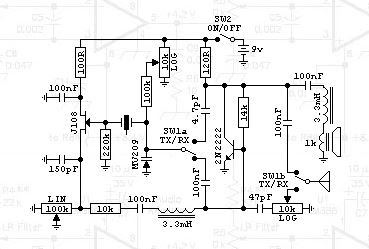
Link to this project: http://qrp.gr/allbandtrx/
Thanks to Kostas for putting together such a great site. And I really like the name of the site: Discrete Electronics. FB.

SPRAT, the FETer, DLR headphones, and recent QSOs on the ET-2

Yesterday we had QSO #13 on the ET-2. This was with Jim W1PID. In an earlier contact Jim told me I had some chirp. I fiddled with the coupling cap and the bias pot and am now T9! These days, chirp is an endearing, nostalgic problem to have. Thanks for the report and QSOs Jim!

Contact #9 was with Fred K9SO. He is in Wisconsin and QRZ.com put our distance at 633 miles. That is our DX record so far. Not bad for 92 milliwatts to a dipole on 40 meters.

Most of my contacts come as a result of pleas for assistance on DX Summit or the SKCC Sked page. But I did make one “random” contact: Contact #6 with N2VGA. He just heard my CQ and gave me a call. FB.

I checked to see if OM Glen Yingling W2UW — the guy who started all this with his ET-1 — is still around. He became a silent key in 2012. But his ideas live on…

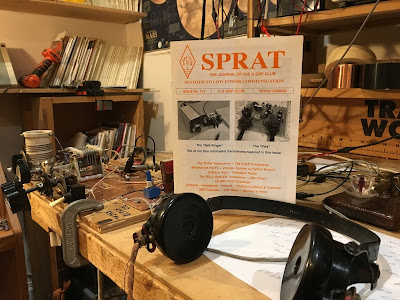
SPRAT 137 (Winter 2008/09) has a great article by QRP hero G3XBM. Roger built a version of the ET-1. His was for 80 meters and he called it the FETer. FB. I was struck by his estimate of the sensitivity of the ET-1 receiver: -100 dbm. I measured the N0WVA receiver (the one that I am using) has having a minimum discernible signal of -93 dbm. Pretty close. We may be at the limit of what you can expect from a single transistor receiver.

SPRAT 137 had something else that really resonated with me. G3YVF had an article on a minimalist rig using only one 6V6 tube. Geoff opened the article with this warning “Don’t try this unless you have a set of balanced armature type DLR ‘phones as they are really sensitive.” I have a collection of old headphones that I picked up at hamfests in London years ago. When building the ET-2, I checked all the old phones for sensitivity. A set marked DLR was the most sensitive. So Geoff’s observation had been independently confirmed. QRP Quarterly had an article comparing the sensitivities of old headphones — we should dig that article up.

SPRAT #137 is a reminder of what a great resource SPRAT — The Journal of the GQRP Club — really is. As we say on SolderSmoke, if you are not a SPRAT subscriber you are just wrong! Here is how to join GQRP and subscribe to SPRAT: http://www.gqrp.com/join.htm
Melbourne Australia — QRP By the Bay 2019

Each November, Peter Parker VK3YE and his ham colleagues from Melbourne share with us reports on Peter’s annual “QRP by the Bay” event.

I think VK3HN should seek a trademark for that hat. As soon as I saw it on the table in the video above, I knew these were Paul Taylor’s rigs. FB Paul. Here is Paul’s report:

https://vk3hn.wordpress.com/2019/11/02/qrp-by-the-bay-chelsea-beach-melbourne-2nd-nov-2019/

Great work guys. Thanks a lot. 73

QSO #3 with the ET-2 Minimalist Transceiver

The Radio Gods were clearly supporting me on 16 October 2019. I had sent out a plea for people to listen for the 80 mW CQ from my ET-2 rig. I had specified 0930 Eastern as the time. Little did I know that there would be a contest at that hour (on a Wednesday morning!) on 40 meter CW. There was no chance of my signals getting through. I leaned that the contest would be over at 1000 hours, so I waited and called CQ again at that hour. Jim W1PID had guessed that I would do that. I immediately recognized his call — he was often at the other end of Michael Rainey’s most daring low-power adventures. He was a participant in the famous Rexpeditions, including a coastal effort to send Michael’s voice-powered CW signal across the Atlantic. His normal operating habitat is in the field. We had a wonderful QSO. He told me I peaked at S-6.
I have worked W1PID on at least two Straight Key Nights and this blog has had many postings about his long-standing involvement in QRP.
Thanks a lot Jim!

Single Transistor Transceiver On the Air

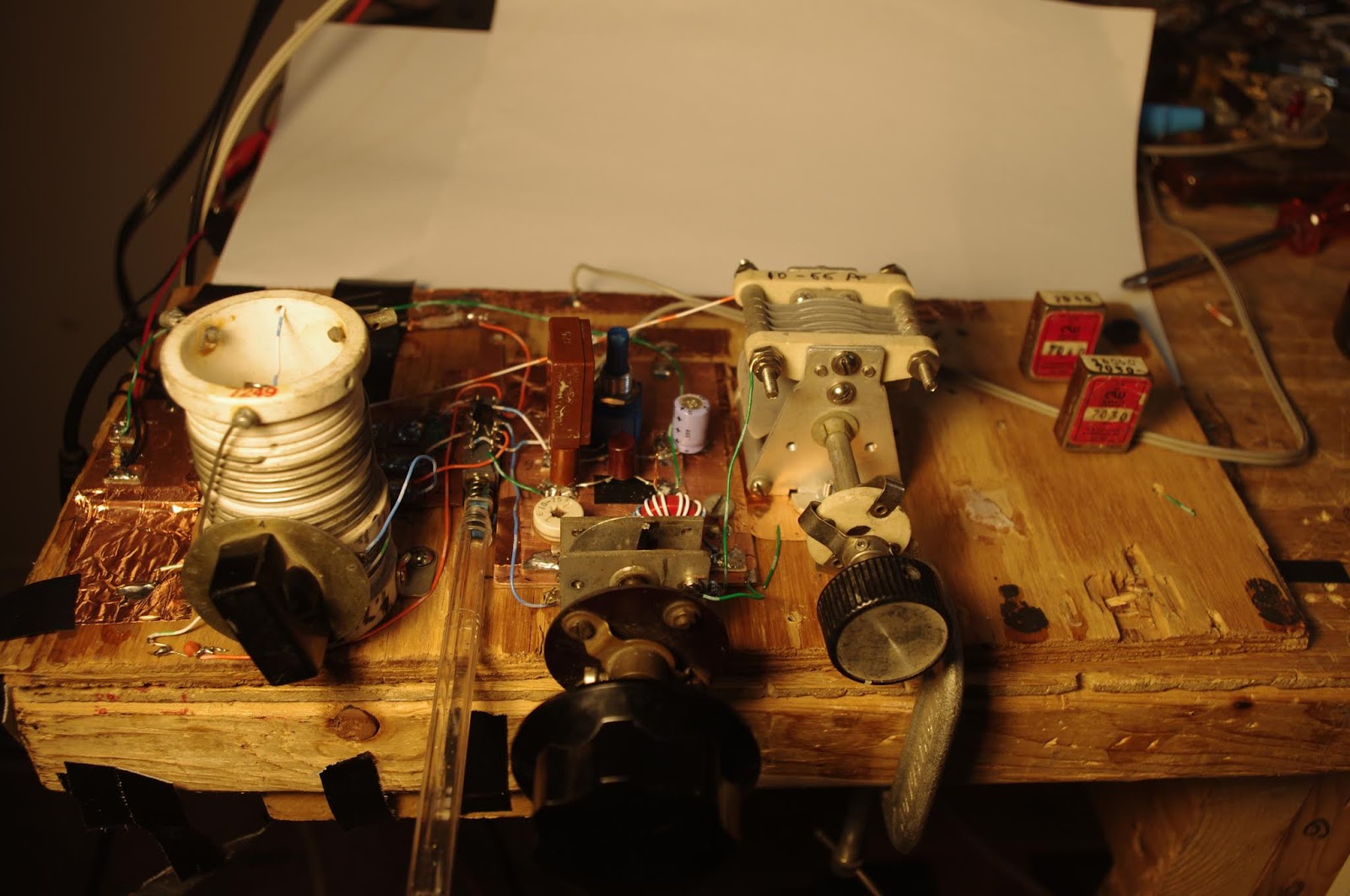
I got my version of the ET-1 transceiver working. As I described in previous posts, I first got the transmitter and the receiver working separately, each with their own J310 FET (oh the extravagence!) Then I built a switching arrangement that allowed for just one shared FET and very short leads. I used a 4PDT “push button” switch from an old Ramsey Electronic LC meter. See the last picture for details. I use the tube from a pen to operate the switch (that’s the green thing in the picture).
It is inhaling and exhaling. My 20 mW signal is being picked up on the Reverse Beacon Network, mostly in New England, but today in North Carolina.

No contacts yet. I may have to resort to scheduled contacts. OM Yingling W2UW was operating during much better propagation conditions (2001), so I don’t think I will ever get close to his impressive (23 states!) operating record.

But it has been fun getting this thing going. The N0WVA regen design is one of the best and simplest regens I’ve ever built. It is really nice –hardly demonic at all.

I can run the whole thing off one 9V battery. I think it is a cool looking machine.

W4AMV’s Beautiful Receiver

Hi Guys,

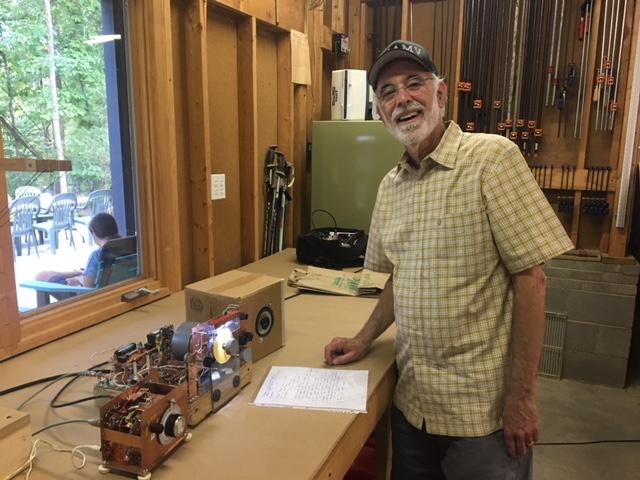
We had our Knightlites annual BBQ this past Saturday. I wanted to share one of the radios from one of my Elmer’s, Alan Victor W4AMV.
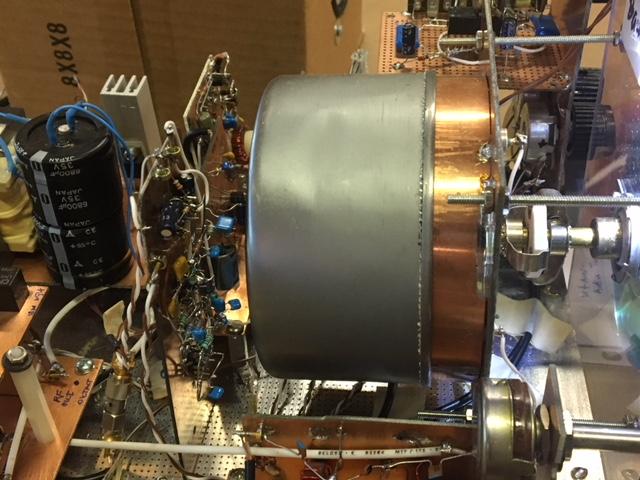
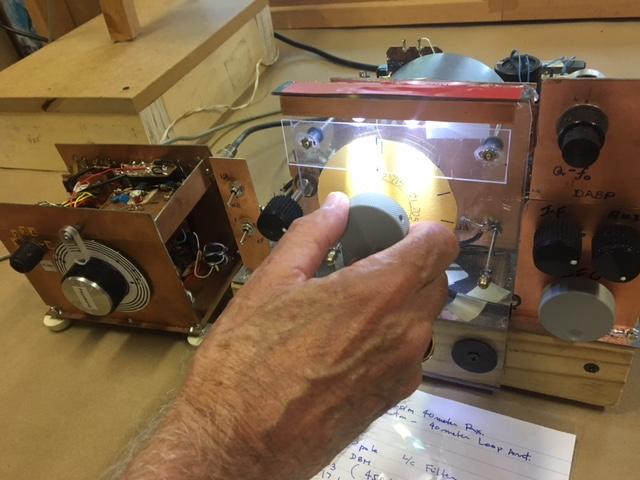
Pictured is him standing beside the preselector and receiver.
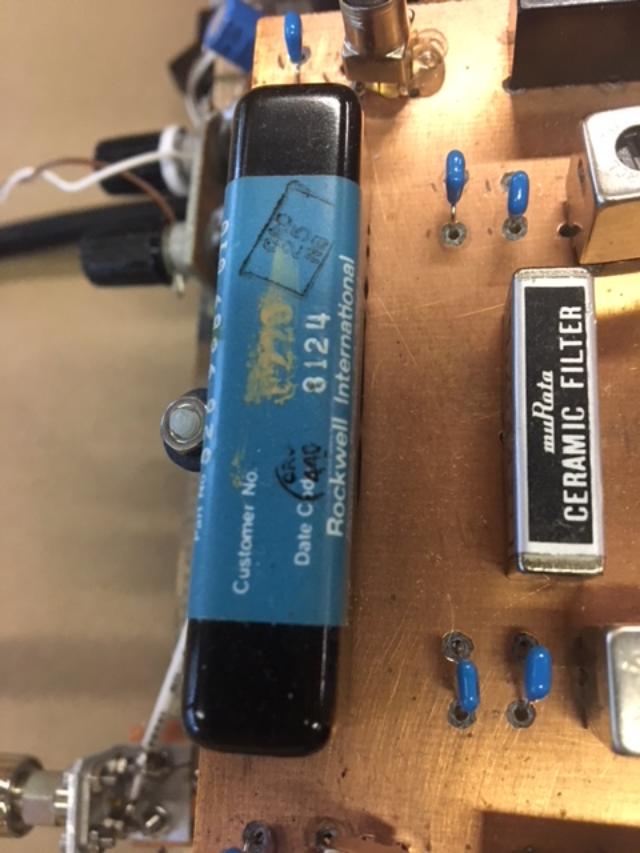
I hadn’t ever heard a Collins mechanical filter vs Murata crystal filter side by side. The Collins was amazing. Single signal extracted from the band. The rig is line powered with a built in power supply.
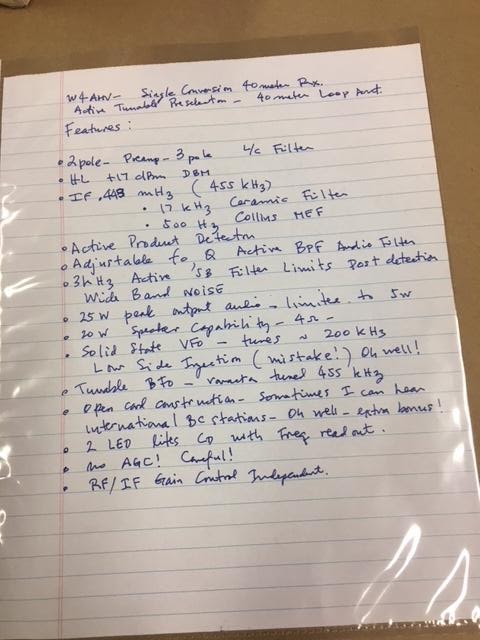
There is a note (pictured) that has some specs.
Alan’s work is to be savored, true analog engineering at its best. I wanted to share it with you.

Chris
KD4PBJ
————————————-
FROM W4AMV’S QRZ.COM PAGE:

Here is a receiver that started out as a regen for the grandkids to copy code.
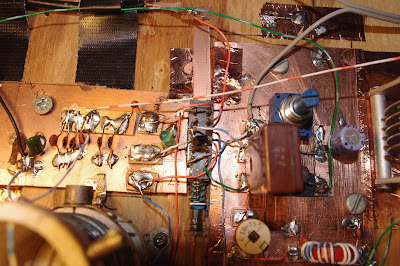
Digging through the junk box un convered parts that I forgot I had. Included a wide and narrow band set of filters. So, the unit wound up as a single conversion superhet. A fun radio to build as well to listen. The wide band filter provides super fidelity on sideband as well uncovers plenty of CW signals within a 10 kHz bandwith of the tuned frequency. A switch to either a 800 Hz audio filter or a 500 Hz CW filter permits focus on a single signal. I was going to package the whole unit, however I was prompted to leave it OPEN to show what makes it tick!

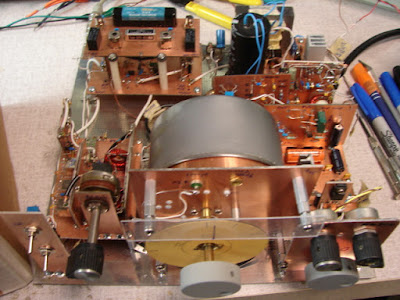
Left side front is the RF preselector, mixer and pre amplifier with RF gain control. The rear double deck card is the IF and selectable wide and narrow band filters. The IF and pin diode IF gain control is bottom deck. The HF VFO is center stage with a 6:1 gear reduction. Right rear is power supply and voltage regulators. The active product detector and a BFO is just to the front of the power supply. The BFO is able to tune product detector output over a full 10 kHz of the IF. And finally the audio filter and 5 watt power amplifier. There is no AGC. Instead it is FUN to control every aspect of gain control of the receiver; RF, IF and audio. Its a fun receiver to operate, dedicated to 40 meters and hopefully will spark the kids!

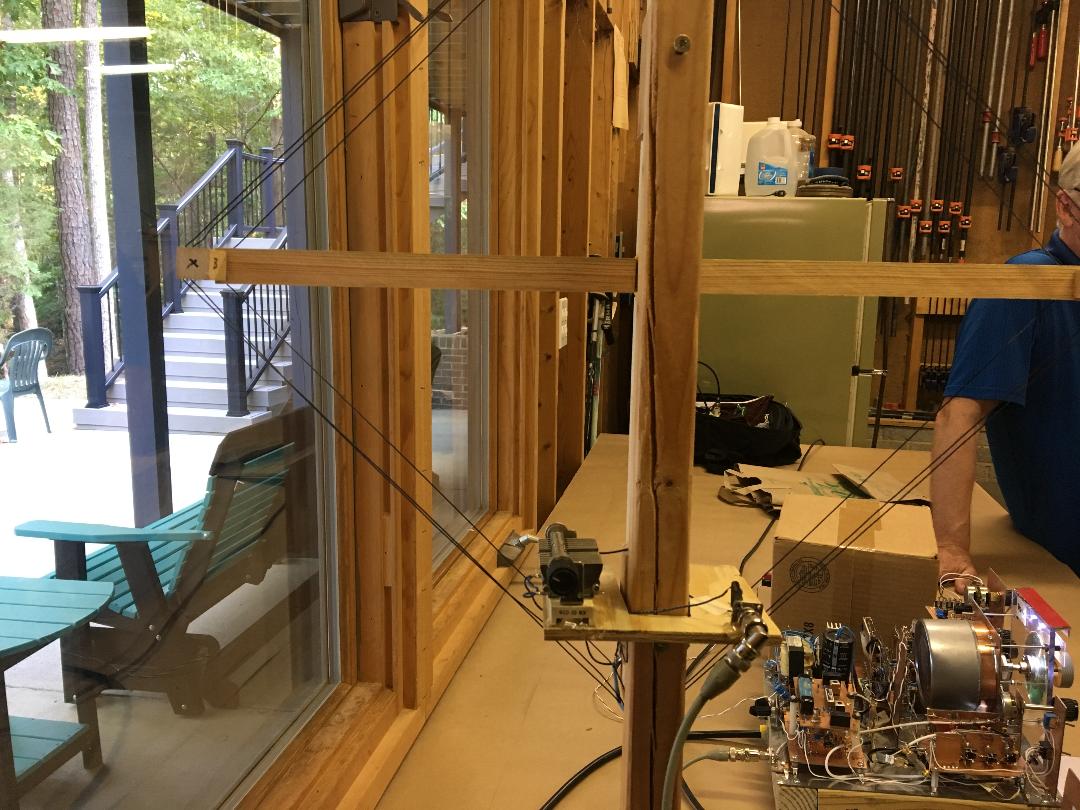
Going forward a receiveing station is setup to copy code. Although a nice long high wire would be proper, I settled on something a little more compact. A 40 meter small loop, 2 turns, about 18 inches on a side is connected to the preselector thru a pickup wire. This arrangement works quite well. W1AW will knock the speaker off the desk if your not careful. However, rotation of the loop to the E-W knocks down W1AW to a whisper. The pix shows the little 25 W infinity speaker in a 8x8x8 inch cardboard box, works well and the single conversion receiver sporting a new front plexiglass panel is illuminated for evening tuning.
————————————————

Loop antenna used with the receiver

ONE VOLT rms Reaches New Hampshire from Virginia

My son Billy was back from college over the weekend (he came back to help me celebrate the completion of yet another orbit of the sun). I was showing him my 8 part rig and telling him that it puts out 20 mW. He asked a good question (he is a scientist): What is the voltage at the antenna terminal. I checked: ONE VOLT rms. About 1.414 volts peak. Think about that. My transmitter is sending a signal to New Hampshire from Virginia on less than the voltage of AA battery.

Two more spots on the Reverse Beacon Network (see above). Another skimmer station in New Hampshire. My signals seem to like the granite state.

Single Transistor Regen Has QSO Potential (Video)

In my previous blog post I’d expressed skepticism about using a single transistor regen on the air. But over the years I’ve learned to give new receivers a chance. They usually don’t work perfectly on the first try. You have to work with them. It is almost as if you have to peak and tweak a lot in order to get them to properly inhale signals from the ether.

That has been the case with this little receiver. I found some silly mistakes in my construction. And I decided to try some more sensitive headphones. I ditched the 1000 to 8 ohm AF transformer. And I added a very small variable cap for fine tuning.

The results are amazing. See video above. It performs as well as most of the direct conversion receivers I’ve built. It is remarkably stable.

I do think I could make contacts with this receiver. I might eventually go the full ET-1 route and try to do it with a single switched FET, but I think my next step will be to built a single transistor crystal controlled transmitter on the same piece of wood, and try to make some contacts with a two-transistor rig.
Another Bout of Minimalist Regen Madness

My success with the Fish Soup 10 QRPp transceiver got me interested in further minimalization. About ten years ago I built a rig presented in SPRAT 108 as the ET-1 by Glen Yingling W2UW. It re-appeared in modified form as the FETer by G3XBM in SPRAT 137.

This rig uses just ONE active device, an MPF-102 FET that is switched via a 3 pole double throw switch from transmit to receive. The transistor is switched. The receiver is a regen and the transmitter is a very simple crystal controlled one stage oscillator. See:
https://soldersmoke.blogspot.com/search?q=ET-1 for info on my ET-1 effort.
The transmitter was the easy part. I don’t think I made any contacts with this thing. That has been kind of bugging me.

So I tried it again. Again, I had trouble with the receiver. So I looked around for another single FET regen receiver design. I found one on AA7EE’s page. It was designed by N0WVA:
https://aa7ee.wordpress.com/2015/02/07/n0wvas-one-fet-regen-optimized-for-ssbcw-sounds-great/
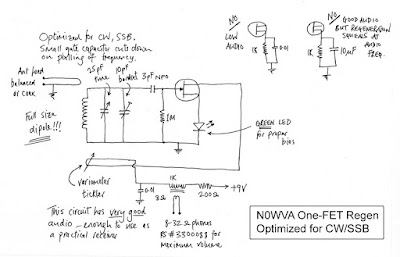
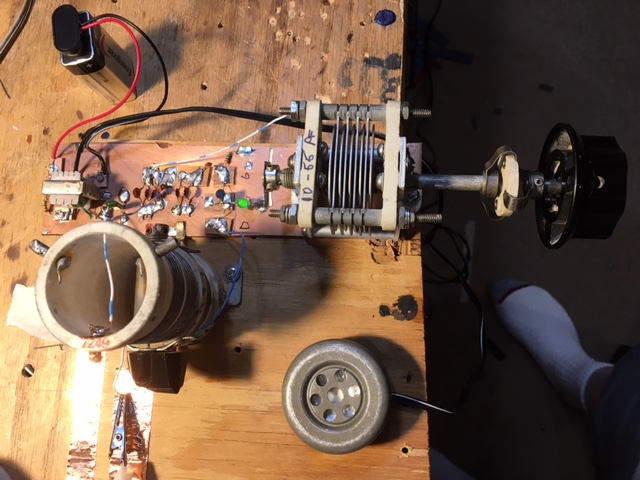
I’ve had a variometer in my junk box since about 1994. (Given to me by Pericles HI8P. QEPD.) It was time to use it as the coil and ticker for this rig. I liked the green LED in the source, and the promise that this thing would not oscillate at audio frequencies.

I built in on one morning. See pictures. It works. I can hear CW stations. But I think I would have a tough time making contacts with this thing. OM Yingling worked 24 states with his ET-1. Respect.

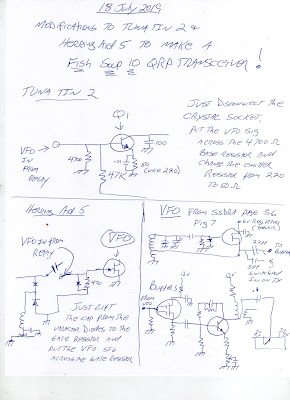
Making Fish Soup from Herring and Tuna (How to Build a Fish Soup 10 Transceiver)

Just in case some other fanatic someday thinks about trying to turn a Herring Aid 5 and a Tuna Tin 2 into a Fish Soup 10. This will also serve as a note to myself on how I did this. Above are my suggestions on how to get the VFO signal into the transmitter and the receiver. Both RX and TX can easily be returned to their original condition.