FLASHBACK: The Herring Aid 5 Direct Conversion Receiver and Frank Jones (Video)

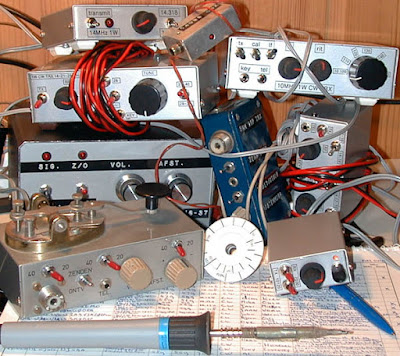
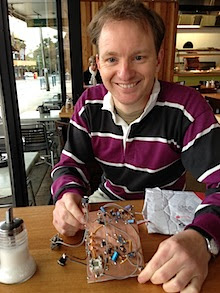
The Radio Gods seem to be pushing me towards Direct Conversion receivers. This week I was speaking via Zoom with the very FB L’Anse Creuse Amateur Radio Club in Michigan. My Herring Aid 5 tale of woe came up (see video above). Then Dean KK4DAS was sharing video of the amazing fidelity of the Pete Juliano Direct Conversion Receiver. Then I started thinking about Frank Jones W6AJF, and the story (fictional) of his build of the Herring Aid 5 by Michael Hopkins AB5L:

———————-

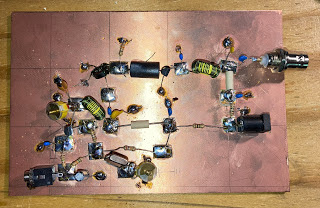
I gave Frank a board for the Herring Aid Five redux from the April 1998 QRP Quarterly and challenged him to build one up. It took maybe two hours and that includes his own touches which included refusing to buy any parts.

For the transformers, he calculated the turns ratios from the impedances and tested a bunch of TV set pulls ’till he found something close. But he made the output 1:1 because his Brandes phones are close to 1000K Ohms as it is.

He was willing to use toroids, but not to buy one, so I gave him an Amidon circular and he calculated the values of the 18 specified units. Then he wound them on unidentified cores from my junk box after learning the permeability of each with his homebrew dip meter.

A store bought Zener was out of the question so he mixed and matched regular diodes with transistors hooked up as diodes until he got close enough to 10 volts. The mosfets came out of a TV tuner and Frank will use any plastic bipolar that says “C” or “D” on it for a 2N2222.

Of course it worked the first time. He rigged up a patch to a pair of Class A push-pull 6L6s so Christie could hear it and she said it was “Also cute but bigger than the other one.”

Now a real QRPer would cry at that, but not Frank who sees no advantage in miniaturization at all. In fact, he mounted the whole thing in an old case from a Collins 6 and 2M transceiving attachment he junked out for the parts and no two knobs matched as Frank thinks matching knobs slow you down in a pileup. He wanted to take it back to his own shack and try it out with his breadboard MOPA and pair of 100THs because he does not run QRP, saying it “transfers the burden to the other guy.”
—————–
Frank Jones was one HARD CORE HOMEBREWER. No store-bought Zener diodes or toroidal cores for him!

All of the SolderSmoke Herring Aid 5 articles can be found here:

Thomas K4SWL — SOTA Activation on Bearwallow Mountain, North Carolina (video)

Thomas put out a very nice video of his recent activation of Bearwallow Mountain in western North Carolina. Really nice. It was fun to see the QSOs and the logging as he did it. Very cool that he worked Christian F4WDN — Jack NG2E also worked F4WDN on a recent activation in the Shenandoah area of Virginia.

More details on the activation here:

Thanks Thomas!

Barefoot Ham Radio — PA2OHH’s Wonderful Web Site

I first saw the link to Onno’s site on Peter VK2TPM’s blog. And at first I confused it with the site of another great homebrewer Miguel PY2OHH. This is all very IBEW: On the website of an Australian ham, I spot the web site of a Dutch ham living in Spain and briefly confuse him with a Brazilian homebrewer with a very similar callsign. TRGHS.

Onno PA2OHH has an inspirational approach to the hobby that he presents in a really wonderful website. Here is his intro to Barefoot Radio:

Barefoot technology and Barefoot power!

Barefoot technology or simple, non-professional radio technology and real Barefoot power or harmless QRP power, that is what you will find here. There are some complex designs but many designs are simple radio amateur circuits. They will never be used professionally!
These simple circuits and rigs can give you much fun: home brewing, portable activities during holidays, etc.
Batteries and inverted V dipole antenna’s with a fishing rod as the center support are all you need to make many QSO’s.

Much fun!
Barefoot technology and Barefoot power can give you much fun, but is not perfect… There are disadvantages like VXO control instead of a VFO, direct conversion receivers that receive both sidebands and simple frequency displays that are not so easy to read. But working with such simple equipment is often more exciting than working with a much better commercial transceiver.
Perhaps that you cannot believe that you can make many QSO’s with QRP power of only 1 watt. Indeed, some practice is needed in the beginning so do not give up too soon. Every boring standard QSO becomes an exciting experience with QRP power!

————–

Check out Onno’s site: https://www.qsl.net/pa2ohh/

Peter Parker VK3YE Inducted Into QRP Hall of Fame

Wow, I was really pleased to learn that Peter Parker VK3YE was a 2021 inductee into the QRP Hall of Fame.

This is a richly deserved honor. Peter Parker has been making extraordinary contributions to QRP and homebrewing for many years. I remember reaching out to him when I was just getting started with homebrew phone gear. I considered him a guru of DSB. He helped me a lot. Peter Parker was interviewed on the SolderSmoke podcast in 2013:

Peter has published many books and has produced many YouTube videos. He hosts an annual QRP gathering in his beloved home-town of Melbourne Australia that gets attention from solder-melters around the world.

Three cheers for Peter Parker!

Congratulations Peter!

VK3YE’s Web Site: https://vk3ye.com/

VK3YE’s QRZ.com page: https://www.qrz.com/db/VK3YE

Thanks to VK3HN for alerting me to this.

SST — QRP On The Beach

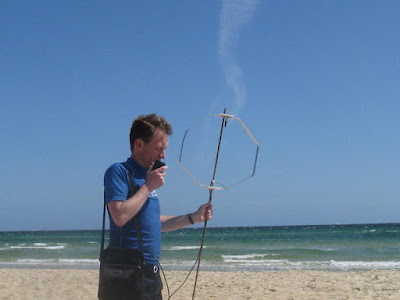
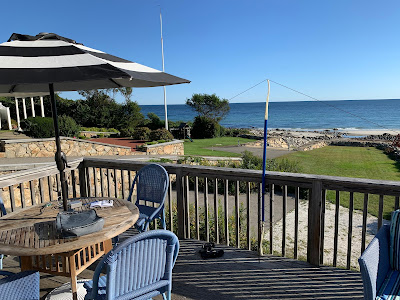
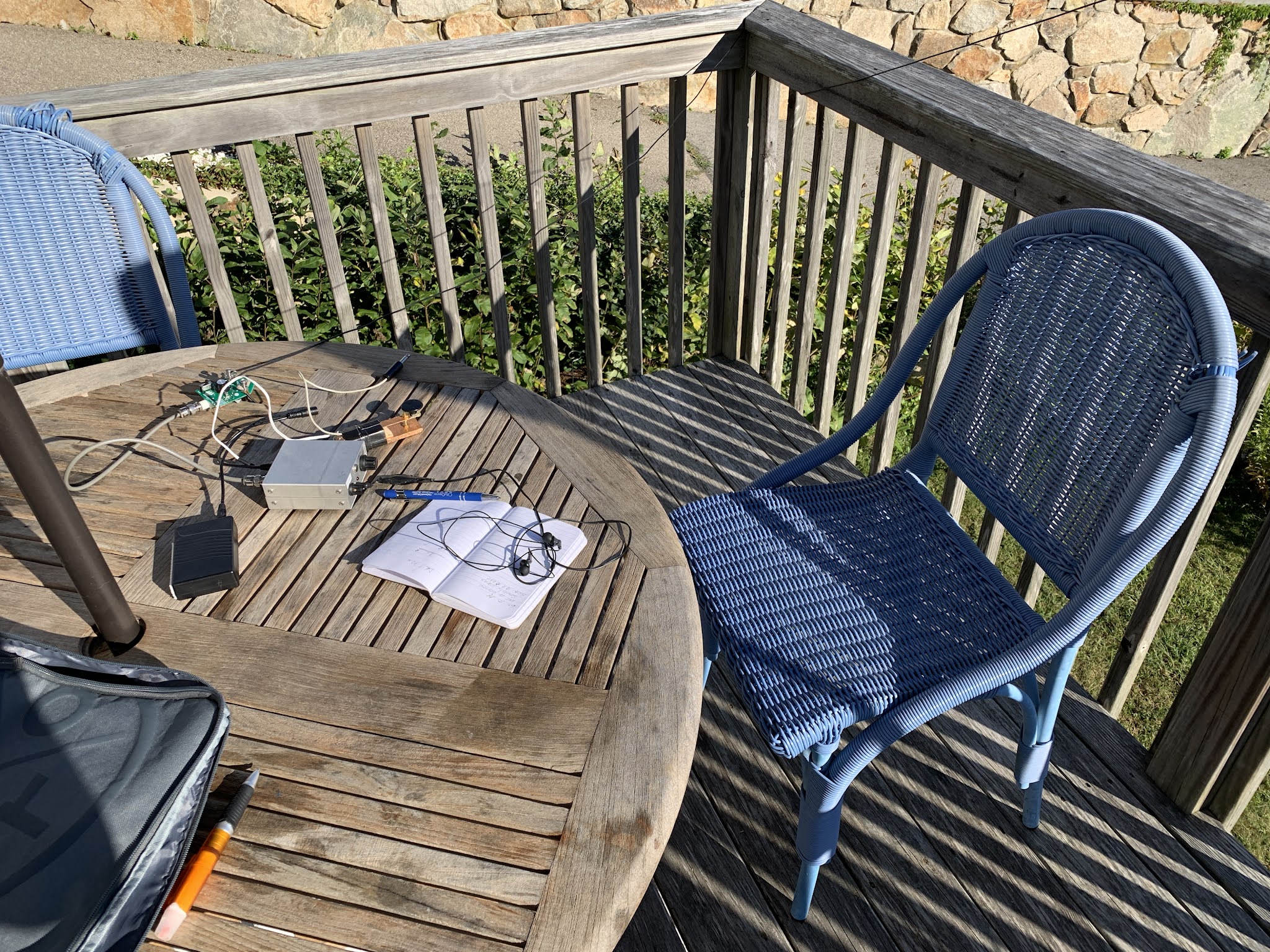
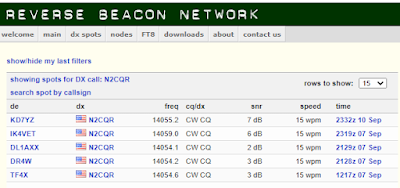
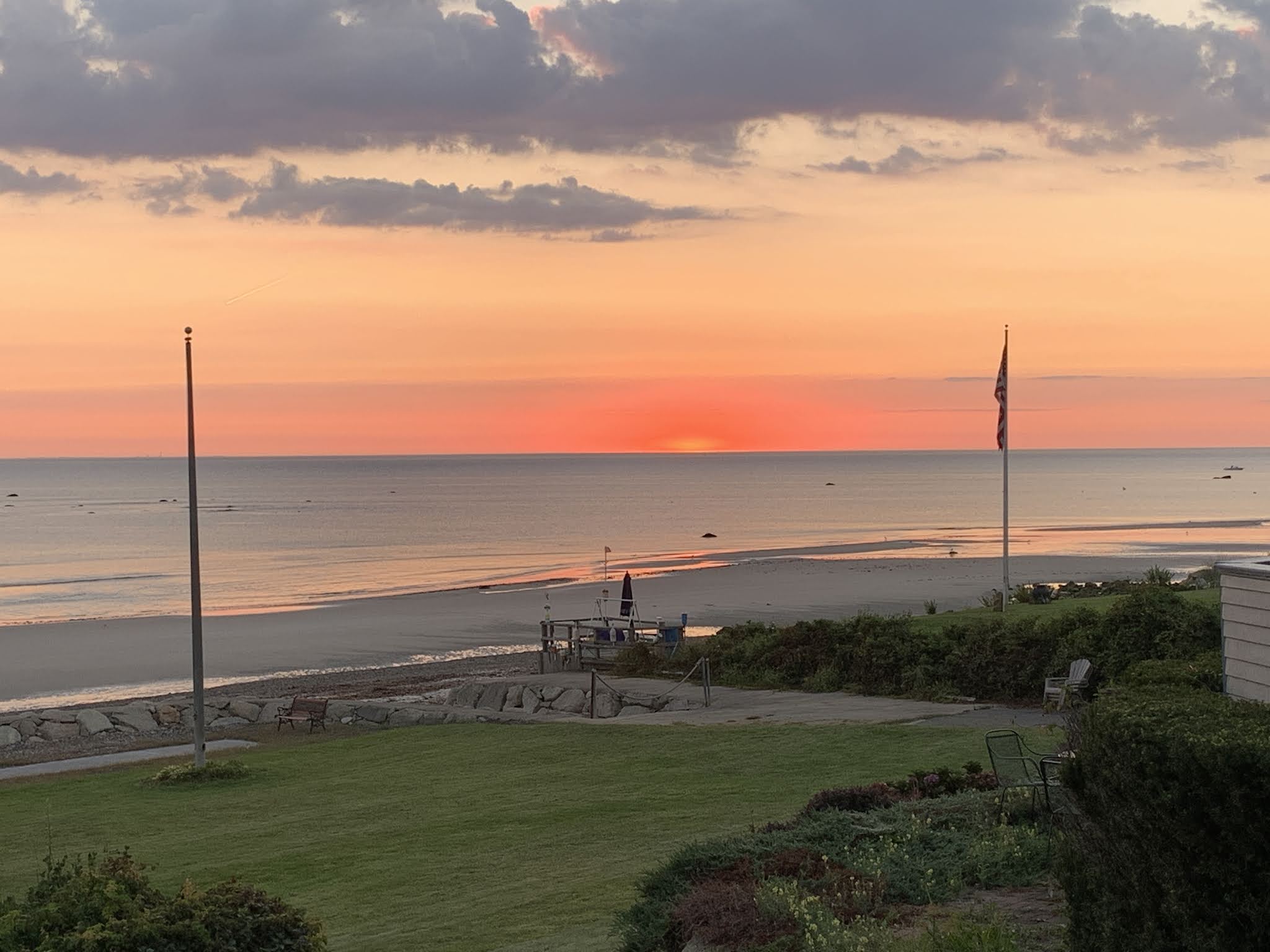
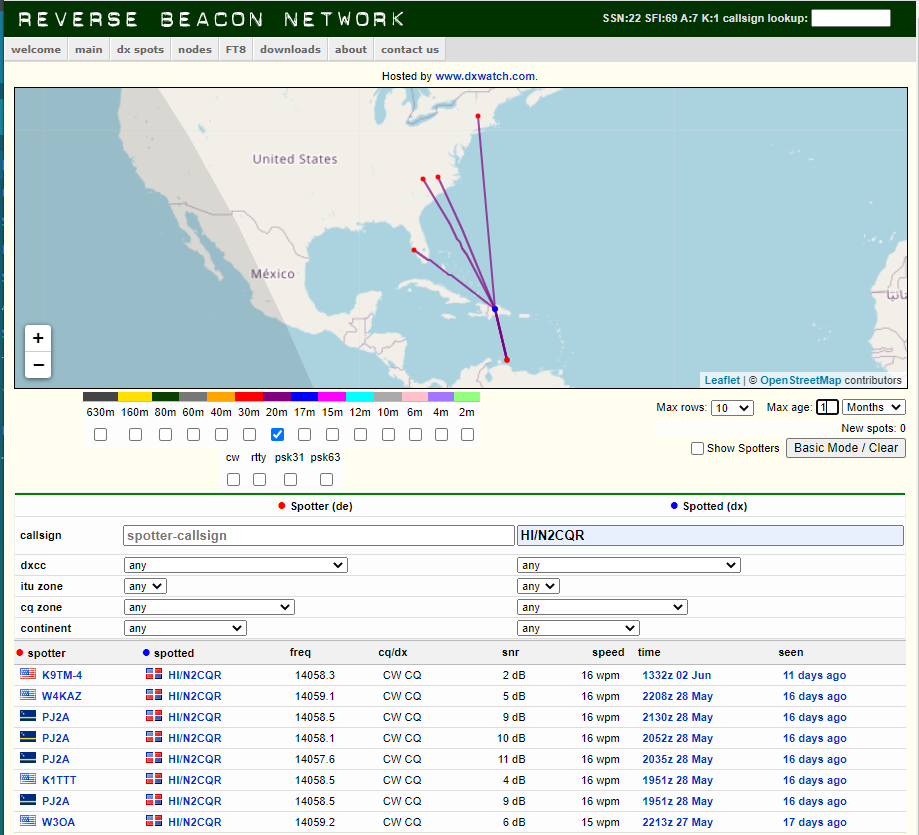
Up in a beach house on Cape Cod Bay in Massachusetts, I put the SST on 20 meters using an End-fed Half Wave antenna and QRP-guys tuner. Conditions were pretty bad, with solar storms causing disturbances in propagation, but I did manage to get picked up by RBN skimmers in Iceland, Germany and Italy (see below). And I had one nice QRP-QRP contact with DK4AN.
I was having trouble getting out until I used the oar to raise the central portion of the half wave antenna — that’s where the current is.
Thanks again to Bob KD4EBM for sending me the SST.

Video: E. Howard Armstrong and Early Radio

This is a really wonderful video. It might seem slow to those accustomed to faster-paced YouTube videos, but the information content is very high — it contains a lot of pictures I hadn’t seen before and audio of Howard Armstrong.

I never knew that the name of the radio company Zenith was derived from the early callsign “9ZN.”

As a Northern Virginian, I like the reference to NAA Arlington.

I used to live near Yonkers, N.Y. I remember Warburton Ave. What a fine shack young Howard had up in that cupola attic.

The photo of Armstrong’s breadboard was very nice. My Mythbuster is in good company.

QRPers will get a kick out of the newspaper headline “New Radio Marvel Revealed!” (They cut the power out from 20kW to 5 watts!)

Thanks again to Dave Bamford W2DAB for sending me the book about Armstrong, “Man of High Fidelity” by Lawrence Lessing.

Finally, I remember talking to Bruce Kelley W2ICE at hamfests. He was a great radio amateur:

Be sure to check out the Antique Wireless Museum’s YouTube Channel. Lots of good stuff there:
We have the famous photo of Major Armstrong,
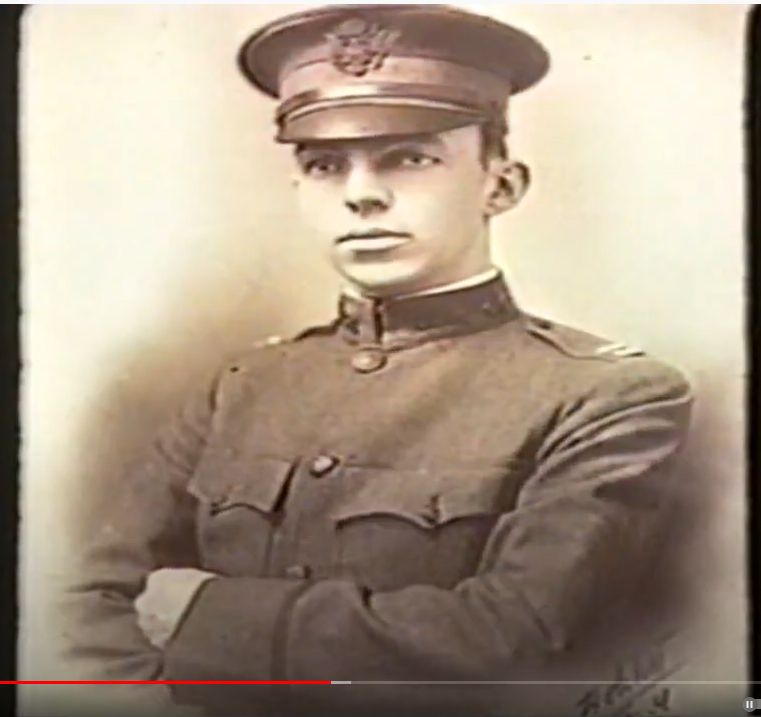
but this is the first one I’ve seen of a slightly younger Captain E. Howard Armstrong.


Romanian Mighty Mite and Ciprian’s Knack Story

Another wonderful video from Ciprian in Romania.

Any suggestions on his Mighty Mite power output problem?

Here is Ciprian’s YouTube channel. His intro video presents his Knack Story.


I really hope Ciprian can get a license very soon. His homebrew projects alone should qualify him. Ciprian has The Knack. It would be great if the IBEW (especially the European branch) could help Ciprian get some more parts and test gear.

Santo Domingo Shack on 12th Floor Balcony — SST QRP CW

June 2021. We were in Santo Domingo, Dominican Republic. At this point we were in a 12th floor apartment in the center of the city. I would take my SST 20 meter CW transceiver and EFHW antenna out on the balcony. I made no contacts from this location, but one of my CQs was picked up by K9TM on the Reverse Beacon Network (see below). All the other RBN spots were the result of calls from the eastern tip of the island. (Click on the RBN image for a clearer view.)

QRP – QRP Contact from Dominican Republic

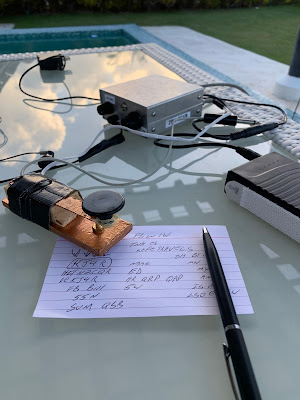
It took some brass pounding on my homebrew key, but on May 28, 2021 I made a real QSO from the eastern tip of the island of Hispaniola. KJ4R came back to my CQ near 14.060 MHz. I was running just 1-2 watts from my SST transceiver to an end-fed half wave antenna. Ed KJ4R was in South Carolina running 5 watts, also to an EFHW antenna. TRGHS. Thanks Ed. And thanks to Bob Scott KD4EBM and Wayne Burdick N6KR.

AA7EE’s Amazing Homebrew SST QRP Transceiver

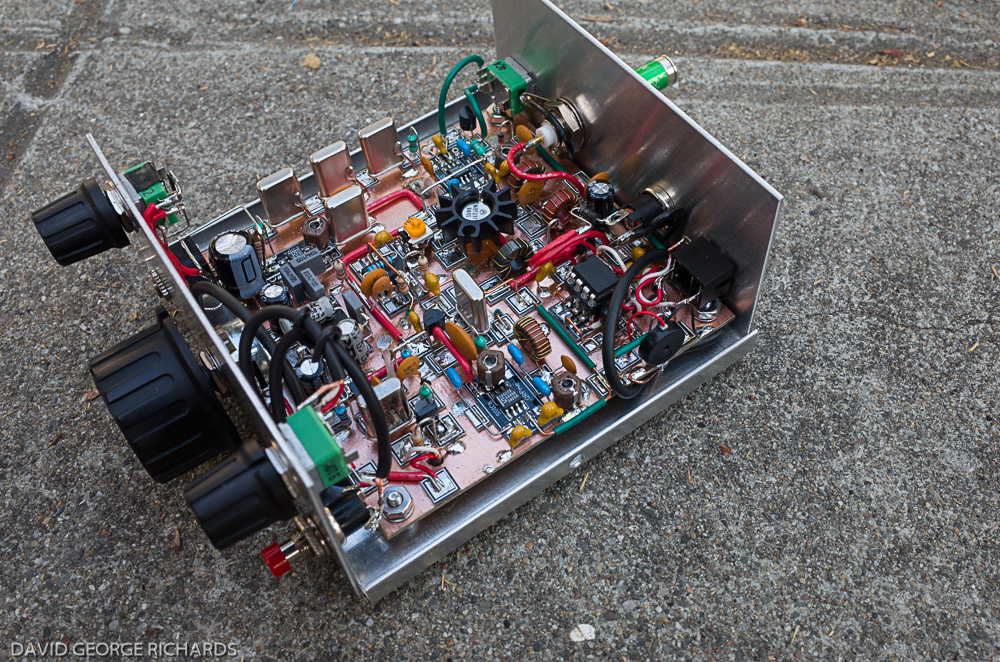
Look at that rig. It is truly a thing of beauty.

I was very pleased to see Dave AA7EE’s comment on my SST rig. This caused me to search his site for his SST article. And wow, it is an SST treasure trove. Lots of discussion of the circuit and mods. And Dave’s usual wonderful photography and videography.

Check it out.

https://aa7ee.wordpress.com/2016/09/09/a-scratch-build-of-n6kr-and-wilderness-radios-sst-for-20m/

Thanks Dave!


The SST QRP Transceiver

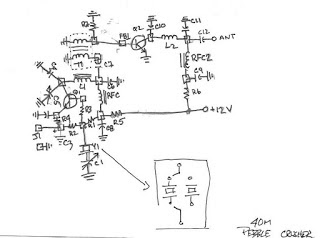
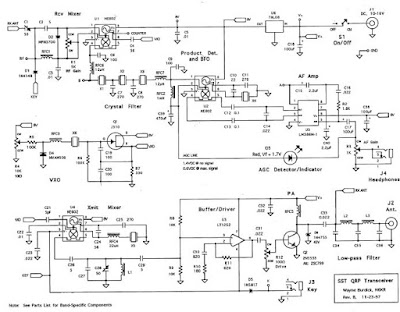
Click on the schematic for a better view
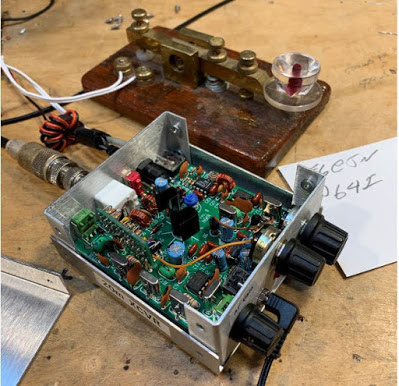
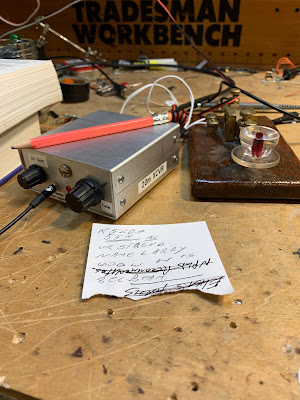
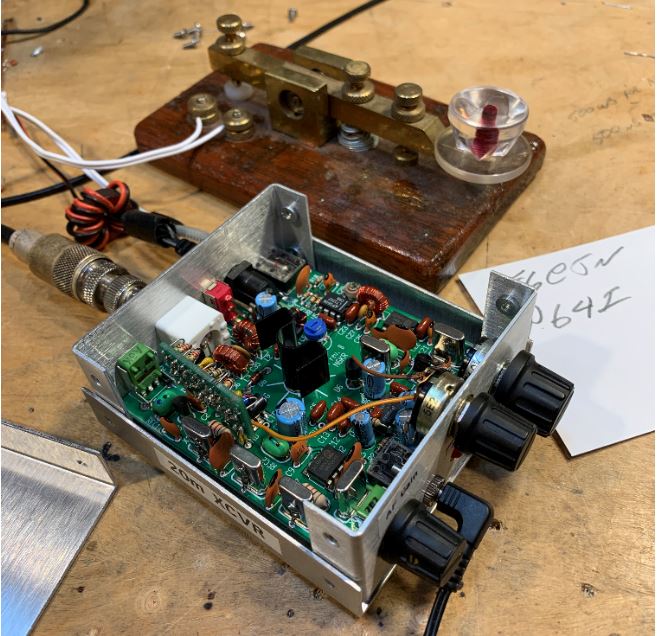
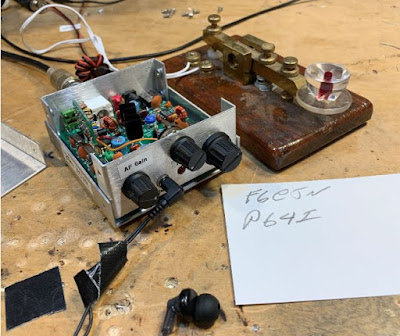
Bob KD4EBM recently sent me an amazing package of radio goodies. Included was a little metal box not much larger than a deck of cards. It is a 20 meter SST transceiver designed by Wayne Burdick N6KR during the late 1990s. This transceiver is built around three NE602 Gilbert Cell mixer chips. It arrived in my shack as I was struggling to understand the Gilbert Cell. TRGHS. It also put me back on the path of QRP CW righteousness. Thanks Bob. Thanks Wayne.

I e-mailed Wayne Burdick (now of Elecraft fame) to tell him I was now using the rig he had designed so long ago. Wayne e-mailed back, saying that the SST was the smallest “real” radio that he had ever designed. SST stands for Simple Superhet Transceiver.

I’ve been using the SST every day for the last week or so. It is a pleasure to operate. I’m using it with the key from India that Farhan brought for me. It is truly QSK — the receiver stays on when I transmit. I’ve never used a QSK rig before and I can now see the big advantage that this provides: When I am responding to a CQ, I can immediately hear if the other guy put out another CQ or respond to someone else — I can stop calling at that point. My first contact with it was with F6EJN. Again, TRGHS.

I made two small mods to the SST: I added 1 uH to the RFC in the VXO; it now tunes 14.053 — 14.063. And I took out a noise blanker that had been installed. Removing the noise blanker left an ugly hole in the front panel which I promptly filled with a completely cosmetic machine screw.

Here’s the manual:

https://qrpbuilder.com/wp-content/uploads/2017/04/sst_manual_042217.pdf

HRDX Interviews Paul Taylor VK3HN

Wow, Paul Taylor, VK3HN is working on homebrew rig #11. FB.

This interview was quite thought-provoking.

— I agree with Paul about the importance of not being dogmatic about
always staying under 5 watts. It sounds like Paul is having fun with his
100 watt SOTA project.

— It was great to hear that Leon VK2DOB is still active in ham radio and running a QRP company in VK. FB. An article by Leon on CMOS mixers in the summer 1999 issue of SPRAT played a key role in my understanding how switching mixers really work. I put Leon’s diagram in my book SolderSmoke — Global Adventures in Wireless Electronics.

— On blowing up the finals in simple HB gear. The first real transmitter that I built was the VXO-controlled 6 watter from QRP Classics by the ARRL. It had a 36 volt Zener diode across the collectors of the final. This was to prevent the kind of final destruction Paul suffered up on that summit: “D2 is used to clamp the collector voltage waveform to protect the output transistors if the transmitter is operated into an open circuit or high SWR antenna system.” Maybe we should revive the use of that simple SWR protection circuit, especially for SOTA rigs.

SolderSmoke Podcast #230 is available! Apr 1, Mars, Group Build, SDR, SSB, Mich Mighty Mites, Mailbag

SolderSmoke Podcast #230 is available for download

http://soldersmoke.com/soldersmoke230.mp3

N2CQR was down for maintenance
A few words about April 1
China lands on Mars
Brood X Cicadas arriving in NOVA

Pete’s Bench
The Dentron Project
The Spillsbury Tindall SBX-11A
KK4DAS and the Simple SSB Group Build
TenTec mods
Shack Mystery solved. Maybe
Changing the channels at age 9

Bill’s Bench
Why LSB below 10 MHz? The “SSB Legend” Rig
WU2D RTL-Dongle Up converter
Understanding the Gilbert (Jones) Cell
SDRSmart RTL-SDR.com V3 Dongle
VK3HN and 2 meter SSB
Jack NG2E, MMM and the 10 minute transmitter
KD4EBM sends me SST by Wayne Burdick. DX!
A new computer

Mailbag:
MM0ACN
VK2EMU
N5VZH
VE3KZJ
HS0ZLQ
AD0JJ
VK8MC
KK0S
VE3VVH
KB3SII
WA9WFA
M0NTV
W2DAB


60 Minutes Story on Mars Ingenuity Helicopter:

The Homebrew Spirit of the Radio Amateur

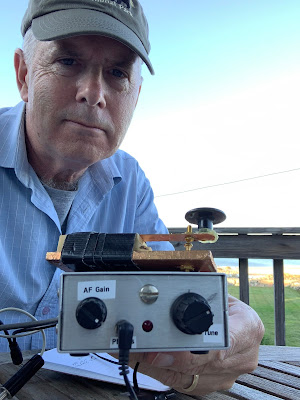
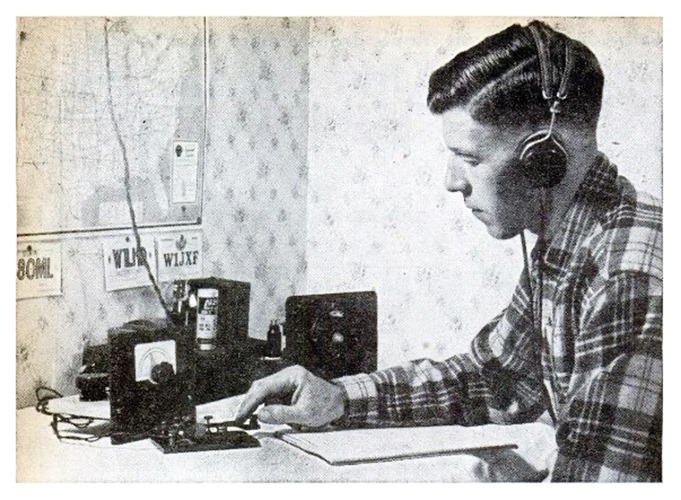
I just liked this picture. It seems to capture the pride and satisfaction that comes from getting on the air with homebrew gear. It’s obviously a simple QRP station, but it is all homebrew. And — from the QSL cards on the wall — we can see that he has had some success with it. The map on the wall is of the United States and the QSLs are from the east coast and the mid-west, so my guess is that he’s probably on 80 or 40. FB OM.

Straight Key Night 2021 at SA2CLC in Sweden

Wow, check out the FB gear of Tommy SA2CLC in Sweden, in use on Straight Key Night 2021. There is some German WWII gear, a BC-348, a homebrew transmitter, and some FB QRP kits.

More on Tommy SA2CLC here: https://www.qrz.com/db/SA2CLC
The culvert under the road for coax to the antennas is very cool.
FB Tommy! A belated HNY to you OM.

Overcoming the Complexity of the Michigan Mighty Mite: Walter’s Sunrise Net Special

From Walter KA4KXX
June 21, 2020

Michigan Mighty-Mite: Why So Complicated?

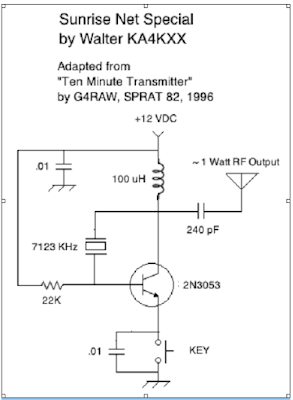
The April 2020 issue of QRP Quarterly magazine featured an article by Bob Rosier K4OCE which included a schematic for a “Ten Minute Transmitter” by G4RAW (SK), which apparently first appeared in SPRAT 82 in 1996.
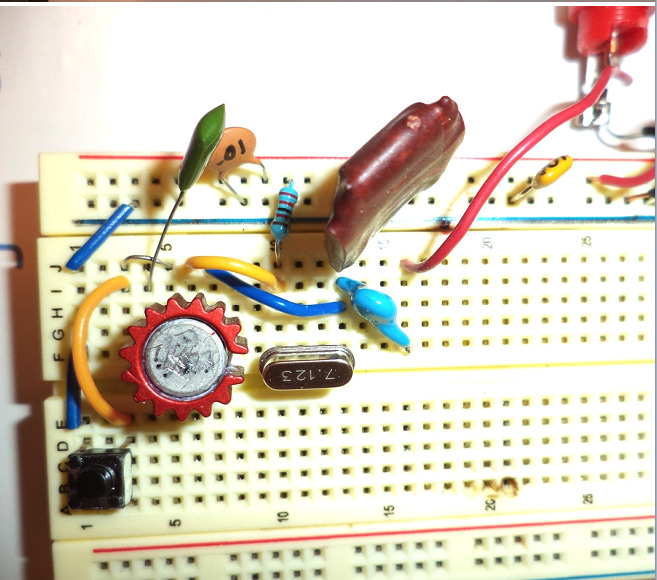
It is even simpler than the Michigan Mighty Mite, so this transmitter can truly be built on a solderless breadboard in about 15 minutes, because a complex coil is not required.
The only tuning needed was for me to establish the correct value of the output series capacitor.
This rig allowed me to check-in to the Sunrise Net (see details in blue text on my QRZ page) today on my very first attempt, and landed me a 549 signal report from 250 miles away.
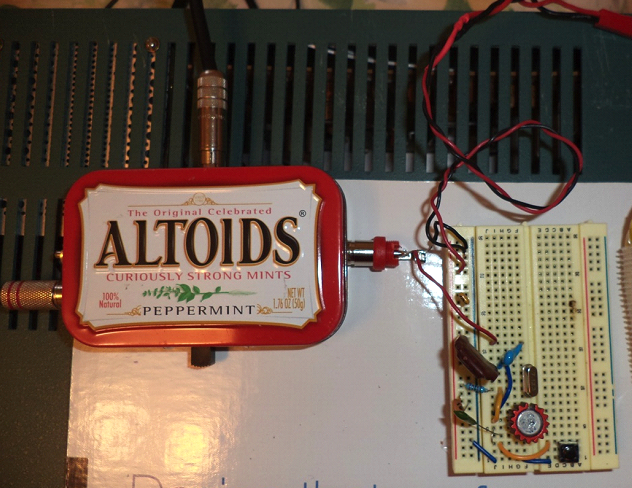
The first photo shows the transmitter connected to a Transmit/Receive Switch mounted in an Altoids box. In the Transmit position the antenna is disconnected from my 1979 Heathkit HR-1680 receiver, which then coincidentally supplies a sidetone at an ideal volume level. That little black pushbutton which can be seen in the second photo serves as my key, and works just fine for a five-minute daily QNI on the Sunrise Net.
Of course, part of the secret is having a crystal exactly on the Net frequency, and I have a few left, free to whomever in the Eastern U.S. is interested in building one of these simple Sunrise Net Special Transmitters and participating in our Net.

From a Student of C.F. Rockey, W9SCH

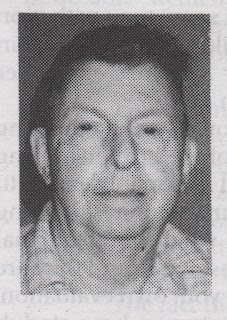
C.F. Rockey W9SCH

We have discussed the monumental work of C.F. Rockey, W9SCH, SK before. Yesterday a comment appeared under that post that is just too good to leave buried in the comments. It appears below. Jeff’s comment also caused me to dig up my small collection of “The Five-Watter” issues from the Michigan QRP Club. Rockey wrote a column for that magazine. It contains a lot of tribal knowledge. Here is Jeff’s look back:


This turned up for me in a Google search for “Charles Rockey QRP ARRL” during a phone call with a friend of mine who was bemoaning that he never got a novice license because he could not master Morse code (he is in his mid-60s, as am I). I was taken back to the communications electronics class I had my freshman year at New Trier East in Winnetka (not Wilmette) IL in 1971. That class was taught by none other than C.F. Rockey, known to us students as The Rock. I think about him fairly often because I grew up to become a very hands-on engineer and can recall parts of his class quite clearly, even at this remove. Somewhere I still have the reports we had to write (typed on a typewriter) each week. He was a huge influence on me and I was saddened to have his passing undeniably confirmed for me. I have the little chemistry book he authored beside me now *Electrons, Atoms and The World* and am glad to be able to read his obit. One thing needs to be added to it: He won the ARRL 5000 mile-per-watt award for working Anzio, Italy from his home north of Chicago on 5W. I am very lucky to have had him as a teacher and mentor for those years. Thanks for sharing. Cheers, Jeff Mizener, DFW-TX