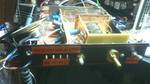
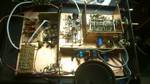
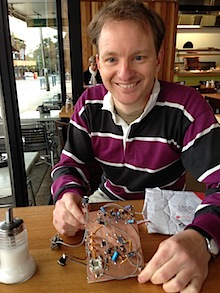
Another Great Rig (and Video) from Peter Parker VK3YE

Peter Parker has a double dose of The Knack: Not only is he a great rig builder, but he is also a very skilled teacher. His videos provide really excellent descriptions of how he selects, designs, and modifies the stages that make up his magnificent rigs. You can learn a lot from these videos. Thanks Peter.

Our book: “SolderSmoke — Global Adventures in Wireless Electronics” http://soldersmoke.com/book.htm Our coffee mugs, T-Shirts, bumper stickers: http://www.cafepress.com/SolderSmoke Our Book Store: http://astore.amazon.com/contracross-20
Finally! An Award for QRP DSB! VK3YE’s 40-40 Award

Brilliant! Great stuff! Lots of fun!
Another great idea from Peter Parker, VK3YE.

Our book: “SolderSmoke — Global Adventures in Wireless Electronics” http://soldersmoke.com/book.htm Our coffee mugs, T-Shirts, bumper stickers: http://www.cafepress.com/SolderSmoke Our Book Store: http://astore.amazon.com/contracross-20
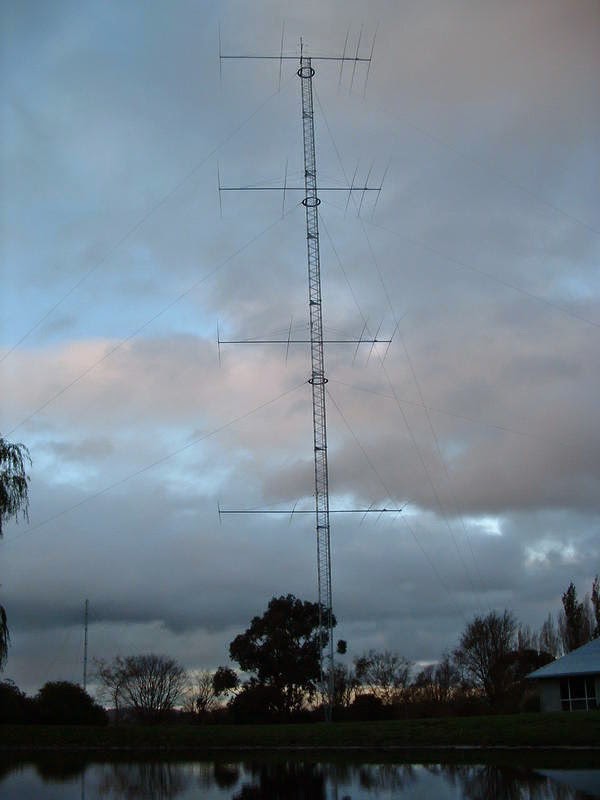
VK3MO’s 20 Element Monobander for 20 Meters!

Ian VK3MO was booming in from Australia this morning. No wonder: he has a 5 over 5 over 5 over 5 array on a rotatable tower. He can get a 3 degree takeoff angle with this antenna and I think I heard him say that he is working on another so that he can get a one degree takeoff angle. He was also using a using a Collins 30L1 linear. Lots of soul in that old machine!
At one point in our QSO, I turned off my .12 kW amplifier. He said I was still 58-59 with 3-4 watts.
And Ian is a homebrewer! He has built a number of transceivers and has another one in the works. I told him about the BITX and he printed out Farhan’s article (to read later). He tells me that he has heard Peter Parker, VK3YE, on the air.
In this QSO, Ian was using a modern commercial rig, but wouldn’t it be great if we could get him to connect a homebrew sideband rig to that big antenna. Go for it Ian!

More on Ian’s antenna here: http://vk6ysf.com/vk3mo_visit.htm

Our book: “SolderSmoke — Global Adventures in Wireless Electronics” http://soldersmoke.com/book.htm Our coffee mugs, T-Shirts, bumper stickers: http://www.cafepress.com/SolderSmoke Our Book Store: http://astore.amazon.com/contracross-20
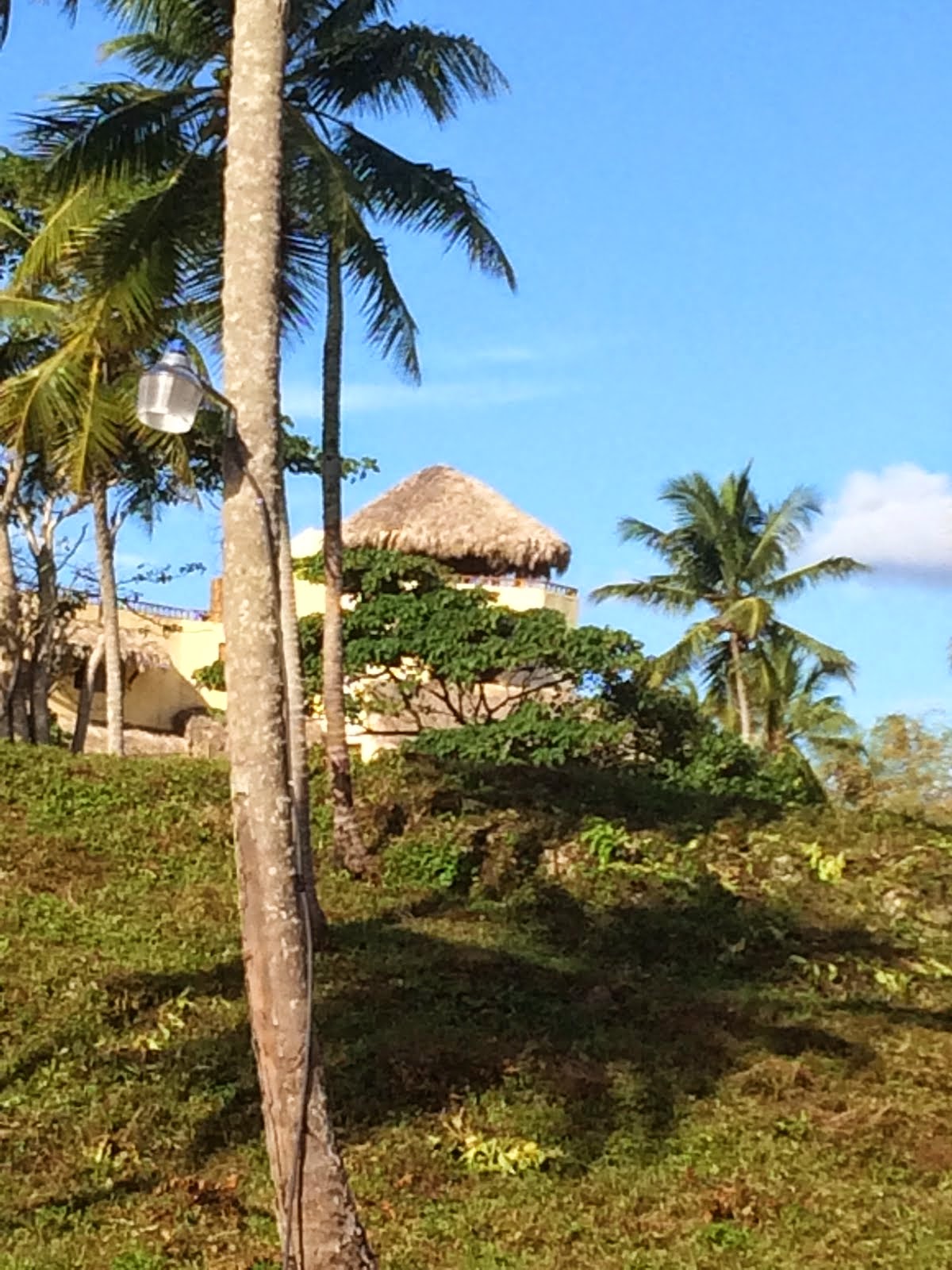
A Thatched Roof, Some Palm Trees, A Dipole, and a Homebrew Rig


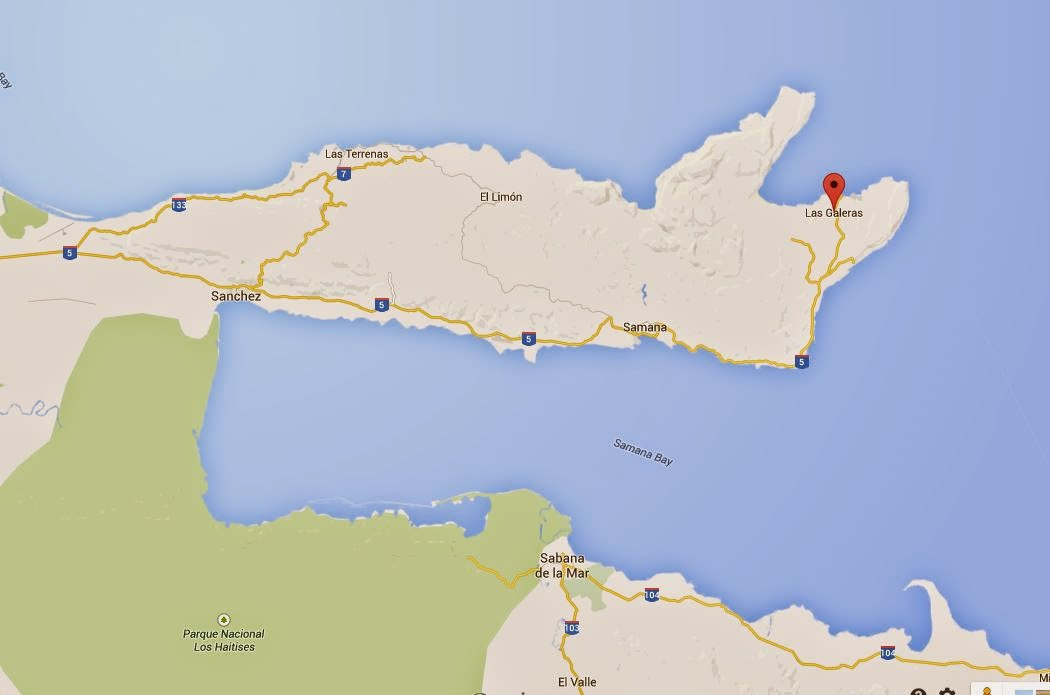
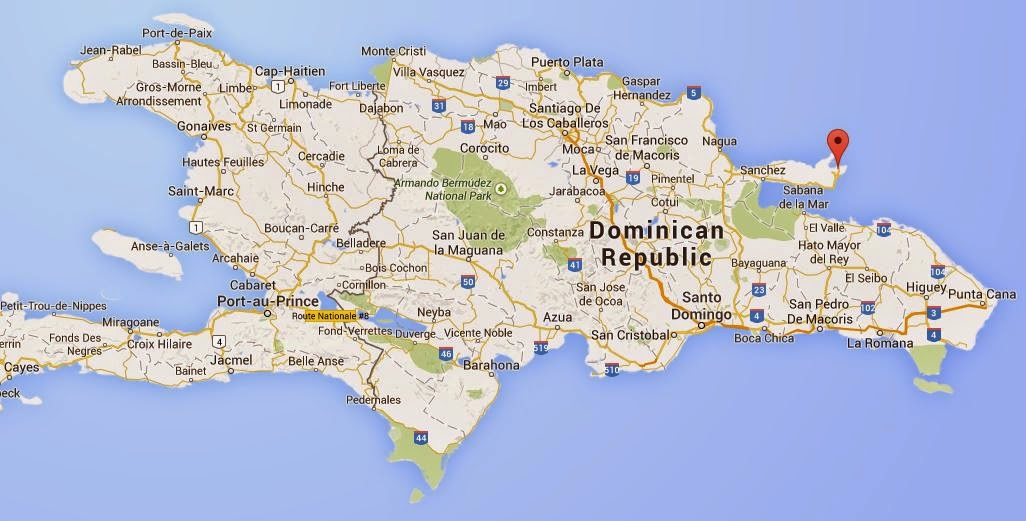
Look at the drawing above. That is the banner logo of Rod Newkirk’s column in QST magazine. For many years Rod regaled us with exciting reports on the activities of intrepid foreign radio amateurs, transmitting from exotic locations using ingeniously devised homebrew radio equipment. Look at the picture on the left side. See the palm trees? See the thatched roof shack with the dipole antenna? Well, that’s pretty close to what it was like for me out on the Samana Peninsula in the Dominican Republic last month.

I set up the station under the thatched roof in this picture:

The red pins mark the spot:

Here I am, tuning the rig while looking across Bahia Rincon:

The rig was my Azores-built, oft-modified, NE602-based, ceramic resonator DSB transceiver with a recently added India-designed BITX IRF510 RF amplifier chain. A little article I wrote about the ceramic resonator VXO was featured in SPRAT 127. My antenna was a half wave dipole strung up in the thatched roof. Power came from 10 AA Batteries. So this was the Double A, Double Sideband, Dipole DX-pedition.

I had given some thought to building an SSB rig for this trip, but because of the efforts of Peter Parker, VK3YE, I felt compelled to take a DOUBLE Sideband rig with me to the beach.

Here is an old (2006) video on the rig. The power amplifier has been significantly modified:


Here is some more information on the rig, including a schematic for the receiver and the SPRAT article on the Variable Ceramic Oscillator:

http://www.gadgeteer.us/PORTABLE.html

Here is the log book for my contacts.

17 DECEMBER 2014
W1JPR PAUL MT. DESERT ISLAND MAINE
8P6AE (BARBADOS) COULD BARELY HEAR ME, BUT GOOD QSO

18 DECEMBER 2014
N4USA DAVE IN FLOYD, VA. FAIRS NET. (KK4WW.COM)
KE4UGF DON ALSO FAIRS, NICE GUYS. FUN CONTACTS!
KA4ROG ROGER NORTH OF ORLANDO

19 DECEMBER 2014
WB2HPV GUIDO TALKING TO ITALIANS EVERY MORNING FROM WAYNE NJ. HE HAD TROUBLE HEARING ME.
CONDITIONS SEEMED POOR, BUT I WAS HEARING AUSTRALIAN STATIONS
W8GEO GEORGE IN THE INTERCON NET. HEARD ME. ALSO ON INTERCON: KA4AOQ AND 6Y5MP (JAMAICA) ALSO HEARD ME.
N4PD PAUL
W3JXY/4 NAT IN KEY WEST
N1FM TOM, NORTH OF MIAMI SOLID QSO.
KM4MA PAUL IN ORLANDO WITH MARITIME MOBILE NET.

20 DECEMBER 2014
NA2LF LLOYD IN NY
WB8YWR JIM IN DALLAS
KM4MA.
W1AW/3 IN MARYLAND (TOOK ME A WHILE TO GET HIM)

21 DECEMBER 2014 NICE 4 WAY SPANISH LANGUAGE QSO:
KI4PZE MIGUEL
CO8OT JUAN IN SANTIAGO DE CUBA
WA4RME RAFA IN CHARLESTON S.C.

C08KB MARCO IN CUBA


Here is a short video showing the station and the location. Note the little birds (Golondrinas or Swallows) flying by. They nest in the thatched roof. They often got confused and flew inside the house. Billy and Maria rescued many of them. Whales breed in this bay in January and February. There are also manatees. It is really a beautiful place.

There were obviously other attractions (!) so I didn’t spend a lot of time on the radio — just a half hour or so every now and then. But it was really very satisfying to carry this little homebrew device with me, set it up in this amazing place, and use it to send my voice across mountains and hundreds of miles of ocean. I built this rig in the Azores and have used it in the UK, France, Italy and the Dominican Republic. It contains circuits devised by members of the British QRP club and by my friend Farhan in India. The ceramic resonator circuit is something I cooked up on my own. The microphone is from my old Sony Walkman and the pen that serves as its support is from that wonderful magazine “Electric Radio.” In short, there is a lot of soul in this little machine. And it was a lot of fun to take it to the beach.

Thanks to Elisa for finding us this wonderful place. And to Rod Newkirk and QST for the DX inspiration.

Our book: “SolderSmoke — Global Adventures in Wireless Electronics” http://soldersmoke.com/book.htm Our coffee mugs, T-Shirts, bumper stickers: http://www.cafepress.com/SolderSmoke Our Book Store: http://astore.amazon.com/contracross-20

VK5FJ’s Open SDR Rig (Arduino and SI5351)

Morning OM’s,

I’ve amassed the parts for my 12v Regen Rx inspired by a projects from VK3YE and an audio amp, using a pair of 12AU7’s. I’ll publish more about that soon on my blog.

In the mean time, I’d like to thank you guys for inspiration on the si5351 VFO in use with various projects. After we found the first articles by NT7S, we discussed that there are a lot of possibilities.

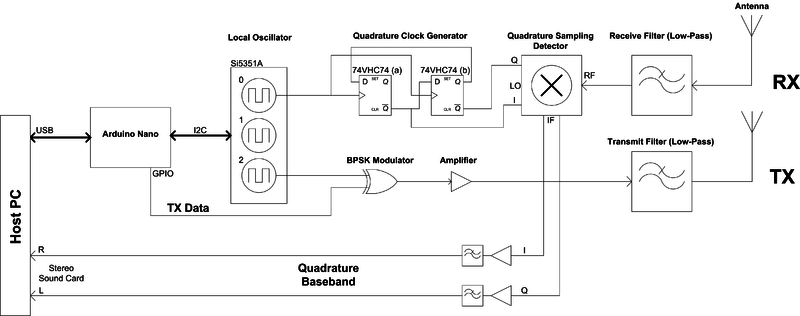
I’ve just finished my build of an Arduino controlled SDR transceiver prototype using the Si5351A.

See attached images. Lots of collaboration with Mark VK5QI and David VK5DGR. More at; http://openradio.net.au/index.php/OpenRadio_SDR

This week I’m tinkering with the LPF for 20meters. Puts out a whopping 20mW.

Everything is on schedule for the presentation using this SDR at Linux.Conf.Au next year. Got some coding to do to add I&Q for the SDR side over the summer break.

72, Kim VK5FJ

Our book: “SolderSmoke — Global Adventures in Wireless Electronics” http://soldersmoke.com/book.htm Our coffee mugs, T-Shirts, bumper stickers: http://www.cafepress.com/SolderSmoke Our Book Store: http://astore.amazon.com/contracross-20
N2CQR WINS ARRL SWEEPSTAKES! AGAIN! (video)

We did it AGAIN! Winners in the Homebrew Double-Sideband QRP Northern Virginia Category! Sweet! I can’t wait to pick up the trophy!

Our book: “SolderSmoke — Global Adventures in Wireless Electronics” http://soldersmoke.com/book.htm Our coffee mugs, T-Shirts, bumper stickers: http://www.cafepress.com/SolderSmoke Our Book Store: http://astore.amazon.com/contracross-20
The Amazing Rigs of Lee Snook, W1DN

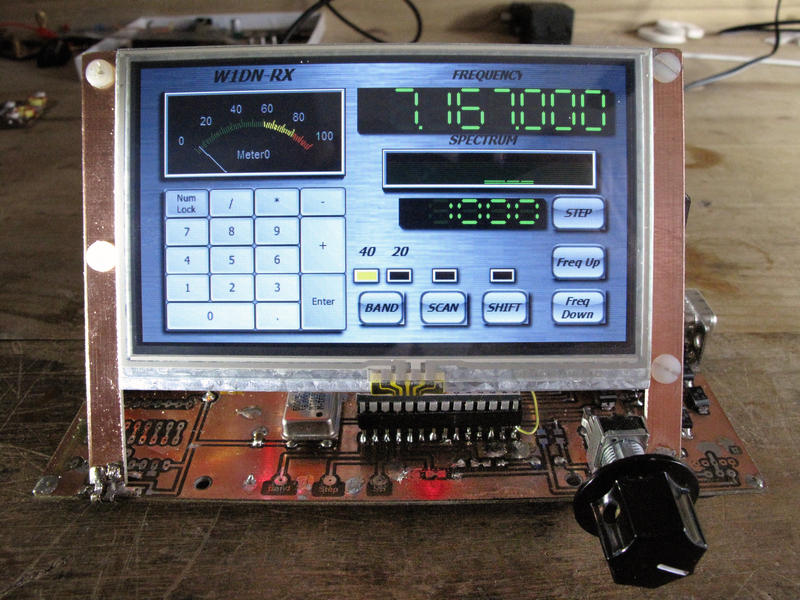
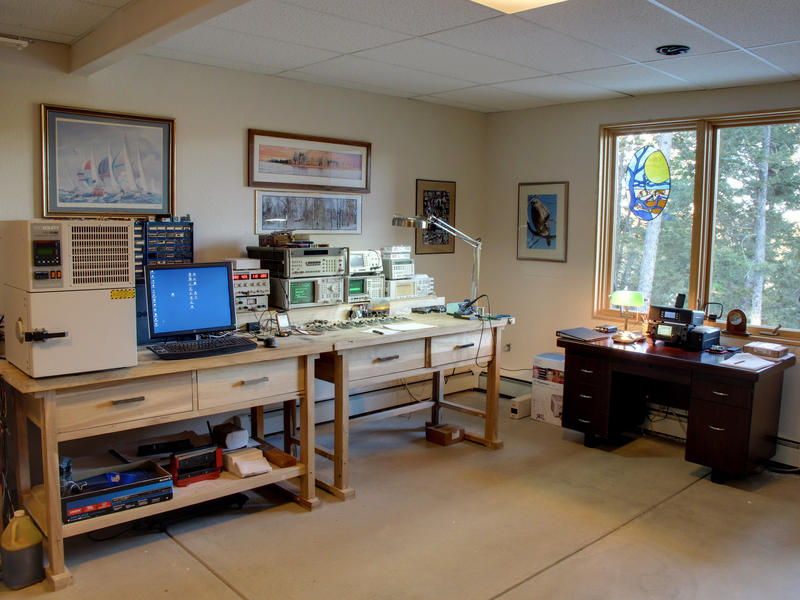
Back in March 2013 we ran a blog post linking to a video of a beautiful superhet receiver built by Lee Snook, W1DN (that’s his shop). Then the video disappeared. Today Peter Parker, VK3YE, alerted us to the reappearance of the video. Some Googling led me to Lee’s YouTube channel and many other videos of some truly amazing homebrew projects.

Here is his YouTube Channel: https://www.youtube.com/user/swradios/featured

And here are all his videos: https://www.youtube.com/user/swradios/videos

Check this out digi fans (from his QRZ page):

Our book: “SolderSmoke — Global Adventures in Wireless Electronics” http://soldersmoke.com/book.htm Our coffee mugs, T-Shirts, bumper stickers: http://www.cafepress.com/SolderSmoke Our Book Store: http://astore.amazon.com/contracross-20

Hacker with The Knack Does Well, Working for JPL

Wow. This guy has a really inspirational Knack story. He welded (with coat hangers!) a sidecar onto his bike when he was a kid. He majored in Physics and Theater. He did all kinds of hardware and software hacks. He plays a Theravin in a band. He now flies spacecraft for the Jet Propulsion Laboratory.

And Congratulations to Peter Parker, VK3YE, for having one of his ingenious hacks picked up by Hackaday:
http://hackaday.com/2014/10/06/dusty-junk-bin-downconverter-receives-fm-on-an-am-radio/

Thanks Hackaday! And Happy Tenth Birthday to You!

Our book: “SolderSmoke — Global Adventures in Wireless Electronics” http://soldersmoke.com/book.htm Our coffee mugs, T-Shirts, bumper stickers: http://www.cafepress.com/SolderSmoke Our Book Store: http://astore.amazon.com/contracross-20
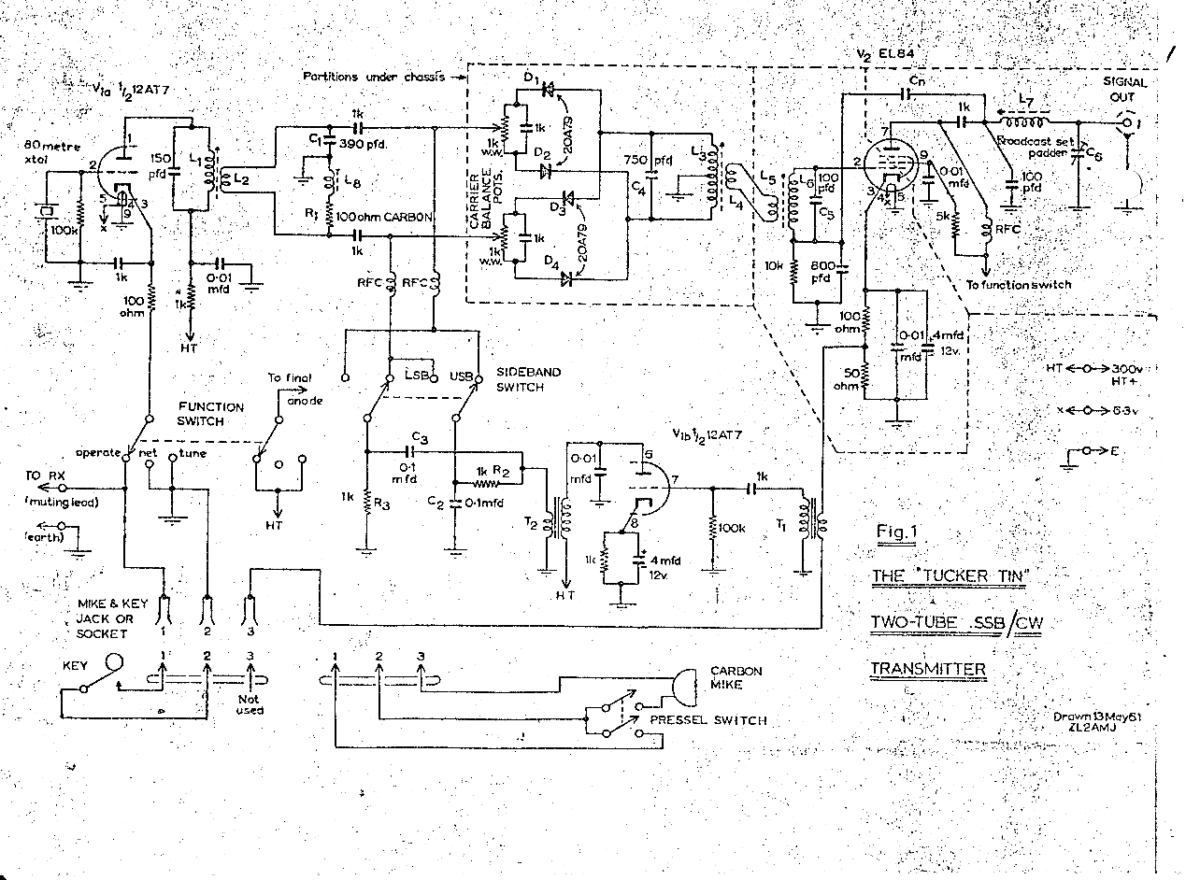
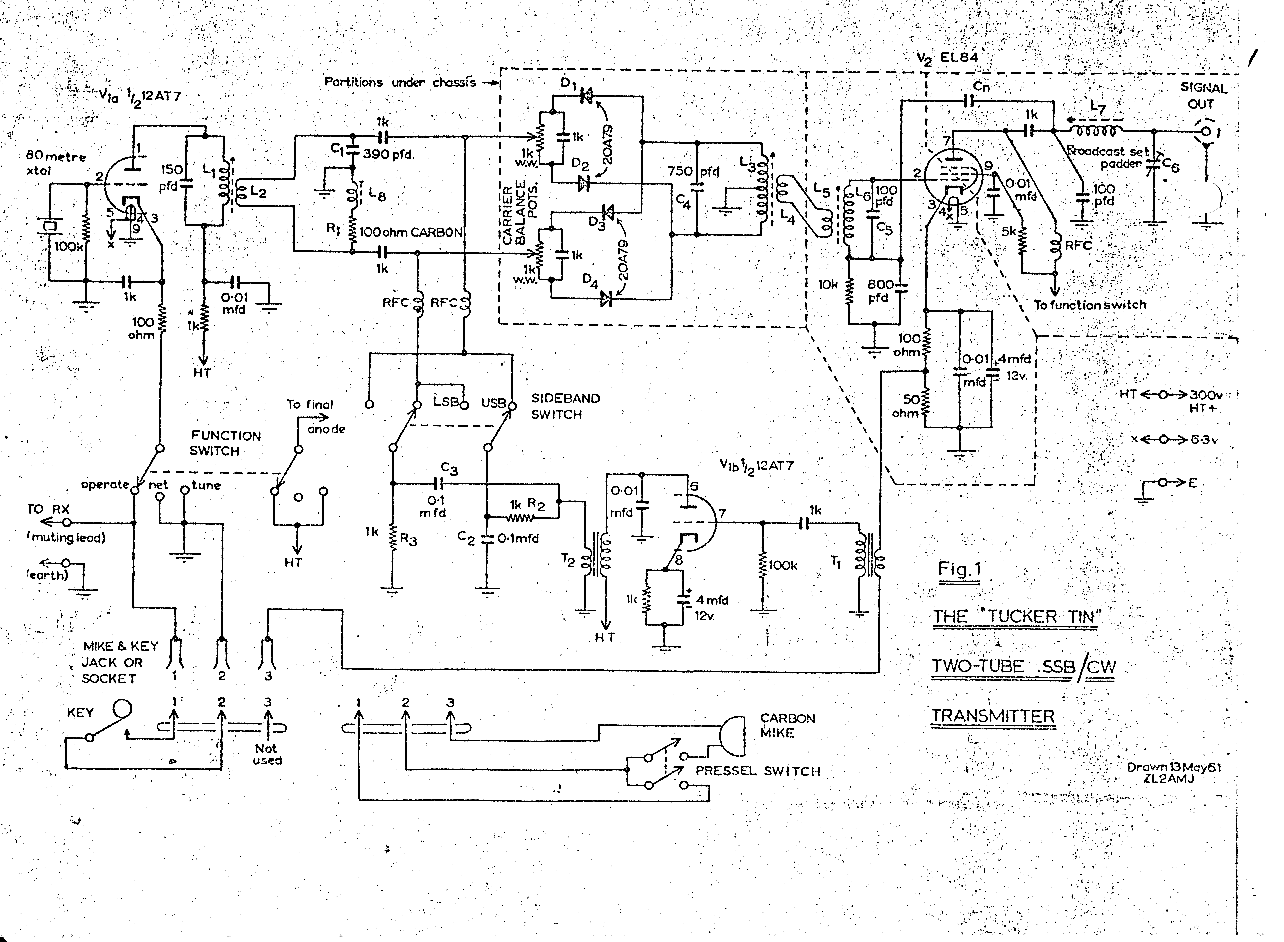
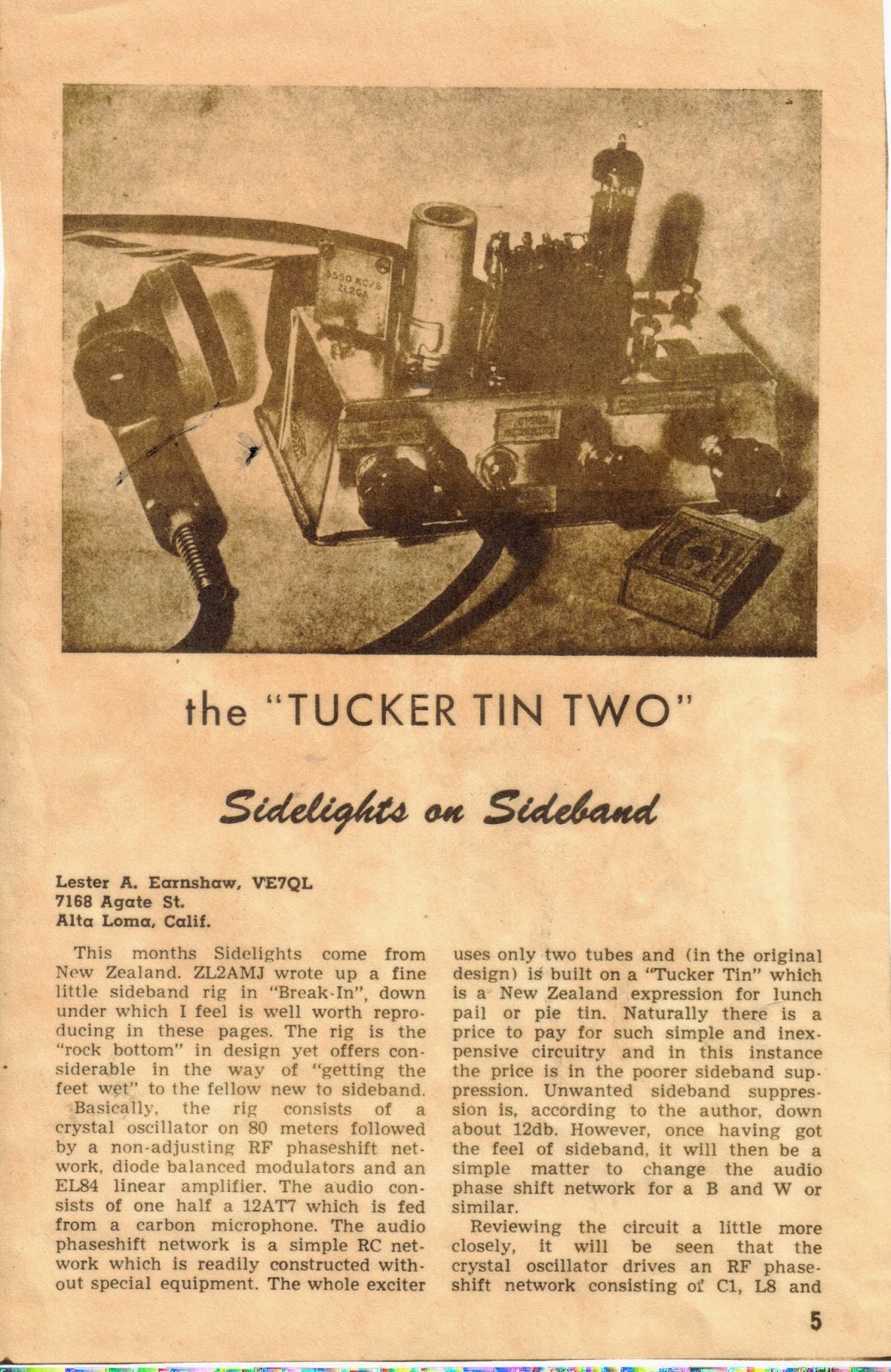
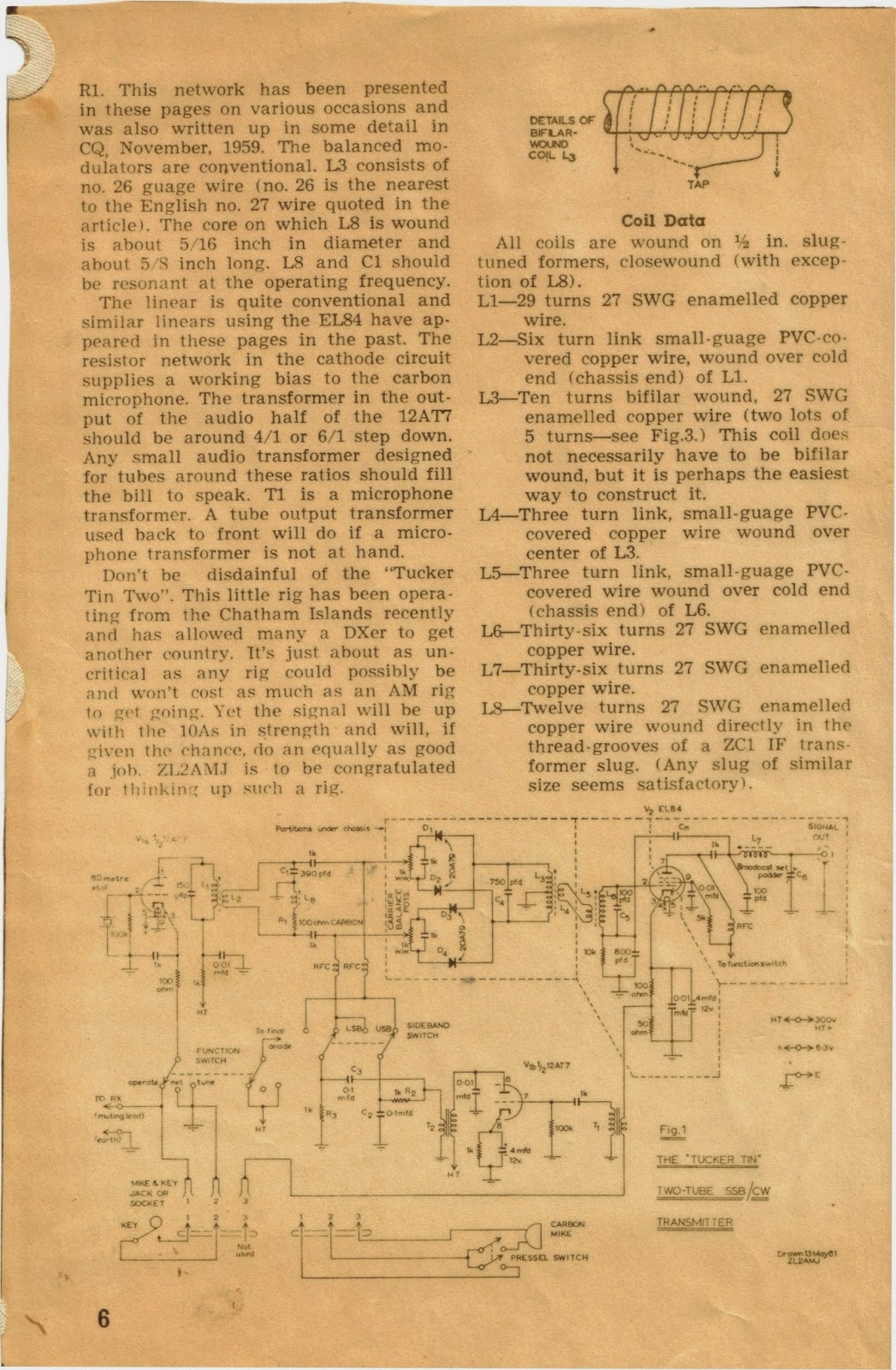
Kiwi Lunchbox Sideband: The Tucker Tin Two

Pete Eaton sent us links to an old article from the New Zealand magazine “Break-In.” So many good, simple rigs come to us from New Zealand! Who can forget ZL2BMI’s DSB rig? This one is the work of Fred Johnson ZL2AMJ. It is especially interesting and is in some ways similar to Peter Parker’s “Knobless Wonder.”

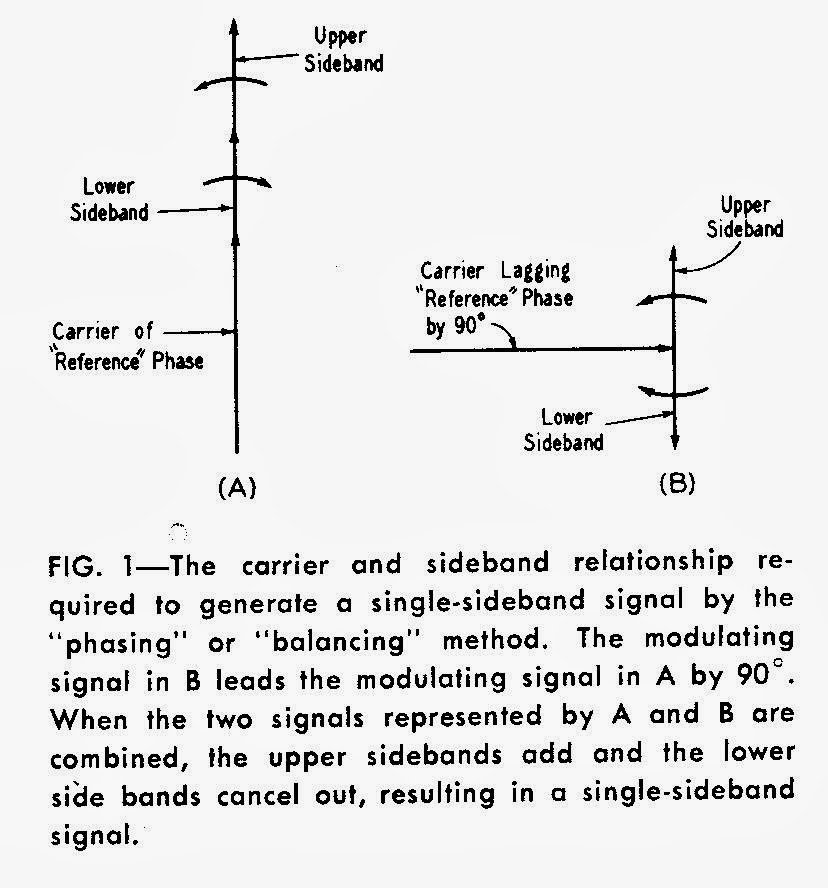
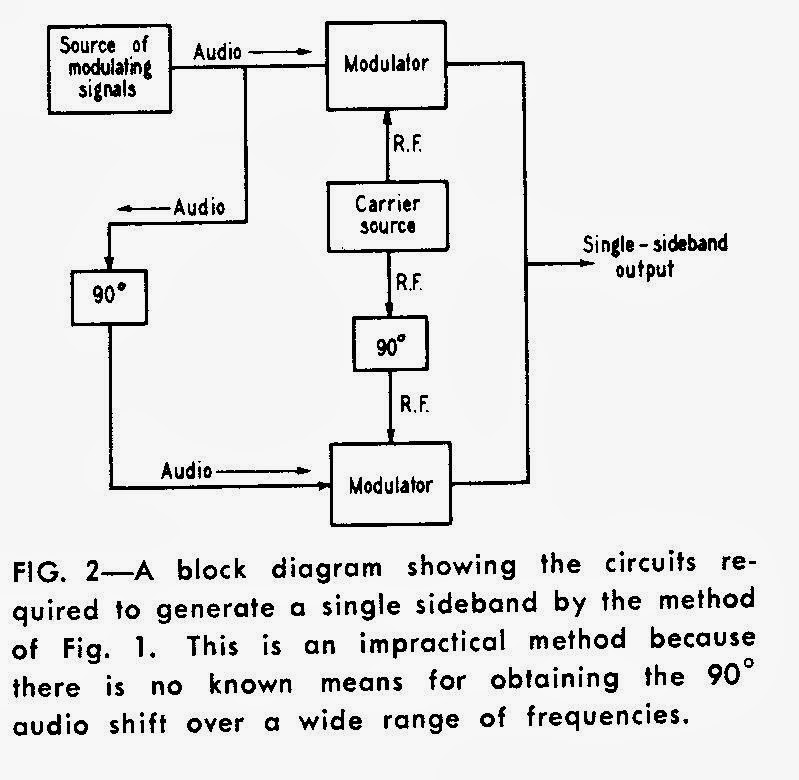
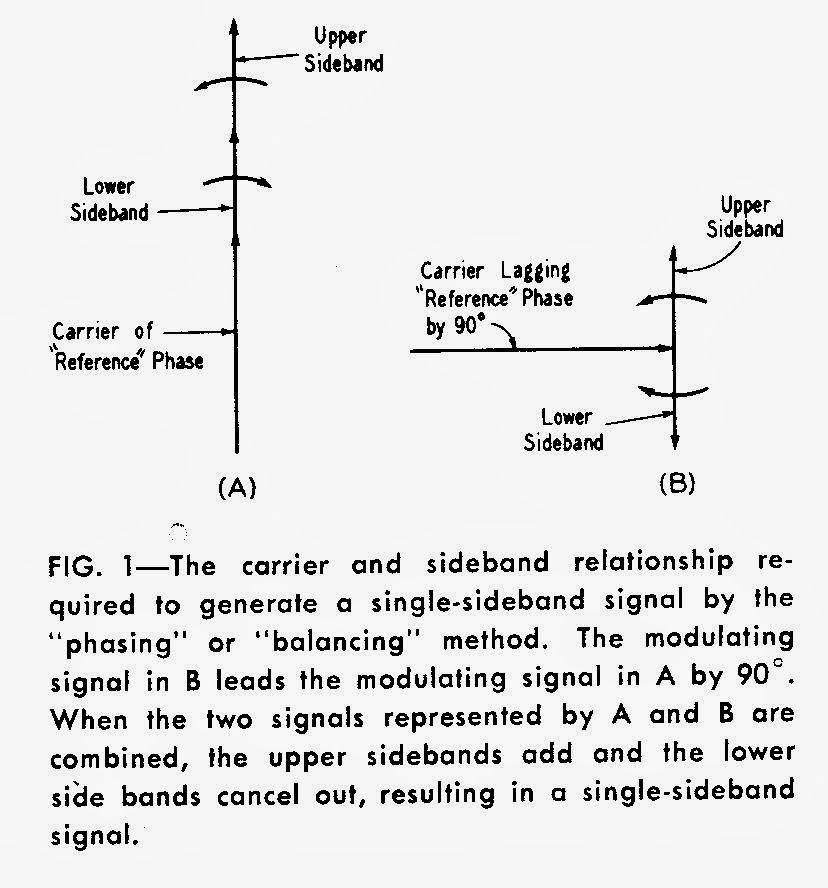
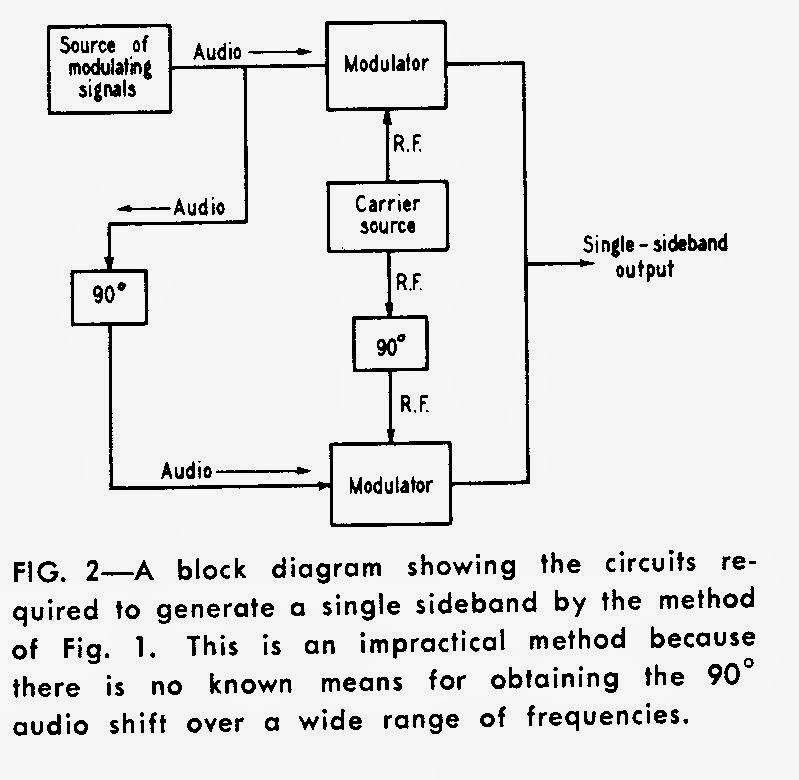
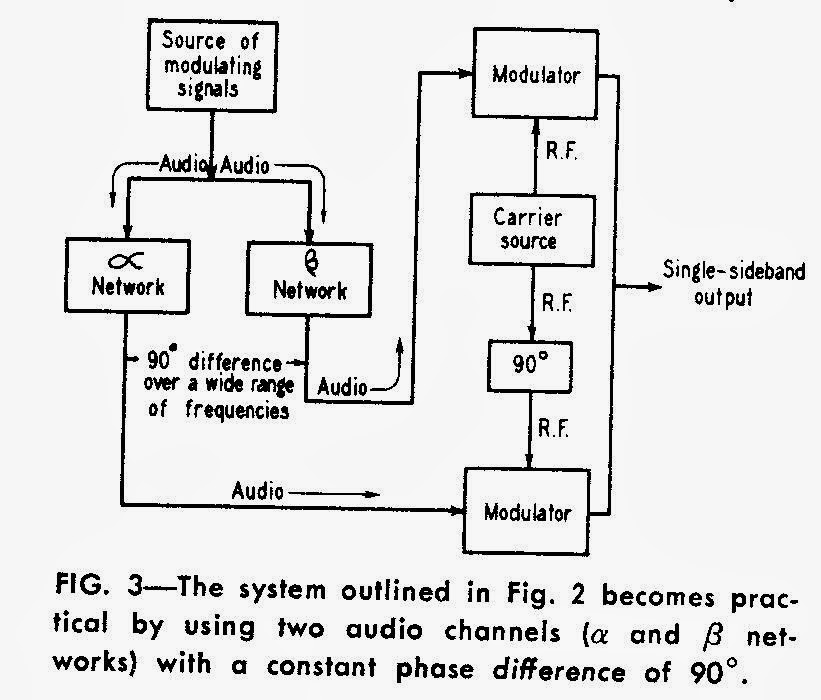
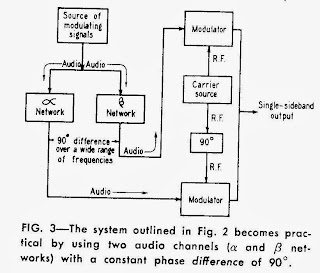
It uses the phasing method of sideband generation. No crystal filters in this one. You need TWO balanced modulators. You have a 90 degree phase shift network for the RF (from the carrier oscillator) and a second 90 degree phase shift network for the AF from the mic amplifier. When you combine the signals from the two balanced modulators — viola! — one of the sidebands disappears. The balanced modulators take care of the carrier, and an SSB signal is launched. That is how my old HT-37 works, and similar ideas seem to be at work in modern SDR rigs.

G3TXQ has the complete set of Break-In articles (it includes a VFO):
http://www.karinya.net/g3txq/temp/tucker_tin/

Here is a Canadian article on the rig. A “Tucker Tin” is apparently what the Kiwis call a lunch boxes (shades of Benton Harbor…).


Thanks Pete!

Our book: “SolderSmoke — Global Adventures in Wireless Electronics” http://soldersmoke.com/book.htm Our coffee mugs, T-Shirts, bumper stickers: http://www.cafepress.com/SolderSmoke Our Book Store: http://astore.amazon.com/contracross-20
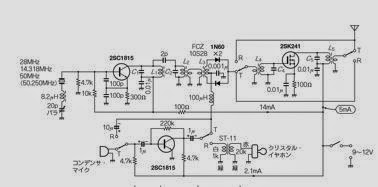
DSB Transceiver with Only 3 Transistors

Wow. Looks like something Peter Parker would really like. This one was sent to me by Stephen, G7VFY. It comes from Japan:
http://www.cqpub.co.jp/hanbai/books/15/15061/15061_p.180-181.pdf

From this book:-

Our book: “SolderSmoke — Global Adventures in Wireless Electronics” http://soldersmoke.com/book.htm Our coffee mugs, T-Shirts, bumper stickers: http://www.cafepress.com/SolderSmoke Our Book Store: http://astore.amazon.com/contracross-20
SolderSmoke Podcast #157: Peter Parker on Phasing Rigs

SolderSmoke Podcast #157 is available for download.
http://soldersmoke.com/soldersmoke157.mp3

December 27, 2013

— Santa Report: Rigol Scope at SolderSmoke HQ. Kites at VK3YE.
— Project updates: Bill’s BITX 40/20 build.
— Peter finishing up BITX40 (in a big box)
— BITX 17 (5 watts SSB) works JA, ZD7, ZS!
— The mystery, elegance, and gentleness of phasing SSB
— Phasing explained in 1970 ARRL SSB book
— Phasing SSB: From Hallicrafters HT-37 to SDR
— The SP5AHT Phasing Rig
— I & Q for you: The Binaural Experience
— Direct Conversion receivers and Software Defined Radios
— Simple DC receivers plugging into sound cards
— The joy of receiver building
— 144 MHz aircraft bounce (Melbourne to Sydney)
— VHF Across The Great Australian Bight

HAPPY NEW YEAR TO ALL!

Our book: “SolderSmoke — Global Adventures in Wireless Electronics” http://soldersmoke.com/book.htm Our coffee mugs, T-Shirts, bumper stickers: http://www.cafepress.com/SolderSmoke Our Book Store: http://astore.amazon.com/contracross-20
SolderSmoke Podcast #157: Peter Parker on Phasing Rigs

SolderSmoke Podcast #157 is available for download.
http://soldersmoke.com/soldersmoke157.mp3

December 27, 2013

— Santa Report: Rigol Scope at SolderSmoke HQ. Kites at VK3YE.
— Project updates: Bill’s BITX 40/20 build.
— Peter finishing up BITX40 (in a big box)
— BITX 17 (5 watts SSB) works JA, ZD7, ZS!
— The mystery, elegance, and gentleness of phasing SSB
— Phasing explained in 1970 ARRL SSB book
— Phasing SSB: From Hallicrafters HT-37 to SDR
— The SP5AHT Phasing Rig
— I & Q for you: The Binaural Experience
— Direct Conversion receivers and Software Defined Radios
— Simple DC receivers plugging into sound cards
— The joy of receiver building
— 144 MHz aircraft bounce (Melbourne to Sydney)
— VHF Across The Great Australian Bight

HAPPY NEW YEAR TO ALL!

Our book: “SolderSmoke — Global Adventures in Wireless Electronics” http://soldersmoke.com/book.htm Our coffee mugs, T-Shirts, bumper stickers: http://www.cafepress.com/SolderSmoke Our Book Store: http://astore.amazon.com/contracross-20
SolderSmoke Podcast #156 — Special Echolink Interview

Podcast #156 is available:
http://soldersmoke.com/soldersmoke156.mp3

Special hour-long interview with Peter Parker, VK3YE
— Early experiences with radio
— CW
— DSB Gear
— Simple gear, and gear that is TOO simple
— VXOs, Super VXOs and Ceramic Resonators
— Building receivers
— Chips vs. Discrete
— Making the leap to SSB
— The Knob-less wonder and the BITX
— No need for a sophisticated workshop
— Advice for new phone QRPers

Our book: “SolderSmoke — Global Adventures in Wireless Electronics” http://soldersmoke.com/book.htm Our coffee mugs, T-Shirts, bumper stickers: http://www.cafepress.com/SolderSmoke Our Book Store: http://astore.amazon.com/contracross-20
Peter Parker’s Video on SP5AHT’s Phasing Receiver

There are so many very cool aspects of this project: I love the phasing receiver arrangement — it uses the same basic concept that allows my old HT-37 to generate SSB (I struggled to understand it as a kid, and finally succeeded!). The use of the mobile phone as an audio spectrum analyzer is wonderful. The N3ZI signal generator looks a lot like the DDS project I was working on (I should have bought N3ZI’s! ). I’ve been seeing these square pattern PC boards in many projects lately — I may try this in my next project. And of course, it is very cool to see a circuit designed in Poland being put to use by a fellow radio amateur in Australia — a good example of the International Brotherhood of Electronic Wizards!

Here is the page for the SP5AHT rig that inspired Peter:

http://www.sp-qrp.pl/modules.php?name=Content&pa=showpage&pid=54

It is in Polish, but Google should translate it, and, in any case, we all speak Schematic!

Our book: “SolderSmoke — Global Adventures in Wireless Electronics” http://soldersmoke.com/book.htm Our coffee mugs, T-Shirts, bumper stickers: http://www.cafepress.com/SolderSmoke Our Book Store: http://astore.amazon.com/contracross-20
Simple Homebrew SDR

I know that “simple” and “homebrew” aren’t the words that come to mind when we think of Software Defined Radios, but minimalist guru Peter Parker, VK3YE, reminds us that with little more than an antenna, a diode, a crystal oscillator and a connection to the computer soundcard, you can dive into the world of SDR.

I’ve been doing this for some time now, but my receiver uses a 40673 dual gate MOSFET and a universal VXO from George Dobbs, G3RJV. I’ve been running mine with the FLDIGI and JT-65 HF programs. Peter’s video alerted me to the charms of SDRadio from Alberto, I2PHD. This is a very nice program. Of course, I’m always happy to add a dash of Italy to my operations. Thanks Peter! Thanks Alberto! Thanks George!

Our book: “SolderSmoke — Global Adventures in Wireless Electronics” http://soldersmoke.com/book.htm Our coffee mugs, T-Shirts, bumper stickers: http://www.cafepress.com/SolderSmoke Our Book Store: http://astore.amazon.com/contracross-20
Peter Parker’s Knobless Wonder Minimalist SSB Rig

Oh man, Peter Parker has done it again! As he did with the Beach 40, he has come up with a circuit that will attract a lot of attention. It is a single frequency SSB transceiver with no knobs (or windows, or menus!)

Peter Marks recently had breakfast in Melbourne with VK3YE:
http://blog.marxy.org/2013/05/melbourne-meetup-with-homebrew-legend.html
There are some great pictures of the new rig, and the Beach 40.

Here’s the message from VK3YE (to the Minimalist Radio Group) that may
someday be seen as the start of the Knobless Revolution:

Some might reckon that SSB is inevitably too complex to be in the minimalist
class, but I beg to disagree.

I reckon you could build a whole SSB transceiver in 2 days of solid work. I
took a day to build what will be described below up to the stage where it

was receiving & producing a low level SSB on Tx.

Take this recipe:

1. Build the back end of the BitX http://www.phonestack.com/farhan/bitx.html
That is everything to the right of (and including) the Q2 & Q12 stages.

2. Use cheaply available 7.159 MHz crystals in the crystal filter and
carrier oscillator. Keep filter capacitor values the same. Remove L3 in the
carrier oscillator circuit. Use a slightly bigger trimmer in the carrier
oscillator (say up to 50 pF) and wire in series with crystal. Align trimmer
so carrier freq is 7160 kHz.

3. Build a power amplifier stage / relay / LPF as per the Beach 40. Just
the last 2 stages (using BD139s) should be enough. Output maybe 2w.

The result is a 10 transistor / 1 IC SSB transceiver on 7160 kHz. It’s
crystal controlled but at least during the day 2 watts to a good antenna
should be enough for people to hear and reply to your CQ calls up to 800 –
1000 km away. Of course you could go a bit more minimalist and remove the
LM386, substituting 1 transistor instead (as per the original Beach 40)
which is what I did.

The main thing that’s odd is it has no knobs – no tuning, RIT, volume, RF
gain etc. Just sockets – for mic, phones, antenna and power to feed it what
it needs (Rx RF, Tx audio, DC power) and give what you want (Rx audio and Tx
RF).

It is philosophically different to using any other transceiver. You either
accept what the radio dishes up (frequency, AF gain, mic gain etc) or you
don’t. On or off – there is no other state. Take it or leave it. Like a
cat this is a radio that lives on its own terms.

Those used to fiddling with adjustments will find the ‘knobless wonder’
transceiver causes them to be at a loose end. Those so afflicted will smoke
more, bite their nails more or eat junk food more. Sometimes elegant
simplicity in radio can be a health hazard – maybe knobless rigs should
carry health warnings.

On the other hand, and in my view this outweighs the above, there is the
aesthetic satisfaction that comes from using a rig that cannot be made any
simpler. Especially if it’s a mode, like SSB, that’s widely thought
constructionally complex. Plus it takes little in return – the power
consumption will be a fraction of what a commercial rig will demand.

73, Peter VK3YE
Our book: “SolderSmoke — Global Adventures in Wireless Electronics” http://soldersmoke.com/book.htm Our coffee mugs, T-Shirts, bumper stickers: http://www.cafepress.com/SolderSmoke Our Book Store: http://astore.amazon.com/contracross-20
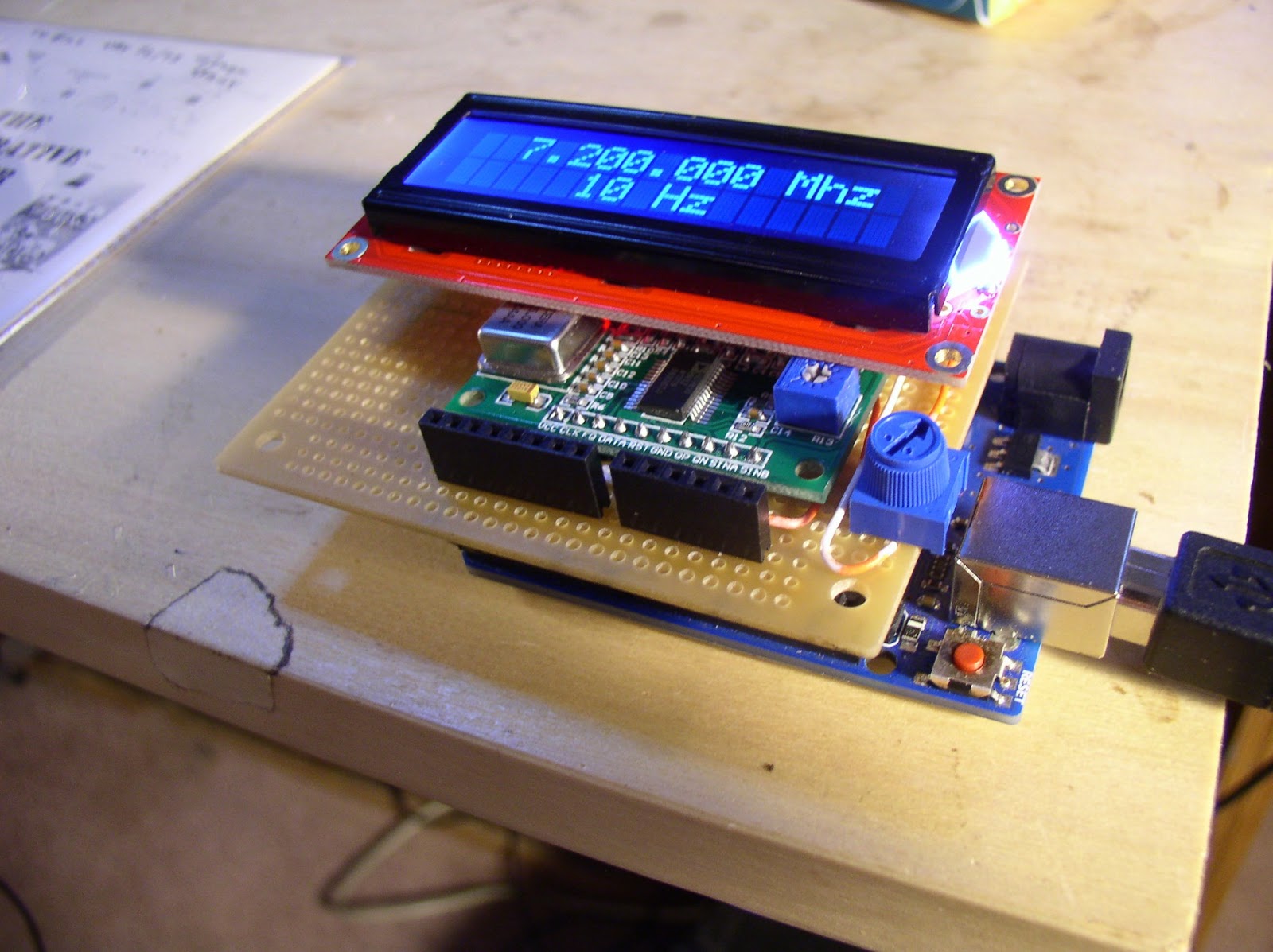
Stacked Shields — My Arduino DDS LCD Sandwich

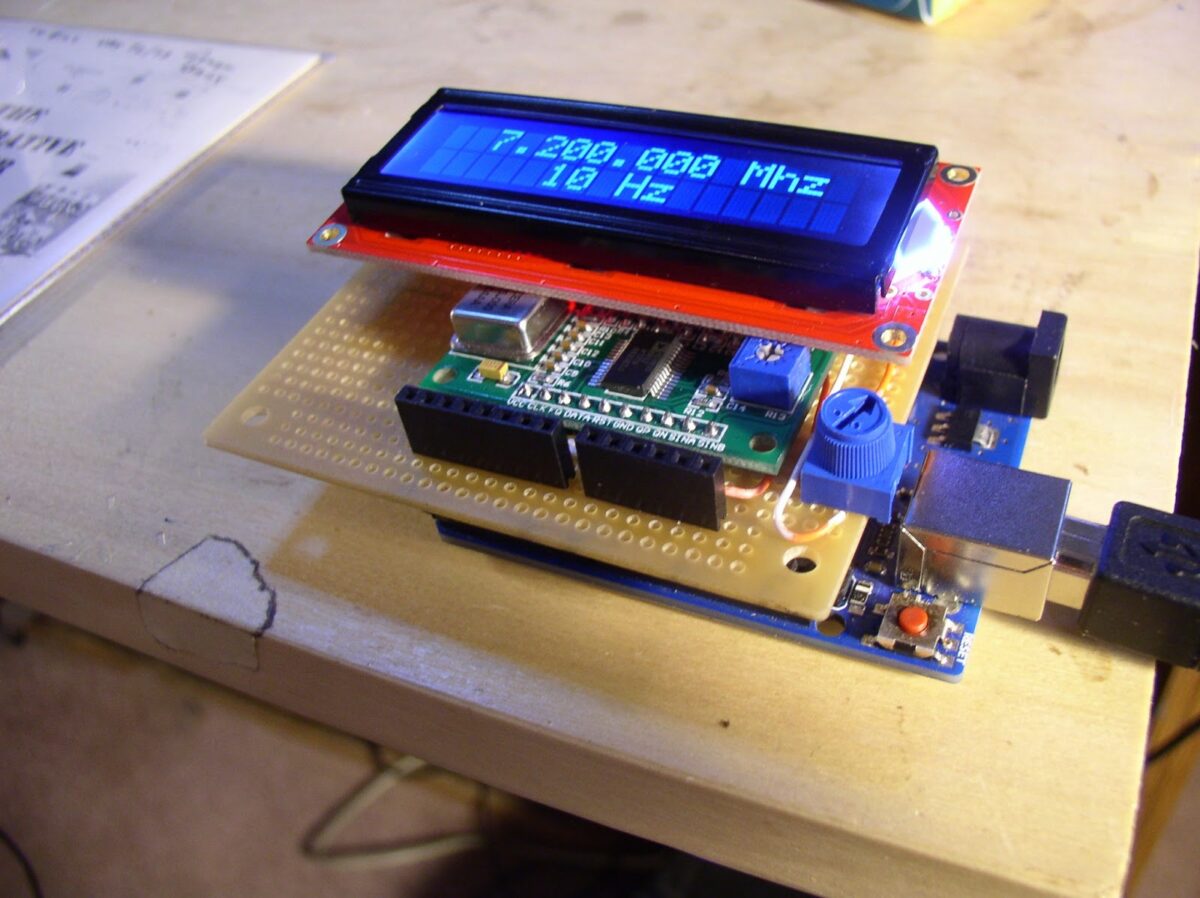
You can barely see the Arduino board down at the bottom. Above it is a homebrew shield that has the DDS board. On that shield I also put a female header for a small 16X2 LCD board. This arrangement avoids the rats nest of wire that often accompanies these digi projects. This thing had me pulling my hair out yesterday. I couldn’t get the display to work. After a lot of checking and re-soldering and testing, I concluded the LCD board was bad. Good thing there is a Microcenter right down the road. I got a new display and my composure returned.

Mark, K6HX, over at Brainwagon has been encouraging me to continue down the digital path. Other SolderSmoke friends are wary of this digitization — one wrote asking “Where is the real Bill Meara and what have you done with him?”

I like the Arduino projects. This little device certainly demonstrates how you can do things with the digi stuff that would be extremely difficult to do with our beloved analog, discrete component circuitry. On the other hand, as I was pulling my hair out trying to figure out WHY the display wouldn’t display, I came across an e-mail describing Peter Parker’s latest minimalist discrete component rig. Why, I asked myself, had I left the happy land of understandable circuits? Why had I allowed myself to be sucked in by the siren song of Arduino?

I guess it is good to try something new, to learn something, to get out of your comfort zone. But excuse me now — I’m going to fire up my 17 meter analog discrete component rig. The one with VXOs in both the receiver and the transmitter. But I’m going to leave the Arduino DDS on — I like looking at the display.

Our book: “SolderSmoke — Global Adventures in Wireless Electronics” http://soldersmoke.com/book.htm Our coffee mugs, T-Shirts, bumper stickers: http://www.cafepress.com/SolderSmoke Our Book Store: http://astore.amazon.com/contracross-20
DSB Digital Success!

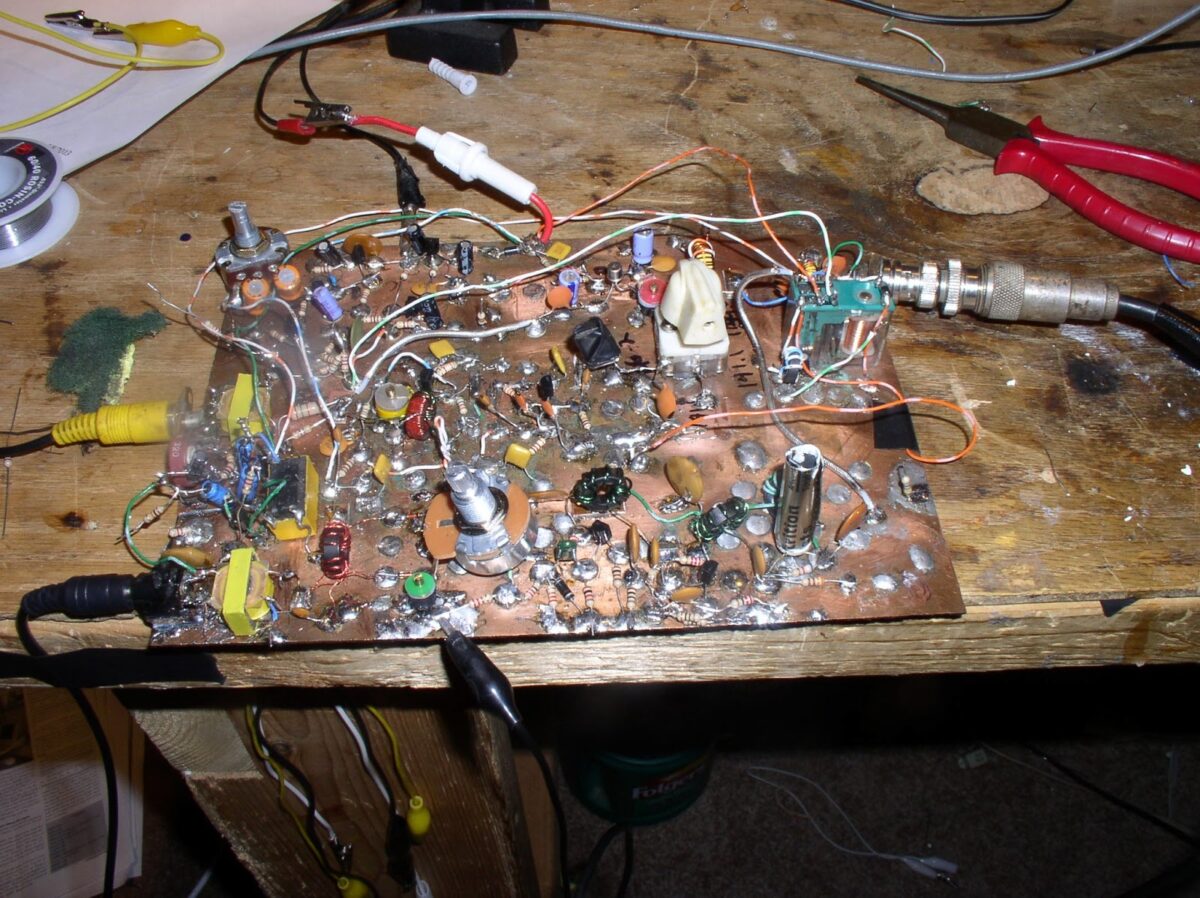
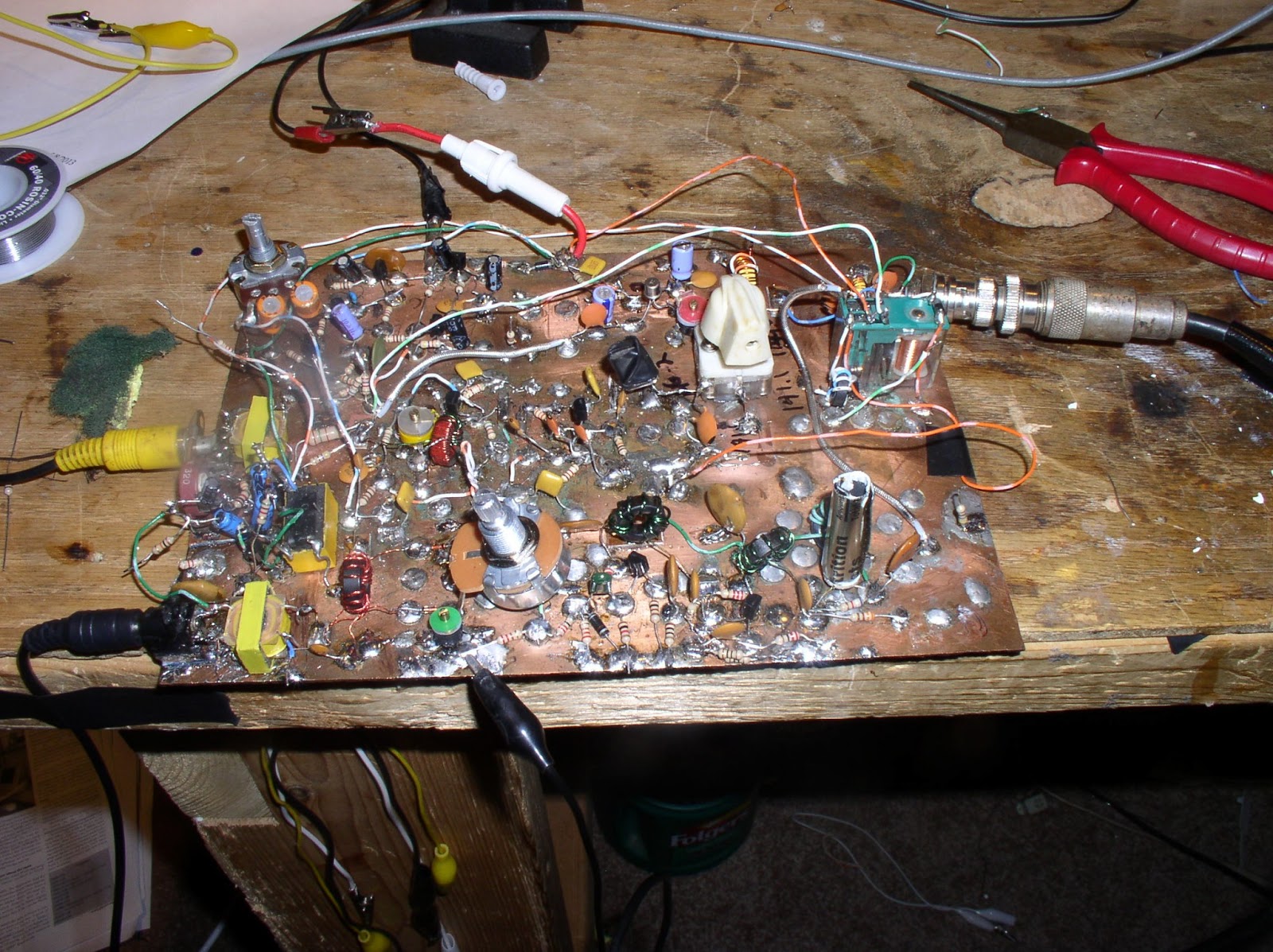
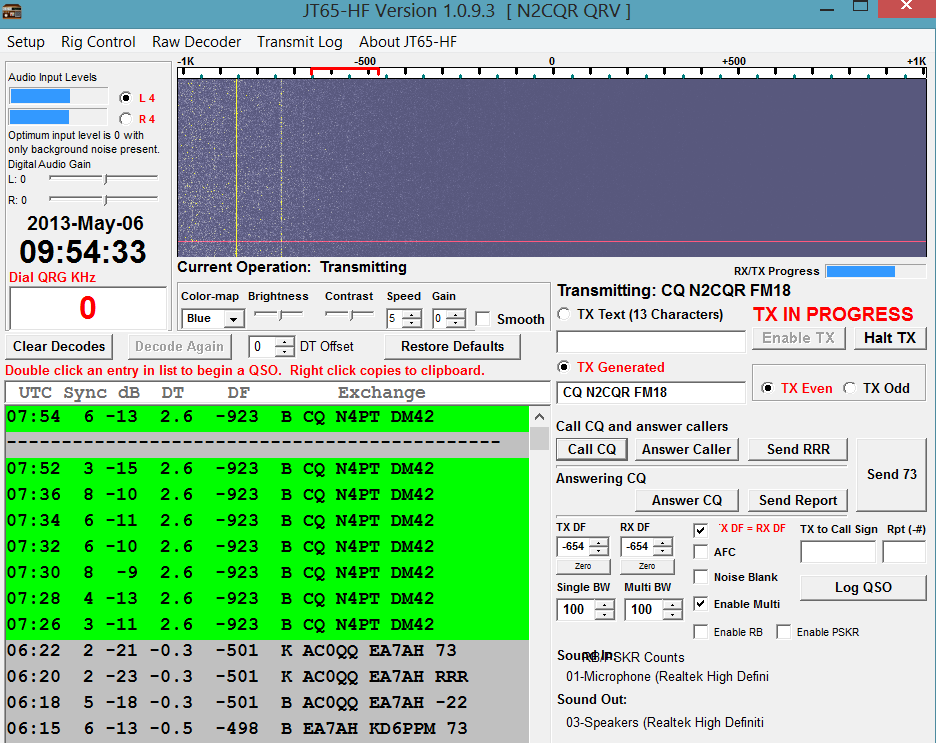
It’s ugly but it gets you there. I finally got the little 30 meter DSB/Direct Conversion transceiver that I built in Rome working on PSK-31 and JT-65. It features a VXO circuit from George Dobbs, an AF amplifier designed by Roger Hayward, and an RF amp chain designed by Peter Parker. It produces about 1 watt of RF. At first I was manually switching the rig from transmit to receive, but this got old real fast, so I built a little VOX circuit — the AF from the sound card does the switching. Last night I fired it up on PSK-31 and stations were calling me (including one fellow in Cuba). Then I went to JT-65 and had a complete QSO with KT1B. Another this morning with K0ASK. It is kind of fun to combine the simple (this rig) with the complex (the computer and these digi modes). I find that I can work both JT65 and PSK 31 while keeping the VXO at 10.139 MHz.

Our book: “SolderSmoke — Global Adventures in Wireless Electronics” http://soldersmoke.com/book.htm Our coffee mugs, T-Shirts, bumper stickers: http://www.cafepress.com/SolderSmoke Our Book Store: http://astore.amazon.com/contracross-20
Homebrew Adventures with JT65

My six dollar DDS board hasn’t arrived yet, so this weekend I worked on the re-build of the 30 meter Direct Conversion/DSB transmitter that I built in Rome (originally for WSPR use). I was hoping to use this rig to make at least a few PSK-31 contacts. But I started seeing these strange looking sigs in the waterfall. I found out they are JT65 (JT for Joe Taylor). So I downloaded the program JT65-HF. I got the receiver going very quickly (it is a 40675 dual gate MOSFET followed by the audio amplifier out of Roger Hayward’s Ugly Weekender RX). The transmitter is just a two diode singly balanced modulator followed by the RF chain from Peter Parker’s Beach 40 Rig. QSOs seem imminent.

Our book: “SolderSmoke — Global Adventures in Wireless Electronics” http://soldersmoke.com/book.htm Our coffee mugs, T-Shirts, bumper stickers: http://www.cafepress.com/SolderSmoke Our Book Store: http://astore.amazon.com/contracross-20
Another VK3YE DSB Rig

Hi Bill

A short e-mail from across the pond. Thanks for sharing the VK3YE link, so impressed I was that I have built one.
It receives great and puts out a nice looking dsb signal, looking forward to some good qso’s, ready to improve on it as we speak and looking to make a top band and 18m version also, love the site and keep up the good work…Ian
Ian Miller
G7FFV
UK

Our book: “SolderSmoke — Global Adventures in Wireless Electronics” http://soldersmoke.com/book.htm Our coffee mugs, T-Shirts, bumper stickers: http://www.cafepress.com/SolderSmoke Our Book Store: http://astore.amazon.com/contracross-20