Yellow Fever! The Cold War Origins of Juliello

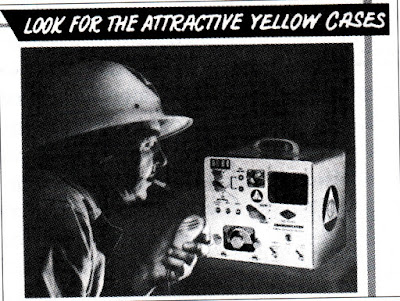
How could you miss them? That yellow was bright! Apparently you needed high visibility to cope with the looming danger of nuclear annihilation. The operator in the ad is obviously calm in the face of Armageddon — note the cigarette dangling from his lips. In this 1956 Gonset ad we can see the inspiration behind what — many decades later — has emerged as the avant-garde ham radio color scheme known as Juliello. The roots of this aesthetic are clearly not in the psychedelic “Mellow Yellow” hippie era. No, this color has harder, more flinty origins.

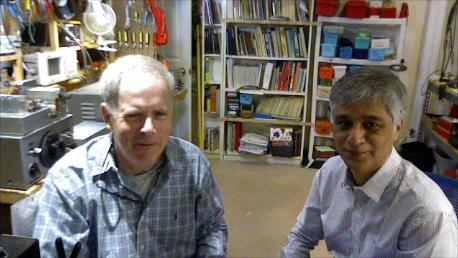
Pete Juliano is not the only one to embrace this look. Podcast #198 elicited this response from our friend Armand WA1UQO:

Pete:
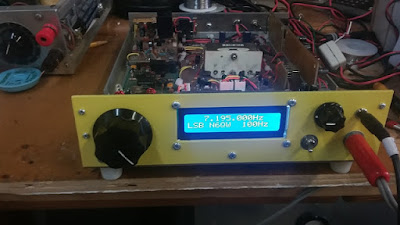
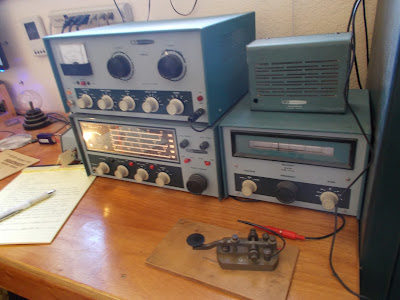
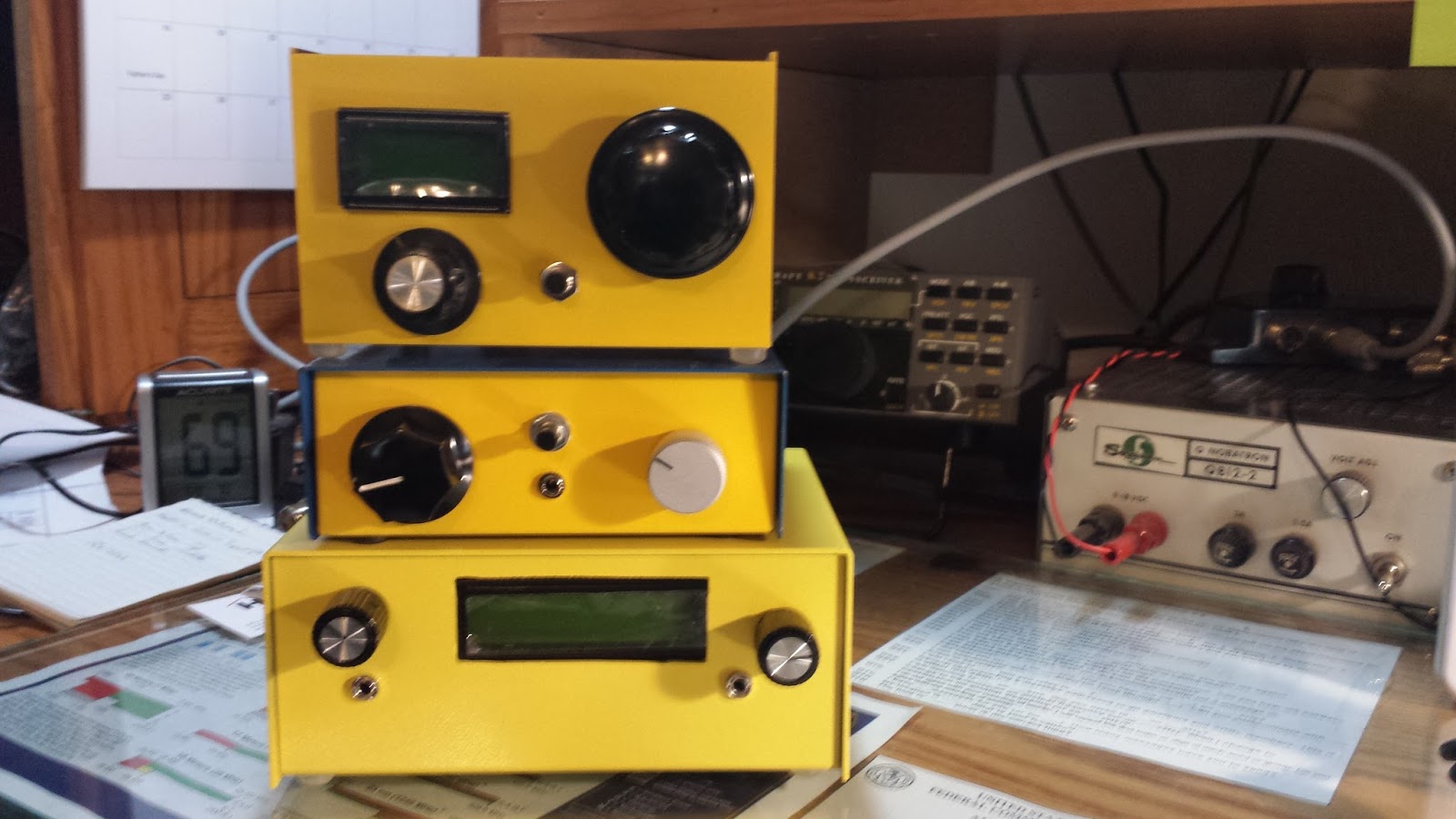
Don’t let that Meara guy give you a hard time over the yellow Rigs. The last three of mine have been yellow and I’m happy to see I’m not the only one with good taste. In the picture they are from top to bottom a 30M One Watter, a 20M One Watter and of course the BITX 40. The 20M does have a Juliano Blue cover though to give it an extra bit of class! As always, enjoyed the podcast.
Bill, see you at Berryville?
73, Armand WA1UQO

SolderSmoke Podcast #198 – D-104, HW-8, Juliello, DIFX, Dishal, Baofeng, MAILBAG

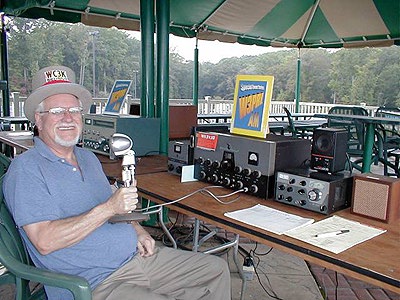
Bill Breshears WC3K (SK)
SolderSmoke Podcast #198 is available.


29 July 2017

Sign on a beach store: SHACK-TACULAR!

Noticed that EB63 amp was getting hot. Why?
TT2, Herring Aid5, Farhan’s Key: QRPp and CW! See?
D-104 lore — Reading from Bill Breshear’s (WC3K) ER article
Astatic crystal/ceramic element — disappointingly flimsy
Electret-ing it. The G-Spot (see picture above)
Walery KB2FIV sent crystal mic element and piezo buzzer (reverse for mic!) FB
HW-8 AF filter Center Frequency Problem. IT’S TRUE! Fixed! Finally.
Shack re-org at N2CQR
Got Steve Silverman’s HP 8640B Sig gen on the bench. Required reinforcement
Pete’s new DIFX
LM373 rigs. Perhaps with that CA3020 Pete sent me. Chips Ahoy!
Juliano Yellow? Origins of Blue? Juliello? Julionyx?
HB Crystal Filter Capitulation? Don’t give up Pete — just dish the Dishal!
Ceramic VXOs? K.P.S. Kang
Crystal testers by G7WKE and Dino KL0S. Impressive.

Antennas and BITX40 modules. Antennas are important.
Bill’s new Baofeng HT on 440.
Fixing my Sony SW7600GR
MAILBAG
Steve Silverman alerts us to NYC radio row now in the Bronx.
Tony G4WIF on the cover of SPRAT — Getting the Don Cameron award. FB
Armand WA1UQO points out that the Berryville hamfest is coming up…
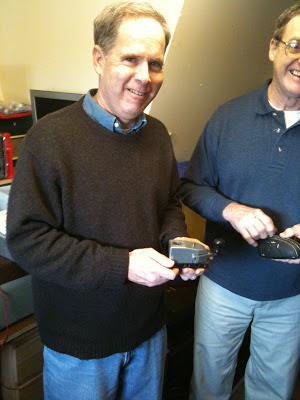
Thomas KK6AHT F4HDQ writes in.
On the air with W8NSA

Juliello. No.

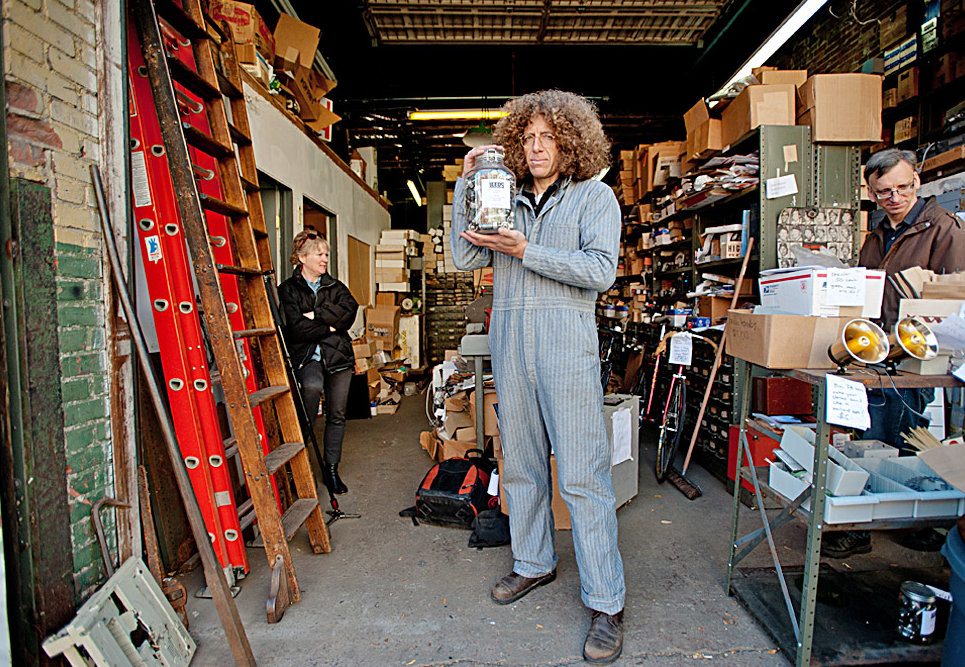
NYC’s Radio Row Survives (sort of) in the Bronx

Thanks to our friend (and official lexicographer) Steve Silverman KB3SII for alerting us to this important bit of radio news from the Big Apple. It seems that a part of old Radio Row was saved and moved — first to Brooklyn and now to the Bronx. I got a kick out of some of the comments in the New York Times article about the store: The insurance company determined that the contents of the store were “non-pilferable.” And one young audio enthusiast was quoted as saying that old American tubes “sound better” than Chinese tubes. I guess they have more presence. Or brightness. And less feathering. Or something.

Here is the 2011 NYT article:
http://www.nytimes.com/2011/11/20/nyregion/leeds-radio-is-a-haven-for-lovers-of-all-things-analog.html


To N2CQR

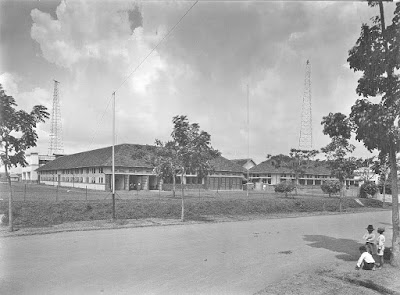
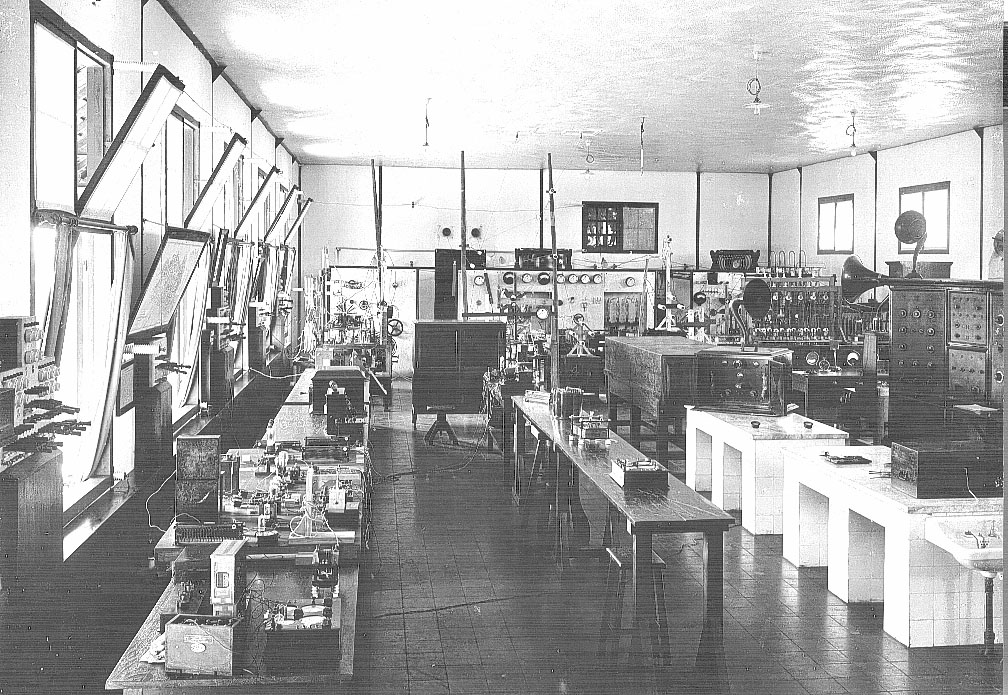
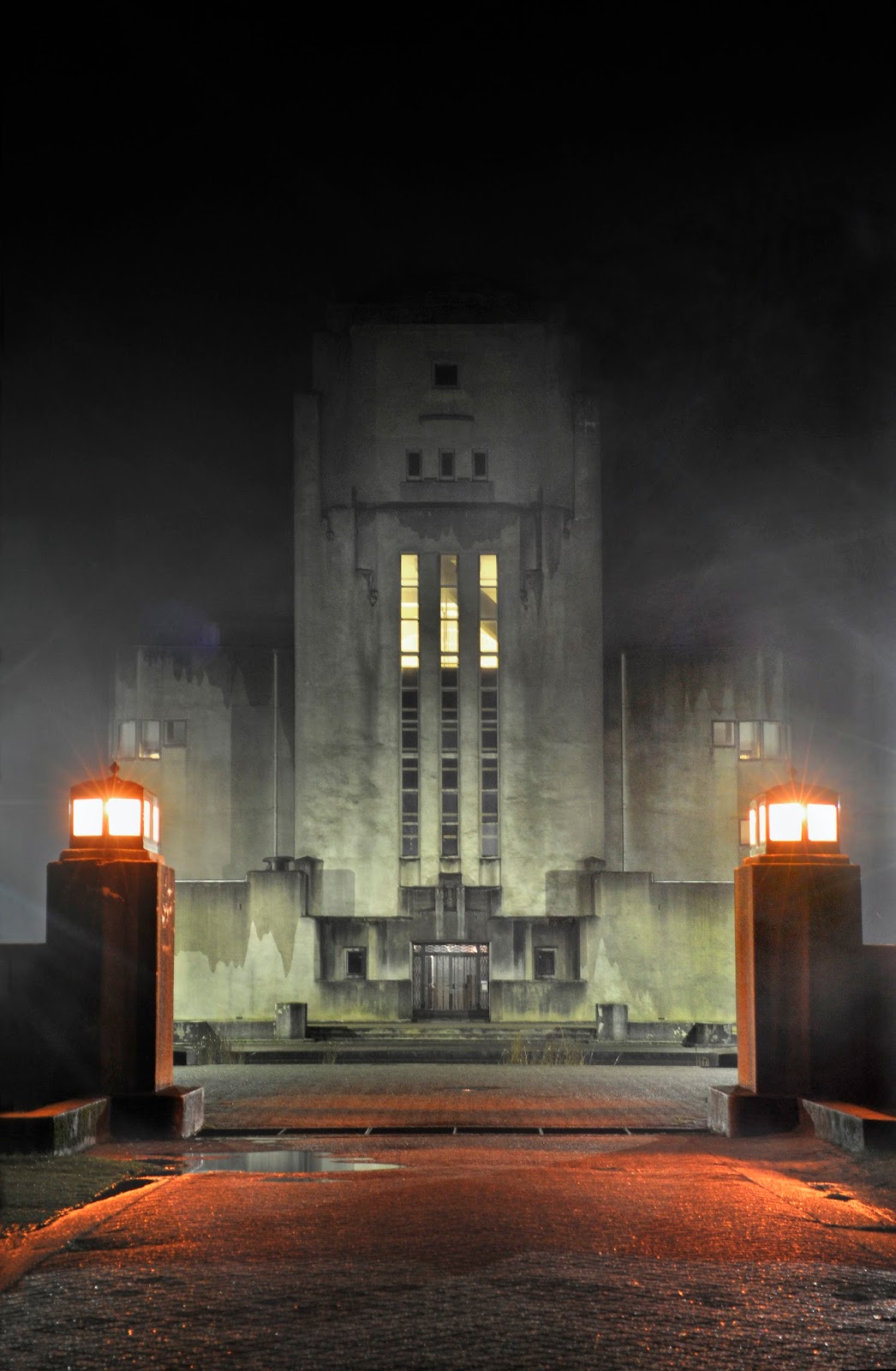
The Radio Laboratory at Bandung, Java — SSB in 1927


Anton PA0AST alerted me to this important piece of radio history:

The first phone radio between Indonesia , the city of Bandung ( Dayeuh Kolot, Jalan Radio 1 ), and Holland , Radio Kootwijk were made in SSB already in 1927… Before that time they had only a CW 1 Mega Watt spark transmitter in Malabar.
One of the receivers still exists in a museum in Amsterdam (cdvandt ). It is 3 meters in length and 2 meter in height…. All made with plug-able units with 1 tube inside .


The transmitter was 10 kW. Ua was 6kV was made by dynamotors. Transmitting Tubes locally made by craftsman in a workshop. Both buildings as well in Bandung and in Kootwijk still exists .


Anton

The old images come from:
http://www.cdvandt.org/bandung-lab-kwk.htm

At the other end was Radio Kootwijk in Holland.

Before you jump to the English version of the page, be sure to check out the Drone video of the site, and the audio file of the Morse transmissions:

http://radiokootwijk.nu/ Thanks to PA0JWU for the wonderful site.

Quite an impressive shack! My favorite part is the note indicating that local residents cleaned out the cooling pool and used it for swimming each summer.

The Possible Inspirations behind “Juliano Blue”

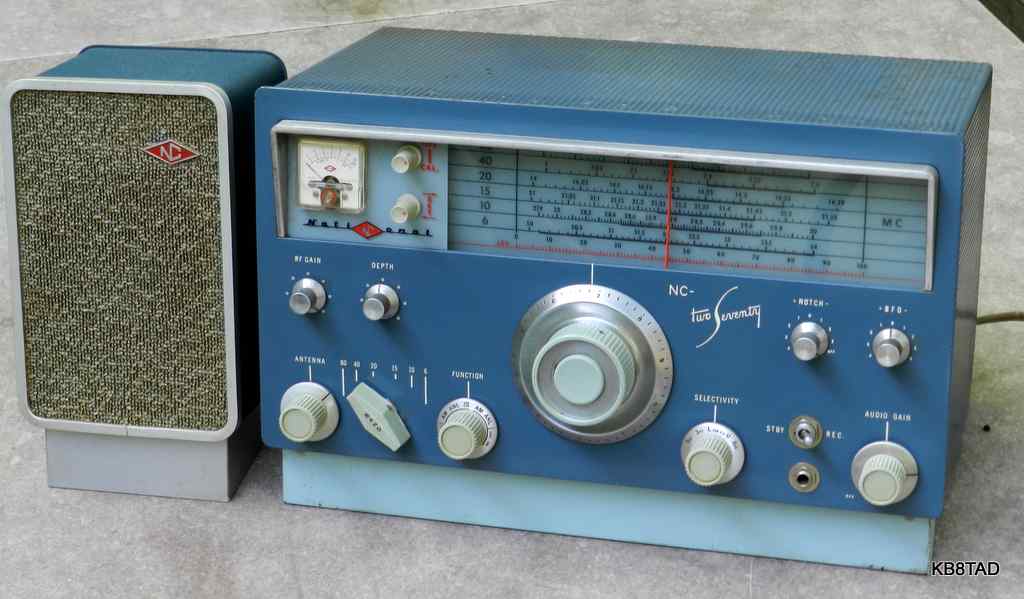
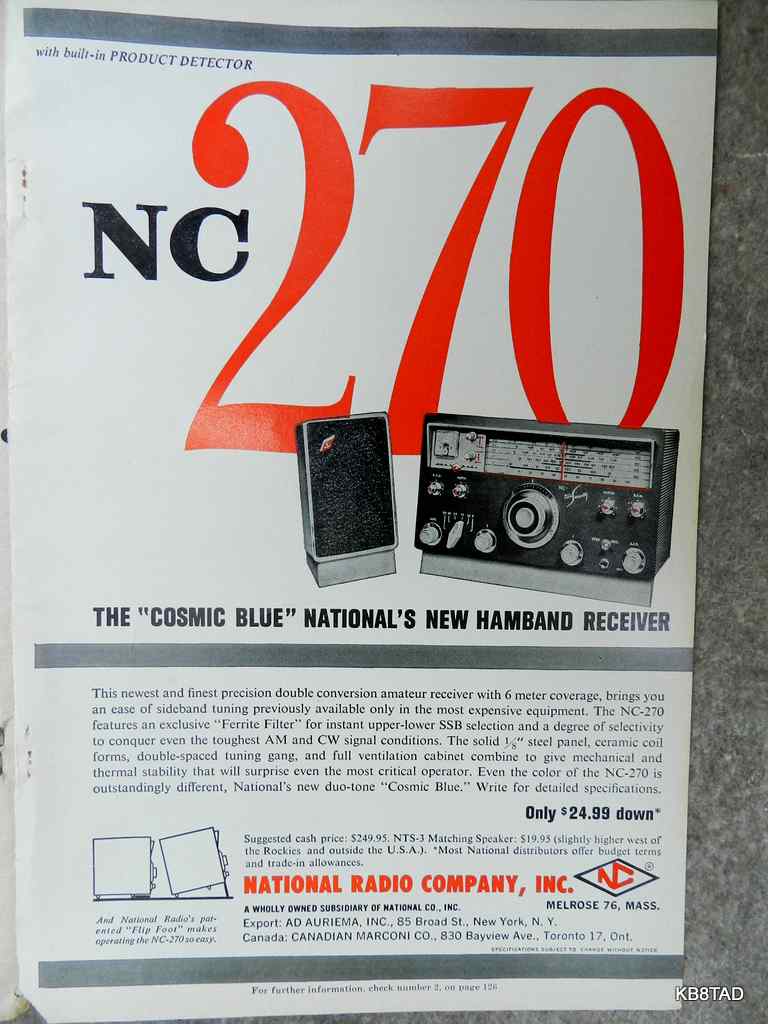
Close in color don’t you think? Dave Ishmael WA6VVL noted the NC-270 receiver’s color was “Cosmic Blue.” Indeed, National noted the unusual color (“outstandingly different”) in its advertising. This now-rare receiver was produced between 1960 and 1964, so it could have influenced Pete. Of course, the CK-722’s color could also have played a role…

BTW, shouldn’t we ask Pete to get out his guitar and give us some “Juliano Blues”? We need some music to go with the paint.

SolderSmoke Podcast #197: Farhan, Fame, ‘Fest, Testgear, SSB History, Dishal Dystopia, QRP CW, MAILBAG

SolderSmoke Podcast #197 is available:


Up in NYC, met Dave W2DAB. got Steve Silverman’s HP 8640B Sig Gen.
Farhan’s visit to SolderSmoke HQ
Got me a TEK1401A Spectrum analyzer
Farhan at “Geekfest” @W7ZOI http://w7zoi.net/Farhan-visit.html
BITX40 Modules. 5,000 already. 1,000 a month.
The BITX pronunciation problem.
QRP Hall of Fame. I suspected April 1 reprisal! “I am unworthy”
Dusting off my Tuna Tin 2, Herring Aid 5 and Farhan’s key from India.

The Manassas Hamfest: OLD crystal gear. 20’s and 30’s stuff. Leon Lambert RX and Philmore Fixed Crystal Detector.
Reminder of how YOUNG the radio art is.
RELATED: Bell System 1953 Transistor Documentary. 11 year old Pete and his CK722.
Bought some good stuff from Charles AI4OT.
Armand WA1UQO gave me a big collection of Electric Radio. So much history and HB wisdom in there. Frank Jones and Lafayette Radio. Jim Lamb and 1930s SSB.
Is the CK-722 the source of Pete Juliano’s affinity for Juliano Blue?
Was Wes Hayward already using Juliano Blue?
“Your rig sounds real good for a homebrew rig!”
“Well, your rig sounds pretty good for a Yaesu!”
Related topic: Going over the Waterfall: The SDR Superiority Syndrome. Feathering.
ARRL Arduino Book by Popiel. Very nice. Right level. Lots of good info.
BENCH REPORT:
Pete’s Dishal Dystopia — Is the perfect TRULY the enemy of the good enough?
Bill’s NE602 RIG:
Replaced OLED. Blue one seems noisier. Shielded it with copper flashing.
Made me yearn for bigger boxes WITH A HOOD!
DOCUMENTING WITH LTSPICE
MAILBAG:
Special Thanks to our correspondent in the Dayton Xenia Metropolitan area — Bob Crane W8SX.
Jack Welch, AI4SV 5R8SV — Our Man in Antanarivo — Sent me a GREAT BOOK “I, Libertine” by Frederick R. Ewing. EXCELSIOR!
Bruce KC1FSZ https://www.qrz.com/db/kc1fsz Building Scratchbuilt BITX. On the way put the VFO where the BFO should go and had a DC RX. FB
Greg, VK1VXG Suggestion for WA8WDQ on Arduino serial plotter

Ben KC9DLM Mercury PTO. In a syringe! No thanks! Maybe add some high voltage and selenium. And a radium dial! Yea!
KY3R’s metalized cigar boxes! FB On Blog.
Richard WB2PEF has revived his Doug DeMaw 8P6 rig. FB. But bothered by PTT thump.
Update on Dave AA7EE (from Mike KC6SAX)

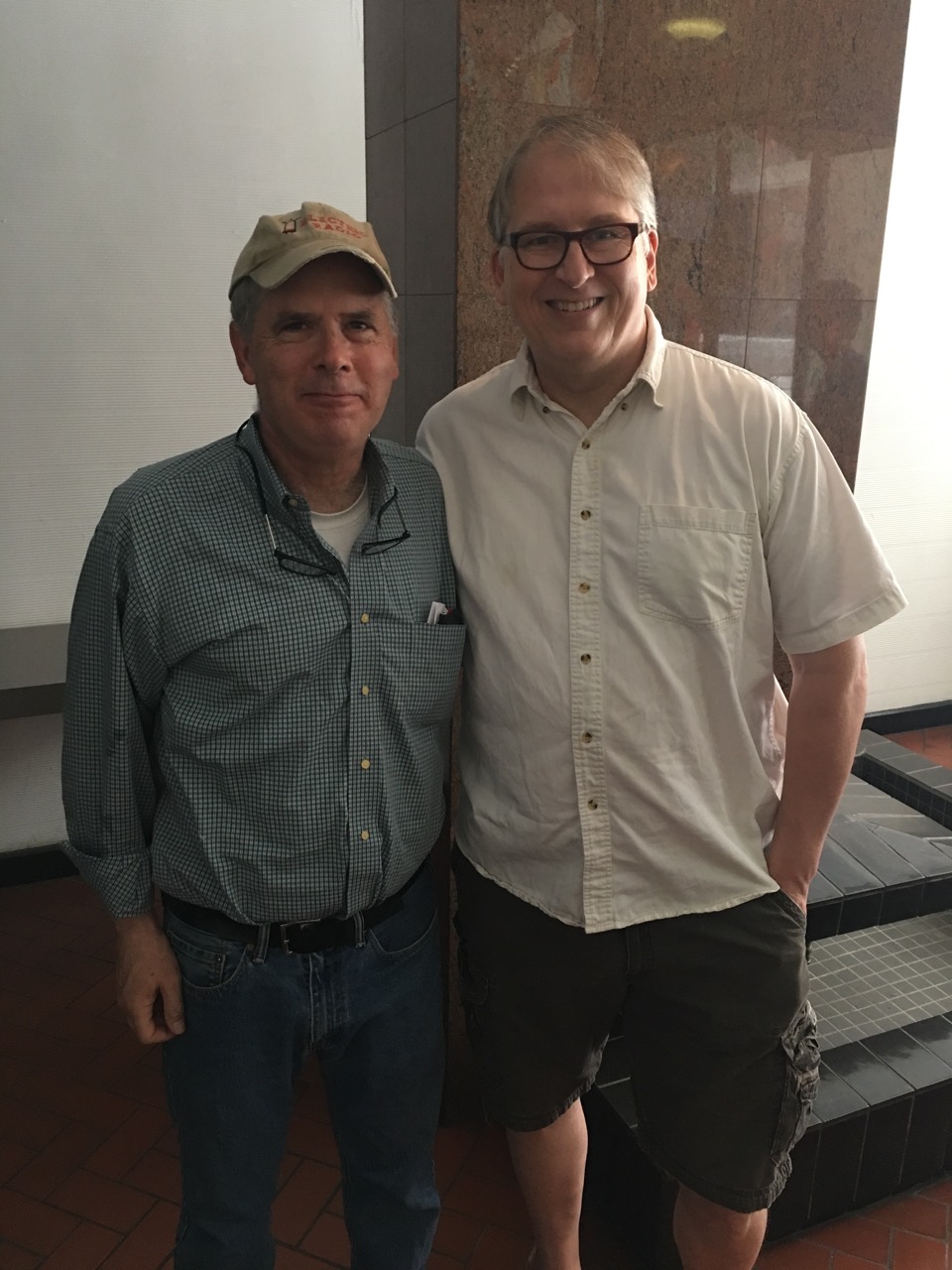
AI4OT and N2CQR
N2CQR AND W2DAB

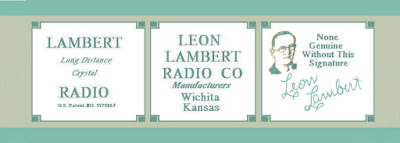
The Leon Lambert Crystal Radio

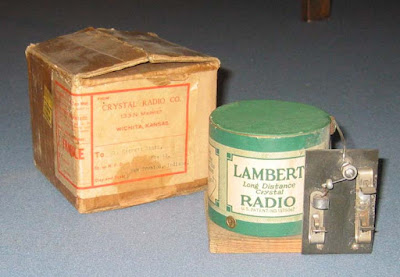
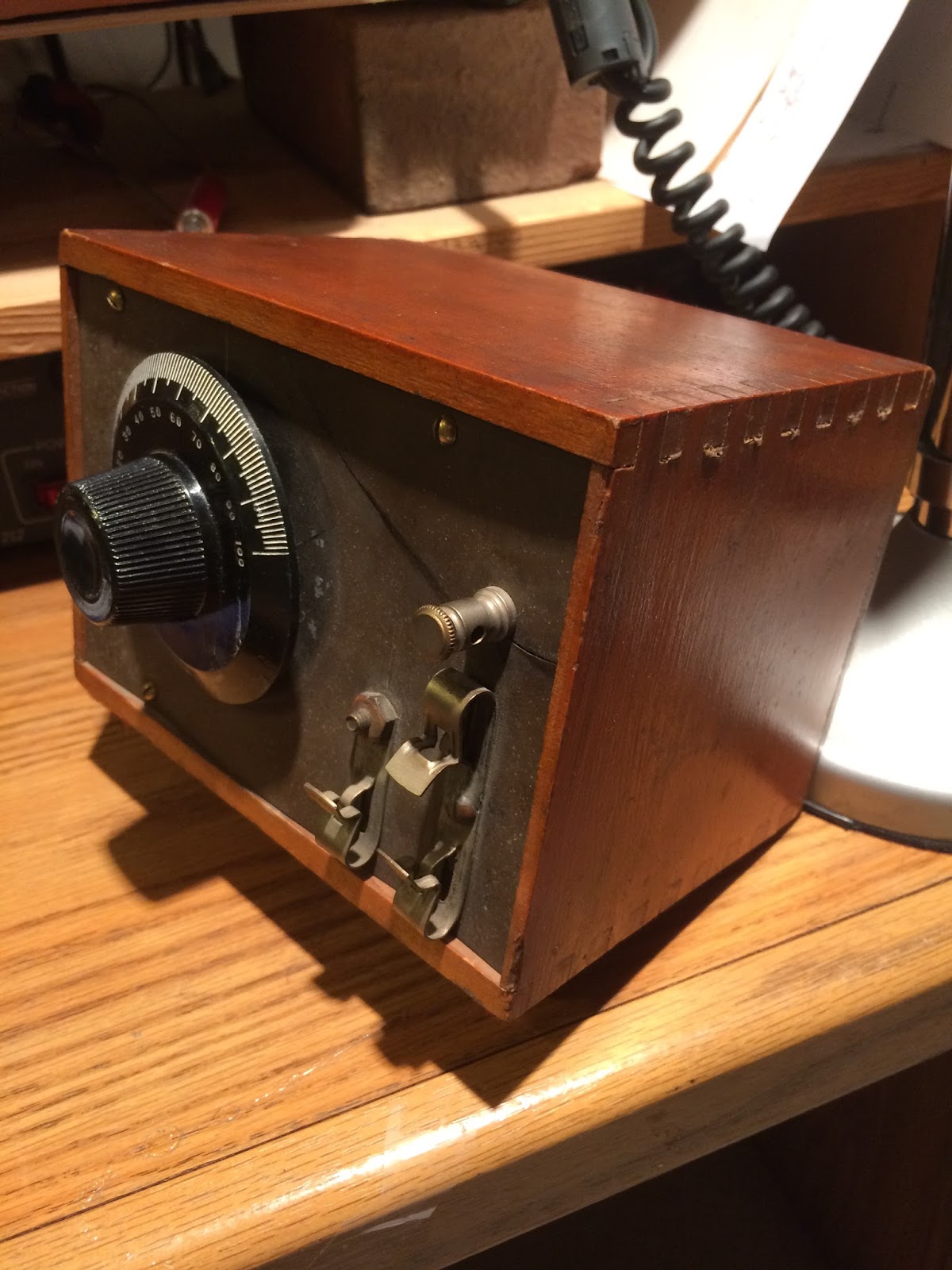
Above you see another gem from the Manassas hamfest. I didn’t know what this was. And I don’t think the seller knew what it was either. I think I gave him 5 bucks for it (as it turns out that is close to the original 1925 price). It was only in the course of looking up yesterday’s Philmore Fixed Crystal Detector that I happened to spot a picture of this thing.

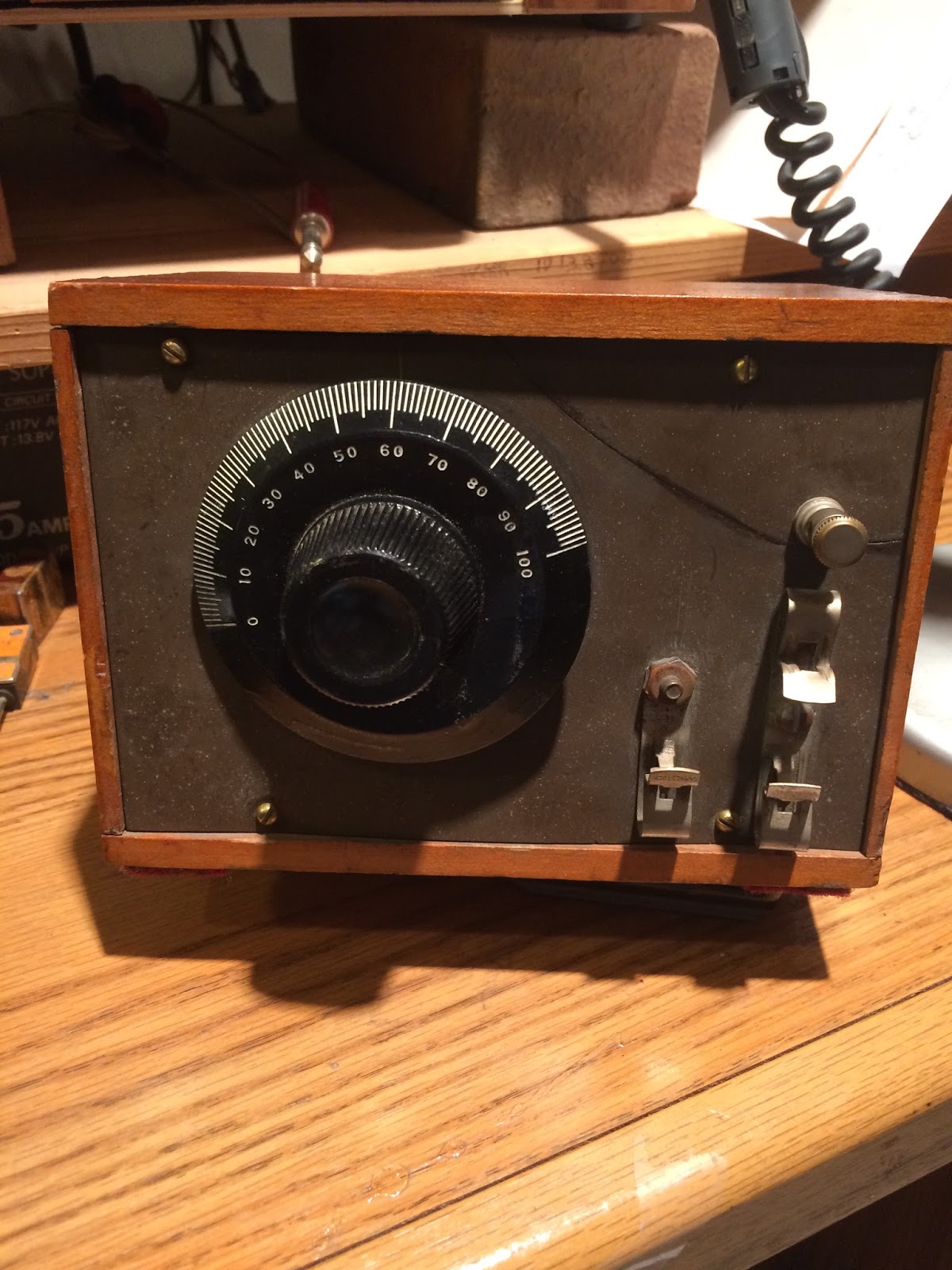
There is not much to it. That nice dial is mechanically connected to a sweeper arm that runs along a big coil. The galena and cats whisker were apparently held in place by the Fahenstock clips on the front. Leon Lambert made these things in Witchita Kansas around 1924. He started making them without the fancy wooden box, but one report says he found a good source for the enclosures:

In 2004 Dale Davenport wrote:

Leon Lambert’s crystal sets show up maybe as or more often than most other brands from that time period apparently, particularly in the Midwest, There are quite a few variations though: some have a little metal tag tacked on, usually on top front center, some do not have a tag at all. Detectors vary some as well and I’ve seen them with Erla fixed detectors. One thing is more or less constant it seems, and that is the little wooden boxes they are mounted in. I cannot verify the story other than from observations, but was told quite a number of years ago that the boxes the Lambert sets are mounted in were used to ship sticks of chalk, packed in saw dust, to schools. Lambert supposedly had a deal with someone with the local school system to acquire these as they were emptied. I have owned one example, and have seen other examples of these sets that show some pressure marks on the flat sides, near the corners, where they apparently were packed in bundles, and the strapping tape used to secure the bundles left an impression. This seems to indicate that the story might be true and they might be leftover marks from the box’s days as a chalk shipping box.Has anyone else heard the story or can anyone else offer more details on this theory? From: http://www.antiqueradios.com/forums/viewtopic.php?t=36735

Here’s a picture of the unboxed version — you can see here where the galena went:


And here we see Leon himself:


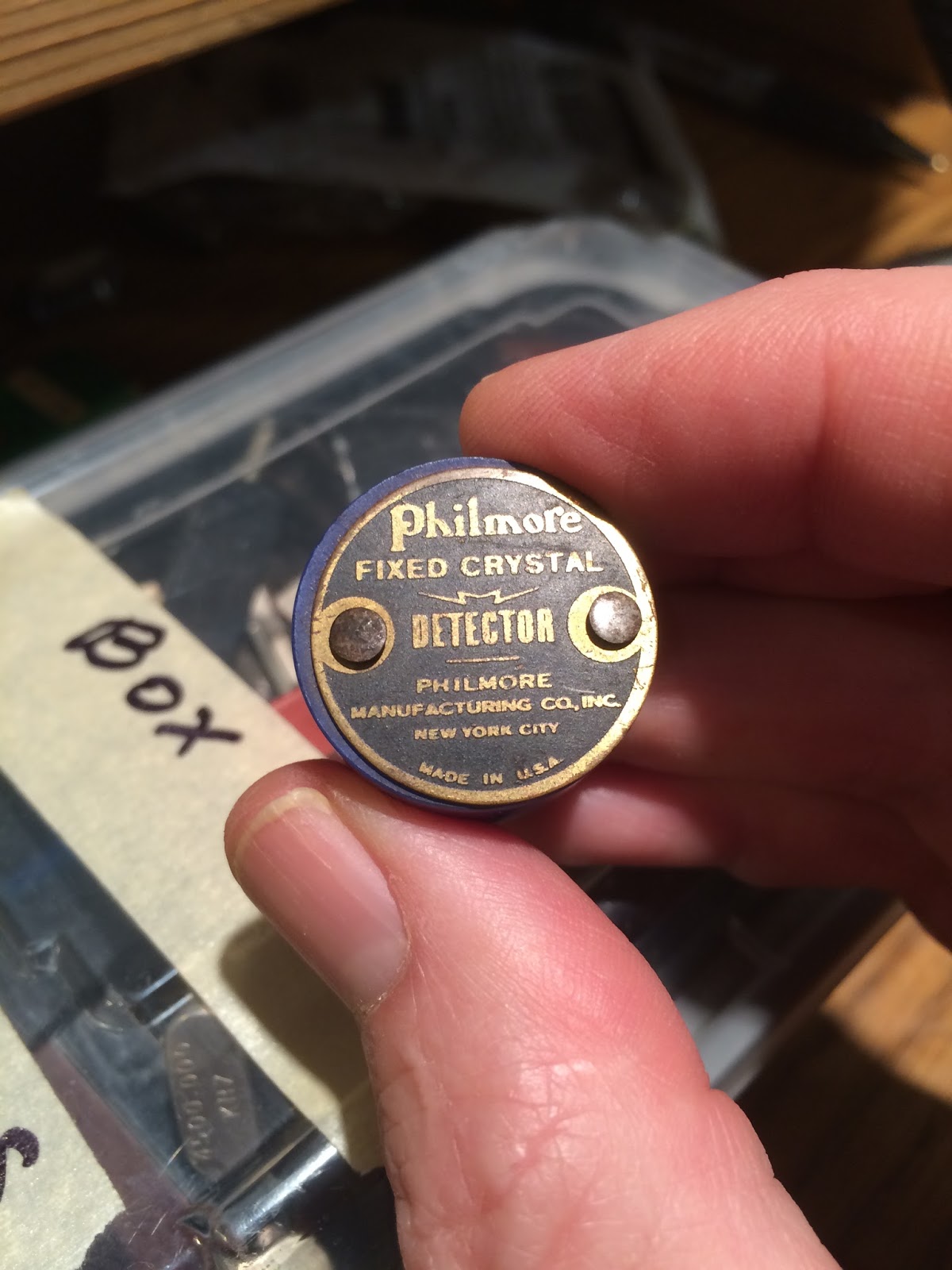
The Philmore Fixed Crystal Detector

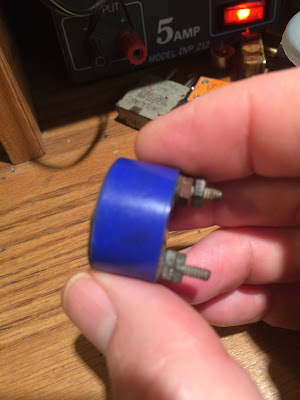
I was at the Manassas, Virginia hamfest on Sunday. An old timer had a box of crystals for sale. It was obviously the kind of “box of rocks” that many of us have in the shack. There was a very wide variety of crystal packages in there, perhaps the widest range of possible styles. In among the modern computer crystals and WW II FT243s, I found one from the earliest days of broadcast radio. The Philmore Fixed Crystal Detector is really just a chunk of galena with a phosphor bronze cat whisker held in place by a spring. Philmore apparently went ahead and found a “sweet spot” for you.
N2HTT was working with on of these last year: https://n2htt.net/2016/01/17/a-complete-digression/
Of course, I liked the New York City connection.

I will see if this old thing still inhales.

Another Thermatron Receiver (video)

Thanks to Steve N8NM for sending this along. He said it seems to be crying out for a synthesized VFO — I disagree,of course.

I like the filter arrangement — one crystal at 455 kHz, two tune-able IF cans and a phasing control. This seems like a good way to get both AM selectivity (broad) while still having the ability to narrow the bandpass for SSB.

The builder did a great job. Does anyone know who he is?

Stepping Inside an AM Transmitter (video)

Very cool video. We have visited VE7ZWZ’s amazing shack before. This time he takes us inside a BIG commercial AM transmitter that he has modified for use on the amateur bands.

I know that he had the plate voltage turned off, but I still felt myself cringing when he reached up to touch the plate connectors on those enormous thermatrons. The filaments were on, adding to my unease. Dude, don’t do that! And if you are standing INSIDE the transmitter, keeping one hand behind your back might not be as beneficial as it normally would be.

His comments on his VFO were interesting. I was kind of disappointed that he went with a varactor circuit. A varactor? Amidst all those bread slicer variable caps? It just doesn’t seem right. (And BTW they are bread slicers, NOT “potato slicers.”) But I kind of liked the heater–thermistor–insulation set up that keeps the VFO at constant temperature.

I thought it was interesting that these transmitters were kept on, with the tubes glowing for years at a time.

Thanks Mr. Carlson, for another great video!

Hot Water BITX 40

Fred’s idea really resonated with me. My first SSB rig was an HW-32A, the 20 meter version of the rig shown above. If — as I suspect — these rigs are anything like the HW-101, they are not aging well. Heath’s drive for economy resulted in rigs that don’t hold up to well over time. I remember the sound of the plastic HW-101 dial clutch cracking when I pushed the button.

BITX40 Modules to the rescue! Put a mono-band board inside an old mono-band rig. There are a lot of possibility here. Some ideas:

— Put that Heath VFO to use. Maybe convert it to solid state. Or just put the LCD from an Si5351 in the window (Pete did this with an HW-101).

— Get the S-Meter wiggling.

— Keep the final amplifier circuitry in there and let the BITX drive it. This will give you a QRO option. (Uh oh, we’re in trouble again!)

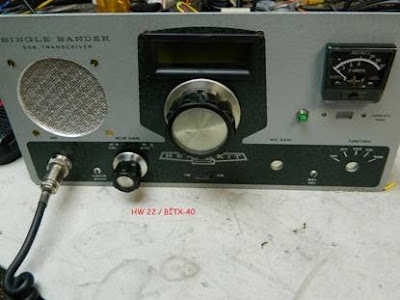
Hello Fellows,
Attached is a picture of my BITX-40 V3 adapted to a Heath kit Single Bander HW22. This is a work in progress but what a neat way to bring an old boat anchor into the present.
The only parts of the HW 22 used were the front panel and case and knobs. Modifications yet to be incorporated include: AGC , a USB port on the front panel to access the Arduino, and a PTT/CW mode switch.
I enjoy your pod cast and web site…Best of 73 KC5RT.

“CQ Transistor” — The 1958 Mighty Milliwatt

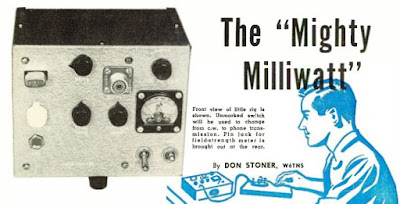
I think it is time that we get back to our QRP roots. Perhaps under the influence of the wizard of Newbury Park (N6QW), we’ve all been drifting into the world of high power. It starts innocently: you hook up a second gel cell to the IRF-510 and suddenly you are at 20 watts out from the BITX. Before you know it, you have an uncontrollable urge for 3-500Z’s. Here is a story that will get us back on the QRP track:

It was September 1958. On the 14th of that month I began my first orbit of the Sun. Band conditions were VERY good. OM Don Stoner was on 10 meters with a homebrew solid-state milliwatt rig calling CQ TR, CQ TR (CQ Transistor). Jarno PA3DMI in Amsterdam sent me the link to a Radio News article by Don Stoner. The article (and the entire magazine) is a lot of fun. Check it out. The QRP fun begins on page 51. Thanks Jarno!
http://www.americanradiohistory.com/Archive-Radio-News/50s/Radio-News-1958-09-R.pdf

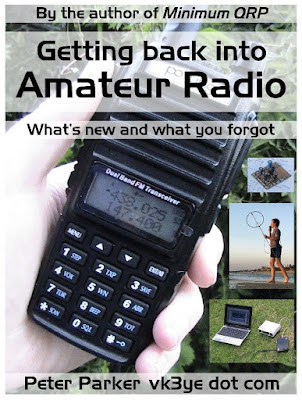
Peter Parker VK3YE on Vintage Gear (in his new book!)

Homebrew Hero Peter Parker has a new book on the market. I was really taken by his description of the joys of restoring older gear. Peter really nails it. Here is an excerpt:

Vintage Equipment

The collection, restoration and use of historical equipment is another movement in amateur radio. The musty smell of warming dust, the heavy clunk of rotary switches and the velvet smoothness of precision tuning drives are joys of every use.
Such sensuality is absent from modern plastic-fronted, wobbly-knobbed transceivers. Old rig cabinets felt they had something in them. A kick would hurt you more than them. And etched panel markings confirmed they were built to last.
Unlike today’s dainty push buttons with stunted travel and disembodied beep, toggle switches showed you where they stood. Weight, life and play made adjusting controls for nulls and peaks (as often required) both a pleasure and occasional frustration. Even if only as mechanical backlash on a bad tuning dial, it was as if the equipment was telling you something, like a ridden horse does through its reins. Not like newer gear’s lack of tactility which is like a ‘dead fish’ handshake, all take and no give.
There are psychic as well as physical joys. The thrill of bringing neglected or dead equipment to life drives many. It’s an underestimated skill. You start with nothing and almost anything done represents progress when building from scratch. Whereas with a repair it is very easy to render something that’s 80% good completely useless with a careless drop or slip.

More about ‘Getting back into Amateur Radio’ is at
http://home.alphalink.com.au/~parkerp/gettingback.htm
& the video at https://www.youtube.com/watch?v=g4ktP5K4x-I

Wonderful “QSO Today” Interview with Ian Keyser G3ROO

N2CQR and G3ROO
I knew it was going to be a good Sunday morning in the shack when I saw that Eric 4Z1UG had posted an interview with Ian Keyser G3ROO. This wonderful interview brought back memories of my visit to G3ROO’s amazing facility in Dover. (Thanks to Tony Fishpool who brought me out there.)

In this interview, you will hear Ian state — in a very nonchalant English way — that he built his first receiver at age 8. And I really loved the story of how Ian got his call sign. FB Ian.

Ian is a very prominent member of the G-QRP club. I was oddly relieved to learn that he is working on a LEGAL LIMIT LINEAR AMPLIFIER. I hope he has special dispensation from Rev. George Dobbs. I intend to cite this project if we ever have to defend Pete Juliano from charges of QROism.

Listen to the interview here:


That is a key designed for use aboard a hydrogen balloon. This is the kind of thing that Ian has in his shack.

This is Ian’s variometer — mentioned in the interview.

That’s me using one of Ian’s spy sets.
Ian’s antenna book:
Here are the SolderSmoke Daily News posts about Ian and the Dover Construction Club:


Boatanchors! HT-37 to HT-37 contact with W1ZB

Jerry W1ZB and I met up on 40 a week or so ago. He was running a Hallicrafters HT-37. This spurred me to clear up the T/R problem that had knocked me out of the competition on Straight Key Night (I’m sure I would have won!). One spray of DeOxit D5 on the HT37 relay contacts was all it took. Jerry and I set up a schedule for this morning on 40 minutes. Above you can see a short video of the first part of our HT-37 to HT-37 contact.

Jerry has an amazing collection of beautiful old tube radios. Check out his QRZ.com page:
https://www.qrz.com/lookup/w1zb

BTW: Speaking of old rigs talking to identical old rigs: Last night on 40 I worked TI2NF in San Jose, Costa Rica. He was running a Collins KWM-2 to a Collins 30-L1. It was real nice to talk to somebody who was using an unusual rig. Right after we finished, VE3OCZ called TI2NF. VE3OCZ was ALSO running a KWM-2 to a 30-L1. TRGHS.

Straight Key Night — Bandscan from WA6ARA (audio)

WA6ARA SKN Station

Mike Herr WA6ARA was on 40 meters with old gear this Straight Key Night. Mike was receiving with a venerable Heath HR10B. One of his favorite QSOs was with Keith W6SIY; Keith was running Conar twins that had the kind of “swing” that stirs up the kind of memories that SKN is all about. FB. Mike made a bandscan recording of what 40 sounded like, and he made another of W6SIY’s beautiful signal.

You can listen by clicking on these links:

http://soldersmoke.com/SKNBANSCAN.mp3

http://soldersmoke.com/SKNQSO.mp3

My own SKN effort was cut short this year by technical difficulties. The HT-37’s relays stopped doing their thing. Probably the relay drive tube going soft. But I did manage to make two great contacts on 40:

WA6URY is in Los Angeles. This was a very timely contact — my wife and I went to see the movie “La La Land” on New Year’s eve — the film features a lot of beautiful LA scenery. Dan was running a kilowatt to a 2 element Yagi on 40. He too owns an HT-37 and a Drake 2B. He was on a straight key “with dirty contacts.” FB Dan, thanks.

And then I worked W1PID! Wow! Jim is well known for his operations from field locations and for his intrepid participation in many of the radio adventures of Michael Rainey AA1TJ. Jim was on the Maine sea coast expedition when Michael was attempting to cross the pond with his voice-powered radio. On SKN Jim was in New Hampshire running 35 watts to a Windom off-center fed dipole. His Morse key is a Kent. TRGHS. Thanks Jim.

Happy New Year!

W1PID Maritime Mobile

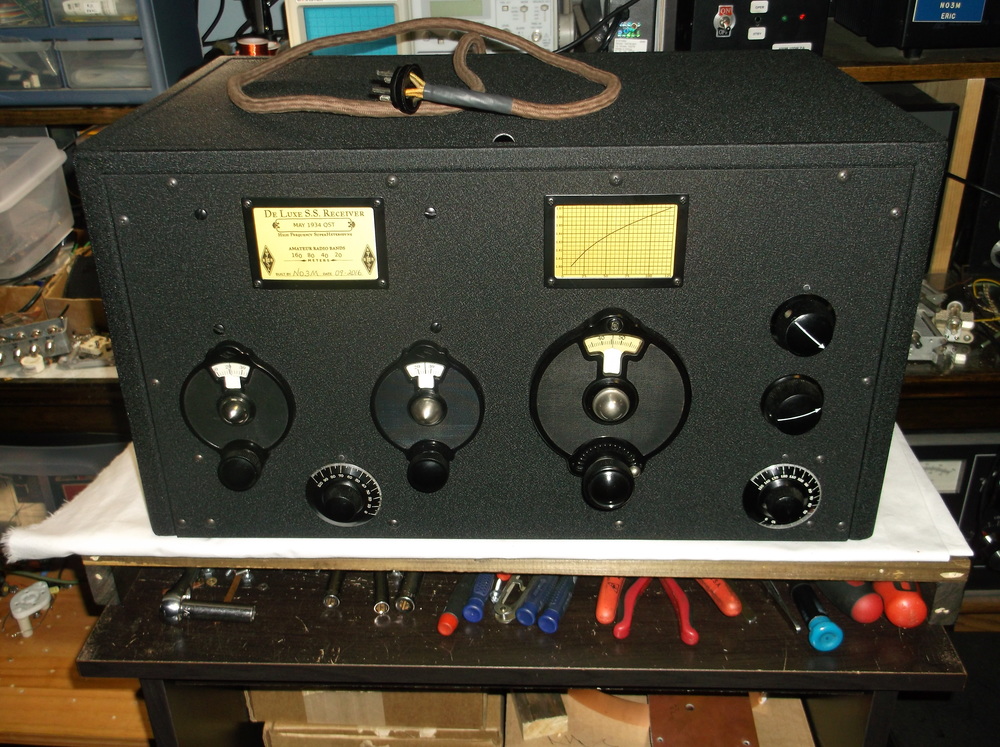
NO3M’s Amazing Homebrew 1934 Single Signal Superhet

Jim AB3CV reminded me this morning about the work of Eric NO3M. Jim was pointing out that breadboard construction need not be ugly and that Eric’s work is the proof of that. Indeed.
Almost one year ago, I worked Eric on 160 meters. He was using one of his beautiful breadboard rigs:
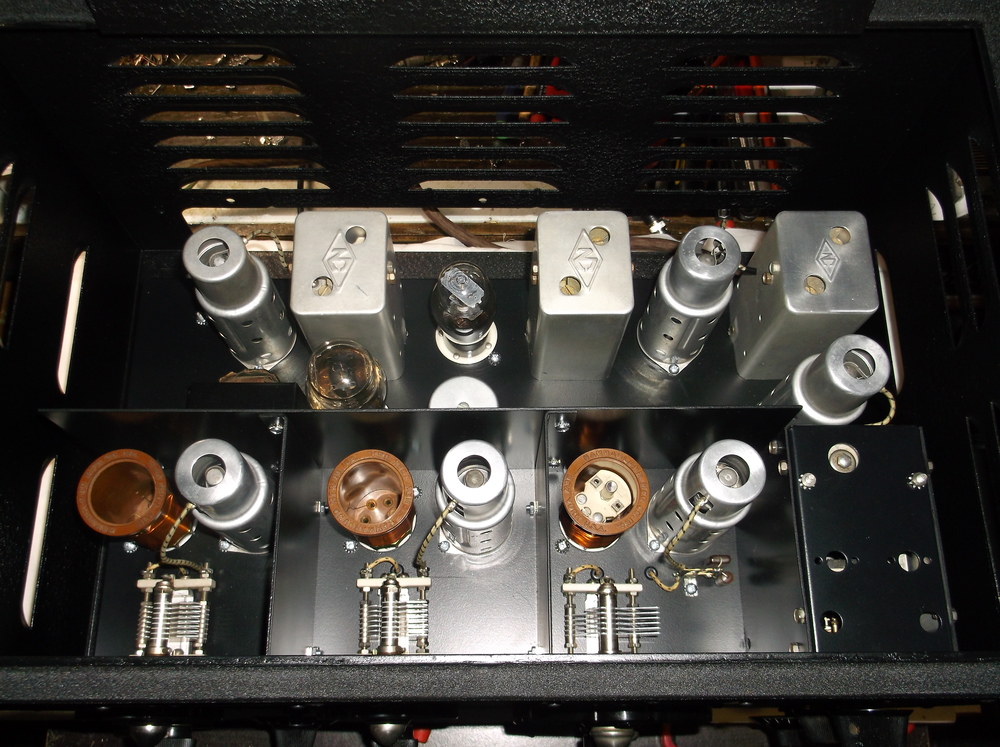
Jim’s reminder sent me once again to Eric’s site. I see he has been melting a lot of solder, and to very good effect. In just three weeks he built the magnificent 1934 QST “Single Signal Superhet” pictured here.
Eric has a great series of articles on this project, with excellent pictures and videos:
Bravo Eric!

HB2HB: Butch K0BS with a KWM2 and a Hombrew 4-1000 Amp

Wow! Now THAT is a shack! This morning I heard Butch K0BS and his friends on 40 meter SSB. I knew I was listening to the voices of kindred spirits when I heard them talk about a drifting VFO and the need to heat up the filaments of an ART-13. As the group was shutting down to begin their preparations for Thanksgiving dinners, I gave Bruce a call with my BITX 40 Module. He was on a KWM-2 (the rig that had been drifting a bit) and a homebrew 4-1000 amplifier. I told him that I think a bit of VFO drift is a sign of good character.

You really need to check out the pictures on Bruce’s QRZ.com page:

https://www.qrz.com/db/K0BS

Happy Thanksgiving to all who are celebrating the holiday.