
Bry was a good guy and one of our sponsors. RIP OM. And the Novice Rig Roundup was his thing.
SolderSmoke Daily News — Ham Radio Blog
Serving the worldwide community of radio-electronic homebrewers. Providing blog support to the SolderSmoke podcast: http://soldersmoke.com
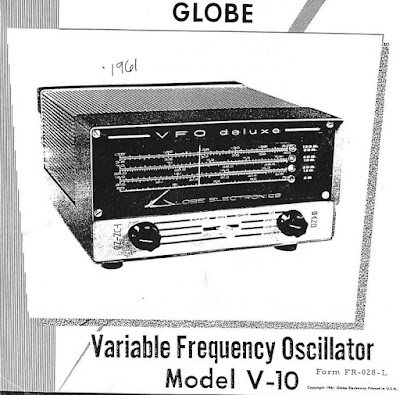
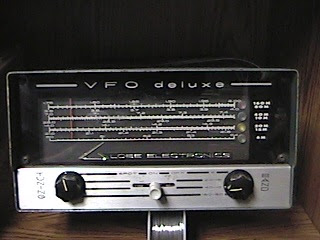
A few years back Rogier PA1ZZ very kindly sent me a box of electronics parts. Included was an FM table-top radio with a nice walnut case. Thanks Rogier!
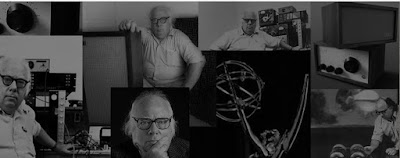
I hadn’t looked at the receiver in years, but this week I dusted it off and looked it up on the internet. Turns out that it is kind of famous. It was produced by the KLH company. The K stood for Henry Kloss, one of the giants of Hi-Fi audio gear. Henry appears in the picture below.
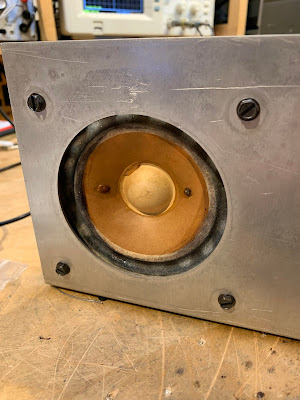
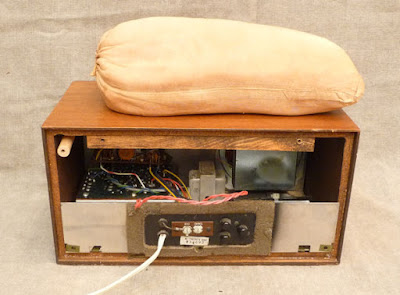
I got the receiver working, but it sounds awful. It sounds much better with an external speaker, which is disappointing because the internal speaker was the main attraction of this receiver. It even has a little badge on the front panel trumpeting(!) its “Acoustic Suspension Loudspeaker.”
I’m wondering if the problem is in fact the speaker. The cone looks intact, but it seems very dried out. It has been more than 50 years… What do you guys think? Picture above. Any other suggestions on what to do with this thing, or how to make it sound better?
Some KLH history:
https://antiqueradio.org/KLHModelTwentyOne21FMRadio.htm
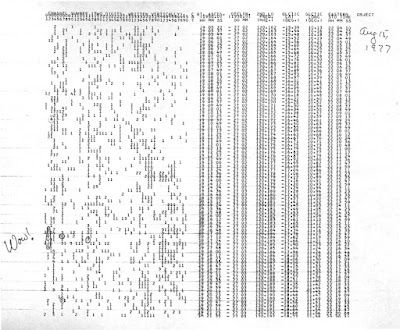
This Hack-A-Day article explains the significance of 6EQUJ5 on the paper readout of the Big Ear radio telescope. It is a signal-to-noise readout.
The article also has interesting information about the radio telescope that was used.
I have on my shelf John Kraus W8JK’s wonderful book “Big Ear Two — Listening for Other Worlds.” John Kraus is the guy who built the Big Ear. In a reminder of how new radio technology really is, Kraus got his start in radio as a ten year-old boy in 1920. He ripped the wire out of the ignition coil of a Model T Ford to make a tuning coil for a crystal radio. He took the earpiece out of the family telephone. His father gave him a chunk of Galena. He used the crystal radio to listen to the early broadcasts of WWJ in Detroit.
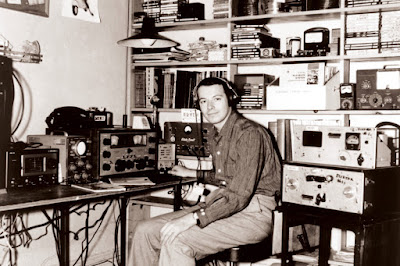
ARRL reports that his callsign was K2VEH.
Hey, Pete plays guitar. So does Farhan. Should we have our people call Jac’s people? Maybe do lunch?
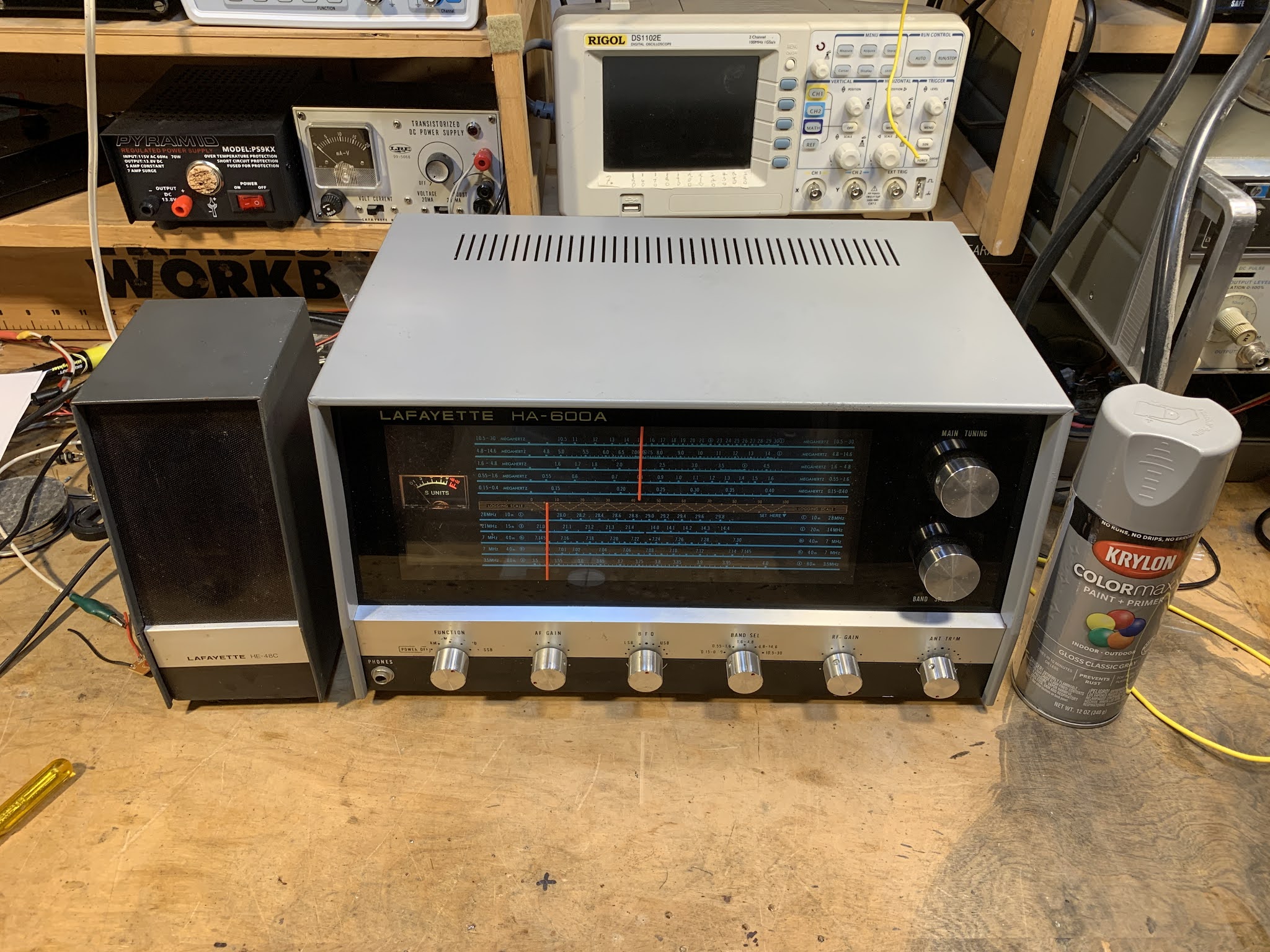
I’ve been having a lot of fun with the Lafayette HA-600A receiver that I picked up earlier this month. Adding to the mirth, I noticed that on SSB, the signals sound a bit scratchy, a bit distorted, not-quite-right. (I’m not being facetious; this is an interesting problem and it might give me a chance to actually improve a piece of gear that I — as a teenager — had been afraid to work on.)
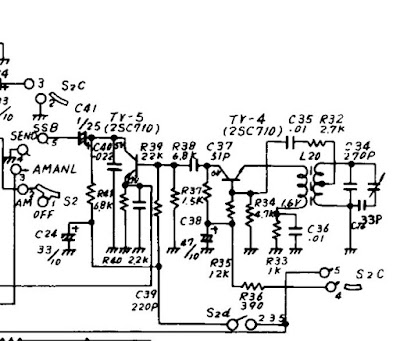
Before digging into the circuitry, I engaged in some front panel troubleshooting: I switched to AM and tuned in a strong local AM broadcast signal. It sounded great — it had no sign of the distortion I was hearing on SSB. This was an important hint — the only difference between the circuitry used on AM and the circuitry used on SSB is the detector and the BFO. In the AM mode a simple diode detector is used. In SSB a product detector and BFO is used. The BFO sounded fine and looked good on the scope. This caused me to focus on the product detector as the culprit.
Check out the schematic above. Tr-5 is the product detector. It is really, really simple. (See Einstein quote below.) It is a single-transistor mixer with BFO energy going into the base and IF energy going into the emitter. Output is taken from the collector and sent to the audio amplifiers. (A complete schematic for the receiver can be seen here: https://nvhrbiblio.nl/schema/Lafayette_HA600A.pdf )
I had never before seen a product detector like this. One such detector is described in Experimental Methods for RF Design (page 5.3) but the authors devoted just one paragraph to the circuity, noting that, “We have not performed careful measurement on this mixer.” The lack of enthusiasm is palpable, and probably justified.
A Google search shows there is not a lot of literature on single BJT product detectors. There is a good 1968 article in Ham Radio Magazine: http://marc.retronik.fr/AmateurRadio/SSB/Single-Sideband_Detectors_%5BHAM-Radio_1968_8p%5D.pdf It describes a somewhat different circuit used in the Gonset Sidewinder. The author notes that this circuit has “not been popular.”
To test my suspicion that the product detector is the problem, I set up a little experiment. I loosely coupled the output of a signal generator to the IF circuitry of the HA-600A. I put the sign gen exactly on the frequency of the BFO. Then, I switched the receiver to AM, turning off the BFO and putting the AM diode detector to work. I was able to tune in the SSB signals without the kind of distortion I had heard when using the product detector.
So what do you folks think? Is the product detector the culprit? Or could the problem be in the AGC? Should I start plotting a change in the detector circuitry? Might a diode ring work better?

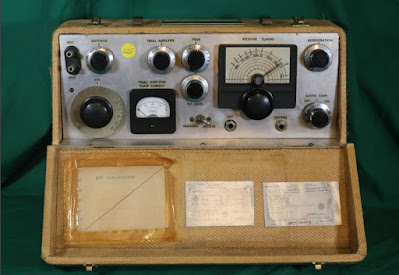
Wow. Check this out:
http://www.skywaves.ar88.net/homebrew/W9FKC.pdf
A very nice rig built by an amazing homebrewer
And thanks to Al Klase N3FRQ for putting that wonderful web site together.
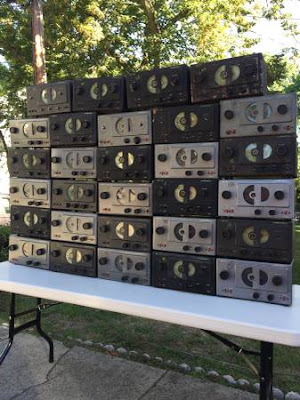
This is almost like a nightmare. I guess it could be worse — they could all be E models.
https://boston.craigslist.org/gbs/ele/d/arlington-twenty-nine-29-variouss/7188621508.html
Thanks to Jim W3BH for alerting us to this, uh, opportunity.
Mike WU2D made another very nice video about his Drake TR-3 refurb.
He cracked me up when he noticed that one of the calibration oscillators was 30 Hz off. “Let’s pretend we care,” said Mike. Indeed. But it was probably wise to tackle this problem, given how upset modern hams seem to get with 30 Hz discrepancies. Mike noted that the problem was casued by “aging cystals.” Yikes! Another thing to worry about, along with the Southern Magnetic Anomaly.
Once again Mike has added a useful term to our lexicon: “The Dribble Method” of signal injection (or extraction): Just wrap a few turns of insulated wire around the tube or IF can and inject or measure away.
Neutralization! Now there’s a blast from the Thermatron past. I haven’t done that in a long time. I liked Mike’s “reverse neutralization” method.
Mike’s video featured some real Boatanchor eye candy. That Heathkit HR-10 receiver caught my eye, as did that HP signal generator.
Thanks Mike. One hand behind your back OM.
There is a lot of Tribal Knowledge in this video. And good discussion of the many moral issues faced by those of us who work on old gear.
— Mike seems apologetic about his blatant and blasphemous spray painting of the Drake copper chassis. As well he should be.
— His stubborn replacement of the tube socket (to allow for shielding) seems wildly reckless to me. The Radio Gods may retaliate with some unexpected instability in that circuit.
— He CORRECTLY refers to the rewiring of the final circuity (to accomodate 6146s) as “the evil thing.” Indeed.
— I love in the beginning how he is listening to some ham radio chatter and the guy is talking about the selection of COM PORTS. With old radios “we don’t have COM PORTS — we have an antenna connector.” Well put Mike.
— I was struck by how much the TR-3 innards look like my 2-B receiver. But the TR-3 has no dial strings. That is a major technological improvement. And it has a PTO. Was this a case of Collins envy?
— Mike adds a useful word to the lexicon: “shotgunning” — the indiscriminate replacement of entire categories of parts in old radios. Now I don’t mind shotgunning the electrolytics (some people bitterly oppose this). But I agree with Mike on the wisdom of keeping the paper caps in there.
I am looking forward to Part II. These videos are like “This Old House” but instead “This Old Rig.” And I will go back and look at Mike’s video on the Power Supply refurb. Thanks Mike.
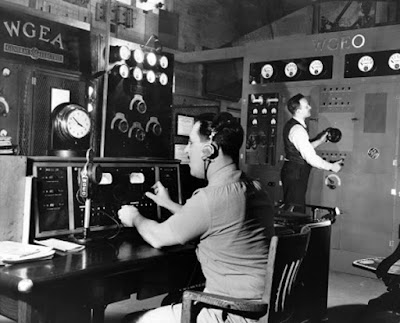
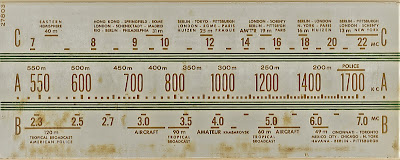
A while back I posted a picture (see below) of the shortwave dial of an old receiver used by my wife’s grandfather. I noted the odd presence of ‘Schenectady” among the exotic foreign locations on the dial. Pete immediately connected the dots by noting that Schenectady was the home of General Electric. This week Chris Waldrup KD4PBJ sent us a great web site describing the shortwave stations in Schenectady. Check out the tube that runs 100 kw AM (Big Bertha).
https://www.radioworld.com/news-and-business/schenectady-shortwave-transmitters-1941
Chris also sent information about BIG AM broadcast band stations:
In addition to Schenectady being home to GE it is the city of license to clear channel AM 50 kW WGY 810. WGY was started by GE so if the radio was GE it was probably a way to promote their station at the time. I heard mention of Rochester too and that would be for 1180 WHAM another 50 kW clear. Both WGY and WHAM are still there going strong banging out their 50 kW.
And Pete reminded us of KDKA, describing its long-lasting impact on one of his ears:
I liked both these videos. Mike WU2D really does a great job. He covers a LOT of technology and theory in two videos. Thanks Mike!