A Great Morning on the Old Military Radio Net: AB9MQ’s Central Electronics 20A, W3EMD’s Dynamotor, WU2D

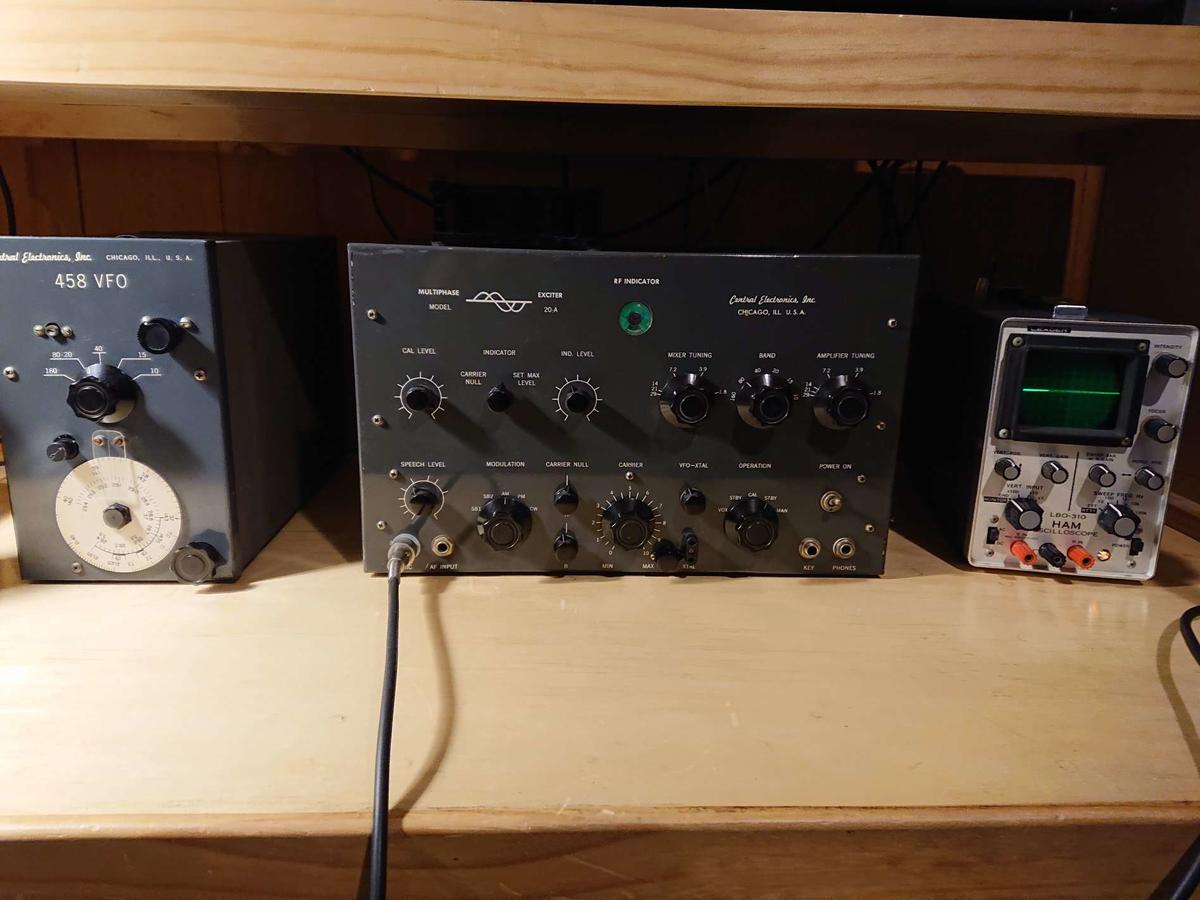
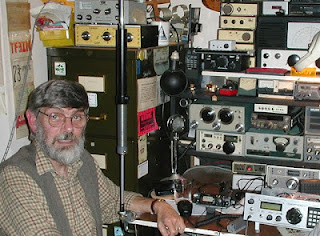
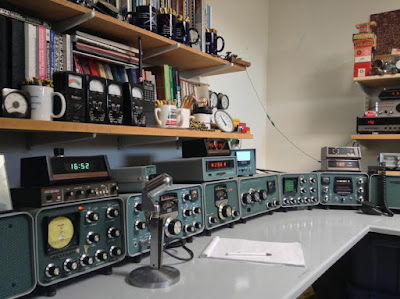
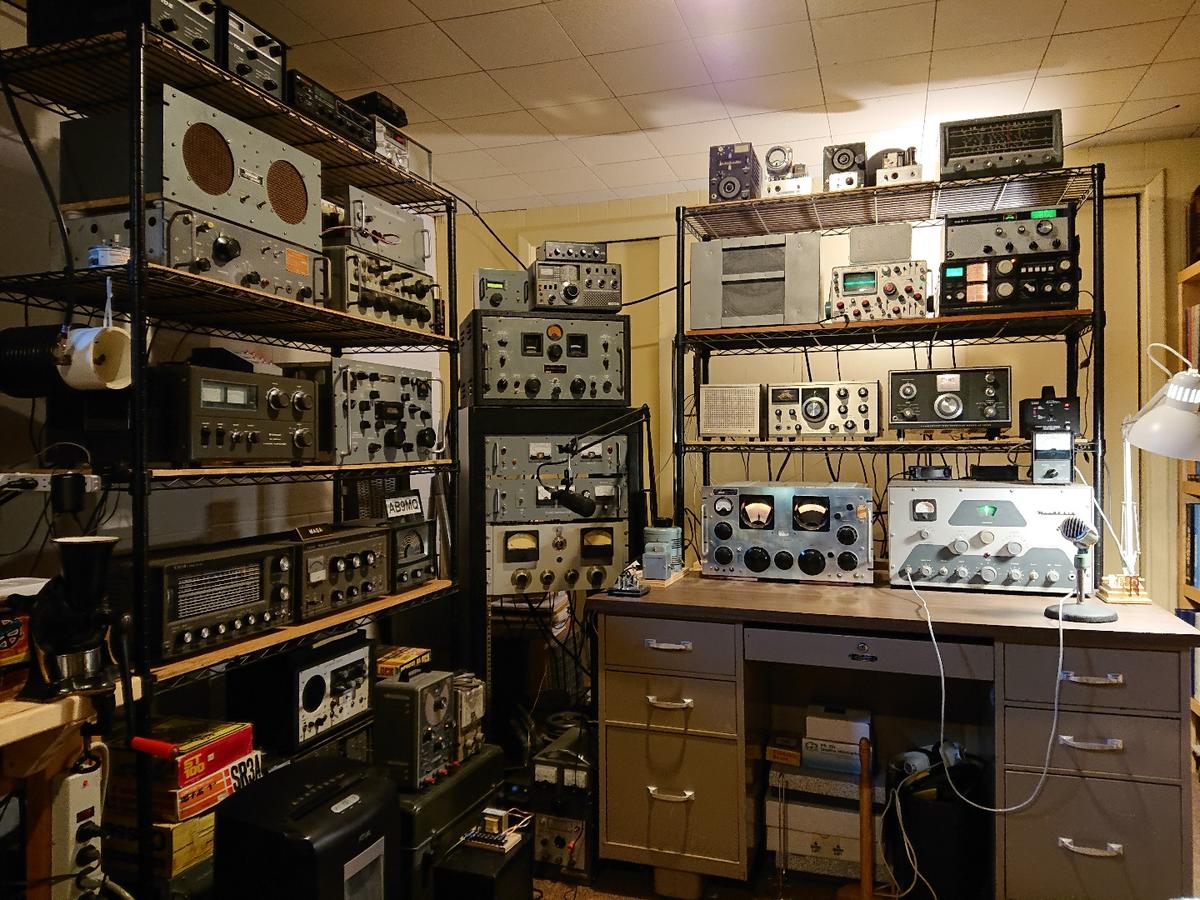
Just a portion of Masa’s shack

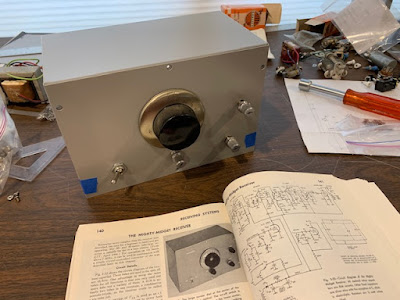
I usually try to listen in on the Old Military Radio Net on Saturday mornings (3885 kc). Lately I listen with my Mate for the Mighty Midget receiver.

This morning’s session was especially good. For me the highlight was when Masa AB9MQ called in from Normal, Illinois using his Central Electronics 20A (see below). That was one of the earliest SSB rigs. A phasing rig, it also ran AM (which was what Masa was using this morning). He had it paired up with a Central Electronics 458 VFO. You folks really need to check out Masa’s QRZ.com page:

https://www.qrz.com/db/AB9MQ

Buzz W3EMD called in from Rhinebeck, NY. I could hear his dynamotor in the background. Buzz said hello to Masa in Japanese. FB.

Always great to hear Mike WU2D.

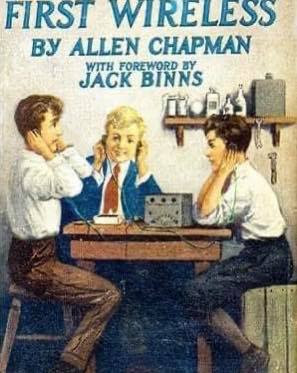
“First Wireless” 1922 book by Allen Chapman with Foreword by Jack Binns (free download)

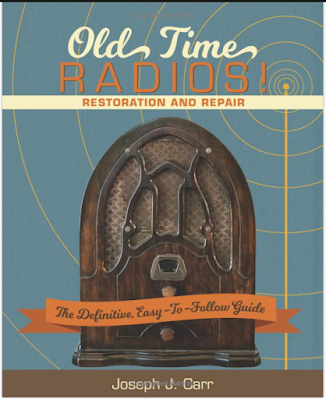
The cover caught my eye. Thanks to the K9YA Telegraph for posting it. I think it captures the allure of radio that most of us felt when we were kids of this age.

Fortunately this 1922 book is available for free download:

It is all about radiotelephone. They are phone guys. Just like us.

And they were homebrewers. They had The Knack. From Chapter II:

Another thing that drew the boys together was their keen interest in anything pertaining to science. Each had marked mechanical ability, and would at any time rather put a contrivance together by their own efforts than to have it bought for them ready made. It was this quality that had made them enthusiastic regarding the wonders of the wireless telephone.

And they correctly viewed wireless telephony as being similar to Aladin’s lamp. I remember writing that my homebrew DSB transceiver was like Aladin’s magic carpet, carrying my voice from the Azores to friends around the world. From Chapter III:

They had already heard and read enough of the wireless telephone to realize that it was one of the greatest marvels of modern times. It seemed almost like something magical, something which, like the lamp of Aladdin, could summon genii who would be obedient to the call.

This is a reminder of how young the radio art is. This book came out just three years before my father was born. Many of us have in our shacks working rigs that are half as old as radio itself.

WA9WFA’s Mate for the Mighty Midget 1966 QST Receiver

Scott WA9WFA and I have been exchanging e-mails about his Mate for the Mighty Midget receiver project. This morning I finally took a look at Scott’s we page on this effort. There was a lot there that resonated. For example:

“I remember the moment very clearly. June 1966 I was sitting in a lawn chair reading a stack of QST’s that I had brought along to the summer cabin. The February 1966 issue the Beginner and Novice section introduced the “Mighty Midget Transmitter”, a 10 watt crystal controlled transmitter. The April 1966 issue Beginner and Novice section introduced the “Mate for the Mighty Midget” which was a three tube super-heterodyne Novice type receiver. Over the course of that summer I read and re-read those articles a jillion times. Being 13 years old, I didn’t have the electrical or mechanical skills to pull off such a project so I could only dream about it. In 1970 I bought a handful of the parts. In 1976 I bought more parts. In 2021 I decided to build it while I still had the ability to do it. This project is only my second homebrew radio project so I am still learning things every second of the way…
While I am not expecting to much in performance, the 13 year old in me is ever hopeful that this 1966 Novice receiver will be the most wonderful radio ever made. 73, Scott WA9WFA”

Scott’s MMM RX page:
Scott and I are now both updating the MMM RX by substituting 455 kHz ceramic filters for Lew McCoy’s FT-241 crystal filter. I have my filter wired in now, and it is working well. Scott plans on soldering his in today. I will post on this mod soon.

On his QRZ.com page, Scott notes the need to fight the temptation to further soup-up this simple receiver: “I did have to resist the temptation to add another audio stage, a mechanical filter, AGC, 2nd IF amplifer stage, etc…”

Exactly right Scott. Resist the temptation. Simplicity is a virtue. I do use an outboard, powered computer speaker, but I justify this by telling myself that I just don’t want to use headphones. But I could use headphones, so this is OK. OK?

Scott’s QRZ.com page:

I must add that I think the yearning of Scott’s inner 13 year-old can be fulfilled by the MMM RX. I think it is pretty wonderful. It is — in my view — not as good as a Drake 2-B, but it is FAR better than an S-38E, and it is better than a Lafayette HA-600A (wjm).

Kintsugi — A Japanese Philosophy for the Owners of Imperfect Rigs

On Sun, Aug 29, 2021 at 4:05 PM Bob Scott wrote:

Hi Bill:

After listening to the latest Soldersmoke I thought you might find the Japanese concept of “kintsugi” (literally “golden joinery”) interesting.


As a philosophy, kintsugi is similar to the Japanese philosophy of wabi-sabi, an embracing of the flawed or imperfect.[11][12] Japanese aesthetics values marks of wear from the use of an object. This can be seen as a rationale for keeping an object around even after it has broken and as a justification of kintsugi itself, highlighting the cracks and repairs as simply an event in the life of an object rather than allowing its service to end at the time of its damage or breakage, and can be seen as a variant of the adage “Waste not, want not”.[13]

Kintsugi can relate to the Japanese philosophy of mushin (無心, “no mind”), which encompasses the concepts of non-attachment, acceptance of change, and fate as aspects of human life.[14]

Not only is there no attempt to hide the damage, but the repair is literally illuminated… a kind of physical expression of the spirit of mushin….Mushin is often literally translated as “no mind,” but carries connotations of fully existing within the moment, of non-attachment, of equanimity amid changing conditions. …The vicissitudes of existence over time, to which all humans are susceptible, could not be clearer than in the breaks, the knocks, and the shattering to which ceramic ware too is subject. This poignancy or aesthetic of existence has been known in Japan as mono no aware, a compassionate sensitivity, or perhaps identification with, [things] outside oneself.

— Christy Bartlett, Flickwerk: The Aesthetics of Mended Japanese Ceramics


73,
Bob KD4EBM

——————————————–

I shared Bob’s Kintsugi message with David, WA1LBP. David was one of the few radio amateurs in the ranks of the Foreign Service. He was in Okinawa during the early 1990s, when I was in Santo Domingo. For a time we both wrote columns in the “73 International” section of Wayne Green’s magazine — this made us “Hambassadors.” David is a real scholar of difficult Asian languages. During my last years in government service I would sometimes cross paths with David at lunch time on the National Mall in Washington — he’d be out there with a colleague, studying ancient Chinese poetry.

Here are David’s thoughts on this:

Thanks, Hambassador Bill.


In Buddhism, muxin (in Chinese wuxin) is about freeing oneself from troubling thoughts, distractions, and selfishness and so attaining a calmness that is very aware of all that goes on at the same time. I suppose once free from distractions one can be more alert. So maybe not literally no mind but no-selfish-obsessed-mind

Amazing what one can find online. A distraction too I suppose!


Chan embraced this account of nonduality and Buddha-nature, but distinctively used it to qualify the meaning of Buddhist practice and the personal ideal of the bodhisattva. In the Platform Sutra attributed to Huineng, he insists that

meditation is the embodiment (ti) of wisdom, and wisdom is the functioning (yong) of meditation.

The point of Chan is to see one’s own “original nature” (benxing, 本性) and realize “authentic heartmind” (zhenxin, 眞心), and in doing so the dualities of thought and reality, of passion and enlightenment, and of the impure and pure all dissolve. Then,

true suchness (zhenru, 真如) is the embodied structure (ti) of thinking, while thinking is the functioning (yong) of true suchness. (Platform Sutra, 13–17)

To see our own original nature is to see that true suchness and thinking are as intimately related as the bodily structure of a horse and its customary activities. Just as the bodily structure of the horse establishes the conditions of possibility for grazing and galloping, it is only the proven evolutionary advantage of grazing and galloping in horse-like ways that have made this bodily structure possible. True suchness or ultimate reality is not a preexistent something “out there” that can be grasped intellectually or accessed through some mystical vision; it can only be enacted.

Huangbo Yixun (d. 850) describes this as demonstrating no-“mind” (wuxin, 無心) or freedom from conceptual impositions that would define or limit reality. But this is not a lapse into mental blankness or indiscriminate presence. Realizing no-“mind” restores our originally whole mind (yixin, 一心) that Huangbo qualifies as the “silent bond” (moqi, 默契) of “conducting oneself as all Buddhas have” (in Taishō shinshō daizūkyu, Vol.48, 2012.380b to 383c). Significantly, the term “qi” originally referred to notches or tally marks on a strip of bamboo that record the terms of a trade agreement and the bonding that Huangbo invokes is thus one of mutually entrusted obligation and responsibility. True suchness consists in the personification of the bodhisattva ideal of realizing liberating forms of relationality. Ultimate reality consists in enacting the morally-inflected nonduality of wisdom and compassion.

David

—————————————————–

I remember that it was George Dobbs, G3RJV who introduced us to the concept of Wabi sabi:

https://soldersmoke.blogspot.com/2010/04/homebrew-hero-george-dobbs-g3rjv.html

This philosophical embrace of imperfection and repair is very appealing to me. I am surrounded by old radios that bear the marks of wear, tear and repair. My homebrew radios are filled with imperfections (especially in the cabinetry). But Kintsugi tells me this is all OK. I accept it.

Thanks Bob. Thanks Hambassador David. And thanks to George Dobbs.

Video: E. Howard Armstrong and Early Radio

This is a really wonderful video. It might seem slow to those accustomed to faster-paced YouTube videos, but the information content is very high — it contains a lot of pictures I hadn’t seen before and audio of Howard Armstrong.

I never knew that the name of the radio company Zenith was derived from the early callsign “9ZN.”

As a Northern Virginian, I like the reference to NAA Arlington.

I used to live near Yonkers, N.Y. I remember Warburton Ave. What a fine shack young Howard had up in that cupola attic.

The photo of Armstrong’s breadboard was very nice. My Mythbuster is in good company.

QRPers will get a kick out of the newspaper headline “New Radio Marvel Revealed!” (They cut the power out from 20kW to 5 watts!)

Thanks again to Dave Bamford W2DAB for sending me the book about Armstrong, “Man of High Fidelity” by Lawrence Lessing.

Finally, I remember talking to Bruce Kelley W2ICE at hamfests. He was a great radio amateur:

Be sure to check out the Antique Wireless Museum’s YouTube Channel. Lots of good stuff there:
We have the famous photo of Major Armstrong,
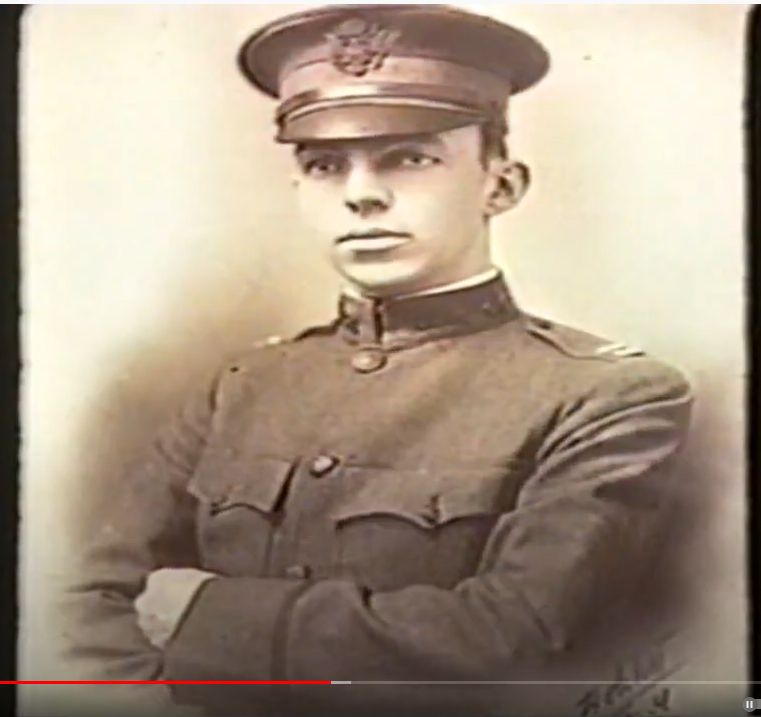
but this is the first one I’ve seen of a slightly younger Captain E. Howard Armstrong.


Joe Galeski’s 1960 “IMP” 3 -Tube Filter SSB Transmitter, and the Spirit of SSB Homebrew

Here is another important bit of SSB history. In May 1960, Joe Galeski W4IMP published an article in QST describing his super-simple SSB transmitter. While Tony Vitale’s “Cheap and Easy” rig was a phasing design, Joe came up with a filter rig. He built USB filter at 5775 kc. With it, he ran a VXO at around 8525 kc. This put him on 20 meter USB.

Here is the QST article: http://marc.retronik.fr/AmateurRadio/SSB/A_3_tubes_filter_rig_%28SSB%29_%5BQST_1960_5p%5D.pdf

In discussing how to put this rig on other bands, Joe got the sideband inversion question exactly right:

Thank you Joe!

Joe even provides an comment that seems to capture an important element of the homebrew SSB ethos. Joe homebrewed his filter, but he mentioned the possibility of using a store-bought filter:


That’s the spirit Joe!

Along the same lines, Jim Musgrove wrote in Electric Radio:

Having built Lew McCoy’s Mate for the Mighty Midget receiver (which also used just three tubes), I can’t help thinking that an IMP-ish transmitter would be an excellent complement to the Mate for the Mighty Midget.

Jim Musgrove K5BZH knew Joe Galeski and wrote about him in the January 1992 issue of Electric Radio. Jim wrote that Joe was an optometrist by profession. When OE1FF wanted to know the cost of building an IMP, Joe Galeski boxed up the original and sent it to him. FB Joe.

In December 1961 Joe Galeski published a QST article describing a transistorized version of the IMP — this rig ran on 15 meters. K5BZH wrote that Joe later published an article about a small, solid-state transceiver, appropriately called “The Shrimp.”

W2EWL’s “Cheap and Easy SSB” Rig — And The LSB/USB Convention Myth

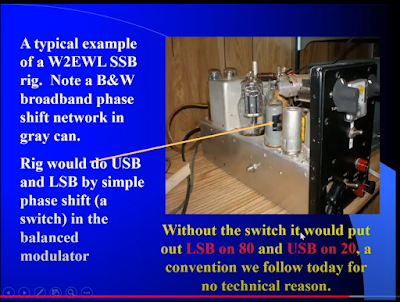
In March 1956 Tony Vitale published in QST an article about a “Cheap and Easy” SSB transmitter that he had built around the VFO in an ARC-5 Command Set transmitter. Vitale added a 9 MHz crystal-controlled oscillator, and around this built a simple phasing generator that produced SSB at 9 MHz. He then made excellent use of the ARC-5’s stable 5 – 5.5 MHz VFO. His rig covered both 75 meters and 20 meters. Here is the article:

http://nebula.wsimg.com/2b13ac174f7f2710ca2460f8cf7d6b8b?AccessKeyId=D18ED10DA019A4588B7B&disposition=0&alloworigin=1

Because it used the 9 and 5 frequency scheme, over the years many, many hams have come to think that Vitale’s rig is the source of the current “LSB below 10 MHz, USB above 10 MHz.” This is wrong. An example of this error popped up on YouTube just this week (the video is otherwise excellent):

First, Vitale’s rig had a phasing SSB generator. All you would need to switch from USB to LSB was a simple switch. And indeed Vitale’s rig had such a switch. Pictures of other Cheap and Easy transmitters all show an SSB selection switch. So with a flip of the switch you could have been on either USB or LSB on both 75 and 20. With this rig, you didn’t even need sideband inversion to get you to 75 LSB and 20 USB.

Second, even if hams somehow became so frugal that they wanted to save the expense of the switch, leaving the switch out (as suggested above) would NOT yield the desired “75 LSB 20 USB” that the urban legend claims that W2EWL. As we have been pointing out, a 9 MHz SSB generator paired with a 5 MHz VFO (as in the Vitale rig) will NOT — through sideband inversion — yield LSB on one band but USB on the other.

W2EWL’s rig could not have been the source of the LSB/USB convention. I still don’t know where the convention came from. I am still looking for the source.

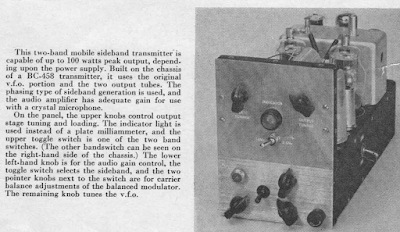
But leaving the LSB/USB convention issue aside, Tony Vitale’s rig is an excellent example of early SSB homebrewing, and of a very clever use of war surplus material. In the January 1992 issue of Electric Radio magazine, Jim Musgrove K5BZH writes of his conversations with Vitale about the Cheap and Easy SSB. Tony told Jim that this rig came about because the Central Electronics exciters required an external VFO — they recommended a modified BC458. B&W had recently come out with a phase shift network. Vitale went ahead and built the whole rig inside a BC458 box. FB Tony!

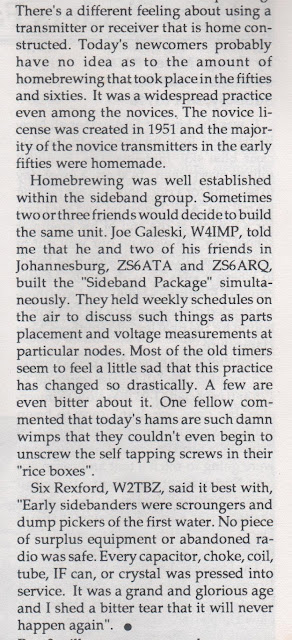
In the December 1991 Electric Radio, Jim K5BZH reports that Tony was recruited into the ranks of SSBers when he watched a demonstration of SSB by Bob Ehrlich W2NJR in November 1950. Tony very quickly started churning out SSB rigs. His daughter Trish Taglairino recounted that when her father had “done something great again” there would be a parade of hams to the basement shack. About 30 guys showed up when Tony put his first SSB rig on the air — they sent out for beer.

Thanks to Jim for preserving so much SSB history.

Todd K7TFC on Pessimism, Optimism, and Homebrew Radio

In response to my blog post about Rob Sherwood, Todd K7TFC sent this very thoughtful comment. It is so good that I wanted to put it up as a more visible blog post. Thanks Todd.

Todd wrote:

Several of 4Z1UG’s recent interviews have either hinted at or clearly expressed pessimism over the future of technically-oriented, homebrew ham radio. Of an age myself (another IGY baby) in which disgruntled cynicism is endemic, I nevertheless found their pessimism exaggerated and perhaps a little-too conventional.

Not that there’s little evidence to back them up: recent retirements at QST and the magazine’s thin technical coverage have not improved matters, and even QRP Quarterly recently found it necessary to spend more pages on UFOs in New Mexico than on VFOs in their readers’s hamshacks. Even podcasts whose names might suggest otherwise–I’m thinking of Ham Radio Workbench–actually spend more time talking about store-bought black boxes, antennas, and cool things they’ve purchased (or want to purchase) than melting solder or winding coils. To be sure, HRWB, QRPQ, and even QST, make important contributions , but they do reflect the *proportional* decline of hands-on electronics.

For me, though, that the *proportion* of homebrewing, technically-oriented hams has declined is not as important as the actual numbers of hams so oriented. If their proportion is down to, say, five-percent of the total number of hams in the world, that’s still *a lot* of homebrewers worldwide, and now that we interact in a truly-global theater of enthusiasts, we’ve never had it so good when it comes to the numbers of people who share our enthusiasms.

This question of actual numbers versus proportions can be seen in the most common modes of operation as well as on the hardware side. SSB long ago passed CW as the mode-of-choice, and now SSB is in decline *proportionally* as the weak-signal digital modes seem to be taking over. But when the bands are open, you can still tune through the lower portions of most bands and find *plenty* of CW ops at all levels of speed and clarity. CW is not dead, and in fact it’s easier to learn than ever before. I expect a proportion will always see CW as essential to ham radio–enough in fact to keep them supplied with contacts to satisfy their retro-cravings and keep the tradition alive.

I may be in the last quarter (third?) of my life, but the older I get the more I come to believe in living *three-dimensionally*. The “X” is my own time and place (a west-coast Boomer), the “Y” is my own time but other places and cultures, and the “Z” is other eras, times, and places. The “other eras and times” in the ham-radio context means I don’t have to abandon tank circuits and crystal filters and vacuum tubes *merely* because other and perhaps objectively-superior technology is now at my disposal. I can use the new stuff and the old stuff, too. I’d even argue that to abandon all use of older technologies means there’s been no *growth*, only “progress.”

We see this clearly enough in other aspects of the human endeavor. The computer may have totally replaced the typewriter, but it hasn’t replaced pen, ink, and paper. The internet may be a superior repository of knowledge than printed books, but books and magazines are still widely used and are in some ways superior to online media. Microwave ovens cooking prepackaged, processed, and *manufactured* food are more efficient, but no one denies a meal made with raw whole foods and hand-prepared is better.

I expect there will always be plenty of people living three-dimensionally as hams with whom I resonate. There’s already a high SWR between me and *most* people anyway. I’ve grown comfortable with a more-narrow bandwidth–73, Todd K7TFC

————————
Todd’s Web Site: https://mostlydiyrf.com/

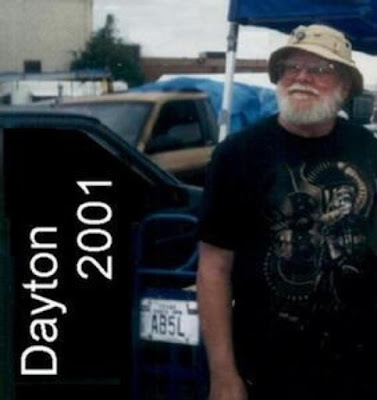
Summer Reading for Homebrewers: Frank Jones and the FMLA by Michael Hopkins AB5L (SK)

Frank Jones W6AJF (SK)

I read these stories when they were first coming out and I really liked them. Here are all the FMLA episodes. Don’t try to read them all in one sitting. Spread them out. Savor them. Think about the message that Frank was sending us.

All of the FMLA episodes: https://tomfhome.files.wordpress.com/2019/12/frank_and_the_fmla.pdf

————————————–

Related articles, books and links:

Frank’s obit: https://www.pressdemocrat.com/article/news/frank-jones/

Frank’s book “5 Meter Telephony”: https://w5jgv.com/downloads/5-Meter%20Radiotelephony%20by%20Frank%20Jones.pdf

Frank’s 1937 Antenna Handbook: http://rfcec.com/RFCEC/Section-3%20-%20Fundamentals%20of%20RF%20Communication-Electronics/23%20-%20RADIO%20ENGINEERING%20DATA/1937%20-%20Jones%20Antenna%20Handbook%20(By%20Frank%20C.%20Jones).pdf

About the author, Michael Hopkins AB5L: https://www.rantechnology.com/index.cfm?key=view_resource&TransKey=615604E8-9DAA-40A3-9E48-4160806D893D&CategoryID=8E884CE4-9CED-4957-872B-5EBDB058D540&Small=1

Michael Hopkins AB5L (SK)

Thanks to Dave Wilcox K8WPE for reminding us of all this, and for sending us the link to the FMLA archive.


Viva el FMLA! Viva el CBLA! Vivan!

The Stubborn Myth about USB and LSB

It has been repeated so often and for so long that many of us have come to believe it. I myself believed it for a while. Like many myths, it has a ring of truth to it. And it is a simple, convenient explanation for a complex question:

Why do ham single sideband operators use LSB below 10 MHz, but USB above 10 MHz?

Here is the standard (but WRONG) answer:

In the early days of SSB, hams discovered that with a 9 MHz SSB generator and a VFO running around 5.2 MHz, they could easily reach both 75 meters and 20 meters (True). And because of sideband inversion, a 9 MHz LSB signal would emerge from the mixer as an LSB signal (True), while the 20 meter signal would emerge — because of sideband inversion — as a USB signal (FALSE!) That sideband inversion for the 20 meter signal explains, they claim, the LSB/USB convention we use to this day.

Why this explanation is wrong:

There is a very simple rule to determine if sideband inversion is taking place: If you are subtracting the signal with the modulation FROM the signal without the modulation (the LO or VFO) you will have sideband inversion. If not, you will NOT have sideband inversion.

So, you just have to ask yourself: For either 20 or 75 are we SUBTRACTNG the Modulated signal (9 MHz) from the unmodulated signal (5.2 MHz)?

For 75 meters we have: 9 MHz – 5.2 MHz = 3.8 MHz NO. We are not subtracting the modulated signal from the unmodulated signal. There will NOT be sideband inversion.

For 20 meters we have 9 MHz + 5.2 MHz = 14.2 MHz. NO. No subtraction here. No sideband inversion.

So it is just arithmetically impossible for there to be the kind of happy, easy, and convenient USB/LSB situation described so persistently by the myth.

———————————

We discussed this several times on the podcast and in the blog:

https://soldersmoke.blogspot.com/2015/05/sideband-inversion.html

https://soldersmoke.blogspot.com/2012/05/usblsb-urban-legend-debunked.html

This myth shows up all over the place:

We see the myth here:

http://n4trb.com/AmateurRadio/Why%20The%20Sideband%20Convention%20-%20formatted.pdf

Here the web site owner warns that this is “highly controversial.” Really? Arithmetic?

http://9m2ar.com/lsb7.htm

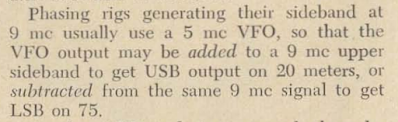
The myth is very old. Here is a clip from a 1966 issue of “73” magazine:

https://worldradiohistory.com/Archive-DX/73-magazine/73-magazine-1966/73-magazine-01-january-1966.pdf

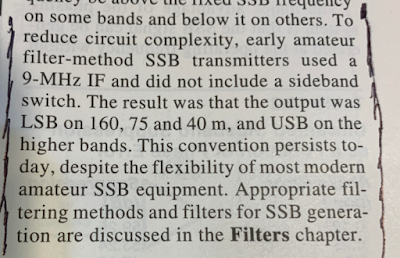
Finally, to my disappointment, I found the myth being circulated by the ARRL, in the 2002 ARRL Handbook page 12.3:

The fact that the Handbook attributed this to a desire to “reduce circuit complexity” by not including a sideband switch should have set off alarms. We are talking about hams who built their own SSB rigs, usually phasing rigs. A sideband switch would not have added significant circuit complexity. I think they could have handled it.

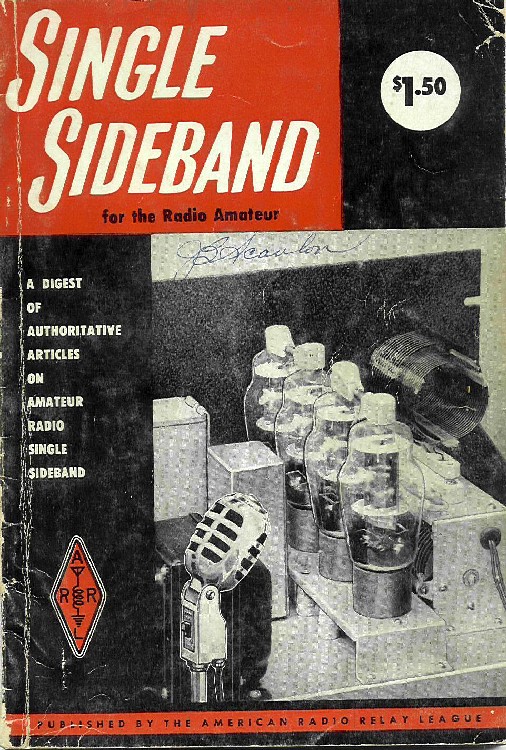
It is interesting that earlier ARRL Handbooks do not repeat this myth. I found no sign of it in Handbooks from 1947, 1959, 1963, 1973, and 1980. And I found no sign of it in several editions of that great ARRL book “Single Sideband for the Radio Amateur.”

For my next homebrew rig, I will build a rig that DOES do what the myth promises. I will have the SSB generator running on 5.2 MHz USB. The VFO (out of an old FT-101) will be running around 9 MHz. So for 75 meters we WILL be subtracting the signal with the modulation from the signal without the modulation: 9 MHz – 5.2 MHz = 3.8 MHz. There will be inversion. This 75 meter signal will be LSB. For 20 we will just add the 5.2 MHz USB signal to the 9 MHz VFO. There will be no inversion. We will have a USB signal on 20. I’m thinking of calling this new rig “The Legend.” Or perhaps, “The Mythbuster.”
Pete’s Drakes

Pete Juliano N6QW has on his blog two very nice videos about the Drake A-line.

As long-standing fanatical fan of the Drake 2-B, I was struck by the similarities between the 2-B and the R4 seen in Pete’s video:

— The S-meter is the same.
— The passband tuning control and indeed the visible internal circuitry for the passband tuning seem to be the same.
— Drake even used the same “hook” for selectivity selection.

The transceive feature with the T4 seems very nice.

Pete’s first video is above. Pete’s second video, showing his first contacts with the newly acquired A-line, can be seen here:


Thanks Pete!

Remastered! The Secret Life of Radio — With Updated Comments from Tim Hunkin

Thanks to Stephen 2E0FXZ for alerting us to this important video.
We first posted about the original many years ago. We were delighted to learn that they have remastered the video and added 10 minutes of retrospective commentary from Tim Hunkin.

Here are some of my reactions after watching the updated version:
— The Marconi videos were amazing. I actually met Elettra at a diplomatic reception in Rome.
— I was pleased to learn that Marconi was trying to “call up” Mars. FB OM.
— My son Billy and I sat in that same Royal Institution auditorium where, 100 years before, Oliver Lodge had demonstrated spark gap technology.
— Tim’s comment on the connection to supernatural beliefs was right on the mark. We found out that the house we lived in in London was a center for occult beliefs and practices.
— Those square lantern batteries brought back fond childhood memories. My first power supplies.
— The Rexophone — used by Rex.
— Very cool of Tim to homebrew a coherer. Extra credit for that.
— One of the capacitors looks familiar. EF Johnson?
— I agree with Tim — crystal radios are a must-build for true radio hams. And do it with galena and a cats whisker.
— Finally, the RCA ad introduces a term we might want to surreptitiously enter into the Enhanced SSB lexicon: That “Golden Throat” sound.

The Homebrew Spirit of the Radio Amateur

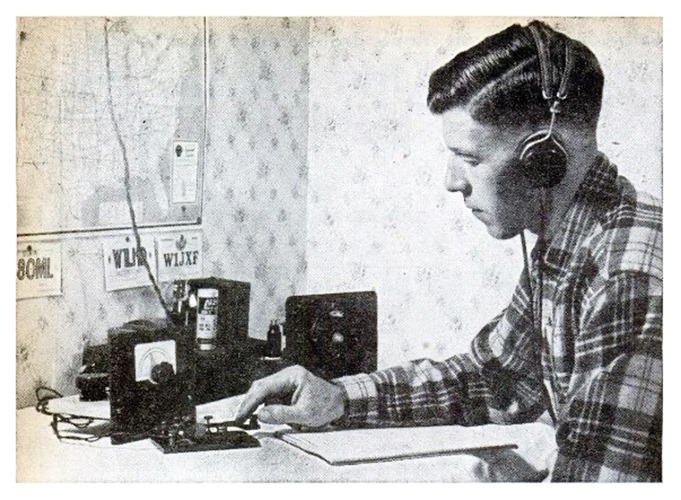
I just liked this picture. It seems to capture the pride and satisfaction that comes from getting on the air with homebrew gear. It’s obviously a simple QRP station, but it is all homebrew. And — from the QSL cards on the wall — we can see that he has had some success with it. The map on the wall is of the United States and the QSLs are from the east coast and the mid-west, so my guess is that he’s probably on 80 or 40. FB OM.

Chuck Penson WA7ZZE, Heathkits, and the Titan Missile Museum

WA7ZZE Shack

The video above popped up in my Facebook feed today and reminded me of Chuck Penson WA7ZZE. Chuck is the author of a wonderful book on Heathkits (and several other books).

The Titan missile explosion (not of the warhead) in Arkansas is described in an excellent but horrifying book entitled “Command and Control” by Eric Schlosser.

PBS made a video out of the book. You can watch it here:

Here’s an interesting article on nuclear weapons tourism. It has a great title.
https://www.nytimes.com/2007/01/05/travel/escapes/05atomic.html


It is easy to see how an interest in ln old technology would lead someone to both Heathkits and Titans. I get that. But on the other hand the Heathkits and the Titans are at completely opposite ends of the humanity spectrum: Heath made friendly technology that ultimately brought people together on the ham bands. We know that the Titans were supposed to do.

In any case it was great to be reminded of Chuck WA7ZZE. We last posted about Chuck more than 10 years ago:
In a comment to that post, Steve “Snort Rosin” Smith WB6TNL noted that Chuck had spoken at the 2009 CactusCon hamfest, and that the club pledged to put his presentation on-line. But Google and I can’t seem to find it. Do any of the Scorpions or anyone else out there know where Chuck’s hamfest talk is?

Bob KD4EBM has been out there. He reports that hams can bring their rigs and make use of the Titan site’s large Discone antenna:

Trying to Repair Some Old Gear, He Got Hit with a Dose of LSD!

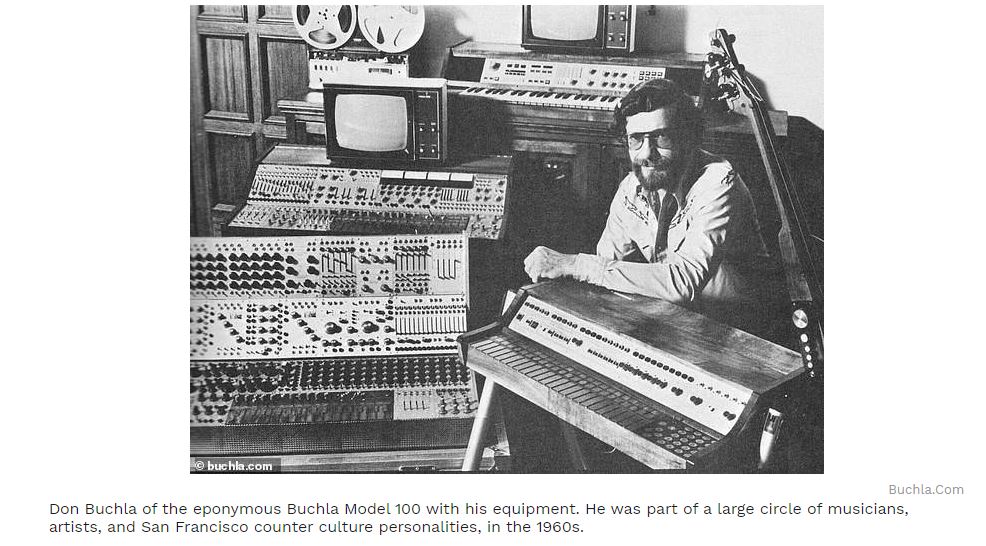
Oh no, here’s something else for us to worry about when working on old gear. As if the treat of electrocution or radioactive poisoning were not enough, now we have to worry about being hit with a dose of the 1960’s drug culture. That could be one bad trip indeed. Imagine if you were having a hard time troubleshooting the Buchla Model 100. All of a sudden things start getting weird and your test gear starts dancing on the bench.

Fortunately, this is not likely to happen with a rig like the DX-100. With rigs like that the only similar danger is nicotine poisoning.

https://allthatsinteresting.com/engineer-accidentally-takes-lsd?fbclid=IwAR2KzZl3qoL6oqq5SqWYquKpHR2mGxk2GN2Kk0O-ytUb9MNXmVNX9XnyeaU

Thanks to Stephen Walters for finding this groovy story.

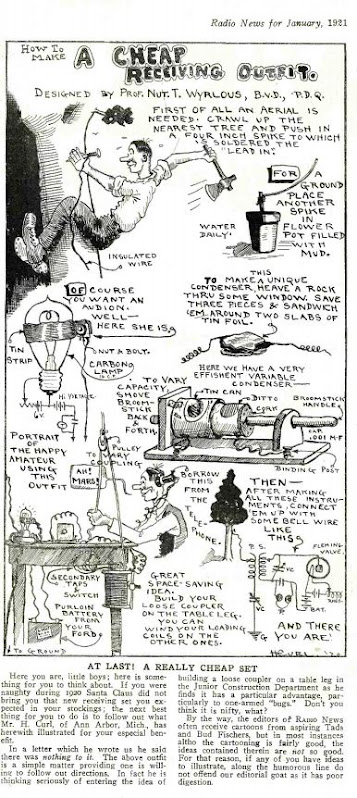
A REALLY Cheap Receiving Rig

Wow, lots of ingenuity in this 1921 receiver.

— Has anyone actually made a diode out of a light bulb in the way described?

— The antenna coupler on the table leg is not much different from the tuner that I have attached to the wall of my car port.

— Note that when our hero finishes the receiver, he is able to pick up signals from Mars! FB OM.

Who will be the first to recreate this 1921 receiver?