Filter Pinout: P, E, B, G Explained

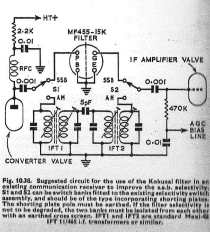
I few days ago I asked about the significance of the P, E, B, and G markings on my junkbox Toyo CM 455 kc filter (1969 vintage). PA3BCB — in yet another example of the power of the International Brotherhood of Electronic Wizards — was the first to provide the needed info. And in another example of IBEW awesomeness, KA0LDB noted that the markings are explained in the 1971 RSGB Handbook.

P = Plate = filter input
B = B+ = mixer B+ plus if needed or input ground
G = Grid = filter output
E = Earth = Ground

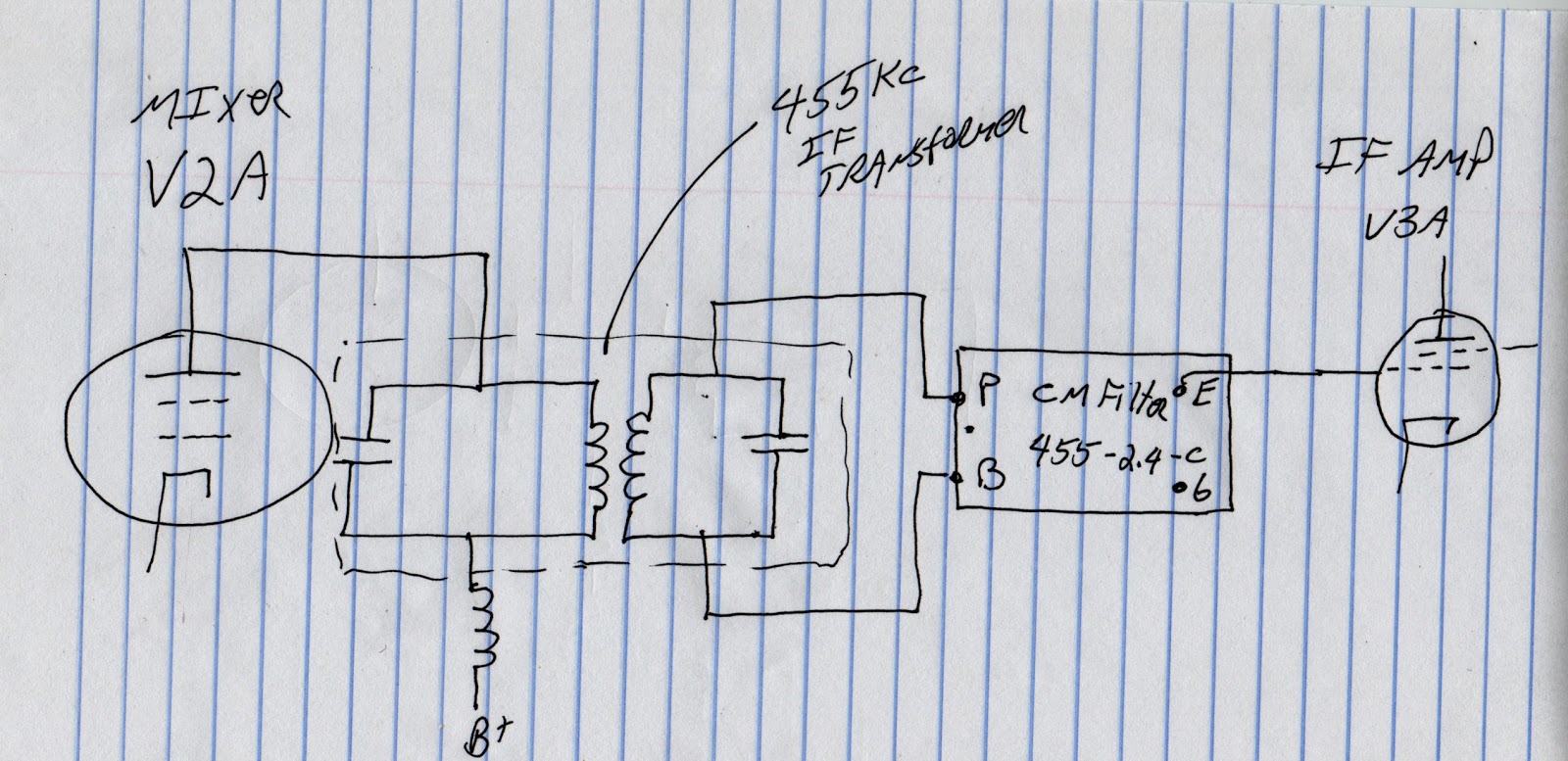
I like the switched filter arrangement presented above (from the RSGB Handbook); the 2.4 kc bandwidth is great for SSB, but a little tight for AM. I might put in a DPDT switch in the circuit so as to be able to go back to the “broad as a barn door” selectivity provided by just the 455 kc IF cans.

Our book: “SolderSmoke — Global Adventures in Wireless Electronics” http://soldersmoke.com/book.htm Our coffee mugs, T-Shirts, bumper stickers: http://www.cafepress.com/SolderSmoke Our Book Store: http://astore.amazon.com/contracross-20

A Filter for The Mighty Midget’s Mate

The story of my 80/40 meter three tube (all 6U8) superhet receiver is recounted here: http://www.gadgeteer.us/erart.htm

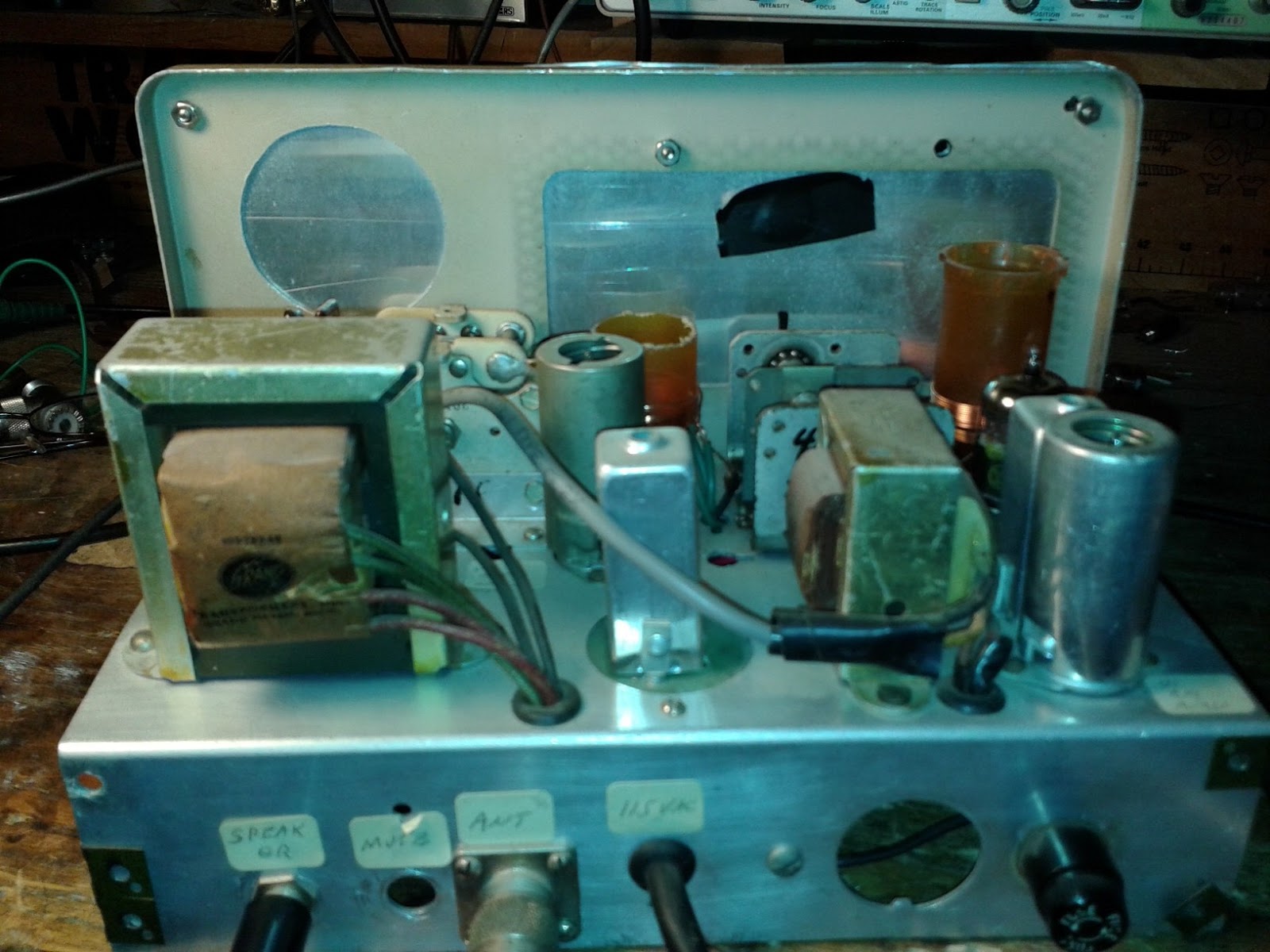
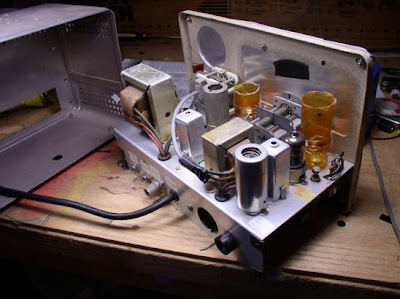
I’ve been playing with this RX on and off for many years now. Somewhere along the line I picked up a 455 kHz filter for it (I couldn’t find the 455 kc crystals that Lew McCoy used). Yesterday I finally got around to putting the filter into the receiver.

There is almost no info on this filter on the internet. Here are the details”
Toyo Communications Equipment Company Ltd. CM FILTER
Type: 455 — 2.4 — C Date: 8- 69

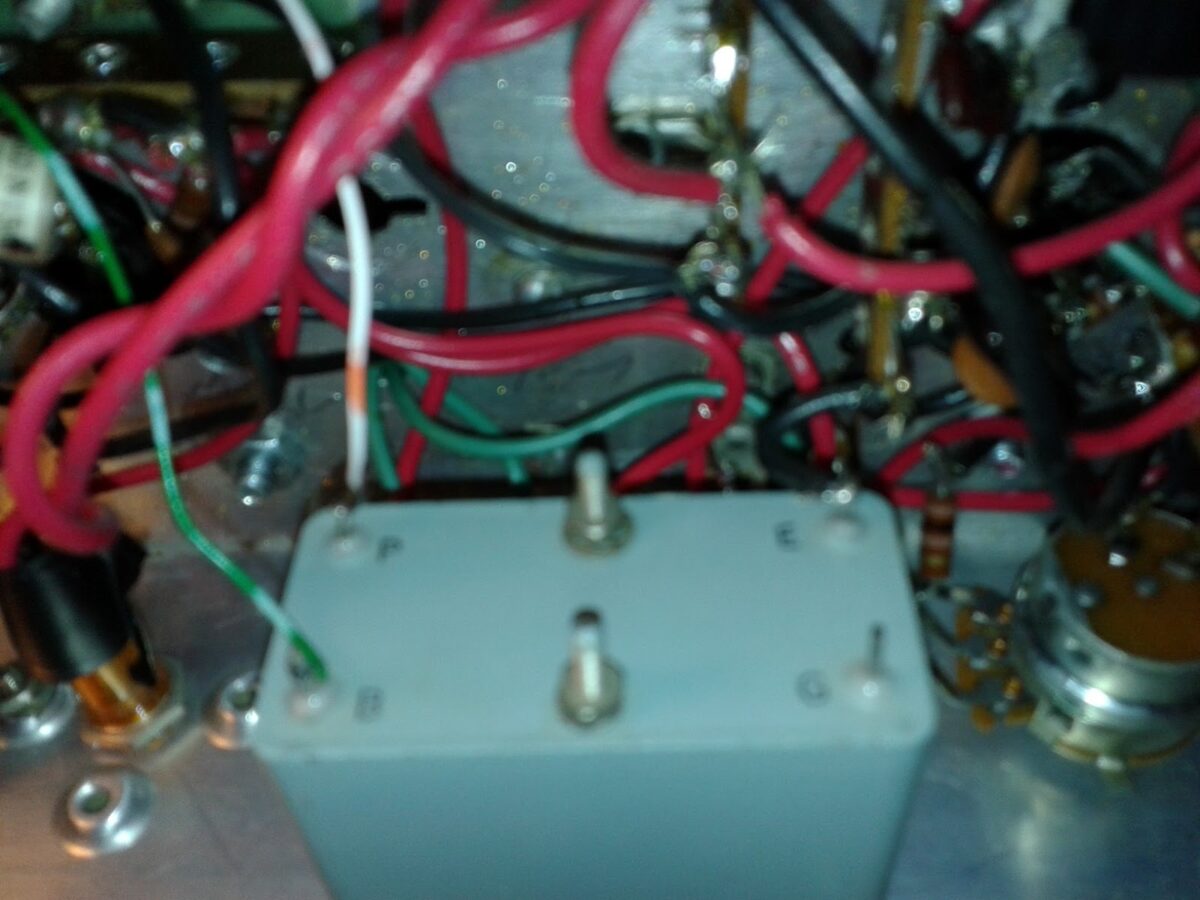
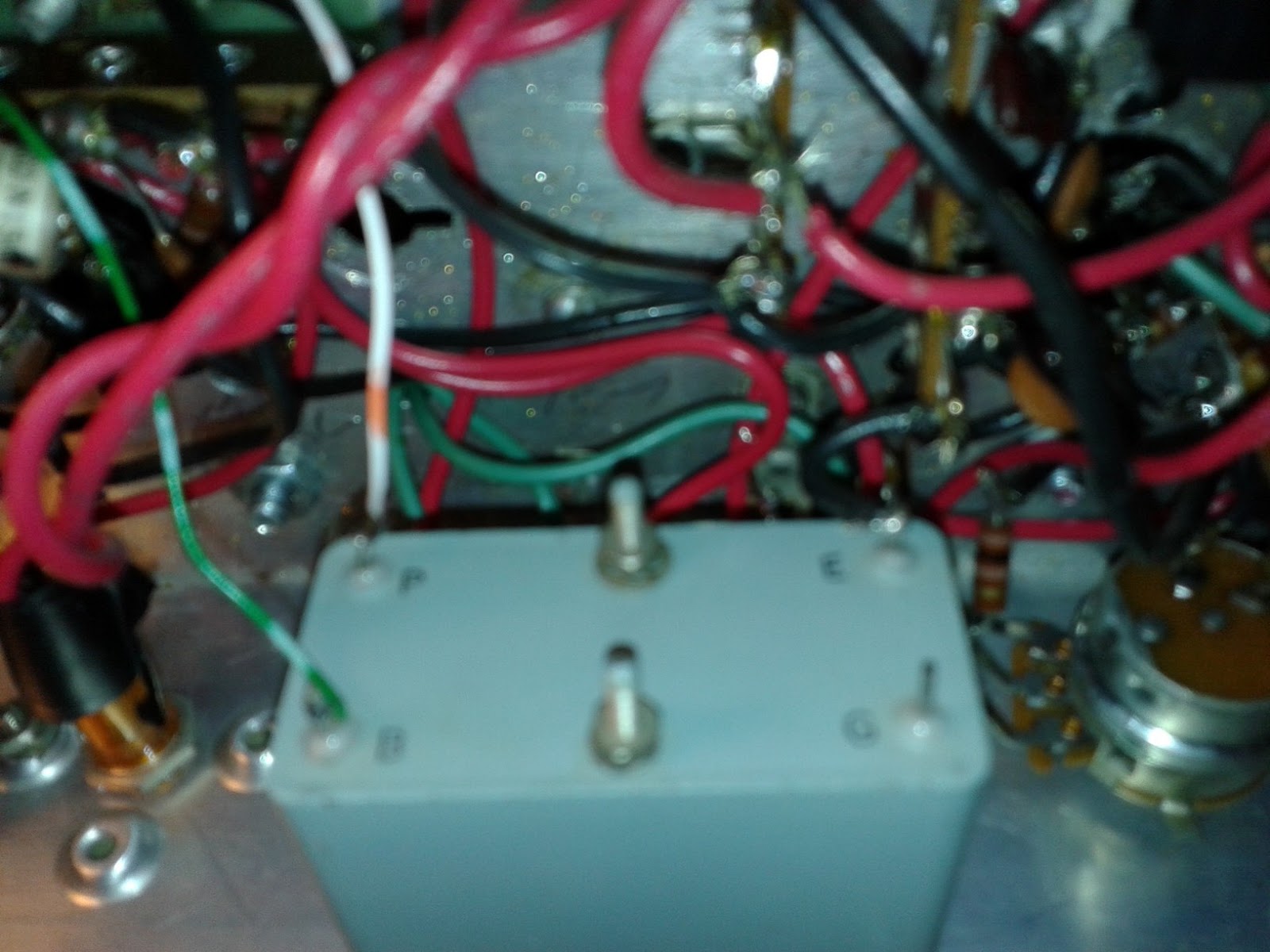
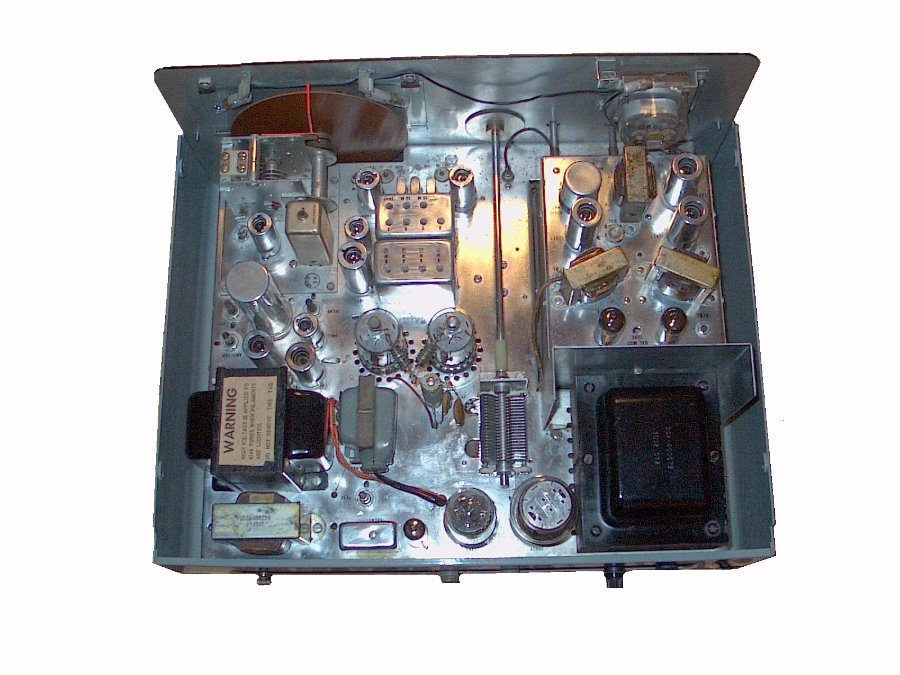
On the bottom, there are four terminals. They are marked “P” “B” “E” and “G”. Does anyone know what these letters signify?

I experimented and it seemed like putting a 455 kc signal into P and B, and taking the output from E was the way to go. I’ve left G floating. It works, and the improved selectivity is very evident. But I’m operating with no specs on the filter, so I may have it in there upside down and backwards. And of course, I am operating with my usual disregard for impedance matching issues.

Here’s how I’ve placed it in the circuit:

Ideas, suggestions and even admonitions would be appreciated.

Our book: “SolderSmoke — Global Adventures in Wireless Electronics” http://soldersmoke.com/book.htm Our coffee mugs, T-Shirts, bumper stickers: http://www.cafepress.com/SolderSmoke Our Book Store: http://astore.amazon.com/contracross-20

Drake 2B Filter Madness!

Wow, WB4HFN has ALL the details here:

http://www.wb4hfn.com/DRAKE/DrakeArticles/HenryFilter01.htm

——————————————–
Grayson: Good to hear from you on this snowy morning in DC. Wow, that’s a bit of 2B history I hadn’t heard of. Seems like a bit of overkill to me. Maybe it was aimed at people who were unconvinced of the effectiveness of the LC filters? Somehow, to me, it just doesn’t seem right. If you want more selectivity from a 2B, the thing to do is Q multiply using that socket on the back. 73 Bill

— On Wed, 1/23/13, Grayson Evans wrote:


From: Grayson Evans
Subject: New info on the Drake 2B
To: “Bill Meara”
Date: Wednesday, January 23, 2013, 1:43 PM

HI Bill,


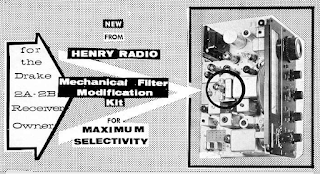
I was looking through the Dec. 1963 issue of 73 and came across an ad for a “New Mechanical Filter Modification Kit” for the 2A and 2B. IT says “like magic the Drake becomes a truly superlative SSB receiver” Model DMF-2 $29.. Says sold exclusively by Henry Radio, but does not say if they made it or not.
Has a photo showing a module that plugs in (maybe a tube socket?) right behind the VFO. Module has a mechanical filter (Collins I presume), two IF transformers and a tube (probably the tube it substitutes for). I have been looking through a bunch of old CQ’s and 73’s, early 60’s, and I only saw this one ad. Probably a rare accessory, but how knows.

Thought you might be interested.

Take care,

Grayson
TA2ZGE – Ankara, Turkey
KJ7UM

Our book: “SolderSmoke — Global Adventures in Wireless Electronics” http://soldersmoke.com/book.htm Our coffee mugs, T-Shirts, bumper stickers: http://www.cafepress.com/SolderSmoke Our Book Store: http://astore.amazon.com/contracross-20

Harv’s Hallicrafters HT-37: A Thing of Beauty

Good Evening Bill,
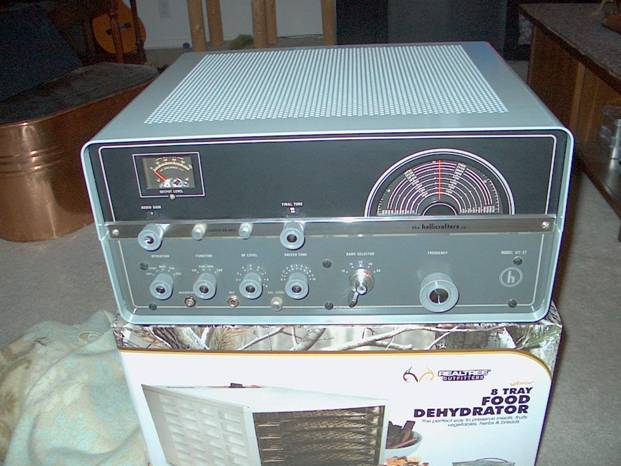
Well with sore fingers, I’m glad to report that the upper deck of my newly acquired HT-37 is complete. (see enclosed photos)
Mice had a small party in this radio but aside from the numerous corrosion spots and few frayed wires, the task of restoring was not too over whelming.
I have had my trusty Soldering Iron in high use mode lately.
All but the final tubes have the Hallicrafters logo stamped on them.
I had to replaced the Final Tune Capacitor C55 and have gone through all the modifications done to this radio during its 52 years of service.
The previous owner added an internal Antenna Relay (grey transformer near rear of deck.) and replaced the Mic connector with a Drake style phono jack. (I guess that’s acceptable.)
Now I’m onto the re-capping of the lower deck, De-ox the tube sockets and switches. Finally, the replacement of the rectifiers with solid state devices.
I’m documenting all the details just in case there is another solder melting soul out there that wants to restore their HT-37.
With some tender care, it should last another 50 years.
Bill, Keep on learning, Keep on burning (solder that is!)
73’s & Enjoy
Harv -=WA3EIB=-

Our book: “SolderSmoke — Global Adventures in Wireless Electronics” http://soldersmoke.com/book.htm Our coffee mugs, T-Shirts, bumper stickers: http://www.cafepress.com/SolderSmoke Our Book Store: http://astore.amazon.com/contracross-20

My Mate for the Mighty Midget

Al, W1UX, asked for a picture of the receiver that I used to listen to his dulcet tones this morning. Here you go Al. Here is an article on the project:

http://www.gadgeteer.us/erart.htm

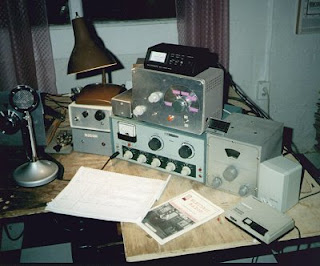
Above is the Mighty Midget RX paired up with a DX-60 and a VF-1 (circa 1998)

Our book: “SolderSmoke — Global Adventures in Wireless Electronics” http://soldersmoke.com/book.htm Our coffee mugs, T-Shirts, bumper stickers: http://www.cafepress.com/SolderSmoke Our Book Store: http://astore.amazon.com/contracross-20

W1UX

Now THAT’S a ham shack! My Mighty Midget receiver allowed me to listen in this morning to Al, W1UX, and friends on 75 meter SSB. One of Al’s AM operating positions appears above. Note the DX-100. And the R-390 (want one). And the Tek 465. I’ve been a big fan for years. Check out Al’s boatanchor web site: http://www.tinyradio.com/boatanchor01.html

Our book: “SolderSmoke — Global Adventures in Wireless Electronics” http://soldersmoke.com/book.htm Our coffee mugs, T-Shirts, bumper stickers: http://www.cafepress.com/SolderSmoke Our Book Store: http://astore.amazon.com/contracross-20

An Ode to Old-time Radio by WA3EIB


I didn’t have much growing up but I still had fun!
Towers of wood and Pipe that reached close to the sun.
Antennas of aluminum and wire seen many blocks away.
C.W. into the wee hours of the night. Hot coffee, now I’m awake to stay.
Many pleasant dreams as the radio cooled and the crickets chirped me to sleep.
Nestled between Foreign Broadcast Signals, and oh my dinner, I forgot to eat.
But YES, I still had fun!
A cigar box full of crystals and an antique key, I was determined it was one more watt that I need.
Lost them, found them and lost them again but, I still had fun indeed!
Sun rising now, Europe on the line, Shadows short and Africa began to shine.
Orange glow at dusk the ocean islands start to appear, near midnight now and its Russia I hear.
Perhaps these days may all be but gone but my equipment and dreams continue to live on.
And YES, I still have fun! HH

Our book: “SolderSmoke — Global Adventures in Wireless Electronics” http://soldersmoke.com/book.htm Our coffee mugs, T-Shirts, bumper stickers: http://www.cafepress.com/SolderSmoke Our Book Store: http://astore.amazon.com/contracross-20

Boatanchor Dreams


Greetings Bill and Fellow Solder Melters,
Back in 1965, I bought a brand new HT-37 from a radio store in Pittsburgh, Pa.
It had been tucked away by the owner for his own personal collection.
He finally softened and sold it to me. The Hallicrafters HT-37 became by Big Dog for many years.
In 2005, I fell on some difficult times and sold it. I regretted the departure moments after the exchange.
Well, finally after lots of searching, the right unit came along.
Here are a few pictures of my excellent E-bay buy.
I will begin to dig into the electrical status of the rig later this week but the unit seems well cared for and not abused.
I will keep you posted. It will be happily married to my Drake 2B and Q-Multiplier after it passes muster.Yes fellow hams there are still gems out there for your collections. Just wait for the right buy and then go for it!
73’s Harv -=WA3EIB=

———————————————————-


Photo by WA4KCY

Bill,
I know you would appreciate this. Got an email this morning from a local ham who was getting rid of some “junk” radios, wondered if I or someone else could use them. Once I heard I got over there to pick them up. Among the usual, real junk was a Hammarlund HQ-110C receiver, in the original box and a Johnson Viking Ranger, also in the box. With all the manuals as well. The boxes are showing their age, the Ranger’s being not much to look at. I am told neither works and haven’t been looked at / turned for at least 20 years. What a find! They are very clean and complete, as far as I can tell.
The plan is to restore them to pristine condition and, hopefully, use them in one of the local museum as a working station.

Mike Herr
WA6ARA
DM-15dp

Our book: “SolderSmoke — Global Adventures in Wireless Electronics” http://soldersmoke.com/book.htm Our coffee mugs, T-Shirts, bumper stickers: http://www.cafepress.com/SolderSmoke Our Book Store: http://astore.amazon.com/contracross-20

Amateurfunk — Ham Radio in Germany in 1955


Ah, those were the days! The bands were in good shape and hams built their own gear.
Don’t let the language barrier deter you — this German language video is really a lot of fun and worth watching. It provides a nice look at the hobby as it was 60 years ago. Thanks to Stephen and Michael for alerting me to this.

Our book: “SolderSmoke — Global Adventures in Wireless Electronics” http://soldersmoke.com/book.htm Our coffee mugs, T-Shirts, bumper stickers: http://www.cafepress.com/SolderSmoke Our Book Store: http://astore.amazon.com/contracross-20

Hallicrafters’ Radio-Erotica

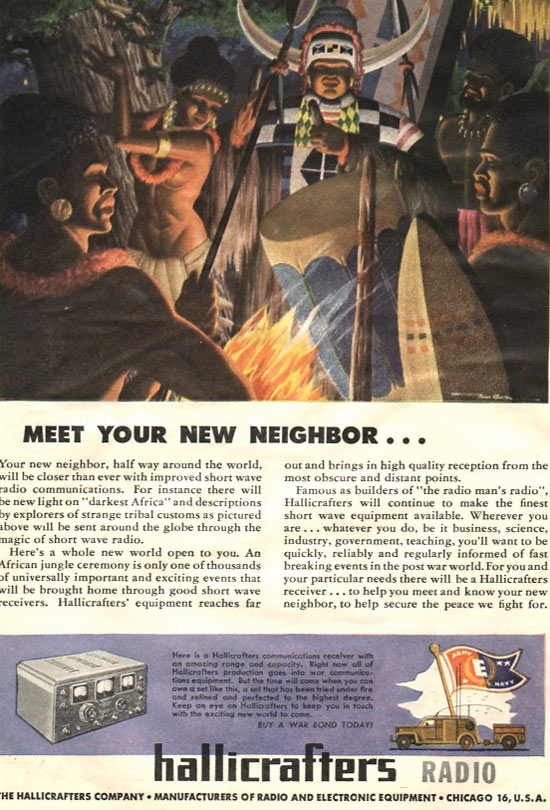
Wow, back in the day the marketing suits from Hallicrafters apparently really knew how to attract the attention of 15 year-old guys interested in short-wave listening. Could that ad have ever possibly run in stuffy old QST? It certainly would have attracted my attention. I suspect many a young amateur would have been looking to sign up for a DX-pedition. Thanks to Bob, KD4EBM, for alerting us to this unusual bit of 1950s radio-erotica.

Our book: “SolderSmoke — Global Adventures in Wireless Electronics” http://soldersmoke.com/book.htm Our coffee mugs, T-Shirts, bumper stickers: http://www.cafepress.com/SolderSmoke Our Book Store: http://astore.amazon.com/contracross-20

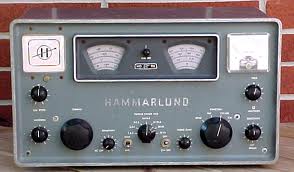
My New Shack Heating System: Heath, Halli, Hammarlund and Drake

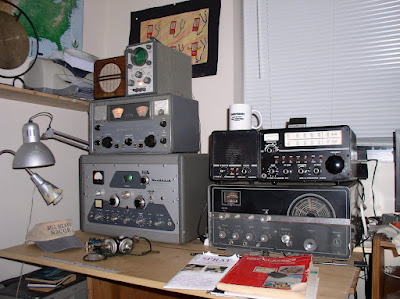
Temperatures dropped over the weekend and I had to fire up my new heating system for the SolderSmoke shack. See above. Heating by Heath, Halli, Hammarlund and Drake (sounds like a law firm doesn’t it?). I’m happy to report that those old filaments take the chill off quite nicely while adding a nice aroma to the room, along with some very pleasing lighting effects (I especially like the green glow from the DX-100 tuning dial).

The Azores-17 DSB JBOT project is (I think) complete. And I did include a low pass filter. In keeping with the finest of ham radio traditions, now that it is cold I will go out and work on an antenna.

Our book: “SolderSmoke — Global Adventures in Wireless Electronics”http://soldersmoke.com/book.htmOur coffee mugs, T-Shirts, bumper stickers: http://www.cafepress.com/SolderSmokeOur Book Store: http://astore.amazon.com/contracross-20

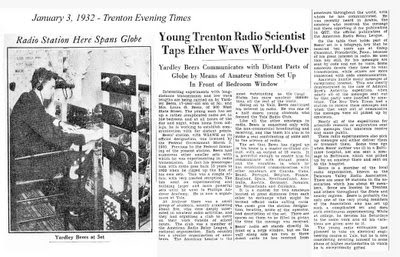
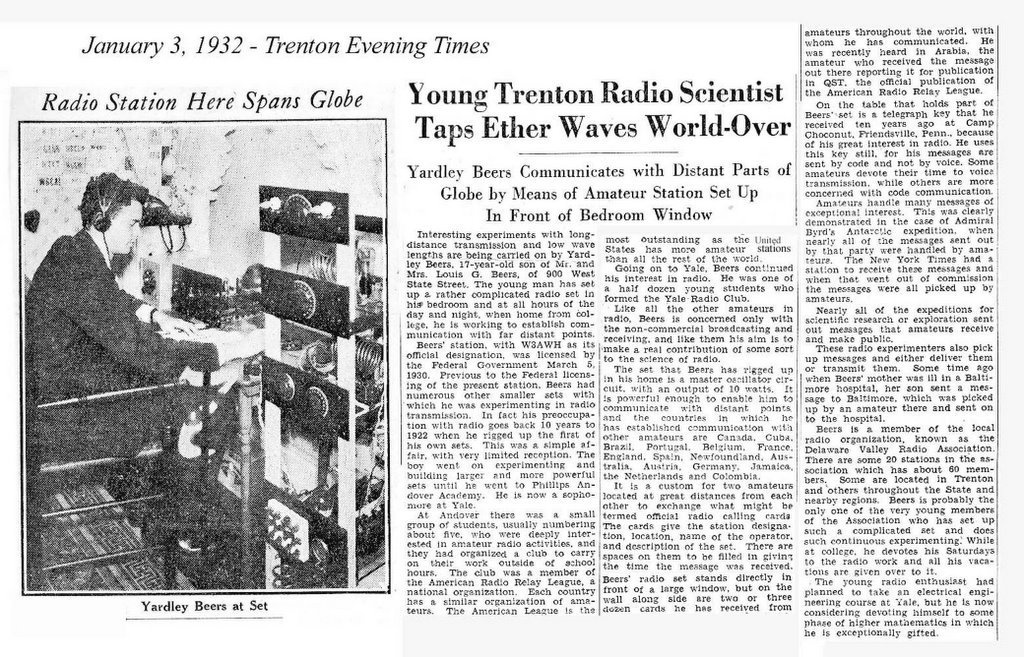
Better Link to 1932 Yardley Beers Article

(From the November 2004 issue of QST)

I hear that picture I posted of the 1932 newspaper article was pretty much illegible. Sorry about that. Try this one from the Delaware Valley Radio Association. Scroll down a bit until you see OM Yardley in his front bedroom shack (the one with a window on the world!). On my Firefox browser I was able to click on it and get an easily read-able view.

https://www.homebrewradio.us/blog/wp-content/uploads/2011/10/Yardley20Beer20DVRA1.jpg

Thanks DVRA!

BTW: Did you catch the name of the fellow who taught young Yardley the Morse Code? Atherton Noyes. Such good strong names!

Our book: “SolderSmoke — Global Adventures in Wireless Electronics”http://soldersmoke.com/book.htmOur coffee mugs, T-Shirts, bumper stickers: http://www.cafepress.com/SolderSmokeOur Book Store: http://astore.amazon.com/contracross-20

More on Yardley Beers

Just click on the article and use the zoom feature of your browser to visit the teenage shack of Yardley Beers.

Our book: “SolderSmoke — Global Adventures in Wireless Electronics”http://soldersmoke.com/book.htmOur coffee mugs, T-Shirts, bumper stickers: http://www.cafepress.com/SolderSmokeOur Book Store: http://astore.amazon.com/contracross-20

Homebrew Hero: Yardley Beers

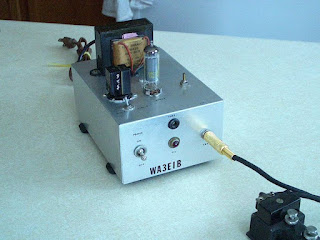
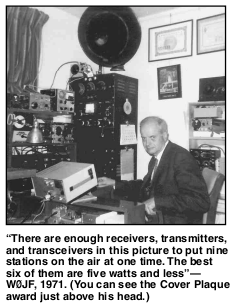
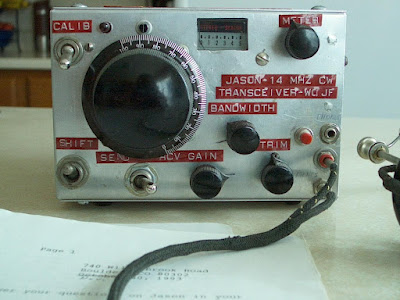
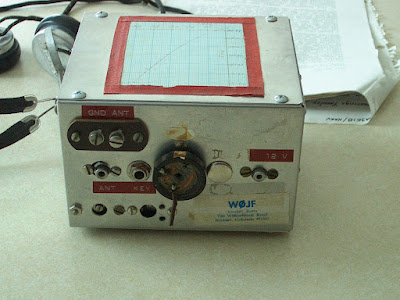
How’s that for a beautiful homebrew rig! Prompted by our discussion of distinctive ham radio names, Harv, WA3EIB, sent us a very nice report on Yardley Beers, W0JF. The rig pictured is Yardley’s “Jason” 20 meter QRP transceiver. Yardley had named the rig for his cousin. Harv met Yardley at a Colorado hamfest in 1993:

“On the table in front of Yardley was an Aluminum Box fashioned into a QRP radio named, “Jason”, 2 broken and worn head phones from the 1920’s, a few 1980’s QST and, several odd radio parts. My bulb of brilliance was not working that day. I said, “I don’t know what I’m looking for!” Somehow Yardley must have studied my eyes. I had locked my vision onto his very elaborate QRP rig. He paused for a few moments and said, “You into QRP?” By this time I felt more relaxed because he was now on my wavelength. I said, “Why yes, I would rather work with a homebrew radio that the ones with features that no one seems to know what they do!”

Harv bought the Jason (and everything else on Yardley’s table) and established a lasting friendship with W0JF.

There is a nice article about OM Yardley’s life in the November 2004 issue of QST.

Our book: “SolderSmoke — Global Adventures in Wireless Electronics”http://soldersmoke.com/book.htmOur coffee mugs, T-Shirts, bumper stickers: http://www.cafepress.com/SolderSmokeOur Book Store: http://astore.amazon.com/contracross-20

Google, Supernovas… and DRAKES

I liked this ad for Google, but I now have the urge to decapitate my garden shed. Check out dad’s Drake gear. Late in the clip you can see some beam antennas on a tower near the house.

Our book: “SolderSmoke — Global Adventures in Wireless Electronics”http://soldersmoke.com/book.htmOur coffee mugs, T-Shirts, bumper stickers: http://www.cafepress.com/SolderSmokeOur Book Store: http://astore.amazon.com/contracross-20

Shack Rehab

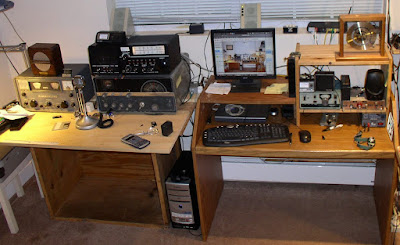
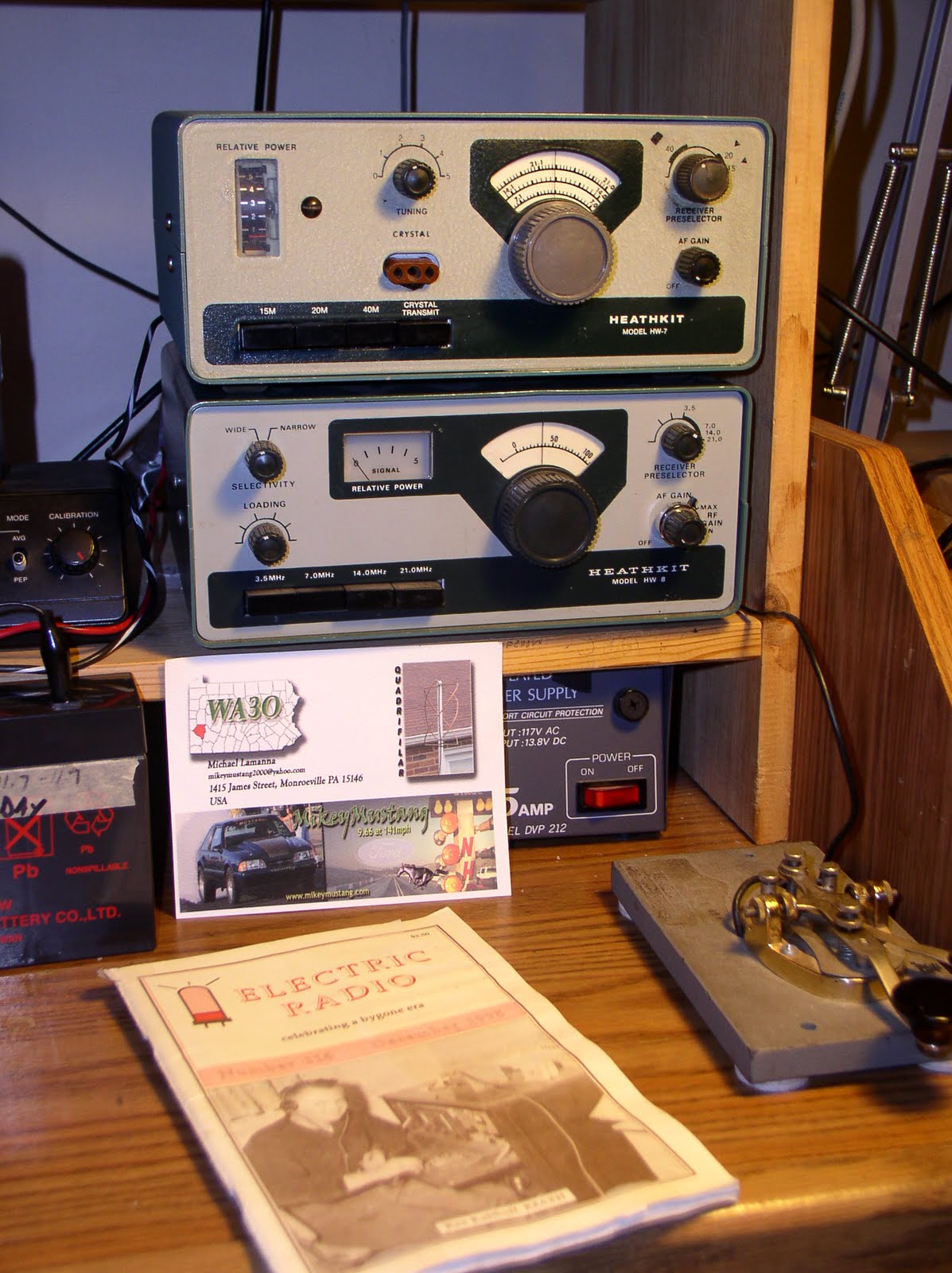
Every once in a while we all need to attack the clutter that grips our radio shacks. That’s what I was doing this weekend. I got rid of a lot of junk. And I reorganized the operating position. On the left is the HQ-100. I plan on putting the K2ZA DX-100 underneath the HQ-100. To the right is the famous Drake 2-B/Hallicrafters HT-37 combo. Next we have the roadkill Ubuntu computers. The laptop used in the production of the podcast is right behind the keyboard. To the right of the computers I have the HW-7 that we recently discussed. Next to it is my Ne-602-based 20 meter DSB transceiver. I plan to us the shelf above the HW-7 (where the clock is) for experimental rigs. To the right of the operating table I have some shelves that hold the beacon gear.

I have all the rigs on the operating table hooked up to an old MFJ coaxial switch, so it is easy to get them connected to the ether. I’m listening to 40 meter AM now. I did some Spanish language SW listening this morning: Radio Havana Cuba, Radio Marti, CBC Canada, Radio Japan, WWV…

Cleaning up proved very fruitful. I found an old portable DVD player — Elisa’s Mom now has a way of watching the many hours of family video that we have accumulated. I also found and rehabilitated some “family radio service” handi-talkies — the kids are using these to communicate with friends across the street. And I dusted off my old 2 meter Radio Shack HT. It works! I almost clipped it onto my belt as we were heading out today, but my kids would never allow me to be so techno-retro in public.

FIGHT ENTROPY!

Our book: “SolderSmoke — Global Adventures in Wireless Electronics”http://soldersmoke.com/book.htmOur coffee mugs, T-Shirts, bumper stickers: http://www.cafepress.com/SolderSmokeOur Book Store: http://astore.amazon.com/contracross-20

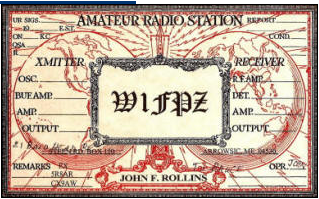
Homebrew Hero: John Rollins, W1FPZ

Ted, AJ8T, alerted me to the life and work of John Rollins, W1FPZ. As you can see from the text below, John was definitely part of the International Brotherhood of Electronic Wizards. I especially like the bit about his taking license exams in foreign languages, and about winding his own transformers in Madagascar. Great stuff. The videos about John and his workshop are really encouraging and inspirational. I laughed out loud when I heard John admit that he was surprised when one of his rigs worked the first time he fired it up. He said that he usually had to spend 3-4 months struggling to get his creations to work! Be sure to listen to the story about how John caught a Navy helicopter with his Vee beam. Thanks Ted, and thanks to Bruce, W1UJR, who took the time to make these wonderful videos.

Here are videos:

http://youtu.be/EV9ljdHLqLg

From John’s QRZ listing. This was written by Tim, W1GIG. (Thanks Tim!):

John passed away on March 18, 2008. It was 11 years ago that Bruce Kelly asked John to take over the Amateur Radio column in the OTB as Bruce himself was winding down. John was a man of many talents and had a most interesting life. Because he was always so busy helping others, he rarely took time to talk about himself, so I am going to take this opportunity to tell you a bit more about him.

John was born in Guatemala of American parents where his father worked for United Fruit Company (think bananas). At an early age, his father died of malaria and his mother moved the family back to New England. He also lived with an Aunt and later with his much older brother, an airline pilot, who lived on Long Island. As a teenager John discovered radio and his brother bought him a $5.00 two tube regenerative radio kit to build. John built the kit, but it was another 6 months before he got another kit for the power supply. With the help of a ham who lived nearby, he got the radio working which opened up a whole new world for him. John was in High School when his brother went with him into NYC to test for a ham license at the FCC Field Office. For the next couple of years he was active on 40 M. CW using the regen receiver and a Hartley oscillator.

At this point, WW II got in the way. John enlisted in the Army and was trained in radio repair, shipped off to New Guinea, and assigned to be a telephone lineman. The Army moved John steadily North to the Philippines and then to Japan where he was finally sent back to the States for discharge. John enrolled at the University of New Hampshire where he discovered his love of geology. He liked it so much he went on to get a Masters at the University of Nebraska and several years later, a Doctorate also from the University of Nebraska. He continued to work for Chevron exploring for oil in Africa, Madagascar, Spain, Denmark and many other countries including the US.

While he was in college, John remembered his love of radio, but unfortunately his ham license had expired, so he went back in 1954 to test again receiving the call W1FPZ which he held ever since. Later, he tested for his ham license in Madagascar (in French) and in Uruguay (in Spanish). Not many of us have tested for our licenses in three languages! While he was in Madagascar he built many of the transmitters that are still in use at his home. He even wound his own power and filament transformers to get the voltages he wanted.

John also discovered that he was an excellent pistol marksman, but that his results could be substantially improved by reworking the guns themselves, so he taught himself to be a gunsmith. His skills at woodworking, carving, machining, precision casting of bullets and loading target shells were such that this became a major hobby business for him which he pursued right up to recent months.

John was a survivor. While in the Army he survived a major brush with a 3,300 volt power line and later a plane crash while in Africa. Since small planes were the only way for John to get to his job sites, he decided that he’d rather trust his own skills as a pilot than rely on the brush pilots that the oil company had hired. Back in the States, recuperating from his injuries, he got a private pilot’s license, then went on to a multi-engine commercial license with full instrument ratings. Just before he retired, he was working out of Denver and flying his own twin engine Queen Air to Maine to work on his retirement home. He even flew from Maine to the AWA conference one year picking up Marshall Etter, W2ER from Long Island on the way.

Preparing for retirement, John and his wife Liz doubled the size of their new home in Maine. As part of the project, John wanted reliable ham communications with his friends around the world. Limited by normal power regulations, he decided to build a BIG antenna. His final choice was a horizontal V beam aimed at the Southeast. The beam legs were 1,100 feet long and supported on three 100 foot towers. Looking for wire strong enough to span the distance he ran across an ad for #6 phosphor bronze wire run by Marshall, W2ER who had salvaged the wire when he was closing the RCA site at Rocky Point. The two men became fast friends and co-conspirators. Marshall provided quality parts left over from RCA and John, using his metal and woodworking skills, customized the parts to suit his projects. The result was a long series of radio projects that he gave to friends with the caveat that they were required to use them on the air in AWA events.

John always had a fascination with the products of Jerry Gross of NYC. He built a Gross replica transmitter for Marshall who used it for many years. Parker Heinemann, W1YG found an original Gross and had John restore it along with the receiver, station monitor and antenna tuner. They set up an entry in the 1991 AWA contest that exactly duplicated a Gross add from the 30’s and took first place. After the conference, John got a call from Bill Orr who offered John his Gross if John would restore it. That transmitter is part of John’s home station.

Not satisfied with the Hartley oscillator, John discovered that if he used the Colpitts circuit with a split stator condenser and grounded rotor, he could eliminate the hand capacity effect. One of his last projects was to set up the tuned circuit for me and share several of his other construction secrets. The circuit is rock stable on 40 meters.

Thanks for the opportunity to fill you in on some of the less well known aspects of John’s life. It was an honor to know him and he will be missed by all.
Our book: “SolderSmoke — Global Adventures in Wireless Electronics”http://soldersmoke.com/book.htmOur coffee mugs, T-Shirts, bumper stickers: http://www.cafepress.com/SolderSmokeOur Book Store: http://astore.amazon.com/contracross-20

SolderSmoke Podcast #137


http://soldersmoke.com/soldersmoke137.mp3

10 September 2011


Earthquake! Hurricane! Tropical Storm!

The Heathkit HW-7 — An Undeserved Bad Reputation

Over-the-counter saltpeter
Movie review: Green Hornet, Captain America
How many 2-Bs? (11,571)
Ubuntifying dead laptops
Get the SolderSmoke blog by e-mail

Replacing a diode ring mixer with a diode…

…then trying the NT7S MOSFET detector
Where is boatanchor wizard Walt Hutchins KJ4JV ?
GREAT NAMES IN RADIO: MCMURDO SILVER
Sputnik update
Lew McCoy wrote about one of my projects
MAILBAG (with mail from Farhan and Wes)

Our book: “SolderSmoke — Global Adventures in Wireless Electronics”http://soldersmoke.com/book.htmOur coffee mugs, T-Shirts, bumper stickers: http://www.cafepress.com/SolderSmokeOur Book Store: http://astore.amazon.com/contracross-20

The Oldest 2-B? (I say it’s a 10!)


Harv: Wow, that’s a beautiful 2-B OM. I give it a 10. If you compare it to mine, it’s a 20! I checked our collection point for 2-B serial numbers and see that we have a couple that may be rivals in the title “Senior 2-B.” Thanks for pointing out that they started at #2000.

…………………………..

Hi Bill,

What makes a radio a 10 out of 10?

Good question. A real 10 to me means the radio is flawless, clean, not repainted and the best example possible based upon age and general appearance.

Here is one of my Drake 2B Communication Receivers with the matching Speaker/Q Multiplier.

This one has the S/N 2532 which, places the production of this radio close to early Spring 1961. The radio is not flawless. It has very minor metal edge dings in the paint.

I have the original Owners Manual and lots of special notes. At best my pictured radio above is a 9.5.

In my collection is also; S/N 4226 which was built near the end of 1961. I rate S/N 4226 as a 9.8 radio.

I’m impressed with the AVG recovery, general receiver sensitivity and the combination selectivity afforded by the Q-Multiplier.

I believe the Drake web site is spot on with the dating of the production runs for Drake equipment.

From talking to other Hams, it looks like the 2B started with S/N 2000 on their first full run of production in early April 1961.

It would be interesting to see if others find radios with a serial number less than mine still out there pulling duty.

I’m sure some pilot radios are out there in private collections. Let me know if someone finds an earlier serial number.

Keep up the great work Bill!!!

ENJOY

HARV -=WA3EIB=-

Albuquerque, NM.

——————————————————-

Our book: “SolderSmoke — Global Adventures in Wireless Electronics”http://soldersmoke.com/book.htmOur coffee mugs, T-Shirts, bumper stickers: http://www.cafepress.com/SolderSmokeOur Book Store: http://astore.amazon.com/contracross-20