Category: New Zealand

Sputnik Replica Transmitter, an “Error” in the Sputnik Schematic, and Why 20.005 MHz?
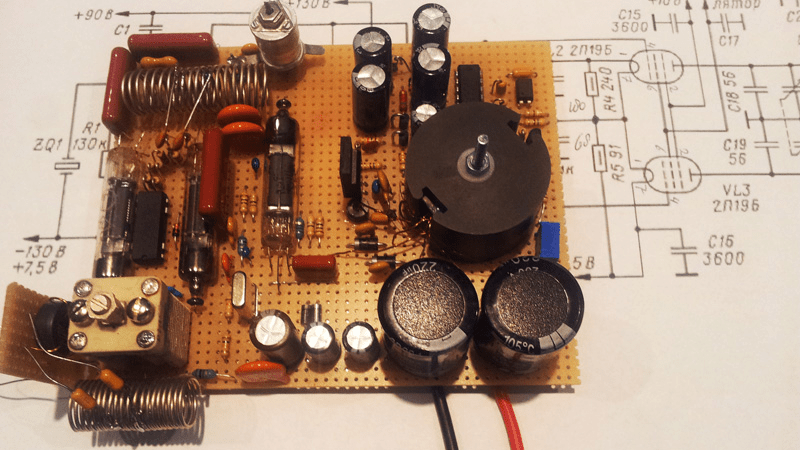
Mark K6HX pointed me to very interesting Hackaday article on Frank PA3CNO’s Sputnik transmitter replica. As blog readers will recall, we went through a period of Sputnik-mania a few years ago: http://soldersmoke.blogspot.com/search?q=sputnik Chief Designer Comrade Mikhail Rainey AA1TJ sent me some of the Russian tubes (like those pictured above).
The Hackaday article pointed to our post reporting that Oleg RV3GM had found the schematic:
http://soldersmoke.blogspot.com/2013/04/sputnik-schematic-found.html Stefan reports that PA3CNO found “an error” in the original Soviet schematic:
http://www.radio.cc/post/Franks-power-supply-for-sputnik A mistake you say? HAH, I say! Hah! This must have been part of a sinister commie plot to prevent the capitalist imperialists from ever being able to reproduce the glorious transmitter of the Soviet people. They almost succeeded.
Just kidding.
In the course of looking through our old Sputnik posts, I came across a question I posted:
I have a question: OK so the crafty Soviets picked 20.005 MHz for some good reasons: Being so close to the WWV freq, it would be easy for hams and SWLs to find it with precision. In the November/December 2007 issue of “Break In” (from NZ — thanks Jonathan-san!) ZL3DW notes that this frequency selection would allow a receiver set to exactly 20 MHz to “produce an audio tone plus or minus the Doppler shift without ever going through zero beat.” But zero beat with what? Most of the receivers out there would not have had BFOs, right? So the Soviets wouldn’t have been using ordinary CW, right? Were they using AM, with the beeps produced by an audio oscillator modulating the carrier?
Was their diabolical plan to use WWV as the BFO for those using ordinary AM SW receivers? If so, a 5 kHz separation from WWV seems to be too much right? Especially when the Doppler shift on approach would push the frequency up a bit. Maybe they just chose this freq to make it easy for listeners to find — just a bit above WWV. Comrade Rainey surmised that they were keying the PA stage — the oscillator “backwave” was at times audible on the ground.
What do you think Comrades?
DSW and 73.
ZL2CTM’s Teensy SDR SSB Superhet — Very Cool
Hi Bill
I thought I would drop you a quick line to show you something I have been playing around with for the past couple of weeks. It’s a SSB superhet using a PJRC Teensy 3.1 microcontroller (YouTube link below), and a great audio library by Paul Stroffregen. Suffice to say I’m really happy with it.
There is a direct conversion front end, albeit using a VFO 15kHz down from the incoming RF. The 15kHz IF is then fed into the Teensy audio line in which can handle up to 22kHz. From there everything is in software. First is a 2.4kHz BPF tuned to the LSB, followed by mixer with a 15kHz BFO. Finally, there is a 2.4kHz LPF. Next step is to add both CW-wide and CW-narrow filters which can be selected during run time.
As you can tell from the video, my antenna is not the best and I have quite a bit of QRM in the shack. I really need to think about a better antenna, but that’s another story.
I have been following your R2 endeavors with interest, and as I said to Pete I will attempt to replicate the R2 on a Teensy. I will try and use the divide by 2 arrangement you tried as the logic looks right.
I will also be adding in a transmitter. For that I’ll use the microphone input and then take the audio from the line out straight to the RF pre/power amp.
I must admit that I really enjoy homebrewing hardware/software hybrids as you get the best of both worlds. As i say that, I wonder how much ADCs cost these days to directly digitize RF… Now that would be interesting.
I’ll say again that I really enjoy following the podcast. I have loved electronics since I was a small boy when my parents bought me a battery, switch and light bulb. This age of cheap DDSs, microcontrollers and the like is amazing, and I get so much enjoyment putting them all together to make functioning ham radios. I hope more get into the homebrew field as the entry barrier is dropping fast.
Keep up the good work.
73s

ZL2CTM’s New Zealand Double Sideband Success
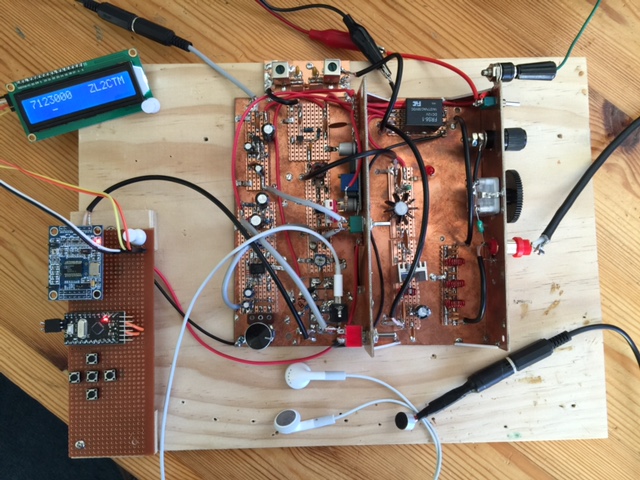
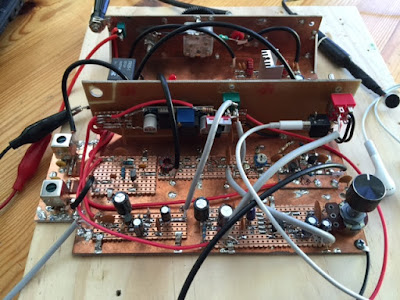
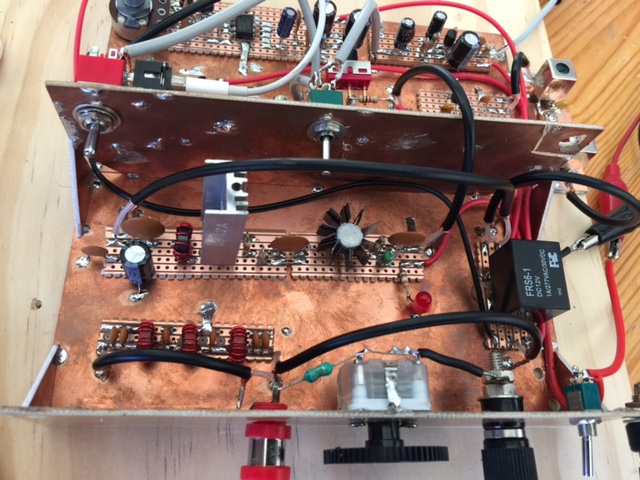
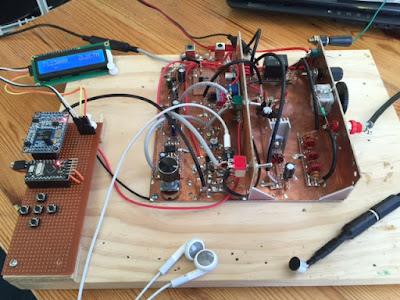
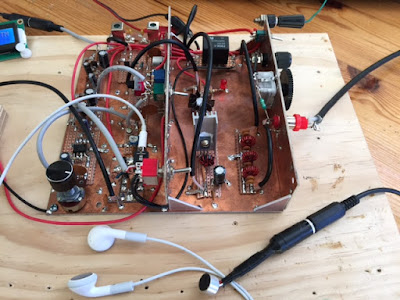
New Zealand and Australia seem to produce an amazingly high percentage of the world’s double sideband transceivers. Charlie ZL2CTM adds to the count. He took inspiration and circuitry from DSB hams in both countries and produced this beautiful DSB transceiver. It is obviously — as Charlie notes — chock full of soul. I definitely identify with his comment about “taming some kind of electro-mechanical machine” and also, of course, with his remark about the feelings that come with putting a homebrew rig on the air. So follow the advice of Charlie! Build a DSB rig and put it on the air! Make this your ham radio resolution for 2016! Give it a go!
Hi Bill:
I have been following you and Pete Juliano for many years now, and thought I would send you a photo of my 40m homebrew rig that I finished yesterday. Hopefully, it will help encourage others to melt some solder and make their own rigs. The rig is based on ideas and designs from Eric Sears ZL2BMI, Peter Parker Vk3YE and of course Pete N6QW. The aim is to make the final version relatively compact so I can take it tramping/hiking here in New Zealand.
The VFO is an AD9850 being controlled by an Arduino Pro Mini. The output is amplified to provide sufficient drive for the balanced modulator. I was using a nice 1” OLED screen to show the frequency, but that generated a huge amount of noise, so I changed to a LCD. Changing frequency is simply a matter of moving the curser left and right then using the up and down buttons to change the number. Very quick and easy. I was contemplating a rotary encoder, but I find those always seem to skip and jump every now and then. Must be the way I use them…
The balanced modulator is a 4148 diode ring. I do have some SBL-1s lying around, but I thought I’d go with the discrete diode ring for something different. I’m using a standard electret mic and a simple single stage amp. The switch above that switches between phone and CW.
The PA is two stages; the first a 2N3053 and the second a BD139. At this stage it puts out just over 1W into a 50ohm load. I might look to add another stage and get that up to 3-5W.
The audio amp is a simple LM386. I am not running it hard out as per the datasheet as it generates quite a bit of high frequency hiss in that configuration.
Unlike Pete, I don’t have access to a milling machine to make squares to mount the components on. Instead, I use vero/strip board upside down and solder directly to the strips. This works really well for me on HF. I cut tracks with the twist of a small drill bit.
Last night I made two contacts with the rig. The farthest was 527km according to some well known mapping software. Both reports said the audio was ‘very nice’, which was great to hear. The receiver worked surprisingly well too, and I managed to hear stations in Europe.
As for user controls, you will notice that the pots, switches and plugs are all over the place. I did that to keep leads short. I like it as i feel like I am taming some kind of electro-mechanical machine to generate and receive RF.
Anyway, this little rig has a ton of soul in it and is really fun to use. There is something different about making a contact with a rig you built. I really encourage everyone to give it a go!
The next iteration will be a SDR using a Teensy. Rheslip over at Open Emitter has done some great work with that.
73s
Charlie
ZL2CTM
Kiwi Lunchbox Sideband: The Tucker Tin Two
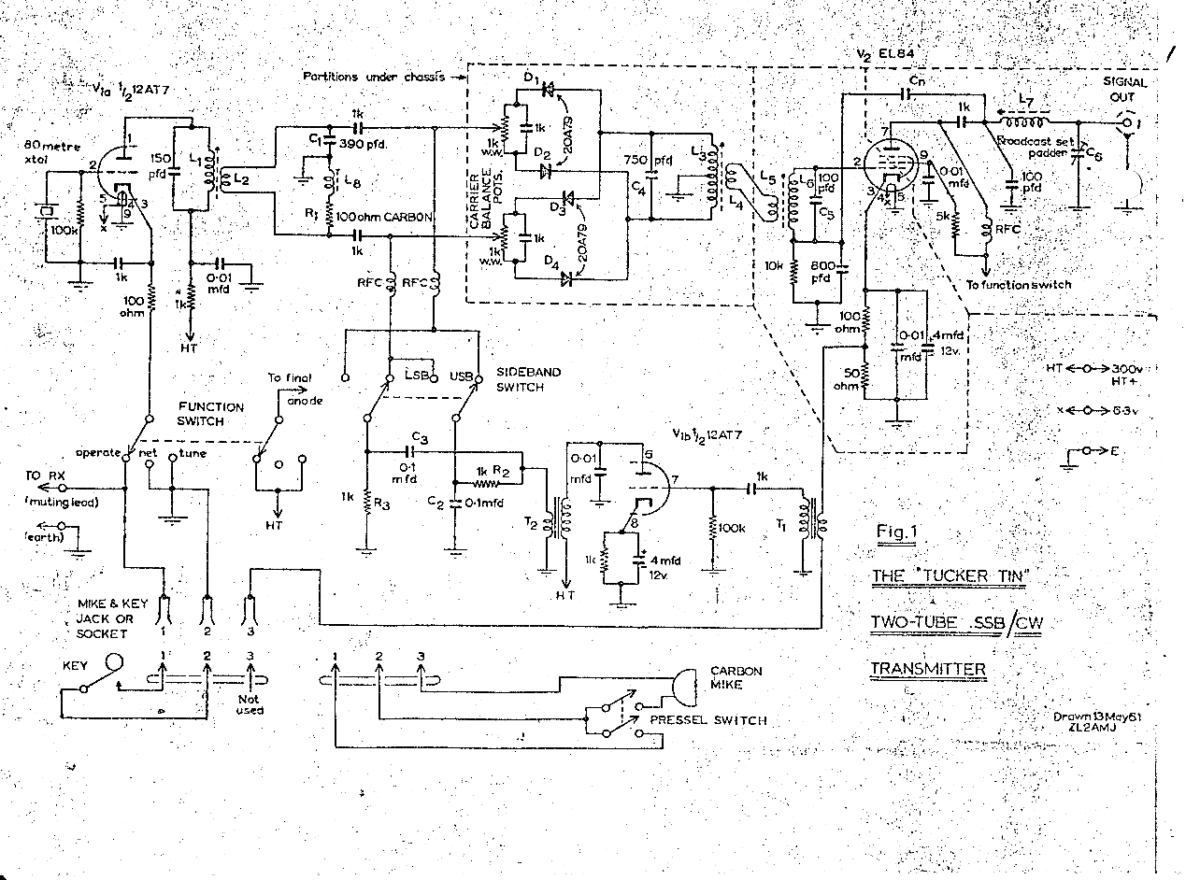
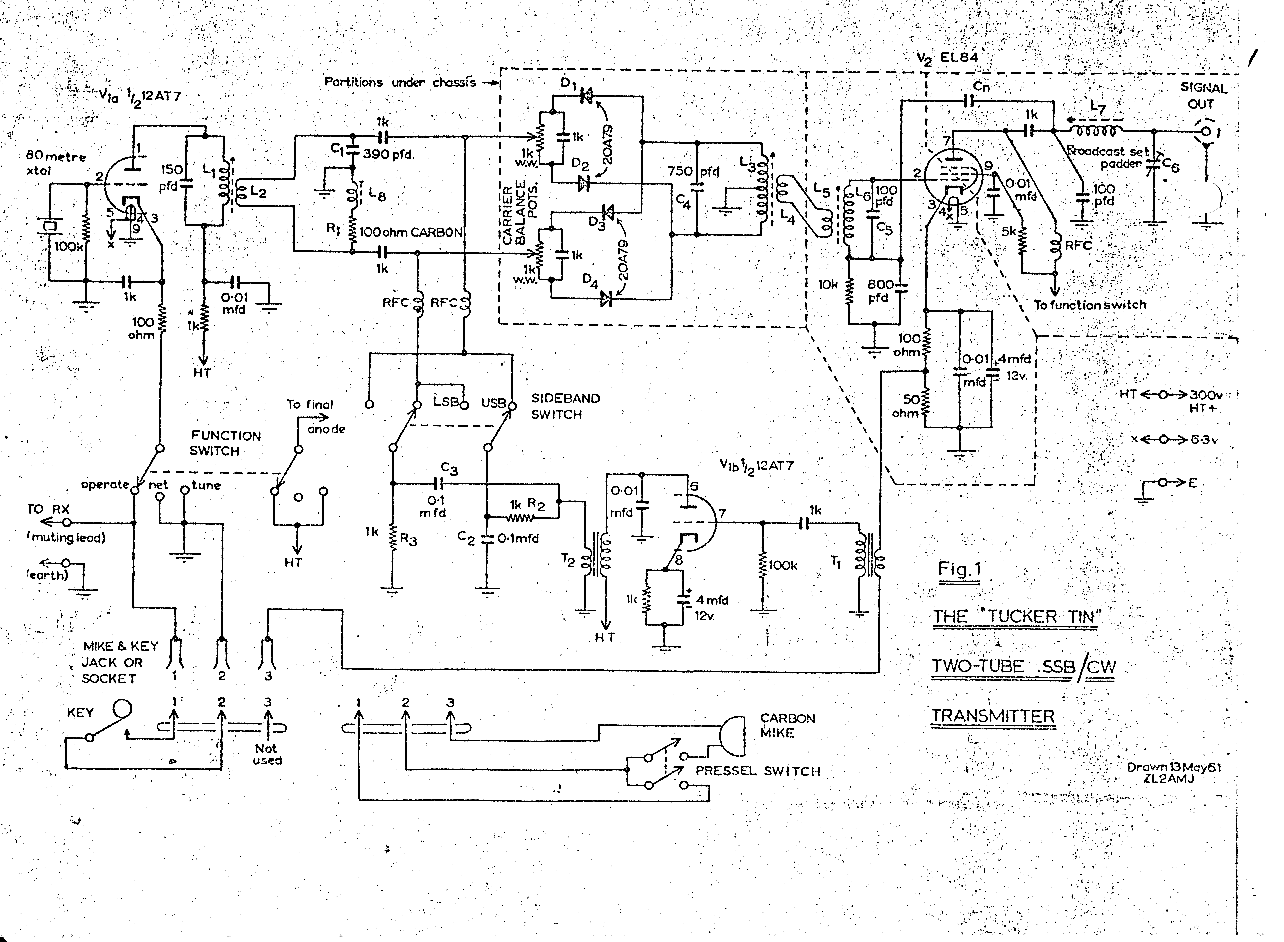
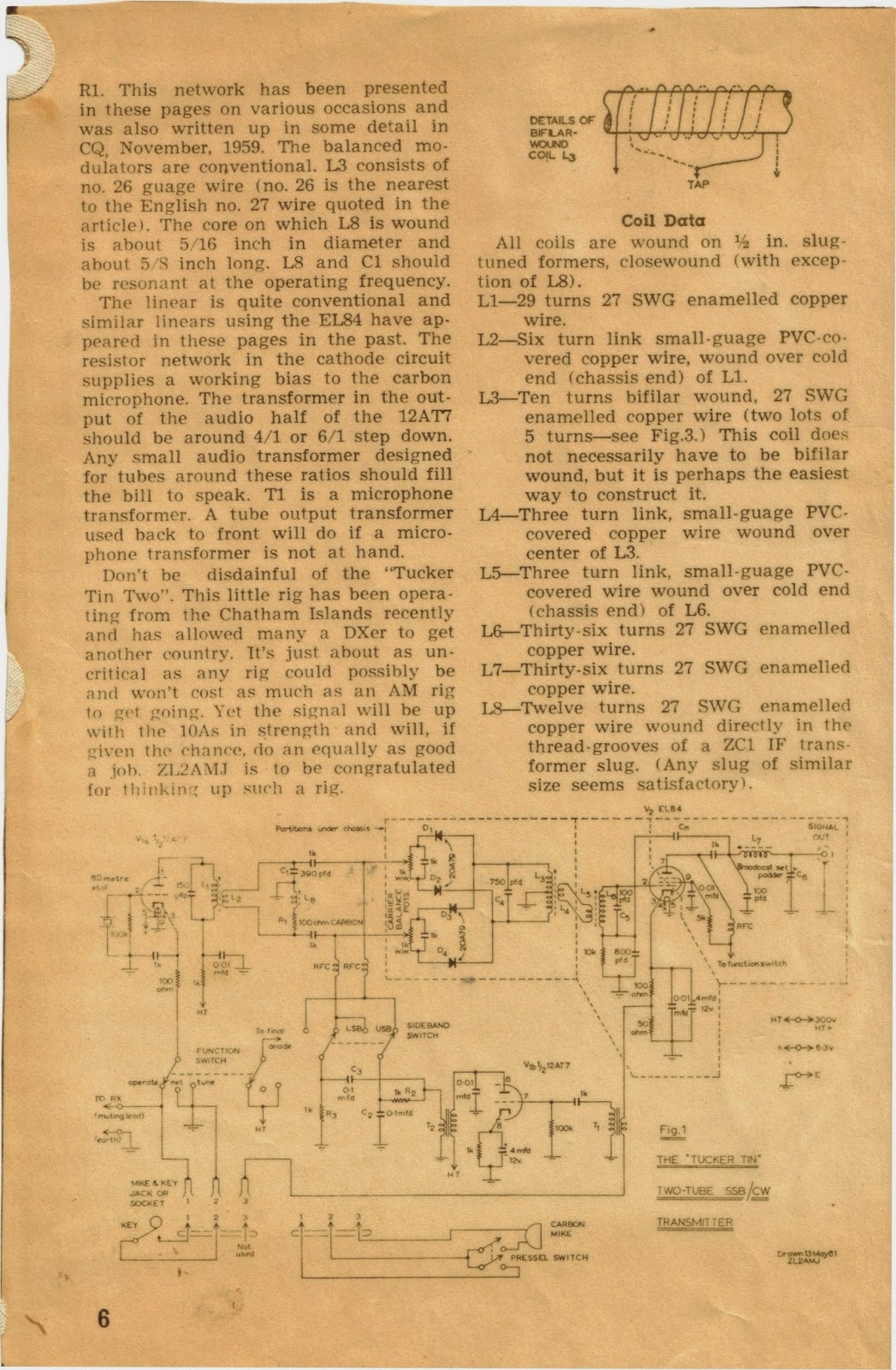
Pete Eaton sent us links to an old article from the New Zealand magazine “Break-In.” So many good, simple rigs come to us from New Zealand! Who can forget ZL2BMI’s DSB rig? This one is the work of Fred Johnson ZL2AMJ. It is especially interesting and is in some ways similar to Peter Parker’s “Knobless Wonder.”
It uses the phasing method of sideband generation. No crystal filters in this one. You need TWO balanced modulators. You have a 90 degree phase shift network for the RF (from the carrier oscillator) and a second 90 degree phase shift network for the AF from the mic amplifier. When you combine the signals from the two balanced modulators — viola! — one of the sidebands disappears. The balanced modulators take care of the carrier, and an SSB signal is launched. That is how my old HT-37 works, and similar ideas seem to be at work in modern SDR rigs.
G3TXQ has the complete set of Break-In articles (it includes a VFO):
http://www.karinya.net/g3txq/temp/tucker_tin/
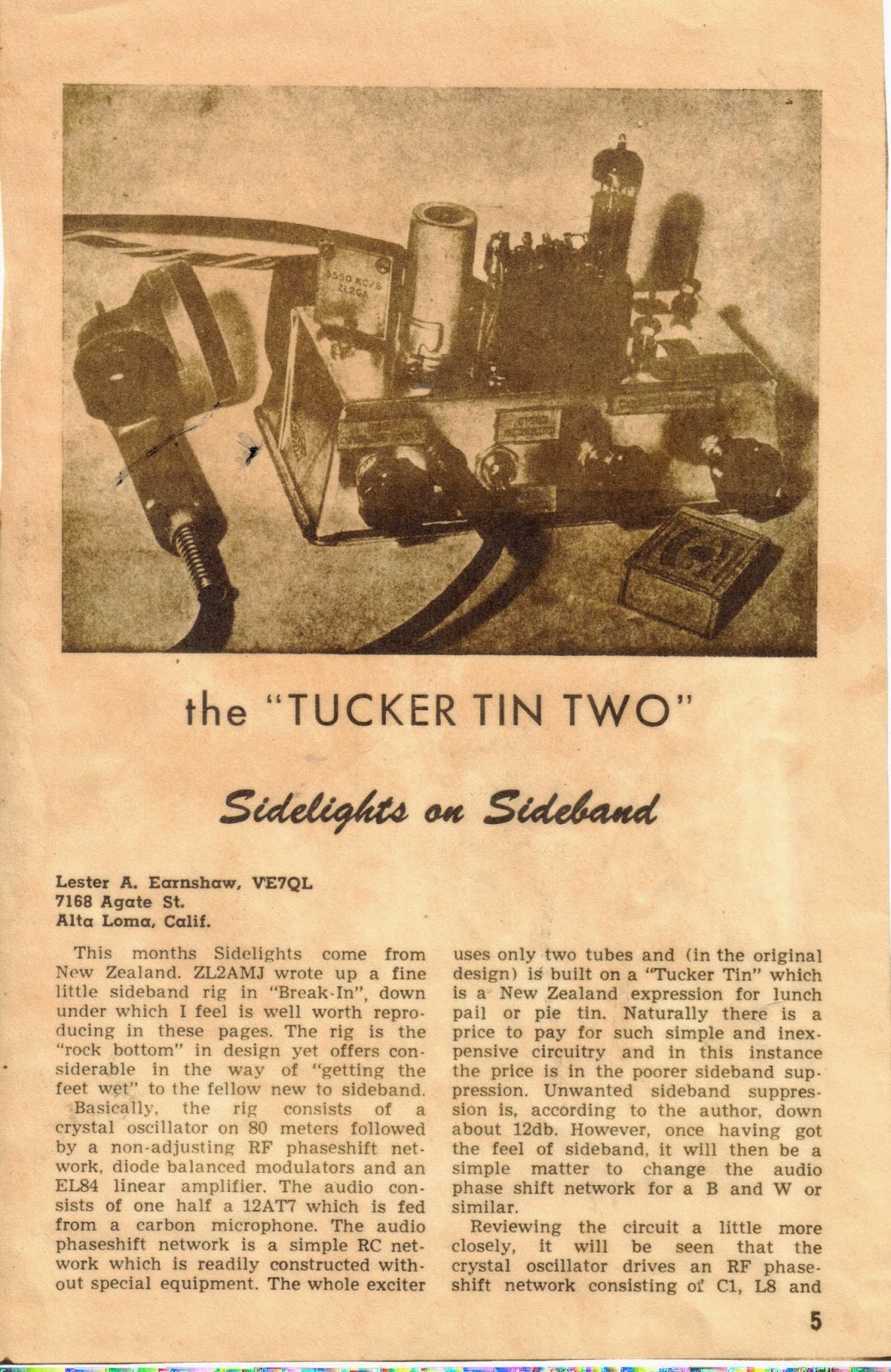
Here is a Canadian article on the rig. A “Tucker Tin” is apparently what the Kiwis call a lunch boxes (shades of Benton Harbor…).
Thanks Pete!
Our book: “SolderSmoke — Global Adventures in Wireless Electronics” http://soldersmoke.com/book.htm Our coffee mugs, T-Shirts, bumper stickers: http://www.cafepress.com/SolderSmoke Our Book Store: http://astore.amazon.com/contracross-20
The ZL2BMI DSB Transceiver
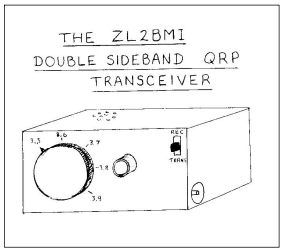 Oh man, I’ve been a fan of this rig for many years. I first read about it in the pages of SPRAT. Today I stumbled across what appears to be an on-line version of the instruction booklet prepared by Eric Sears, ZL2BMI. Lots of lore in there. Lots of soul in this rig.
This site has three documents describing the rig. All three are a lot of fun: http://www.mightymessage.com/
Three cheers for Eric Sears! Hip-hip…
Our book: “SolderSmoke — Global Adventures in Wireless Electronics”http://soldersmoke.com/book.htmOur coffee mugs, T-Shirts, bumper stickers: http://www.cafepress.com/SolderSmokeOur Book Store: http://astore.amazon.com/contracross-20
SolderSmoke Podcast #134

http://soldersmoke.com/soldersmoke134.mp3
May 15, 2011
New “Ikea” microphone
NOVA QRP Club
WSPR T/Rouble resolved
Finishing up Rome WSPR rig
Easy-Peasy on Asus eee-PC
Space Station Packet Beacon
Boatanchor News: DX-100, HT-37, “CQR” anchors, 75 meter antenna Drake 2-B history interview by W8SX
Lew McCoy and Ernest Hemingway
Ade Weiss, QRPoetry and Ade’s new book
Regen theory
MAILBAG (with a focus on New Zealand)
80 milliwatts to New Zealand (and Italy)
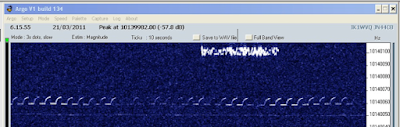
 I realize that having your QRSS signal show up on a distant grabber is no big deal, but this was the first time I’ve seen the signal from my little DaVinci Code rig make the trip to ZL. You can see my shark fins in the screen shot above. It was just before dawn here, so gray line must have been helping. A Solar Flux Index of 92 also helped. My shark also made it across the Atlantic (and half the Med!) Mauro IK1WVQ’s grabber made this nice capture (looks like this was around dawn at his location):
 I measured the voltage at the antenna terminal this morning. Less than 2 volts peak. Assuming a 50 ohm load, that’s about 80 milliwatts. This is all especially gratifying because yesterday I was out in the backyard with a slingshot and a fishing reel, putting a bit more wire into the trees. It worked!
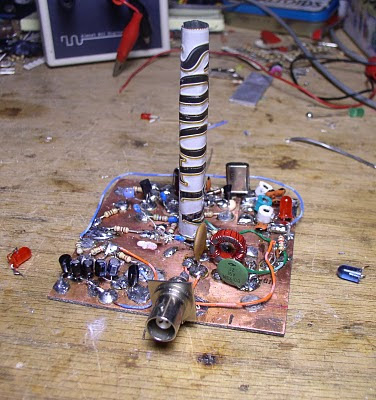
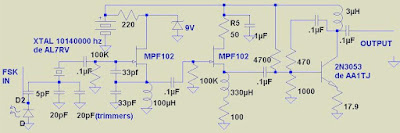
Here’s the transmitter and the schematic. FSK is from a simple two transistor multi-vibrator (G0UPL’s circuit — you can see it in the lower left):
Minimalist Computing from New Zealand
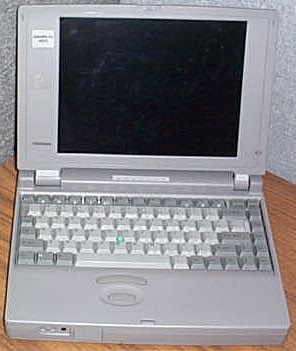 My Toshiba Satellite Pro 400CS went toes up in 2006 after many years of service. It died with a horrible grinding sound from the hard disc. I tried to bring it back to life, and bought a replacement HD, but I never could get it going and the project got sidetracked… until an e-mail from Kevin, ZL3KE, (see below) got me back in the old computer repair business.
With long-distance help from Kevin I
1) Got a boot-able DOS disc, which got me to an A:
2) Partitioned and formatted my HD which got me a C:
3) Loaded DOS drivers for my CD ROM drive which got me a D:
4) Used the CD-ROM drive to load Windows 3.1 which really brought this thing back to life.
I usually dislike working on computers, but with Kevin’s help and encouragement, this project was fun. And I can now use some old programs that I haven’t been able to use since the advent of Windows 95, like my favorite astronomy program “Distant Suns.” I’m also running ON7YD’s excellent QRSS transmit program.
I always liked the audio features of this computer. With a bit of driver downloading, I now have sound. There are some nice audio clip files in this (birds chirping, machine guns, another gong!)
that may find their way into the podcast.
Any thoughts on what else I can do with this machine? Any other Windows 3.1 applications?
Here’s the message from Kevin that re-started all this:
Minimalist/QRP computing
Hi again Bill,
I was amused to hear your comments about QRSS and the ever-so-slight
discrepancy between the number of transistors needed for Rx and Tx…
Maybe it’s time to introduce the concept of the “QRP Computer” – using
older/slower hardware generally regarded as obsolete, but otherwise
perfectly serviceable and having a much smaller carbon footprint than the
latest 2.5GHz+ machines! This is something which I’ve been working towards
for some time.
I’m typing this on an old 233MHz Pentium laptop (Toshiba Satellite Pro
480CDT), with 64MB of RAM, a 3.8GB hard disk and an 800×600 screen,
running a cut-down version of Win98SE with all web integration (IE etc.)
stripped out. This will happily run pretty much all the radio software I
need without complaint (such as MMTTY for RTTY, MMSSTV for SSTV, Digipan
for PSK31, Argo, Spectran, IZ8BLY Hellschreiber, WSJT v4, etc).
Just about the only thing lacking is WSPR, which I would very much like to
run but I think it probably needs more resources than this machine has
(Joe Taylor, are you listening? ;-).
The rationale was/is to find the simplest, smallest, most bloat-free
programs to accomplish what is needed (minimalist computing, in other
words) – and it must all be freeware or similar – bells & whistles are
frowned upon, and definitely no commercial stuff allowed! I wouldn’t say
I’m 100% there yet, but the journey so far has been interesting and
rewarding.
Although this was originally intended to be a dedicated machine for radio,
I now find myself increasingly using it for things like web-browsing and
email as I find the whole “no bells & whistles” experience quite
refreshing (I use Popcorn email and a minimalist, no-javascript browser
called “OffByOne” – my browsing needs tend to be fairly basic and I tend
to regard any website which uses Java/Flash etc. as not worth the effort).
I think Mike AA1TJ’s quote on his “Reggie” page is quite apt here: “In
anything at all, perfection is finally attained not when there is no
longer anything to add, but when there is no longer anything to take
away….”
72/3, Kevin
ZL3KE