Brazilian Minimalism: The Curruira Transmitter

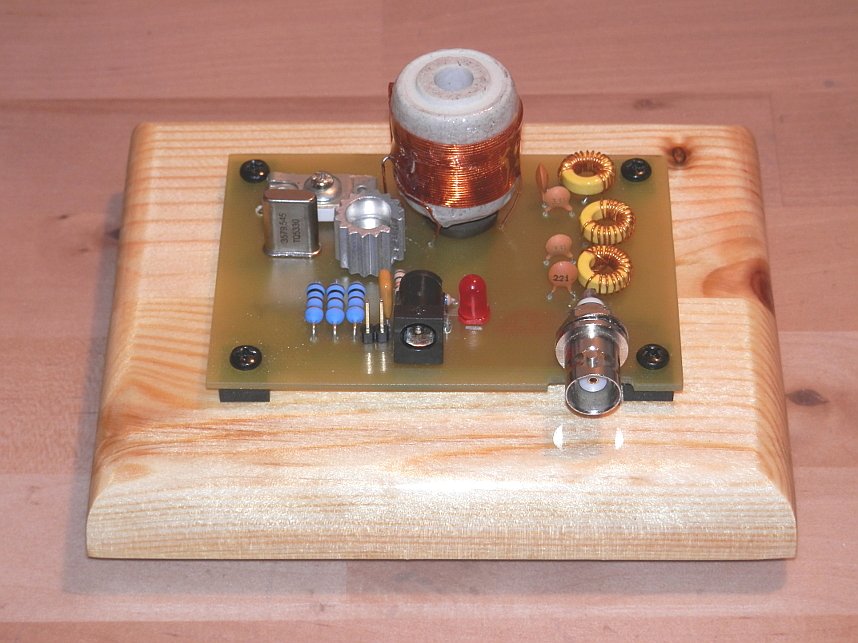
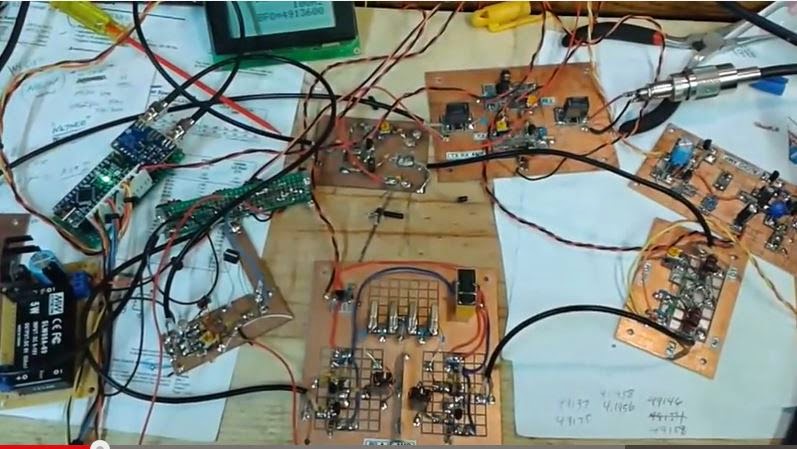
Miguel PY2OHH is the Wizard of Sao Paulo. This morning I was looking at his wonderful web site and came across this little rig. It seems a bit simpler than our beloved Michigan Mighty Mite. And the folks down in Brazil had several of these on the air and made contacts with them. FB. Miguel hints they may turn this rig into a transceiver.
Here is the Curruira:

The rig is named for this little bird: 

SolderSmoke Podcast #181 Of Dongles and DX-100s — SDR vs. HDR, Music & Art, 2B, HB2HB, Noise, The Martian, VK3YE’s New Book

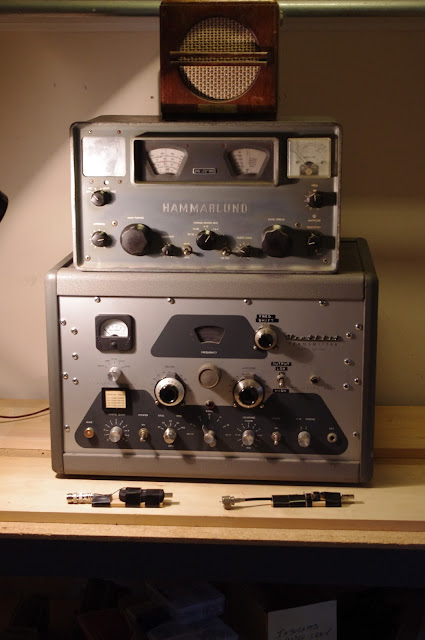
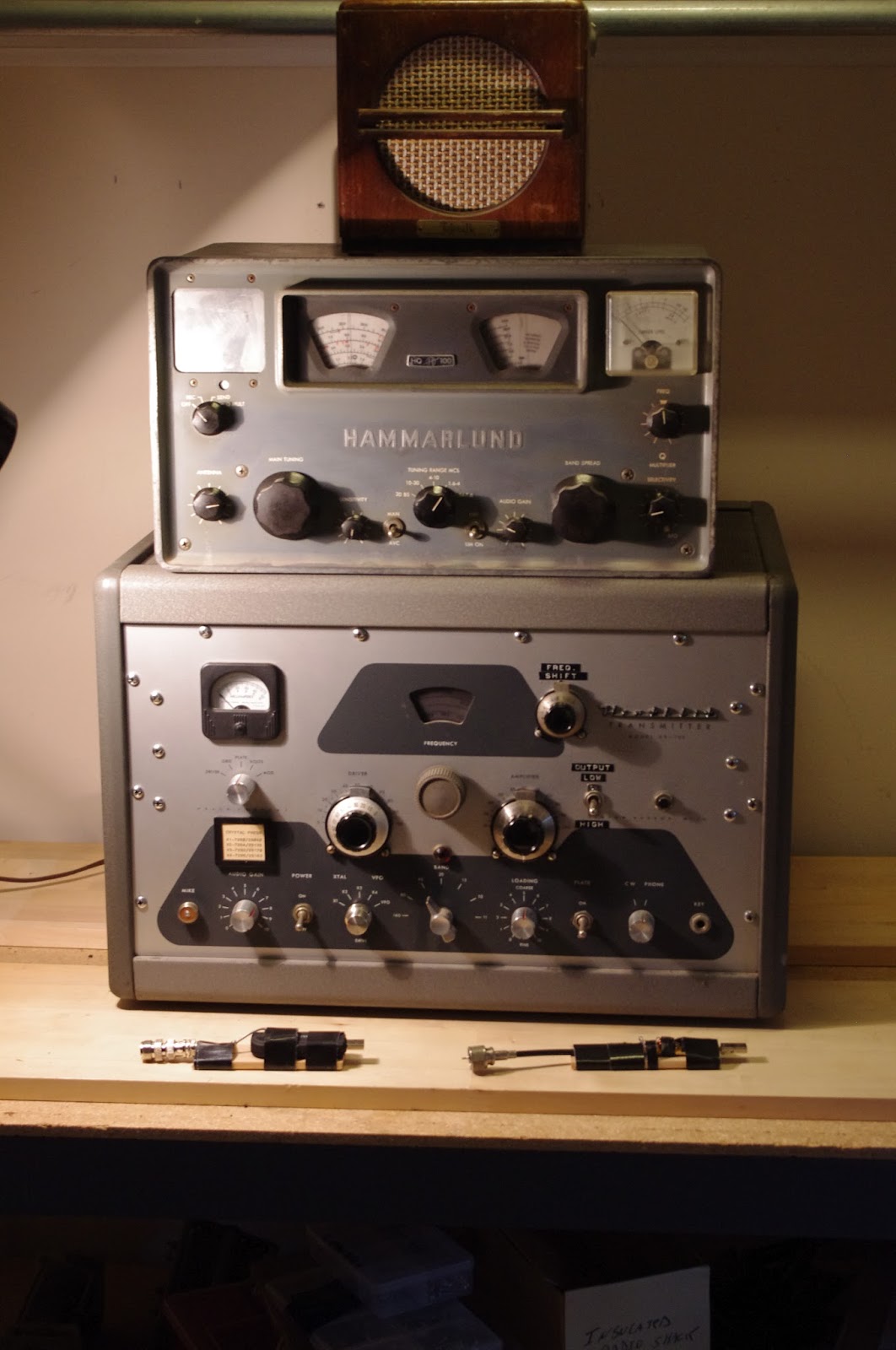
Two RTL SDR Dongles in front of a DX-100 Transmitter

SolderSmoke Podcast #181 is available:

17 October 2015

— Our audience IGNORES Pete’s guitar intro!
— Pete on QSO Today Podcast.
— Part 97, The Radio Art and International Goodwill.
BENCH REPORTS:
— Pete connects his new beam to the KX3.
— Pete puts the Bell-thorn on 20.
— Simple-ceiver update.
— Pete’s new drum machine: http://makezine.com/2015/10/15/learn-electronics-worlds-oldest-drum-machine/
— Bill fights noise in the DIGI-TIA.
— Bill fights power-line noise (and wins!).
— Drake 2B, skirts, reduction drives, and tuning rates.
— Warming up (with!) the DX-100.

— N2CQR — N6QW First Ever HB2HB QSO.

— On 40 AM with an HT-37
— Listening to Chinese CubeSats.
— SDR Dongle as a bandwidth checker.

— SDR and the Future of Homebrew Radio.

— Bryan’s LBS Receiver.
— Dean’s First Ever QSO with his HB rig.

— 32 Mighty Mites Completed

— The Martian — Did Mark Watney REALLY have the Knack?

— MAILBAG:
Peter Parker’s New Book
Sparks from Ron Sparks
Armand’s 1Watter
Rogier’s pyro machine
BIG boxes from Tim KI6BGE
Mikele’s ZIA and N6QW rig collection
SPRAT 141 and SPRAT 164

SolderSmoke Podcast #181 Of Dongles and DX-100s — SDR vs. HDR, Music & Art, 2B, HB2HB, Noise, The Martian, VK3YE’s New Book

Two RTL SDR Dongles in front of a DX-100 Transmitter

SolderSmoke Podcast #181 is available:

17 October 2015

— Our audience IGNORES Pete’s guitar intro!
— Pete on QSO Today Podcast.
— Part 97, The Radio Art and International Goodwill.
BENCH REPORTS:
— Pete connects his new beam to the KX3.
— Pete puts the Bell-thorn on 20.
— Simple-ceiver update.
— Pete’s new drum machine: http://makezine.com/2015/10/15/learn-electronics-worlds-oldest-drum-machine/
— Bill fights noise in the DIGI-TIA.
— Bill fights power-line noise (and wins!).
— Drake 2B, skirts, reduction drives, and tuning rates.
— Warming up (with!) the DX-100.

— N2CQR — N6QW First Ever HB2HB QSO.

— On 40 AM with an HT-37
— Listening to Chinese CubeSats.
— SDR Dongle as a bandwidth checker.

— SDR and the Future of Homebrew Radio.

— Bryan’s LBS Receiver.
— Dean’s First Ever QSO with his HB rig.

— 32 Mighty Mites Completed

— The Martian — Did Mark Watney REALLY have the Knack?

— MAILBAG:
Peter Parker’s New Book
Sparks from Ron Sparks
Armand’s 1Watter
Rogier’s pyro machine
BIG boxes from Tim KI6BGE
Mikele’s ZIA and N6QW rig collection
SPRAT 141 and SPRAT 164

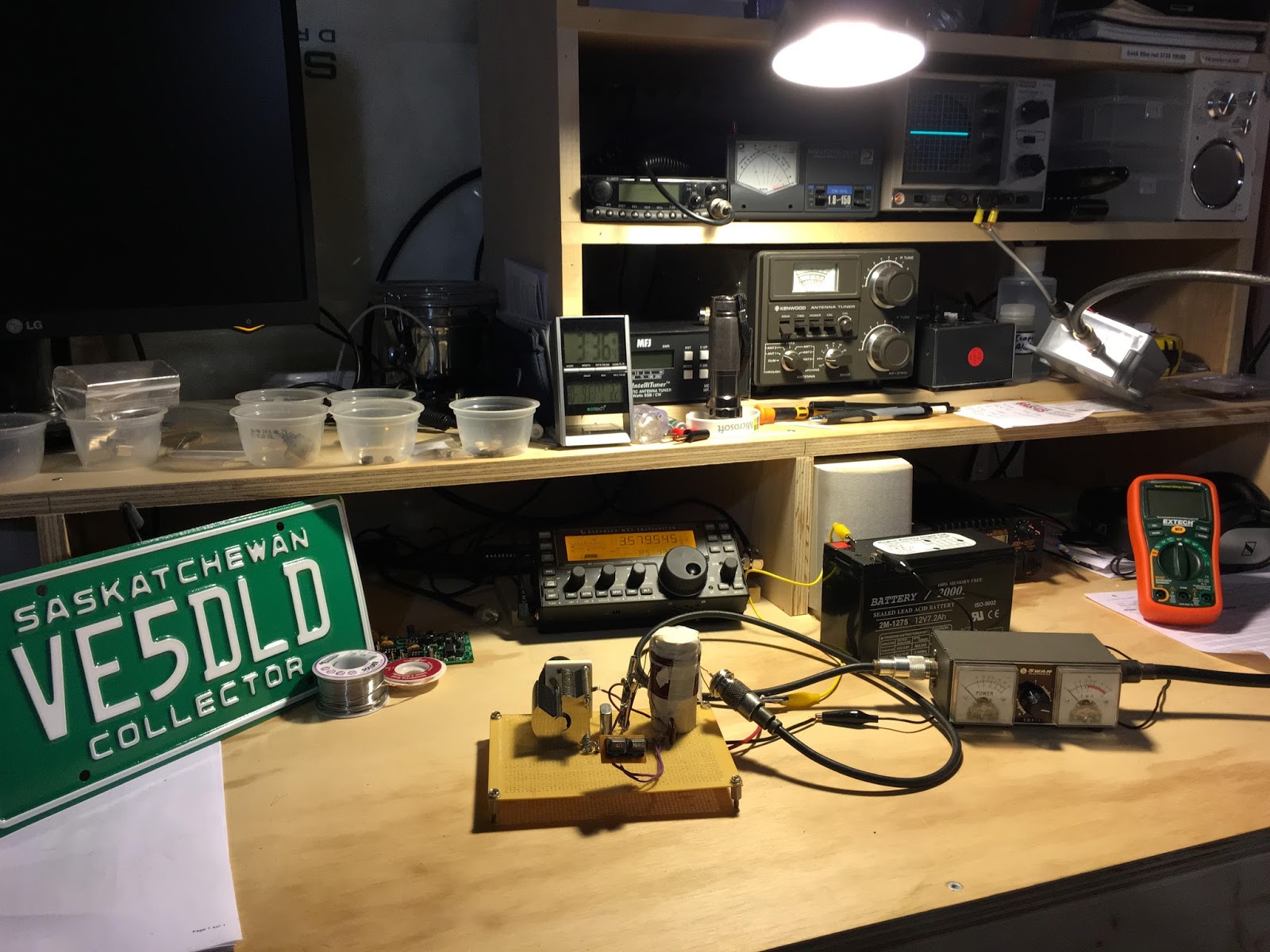
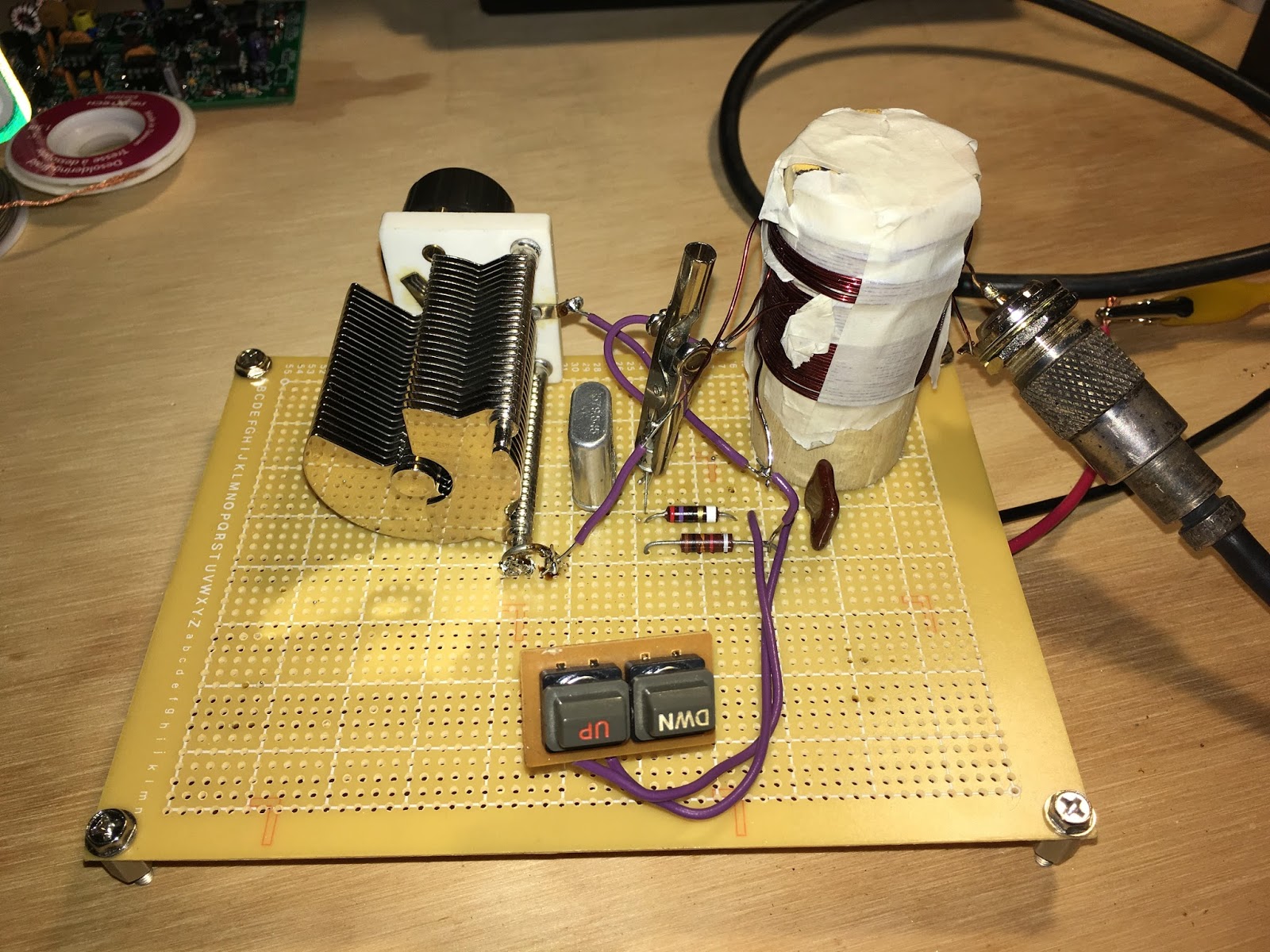
Saskatchewan Mighty Mite (Video)

Bill and Pete,

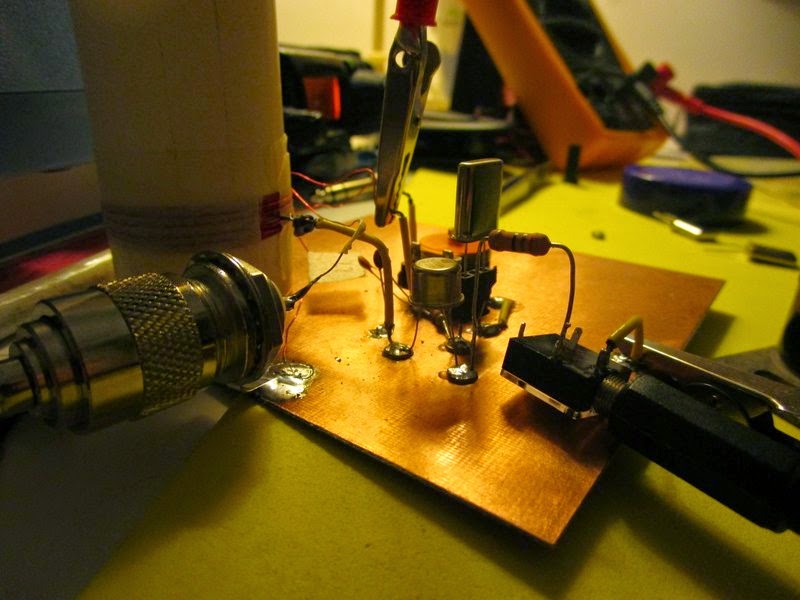
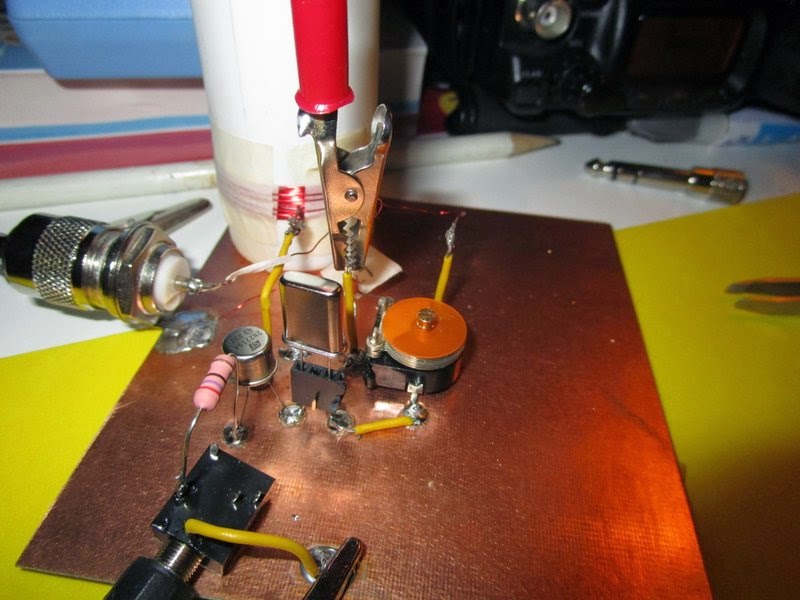
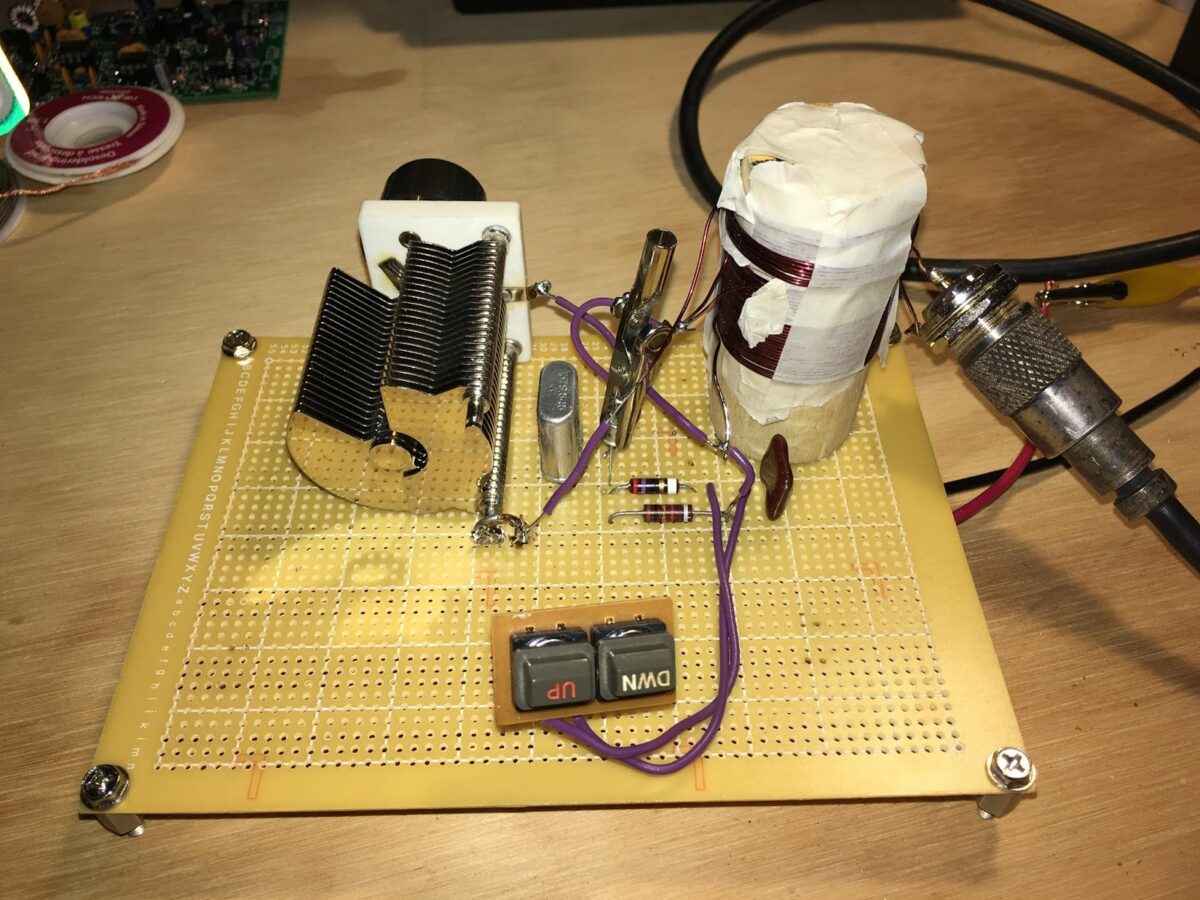
Tonight I have had my first experience with the joy of oscillation! I’m so happy to have my M3 oscillating! This was a great first project and look forward to seeing if I can’t build a lowpass filter to go with it. As you recommended Bill, I reconfigured my initial board to make things much more compact thus keeping the lead length short. For the coil, i used a 1.25in wooden dowel and it worked great! Here are a few photos. Thanks a lot for the crystal! Video will be coming soon.
Looking forward to Pete’s 40m transceiver project. Keep up the great podcast!

Daniel
VE5DLD

Mighty Mite with Homebrew Capacitor Made from Two Cans (video)

Paul Hodges, KA5WPL, didn’t have the variable capacitor called for by the Michigan Mighty Mite schematic. So in the true spirit of the International Brotherhood of Electronic Wizards, he rolled his own! He used two empty aluminum cans and some electrical tape. Wow, that’s really cool Paul.

You have truly earned you membership in the Color Burst Liberation Army, and for the capacitor I award you the prestigious Brass Figlagee with Bronze Oak Leaf Palm.

An Enthusiastic Recruit for the Color-Burst Liberation Army


Hey Bill and Pete
Man, I am loving the podcast!
It is absolutely what I need, and what ham radio needs today!!!
I am at about episode 168 trying to catch up.
I would really like to build a Mighty Mite.
In fact, going on the record,
I AM GOING TO BUILD THE MICHIGAN MIGHTY MITE.
If you have any crystals left could you please send me one.
I’ve got a 9 year old boy that’s home schooled and I want to make this electronics hobby a stepping stone to a higher learning experience.
I got in to ham radio to learn electronics and somewhere along the line I just learned how to send and receive CW and how to pass multiple choice question tests. Somehow along the way I lost my love of radio. I still have a nice modern day rig, but it has no “soul”. I heard that comment in one of your episodes and it really rang a bell with me and when it rang I said,
“Oooh, that’s Awesome! “
I want a radio experience with soul!
I think that maybe why folks still use CW. It’s a mode with soul. I know you champion SSB, but home brewing a CW transmitter and receiver has got to be a truly soulful experience. And its one I intend to have as one of my own.
I too want to enjoy the “Joy of Oscillation “.
With you guys inspiring me, I am sure this will be a wonderful adventure.
THANK YOU! THANK YOU! THANK YOU!
For your guidance and inspiring work in the field of homebrew radio.
Sincerely,
Paul Hodges
KA5WPL
P.S.
The chemistry of you 2 guys on the show REALLY remind me of Click and Clack. You guys really work well together!
PLEASE DON’T STOP!
73
———————
Paul: Consider yourself inducted. There are, however, some conditions:
1) You MUST build the MMM and make it oscillate (thus experiencing the JoO).
2) You MUST send a picture or (better) a video of your MMM in operation.
3) You have to give me permission to put your e-mail (below) on the SS blog.
4) You have to send me your address so I can issue you a for-real SS 3.579 crystal (with mojo).
Deal? 73 Bill
—————–
Deal,
I’ll do my best to get video, at the very least I’ll get pics.

As for making it actually oscillate, well if the “radio gods” let it be then I’ll be having some good vibrations going on in the shack. Hope to have it going before first snow…of 2015…
Also, being inspired as I am, I made a CW contact with 5 watts since I emailed you last.
Thanks for helping me get the fun and excitement and the adventure back in to ham radio!
Sincerely,
Ka5wpl
P.S.
Please send a card if you have one with the crystal.
PPS Also why not initial it if you’ve got a small enough pen 🙂
73
———-
Paul’s Knack Story is here: http://www.qsl.net/ka5wpl/

Our book: “SolderSmoke — Global Adventures in Wireless Electronics” http://soldersmoke.com/book.htm Our coffee mugs, T-Shirts, bumper stickers: http://www.cafepress.com/SolderSmoke Our Book Store: http://astore.amazon.com/contracross-20
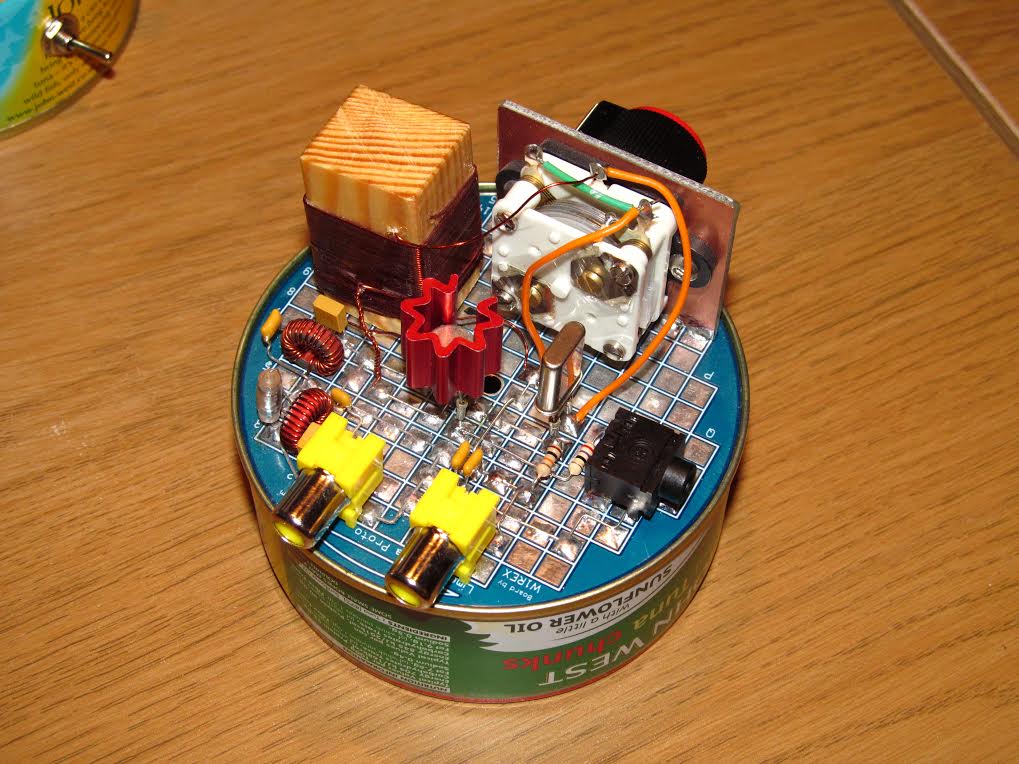
Colin’s Tuna Tin Mighty Mite (Video)

You will remember Colin as the builder of that beautiful BITX20 that he first used from his backyard and later used with great success from a hilltop in Northern England. In this video we see Colin demonstrating his Michigan Mighty Mite. Lots of soul in that little machine! Colin notes that this rig worked well from the start. The Radio Gods were obviously pleased by his use of a tuna tin as the chassis. I think they also liked the MePads from W1REX and the Tek 465 ‘scope. And of course the T-shirt was obviously a key element in Colin’s success.

Here is that beautiful BITX, now equipped with an internal speaker:

Our book: “SolderSmoke — Global Adventures in Wireless Electronics” http://soldersmoke.com/book.htm Our coffee mugs, T-Shirts, bumper stickers: http://www.cafepress.com/SolderSmoke Our Book Store: http://astore.amazon.com/contracross-20

KC2THY’s Mighty Mite – A Thing of Beauty

Bill,

I have been a listener of the Soldersmoke Podcasts for several years now and I have worked my way through most of the back episodes of the podcast. It is terrific production and has taught me so much about radio electronics. I have also read all of your books. Thanks for what you do for this hobby.


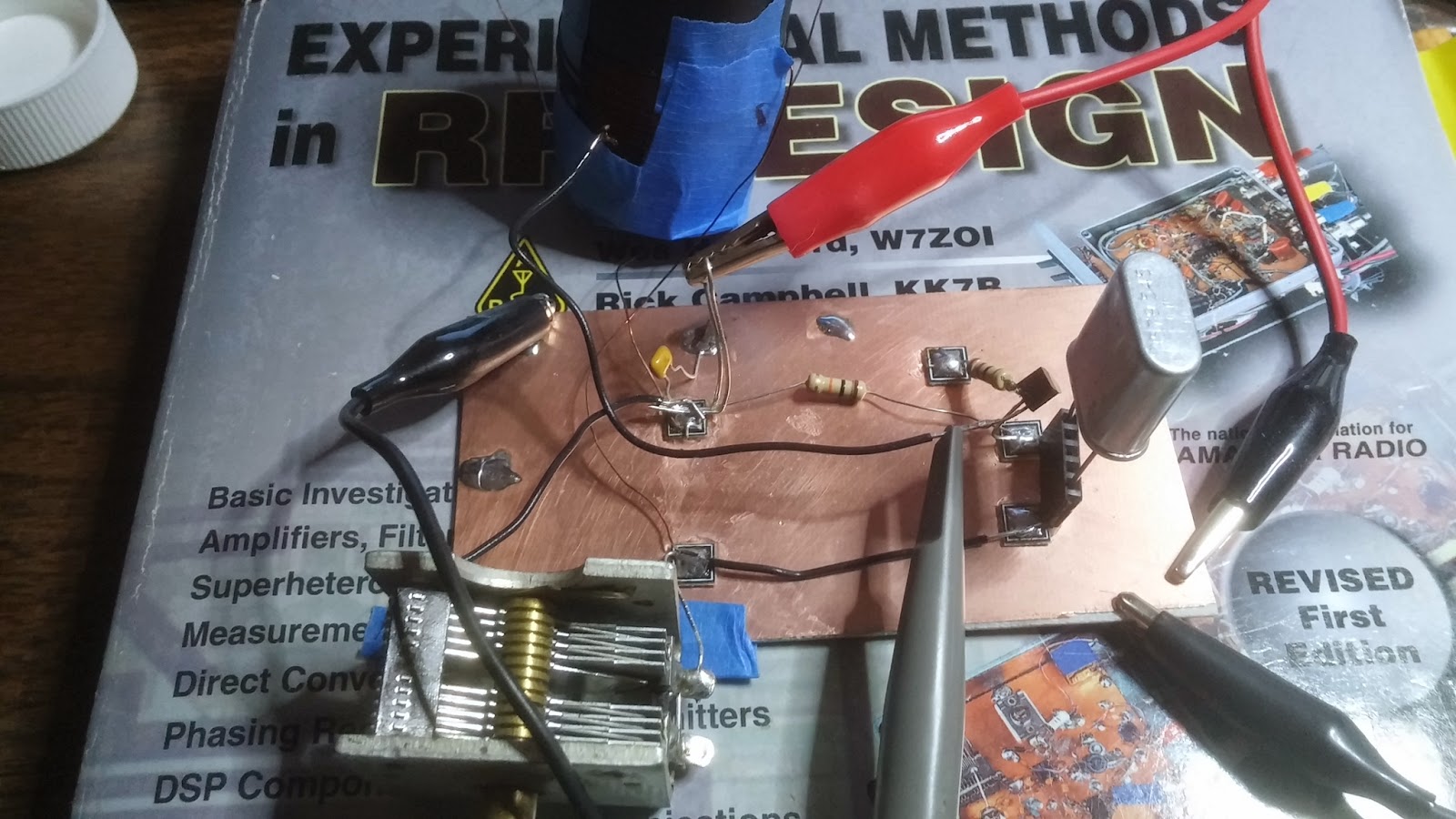
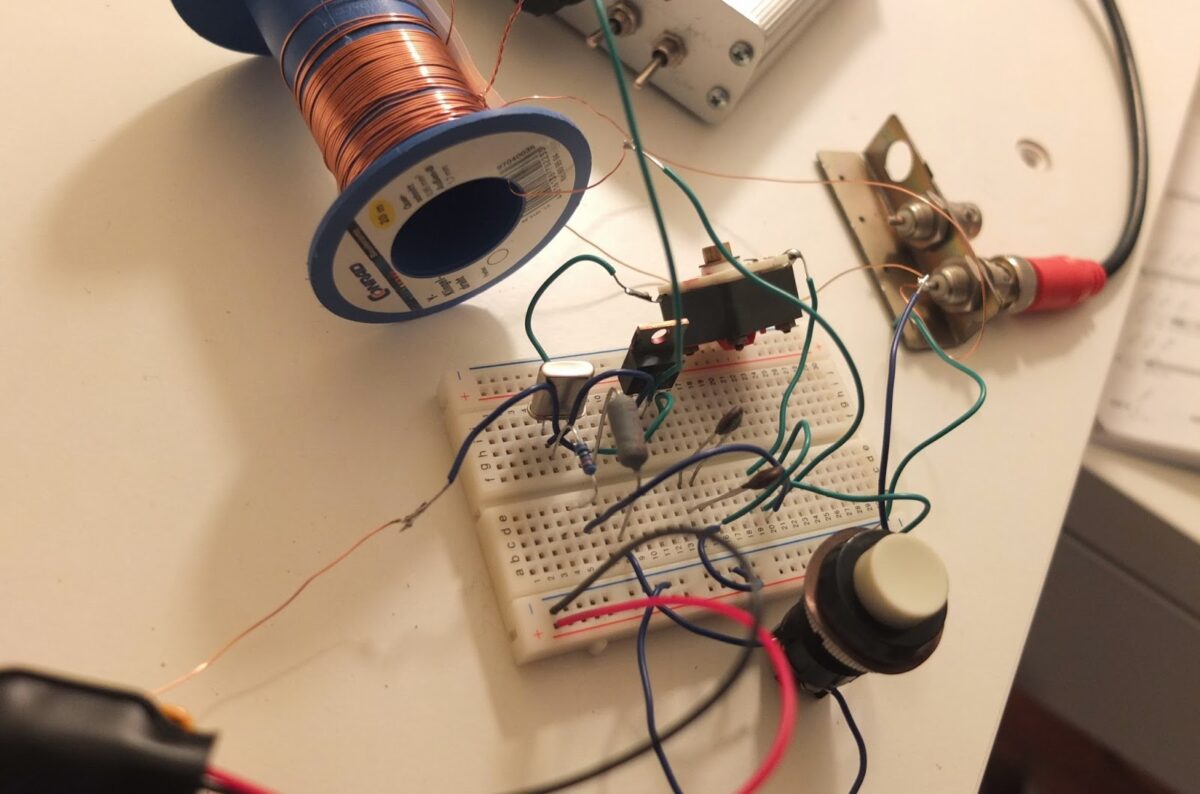
Attached is a photo of my recently completed Michigan Mighty Mite. The FFT function in my scope confirms a good clean signal and it sounds great when I listen to it on another radio. I am sure that the photo depicts one of the worst looking MMMs to date. I built it on a solderless breadboard as I have never built anything using Manhattan or ugly construction techniques. It was a great introduction to very basic homebrew electronics.

Thanks again,
John Stockman, KC2THY
Morristown, NJ

Our book: “SolderSmoke — Global Adventures in Wireless Electronics” http://soldersmoke.com/book.htm Our coffee mugs, T-Shirts, bumper stickers: http://www.cafepress.com/SolderSmoke Our Book Store: http://astore.amazon.com/contracross-20

SolderSmoke Dreams (and Nightmares)

Bill,
I’ve just listened to Solder Smoke episodes 168-170 and I’m following your advice. My Michigan Mighty Mite sits on my desk only lacking the variable capacitor. I was amazed that I had everything needed in my junk box! Including a 3.575611 crystal.
Last night I dreamt that the incomplete breadboarded Mighty Mite was beckoning me. I walked over to the desk and I had the palpable sense that the Mighty Mite itself wanted to oscillate, as if by arranging the components in this way I created something alive. I touched the tank and it began oscillating by itself without the variable cap. The universe seemed complete in that sweet moment.
When I awoke I attempted to replicate the event unsuccessfully. haha. I definitely need a variable capacitor….
Regards,
Bryan
KV4ZS
Bryan: You might be able to make your dream come true with a fixed value cap. Do you have something of about 150 picofards? Try that. It might work. Or do you have an old transistor radio that could sacrifice its tuning cap?
I have had similar homebrew dreams. Well, nightmares mostly. I dreamed that in a fit of frustration I took ALL the parts off the BITX 17 board. That was a scary one. I’ll cc Steve Silverman to see if he could help with the variable cap.
73 Bill

Our book: “SolderSmoke — Global Adventures in Wireless Electronics” http://soldersmoke.com/book.htm Our coffee mugs, T-Shirts, bumper stickers: http://www.cafepress.com/SolderSmoke Our Book Store: http://astore.amazon.com/contracross-20
Born to Solder: Harv’s Knack Story

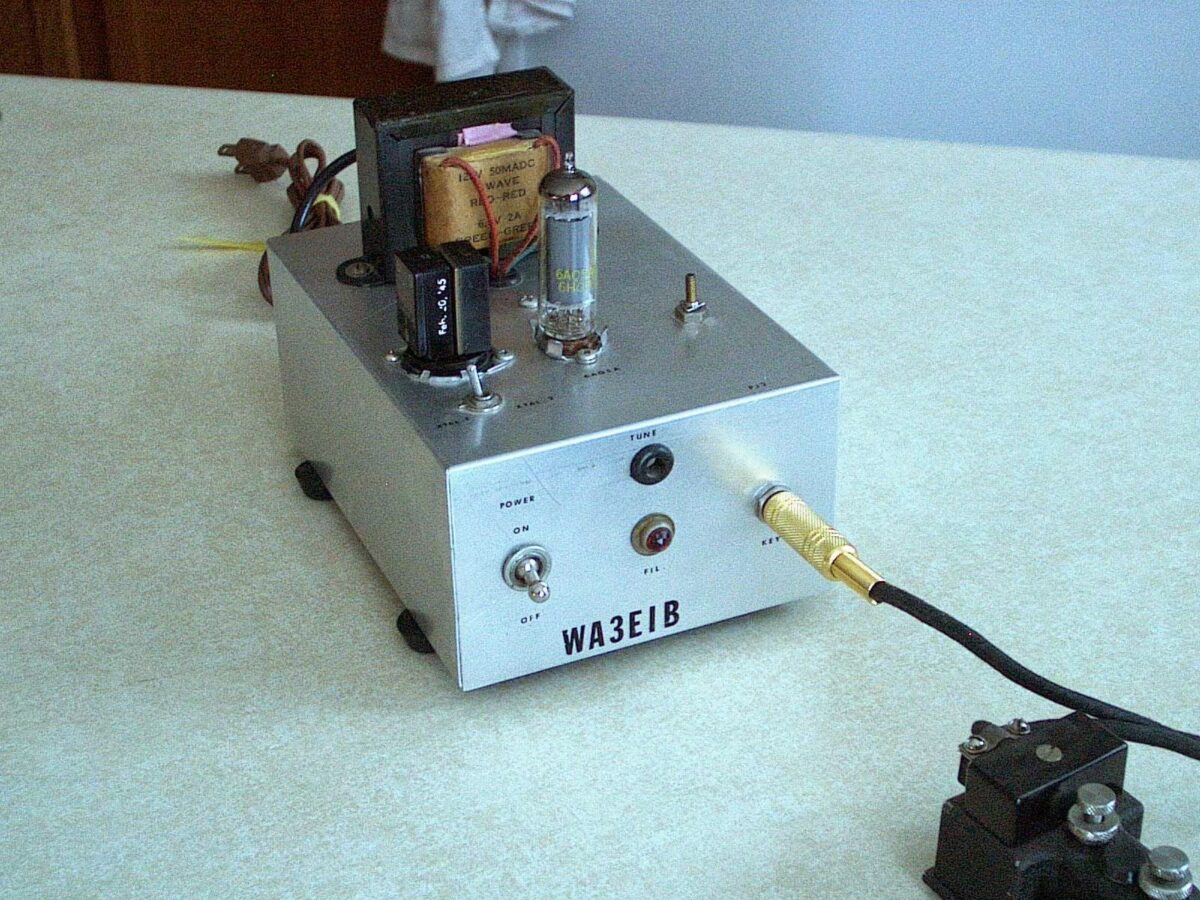
From Harv, WA3EIB:

I’m an avid follower of Soldersmoke and builder of sorts. I began as a ham operator in 1965.
My parents claim I was born with my hands wrapped around a soldering iron.

As you may have noticed, the Michigan Mighty Mite has become a popular rage thanks to Bill and Pete and the Soldersmoke gang. They have encouraged a great number of individuals to study, build and learn. The basics of a simple one transistor transmitter can be a key element to creating, inventing and pushing the brain to greater understanding.

When I was first licensed I was encouraged by a fellow ham. This wise man, was way more senior than myself and out of kindness, he sat me down in front of his workbench and grilled me on the key components and reasons for adding a Low Pass Filter in radio transmission. Following the lecture, he pulled the parts for the filter from his cabinet and said, “Now build it!”

Fifty years later, that same nurturing education is still with me and our hobby. When I was in New England in the 1970’s & 80s, I became friends with Ted Gent, G3ODG. He was a good friend and a real inspiration to art of build. We have long since lost contact with each other however, Ted helped me along as I ventured into solid-state homebrew receivers.

I have enclosed a photo of a similar one valve oscillator that I built when I was 15. So much thrill is derived when your hands construct a useful element of your radio shack.


73’s

Keep building, keep enjoying!

Harv -=WA3EIB=-
Idaho Falls, Idaho USA

Our book: “SolderSmoke — Global Adventures in Wireless Electronics” http://soldersmoke.com/book.htm Our coffee mugs, T-Shirts, bumper stickers: http://www.cafepress.com/SolderSmoke Our Book Store: http://astore.amazon.com/contracross-20
Greg W’s Australia-Finland Mighty Mite (VIDEO)

Greg is a VK6 Australian ham living permanently in Finland. He has been a SolderSmoke listener for many years. Greg sent a nice picture and a video of his VK-OH Mighty Mite. FB Greg!

Our book: “SolderSmoke — Global Adventures in Wireless Electronics” http://soldersmoke.com/book.htm Our coffee mugs, T-Shirts, bumper stickers: http://www.cafepress.com/SolderSmoke Our Book Store: http://astore.amazon.com/contracross-20
Harv’s Idaho Mighty Mite

Greetings Bill, Pete,
While between tasks, I put a little work in on the LPF for the Michigan Mighty Mite.
I will soon be ready to light this thing up. I fit everything on a copper board 3.5 X 5.
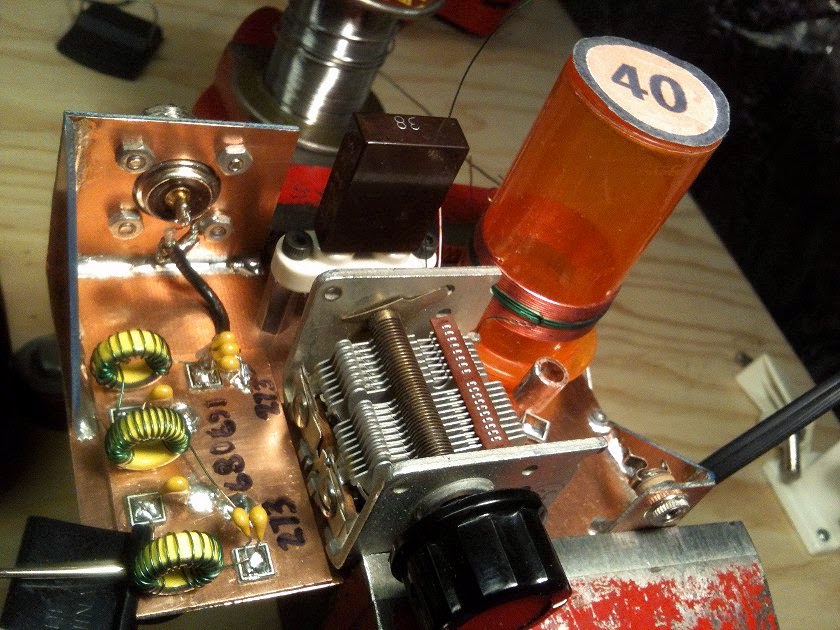
I even put some non-skid rubber feet and fashioned the tank circuit for 40 Meters.
The Color Burst frequency was a bit too low for a practical antenna on this small city lot so, I did the next best thing.
It’s like reliving those teen years, routing through boxes of misc parts and soldering them in place one at a time.
The thrill involved kind of brings those days back to future.

I wanting to construct a regen-receiver but, the pile in front of the solder station is urging me to continue on with the Minima.

I love the variety of Mighty Mites that have been built thus far. Each one is like a painting where the artist has left their signature on their work.

Keep building, Keep having fun and Keep learning.

73’s

Harv -=WA3EIB=-
Eastern Idaho

Our book: “SolderSmoke — Global Adventures in Wireless Electronics” http://soldersmoke.com/book.htm Our coffee mugs, T-Shirts, bumper stickers: http://www.cafepress.com/SolderSmoke Our Book Store: http://astore.amazon.com/contracross-20
Tony’s Mighty Mite (Escape from the DARK SIDE!)

Hi Bill,

Thanks for the crystal for the mighty mite. I have been pretty busy of
late, but got a few minutes to take a first stab at a build. I am an
electronics neophyte, but learning every day. I am a convert from the
software darkside – software engineer by trade – and enjoying every time
I succeed in getting something to work! I am glad that the circuit is
forgiving because I grabbed what I had at hand to make it and it ain’t
pretty by any means, but I have included a photo of the build as was the
deal and also a snapshot of proof of oscillation from my oscilloscope.
I’ll do it up right soon and try connecting it to my arduino to send
some morse code out to the ether. Send you more pics when I make it
pretty 🙂

Thanks again – 73, AK4ZF
Tony Cekolin

Our book: “SolderSmoke — Global Adventures in Wireless Electronics” http://soldersmoke.com/book.htm Our coffee mugs, T-Shirts, bumper stickers: http://www.cafepress.com/SolderSmoke Our Book Store: http://astore.amazon.com/contracross-20
N9IZ’s Steam-Rollered Indy Mighty Mite (Video)

Not even the U.S. Postal Service’s Anti-Crystal Steam Roller can stop an intrepid homebrewer. OM N9IZ got his Mighty Mite working and produced a really nice video and blog post on the project. You can just feel the enthusiasm: On the blog he writes: “Everything was assembled on a bread board for trial. I must admit to being overjoyed when I saw the visual waveform on the PowerSDR panafall display of my Flex-5000A main shack radio. So much so, that I ran through the house calling for my YL, KC9TAH. She was in the shower and thought I’d cut off a finger or something while in the mad scientist lair. Much to her dismay, it was only a nasty CW signal emanating from the Flex speaker. She did humor me by going out to see the marvelous project before asking me what I was going to fix for lunch.” FB OM!

Bill

I thought you might like to hear that another MMM has been brought into the fold. You might remember that the crystal you sent me was steamrolled by the USPS. Believe it or not, it works! Not sure the frequency is exactly spot-on, but who cares…it works! I enjoyed it very much and made a youtube video of the testing process. I also took pictures and posted it all to my webpage. Most of my other projects have been more QRO in nature so I’m treading in uncharted territory. We’ll see how far that goes, but right now I’m loving it. I have my issue of QRP Quarterly and plan to follow along in constructing the LBS project. All for now from Hoosierland. Hope you enjoy the blog post on my webpage. 73 OM.


DE N9IZ

Our book: “SolderSmoke — Global Adventures in Wireless Electronics” http://soldersmoke.com/book.htm Our coffee mugs, T-Shirts, bumper stickers: http://www.cafepress.com/SolderSmoke Our Book Store: http://astore.amazon.com/contracross-20
N0YUD’s Mighty Mite (complete with harmonics)

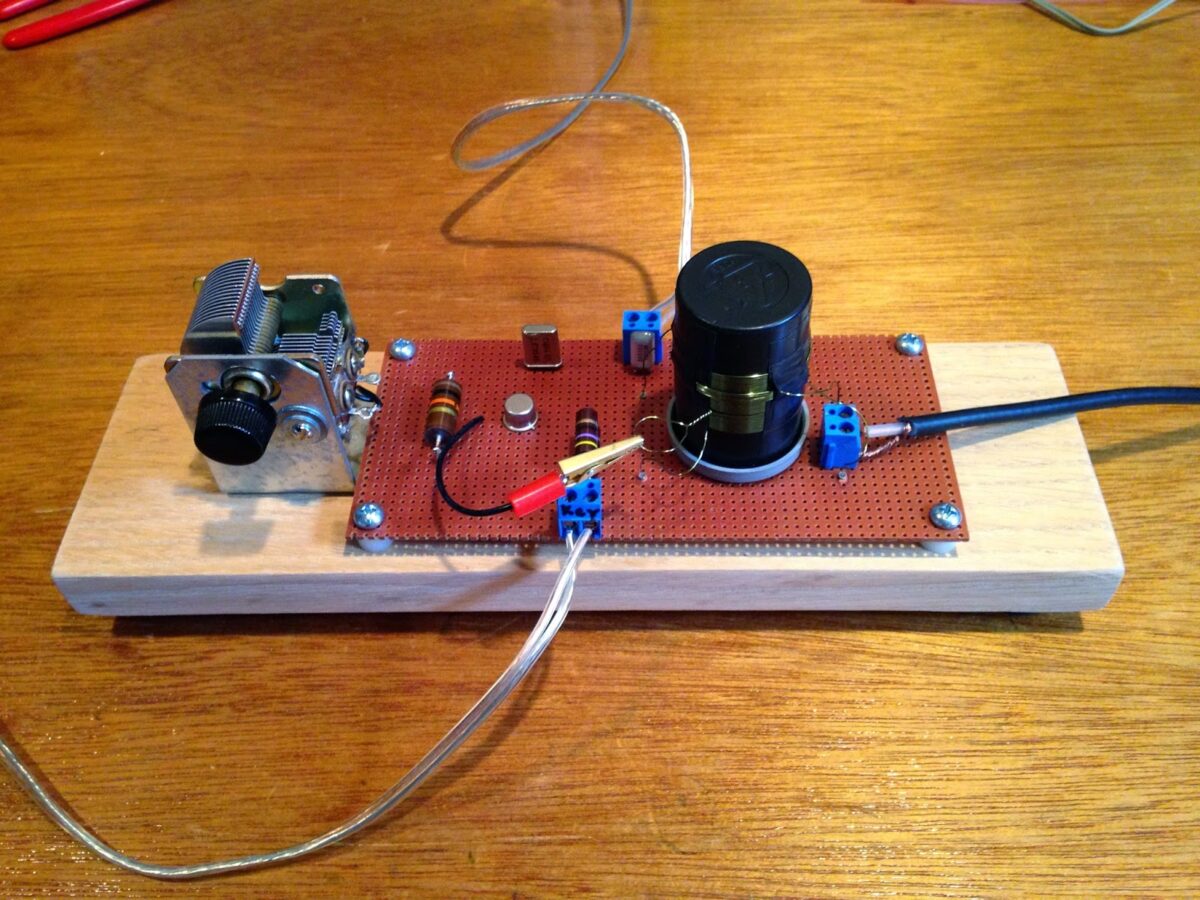
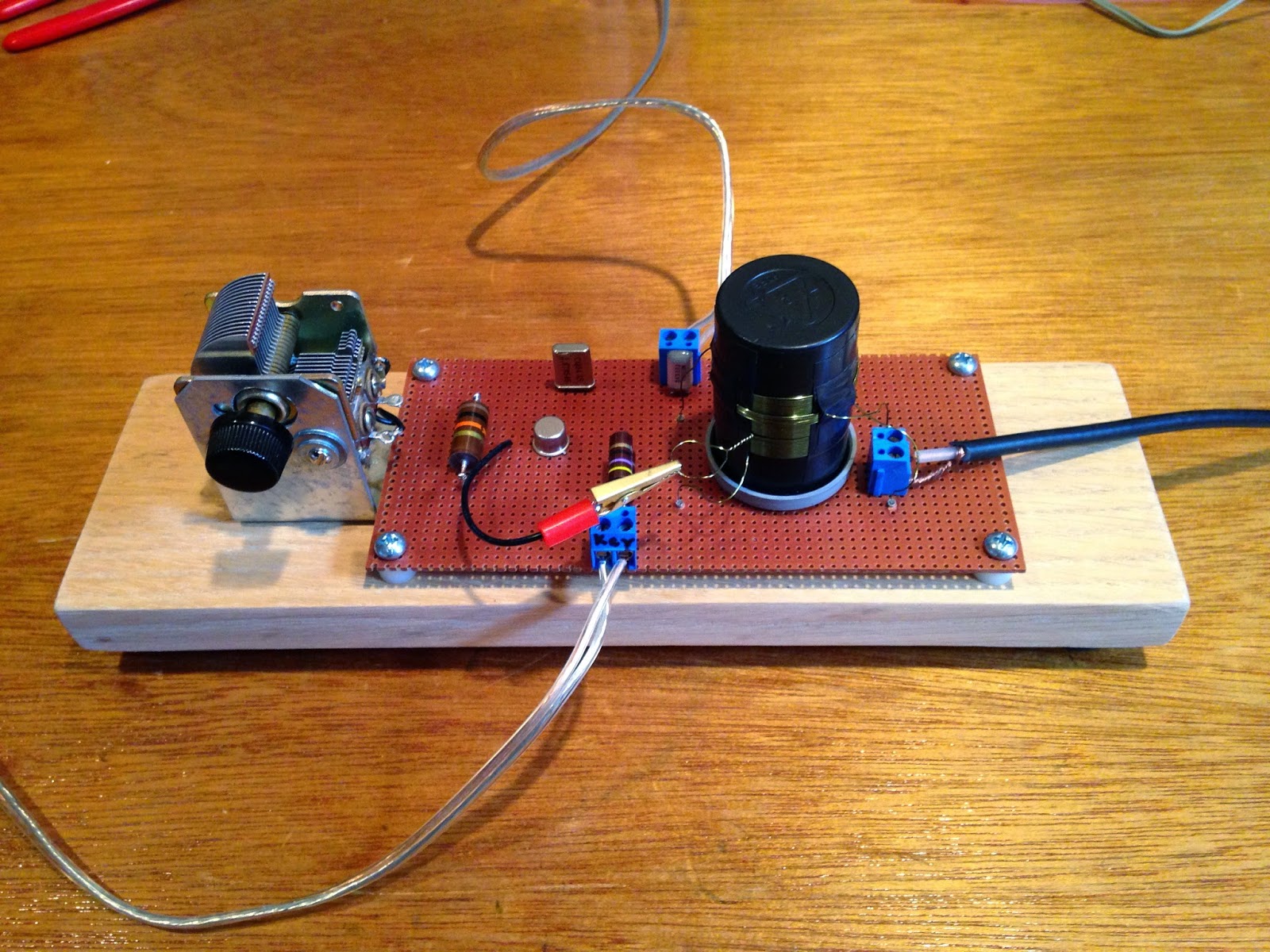
Bill N0YUD built this really nice Michigan Mighty Mite. I like the wood base (with little feet!). And the classic black 35 mm film container. And the Vero board. Fancy connectors too! Nicely done Bill.

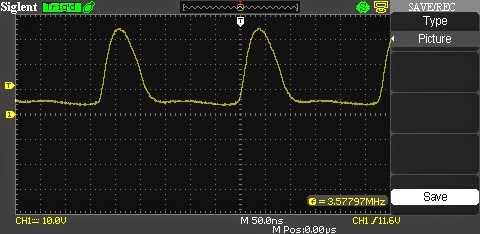
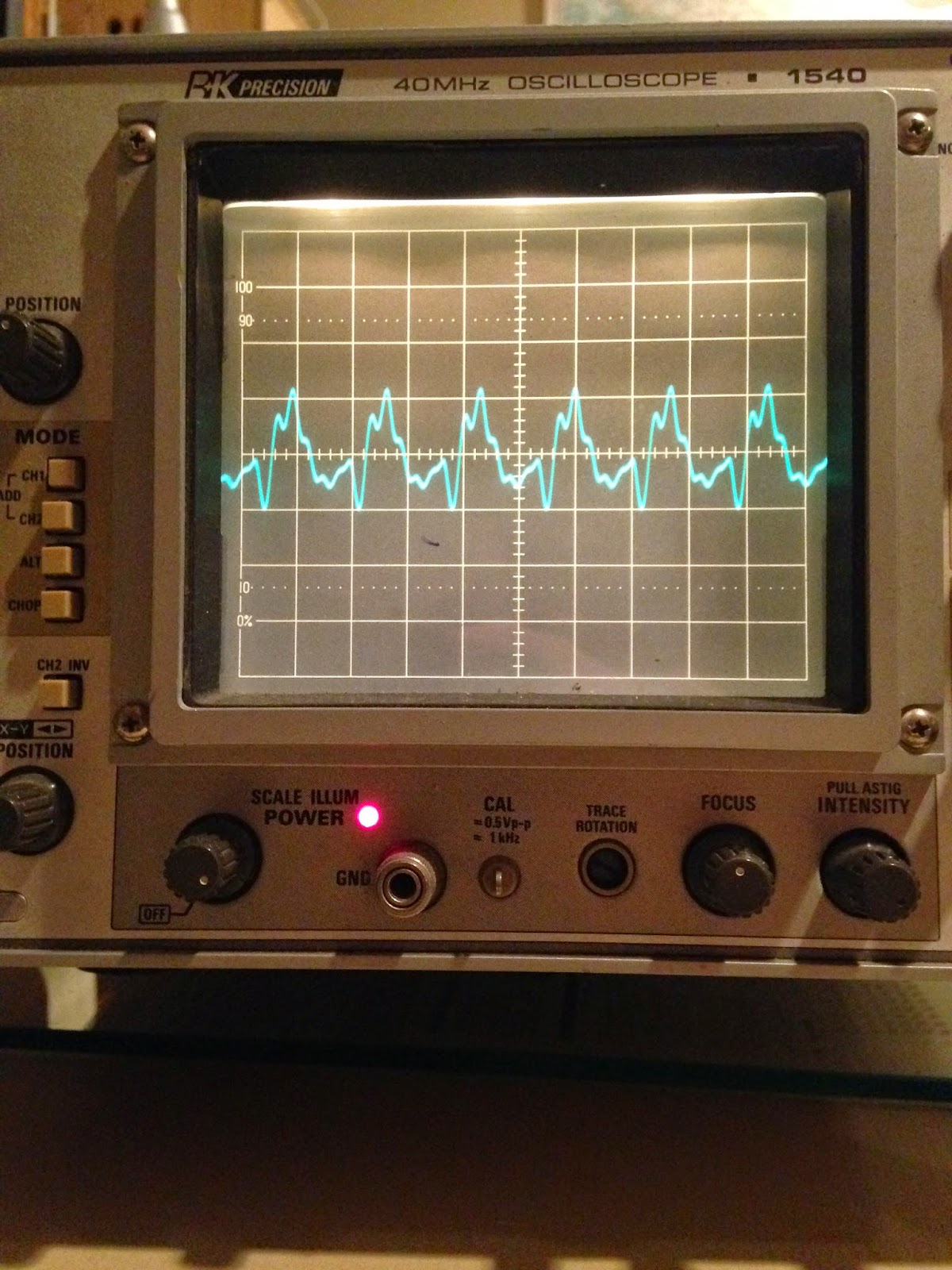
Bill has also wisely left space for a low pass filter. As you can see in his ‘scope picture below, the MMM produces a lot of harmonics. With a low pass filter, that mess will turn into a beautiful sine wave. We’ll be talking about harmonics and low pass filters in the next podcast.

Our book: “SolderSmoke — Global Adventures in Wireless Electronics” http://soldersmoke.com/book.htm Our coffee mugs, T-Shirts, bumper stickers: http://www.cafepress.com/SolderSmoke Our Book Store: http://astore.amazon.com/contracross-20
Italy, Spain, Gibraltar, a Flight to Prague, and How the Mighty Mite Really Works


Gab IZ1KSW is a true Knack-afflicted member of the International Brotherhood of Electronic Wizards: He is an Italian homebrewer who lives in Spain and works in Gibraltar. At the end of this e-mail exchange he has a great story about reading “SolderSmoke — The Book” on a flight to Prague with his Greek girlfriend. It reminded me a bit of the problems I’ve had with fellow passengers while reading “Hot Iron” on the Washington DC train system.

A blog post about Gab’s version of the Mighty Mite is here: http://soldersmoke.blogspot.com/2015/02/iz1ksws-italian-mighty-mite-video.html
His desire to REALLY understand the circuit is, I think, admirable. I know that my quick explanation of how the Mighty Mite circuit works isn’t complete, and I’m sure that others will jump in with more details.

……………………

Hi guys,

I write to you because I’m a bit lost.
Ok, the MMM is oscillating, brilliant!
Now I’d like to understand why it’s working and how it’s working.
I’ve been sitting on the workbench with the schematics in front of me and I found some resources on the internet, I’ve understood the concept of feedback loop but what really make me scratching my head is that I cannot match the MMM schematic with anyone of the typical oscillator design I found (Pierce, Colpitts, Hartley).
I’ve read online that it can be considered as a Pierce oscillator but from what I’ve found online I cannot find the purpose of the tapped coil. Maybe you can point me in the right direction before my GF starts complaining about the pile of schematics I’m accumulating in the living room!
Also, if you have any books to recommend, I’ll be happy to go “back to the books”

Thank you and 73
Gab – IZ1KSW

……………..

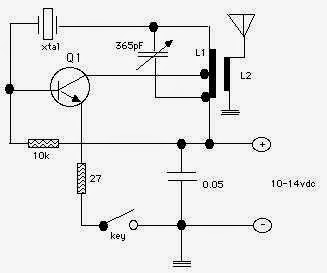
OK Gab. I’ve been meaning to do this. This little circuit needs some explanation. I’ll take a shot:

Start by thinking of this circuit as an amplifier. The 27 ohm resistor from the emitter to ground (negative terminal) puts a limit on how much current will flow.

The 10K resistor from the base to the positive terminal puts a positive voltage on the base and biases it so that current will flow through the transistor.

Now the fun begins! It is an amplifier, but it has no input signal! The input signal is the output signal — it is like a dog chasing his tail!

The crystal is very important. It is the main frequency determining element, and it is the conduit for the feedback that gets this thing oscillating. It is a piece of quartz. If you put a voltage across it, it will begin vibrating (physically) at a specific frequency. As it physically vibrates, it also creates electrical vibrations.

So, when you turn this thing on, noise in the circuit will put a bit of charge on the crystal. It will begin to ring, much like a musical tuning fork. The electrical vibrations from the crystal will go to the base. They will be amplified by the transistor and will emerge (stronger) from the collector. From the collector, they go to the 3.579 MHz tuned circuit formed by the big coil and the variable capacitor.

The coil wound on the film box serves several purposes. The portion of the coil between the positive terminal and the collector carries the 12V DC to the collector of the transistor. It also carries the amplified 3.579 MHz signal coming from the collector. This signal goes through the lower portion of the coil and causes the coil and the capacitor to resonate. The signal at the top of the tuned circuit peaks when the tuned circuit is tuned to…. 3.579 MHz.

The capacitor/coil tuned circuit (with the tapped coil) are set up so that the right amount of energy is fed back from the output to the input, and that this energy is fed back in the proper phase relationship to the signal at the input. Think of a child’s swing at a park: To keep the swing oscillating, you have to push at the right moment (frequency and phase) and with the right amount of energy.

The little capacitor across the battery is to prevent “key clicks.” The output coil on the main coil takes some of the energy and sends it to the antenna while converting the impedance of the antenna to a suitable “load” for the transistor.

Whew, how did I do? Lots of electronics and physics in those 7 parts!

73 Bill

…………….


Hi Guys,
Bills explanation is absolutely perfect –but there is some additional Math in the woodworks known as the Barkhausen criteria where kB = 1
73’s
Pete N6QW


……………

Well, what can I say Bill? Grazie mille!!

I keep thinking that you would have been a great teacher, you have the rare ability to explain complicated concepts using simple words.
Yesterday I finished reading your book SolderSmoke GAWE (yes, you deserve an acronym too) and there have been several “eureka” moments while I was reading it. It gave me a lot of motivation to go in depth and understand what’s going on in a circuit down to the physics of the components. I got the Kindle version but I’ll order the paper version too, I love the hand make schematic and they’re not very readable in the electronic version, plus I believe that a book about radio home brewing must be in the old fashioned paper version don’t you think?
There’s a funny story about the book. Few days ago I was on a flight to Prague with my YL, I was reading the book and zooming on the schematics to see them better, I was really into it and I didn’t notice that the guy sitting on the seat next to me started to look at the kindle nervously, he probably though I was an bomb home brewer HI! So I decided to pass the Kindle to Angeliki so that she could read her books. She’s Greek and she started reading a Greek book, written with the Greek alphabet which looks quite weird if you don’t know it. At that point probably the guy thought to be sitting in the middle of some exotic terrorist… it was funny.

Wow… as most of the Italians do, I talked too much! Thanks again both for the big effort you make spreading the tribal knowledge with the podcast, the ARCI LBS articles and the books.
Siete fantastici!

73
IZ1KSW – Gab

Our book: “SolderSmoke — Global Adventures in Wireless Electronics” http://soldersmoke.com/book.htm Our coffee mugs, T-Shirts, bumper stickers: http://www.cafepress.com/SolderSmoke Our Book Store: http://astore.amazon.com/contracross-20
SolderSmoke Podcast #172: Pete’s New Rig, Bill’s BITX 2040,Crystals, MMM, SNA jr.,Portable SDR, KX3!, W7ZOI at a ‘fest, BANDSWEEP!

Pete and Ben’s LBS Receiver

SolderSmoke Podcast #172 is available

http://soldersmoke.com/soldersmoke172.mp3

16 February 2015

Bench Reports:
Pete under the gun to finish SSB transceiver project. NEW VIDEO:
http://youtu.be/hbLXW0sHTFo
Bill fixes his BITX 2040 Oscillator (Bandsweep!)
Next: LP filter for 120 watt amp.
Bill’s 13 dollar Chinese freq counter (Blue! With anti-wobble tape!)
Bill’s next rig: Chipped to the Max, DDS, SBL-1s, plug in filters!
Radio Shack going under and JAN no longer making crystals.
Mighty Mite Project: Let’s get them DONE!
An easy way to get Q or ESR measurements on crystals?
SI5351 as a crystal substitute.
DuWayne’s Scalar Network Analyzer lights up the internet!
The Portable SDR rig — Pete almost goes to the dumpster!
Report from the cutting edge: Pete’s new Elecraft KX3.
MAILBAG: Meeting W7ZOI and WA7MLH at a hamfest.
Instant Messaging with Farhan

Our book: “SolderSmoke — Global Adventures in Wireless Electronics” http://soldersmoke.com/book.htm Our coffee mugs, T-Shirts, bumper stickers: http://www.cafepress.com/SolderSmoke Our Book Store: http://astore.amazon.com/contracross-20
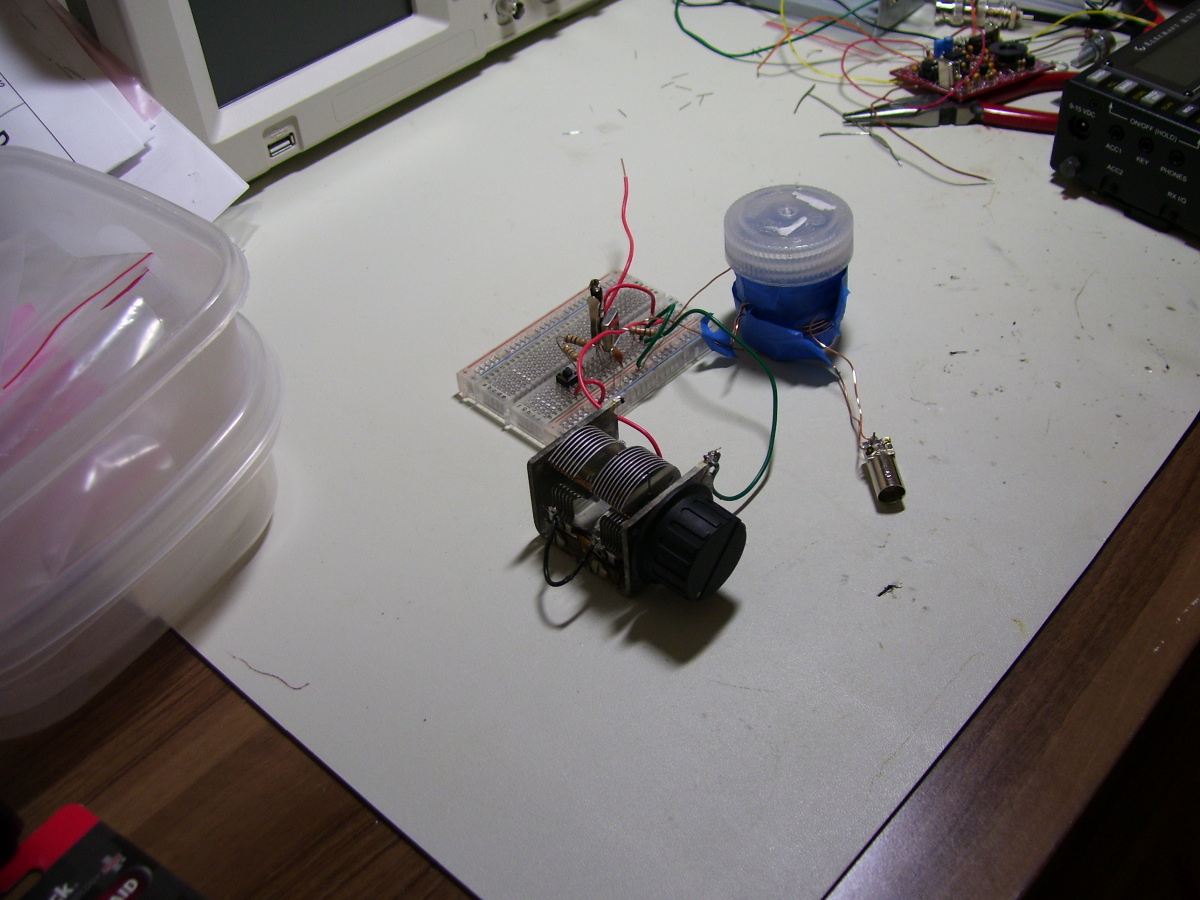
Lucien’s German Mighty Mite (Video)

Excellent Lucien! Thanks for sending this. I know what you mean about a project that doesn’t work. It is rewarding and educational to figure out where you went wrong. I knew a guy who would ask, at a hamfest, “Does this rig work?” If the the seller admitted that it didn’t, he’d reply, “Good, I pay extra for that!” He liked the challenge of fixing it. Of course, there are limits to this, and sometimes these challenges will make you wish you had taken up stamp collecting.

Hi Bill and Pete,


For me too, it’s a happy day – I got the Mighty Mite working! Thank you so much for the inspiration to get into homebrewing…

I’m just licensed for a year now and this was my very first project (except for 2 basic kits that I build) and it really was a great learning experience. The best part: Since it didn’t work out “plug’n play”, I had to debug the thing and actually start thinking – so I put 2 caps in parallel instead of the wrong one I had used (I found them in a little box some guys at a hamfest gave me for free – never thought I would ever use something from it…). And I had to use the voltmeter to look for a short circuit. Basic stuff, but for me, this was a breakthrough!

Here are some more things I learned during this first project (don’t laugh):
  • Where the heck do I plug stuff that’s supposed to go to “ground” in? Now I know: usually to the negative pole!
  • When 2 lines cross in a schematic, that doesn’t mean there’s a connection!
  • How do these ready-made breadboards actually work? Had to try out…
  • It’s important to think about the actual layout beforehand!
  • When debugging, trial and error doesn’t help.
  • There’s yet another crazy foreign unit called “gauge”! (I used smaller magnet wire than recommended, it still seems to work…)
  • 9V-blocks get VERY hot when shorted for a minute or so!
Attached is an image of my ugly prototype, now I want to give it a better “home”… And here is a little video, demonstrating that it works, inspired by IZ1KSW:


BTW, frequency is about 3,5793 Mhz.

Thanks again for all the great inspiration and vy 73 from Germany,
Lucien / DH7LM

Our book: “SolderSmoke — Global Adventures in Wireless Electronics” http://soldersmoke.com/book.htm Our coffee mugs, T-Shirts, bumper stickers: http://www.cafepress.com/SolderSmoke Our Book Store: http://astore.amazon.com/contracross-20
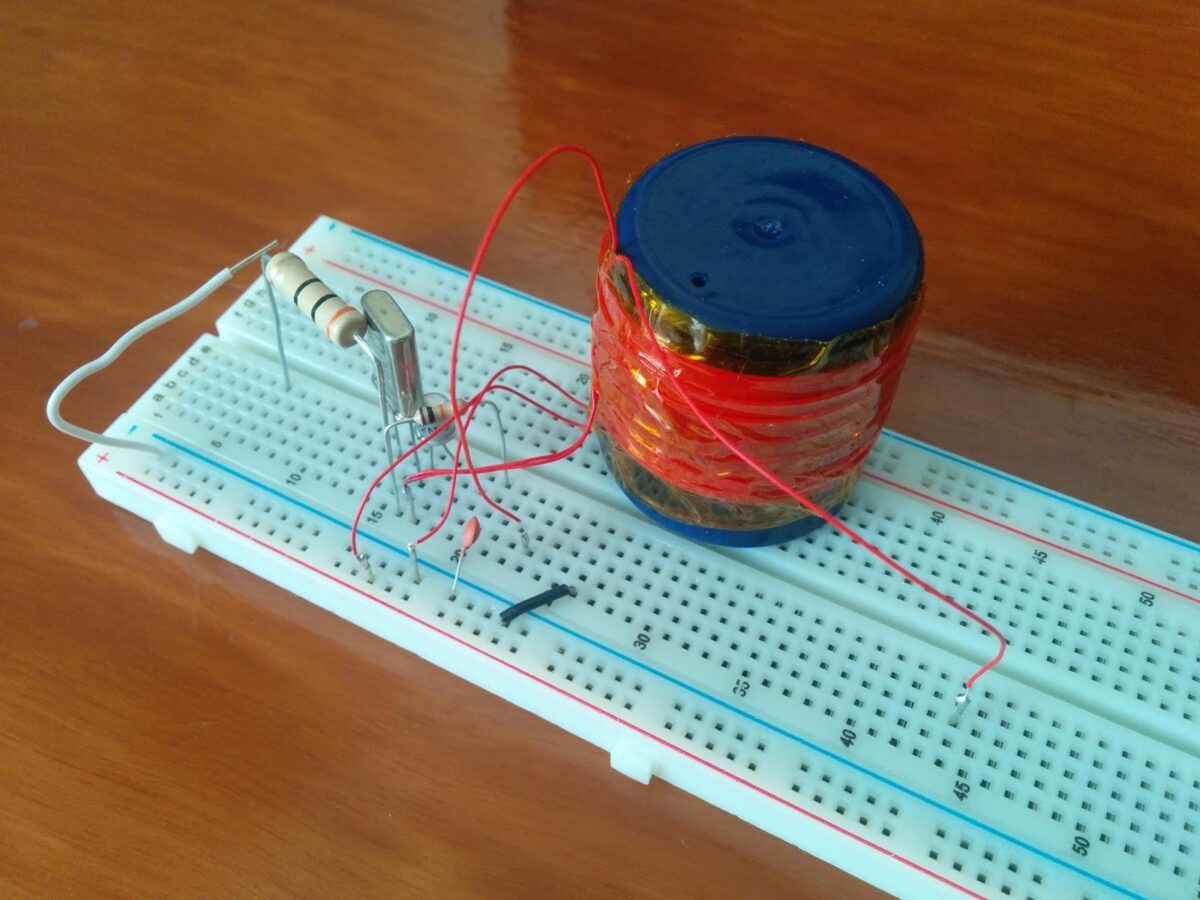
IZ1KSW’s Italian Mighty Mite (Video)

Hi Bill and Pete,

This is a great day for me!
I just managed to get my MMM oscillating!
This is my very first homebrew project guys and I’m so excited! I started from scratch… and when I say from scratch, I mean that I didn’t even have one of the 7 components required, no PCB boards, no junkbox, nothing… just the soldering iron and the will to “build something”.

Thanks to Pete suggestions I managed to put some components together and now I have a (small) junkbox (I’m very proud of it) and thanks to soldersmoke I entered the ranks of the homebrewers.
I send you also a couple of pictures, I used Manhattan style and I found it very useful to understand the circuit. It’s far from being a clean and neat building but it’s a first step.
I’m looking forward for the next one!

73 de
IZ1KSW / EA7JUG – Gab


Our book: “SolderSmoke — Global Adventures in Wireless Electronics” http://soldersmoke.com/book.htm Our coffee mugs, T-Shirts, bumper stickers: http://www.cafepress.com/SolderSmoke Our Book Store: http://astore.amazon.com/contracross-20
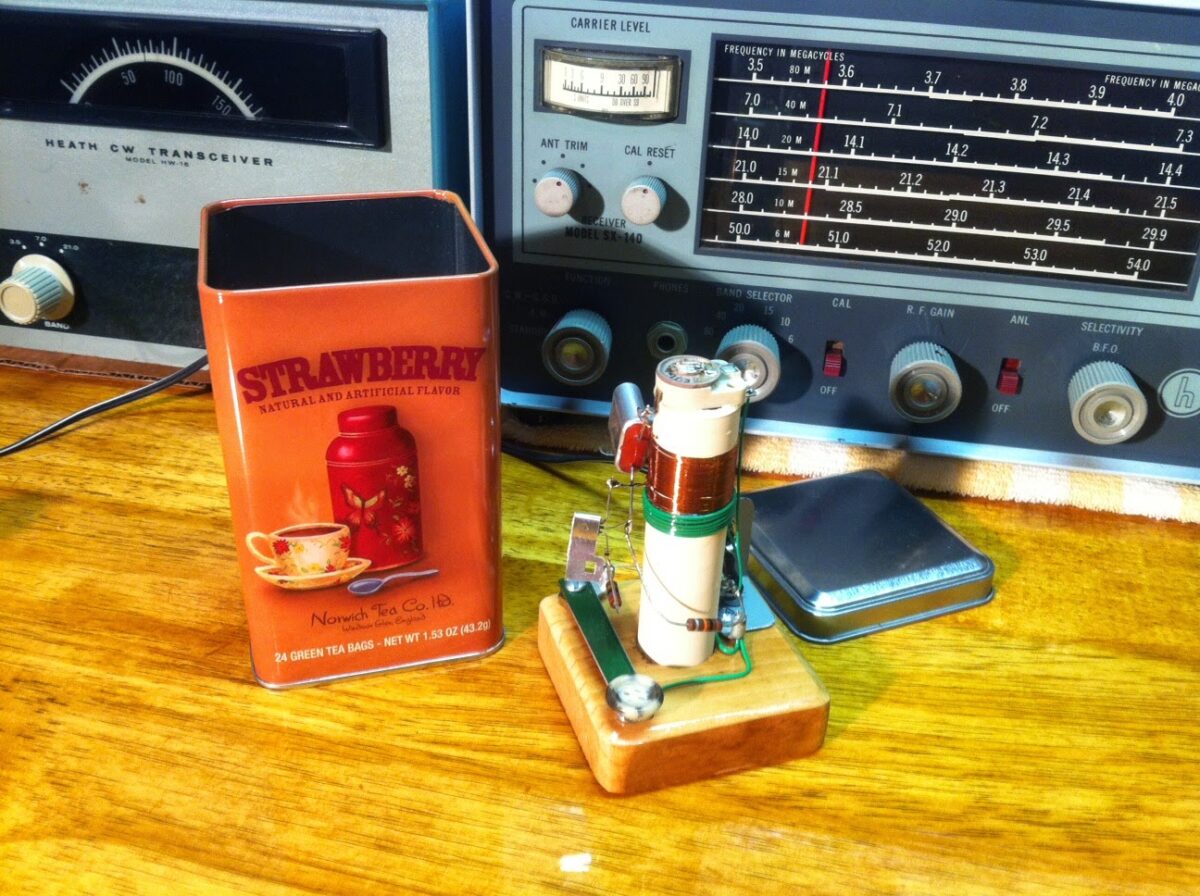
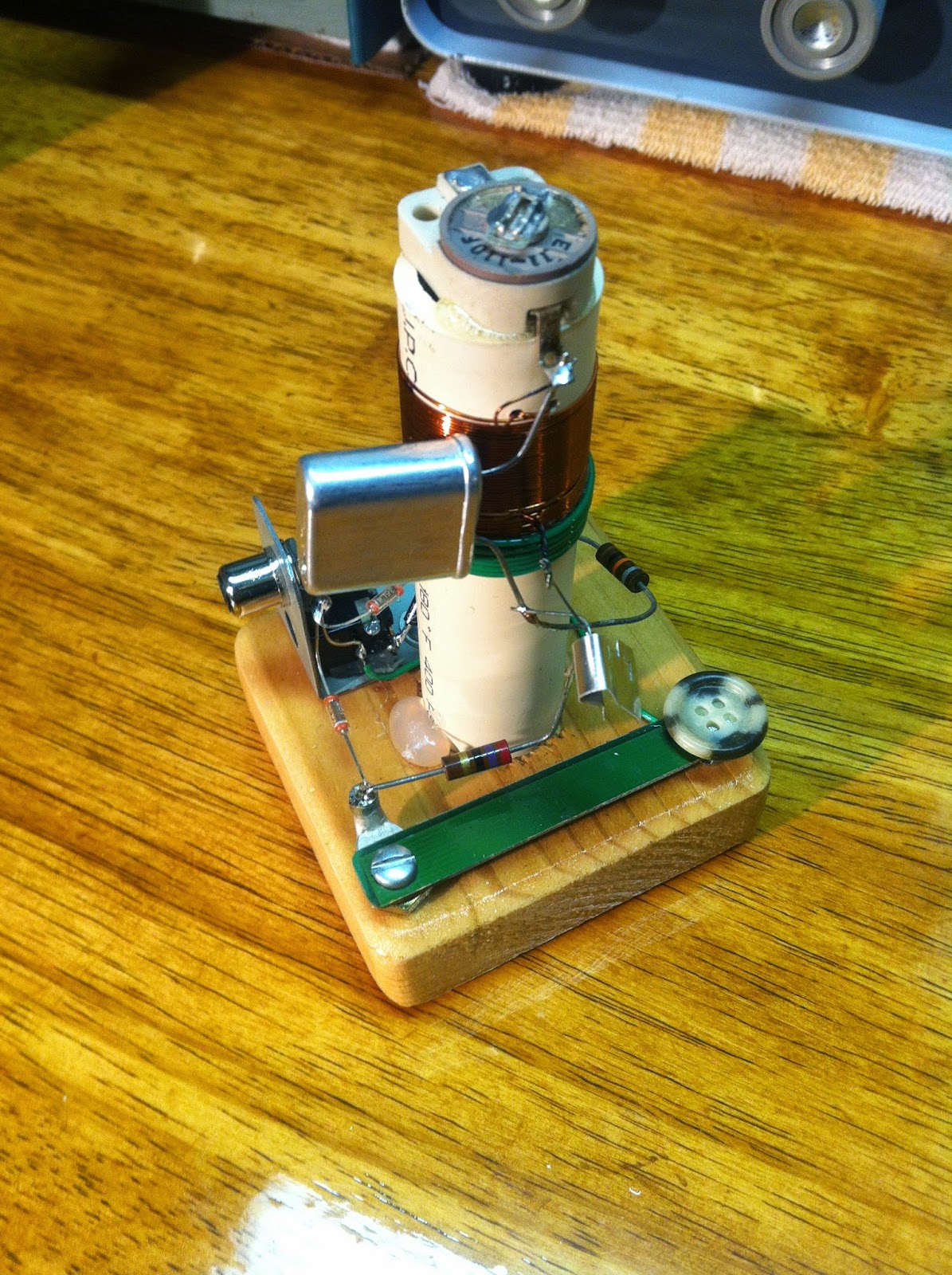
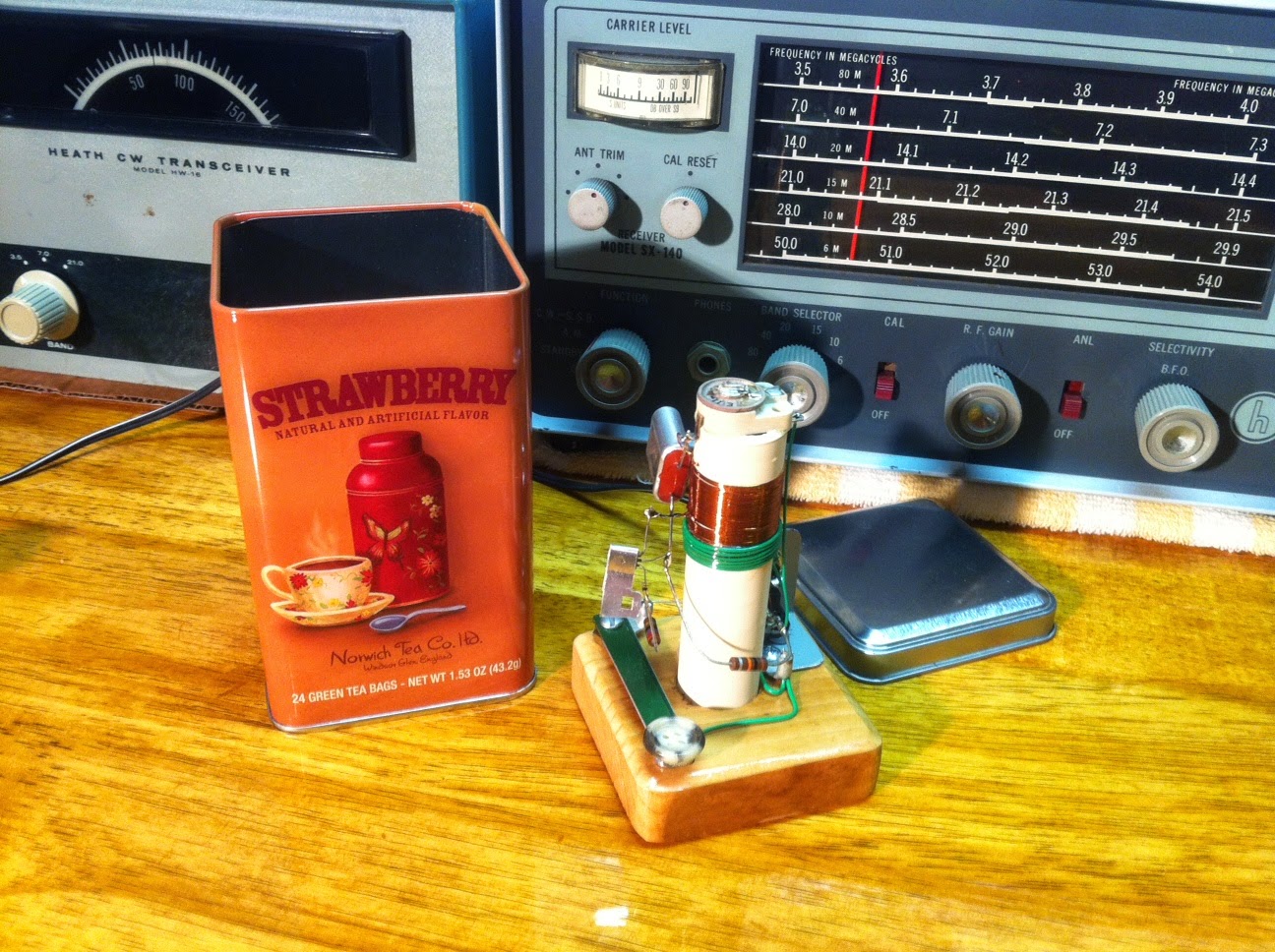
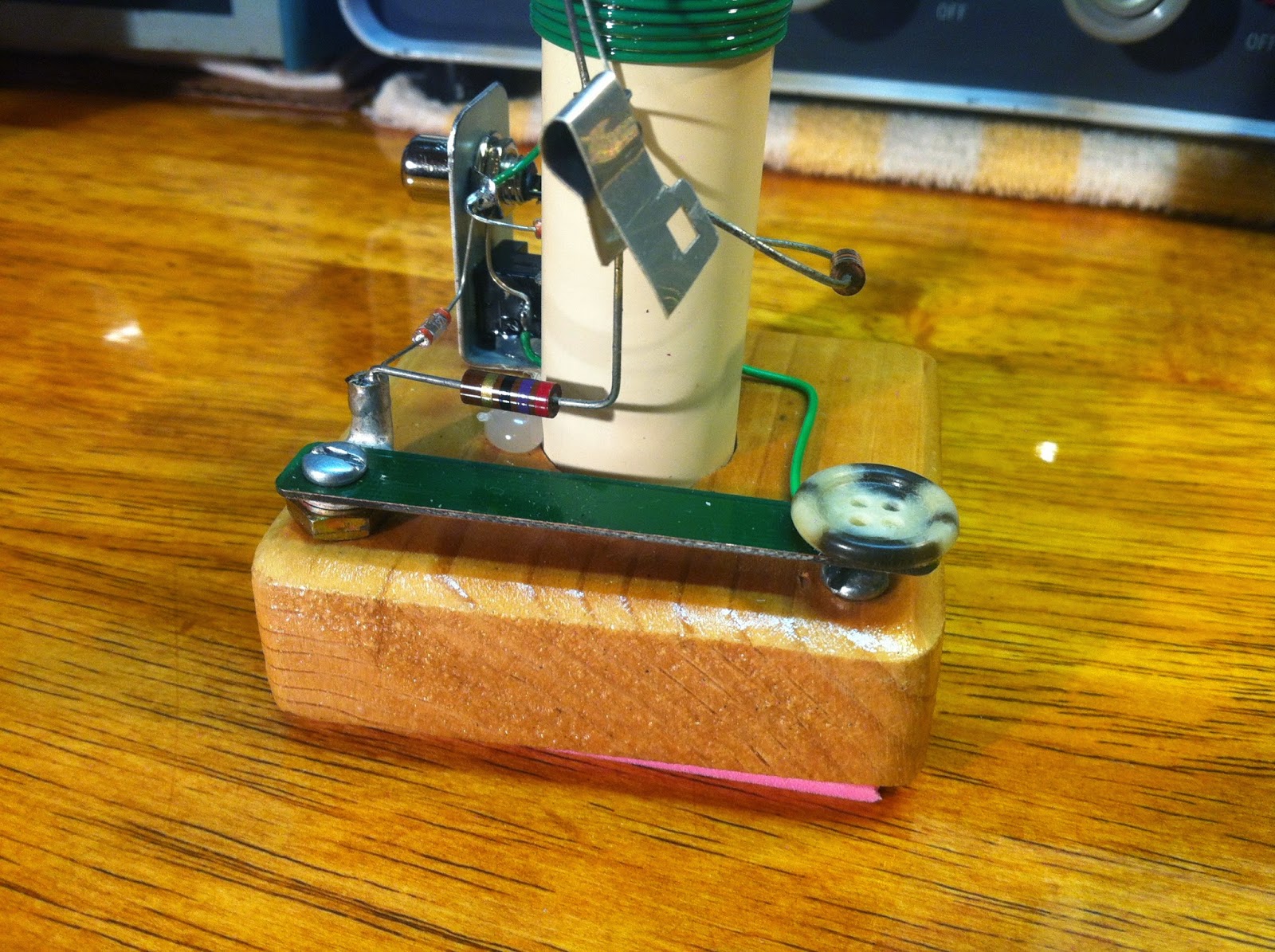
K8GZ’s Towering Tea Tin Ohio Mighty Mite

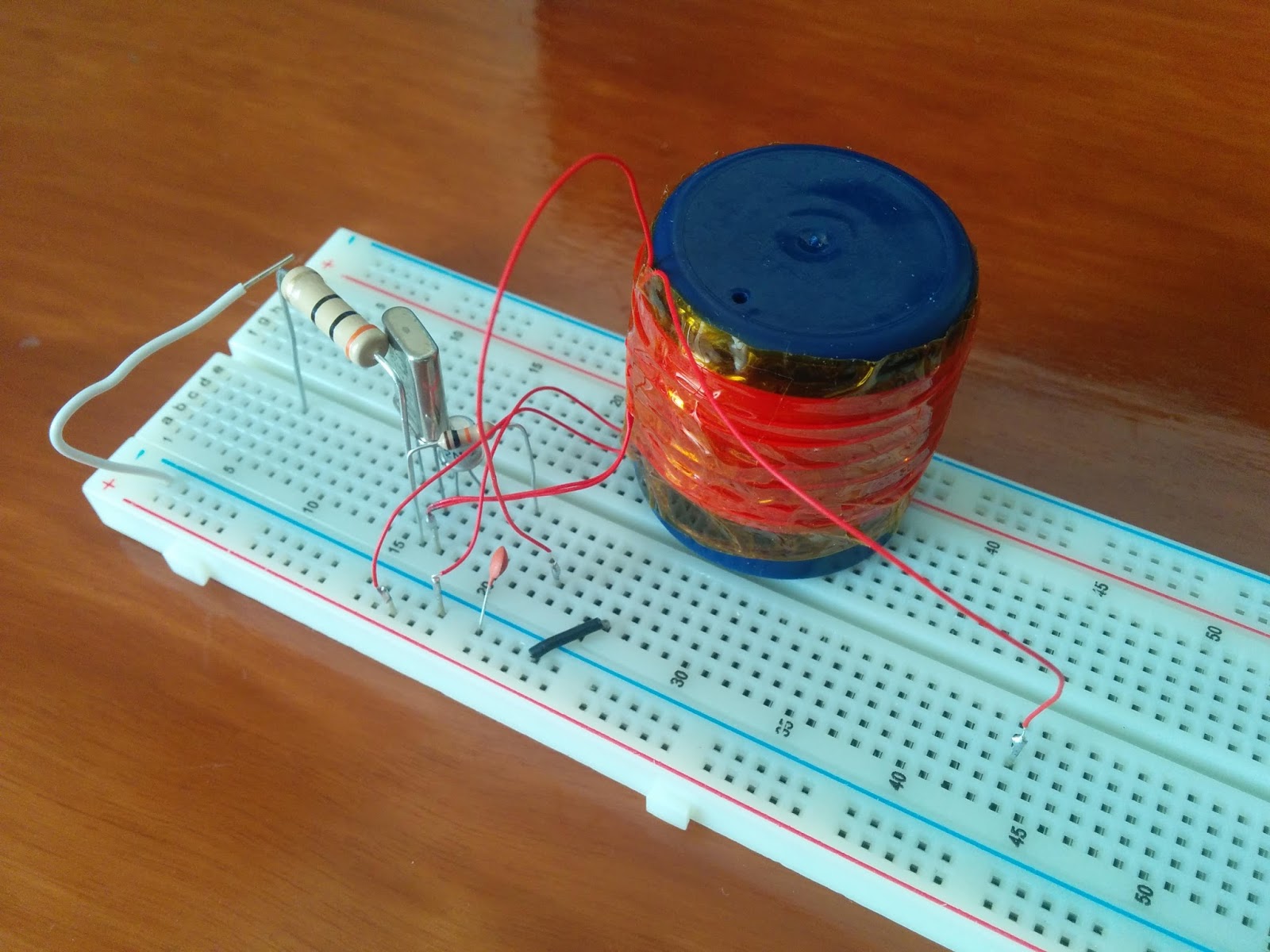
Here is a very innovative approach to the Mighty Mite. The compression cap atop the coil form gives it a towering appearance. Pete and both liked the button key. The Te Tin is very nice and marks another example of the long ham radio tradition of bringing kitchen items (breadboards!) into radio projects. E-mails from K8GZ appear below.

Podcast 171 is fantastic, loaded with
Information and inspiration. Your
podcasts continue to lead me down
the road of home few. I’m trying to
get the demons out of a regen that
will companion my MMM.
I have attached photos of my MMM,
complete with on board key. A ceramic
trim capacitor fills in for the air cap.
A reverse polarity diode helps to keep
electronic smoke in precious components.
Thanks for the crystal and inspiration.
The MMM emits a stable signal whether
it is powered by 1.5 or 12 volts.
73
K8GZ
Kaye Hartman


Thank you for the crystal that arrived on
Sat. the 13th. I was hoping for a
“Plug-N-Play” since the MI Mighty Mite
was assembled, waiting for a crystal.
However, Noodleing was required.
Several salvaged transistors were tried
with the winner being an unmarked one
with a low hfe of 21. It draws 120 ma. at
12 volts and 4 ma. at 1.5 volts. I added a
cap across the key to soften the key
clicks (per Pete). Also I added a reverse-
protection diode (to protect myself from
additional moments of stupidity).
I live in an environment that is not
antenna friendly, so no air time yet.
I must try some portable operation
to get the MMM on the air.

Thanks for the crystal. It really makes the
project extra special.

Pictures will follow as soon as I figure out
how to send them. Time to have a tech-talk
with my grandchildren.

73,
Kaye Hartman, K8GZ
Lancaster, OH

Our book: “SolderSmoke — Global Adventures in Wireless Electronics” http://soldersmoke.com/book.htm Our coffee mugs, T-Shirts, bumper stickers: http://www.cafepress.com/SolderSmoke Our Book Store: http://astore.amazon.com/contracross-20