Michigan Mighty Mite, Joy of Oscillation, and the Color-Burst Liberation Army in Washington State

Perhaps its the result of a vaccine-induced relaxation of COVID tensions, but for whatever reason we are seeing a resurgence of interest in the Michigan Mighty Mite and the Color Burst Liberation Army.

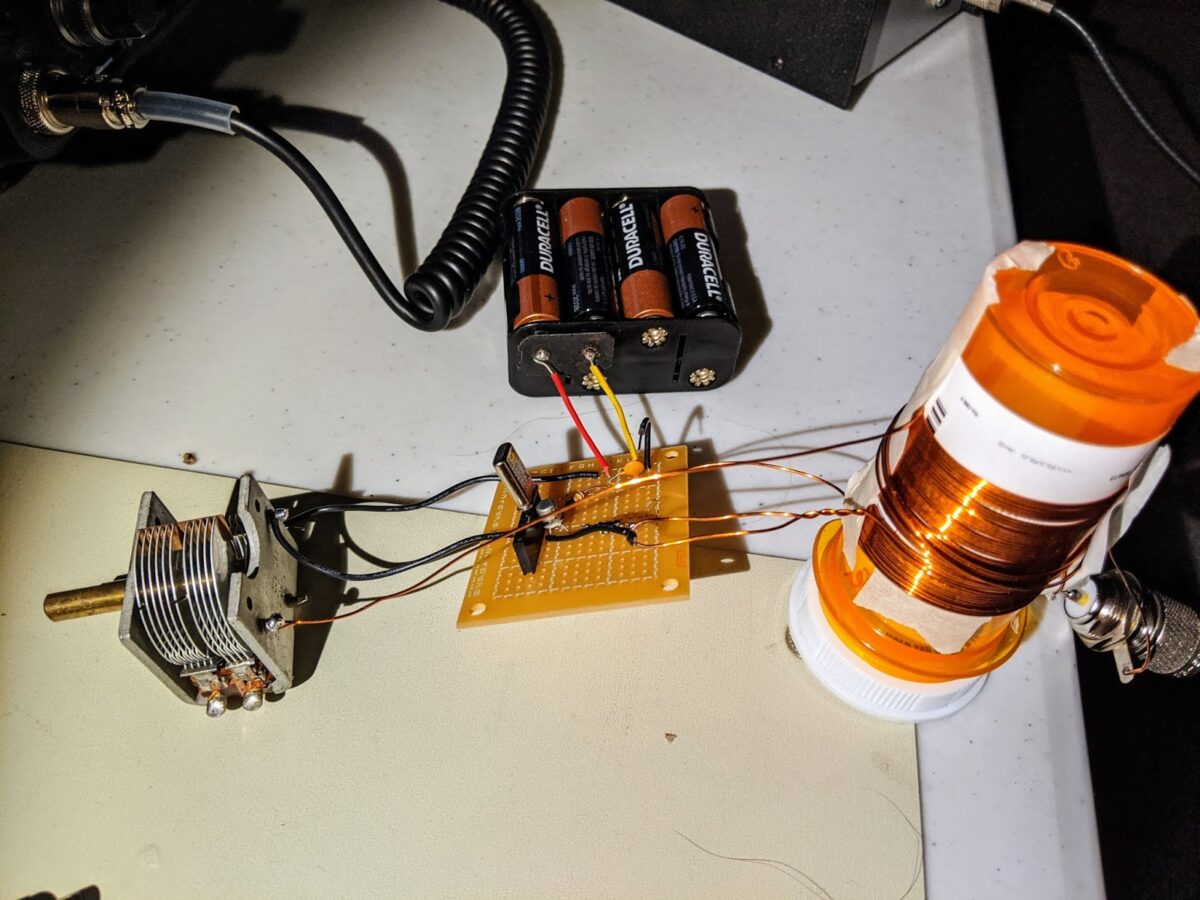
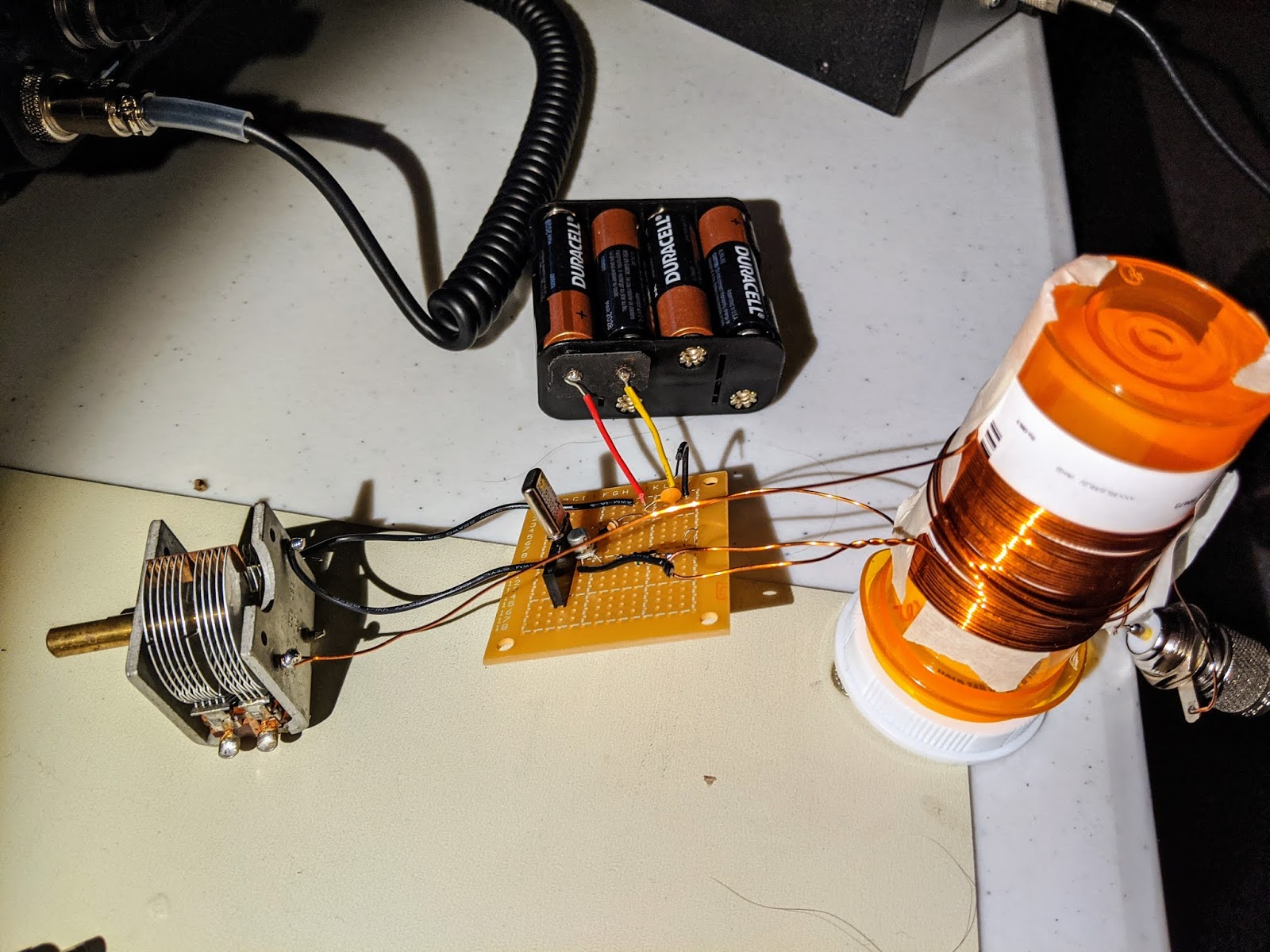
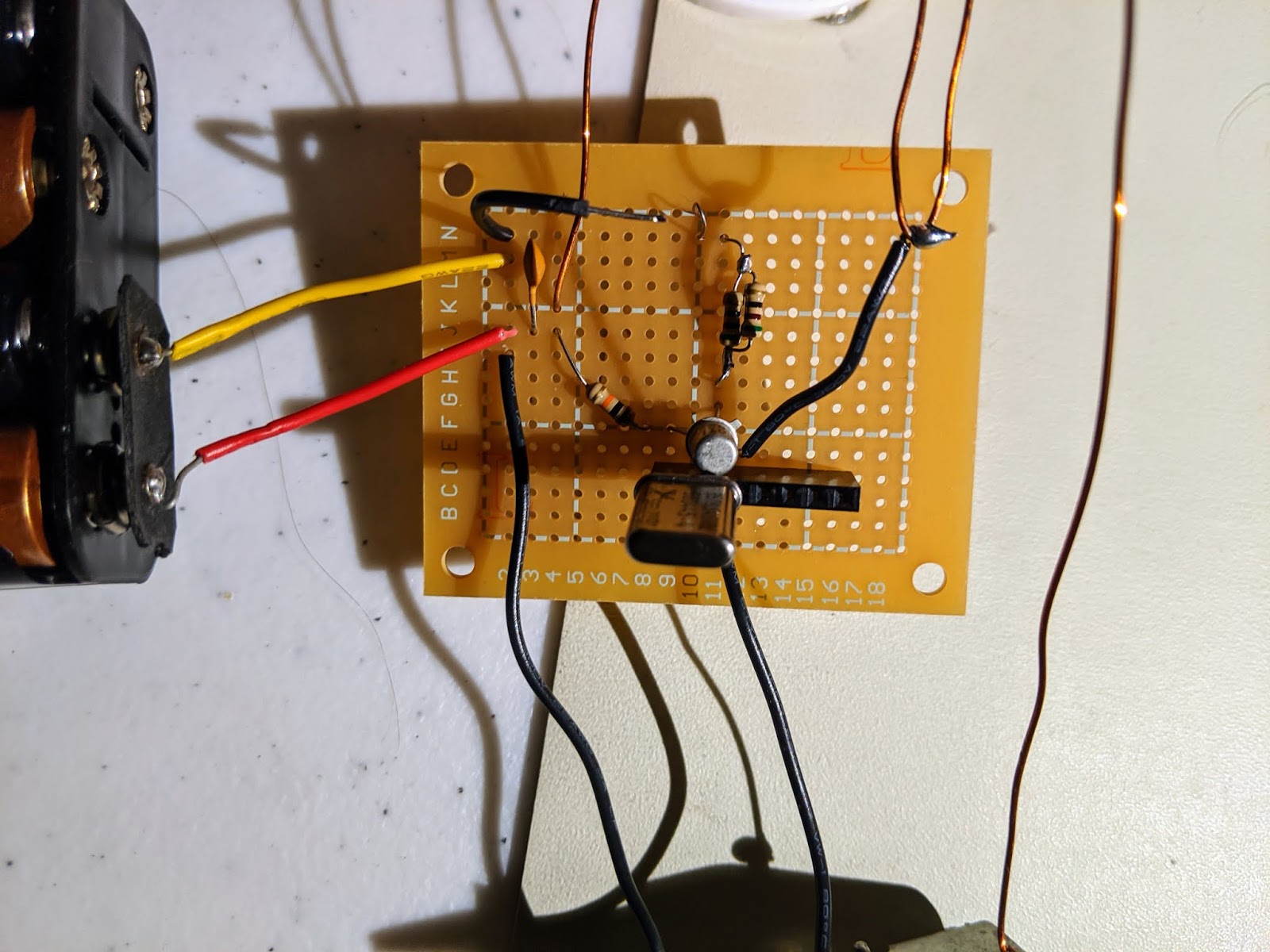
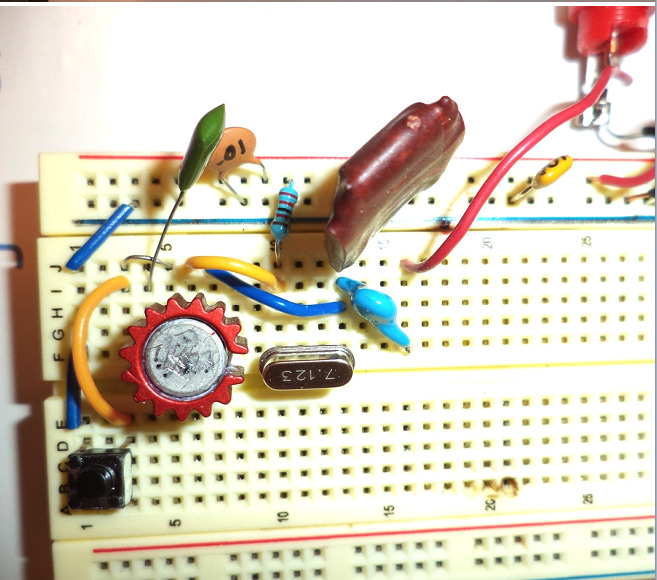
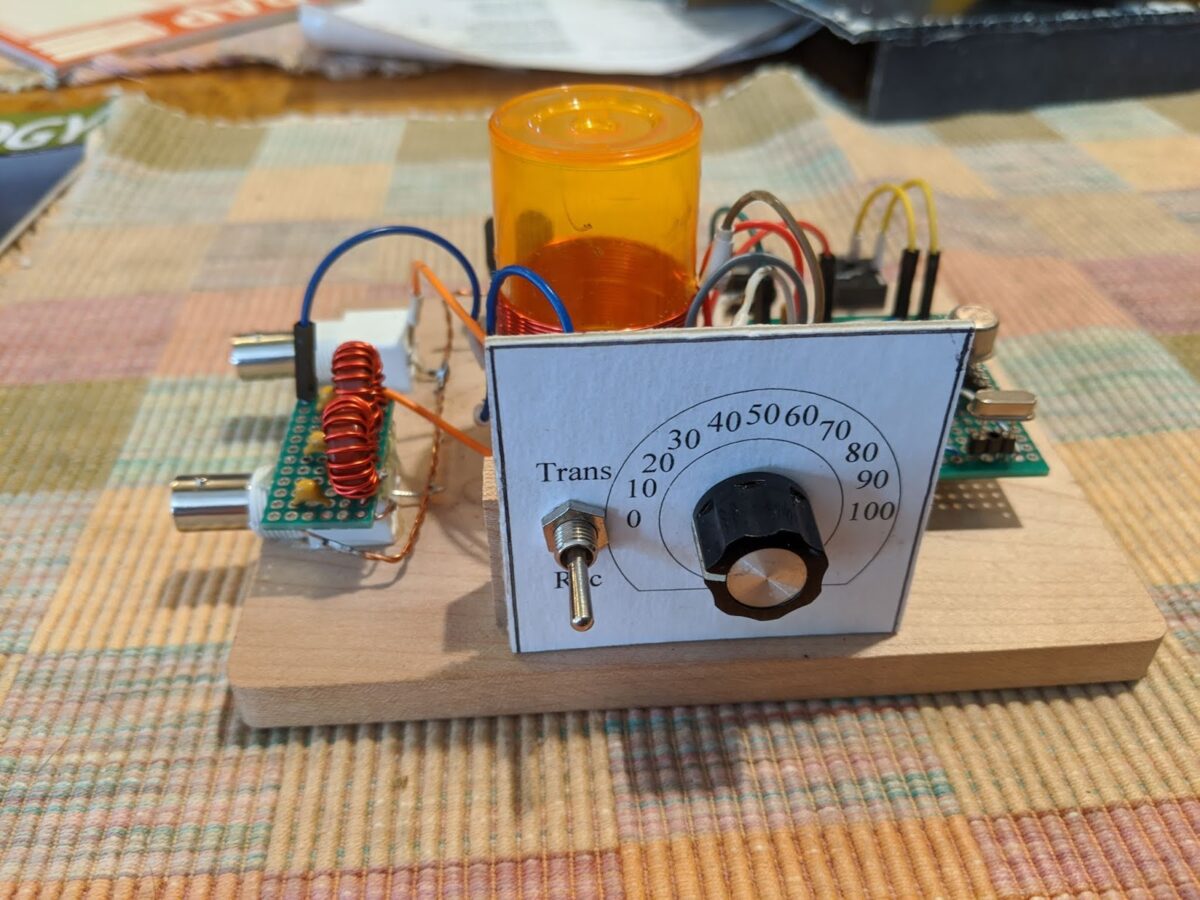
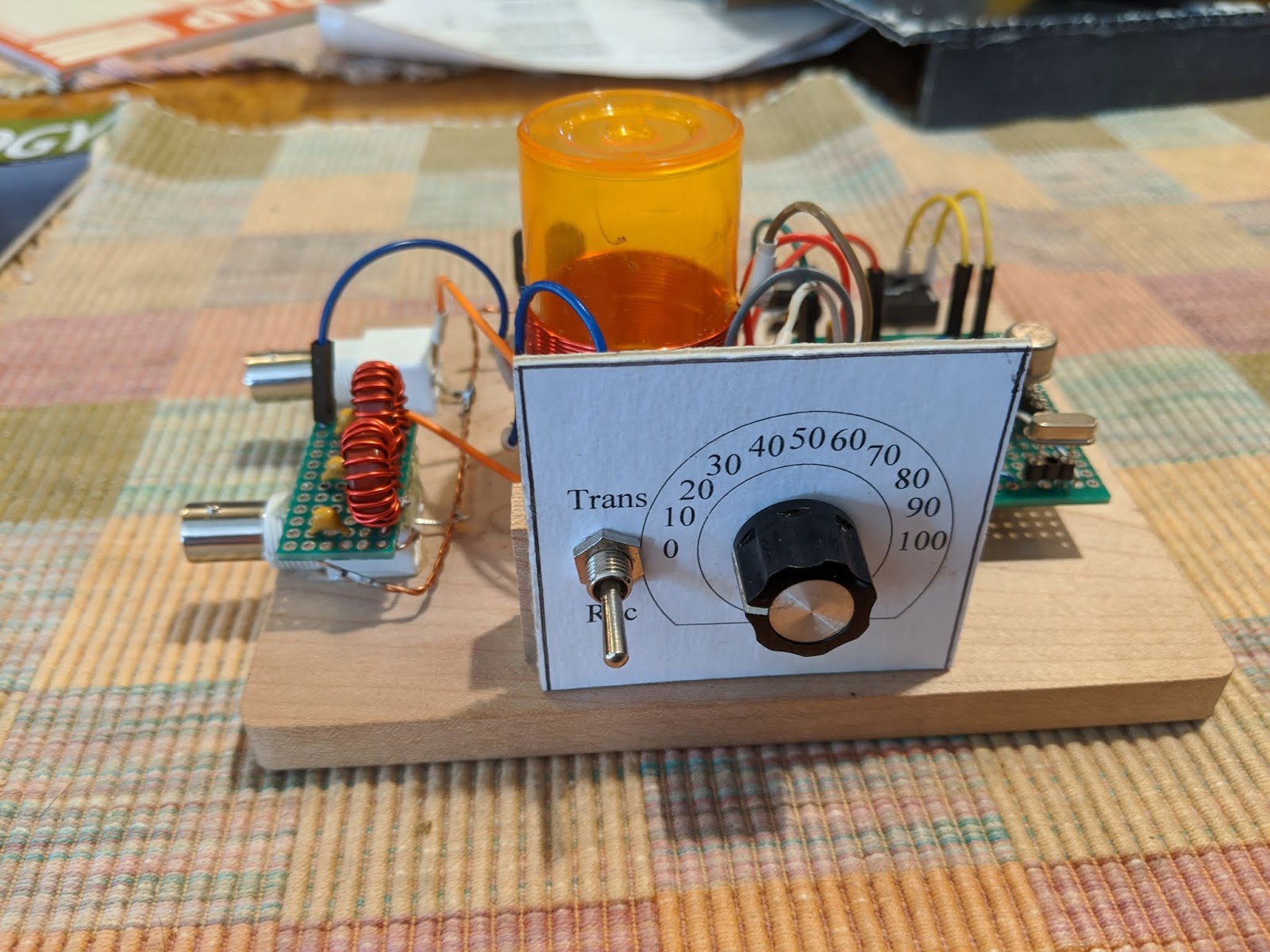
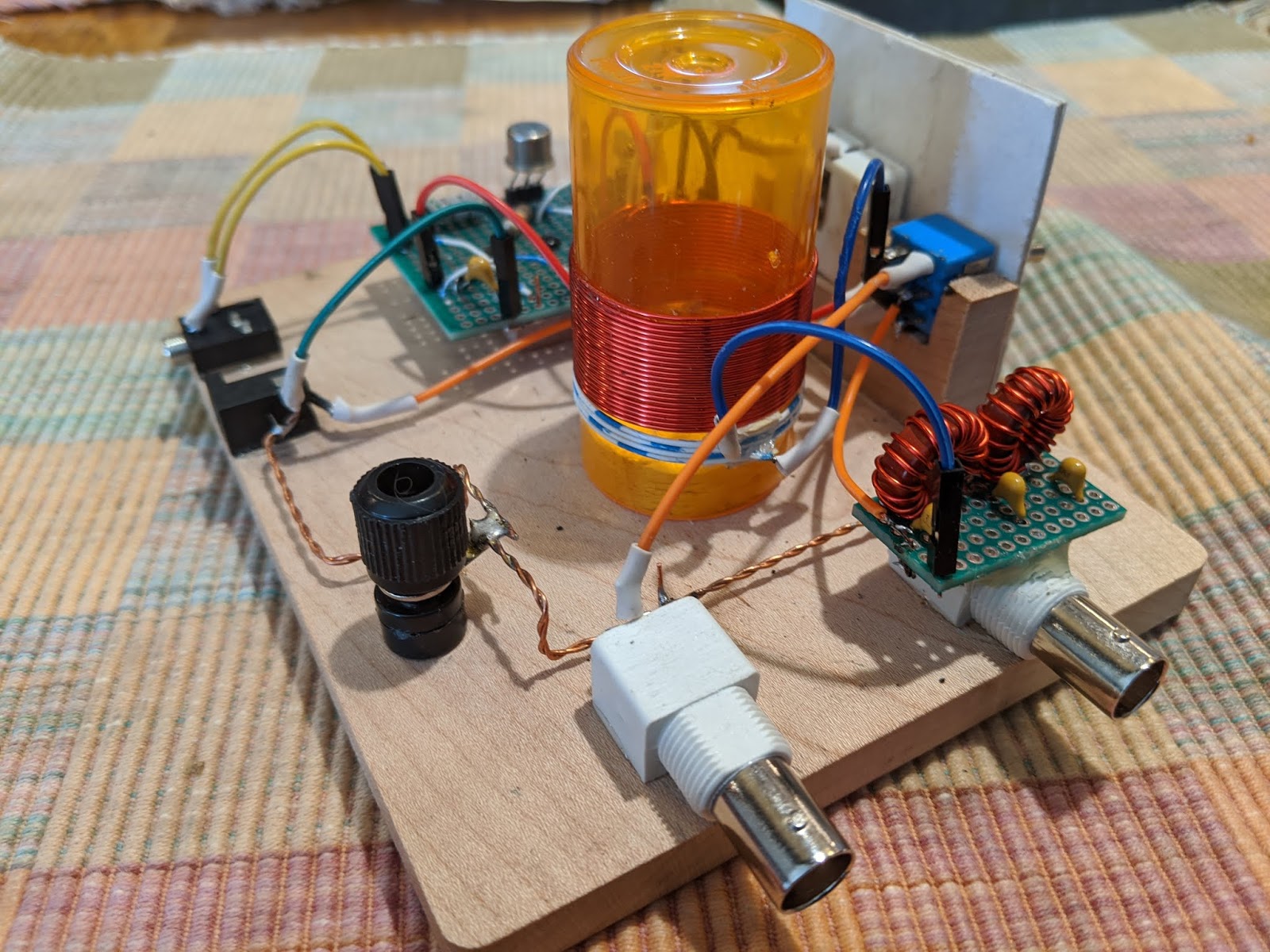
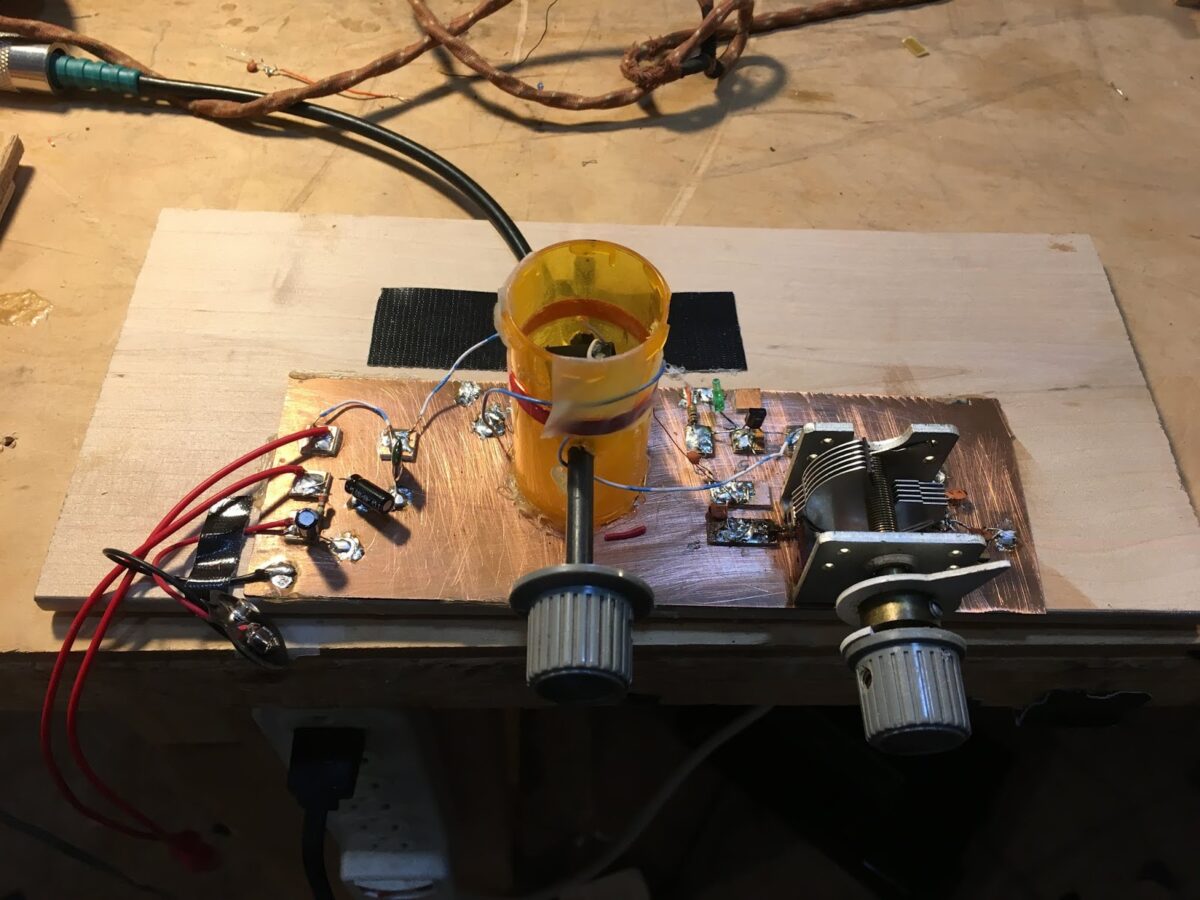
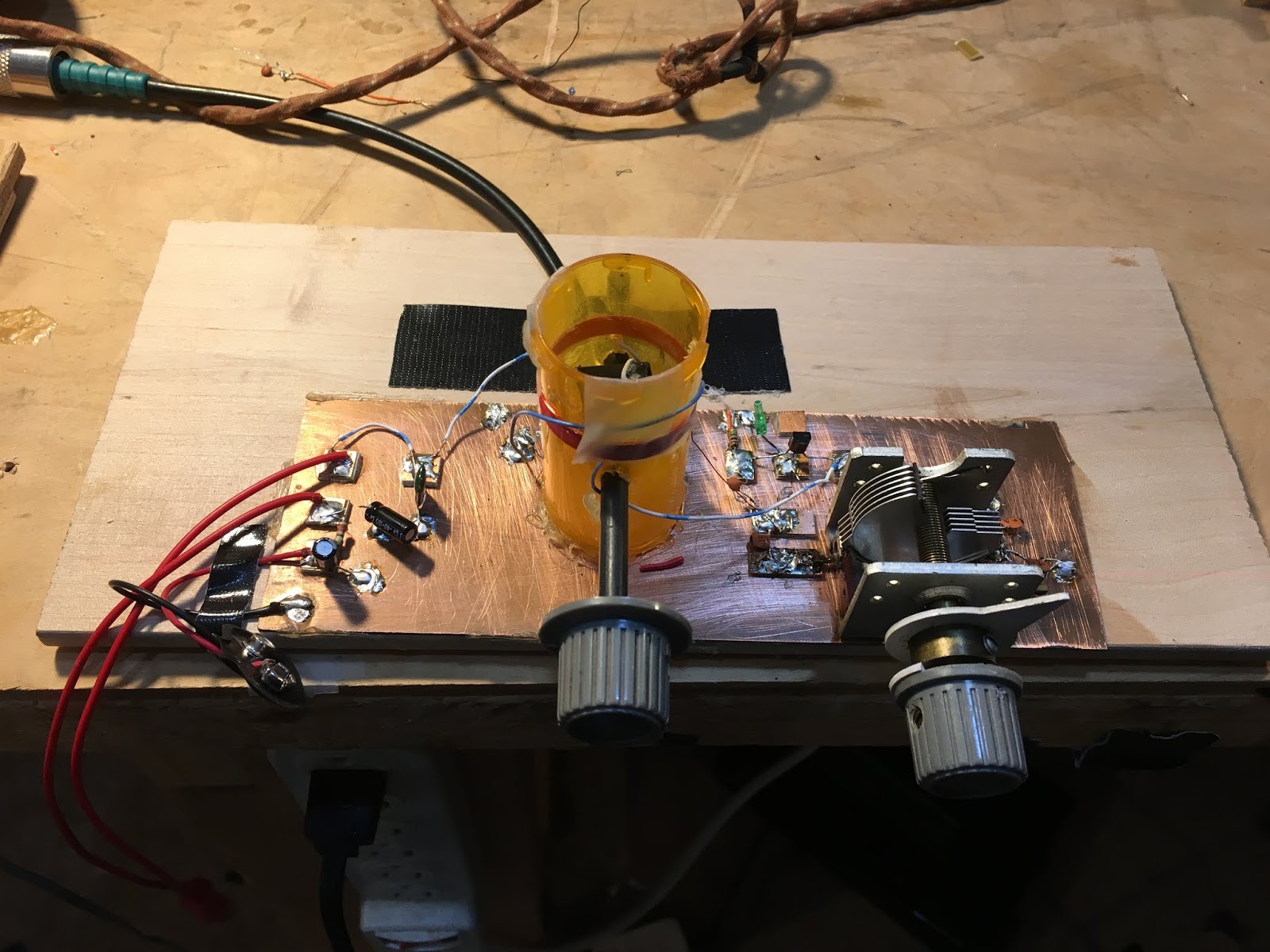
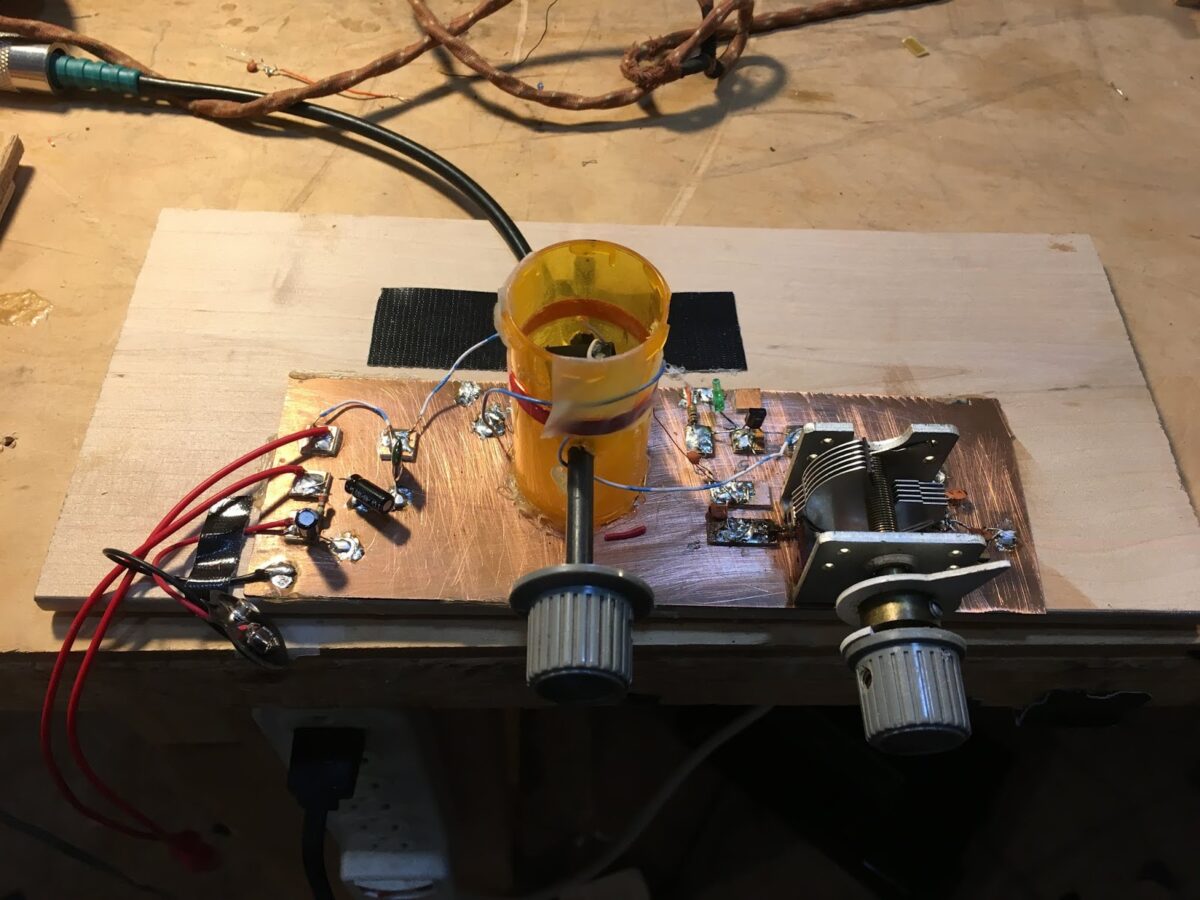
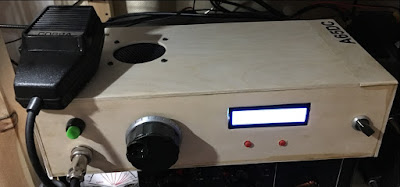
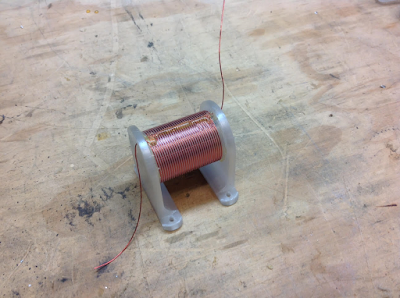
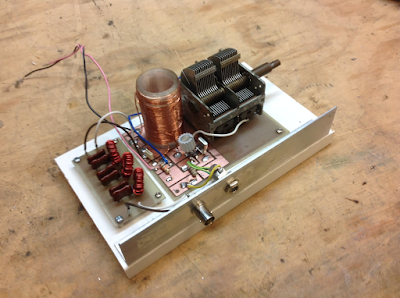
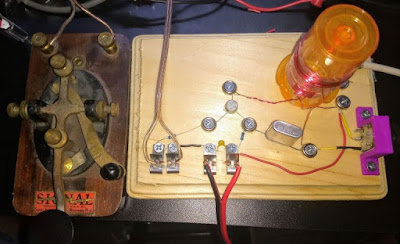
Dan AF7O describes his excellent MMM CBLA adventure here: https://af7o.campclan.net/?p=144 Extra points for the use of George Dobbs’ Ladybird book technique, and for the 3D printed variable cap holder (made by Dan’s son).

Yes Dan, rebuild that antenna, build an LP filter, and get that MMM on the air. At the very least you can get some reports from the Reverse Beacon Network. And, as Jack NG2E recently demonstrated, it is possible to make contacts with a simple rig like this:
LONG LIVE THE COLOR-BURST LIBERATION ARMY!
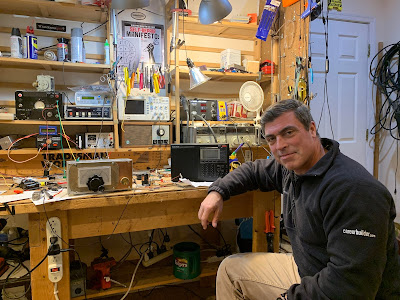
Ciprian’s Romanian Ten Minute Transmitter with Roots in SPRAT, KA4KXX, and the Florida Sunrise Net

It sounds great Ciprian! It was really cool to see your video and hear you reference not only the SolderSmoke blog, but also SPRAT, the Michigan Mighty Mite, and Walter KA4KXX. Your little rig has a very fine lineage!

I found Ciprian’s video just after seeing the wonderful Herndon Mighty Mite of Jack NG2E. TRGHS! The Color Burst Liberation Army is on the march! For more info on NG2E’s Mighty Mite, check out his blog: https://jackhaefner.blogspot.com/2021/05/mounting-to-perfboard-and-scope-test.html

Jack has in his possession one of the 7.123 MHz crystals that Walter KA4KXX sent me back in 2019 (during my ET-2 craze). It seems obvious that Jack should build a Ten Minute Transmitter and use it to check into the Sunrise Net https://qsl.net/srn/.

A New Michigan Mighty Mite Oscillates in Northern Virginia

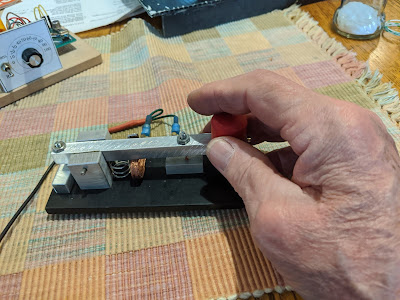
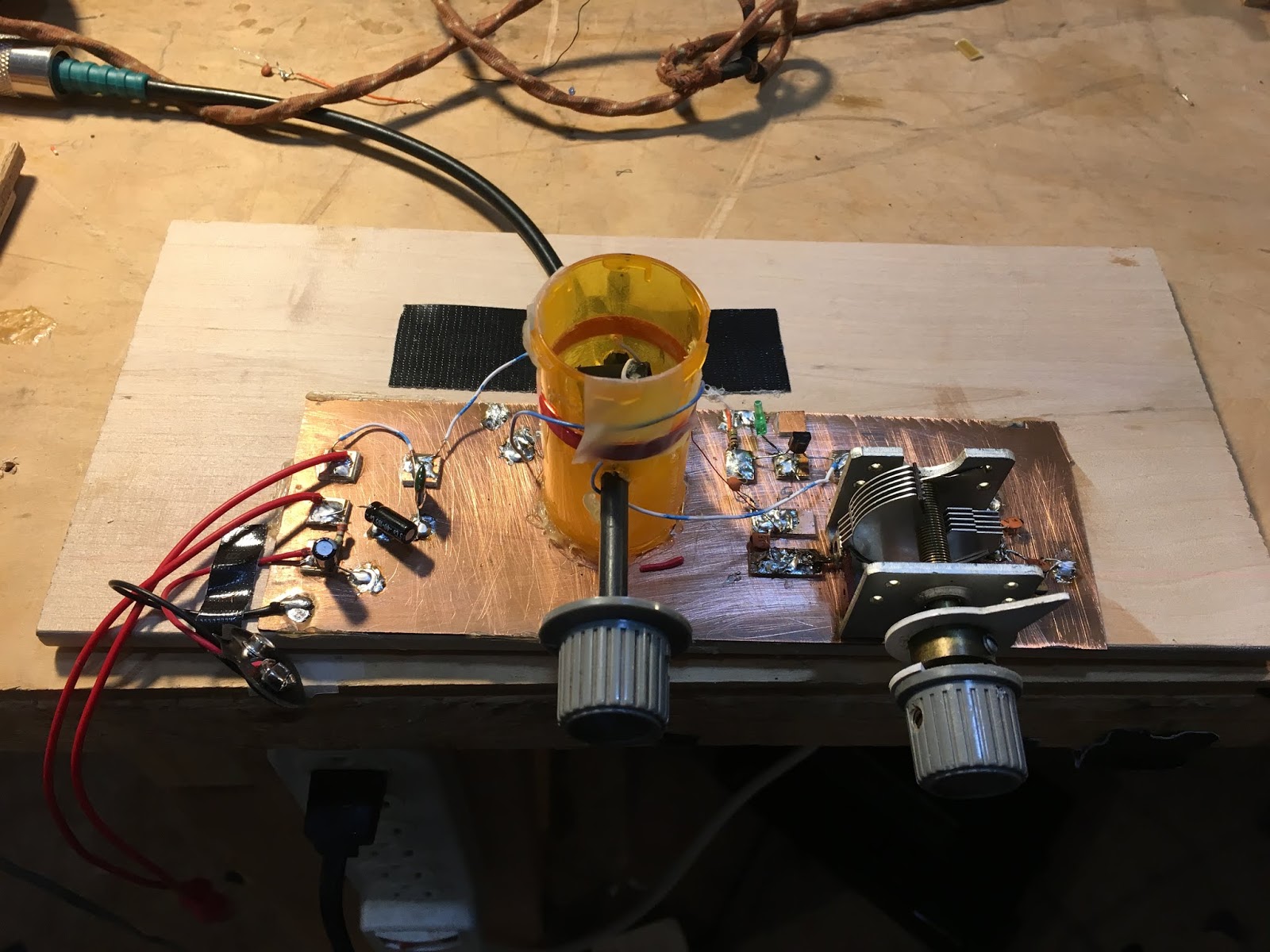
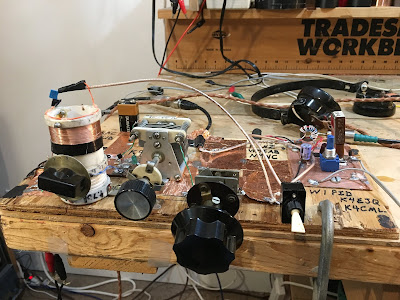
We are pleased to report that OM Jack, NG2E, has successfully built a Michigan Mighty Mite transmitter, and has experienced JOO (the joy of oscillation). You can see Jack’s prototype in the video below:

Jack has his eye on more ambitious homebrew projects, but is wisely taking a step-by-step approach. He described his plans this way:
  1. Capture this MMM into a semi-permanent design: ie, perf board.
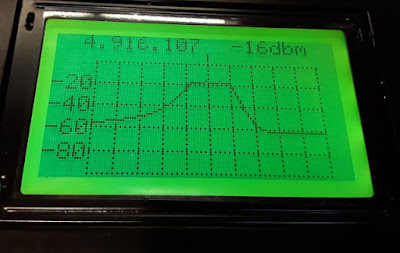
  2. Measure performance. What does the carrier wave look like on a scope?
  3. Build a low-pass filter.
  4. Can I amplify the signal? Maybe add an amplifier stage or two. Transistor?
  5. Next, let’s look at receivers. Pete & Bill recommend that I build a Direct Conversion receiver. I know Peter Parker (VK3YE) has a simplified version.

SolderSmoke Podcast #224: Mars. Spurs. Bikes. SDR. NanoVNA. Antuino. MAILBAG


SolderSmoke Podcast #224 is available:

1 August 2020
–The launch of Perseverance Mars probe with Ingenuity helicopter.
–China’s Tian Wen 1 on its way – radio amateur Daniel Estevez EA4GPZ is listening to it!
–Sci Fi Books: Mars Trilogy by Kim Stanley Robinson. No skip on Mars 🙁
–We have some sunspots! SFI now 72 and the Sunspot number is 23.
Bill’s bench:
–Conquering Ceramic Spurs in Q-31 Roofing filter — sort of
–NE602 for a Q-75 converter – Gilbert Cell.
–Measuring low power levels out of NE602. Antuino better than ‘scope .
–NanoVNA Really cool stuff. SDR in there.
–Building a 455 kc LC filter from QF-1 rubble. Using LTSPICE, Elsie…
–Reviving my bicycle AM radio – The “All Japanese 6”
–Understanding L Network impedance matching.
–Bill’s new resistor kit from Mouser. Thanks to Drew N7DA.
SHAMELESS COMMERCE: PATREON, AMAZON SEARCH. THANKS
Pete’s Bench:
–Lockdown Special
–BPF work on SDR Rig
–I U W I H
Mailbag:
VK3HN Summit Prowler 7
VK2EMU “The Stranger”
SM0P HB uBITX in Dubai
AE7KI Worked him in VK from London
ON6UU EA3GCY’s 4020 rig
KA4KXX A Simpler Mighty Mite
W9KKQ M19 DMR
KD4PBJ Radio Schenectady
W3BBO 12AU7 Regen
KE5HPY Another 12AU7 regen
N5VZH Ne602 Converter
KY3R Wall Art
G4WIF Spectrum Analyzer in your pocket
W2AEW Talks to UK Club
KK0S Sent 455 Kc IF cans
KL0S Making 9Mhz filters
VU2ESE Diving into simple SDR schemes
Dean KK4DAS Amateur Radio Astronomy

Overcoming the Complexity of the Michigan Mighty Mite: Walter’s Sunrise Net Special

From Walter KA4KXX
June 21, 2020

Michigan Mighty-Mite: Why So Complicated?

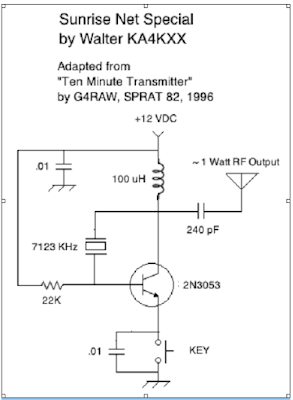
The April 2020 issue of QRP Quarterly magazine featured an article by Bob Rosier K4OCE which included a schematic for a “Ten Minute Transmitter” by G4RAW (SK), which apparently first appeared in SPRAT 82 in 1996.
It is even simpler than the Michigan Mighty Mite, so this transmitter can truly be built on a solderless breadboard in about 15 minutes, because a complex coil is not required.
The only tuning needed was for me to establish the correct value of the output series capacitor.
This rig allowed me to check-in to the Sunrise Net (see details in blue text on my QRZ page) today on my very first attempt, and landed me a 549 signal report from 250 miles away.
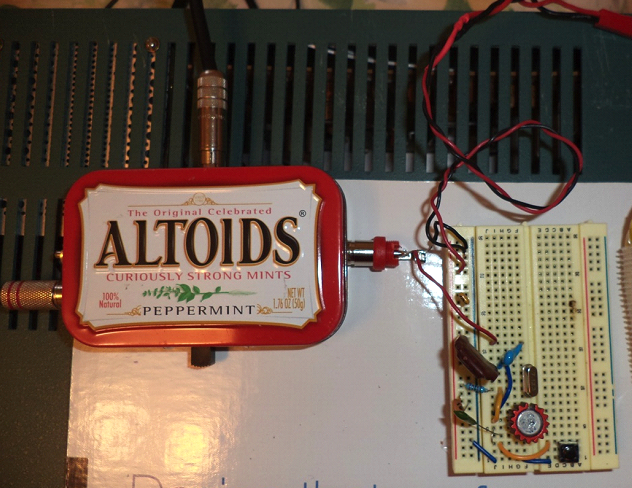
The first photo shows the transmitter connected to a Transmit/Receive Switch mounted in an Altoids box. In the Transmit position the antenna is disconnected from my 1979 Heathkit HR-1680 receiver, which then coincidentally supplies a sidetone at an ideal volume level. That little black pushbutton which can be seen in the second photo serves as my key, and works just fine for a five-minute daily QNI on the Sunrise Net.
Of course, part of the secret is having a crystal exactly on the Net frequency, and I have a few left, free to whomever in the Eastern U.S. is interested in building one of these simple Sunrise Net Special Transmitters and participating in our Net.

Adam N0ZIB’s FB Station (and UGLY Michigan Mighty Mite)


Bill and Pete,


Thanks for the work you put into your podcast. I’ve been listening to it on my commute and while at work (I’m a welder/fabricator). Fantastic content. Keep up the great work.

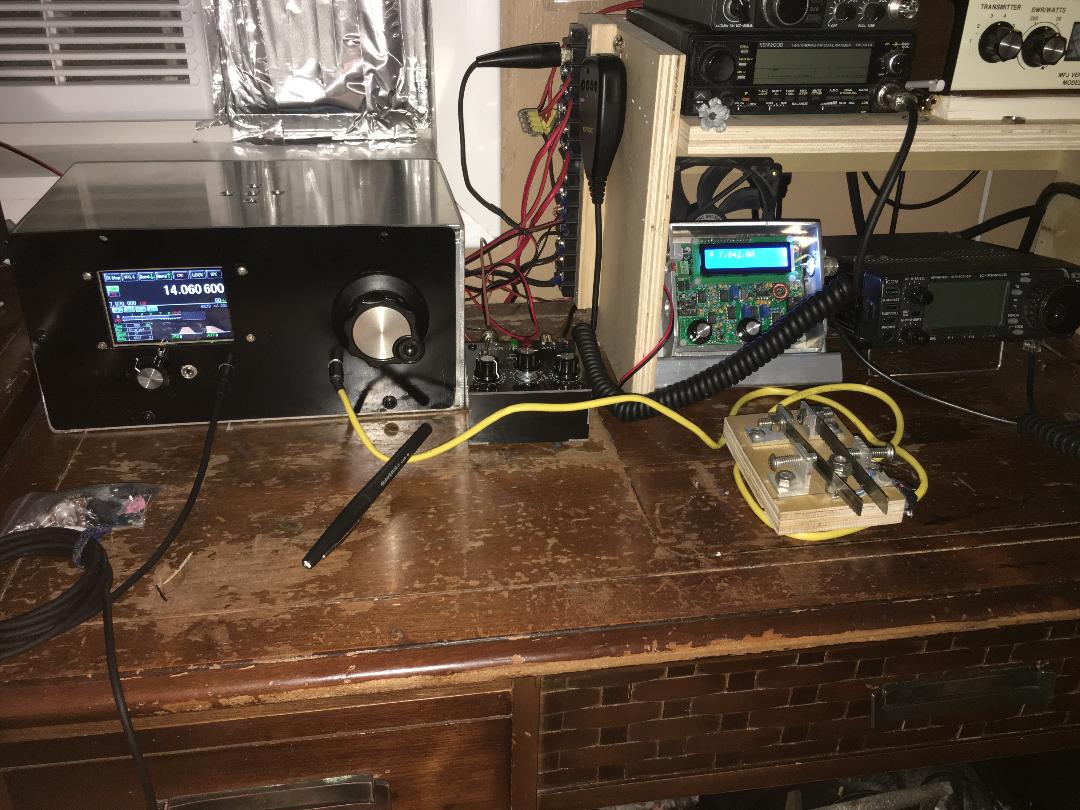
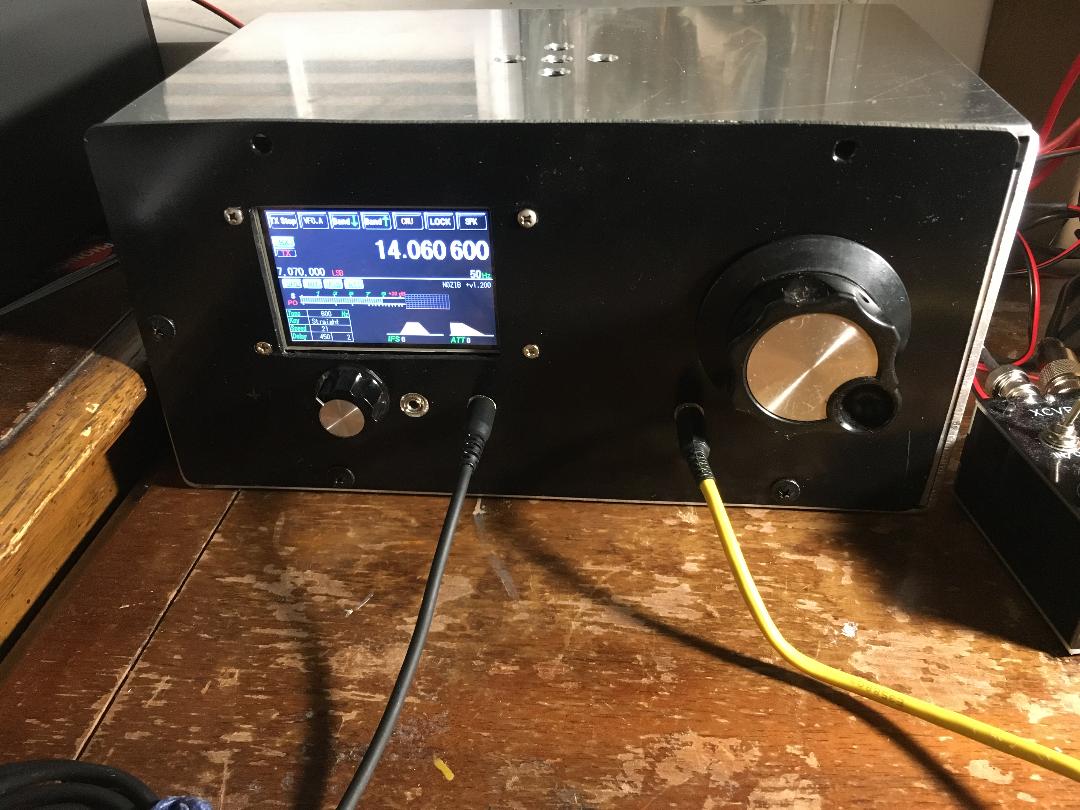
All your talk about Farhan and the Ubitx convinced me to order one. I welded an aluminum case for it and upgraded to the Nextion 3.5” screen. Also added a tuning knob from a Heathkit SB-401. So far I’m really enjoying this rig. Plan to add an audio amp (to drive a larger speaker) and a CW filter to it this weekend. In the station picture I sent I also show my paddles made from a hacksaw blade and stainless steel hardware. It’ll send 25 WPM before it gets a little sloppy. My QCX 40 is also pictured. I have a commercial rig too but find I’m not using it very often.

Plan to start building the simpleceiver soon and maybe a bitx 17 too. Your podcast played a big part in convincing me to pick up a soldering iron again. You guys are awesome. Keep it up.

73’s
Adam
N0ZIB

(Pete noticed that the main tuning knob on Adam’s uBITX was NOT from Heathkit but was instead from a Collins KWM-2 or 32S3. He advised Adam that the knob would sell quickly on e-bay. It did, and will finance additional N0ZIB homebrew projects. We are thinking of adding these knobs to our SolderSmoke Retirement Fund Portfolio.)
Adam continues:

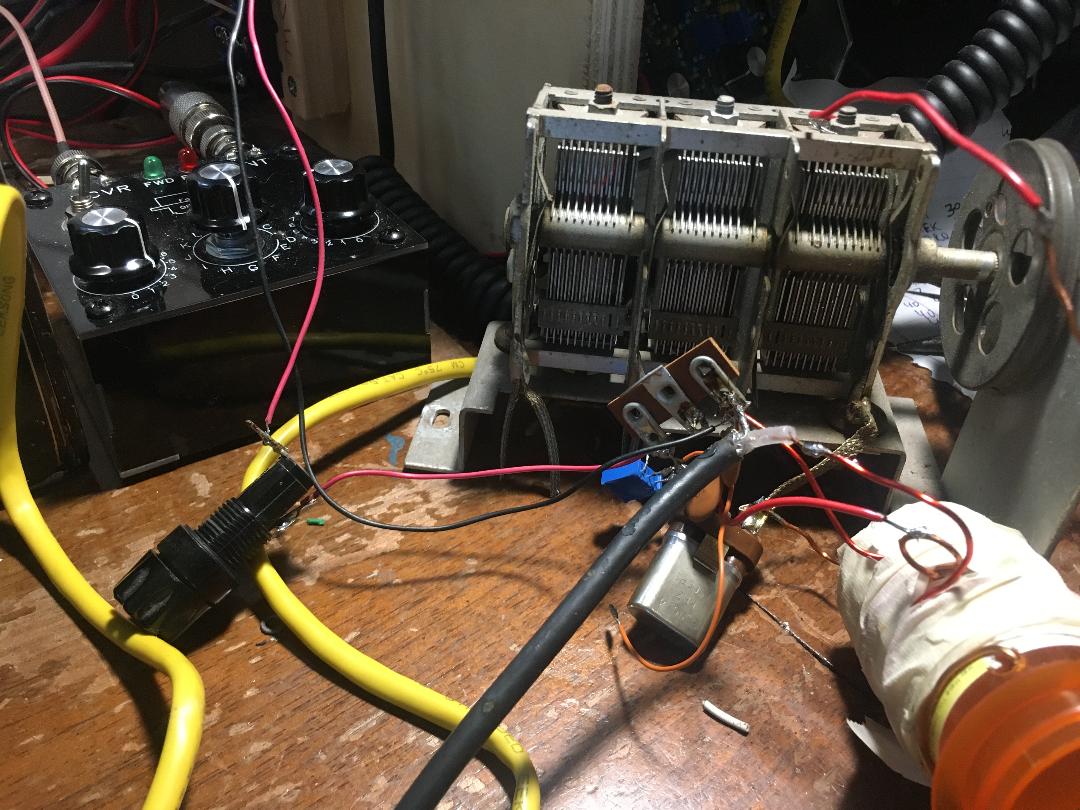
I was listening to your older podcasts and heard several discussions about the Michigan Mighty Mite. So this jumbled up mess probably doesn’t look like much but I built one. I need to order a 40 meter crystal and actually build it again on a board(with the coil rewound for 40) but my “proof of concept” build was a success. Using a variable cap from a Hallicrafters S20-R and the crystal holder from a Heathkit.

WB9IWT’s Quarantine Mighty Mite and N3FJZ’s “Hiram Percy Maxim Recognition Factor”

Leif WB9IWT has, during the emergency, been working on a Michigan Mighty Mite (See pictures above and below). FB Leif.

But also check out the very astute comment from Rick N3FJZ (below) . I am, of course, all in favor of the HPMR Factor. Almost all of my rigs would score quite high. Others, I know, would seek a low score. To each his own. This is all for fun.

Leif,

Great work. If a ham from the 1920’s were to see this rig, they
probably wouldn’t recognize the actual components right away (but
knowing hams, they would no doubt figure it out), but the breadboard
layout circuit flow would be immediately recognizable; e.g. the plug-in
crystal, the coil, binding post. The transistor and variable capacitor
may baffle them at first, but seeing there are three leads on the
transistor would start to give them clues.

That’s the cool part about analog discrete component radio, no matter
how many years go by, and the appearance and size of the actual
components change, the physics of what’s going on at the electron level
stays the same (SDR not withstanding).

I guess this could be a litmus test for us analog radio builders. It
could be called the “Hiram Percy Maxim Recognition Factor” or “HPMR
Factor” with a range of 0 to 1. After you build your rig, take a look
at it and pretend that you could present it to Mr. Maxim and the more he
could understand the circuits, components and circuit flow on his own,
the closer to a factor of 1 your radio would achieve. For example, an
SDR might only achieve a factor of .1 or even maybe 0, where as your rig
may achieve a factor of .8, and one of your crystal receivers would
definitely get a 1.

Someone could even workout a check list or formula where you would add
or subtract some fractional numeric values for each component you used;
e.g. you would subtract some value for every IC chip, microprocessor or
LCD display you use, and add some fractional value for each hand wound
coil, vacuum tube/valve or open air variable capacitor, et cetera.

Fun to think about.

Keep building.

Rick – N3FJZ


For Inspiration and Education: Dean’s Radio Blog (with video)

Be sure to check out the blog of Dean KK4DAS. He is a new homebrewer who is having great success with one of Pete Juliano’s ingenious SSB designs. Dean has a video of his receiver working — AL FRESCO — as construction on the full transceiver proceeds.

This is amazing. Just a short time ago Dean was taking his first steps as a homebrewer with his version of the Michigan Mighty Mite. He has followed the advice of the Tribal Wizards and has proceeded slowly, step by step, stage by stage, gaining the experience that has allowed him to actually build a superhet receiver and be on the verge of completing a full SSB transceiver.

Lots of inspiration to be found on Dean’s blog. Check it out:

https://kk4das.blogspot.com/2020/03/dean-kk4dass-furlough-40-ssb-rig.html

KK4DAS Michigan Mighty Mite Heard by WEB SDRs — CBLA Mobilized!

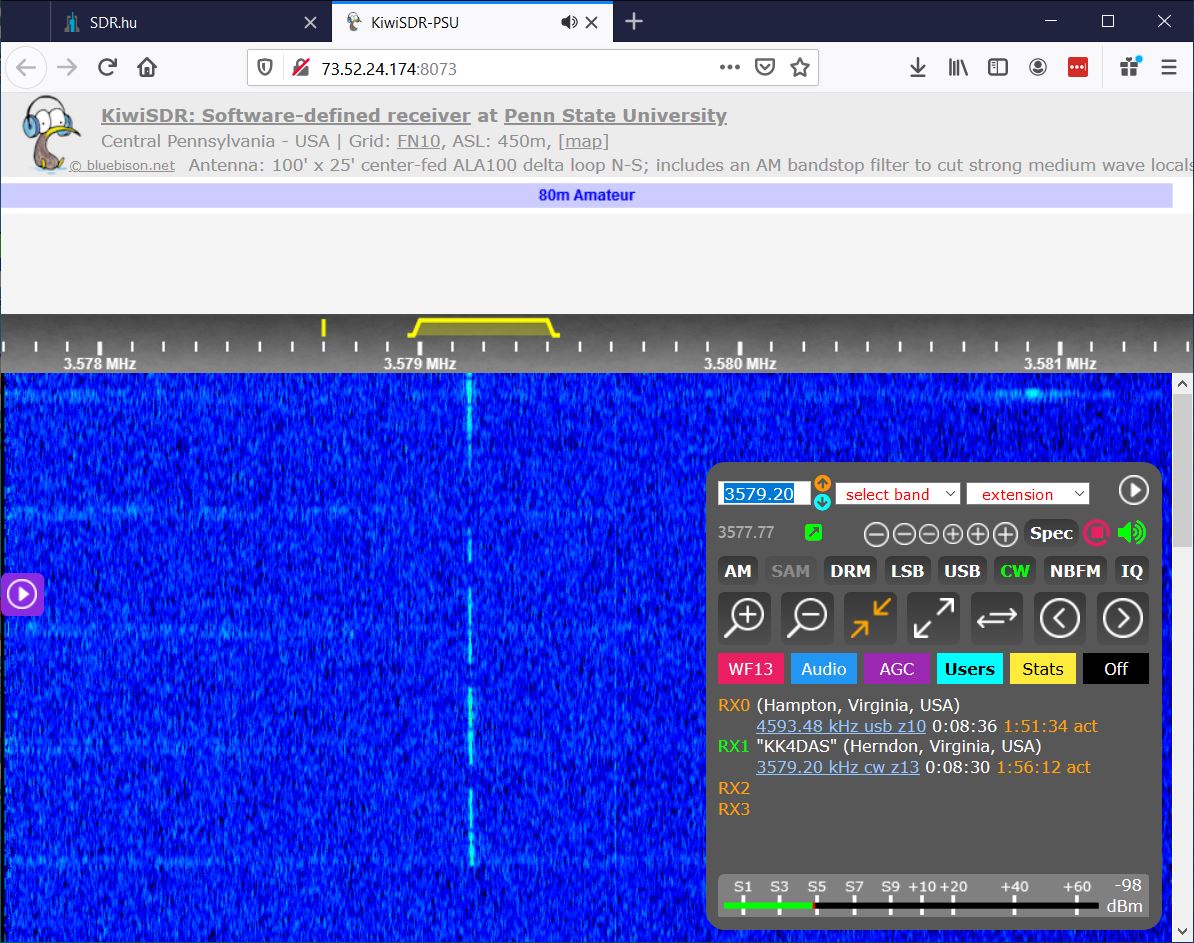
Dean KK4DAS continues to do great things with his Michigan Mighty Mite. He has been calling CQ on the Color Burst Liberation Army (CBLA) frequency of 3579 kHz. I think I was the first one to hear him, but since that memorable moment he has been picked up by multiple Web SDR receivers, including the one at Penn State (PETE JULIANO’S ALMA MATER!) (screen shot above, listen by clicking URL below). He has also been heard by Web SDRs in Concord Mass, Newport News Va, and Cleveland, Ohio. FB Dean.

So come on folks — this is a mobilization call for the CBLA! Get those MMMs on the air. Send us reports and recordings from Web SDRs or the RBN.
Listen to Dean’s MMM as received at the Penn State Web SDR:

It sounds great! And nice CW Dean!


Dean KK4DAS Puts Michigan Mighty Mite on the air! And is heard in Falls Church, Virginia! (video)

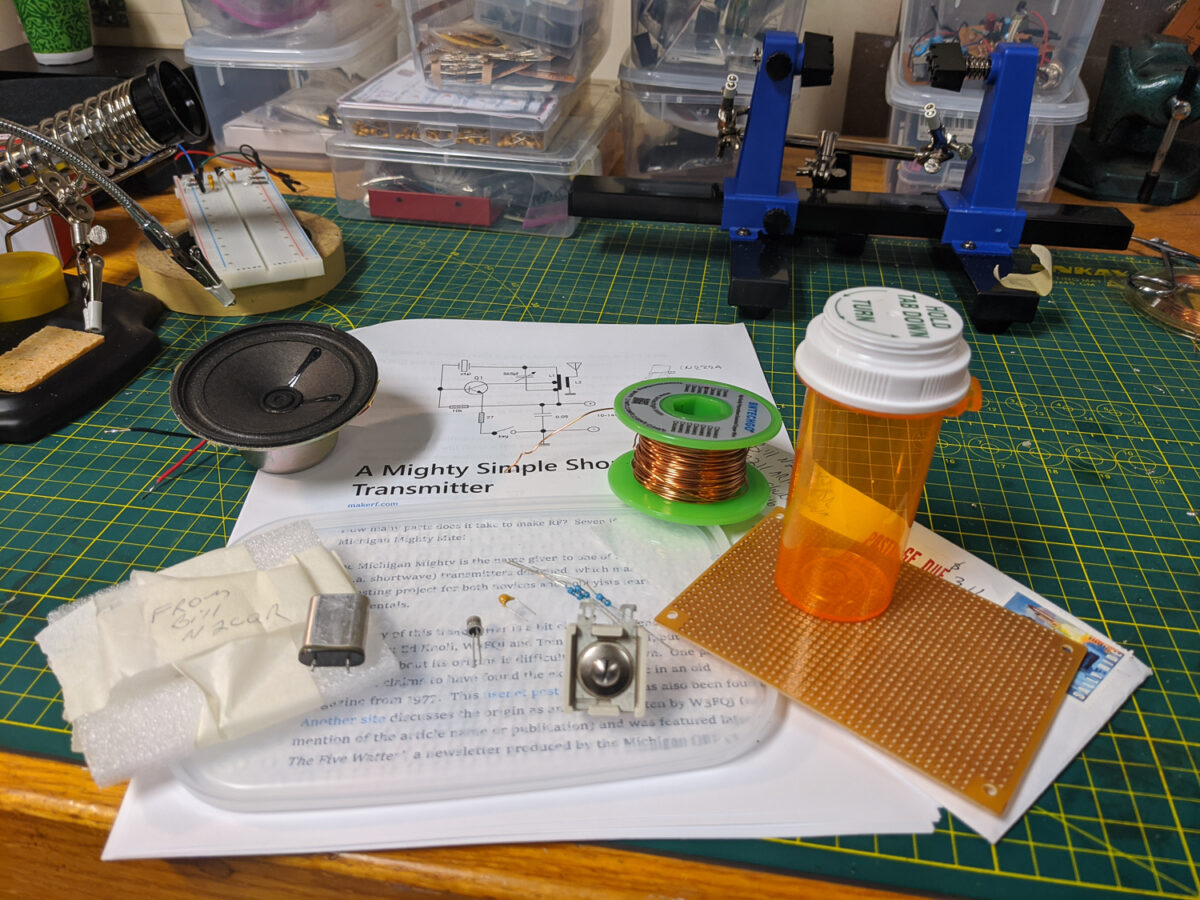
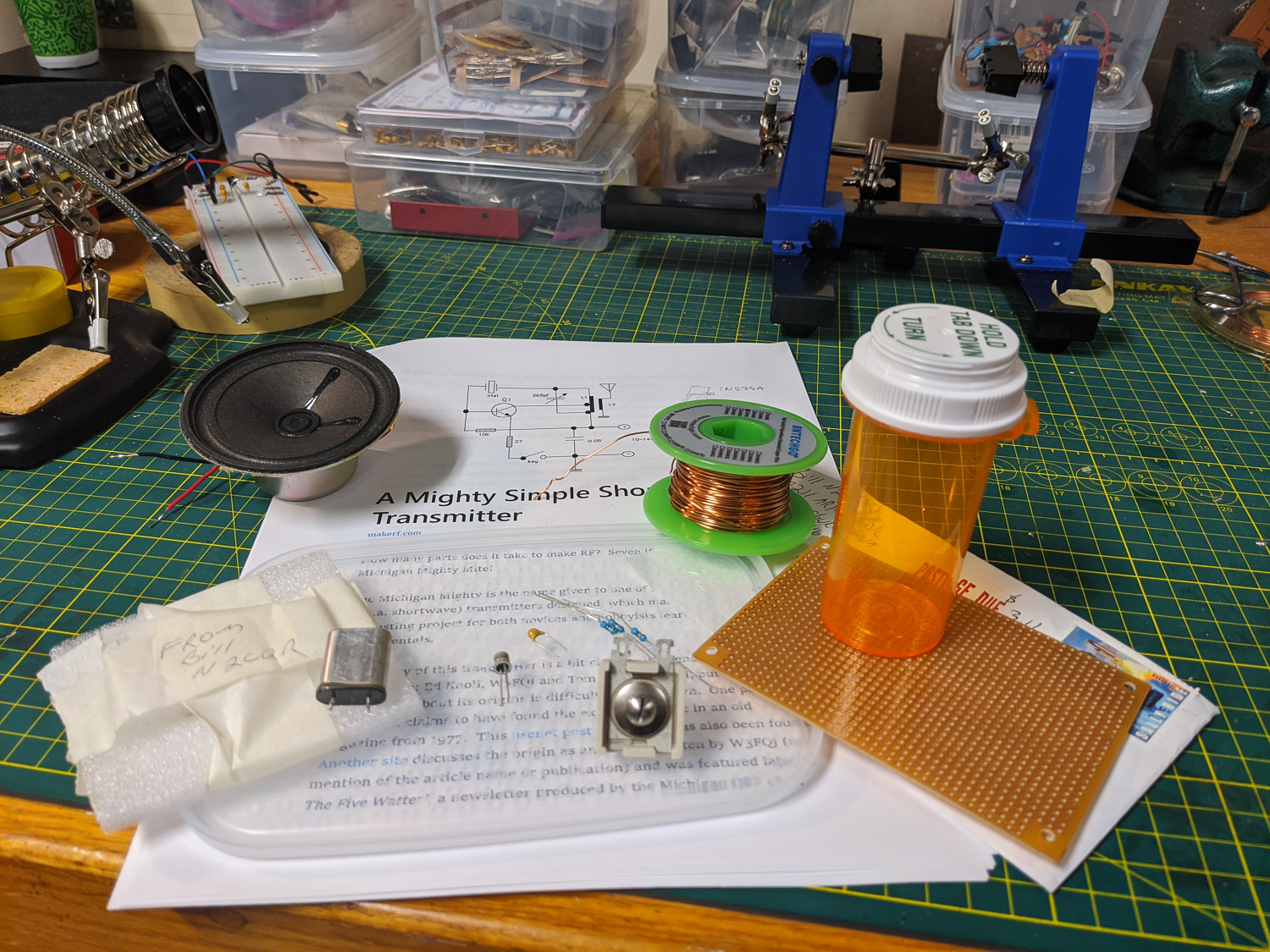
QRZ.com says we are 5.9 miles away. The U.S. Postal Service almost prevented this from happening — they objected to my just putting the crystal in an envelope and mailing it. Dean’s wife had to pay postage due.

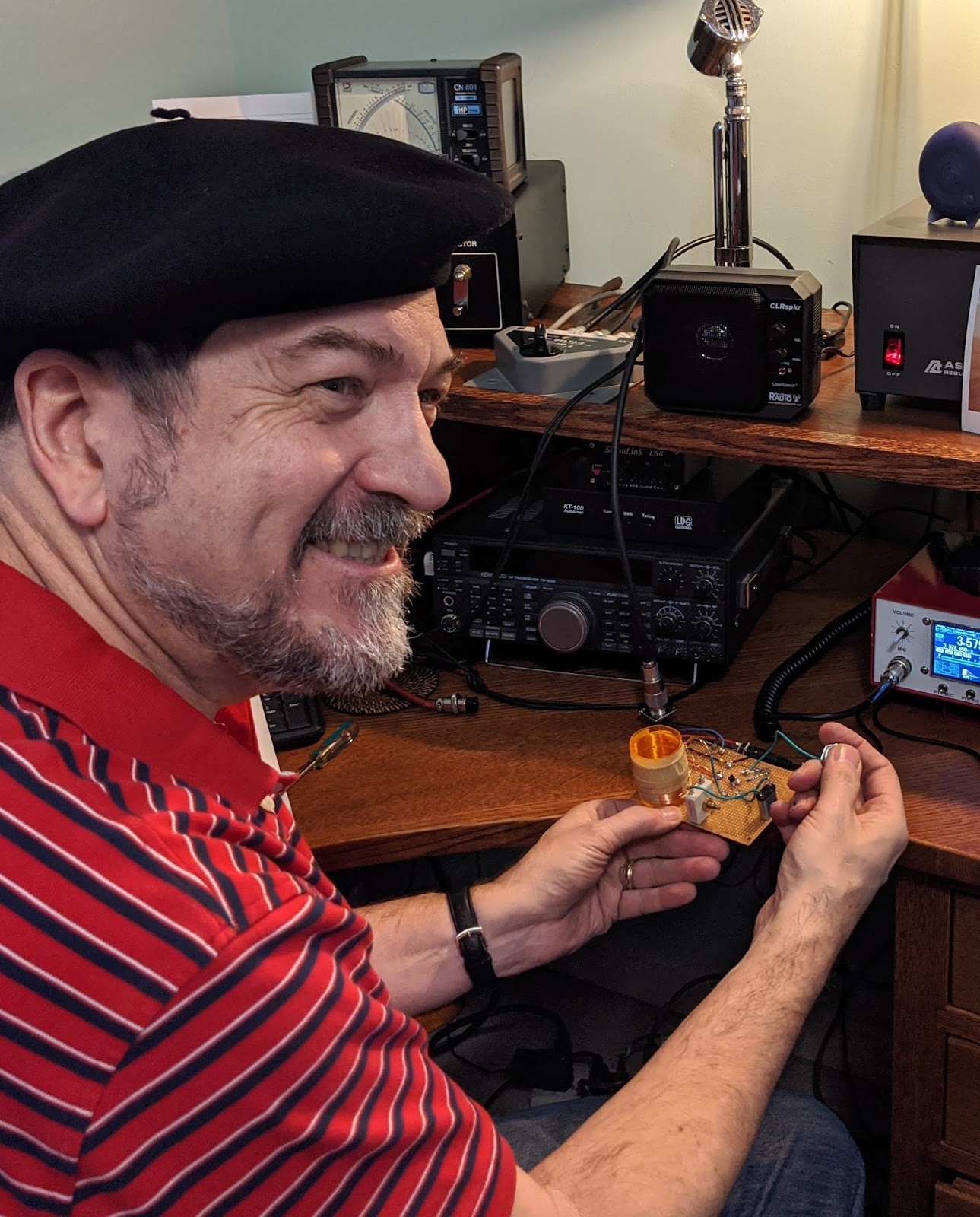
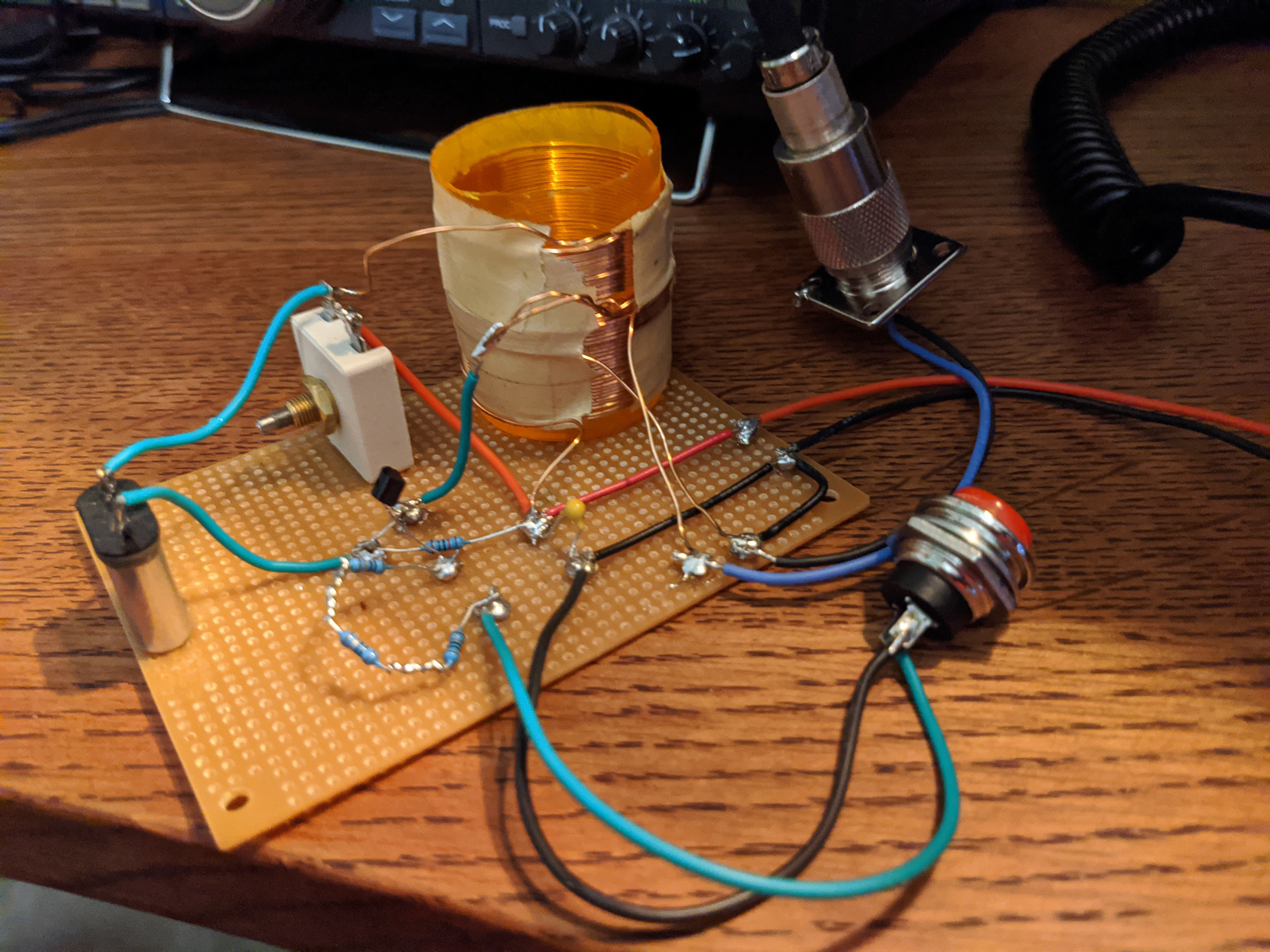
The rig didn’t work at first, but Pete N6QW provided sage advice and tribal knowledge. Adjustments were made and Dean experienced the Joy of Oscillation. Then, he connected an antenna and was heard at the SolderSmoke East Coast HQ.

Obviously the beret was the key to Dean’s success:

This was a lot of fun. And it is a reminder of the power of the MMM. Dust off those Mighty Mites! Call CQ and see if you can be picked up by the Reverse Beacon Network. Let us know if you succeed.
Getting ready

Done! Dean’s MMM

SolderSmoke Podcast #215 Regen Madness, KWM-4, Paesano, Mailbag

Latest N2CQR version of N0WVA’s Regen

SolderSmoke Podcast #215 is available.

25 November 2019

http://soldersmoke.com/soldersmoke215.mp3

Happy Thanksgiving!
Transit of Mercury
Book Reviews

Bill’s Minimalist Adventures:
— 15 Contacts with the ET-2
— Ethical issues: Is spotting yourself OK? OK to use TWO FETs?
— Using Reverse Beacon Network
— How to keep receiver on the right frequency
— N0WVA’s receiver sounded better, so I built a second N0WVA receiver
— Regens reach back to Edwin Howard Armstrong’s 1912-1923 breakthrough
— Regens are fun, but they are not good projects for new builders.

— Pull out those Michigan Mighty Mites and listen for yourself via on-line SDR receivers.

Pete’s Projects:
“WHEN YOU KNOW STUFF YOU CAN DO STUFF!”
— Left Coast SSB — “The Paesano” — To be featured in December 2019 SPRAT.
— Pete’s KWM-4 on The Collins Collectors Net
— Pete builds an N0WVA regen — just in time for Sweepstakes CW Saturday!
— Arduino IDE Library trouble
— uBITX 6.0? Fake News?

No more BITX40 Modules. Long Live BITX40 HOMEBREW!

BITX-101. Intriguing but on second thought, no.

MAILBAG

Steve Silverman: Lexicon: “Audible Modes.”
Felipe CU2BD Old buddy from the Azores
Michael Rainey AA1TJ: Come back Mike! The ionosphere needs you!
Jack Welch AI4SV is in 5G land (Cyprus, not the cell phone thing).
Walter AC4IM is at the San Vito Solar Observatory in Italy. DO SOMETHING WALTER!
Kostas SV3ORA has an amazing homebrew web site. Thanks Kostas!
Mike KC6SAX — How to deal with the frustration of HB projects that don’t work.
Paul KL7FLR — Pete is 7 Hz high.
Keith W3ISZ sent his photo of the Transit of Mercury.

PLEASE USE THE AMAZON SEARCH BOX ON THE SOLDERSMOKE BLOG PAGE WHEN DOING YOUR CHRISTMAS SHOPPING.

PLEASE SUBSCRIBE TO THE SOLDERSMOKE CHANNEL ON YOUTUBE.

N2CQR’s ET-2 with callsign Tattoos

SolderSmoke Podcast #215 Regen Madness, KWM-4, Paesano, Mailbag

Latest N2CQR version of N0WVA’s Regen

SolderSmoke Podcast #215 is available.

25 November 2019

http://soldersmoke.com/soldersmoke215.mp3

Happy Thanksgiving!
Transit of Mercury
Book Reviews

Bill’s Minimalist Adventures:
— 15 Contacts with the ET-2
— Ethical issues: Is spotting yourself OK? OK to use TWO FETs?
— Using Reverse Beacon Network
— How to keep receiver on the right frequency
— N0WVA’s receiver sounded better, so I built a second N0WVA receiver
— Regens reach back to Edwin Howard Armstrong’s 1912-1923 breakthrough
— Regens are fun, but they are not good projects for new builders.

— Pull out those Michigan Mighty Mites and listen for yourself via on-line SDR receivers.

Pete’s Projects:
“WHEN YOU KNOW STUFF YOU CAN DO STUFF!”
— Left Coast SSB — “The Paesano” — To be featured in December 2019 SPRAT.
— Pete’s KWM-4 on The Collins Collectors Net
— Pete builds an N0WVA regen — just in time for Sweepstakes CW Saturday!
— Arduino IDE Library trouble
— uBITX 6.0? Fake News?

No more BITX40 Modules. Long Live BITX40 HOMEBREW!

BITX-101. Intriguing but on second thought, no.

MAILBAG

Steve Silverman: Lexicon: “Audible Modes.”
Felipe CU2BD Old buddy from the Azores
Michael Rainey AA1TJ: Come back Mike! The ionosphere needs you!
Jack Welch AI4SV is in 5G land (Cyprus, not the cell phone thing).
Walter AC4IM is at the San Vito Solar Observatory in Italy. DO SOMETHING WALTER!
Kostas SV3ORA has an amazing homebrew web site. Thanks Kostas!
Mike KC6SAX — How to deal with the frustration of HB projects that don’t work.
Paul KL7FLR — Pete is 7 Hz high.
Keith W3ISZ sent his photo of the Transit of Mercury.

PLEASE USE THE AMAZON SEARCH BOX ON THE SOLDERSMOKE BLOG PAGE WHEN DOING YOUR CHRISTMAS SHOPPING.

PLEASE SUBSCRIBE TO THE SOLDERSMOKE CHANNEL ON YOUTUBE.

N2CQR’s ET-2 with callsign Tattoos

SolderSmoke Podcast #214 is FINALLY out!


WE ARE WORKING TO IMPROVE THE AUDIO QUALITY. IN THE FIRST RELEASE OF THIS PODCAST SOME OF THE AUDIO WAS KIND OF MUFFLED. I TRIED TO FIX IT THIS MORNING AND I THINK I MADE SOME IMPROVEMENTS. THE IMPROVED AUDIO IS NOW AT THE LINK BELOW.


4 November 2019 (shockingly late!)

http://soldersmoke.com/soldersmoke214.mp3

The visit of Farhan to Northern Virginia
“I heard this guy from Southern California on 20…”
Fire Report from Pete

Pete’s Bench Report
“When you know stuff, you can do stuff!”
The CRAP rigs
Old Boatanchors — the Swan 120 with SUPER STABLE ANALOG VFO!
Ten Tec rigs dial cord replaced with Chinese digi sig counter
Pete’s 500 mW encounter with a QRO curmudgeon
The ZL2BMI Challenge has Pete building crystal filters
The Left Coast Loafer CW rig

Bill’s Bench Report

ET-2 Refinements
N0WVA’s Regen Receiver
Going from ET-1 to ET-2
J-310s vice MPF-102
100 mW from a single J-310
Receiver kind of deaf -103 dbm MDS
10 contacts so far in 9 states
THREE contacts yesterday.
Worked Wisconsin – 633 miles on 92 mW
We are at sunspot minimum.
“Rage, rage against the dying of the light.”
Simplicity is the real reason for CW

IDEA: Get those Michigan Might Mites on the air!
Use Reverse Beacon Network to see if you are getting out
Use SDR receivers to make contacts

MAILBAG
DL1AJG
KC6SAX
W9VNE
KA4KXX
N0WVA
Zl2BMI
AJ6BD


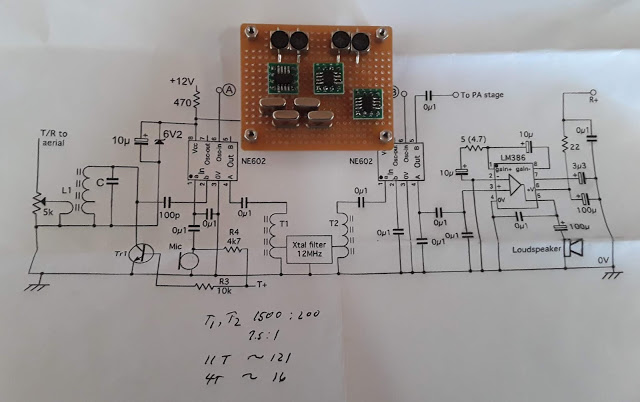
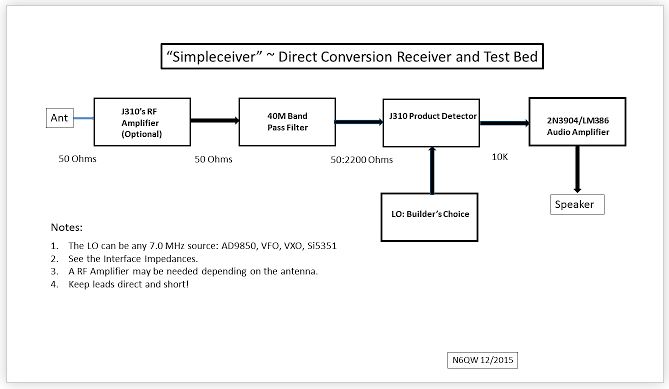
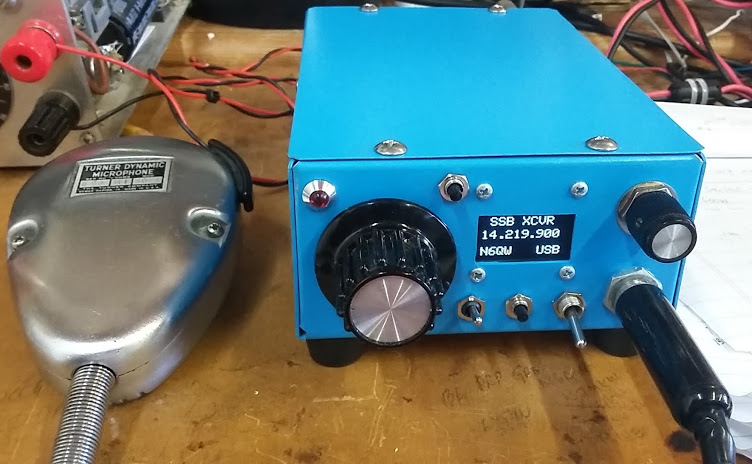
The Return of Pete’s Simple-ceiver Plus (and a possible analog option)

Winter is approaching ladies and gentlemen, and it is time to think about radio projects. Bob N7SUR suggested a direct conversion receiver project. I think this is a great idea. As a kid, I had fallen victim to the idea that building receivers was “too hard” for radio amateurs. Not true! DC receivers to the rescue! Carry on with the DC revolution first launched by Wes W7ZOI in 1968.

Pete N6QW is providing guidance and tribal knowledge via his blog. For those of you who want to join the ranks of those who have defied the conventional wisdom and have broken through the “receivers are too hard” barrier. I say build yourself a DC receiver. Build it from scratch. Many of you already got your feet wet in homebrewing with the Michigan Mighty Mite project. Now it is time to jump into a DC receiver project.

You folks already know what kind of VFO Pete will prefer: It will be an Si5351. That’s fine. But I will try to keep the banner of discrete component analog ludite-ism flying high. This morning I ordered a batch of 7.37 MHz ceramic resonators. I hope to pull them down into a significant portion of the 40 meter phone band. If this works, I will share the batch with anyone who wants to joining my Analog Army (remember the CBLA?). Note (above) that Pete has magnanimously left open the possibility of using a non-digital VFO. What a guy!

Check out Pete’s project here:

http://n6qw.blogspot.com/2017/08/a-new-line-of-transceivers-difx_19.html

“So You Want To Build?” Words of Wisdom from Pete Juliano


Everything on Pete’s blog is worth reading, but this article was so good that I could not resist posting a link to it here.

Tribal knowledge from a leader of the homebrew tribe:

http://n6qw.blogspot.com/2017/08/a-new-line-of-transceivers-difx.html

Another LM373 Rig – Pete Is Not Alone!

WU2D’s Wonderful Video on Retro-QRP

(Link to video appears below.)

Stephen G7VFY sent me the link to Mike WU2D’s Retro-QRP video. In the last month spoken to Mike at least twice on 40 and 75 meter AM. Stephen was responding to a post I did about a 1958 18 milliwatt solid state QRP rig.

Mike’s video is really wonderful. I’ve never been into military surplus, but this video made me think I might want an ARC-5. The rig Mike builds and tests is very similar to our beloved Michigan Mighty Mite. His description of the build and the testing procedures he used will be of great interest to those who’ve built the MMM rigs. And he made some contacts. Finally, there is a cameo appearance by Paris Hilton. And she is holding a HOT transistor! Wow!

Mike has a real talent for making these kinds of videos. Thanks a lot Mike — see you on 40. And thanks Stephen (Stephen has sent us so much great stuff over the years, including a fantastic box of British valves.) Pete: See how nice it is to get back to QRP?

Here’s Mike’s YouTube Channel. I love the intro:
https://www.youtube.com/channel/UCN7RQv_qmzhzuJV1HhJ4OEA

A Mighty Mite, a BITX40, an ILER, some Arduinos, and the Joy of Oscillation in the United Arab Emirates

Martin A65DC sent us this wonderful report on his efforts in the UAE. His e-mail nicely conveys his enthusiasm. I was especially pleased to see that wooden enclosures are catching on (another fellow on the BITX20 group is using a cigar humidor). Thanks Martin! Please keep us posted on your UAE homebrew adventures.

Hi Bill and Pete,


My name is Martin, and I am listening to every episode, sometimes more than once, thank you for an excellent show boys. I am a ham in the United Arab Emirates and operate radio as A65DC.

I just wanted to share my “JOY OF OSCILLATION” moment with you, I had the moment two days or so ago.. fantastic!

Well it is not super tidy, but as a proof of concept is totally acceptable. red and green goes to the variable cap (above).
Next to the Mighty Mite (above) is my bitX40, what a fantastic board!! I have big plans for this radio. But for now it will stay in its wooden box and keeps me company.
This (above) is another kit build, 20m SSB kit from EA3GCY Javier. ILER20, please have a look, this is where you should start if you are into kit building!! the instructions are fantastic.
I added some Arduino magic to it with a SI5351, and then I was sitting and looking at my big UNO board, hmmm USB port, why not further develop the code and use the port as CAT control.
I can now connect this rig to e.g. N1MM and control it, read and write frequency (in current version) I am simulating the protocol of a TS590, but that turned out to be a bad choice, I should have gone for a simpler radio, like a 140 or something, the 590 has loads of CAT commands that my code needs to answer… this radio is my QRO 20m as rig it sports the 20w amplifier kit from K5BCQ and will put out a whooping 22w! Several contacts from A6 into Europe and some over to Indonesia.. fun stuff, two kits from different vendors together with some own building and coding.. I love it.

On the workbench now is an Arduino CW keyed based on K3NG, the Arduino code is very well written and it has loads of functionality, most of what I will never use.. but as a keyer it is superb.
This is my keyed circuit, super simple stuff, it is here connected to the Mighty Mite as a test, works 100% I am now researching a good circuit for a CW transmitter/transceiver for 40m that will be in the 5 to 10w range to use my new keyer with.


Again, thanks for a fantastic show guys,

73
A65DC, Martin

Oz JOO : An Australian Mighty Mite with 3D Printing


Hi Bill & Pete,

I have the JOO – joy of oscillation! The transistor is a 2N3053 with a clip on heat sink, but I don’t think that I really need it. Output power +22dBm or 160mW. When I tested it on a Comms test set at work, I found that the harmonics were about 12dB to 15dB down and I stopped looking at the 10th harmonic. Not good.
Fitting the 80m low pass filter (salvaged from another project) brought the harmonics more than 50dB down.
The coil former is a 31mm diameter and 3D printed by one of the guys at work. The material is PET – the material they make soft drink bottles from. After we printed it, I put it in a microwave oven with a glass of water. 30 seconds and the water got warm and the coil former stayed cool.
I haven’t had a contact yet, but maybe in the next few weeks.
The next project is an 80m CW transmitter based upon the Goodfeller transmitter from QST 1946. It requires a inductor in the pi coupler, 1.5 inch diameter, 32 turns at 20 tip; but where to get one of those these days – wind your own.

I got the guy at work to also 3D print me a coil former with a spiral thread around the outside with a 20tpi pitch for the wire to lay in. Some hot glue and the coil is ready.
Now that I have finished all 189 episodes and two specials, my days are empty. Please make some more.
73 de Peter VK2EMU


Hi Peter (great name BTW),
Congratulations –really liked your build – top drawer! 3D printer access WOW – now if I could only get my 3rd son (Mechanical Engineer) to build me one of those machines.
The 3D made coil form is perfect for a VFO and follows the principles set down by Doug DeMaw W1FB (SK) about keeping the coil supported at both ends and away from metal. Bill needs a coil like that to mate with his HRO dial mechanism –and follows something old (dial) something new (coil).
73’s
Pete N6QW