Category: mathematics
What Kind of Car Would Have this Plate?
Phasors and the Propeller Analogy from Walla Walla University
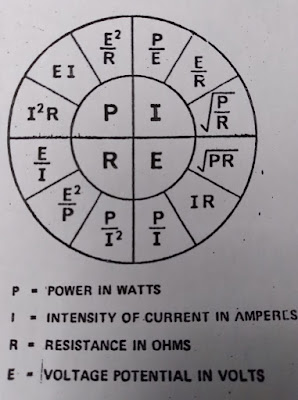
Put this Chart on the Wall Above Your Workbench
Applied Science — Electrical Impedance Tutorials
Part 1 appears above, Part 2 is below.
Ben Krasnow has a KNACK for explaining technical things. I liked his videos on impedance. At the end of the second video, he said he’d do a third one that would focus on impedance in coaxial cables. But I couldn’t find it on his channel. I hope it was made — this is very interesting and useful.
Ben’s YouTube channel is here: https://www.youtube.com/user/bkraz333
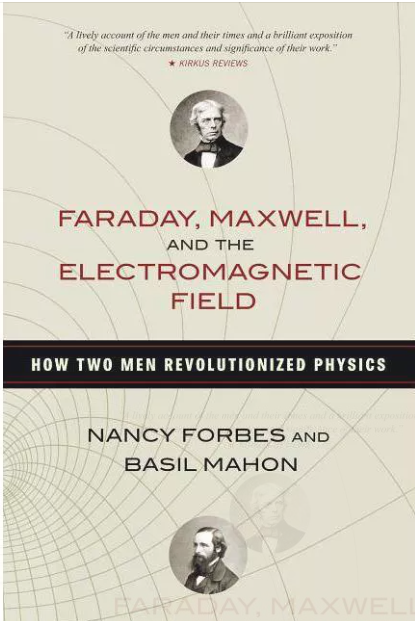
Excellent Video on Maxwell’s Equations
Really well-done. He gets to the essence without getting bogged down in the math. Great graphics too.
Understanding Fourier Transforms
Lots of wisdom and insight here:
http://www.jezzamon.com/fourier/index.htm
Strongly recommended for those trying to understand mixers and harmonics.
Movie Review: “The Man Who Knew Infinity” FIVE SOLDERING IRONS
My wife and I went to see this flick about the mathematician Srinivasa Ramanujan. It was filmed at Trinity College, Cambridge — if you look at the dedication to “SolderSmoke — Global Adventures in Wireless Electronics” you will see a picture of my kids at Cambridge. Alas, that picture was taken at Kings College, not Trinity; nonetheless, the Cambridge connection got us interested. Then there was the Indian aspect of the story, which is very intriguing. There was also the “amateur makes good” angle that all of us should, I think, find very encouraging.
The movie did not disappoint. We really liked it. The presentation of the cultural clash was very well done. Elisa told me that as she watched Ramanujan struggle with England, she found herself wanting to tell him, “You are just going through culture shock. Be patient! I’ve been through this many times!” They included just enough math to give the viewer a sense of what Ramanujan was working on.
I got a real kick out of one scene in which old Professor Hardy, seeking to motivate young Ramanujan, took him into the Wren Library and showed him the manuscript of Newton’s Principia. I had seen the same manuscript in the library of the Royal Society in London — they had take it out on the occasion of the visit to the library of Stephen Hawking and NASA Director Mike Griffin. They also had on the table the reflecting telescope that Newton himself had made. That was quite a day.
Great movie. I give it the coveted rating of five soldering irons.
More about Ramanujan here:
https://en.wikipedia.org/wiki/Srinivasa_Ramanujan
King of the Nerds
Are you a super fan of STAR WARS, STAR TREK, GAME OF THRONES, LORD OF THE RINGS, or BATTLESTAR GALACTICA? Are you a GAMER who owns every console and maxes out trophies and achievements? Do you have an outrageous collection of TOYS and/or COMIC BOOKS? Are you passionate about MATHEMATICS, PHYSICS, or BIOLOGY? Do you build ROBOTS or PROGRAMS for fun? Are you obsessed with SUPER HEROES? Are you a D&D or WoW fanatic? Do you love everything SCI-FI? Are you ARDUINO proficient? Do you know at least 100 digits of Pi?Is your IQ at least two standard deviation above the mean? Do you consider yourself a GEEK or a NERD?
Submit a tape and possibly win 100K.
Our book: “SolderSmoke — Global Adventures in Wireless Electronics” http://soldersmoke.com/book.htm Our coffee mugs, T-Shirts, bumper stickers: http://www.cafepress.com/SolderSmoke Our Book Store: http://astore.amazon.com/contracross-20
Almost forgot! Happy Pi Day!

3-14 Get it?
And happy birthday Albert Einstein!
Our book: “SolderSmoke — Global Adventures in Wireless Electronics” http://soldersmoke.com/book.htm Our coffee mugs, T-Shirts, bumper stickers: http://www.cafepress.com/SolderSmoke Our Book Store: http://astore.amazon.com/contracross-20
73 — The BEST Number
My kids watch this show. This appears to be one of the only interesting comments to come from it:
“The best number is 73. Why? 73 is the 21st prime number. Its mirror (37) is the 12th and its mirror (21) is the product of multiplying, 7 and 3. … In binary, 73 is a palindrome, 1001001 which backwards is 1001001.”
-Dr. Sheldon Cooper, (Jim Parsons), “Big Bang Theory”
“Just to invite your attention to “73” in Morse code–also a palindrome.”
-W9JEF
Our book: “SolderSmoke — Global Adventures in Wireless Electronics” http://soldersmoke.com/book.htm Our coffee mugs, T-Shirts, bumper stickers: http://www.cafepress.com/SolderSmoke Our Book Store: http://astore.amazon.com/contracross-20
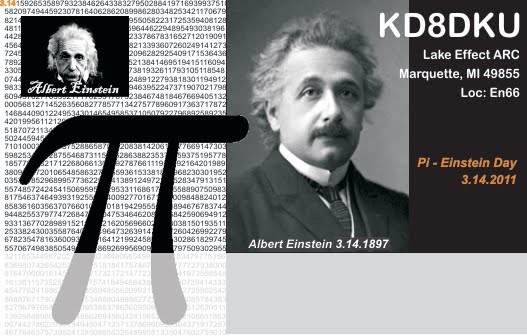
Happy Pi – Einstein Day!
The card is for a special event sponsored by the Lake Effect Amateur Radio Club:
http://www.lakeeffectarc.info/Event-PiEinsteinDay/PiDay.htm
I’ve been reading “Math and the Mona Lisa” so lately I’ve been more into Phi than Pi. When will we have Phi Day? January 6th?
Our book: “SolderSmoke — Global Adventures in Wireless Electronics”http://soldersmoke.com/book.htmOur coffee mugs, T-Shirts, bumper stickers: http://www.cafepress.com/SolderSmokeOur Book Store: http://astore.amazon.com/contracross-20
German Tanks and Drake 2-Bs: We Have the Number!
Finally getting back to you. I crunched the numbers… I saw a total of 23 serial numbers reported. The important thing is that these numbers be reported somewhat randomly with no biases etc. I think this is the case, and the fact we have 23 numbers is very very good in terms of the power of this experiment. The highest number reported was 12955. Let m = 12955. The number of reports was 23 so let k = 23. The equation to use (from wikipedia) is below…
Simply applying this equation we get an estimate highest serial number of 13517. So we can estimate that between 13000 and 14000 Drake 2Bs where made. I think I remember someone mentioning that the Drake 2B serial numbers did not start at zero. This is not really a problem. You just need to know at what number they did start, then subtract that number from 13517, and that would be the number of Drake 2Bs ever manufactured.
The lowest serial number reported to SolderSmoke was 2008, so you wouldn’t need to subtract more than that. You can think of this equation intuitively (a very SolderSmoke thing to do!). Imagine what happens when we have a single observation. k = 1, so our estimate is about 2 times what our highest observation is. This makes sense because you would guess your observation is most likely to be about half way between 0 and the true top number. If k = 2, then our estimate is about 1.5 times our highest observation. If k = 3, then our estimate is about 1.333 times our highest observation…. as we observe more numbers, we are more likely to have observed the top number so as k goes to infinity, our estimate moves towards our top observed number, which it should.
I hope my explanation made sense. Anyway I highly recommend SolderSmoke listeners who want to know more, to read the wikipedia page. Its quite well written and offers a lot for people who like hard formal explanations and an intuitive description. Keep up the good work!
I love the podcast – hopefully we may catch each other one day on the bands.
73 Scott (K6AUS)
Our book: “SolderSmoke — Global Adventures in Wireless Electronics”http://soldersmoke.com/book.htmOur coffee mugs, T-Shirts, bumper stickers: http://www.cafepress.com/SolderSmokeOur Book Store: http://astore.amazon.com/contracross-20
How many Drake 2-Bs? The German Tank Problem
I have #11,976!
——————-
Hi Bill,
I was just listening to your latest soldersmoke podcast and your
discussion about how many Drake 2Bs were made. Without knowing the
exact serial number for the last Drake 2B before the Drake 2C was
made, you can estimate what that number might have been by knowing a
few of the real serial numbers that are being used by people today.
This is a mathematical problem related to the somewhat famous “German
Tank” problem. Check out:
http://en.wikipedia.org/wiki/German_tank_problem.
If you were to ask your listeners to report to you their Drake 2B
serial numbers you could estimate the largest serial number there ever
was from the formula on that wiki page. This could be a fun exercise
🙂 I’ve never had a Drake 2B so I can’t contribute. But I could do the
estimate for you if you gave me the numbers.
Cheers and 73
Scott (K6AUS)
Happy Pi Day! (3.14 Get it?)
http://www.collegehumor.com/video:1948828
One of the many benefits of having a kid in elementary school is that you are made aware of important days that otherwise might escape your attention. Like today: International Pi Day. While the mathematical connections might be a bit flaky, I liked the above video.
Slashdot put it this way:
I’m not saying it’s as good as Lady Gaga or Justin Bieber or something, but it’s a great way to get ready for Pi day which is tragically still not a federal holiday. Write your congressman.
Does Math Lead to Understanding?
In “SolderSmoke — The Book” I describe the quest for deep understanding of the circuits that we build and use. There is some discussion in the book of the role of mathematics in this quest. A while back a reader e-mailed me on this subject. In the hope of stimulating a discussion, I’ll present the key paragraph from that e-mail here (the author will, for now, remain anonymous):
I appreciate your quotes from Feynman, Asimov, etc. about not
really being able to fully understand everything. As a math teacher
I can say that one of the biggest misunderstandings about math
is that it “explains” the phenomena of physics and engineering.
(Science and math teachers are notorious for saying to a student
who has just asked a “why” question things like, “well the math is
a little bit more complicated than what you can handle right now.
Wait untilyou have had a year or so of calculus.”) In reality it’s
the exact opposite! The math equations actually hide the answers.
They are very good at accurately describing phenomena, or at
predicting what will happen next, but they can never answer the
question of why one equation works and another does not. We
get very comfortable with allowing the familiar math equations
to hide our inability to really answer the “whys.”
This really resonated with me. In my effort to get a better grasp of mixer theoy a lot of people seemed to be simply pointing me to the trig equations, and equating a knowledge of those equations with an understanding of how the mixer circuits really work.
Of course, I don’t mean to be anti-math here, but I thought the e-mail on the limits of mathematics was very interesting. In “Empire of the Air” Tom Lewis wrote, “At Columbia, Edwin Howard Armstrong developed another trait that displeased some of the staff and would annoy others later in life: his distrust of mathematical explanations for phenomena of the physical world. All too often he found his professors taking refuge in such abstractions when faced with a difficult and seemingly intractable conundrum… Time and again as an undergraduate at Columbia, Armstrong had refused to seek in mathematics a refuge from physical realities.”