SolderSmoke Podcast #219 SPECIAL CORONA VIRUS CRISIS PODCAST

SolderSmoke Podcast #219 is available for download:
14 March 2020
SPECIAL CORONA VIRUS EMERGENCY EDITION

We thought it would be nice to put out a special edition of the podcast to help listeners keep up their morale during this difficult time. So we’ll do our regular kind of show, but we’ll try to emphasize things you can do to stay busy and keep up morale while stuck at home.

BILL’S BENCH (and operating position)

–NOVICE RIG ROUNDUP. NRR. Continues through this weekend. Lots of fun. Cool rigs worked: Jon WS1K’s “Scrounger.” Greg AA8V’s 6X2 superhet. And WN4NRR.
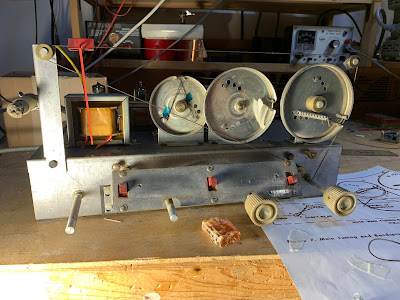
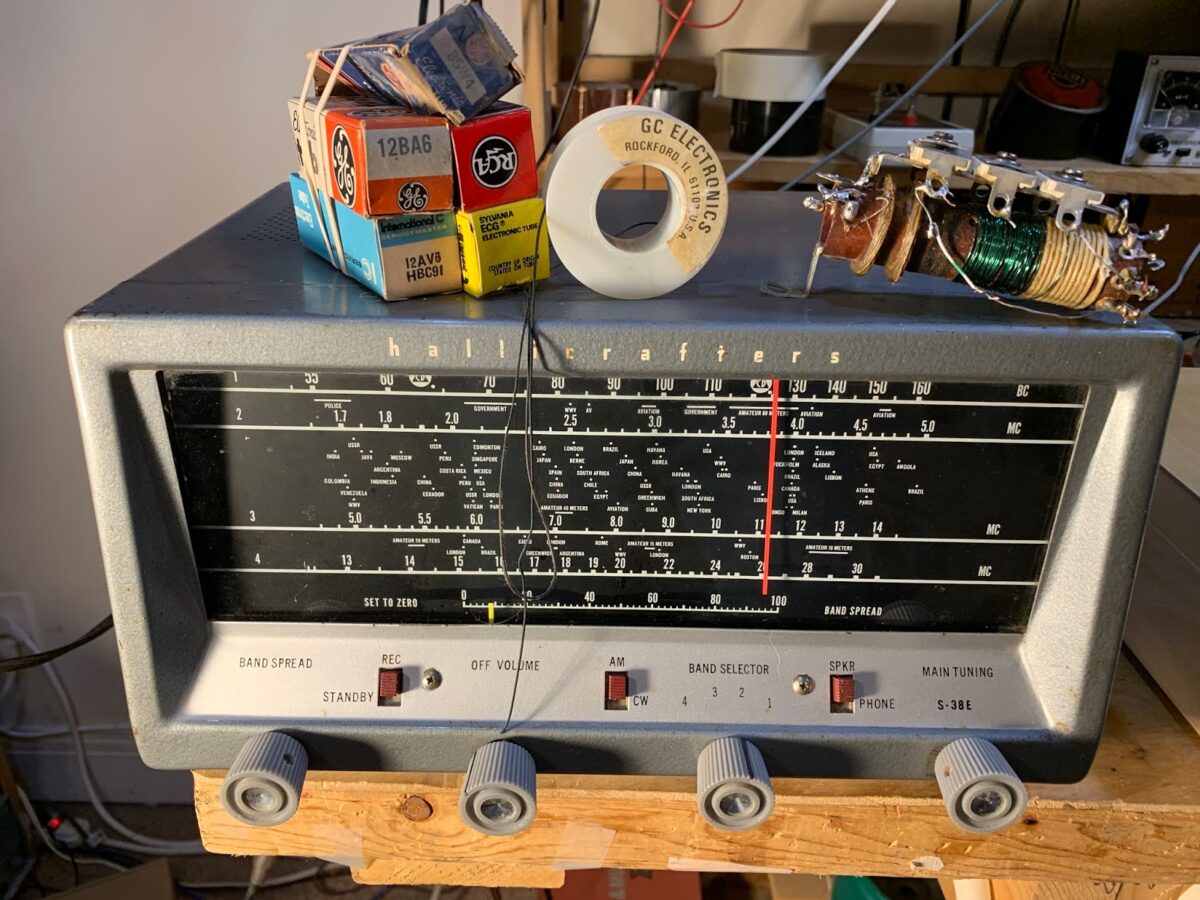
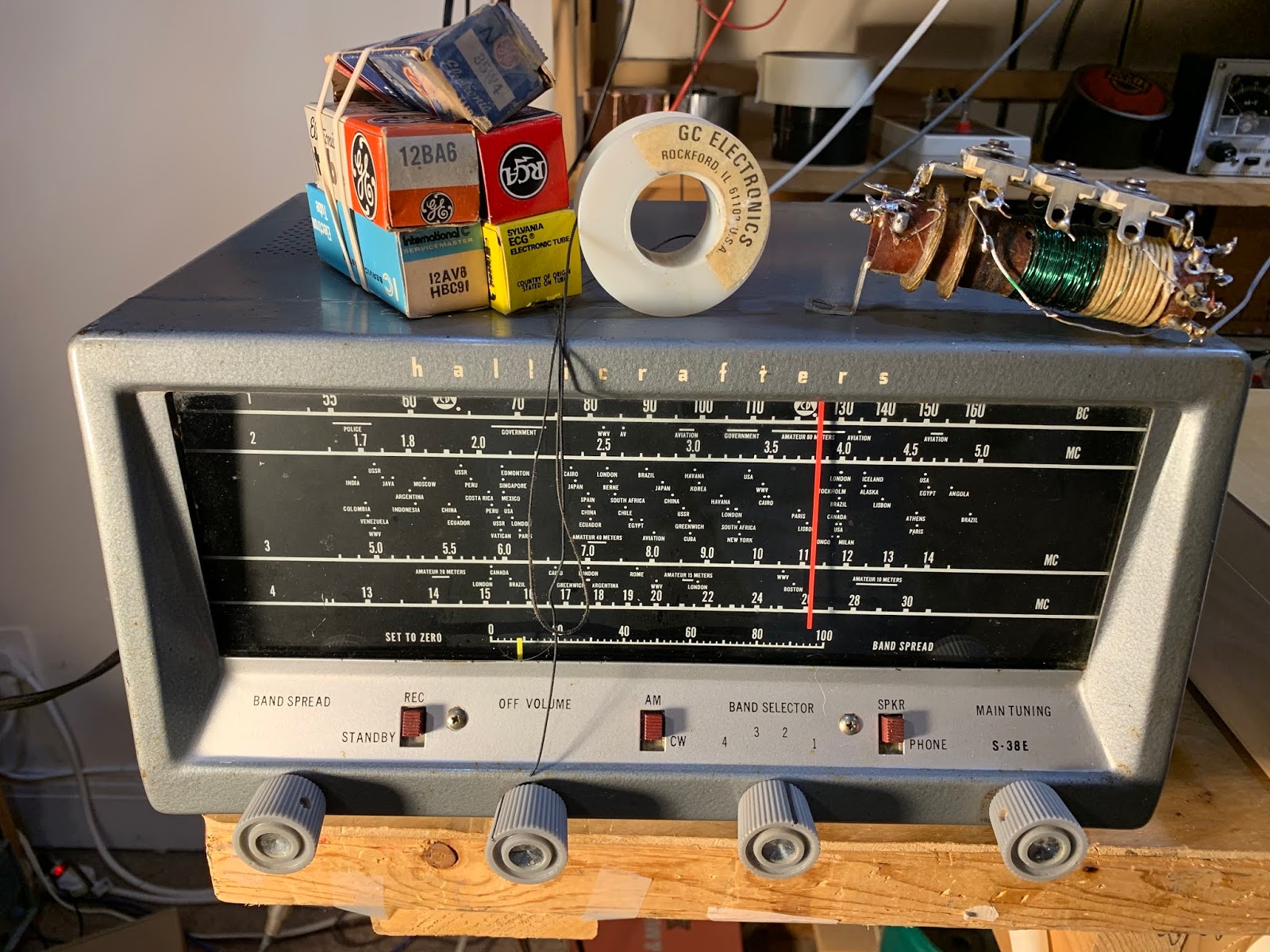
— S-38 MANIA. My S-38E story. Bought parts. Bought a junker. Fixed the first one then used the parts to fix the junker. Now I have 2 S-38Es.
— Got capacitor kit from Hayseed Hamfest. FB.

PETE’S BENCH

Hilbert Transforms
AD9833 glued onto a Nano
Teesny and Radig and ZL2CTM
PWKSCDS
More Mint

SOME THINGS TO DO DURING COVID 19 CRISIS

Sampson Boat Company Tally-Ho videos. https://www.youtube.com/channel/UCg-_lYeV8hBnDSay7nmphUA
Revive an old boatanchor
Get back into shortwave listening.
Get on the air—make some contacts!
Take a walk. Get some exercise. Listen to SolderSmoke and other podcasts when you walk.
Cook something from the famous Pasta Pete web site. http://www.pastapete.com/
Help someone who needs help.
MAILBAG

QSP – What a cool magazine! Pete and I both have articles in there.
Hot Iron – great new issue also. Lots in there.
Tony Fishpool G4WIF Words of Wisdom on the NanoVNA.
SolderSmoke Podcast #218: S-38E Woes; CW filter for uBITX; A Teensy Explosion; Mint, Cheese and Peaberries; Mailbag; A SPECIAL PLEA FOR FEEDBACK


SolderSmoke Podcast #218 is available


SolderSmoke 218 is Sponsored by AF4K Crystals:
Bry Carling can get you the crystals you need.


Flying drones with Billy. Amazing tech out there. In the 50 buck range with video cameras and facial recognition and tracking. Check out Air Pix.

Bill’s Bench:

Active CW filter in uBITX.
Hi-Per-Mite from 4 State QRP. Easy to do. Works well.
uBITX to 5 W level.

S-38E adventure.
Replaced antenna input coil BUT — it came from an earlier S-38 and doesn’t resonate.
So I bought a junker on e-bay and will take the E model coil out of that one.
Had to re-string the dial! And add rosin to it from Maria’s old violin.
BFO was not working. Bad buzz sound.
So: Re-cap, Re-tube, Re-string, Re-align, Re-build power supply.
Shortwave sounds good. Nice to hear music coming from our machines.
SHAMELESS COMMERCE DIVISION: Please use the Amazon Search Box in the upper right hand portion of the blog.

Pete’s Bench

A teensy-weensie explosion and fire
Mint! Kl7FLR
60 Meters
Cheese Microscopes
Peaberry
Radig
California hams using online SDR receivers for local nets.

News You Can Use!
J-310s in LTSpice


MAILBAG

K5HCT August via Regen and YouTube

Doug WB5TKI and his wife read “Us and Them.”

Rich K7SZ finally following SolderSmoke Podcast. Welcome aboard Rich.

Rick KD4KRA His son was one of the kids in the MIR-Classroom contact that I monitored around 1993…

David AD8Y Read SolderSmoke Book. Similar Knack story. Shared 1978 story: Homework net on 75 meters.

Paul KL7FLR Tapping and other tribal knowledge.

Dave K8WPE Says I’m fortunate to have a supportive wife. So true.

SPECIAL REQUEST: IT IS VERY DIFFICULT FOR US TO KNOW HOW MANY PEOPLE ARE LISTENING TO THIS. SO PLEASE, SEND AN E-MAIL TO SOLDERSMOKE@YAHOO.COM JUST SAY THAT YOU LISTENED TO PODCAST #218 AND TELL US HOW YOU LISTENED TO IT (ITUNES, DOWNLAD FROM BLOG, STITCHER, PODBEAN, WHATEVER… THANKS


DARK SIDE TO THE MAX: WA7HRG’s Android Tablet SDR (with a question)

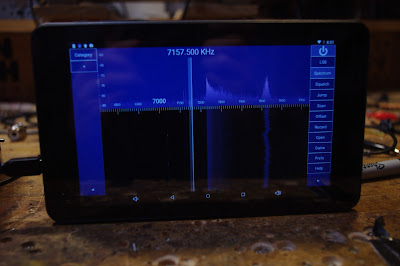
Jim’s experience with the Android tablet SDR was very similar to mine. But he used a “Ham It Up” up converter ahead of the RTL-SDR while I used an RTL-SDR modified for direct sampling of HF. I built a pre-amp/pre-selector stage for mine. On my Android Tablet (50 bucks via Amazon) I found the touch screen to be kind of clunky — it was hard to get the receive passband lined up with the incoming signal. The touch screen was not nearly as smooth as the one on my IPhone. A Bluetooth mouse solved that problem.

Like Jim, I am using SDRtouch from the GooglePlay. I’ll have to follow his lead and try Droid RTTY and PSK.

My reaction to the completed project was also similar to Jim’s: He writes that this is, “The first and last of my SDR adventures. This is just not the same as scratch building!” Indeed, it is not. But still, for very little money you end up with a pretty impressive receive capability, and you get some valuable insight into an intriguing method of receiving radio signals. And you don’t have to mess with Linux!

I have a question for the SDR gurus: With direct sampling, we are just running an ADC at RF. So we no longer need an I-Q front end to take care of the image problem we had when we were running soundcard-based SDRs, right? But I sometimes I hear that even with direct sampling systems, there is a digital generation of I and Q signals. Why would you need I and Q if you are just digitizing the incoming passband, multiplexing it, and sending it to the software?

Hi Guys

OK, so I am a little (A LOT) behind you guys in my bench work. Several unfinished projects are waiting in the wings. But I thought I would also dabble in Software Defines Radios. Thought I would go the Raspberry Pi route as Pete did. Then I woke up and sided with Bill. I don’t want to learn Linux!!

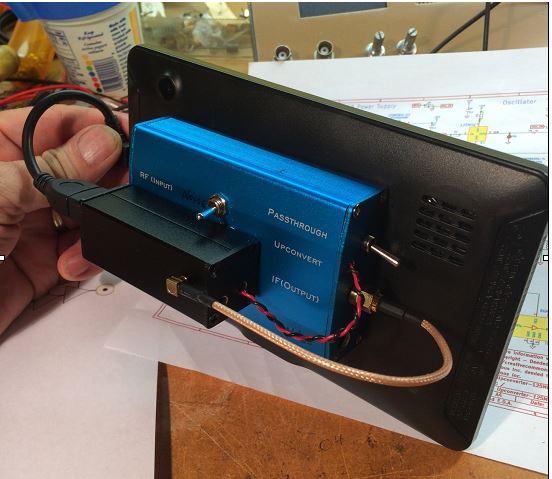
For about the same price as a Pi-3 and a 7” screen I bought one of Bills Android tablets and I found on eBay an estate sale that had a bag of NuElec parts. The RTL dongle, a Ham it Up vs. 3, and several cables, all unused. Last but not least I bought an Android ‘On the Go’ USB cable adapter.
I removed the LED and UV diode for the remote to drop the current some. Then tapped some power off the USB connector and ran it out to the Ham it Up. A few holes and some double sided carpet tape and ‘Bobs Your Uncle”. I added an enable switch to the up converter for the noise source but still waiting for the SMA connector to come in. Then I’ll see what that can do as a poor man’s spectrum analyzer for filter design.


I found several interesting apps on GooglePlay. Besides the SDRTouch program I downloaded Droid PSK and RTTY. Also the RFCorb client that allows you to connect to hundreds of remote stations around the world. That I may have to spend some time exploring but not really part of this build.
The Up Converter fired right up and after tuning around some I jumped to 14.070, the PSK hot spot. The tablet truly does multitask. I left SDRTouch running and opened Droid PSK. A waterfall full of signals jumped up and I was easily copying stations on the East coast and Canada.


All this running on the USB power from the tablet! How cool is that. After about 45 minutes or so the battery was about half. The only problem that I may have to address is that the tablet and/or the Ham it Up gets pretty warm and my carpet tape lets go and things fall apart. HA. Haven’t ran it long enough yet to see what else the heat might effect.


So that was fun and I will be playing with it some more. I have coffee on Mondays with some ham buddy’s. When I showed them the PopCorn radio they jibbed about it not being battery powered.


Well Monday is coming!! HA

Jim WA7HRG

SolderSmoke Podcast 194 – Approaching the Digital-Analog Singularity

SolderSmoke 194 is available (scroll down for link)
March 4, 2017

BIG NEWS: uBITX from Farhan
BENCH REPORTS
Pete: Recycling Old Boards
Working on Arduinos and advanced displays
Bill: SDR Adventures and Misadventures.
RTL-SDR is fun. Built HB front end.
HDSDR under Windows is fun and easy.
Thought about Raspi3, 7 inch touch screen, Linux, software YUCK.
Followed advice of Ken G4IIB and got a 50 buck tablet with Google Play.
Who needs tiny OLEDs? Use a 7 inch tablet as your display!
Building a Ceramic Resonator for the HRO 455 kc filter
The value of doing something different.
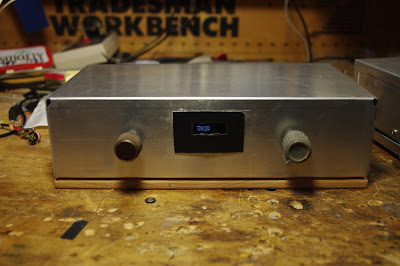
Boxed up my NE602 OLED rig.
OLED noise and ACTIVE decoupling.
NE602 and MOSFET tips
LEXICON:
OTD Obsessive Tinkering Disorder G6LBQ
“A Thing of Beauty”
Source of Tombstoning term: Don ND6T.
Ken G4IIB’s extremely smooth audio.
ON THE AIR:
On AM on 75 and 40. Fun. Old Military Radio Net and “The Lonely Guy Net” on 75 Saturday morning.
Good old 17 meters. Open at mid-day
HB2HB on 40 with W0PWE.
Listening on 60
Hambrew magazines disappeared, but are back now.
EMRFD Classic Edition available
New Posts to BITX HACKS
MAILBAG:
Gloves follow-up. Not a good idea.
VK3YE’s QRP by the Bay event and a new book!
Colin M1BUU achieves Mountaingoat status
Martin A65DC JoO MMM in the UAE
Tom NY2RF Editorial with mention of JoO!
Lots of Al Fresco rigs: W8LM BITX on a board, Brad WA8WDQ DC RX, KA4KXX Al Fresco OZ DSB
ON6UU DSB from Spain via Belguim
Hugh ZL1UEM SMALL Si5351 OLED
Cookie Tin rigs VK2EMU’s Biscuit Tin DC RX, WA7HRG’s Popcorn rig
VK4FFAB FB LTSPICE intro
Ken G4IIB’s BITX adventure (with VERY smooth audio. How smooth? We can’t say.)
VU2XE’s BITX with a CAD box
G0ETP’s shockingly beautiful SDR receiver
Alan W2AEW on the mend with broken ankle. His videos are a treasure trove of tribal knowledge.

Back from the Raspberry Pi SDR Brink

Earlier this week I shocked Pete Juliano by telling him that I was taking a break from my normal analog, discrete component, no-chips mode of construction so that I could put together a Raspberry Pi-based SDR receiver. Even from 3000 miles away, his astonishment was clearly perceptible. He seemed briefly disoriented by it. I’m sure some of you may have a similar reaction.

I’d been lured in by that video of the Raspberry Pi RTL-SDR receiver with the very cool touch screen display. It has a waterfall! And a touch screen! How could I resist?

I went to Amazon, but there I discovered that that attractive display is not exactly cheap. And maybe I’d need a new Raspberry Pi. At this point, in search of economy and convenience, I began rummaging through my digital junk box. There I found a Rasp Pi Model B. And an old computer monitor. This will be easy, I thought. Just get some SDR code into that Pi, hook up the RTL-SDR dongle and Bob’s my uncle, right?

Not so fast. I quickly began to run into daunting digital obstacles. Sure, the Raspberry Pi fired right up and filled the computer display with lines of code. But it was all Linux. Yuck. Sorry Linux fans, but for some of us mere mortals, Linux is a weird opaque world in which every little thing is somehow a lot harder.

I also began to suspect that my 2013 Model B might be sort of a Model T in the Rasp Pi world. It might not be up to the computing task.

And finally, as I poked around the internet, I began to conclude that the Raspberry Pi software for SDR is not quite done yet. All the sites seemed to have the word “experimental” in there. And lots of “I’m pulling my hair out” comments Maybe I’m wrong, but maybe we just need to give this more time.

Let me ask the distinguished group some questions:

Is my Model B really useless for SDR purposes, even if I don’t need all the bells and whistles?

Is there an SDR program that can be easily placed in a Raspberry Pi by someone who has NOT mastered the mysteries of Linux?

For now, I have cleared the raspberries from the bench and am back to working on HDR stuff.

SolderSmoke Podcast #137


http://soldersmoke.com/soldersmoke137.mp3

10 September 2011


Earthquake! Hurricane! Tropical Storm!

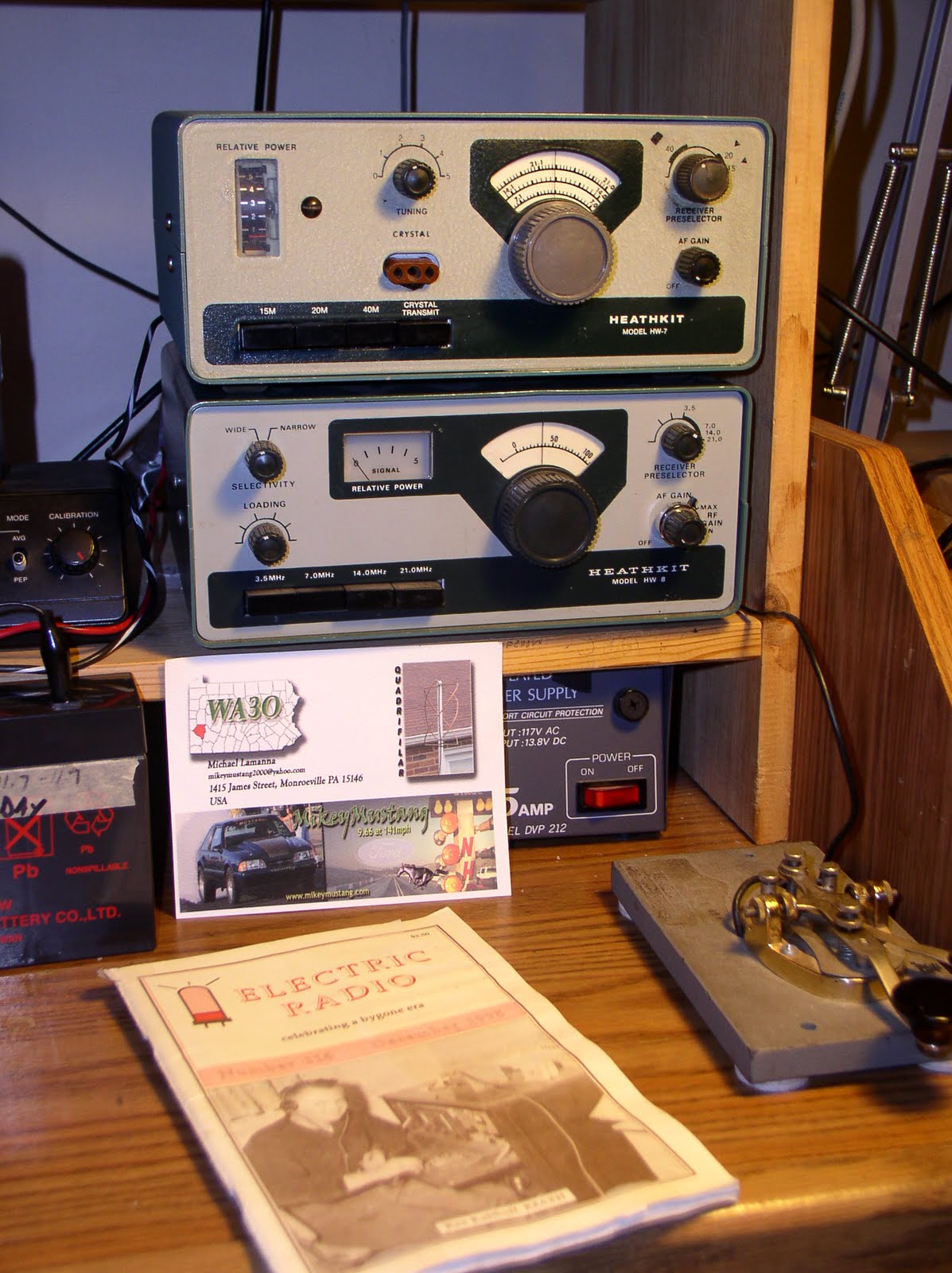
The Heathkit HW-7 — An Undeserved Bad Reputation

Over-the-counter saltpeter
Movie review: Green Hornet, Captain America
How many 2-Bs? (11,571)
Ubuntifying dead laptops
Get the SolderSmoke blog by e-mail

Replacing a diode ring mixer with a diode…

…then trying the NT7S MOSFET detector
Where is boatanchor wizard Walt Hutchins KJ4JV ?
GREAT NAMES IN RADIO: MCMURDO SILVER
Sputnik update
Lew McCoy wrote about one of my projects
MAILBAG (with mail from Farhan and Wes)

Our book: “SolderSmoke — Global Adventures in Wireless Electronics”http://soldersmoke.com/book.htmOur coffee mugs, T-Shirts, bumper stickers: http://www.cafepress.com/SolderSmokeOur Book Store: http://astore.amazon.com/contracross-20

T/R Success with WSPR

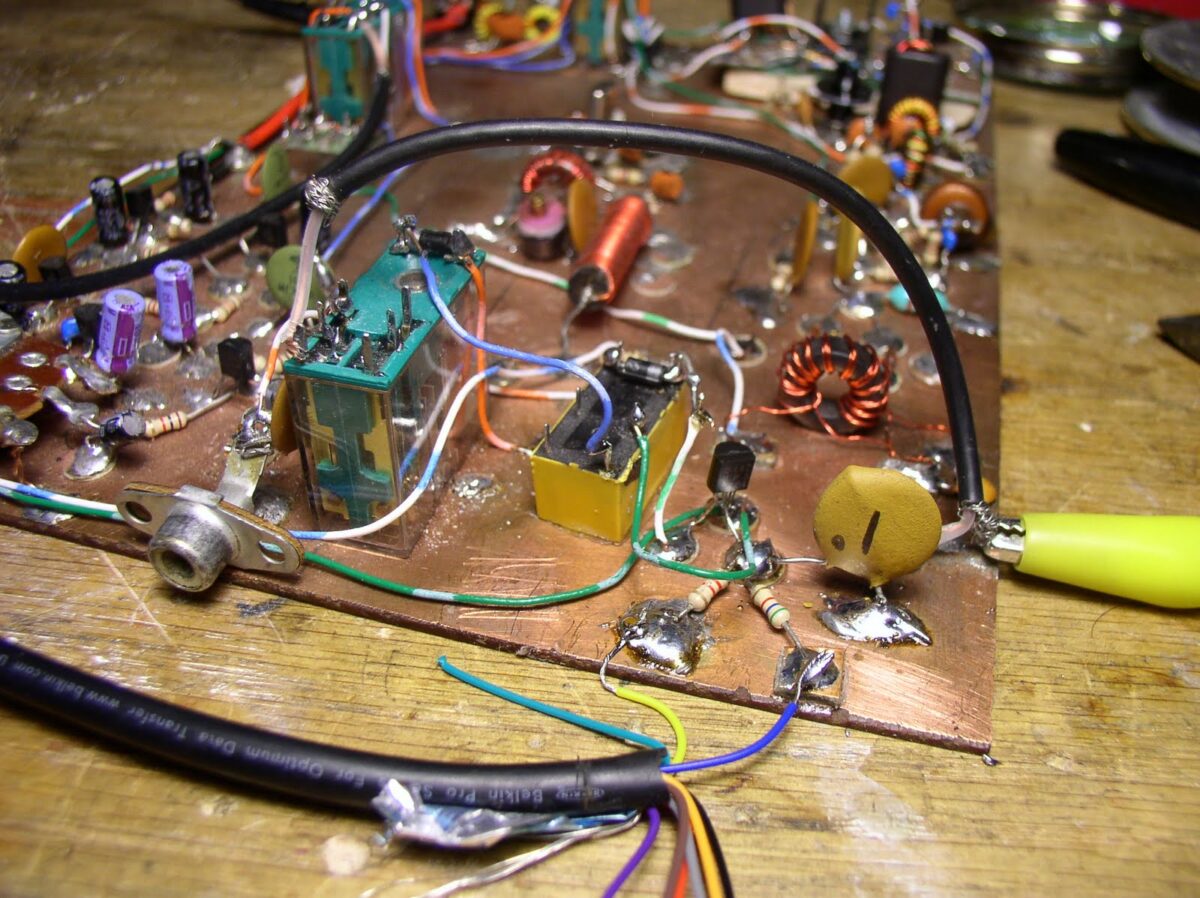
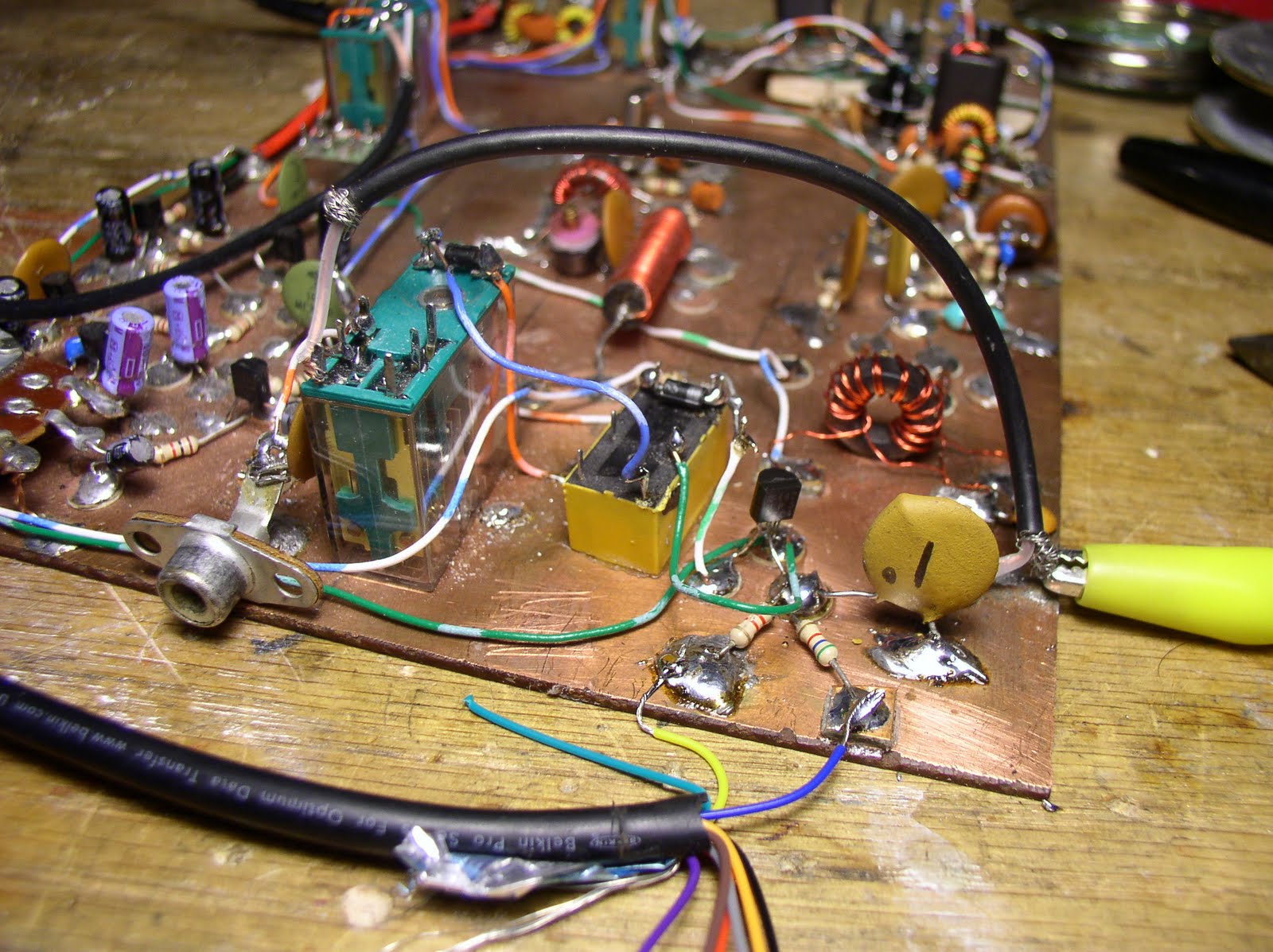
Thanks to everyone who sent in advice on my WSPR t/r troubles. I now have it all sorted out. In the image above you can see the cable from the serial port that carries the RTS T/R signal from the computer. It goes to a switching transistor that controls a relay that in turn switches the three relays that actually do T/R for the rig. One question: On the Linux computer the RTS signal seems to switch between +5 and -5 volts, but on the Windows machine it was +10 and -10. Why?
I’m really pleased to have the computer interface working. It is kind of neat to bring together the complex technology of the computer and the simple technology of a DSB/Direct Conversion rig.

ECHOLINK and WINE: Works very well

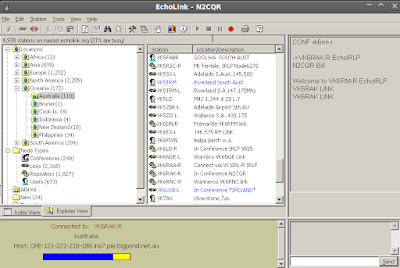
I’ve been away from Echolink ever since my eeemachines PC went toes up and wiped out the Windows XP operating system. Echolink had always been a bit difficult to get running, even under Windows, so when I returned the eeemachne to life with Ubuntu, I never really even considered trying to get Echolink running on it. There is no Linux version of Echolink. But then, yesterday, somehow I got inspired. Something told me I should give Echolink a try using the Linux WINE Windows emulator. After all, I’d found that LTSpice worked great under WINE. I went to the Echolink download site, and hit the button. Ubuntu Karmic Koala (the version I am using) automatically fired up WINE and put the new windows program in the appropriate place. Echolink started right up. That night I was able to check into the Sunday evening QRP group for the first time in years. It was great. Now I’m on Echolink in the morning, talking to hams in Western Australia. The cheers for Jonathan Taylor, creator of Echolink! And three cheers for Ubuntu (especially Karmic Koala)!

SolderSmoke 128 is out!

http://soldersmoke.com/soldersmoke128.mp3

3 December 2010
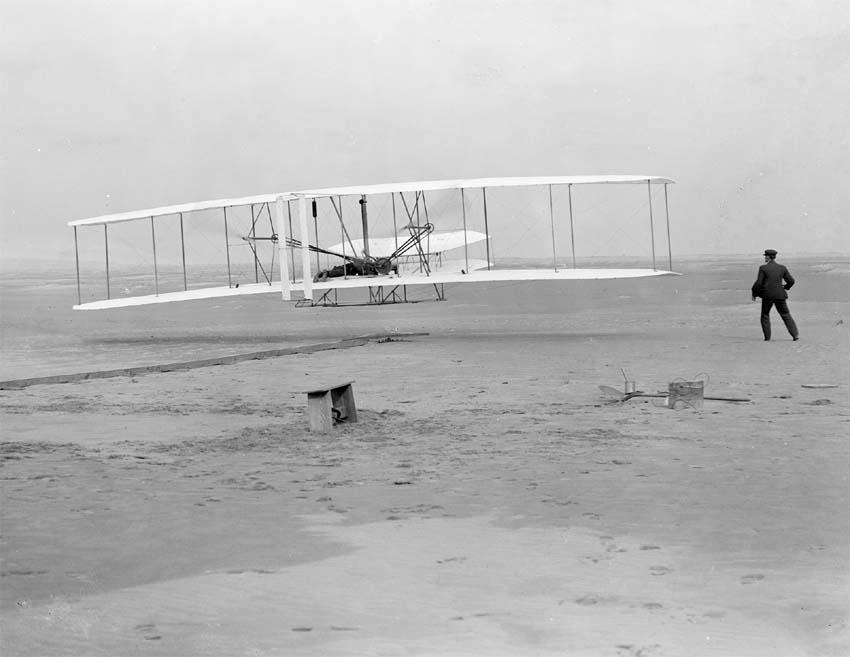
Visit to Wright Brother’s Kitty Hawk site
Antenna work on Veterans’ Day
W4HBK’s Pensacola Snapper
“Knackers of the World Unite” (even in the UK!)
Sky and Telescope Jupiter moons program
Listen to a meteor ping!
DSB DC WSPR transceiver
Other ham books on Lulu
Ubuntu Karmic Koala’s Skyrockets
Movie Review: “Social Network”
LTSpice under Wine (in Ubuntu)
Forrest Mims
Broken laptop — need advice
MAILBAG
New puppy en route

I’ll update the rss feed tomorrow.

Drake 2-B Goes Digital with WSPR

7 spots:

Timestamp Call MHz SNR Drift Grid Pwr Reporter RGrid km az
2010-02-06 16:04 DK9MS 10.140210 -11 -1 JO40tm 2 I0/N2CQR JN61fv 983 166
2010-02-06 16:04 PA3BTI 10.140271 -8 0 JO22og 5 I0/N2CQR JN61fv 1276 152
2010-02-06 16:04 DL9DAC 10.140246 -4 0 JO31qi 20 I0/N2CQR JN61fv 1120 158
2010-02-06 16:02 DL6NL 10.140262 -20 2 JO50cb 0.1 I0/N2CQR JN61fv 924 168
2010-02-06 16:00 DF6DBF 10.140279 +1 -1 JO31si 10 I0/N2CQR JN61fv 1116 159
2010-02-06 16:00 M5LMY 10.140248 -14 1 IO91oi 5 I0/N2CQR JN61fv 1455 131
2010-02-06 16:00 DL1EEZ 10.140201 0 0 JO31qi 20 I0/N2CQR JN61fv 1120 158

Query time: 0.002 sec

Until this weekend have been “transmit only” on the WSPR system, running the world’s only homebrew double sideband WSPR rig (please correct me if I’m wrong). I’m also running one of the most low-powered of WSPR stations (20 mW).

I’ve been feeling a bit guilty about my “transmit only” status. I felt like I wasn’t doing my fair share in the WSPR effort. I was sort of a digital free-loader.

So Saturday I decided to do some receiving. I fired up the old Drake 2-B. I ran a lead from the headphone jack of the receiver into the audio in of my old Tecra 8100 (running Linux Ubuntu Jaunty Jackalope). Antenna was a pathetic little end-fed wire. The only tricky part was getting the Drake on the precise freq. I just put my WSPR transmitter on 10140200 Hz and then put the bandpass in USB 2.1 kHz. I found the computer clock was off a bit (I had neglected to run the ntp program), but once that was taken care of signals started pouring in. And reports were automatically uploaded to WSPR HQ, and appeared on-line (see above).

I was very pleased to receive DL6NL’s 100 milliwatt signal. OM NL is well known in the QRSS/WSPR world. A picture of one of his more QRO rigs appears above. A shot of his balcony Microvert antenna (the white thing at the end of the dark indicator line) appears below.


Stagnosald! (Italian flux)

For some reason I like the packaging for this Italian soldering flux. Sort of takes you back to the days when soldering was soldering, if you know what I mean. Now (somewhat ironically) we are using this flux for SMT soldering. On the left you can see the PA stage of my slowly-coming-together SMT SDR LINUX Compu-radio. As you can probably tell, I am struggling to keep a positive attitude towards SMT and SDR. Lately, even Linux has been giving me trouble. The problem here is clearly with the operator, not the equipment. The Softrock SDR kit is really excellent. I’m sure I will eventually get it working, but I think there will be a lot of geezer-like complaining about all this new-fangled surface mount, software stuff. Please, bear with me.

Ubuntu

As SolderSmoke listeners know, I’m not really a software guy. In fact, I’m only a marginally competent user of software. But I’ve taken a liking to Ubuntu Linux. It works, it is user friendly, and it seems to have developed a very cool African cultural thing around it. Check out the names of the various versions and you will see what I mean:

4.10 Warty Warthog
5.04 Hoary Hedgehog
5.10 Breezy Badger
6.06 Dapper Drake
6.10 Edgy Eft
7.04 Feisty Fawn
7.10 Gutsy Gibbon
8.04 Hardy Heron
8.10 Intrepid Ibex
9.04 Jaunty Jackalope
9.10 Karmic Koala (NEXT ONE) October 2009

OK, now back to the radios…