Category: Lafayette HA-600A
The Beginning of MY Radio Life…
— April 27, 1973. Novice Ticket becomes effective. WN2QHL. Age 14.
— July 19, 1973. First contact (with Elmer WN2NEC). Age 14.
— February 1 and 2 1973. A grumpy old-timer calls — during the Novice Roundup! — to tell me that I’m putting harmonics onto the 20 meter band. I get scared and go off the air. Geez! I probably just needed to retune the tank circuit. Age 15.
— February 23, 1974. I go back on the air with a DX-100. Age 15.
— March 5, 1974. I take the General Class exam at the FCC office in New York City. I pass. Age 15.
— April 11, 1974. I buy the Drake 2-B from WN2NEC. This revolutionizes my radio life. Fifteen meter contacts become possible. Age 15.
— April 13, 1974. I work ZL2ACP on 15 meter CW. I wake up my parents to tell them. Age 15.
— April 21, 1974. END OF NOVICE OPERATION. Apparently we were still working under a one year limitation on Novice operation. Could the expiration date have been marked on the license?
At this point the FCC screwed up and sent me a Technician License instead of a General Class License. My father got on the phone to Gettysburg and straightened this out. Thanks Dad. So I was only a Technician for a few weeks.
— April 9, 1974. General Class License effective. I become WB2QHL, a man of substance. Age 15.
— May-June 1974. I acquire a Heathkit HW-32A 20 meter SSB transceiver from the Crystal Radio Club. But I have to build the power supply from an old TV. Somehow, I survive. Age 15.
— June 11, 1974. First contact with the HW-32A. Age 15.
— November 9, 1974. Last contact with the HW-32A . Age 16.
— March 15, 1975. First contact with my Hallicrafters HT-37. Age 16.
There is someone else who needs honorable mention here: My sister Trish. Here she is, next to me at the Thanksgiving table in 1973. Trish helped me keep my ham radio log book. Thanks Trish!
Putting the “Mate for the Mighty Midget” Back to Work — With a DX-100 on 40 Meter AM
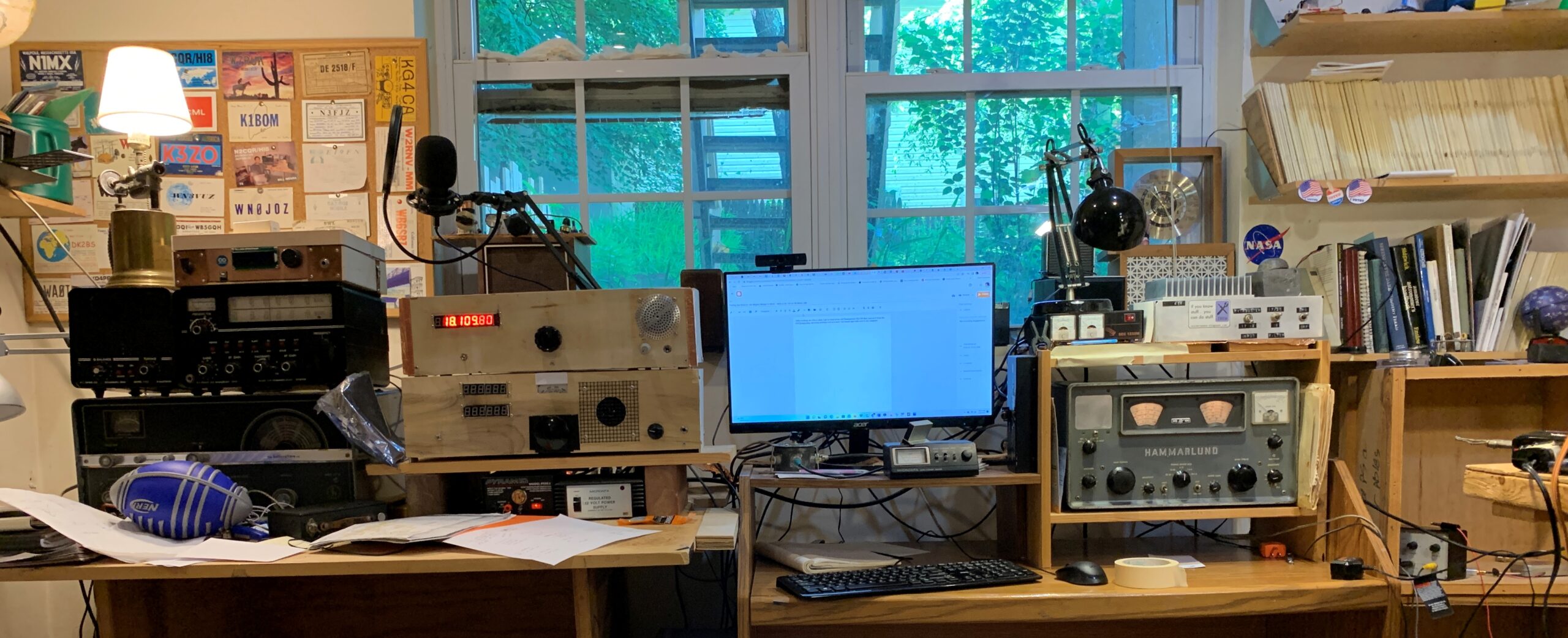
After working on it for a while I got so fond of my old Hammarlund HQ-100 that I moved it from the AM/Boatanchors operating position over to a more convenient spot right next to my computer. This left a big gap on the receive side of the AM station.
I briefly put my HRO-ish solid state receiver above the DX-100, but I’m afraid that receiver needs some work. More on that in due course.
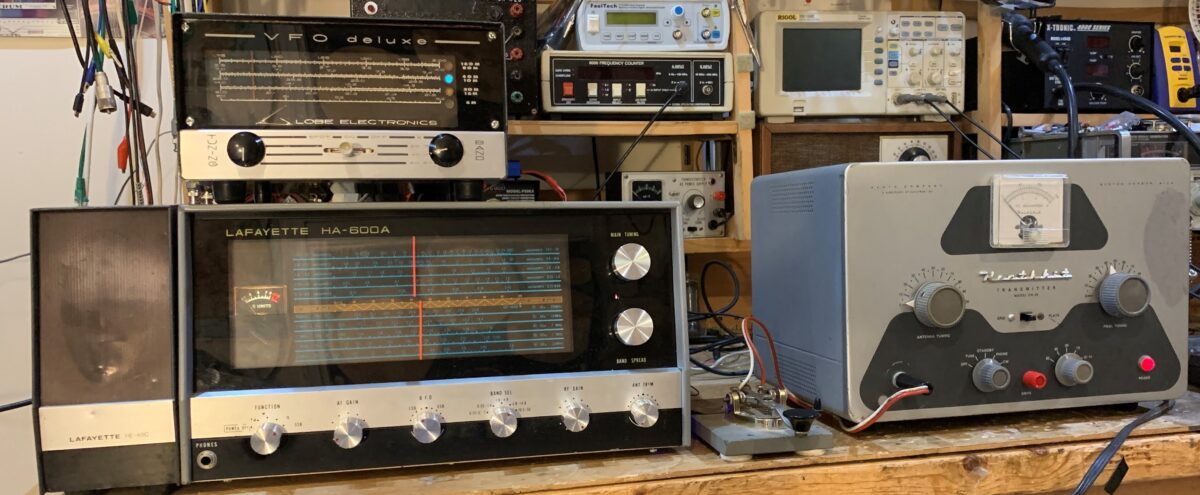
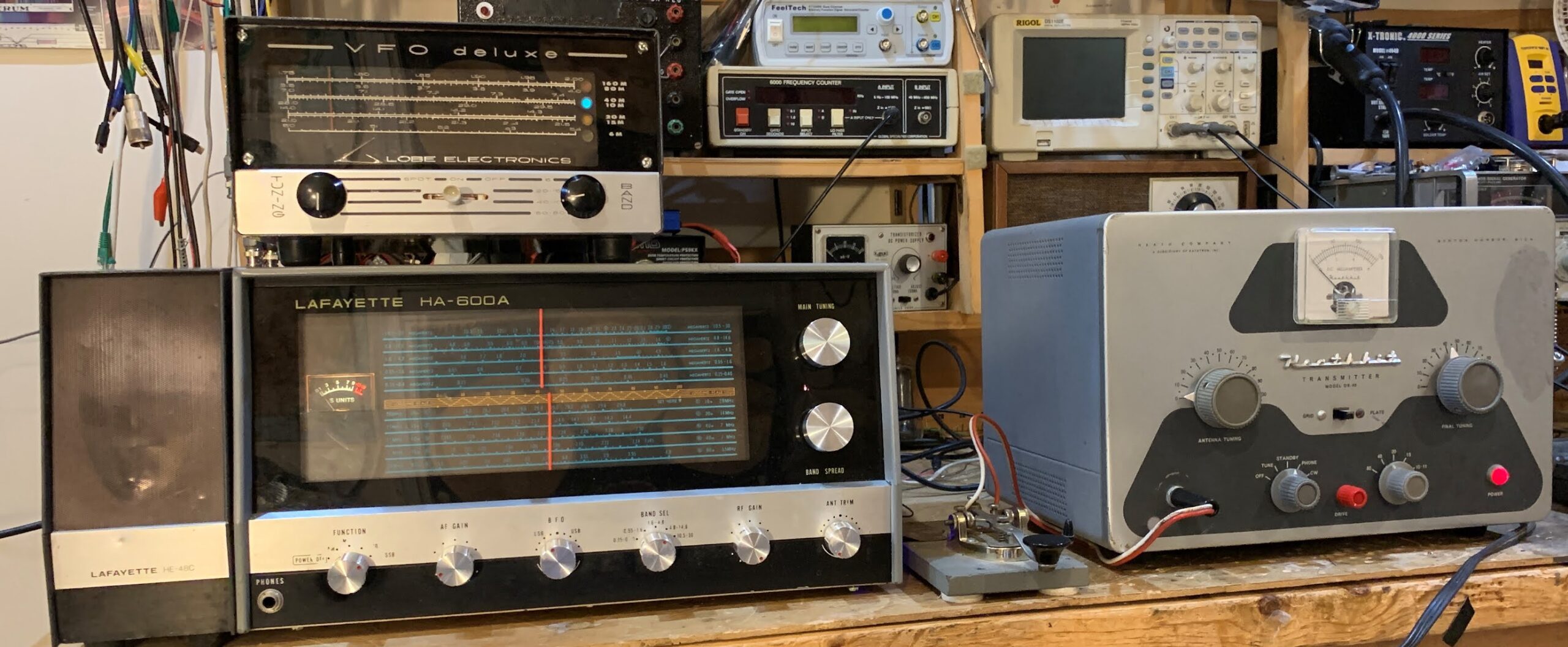
I thought about putting my SOLID STATE Lafayette HA-600A atop the thermatronic DX-100, but this just didn’t seem right. The Radio Gods would NOT approve.
So I turned my attention to the Mate for the Mighty Midget that I built in 1998 and have been poking at and “improving” ever since.
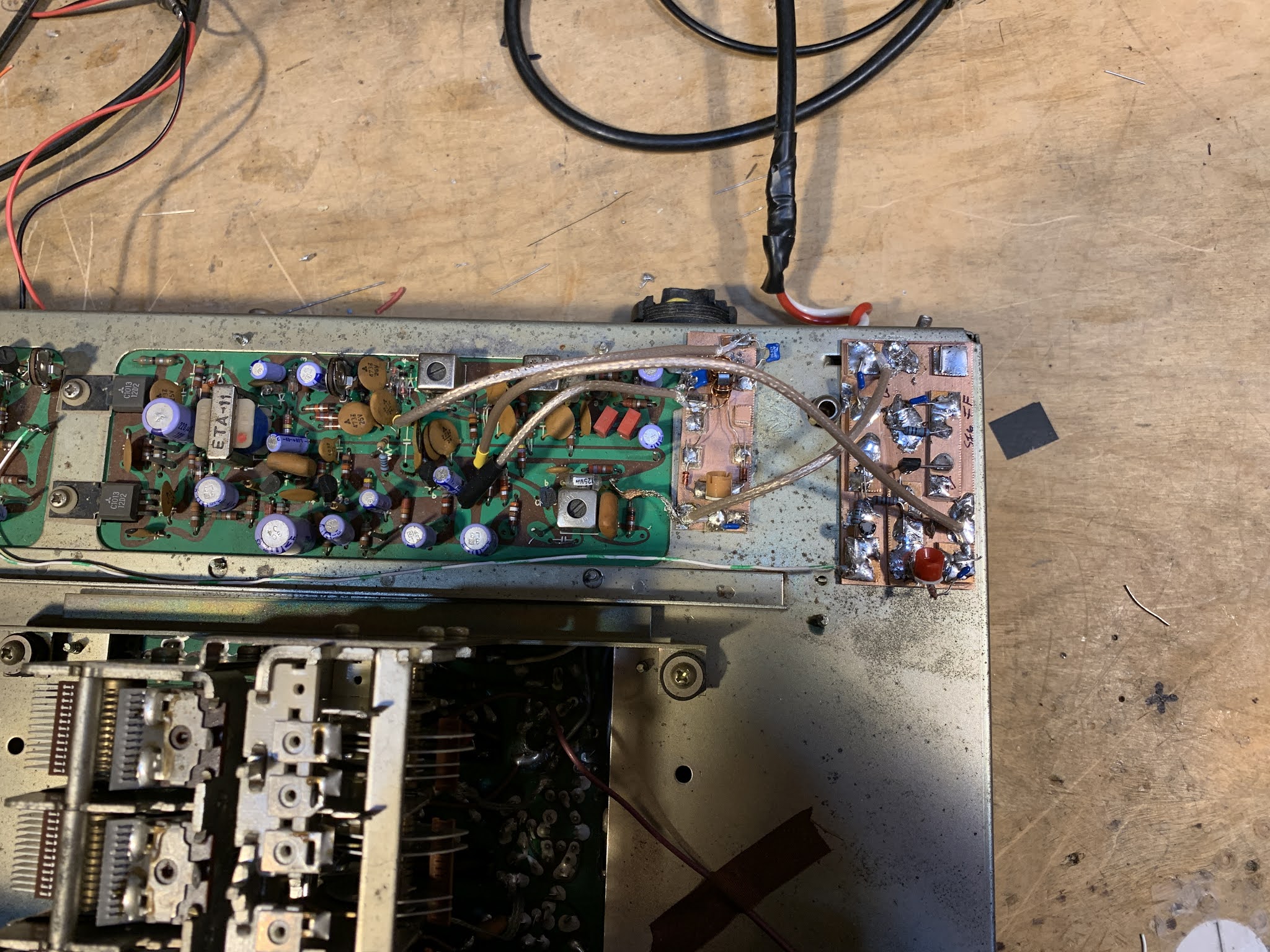
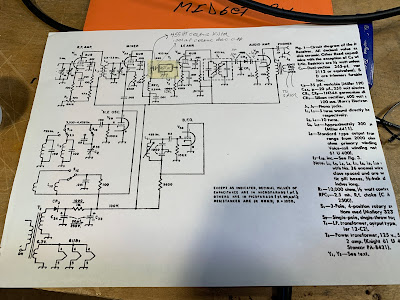
This receiver worked, but not quite right. It received SSB stations well enough, but when I turned off the BFO I could no longer hear the band noise. I wasn’t sure how well the RF amp’s grid and plate tuned circuits tracked. And I had serious doubts about the detector circuit that Lew McCoy put in there when he designed this thing back in 1966.
As I started this latest round of MMMRX poking, I realized that I now have test gear that I didn’t have in 1998: I now have a decent oscilloscope. I have an HP-8640B signal generator (thanks Steve Silverman and Dave Bamford). I have an AADE LC meter. And I’ve learned a lot about building rigs.
FRONT END TRACKING
The MMRX has a tuned circuit in the grid of the RF amplifier, and another in the plate circuit of the RF amplifier. There is a ganged capacitor that tunes them both. They need to cover both 80/75 and 40 meters. And they need to “track” fairly well: over the fairly broad range of 3.5 to 7.3 MHz they both need to be resonant at the same frequency.
McCoy’s article just called for “ten turns on a pill bottle” for the coils in these parallel LC circuits. The link coils were 5 turns. No data on inductance was given. Armed now with an LC meter, I pulled these coils off the chassis and measured the inductances of the coils. I just needed to make sure they were close in value. They were:
L1 was .858uH L2 was 2.709 L3 was .930uH L4 was 2.672
Next I checked the ganged variable capacitors. At first I found that one cap had a lot more capacitance than they other. How could that be? Then I remembered that I had installed trimmer caps across each of the ganged capacitors. Adjusting these trimmers (and leaving the caps connected to the grid of V1a and V2A, I adjusted the trimmers to get the caps close in value. I think I ended up with them fairly close:
C1: 63.77-532 pF C2 64.81 — 525.1 pF
I put the coils back in and checked the tracking on 40 and on 80/75. While not perfect, it was close enough to stop messing with it.
DETECTOR CIRCUIT
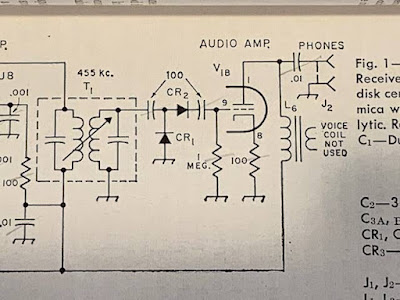
I’ve had my doubts about the detector circuit that Lew McCoy had in the MMMRX. In his 1966 QST article he claimed that the circuit he used was a voltage doubler, and that this would boost signal strength. But I built the thing in LT Spice and didn’t notice any doubling. And consider the capacitors he had at the input and output of the detector: 100 pF. At 455 kHz 100 pF is about 3500 ohms. At audio (1 kHz) it is 1.5 MILLION ohms. Ouch. No wonder years ago I put a .1 uF cap across that output cap just to get the receiver working.
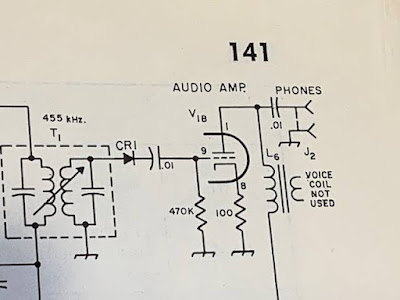
Scott WA9WFA told me that by the time the MMMRX appeared in the 1969 ARRL handbook, the second “voltage doubling” diode was gone, as were the 100 pF caps. Now it was just a diode, a .01 uF cap and a 470,000 ohm resistor. I switched to the 1969 Handbook circuit (but I have not yet changed the 1 meg grid resister to 470k — I don’t think this will make much difference). Foiled again by a faulty QST article, again by one of the League’s luminaries.
6U8s out, 6EA8s in
We learned that the 6U8 tubes originally called for by Lew McCoy are getting old and not aging well. So I switched all three to more youthful 6EA8s. This seemed to perk the receiver up a bit.
MUTING from the DX-100
My K2ZA DX-100 has a T/R relay mounted in a box on the back of the transmitter. When the Plate switch goes up, it switches the antenna from receiver to transmitter. The box also has a one pole double throw switch available for receiver muting. I put the common connection to ground, the normally connected (receive position) connect the ground terminal of the AF output transformer to ground — it is disconnected from ground on transmit. The other connection (normally open) is connected to the antenna jack — on transmit this connection ground the receiver RF input connection. These two steps mutes the receiver very nicely.
Replacing Reduction Drive
Over the years I have had several different reduction drives on the main tuning cap. I had a kind of wonky Jackson brothers drive on there that needed to be replaced. I put in a new one — this smoothed out he tuning considerably.
Ceramic Resonator
I never could get McCoy’s 455 kc two crystal filter to work right. So at first I made due with the two 455 kc IF cans. This made for a very broad passband. Then I put a CM filter in there. This was more narrow, but with a lot of loss. There may have been others. But the filter spot is currently held by a 6 kHz wide ceramic filter. This one is my favorite so far.
Digital Readout
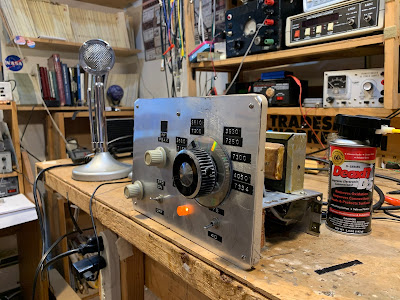
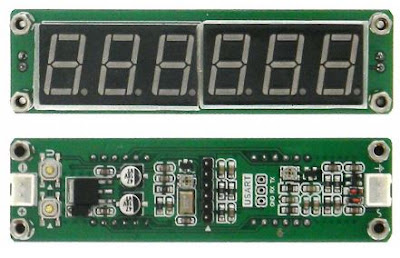
When I was running the DX-100 with the Hammarlund HQ-100 I built a little frequency readout box. The box was from a Heath QF-1 Q multiplier (I am sorry about this). The readouts are in Juliano Blue and come via e-bay from San Jian. I now have it hooked up to the DX-100’s oscillator. I haven’t tapped into the MMMRX’s oscillator yet.
Mike WU2D Looks at the “Dream” SW Receivers of the 1960s and 70s (Video)
Did You Contact My Novice Station WN2QHL in 1973-1974? Please Check My List and Let Me Know
Yesterday I went through my novice logs from 1973-1974. I was in Congers, NY and my call was WN2QHL. Please take a look at the callsigns from my log and let me know if we had a contact. I will then let you have more details from my log.
Novice Contacts 1973-1974 from WN2QHL
WN2NEC
WN2RTH YES
WA4DCL
WN4CBB
WN9LLX
WN1RWX
WN4ETR
WB2CSO
WN8QHM
WN8ONA
WN4KID
WN8PMF
WN2INN
WN2ECU
WN4DSO
WN3UCL
WN4KBL
WB4WDQ
WN0IHH
WN9MNW
WN8ODW
WA8VCH
VE1BAD
WN8NIJ
WN8MYJ
WA3TKP
WN2GMQ
WN8LDI
WN5JZP
WN5JXZ
WN2PNQ
WN2HKY
WB2PPP
WN4EIS
WN4DNV
WA8WIK
WN3TPJ
WN1RRR WN1RPR?
W2MJR
WN2SHL
WN3TZR
W1DUQ
WN2ROW
WN2SLA
WA3HNZ
WN2JXT
W2HAG
WA2CDE
WN8ORL
WN4FYL
WN1PXM
WN2FPQ
WN4ZFF/3
WN3VDU
WN8QPJ/8
WN3TBW
WN4BWT/4 OR BWJ
W9MZO/9
WN1SLG YES
WN0KTR
W9KCT
WN3VKH
K1BXZ
W1AW
WA2QNX
K2BBU
K1BXZ
WN2ROZ
W1TRS
VE3FMF
WN3UPO
K1OOL
WN2RNJ
WN2KWK
WA2CDE
WN2JDE
WN3UQO
WN2IZY
W3CNN
WN2NNA
WB2EVS
VE2AJQ
WN1SBE
WN4ZIN
WA2JXM
WA3TVE/3 OR JVE OR UE
WASQWF
WA3JRU
W3ABT
WA2IWX
WN3FLK
WN1RZW
WN3TBW
WB2PYM
WN1RXM
WN2ERU
WB8HHN
WN2LVV
WB8JBM/8
WN2TEO
K4LDR
WN2EHE Friend of KD2E Dave
K8MFO
WN2NAE
W3IN
WN3SZX
WA1EOT
W2MUM
WA2UOO
WB2RKK
W4KFL
WN2NEC
WN4EJJ
WN1SCL
WN2NQL
WA1RXJ
WA2YAS
WN2QHN
WN8POK
WB2ABJ
WN1QKD
WN2SDO
WN1SRT
WN2KOH
WN8DOB
WN1SQM
WN2SXT
W2HN
WA1RFF
WN2VNA
WN1RME
WB4YNY
WB8ALE
WN4AQM
WN4DMO
WN3USU
WN8NXE
W2HAG
WA1KLB
WB2NDL
WN2JXG
WN1RIP
WN2LKN
WA3IYA
WB9LJS
WN2RPL
K1BOM
WN4GOC
WN8QGO
WN8OPB
WN8OOE
WN2SAM
WN4FXN
WB2SXD/2
WN2IQM
WN3VUU OR UUU?
WN8PGD
WN8PIU
WN8OGY
WN8OWD
WN8OHP
WN9JOI
WN2GMQ
WN3VUR UR UUR
WN2LOC
WN2SAM
WN2TJQ
WA43PM
WA4YDR
WN9LDS OR LOS
WN9LSR
WN3UDR
WN1RGU
WA1RYL
WN2LBO
WN1RIM
WN2TAG
WN2TLQ
WN8ODP
WN2TBB OR JBB now Dave KD2E YES
WN4CRZ First QSO with DX-100
WN4HKG
WA6TLH/HK6 FIRST DX 40 METERS Feb 23 1974
WN2JHP YES
WN2TAS OR JAS
WN8QXR
W4DRJ
WN4GBX
WN4DAQ
WB8KUQ
WN4BPN
WN2SAM
WN8OVW
VE3GXX
WN0JOZ
WN6CPQ
WA4CNL
WN0LLT
WN0KUU OR KVU OR KUV
WN8QIN
WN4HLQ
K0IEU
WA1DWL
WN4GUF
VE1IC
WN4FOM
K2AVX
WA9AKY
VE2DJB
WN4EDQ
WN8PLH
WN2TPD YES
WN1SZS
WN4HRC
WA0WTV
VE3HEF
WN3UOO
K2IY
W4AHN
WN8OIF
WN9NYO
VE3AFX
K1PNB
K5EQX
WB6ALD
WB6LUS
WN0LQE
WA1POJ
WA5RFT
WN8NYU OR V
WN4GUF
K1BXZ
WN5GTE
WB5GDN
WB5GEN
WN2TJQ
WN2JXT
WN4CQX
WA1ASU/1
WN2IOJ
WN4GMY
WN2RUZ
WB8PRJ
WN4BTL YES
WB8MOI
VE3AGY
W8JEI
WN3VUZ
WA2CME
WN5KYK
WA1JUY
WN2NIL
K3DHD/9
WN4CTJ OR CWJ OR WUJ OR CVJ Gadsden AL.
WP4DRE/5
WN2GMQ
WN1SIP
WN9MOS
WN9OCO
WN2UAC
WN8NPY
WB5DIZ
WN2JHD
WN2RYH
WN2RXL
WB8OFU
WN8RTU
WN8MTW
WN8PIY
WA8JPC
K1OOL
WB2MYV
WN4CNE
WN4DXW
WN2PHE
WN8MYJ
WM2TTQ
WN4AYX
WN4ECB
WNOJGT
W4UHF
WN4FPU
WN8QCV OR U
WN8PCV
WN2STZ
WN2KLX
WN2FUN
WN2SLF
WN8RTZ/9
WN9MLY
WA7SCG
KP4USN
WN2UMV
WA6ARG
WA4BPS
WN9MAO
WN5HRI OR 4
WN2PWM
KZ5VV
ZL2ACP
WA6UUR OR VVR JACK IN Pasadena
KN5KSX
YU1NFT
YU2QZE
WA7STW
WN8RIK/4
WN2UMU
WN2PNQ
WN2QCE
YU2QZ
WN2TJQ
SolderSmoke Podcast #233: PIMP, Boatanchors, Novices, MMM, Heathkits, DC Receivers, Mailbag
SolderSmoke Podcast #233 is available.
http://soldersmoke.com/soldersmoke233.mp3
Travelogue: Cape Cod. SST. Marconi Site.
The WFSRA: The World Friendship Society of Radio Amateurs.
Pete’s Bench:
The Pimp.
The NCX rig.
The Collins.
The many DC receivers built worldwide.
The parts shortages are real! Several key radios on hold. Si5351 sub.
Talk to G-QRP convention
Bill’s Bench:
FT-8. Not for me. I tried it.
Novice Station Rebuild.
Globe V-10 VFO Deluxe.
Selenium rectifier removal CONTROVERSY?
Not crazy about my Novice station. Not crazy about CW.
Mate for the Mighty Midget. Again.
Mike W6MAB — Detector problems LTSPICE Check
One more mod for MMM RX. Ceramic filter at 455.
Dropped screw inside tubular cap on Millen 61455 transformer.
Talk to the Vienna Wireless Society
Thinking of a Moxon or a Hex beam.
BOOK REVIEW Chuck Penson WA7ZZE New Heathkit Book. http://wa7zze.com
Mailbag
— New SPRAT is out! Hooray!
— Todd K7TFC sent me copy of Shopcraft as Soulcraft. FB.
— Dean KK4DAS building an EI9GQ 16 W amp. FB.
— Jack NG2E Getting close on Pete’s DC receiver.
— JF1OZL’s website is BACK!
— Tony K3DY sent link to cool books.
— Sheldon VK2XZS thinking of building a phasing receiver.
— Peter VK2EMU has joined the WFSRA. FB!
— Ned KH7JJ from Honolulu spotted the Sideband Myth in the AWA video.
— Chris M0LGX looking at the ET-2, asks about the variometer.
— Pete Eaton Nov 64 anti HB rant in november 1964 QST. Wow.
— Josh Lambert Hurley spreading FMLA stickers in the UK. FB
— Stephen VE6STA getting ready to melt solder.
— Got a great picture of Rogier PA1ZZ back on Bonaire.
— Farhan reading the manual of Hans’s new digital rig.
— Paul G0OER wonders if FMLA getting ready to move on 5 meters.
N2CQR (WN2QHL) Novice Station Re-Created
Some Thoughts on Singly Balanced Mixers with Two Diodes and One Transformer
In 2001, out it in the Azores, I built a 17 meter version of Doug DeMaw’s Double Sideband transmitter (“Go QRP with Double Sideband” CQ Magazine, February 1997). I struggled to understand the balanced modulator — how it mixed, balanced, and how it produced DSB. I later presented my understanding of the circuit in my book “SolderSmoke — Global Adventures in Wireless Electronics” pages 132-137. In essence, I figured out that you had to think of the balancing and the mixing as two separate operations: The transformer provided the balance that eliminated the carrier (the LO signal) while the diodes presented the two signals (audio from the mic amp and LO from the VFO) with a highly non-linear path. The LO was successively turning on both diodes then turning off both diodes. The audio signal was being “chopped” at the rate of the LO. This produced a complex waveform that contained sum and difference frequencies — the upper and lower sidebands. The carrier was balanced out by the transformer because the two outputs of the transformer were always of opposite polarity, and they were joined together at the output of the mixer.
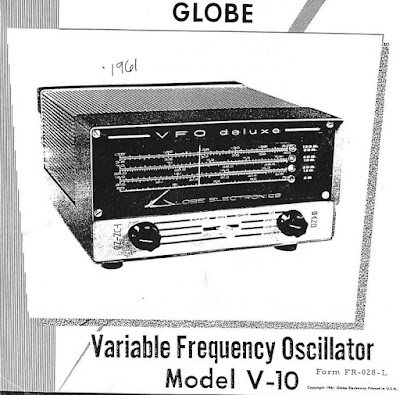
The VFO that I am looking for: The Globe VFO deluxe
SolderSmoke Podcast #228
Of course, no travel. But vaccines are here so maybe soon we can leave our shacks.
In the meantime:
I’ve been playing chess against AI bots on chess.com.
Netflix recommendation: The Bureau. From France. A review from NPR:
A reading from “Conquering the Electron.” Germanium vs. Silicon.
Bill’s Bench:
The KLH Model Twenty-one II. Acoustical Suspension. First receiver WITH A PILLOW! Bad speaker? Blown AF amp finals. Hot heat sink. VBE Multiplier. Desitin.
Tony Fishpool’s recommended LM386 boards. 10 for 11 bucks. Nice. They work. Pictured in the Amazon ad at the upper right of the SolderSmoke blog page.
Putting a digital display on the Lafayette HA-600A
Test gear trouble. My Radio Shack multimeter getting flaky. I many need something better. Auto ranging? My beloved Maplin AF generator died – will have to fix. I need that thing. Probably a bad chip. Good thing they are socketed.
I almost forgot about SKN! But I remembered and I made one contact with the HT-37 and Drake 2-B.
Pete’s Bench:
Presentation to RSGB on Homebrew.
TenTek Troubleshoot.
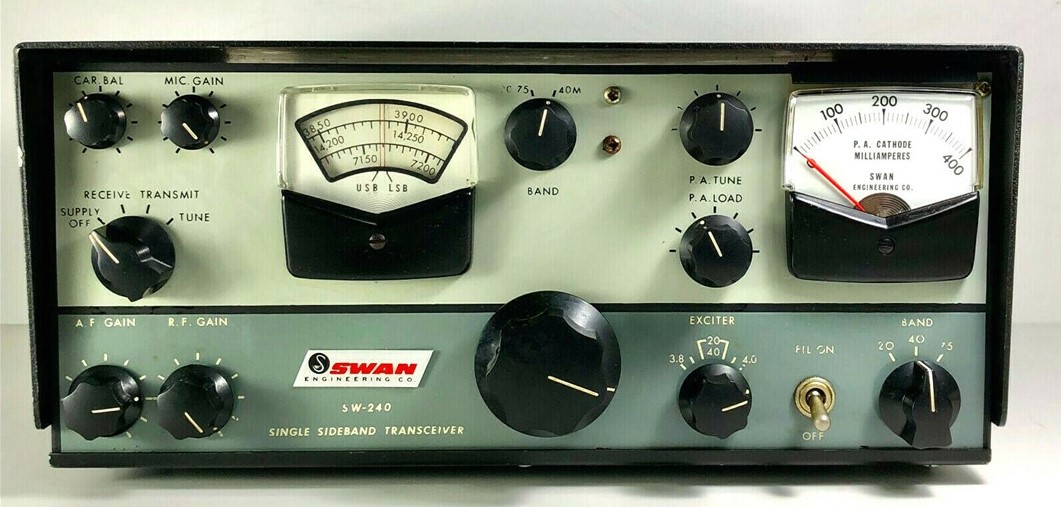
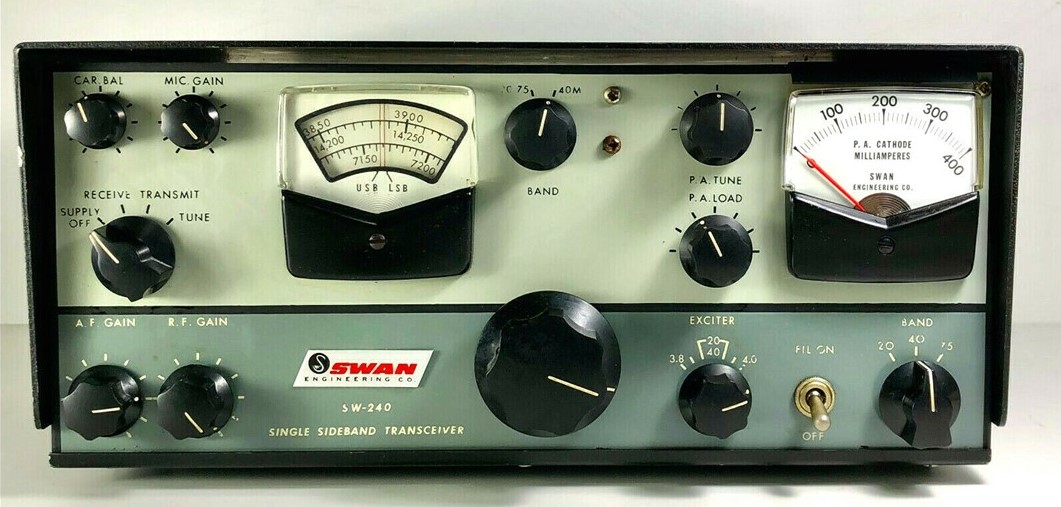
Swan 240? Looking nice.
SDR adventures.
MAILBAG
Bill N8ET sent me some really nice Showa 9 MHz 8 pole crystal filters.
Kevin AA7YQ Smoke jumper! Building a hybrid SDR.HDR rig. Launched blog. FB
Nick M0NTV working on similar HDR/SDR project. Great video.
Grayson KJ7UM Hollow State Design – Launched a new blog. Very FB!
Thomas K4SWL of SWL Post blog. Kearsarge Mountain Transmission system. And recent events.
Peter VK2EMU Poetry. CW poetry.
Pete WB9FLW looking at DSB rigs…
Drew N7DA Feels not like a real ham because he hasn’t built a quad from bamboo. Which type of landscape bamboo is best for antennas?
Ryan Flowers of MiscDotGeek.Com blog is also watching the Tally Ho YouTube videos of Leo Sampson. Wants to put a WSPR beacon on the Tally Ho.
Joe KF5OWY Working with diode ring mixers, trying to see the mixer action on his ‘scope. 1 and -1!
Jim AB9CN sent a cool idea about how to do a 20/17 Moxon.
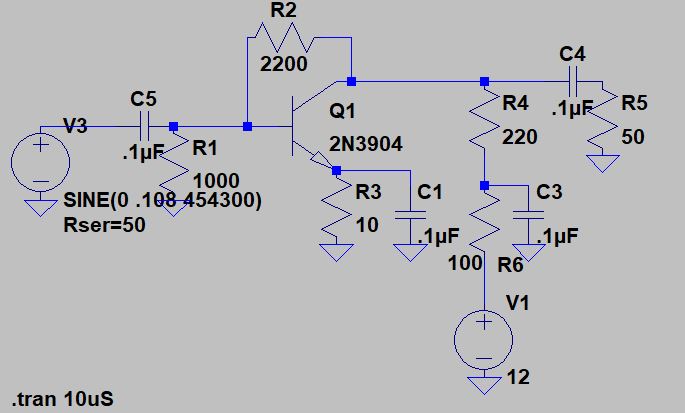
Roy GM4VKI – I thanked him for his article in SPRAT about putting a 2n3904 on the output of an NE602 10P mod. Brilliant.
Roger Hayward Told him that I really liked his Dad’s recent web site updates.
Farhan – Jokingly cursed me for showing him the Oscillodyne regen of Hugo Gernsback and Jean Shepherd. “Now I will have to build this!”
SolderSmoke Podcast #228
Of course, no travel. But vaccines are here so maybe soon we can leave our shacks.
In the meantime:
I’ve been playing chess against AI bots on chess.com.
Netflix recommendation: The Bureau. From France. A review from NPR:
A reading from “Conquering the Electron.” Germanium vs. Silicon.
Bill’s Bench:
The KLH Model Twenty-one II. Acoustical Suspension. First receiver WITH A PILLOW! Bad speaker? Blown AF amp finals. Hot heat sink. VBE Multiplier. Desitin.
Tony Fishpool’s recommended LM386 boards. 10 for 11 bucks. Nice. They work. Pictured in the Amazon ad at the upper right of the SolderSmoke blog page.
Putting a digital display on the Lafayette HA-600A
Test gear trouble. My Radio Shack multimeter getting flaky. I many need something better. Auto ranging? My beloved Maplin AF generator died – will have to fix. I need that thing. Probably a bad chip. Good thing they are socketed.
I almost forgot about SKN! But I remembered and I made one contact with the HT-37 and Drake 2-B.
Pete’s Bench:
Presentation to RSGB on Homebrew.
TenTek Troubleshoot.
Swan 240? Looking nice.
SDR adventures.
MAILBAG
Bill N8ET sent me some really nice Showa 9 MHz 8 pole crystal filters.
Kevin AA7YQ Smoke jumper! Building a hybrid SDR.HDR rig. Launched blog. FB
Nick M0NTV working on similar HDR/SDR project. Great video.
Grayson KJ7UM Hollow State Design – Launched a new blog. Very FB!
Thomas K4SWL of SWL Post blog. Kearsarge Mountain Transmission system. And recent events.
Peter VK2EMU Poetry. CW poetry.
Pete WB9FLW looking at DSB rigs…
Drew N7DA Feels not like a real ham because he hasn’t built a quad from bamboo. Which type of landscape bamboo is best for antennas?
Ryan Flowers of MiscDotGeek.Com blog is also watching the Tally Ho YouTube videos of Leo Sampson. Wants to put a WSPR beacon on the Tally Ho.
Joe KF5OWY Working with diode ring mixers, trying to see the mixer action on his ‘scope. 1 and -1!
Jim AB9CN sent a cool idea about how to do a 20/17 Moxon.
Roy GM4VKI – I thanked him for his article in SPRAT about putting a 2n3904 on the output of an NE602 10P mod. Brilliant.
Roger Hayward Told him that I really liked his Dad’s recent web site updates.
Farhan – Jokingly cursed me for showing him the Oscillodyne regen of Hugo Gernsback and Jean Shepherd. “Now I will have to build this!”
Glowing Numerals for the Lafayette HA-600A (With Jeweled Movements)
So Many Wonderful Things on W7ZOI’s Site
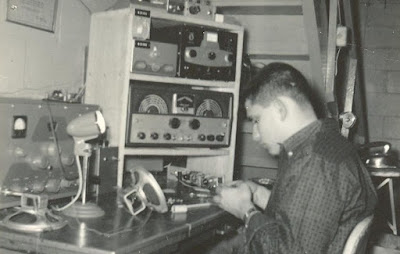
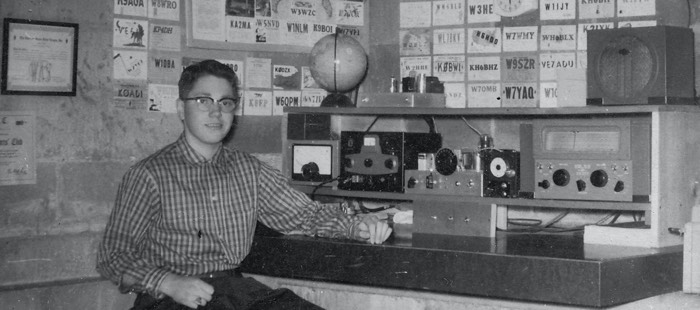
There he is. Wes Hayward, W7ZOI in 1957. I had never seen this picture before. I found it on Wes’s recently updated “shackviews” web page: http://w7zoi.net/shackviews.html .
There are so many treasures on that page, and on all the other portions of Wes’s site.
Some highlights for me:
— Wes’s description of the station in the above picture.
— On his page about Doug DeMaw, Wes mentions that after Doug edited Wes’s 1968 article about direct conversion receivers, Doug built some himself, experimenting with different product detector circuits. Having used Doug’s mixer circuit in many of my rigs, and having recently experimented with different product detectors for my HA-600A, I kind of felt like Doug was watching over my shoulder, guiding me along as I experimented.
— Wes’s use of a digital Rigol oscilloscope. Makes me feel better about giving up on my Tek 465.
— The page about Farhan’s visit to Wes, and the awesome gathering of homebrew Titans that ensued…
— Wes’s meeting with Chuck Adams.
Thanks Wes. Happy New Year and best of luck in 2021!
Wrapping up the HA-600A Product Detector Project — Let’s Call Them “Crossed Diode Mixers” NOT “Diode Rings”
This has been a lot of fun and very educational. The problem I discovered in the Lafayette HA-600A product detector caused me to take a new look at how diode detectors really work. It also spurred me to make more use of LTSpice.
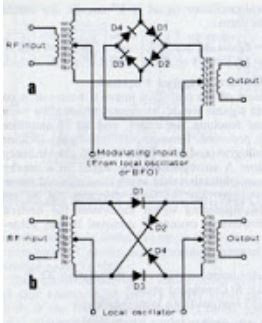
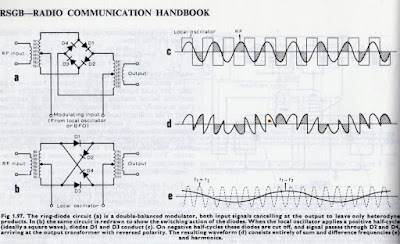
In the end, I went with a diode ring mixer. Part of this decision was just my amazement at how four diodes and a couple of transformers can manage to multiply an incoming signal by 1 and -1, and how this multiplication allows us to pull audio out of the mess.
But another part of the decision was port isolation: the diode ring mixer with four diodes and two transformers does keep the BFO signal from making its way back to into the IF chain. This helps prevent the BFO signal from activating the AGC circuitry, and from messing up the S-meter readings. LTSpice helped me confirm that this improvement was happening: in LTSpice I could look at how much BFO energy was making its way back to the IF input port on the diode ring mixer. LTSpice predicted very little, and this was confirmed in the real world circuit. (I will do another post on port isolation in simpler, singly balanced diode mixers.)
At first I did have to overcome some problems with the diode ring circuit. Mine seemed to perform poorly with strong signals: I’d hear some of the “simultaneous envelope and product detection” that started me down this path. I also noticed that with the diode ring, in the AM mode the receiver seemed to be less sensitive — it was as if the product detector circuit was loading down the AM detector.
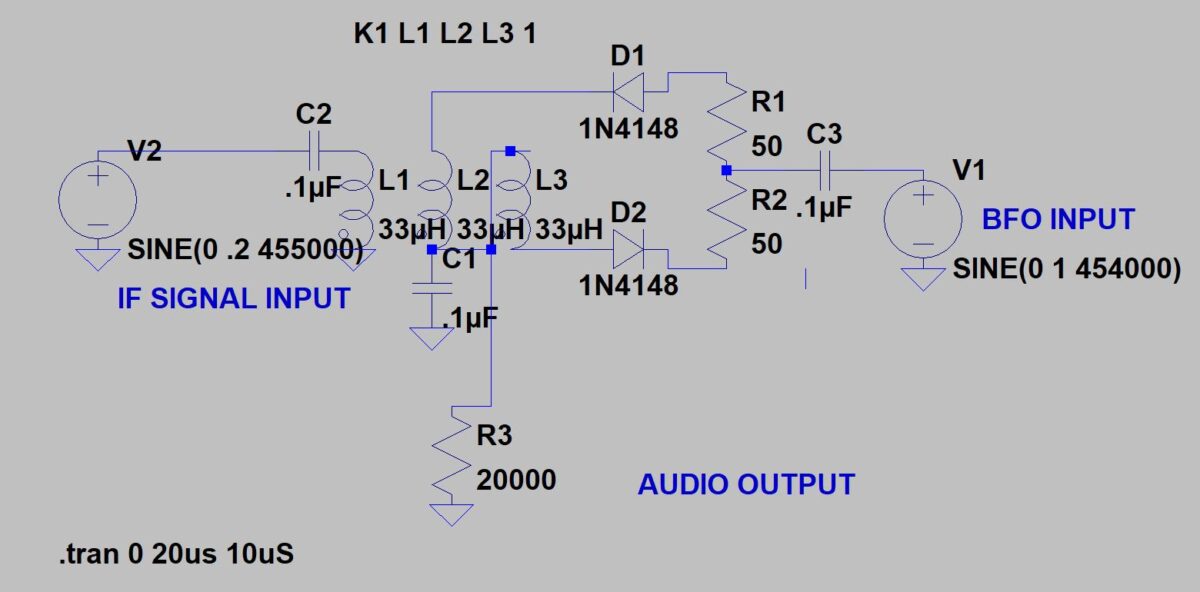
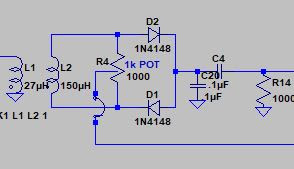
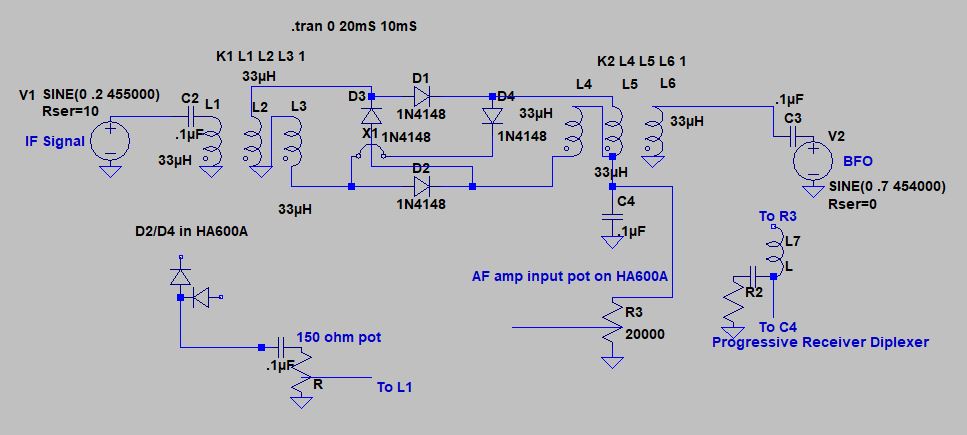
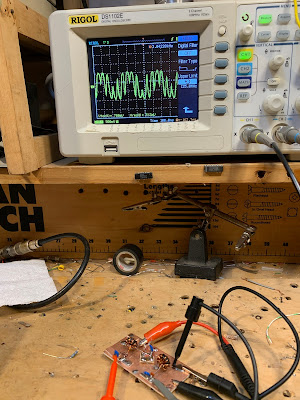
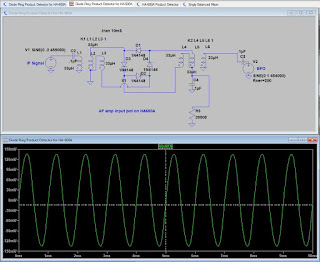
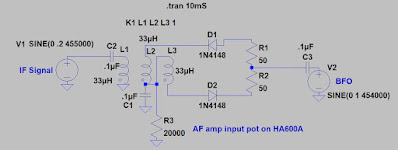
One of the commenters — Christian — suggested putting some resistance into the input of the diode ring circuit. I put a 150 ohm pot across the input, after the blocking capacitor. The top of the pot goes to the capacitor, the bottom to ground and the wiper to the input of L1 in the diode ring circuit (you can see the circuit in the diagram above). With this pot I could set the input level such that even the strongest input signals did not cause the envelope detection that I’d heard earlier. Watching these input signals on the ‘scope, I think these problems arose when the IF signals rose above .7 volts and started turning on the diodes. Only the BFO signal should have been doing that. The pot eliminated this problem. The pot also seemed to solve the problem of the loading down of the AM detector.
With the pot, signals sounded much better, but I thought there was still room for improvement. I thought I could hear a bit of RF in the audio output. Perhaps some of the 455 kHz signal was making it into the AF amplifiers. I looked at the circuit that Wes Hayward had used after the SBL-1 that he used as product detector in his Progressive Receiver. It was very simple: a .01 uF cap and 50 ohm resistor to ground followed by an RF choke. I can’t be sure, but this seemed to help, and the SSB now sounds great.
A BETTER NAME?
One suggestion: We should stop calling the diode ring a diode ring. I think “crossed diode mixer” or something like that is more descriptive. This circuit works not because the diodes are in a ring, but because two of them are “crossed.” From now on I intend to BUILD this circuit with this crossed parts placement — this makes it easier to see how the circuit works, how it manages to multiply by -1, and to avoid putting any of the diodes in backwards.
Diode Ring Magic
A Diode Ring Product Detector for the HA-600A? Problems.
Pete advised me to try this a week or so ago, but it took me a while to follow through and try it out.
I got the two diode, one transformer product detector working well, but with it a new problem arose: 455 kHz energy from the BFO was leaking past the product detector back into the S-meter/AGC circuitry. This showed up in the form of a constant S-3 reading when I switched to SSB/CW. This was annoying.
I figured the problem was that the only signal really being balanced out was the IF signal going into L1 of the product detector. I took another shot at putting the BFO signal into this port, with the IF signal going into the unbalanced potentiometer port. This did indeed take care of the BFO leakage S-meter problem, but once again the SSB did not sound great — I think the old problem of simultaneous envelope and product detection returned.
This was obviously a port isolation problem. I remembered that the diode ring “doubly balanced” configuration has much better port isolation. So on Sunday morning I built one, first in LTSpice and then on the bench.
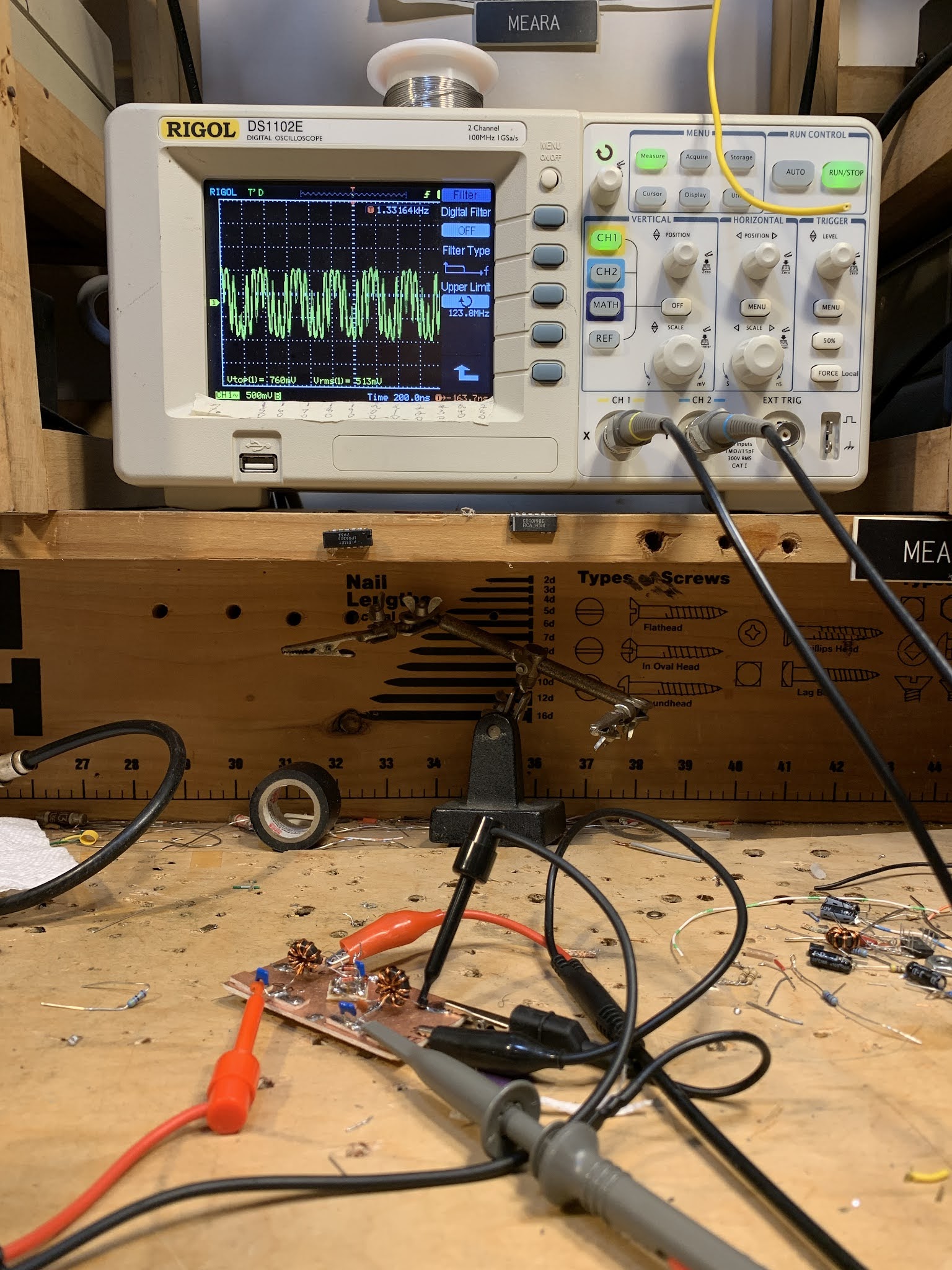
For the bench model I used some PC board pads out of Pete Juliano’s $250,000 CNC machine. For the toroids I used two trifilar coils wound by Farhan’s dedicated staff in Hyderabad. The diodes were sent to me by Jim W8NSA. So there was lots of soul in this new machine.
The circuit worked in LT Spice and at worked well when tested on my bench with my FeelTech (for the BFO) and HP8640B (for the IF signal) sig gens with my Rigol ‘scope watching for the audio out.
But I ran into some problems when I popped the new board in there in place of the old product detector: The 455 kc BFO leakage problem is gone and the S-meter is where it should be, but…
— I’m seeing a return of the old simultaneous envelope and product detection problem. SSB was sounding scratchy again and indeed, when I removed the BFO signal from the diode ring circuit I could hear SSB signals making it into the audio amplifiers. These signals sounded just like AM signals as heard through an envelope detector without a BFO.
— The diode ring circuit also had a very bad effect on how the HA-600A worked in AM mode. It seemed like the new circuit was loading down the diode AM demodulator. SW broadcast signals sounded awful in the AM mode until I disconnected the IF input to the diode ring circuit (this input is NOT switched — it is always connected, even in the AM mode).
So, for now, am back to using the two-diode, single transformer, singly balanced product detector with IF signal going to the balanced (L1) port and the BFO going in through the wiper of the 100 ohm pot.
Any suggestions on how to overcome the problems with the diode ring circuit?
How Does My Singly Balanced, Two-Diode, Single Transformer Product Detector Really Work?
As young James Clerk Maxwell used to say, “What’s the go of it?” and “What’s the particular go of it?”
I studied this circuit carefully when I was using it as a balanced modulator in my DSB rigs. I wrote up my conclusions in my book “SolderSmoke — Global Adventures in Wireless Electronics.”
BALANCED MODULATOR CONFIGURATION:
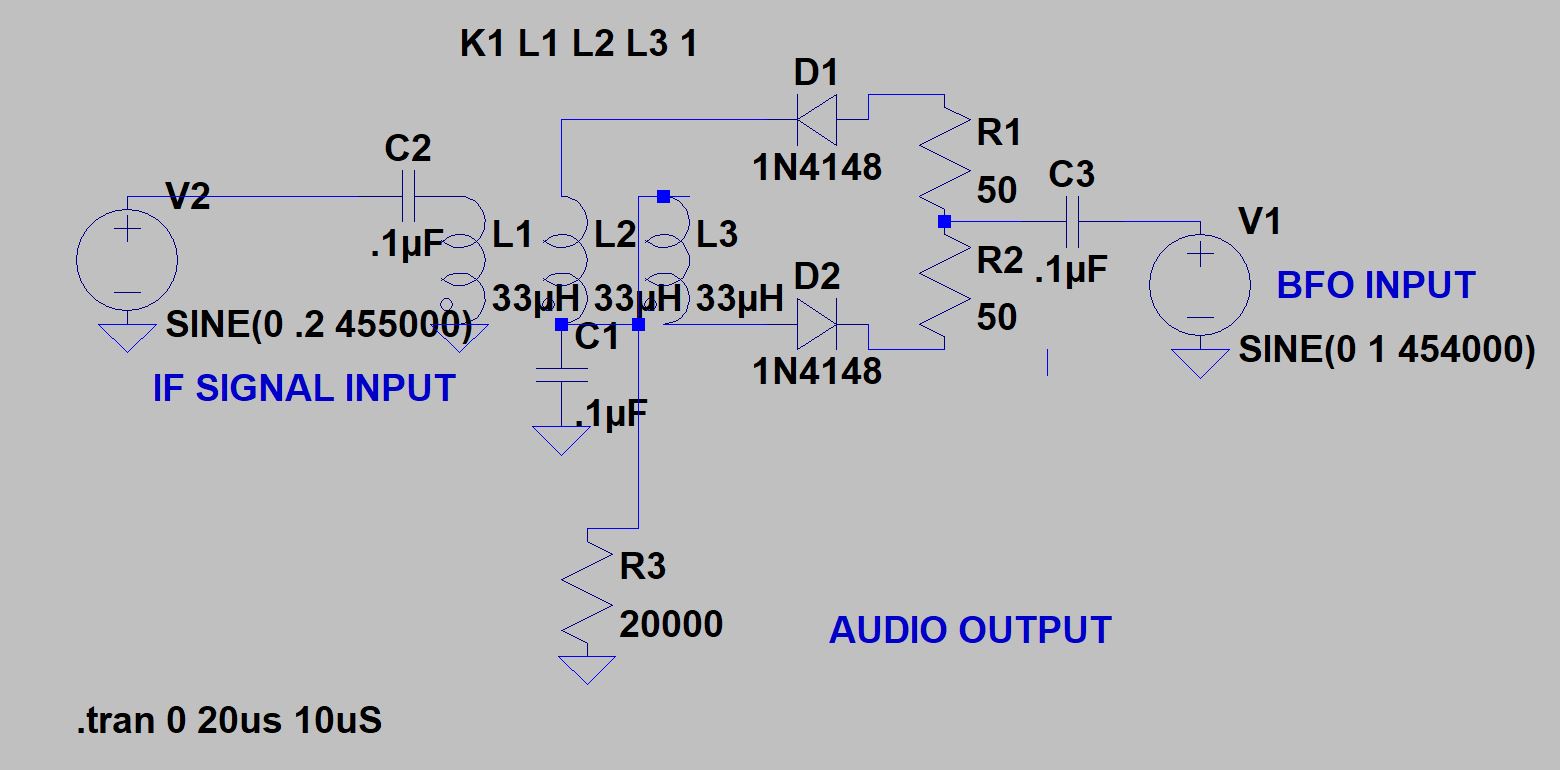
When I was using it as a balanced modulator, I had the RF “carrier” signal going into L1. This RF signal was 7 dbm, enough to switch the diodes on at voltage peaks. With the “center tap” of L2/L3 grounded for RF, this meant that when the “top” of L2 is negative, the “bottom” of L3 is positive. In this situation BOTH D1 and D2 will turn on and conduct.
When the top of L2 is positive, the bottom of L3 is negative and neither of the diodes is on. Neither conducts.
So we have the RF signal turning the diodes on and off at the frequency of the RF signal.
Audio from the microphone and mic amplifier is sent into the center tap connecting L2 and L3. The level of this audio is kept low, below the point where is could turn on the diodes. The center tap IS grounded for RF by the .1uF capacitor, but it is NOT grounded for AF. That is key to understanding this circuit.
In essence by turning the two diodes on and off at the rate of the RF signal, the audio signal is facing severe non-linearity through the diodes. We could say it is alternately being multiplied by 1 and 0. This non-linearity is what is required for mixing. We therefor get sum and difference products: Sidebands. At this point, Double Sideband.
The way the transformer is set up means the RF carrier signal is balanced out: Even when the two diodes conduct, the top of R1 and the bottom of R2 are of equal and opposite polarity, so there is no carrier signal at the junction of R1 and R2 (they are actually a 100 ohm variable resistor that can be adjusted to make SURE they balance out). So the carrier is suppressed and all that remains are the sidebands: Suppressed Carrier Double Sideband.
PRODUCT DETECTOR CONFIGURATION:
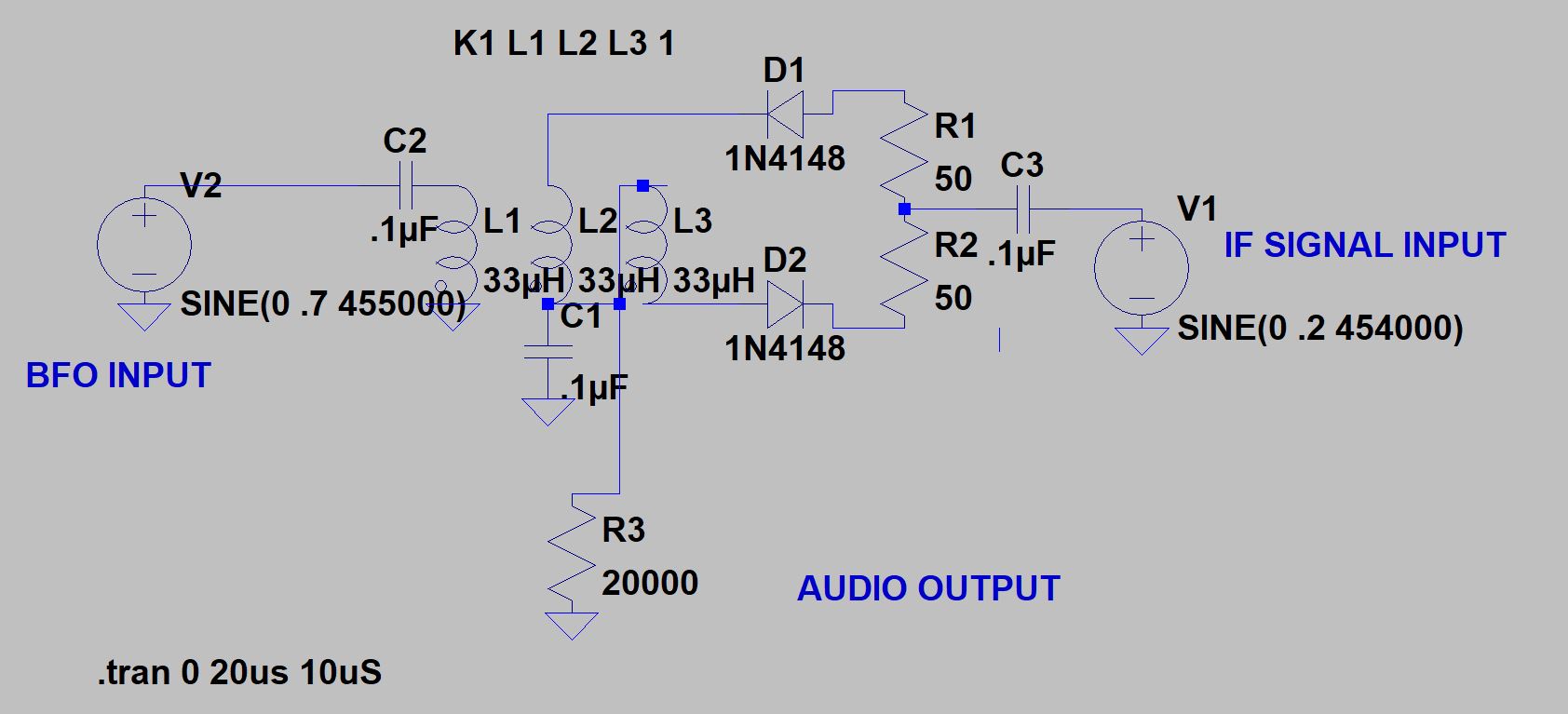
What happens when we use this circuit as a product detector in a receiver? Let’s assume we are working with a 455 kc IF. If you run a 454 kc 7 dbm BFO signal into L1, it will turn the diodes on and off as described above. But you will NOT be able to put the 455 kc IF signal into the center tap of L2/L3 — that center tap is GROUNDED for 455 kc. So you will have to run your IF signal into the resistors, and take the audio output from the center tap of L2/L3. This works. I tried it in my HA-600A. But there is a problem: Envelope detection.
In this arrangement, we are balancing out NOT the 455 kc IF signal, but instead we are balancing out the BFO. We don’t really NEED to balance out the BFO — it can easily be knocked down in the audio amplifiers, and IT is not responsible for the problematic envelope detection. We DO need to balance out the IF signal, because if that gets through we can get simultaneous “envelope detection” and product detection. And believe me, that does not sound good.
So I tried putting the IF signal into L1, and the BFO signal into the resistors (as shown above). I took the audio from the junction of L2/L3. This seemed work better, with envelope detection greatly reduced.
BUT WHAT’S THE GO OF IT?
But how is this circuit mixing in this configuration? The strong BFO signal is still controlling the diodes, BUT, with the BFO signal coming in through the resistors, when the top of R1 is positive the bottom of R2 is ALSO positive. In this situation D1 will conduct but D2 will not. The IF signal is facing a big non-linearity. This will result in sum and difference frequencies. The difference frequency will be audio. But with D1 and D2 turning on and off in a very different way than we saw in the balanced modulator, how does the mixing happen?
I think the answer comes from the summer 1999 issue of SPRAT, the amazing journal of the G-QRP club. Leon Williams, VK2DOB wrote an article entitled “CMOS Mixer Experiments.”
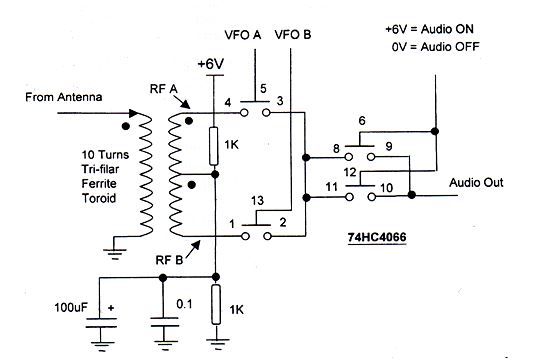
Here is Leon’s 74HC4066 circuit:
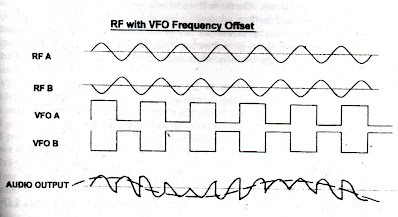
I think those two gates (3,4,5 and 1,2, 13) are the functional equivalent equivalent of the two diodes in our product detector. In Leon’s scheme the VFO is supplying signals of opposite polarity. Ours is providing only one signal, but the fact that the diodes are reversed means that they act just like the gates in Leon’s circuit. The transformer is almost identical to the one we use in the product detector.
Let’s look at the output from Leon’s circuit:
Improving the Product Detector in the Lafayette HA-600A
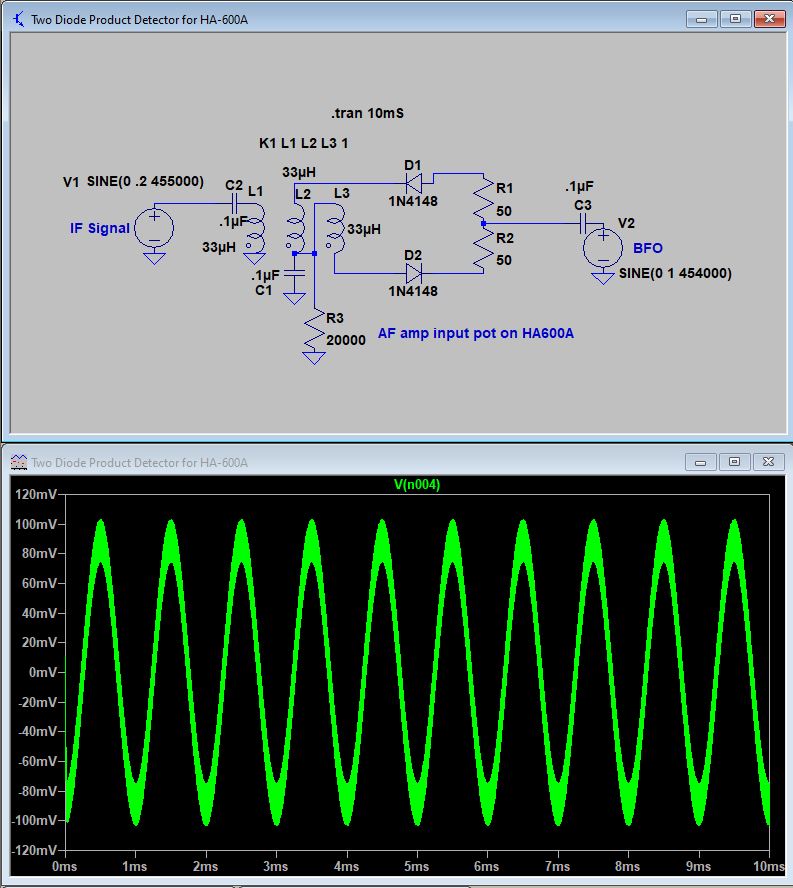
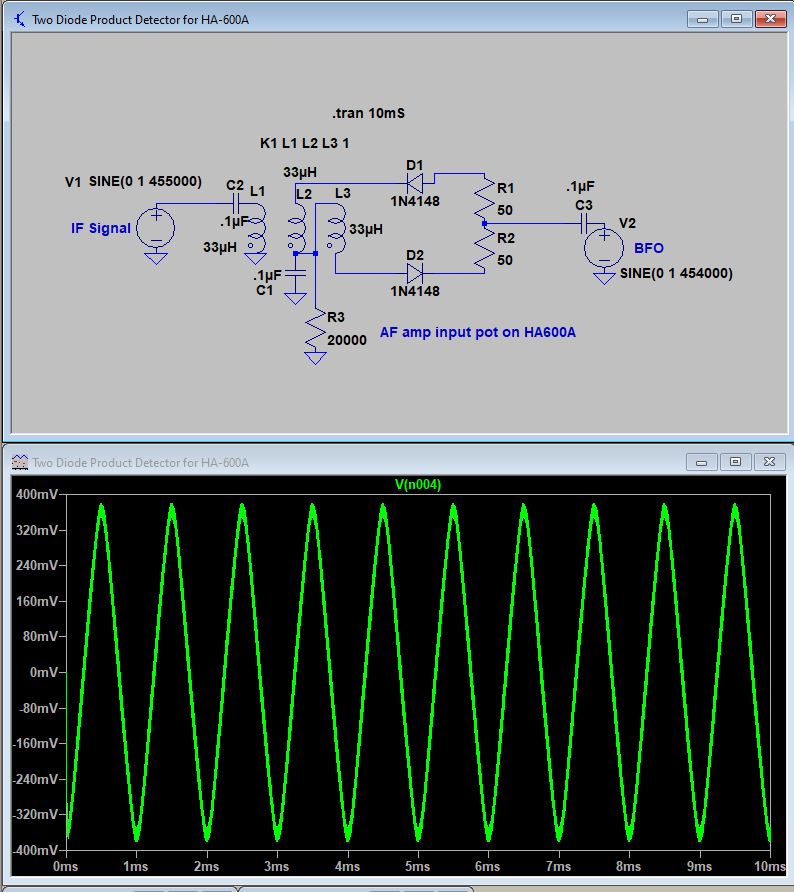
Steve N8NM built the HA-600A product detector both in LTSpice and in the real world. It worked fine in both versions. Steve even put the product detector into his S-38 receiver — he reported it worked well there.
I too built the thing in LTSpice. Then I went and rebuilt the circuit on a piece of PC board. I connected the new circuit to the HA-600A, using my external FeelTech sig generator as the BFO. IT STILL SOUNDED BAD ON SSB.
At this point I started Googling through the literature. I found a promising article by Robert Sherwood in December 1977 issue of Ham Radio magazine entitled “Present Day Receivers — Problems and Cures.” Sherwood wrote:
“Another area that could use additional work is the product detector. As the name implies, its output should be the product of the two input signals. If BFO injection is removed, output should go to zero. If this is not the case, as in the Heath HW series, envelope detection is also occurring, which causes audio distortion.”
I checked my circuit. When I removed the BFO signal from the product detector, envelope detection continued. In fact, with the receiver in SSB mode, and with the BFO disconnected, I could listen to the music of WRMI shortwave. It seemed that Sherwood was explaining well the problem I was having: Simultaneous envelope and product detection was making SSB sound very bad in my receiver. What I was hearing just seemed to SOUND like what you’d get with a mixture of product and envelope detection: “scratchy” sounding SSB. This also seemed to explain why SSB would sound fine when using the diode detector with loosely coupled BFO energy — in that case it would be envelope detection only, with no ugly mixture of both kinds of detection.
Finally, I needed to find a way to use the BFO in the HA-600A with the new product detector. Obviously I needed more BFO signal — I needed about 7 dbm, enough to turn on the diodes. I converted the outboard product detector board into a simple amplifier and put it between the HA-600A BFO and the BFO input port of the new product detector. This works fine.
A few issues remain:
1) The output from the HA-600A BFO through the above BFO amp (and across the 50 ohm resistor) is NOT a pretty 455 kc sine wave. But the peaks of the distorted wave appear to be enough to turn on the diodes, and when I look at the voltages across each diode (on my two channel ‘scope) I see mirror images — one is on when the other is off. Is this good enough?
2) Moving the BFO input from L1 to the junction of the two 50 ohm resistors (that is actually a 100 ohm pot) has big implications for how this mixer works. With the BFO energy going through the toroid, BOTH diodes are being alternately turned on and turned off. But both are on, and then BOTH are off. With the BFO energy going in through the other side, one diode turns on when the other is off. I think the mixing result is the same, with AF coming out of the output port, but the way the mixer works in this configuration is very different. Does this sound right?
SolderSmoke Podcast #226 The U.S. Election, Solar Cycle, uSDX, Hermes, HP8640B, SGC 600 Sig Gen, HA-600A, Mailbag
SolderSmoke Podcast # 226
http://soldersmoke.com/soldersmoke226.mp3
———————————-
About the U.S. election
————————————
Mars: Setting early, will have to shift to evening observation. Weather has been poor.
Sunspot Cycle 25 is underway — SFI 78, SN 32
The Gliessberg cycle
Pete’s Bench: #49, #50, uSDX, Hermes Lite
Bill’s Bench: HP8640B, Global Specialties Corp 6000 counter, Lafayette HA600A.
MAILBAG:
Peter VK2EMU Sent me copy of 1947 Handbook. Thanks Peter
Brad W1BCC Spotted 10 S-38s for 80 bucks on Craig’s list. What’s going on here?
Dale K9NN sent both Pete and I care packages with very cool part, including DG Mosfets
Stuart ZL2TW sent me Les Moxon’s Antenna Book. TRGHS. Moxon will be back!
Alvin N5VZH got his receive converter with a little Tribal Knowledge from SS.
GM4OOU The Bitsy DSB rig from Scotland
Peter VK3YE DSBto DC incompatibility SOLVED
Paul VK3HN’s Digital SWR and Power Meter and Low band AM TX VFO/Controller FB Videos.
VK2BLQ alerts us to article about Jac Holzman of Elektra Records.
AA0ZZ great message on assembler language and writing software the hard way.
Too Simple? Deficiency of the Lafayette HA-600A Product Detector?
I’ve been having a lot of fun with the Lafayette HA-600A receiver that I picked up earlier this month. Adding to the mirth, I noticed that on SSB, the signals sound a bit scratchy, a bit distorted, not-quite-right. (I’m not being facetious; this is an interesting problem and it might give me a chance to actually improve a piece of gear that I — as a teenager — had been afraid to work on.)
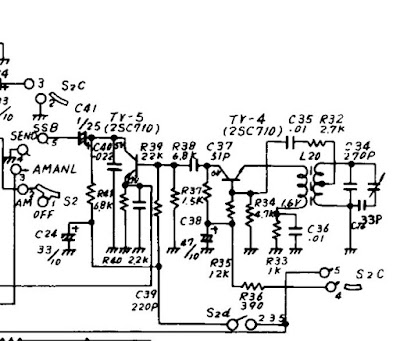
Before digging into the circuitry, I engaged in some front panel troubleshooting: I switched to AM and tuned in a strong local AM broadcast signal. It sounded great — it had no sign of the distortion I was hearing on SSB. This was an important hint — the only difference between the circuitry used on AM and the circuitry used on SSB is the detector and the BFO. In the AM mode a simple diode detector is used. In SSB a product detector and BFO is used. The BFO sounded fine and looked good on the scope. This caused me to focus on the product detector as the culprit.
Check out the schematic above. Tr-5 is the product detector. It is really, really simple. (See Einstein quote below.) It is a single-transistor mixer with BFO energy going into the base and IF energy going into the emitter. Output is taken from the collector and sent to the audio amplifiers. (A complete schematic for the receiver can be seen here: https://nvhrbiblio.nl/schema/Lafayette_HA600A.pdf )
I had never before seen a product detector like this. One such detector is described in Experimental Methods for RF Design (page 5.3) but the authors devoted just one paragraph to the circuity, noting that, “We have not performed careful measurement on this mixer.” The lack of enthusiasm is palpable, and probably justified.
A Google search shows there is not a lot of literature on single BJT product detectors. There is a good 1968 article in Ham Radio Magazine: http://marc.retronik.fr/AmateurRadio/SSB/Single-Sideband_Detectors_%5BHAM-Radio_1968_8p%5D.pdf It describes a somewhat different circuit used in the Gonset Sidewinder. The author notes that this circuit has “not been popular.”
To test my suspicion that the product detector is the problem, I set up a little experiment. I loosely coupled the output of a signal generator to the IF circuitry of the HA-600A. I put the sign gen exactly on the frequency of the BFO. Then, I switched the receiver to AM, turning off the BFO and putting the AM diode detector to work. I was able to tune in the SSB signals without the kind of distortion I had heard when using the product detector.
So what do you folks think? Is the product detector the culprit? Or could the problem be in the AGC? Should I start plotting a change in the detector circuitry? Might a diode ring work better?