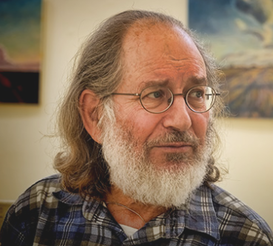
Eric Guth has a great interview with homebrew and boatanchor guru Mike WU2D. Listen here:
https://www.qsotoday.com/podcasts/WU2D Wow: “My receiver was from a Sherman tank.” His story about getting in trouble after “borrowing” his friend’s callsign was really great. I also liked his wise comment about how anyone who homebrews simple gear will collect some “wallpaper” from official observers and the FCC. Mike is right: we shouldn’t get too concerned about minor transgressions. If we do, we run the risk of becoming so careful, cautious, and fearful that we never BUILD anything.
There is a wonderful discussion of the Paraset. Mike coins a term that we might want to add to the SolderSmoke lexicon: RetroQRP. (Over to you Steve Silverman. Your call OM.)
Yesterday I had my first contact using the ET-2’s improved receiver. I had watched the video of N0WVA’s receiver and I realized that more sensitivity was possible. So I tried to replicate his LC ratio. I think that helped a lot. Today I posted a plea for help on the SKCC Sked page and then called CQ on 40. I was answered by Pete, KD2OMV who was so loud that I had to take the headphones off my ears! He was booming in, all the way from upstate New York. The receiver was running off a somewhat depleted 9 volt battery. I made a quick video (above). I’m just holding the I-phone up to the headphone, while also trying to copy the incoming CW. This was a really great contact. Pete has a wonderful knack story. He was licensed as a kid but never made a contact. As an adult he found his old box of parts for a 6T9er in his parents house. So he builds it and uses the homebrew rig to make his first ham radio contact. FB Pete. Thanks for the contact OM. I wrote your call on the ET-2.
Perry K9NZ was contact #10 with my ET-2 QRPp rig. I found the above on his QRZ page. Beautiful sentiments. Most of us have similar stories, and similar feelings about ham radio. FB Perry.
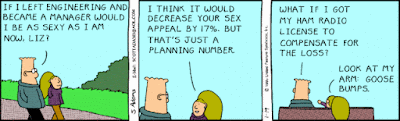
Dilbert’s mother took him to the doctor because of ham radio. Jean Shepherd’s date said that Shep’s mother should “take him to a doctor” (he was obsessing over his Heising modulator.) And now we learn that Steve M0KOV was hauled into the doctor’s office because of his “obsession with electronics.” You are in good company Steve. The Knack diagnosis is confirmed.
From Steve M0KOV:
Just watched young Dilbert at the doctor’s surgery.
Although I was late getting my ham licence, I’m sure that I fit the standard knack victim mould. I built my first radio at the age of 10 and even before then I preferred to be bought batteries, switches and lamps rather than sweets. Within a couple of years my small bedroom comprised of a bed, somewhere to throw my clothes and an electronics work bench. The bench and floor were completely covered with half built electronic projects, ex military radios, tools, my beloved old Heathkit oscilloscope and the rest.
Now, my true Dilbert moment. I remember being in the family doctors surgery and my mother was discussing my inability to get to sleep (a perfectly normal ailment for a 13 year old male). She was voicing her concern that it might be my obsession with electronics, and it was all going round in my head and keeping me awake. Funny, later in my life she never seemed to be bothered if the worry of studying or exams kept me awake.
Here is another young fellow who shows all the signs of having “The Knack.” I think his findings would be very useful for those involved in light beam communication.
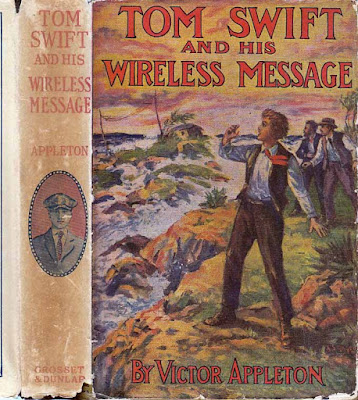
Thanks to Richard for alerting us this important piece of Knack history. Not bad for 1910. You can see Tom’s shack and antenna in the cover image (above). I don’t think he was going for a fan dipole. He built the kind of multi-wire antenna that was in fashion in the early days of radio.
The full text of the book is avaialble free on-line. The radio fun begins in Chapter 20:
I am certain I missed the origin of “the knack” as used on your blog. I, wonder, however, if in your youth you read Tom Swift novels? Although now they seem somewhat politically incorrect, I feel that the word may have, for our purposes, evolved there.
In the first novel, “Tom Swift and His Motor-Cycle” (sic) Tom repairs a butter churn’s “system of cogs and handles.” When praised for his abilities he declares, “It’s just a knack.” Stick with me.
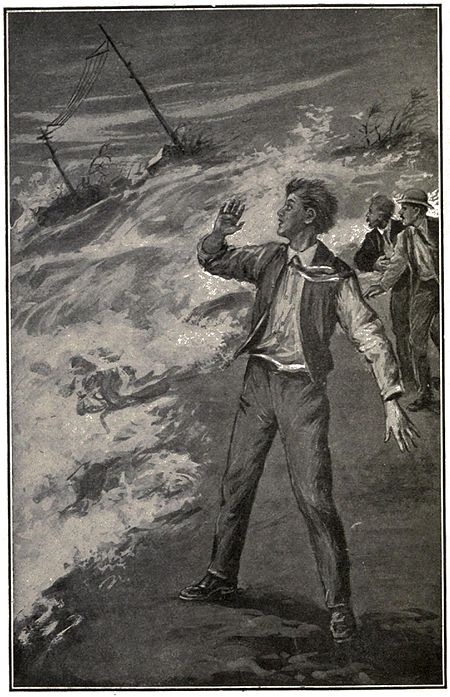
In a later novel, written around 1910, “Tom Swift and His Wireless Message” Tom is shipwrecked on an ebbing volcanic island. He saves the day by constructing a transmitter and receiver from the wreckage of his plane, even though he “did not have the magnets, carbons, coherers and needles” needed. He strings “ wires from the top of the dead treed, to a smaller one, some distance away, using five wires, set parallel, and attached to a wooden spreader, or stay. (Fan dipole?) The wires were then run to the dynamo, and the receiving coil, and the necessary ground wires were installed.” Then,”once the impulses, or electric currents, are sent out into space, all that is necessary to do is to break, or interrupt them at certain intervals to make dots, dated and spaces.” He sent “C.Q.D. (come quick—danger) even though a “new code has been instituted for them, but I am going to rely on the old one, as, in this part of the world, the new one may not be so well understood.” Needless to say, a ship hears, responds and rescues the crew.
I think Ryan Gosling is a good choice to play Neil Armstrong. It looks like this movie will deal with the “right stuff,” a concept somewhat related to “the knack.”
Wow, Eric Guth’s interview with Ron Gang 4X1MK really resonated with me: — Asked about how he got is start in radio, Ron went back further than many of us do in response to this question. He cited his early experiments with “two tin cans and a string.” Yes, of course! I’d forgotten all about it, but in retrospect this might have been a very early indication of THE KNACK. (I’ll bet many of our readers were also active on the String and Can band.) — Ron used a DX-100. FB. — Ron was active on the satellites. In his voice you can hear the joy and the burst of enthusiasm that resulted from those early satellite contacts. He also mentions the untimely demise of Oscar 13. Bummer. — Ron was the Israel correspondent for 73 Magazine. I held a similar position in Dominican Republic. My friend David Cowhig was at the same time correspondent from Okinawa, Japan. We should have a reunion of “73 Magazine Hambassadors.” — Ron mentions John Tait EI7BA. John was a regular contact of mine when I was in the Azores. He appears in the SolderSmoke book. He was the one who introduced me to an important Irish accolade: John told me that WD-40 is “the Pope’s pee.” — Toward the end, Ron discusses the wonder of ham radio conversations, and provides a good suggestion on how to get beyond the all-to-common “hello-59-goodbye” contacts. Ron’s comments on the spiritual or philosophical aspects of the hobby were just the thing for a quiet Sunday morning. Thanks to Eric and to Ron for a great interview. Listen here: http://www.qsotoday.com/podcasts/4X1MK
Hack-A-Day had a piece on Cliff Stoll of “The Cuckoo’s Egg” and “Silicon Snake Oil” fame. I read these books years ago. I included a quote from Cliff on page 45 of the SolderSmoke book (the quote seemed to foreshadow my aversion to SDR). I didn’t know that NOVA produced an hour-long program on Stoll’s Cuckoo’s Egg adventures. It is really good. Many of those involved play themselves in the video. Very cool. See above. I checked Cliff’s QRZ.com page. We wrote several years ago that Cliff has THE KNACK. Note below his preference for thermatrons and the affection for Heathkits. Diagnosis confirmed.
From QRZ.com:
Hi gang! This is Cliff Stoll, K7TA
Way back in the Jurassic, I was licensed as WN2PSX, in Buffalo NY. Got my general ticket around 1967 as WB2PSX, and helped build ham radio stations at Hutch-Tech high school, University/Buffalo, and University of Arizona. When I went to Tucson for grad school, I passed my extra ticket and snagged the call K7TA (back when this meant 20wpm cw). I held a first-class commercial ticket, which let me engineer at WBFO radio, but I don’t know if commercial licenses even exist anymore.
I now live in Oakland California, and occasionally get on the cw lowbands with old heathkit gear … just rebuilt my novice NC-270 receiver with filaments that glow in the dark. Gotta restring my 40 meter dipole that came down in a windstorm.
You can guess that I’m pretty much retired. Along the way, I’ve worked in FM radio, planetary physics, computing, writing, speaking, teaching, and math. Best way to reach me is through my website www.kleinbottle.com
When I heard that the guys who ran the LIGO gravitation wave experiment won this year’s Nobel Prize for physics, something told me that at least one of those involved in this historic detection of weak distant signals would have THE KNACK. It did not take me long to confirm this. Rainer Weiss (above) definitely has had the THE KNACK all his life. And what an interesting life it is. Check it out: http://www.sciencemag.org/news/2016/08/meet-college-dropout-who-invented-gravitational-wave-detector Knackish excerpts: The family soon had to flee again, when U.K. Prime Minister Neville Chamberlain signed an accord ceding parts of Czechoslovakia to Germany. They heard the news on the night of 30 September 1938, while on vacation in the Tatra Mountains in Slovakia. As Chamberlain’s address blared from the hotel’s massive radio, 6-year-old Rainer stared in fascination at the glowing array of vacuum tubes inside the cabinet. The hotel emptied overnight as people fled to Prague. As a teenager, Weiss developed two passions: classical music and electronics. Snapping up army surplus parts, he repaired radios out of his bedroom. He even made a deal with the local toughs: If they left him alone as he lugged radios to and from the subway, he’d fix theirs for free. “They would steal things and I would have to fix them,” he says. “It wasn’t a good deal.” Weiss was drawn to tinkering partly as a reaction to his family’s cerebral atmosphere. “This is a German-refugee kid with very self-consciously cultured parents, and he’s rebelling against them by doing things with his hands,” Benjamin says. “But he’s surely not rejecting doing things with his head.” He applied to MIT to study electrical engineering so that he could solve a problem in hi-fi—how to suppress the hiss made by the shellac records of the day. But electrical engineering courses disappointed him, as they focused more on power plants than on hi-fi. So Weiss switched to physics—the major that had, he says, the fewest requirements.
Thanks to Stephen G7VFY for alerting us to this very nice video. Ralph Baer did pioneering work in video games. It is fun to see him in his workshop. He obviously has a variant of The Knack. Stephen hinted at a reference to “noodling” but I didn’t hear it — perhaps Stephen meant that the whole thing was about what we’d call noodling. I found the box on his bench labeled “Wire Wrap Materials” kind of ominous — remember our April 1 announcement about the launch of the new “Wire Wrap Rap” podcast?
I liked Ralph’s summary comment about how these days he just has fun building things.
Here is the Google translation of the “about” portion of OM Dian Kurniawan’s blog:
Electronics is something very interesting. In it are stored many miracles of His creation. The almost limitless opportunities for creativity make electronics an art medium. Countless things are ultimately made easy and possible with electronics…. Feel free to start. Life starts from a cell. Let’s keep working for a better life. Salam.
It is obvious that OM Dian has THE KNACK and is a member of the International Brotherhood of Electronic Wizards. Does anyone know his callsign?
There is a lot of very cool stuff on his blog, including some mind-blowing applications of small, color displays. Check it all out:
Here is the Google translation of the “about” portion of OM Dian Kurniawan’s blog:
Electronics is something very interesting. In it are stored many miracles of His creation. The almost limitless opportunities for creativity make electronics an art medium. Countless things are ultimately made easy and possible with electronics…. Feel free to start. Life starts from a cell. Let’s keep working for a better life. Salam.
It is obvious that OM Dian has THE KNACK and is a member of the International Brotherhood of Electronic Wizards. Does anyone know his callsign?
There is a lot of very cool stuff on his blog, including some mind-blowing applications of small, color displays. Check it all out:
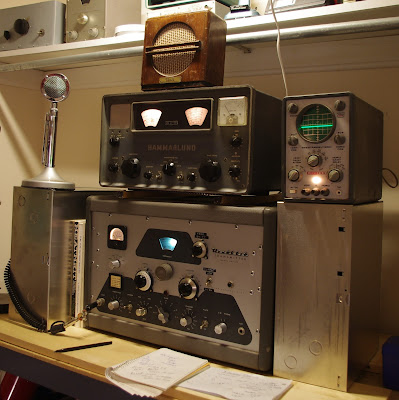
Steve VE7SL recently discussed Heathkit’s wise use of the color green in the VF-1 and DX-100 frequency readouts. The power of green is visible in the above photo of the N2CQR AM station. (I used this gear to check into the Old Military Radio Net and the Lonely Guys’ Net on 75 meters on Saturday). Note the VF-1 on the shelf in the upper left, and the awesome green oscilloscope trace. Juliano Blue is all well and good, but let’s not deny THE POWER OF GREEN. Steve’s discussion (and cool Knack story):
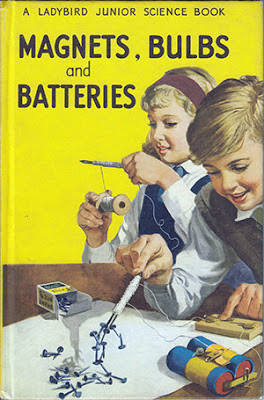
The early fascination with small light bulbs, switches, and batteries confirms the diagnosis. The Ladybird group seems to have led many a young British person down the path to OTD (see the web site for more info on this malady). https://g6lbq.blogspot.com/ Andy writes:
Hi Bill
I have built a few BitX transceivers and developed a 9 band version which has been built by various hams around the world.
Always look forward to the SolderSmoke podcast which I enjoy immensely.
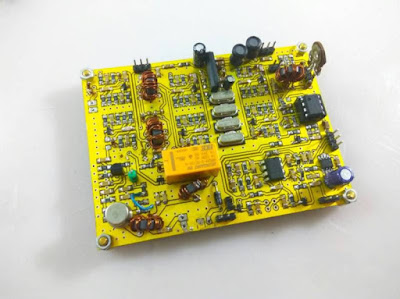
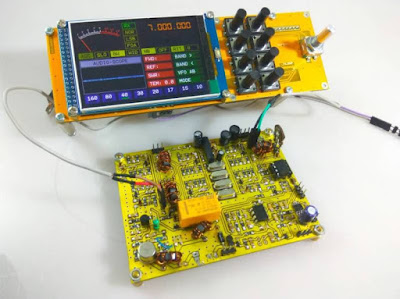
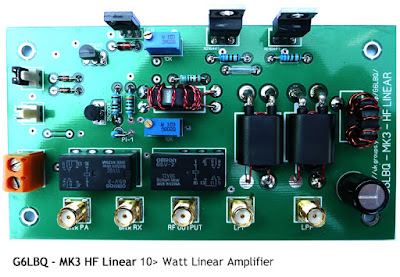
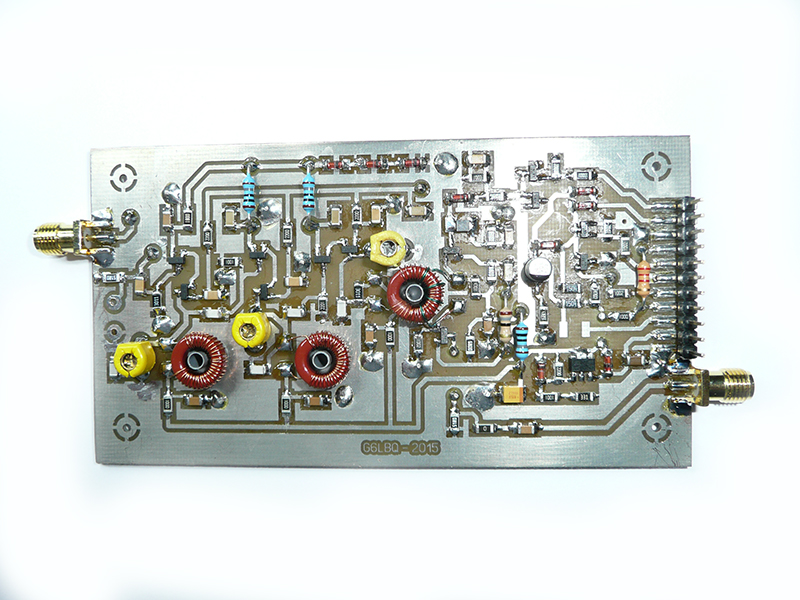
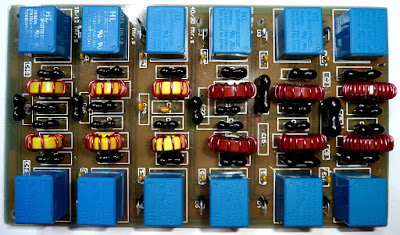
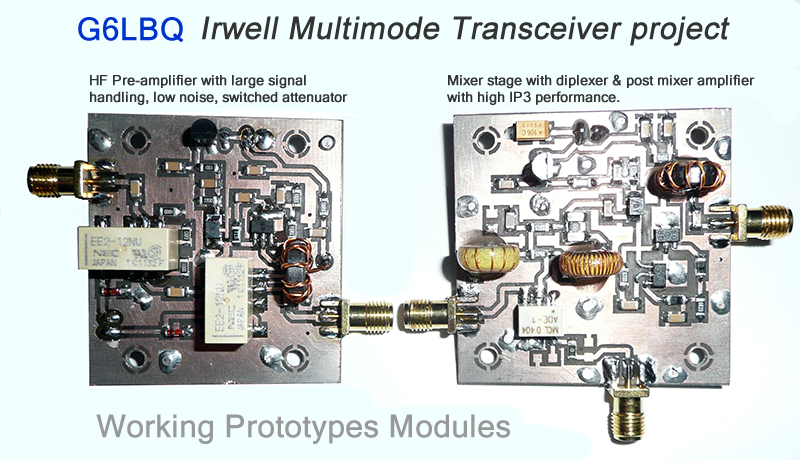
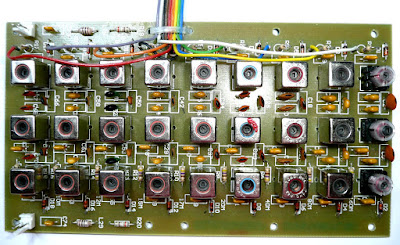
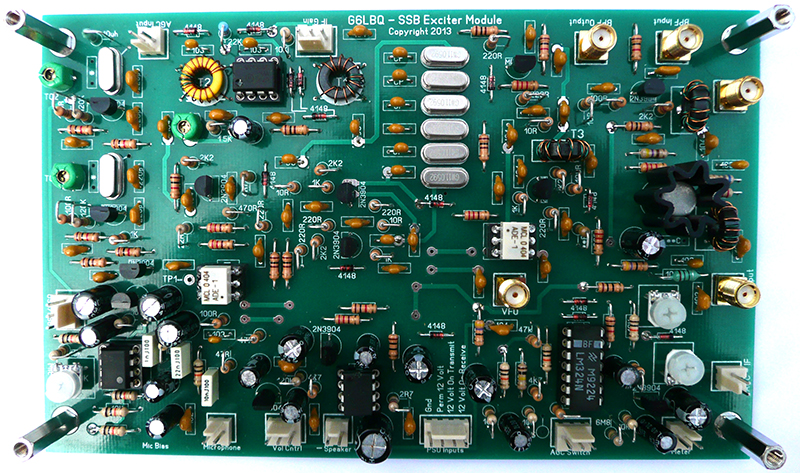
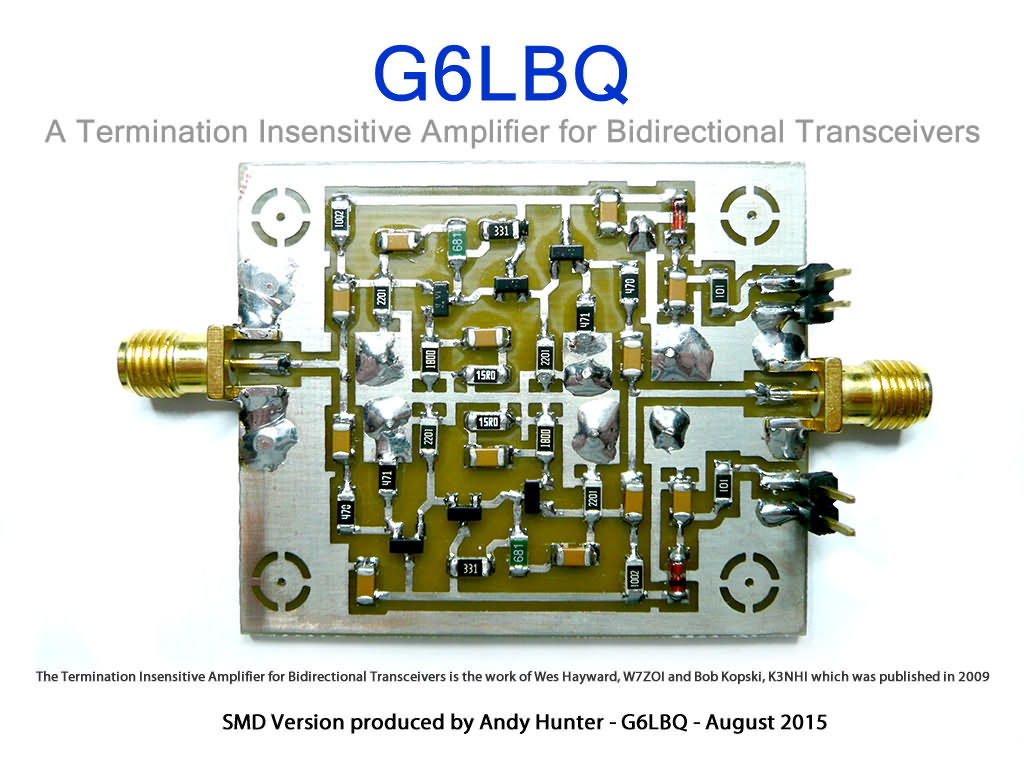
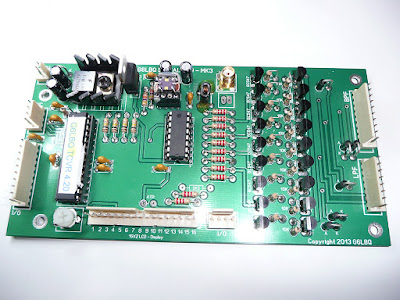
For your interest I have attached some pictures to show you some of the modules I have designed/developed and built for my Multi-Band projects. The SMD boards are for my latest project which I call the Irwell Transceiver, my intention is to make it all band HF and multimode.
Hopefully my pictures will meet with the SolderSmoke approval and the inauguration can take place for recognition that I officially have The Knack, failing this it will be a Basta moment at the G6LBQ workshop!
Keep up the great work you do with SolderSmoke which brings pleasure, fun and inspiration to hams all over the world.
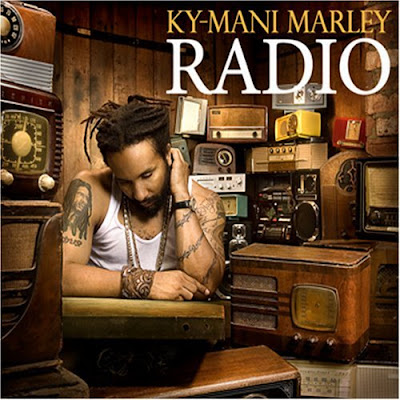
Could it be that Bob Marley’s son Ky-Mani has The Knack? Probably not (no mention of it in Wikipedia) but he certainly has some nice old receivers on his 2007 album cover.
I think Tryg should get that Ladybird receiver working again.
————-
Hi Bill,
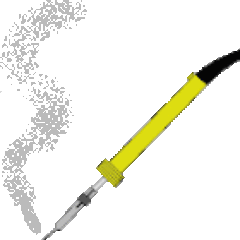
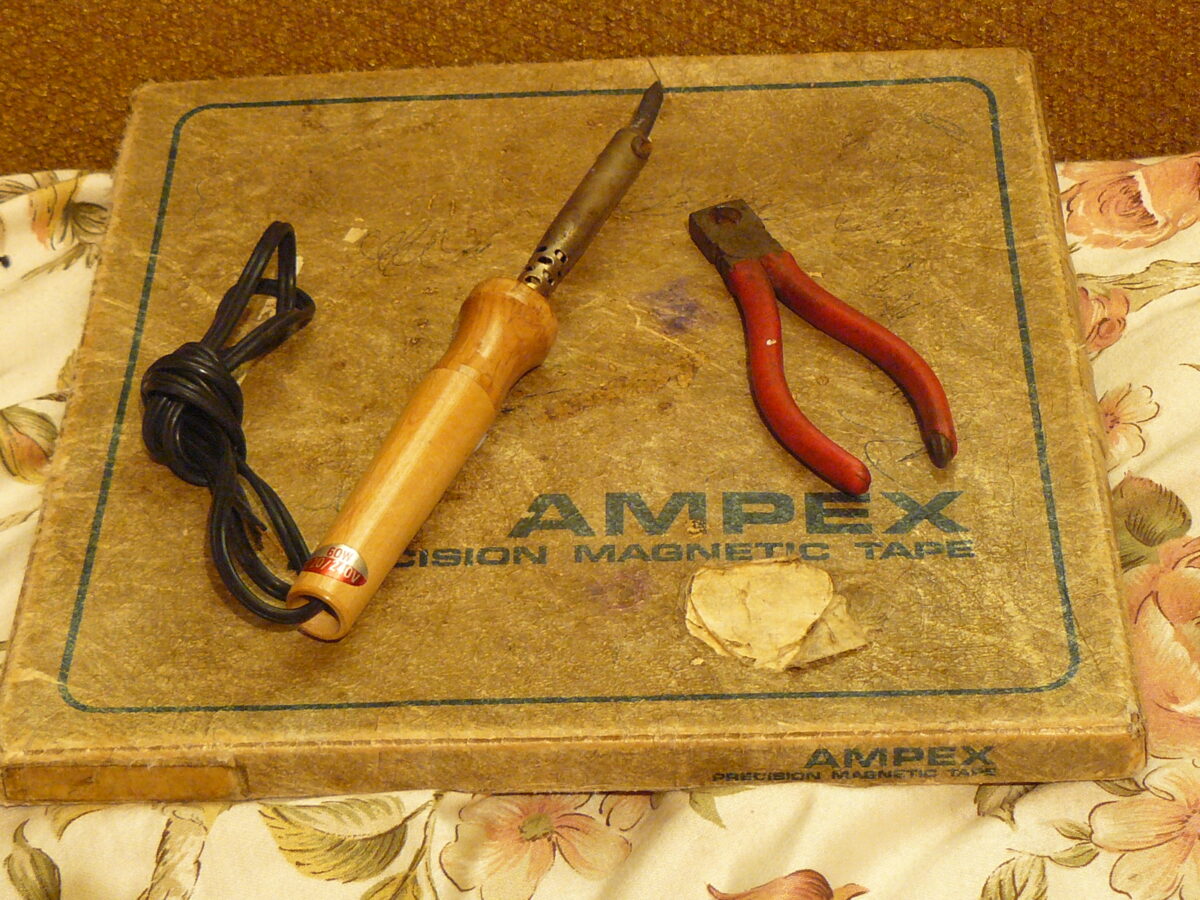
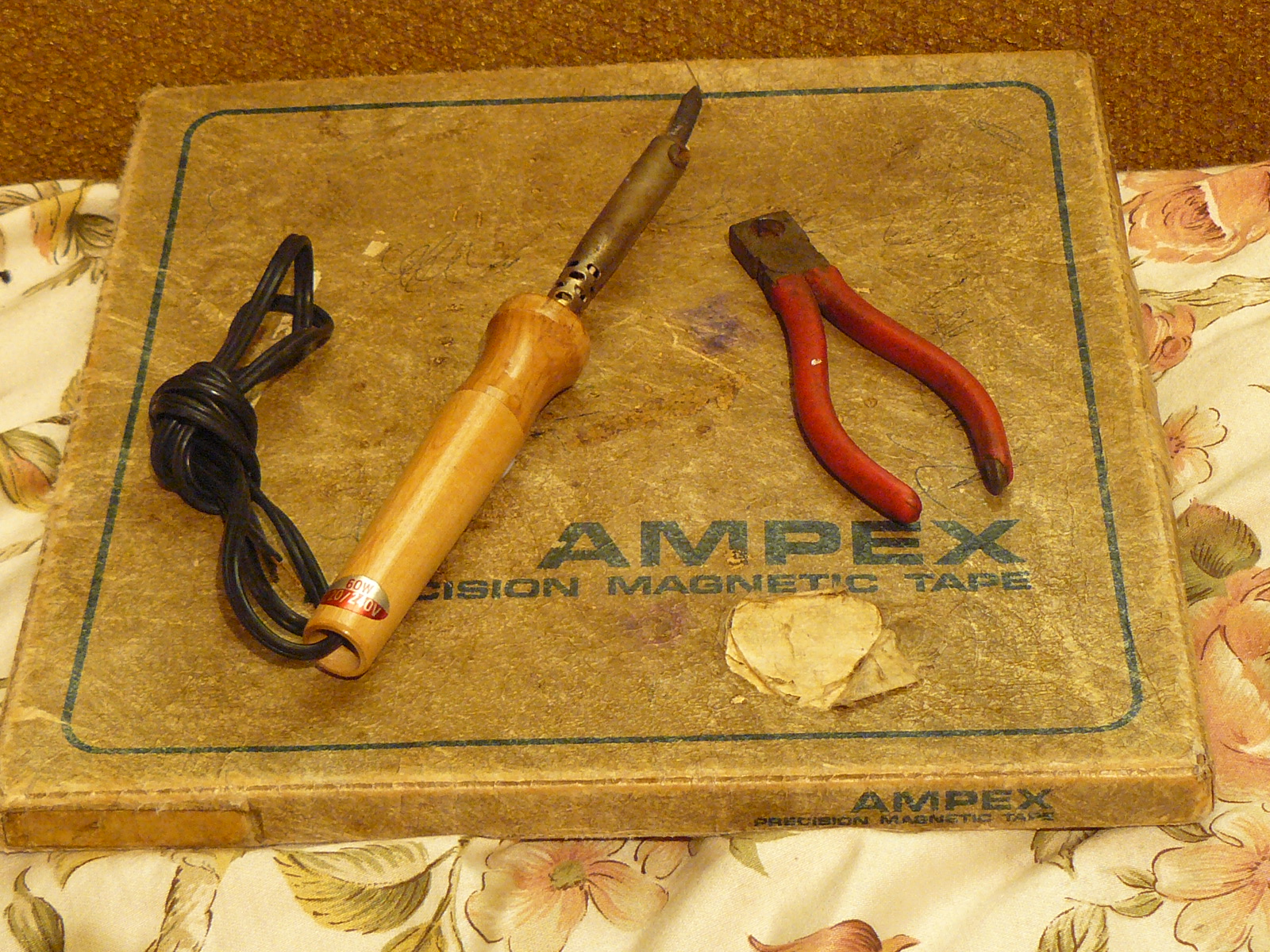
Thanks for the great podcasts and also to Pete for his unique contributions. I have been interested in radio since I was a kid but only really got back into the hobby in 2009. Back when I started playing with electronics in the 1970’s I hankered after a soldering iron of my own. I bought the one in the picture in 1977. A “modest” 60 watt job, it was the cheapest one in the shop but I used it to harvest parts from all manner of abandoned old iron. I was really surprised to find it clearing up recently. The snips in the picture was a tool that my late Uncle had surplus and passed on to me, it too played a role in my scavenging for parts. In Ireland in the 1970’s it was hard to get parts. I remember my Grandmother taking me from Galway to Dublin – 3 hours each way!!!) to buy parts for my first project, Rev. G.C. Dobbs venerable transistor radio from the “Making a Transistor Radio” book by Ladybird. I still have the book and the dusty remnants of the radio, long since plundered for parts. When I returned to the world of radio it wasn’t long before I discovered QRP and the GQRP club. It was a real surprise to find the good Reverend was at the helm there. I just thought that the picture and story might raise a smile amongst followers of the blog. Thanks to yourself and Pete for the podcast. Keep up the great work! QRP Forever!
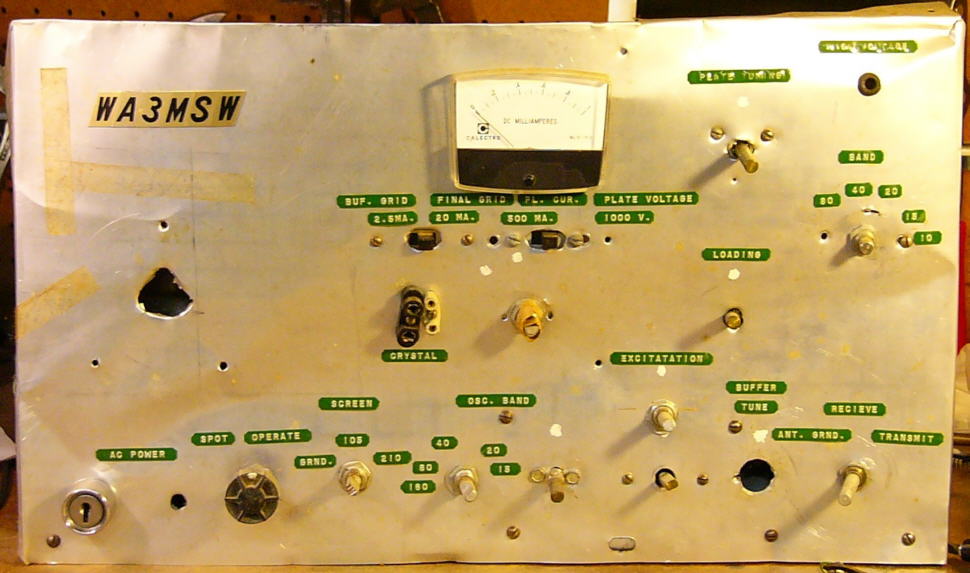
Steve Silverman sent me this link. This web site has been getting a lot of attention from the solder melting community. And justifiably so. Behold (above) the first transmitter built by Robert Glaser, now N3IC, circa May 1969. The chassis and front panel were made from flimsy printing press sheet metal. Note the key (as in lock and key) switch that the OM put on the front panel — he took his responsibilities under FCC regs quite seriously. My favorite part of this rig’s story is that when he got it done, he didn’t have the two 6146s for the final. So he just took a capacitor and used it to connect the driver tube to the output network. Brilliant! With that arrangement he made his first contact. No wonder he labeled it “Excitatation!” It was clearly more exciting than your standard excitation.
Those TV power transformers look very familiar. I was using similar devices to build a power supply for an HW-32A a few years afterDr. Glaser built this rig. It’s a wonder we survived.
FB. Check out his site. It is a wonderful catalog of all the stuff this very prolific builder has made over the years: