Category: Knack Stories
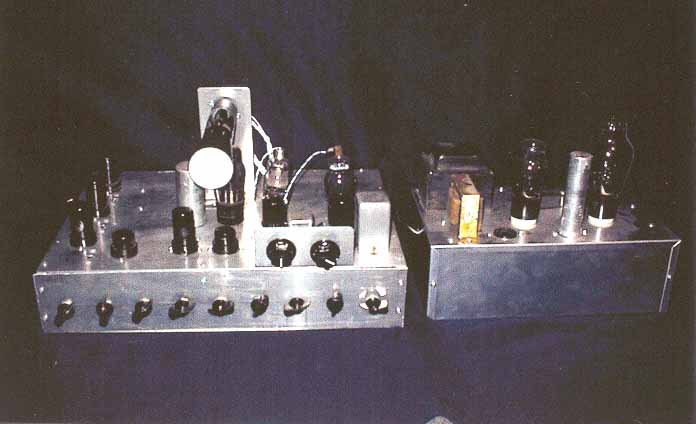
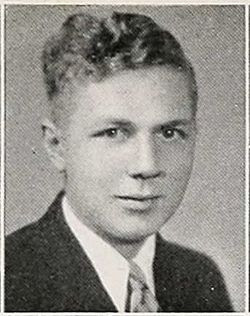
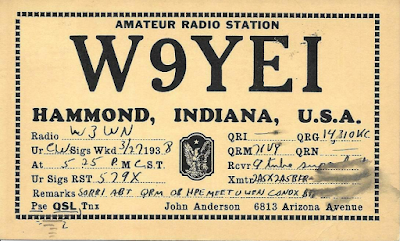
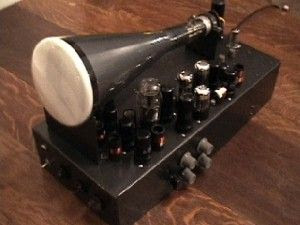
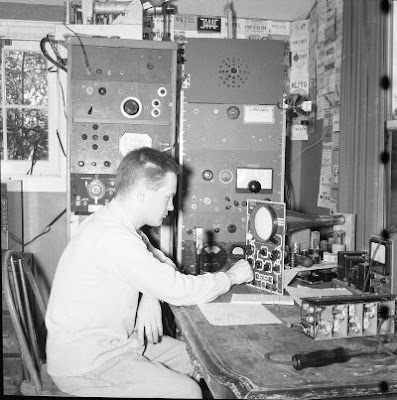
John Stanley Anderson W9YEI — Shep’s Friend Who Homebrewed a TV Receiver in 1938
After graduation from Hammond High, Johnny went to work as a chemist at the local steel mill. On April 11, 1941, Johnny enlisted at Fort Benjamin Harrison in the U.S. Army, serving through WWII until November 27, 1945. On June 4, 1955, he married Jane H. Vanstone.
Johnny later moved to Munster, Indiana, and continued working at Inland Steel, where he held a variety of technical positions. He passed away on January 29, 1984, at the emergency room of Hammond’s St. Margaret Hospital after suffering from neurogenic shock. At the time of his death, Johnny was an electrical technician at Inland Steel’s quality control center. He was buried at Elmwood Cemetery in Hammond. From: https://www.findagrave.com/memorial/173124396/john-stanley-anderson
Early Television, Jean Shepherd, Homebrewing, and Hack-A-Day
Hack-A-Day has an article about early (1930s) television. I was immediately reminded of a January 1973 Jean Shepherd show on WOR New York in which Shep talks about a kid in his neighborhood who built a very early television receiver. You can skip to about the 18 minute mark for the homebrew radio and television stuff.
In the 1973 show, Shep identifies the builder as John Anderson. The Flicklives web site lists the hams who lived around Shep in Hammond Indiana. Among them is John Stanley Anderson W9YEI. That’s him.
Shep was born in 1921 and in the show he says this all took place when he was 16 or 17. So that would place these events around 1938. We see that on February 2, 1939 W9XZV — the experimental station of Zenith Chicago — went on the air with television. In August 1940 W9XBK, the experimental TV station of WBKB Chicago went on the air. That station was the one Johnny Anderson used to demonstrate TV to Shep and other friends.
Once again, Shep really captures the spirit of homebrew radio and the way it really captivates teenagers. He also explains — very well I think — the difference between true homebrew radio and kit building.
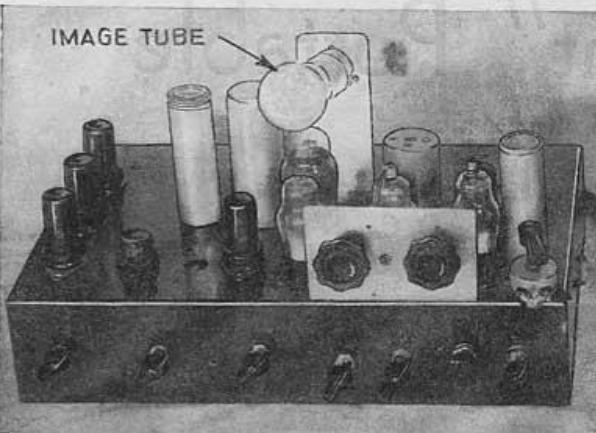
I really wish we had more details or pictures of W9YEI’s TV receiver. I tried looking in the IRE Journal, but I couldn’t find anything. Anyone have more info on this receiver or ham homebrew TV projects from the late 1930s?
EXCELSIOR! 73 Bill
https://hackaday.com/2022/04/10/retrotechtacular-a-diy-television-for-very-early-adopters/
https://soldersmoke.blogspot.com/2008/07/best-jean-shepherd-ham-radio-episode.html
The Next Time You Hear Someone Complaining About Winding Toroids….
Mike WU2D Looks at the “Dream” SW Receivers of the 1960s and 70s (Video)
A Thermatron (and Asperger’s) Knack Story
Podcast (Audio) Version of Bill’s Talk to the L’Anse Creuse Amateur Radio Club
Tony G4WIF suggested that I make this talk available as an audio recording. Good idea. Here it is:
Bill Talking about Homebrew Radio with L’Anse Creuse Amateur Radio Club (Michigan) — February 2, 2022 (Video)
An Interview with Paul Lutus (Audio)
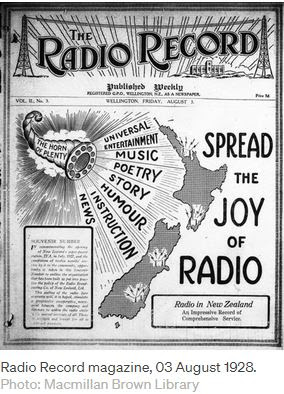
Early Radio in New Zealand, and “The Knack”
“The gnawing discontent…” That is what Jean Shepherd had when he couldn’t get his Heising Modulator to work properly. We’ve all been there.
The last line in the quote from DeSoto’s book speaks to one of the major themes of this blog and of the SolderSmoke podcast: the way in which people all around the world got interested in radio in much the same way. So many of us, all around the world, often at age 13 or 14, suddenly got interested in radio. We all had (and have!) “The Knack.” This is really very nice — it is something that we have in common, something that pulls us together.
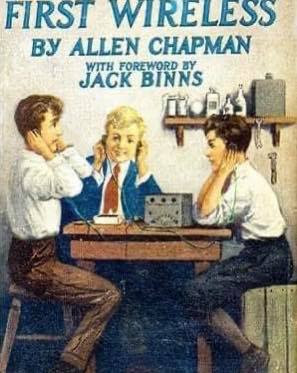
“First Wireless” 1922 book by Allen Chapman with Foreword by Jack Binns (free download)
Did You Contact My Novice Station WN2QHL in 1973-1974? Please Check My List and Let Me Know
Yesterday I went through my novice logs from 1973-1974. I was in Congers, NY and my call was WN2QHL. Please take a look at the callsigns from my log and let me know if we had a contact. I will then let you have more details from my log.
Novice Contacts 1973-1974 from WN2QHL
WN2NEC
WN2RTH YES
WA4DCL
WN4CBB
WN9LLX
WN1RWX
WN4ETR
WB2CSO
WN8QHM
WN8ONA
WN4KID
WN8PMF
WN2INN
WN2ECU
WN4DSO
WN3UCL
WN4KBL
WB4WDQ
WN0IHH
WN9MNW
WN8ODW
WA8VCH
VE1BAD
WN8NIJ
WN8MYJ
WA3TKP
WN2GMQ
WN8LDI
WN5JZP
WN5JXZ
WN2PNQ
WN2HKY
WB2PPP
WN4EIS
WN4DNV
WA8WIK
WN3TPJ
WN1RRR WN1RPR?
W2MJR
WN2SHL
WN3TZR
W1DUQ
WN2ROW
WN2SLA
WA3HNZ
WN2JXT
W2HAG
WA2CDE
WN8ORL
WN4FYL
WN1PXM
WN2FPQ
WN4ZFF/3
WN3VDU
WN8QPJ/8
WN3TBW
WN4BWT/4 OR BWJ
W9MZO/9
WN1SLG YES
WN0KTR
W9KCT
WN3VKH
K1BXZ
W1AW
WA2QNX
K2BBU
K1BXZ
WN2ROZ
W1TRS
VE3FMF
WN3UPO
K1OOL
WN2RNJ
WN2KWK
WA2CDE
WN2JDE
WN3UQO
WN2IZY
W3CNN
WN2NNA
WB2EVS
VE2AJQ
WN1SBE
WN4ZIN
WA2JXM
WA3TVE/3 OR JVE OR UE
WASQWF
WA3JRU
W3ABT
WA2IWX
WN3FLK
WN1RZW
WN3TBW
WB2PYM
WN1RXM
WN2ERU
WB8HHN
WN2LVV
WB8JBM/8
WN2TEO
K4LDR
WN2EHE Friend of KD2E Dave
K8MFO
WN2NAE
W3IN
WN3SZX
WA1EOT
W2MUM
WA2UOO
WB2RKK
W4KFL
WN2NEC
WN4EJJ
WN1SCL
WN2NQL
WA1RXJ
WA2YAS
WN2QHN
WN8POK
WB2ABJ
WN1QKD
WN2SDO
WN1SRT
WN2KOH
WN8DOB
WN1SQM
WN2SXT
W2HN
WA1RFF
WN2VNA
WN1RME
WB4YNY
WB8ALE
WN4AQM
WN4DMO
WN3USU
WN8NXE
W2HAG
WA1KLB
WB2NDL
WN2JXG
WN1RIP
WN2LKN
WA3IYA
WB9LJS
WN2RPL
K1BOM
WN4GOC
WN8QGO
WN8OPB
WN8OOE
WN2SAM
WN4FXN
WB2SXD/2
WN2IQM
WN3VUU OR UUU?
WN8PGD
WN8PIU
WN8OGY
WN8OWD
WN8OHP
WN9JOI
WN2GMQ
WN3VUR UR UUR
WN2LOC
WN2SAM
WN2TJQ
WA43PM
WA4YDR
WN9LDS OR LOS
WN9LSR
WN3UDR
WN1RGU
WA1RYL
WN2LBO
WN1RIM
WN2TAG
WN2TLQ
WN8ODP
WN2TBB OR JBB now Dave KD2E YES
WN4CRZ First QSO with DX-100
WN4HKG
WA6TLH/HK6 FIRST DX 40 METERS Feb 23 1974
WN2JHP YES
WN2TAS OR JAS
WN8QXR
W4DRJ
WN4GBX
WN4DAQ
WB8KUQ
WN4BPN
WN2SAM
WN8OVW
VE3GXX
WN0JOZ
WN6CPQ
WA4CNL
WN0LLT
WN0KUU OR KVU OR KUV
WN8QIN
WN4HLQ
K0IEU
WA1DWL
WN4GUF
VE1IC
WN4FOM
K2AVX
WA9AKY
VE2DJB
WN4EDQ
WN8PLH
WN2TPD YES
WN1SZS
WN4HRC
WA0WTV
VE3HEF
WN3UOO
K2IY
W4AHN
WN8OIF
WN9NYO
VE3AFX
K1PNB
K5EQX
WB6ALD
WB6LUS
WN0LQE
WA1POJ
WA5RFT
WN8NYU OR V
WN4GUF
K1BXZ
WN5GTE
WB5GDN
WB5GEN
WN2TJQ
WN2JXT
WN4CQX
WA1ASU/1
WN2IOJ
WN4GMY
WN2RUZ
WB8PRJ
WN4BTL YES
WB8MOI
VE3AGY
W8JEI
WN3VUZ
WA2CME
WN5KYK
WA1JUY
WN2NIL
K3DHD/9
WN4CTJ OR CWJ OR WUJ OR CVJ Gadsden AL.
WP4DRE/5
WN2GMQ
WN1SIP
WN9MOS
WN9OCO
WN2UAC
WN8NPY
WB5DIZ
WN2JHD
WN2RYH
WN2RXL
WB8OFU
WN8RTU
WN8MTW
WN8PIY
WA8JPC
K1OOL
WB2MYV
WN4CNE
WN4DXW
WN2PHE
WN8MYJ
WM2TTQ
WN4AYX
WN4ECB
WNOJGT
W4UHF
WN4FPU
WN8QCV OR U
WN8PCV
WN2STZ
WN2KLX
WN2FUN
WN2SLF
WN8RTZ/9
WN9MLY
WA7SCG
KP4USN
WN2UMV
WA6ARG
WA4BPS
WN9MAO
WN5HRI OR 4
WN2PWM
KZ5VV
ZL2ACP
WA6UUR OR VVR JACK IN Pasadena
KN5KSX
YU1NFT
YU2QZE
WA7STW
WN8RIK/4
WN2UMU
WN2PNQ
WN2QCE
YU2QZ
WN2TJQ
Farhan’s Amazing Knack Story: From a Boyhood SW Receiver to the Design of the sBITX SDR
— Farhan talks about his practice of taking the pictures of new rigs with the new rig sitting atop the book that was most important in its design and construction. FB.
— I was really blown away by Farhan’s presentation of how the uBITX advertisement was inspired by and in many ways based on the Heathkit ad for an HW-101. Amazing.
— I learned a lot from Farhan’s discussion of SDR theory. I pledge to spend more time with this. I really like Farhan’s hybrid HDR/SDR approach.
— But I have a question: Farhan seems to say that we’d need a big expensive GOOGL computer to do the direct sampling HF SDR. But doesn’t the little RTL-SDR do just that? Without a GOOGL?
— Great to see Wes’s AFTIA being used in the sBITX.
— Really cool that Farhan has his mind on VHF transverters when designing the sBITX. I liked use of the TCXO module to free up one of the Si5351 clock outputs. FB. And great to include an idea from Hans in this rig.
Thanks very much to Farhan (who stayed up until 3 am to do this!) and to the RSGB for hosting.
WA9WFA’s Mate for the Mighty Midget 1966 QST Receiver
Todd K7TFC on Pessimism, Optimism, and Homebrew Radio
In response to my blog post about Rob Sherwood, Todd K7TFC sent this very thoughtful comment. It is so good that I wanted to put it up as a more visible blog post. Thanks Todd.
Todd wrote:
Several of 4Z1UG’s recent interviews have either hinted at or clearly expressed pessimism over the future of technically-oriented, homebrew ham radio. Of an age myself (another IGY baby) in which disgruntled cynicism is endemic, I nevertheless found their pessimism exaggerated and perhaps a little-too conventional.
Not that there’s little evidence to back them up: recent retirements at QST and the magazine’s thin technical coverage have not improved matters, and even QRP Quarterly recently found it necessary to spend more pages on UFOs in New Mexico than on VFOs in their readers’s hamshacks. Even podcasts whose names might suggest otherwise–I’m thinking of Ham Radio Workbench–actually spend more time talking about store-bought black boxes, antennas, and cool things they’ve purchased (or want to purchase) than melting solder or winding coils. To be sure, HRWB, QRPQ, and even QST, make important contributions , but they do reflect the *proportional* decline of hands-on electronics.
For me, though, that the *proportion* of homebrewing, technically-oriented hams has declined is not as important as the actual numbers of hams so oriented. If their proportion is down to, say, five-percent of the total number of hams in the world, that’s still *a lot* of homebrewers worldwide, and now that we interact in a truly-global theater of enthusiasts, we’ve never had it so good when it comes to the numbers of people who share our enthusiasms.
This question of actual numbers versus proportions can be seen in the most common modes of operation as well as on the hardware side. SSB long ago passed CW as the mode-of-choice, and now SSB is in decline *proportionally* as the weak-signal digital modes seem to be taking over. But when the bands are open, you can still tune through the lower portions of most bands and find *plenty* of CW ops at all levels of speed and clarity. CW is not dead, and in fact it’s easier to learn than ever before. I expect a proportion will always see CW as essential to ham radio–enough in fact to keep them supplied with contacts to satisfy their retro-cravings and keep the tradition alive.
I may be in the last quarter (third?) of my life, but the older I get the more I come to believe in living *three-dimensionally*. The “X” is my own time and place (a west-coast Boomer), the “Y” is my own time but other places and cultures, and the “Z” is other eras, times, and places. The “other eras and times” in the ham-radio context means I don’t have to abandon tank circuits and crystal filters and vacuum tubes *merely* because other and perhaps objectively-superior technology is now at my disposal. I can use the new stuff and the old stuff, too. I’d even argue that to abandon all use of older technologies means there’s been no *growth*, only “progress.”
We see this clearly enough in other aspects of the human endeavor. The computer may have totally replaced the typewriter, but it hasn’t replaced pen, ink, and paper. The internet may be a superior repository of knowledge than printed books, but books and magazines are still widely used and are in some ways superior to online media. Microwave ovens cooking prepackaged, processed, and *manufactured* food are more efficient, but no one denies a meal made with raw whole foods and hand-prepared is better.
I expect there will always be plenty of people living three-dimensionally as hams with whom I resonate. There’s already a high SWR between me and *most* people anyway. I’ve grown comfortable with a more-narrow bandwidth–73, Todd K7TFC
More Info on Tom’s Amazing Junkbox 20 meter Receiver (using FPGAs)
Tom also sent me Firmware sourcecode that may be reusable for STM8 users, and the FPGA design file (for Quartus users). If anyone has a GitHub or similar site that can host these files, please let me know and we will send them to you.