Words of Wisdom from Farhan

I read the mail of the BITX20 group. Here is some good advice from Farhan:

I have often seen builders finishing an entire build, then powering it
up to face the frustration of a dead circuit. I suspect that the
trouble is with our kit building mind set. As a kit builder, we assume
that if it has worked well for a few hundred others, there is no
reason for it to not work for us. But the truth is more sobering …
Of the hundred odd components, any of them could get swapped by
another, or a bad solder, wrong polarity, etc. can all conspire to
thwart your attempts. The bitx manuals are really some of the best
produced in the recent years and yet, even with leonard’s videos,
troubleshooting kits is a challenge.
I am proposing a more elaborate, slower but surer approach to building the bitx.

It is as follows: build it one stage at a time, use one stage to test
the next. For instance, one could start with the bfo first. Just a
single transistor with the crystal. Then use an RF probe to check the
rf output. If there is no output, then sort that out before proceeding
to the next stage. With the addition of the buffer amp, the output
should go up. Then one could proceed to the audio amp. Injecting audio
from your mp3 player or computer could check that it works. Next,
replace the audio source with the mic amp, this tests the mic amp.
Now, if you add the two diode modulator, you should be able to receive
the dsb at 10 MHz on your HF transceiver.

This approach tests each stage individually and in isolation before
proceeding to the next. It also provides wholesome education to the
builder. In software industry, it is called a ‘test driven
development’ method of developing software.

In the end, this approach is no slower than the current approach,
except that surprises are not kept for the last.

I am sure that some of us can come out with a sequence of stages to
build where each stage is tested using the previous stage.

As much as bitx is about building it cheap, it is also about learning
your radio from inside. Bitx is also education on the cheap, don’t
give up that opportunity.

– farhan VU2ESE

Our book: “SolderSmoke — Global Adventures in Wireless Electronics”http://soldersmoke.com/book.htmOur coffee mugs, T-Shirts, bumper stickers: http://www.cafepress.com/SolderSmokeOur Book Store: http://astore.amazon.com/contracross-20
My .02 KW Linear Amplifier

Once again, die-hard QRP guys should probably look away at this point…

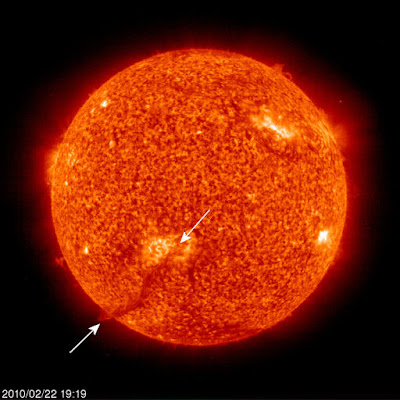
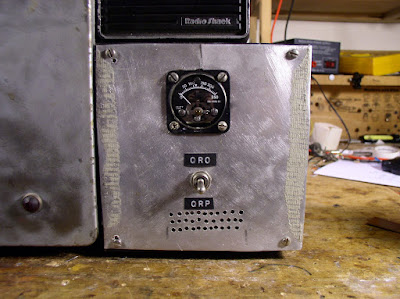
My Cycle 23/Cycle 24 refurbishing project continues. The JBOT amplifier in the 17 meter SSB rig is now working nicely, but unfortunately just as I got ready to make some contacts, the Coronal Mass Ejection hit us and conditions on 17 deteriorated badly. Looking for something to do, I noticed that in some pictures of my old Azores station, sitting alongside the SSB transmitter there was a small cabinet with a QRO/QRP switch on the front panel. Ah yes! My Ramsey Kit linear amplifier! This is a MOSFET-based device. Mine was designed for 20, but I changed the low pass filter and put it on 17. Later, in Italy, it went on 20 meters and for some reason I went back to the 20 meter low pass filter.

Yesterday I blew the dust off this thing, pulled out the 20 meter LP filter and replaced it with a filter that will let my 17 meter RF reach the antenna. Today I fired it up. Wow! 20 Watts! Look out 17 meters!

I really like the QRO/QRP switch — it gives me the opportunity to lean back and say (just like the big guns) “Wait a second Old Man, let me turn on my LINEAR!” I even have a little fan in the box that you can hear when I go to the QRO position. Unfortunately it doesn’t make the lights flicker. But we can dream…

Our book: “SolderSmoke — Global Adventures in Wireless Electronics”http://soldersmoke.com/book.htmOur coffee mugs, T-Shirts, bumper stickers: http://www.cafepress.com/SolderSmokeOur Book Store: http://astore.amazon.com/contracross-20
Walford Electronics’ “QRP In the Country”

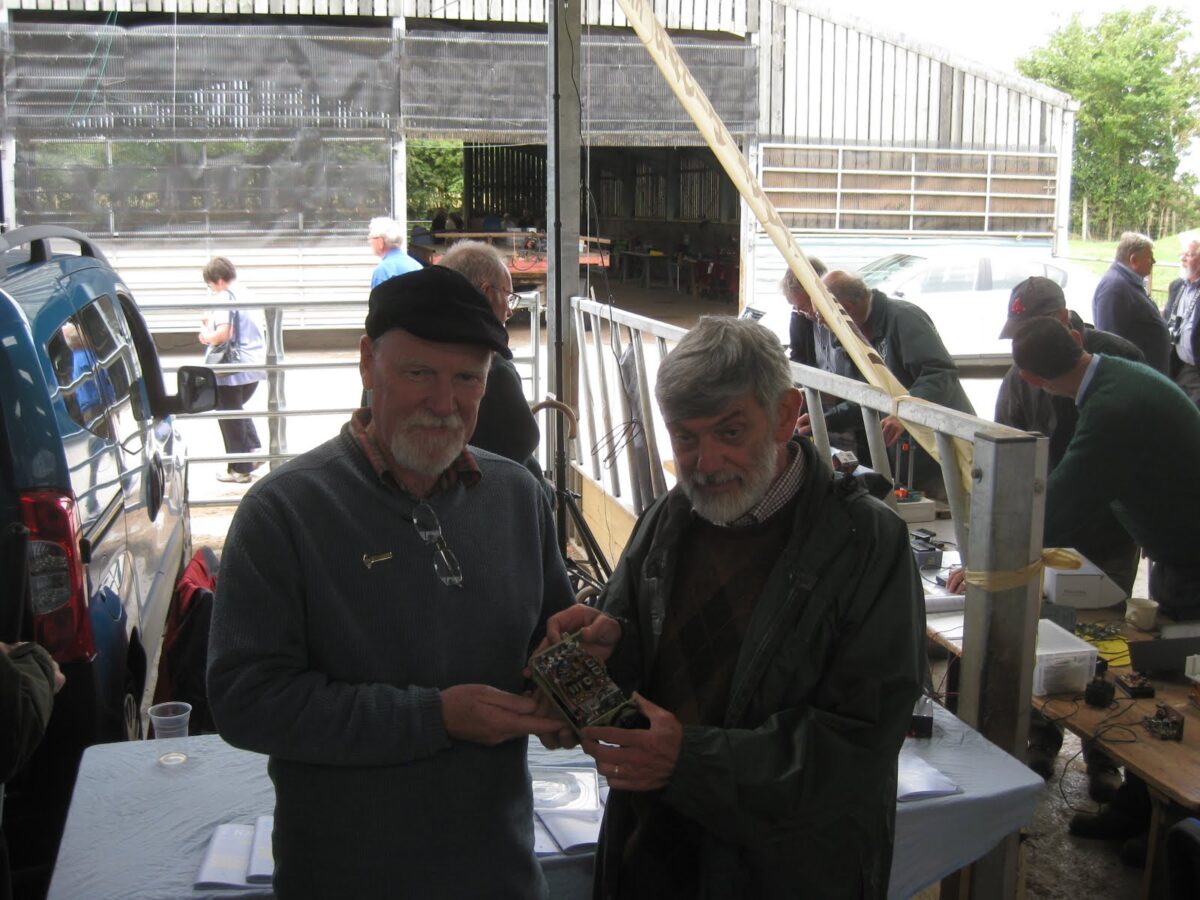
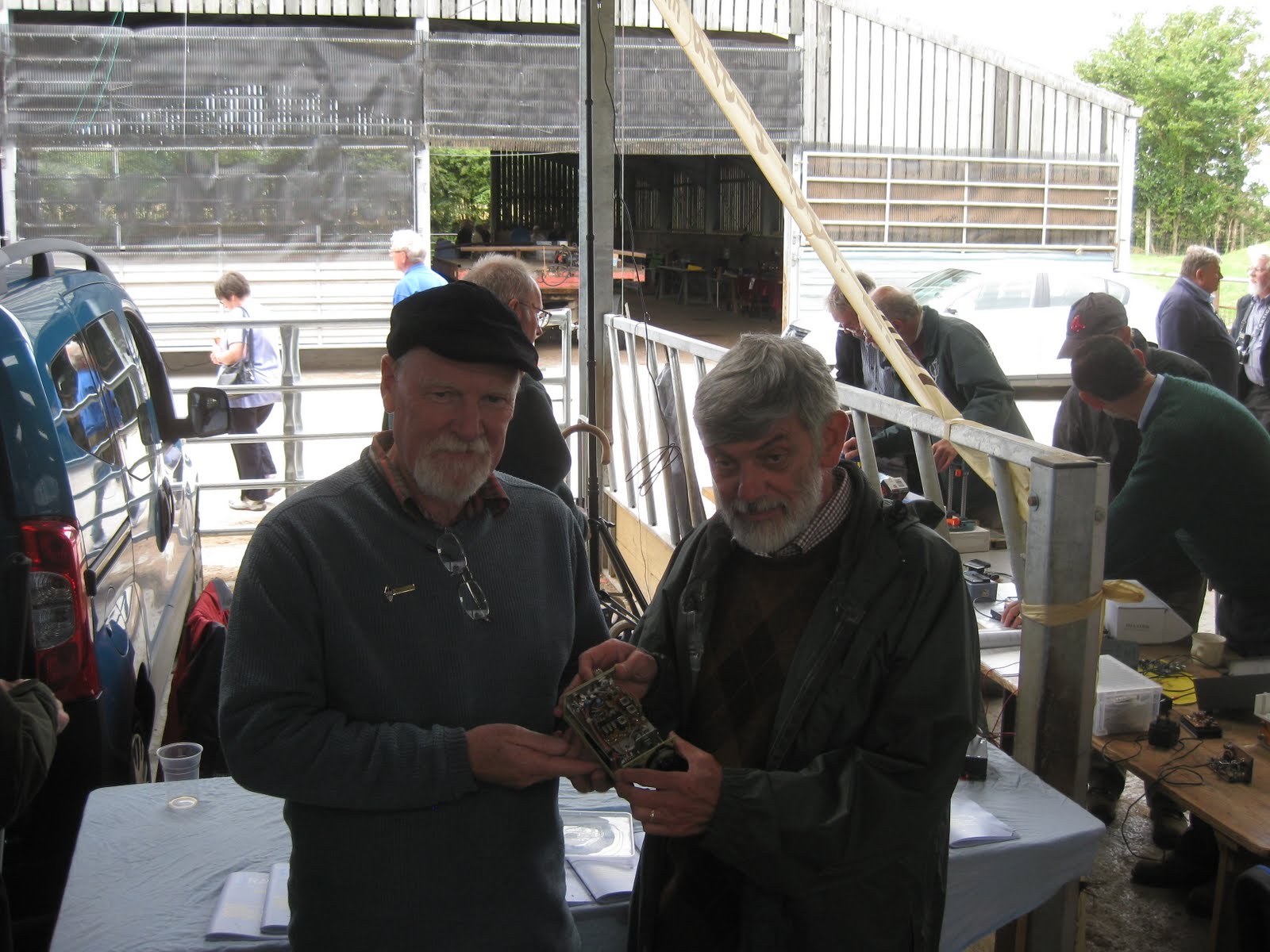
A stiff wind and occasional drizzle did not put off the large attendance of QRP and home building enthusiasts who attended QRP in the Country on July 17th. Hundreds of people from all over England and Holland found their way to Upton Bridge Farm, Somerset where the farm barns provided cover. About 25 stalls and displays showed off or sold everything from components to large construction projects. Apart from a few traders selling components, most displays were from Clubs publicising their activities or of ancient domestic and wartime radios, with a few individuals selling items to make space for new projects! There were also practical construction projects to be seen as ‘students’ built their Cary RXs with occasional help from the Bath Buildathon team led by Steve G0FUW. The catering team led by Tony G0GFL cooked a prodigious amount of special local burgers and sausages from the host Tim G3PCJ’s farm served in rolls baked locally that very morning, and washed down by village beer and cider, under the careful eye of Robert PA9RZ!

A raffle raised £200 for those suffering in East Africa; the main prize being a year’s subscription to PW kindly donated by Rob G3XFD which was won by Graham G4DPH. George G3RJV was asked to select a couple of displays that ‘appealed’ to him for two other prizes. The GQRP Club had kindly donated a special edition of Drew VK3XU’s latest project book which was also won by G4DPH for his PW Sprat project; a Walford Electronics Radlet CW TCVR kit went to Colin G3YHU for his valved superhet. A years subscription to BYLARA was won by SWL Mike Jones who is about to take his Foundation licence course.

After the event Tim G3PCJ said he was said delighted with the increased attendance and wished to thank everybody whose hard work had made the event so successful. He urged all Clubs within reasonable distance to plan their displays for next year! Watch the press for announcements of the date!


Any questions to:-
Tim Walford G3PCJ
walfor@globalnet.co.uk
WALFORD ELECTRONICS
www.users.globalnet.co.uk/~walfor


Designers & suppliers of kits for radio enthusiasts

Proprietor Tim Walford BSc MIEE CEng G3PCJ

—————–

Our book: “SolderSmoke — Global Adventures in Wireless Electronics”http://soldersmoke.com/book.htmOur coffee mugs, T-Shirts, bumper stickers: http://www.cafepress.com/SolderSmokeOur Book Store: http://astore.amazon.com/contracross-20
Struggling Brother

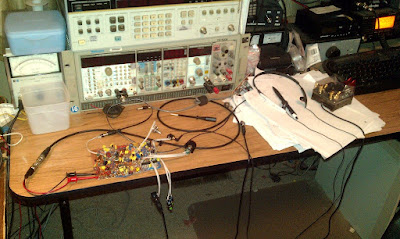
OM Jason, NT7S, has been experiencing the kinds of workbench trials and tribulations faced by anyone who tries to create something new. But I think the radio gods are looking favorably on his efforts — a recent QSO with W7ZOI is a very good omen:

http://www.nt7s.com/blog/

Hang in there Jason! I’m sure the QRP community is looking forward to the availability of the rigs you are developing.

Modular Magic from AK2B

http://www.youtube.com/watch?v=mrDYEbRGEds

This video really made me yearn for my shack and soldering iron (all my gear is still on the high seas). OM AK2B is doing amazing modular things in an apartment in NYC. Richard Fenynman would be proud! I was pleased to see the circuits and kits of so many FB radio amateurs (including KD1JV, W7ZOI, and KA7EXM) in this rig. Thanks to Jonathan-san, KC7FYS, for sending this video to me.

Above Board: Manhattan-izing an SMT kit

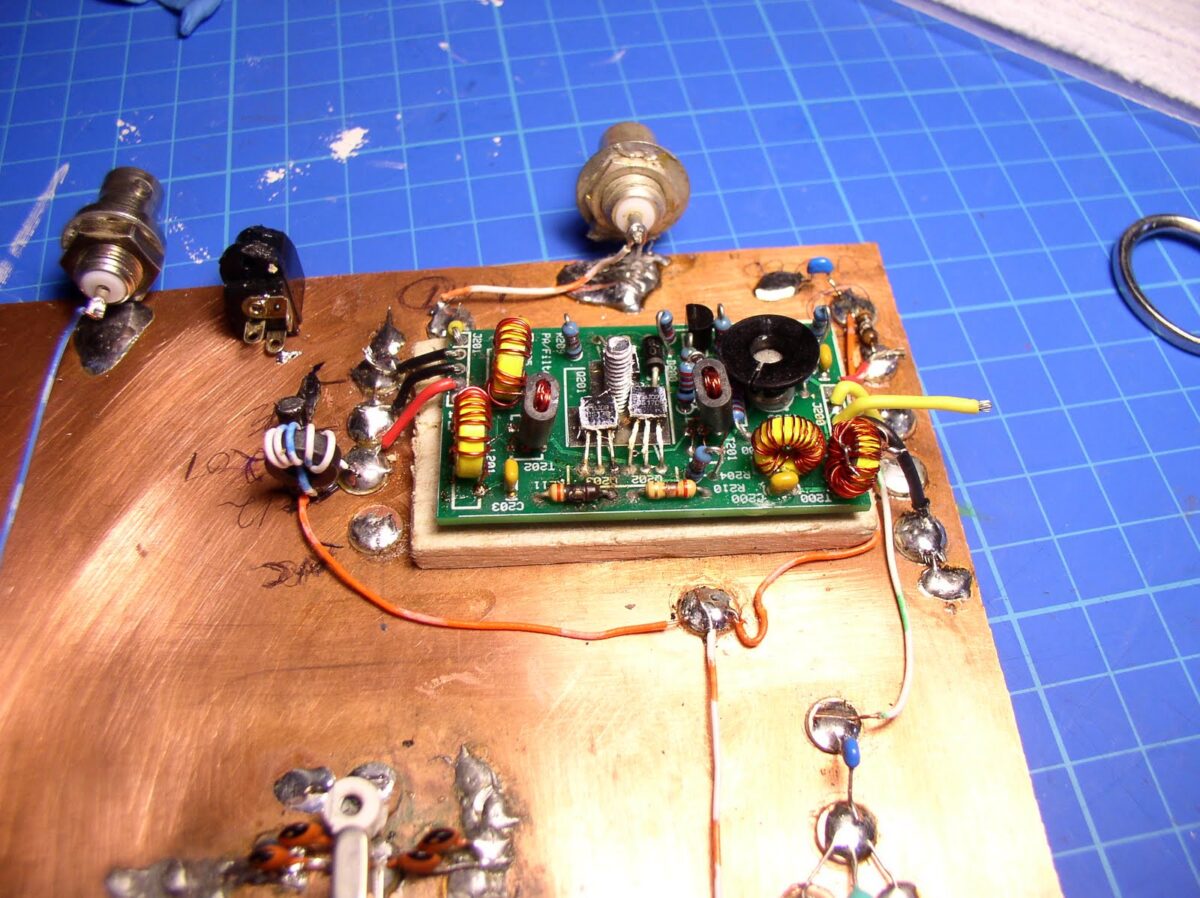
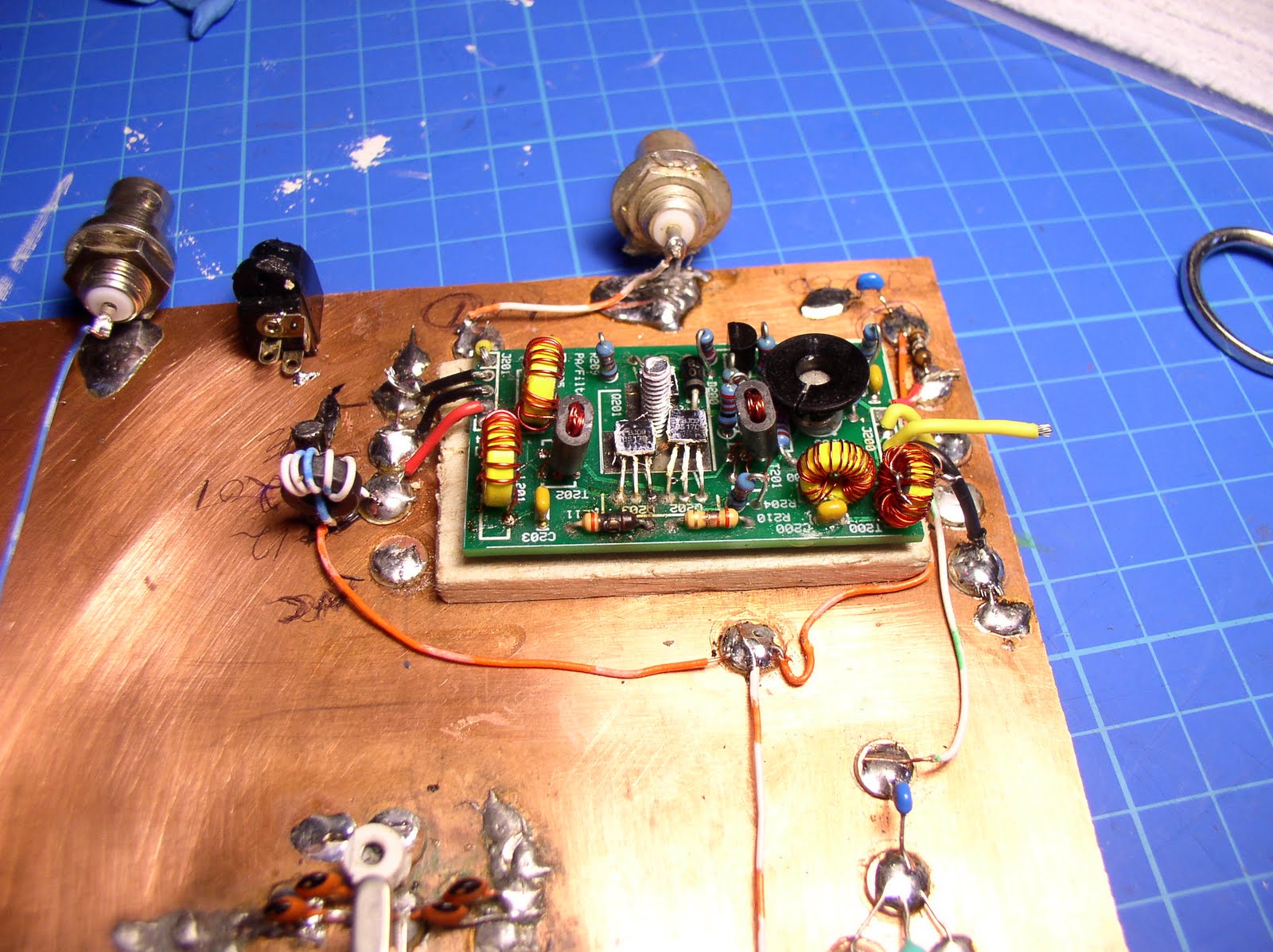
A while back, Tony Parks very kindly sent me one of his wonderful Softrock RXTX V6.3 Software Defined Radio kits. I took a shot at it, but it turns out that I’m not very good with surface mount construction using small parts. I’ve gotten very used to the Manhattan style. Still, I did manage to build one of the Power Amplifier modules, and I put it to good use in a DSB WSPR transceiver I’ve been building (see above) . It worked great. For a while… Then it released some smoke.

I started trouble shooting and it was at this point that I REALLY began to miss good ole’ Manhattan (you see, I was born there, and I went to Manhattan College, so I guess this helps explain the affinity). It was difficult to get to components mounted under the board. The whole thing was the size of my thumb… I know, whine, whine, whine… Luddite Geezer-ism strikes again. SPARK FOREVER!

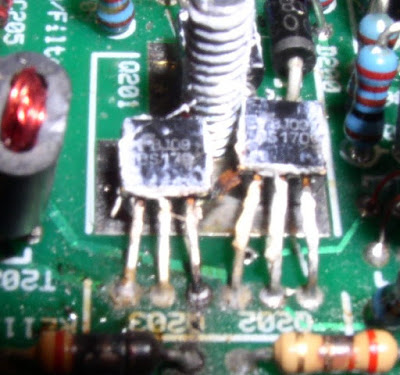
It turns out that the problem was caused by the fact that my shack is just not well suited for this kind of construction. There is a lot of stuff floating around. Conductive stuff. Look closely at the picture below and you will see what I mean. You will see what caused the release of the smoke. Look at the leads on the PA transistor on the left. That’s a little bit of stray wire that found its way to the WRONG place. Note the toasted source resistor just below!

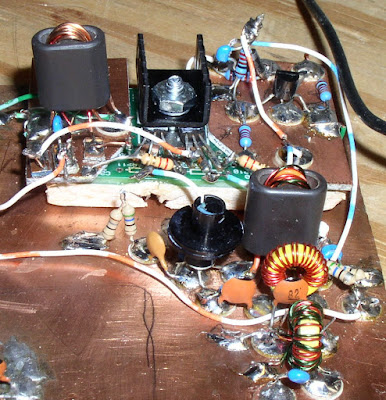
Anyway, after a trying to fix this thing, I finally gave up and decided to use the circuit, but in Manhattan form. Everything up top. No SMT. Bigger coil cores. The temperature sensing circuitry went off to the right. The output transformer went off to the left, and the driver stage went down below the kit’s board. Here is what it looks like now. Again, it works great.

I want to thank Tony and the Softrock guys for giving me this experience. Their kits are wonderful and are really making a tremendous contribution to the hobby. I strongly recommend them. The instructions are great, much like those of the old Heathkits. But for me, I’ll take Manhattan.

The Limerick Revolution

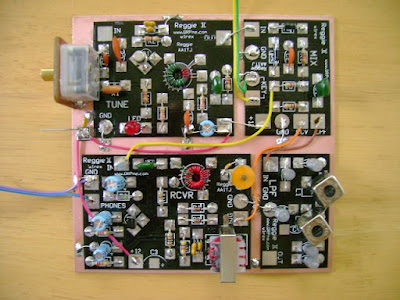
On the last podcast I mentioned a new PC board technique being pioneered by Rex, W1REX, out of Limerick, Maine. The Limerick technique uses cool-looking black PC boards with pads for the components. (The picture above is the kit version of AA1TJ’s famed Reggie receiver.) Connections between the pads are via PC board traces within the board. I like it because it seems to provide the big advantage of our beloved Manhattan technique: you have all the parts and connections topside. Check out Rex’s fine line of kits: http://www.qrpme.com/

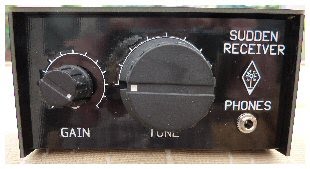
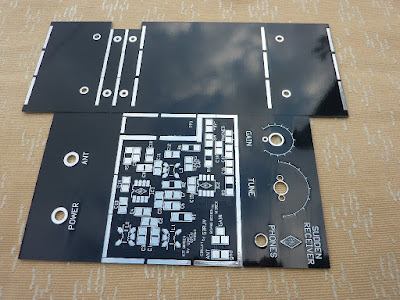
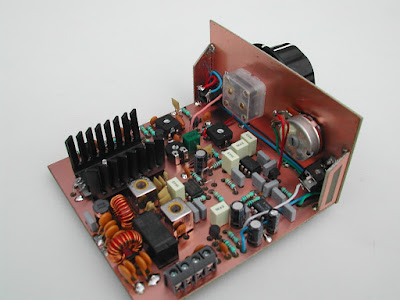
Today G-QRP club announced the release of a Limerick kit version of G3RJV’s Sudden receiver.
Take a look at the final product and the boards:

Very nice. Read more about this wonderful kit here: http://www.gqrp.com/sudden.htm

Go Limerick! Go Sudden!

Homebrew QRP (DSB!) Contest

Walford Electronics Brendon 80m DSB kit


Hi Bill

I trust all is well and that the roadkill PCs are not fighting back.
Thought you might like to hear about a new contest we are trying here in the UK – see below.
Having assisted lots of new knack victims to build their first rigs at the 3 Bath Buildathons we thought we should encourage them to get on the air – 30 QRP DSB rigs on 80m all at once – now that’s what I call a contest.
We have opened it up to any QRP voice radio to cover the QRP appliance operators but homebrewers get extra points.
Not sure how much support we are going to get but there is a £50 voucher for Walford Electronics kits up for grabs.
Hopefully this will be a fun contest with freindly extended exhanges rather than the all too common ‘599 1002 73 QRZ’.
Picture is the Walford Electronics Brendon 80m DSB kit in all its glory, in case you want to post something on the blog.
73, Steve, G0FUW

BATH BUILDATHON CONTEST RULES 2010

Background: This contest is primarily intended to activate the radios built at the Bath Buildathon events but is open to all UK radio amateurs. Stations may be operated from any fixed location within the UK; operation from a vehicle or as a pedestrian is permitted, as is Maritime Mobile, so long as you stay put during each session!

When: There are seven sessions over the course of a week. Stations may take part in as many sessions as they wish:

  • 14:00 to 16:00UTC, Sunday 30th May
  • 18:00 to 20:00UTC, Monday 31st May to Friday 4th June inclusive
  • 10:00 to 12:00UTC, Saturday 5th June

Band & Mode: 80m telephony contacts only. Suggested frequency range is 3.60-3.70MHz.

Power limit: QRP only (maximum ten watts pep output from transmitter).

Contacts: Any QSO with another voice station is allowed. Duplicates only count once per session.

Equipment: Any QRP radio equipment may be used but bonus points are awarded for using homebrew equipment. Only one radio may be used each session.

Call: ‘CQ Bath Builders Contest’

Exchange: Signal Report (RS), TRX make & model, and output power.

Scoring per QSO:

  • With a QRO station (over 10W) = 1 point.
  • With a factory built QRP station (max 10W) = 10 points.
  • With a homebrew QRP station (max 10W) = 20 points.
  • With a the ‘BBC’ (Bath Buildathon Crew; G0FUW, G3VTO, G4YTN) = 50 points.

Bonus Points:

  • Entrants using homebrew transceivers = add 100 points to total.

Multiplier: Your total points per session will be multiplied by the number of stations you worked who were using Brendon transceivers constructed at one of the Bath Buildathon events. Note: the adjudicators will apply the multiplier after the contest.

Awards: The leading station on each evening will receive a certificate. The leading station taken over all seven sessions will receive a certificate and a voucher worth £50 off any Walford Electronics kit (no cash alternative will be offered). Results will be announced and awards presented at the Walford Electronics ‘QRP in the country’ event at Upton Bridge Farm, Long Sutton, Langport, Somerset, TA10 9NJ on 18th July 2010.

Enquiries: any questions about the contest should be sent to G0FUW, QTHR

QR2S: A New Kit for 30 Meter QRSS

Preannouncement
QR2S by Genesis, design: Bat Masterson YU1OL
QR2S is 30m band QRSS transceiver. It consist of high dynamic single conversion
receiver with switchable HD RF preamplifier and crystal bandpass filter of 450 Hz,
demodulator with I/Q output. Transmitter comes with oven controlled xtal oscillator (OCXO), tunable center frequency and microcontoller- adjustable power output in range of 1.2 mW – 1.5 W. Operating mode: CW (variable dot), DFCW and ‘graphic’ mode.QRQ CW ID. PC controlled via uC (osc temp adjustment, power out, cent freq, modulation) After initial setting with provided application, QR2S is stand-alone RX/TX unit. QR2S is through-hole/ SMT hybrid kit. Component count 350+
Price estimate/target: US$ 149 plus $18 air mail delivery worldwide.
Kit status: PCBs and majority of components are in stock, beta test OK.
Estimated release date: end of March 2010.
Pre-orders welcome! If you wish to reserve your QR2S (no payment required yet!)
please email info@GenesisRadio. com.au By registrating your interest in this project you will help us estimate number of kits for the first production run.
Physically, QR2S PCB is just a touch smaller than G3020.
This time we went for blue color soldermask.
You will also notice significant improvement in component layout/silk- screen print!
And for the first time our board has bottom silk screen as well 🙂
Bat Masterson is seasoned PCB designer and I am extremely pleased to have him on Genesis team!
Of course, once more units are build and tested in coming weeks, our web page will be updated with photos, screenshots and assembly manual.
I believe Genesis QR2S is the first QRSS-dedicated transceiver and I hope it will provide great platform for everyone interested in homebrewing, experimenting, QRSS mode or just kit building.
As always, thank you for your patronage.


73, Nick VK1AA
————————————————–
GenesisRadio
4th Floor, Suite 403
Culwulla Chambers
67 Castlereagh St.
Sydney 2000 NSW
AUSTRALIA
Phone: 02 9232 0500
Fax: 02 9233 2273
www.GenesisRadio.com.au
————————————————–


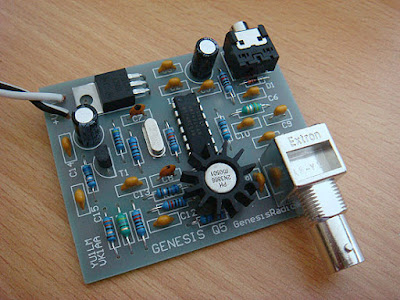
Genesis Q5: QRP and QRSS TX for $19.95

Nick,VK1AA, from GenesisRadio sent us a note about a new kit:

Q5 is our 1W 30m CW transmitter kit. Amongst other things, it is suitable for QRSS builders who wants to modify this baby for QRSS projects. I have already received number of reports from G’s who made it to VE1 and they all praise excellent stability of this design.
It is only $19.95 — that’s less than you pay in some places for coffee and slice of cake!
GenesisRadio will take you to the roots of homebrewing where electronics and ham radio is still contagiously exciting. Genesis Q5 is a radio transmitter kit designed for novice kit builders and QRP radio enthusiasts. “Hook ’em on ham radio while they’re young” is GenesisRadio’s motto.
And the Q5 series will definitely meet your expectations: with forty quality components and a professionally manufactured circuit board, the Q5 will get you transmitting on crystal controlled International QRP frequencies running a solid 1 Watt in no time! Price: US$ 19.95 + postage.

For more information visit http://www.genesisradio.com.au/Q5/


Watch two-minute Q5 promotional “Hook ’em on” video produced by 12 years old Josh, VK2FJDX:

Walford Electronics

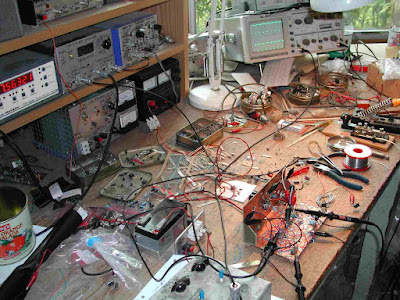
Tim Walford, G3PCJ, offers a really nice line of ham radio kits. I like the names of the products, and of course I really like the DSB kits. The photo above is the workbench on which these rigs are created. Tim also runs a Construction Club and puts out an excellent quarterly newsletter called “Hot Iron.” I just received the latest issue, which is a particularly good one — more about this in SolderSmoke 109.

Here is a list of Tim’s kits:

AMU Matching bridge and T match for 10 – 160m
Audio Amplifier General purpose amplifier for driving a loud speaker
Audio Extras Adds AGC and good CW facilities to a phone TCVR
Brendon Small DSB 1.5W phone transceiver for 80m
Brent Small 1.5W CW transceiver for 80m
Chirnside Regen RX, crystal controlled AM TX, for any band to 6m
5D Counter Five digit frequency readout
Dual Low pass filter Pair of relay selected Low Pass Filters
Fivehead Single band 1.5W SSB phone TCVR for 20 – 160m
Kilmot Double sideband 80m 1.5 W phone TX
Kilton 1.5 Watt CW TX – 20 to 80m
Kingsdon 5 Watt phone SSB and CW transmitter to go with Midney
Knapp Single Band regen TRF – 3.5 to 15 MHz
Knole Single Band DC RX, 20 to 80m
Linear 10 Watt RF amplifier for all nominal 1.5W rigs
Midney Simple single band superhet RX for any band 20m to 160m
Mini mix Mixer kit for VFO schemes or as receive converter
Notch filter Variable frequency notch or peak audio filter
Speech processor Boosts average signal level under difficult conditions
Trull Medium Wave regen TRF for newcomers, can also do HF
Two Tone oscillator Provides audio tones for setting up SSB rig
Washford Crystal controlled 1W CW TX for 20, 40 and 80m
Willet Simple direct conversion RX for 20, 40 and 80m

Here is the website of Walford Electronics: http://walfordelectronics.co.uk/