Excellent New Video from Grayson KJ7UM on his Thermatron version of the Michigan Mighty Mite

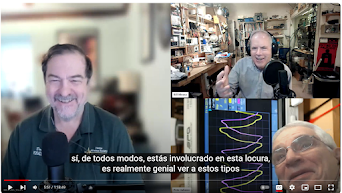
Here is a really wonderful video from Grayson Evans, KJ7UM, author of Hollow-State Design for the Radio Amateur.

I really loved this video. Throughout we see Grayson’s sense of humor. Early on he explains the differences between a tube (what remains from a roll of paper towell), a valve (like the plumbers use) and a THERMATRON (like a 6146). Grayson is the inventor of the word Thermatron. We should all pledge to use it whenever possible.

Grayson’s humor also shows up when describing the parts acquistion process for the Thermatron Michigan Mighty Mite. He puls out a coil (a huge coil) and laments that it is not — despite its large size — sufficiently inductive.

There are wonderful shout outs to SolderSmoke, to Electric Radio, to the Color Burst Liberation Army, to Pete Juliano, and to Rex Harper.

Grayson describes the utility of Rex Harper’s Thermatron ME pads.

During the video, Grayson actually builds the Thermatron MMM. In under 2 minutes! He then experiences the Joy Of Oscillation, or JOO as it has come to be known. OM needs a contact — listen for him on 3579. He is calling CQ.

Grayson talks about his book, Hollow-State Design. I have a copy with me here at SolderSmoke Shack South in the Dominican Republic. Great stuff. The above link takes you to Lulu, where you can order the book. You can also get it from Electric Radio Magazine here: https://www.ermag.com/product-category/books/

Thank you Grayson for bringing us this video, and so much more over the years. And for giving us the very useful and fun word: THERMATRON!

SolderSmoke Podcast #252 — First Podcast from SolderSmoke Shack South

For the moment this podcast is video only. The video appears above. Here is the URL for the video:
https://www.youtube.com/watch?v=NeNTv3YjiHU We will try to get the usual audio podcast version out soon.

— This is the first podcast from SolderSmoke Shack South: Eastern tip of Island of Hispaniola. Cap Cana, DR, 70 feet up, 1 mile from Mona Channel. Seventh floor shack with view of the ocean. Antennas: Dipoles for now, maybe Moxons or Hex later. STARLINK

– The San Francisco case against me. One guy thinks we DESERVE prosecution! Get off of my lawn!


Like the library cop on Seinfeld: https://www.youtube.com/watch?v=D9tP9fI2zbE

But one fellow wrote letter to the mayor asking for leniency. Proposes “Bill Meara Day in SF.” FB! I fell victim myself this year: Mike WU2D got me with WA1HLR on SSB video. https://www.youtube.com/watch?v=NLvCNJ_OnEc

— Dean: Fighting a spur in the sBITX. Filters?

— Dean: Exploring Class A, Class AB and the RD06HHF1

— Dean: Extensive work on getting flat gain from FETs up through 10 meters.

-hh- Dean and Bill: OIP3 measurement and setting the bias on an RD06HHF1

— Pete: Discovers for all of us “RF Man” In spite of all the CB stuff, he is the THE MAN! On YouTube:https://www.youtube.com/@rfmanchannel6915

— Pete fixes Dean’s relay chattering problem: SUBTHRESHOLD CONDUCTION! Yikes!

— Pete’s refurb and rejuvenation of the Drake Twins,

— MXM news. New docs, and ads from WD5L. All on the blog. 7030 crystals. Why MXM? Chuck Adam’s mods, Joh DL6ID’s questions about VFO. Yes! VFO from RX. Was Bruce Williams an early Swan Designer?

— Weird paradox with 25 MHz filter: Low profile xtals have higher Q, but produce more rounded passbands. Why? I note that Minima’s 20 MHz filter also had curved passband.

— Allison’s wisdom on filters at higher frequencies. The importance of physical layout. Diodes in the dark! It is indeed more difficult up there. But don’t let the perfct be the enemy of the good!

— Is Bill the only one to ever build a 10-15 Dual Bander using a 25 MHz crystal filter. Why? Farhan’s Minima has a 20 MHz 6 pole QER crystal filter. And it too had a rounded passband. But it tooc WORKED.

— Did my receiver sound tinny due to rising frequency response of uBITX Rev 4 amp? Yes! So I put in a TJ DC RX Af amp.

— Bill BLOWS UP a Tiny SA Ultra. Ooops. But quickly got a new one from R&L Electronics. Very, very useful. I knew 25 MHz IF rigs were inferior, but by how much? How much was the carrier suppressed? Which filters worked better? What was the opposite sideband rejection. TinySA permitted measurement and comparison.

— Bill quit 15 meter SSB (for a moment) and went to the 1.22 nanometer band with a Wilson Clound Chamber. Videos on the blog.

SHAMELESS COMMERCE: Thanks to new Patreon sponsors. I am sending some additional video content to the sponsors.

MAILBAGg

— Thanks to Bob Crane W8SX for FDIM interviews. I will get them out!

–Wes — W7ZOI has a new TIA amp with variable gain on his web site: https://w7zoi.net/

— Geoff N6GWB’s Rad Receiver https://soldersmoke.blogspot.com/2024/04/the-rad-receiver-from-n6gwb.html

— Dave K1KA sent Ensemble RTX SDR parts. Thanks Dave.

— Chuck Adams AA7FO provided good background on my MXM rig, including the meaning of MXM (1990) . Again, great to hear from Chuck, a true homebrew hero.

— Gerardo HI8P collecting info on the other HI8P, my friend Pericles (SK)

— Alvin N5VZH picked up a Silktronix CB VFO. What to do?

— Jorgen SM4WWG listening from Sweden, and making PCBs. FB!

— Mike WN2A Wondered about opposite sideband rejection of MXM. Not great.

— George WB5OYP loaned me a book from Elmer Bucher. THE Elmer? https://k9zw.wordpress.com/2020/01/24/on-the-origins-of-elmer-a-reasonable-theory/

— Wes W7ZOI, Farhan VU2ESE — Thanks for help on filter issue. Thanks too to Alan W2AEW and G3UUR

— Josh G3MOT — Nice message of support in our “struggle” with SF authorities. Going portable to Vancouver island in August. VE7/G3MOT

— Paul VK3HN — Antipodean solidarity. Thanks Paul.

— Rogier PA1ZZ — great input and help. Thanks

— Tony G4WIF reminded me of G3ROO’s parasets. See Blog

— Pavel CO7WT His experiences (building, freezing, heating) the VFO in the Jaguey DSB rig.

— Grayson KJ7UM Sent latest ER with his Collins 51S-1 story. Thanks Grayson.

— Allison KB1GMX Commiserating on higher freq crystal filters. Thanks Allison

— Wes W4JYK Notes that Dewey, Cheatam and Howe are based in SF. Can they help with sticky sticker problem?

Will KI4POV on QSO Today with Eric 4Z1UG

I really liked Eric’s interview with Will KI4POV:

https://www.qsotoday.com/podcasts/KI4POV

Will has appeared on this blog and podcast before:

https://soldersmoke.blogspot.com/search?q=KI4POV

There were a lot points in Eric’s interview with Will that resonated with me:

— Will told about how his very understanding and perceptive wife KNOWS when a homebrew project is not going well. Yea, we have the same situation here!

— Will mentions the wisdom of Wes Hayward, Doug Demaw, and Pete Juliano.

— Eric mentioned that there is a bit of his own blood in most of his homebrew projects. One slip of he screwdriver is often enough. My projects also often have a bit of my A+ in them. This adds soul to the new machine.

— Will spoke of S-38s and HW-8s. I have both these devices here with me in the Dominican Republic. I have used both of them here.

— Will mentioned the magic that comes when you listen with a receiver you built yourself. Yes.

— NanoVNA. Yes, very useful.

Lots more great stuff in this interview. Thanks Eric and thanks Will.

Farhan Talks Radio Tech at SolderSmoke HQ (EAST) (TWO VIDEOS!)

Great stuff! We were really fortunate to have Farhan and Humera visit the SolderSmoke East shack after Dayton and FDIM. Dean and I had a chance to talk BITX with the creator. Here is the two part video. Most of the tech talk is in Part II (below).

Farhan and his zBITX
Dean and Farhan with three sBITXs

Dean’s homebrew sBITX
Farhan Phone

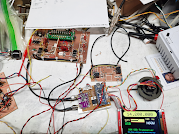
A Really Cool Homebrew Computer

Wow, very cool. On Hack-A-Day this morning:
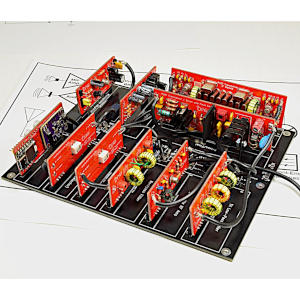
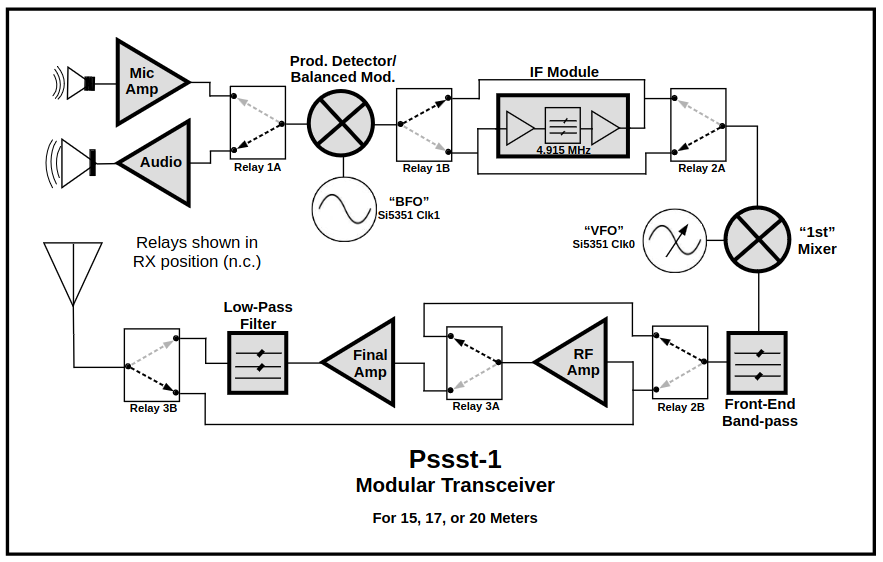
It caught my eye because the architecture seems similar to that of the MostlyDIYRF PSSST rig.

There is a lot to learn from this little machine, especially for an analog guy like me.

Mostly DIY RF PSSST

Pete Juliano’s Amazing Videos — 318 of Them!

Blogs come and go, but (hopefully) YouTube is more permanent and accessible. This morning I re-found Pete N6QW’s YouTube channel. When you use it, I suggest you click on “oldest” first. This will take you back 14 years, to Pete’s time in the Pacific Northwest. The video above (him playing guitar) was shot just before he and his XYL moved back to California.

Here is Pete’s YouTube channel:
This is a tremendous resource for ham radio homebrewers. It should be preserved and protected.
Subscribe!

Thanks Pete!


Version II of 15-10 Rig — Updates on Bal Mod, AF amp, and RF Amp, DX

Version II of the 15-10 rig is mostly done. I did a lot of work on the AF amp, balanced modulator, Mic amp, carrier oscillator, and filter. Dean KK4DAS and I continue to test and measure the RF power amplifier. I describe the brutally simple, non-sequenced T/R switching arrangement, and the spread-out open air construction style.

Version I of this rig is on its way to the Dominican Republic. Version II will stay in Virginia. I have already worked a lot of SSB DX with this rig, including, Thailand, Taiwan, China, India, Kenya, Australia, American Samoa, and others.


This video was inspired by the recent work of Nick M0NTV and Charlie ZL2CTM. And of course, Pete Juliano N6QW.

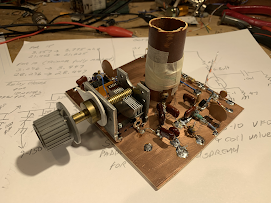
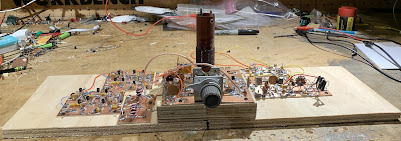
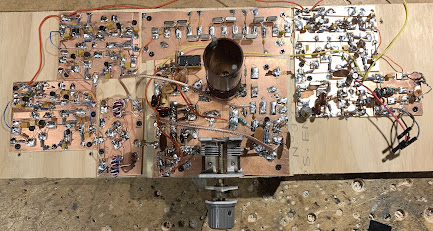
Nate KA1MUQ’s Amazing Thermatron Receiver


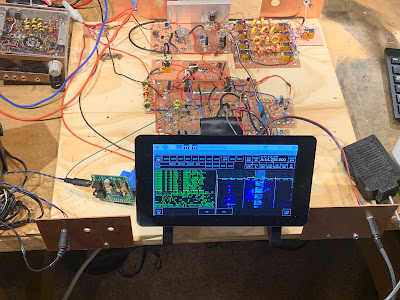
Wow, some really wonderful work is taking place in Nate KA1MUQ’s basement in California.

— I really like the pill bottle coil forms. I wonder if Nate faced suspicion (and possible arrest) in the pharmacy when he asked for the pill bottles. (I got some suspicious looks when I went I asked for empty pill bottles while building my thermatron Mate for the Mighty Midget receiver back in 1998.)

— The variable capacitors are also quite cool, as is the big rotary switch. Is that for band switching?
— Oh man, all on a plywood board. Frank Jones would approve!

— Indeed Nate, that beautiful receiver NEEDS an analog VFO. And we need to hear it inhaling phone sigs, not that FT8 stuff.

— Please keep us posted on your progress. And of course, one hand behind your back OM. Lots of high voltage on those thermatrons.

Thanks Nate!

SolderSmoke Podcast #250 Dean KK4DAS joins Pete N6QW and Bill N2CQR


SolderSmoke Podcast # 250 is ready for download:

http://soldersmoke.com/soldersmoke250.mp3

VIDEO VERSION: (1707) SolderSmoke Podcast #250 — With Pete N6QW, Dean KK4DAS, and Bill N2CQR – YouTube

Intro: Welcome to Dean KK4DAS. For 2024 Pete and I hope to jazz things up a bit by bringing in fellow homebrewers to talk about their projects. Dean is our first victim. Welcome Dean.

Some good news: Several new homebrew receivers are inhaling: Armand WA1UQO in Richmond has an amazing looking regen. Scott KQ4AOP in Tennessee got his DC RX working. Mike AG5VG in Texas has been homebrewing BITX 20s and BITX 40s. All are on the blog.

Pete’s report:

— Recent blog entries on filters, SSB rig architecture, and of course digital VFOs.

— Phasing measurements, quadrature, and the Seeed Xiao RP2040

— Error in QST article on early SSB transceiver. ANOTHER ERROR!

–LC VFO on blog! FB Pete!

Dean’s report:

— Tales of woe on the homebrew sBITX

— Help from Farhan.

— Ground Bounce. FFT Hallucinations. Wisdom files.

SHAMELESS COMMERCE DIVISION:

— Whenever you are tempted to buy something from AMAZON, just start at the Amazon symbol on the right side of the page. We get a cut from Bezos, and it doesn’t cost you anything.

— You can try to do the same thing with E-bay. We are finding a lot of great parts there.

— If you see a SolderSmoke post on Facebook, please Like and forward.

— Become a patron! Go to the Patreon page. We put the money to good SolderSmoke use.

— Visit Mostly DIY RF and buy a PSSST kit!

Bill’s bench:

— Building yet another BITX dual bander. 15-10 again. Tried to use a 25 MHz filter left over from the earlier project, but I had to build another. Built a new VFO using the variable cap and anti-backlash gear recommended by Pete. Was a bit tough to get the receiver sounding good. Had a diode ring as the second mixer, but went back to a singly balanced mixer.

— 10 meter AM — Thanks to Jerry Coffman K5JC for mod.

Other topics:

–Counterfeit chips. Why?

MAILBAG:

Wes W7ZOI

Jim Cook W8NSA Transoceanic BFO

Grayson KJ7UM — Vintage Computer Museum

Chuck Adams –Glad to hear that Chuck is doing well.

Frank Harris K0IYE — NO CHIPS!!!!

ED DD5LP Antenna software

Eldon KC5U 10 AM We made a contact

Joh DL6ID 10 AM

Phil W1PJE of MIT 10AM Where is L5?

Bob WP4BQV now in UK

Dino Papas KL0S in Wilmington Reverse Polarity protection.

AA7EE Dave Richards Liked Armand’s receiver

Rogier PA1ZZ

Jonathan-san W0XO Listened to my ET-2 CW Whoop,whoop

Nick M0NTV Great videos from Nick the Vic

Will KI4POV Working on his own SSB rigs.

John West — Who is the South American ham who made his capacitors and heat sinks?

Ed KC8SBV Working on DC receiver, experimenting with FETs

Mike WN2A great contributions. Si5351 sole source danger!

Nick N3FJZ — watch out for dead bands when testing receivers!

Don KM4UDX encouragement from new Prez of VWS

Dave K8WPE Likes QF1 Cap backlash. Says I’m getting soft!

Dave WA1LBP My fellow Hambassador, from Okinawa USMC Sergeant with a workshop.

My Manhattan-style Termination Insensitive Amplifier Production Line

You gotta love the name, right? It sounds like some sort of psychological condition. Perhaps someone who just doesn’t care if his girlfriend breaks up with him, or is indifferent to getting fired.

But no, we know that that’s not what it means.

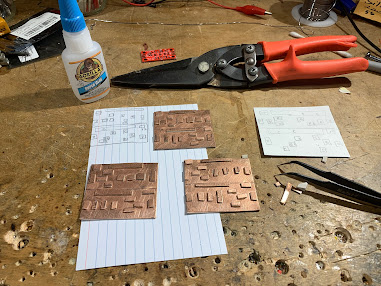
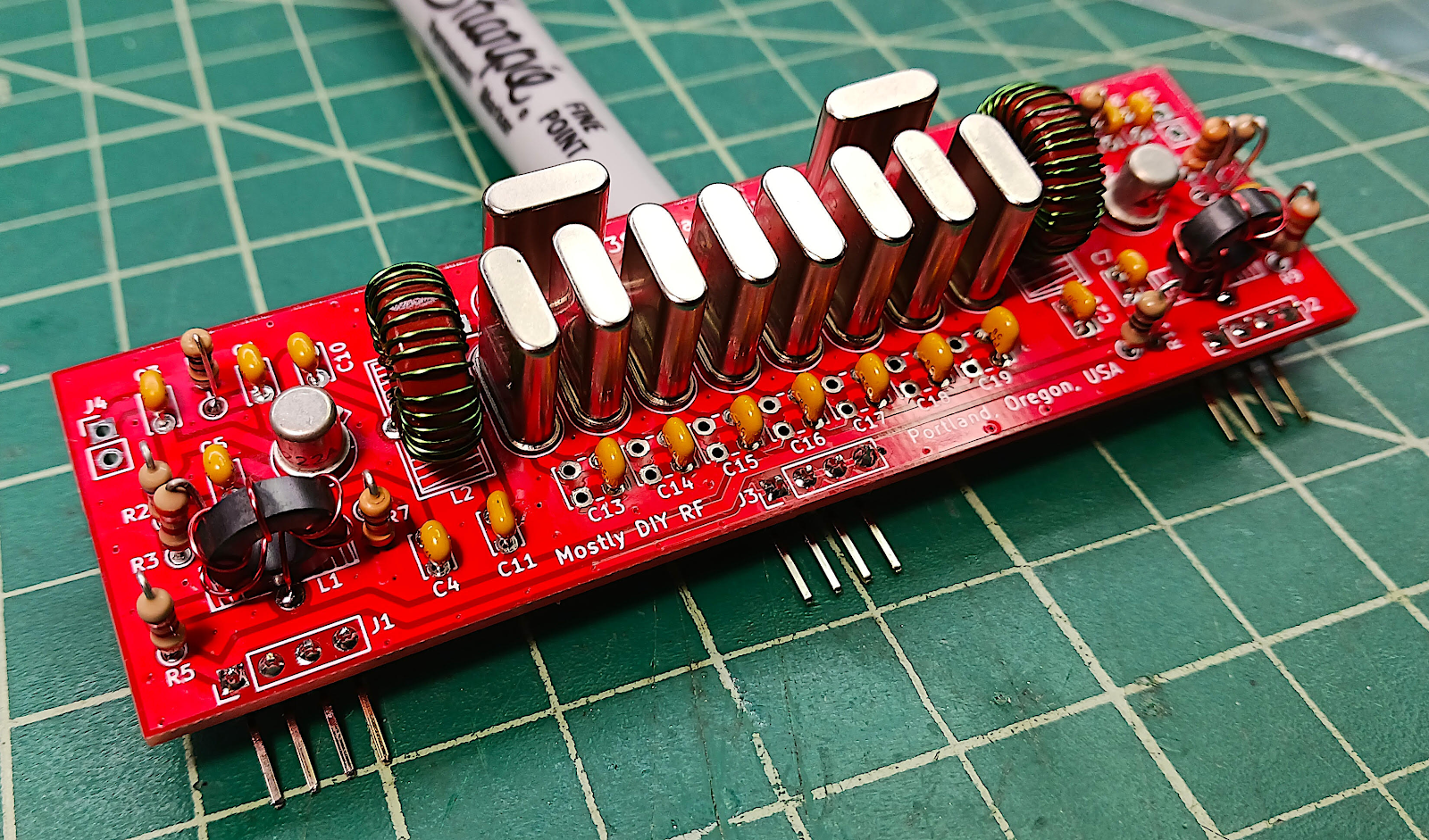
I recently had to make three sets of TIA amps for my new 15-10 rig. First, I decided not to use the boards provided by Todd of Mostly DIY RF. You can see one of these boards above the tin shears in the picture above. Note how compact it is. Even though you would need two of these (one for receive, one for transmit) to get what you need for a bilateral rig like the BITX, using these boards (as I did on my 17-12 rig) saves you a lot of space. But this time I wanted to build a rig that is TOTALLY DIY RF. So out came the tin shears and the super glue.

First I decided on the Manhattan pad placement. I used a pattern that had worked on previous rigs. Pete is right — I use a lot of TIAs (but no, I have no tattoo of the circuit anywhere on my anatomy!). I scaled it down a bit, thinking that I could come a bit closer to Todd’s compactness.

Knowing that I would need three sets, I first made three boards. Then it was just a matter of soldering in the components: I did resistors, then capacitors, then, finally, the transistors. In this way I was able to put together the three dual TIA amps in a couple of morning build sessions. It was kind of tight and I had to be careful to avoid wiring errors or unintentional shorts. But it worked.

I like the TIA circuit. It lets me select the gain of a stage by simply using two resistor values from W7ZOI and K3NHI’s chart. And with this circuit I know that it will look like 50 ohms both ways. This is really important on bilateral rigs like this.

I don’t think there is anything wrong with using BITX-like bilateral circuits or TIAs or LC VFOs. This is all for fun right? I just like using these circuits.

My friend Pete is right in pointing out that the bilateral concept did not originate with the BITX — it has been around for a long time, going back at least as far as the Cosmophone. But I think Farhan’s BITX definitely moved it into the solid-state homebrew mainstream. Three cheers for Farhan for doing that.

The Beginning of MY Radio Life…

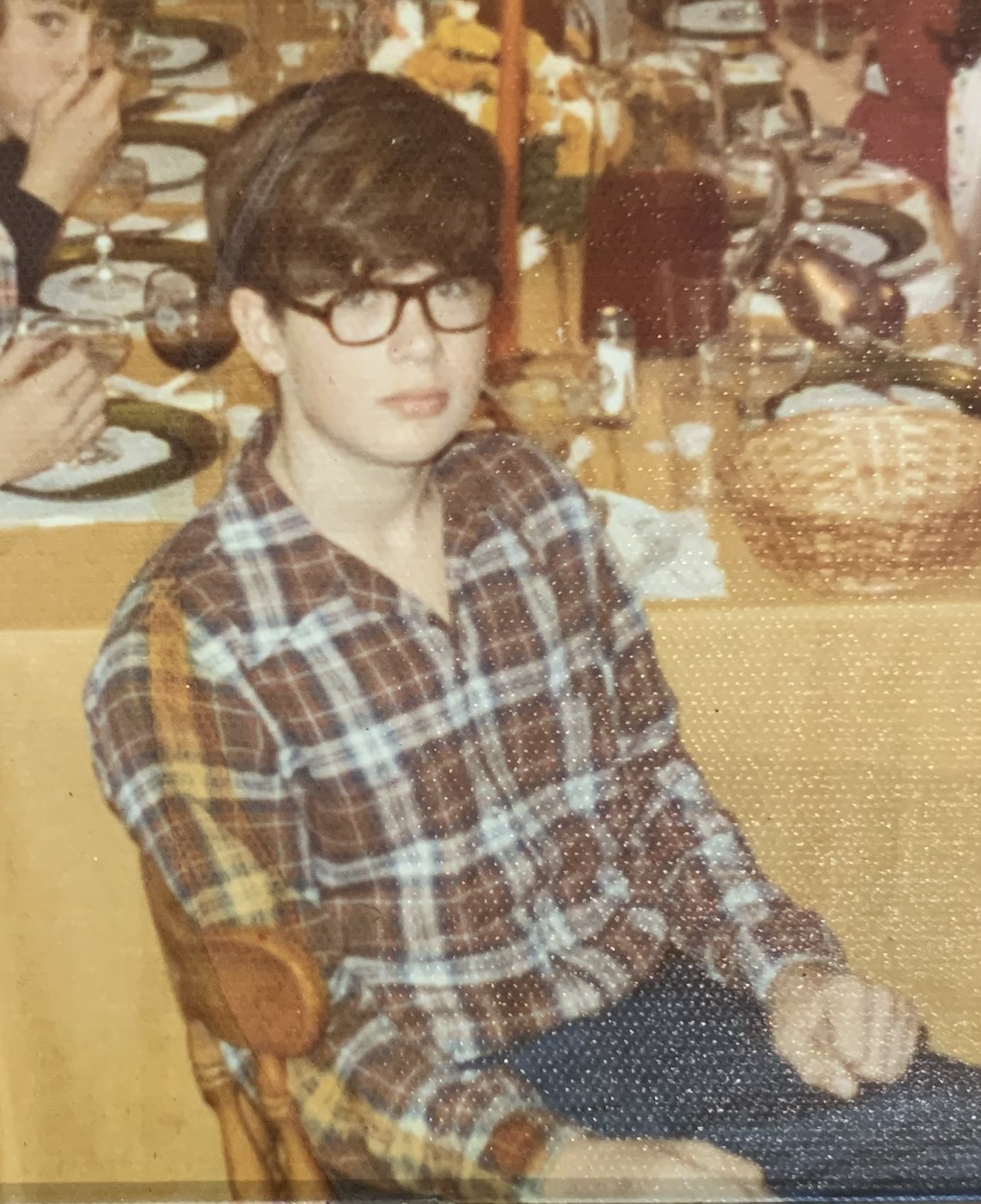
Unlike Pete (see below), I don’t have any cool pictures of me in front of an early station. But in the picture above, there I am, at the Thanksgiving table in 1973 age 15. I was on the air by this date, on CW as WN2QHL. Armed with a Lafayette HA-600A and a DX-40, I was tearing up the ham bands, especially 40 meters. Look at the tension in my face, the grip of my fist… I just wanted to finish that turkey and get on the air! But no, I had to have Thanksgiving dinner.

I recently realised that I have been a ham for more than 50 years. Is there an HCWA?

This and the recent movie from India led me to think about the timeline of my early radio days:

— Christmas 1972. Santa brings me a Lafayette HA-600A general coverage receiver. With jeweled movements. Age: 14

— April 27, 1973. Novice Ticket becomes effective. WN2QHL. Age 14.

— July 19, 1973. First contact (with Elmer WN2NEC). Age 14.

— February 1 and 2 1973. A grumpy old-timer calls — during the Novice Roundup! — to tell me that I’m putting harmonics onto the 20 meter band. I get scared and go off the air. Geez! I probably just needed to retune the tank circuit. Age 15.

— February 23, 1974. I go back on the air with a DX-100. Age 15.

— March 5, 1974. I take the General Class exam at the FCC office in New York City. I pass. Age 15.

— April 11, 1974. I buy the Drake 2-B from WN2NEC. This revolutionizes my radio life. Fifteen meter contacts become possible. Age 15.

— April 13, 1974. I work ZL2ACP on 15 meter CW. I wake up my parents to tell them. Age 15.

— April 21, 1974. END OF NOVICE OPERATION. Apparently we were still working under a one year limitation on Novice operation. Could the expiration date have been marked on the license?

At this point the FCC screwed up and sent me a Technician License instead of a General Class License. My father got on the phone to Gettysburg and straightened this out. Thanks Dad. So I was only a Technician for a few weeks.

— April 9, 1974. General Class License effective. I become WB2QHL, a man of substance. Age 15.

— May-June 1974. I acquire a Heathkit HW-32A 20 meter SSB transceiver from the Crystal Radio Club. But I have to build the power supply from an old TV. Somehow, I survive. Age 15.

— June 11, 1974. First contact with the HW-32A. Age 15.

— November 9, 1974. Last contact with the HW-32A . Age 16.

— March 15, 1975. First contact with my Hallicrafters HT-37. Age 16.

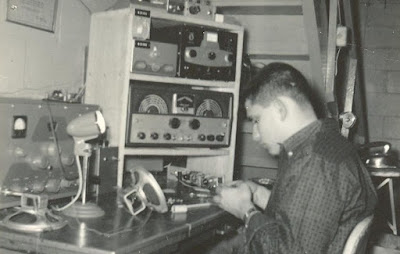
Above is my only photo of my teenage ham radio station. I can date it via the QSL card above the map. I still have that card. I worked W7RUK on March 25, 1975. That contact was on 20 SSB, but when this picture was taken I was on CW (the key is plugged in, not the microphone).

— June 1976 I graduate from High School. Age 17.

— I was active and on the air through the summer of 1976.

— July 1976 — QST article on the Herring Aid 5 receiver. I try to build it and fail. Age 17.

— October 1976 — I depart for Army Basic Training.

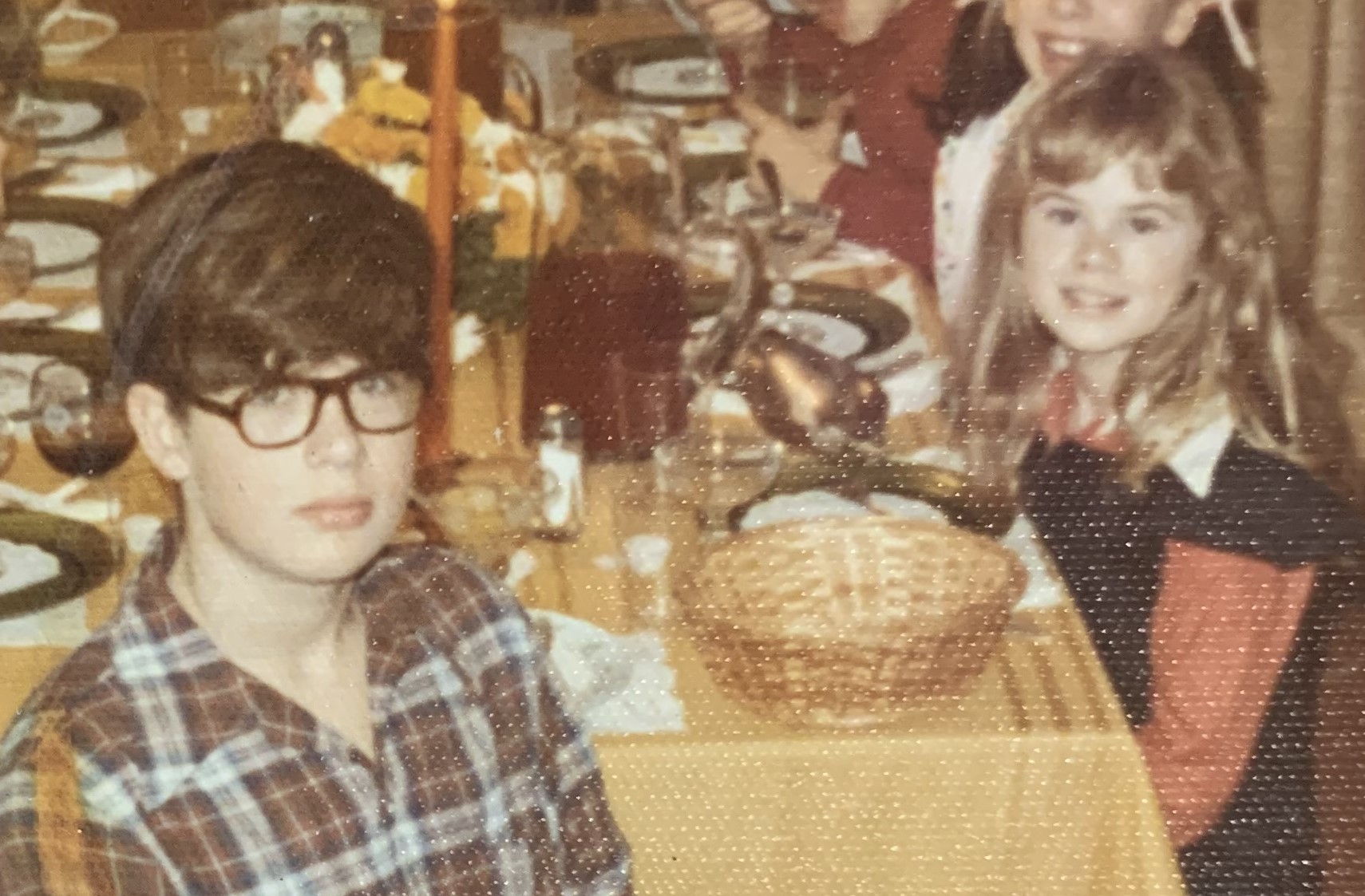
There is someone else who needs honorable mention here: My sister Trish. Here she is, next to me at the Thanksgiving table in 1973. Trish helped me keep my ham radio log book. Thanks Trish!


Pete Juliano, Field Day, 1959. With a DX-100B and (gasp!) a QF-1.

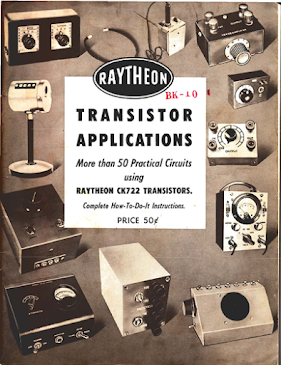
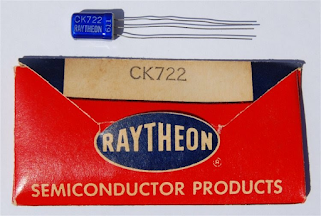
A FREE Book from the Early Days of Ham Projects with Transistors: The CK722 — The Device that Got Pete Juliano Started in Homebrew

Pete N6QW sent this amazing book to me this morning. Pete wrote:

“The book was the size of a Notebook and had a gray cover. I built some of the projects like the CPO. If you had a CK722 then you were there.”

You can get the book for free here:


http://n4trb.com/AmateurRadio/RaytheonTransistorApplications/Raytheon%20Transistor%20Applications.pdf


The impact of the CK722 on Pete Juliano, on ham radio, and eventually on SolderSmoke was quite profound. Back in 2015, I wrote about this on the blog:

I knew Pete had a lot of experience with transistors, but I didn’t realize just how far back this experience reaches. Pete writes, “The March 2015 issue of QST had an article about a 1953 transistor transmitter project which was really advanced technology since the transistor was only invented about 5 years before that time… About 1953 at the age of 11, I built my first solid state audio amplifier using the venerable CK722 from Raytheon. The transistor did look a bit strange in that cool blue cube shape with a red dot on the side to identify the collector. What a joy and surprise to me that it worked the first time power was applied… It was the CK722 that in large measure started me on a life’s work and engagement in a wonderful hobby. That CK722 path also led me to designing and building a QRP solid state version of the Collins KWM2 which I call the KWM-4.” I asked Pete why an 11 year-old kid in 1953 felt compelled to build a solid state audio amp. The answer is very cool: Pete’s father had introduced him to crystal radios at age 8. Pete wanted an amplifier for his crystal set, but his dad was worried about him building high voltage tube gear. So that’s how Pete got his VERY early start with transistors.

We are really lucky to have Pete Juliano sharing his vast tribal knowledge with us.

—————-

You can see a complete set of SolderSmoke posts about the CK722 here:

Wikipedia has a nice article on the CK722. The design contest Raytheon sponsored would be the kind of contest we could really get into! https://en.wikipedia.org/wiki/CK722
Thanks Pete. And thank you Raytheon!

SolderSmoke Podcast #249 — Travel, Pete’s 6BA6 rig, Books!, VFOs, SDR, Computers, Spectrum Analysers, Transistor Man! MAILBAG

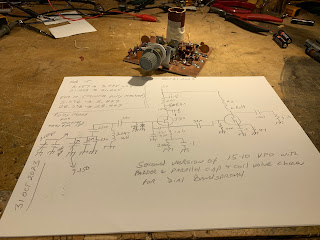
New VFO for 15-10 Transceiver
Schematic below

SolderSmoke Podcast #249 is available: http://soldersmoke.com/soldersmoke249.mp3

There is also a video version of this podcast: https://youtu.be/5xyaYivtOhw

Travelogue:

HAPPY VETERANS’ DAY TO PETE AND GRAYSON AND TO ALL THE OTHER VETERANS WHO ARE LISTENING.

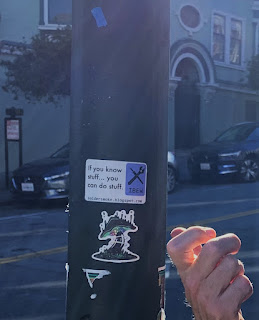
Trip out to San Francisco. Sticker placed on the corner of Haight and Ashbury: See picture below. Note other sticker. Really Groovy!

Bill’s DXCC-100. DONE.

Tribal Wisdom: W1REX on HRWB https://soldersmoke.blogspot.com/2023/11/listen-to-rex-w1rex-lots-of-tribal.html

Pete’s Bench:

Pete’s 6BA6 rig

Pete’s 6BA6 Rig


Pete Re-invents the Shirt-pocket SSB Rig

Pete’s remake of the ShirtSleeve Transceiver

Pete Builds Two Computers

Pete Adds a Second Band to his Homebrew SDR


SHAMELESS COMMERCE DIVISION:

BEZOS BUCKS ARE BACK! PLEASE BUY THERE! >>>>>>>>>>>>>>>>>>>>>>>

Mostly DIY RF: Work proceeds in the Oregon Silicon Forest on P3ST kit development. Todd is confident the P3ST will be released on December 18th.Many other kits available now: https://mostlydiyrf.com/

Sign up for the newsletter: https://mostlydiyrf.com/subscribe/


Bill’s Bench:

Rebuild of the 15-10 VFO (for improved Dial Spread) (with yet another QF-1 capacitor) https://soldersmoke.blogspot.com/2023/10/dial-scale-linearity-spreading-out.html

Why Building for 10 meters is harder: https://soldersmoke.blogspot.com/2023/09/why-building-for-10-meters-is-harder.html

Copper Tape shielding of 15-10 rig.

Crushing Spurs with Better Bandpass Filters (see blog post) https://soldersmoke.blogspot.com/2023/09/crushing-17-and-12-meter-spurs-with.html

Another 15-10 rig in the works… for SSSS. Boards are accumulating…

More problems discovered with the Herring Aid 5 Receiver . Lots of SS blog posts Comment from Rick WD5L. ) https://soldersmoke.blogspot.com/2023/10/a-big-error-discovered-in-1976-qst.html Did you try to build one? Did you succeed or did you fail? Please let us know.

The Basil Mahon books (blog posts) https://soldersmoke.blogspot.com/2023/11/basil-mahon-is-author-for-us-he.html

The Sunburst and Luminary book of Don Eyles (blog posts)

The Art of Electronics by Horowitz and Hill (blog posts)

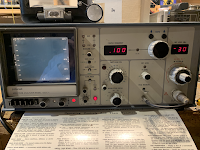
Spectrum Analysers: Tiny SA Ultra https://soldersmoke.blogspot.com/2023/09/the-tinysa-ultra-spectrum-analyser-video.html and Polarad 632C-1; George WB5OYP gave me one of these spectrum analysers (I NEED a manual! Does anyone have a manual or a schematic? ) :

Polarad 632C-1


Stabilizing the EB63A (with Pete recommended LP filters from e-Bay.


MAILBAG:

TRANSISTOR MAN T-SHIRTS! Thanks to Roy WN3F!

Todd VE7BPO on AF amplifiers. Thanks Todd.

Wes W7ZOI — Always a privilege to exchange e-mail with Wes.

E-mail from Jay Rusgrove W1VD. About the Herring Aid 5.

E-mail from Eamon Skelton EI9GQ! Amazing!

HB2HB with Denny VU2DGR https://soldersmoke.blogspot.com/2023/09/hb2hb-contact-with-denny-vu2dgr.html

Nick M0NTV on diode matching for ring mixers: https://soldersmoke.blogspot.com/2023/10/does-matching-matter-diode-matching-for.html

Paul Taylor VK3HN on the new Elecraft CW rig.

Dean KK4DAS fixed the noise in his Hallicrafters SW receiver. A long battle, finally won.

Dean also in contact with G3UUR.

Ramakrishnan VU2JXN helping me set up a backup of blog on WordPress.

Mark KA9OOI noticed that SS podcast archive appears gone. In fact just temporarily relocated to http://soldersmoke.com/podcastarchive.html

(SS PODCAST Archive temporarily relocated to http://soldersmoke.com/podcastarchive.html)

Andreas DL1AJG – Crystal radio video. https://soldersmoke.blogspot.com/2023/10/building-crystal-set-videos.html

George N2APB on the Herring Aid 5

Grayson KJ7UM experimenting with Varactors and Thermatrons!

Thomas K4SWL on Mattia’s DC receiver. https://soldersmoke.blogspot.com/2023/10/mattia-zamanas-amazing-direct.html

Bob Weaver of Dial Bandspread Linearity fame. Electron Bunker

Mike Bryce WB8VGE QRP Hall of famer — he too couldn’t get the Herring Aid 5 working.

Kirk NT0Z wrote about the Wayback machine. But this former ARRL staffer he also tried and failed to get the Herring Aid 5 going. Way back when… https://soldersmoke.blogspot.com/2015/03/kirks-herring-aid-tuna-tin-and-regen.html

New 15-10 VFO with schematic
Dial Bandspread (Before)

At corner of Haight and Ashbury

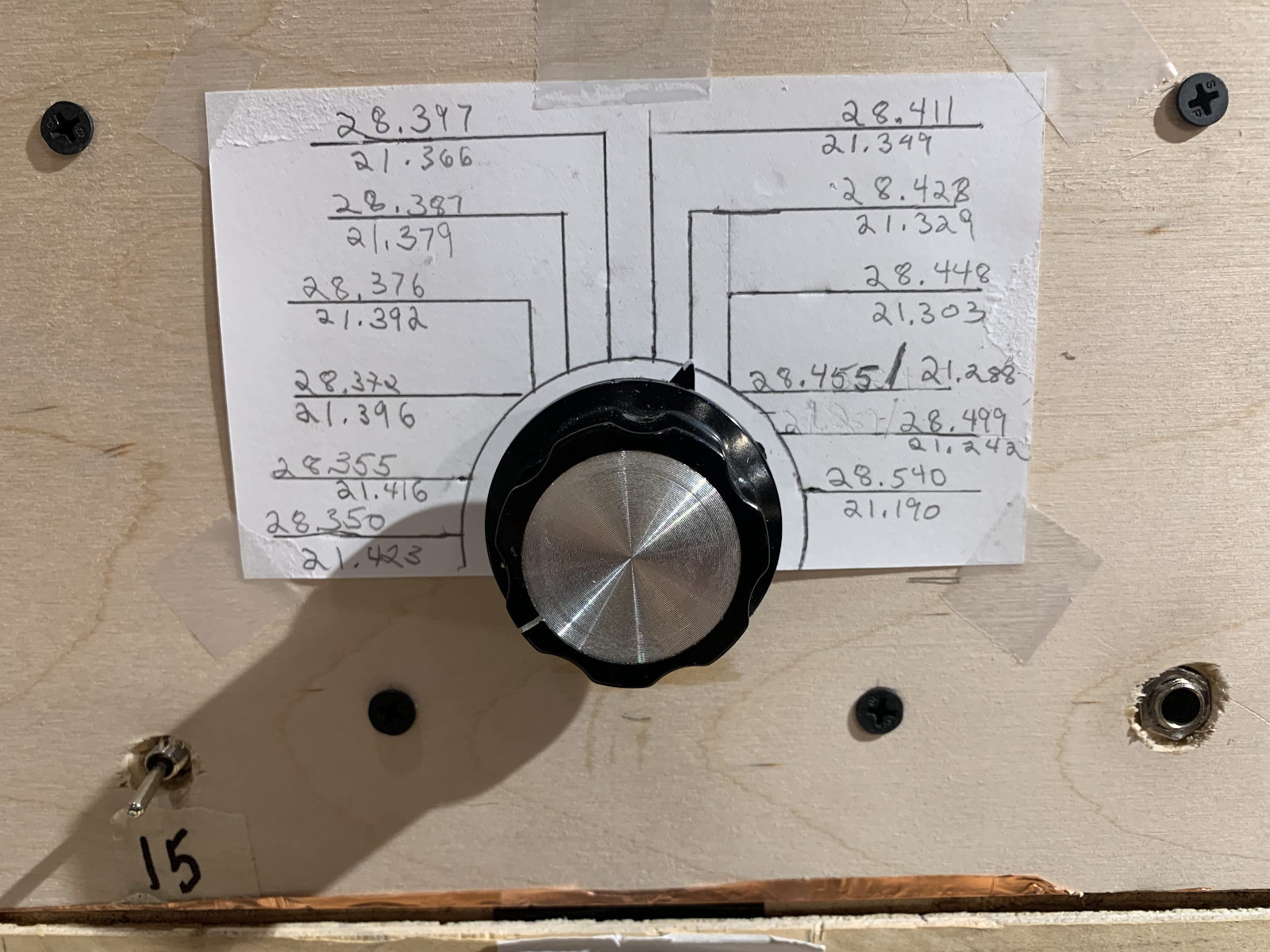
DIAL SCALE LINEARITY — Spreading out the Frequencies for the 15-10 BITX Rig

Click on the image for a better view

The 15-10 Rig has been performing very well, pulling in a lot of DX contacts on both bands. But there is one thing that has bothered me: The way the transceiver tunes. It can be a bit difficult getting an SSB station tuned in properly. At first I thought this was caused by a lack of lubrication on the variable cap that I’ve been using (out of an old QF-1), but it turned out that this was not the cause. The problem is something that Pete Juliano has lamented several times: LC style analog VFOs have a tendency to have the frequencies “bunched up” at one end of the tuning range. In other words, the tuning range is far from linear. I was having trouble tuning stations on on the portion of the band where the frequencies were bunched up. I did some quick measurement and found that on this side of the capacitor’s tuning range, one turn of the dial would move the frequency about 100 kHz — that is far too much. On the other end of the capacitor moved only 22 kHz with one turn of the dial (as I recall this is close to the recommended 20 kHz per dial rotation). Clearly I had a lot of the dreaded bunching up. This was what was making tuning difficult.

I had built a pretty standard Colpitts FET VFO. I had a 6.6uH coil, and a 9-135 pF variable cap in series with a 68 pF fixed cap. I was pleased that the VFO worked, and I put it in the circuit. Only later did the bunching up shortcomings become apparent.

I decided to build another VFO, this time paying attention to DIAL SCALE LINEARITY.

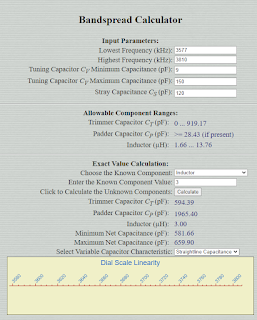
I turned to the excellent Bandspread Calculator on Bob Weaver’s Electronic Bunker web site: http://electronbunker.ca/eb/BandspreadCalc.html

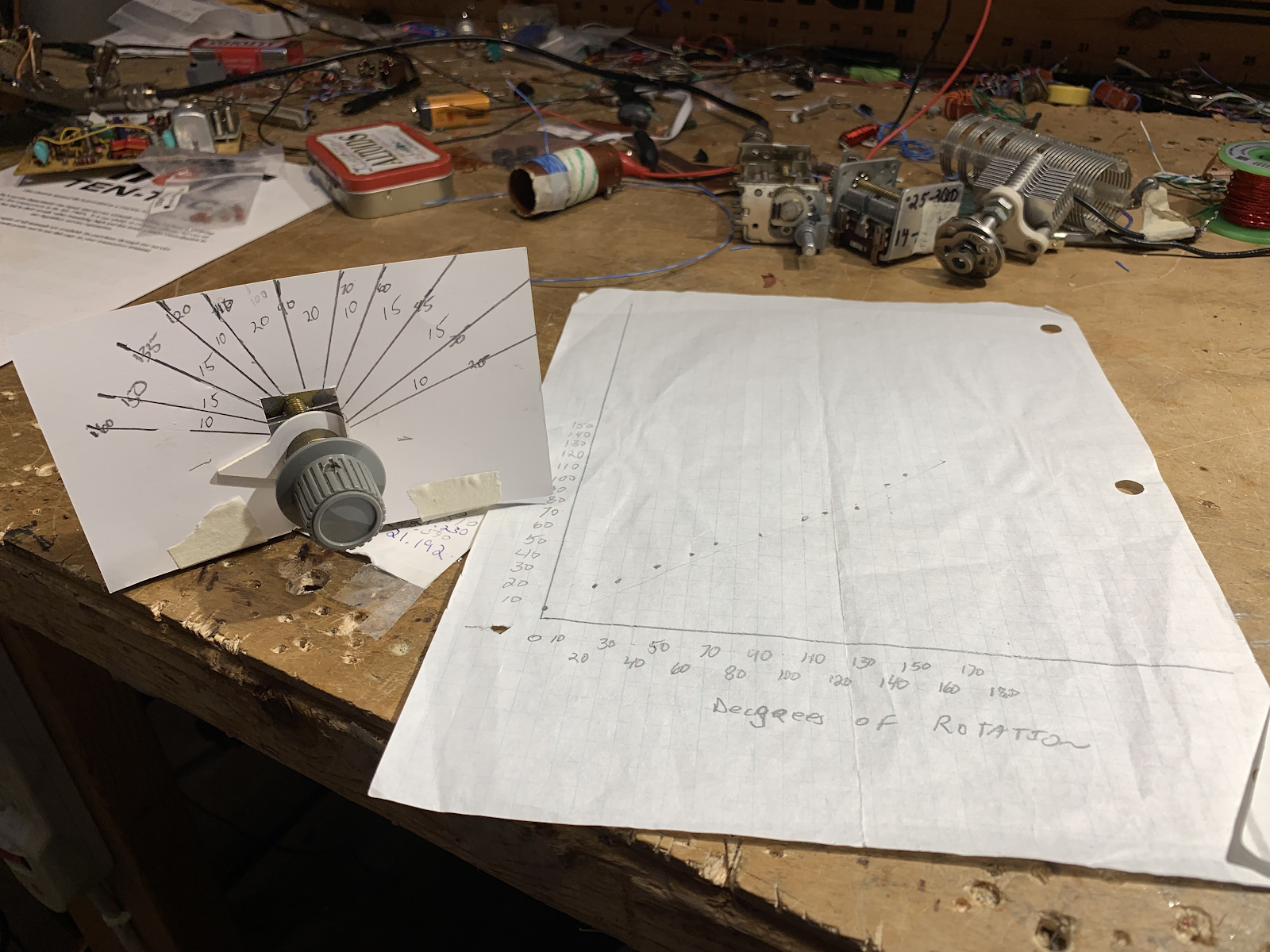
I plugged in the frequency range that I needed and the values for my variable capacitor. I calculated Cs which was the combined capacitance of the feedback and coupling capacitors. Finally, I had to make a decision about the nature of my variable cap: was it a Midline-Center Cap or was it a Straightline Capacitance cap. I consulted with Bob and he suggested that it might be somewhere between the two. I got out some graph paper and measured it — it looks to me like a Straight Line Capacitance cap, with the capacitance varying linearly with changes in in the rotation of the shaft.

It looked fairly linear, so I selected “Straightline Capacitance.” Bob’s calculator predicted a much better dial scale linearity (see the picture at the top of this blog post).

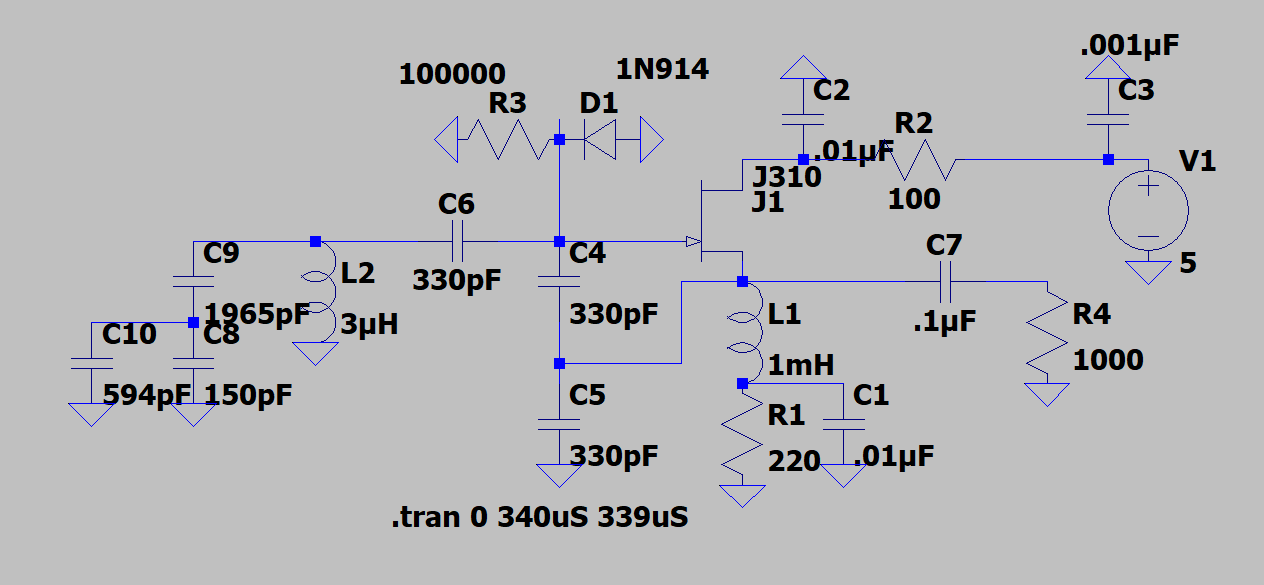
I then built the oscillator stage in LTSpice using the values called for by Bob’s calculator:
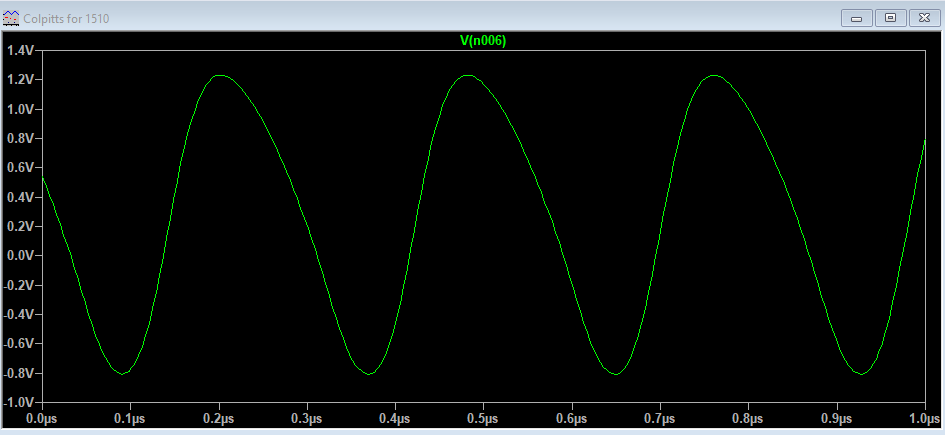
It worked well in LTSpice:
So I built it in the real world. I didn’t have the exact values for the padder and trimmer caps, so I use values that were close.
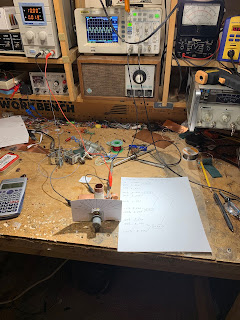
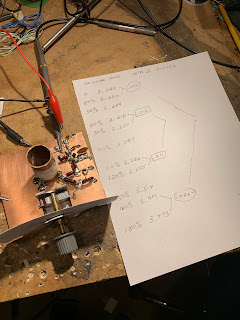
Using the frequency counter in my Rigol ‘scope, I again measured the frequency change for each movement of the shaft.
Here are the results: You can see that the bunching up has been largely eliminated. Frequency change for a 20 degree (not %) movement at one end of the capacitor’s range is essentially the same as it is on the other end of the range.

I will continue to play around with the padder and trimmer cap values to get this VFO where I want it. I may also have to opt for less frequency range in order to get closer to the desired 20 kHz per dial turn value. I will also have to play around with the additional capacitance that will be switched in to move the VFO down a bit to the range needed for the 10 meter band.

The bottom line here is that Bob’s bandspread calculator is very useful in figuring out how best to avoid the dreaded bunching up of frequencies that can — sometimes — come with the use of analog LC VFOs. The display of Dial Scale Linearity that appears at the end of each calculation is really brilliant, and allow for an instantaneous look at how changes in the various parameters will affect the linearity of tuning. This is a really wonderful tool for the homebrewer.

Thanks Bob Weaver!

Does Matching Matter? (Diode Matching for Diode Ring Mixers) — Nick M0NTV Finds the Answer (Video)

In this video, Nick M0NTV takes on a hot topic in ham radio homebrewing: The matching of diodes in diode ring mixers. How should the matching be done and — more controversially — is this matching necessary?

I won’t spoil it for you by giving the answer. Watch Nick’s video to find out if it matters. (But a hint appears below.)

I think it is great that Nick has taken the trouble to look carefully at this issue, and has found info that will be of great use to homebrewers. And I really liked Nick’s response to the fellow who suggested just going out and buying a commercial diode ring: Nick replied that he homebrews because he likes to, and because he wants to know how these circuits work. FB Nick.

I was also pleased that Nick gave some much warranted recognition to Pete Juliano for his idea regarding the placement of a trim pot on a diode ring. This idea made it into the Experimental Methods in RF Design book (under Pete’s old call: W6JFR). Page 6.56.

Paul VK3HN’s Video on Scratch-Building and SOTA

It was great to get a comment from Paul VK3HN — this led to a re-establishment of contact. Apparently Google knows who I have been e-mailing, so this great video appeared on my YouTube screen. Thanks Google!

— Great to hear Paul’s shout out to Pete Juliano N6QW, and Pete’s concept of noodling.

— Paul’s emphasis on testing each stage independently is really important.

— Wow, ferric chloride! It is great to see someone doing this (instead of just sending Gerber files to China).

— Books. This reminds me that I have to get Drew Diamond’s books.

— Paul’s comment on the usefulness of a general coverage receiver. Right on target Paul.

— On the test gear, we can now add the TinySA Ultra. And you don’t have to win the Lotto!

— Finally, Paul is absolutely right on the need to constantly update and publish changes to schematics. I am guilty of not doing this. (I hang my head in shame.) This became a problem in our simple High-School receiver project — I would make changes to circuits and fail to communicate these changes to Dean KK4DAS. Paul’s method would have solved this problem.

— Thanks Paul!

SolderSmoke Podcast #247 — Hating on the IC-7300, Pete Goes FT-8 with a KWM-1, Bill’s 15-10 Rig, MAILBAG

Bill’s 15-10 Rig — Click on image

SolderSmoke Podcast #247 is available:

Audio Podcast: http://soldersmoke.com/soldersmoke247.mp3

Video: (482) SolderSmoke 247 — Hating on the IC-7300, Pete goes FT8 (with a KWM-1), Bill’s 15-10 rig, Mailbag – YouTube

Bill’s Bench:

The 15-10 Dual Bander.

n 10 pole crystal filter at 25 MHz.

n G3UUR, Dishal, AADE and all that..

n Testing woes. Looked bad. But it was a bad test cable. Duh.

n VFO (Colpitts) at around 3.5 MHz.

n Buffer blues: Bad J-310s. Beware!

n Variable cap from a Heath Q Multiplier

n A bit of a black art – competing goals. Freq coverage, etc.

n BFO needed an amp to turn on the diodes in the balanced modulator

n TIA amps. SIX dual direction TIAs. 18 transistors.

n On a pine board (like Frank Jones)

n Will use the N6QW all discrete AF amp.

n Maybe an RD16 in the final?

n Will build a second one for the DR.

Shameless Commerce: Mostly DIY RF and the PSSST kit. Todd K7TFC reports: “The P3ST is on track for Lee Deforest’s birthday release (August 26th). I’m going to send out another newsletter on July 4th, and I’ll give some details on P3ST development.” Results of Todd’s Survey.

Pete’s Bench

n FT-8 on the KWM-1!

n Presentation to the ham club.

n Why the Icom 7300 is the anti-thesis of homebrew.

MMAILBAG:

— SPRAT 195 Summer 2023, in the mailbox. A happy day at N2CQR

— Armand WA1UQO sent a wonderful book about Faraday and Maxwell… And told me Jim K8OI was heading to our area. I met Jim at the VWS Field Day event. FB. Thanks Armand.

— Tony G4WIF sent Father’s Day greetings.

— Alvin N5VZH asking about electrolytics for his 2-B. Hayseed Hamfest!

— John AC2RL replacements for the IBEW. We need to start over!

— Steve “Snort Rosin” Smith WB6TNL was in the area. Sorry I missed him.

— Joh DL6ID helping us to track down origins of a homebrew receiver Grayson saw in Berlin.

— Grayson KJ7UM was in Europe visiting his wife’s relatives. But I think he is back in the USA.

— Walter KA4KXX sent a QRP HB family portrait.

— Wouter ZS1KE sent info on surface mount soldering.

— George Zaff KJ6VU Ham Radio Workbench – re-runs! Recommended audio processor. Let me know how it sounds.

— Michael AA1TJ Great to hear from him.

— Alan Wolke W2AEW on the toroids he used in Diode Ring video. Thanks Alan!

— Dean KK4DAS, AI and SWR meter project And new lexicon word: Hamsplaining.

— Bob N7SUR — Let me know we are semifinalists in the Hack-A-Day prize!

The 15 – 10 rig from above — Click on image


Nine Homebrew Transceivers by Walter KA4KXX (and some QRP and QRO RC planes)

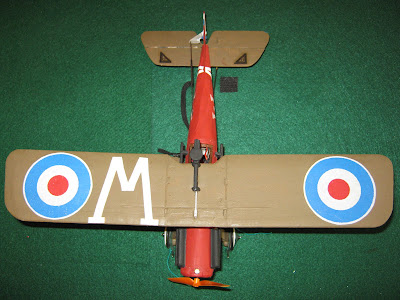
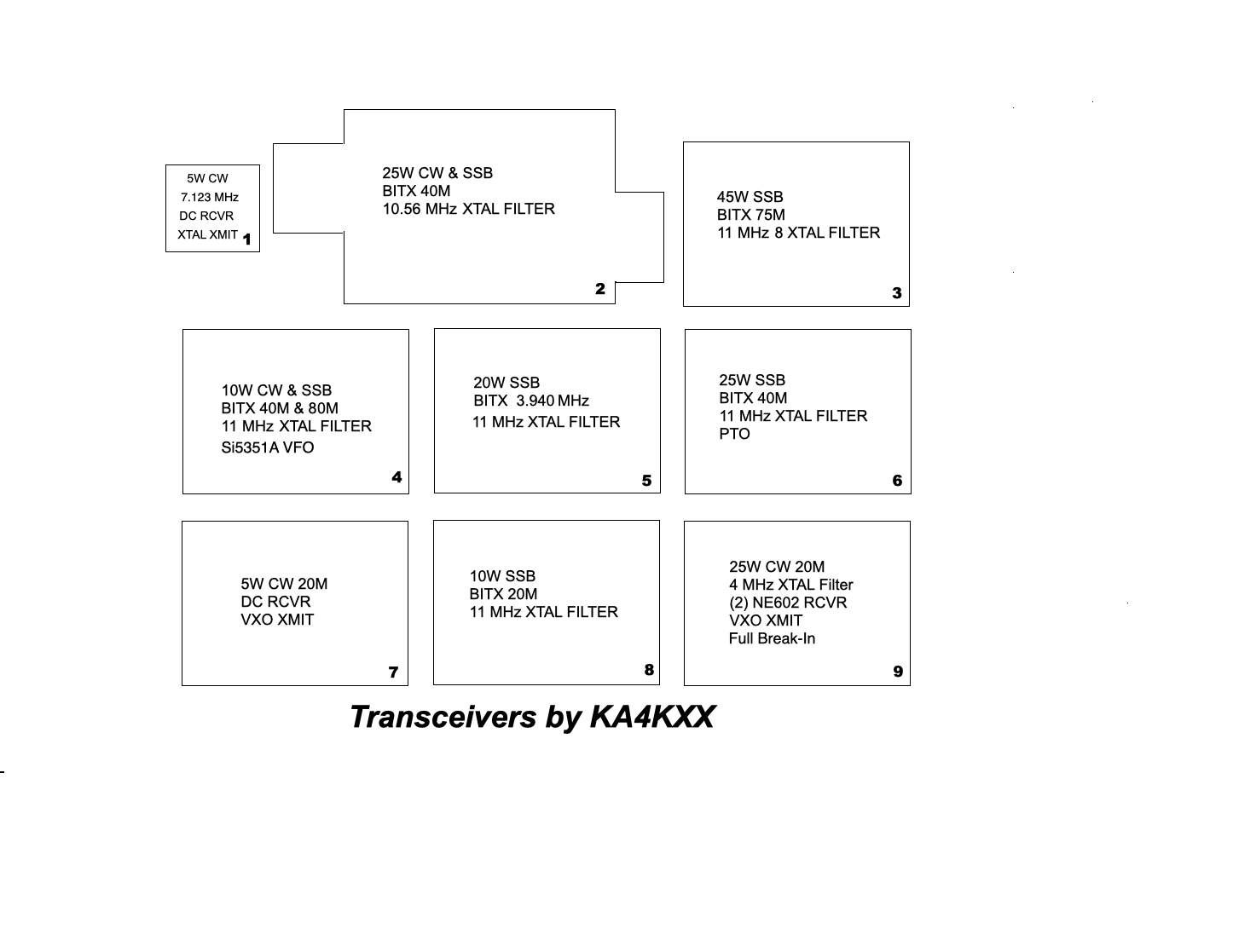
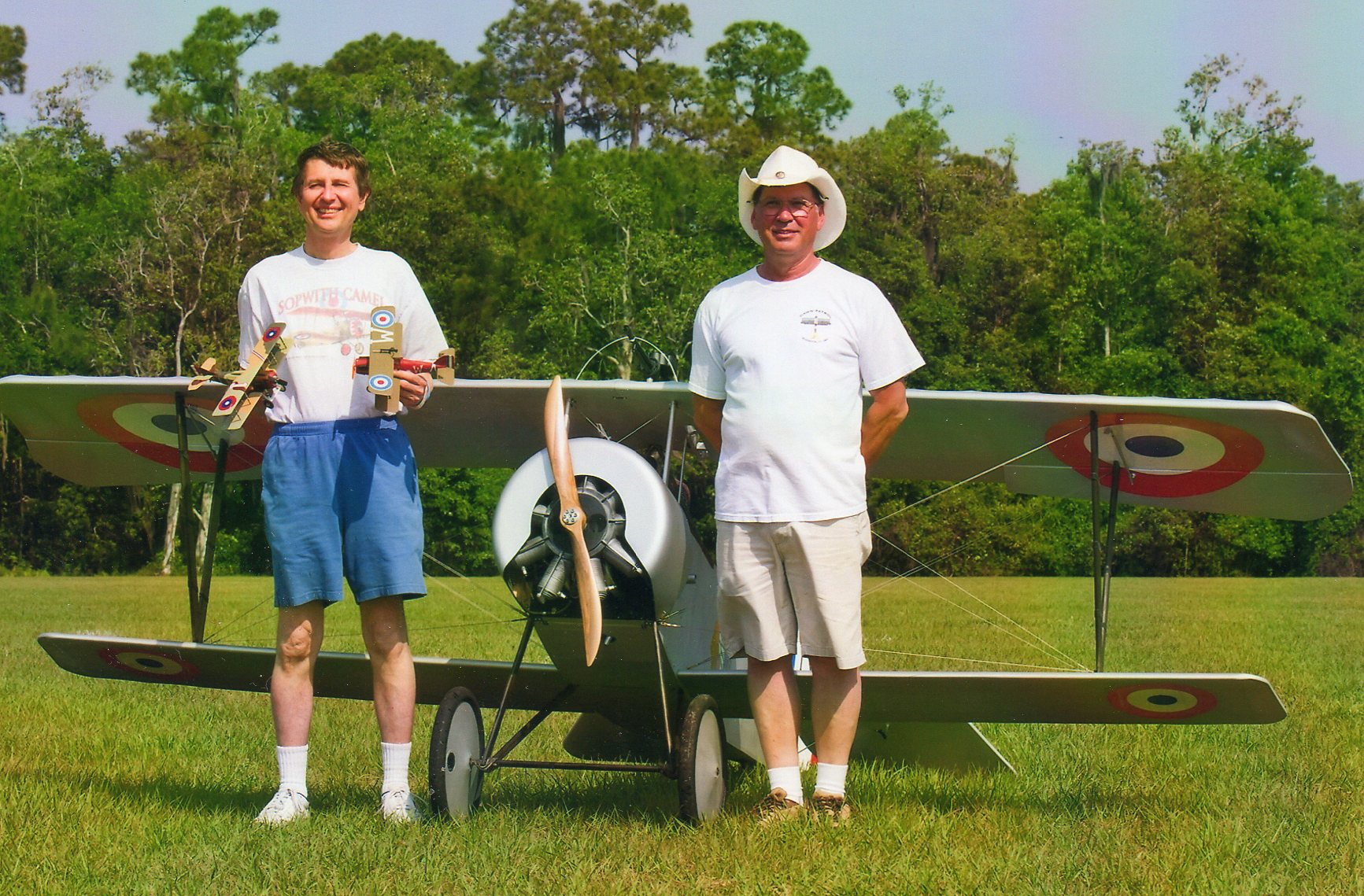
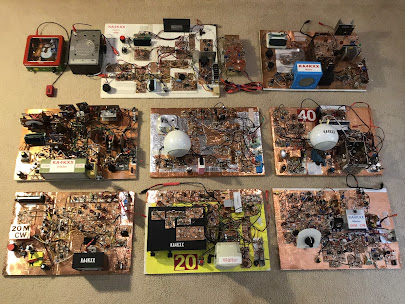
Our friend Walter KA4KXX in Orlando recently sent us this really cool “family photo” of his homebrew rigs. Be sure to see the key that explains the photo (below) FB Walter. Thanks too for the model airplane pictures. (Click on the images for better viewing.)

Walter wrote:

I recently realized that I am now operating nine homebrew transceivers, which would fit nicely in an “aerial” photograph, so I grabbed my stepladder and everything did fit well in the frame. Six of them come from the BITX side of the family, with #1 and #7 direct conversion and #9 a single conversion superhet but using the NE602. More basic information is included in the sketch.

I tried a Si5351 VFO once in the dual-band rig #4, but by the time I built the QRP Labs kit with so much closely-spaced soldering, and then added sufficient filtering and amplification to properly drive a 50 ohm load, I was exhausted!

These nine were created during the past eight years, and were preceded by eight more transceivers that I can document, but those have all been disassembled, with many of the parts being used in these later rigs. I build my transceivers to be operated often, and since 20 Meters has been hot lately, for example, my POTA Hunter log shows over 300 CW and SSB contacts in 2023 alone, so rig numbers 7 – 9 have been earning their keep lately.

In summary I have created a lifetime total of seventeen transceivers so far, and although I am nowhere near the fifty-plus tally of Pete N6QW, I did spend a lot of years instead homebrewing many radio-controlled model airplanes of my own design. Two photos show one example that I flew in the 2011 Blue Max Scale R/C Contest at the Fantasy of Flight Museum in Polk City, Florida against some stiff QRO competition.

—Walter KA4KXX