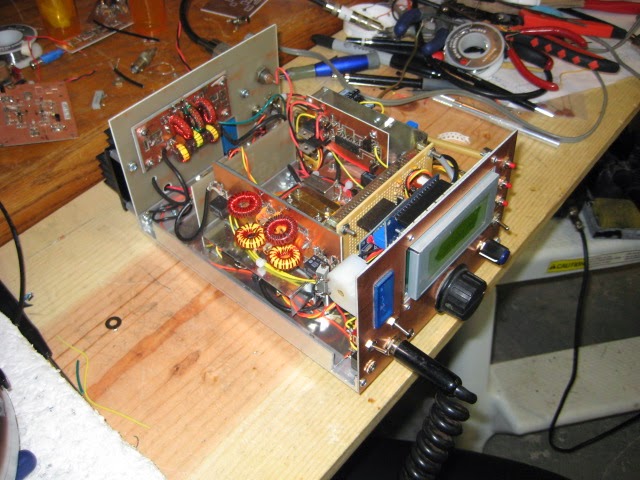
Homebrew Double Balanced Mixers by Pete Juiano (Part II) Video

Another great video from Pete. I like the unbalancing mod — I hate having to whistle into the mic!

Our book: “SolderSmoke — Global Adventures in Wireless Electronics” http://soldersmoke.com/book.htm Our coffee mugs, T-Shirts, bumper stickers: http://www.cafepress.com/SolderSmoke Our Book Store: http://astore.amazon.com/contracross-20
Pete’s Homebrew Double Balanced Mixer Video (Part 1)

Another great video from the famed Italian Director Giovanni Manzoni! Bravo Giovanni!

Pete’s discussion of double balanced mixers and the associated toroids has made me feel uneasy about my efforts in this area. I wonder if my diodes were completely matched. And I KNOW that my toroids are not as well done as Pete’s.

I recently put an SBL-1 into my old, long-evolving 20 meter ceramic resonator DSB rig. Careful with those nice little boxes! A bit too much juice and you can fry the little internal toroids (as I have done!).

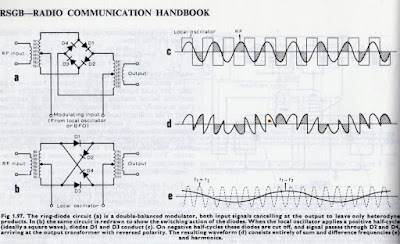
A while back I found in an RSGB Handbook a nice diagram showing how the diode ring mixer does its thing:


Our book: “SolderSmoke — Global Adventures in Wireless Electronics” http://soldersmoke.com/book.htm Our coffee mugs, T-Shirts, bumper stickers: http://www.cafepress.com/SolderSmoke Our Book Store: http://astore.amazon.com/contracross-20
SolderSmoke Podcast 166: Getting Started in Homebrew Radio

SolderSmoke Podcast 166 is available for download:

http://soldersmoke.com/soldersmoke166.mp3

Bench Report: Pete working on Direct Conversion Receivers.
Bill on his 2B and on 20DSB rig, and an M0XPD/Kanga DDS kit, and a 140 watt amp.

GETTING STARTED IN HOMEBREW:
Start simple: Build an oscillator. Make it oscillate!
Gather tools, simple test gear, and books.
Try to understand what you build.
Build a direct conversion receiver.
Don’t fear the toroids!
Be patient. This is not Plug and Play.
Build a DSB transceiver.
Little tips:
Protect variable caps.
Use heat sinks.
Use reverse polarity protection.
Don’t breathe the solder smoke! Ventilate your bench.

China Radio International Mystery Solved.
Book Recommendation: “International QRP Collection” by Dobbs and Telenius-Lowe
MAILBAG

Our book: “SolderSmoke — Global Adventures in Wireless Electronics” http://soldersmoke.com/book.htm Our coffee mugs, T-Shirts, bumper stickers: http://www.cafepress.com/SolderSmoke Our Book Store: http://astore.amazon.com/contracross-20
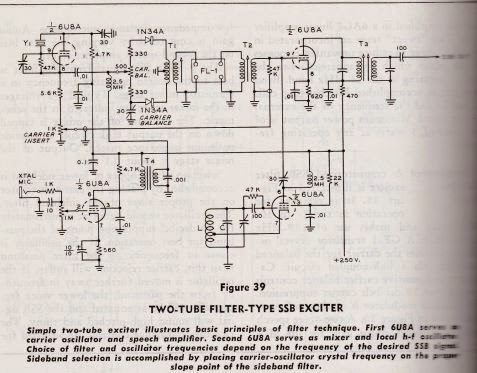
SSB with Just Two Tubes

Here is the two tube SSB transmitter that Pete was telling me about. This would be a nice companion to the “Mate for the Mighty Midget” receiver that I built a long time ago. Another Benton Harbor Lunchbox may have to be sacrificed…

Our book: “SolderSmoke — Global Adventures in Wireless Electronics” http://soldersmoke.com/book.htm Our coffee mugs, T-Shirts, bumper stickers: http://www.cafepress.com/SolderSmoke Our Book Store: http://astore.amazon.com/contracross-20
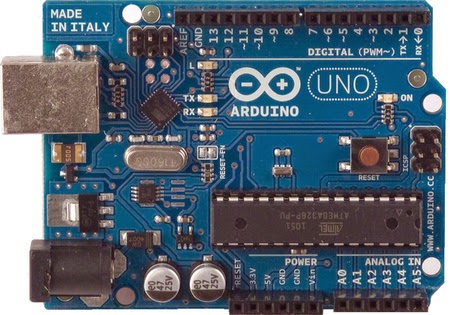
Eclectic Electronics: Powering Arduinos with Tube Filament Voltage

You know that you are dealing with a broad range of technology when you find yourself discussing how to power an Arduino microcontroller from the 12V AC voltage on a vacuum tube filament line. Thanks Pete.

Hi Bill,
There is only so much that can be said in 1 hour and 19 minutes so maybe here is some stuff for the blog.
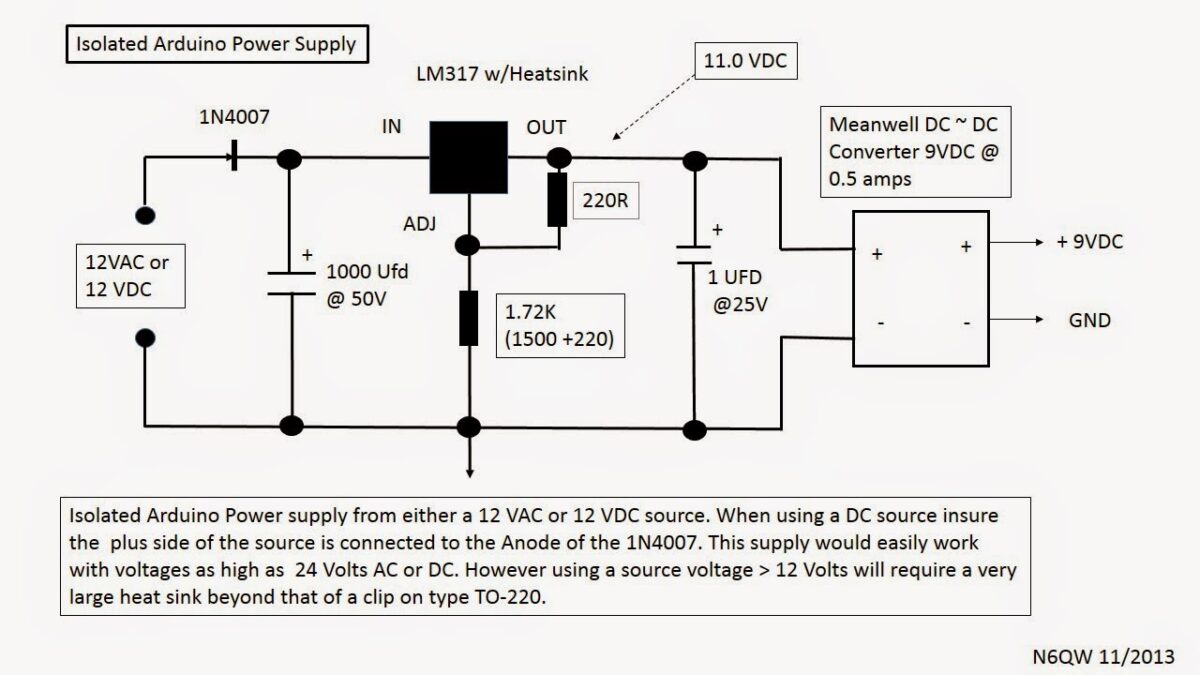
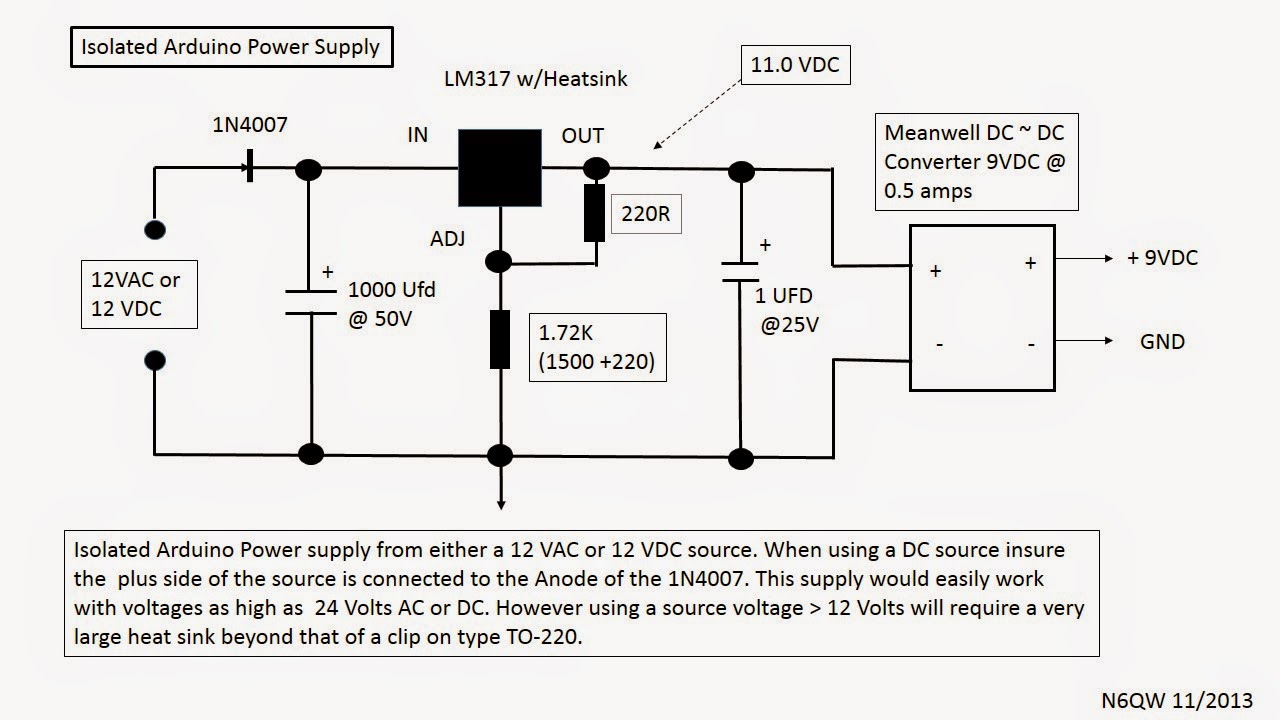
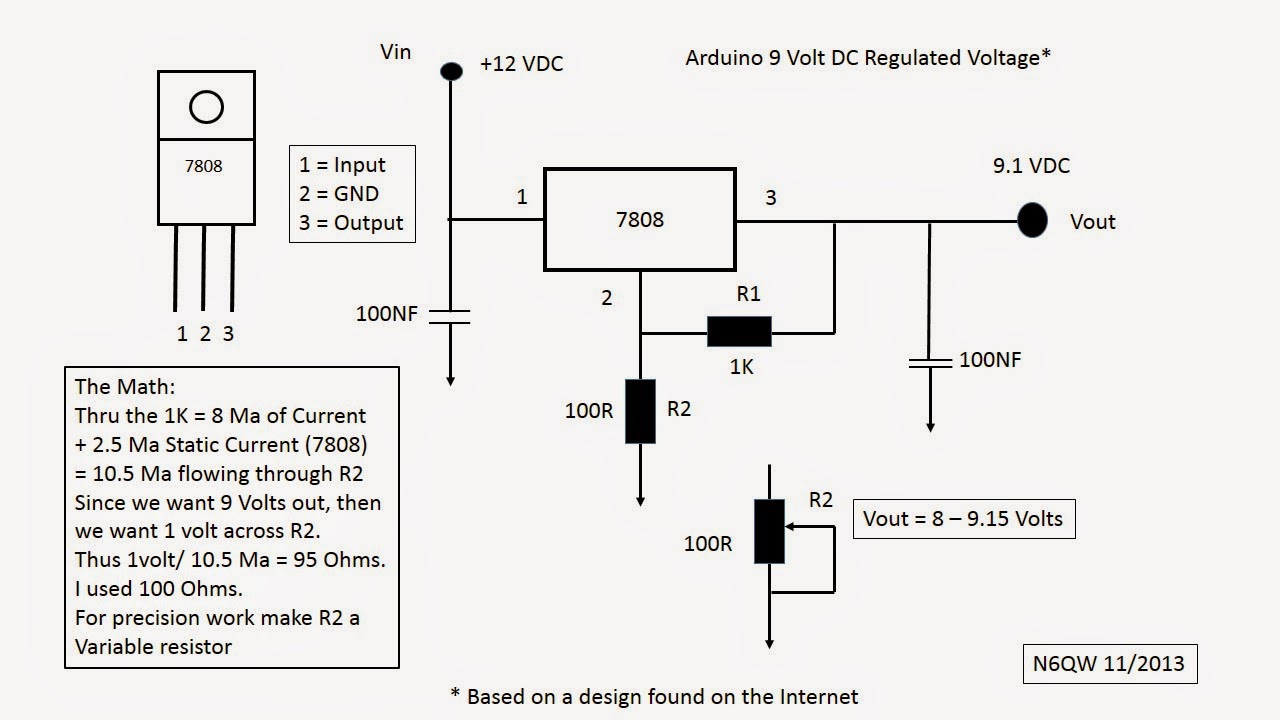
The 1st thing on the list when working with the Arduino when it is not connected to the computer is to have a proper power supply. My research as indicated that 9 VDC “raw” is a good starting point to power the Arduino boards so here are two supplies that will provide that power.
I did find that it was necessary to have an isolated supply when working with the “toob” radios and even to isolate the RF into the radio using a ferrite core transformer –some more tribal knowledge.
One supply takes an 8 VDC regulator and boosts its output to 9 VDC. The second uses a switching regulator and the beauty of the second is that the input can be either 12 V AC or DC. This is ideal for use in toob radios where you can sample the 12.6 VAC filament string.
73’s
Pete

Our book: “SolderSmoke — Global Adventures in Wireless Electronics” http://soldersmoke.com/book.htm Our coffee mugs, T-Shirts, bumper stickers: http://www.cafepress.com/SolderSmoke Our Book Store: http://astore.amazon.com/contracross-20
SolderSmoke Podcast #165 Arduinos!


SolderSmoke Podcast #165 is available:

http://soldersmoke.com/soldersmoke165.mp3

September 13, 2014

Workbench Update: Bill’s “Off the Shelf” Regen, Pete’s Boatanchors
Mysterious Echos on Shortwave Signals. Solve the Mystery. Please.
Microcontrollers — What they can do for you.
Small world: As a kid, Pete was neighbor of “Digital Dial” N3ZI
NEWS FLASH: Arduino creator Massimo Banzi was a ham!
Born in a bar, cheaper than pizza: The Italian origins of Arduino
Arduino CW generators
No coding skills needed
Arduino + AD9850 = Signal Generator or VFO
Arduinos in the Minma
What the heck is a Shield?
SolderSmoke Mailbag


Our book: “SolderSmoke — Global Adventures in Wireless Electronics” http://soldersmoke.com/book.htm Our coffee mugs, T-Shirts, bumper stickers: http://www.cafepress.com/SolderSmoke Our Book Store: http://astore.amazon.com/contracross-20
Some Inspiration on Receiver Building

As a result of all the recent toob talk with Pete Juliano I’ve been going to work with old copies of Electric Radio in my backpack. Yesterday, somewhere in the tunnel under the Potomac River, I read these inspiring words from master receiver builder Bob Dennison, W2HBE (SK):

“Part of the fun in the radio building hobby is tearing up a set after a short period of use so its parts can be used again in a bigger and better set. Another order is sent to Allied Radio for an audio transformer, an RF choke, a vernier dial and some of those exquisitely beautiful Hammarlund variable condensers. Oh what a joy it is! You just haven’t lived until you’ve built a whole series of progressively more exotic receivers. Give it a try!” (ER, March 1993)

Our book: “SolderSmoke — Global Adventures in Wireless Electronics” http://soldersmoke.com/book.htm Our coffee mugs, T-Shirts, bumper stickers: http://www.cafepress.com/SolderSmoke Our Book Store: http://astore.amazon.com/contracross-20
SolderSmoke Podcast #164 Ancient Tribal Knowledge: Tube and Tube-like Radios


SolderSmoke Podcast #164 is available:

August 16, 2014

http://soldersmoke.com/soldersmoke164.mp3

ANCIENT TRIBAL KNOWLEDGE — TUBE AND TUBE-LIKE RADIOS

Workbench Updates:
— Pete’s Arduino Keyer Project
— Bill Builds (and LIKES!) a REGENERATIVE RECEIVER
— The Joys of Regen Shortwave Listening
— Grayson Evan’s Tube (Thermatron) Book
— Book review: “The Joy of X” (It’s about math).
— Shameless Commerce: A Plug for Bill’s Book
— Pete discusses tube projects
— Making your own enclosures from Home Depot flashing
— Amplitude Modulation
— Compactrons, Nuvistors and other unusual tubes
— BANDSWEEP: Radio Havana on Bill’s new regen


Bill’s Mate for the Mighty Midget Receiver
3 6U8 Tubes on a Benton Harbor Lunch Box Chassis


Nuvistor 2 meter down converter

Our book: “SolderSmoke — Global Adventures in Wireless Electronics” http://soldersmoke.com/book.htm Our coffee mugs, T-Shirts, bumper stickers: http://www.cafepress.com/SolderSmoke Our Book Store: http://astore.amazon.com/contracross-20
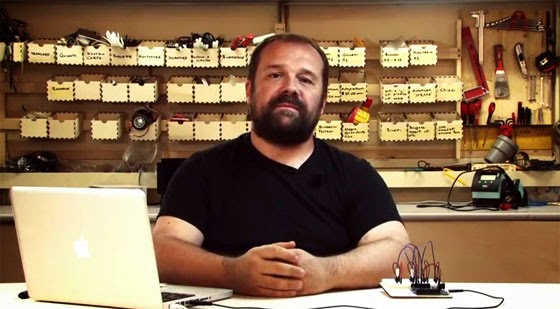
Video: Regenerative Receiver Project!!!

Pete Juliano and Grayson Evans are luring me back into the world of tubes and (gasp!) regen receivers.

Our book: “SolderSmoke — Global Adventures in Wireless Electronics” http://soldersmoke.com/book.htm Our coffee mugs, T-Shirts, bumper stickers: http://www.cafepress.com/SolderSmoke Our Book Store: http://astore.amazon.com/contracross-20

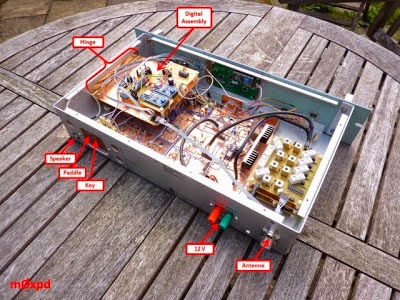
M0XPD Goes 3D with Boxed BITX with Digi-Hinge!

Paul, MOXPD, has put his BITX-based rig in a proper box. In spite of his recent collaboration with famed miniturizer Pete Juliano, Paul used a BIG box. It is not quite milk carton size, but it is getting there. Well done Paul. I really like the way Paul kept the digital and analog elements in different dimensions. The digi bit is sort of floating above the main analog board (almost in a “cloud”!). In SolderSmoke 163 Pete Juliano mentioned a downside of this kind of stacking: it makes it hard to get to the main board. Paul ingeniously solved this problem by putting the digital board on a hinge. Excellent. This will prevent you from becoming “unhinged” when the time comes to fix or modify the main board.

Here are all the details on Paul’s project:
http://m0xpd.blogspot.co.uk/2014/07/boxing-clever.html

Our book: “SolderSmoke — Global Adventures in Wireless Electronics” http://soldersmoke.com/book.htm Our coffee mugs, T-Shirts, bumper stickers: http://www.cafepress.com/SolderSmoke Our Book Store: http://astore.amazon.com/contracross-20
Part III with Pete Juliano this Saturday

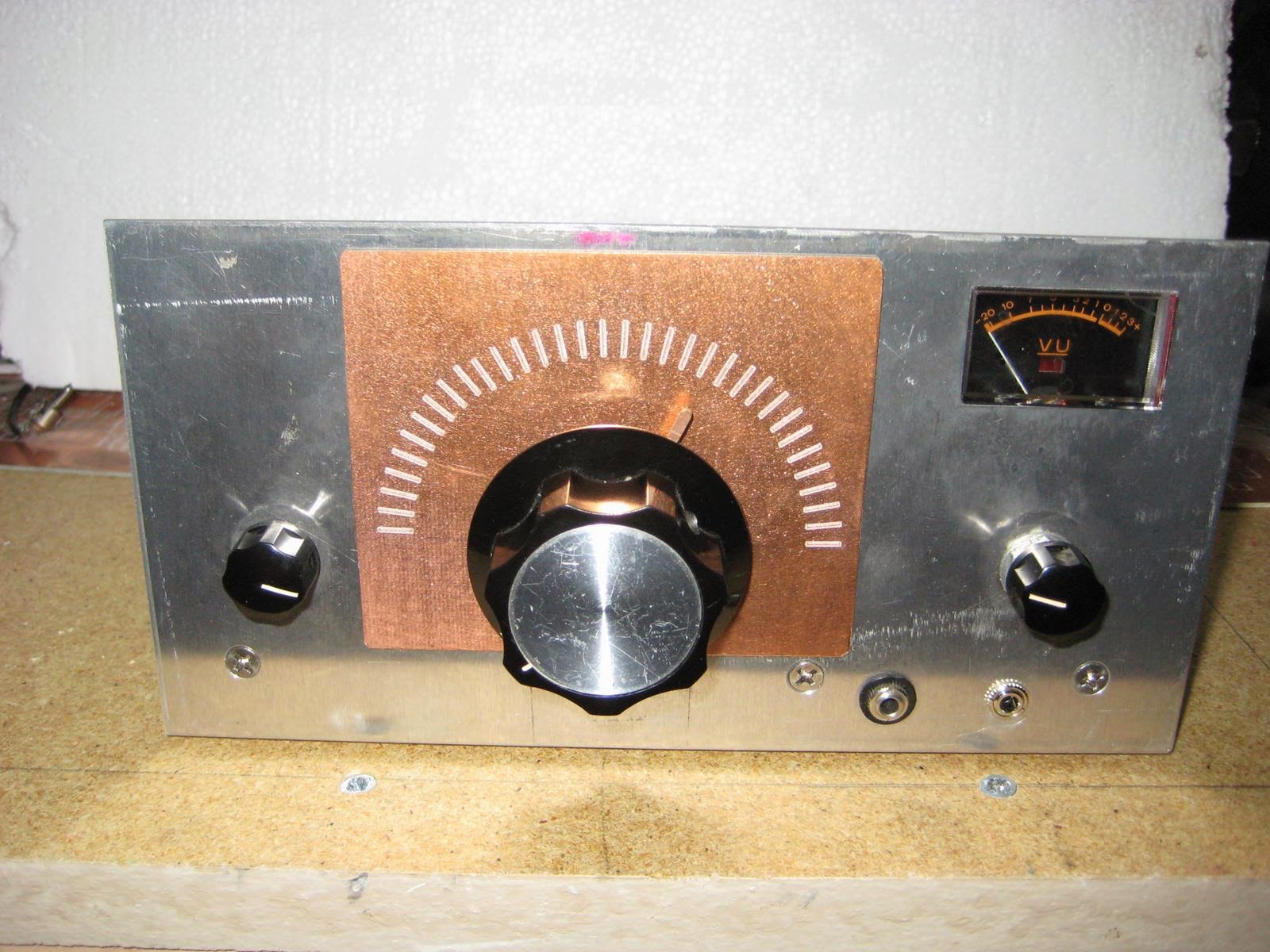
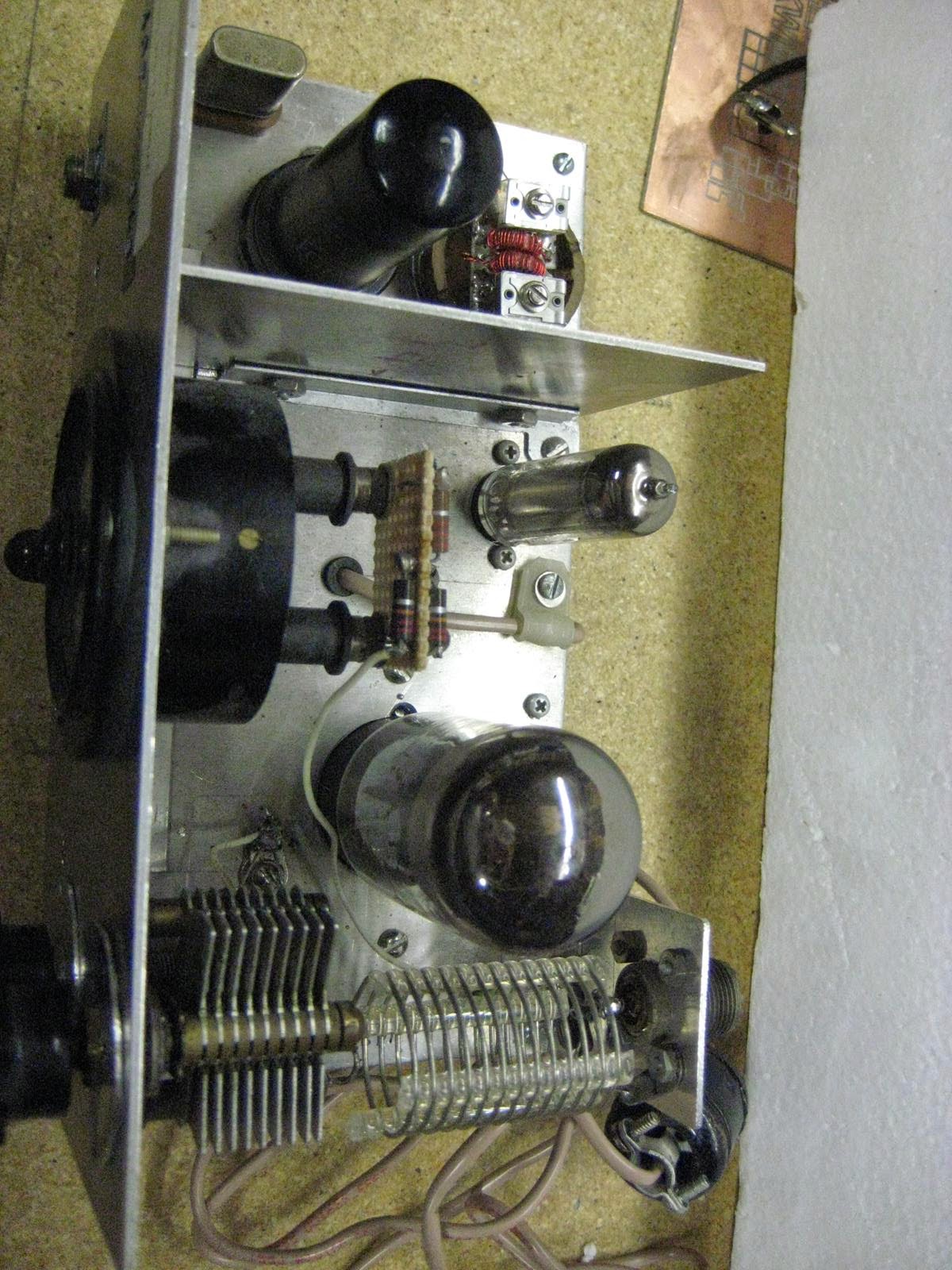
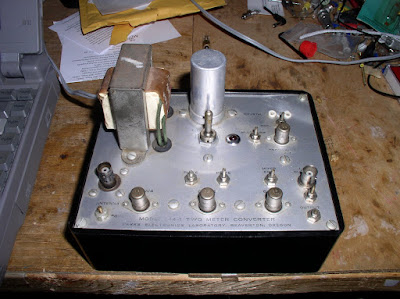
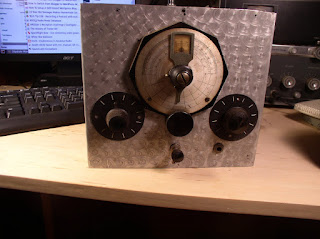
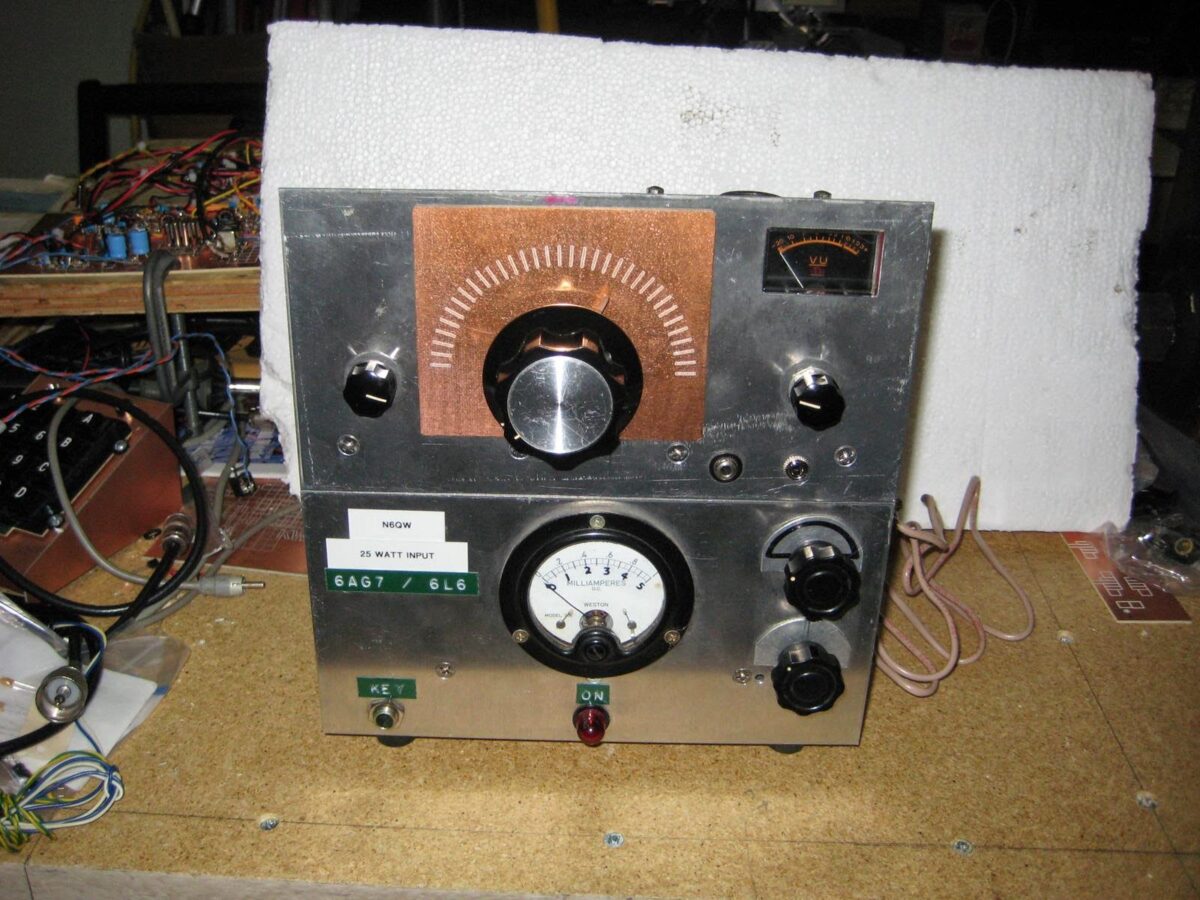
It looks like Pete Juliano, N6QW, and I will be able to do Part III of our discussion of homebrew SSB gear this Saturday. We might start out with ladder filters. Other possible topics include construction practices (shielding, decoupling, the handling of heat, etc), junk-box practices, essential test gear and, time permitting, tube (or, as Grayson would say, “thermatron”) gear. Speaking of which, here are some pictures that Pete sent me of a 20 meter CW rig he is working on.

“Here is a 20 Meter station that I recently got working and hope to have it on the air soon. The Rx is something I cobbled together and it does have a Crystal filter. The Tx is an amalgamation of several Handbook radios – one feature it uses a bandpass tuning network from the oscillator to the final. The screen voltage has a separate regulator. Each unit size is 4 inches high, 4 inches wide and 8 inches long. There is still some work needed for the control and TR.”

Our book: “SolderSmoke — Global Adventures in Wireless Electronics” http://soldersmoke.com/book.htm Our coffee mugs, T-Shirts, bumper stickers: http://www.cafepress.com/SolderSmoke Our Book Store: http://astore.amazon.com/contracross-20
Our First Listener: Brad Smith, WA5PSA

I got a nice message yesterday from Brad Smith, WA5PSA. Brad told me that he had listened to both of the Pete Juliano podcasts…TWICE. As a result, he is planning to build a phone rig.

In the message Brad reminded me that he was the source of the very first feedback that Mike, KL7R, and I received about the SolderSmoke podcast. I remember it very well. We had uploaded SolderSmoke#1, and were wondering if ANYONE had listened. Then came this message from Brad (was it an e-mail?) saying that he’d listened to the show AS HE JOGGED THROUGH TULSA, OKLAHOMA. Wow! Tulsa! Our voices from London and Juneau had been heard in ear-buds by a jogger in Tulsa, OK. It was a bit like when you were a kid and you ran into the kitchen to tell your mom that you had just talked to a guy in TULSA. Somehow, that day, Tulsa seemed as exotic as Tokyo.

Thanks Brad! Good luck with the phone rig. Hope to work you on 17.

Our book: “SolderSmoke — Global Adventures in Wireless Electronics” http://soldersmoke.com/book.htm Our coffee mugs, T-Shirts, bumper stickers: http://www.cafepress.com/SolderSmoke Our Book Store: http://astore.amazon.com/contracross-20
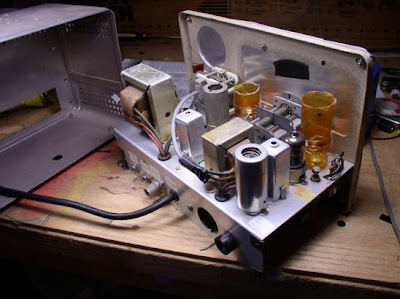
Homebrew Radio Rock Video! By N6QW

Watch out MTV! There’s a new music channel in town!
Music and rigs all by Pete Juliano, under the direction of the famed Italian producer/director Giovanni Manzoni.

Our book: “SolderSmoke — Global Adventures in Wireless Electronics” http://soldersmoke.com/book.htm Our coffee mugs, T-Shirts, bumper stickers: http://www.cafepress.com/SolderSmoke Our Book Store: http://astore.amazon.com/contracross-20
A New Look at BITX Carrier Suppression; N6QW IN EMRFD!

Bert, WF7I, was recently struggling to get his BITX 20 going and he asked some good questions about carrier suppression. I realized that I hadn’t really paid much attention to this. Perhaps as a result of my long experience with DSB, I was happy as long as I was able to null out MOST of the carrier.

I fired up the scope and took a look at the output from the BITX 2040 on 40 meters. Here’s the test setup: Coax from the antenna terminal to a 50 ohm resistive load at the Rigol O’scope probe. Just keying the transmitter (no mic connected), carrier was at 980 millivolts rms or about 19 milliwatts. I then connected an AF sig generator into the mic in connector and pumped in some 1000 Hz sine wave. Peak output was 20.7 volts rms, or about 8.6 watts. That puts the carrier about 27 db down. I felt I should be doing better.

I took a look at the shape of my crystal filter and the frequency placement of my carrier oscillator. I noticed that the carrier oscillator freq was fairly close to the bandpass portion of the crystal filter — fairly high up the skirt, only about 9 db below the passband level. I figured that if I just moved that carrier oscillator up around 300 Hz, I would get around 10 db of additional carrier suppression.

Sure enough, with the carrier moved a mere 300 Hz further away from the passband, the residual carrier dropped to 346 millivolts rms, or about 2.4 milliwatts. Now peak output was 20.9 volts rms, or 8.7 watts. 36 db of carrier suppression.

I guess I could do better if I moved the carrier up another little bit, but I like the sound of it now. I may have been able to better if I’d fiddled with the balanced modulator diodes a bit more. But what do you guys think? Should I worry about 2 milliwatts of residual carrier? Heck I once ran a CW rig (W1VD’ VXO 6 watter) that kept the oscillator running on key up, producing about 15 mw of “backwave.” No damage was done, few noticed, no one complained.

Oh yea, is this the way to measure carrier suppression?

—-

While doing all this, I pulled out my trusty copy of EMRFD. The index led me to the balanced modulator section on page 6.56. There I spotted a familiar call: W6JFR!!! That’s Pete Juliano, N6QW! Pete is credited with a mod to the SBL-1 mixer that adds a balance control pot to the device. Wow, actually being IN EMRFD fully confirms Pete’s homebrew guru status.

Our book: “SolderSmoke — Global Adventures in Wireless Electronics” http://soldersmoke.com/book.htm Our coffee mugs, T-Shirts, bumper stickers: http://www.cafepress.com/SolderSmoke Our Book Store: http://astore.amazon.com/contracross-20
SolderSmoke Podcast #162: Part II with Pete Juliano, N6QW

SolderSmoke 162 is now available at http://soldersmoke.com/soldersmoke162.mp3

June 21, 2014
Part II of our interview with Pete Juliano, N6QW

— Bill’s Moxon Monstrosity
— Amplifiers and Exorcisms (See slideshow link below)
— Varactor tuning
— Polivaricon capacitors
— The challenge of building small rigs
— Heat, layout, components and VFO stability
— “No frills” as a building philosophy
— The future of Bill’s Heathkit HW-101

We still have a lot more to talk about. Stay tuned for Part III!

Slideshow of Pete’s RF Amplifiers:
https://onedrive.live.com/?cid=4f1e8c71e0d4f1dc&id=4F1E8C71E0D4F1DC%212640&Bsrc=Photomail&Bpub=SDX.Photos&sff=1&authkey=!AGq3hc4UajARH1s

Our book: “SolderSmoke — Global Adventures in Wireless Electronics” http://soldersmoke.com/book.htm Our coffee mugs, T-Shirts, bumper stickers: http://www.cafepress.com/SolderSmoke Our Book Store: http://astore.amazon.com/contracross-20
Pete Juliano’s Enclosures

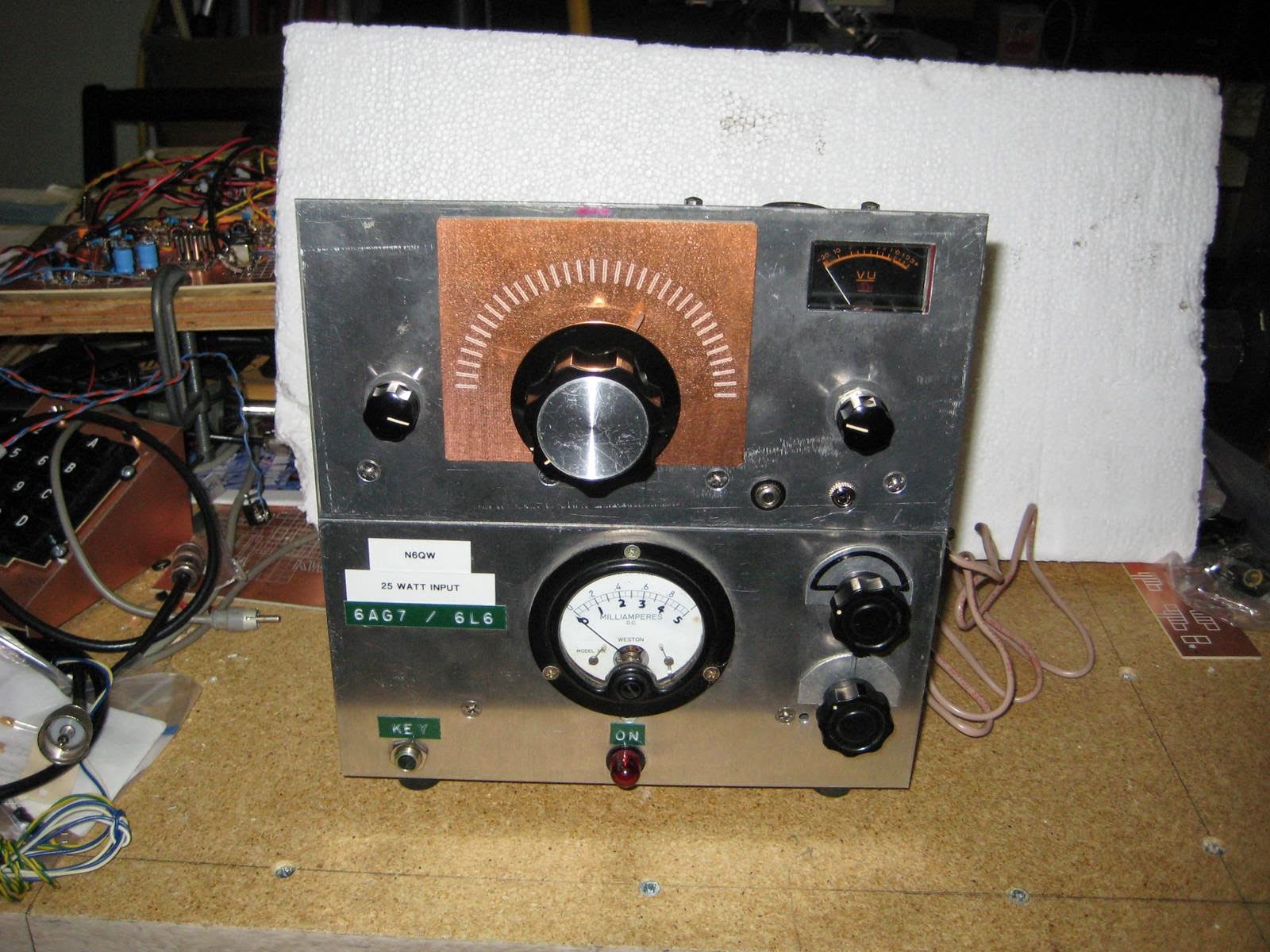
I’m sure many of you are, like me, impressed with the enclosures that Pete Juliano has been using with his rigs. Here’s an e-mail that he sent yesterday to Bert.

Hi Bert,
You have a ready source of material right there in Seattle and they will cut it to size. Check out On-Line Metals. The transceiver project has a 4 x 8 inch base plate I bought from them and the front and back are pieces of single sided copper PC Board. The support material is 1/2 inch aluminum angle stock (Home Depot). Interesting use of round aluminum pillars. The front and back are stabilized using 1/4 inch threaded aluminum spacers that were fitted inside of small diameter hollow aluminum tube I bought in a hobby shop. A dab of Gorilla Glue holds the spacers inside the tubing and it forms a rigid support structure.
The subject of mechanical construction is a good one and perhaps Bill would like to cover that in a future podcast. That said I do have a bench top 3 axis manual milling machine and a 3 axis CNC milling machine (that one cost me about $250K). The cost was not in the machine but the cost of sending my youngest son to WSU where he got an ME degree. He designed and built the machine for me.
Boeing Surplus (now gone) in Kent used to sell aluminum plate by the pound and a lot of my stock (now all gone) came from there. As a retired Boeing employee I used to get a discount.
73’s
Pete

And here is a slide show illustrating Pete’s technique:

https://onedrive.live.com/?cid=4f1e8c71e0d4f1dc&id=4F1E8C71E0D4F1DC%212607&Bsrc=Photomail&Bpub=SDX.Photos&sff=1&authkey=!ADzJ4SgPn5OzRqk

Our book: “SolderSmoke — Global Adventures in Wireless Electronics” http://soldersmoke.com/book.htm Our coffee mugs, T-Shirts, bumper stickers: http://www.cafepress.com/SolderSmoke Our Book Store: http://astore.amazon.com/contracross-20
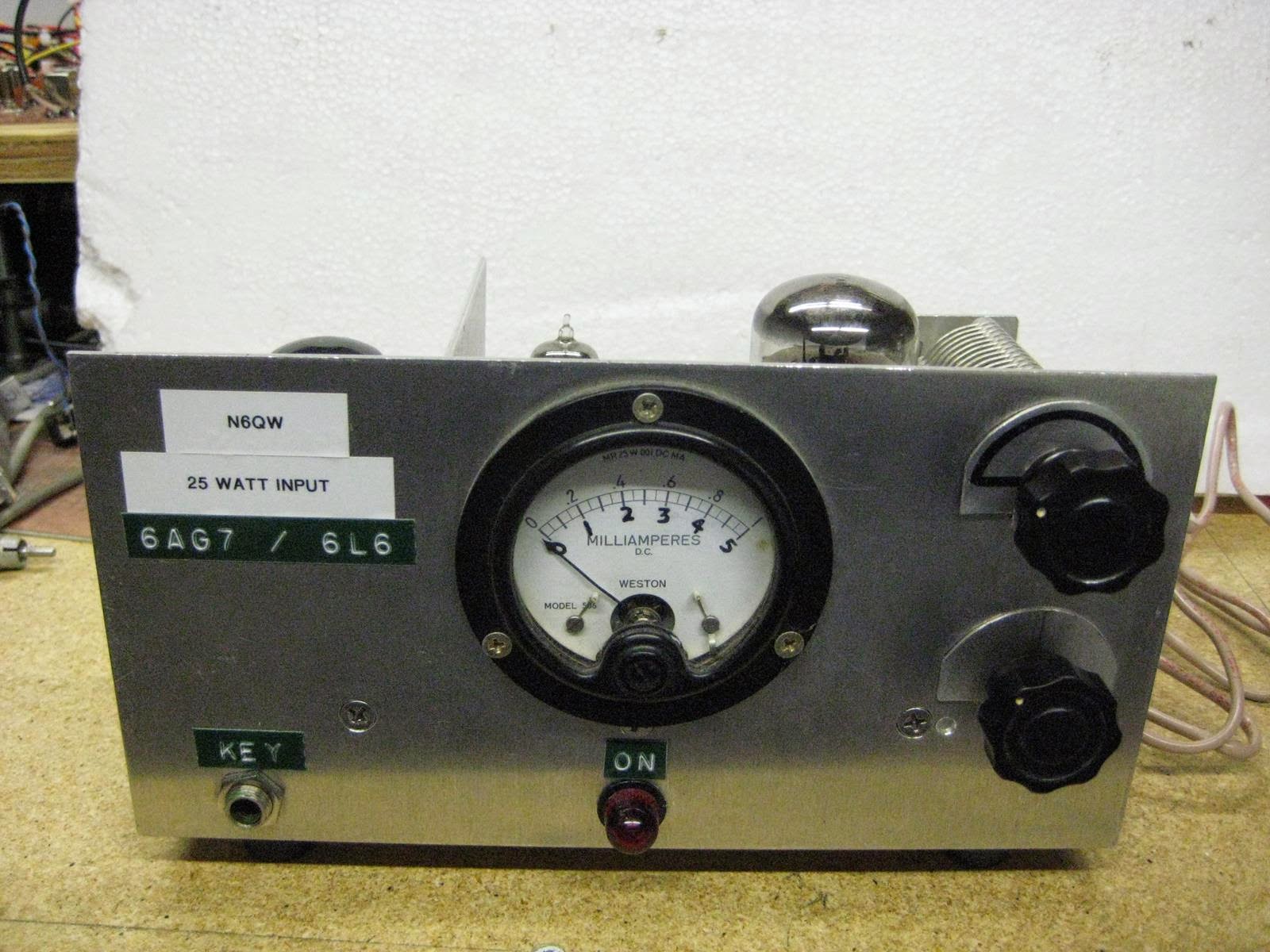
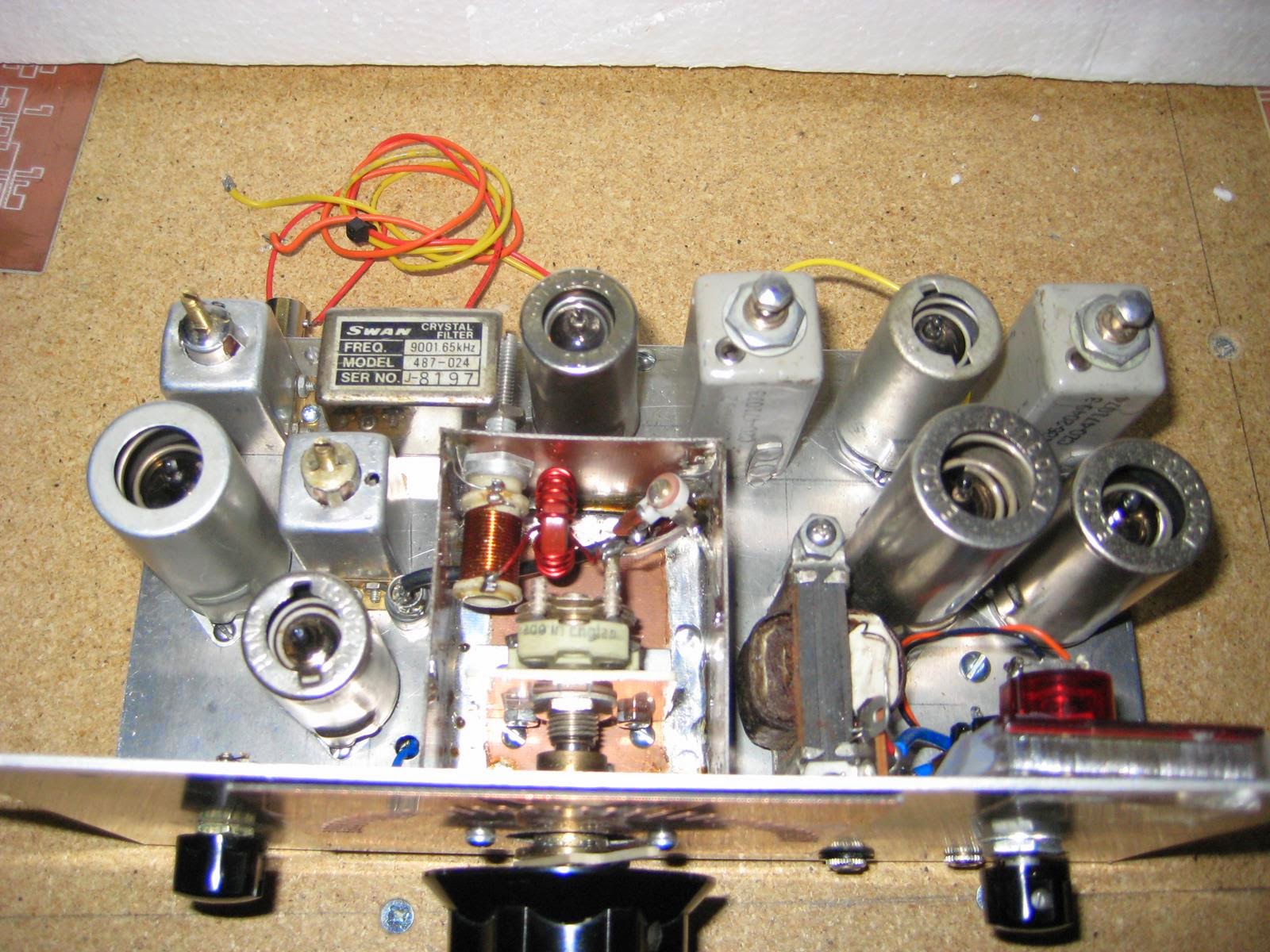
Video of Pete Juliano’s 20-40 Bilateral Rig

Wow, what a beautiful rig. Nice work Pete. Kind of eerie how we both chose the 20/40 combination after building 17 meter rigs. We’ll have to talk more about this in SolderSmoke 162. Soon!

Our book: “SolderSmoke — Global Adventures in Wireless Electronics” http://soldersmoke.com/book.htm Our coffee mugs, T-Shirts, bumper stickers: http://www.cafepress.com/SolderSmoke Our Book Store: http://astore.amazon.com/contracross-20
Thought Provoking Comments from Bert, WF7I


Hey Bill.

I enjoyed the interview with Pete N6QW very much. So many main points were covered and I kept nodding in agreement, especially some of the stuff about the ease of doing homebrew that we have these days. Like you, or similar to you I’m guessing, I have memories as a kid staring at the pages of an ARRL handbook, saying “huh?” These days almost any question can be answered with a Google (and if not, an appropriate book overnighted via Amazon). You guys both nailed it too with the comments about the free design software that is plentiful and the cheap crystals (I still need to order some “bags” of these!). When I started out it seemed crystals were a big expense. I guess not so much now. It’s really a great time to be a homebrewer.

I was trying to think of more questions for him for the second half of your interview but most of what I could come up with was too pedestrian probably or already covered. I am curious about amplifiers but I believe he’s going to talk about that next anyway. Nothing was said about using varactor diodes in VFOs (unless I missed it) and I’m a little curious about his experiences with them. And whether he still uses air variables or not (and if he has an opinion on these more compact “polyvaricons”, one of which is in the Hendricks version of the Bitx-20 I’m building). It sounds like most homebrewers these days are pairing up their VFOs with digital architecture of one type or another for stability and the display. I guess you can’t argue with the price of some of the needed parts. But like you I feel like I’m not wanting to jump into the complex digital too far, the simplicity and ease of understanding of the simple circuits is really refreshing and fun for me. The moment you have to rely on software for something I feel that the project is lessened a bit, not as robust in a way, kind of like having to rely on cholesterol-lowering meds so that we can keep eating cheeseburgers (had to slip in a food reference somewhere).

Something else dawned on me a few weeks ago, soon after I’d built my 40m direct conversion rig (“mrad-40”) — does anyone consider the audience on the band they’re designing for??? I’m only partly joking! There are some rude and coarse dudes on 40m. It takes a little bit of luster off the whole “first light” experience of a new homebuilt radio when you turn it on and hear some drunks arguing politics or making fun of a YL ham on another frequency! Probably not a suitable question for Pete!

I also really enjoyed the FDIM edition. As always, it’s one of the best of your podcast series. My favorite was the interview with the ham near the end, I think he was 2nd to last. He seemed to really sum up the entire homebrew motivation and experience. I don’t remember his name offhand. But his description of sitting there with store-bought radios and the sort of transactional nature of appliance operating (“telephoning strangers”) perfectly describes how I felt about a dozen years ago. I’d migrated towards DX chasing and 6m grid collecting but that too can get pretty stale after awhile. I’m getting closer to having a station that is all home-built, but I’m not sure I’ll ever sell my commercial rigs as he did (although it would free up money for more test equipment!).

Maybe one final comment for Pete or just in general. Since I’ve been a ham I feel like there’s always been this pressure to build/design something that is in some way “cutting edge” or new. In today’s landscape that would be along the lines of the FDIM guy turning an Android phone into a ham rig. I’m wondering if others feel some sort of peer pressure to “push the envelope” in some way with what they’re doing, to establish bragging rights of some kind or to somehow feel that what they’re doing is important or relevant. I’ve never been clever enough to succumb to this pressure and invent something ingenious! And I find doing lots of software coding incredibly boring and I know I’m not very skilled at it.

So…I guess the question or point is, should we all in some way as “responsible” hams feel obligated to break ground in some new technical aspect of the hobby somehow, especially as builders and homebrewers (and hams)? In other words, should I be riddled with guilt if I decide to devote the rest of my life to building regens and not SDRs? Do you know what I mean here? There seems to be a mindset among some hams that the hobby was founded on experimentalists pushing the boundaries of what was known, and in some way we all carry that torch. For me, I’ve always pretty much seen it as a hobby, and if it felt like work I didn’t do it! Any thoughts on that?

Bert WF7I

Our book: “SolderSmoke — Global Adventures in Wireless Electronics” http://soldersmoke.com/book.htm Our coffee mugs, T-Shirts, bumper stickers: http://www.cafepress.com/SolderSmoke Our Book Store: http://astore.amazon.com/contracross-20