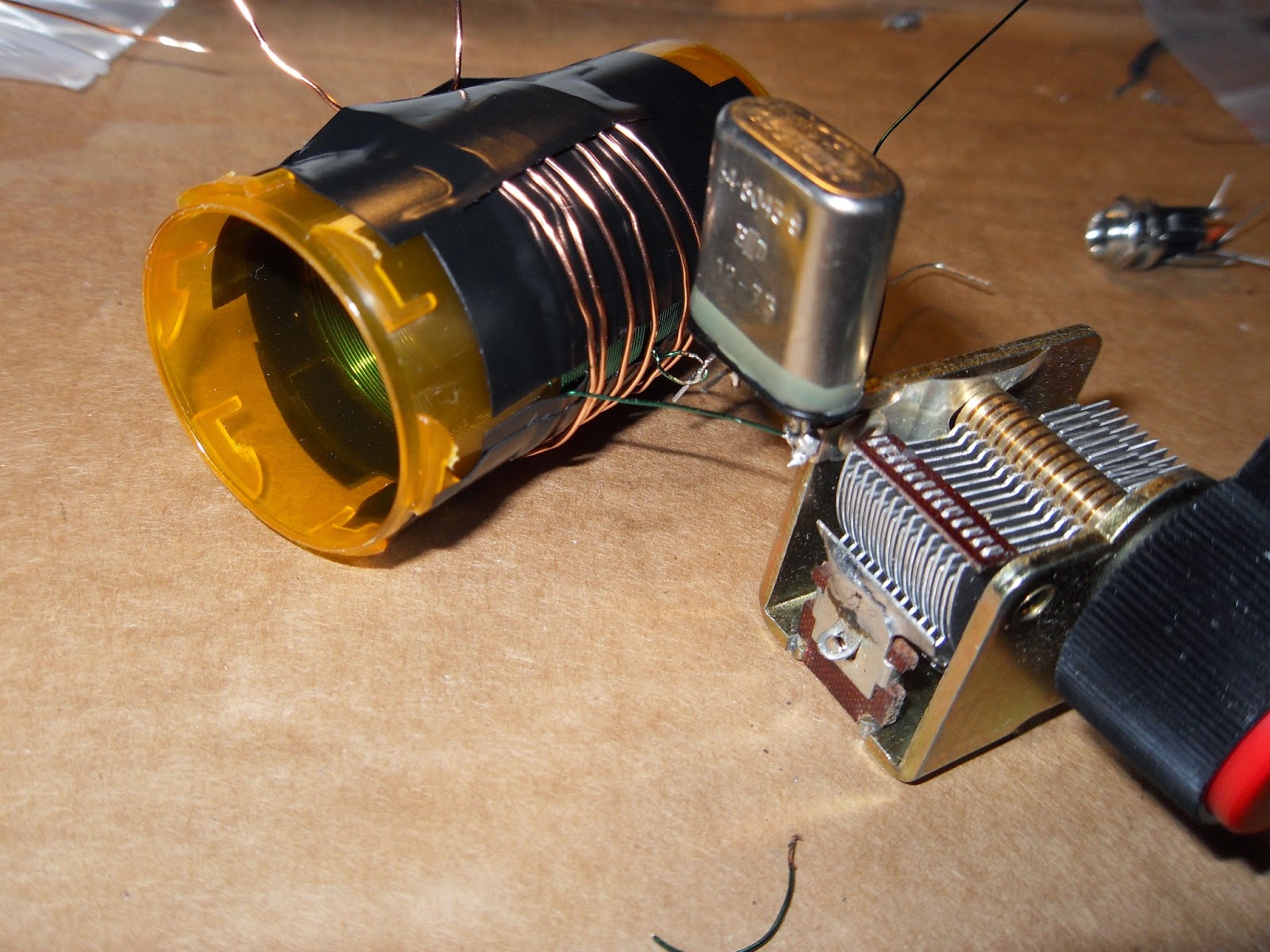
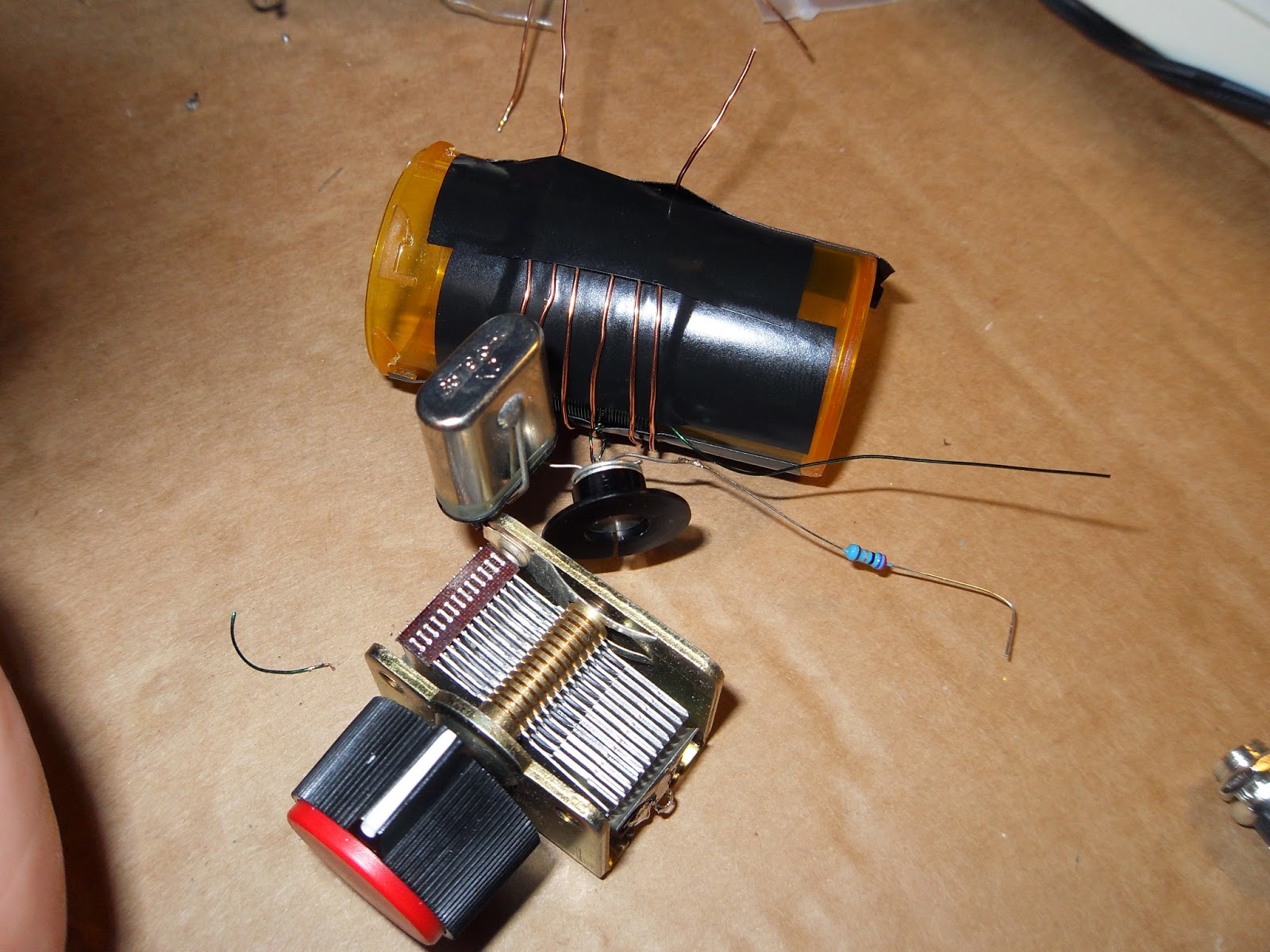
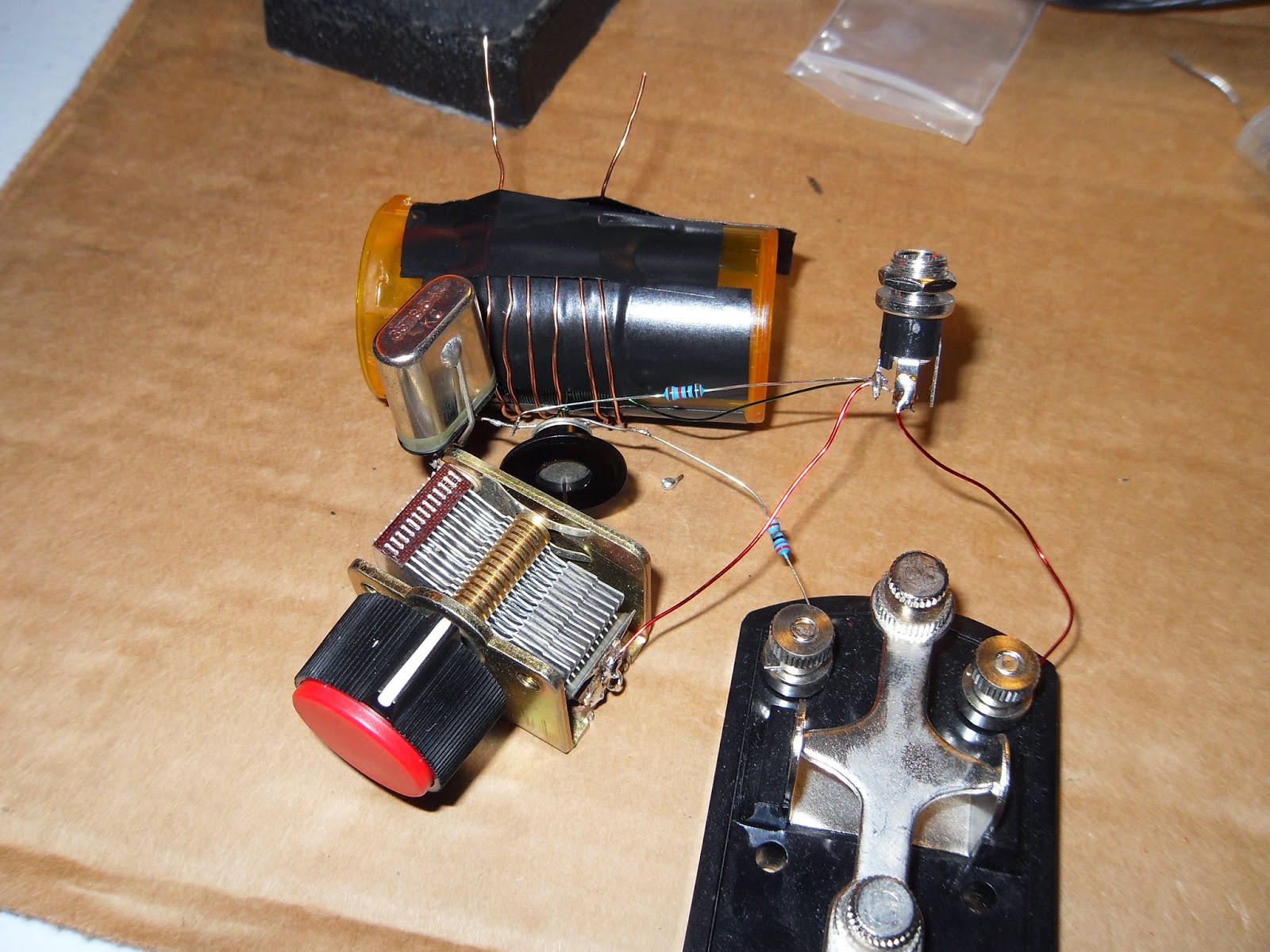
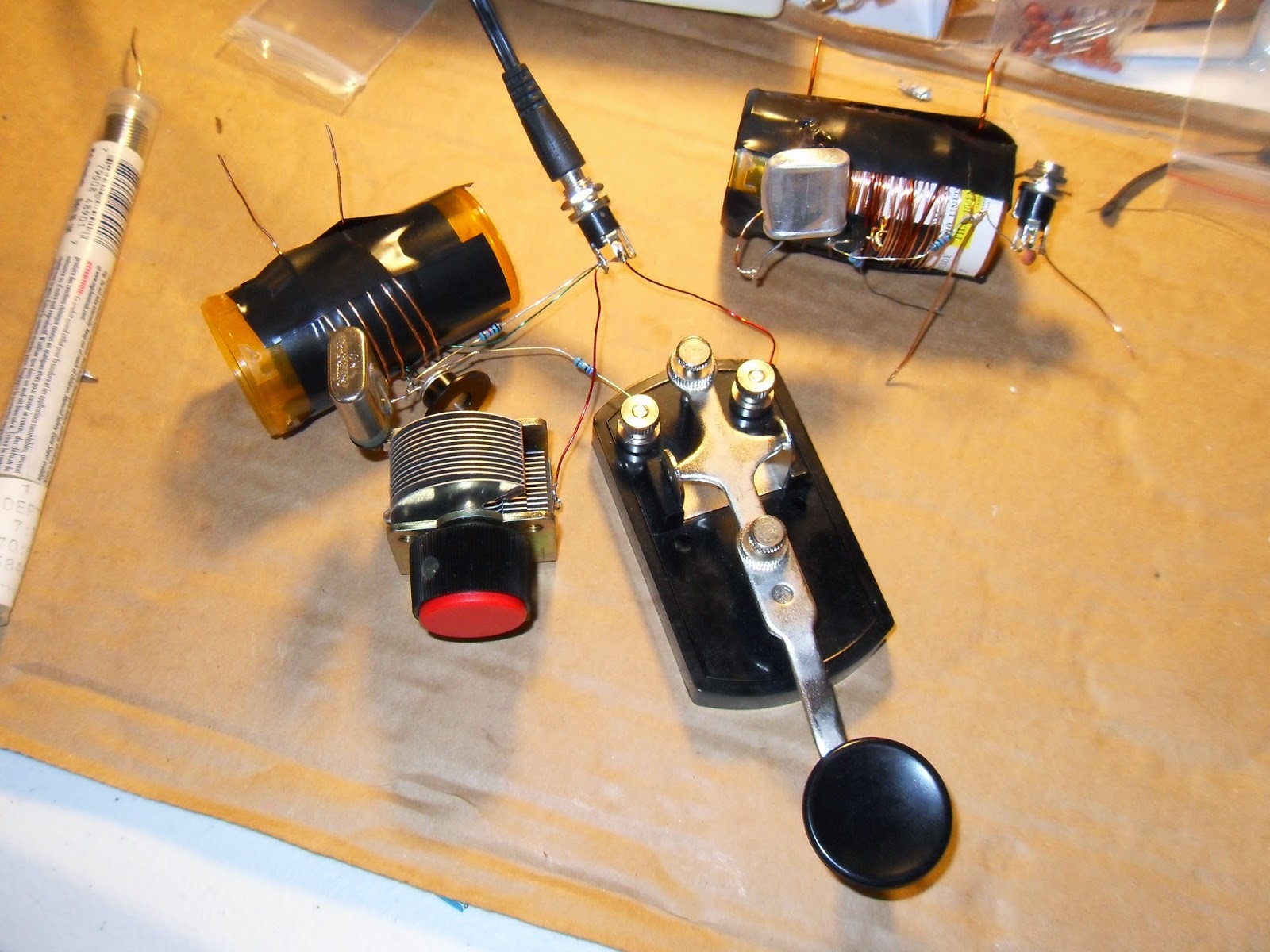
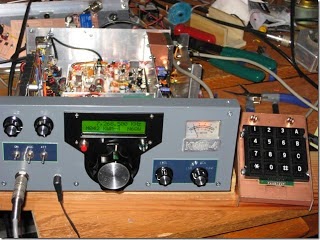
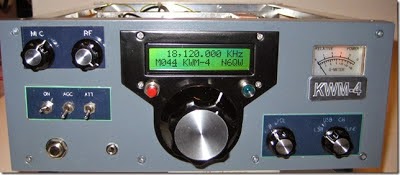
Final Integraton And On-Air Test of the LBS Transceiver (Video) (FB!)

Very nice. A beautiful and educational project from Pete and Ben. I have to start putting “tune switches” in my rigs and ammeters in the bias circuits of my finals.

Our book: “SolderSmoke — Global Adventures in Wireless Electronics” http://soldersmoke.com/book.htm Our coffee mugs, T-Shirts, bumper stickers: http://www.cafepress.com/SolderSmoke Our Book Store: http://astore.amazon.com/contracross-20
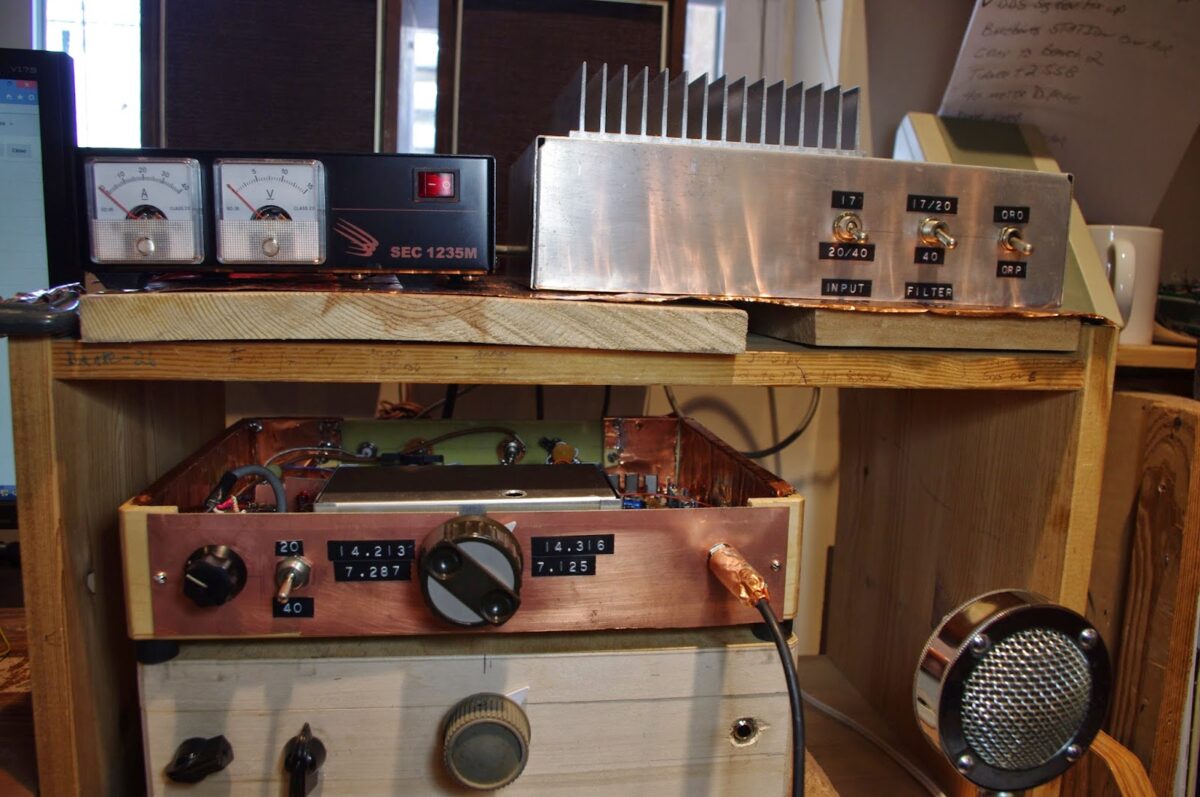
SolderSmoke Podcast 173: Pete’s LBS Triumph and Bill’s Tale of QRO Woe

SolderSmoke Podcast #173 is available:

http://soldersmoke.com/soldersmoke173.mp3

7 March 2015

Bench Report: Pete’s Progress on the Let’s Build Something Rig:
http://www.jessystems.com/LBS_Detail.html
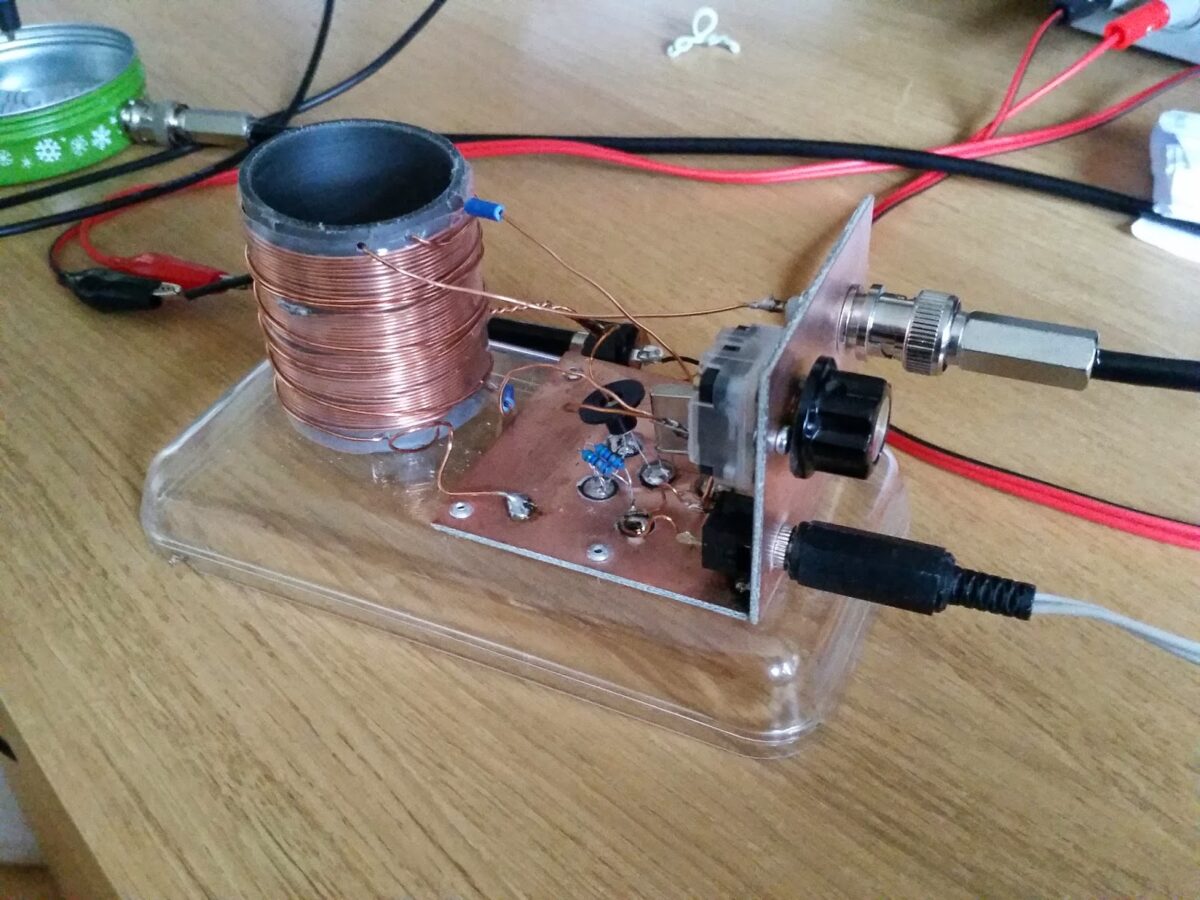
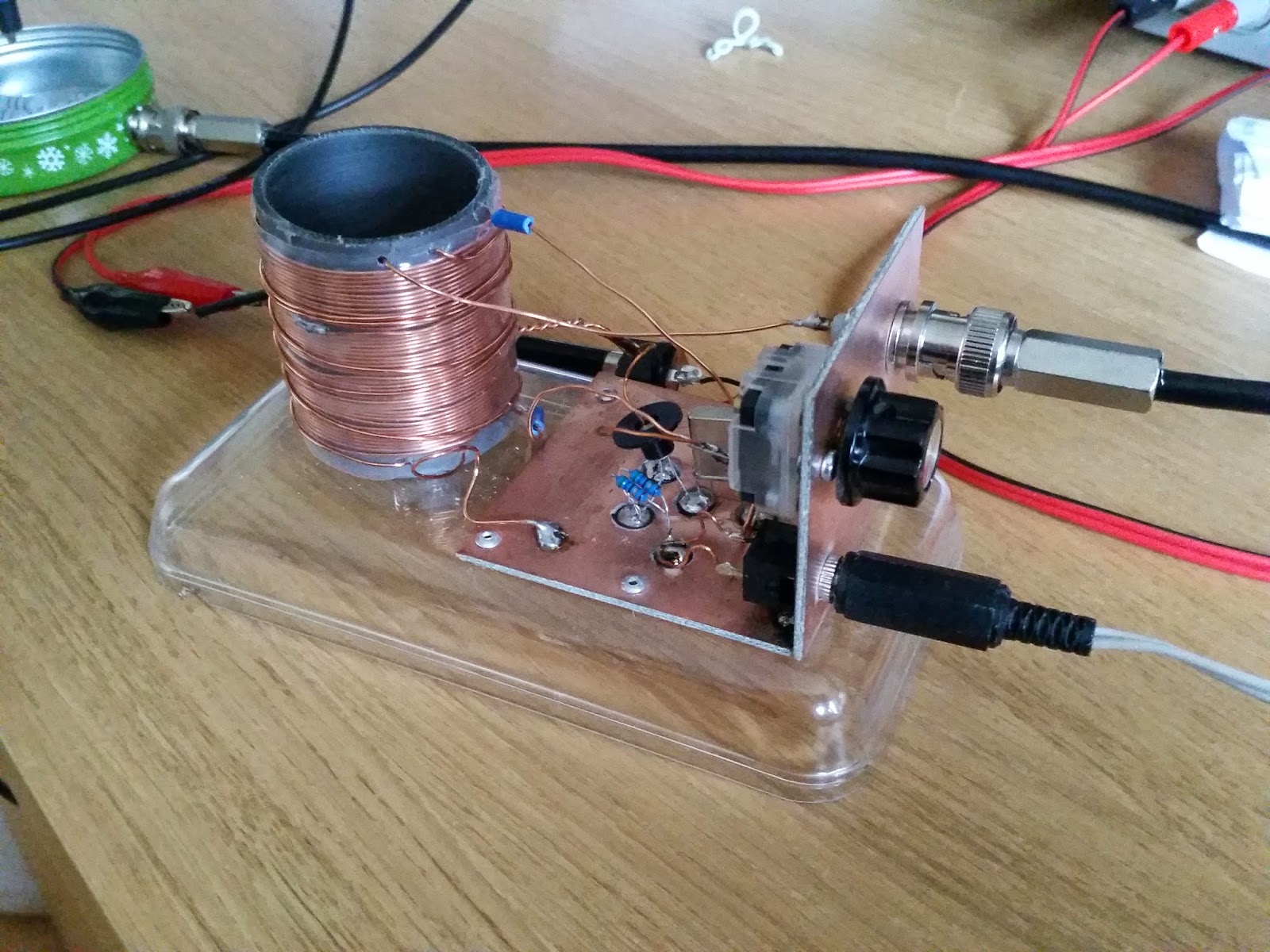
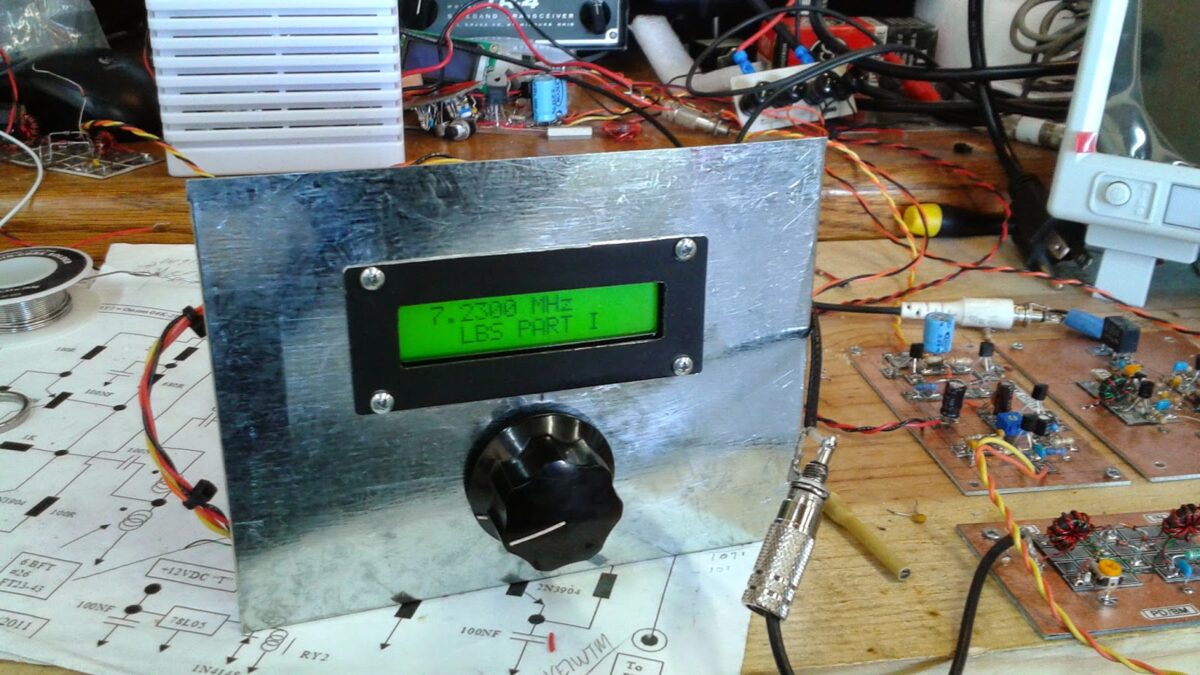
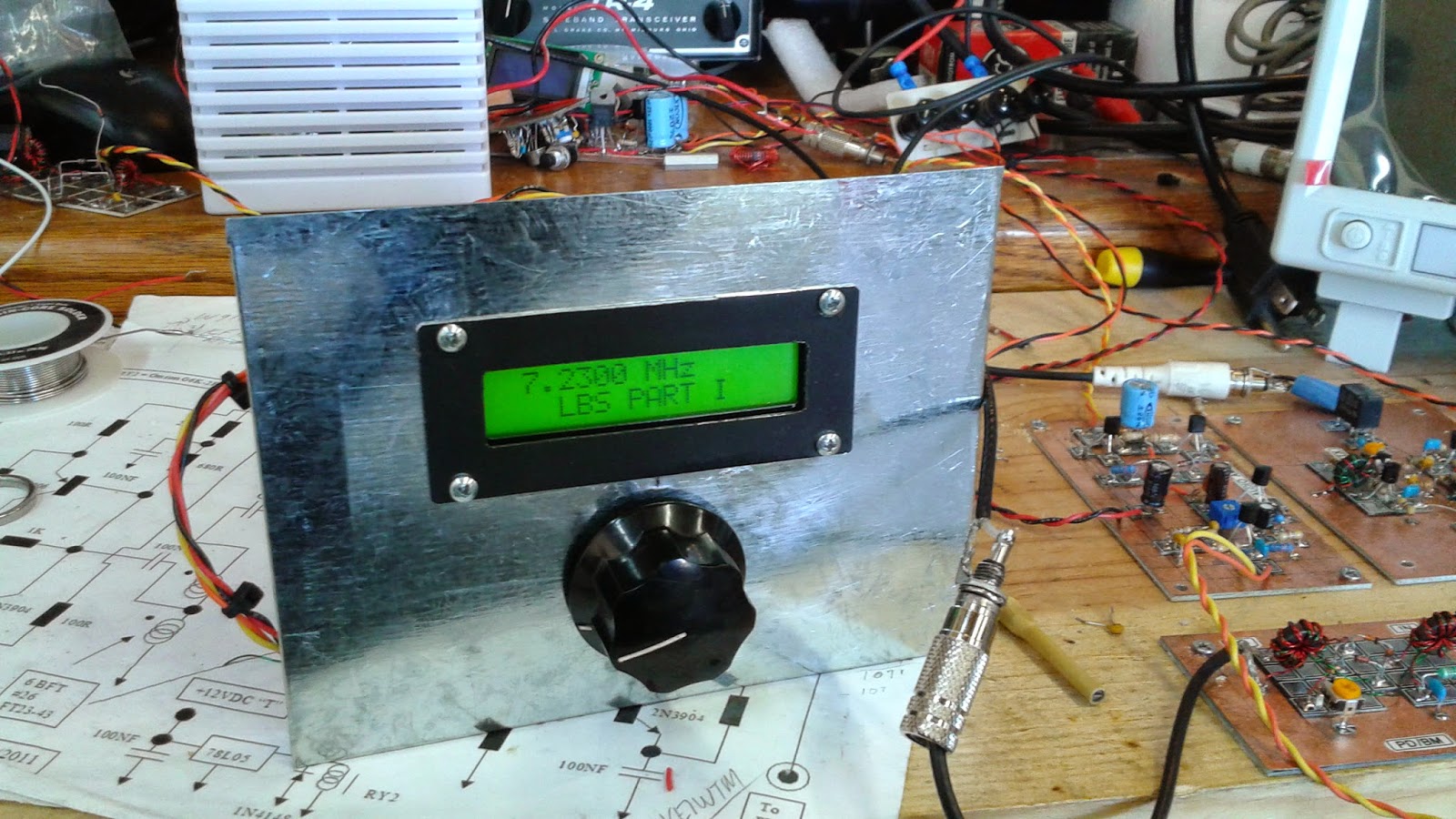
Ben’s cool case for his LBS rig
Bill’s Tale of Woe: QRO troubles with the BITX 40
— QRO amplifier taking off on 40 (but not 17)
— Criticism and public humiliation on 40
— Troubleshooting
— Suggestions from Allison
— A sad realization about my VFO frequency selection
— Exorcism needed
— Pete suggests a digital solution
— Wow, my ‘scope has an FFT! Almost a spectrum analyzer!
— Some thoughts on trouble shooting
— On the meaning of “BASTA!”
The Spring 2015 Issue of Hot Iron http://www.walfords.net
More on Pete’s KX3
Encouraging other hams to build

Our book: “SolderSmoke — Global Adventures in Wireless Electronics” http://soldersmoke.com/book.htm Our coffee mugs, T-Shirts, bumper stickers: http://www.cafepress.com/SolderSmoke Our Book Store: http://astore.amazon.com/contracross-20
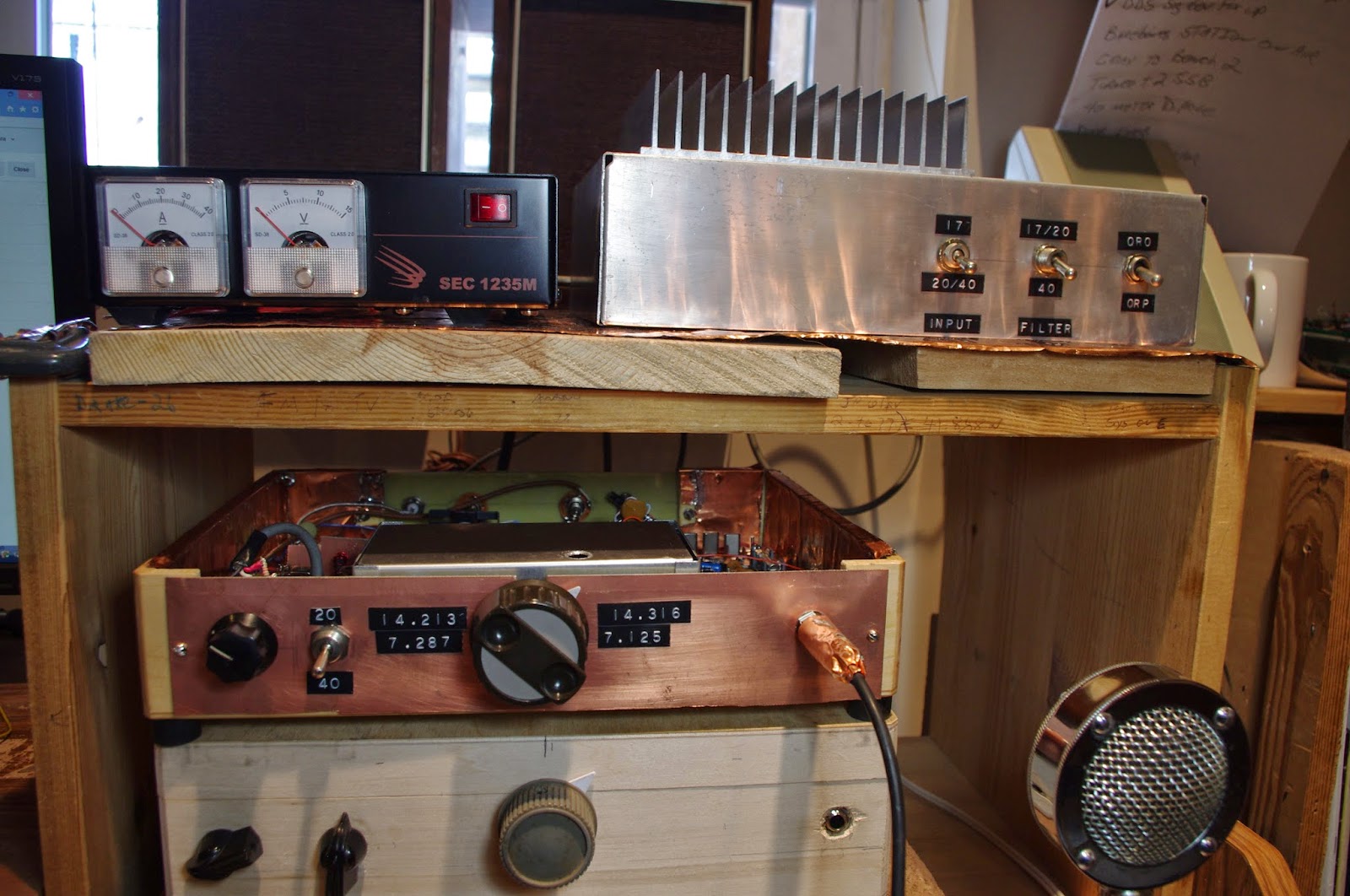
Pete and Ben’s “Let’s Build Something” Reference Page

Lots of tribal knowledge here! That’s the direct conversion receiver that forms phase 1 of Pete and Ben’s “Let’s Build Something” project. Arduinos! Si5351s! AD9850s! And it will morph into an SSB transceiver. Check it out:

http://www.jessystems.com/LBS_Detail.html

Our book: “SolderSmoke — Global Adventures in Wireless Electronics” http://soldersmoke.com/book.htm Our coffee mugs, T-Shirts, bumper stickers: http://www.cafepress.com/SolderSmoke Our Book Store: http://astore.amazon.com/contracross-20
Video of Colin’s First Contact with his Homebrew Scratch-built BITX20

I love this video. Colin finished his BITX a week or so ago and has been waiting for an opportunity to test it. Over the weekend he braved the winter of Northern England and, with his son, set up his new rig out in his snow-covered garden. Appropriately for a first contact with scratch-built rig, the circuitry was unencumbered by any kind of case or box. That’s the way it should be done! Well done Colin! You are well and truly a member of the International Brotherhood of Electronic Wizards, and the diagnosis of “The Knack” has been confirmed (a severe case, it appears).

Hi Pete and Bill,

It’s been a lovely fine day here in West Yorkshire, so I took a table out into the garden and set up my BITX circuit on it. I set up my SOTA dipole on a 9m fishing pole.

I heard a strong German station calling CQ, so I gave him a call and hoped for the best!

How amazing to contact someone in another country using a rig and mic you’ve made yourself! Do I qualify as a REAL radio ham now? Do I have a confirmed case of the knack? 🙂

Although I may appear underwhelmed in the video, (besides the air punches!), I did really get a kick out of the QSO.
73 and huge thanks to both of you for the encouragement and support.

Colin, M1BUU

Our book: “SolderSmoke — Global Adventures in Wireless Electronics” http://soldersmoke.com/book.htm Our coffee mugs, T-Shirts, bumper stickers: http://www.cafepress.com/SolderSmoke Our Book Store: http://astore.amazon.com/contracross-20
VE3MKC’s Teensy Si5351 SDR Receiver with a Tiny Color Screen (video)


From: Rich
To: “soldersmoke@yahoo.com”
Sent: Thursday, January 22, 2015 9:22 AM
Subject: Cheap, open source Arduino SDR project
Bill

First, thanks for Soldersmoke and all you do for us QRP hackers around the world. I’m a big fan!
I’ve detected you are getting sucked into the world of microcontrollers of late. I know you are not really that excited about SDR but this is a radio that combines Arduino, the currently popular SI5351 and a Softrock to make a very functional SDR. I started this project last year which uses the fabulous Teensy 3.1 and companion audio shield. I recently packaged it all up and it looks like a QRP radio now. Still doesn’t transmit but as I like to say thats “just a small matter of software”.
There are several posts about it on my blog. The most recent:
There’s a link to a video and a link to the code in that post.
Rock on Bill!
73, Rich Heslip
VE3MKC


Sent: Friday, January 23, 2015 4:09 AM
To:
Subject: Re: Cheap, open source Arduino SDR project

Wow Rich that is really beautiful. Amazing! I am also sending this to Pete Juliano, but I was at first hesitant about this because I feared that your combination of Si5351 and TFT display might be TOO exciting for him. Deep breaths Pete…
73 and Thanks, Bill


From: jessystems@verizon.net
To: soldersmoke@yahoo.com;
Subject: Re: Cheap, open source Arduino SDR project
Date: Fri, 23 Jan 2015 06:03:40 -0800

Hi Rich & Bill,
Wow –really exciting project Rich! Congratulations and Bravo!
This is so exciting, for all hams, as this just shows the power of the available low cost technology that is now on the market. Your project is really tempting as I have a V6.2 15M softrock sitting in a box (somewhere). I was somewhat put off with the Power SDR as the opposite sideband rejection is not too good –it is clear you have cracked that nut.
Thanks for sharing Rich and yes Bill I am taking very deep breaths.
73’s
Pete N6QW

Our book: “SolderSmoke — Global Adventures in Wireless Electronics” http://soldersmoke.com/book.htm Our coffee mugs, T-Shirts, bumper stickers: http://www.cafepress.com/SolderSmoke Our Book Store: http://astore.amazon.com/contracross-20
When Your Local Oscillator Could Sink Your Ship!

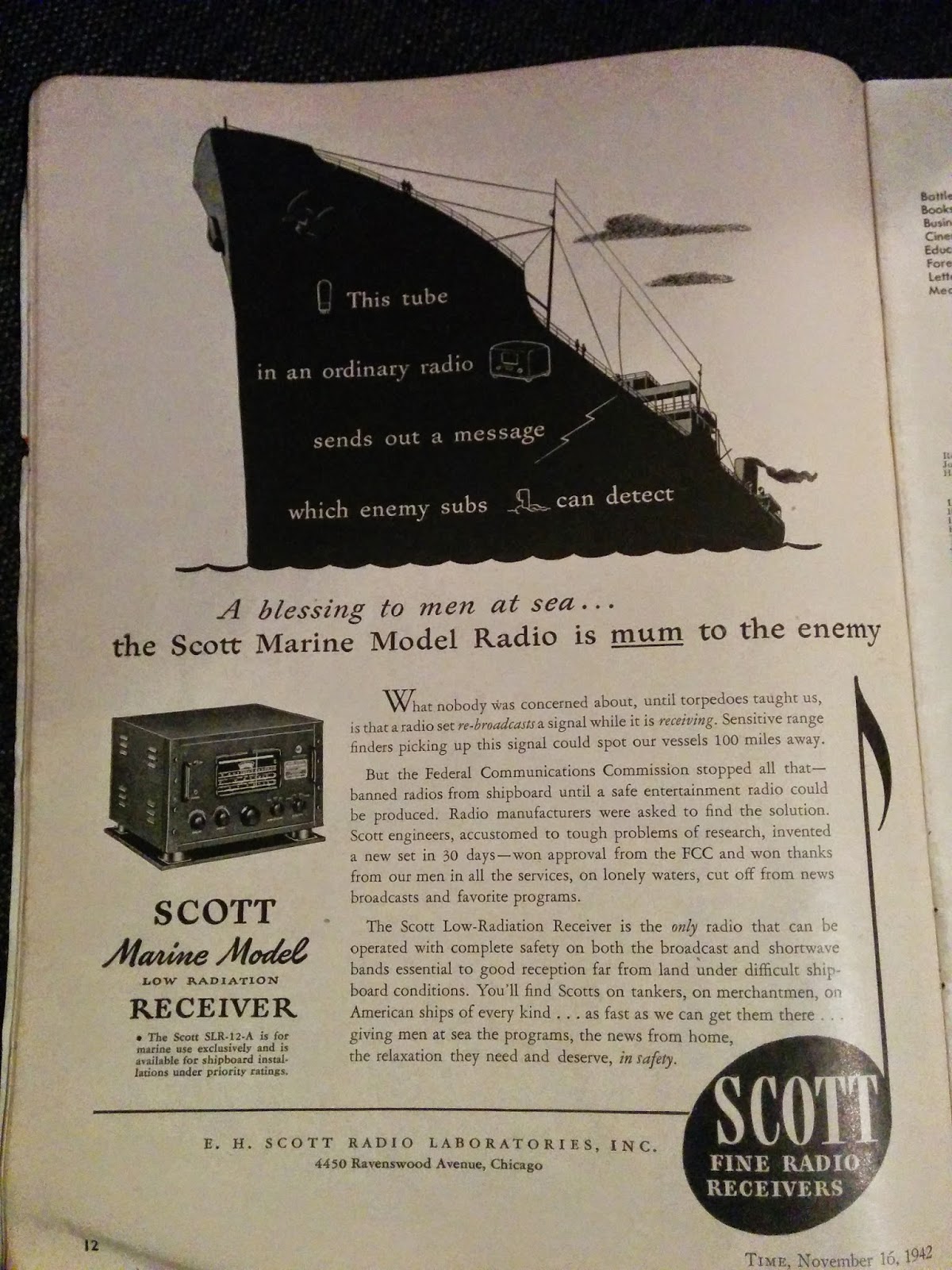
Thomas KK6AHT is the intrepid radio amateur from France who moved to California and successfully built a Minima as his first homebrew project. Yesterday we got additional evidence that Thomas definitely has THE KNACK. It seems that he has been looking through really old radio magazines (clearly a symptom). He sent us this add from 1942. Yikes! Imagine getting your ship sunk because your Local Oscillator is not quite local enough!

…………………


Hey!
I thought you would get a kick out of this 1942 ad. Sounds like those guys had a some good reasons to fight QRM … Who knew the important role played by the FCC during the war?
Now tell me: why were the receivers so noisy at the beginning of the war? What did they change? Happy new year to you both! May the gods of radio (and digital) bring you much fun on the air.
73, Thomas

…………………………


Hi Thomas,
Well Thomas, I will dip my toe into some very deep water and attempt an answer for you which also is an important clue about QRP operations.
  1. Today we have many many signals co-existing in the radio spectrum. During the war there was much less radio garbage and the military lit up the ether with transmissions very sparingly. But that is on the transmit side. That said the local oscillators (much like you have with the Si-570 on your Minima) used in receivers also produce RF that unless is minimized in some fashion is passed right through to the antenna and can be detected. Regenerative receivers are especially prone to this. Yes some military equipment used regenerative receivers. In fact the famous Paraset had to be constantly moved so it would not be detected.
  2. This receiver generated RF into the antenna was addressed by companies like Scott by shielding everything. That receiver in the photo probably weighed about a 100 pounds or more. Much attention was paid to RF bypassing and grounding. The cheap table top radios were RF generators par excellence.
  3. There was another approach developed in WWII to solve that problem and forms the basis of what makes work that little device sitting in your pocket. The odd part it was invented by a famous movie star. Look up Heddy Lamar in wikipedia. She and a co-inventor came up with the concept of frequency hopping and spread spectrum technology. By jumping frequencies it would be hard to pinpoint a transmitting station. That concept forms the backbone of our cellphone system
  4. Now the QRP part – if the RF output from a receiver local oscillator (milliwatts) can be detected from afar – then it follows QRP works!
Have fun.

Pete


Our book: “SolderSmoke — Global Adventures in Wireless Electronics” http://soldersmoke.com/book.htm Our coffee mugs, T-Shirts, bumper stickers: http://www.cafepress.com/SolderSmoke Our Book Store: http://astore.amazon.com/contracross-20
Digitizing the Barebones Superhet

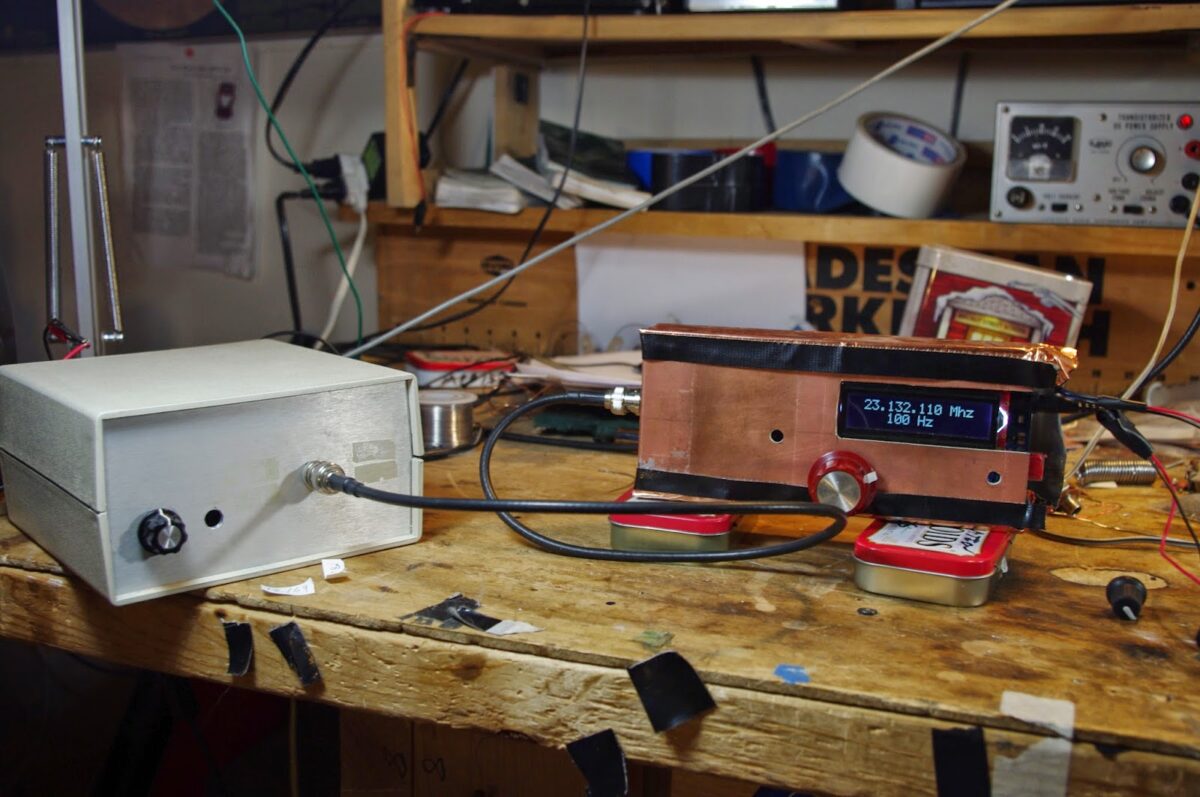
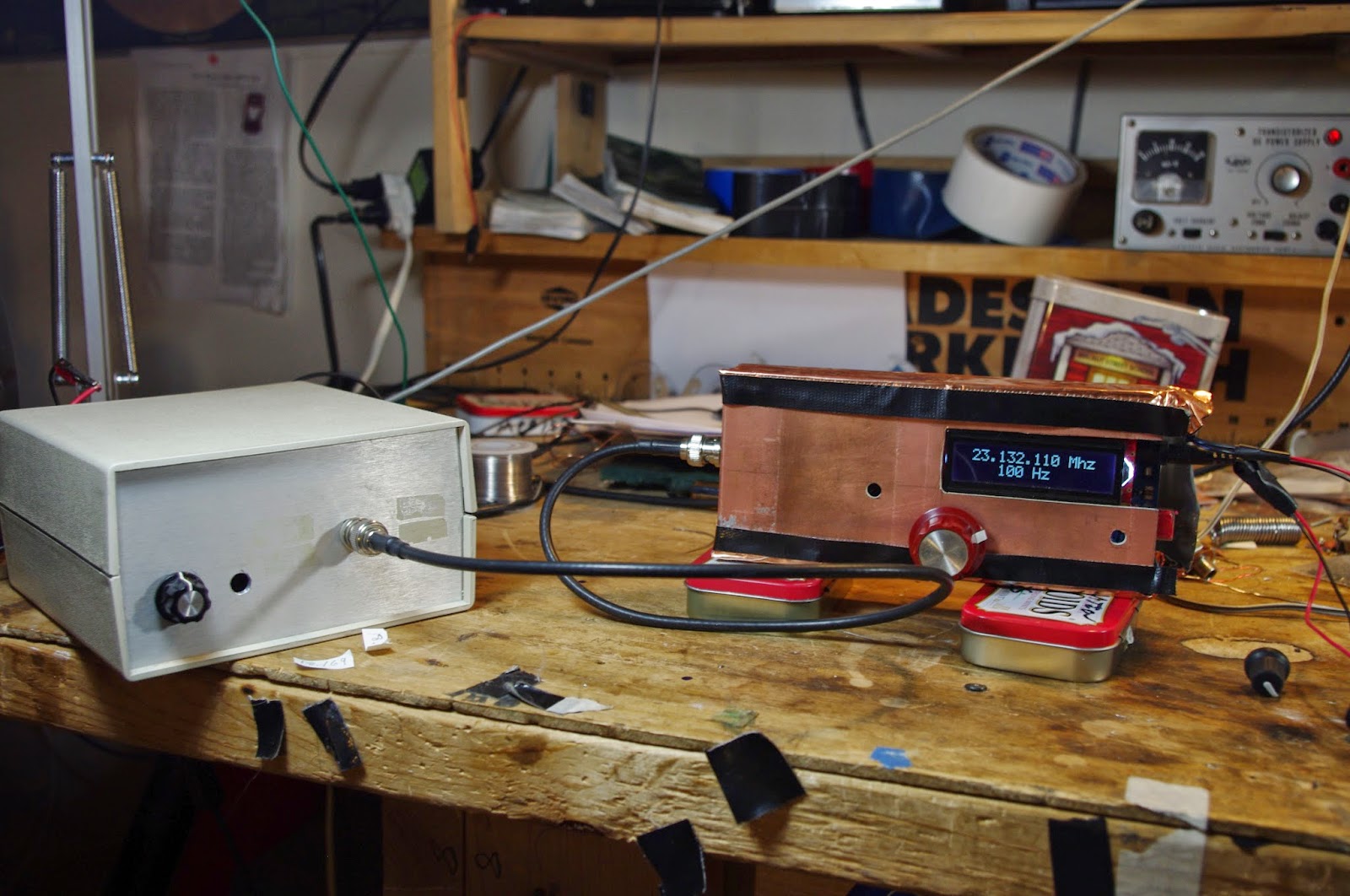
I did this for Pete. And I did it to start out the new year with something different. And because I needed the crystal for my beloved BITX and didn’t want to buy more crystals.

After successfully broadening the filter in my Barebones Barbados Superhet (originally built by Dale Parfiit W4OP) I decided to replace the VXO with an outboard Arduino/DDS device. Nothing new in that (I was playing with this back in October), but in what I think is a symbolically significant twist, I pulled out the tuning cap for the VXO and, in the hole left by the tuning control, replaced the knob with a BNC connector. That connector now carries DDS signals into the receiver. The crystal was at around 23.125 MHz — that’s why the LCD display is showing 23 MHz.

It works great. I was listening to the DX station in Iran this morning.

Here is a video of the October 2014 experiments:


Our book: “SolderSmoke — Global Adventures in Wireless Electronics” http://soldersmoke.com/book.htm Our coffee mugs, T-Shirts, bumper stickers: http://www.cafepress.com/SolderSmoke Our Book Store: http://astore.amazon.com/contracross-20
Colin Finishes His BITX

Wow, that is one beautiful BITX. Nicely done Colin. But I must say that you are exhibiting an almost inhuman degree of patience! Who needs a case? Fire that thing up and make the traditional “still-on-the-workbench” initial contact.
Hi Guys,

I loved the last SolderSmoke, it was another great episode. It really does amaze me, that a few years ago, hams were saying that it was too difficult to build your own gear that would be anywhere near to the commercial stuff, but here we are with Arduinos etc bringing powerful functionality to the masses. I couldn’t have imagined building an SSB rig with a pretty and functional LCD screen when I started in ham radio.

Bill, first regens, now SDRs? Amazing! I exchanged a few words with George Dobbs about your change of heart towards regenerative receivers, he seemed genuinely pleased. 🙂

Pete, your Si5351 work with the pretty displays is cool, I can see me getting pretty hooked! I have the Si5351 board, Paul M0XPD advised me to buy it. I’d love to build another SSB rig in a smaller box for regular SOTA activating. I must look into the pretty little displays and have a play with the Si5351. I notice that Hans Summers has now put out a cheap Si5351 based kit, handy for us guys in Eu. http://www.hanssummers.com/synth.html

I finished building my BITX board yesterday but wanted to have a sleep before applying power! Today I carefully checked the circuit for errors and found none, phew! I fired the rig up gently, watching the current carefully. I wound up the TX bias to 50mA as stated in the MKARS80 instructions, all went well. I plugged in the mic and spoke – BANG! – Everything went off. Oops – I had used a 500mA fuse for initial safety and forgot to swap it for the bigger one! I fitted a 1.6A fuse and hey presto, all was fine. I was absolutely amazed and to be honest, rather proud of myself. I think the TX is a little bit too hot, my meter is showing about 6W on voice peaks- eek! The rig seems to be perfectly behaved though, no wierd effects seem to be happening. I can just turn the bias down a bit, right?

Anyway, I was happy with my progress so I finished for the day. I still need to investigate and probably tweak the carrier suppression.

I spent a short while talking into a dummy load, using my FT817 to monitor the transmission. My 2yr old son was interested in my voice coming out of the 817’sspeaker!

Thanks for all the guidance and help along the way, I’m elated that I’ve built a voice rig that works! I’ve attached a pic of my finished board, I only just squeezed the circuit on, but isn’t she pretty? 🙂

Can’t wait to get the rig built into it’s case and score that first QSO.
73, Colin, M1BUU

Our book: “SolderSmoke — Global Adventures in Wireless Electronics” http://soldersmoke.com/book.htm Our coffee mugs, T-Shirts, bumper stickers: http://www.cafepress.com/SolderSmoke Our Book Store: http://astore.amazon.com/contracross-20
Pete’s Beautiful Tiny Color Display

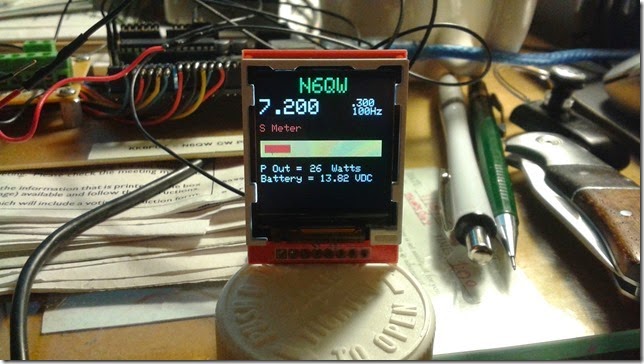
Oh man, this is the kind of thing that lures me ever deeper into the digital morass. That would be hard to do with my beloved discrete analog circuits! Be sure to note the size (it is sitting on the top from a pill bottle — you can also look at the pen for a size reference). It is 1.25 inches by 1.25 inches. Pete has it working with the Si5351 software. As you can see there is still room at the bottom of the display. Pete notes that an SWR readout is possible. And Pete got this device for FIVE BUCKS!

Our book: “SolderSmoke — Global Adventures in Wireless Electronics” http://soldersmoke.com/book.htm Our coffee mugs, T-Shirts, bumper stickers: http://www.cafepress.com/SolderSmoke Our Book Store: http://astore.amazon.com/contracross-20
Kai’s Redwood Mighty Mite with Poker-Chip Hacksaw Key

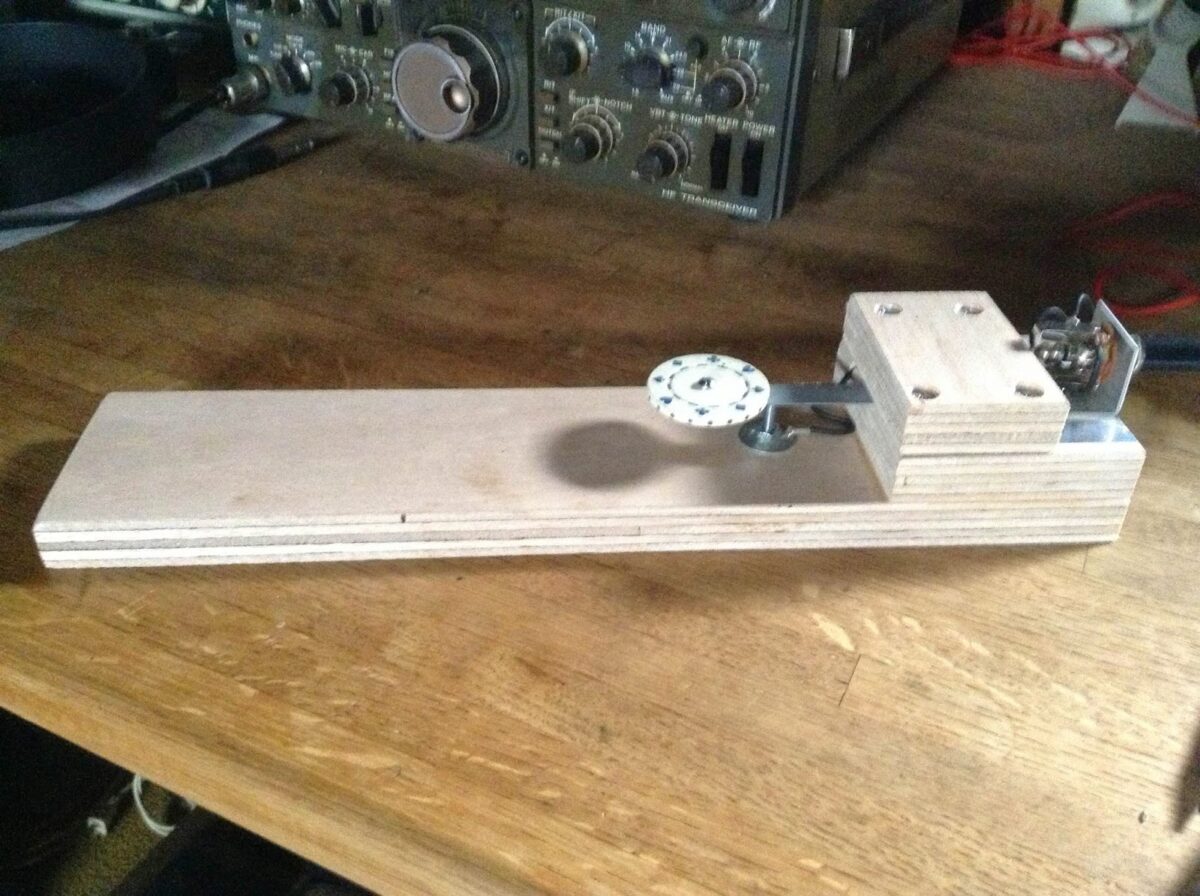
And Check out Kai’s homebrew key:

Hi Pete,

Thanks for your kind words. I really enjoyed the MMM project, first analog oscillation 😊. Your right about the homebrew key being a hacksaw blade and a few pieces of plywood. The knob is an old poker chip. You can adjust the spring tention by moving the blade in and out of the plywood. Travel can be adjusted by raising and lowering the bolt under the blade. I needed something for CW and wanted to stick to the ham maker thing. As for me sending lefty, I do that so I can switch when the right gets tired or I need to hold ipod for video. Thanks for what you add to soldersmoke. 73.
Kai
Ps I will send picture of key.

On Monday, January 12, 2015, Pete Juliano <jessystems@verizon.net> wrote:

Hi Bill,
Wow –so cool! I was impressed with not only his M^3 but the homebrew key and sending with his left hand.
It would be nice for Kai to send us his details for the key. It looked like a hacksaw blade sandwiched between some plywood blocks of wood and some sort of plastic tuning knob from a defunct transistor radio as the key knob. Now that is what I call homebrew –elegant and it works well!
73’s
Pete N6QW

Our book: “SolderSmoke — Global Adventures in Wireless Electronics” http://soldersmoke.com/book.htm Our coffee mugs, T-Shirts, bumper stickers: http://www.cafepress.com/SolderSmoke Our Book Store: http://astore.amazon.com/contracross-20

“Gentlemen, We have Oscillation!” Jacob’s California Mighty Mite

Bill and Pete,

I bring news of the California Mighty Mite as Bill dubbed it.

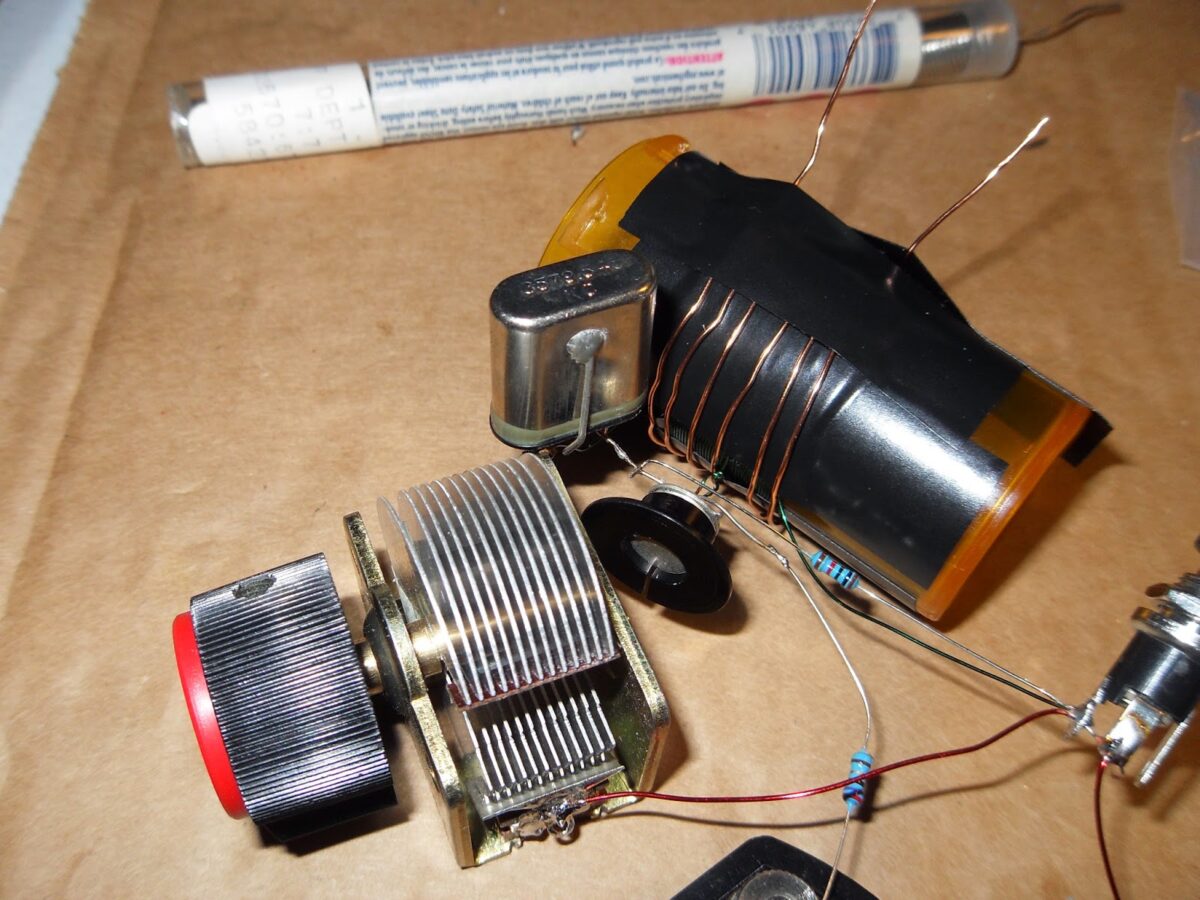
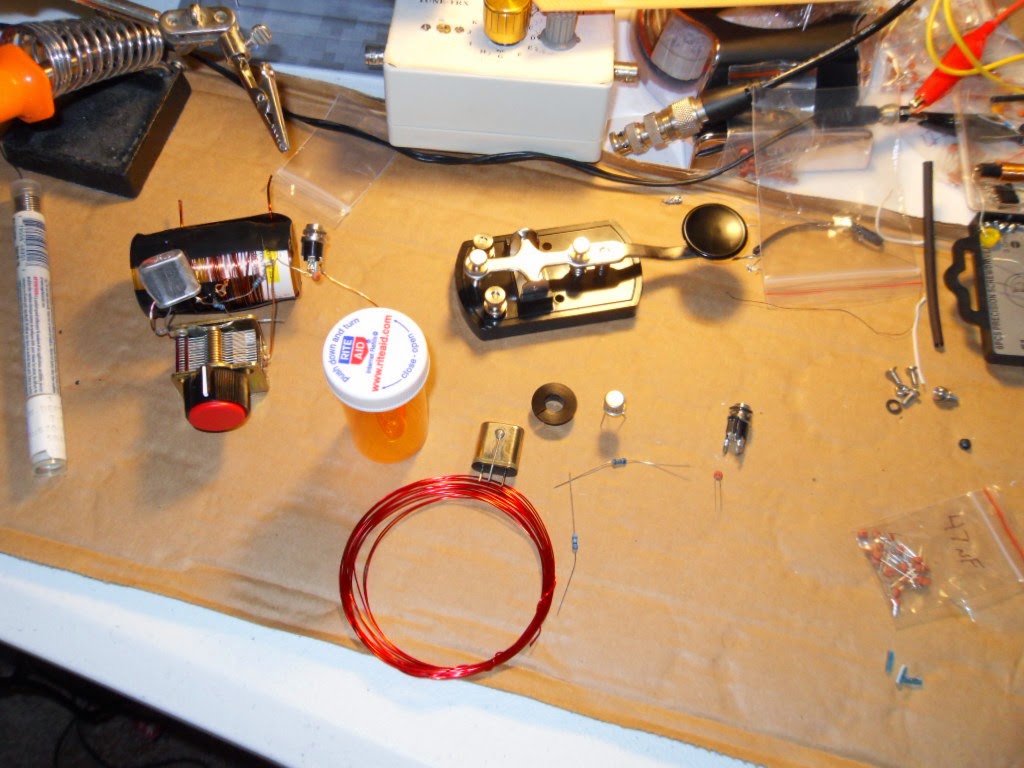
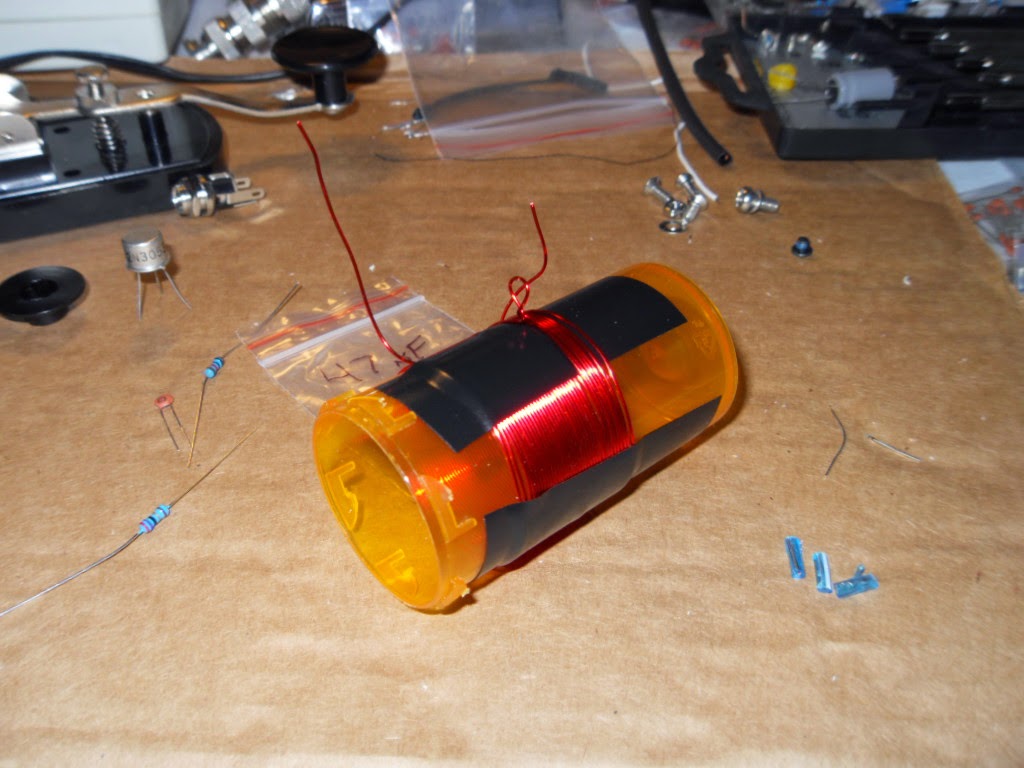
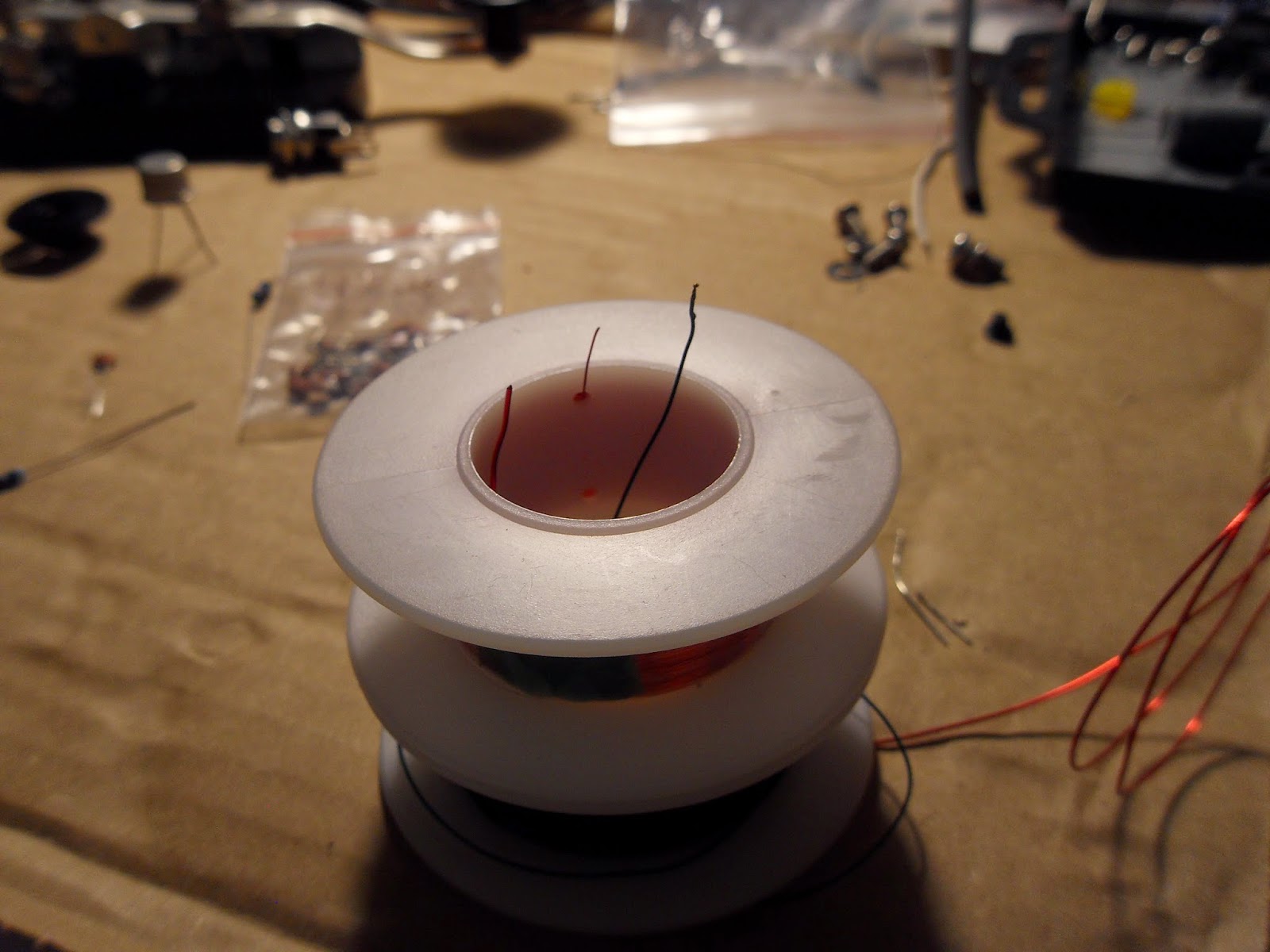
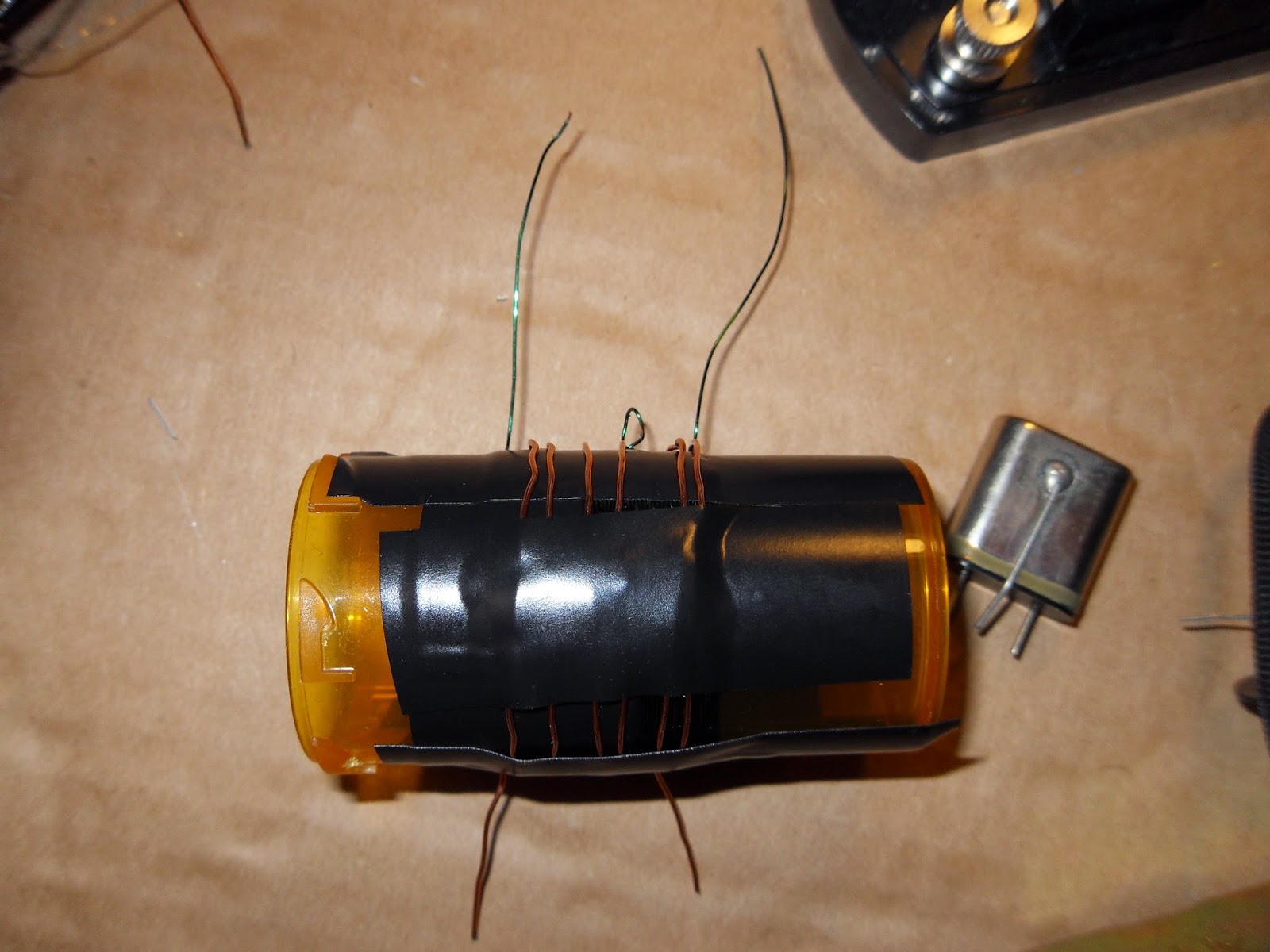
I repeated the steps as documented in version two with Pete’s parts. I had one hiccup. I was winding L1 with Pete’s red wire when, on turn 42, I ran out. Luckily a search of the workroom revealed the last two coils of radio shack magnet wire that I bought with the Gold wire. I checked the thickness of the Green-coated wire and found it to be one gauge smaller than Pete’s wire. To be ready in time for the podcast, the green wire would have to do. It was fussier that the larger gauge wires, but with my trusty electrical tape, the L1 coil stayed on the coil-form quite neatly. Using a scrap of gold wire, I wound L2 making sure to tape it evenly spaced.

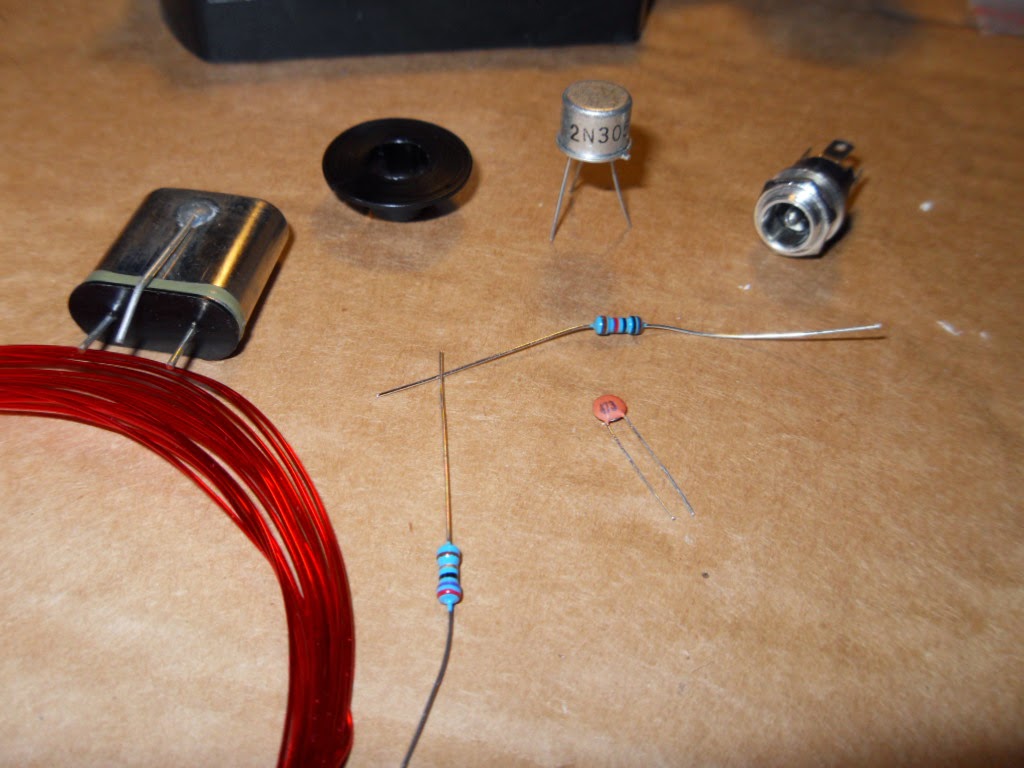
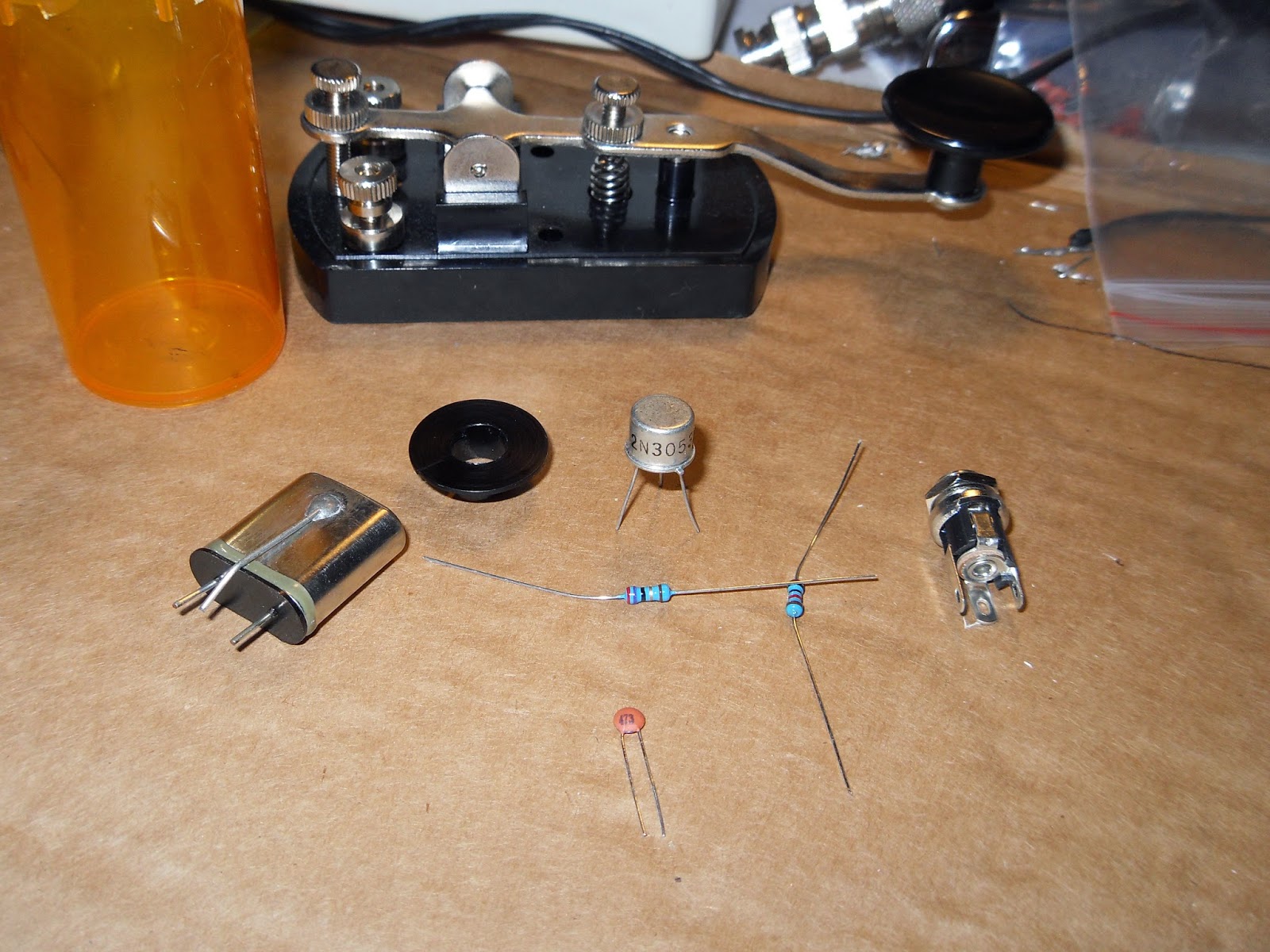
Next I remeasured each of the parts to be soldered and arranged them in according to the Schematic. With the Soldering iron hot from warming while I would the coil, I detached the 365pf varicap from the MMv2. I strapped on the heatsink to the 2N3058 transistor and soldered the 27Ohm resistor to the Emitter. I attached one pole of the Colorburst crystal to the solder tab on the varicap along with the stripped end of L1 coil. I soldered the Collector to the Tap-2 of the L1 coil, then the Base to the other pole of the crystal. I then attached the 10k resistor to the base and attached another red-magnet wire to the side of the varicap. Almost done I looped a 47nF ceramic capacitor to the 2 power posts of a DC connector, then wrapped the Tap-1, 10k, and the lead from the varicap into the pin (positive) solder tab of the DC connector. I took a second red scrap and stripped the ends, stuck it in the sleeve (negative) solder tab.

Two applications of solder later, the multimeter was back out for a final continuity check. After checking across every joint, I plugged in my power supply to the Mighty Mite. Reaching over to the shortwave I leaned in the power button and tapped in the Colorburst frequency, 3-5-7-9. Static filled the room as I made sure the radio was how I left it earlier that week. SSB mode, attenuator off, and volume up. My finger tingled as caressed the straight key, now wired to the resistor and negative line. I was scared something would melt or flame up when I keyed down. Well no way to find out, except to do.

The key spring resisted, but I felt metal below as the key bottomed out. The radio let out a sound like rubber going down a slide and faded as I held down the key.

Gentlemen, we have Oscillation.

Revision 3 was a success. Version 1 being breadboard and Version 2 being Bill’s crystal and what I had on hand.

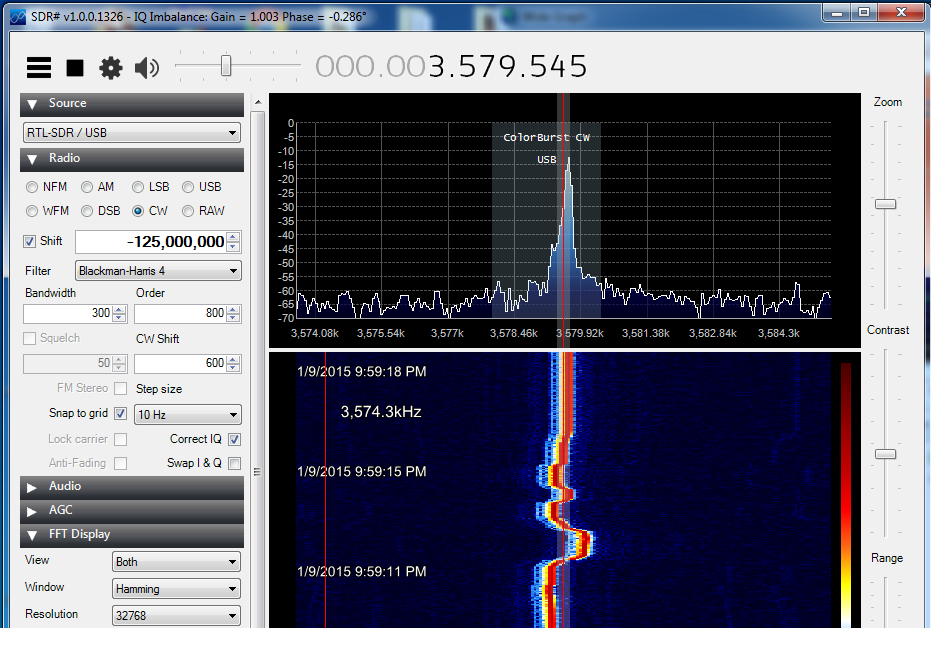
I tried tapping out CQ, but was faced with the chirping fact that I haven’t practiced in a year. I don’t even know TEST let alone CQ CQ KK6JTL TEST. I turned the varicap to see if the sick squeal got any better with adjustment. It did and the pitch out of the radio changed after a bit. I must be changing frequencies! I spun around and fired up the computer. The RTL-SDR would show me what I was doing and who may respond, along with who I might be interfering with.

With the waterfall display zoomed in, showing about 5kHz around 3579kHz, I went back to the Mighty Mite. I saw one CW QSO going on in 3575kHz and two other spikes at 3576-3578kHz. Any guess at what those are? I knew since Sunday night I had been listening to JT65-HF. I reached over and held the key down. A big red spike went up at 3576.5kHz

I waited for quiet and keyed down. I turned the varicap to lower the capacitance. The spike moved to a higher frequency. When the varicap was half out, the squeal began to sound like a tone again. Problem was I was still at 3578kHz and still stepping on the JT65 signals. I called my wife in in excitement to show her and asked her to help me tune the circuit to the official frequency. I’m going to leave the varicap there for now. So I start it at 3577 and have to dial it back to 3579 to operate. I can almost go to 3580 with this little Mighty Mite.

Finally I was curious. I had forgotten to check the output of the transistor Pete sent me on my LC meter. So I got the datasheet from the Internet. The BC547A I had used in Versions 1 & 2 were rated for 325mW. The 2N3058 is rated for 5W. Pete, how much power does this put into an antenna when fed with 12V? Apparently not enough to wake my Radioshack SWR/Power meter. But that thing is hungry. It needs more than 2 Watts for it to function correctly.

Pictures attached. The transistor heatsink looks like it it touching the varicap in the pictures but I made sure there is plenty of gap. Too bad none of the pictures of that gap turned out. The wiggle in the waterfall picture is due to me turning the varicap to show range. Pete left a grounding wire on the case of the crystal. I chose not to remove it, but did not attach it to anything.

Congratulations Jacob! You really hung in there, overcoming obstacles including the US Postal Service’s Crystal-Crushing Steam Roller. The rig looks great!

Our book: “SolderSmoke — Global Adventures in Wireless Electronics” http://soldersmoke.com/book.htm Our coffee mugs, T-Shirts, bumper stickers: http://www.cafepress.com/SolderSmoke Our Book Store: http://astore.amazon.com/contracross-20
Irish Mighty Mite

Hi Bill and Pete,


I couldn’t stand it any longer, listening to you guys on the podcast and seeing all the Mighty Mites being built I had to have a go myself. Concerned that I might plunge Soldersmoke into receivership if I asked for a free crystal to be posted to Ireland I used a 3.560MHz one, recently purchased from the GQRP club store.

2 amazing things happened when I was building it.

1) for the first time ever I had all the parts I needed in my junk box. Since getting my licence in 2012 I’ve been gradually collecting and buying components. It’s so much easier when you find everything you need.

2) for the first time ever it worked straight away. When I finished the last component I heard this voice from over my shoulder, it was Pete saying “Now go and noodle through the circuit and check your work” Sure enough I’d missed one of the connections and everything else checked out ok.

So I plugged it in, hid behind the shack chair and turned it on. Success!!!

Keep up the good work both of you!

73 de Chris EI6KH
Licensed since November 2012
Fists UK Member #15966
G-QRP Member #13730
Phoenix Radio Club Member
IRTS Member
MLS: IO63jk

Our book: “SolderSmoke — Global Adventures in Wireless Electronics” http://soldersmoke.com/book.htm Our coffee mugs, T-Shirts, bumper stickers: http://www.cafepress.com/SolderSmoke Our Book Store: http://astore.amazon.com/contracross-20

Colin Gets His BITX Receiver Going

Pete and I congratulated Colin on the First Sigs heard by his BITX (sort of like First Light for a telescope.) He is clearly following the advice offered by Farhan in the original BITX20 article: Take a break when the receiver is done; sit back to enjoy the sounds of success. I told Colin that having a small error in the build, then finding it and fixing it, well, that’s icing on the cake OM. This also shows the benefit of having an oscilloscope. Here is Colin’s report:
Hi Pete and Bill,
I really enjoyed the latest SolderSmoke! I think you two have got a winning formula, humour interspersed with valuable technical knowledge. Some podcasts are just too serious, there’s nothing wrong with having fun in your hobby!
Progress is slow here, as always, but each week I have managed to move a little bit further forward. This week I aligned my BITX band pass filter and made a rough measurement of my crystal filter using the DDS signal generator that I built last week.
My oscilloscope is a Tektronix 465, older than me I believe! Of course there is no fancy signal level readout like the modern digital scopes, so I had to just peak the injected signal through the crystal filter and measure the frequency using a frequency counter connected to the IF amp. I followed the BITX ver 3 build instructions and my results seemed to match very closely to the Indian kit. I’m going to set my BFO at the -20dB from peak level as suggested in the ver3 instructions, I guess I can fine tune the setting later.
At first I had no signal making it out of the last RX IF amp, I traced the signal right through to the base of the first transistor but then the signal was lost. I had thought that band conditions were poor when I tried my BITX in RX last week when in fact it turns out that I’d made a small mistake building the IF amplifier that follows the crystal filter! I had wired the 4k7 resistor in the wrong place! I made the circuit good and hey presto, lots of signal coming out of the amp!
I was eager to give the receiver another try. On Fridays work finishes at 1pm, so a great chance to try out my rig during daylight hours. I hooked up the rig to a random piece of wire and I was amazed by the great noises coming from the speaker! I hadn’t even set the BFO but voices were just leaping out. Man that rig has a lot of AF gain! I obtained a switched 10k log pot which I intend to use for power on and AF gain so hopefully the volume control will be OK. As a side note, it was nice to hear HF0YOTA down in the CW portion, I’m guessing that it is youngsters on the air station, I must do a search on the call later.
73, Colin M1BUU
So the little signal generator has already earned it’s keep. I guess I can would have been scratching my head for a while without it!

Our book: “SolderSmoke — Global Adventures in Wireless Electronics” http://soldersmoke.com/book.htm Our coffee mugs, T-Shirts, bumper stickers: http://www.cafepress.com/SolderSmoke Our Book Store: http://astore.amazon.com/contracross-20
Pete Tries Baluns on the DBM

A couple of weeks ago I ran a post about an old 73 Magazine article that extolled the virtues of putting baluns at the RF input and IF output of diode ring mixers. Dedicated experimenter that he is, Pete Juliano gave it a try:

Hi Bill,
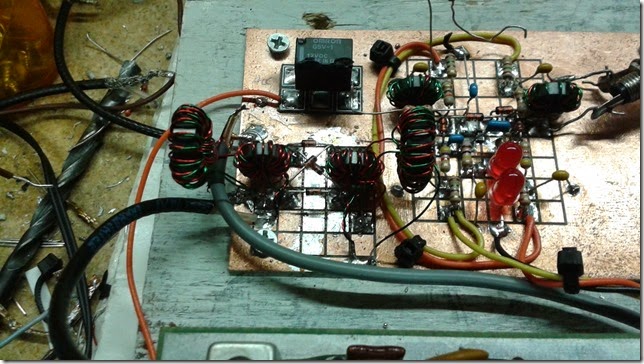
I did the modification and used 20 bifilar turns of #26 on a FT-50-43 core for each transformer.
The most important observation is that I did not see any degradation of performance and in fact I think has helped an overloading situation I was seeing on some extremely strong signals.
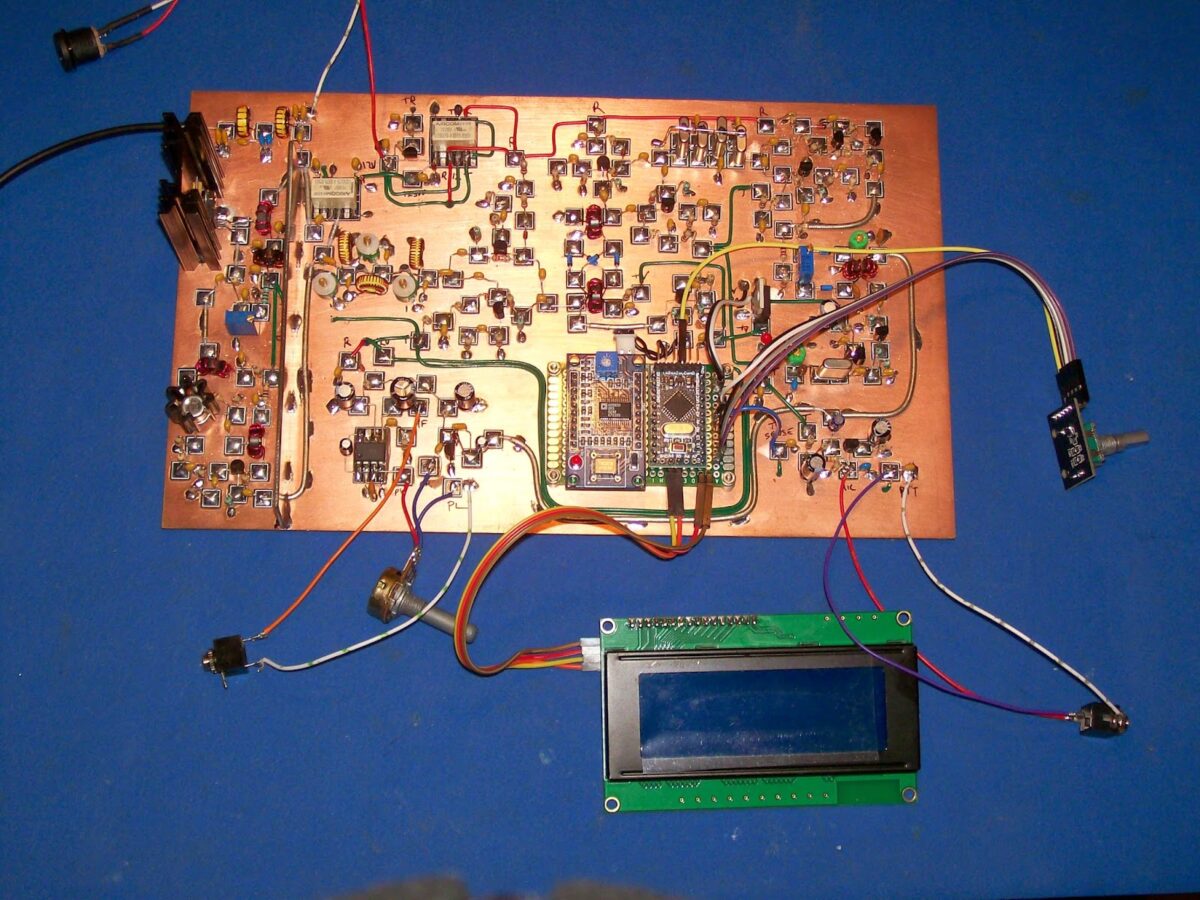
The photo is of a DBM that is behind a bilateral stage that on Rx is the RF amplifier and on Tx is the Tx pre-driver. I do have another single transistor RF amp ahead of this. In normal operation the next stage would be the Band Pass Filter.
The back end is an IF amplifier, AGC, Product Detector, balanced modulator and mic amp stage all on a board that came out of a Hallicrafters FPM-300 SSB/CW transceiver. There is a you tube video of this prototype project.
73’s

Pete N6QW

Thanks Pete!

Our book: “SolderSmoke — Global Adventures in Wireless Electronics” http://soldersmoke.com/book.htm Our coffee mugs, T-Shirts, bumper stickers: http://www.cafepress.com/SolderSmoke Our Book Store: http://astore.amazon.com/contracross-20

W1KF’s Connecticut Mighty Mite

Steve W1KF’s Connecticut Mighty Mite is the neatest build so far: it has a front panel and knobs and plugs and everything! Pete Juliano commented: “Very cool –and elegant. I loved the transistor in a front panel mounted socket with heat sink. Wished I had thought of that –great idea.” Steve is on the air at grey line times, looking for contacts at 3.579 Mhz.

Our book: “SolderSmoke — Global Adventures in Wireless Electronics” http://soldersmoke.com/book.htm Our coffee mugs, T-Shirts, bumper stickers: http://www.cafepress.com/SolderSmoke Our Book Store: http://astore.amazon.com/contracross-20

Ben’s Mighty Mite — IT IS ALIVE!

Ben KD9JNQ is the first of the Colorburst Liberation Army (CLA) recruits to get his Michigan Mighty Mite to oscillate. So he has been promoted to Colonel.

Ben writes:

Bill and Pete, thanks again for the encouragement!

EL CLA UNIDO JAMAS SERA VENCIDO

Ben
KD9JNQ

Our book: “SolderSmoke — Global Adventures in Wireless Electronics” http://soldersmoke.com/book.htm Our coffee mugs, T-Shirts, bumper stickers: http://www.cafepress.com/SolderSmoke Our Book Store: http://astore.amazon.com/contracross-20

Colin’s BITX is Receiving!

Wow, quite a bit of progress at M1BUU since our last look (see below). I must admit, that Arduino DDS board looks quite nice sitting there in the VFO territory. In his original BITX20 article Farhan recommends a pause before the construction of the final portions of the transmitter — the builder is advised to sit back and enjoy the receiver that has just been created. Colin is at that point! Congratulations Colin. He has noted that his board is a bit(x) smaller than mine. Maybe he should stick with Farhan’s recommendation and build the PA and driver on a separate board. This will also help prevent the dreaded oscillations — no need to tempt fate or anger the radio gods!
Hi Pete,

Another great SolderSmoke episode this weekend, I really like the humour between you and Bill! I listened to SS whilst melting solder on my BITX project.

I had really wanted to get my BITX working as a receiver before the end of the weekend, but Lewis Hamilton and his (successful) bid to become Formula 1 World Champion, put an end to that idea! I also decided that I wanted to buy some better quality capacitors for the band pass filter, so I’ve ordered them today.

I fired up the receiver chain for the first time this evening from where the BPF should be, right through to the AF amp, I’m pleased to report that I seem to have created a working superhet receiver! I heard some BC breakthrough at certain points of the tuning range and the rig receives the second harmonic of my Rishworth Buildathon 40m transmitter beautifully (on right part of dial too!). I hadn’t tested the RX IF amps or AF amp before, but they seem to be doing just fine.

I’m so pleased to have got so far, and I’m very pleased with the build. That big copper clad board doesn’t look so big now, but I think I have room for the TX/RX switch, BPF, RF driver, RF PA and LPF which I still need to add.
Thanks for the encouragement and advice so far, I doubt I’d be feeling so elated at this point without it!
This is going to be a really cool rig!
73, Colin M1BUU

Hi Colin,
Two words come to mind: Absolutely Superb! Wow that is such a work of art. I may never show another one of my projects as you have set the standard and benchmark.
You also have demonstrated building from the back end which we discussed in SS168. Now what you have built is a part of the test system.
Really outstanding. Be sure and video your 1st qso and share on You Tube.
Bravo!
73’s
Pete

Our book: “SolderSmoke — Global Adventures in Wireless Electronics” http://soldersmoke.com/book.htm Our coffee mugs, T-Shirts, bumper stickers: http://www.cafepress.com/SolderSmoke Our Book Store: http://astore.amazon.com/contracross-20

Pete Builds a Michigan Mighty Mite

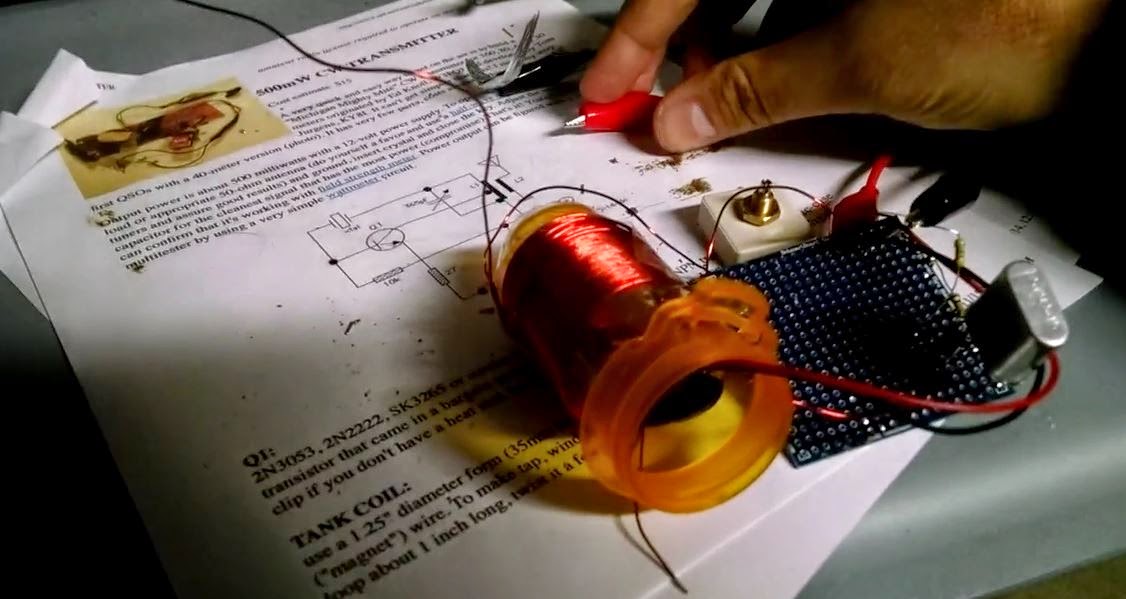
We have been distributing quite a few 3.579 MHz crystals, but until today we hadn’t seen a single new Michigan Mighty Mite. I commented on this in the last podcast. Pete came to the rescue and built one:

Hi Bill,
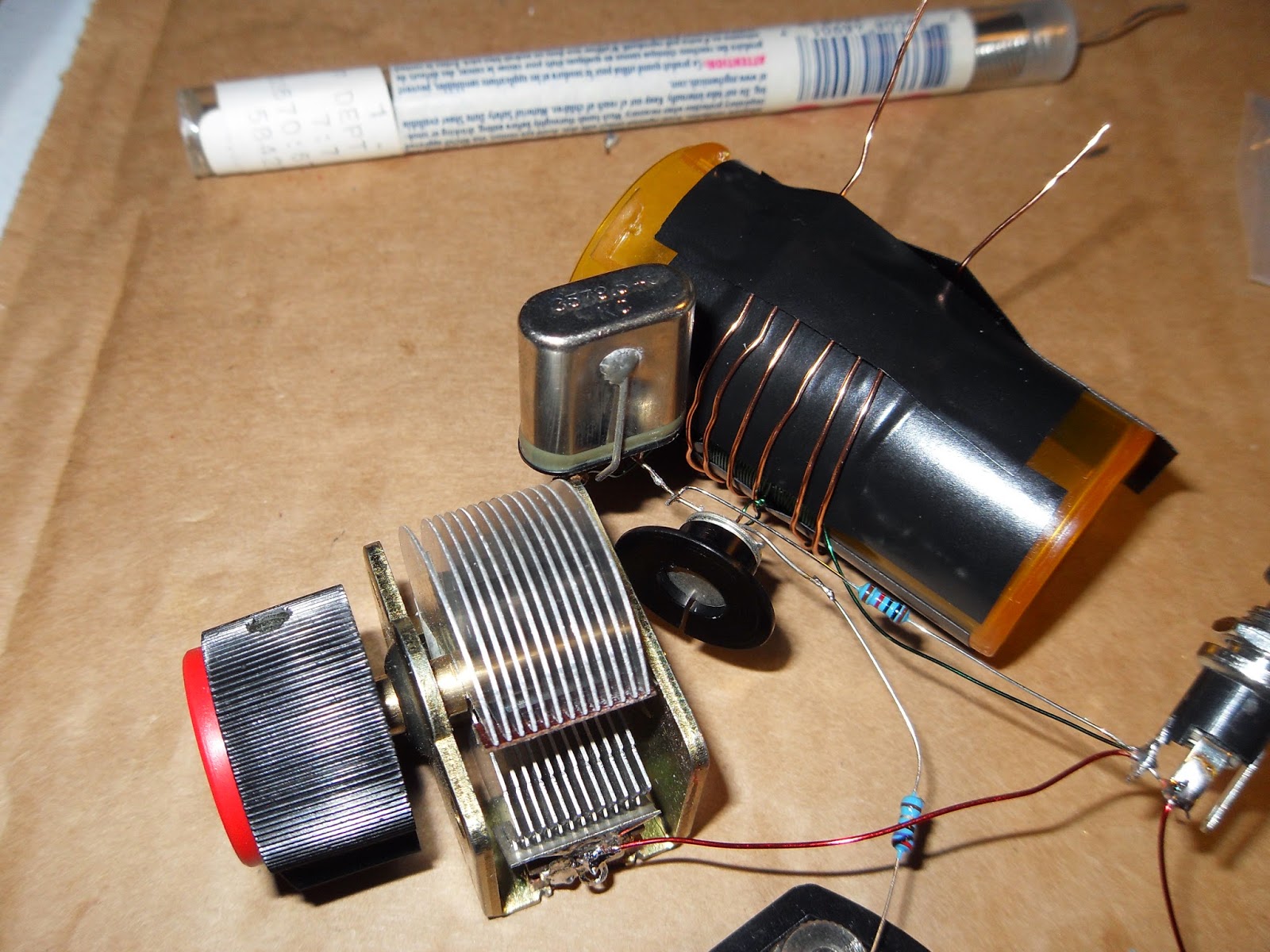
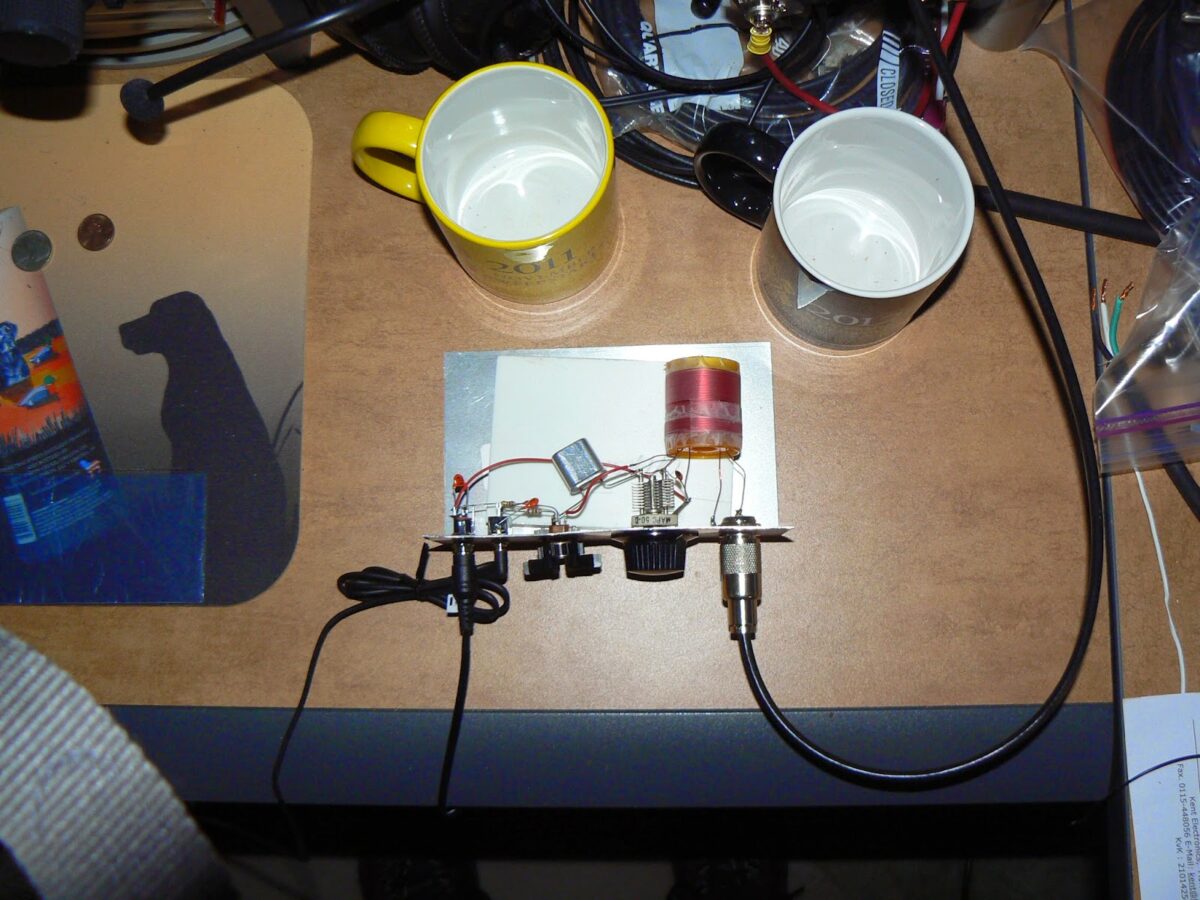
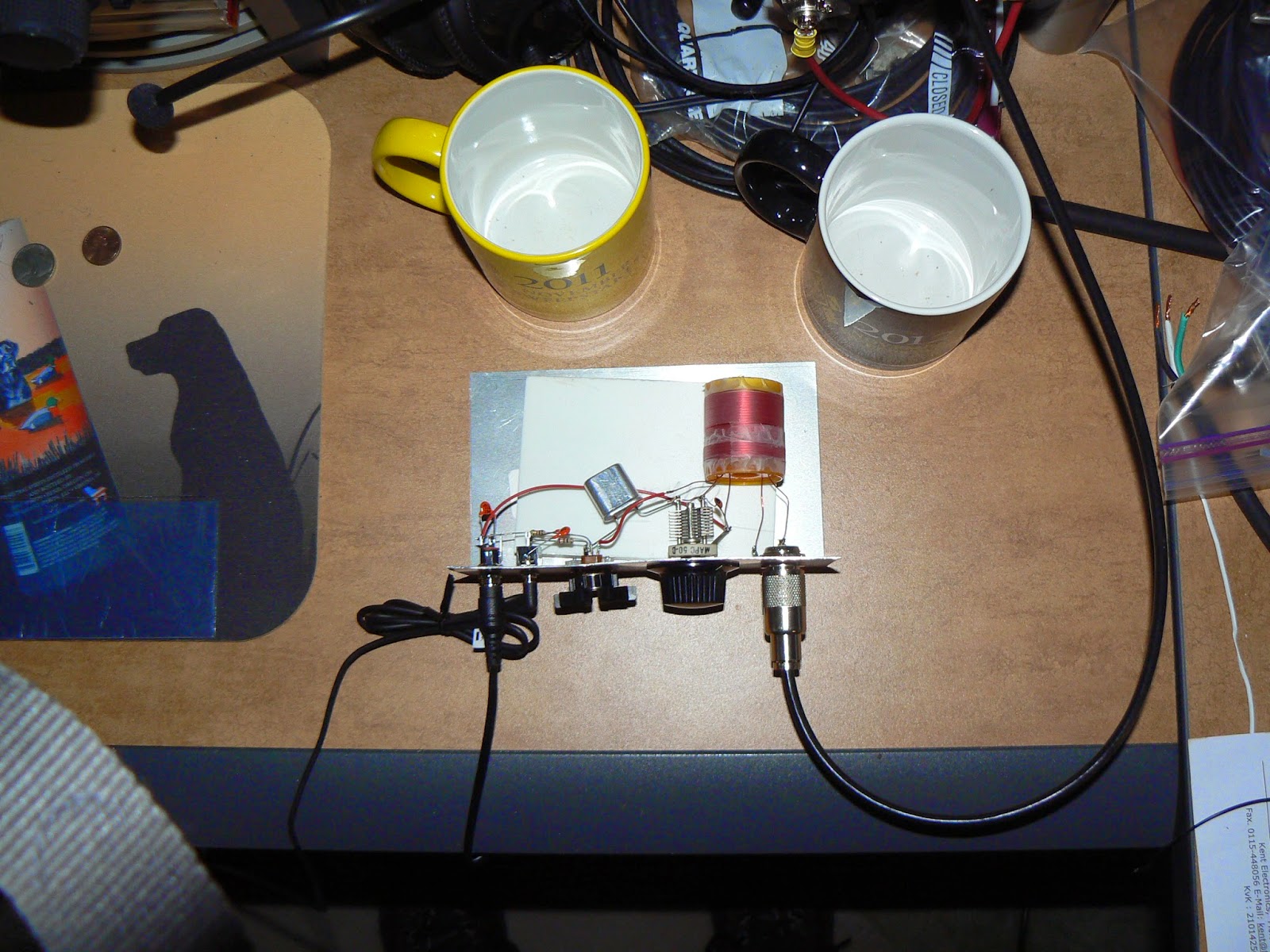
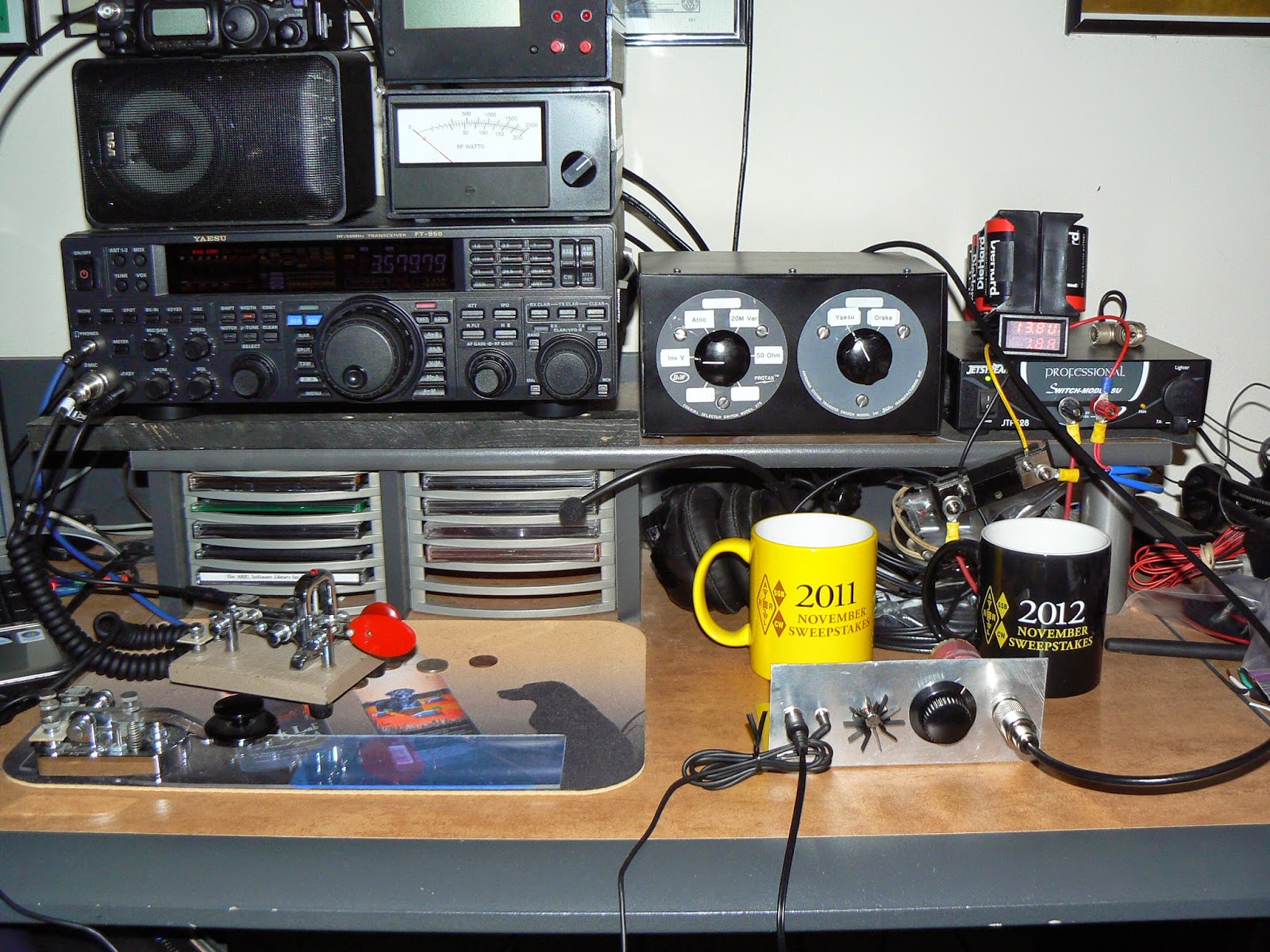
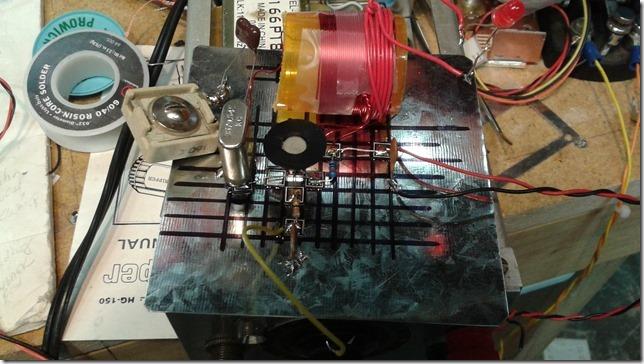
The MMM was built – took me a long time (about 30 Minutes so it was kind of slapped together). The most time was consumed drawing squares on the sheet metal. I used a pill bottle cut down for the coil.
Used a piece of Home Depot sheet metal for the based. I highly recommend a .01 Ufd from the 27 Ohm to ground –key clicks are awful.
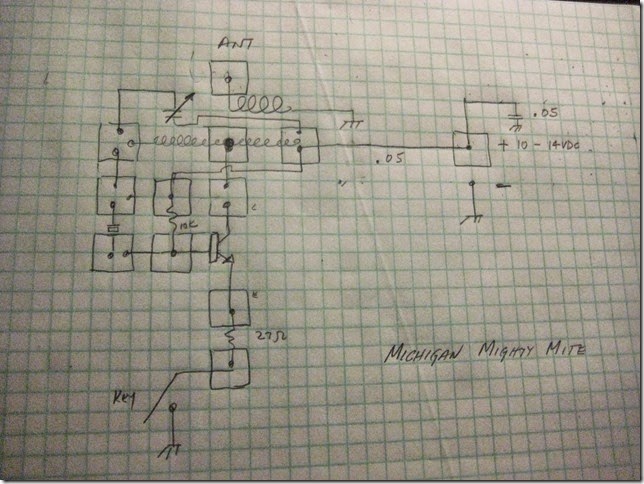
BTW the circuit can be modified so that the tuning cap is soldered to one side of the coil and the other side to ground –essentially the tank tuning cap is in series with the 0.05 bypass cap and is effectively across the coil. Tribal Knowledge
The CLA lives on!
Pete
VIVA EL EJERCITO DE LA LIBERACION DEL COLORBURST! VIVA EL CLA!

Our book: “SolderSmoke — Global Adventures in Wireless Electronics” http://soldersmoke.com/book.htm Our coffee mugs, T-Shirts, bumper stickers: http://www.cafepress.com/SolderSmoke Our Book Store: http://astore.amazon.com/contracross-20

Pete’s Michigan Mighty Mite Manhattan MePad Noodle

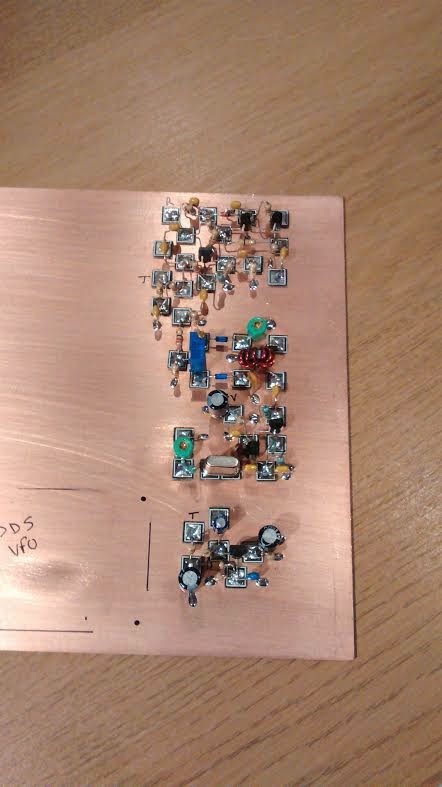
New recruits have been signing up for the Color Burst Liberation Army. We have been sending out many more 3.579 MHz crystals. Pete Juliano was doing some noodling and came up with this plan for Manhattan pads or Me(Maine)Pads. All you need is some copper clad board, a pair of Home Depot tin shears and some super glue. Cut out the pads, glue them down, add components and get the Mighty Mite percolating.

Our book: “SolderSmoke — Global Adventures in Wireless Electronics” http://soldersmoke.com/book.htm Our coffee mugs, T-Shirts, bumper stickers: http://www.cafepress.com/SolderSmoke Our Book Store: http://astore.amazon.com/contracross-20

SolderSmoke Podcast #168 Software Inefficiencies! DSB Blues! Schematic Errors! QRO Confessions!

SolderSmoke Podcast #168 is available.
22 November 2014

http://soldersmoke.com/soldersmoke168.mp3
The benefits of software inefficiency.
Don’t throw a wet blanket on computer baby steps.
DDS-ing Pete’s old boatanchors and Bill’s BITX.
Bill’s DSB amplifier woes: a JBOT unfairly scorned.
Getting ready for solar-powered beach DSB.
Michigan Mighty Mite Crystal Offer — FREE ROCKS!
Tribal knowledge: Beware of mistakes in published schematics!
QRO update: Working Japan on 17 meters.
Happy Thanksgiving!

Our book: “SolderSmoke — Global Adventures in Wireless Electronics” http://soldersmoke.com/book.htm Our coffee mugs, T-Shirts, bumper stickers: http://www.cafepress.com/SolderSmoke Our Book Store: http://astore.amazon.com/contracross-20