W9YEI’s Homebrew 1939 TV?

I’ve been thinking about Jean Shepherd’s 1973 description of the homebrew TV receiver built by his friend Johnny Anderson W9YEI in (probably) 1939. Shep said Johnny got the info on this receiver from the IRE Journal. But I was thinking that there had to have been “how to build” articles in circulation around that time, and — if located — these articles might provide some insight on what Johnny Anderson built.

Asked for info on early TV’s Google will send you to lots of sites about early commercial sets. But you have to dig a bit and refine your search to find articles about the kind of receiver that Shep described as having been built by Johnny Anderson.

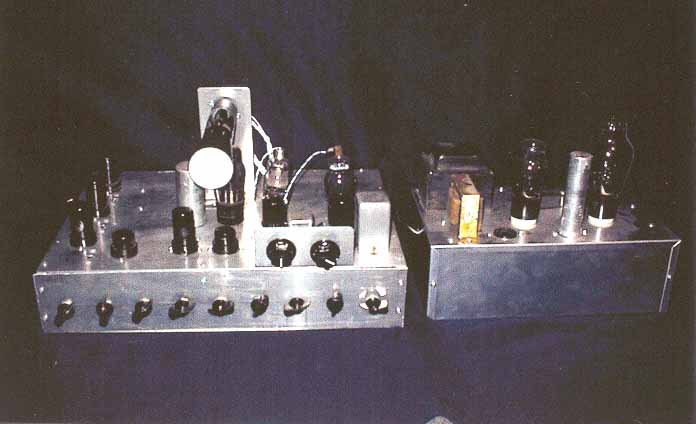
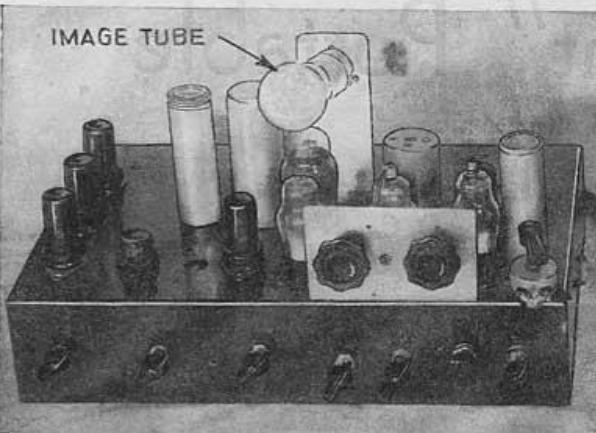
The picture above shows one such possibility. It comes from an article in the October 1939 issue of Radio and Television magazine. The author was Peter Scozzari.


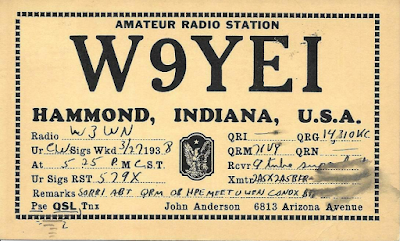
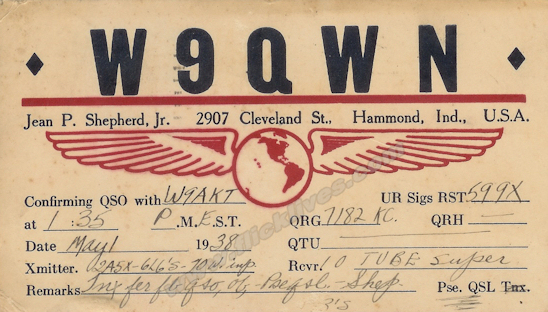
The picture tube seems to be about the size that Shep described; Shep said it was a 1 inch tube, and this schematic shows a 2 inch tube, but the image must have been smaller, so this seems consistent with Shep’s recollection. The article presents this as a “Low Cost” project — that would have been what Shep’s teenage friends were looking for. And we KNOW that Anderson was capable of building something like this: we have a QSL card from him from the same time period in which he notes that he was using a “9 tube superhet.” Someone who could build a 9 tube superhet in 1938 could certainly build this TV receiver.

Can anyone find more of these kind of articles from the late 1930’s?

Three cheers for Johnny Anderson and for Peter Scozzari.

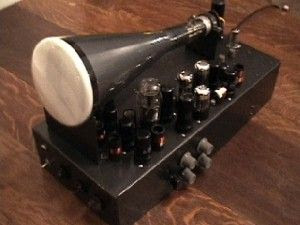
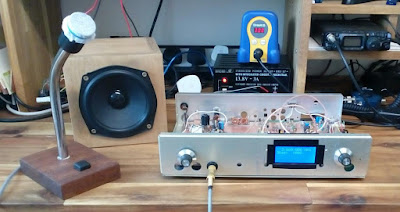
More Googling revealed that a Californian named Jack Neitz more recently built the receiver described in Scozzari’s 1939 article. Here is Neitz’s build:


This is really amazing. We need more info on Jack Neitz! The only info I have is from:

John Stanley Anderson W9YEI — Shep’s Friend Who Homebrewed a TV Receiver in 1938

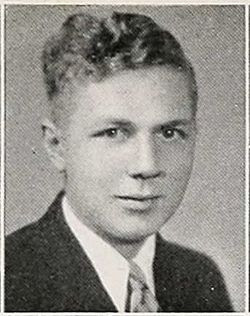
John Stanley “Johnny” Anderson — son of John E. and Beda Klarin Anderson, natives of Sweden — was born on July 19, 1918, in East Chicago, Indiana. He grew up at 6813 (formerly 1439) Arizona Avenue in Hammond, and graduated from Hammond High School a couple of years ahead of American humorist and writer Jean Shepherd. In his WOR radio broadcast of January 24, 1973, Shepherd told of how Johnny was an expert ham who was way ahead of the other kids in town, and how he first saw television demonstrated by Johnny in his basement. Johnny in fact held amateur radio license W9YEI at the time.

After graduation from Hammond High, Johnny went to work as a chemist at the local steel mill. On April 11, 1941, Johnny enlisted at Fort Benjamin Harrison in the U.S. Army, serving through WWII until November 27, 1945. On June 4, 1955, he married Jane H. Vanstone.

Johnny later moved to Munster, Indiana, and continued working at Inland Steel, where he held a variety of technical positions. He passed away on January 29, 1984, at the emergency room of Hammond’s St. Margaret Hospital after suffering from neurogenic shock. At the time of his death, Johnny was an electrical technician at Inland Steel’s quality control center. He was buried at Elmwood Cemetery in Hammond. From:
https://www.findagrave.com/memorial/173124396/john-stanley-anderson
The Flick Lives web site has an interesting letter that Johnny wrote to his friend Paul Schwartz (W9KPY) in mid 1941. Schwartz is frequently referred to by Jean Shepherd. Schwartz was killed in World War II.

In the letter, Johnny also references another mutual friend who Shep often mentions: Boles (W9QWK).

Dorothy Anderson was Johnny’s sister and was for a time Shep’s girlfriend.

Rcvr: “9 tube Superhet” FB OM

Early Television, Jean Shepherd, Homebrewing, and Hack-A-Day

It may have been something like this 1947 receiver. But with a smaller CRT.

Hack-A-Day has an article about early (1930s) television. I was immediately reminded of a January 1973 Jean Shepherd show on WOR New York in which Shep talks about a kid in his neighborhood who built a very early television receiver. You can skip to about the 18 minute mark for the homebrew radio and television stuff.

In the 1973 show, Shep identifies the builder as John Anderson. The Flicklives web site lists the hams who lived around Shep in Hammond Indiana. Among them is John Stanley Anderson W9YEI. That’s him.

Shep was born in 1921 and in the show he says this all took place when he was 16 or 17. So that would place these events around 1938. We see that on February 2, 1939 W9XZV — the experimental station of Zenith Chicago — went on the air with television. In August 1940 W9XBK, the experimental TV station of WBKB Chicago went on the air. That station was the one Johnny Anderson used to demonstrate TV to Shep and other friends.

Once again, Shep really captures the spirit of homebrew radio and the way it really captivates teenagers. He also explains — very well I think — the difference between true homebrew radio and kit building.

I really wish we had more details or pictures of W9YEI’s TV receiver. I tried looking in the IRE Journal, but I couldn’t find anything. Anyone have more info on this receiver or ham homebrew TV projects from the late 1930s?

EXCELSIOR! 73 Bill

https://hackaday.com/2022/04/10/retrotechtacular-a-diy-television-for-very-early-adopters/

https://soldersmoke.blogspot.com/2008/07/best-jean-shepherd-ham-radio-episode.html

http://www.flicklives.com/index.php?pg=318

https://www.earlytelevision.org/w9xbk.html

Flick Lives — More from a Great Web Site about “Jean Shepherd”

Jim Clavin has some really great stuff on his FlickLives website:

Much of this stuff I had never seen. Like the picture he has of young Shep in his shack. I wonder how old he was in this picture. He appears perturbed. Perhaps his Heising Modulator was distorting?

Jim dug up all of Shep’s licenses and got the names and callsigns of all the hams who were active from Shepherd’s hometown during the years Shep was living there. I think I can recognized some of the names — Shep talked about some of these guys when talking (on WOR) about ham radio. Boles. Stan. Good times.

The CQ Guest editorials and the various articles are a lot of fun. Some things never seem to change.
Thanks Jim!

EXCELSIOR!

Podcast (Audio) Version of Bill’s Talk to the L’Anse Creuse Amateur Radio Club

Tony G4WIF suggested that I make this talk available as an audio recording. Good idea. Here it is:

http://soldersmoke.com/N2CQRHomebrewing.mp3

Bill Talking about Homebrew Radio with L’Anse Creuse Amateur Radio Club (Michigan) — February 2, 2022 (Video)

This was a very nice meeting. We just talked homebrewing and why it is such an important part of ham radio. Video above

Topics included:

— Jean Shepherd
— Being “Electrically Inclined”
— The Herring Aid 5
— Radio Clubs around the world
— The Shame Shelf
— Making mistakes, releasing smoke
— Errors in ham radio magazines and schematics
— The importance of understanding the circuit
— The Michigan Mighty Mite
— Building a power supply for the HW-32A
— The origins of the SolderSmoke podcast
— Knack stories, the IBEW and what we all have in common
— The importance of books
Thanks to The L’Anse Creuse ARC for the invitation.

Jean Shepherd on CW, and Strange Propagation — QRP!

From 1965. Great CW stories from Shep. QRP! Shep running 2 watts on 20 CW, working DX.

He discusses shortwave listening, and predicted that CW shortwave listening would become more popular (sorry about that Shep).

It was real hoot to hear the 1965 public service ad from NYC Mayor John Lindsey.

The Kazoo CW was a bit hard to copy OM.


Jean Shepherd Goes to a Hamfest — And Much More

Here is something nice to listen to in your shack…

I hadn’t heard this one before. It is about Shep’s teenage trip to a hamfest, but it also about his youthful enthusiasm for ham radio and electronics. Many of us can identify with this very easily.

He talks about what must have been a very early use of “blue boxes” — the audio tone generators that allowed young miscreants (including the Woz) to make long distance phone calls for free. I wish I had gotten into this. It sounds like fun.

He talks about how painful it was to be on phone (AM phone) with just 2.5 watts homebrew, when everyone else was running a lot more power.

And wow, they played a baseball game at the hamfest. Phone guys vs. CW guys.

I won’t spoil it by telling you the results of the hamfest raffle.

Bootleggers! Radio Criminality — Some Jean Shepherd Stories

Thanks to Adam N0ZIB who alerted me to Shep’s Cincinnati story about the stolen AM broadcast station. I then found another YouTube video that had that story, but preceded by an even better tale of ham radio bootlegging.
Adam found his story on this fantastic YouTube channel — a collection of Shep stuff:

Thanks Adam. 73 and EXCELSIOR!

Jean Shepherd Works Through a Satellite in a School

Ah, 1975. Obviously a very different time… I’m not sure if Shep would fit in well in the classrooms of today. There was bit of Rodney Dangerfield in his demeanor — that would likely cause some trouble.
But this clip was fun. Shep was right on target when he talked about how getting your ham license used to mean that you’d “mastered a technical art.”

The OSCAR satellite they were using was 2 meters up and 10 meters down. There was a Heathkit HF transceiver with a transverter. And a Simpson multimeter. That mic was a Turner +3

Thanks to Steven Walters for alerting us to this.

EXCELSIOR!

STOP. LISTEN. Shep on Building a Shortwave Receiver

Oh man, how could I have possibly missed this one? Perhaps I didn’t, but even if this one has been on the blog before, it is so good that it is worth repeating.

Shep really captures the frustrations and joys of a teenage radio builder. I could really identify with this. It all reminded me of my heartbreaking effort to build the Herring Aid 5 receiver.

So much cool stuff in this 1963 recording:

— The wonderful smell of radio service shops.
— The terrible shirt and tie choices of radio service guys.
— The truly dire consequences of mistakes in published schematic diagrams.
— The AGONY of not being able to get a homebrew radio to work.
— The JOY when you finally do get it to work. Shep’s “whole life changed” when that happened.
— Hugo Gernsback, Lee DeForest and “unscientific scientists.”

As the YouTube video plays, they show several covers of old Short Wave Craft magazines. At one point they show some homebrew phone rigs. I think they look like my wooden box BITX rigs. And the front panels are clearly Juliano Blue. TRGHS.

Here is the 1933 Oscillodyne article that launched Shep’s effort:

EXCELSIOR!

Knack Story — Tom WX2J

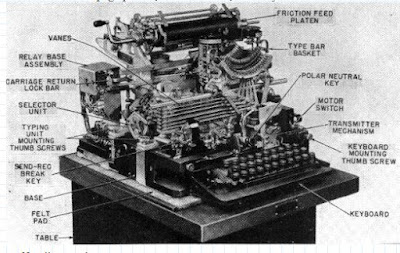
RTTY Model 15

Hello Bill,
Greetings from a fellow ham in Northern Virginia. I have enjoyed the SolderSmoke podcast for a few years now, and I just heard your recent presentation to the Vienna Wireless Society. We have a lot in common so it is about time I reach out to make your acquaintance.
I was born in NYC and grew up in Northern NJ. I was first licensed in 1969 as a high school student (51 years ago! Goodness!). My novice callsign was WN2JFX, and I progressed from Novice and then to General and Advanced as WB2JFX, and then eventually to Extra (in about 1990 — while the 20 WPM code requirement still existed). At that point I put in for a 2X1 callsign and received WX2J, which is a nice twist on my original call.
I was fanatically active in my early years in ham radio. My Elmer (George, K2VVI, SK) set me up with a DX-40, and my parents provided a brand new Hallicrafters S-120 (you could copy the whole 40 meter band without changing the frequency!). I think I Worked all States as a Novice and learned that the human brain is the most amazing audio filter on the market. When I made General, George lent me an old Hallicrafters SX-25, and then I was really in good shape. Besides CW, I was also very interested in RTTY. I had my own Model 15 leaking oil in the basement and had a blast watching the magic of that thing printing messages out of thin air. I have always been a home-brewer, and one of the first serious things I built was a two- or three-tube RTTY demodulator from the Handbook. Aluminum chassis, chassis punches, tube sockets — the whole works. I have no idea what the real inductance was of the inductors that went into the filters but somehow if the signals were strong enough, and on 850 Hz shift, it could actually demodulate signals. I probably still have that thing around here somewhere.
Another local ham bequeathed me his entire collection of 73 magazines – 10+ years starting with the first issue (~1960). I read them from cover to cover so many times I probably have them memorized. I became a real fan of Wayne Green, W2NSD, who was always ornery and controversial but a very interesting guy. I met him at a hamfest many years later and we had a great chat.
In any case I wanted to mention some other things that resonate with me as I listen to your podcast. As a kid growing up in the shadow of NYC in those years, you can bet that the Jean Shepherd broadcast was a regular part of our life. My dad used to listen to it every night — 10:15 p.m. I believe, on WOR — and we both used to greatly enjoy his stories of lighting up the fuse panel and nearly blowing up the house as he and his old man were playing with radios, etc. It was a common theme in our house too when my ham radio signal would blast into the TV set or I dangled new antenna wires off the house and out of the trees — “You’re going to blow this house up!” I studied electrical engineering in college and was commissioned in the Air Force upon graduation. I served a 20-year career in the Air Force and stayed somewhat active in ham radio. I was licensed and operated out of Okinawa (KA6TF) and England (G5ERE) during tours of duty in the early 1980s. Always an HF guy, in about 1982, in Japan, I bought myself a new Icom IC-720A, and this is still my primary rig. I was an early adopter of PK-232 and did some extensive building and experimenting with it. Sadly though, in the last 25+ years, my ham radio experience has mostly been vicarious as my work and family obligations have just not left much time for ham radio. I do have a G5RV wire antenna strung up but very rarely jump on the air — sometimes during contests.
In high school we made a field trip to ARRL HQ in Newington, CT. While there we did all the things people do on such a visit, but one of the high points for me was meeting Doug DeMaw. I can just hear how Shepherd would describe it — “I turned the corner and there he was! In person! The high priest of homebrewing! Doug DeMaw. In the flesh!” Cue the kazoo. I actually also met Shepherd at a book signing (Wanda Hickey’s Night of Golden Memories?). I remember presenting him with a computer-printed banner of his callsign — K2ORS — produced by one of the few functioning computer programs I had written in high school. I also heard him on the HF bands one night — I think he was in Florida — and actually made contact with him, if barely being able to exchange callsigns can count as a contact.
Well, more than you wanted to know. I just wanted to let you know that I enjoy your podcast and can personally relate to very much of what you say. Although I am steeped in Hardware Defined Radio, I am also a software guy so I expect that my future includes SDR. I hope you and Pete are able to continue the podcast for a long time to come because I need the full HDR-SDR spectrum to be covered — hi.
73,
Tom Fuhrman, WX2J
Dilbert, Shep, Dex, Pete, Farhan, and Wes! N2CQR Presentation on Homebrewing to Local Radio Club

Dean KK4DAS asked me to speak to our local radio club, the Vienna Wireless Society. It was a lot of fun. I talked about my evolution as a homebrewer, some of the rigs I made, the moments of joy, and the tales of woe. You can watch the presentation in the video above.

I was really glad to be able to explain in the presentation the importance of people like Pete, Dex, Farhan, Wes, Shep and even Dilbert.

I was also pleased to get into the presentation the N2CQR sign that Peter VK2EMU made for me. Thanks Peter!

Here is the URL to the YouTube video (also above):
https://www.youtube.com/watch?time_continue=3414&v=VHSr-v4QO7Q&feature=emb_logo

And here are the PowerPoint slides I used:
https://viennawireless.net/wp/wp-content/uploads/2020/06/VWS-presentation-Rig-here-is-homebrew.pdf

M0KOV’s Real Life Dilbert Moment — His Mom Took Him to the Doctor

M0KOV’s BITX
Dilbert’s mother took him to the doctor because of ham radio. Jean Shepherd’s date said that Shep’s mother should “take him to a doctor” (he was obsessing over his Heising modulator.) And now we learn that Steve M0KOV was hauled into the doctor’s office because of his “obsession with electronics.” You are in good company Steve. The Knack diagnosis is confirmed.

From Steve M0KOV:

Just watched young Dilbert at the doctor’s surgery.

Although I was late getting my ham licence, I’m sure that I fit the standard knack victim mould. I built my first radio at the age of 10 and even before then I preferred to be bought batteries, switches and lamps rather than sweets. Within a couple of years my small bedroom comprised of a bed, somewhere to throw my clothes and an electronics work bench. The bench and floor were completely covered with half built electronic projects, ex military radios, tools, my beloved old Heathkit oscilloscope and the rest.

Now, my true Dilbert moment. I remember being in the family doctors surgery and my mother was discussing my inability to get to sleep (a perfectly normal ailment for a 13 year old male). She was voicing her concern that it might be my obsession with electronics, and it was all going round in my head and keeping me awake. Funny, later in my life she never seemed to be bothered if the worry of studying or exams kept me awake.

Thanks for another great podcast.
73 de Steve M0KOV

Knack Victim Makes Good! Alan Yates in Seattle

Jean Shepherd used to say that in life, many of us come to a fork in the road: down one path lies success. Down the other, ham radio flea markets. Alan Yates is proving Shep to be WRONG.

I have fond memories of Billy and I building many versions of Alan’s trivial electric motor. We look forward to his virtual reality.

I.G.Y., The Nightfly, Donald Fagen, Jean Shepherd and SolderSmoke

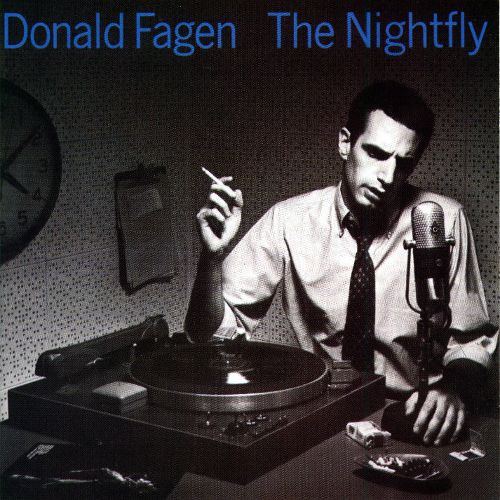
OK, so from time-to-time we talk about IGY, the International Geophysical Year. I was born during that scientifically momentous period. A lot of cool stuff happened. Amazing propagation conditions too. So for a while (around SolderSmoke 149) I was using the opening bars of Donald Fagen’s song I.G.Y. as the intro for the podcast. That song comes from Fagen’s album Nightfly. The album cover appears above.

This morning I got two e-mails from Steve N8NM about another connection between SolderSmoke and IGY. At first I thought he was pulling my leg. But before I show you the e-mails, let me show you another picture:

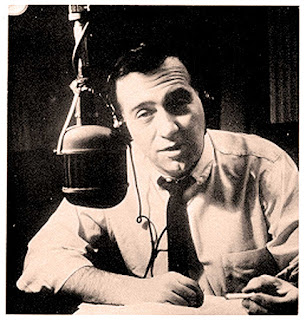
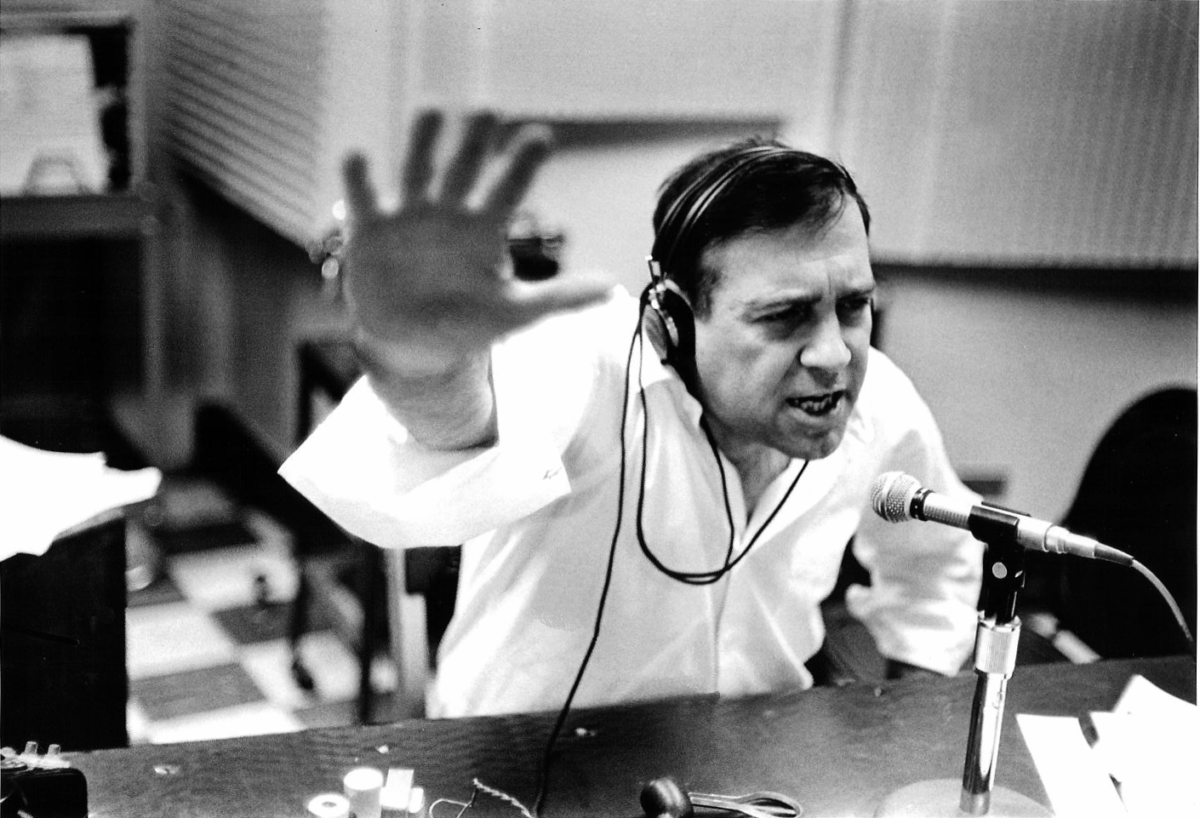
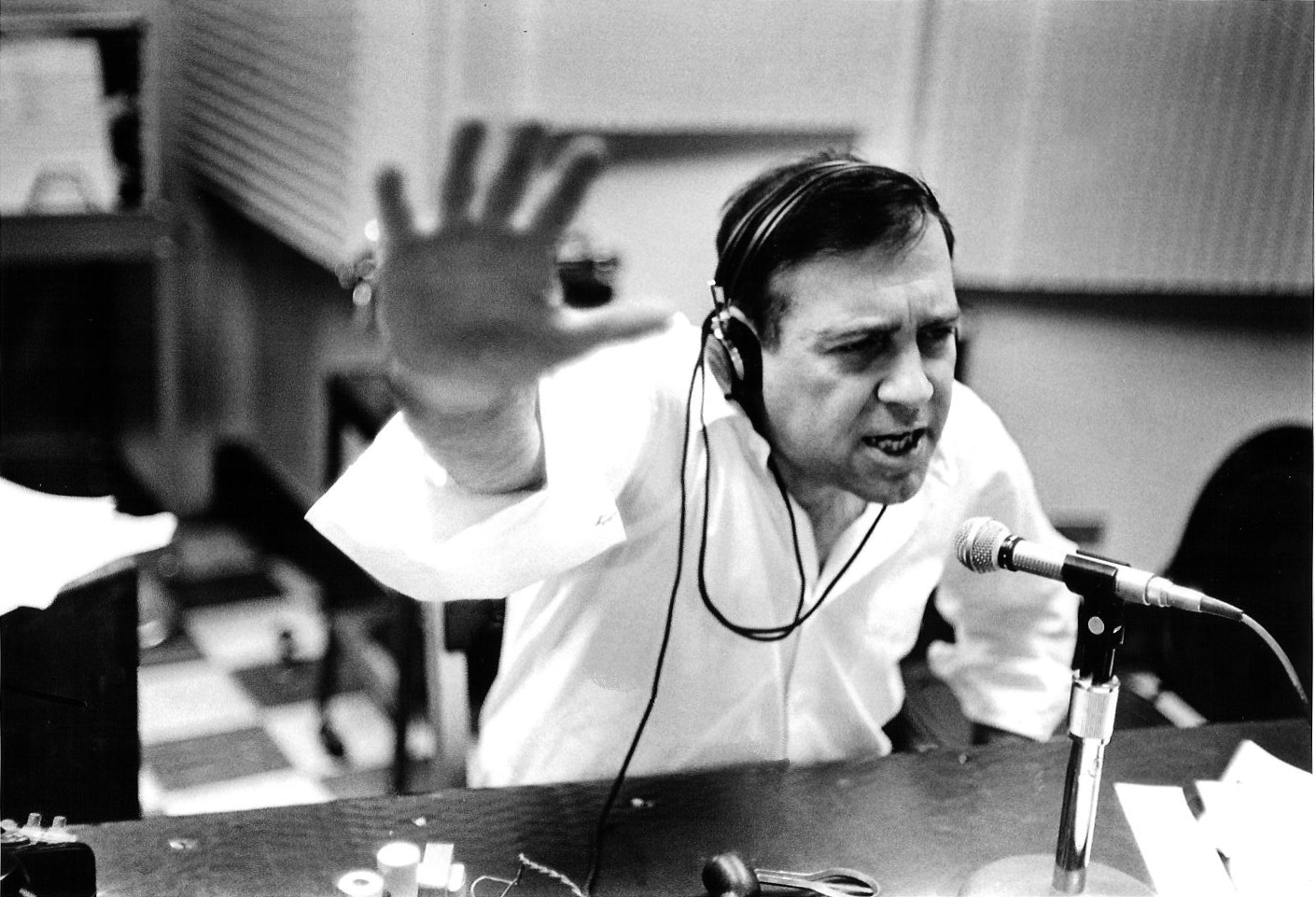
That’s Jean Shepherd. Can you dig it?


Steve writes:

Hey Bill!

I’m Listening to #149, where you introduced Donald Fagen’s “I.G.Y” as the new theme song. Have you heard that the protagonist on that album is based on none-other than Shep, K2ORS. Don’t know if that’s necessarily true, but the album title (The Nightfly), Fagen being from NY, and the era depicted certainly make that plausible…

I guess it’s factual – This is from an interview Fagen did with New York Magazine:

Your first solo album, The Nightfly, was inspired by fifties jazz disc jockeys. Which ones were your favorites?
Symphony Sid was very popular. Mort Fega was probably the best all-around jazz D.J. Ed Beach on WRVR would do this very scholarly afternoon show, and I’d listen to that when I came home from school. But the figure of the Nightfly was based more on a guy who didn’t play jazz records, Jean Shepherd. He was a monologist who used to just talk and tell stories and say funny things. He was a social satirist.
Speaking of Shep: You’ve done him proud, not only in your HB radio efforts, but in proving yourself to be a very capable monologist for the several years between Mike’s passing and Pete’s arrival. Three Cheers for Bill! Give that man a brass figlagee with gold leaf palm!
73! Steve N8NM
By the authority vested in me by having once spoken to Jean Shepherd, I award Steve Murphy N8NM, the coveted Brass Figlagee with Gold Leaf Palm.

EXCELSIOR!

TRGHS

Jean Shepherd’s call signs, a QSL card, and much more

I was listening to 160 meter AM yesterday afternoon when I heard a familiar call: K2ORS. I knew that someone else had picked up Jean Shepherd’s last callsign, so I knew that I was not listening to a CQ from the great beyond. Turns out that K2ORS is now OM Warren Ziegler up in Massachussets. Warren is active on HF and 160 and also works with experimental low frequency transmitters. He is a big fan of Shep. I think Shep would be pleased that someone who melts solder has his old call.

Searching for Warren on QRZ.com led me to a site with an amazing amount of info about Shep, his callsigns, and his early days in ham radio:


We talk about Shep quite a bit on this blog. Here are all the Shep blog posts:


Shep said that when, as a teenager, he got his ham radio license, he was so proud that he went around thinking of himseld as “W9QWN, a man of substance.” Indeed he was.

EXCELSIOR!

Mighty Mite with Homebrew Capacitor Made from Two Cans (video)

Paul Hodges, KA5WPL, didn’t have the variable capacitor called for by the Michigan Mighty Mite schematic. So in the true spirit of the International Brotherhood of Electronic Wizards, he rolled his own! He used two empty aluminum cans and some electrical tape. Wow, that’s really cool Paul.

You have truly earned you membership in the Color Burst Liberation Army, and for the capacitor I award you the prestigious Brass Figlagee with Bronze Oak Leaf Palm.

SolderSmoke Podcast #174:Belthorn III, BITX20(-40), Parasites, Test Gear, Hamfest, SPRAT, Flares, BITX History

SolderSmoke Podcast #174 is available:

http://soldersmoke.com/soldersmoke174.mp3

March 28, 2015

Happy Arduino Day!
Pete’s Belthorn III Transceiver (with cool color display)
Bill’s BITX 20 (that used to be a BITX20/40)
AD9850 DDS added to Barebones Superhet
Jean Shepherd on Parasitic Oscillations, Obsession, and Madness
Simple Test Gear for the Homebrewer
Digital Oscilloscopes and their amazing capabilities
Dongles and other great stuff in SPRAT 162
The BIG St. Patrick’s Day Solar Flare
VK6MV’s Amazing Rhombic (+)
VK7XX (Dos Equis!)
A Bit of BITX History
Pete going KX3 QRO

Our book: “SolderSmoke — Global Adventures in Wireless Electronics” http://soldersmoke.com/book.htm Our coffee mugs, T-Shirts, bumper stickers: http://www.cafepress.com/SolderSmoke Our Book Store: http://astore.amazon.com/contracross-20

Shep on Parasitics and Troubleshooting: “That way madness lies”

You guys really have to listen to this. This is culturally important. And it is a great follow-up to SolderSmoke 173.

In this 1965 radio broadcast, Jean Shepherd describes his teenage struggles with parasitics and other technical problems in his homebrew 160 meter transmitter.

He describes the sound of parasitics on a signal, saying that they sound as if the signal is being attacked by “debauched erotic locusts.”

He really nails it in describing the scornful, dismissive tone that many hams use in telling their fellow radio amateur that there are problems with his signal. ( I have recently been on the receiving end of this kind of treatment.)

He observes that no one is more worried, “than a man who has built something and can’t get it to work.” Indeed.

During a date with a girl from his high school, he is so obviously pre-occupied with his transmitter trouble that she tells him that something is wrong with him and that his mother “should take him to a doctor.”

And he describes the joy that comes when you figure out the problem and get the thing to work.

The REALLY good stuff begins at about the 25 minute point.

http://ia310115.us.archive.org/2/items/JeanShepherd1965Pt1/1965_01_29_Ham_Radio.mp3

Shep was quoting from King Lear:O, that way madness lies; let me shun that; No more of that.” In other words: “BASTA!” That is what I have said about my 40 meter troubles. My BITX 20/40 is now a BITX 20.

EXCELSIOR!

Our book: “SolderSmoke — Global Adventures in Wireless Electronics” http://soldersmoke.com/book.htm Our coffee mugs, T-Shirts, bumper stickers: http://www.cafepress.com/SolderSmoke Our Book Store: http://astore.amazon.com/contracross-20