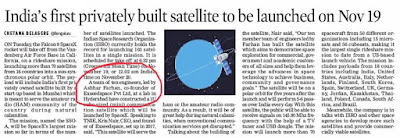
From BITX to SpaceX: Falcon 9 To Launch Farhan’s Cubesat on Monday (video)

  1. https://www.rocketlaunch.live/launch/spaceflight-sso-a-su

    will carry a live feed of the launch


  2. SpaceX will live-stream the launch as well on their YouTube stream. Also – this will be the first SpaceX booster to fly three times, and the first to launch from all three SpaceX pads.

    https://forum.nasaspaceflight.com/index.php?topic=46756.0

Special thanks to Dave Bamford for the BITX to SpaceX line!
Getting Ready for Farhan’s Satellite (videos)

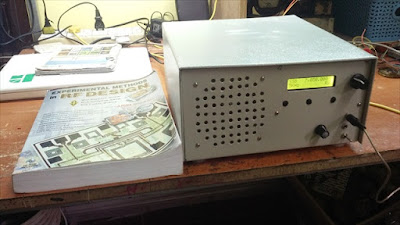
I’ve been getting ready for the November 24 launch of the CubeSat that Farhan and his friends in India built. I started out with my trusty Drake 2-B and a Hamtronics 2-to-10 downconverter, but I quickly switched to an RTL-SDR dongle and HD-SDR software. My 3 element quad antenna is visible in the first video. So far, I am using the Armstrong method to turn the antenna.

In that first video I keep saying that I am waiting for AO-71. In fact is was AO-73, the “FunCube” from the UK. I think it is similar in power and antenna configuration to Farhan’s satellite, so I think we are almost ready for launch.

(Any ideas on what that mysterious pulsating sig in the satellite passband signal is in the first video?)

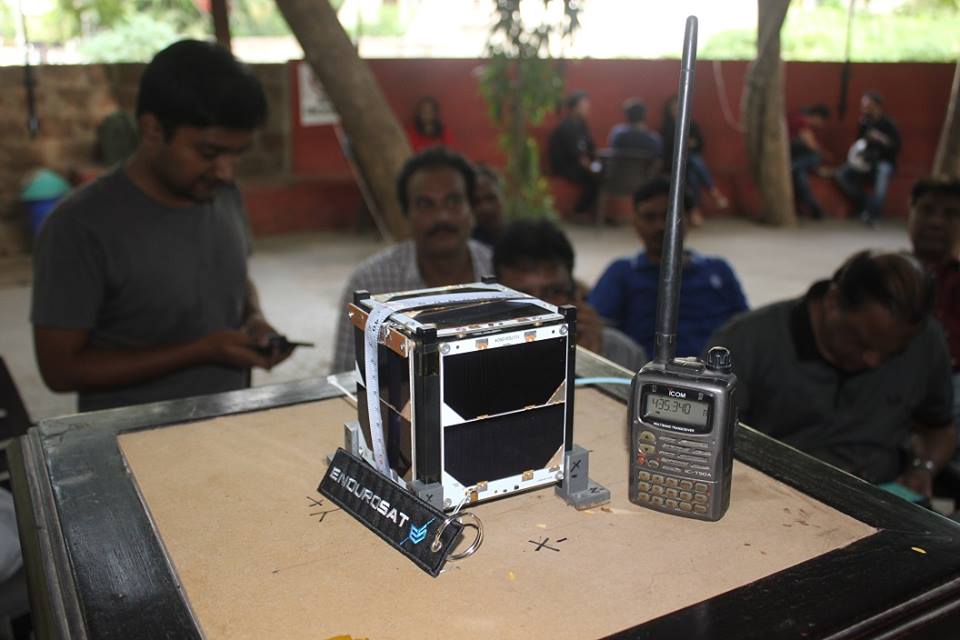
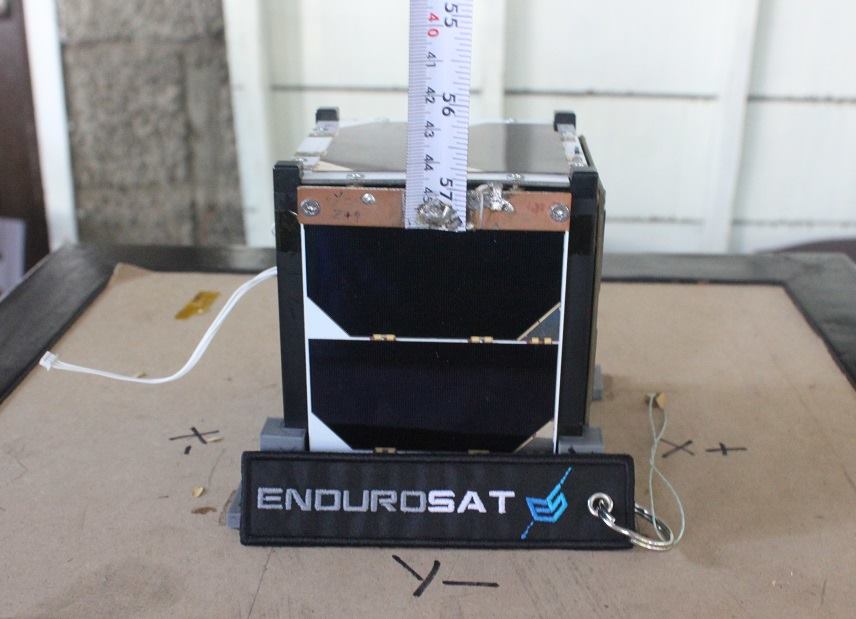
Farhan’s Satellite

Latest news:

The launch is set for November 24, 2018 from California. It will be in a polar orbit. The beacon will be on 145.90 MHz. Farhan says an RTL-SDR Dongle should do the trick. I plan on building several receive systems and an appropriate antenna.

https://telanganatoday.com/a-blessing-for-the-small-guys

https://www.thehindu.com/news/national/other-states/odisha-man-team-builds-private-satellite/article24963338.ece

https://www.timesnownews.com/technology-science/article/instagram-now-lets-you-shop-directly-from-stories-explore-tab-heres-how/286276

I don’t think Farhan’s group is connected to this group, but this short video does a nice job of explaining the potential of CubeSats.
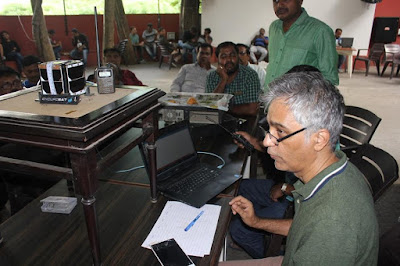
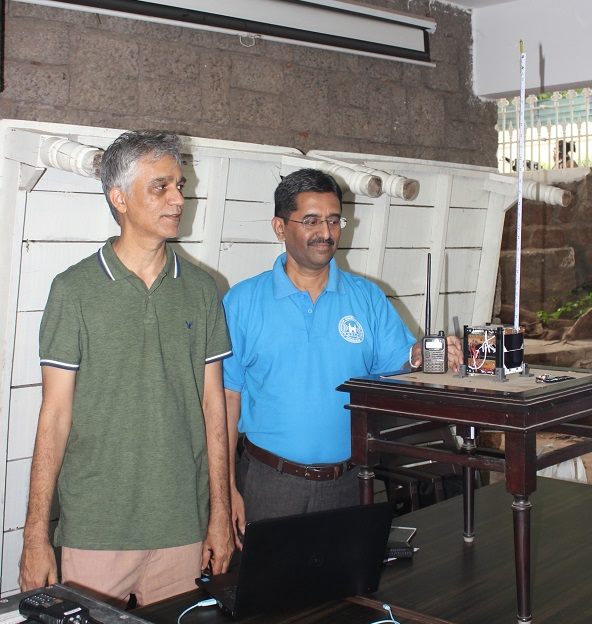
FROM Prasad VU3YFD:
Hi my friend’s information to all about a man’s ” A DREAM COME’S TRUE ” in ” VU ” LAND with his hard work & to the whole team.. we can say ……FANTASTIC ….. no other words to express from my side but i ENVY on their hard work’s.. hi hi .de vu3yfd,prasad
AMSAT-UK
IARU Amateur Satellite Frequency Coordination
List of Sats formally submitted
ExseedSat Updated: 10 Aug 2018 Responsible
Operator Ashar Farhan VU2ESE
Supporting Organisation Exseed Space Innovations Pvt Ltd
Contact Person afarhan@gmail.com.nospam
Headline Details: The ExseedSat is a 1U cubesat that will provide a multifunction UHF/VHF NBFM amateur communication satellite. It will have various configurable modes, including: • UHF to VHF, single channel, narrow band FM transponder with CTCSS, 67 Hz squelch • Power output selectable between 1 watt and 0.5 watt • Digipeat feature with APRS on UHF uplink nd VHF downlink • Melody mode : It will play a simple melody of a few notes on special occasions or events. This will interest students outreach. • We expect this satellite to have a life of two years, depending upon how long the battery lasts and when the satellite de-orbits naturally. Planning a SpaceX launch from Vandenberg in October 2018 **The request has now been updated to include only a U/V transponder/digipeater** **The following frequencies have been coordinated: 145.900 MHz for repeater and digipeater downlink and for telemetry and 435.340 MHz for repeater and digipeater uplink**
Application Date: 19 Jul 2018 Freq coordination completed on 10 Aug 2018
Read The Hindu story at https://www.thehindu.com/…/odisha-man-t…/article24963338.ece
Gurudatta Panda VU3GDP http://gurudattabam.blogspot.com/
Ashhar Farhan VU2ESE http://hfsignals.blogspot.com/
Tnx cu agn de vu3yfd,prasad

Three Cheers for the uBITX! Keeping problems in perspective…

This morning I was looking at Farhan’s uBITX page. He got philosophical at the end of the circuit description:

As a fresh radio amateur in the 80s, one looked at the complex multiband radios of the day with awe. I remember seeing the Atlas 210x, the Icom 720 and Signal One radios in various friends’ shacks. It was entirely out of one’s realm to imagine building such a general coverage transceiver in the home lab.
Devices are now available readily across the globe through online stores, manufacturers are more forthcoming with their data. Most importantly, online communities like the EMRFD’s Yahoo group, the QRP LABS and BITX20’s groups.io community etc have placed the tribal knowledge within the grasp of far flung builders like I.
One knows that it was just a matter of breaking down everything into amplifiers, filters, mixers and oscillators, but that is just theory. The practice of bringing a radio to life is a perpetual ambition. The first signal that the sputters through ether, past your mess of wires into your ears and the first signal that leaps out into the space from your hand is stuff of subliminal beauty that is the rare preserve of the homebrewer alone.
So true! Over on the BITX.io group there is a very interesting discussion of the extent to which the uBITX is in compliance with FCC and ITU specs on harmonic and spur emission. In this discussion, I think it is important to remember the reason Farhan created the BITX rigs: The goal was to get today’s radio amateurs out of their Yaesu-Kenwood-Icom appliance rut, and get them involved with the circuitry, to get them to modify and improve the rig. And that’s precisely what is going on now.
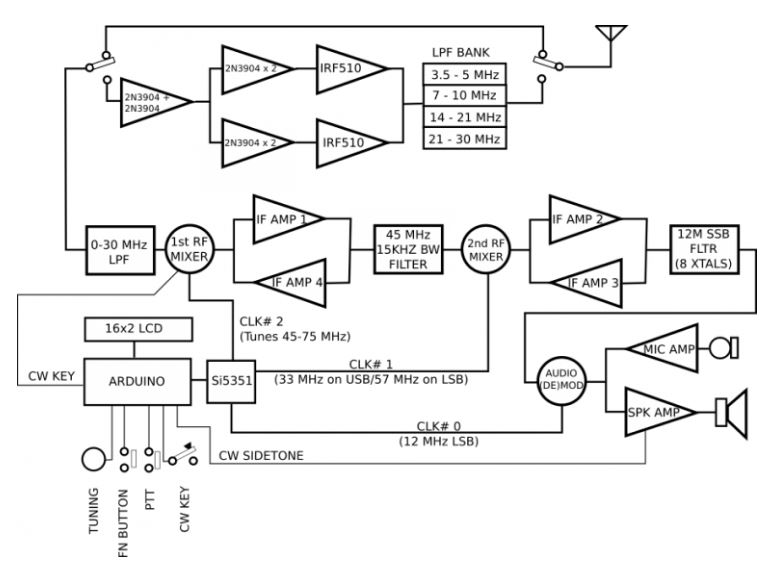
It was well known that dual conversion is riskier than our old familiar single conversion architecture — when you throw another mixer and oscillator into the rig you open the door to problematic spurious signals.. But dual conversion holds out the promise of general coverage. And the advantage of that is quite evident in the uBITX. Mine is on right now and I can switch from band-to-band with a press of the tuning control. This is nice. So a spur has been discovered — solutions are already being offered. That’s the spirit! And it looks like the low pass filters might not be as effective as hoped. This may be a simple matter of board layout and relay use. That is clearly quite fixable.
So let’s remember that this is not plug-and-play ham radio. This is more of a collaborative, homebrew, open-source hardware/software project. The uBITX may be closer to true homebrew than many hams are accustomed to. That was the whole idea.

Patience is a virtue
Possess it if you can
It is never held by techies
And seldom held by hams


VU3XVR’s Assembly Language 1K AtTiny-Si5351 VFO

Although Ram VU3XVR’s project is in the digital realm, his barebones approach to the bits and bytes is, for me, very appealing. He takes a Si5351 and runs it with ATtiny13 with only 1k of space. He makes intelligent use of every bit of that space. He reveals his overall approach to rigs when he states in the video that his VFO will NOT have the traditional glowing numeral frequency readout because those bright lights can be so annoying and distracting. I’m with your Ram! Well done OM. Simplicity is a virtue. No more trouble with the Arduino and its fickle IDE. No more agonizing visits to the Si5351 library.

I see lots of applications for this little circuit. Ram mentions beacon transmitters.

He provides details here:

https://vu3xvr.blogspot.com/2018/07/si5351-dds-clock-generator-using.html
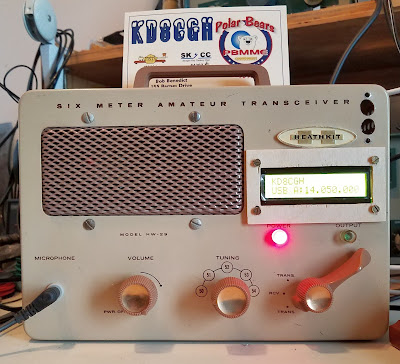
Hyderabox! uBITX in a Lunch Box

Oh man, I’m sorry I missed this one. John sent it to me in January, but it got lost amidst all the uBITX messages.

I like it! It shows that I am not the only one guilty of re-purposing Benton Harbor Lunch Boxes.

But what should we call it? It is now more Hyderabad than Benton Harbor. How about Hyderabox? That’s it!

Bill
You mentioned in your last podcast recycling “Benton Harbor Lunch Boxs”. Many decades ago I talked my Junior High shop teacher into letting me build a Twoer instead of his lame project. Over the years 2 meter AM and the Twoer faded away.
I recently revived a Lunchbox case for my uBitx. I added a Sotabeams CW filter that is controlled by the old T/R knob. Down the filter is bypassed, up one is wide CW and up two is narrow CW. The green pilot light light is a CW tuning indicator.
I use KD8CEC’s code which cleans up many small problems and adds a memory keyer and CAT control to the uBitx.
I modded KD8CEC’s code to remove the paddle sense segment so that it only works with a straight key. This makes the keying much cleaner.
First contact with the modded uBitx was this morning. With 5 watts out I got a 599 from K3Y/7 (K7QBW) in Oregon back to me in Ohio.
Bob KD8CGH

Termination Insensitive Amp Boards from VU3ZMV — Eagle Files

Bill:


Here are the eagle file data for the TIA, that I love to use as incorporated in Farhan’s ubitx.

The TIA , I tried to realise two such on a double sided pcb measuring less than an inch.

It mounts one TIA on each side. I suppose one could simply homebrew.

It has provision for 5 pin berg (male right angle) and would be easy to plug into the main board. We may not need PTH except the connector. We can use bare pins soldering on either side.

Here are the eagle files I created.

Termination Insensitive Amp Boards from VU3ZMV — Eagle Files

Bill:


Here are the eagle file data for the TIA, that I love to use as incorporated in Farhan’s ubitx.

The TIA , I tried to realise two such on a double sided pcb measuring less than an inch.

It mounts one TIA on each side. I suppose one could simply homebrew.

It has provision for 5 pin berg (male right angle) and would be easy to plug into the main board. We may not need PTH except the connector. We can use bare pins soldering on either side.

Here are the eagle files I created.

TRGHS: I Can Hear the Roosters of Boa Vista

At the instigation of Bob N7SUR I’ve been working on a simple, easy-to-reproduce Direct Conversion receiver for 40 meters. I’m building this for my nephew John Henry, and I’m hoping this will be a circuit that others can use to break into the ELITE corp of successful ham receiver builders. Coincidentally Joh in Freiburg Germany is working on a very similar project — we have been comparing notes.

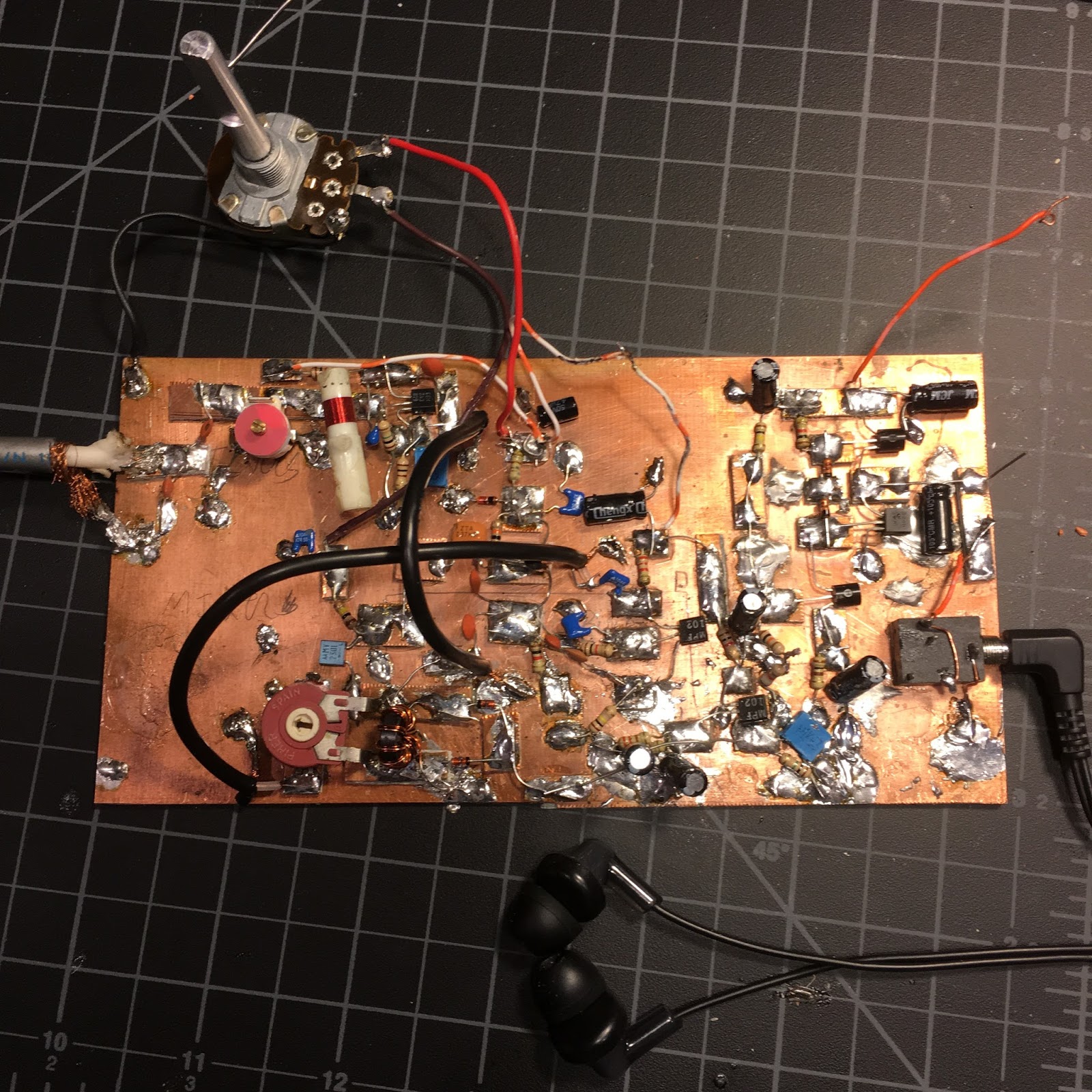
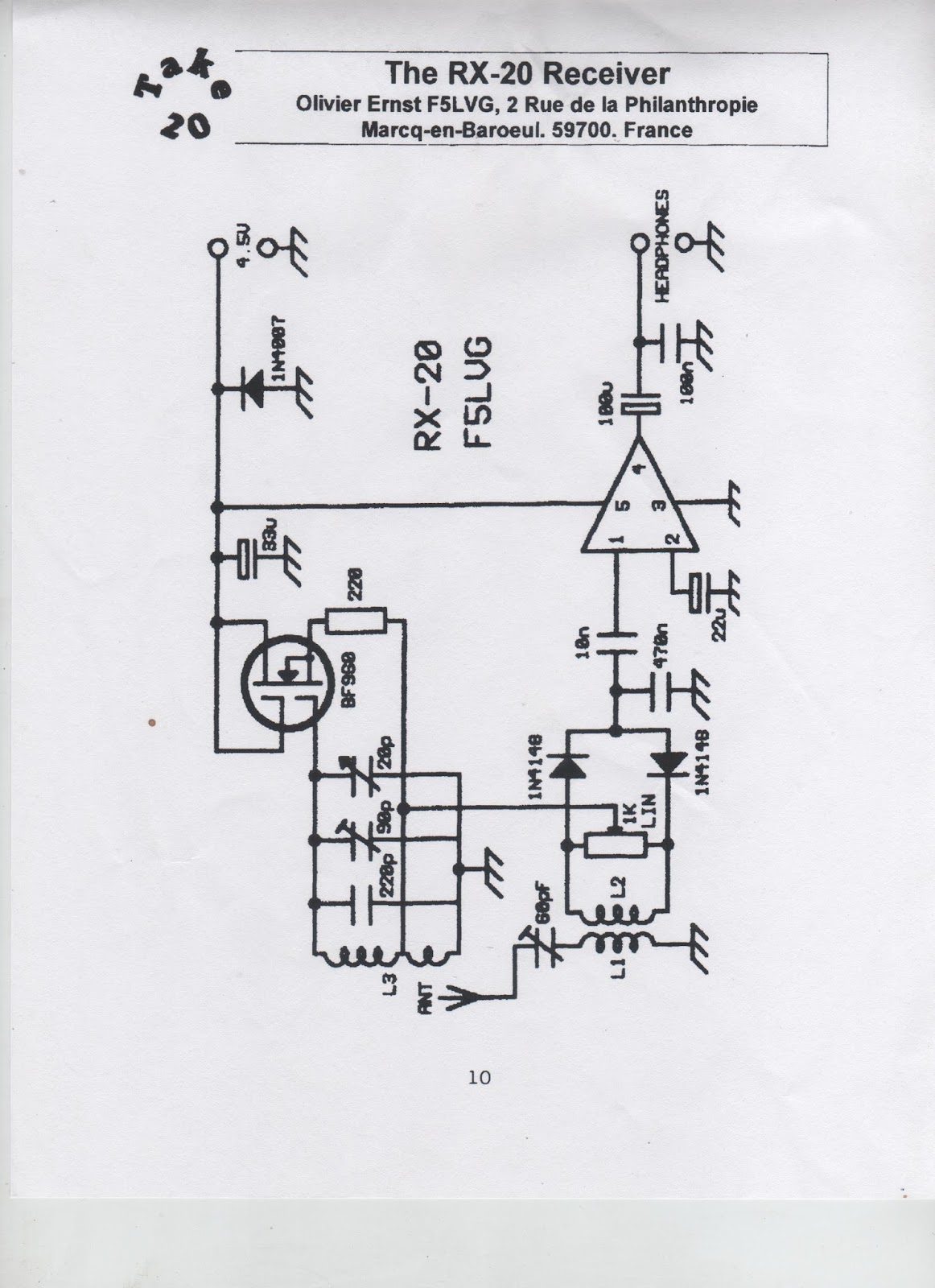
At first I used an FET detector described by Miguel PY2OHH. It worked, but at night the AM detection of powerful shortwave broadcast stations drowned out the amateur signals. So Joh and I started to explore detectors that would eliminate this problem. I went with a version of one described in SPRAT by F5LVG ( “The RX-20 Receiver”- see below). Very simple: A transformer to two back-to-back diodes with a 1K pot to balance the signal from the VFO. OM Olivier used a very, very cool transformer: he took two small, molded chokes and simply glued them together! 22uH choke as the primary, 100uH choke as the secondary. I went with one of the toroidal transformers that Farhan left me when he visited in May.

I’m using a varactor-controlled ceramic resonator VXO (no Si5351 in this one!) and a non-IC AF amp designed for use with ear buds (the world is awash in ear buds). It is a “singly balanced” design with the incoming RF signal being the one “balanced out” in the detector.

Last night the receiver passed the AM breakthrough test. The SW broadcast monsters were balanced out and kept at bay.

This morning the receiver passed The Boa Vista Rooster Detection Test. I fired up the receiver and heard an operator speaking Spanish with a Brazilian accent. When I heard the rooster crowing in the background I knew it was Helio PV8AL from Boa Vista Brazil. TRGHS — this little receiver is a winner.

I’ll try to post a schematic soon.

And hey — look at what wonderful IBEW (International Brotherhood of Electronic Wizards) project this is: Instigation and inspiration from Oregon. Some design ideas from Brazil. A French detector circuit described in a British QRP magazine. A transformer from India. A collaborator in Germany. And finally, the rooster of Boa Vista.

Let’s not forget Wes Hayward W7ZOI for bringing back (in 1968!) the neglected Direct Conversion idea.

K.P.S. Kang’s Speech Processor and Antenna Tuner for the BITX (and other rigs)

Check out the blog of homebrew wizard K.P.S. Kang. OM has a nice speech processor based on the LM386. He also has a very simple antenna tuner and SWR bridge. FB OM.

http://smallwonderqrp.blogspot.com/2017/08/two-essential-add-ons-for-bitx-and.html
International Brotherhood and the BITX Rigs

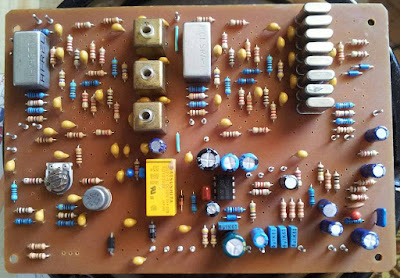
Bore and Heriberto’s uBITX board

Nowhere is the International Brotherhood of Electronic Wizards more evident than in the work on the rigs designed by Farhan. With the BITXs we see rigs designed in India that are now being built and modified all over the planet. Here are just a few examples of the global collaboration currently underway:

In Italy, Giuseppe is putting a BTX40 on 20 meters and making it a dual bander:

Hi everyone, I just completed some tests on a Bitx40 running in 20 meters band. I addes the 20 as secondary band activate when needed. I apply some mods to switch to secondary QRPLab BPF filter centered to 20 meters and removed the C91 and C92 caps to work in USB. I done some RX tests in the weekend of iaru hf contest to listen some stations Active.
Here the issues registered:
1) the 20 RX sensitivity was a bit weak compared to 40 meters. I need to increase volume. ( To receive the 20 meters the vfo run to 26 MHZ, mybe some stage suffers of poor performance in this High frequency?)
I also tryed to increase the vfo over maximum allowed by raduino, using external buffer, but no results.
Please read the issues as: work but could work better!
2) the RX was not very clean: voice acceptable, but RX of Digital mode not very stable ( probably the cause could be the vfo shift for poor tuning control. I need to add lock function in firmware …) Or interferences for free wire of connection.
3) Sometimes when switch on or change vfo to other band or mode, the bf amplifier start a self oscillation …Resulting in my wife’s screaming (the tests were also performed during the night!)
No tests was performed at the moment in TX because i need to install the LPF for the new band.
The firmware to make the test was a modified version of 1.17.1, few temporary mods to preset the vfo b to 14 MHz USB and correct the freq. Display.
These my tests.
Giuseppe Callipo IK8YFW.
Pavel is a young fellow in Cuba who is doing great things with the Raduino software:

My Photo

Hi to all.
The code was updated, the change log is this:
v1.4Update to catch up with the features added in the Raduino v1.17.1 from Allard’s code (CW SPOT and bug fixes)
  • Upgraded the operations instructions
    • More user friendly version with embedded images.
    • Add instructions for the S-meter, AGC and TX-power mods details and tricks.
  • Moved all images to its own folder “images”.

As usual tips/bugs/comments/suggestions are welcomed, you can reach the code here: https://github.com/pavelmc/bitx40/

There is a inoffensive bug in the calibrate process, in which the actual calibrate value is not correctly showed in the LCD until you move the pot to adjust it, I’m working on it.
I’m slowly working in this direction now:
  • Bug removal in the calibrate function.
  • Finish the upgrade of the Si5351mcu lib with some improvements.
  • Adding CAT support via ft857d lib (https://github.com/pavelmc/ft857d):
    • Full compliance needs get rid of all the blocking delay() sentences and that need a structural/paradigm code change and a lot of testing (I have Fldigi/MixW/Hamlib to test, I think if that 3 works the rest will do it)
    • Moving to a library (yatuli: https://github.com/pavelmc/yatuli) for the pot usage, that will ease the process of implementing the CAT as almost all delay() calls are related to pot/clicks, so I’m on it.
    • Maybe implement a multiclick lib to optimize the code and make it more easy to understand.
Any thoughts or whishes related to that?

I plan to make the CAT operation optional via a #define declaration as not all of us will/want-to use that.
73 Pavel CO7WT


Here we see Bore in Montenegro working on a uBITX designed in Cuba by OM Heriberto
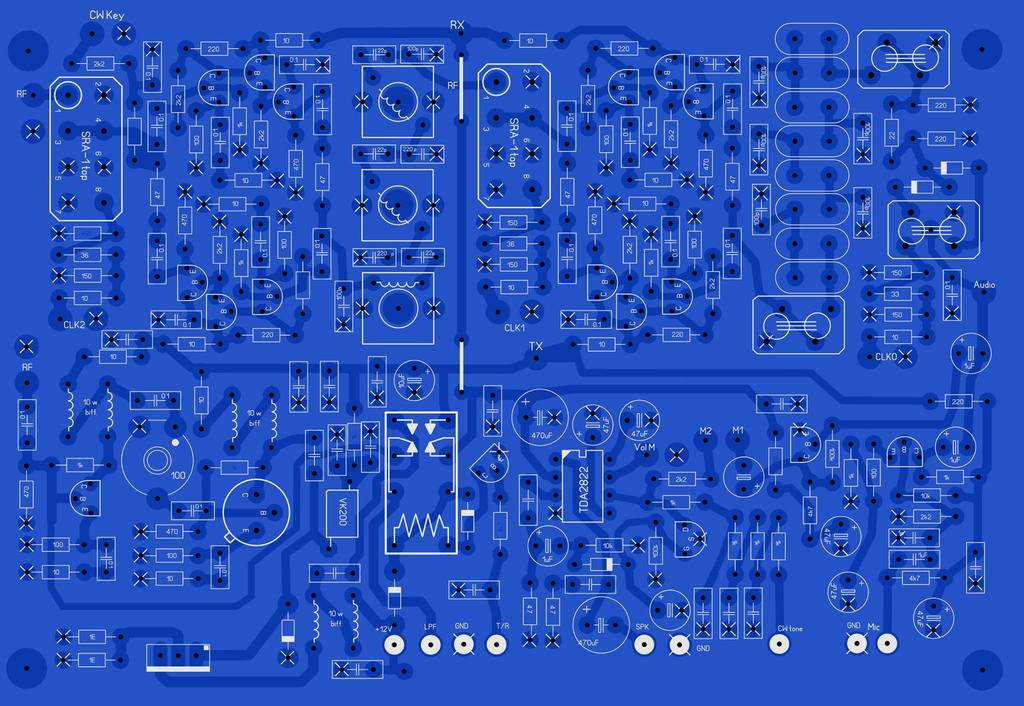
Hi Colleagues
Bore Lezaic from Montenegro is working on the uBitx PCB designed by Heriberto -CM2KMK- from Havana, Cuba
Here some pictures he(Bore Lezaic) have posted in my FB wall.
Any question regarding uBitx PCB please send to Heriberto Gonzalez Mendoza at cl2kmk@frcuba.cu (please take care with the email address it is slight different to his actual call sign).
Qrv’s
73’s Jc

Bore and Heriberto’s Board

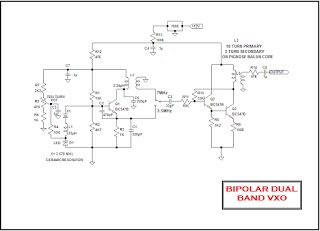
Hidehiko in Japan was struggling with some LCD noise in his experimental BITX40. I passed along the active filter circuit that I’d first seen in Roy Lewallen’s Optimized QRP rig.
To
BITX20@groups.io Jul 29 2017 at 4:22 AM I’ve finished the Bitx40 experimental project today. I added the AF-AGC and LM386 POP limitter with raduino v1.20.1 (Thanks Allard). And I also added the DuinoVOX for Digital Mode operation. It’s a great radio but the problem is only the “LCD noise” when increasing the AF volume. hi… Can I reduce this noise? Or I have to use the analog VFO? Any suggestions welcome.
ja9mat Hidehiko
To Hidehiko JA9MAT:
Very simple. Just three parts. NPN transistor (like a 2N3904) and a 47k resistor (collector to base) 100 uF cap (base to ground). Vcc the collector. Emitter goes to the DC power input of the AF amplifier. You can see my use of this circuit in the schematic in this blog post:
Look in the lower right, near the LM386 AF amplifier. Click on the schematic to enlarge. 73 Bill N2CQR
Thanks Bill,
Well I added “3-parts”(2N3904+47kohm+100uF) between the D18(1N4148) and the junction of R111(100ohm) and R1113(220ohm). The noise has absolutely gone!
ja9mat Hidehiko.

_._,_._,_

Video: Farhan in the SolderSmoke Shack! BITX, JBOTS, McDonald Straw Sig Gen, uBITX, Sweperino and more!

Thanks again to Farhan for visiting us. It was great to see his reaction to my humble implementations of his great designs. I got him to sign my BITX17. This was really a fantastic day for me and for my family.
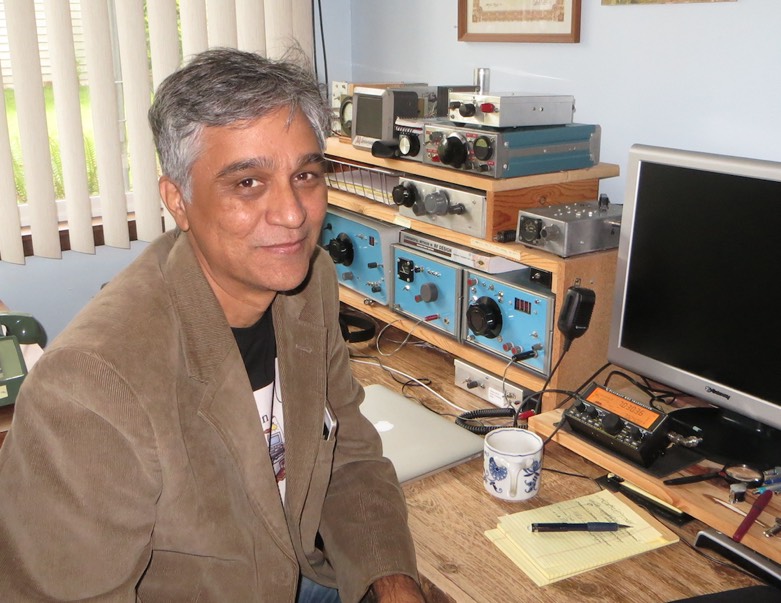
Homebrew History is Made: Farhan @ W7ZOI

Thanks to Wes W7ZOI for sending me the link to his page describing the visit of our friend Farhan. I think this visit was a historic gathering of homebrew heroes and their groundbreaking rigs. Read all about it here: http://w7zoi.net/Farhan-visit.html


Please help me convince Farhan to visit SolderSmoke HQ before returning to India! Send him (or me) e-mails, texts, tweets, or just post messages of support below this post.