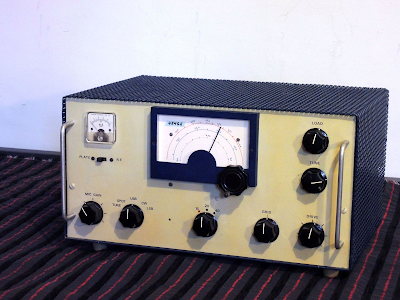
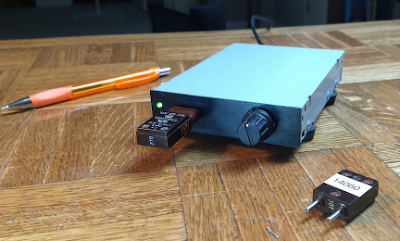
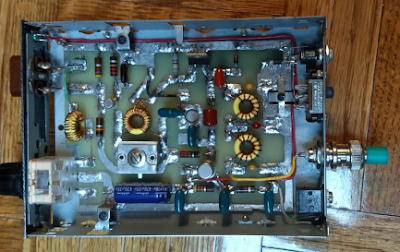
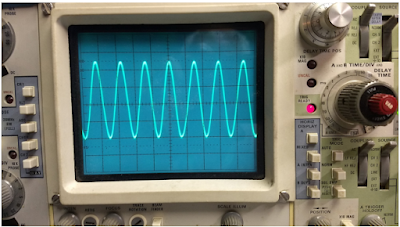
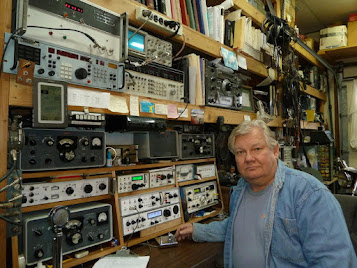
4Z4GE’s Homebrew Tube SSB Transmitter from Israel, 1974

https://www.nzeldes.com/Miscellany/SSB-rig.htm

Very cool. I like his description of how he found parts for this transmitter:

The power amplifier tubes needed ventilation as well as shielding; that was always a challenge because I had no good source of perforated metal. The black sheet with the round holes actually came from the cover of a car air filter that I found in the trash.

There is a lot more interesting stuff on Nathan Zelde 4Z4GE’s site:

https://www.nzeldes.com/possiblyinteresting.htm

Thanks Nathan!


A Message from Walter KA4KXX — On Bias Setting, the Joys of Al Fresco Rigs, Lawn–Sign Radio Base

Dear Dean KK4DAS:


3) Note that a rule of thumb I have used successfully in adjusting RF Power MOSFET
bias is to increase the voltage in 100mV steps, measuring the RF Output Power
each time, and stop as soon as you start to see significantly diminishing returns.

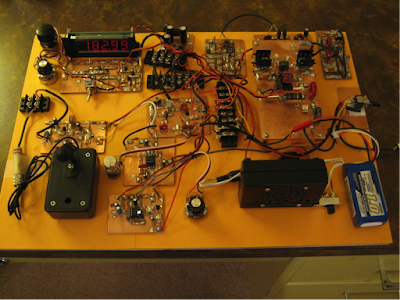
4) Although I did mention a plexiglass cover (the idea was from the Electroluminescent
Receiver in photo below) in a 2017 entry I made on my QRZ page, I never built one, because I have found a cover of any kind to be unnecessary and even detrimental based on operating portable outdoors in a public park with my rigs once every month for 10 years.

From these experiences I have enjoyed the wonderment and respect I have received
from fellow hams as well as passersby who have universally admired my creations.
If the truth were known, my homebrew Alfresco transceivers might be the most
photographed radios in all of ham history!

Therefore, the only box I bring to my ham radio outings is for my lunch, because nobody
really gets excited about photographing just another box.
However, I do use plastic carrying cases per the photo for any rigs I carry
in the trunk of my car. If it rains, the top of the carrying case can be used as a
temporary cover, so I know contacts can be made in a light rain because I have done it.
[Of course, credit card hams are not capable of operating portable even on a cloudy day
or their $$$$ radios would suffer from high humidity disease and need to be sent
back to the offshore factory for $$$ refurbishment!]

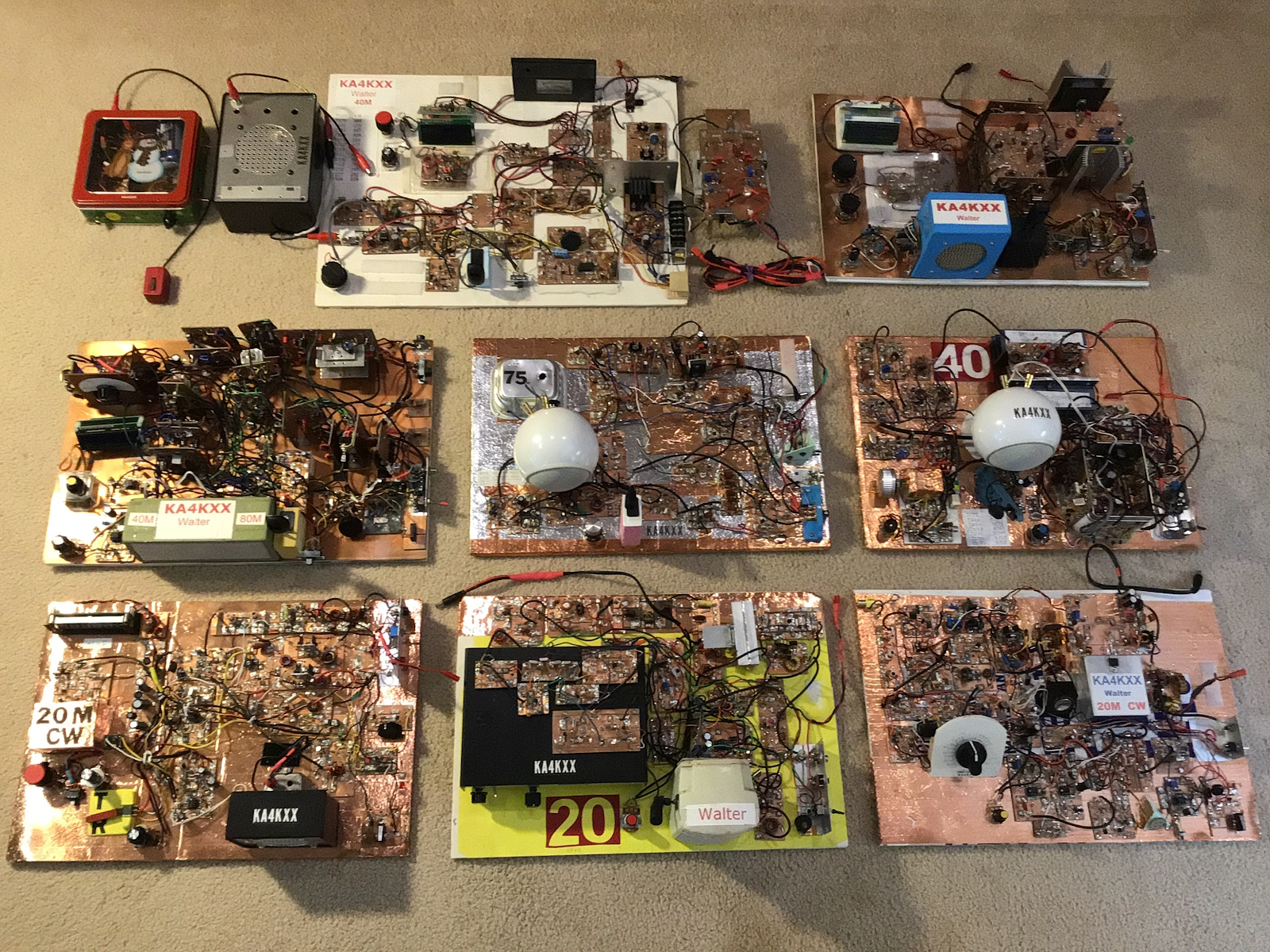
5) Lastly I will mention that I have never used any type of wood for a radio base because
wood is too heavy (and 1/8 inch aircraft plywood is too expensive), and the strength of
wood is not necessary to support a measly 5 pounds of electronic parts.
Instead, per the photo, I have used Coroplast yard sign material (usually two sheets
with the channels crosswise then taped or glued together with the top covered using copper tape) common school science fair poster board, or good heavy duty cardboard such as from a TV set box.

Either light or heavy-duty double-sided tape and 4-40 or 6-32 nuts, bolts, and washers (sometimes oversized) are used to hold everything on board. Occasionally L brackets, standoffs, hot glue, and foam or balsa wood support pieces are also utilized.

In summary, keep up your good work as the new star on the Soldersmoke Podcast and
please be certain Bill pays you as much as Pete.

72,
Walter
KA4KXX
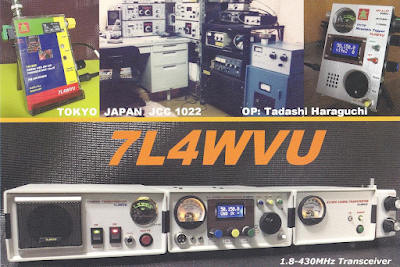
Amazing Homebrew from Japan — 7L4WVU’s All Homebrew Station

Thanks to Roy WN3F for alerting me to this. Tadashi-san has really built some beautiful stuff. Especially impressive to me is his use of the spectrum analyser and two-tone audio tests to look at IMD of the entire transceiver. See video above. FB OM.

Be sure to check out 7L4WVU’s YouTube channel:

And his QRZ page heralding his all-homebrew station covering 1.8 to 430 MHz: https://www.qrz.com/db/7L4WVU

W4YWA’s Homebrew Rig on 20 Meters

Ed W4YWA is far too modest — he has built a very FB homewbrew transmitter. Congratulations Ed. I think your original plan to use a Web SDR receiver will work, if you and the other station are just willing to pause for an additional second or two to let the internet catch up with the real world. Also, you might find some Web SDRs that have less latency than other. You could used a little SW receiver or a simple buzzer for your sidetone ( I think sidetone is your most pressing latency concern.) My suggestion is to try to get a few contacts using the Web SDR (perhaps via schedule — try the DX Summit or the SKCC web page to set some up). Then build yourself a simple Direct Conversion receiver to use with this rig. You don’t have to try to build a VFO at 14 MHz (that can be difficult) — you could build one at 7 MHz (use the circuit from our High School receiver project) and pair it up with a “Subharmonic Mixer” so that you can tune the 20 meter band. Please keep us posted on your progress.

Ed writes:

Home-Brew Fun and Failures


I’m not much of an amateur radio operator, but I enjoy the electronics, self leaning, and the home brewing aspects of our hobby. Here’s an account of a recent effort. While trying to re-learn CW, I discovered web-based SDR sites with waterfall displays, all kinds of filtering and better performance than any of my vintage station receivers. So, I start thinking….. if I had a little transmitter and a simple antenna, along with internet access, I’d have a capable station to take on vacations to the beach. Yes I know, there are web based amateur radio stations, but remember the operative words here are: “Home Brew.” After pinging the Google machine, I came up with a two-stage 1-1/2 watt transmitter sometimes refereed to as the “Universal QRP transmitter,” or the “Little Joe Transmitter.” There’s lots of variations of this circuit but it is essentially a Colpits crystal oscillator coupled to a class-C PA. I chose 20 meters because I didn’t want to hire an arborist to string my antenna. My design modifications included a transistor switch that keys both the oscillator and PA, a VXO circuit, power transistor protection, and a 5-th order Chebychev low pass filter.

Notice the (do I dare say, good looking?) enclosure. In a former life, it was a SD card reader from a defunct PC. FYI, gutted CD/DVR drive cases also make fine enclosures for your home brew projects. I opted for a “foil side up – without holes” for my PCB design. All the parts are soldered down on the lands – no PCB holes. I wanted to change parts without having to do open heart surgery. Functional placement was also important to me. I took more time than I’d like to admit to organize the circuit layout as I did, but I’m glad I did.
When all was said and done, it was time to power it up and….. and …. nothing! Not a single function worked! I won’t bore you with the debug stories that took forever, but the only part I didn’t have in my junk box was the PA transistor. I got 10 of them for $5 off the Internets and they all failed to deliver. I could only get a few tenths of a watt from my design. In a fit of desperation, I un-soldered a PA transistor from an old CB radio and it immediately gave me 1.8 watts of pure CW ! ! ! ! Happy dance, happy dance! But, save your accolades. There were lots of other problems; they were my problems not component issues. For example, before you design your own RF filter be sure you understand cutoff frequencies. They are not the same for every filter design. I suggest Paul Harden’s NA5N site to learn about PA output filters. My first few filter attempts had the transmit frequency well down on the attenuation curve. I was attenuating my own signal ! So, after weeks of “why don’t the damn thing work,” I got a clean signal. Whoo-Hoo!
Now it was time to unshackle the dummy load and see where I can be heard. And, Oh boy… I’m beaming into Pennsylvania, Georgia and Northern VA, all from an inverted V on a tripod mounted paint stick, held apart with two tent stakes. But then, reality took over. My grandioso plans for using the web-based SDRs as a station receiver (and the side tone oscillator for my transmitter) didn’t account for the latency delays of the SDR software. If you ever listened talk radio and the host says, “Turn your radio off – the delay will make you sound like a ….” you know what I’m talking about. You would think that someone who over thinks everything, would have foreseen this issue before spending countless hours of breathing solder fumes? Humility and eating crow are my better traits. But not to worry, I’m not ready to give up. Stay tuned for more adventures of Home-Brew Fun and Failures.

73s W4YWA

We Get Mail! Red Poster? Really a Tapestry from Ecuador

Listener Tobias was laid up yesterday, following the extraction of wisdom teeth. (This seems like an appropriate follow-up to our talk in SolderSmoke Podcast #250 of sBITX “wisdom files” to correct FFT “hallucinations.”) Tobias does not appear to have been hallucinating, but he was having trouble seeing what he thought to be a “red poster” in my shack.

In fact, what he was seeing was a red tapestry from Ecuador that was sent to me by Galo Constante HC1GC way back in 1993. I was in the Dominican Republic, running my first ever real homebrew transmitter. Here is an article about this project: https://www.gadgeteer.us/TXHB.HTM I think Galo was also QRP homebrew. My log shows that I worked him eight times from the DR.

Mitad del Mundo = Middle of the World (a reference to the equator).

Here is the QSL I got from Galo:

Here’s a 2022 blog post about a resurrection of this old rig:
Thanks Tobias for spotting the HC1GC tapestry and reminding me of some great QRP contacts. I hope you feel better OM. 73 Bill