73 Bill
Category: Hayward–Wes
Direct Conversion (videos)
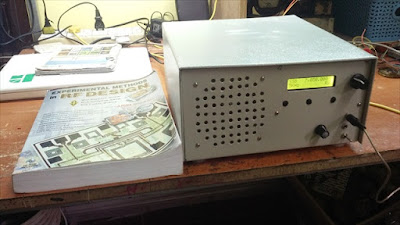
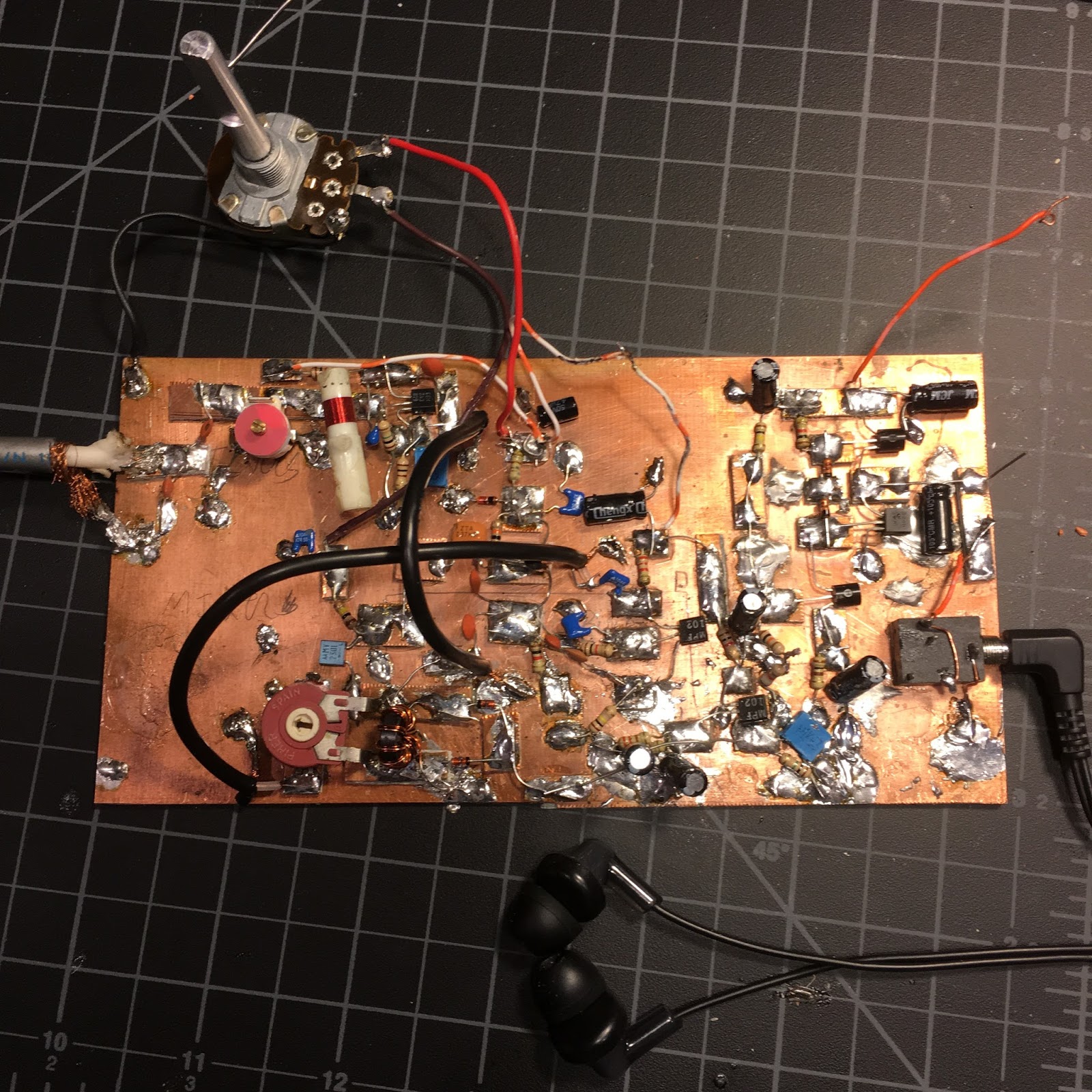
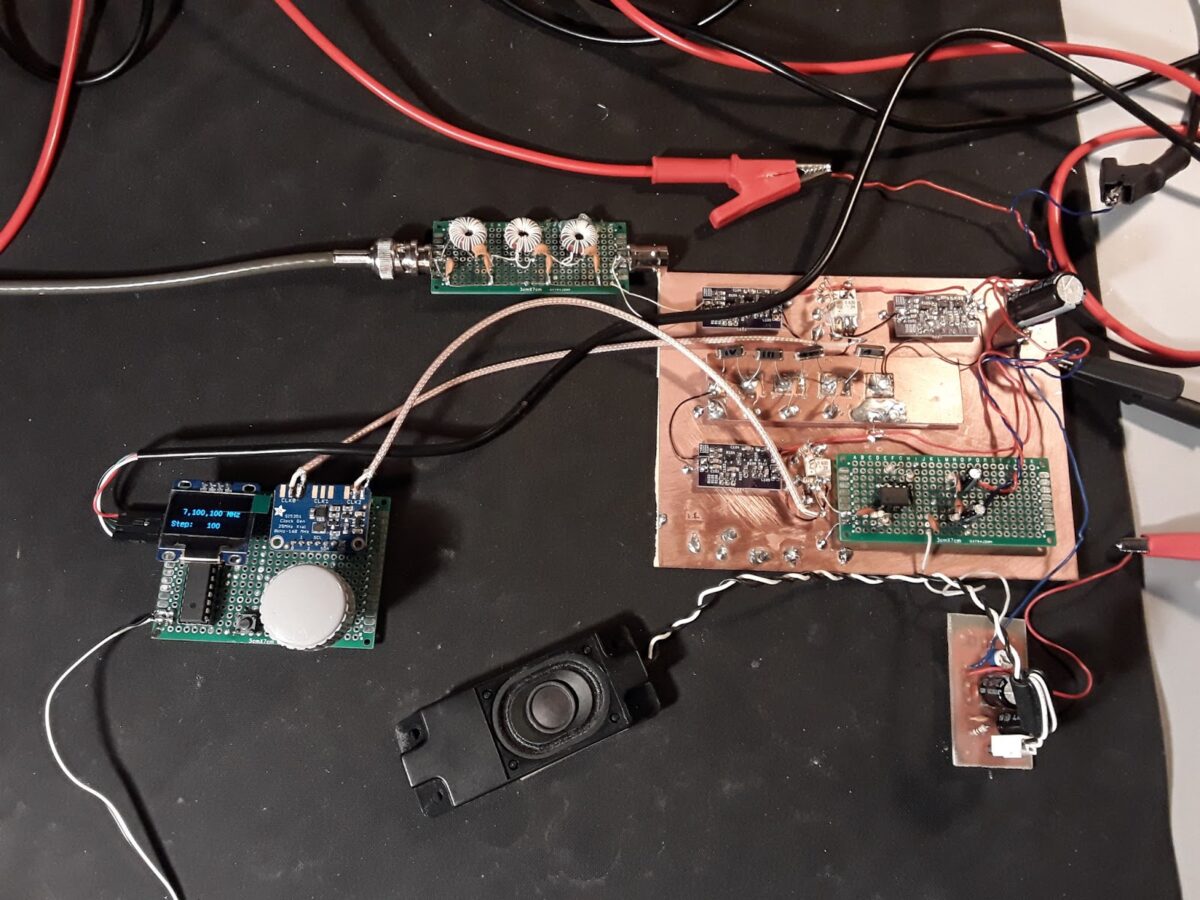
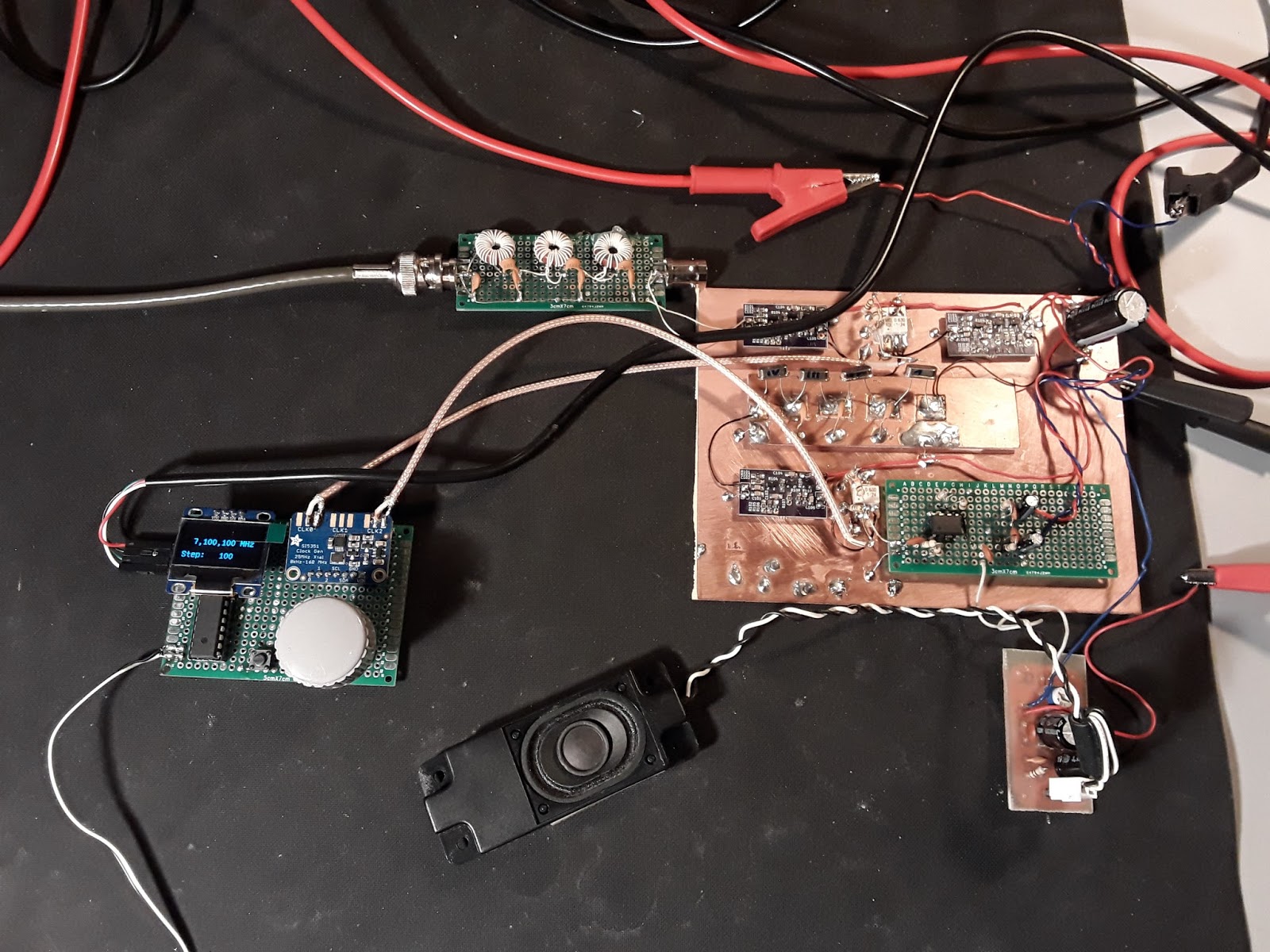
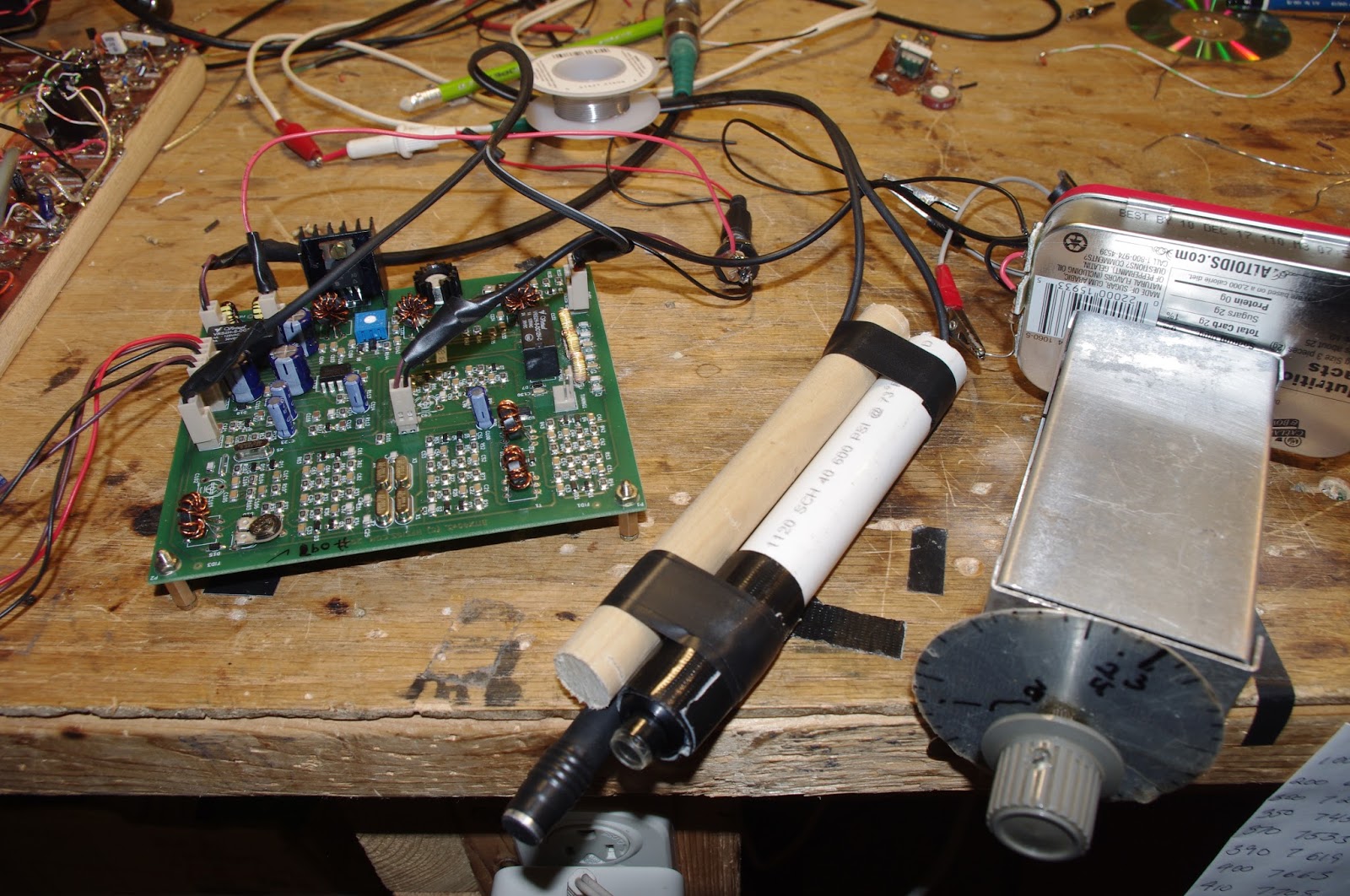
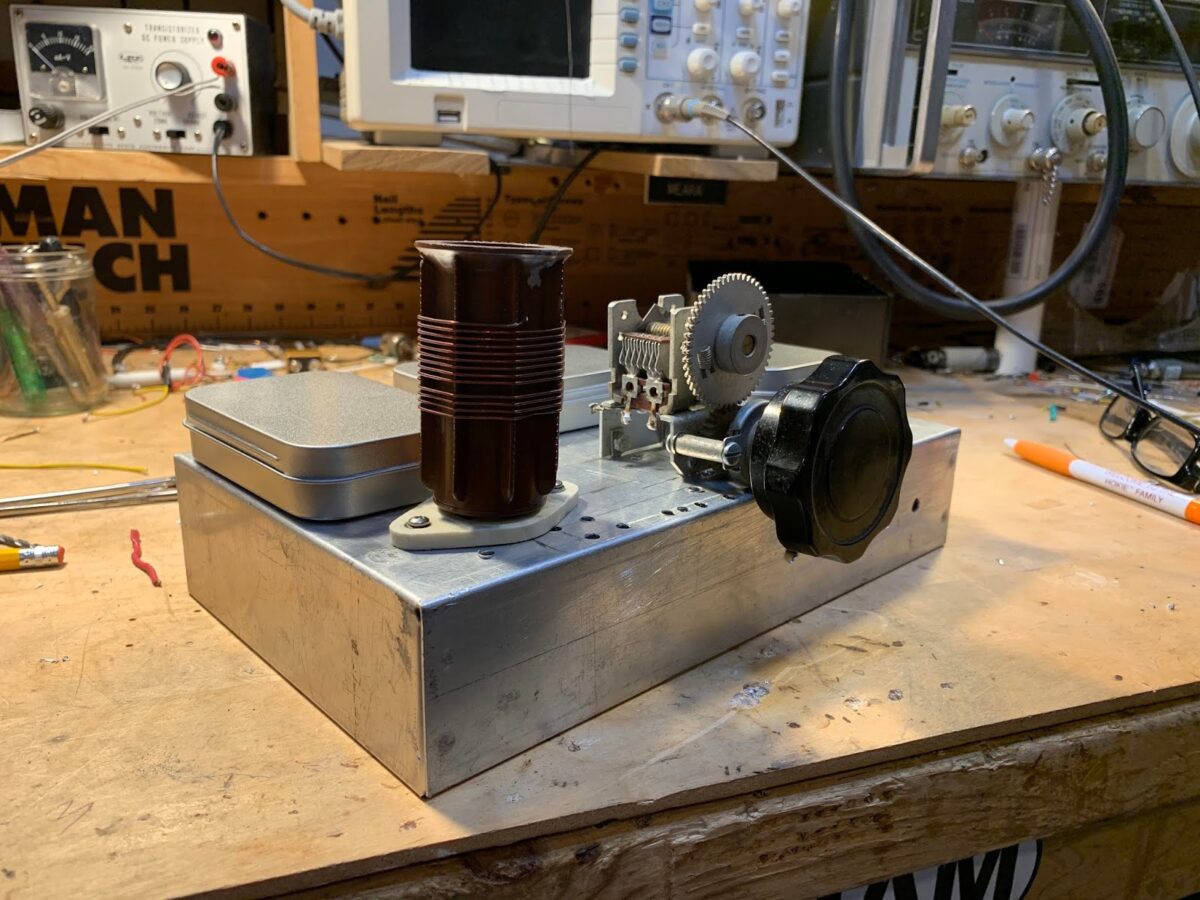
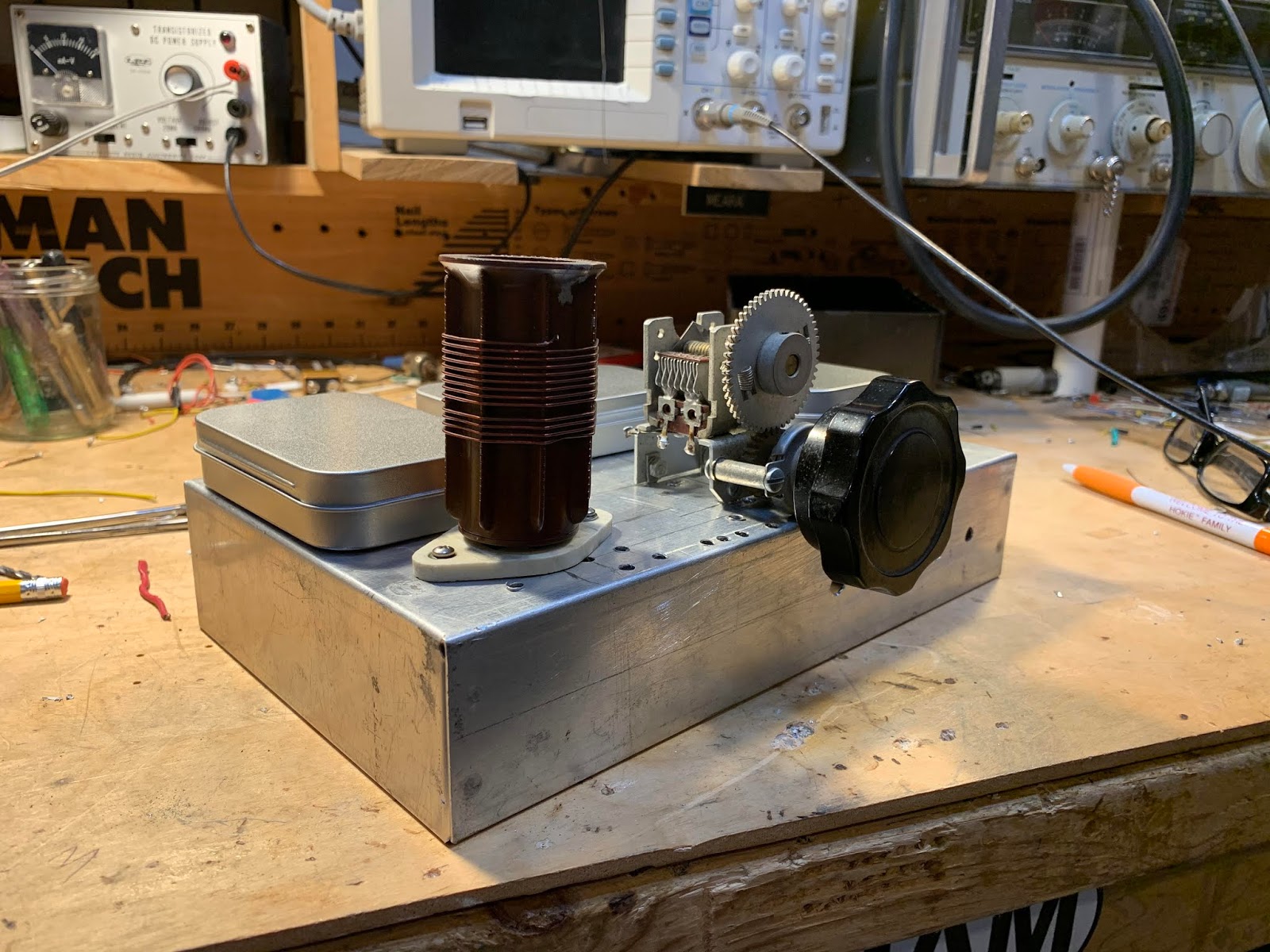
Here are a couple of videos from 2017 (never posted before). I built a little 40 meter Direct Conversion receiver for my nephew John Henry.
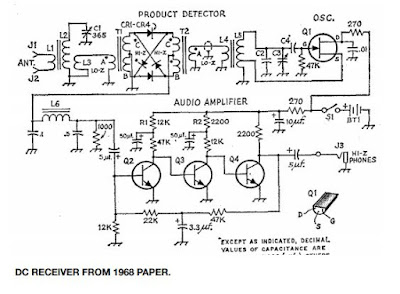
Whenever we work on circuitry like this, we should be be grateful for Wes Hayward W7ZOI who, in a 1968 QST article, reminded us of this important but until-then forgotten technique.
More information on this project appears in these links:
https://soldersmoke.blogspot.com/2017/10/a-direct-conversion-iphone.html
https://soldersmoke.blogspot.com/2017/11/iphone-direct-conversion-receiver-with.html
KC1FSZ’s Peppermint III Homebrew BITX with Mods
Bruce KC1FSZ
W7RLF Homebrews a Receiver — FB!
Ryan W7RLF has joined the small and elite group of radio amateurs who have homebrewed a receiver. And it is a receiver filled with soul, juju and mojo; the project was inspired by Wes Hayward and Farhan, and used components from Hans Summers. Congratulations Ryan and thanks for all the work you did in documenting your experience.
Who will be the next intrepid ham to join the homebrew receiver club?
Hello Sirs!
W7ZOI: Direct Conversion Receivers — Some Amateur Radio History
http://w7zoi.net/dcrx68.pdf
Farhan and Pete WB9FLW alerted me to this wonderful article by Wes Hayward, W7ZOI. I guess my interest in DC receivers must have been noticed by the Google algorithm because I am bombarded by ads extolling the virtues of “Zero IF.” Hey Google — I’m already a believer! I was converted by W7ZOI’s 1968 article in QST. And my belief in the technique has been greatly reinforced by his November 2018 50th anniversary article.
There is so much good stuff in Wes’s look-back piece. The travails of trying to write for QST are presented very well. And we learn that none-other-than Doug DeMaw himself is responsible for the use of the word “presence” in describing amateur radio audio.
This article has inspired me to take a new look at the DC receiver I built last winter. Mine needs some work. I think it is kind of deaf. It could probably benefit from a diode ring detector. But it already has presence.
http://w7zoi.net/dcrx68.pdf
Thanks Wes. And thanks to Farhan and Pete for the heads up.
VU3XVR’s EMRFD TIA HB TRANSCEIVER

Ram did a beautiful job on this 40 meter rig. You can read about this project here:
https://vu3xvr.blogspot.com/2018/10/homebrew-5-watts-cw-transceiver-using.html
Jeff Damm WA7MLH on QSO Today

Happy New Year!
There was so much wisdom and tribal knowledge in Eric Guth’s interview with Jeff Damm WA7MLH. It was almost overwhelming.
You should all listen to it. Twice. At least twice:
https://www.qsotoday.com/podcasts/WA7MLH
My notes:
— I sympathize with Jeff’s decision to go solid state and give up on high voltage after an encounter with an undischarged 600 volt capacitor.
— I really like the 1700 kHz IF with a 5 MHz VFO for an 80 and 40 meter receiver.
— Interesting that EE degree didn’t help much in his efforts to understand ham gear. Better to read Wes’s books and Doug’s.
— Tek Spectrum Analyzers were specially made to fit down a submarine hatch.
— Building and measuring just as important as studying the theory. Inked-up text books.
— Learned ugly from Wes as a teenager.
–Searched for old commercial gear to gut and use as homes for homebrew solid state gear. The enclosures, panels and controls are very useful. Great way to avoid metal work. These rigs are no longer boatanchors! Again, I sympathize. I’ve sacrificed many Heath Lunchboxes and QF-1s.
— Jeff Builds the VFO first. My preference too. But he understands Pete’s AF-first approach.
— Finger on the input of the AF amp! Buzz! Yea! Step your way back to the front end.
— ALWAYS one stage at a time.
— Osh Park Boards for standard circuit modules. Like Legos.
— Cubic Feet of air variables. Jeff has a lifetime stash.
–Thinking about what was and should have been his section of EMRFD. Go for it Jeff. PLEASE!
— Hesistant about chips. Analog guy. Would have been a huge time sink. Analog guy.
— Buying parts on e-bay. Fewer and fewer RF parts at hamfests.
— People reading QST Tech Articles for entertainment. Editor apprach: “Nobody will build it anyway.” Handbooks giving priority to entertainment and less to information and education.
TRGHS: I Can Hear the Roosters of Boa Vista
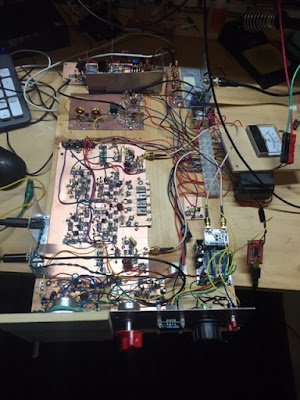
At the instigation of Bob N7SUR I’ve been working on a simple, easy-to-reproduce Direct Conversion receiver for 40 meters. I’m building this for my nephew John Henry, and I’m hoping this will be a circuit that others can use to break into the ELITE corp of successful ham receiver builders. Coincidentally Joh in Freiburg Germany is working on a very similar project — we have been comparing notes.
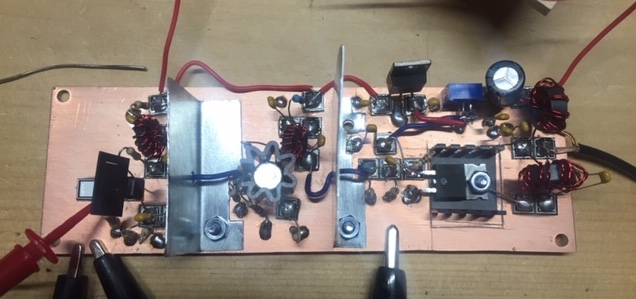
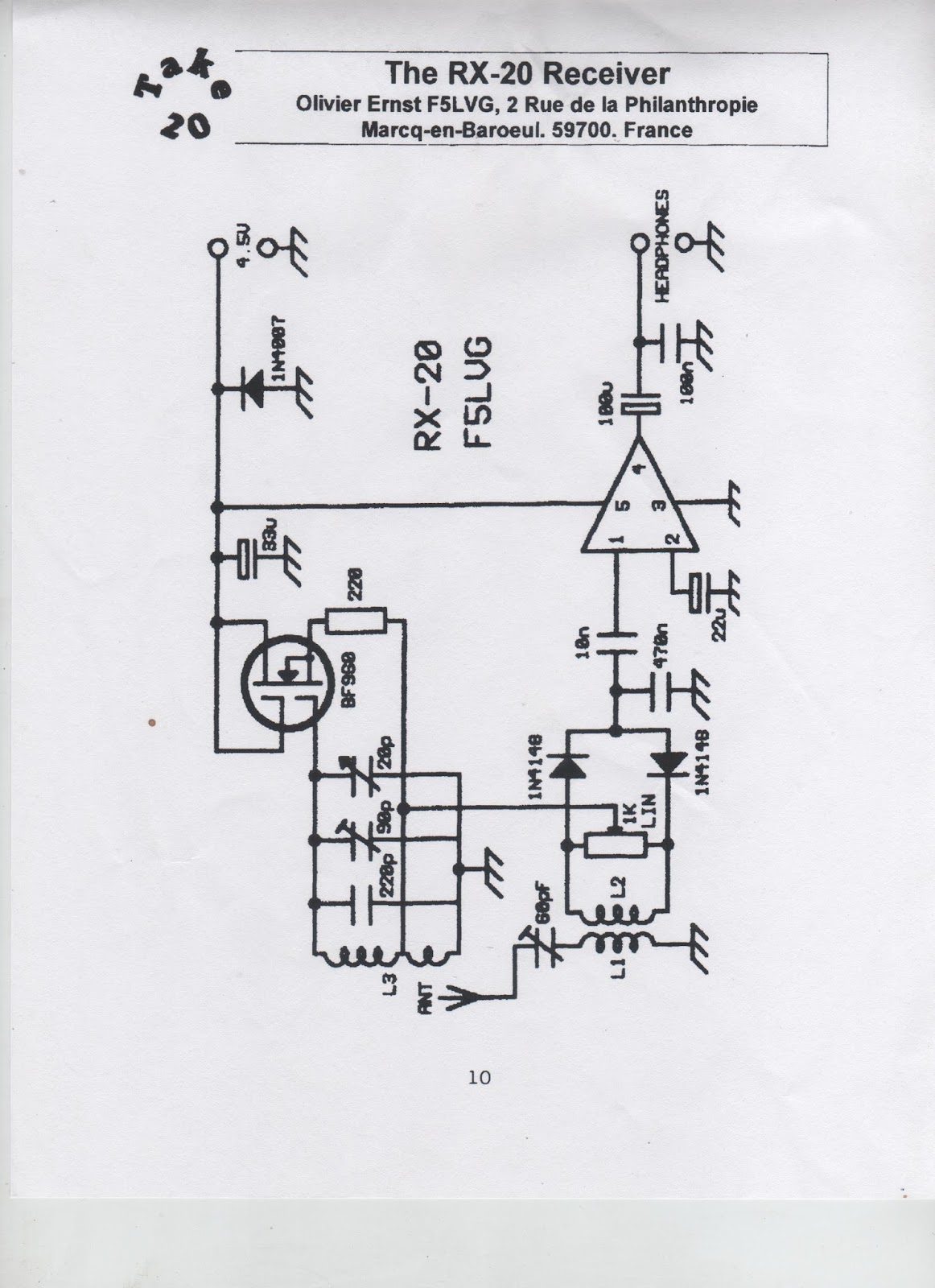
At first I used an FET detector described by Miguel PY2OHH. It worked, but at night the AM detection of powerful shortwave broadcast stations drowned out the amateur signals. So Joh and I started to explore detectors that would eliminate this problem. I went with a version of one described in SPRAT by F5LVG ( “The RX-20 Receiver”- see below). Very simple: A transformer to two back-to-back diodes with a 1K pot to balance the signal from the VFO. OM Olivier used a very, very cool transformer: he took two small, molded chokes and simply glued them together! 22uH choke as the primary, 100uH choke as the secondary. I went with one of the toroidal transformers that Farhan left me when he visited in May.
I’m using a varactor-controlled ceramic resonator VXO (no Si5351 in this one!) and a non-IC AF amp designed for use with ear buds (the world is awash in ear buds). It is a “singly balanced” design with the incoming RF signal being the one “balanced out” in the detector.
Last night the receiver passed the AM breakthrough test. The SW broadcast monsters were balanced out and kept at bay.
This morning the receiver passed The Boa Vista Rooster Detection Test. I fired up the receiver and heard an operator speaking Spanish with a Brazilian accent. When I heard the rooster crowing in the background I knew it was Helio PV8AL from Boa Vista Brazil. TRGHS — this little receiver is a winner.
I’ll try to post a schematic soon.
And hey — look at what wonderful IBEW (International Brotherhood of Electronic Wizards) project this is: Instigation and inspiration from Oregon. Some design ideas from Brazil. A French detector circuit described in a British QRP magazine. A transformer from India. A collaborator in Germany. And finally, the rooster of Boa Vista.
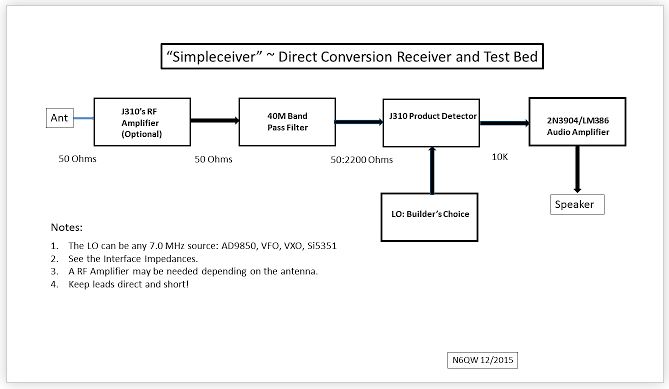
The Return of Pete’s Simple-ceiver Plus (and a possible analog option)
Winter is approaching ladies and gentlemen, and it is time to think about radio projects. Bob N7SUR suggested a direct conversion receiver project. I think this is a great idea. As a kid, I had fallen victim to the idea that building receivers was “too hard” for radio amateurs. Not true! DC receivers to the rescue! Carry on with the DC revolution first launched by Wes W7ZOI in 1968.
Pete N6QW is providing guidance and tribal knowledge via his blog. For those of you who want to join the ranks of those who have defied the conventional wisdom and have broken through the “receivers are too hard” barrier. I say build yourself a DC receiver. Build it from scratch. Many of you already got your feet wet in homebrewing with the Michigan Mighty Mite project. Now it is time to jump into a DC receiver project.
You folks already know what kind of VFO Pete will prefer: It will be an Si5351. That’s fine. But I will try to keep the banner of discrete component analog ludite-ism flying high. This morning I ordered a batch of 7.37 MHz ceramic resonators. I hope to pull them down into a significant portion of the 40 meter phone band. If this works, I will share the batch with anyone who wants to joining my Analog Army (remember the CBLA?). Note (above) that Pete has magnanimously left open the possibility of using a non-digital VFO. What a guy!
Check out Pete’s project here:
http://n6qw.blogspot.com/2017/08/a-new-line-of-transceivers-difx_19.html
SolderSmoke Podcast #197: Farhan, Fame, ‘Fest, Testgear, SSB History, Dishal Dystopia, QRP CW, MAILBAG
![]() |
| AI4OT and N2CQR |
![]() |
| N2CQR AND W2DAB |
Video: Farhan in the SolderSmoke Shack! BITX, JBOTS, McDonald Straw Sig Gen, uBITX, Sweperino and more!
Thanks again to Farhan for visiting us. It was great to see his reaction to my humble implementations of his great designs. I got him to sign my BITX17. This was really a fantastic day for me and for my family.
Homebrew History is Made: Farhan @ W7ZOI
Thanks to Wes W7ZOI for sending me the link to his page describing the visit of our friend Farhan. I think this visit was a historic gathering of homebrew heroes and their groundbreaking rigs. Read all about it here: http://w7zoi.net/Farhan-visit.html
A Slovakian Al-Fresco Digi-Tia Homebrewed In France (and an improved AD9850 VFO)
Thanks for the podcast! My normal occupation is more computers and
software but your podcast got me motivated to melt some solder. So I
want to share a bit of what has been cooking on my bench.
I used to have a Yaesu FT-450 but sold it – I am living in a tiny rental
apartment in France without any place where to put a proper antenna so
it was only collecting dust. And where is the fun in operating a
factory-made rig, right?
So I have been working on this instead:
http://janoc.rd-h.com/archives/541
This “al fresco” rig is “half-DigiTIA”. Half because there is no
transmitter part (I don’t have a French license and I am too lazy to do
the paperwork and convert my Slovak one). The purple modules are TIAs,
as designed by Wes Hayward, using 3x 2n3904s, only built using SMD
components to keep them small and tidy.
VFO & BFO are Si5351 + ATMega328, with an OLED module and code adapted
from Pete N6QW. It uses 11.997450 MHz IF because that’s where most of my
12MHz crystals actually matched.
The 40m bandpass filter is taken verbatim from the BitX 40 design – I
have only changed the coils to use toroids instead.
For audio I have used LM386 with a NE5532 opamp as a low noise preamp
because the audio was a bit low. The TIAs don’t have a lot of gain and I
have only an indoor magnetic loop for antenna so had to compensate for it.
I have another, a bit older project that became quite popular – firmware
for the AD9850 DDS VFOs using an Arduino and a character LCD. It is a
much improved replacement for the one from Richard, AD7C.
http://janoc.rd-h.com/archives/502
Perhaps it could be useful to someone.
Keep up the good work and 73!
Jan OM2ATC (at the moment “in exile” in France)
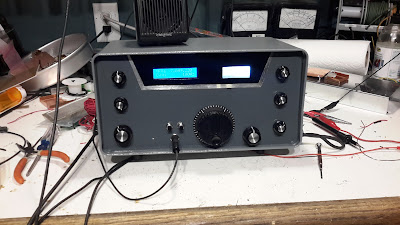
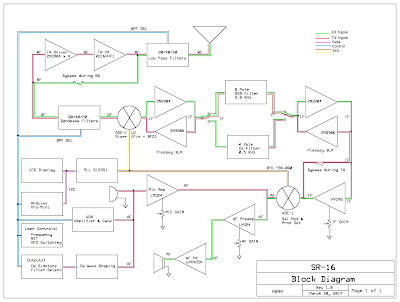
N8NM’s SR-16 Hallicrafters Tribute RIg
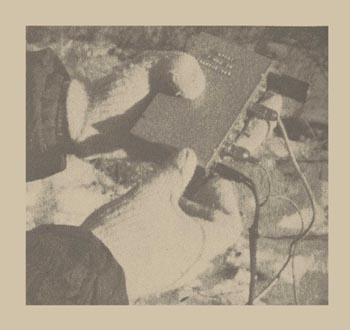
From Mountaineer to the KX1 — N6KR on Trail-Friendly Rigs
This is from 2014, but I stumbled upon Wayne Burdick’s article just this morning. Great stuff. That picture of Wes had a big impact on many of us.
Wayne’s article:
http://www.elecraft.com/KX1/N6KR_KX1_History.html
SolderSmoke Podcast #191 RIGS! REAL RIGS!, BITX40 Module, EMRFD, MAILBAG
SolderSmoke Podcast #191 is available:
http://soldersmoke.com/soldersmoke191.mp3
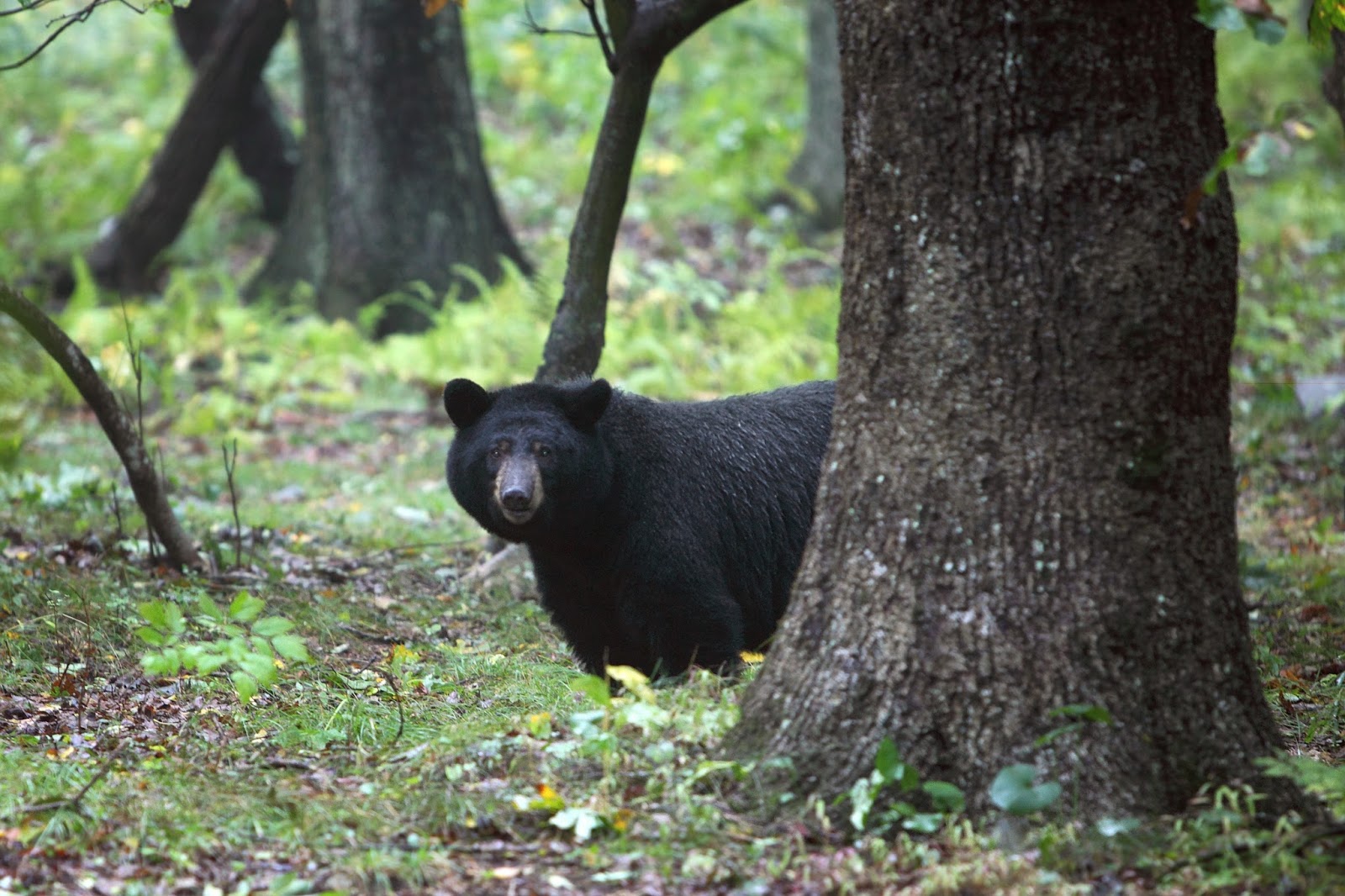
TRAVELOGUE AND FAMILY DOINGS: Pete son’s wedding, Billy’s Birthday, Gonzalo safely home in the Dominican Republic, MORE BEARS IN THE SHENANDOAH WOODS
Hacking the Hackable BITX 40 Module: VFO is the Way to Go!
I am having a lot of fun with Farhan’s new BITX 40 Module. I think I’m doing exactly what Farhan intended people to do with this rig: work on it, modify it, improve it.
I’ve been working on frequency stability. I was, I admit, skeptical from the start about the stability of a thumb-sized, SMD, varactor-tuned VFO with a ferrite or iron powder toroidal coil. Don’t get me wrong — it worked. But it drifted. It seems to me that it would be asking too much to expect a VFO like this to be drift-free. (But I may be wrong — are there any SMD, varactor-tuned VFOs out there that DON’T drift?)
First I thought it might be the 9 uH metallic core toroid. So I replaced that with a 10uH choke — no ferrite or iron powder in there. That seemed to help a bit, but SSB QSOs would still quickly drift into Donald Duck chatter. Then I thought it might be the varactor diode. I let it warm up. A lot. Still, it drifted. Then I thought it might be the trimmer cap, so I took it off the board. No change. During this process I noticed that even slight pressure on the board caused the rig to shift frequency. I began to suspect that the drift was just structural — a consequence of the physical characteristics of the SMD parts and the board. To get VFOs stable I’ve had to build them big: 10 X 10pf NP0 caps to make one 100 pf cap, large air-core coils, and big sturdy variable caps. I’d isolate the frequency determining elements in a box separate from the powered components. This little VFO just looked too small to be stable.
So faced with drift, at first I asked myself, “What would Pete do?” I took an AD9850/Arduino combination off the shelf and plugged the output into the “DDS” jack Farhan had placed on the board. I removed the 10uH choke. Viola! With the DDS tuned to 4.7 – 5 MHz, the receiver worked great. I briefly tried to updated the Arduino code to take into account the 12 MHz IF (so I could get an accurate frequency readout), but ran into the old painful Arduino IDE problems: Now it is claiming there are library problems. Not wanting to suffer through another round of digi-agony, I left well-enough alone. I used the DDS with the old code for one day.
But of course, I was not satisfied. Attaching a DDS or PLL synthesizer to the BITX 40 Module just didn’t seem right. Heck, it was kind of like just hooking up my FeelTech Chinese sig gen to the DDS jack. Farhan’s rig is simple, beautiful and ANALOG. The parts are small, but you can see them. You can put your scope probe on the collector of Q7 and see what is going on. DDS or PLL. It is a REAL HARDWARE-DEFINED RIG. So I decided to build a VFO. Pete calls VFO’s “grief machines” but for me, the grief machines are those little Arduino beasts. To each his own.
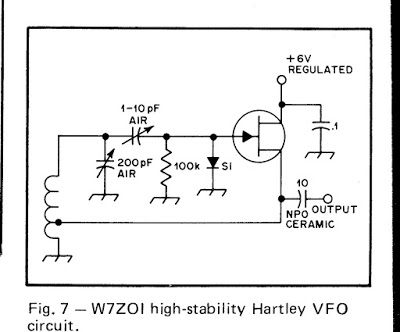
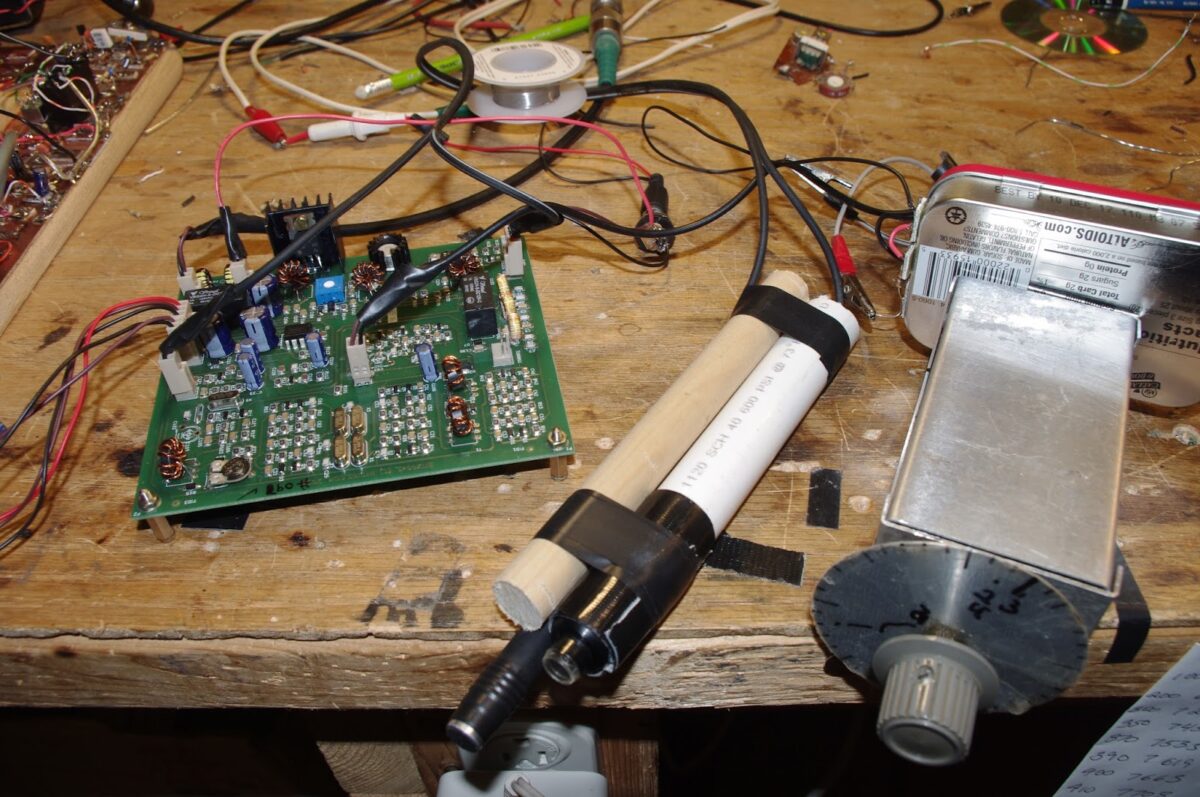
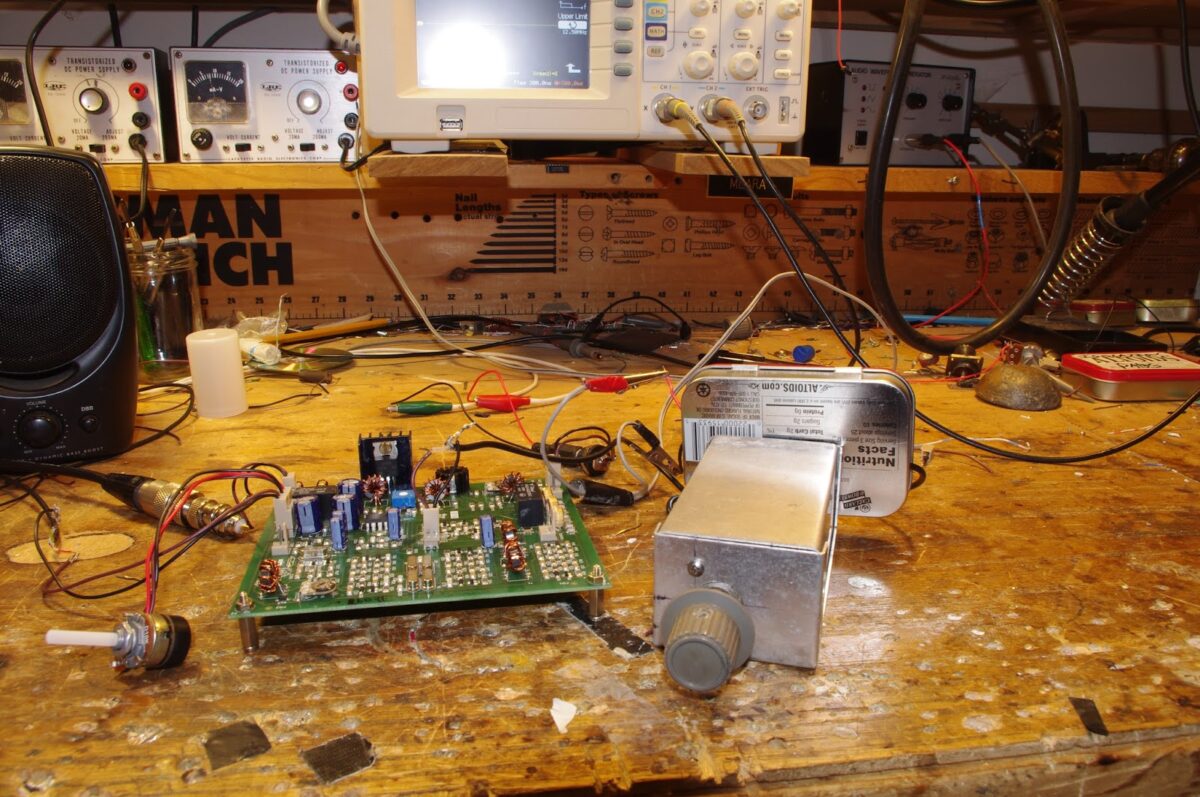
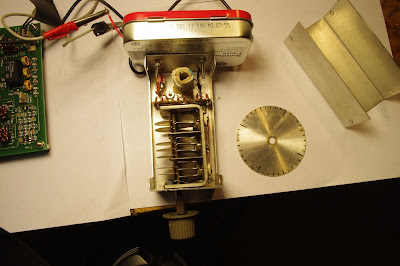
When I build a VFO, I start with the variable capacitor and the reduction drive. I found a nice one (with reduction drive) in my junk box. I tunes from 40 pf to 56 pf. I decided to use the super-simple Hartley circuit presented by Wes Hayward W7ZOI in SSDRA (page 34, fig 7).
I went with a 4.4 uH air core coil (wound on a cardboard tube from a coat hanger). Consultation with on-line resonant frequency calculators showed that I’d need to put about 180 pf in parallel with the variable cap. For this, I used a bunch (maybe 10?) of small value NP0 caps in parallel. This really helps keep the VFO stable.
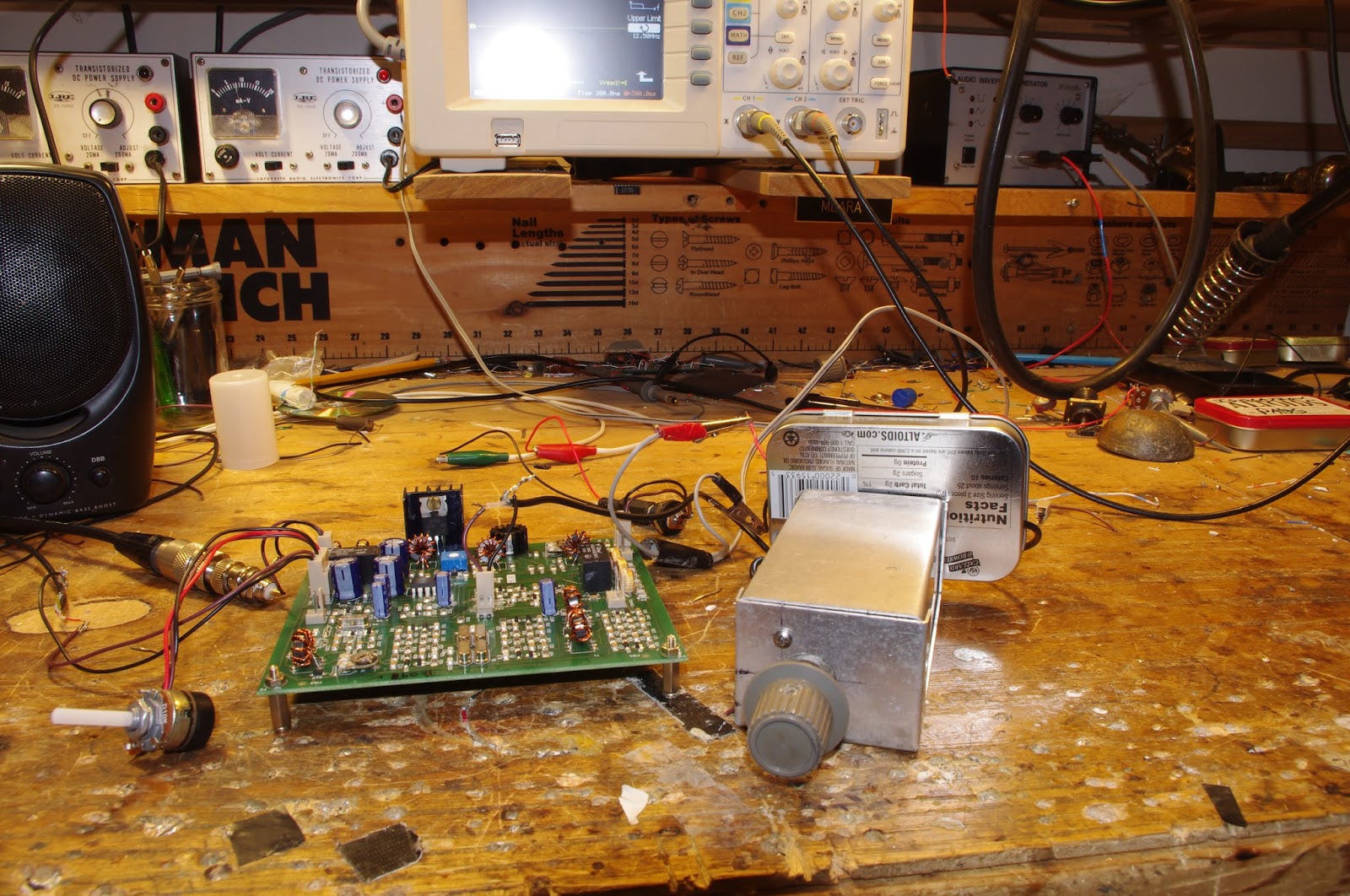
As I did with my HROish receiver, I put the coil and the caps in one box, with the MPF-102 and associated parts in an attached Altoids tin. Everything was glued and bolted down very solidly.
I only built the actual oscillator stage — I decided to use the buffer amps on Farhan’s board.
The oscillator started right up. I had to add and then take away some turns on the coil to get it to run in the desired range. Then I plugged it into the DDS jack — the receiver was working immediately.
I noticed, however, that it seemed a bit less sensitive than it had been with the AD9850 DDS. And when I grabbed the wire going into the DDS connector, audio output jumped dramatically. It took me a few minutes to figure that out: I think the output from my VFO was not adequately turning on the diodes in the diode ring. When I grabbed the wire, I was putting a lot of noise into the mixer port, probably turning the diodes more fully on (but also letting a lot of noise through).
Fixing this problem part was fun: Looking at the BITX 40 schematic, I saw that the two 1000pf feedback caps in the original oscillator were still in the circuit. I figured those caps would be sending a lot of my VFO energy to ground. So I fired up my hot air rework station and deftly removed C91, the 1000 pf cap that is connected to the base of Q9. Instantly the receiver started inhaling as it had with the DDS VFO. That was a very satisfying fix.
This whole VFO project was very satisfying. It was all done in one day, and all the parts came out of my junk box. I think I ended up with an LO frequency source that matches up in a pleasing way with the analog circuitry in Farhan’s rig. And here is bonus that I think is just what Farhan had in mind: this kind of circuit adds a definite homebrew element to the module rig.
I found that this external VFO improved stability significantly. I don’t know if it is as stable as the DDS, but with the external VFO the receiver no longer drifts away as I listen to SSB signals.
N7UN Talks About Summits on the Air (FDIM Interview by Bob Crane)
Bob Crane, our intrepid correspondent at the Dayton Hamvention talked to Guy N7UN (pictured above) about taking ham radio up to the mountaintops. It was nice to hear Guy mention Wayne Burdick and Wes Hayward and WG0AT. Thanks Bob! Thanks Guy!
Listen here:
http://soldersmoke.com/N7UN.mp3
More on N7UN here:
http://www.n7un.com/
Possibly the Best Ham Radio Interview Ever: Farhan on “QSO Today”

Stop what you are doing. Run — don’t walk — to the “QSO Today” website of Eric Guth 4Z1UG. There you will find his interview with Ashhar Farhan VU2ESE.
There is so much great information, inspiration and wisdom in this interview. I was so captivated by it that — even with the availability of the pause button — I was unable stop listening even for the time it would take to walk to the kitchen to refill my coffee cup. But at the same time, listening to Farhan describe the joy of bringing a new receiver into operation compelled me to go over to the bench — in mid-podcast — to tweak a receiver that I am working on.
In this podcast you will hear about how Farhan got started in ham radio, about his Elmers about the origins of the BITX, about the Minima and the new HF-1 rig, about Farhan’s spectrum analyzer project and about a new goodwill effort to send BITX circuitry to aspiring hams around the world, especially in developing countries.
Throughout you will hear Farhan speak of the importance of the book, Experimental Methods in RF Design.
Breadboarding and Mountaintopping
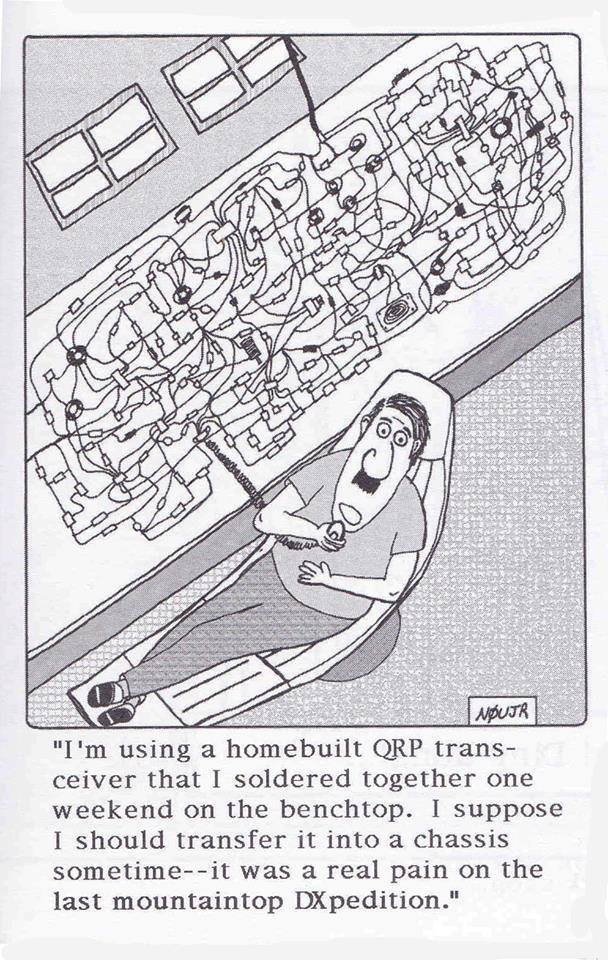
We needed an illustration today. I was having trouble finding something suitable. Then the Radio Gods (along with Joe Peltola and the artist N0UJR) provided this. Obviously I can relate to the breadboard operation. I’m sure Pete can too. As for the mountain topping, that made me think of Colin, M1BUU. And of Wes, W7ZOI.
Our book: “SolderSmoke — Global Adventures in Wireless Electronics” http://soldersmoke.com/book.htm Our coffee mugs, T-Shirts, bumper stickers: http://www.cafepress.com/SolderSmoke Our Book Store: http://astore.amazon.com/contracross-20