Our book: “SolderSmoke — Global Adventures in Wireless Electronics” http://soldersmoke.com/book.htm Our coffee mugs, T-Shirts, bumper stickers: http://www.cafepress.com/SolderSmoke Our Book Store: http://astore.amazon.com/contracross-20
SolderSmoke Daily News — Ham Radio Blog
Serving the worldwide community of radio-electronic homebrewers. Providing blog support to the SolderSmoke podcast: http://soldersmoke.com
Our book: “SolderSmoke — Global Adventures in Wireless Electronics” http://soldersmoke.com/book.htm Our coffee mugs, T-Shirts, bumper stickers: http://www.cafepress.com/SolderSmoke Our Book Store: http://astore.amazon.com/contracross-20
Audience interest has been underwhelming. Perhaps a dozen participants
have shown interest in my displays. In fact, I almost left the displays
home last Saturday.
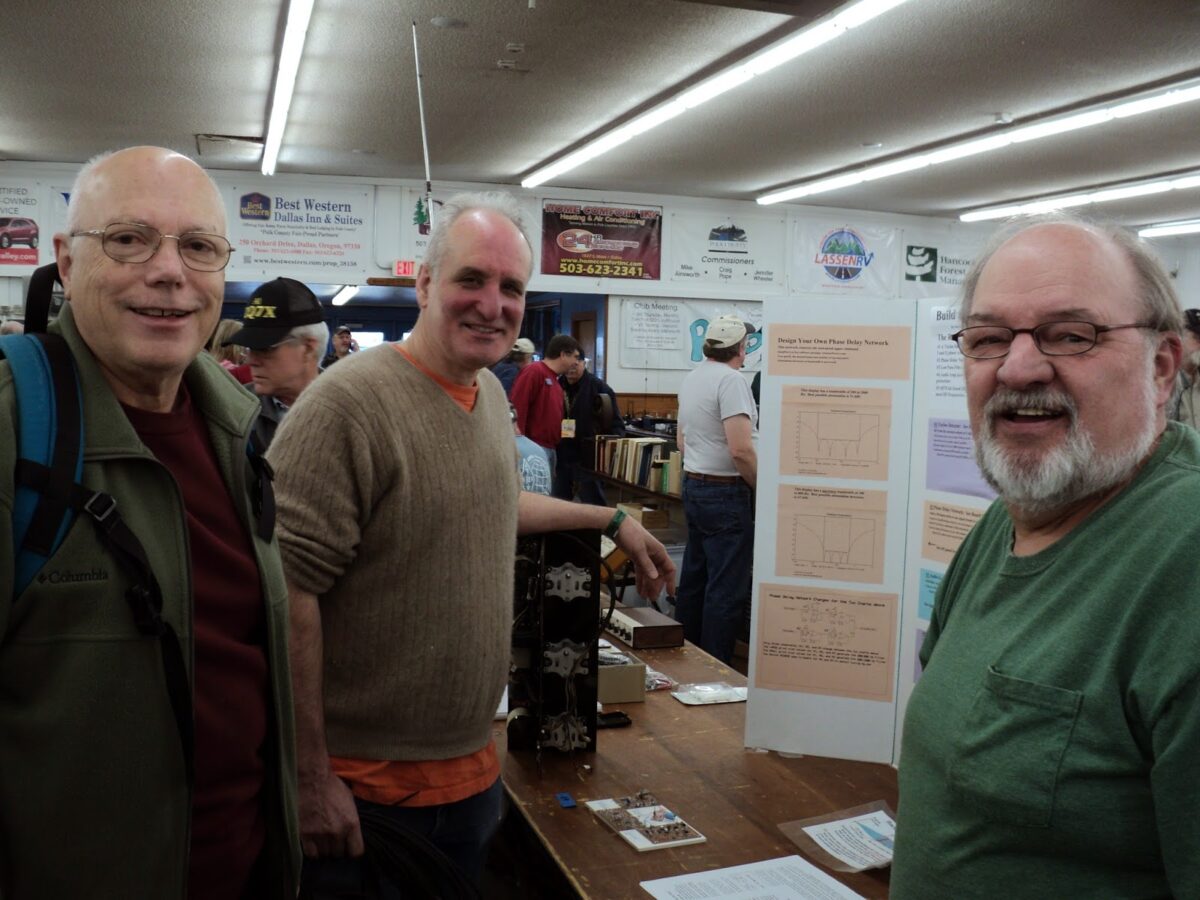
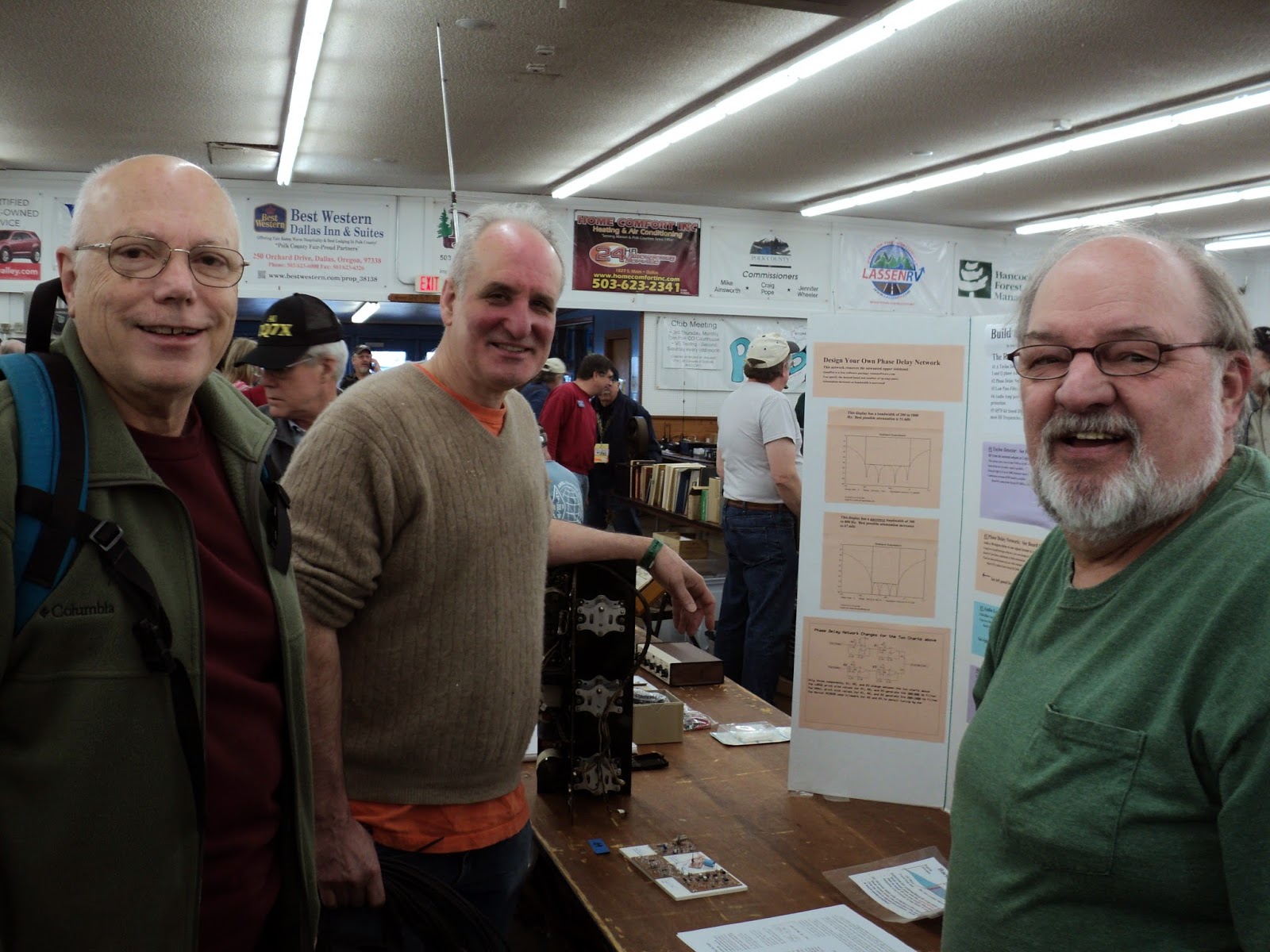
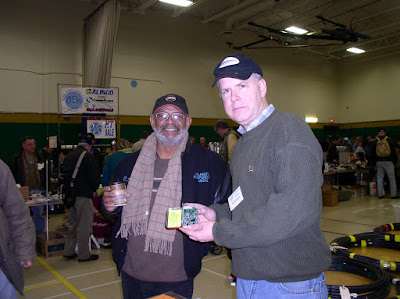
In the course of the morning, two guys approached. The older guy had a look of
familiarity. He looked like a guy in the SolderSmoke blog. Bill,
N2CQR, was pictured sitting with him in California over coffee.
I blurted out, “are you ZOI?” He replied “yes” and I told Wes Hayward,
W7ZOI, it was nice to meet him. (That was a bit of understatement).
With Wes was Jeff Damm, WA7MLH, who built many of the circuits included
in the book “Solid State Design.” I suggested to Jeff he no longer
looked like a hippie, which is the style conveyed by his webpage. Jeff
said he had recently cut his hair.
We spent more than an hour sharing ideas and discussing various topics.
My focus was on encouraging experimentation. Kit building may be a nice
first step. I want to see builders pursuing more advanced
investigations. Wes noted the software and simulation tools available
for free it’s never been a better time to try out ideas. Wes commented
on the contribution of amateurs and how we often have fewer restrictions
to pursuing our interests. He emphasized measurement tools. I should
look more at noise figure in my receiver experiments. He was very
supportive, which contrasts with my recent experiences on various
internet groups.
Wes and Jeff were looking for Rick Campbell, KK7B, and Bob Larkin,
W7PUA. Imagine, the three authors of Experimental Methods in RF Design
(EMRFD) frequenting a little hamfest in rural Oregon. Yet, few people
knew they were there.
The experience reinforced my interest in continued experimentation.
I’ll take my updated displays back next time. Perhaps our efforts reach
a larger audience than we first realize.
Bob-N7SUR
Our book: “SolderSmoke — Global Adventures in Wireless Electronics” http://soldersmoke.com/book.htm Our coffee mugs, T-Shirts, bumper stickers: http://www.cafepress.com/SolderSmoke Our Book Store: http://astore.amazon.com/contracross-20
Wow, the Minima presentation by Thomas at Pacificon was really great. I think he had exactly the right tone and tech level for the digitally-savvy California audience. His very open description of the ups and downs of his Minima build will surely lure in some new builders, and will at the same time prepare them for the travails ahead! Great stuff. I like the mention of Pete’s “noodling.” Thomas obviously gets it. And he obviously has THE KNACK. Thanks Thomas!
Thomas has posted his slides and (MOST IMPORTANT) the audio of his presentation. Just click on the BIG ORANGE play arrow below the slides. You folks will love this:
http://www.sarfata.org/2014/10/Minima-Presentation-at-Pacificon/
Our book: “SolderSmoke — Global Adventures in Wireless Electronics” http://soldersmoke.com/book.htm Our coffee mugs, T-Shirts, bumper stickers: http://www.cafepress.com/SolderSmoke Our Book Store: http://astore.amazon.com/contracross-20
Thanks for the kind words Thomas. Be sure to have someone do a video of your presentation.
You truly have The Knack — proof of this is your reaction to your wife’s departure for field research in Senegal: “IT’S SOLDER TIME!” That’s the spirit!
Too bad about the chickens, but hey, they died for a good cause…
Dear Bill,
I have been listening to your podcast for about a year now. I think you were right to say that one episode a month is a reasonable limit to avoid listeners getting addicted. At some point in January I was listening to you every morning and every evening in my car, a very serious case of addiction.
This is also the time that Farhan chose to announce the Minima and my wife to go to Senegal for 3 months for a field study (she is doing a PhD in Sociology). I think it took me less than a week to run to the shop, get most of the parts and start melting solder!
In two weeks from today I will present the project and my build at Pacificon. I would really appreciate if you could mention this on your blog because I am sure there are other listeners who will be there and curious for some homebrewing-materials. I hope to delight them!
For your own pleasure there are some pictures and videos on my blog: http://www.sarfata.org/ham/minima/
Pacificon Schedule: http://pacificon.org/ (My talk will be at 10:45 in the Portland room)
My presentation will retrace my journey building the minima. From the first smokes on the crystal filter when I was not even sure how to test it, or what results to look for ; to the amplifier where I am still battling some oscillations (by the way, if you had not talked so much about them, I would never have understood what was going on!).
This project has taught me that radio is a lot less black magic than I thought. It bridged the gap between the maths that I can understand but not really “see” and the sound coming out of the amplifier. It made me realize that once split into stages, a radio is much better understood and testable. Without a doubt, this has been my most ham-enriching experience and I hope to convince more people to build a minima, preferably Manhattan style!
(In this public setting, I will probably not discuss killing chickens to exorcize my amplifier but I thank you for the tip …)
I got pulled back from homebrewing by life and work this summer but I kept the last three episodes of Soldersmoke on my phone. They were my safety parachute and I listened to them last week on the way home to give me the extra boost that gets me to melt solder or fix bugs until 3 in the morning on a tuesday. I don’t think I will ever be able to express my gratitude for all that I have learnt reading the book and listening to you but I would like to start here: Thank you!
Please keep the podcast going! I have really enjoyed the new format with Pete.
73,
thomas
kk6aht / f4hdq
Our book: “SolderSmoke — Global Adventures in Wireless Electronics” http://soldersmoke.com/book.htm Our coffee mugs, T-Shirts, bumper stickers: http://www.cafepress.com/SolderSmoke Our Book Store: http://astore.amazon.com/contracross-20
Hey Bill.
I enjoyed the interview with Pete N6QW very much. So many main points were covered and I kept nodding in agreement, especially some of the stuff about the ease of doing homebrew that we have these days. Like you, or similar to you I’m guessing, I have memories as a kid staring at the pages of an ARRL handbook, saying “huh?” These days almost any question can be answered with a Google (and if not, an appropriate book overnighted via Amazon). You guys both nailed it too with the comments about the free design software that is plentiful and the cheap crystals (I still need to order some “bags” of these!). When I started out it seemed crystals were a big expense. I guess not so much now. It’s really a great time to be a homebrewer.
I was trying to think of more questions for him for the second half of your interview but most of what I could come up with was too pedestrian probably or already covered. I am curious about amplifiers but I believe he’s going to talk about that next anyway. Nothing was said about using varactor diodes in VFOs (unless I missed it) and I’m a little curious about his experiences with them. And whether he still uses air variables or not (and if he has an opinion on these more compact “polyvaricons”, one of which is in the Hendricks version of the Bitx-20 I’m building). It sounds like most homebrewers these days are pairing up their VFOs with digital architecture of one type or another for stability and the display. I guess you can’t argue with the price of some of the needed parts. But like you I feel like I’m not wanting to jump into the complex digital too far, the simplicity and ease of understanding of the simple circuits is really refreshing and fun for me. The moment you have to rely on software for something I feel that the project is lessened a bit, not as robust in a way, kind of like having to rely on cholesterol-lowering meds so that we can keep eating cheeseburgers (had to slip in a food reference somewhere).
Something else dawned on me a few weeks ago, soon after I’d built my 40m direct conversion rig (“mrad-40”) — does anyone consider the audience on the band they’re designing for??? I’m only partly joking! There are some rude and coarse dudes on 40m. It takes a little bit of luster off the whole “first light” experience of a new homebuilt radio when you turn it on and hear some drunks arguing politics or making fun of a YL ham on another frequency! Probably not a suitable question for Pete!
I also really enjoyed the FDIM edition. As always, it’s one of the best of your podcast series. My favorite was the interview with the ham near the end, I think he was 2nd to last. He seemed to really sum up the entire homebrew motivation and experience. I don’t remember his name offhand. But his description of sitting there with store-bought radios and the sort of transactional nature of appliance operating (“telephoning strangers”) perfectly describes how I felt about a dozen years ago. I’d migrated towards DX chasing and 6m grid collecting but that too can get pretty stale after awhile. I’m getting closer to having a station that is all home-built, but I’m not sure I’ll ever sell my commercial rigs as he did (although it would free up money for more test equipment!).
Maybe one final comment for Pete or just in general. Since I’ve been a ham I feel like there’s always been this pressure to build/design something that is in some way “cutting edge” or new. In today’s landscape that would be along the lines of the FDIM guy turning an Android phone into a ham rig. I’m wondering if others feel some sort of peer pressure to “push the envelope” in some way with what they’re doing, to establish bragging rights of some kind or to somehow feel that what they’re doing is important or relevant. I’ve never been clever enough to succumb to this pressure and invent something ingenious! And I find doing lots of software coding incredibly boring and I know I’m not very skilled at it.
So…I guess the question or point is, should we all in some way as “responsible” hams feel obligated to break ground in some new technical aspect of the hobby somehow, especially as builders and homebrewers (and hams)? In other words, should I be riddled with guilt if I decide to devote the rest of my life to building regens and not SDRs? Do you know what I mean here? There seems to be a mindset among some hams that the hobby was founded on experimentalists pushing the boundaries of what was known, and in some way we all carry that torch. For me, I’ve always pretty much seen it as a hobby, and if it felt like work I didn’t do it! Any thoughts on that?
Bert WF7I
Our book: “SolderSmoke — Global Adventures in Wireless Electronics” http://soldersmoke.com/book.htm Our coffee mugs, T-Shirts, bumper stickers: http://www.cafepress.com/SolderSmoke Our Book Store: http://astore.amazon.com/contracross-20
SolderSmoke Podcast #160:
http://soldersmoke.com/soldersmoke160.mp3
Bob Crane, W8SX, was out at the Four Days in May event and did an excellent series of interviews with the guys who made presentations:
————————————-
VIDEOS OF THE PRESENTATIONS ARE HERE:
http://www.ustream.tv/recorded/47599691
Our book: “SolderSmoke — Global Adventures in Wireless Electronics” http://soldersmoke.com/book.htm Our coffee mugs, T-Shirts, bumper stickers: http://www.cafepress.com/SolderSmoke Our Book Store: http://astore.amazon.com/contracross-20
An important message From Rex,
Transcendental Titan of the Tuna Tin Twos:
Our book: “SolderSmoke — Global Adventures in Wireless Electronics” http://soldersmoke.com/book.htm Our coffee mugs, T-Shirts, bumper stickers: http://www.cafepress.com/SolderSmoke Our Book Store: http://astore.amazon.com/contracross-20
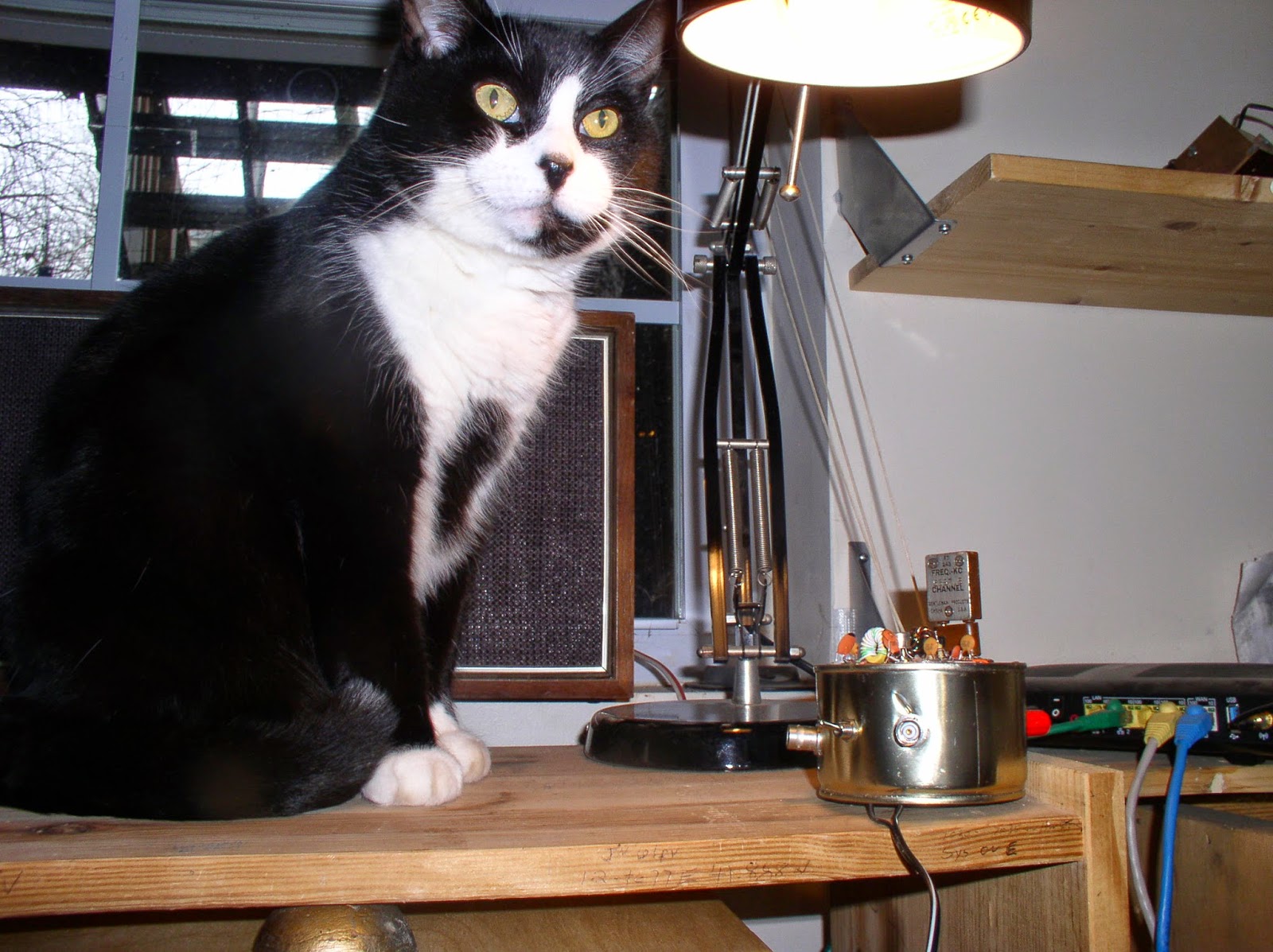
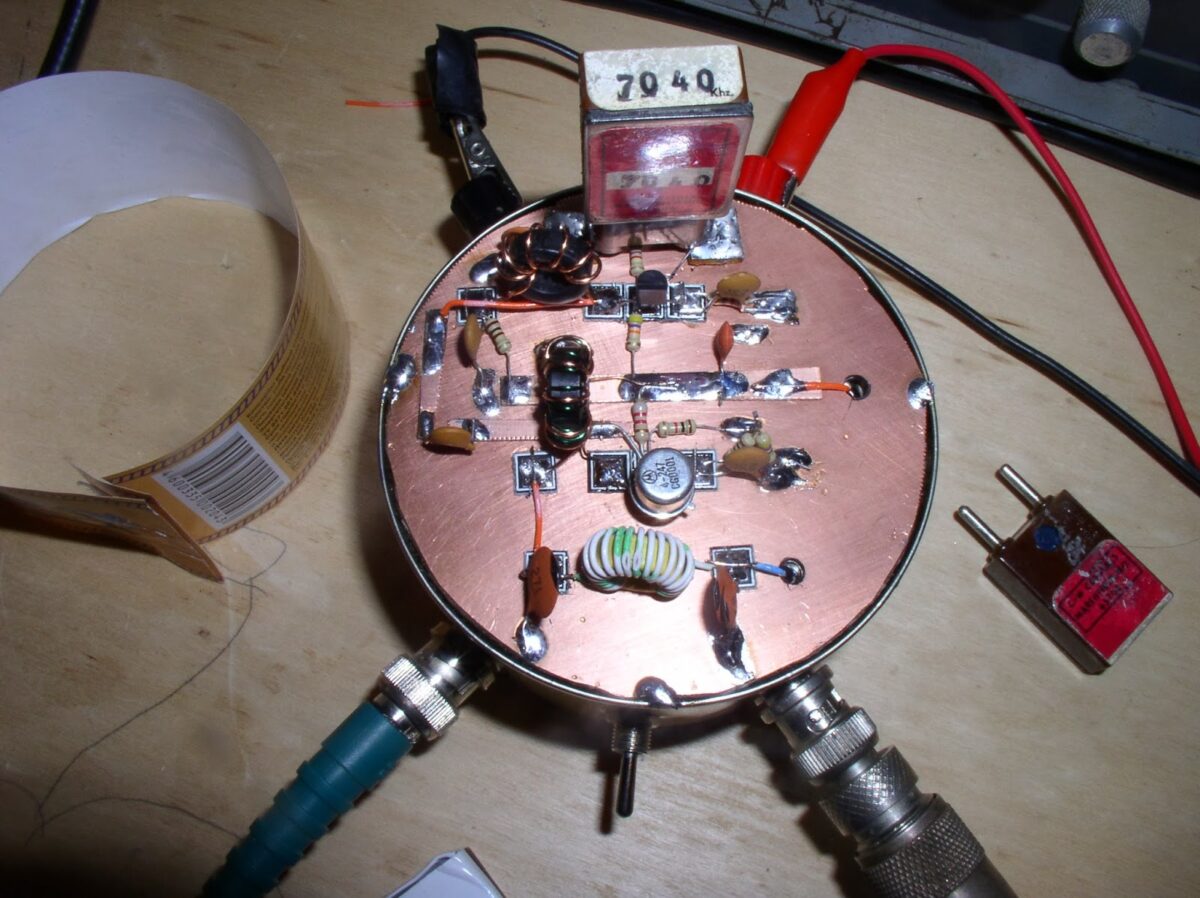
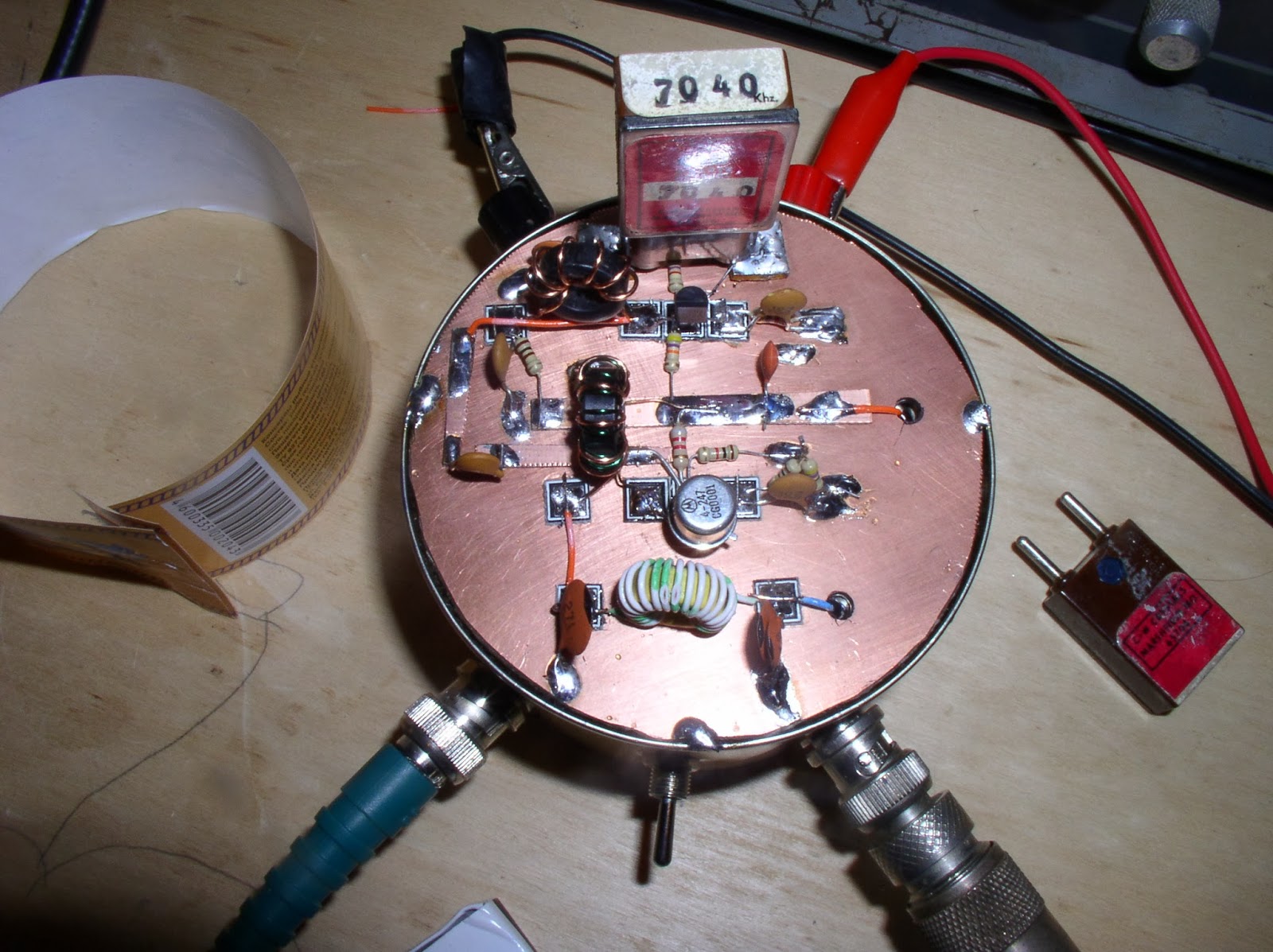
I didn’t plan on doing this. I didn’t even really want to do this. I’ve become a phone guy — I’m not into CW anymore. I figured I’d just finish the Herring Aid 5 receiver and settle the score from 1976 and that would be it. But everything I read about the Herring Aid 5 included references to the iconic Tuna Tin 2. Obviously I was also under the strong influence of my late February encounter with the original TT2 at the Vienna Wireless Winterfest. That Mojo is powerful stuff! Then my wife brought home this can of Russian tuna. The dimensions were perfect. Then I looked in my junkbox and found 40 meter CW crystals. That was it. I had to do it.
I built mine Manhattan style, using several of W1REX’s fantastic Me-pads. I also used as the final a transistor that Rex gave me at Winterfest. Thanks Rex. Soul in the New Machine.
I’m getting about 200 mW out. I;m on 7030 kHz and 7040 kHz and 7110 kHz. I have the TT2 up with my Drake 2-B (Herring Aid 5 integration will come later). I can feel the Mojo.
I just had my first contact with the TT2: I called CQ on 7110 and AB2RA came back. Jan was running 20 watts from an old 807 rig, listening with an old Hammarlund. So it was HB transmitter and vintage receivers on both ends! FB!
Our book: “SolderSmoke — Global Adventures in Wireless Electronics” http://soldersmoke.com/book.htm Our coffee mugs, T-Shirts, bumper stickers: http://www.cafepress.com/SolderSmoke Our Book Store: http://astore.amazon.com/contracross-20
Using Dropbox to post the video of my BITX presentation at the hamfest didn’t work out too well, so I put it on Vimeo:
https://vimeo.com/87725154
The slideshow is here: http://soldersmoke.com/winterfest.pptx
I stripped out the audio for those who would like to dispense with the video.
Audio only is here:
http://soldersmoke.com/soldersmokewinterfest.mp3
73
Our book: “SolderSmoke — Global Adventures in Wireless Electronics” http://soldersmoke.com/book.htm Our coffee mugs, T-Shirts, bumper stickers: http://www.cafepress.com/SolderSmoke Our Book Store: http://astore.amazon.com/contracross-20
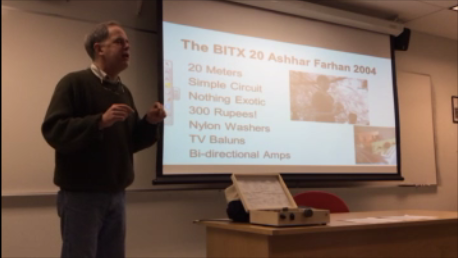
The Vienna Wireless Society of Northern Virginia asked me to give a talk at their 23 Feb 2014 hamfest. I spoke about homebrewing and the BITX transceivers. Click on the link below to watch the video. (Special thanks to Elisa for doing the video.)
https://vimeo.com/87725154
The Powerpoint slides are here:
http://soldersmoke.com/winterfest.pptx
For those who just want to listen podcast style, I will try to turn the audio into a podcast and will post it via the normal channels.
Our book: “SolderSmoke — Global Adventures in Wireless Electronics” http://soldersmoke.com/book.htm Our coffee mugs, T-Shirts, bumper stickers: http://www.cafepress.com/SolderSmoke Our Book Store: http://astore.amazon.com/contracross-20
It happened at the Vienna Wireless Society’s Winterfest Hamfest today in Northern Virginia.
That is Doug DeMaw’s original Tuna Tin.
This may be the first time TT Mojo has been given to a phone rig.
Doug DeMaw would, I’m sure, approve.
Thanks Rex!
Our book: “SolderSmoke — Global Adventures in Wireless Electronics” http://soldersmoke.com/book.htm Our coffee mugs, T-Shirts, bumper stickers: http://www.cafepress.com/SolderSmoke Our Book Store: http://astore.amazon.com/contracross-20
Check out this report from the Burning Man event. Two intrepid nerds head out to the dessert (with ham radio gear) and appear to have an amazing time.
http://blog.thelifeofkenneth.com/2013/09/my-first-burn.html
Our book: “SolderSmoke — Global Adventures in Wireless Electronics” http://soldersmoke.com/book.htm Our coffee mugs, T-Shirts, bumper stickers: http://www.cafepress.com/SolderSmoke Our Book Store: http://astore.amazon.com/contracross-20
Elisa heroically accompanied me to the Manassas Hamfest on Sunday. We had fun. I thought they had a good turnout of vendors and tailgaters, and it seemed like the sellers of real ham stuff were winning the battle against the encroaching computer people. I saw many interesting old boatanchor radios, including two R-390A receivers, one HT-37, an HW-101 and several other Heathkits.
As for NEW technology, the fellows from the NOVA LABS maker space had a very interesting table, and their web site has a very kind acknowledgement that hams were “the original hackers, who organized build groups and hack labs similar to modern day makerspaces—back before people called themselves “Makers” and long before it was “cool.” They had a 3-D printer that was doing its thing in a very impressive manner. They also had some quadro- and octo-copters built by a group called DC Area Drone User Group. Very cool. Want one.
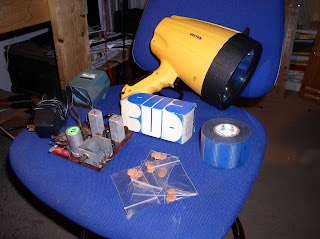
Inspired by Nick Kennedy, I have included in this post a picture of my purchases from the hamfest. As you can see, I controlled myself. But I couldn’t resist the humungous flashlight! I got a bunch of .1 caps (should have bought more!). Got a Bud-box (maybe for an Arduino DDS project?) The little circuit board with the IF cans is interesting. I bought it (1 dollar!) for the 365 pf variable cap, but I later realized that it is probably a complete All-American Five receiver on a single board. I’m not crazy about tubes on PC boards, but this one may have some possibilities. The roll of tape is supposedly coax sealer. I also got a little 35 mm slide viewer, and a 12 volt wall wart.
I wore the “Real Radios Glow in the Dark” T-shirt that Elisa got me (on the recommendation of Rogier). I got more positive comments on that shirt than on any other piece of clothing I’ve ever owned!
And we saw our first Cicadas of this 17 year cycle.
Our book: “SolderSmoke — Global Adventures in Wireless Electronics” http://soldersmoke.com/book.htm Our coffee mugs, T-Shirts, bumper stickers: http://www.cafepress.com/SolderSmoke Our Book Store: http://astore.amazon.com/contracross-20
For a look at how the hackers do their version of the Dayton ham-vention, check out this video on DEFCON: http://vimeo.com/56234900
Looks sort of like “Four Days in Hell” to me! Finally, a group that makes hams seem normal and well-balanced!
Our book: “SolderSmoke — Global Adventures in Wireless Electronics” http://soldersmoke.com/book.htm Our coffee mugs, T-Shirts, bumper stickers: http://www.cafepress.com/SolderSmoke Our Book Store: http://astore.amazon.com/contracross-20
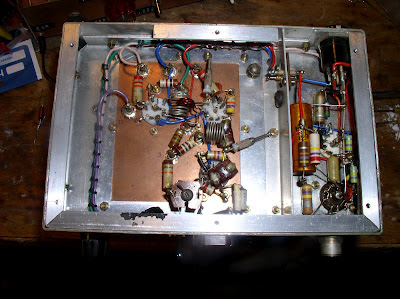
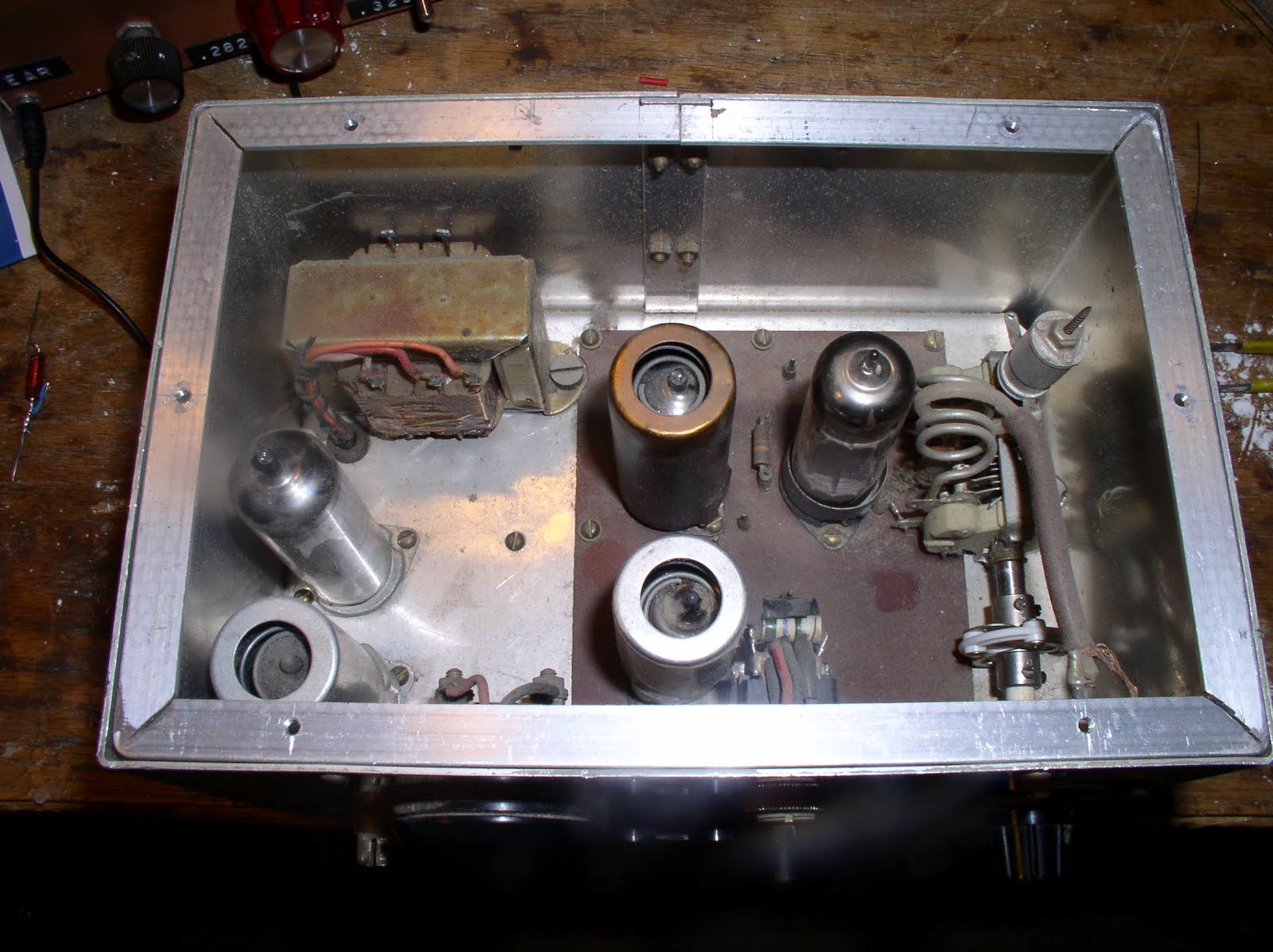
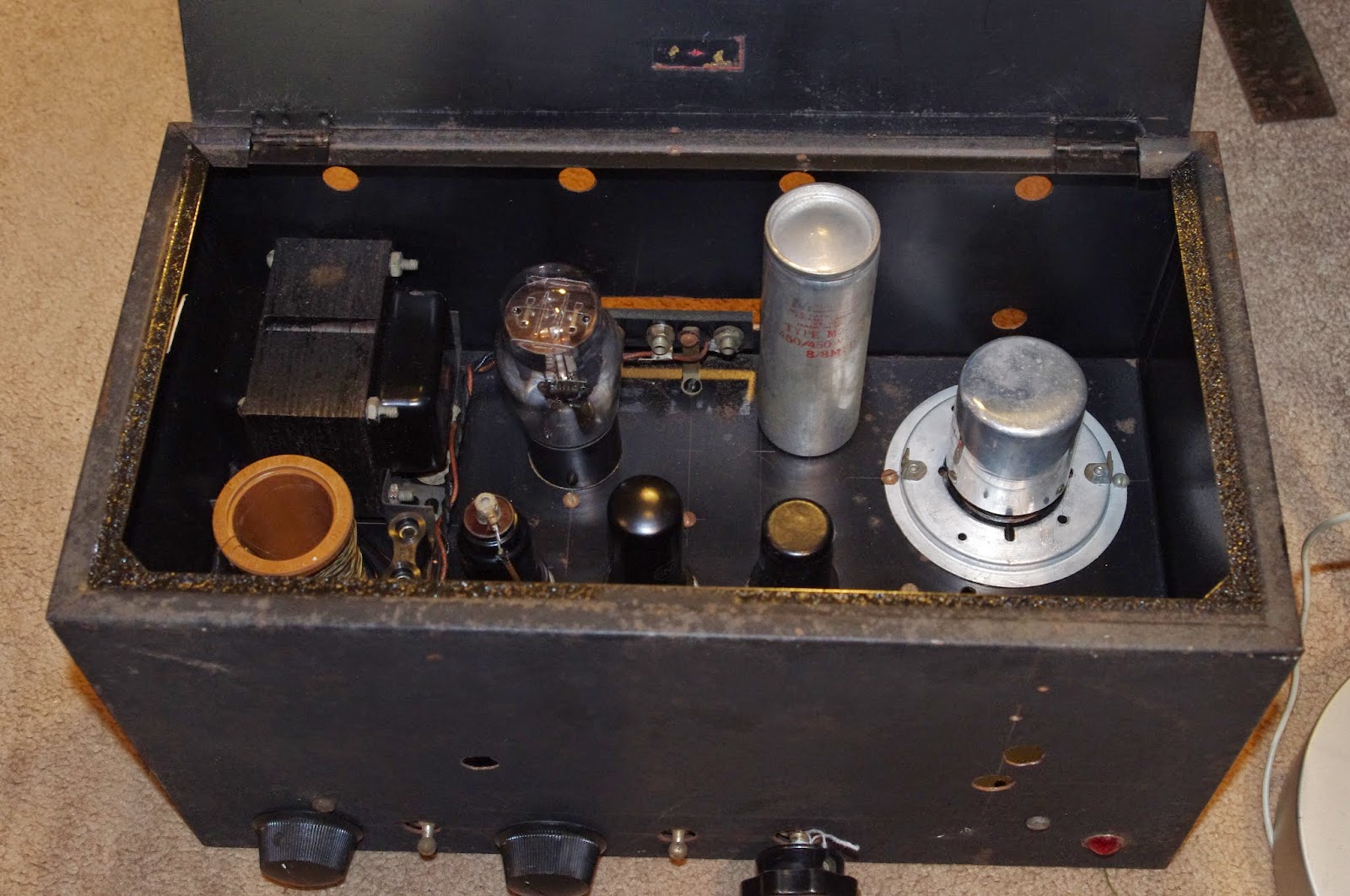
I was rummaging around the junkbox and I found this gem. I probably bought it at the Kempton Park rally in London. I think it is an AM transmitter for VHF. Maybe 6 meters? Or perhaps that British 70 MHz band? What do you guys think? Can anyone estimate the frequency from the size of the coils?
I think the workmanship is beautiful. The technique of putting the tube sockets on a copper clad board is interesting. I wonder why he did that — obviously he wasn’t afraid of metal work. Look at that cable harness work! FB! It’s too bad the builder didn’t mark it with his call.
Anyone recognize the design? Any idea when this was built? For bonus points: Who built it?
Our book: “SolderSmoke — Global Adventures in Wireless Electronics”http://soldersmoke.com/book.htmOur coffee mugs, T-Shirts, bumper stickers: http://www.cafepress.com/SolderSmokeOur Book Store: http://astore.amazon.com/contracross-20
Hi Bill,
I discovered SolderSmoke a few years ago by listening to another pod
cast. Ever since, I have been hooked on this podcast and listen to it
whenever I have time. I have finally caught up and finished episode
142 today. I love the enthusiasm and spirit of discovery and creation
that goes into the stories in SS.
The first time I heard about amateur radio was in high school. It
seemed to be a overly nerdy thing at the time and I wasn’t sure what
it was. However, after I started listening to SS, I discovered that
this is something that I wanted to do. So, on New Years Eve with the
kind help of a local examiner (Ori, VA3XW), I wrote my basic and
advanced exam and passed with honours. In Canada, we only have 3
categories: basic, advanced and morse code. I am very excited about
this and I am glad that SS made me make the jump.
You know, every time the word knack comes up, it is portrayed in a
negative way. Someone is “afflicted” with the knack or shows knackish
“symptoms” as if it was a horrible disease. I would like to change
this perspective.
I hereby declare myself blessed with the knack. Ever since I was a kid,
I disassembled various electronics around the house (to the dismay of
my parents). I knew when I was doing something right when I could put
something back together and it worked, or later, it worked better than
before. Despite my parents’ persuasion to pursue other branches of
non-technical studies, I made up my mind to study electrical
engineering (must have been a teenage rebellion thing). Nonetheless
I finished school and found a job doing electronics design which I
love. Some of the people that you meet in this field are just
phenomenal. It has been a good career decision and I think it is truly
amazing. Thus, I see the knack as being a gift which I was fortunate
enough to hold.
I think one of the most important aspect of the knack is the desire to
understand and have self reliance on what we use on a daily basis. I
repair my own bikes and I’ve never bought a ready made computer.
Having a home machine shop greatly helps in this regard too. My first
oscilloscope I designed and built myself:
http://yyao.ca/projects/oscilloscope/
I have also resolved to build my first rig instead of buying one.
However, work is really busy these days, and it doesn’t look like I
will be able to do this soon. One of these days, I will construct my
own rig and wiggle the ether.
I am currently visiting Silicon Valley here in California. There is
much to visit and do here. For example, the De Anza Flea Market
happens every 2nd Saturday (which is my first introduction to a swap
meet):
http://www.electronicsfleamarket.com/
The Computer History Museum is amazing:
http://www.computerhistory.org/
For a limited time, you can see Jim William’s work bench at the
museum. If you thought your workbench was messy, you haven’t seen
anything:
http://www.eetimes.com/ContentEETimes/Images/EELife/williams%20desk.jpg
Now, imagine having the world’s most smartest electronics engineers
having dinner together. That’s what the Analog Aficionados Party is about:
http://www.edn.com/blog/Anablog/41523-Analog_Aficionados_party_Feb_18_2012.php
On top of that, there are a lot of trade shows which you can go to
check out the latest and greatest of test equipment. They don’t have
the same feel as some of my analog oscilloscopes, but they are shiny.
As you can see, this is a paradise for anyone blessed with the knack.
Anyhow, this email is long enough and I hope your eyes haven’t glazed
over yet. My best regards to you, Billy, Maria and your wife.
73,
Yi Yao
VA3YAO
Our book: “SolderSmoke — Global Adventures in Wireless Electronics”http://soldersmoke.com/book.htmOur coffee mugs, T-Shirts, bumper stickers: http://www.cafepress.com/SolderSmokeOur Book Store: http://astore.amazon.com/contracross-20

Hi Bill,

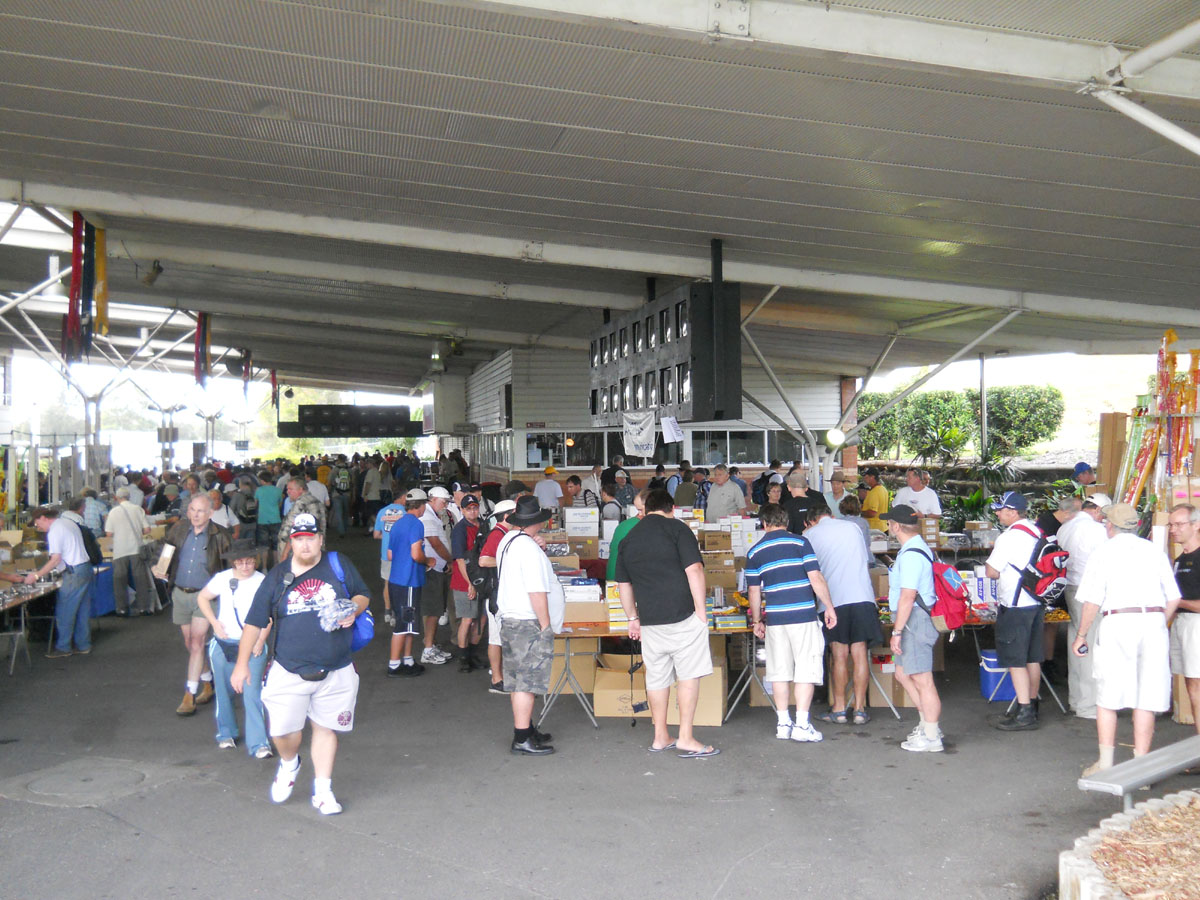
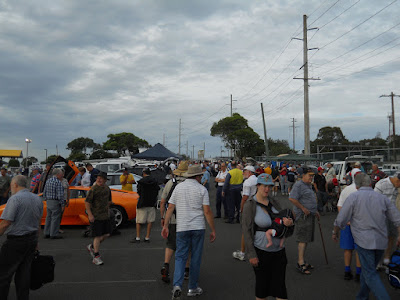
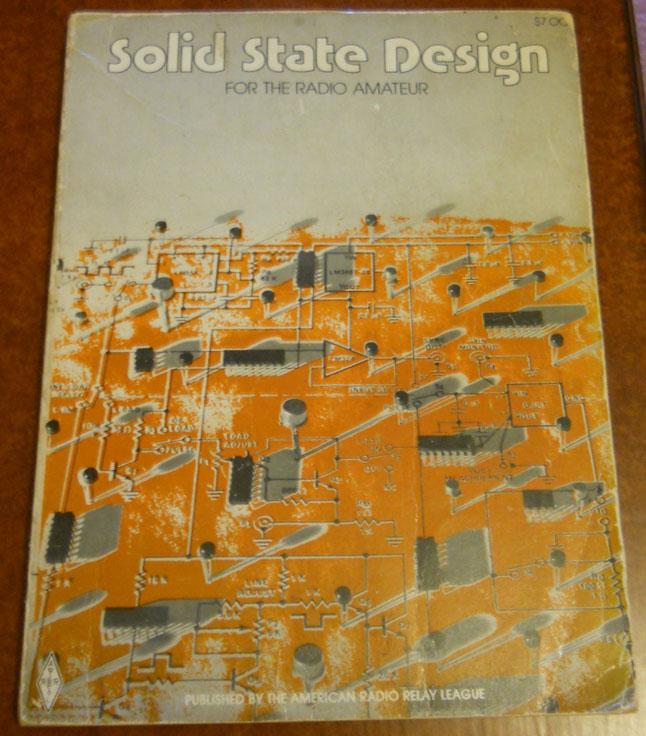
The first thing that I found in the boot sale area was a copy of SSDRA (1977 vintage) almost as old as I am. I found it in one of those boxes under a table with other books on top. I immediately gave the book to the guy selling it and asked how much, and to my surprise he said $5 Aust. I couldn’t get my money out quick enough and put it my bag that I had for collecting all those small parts. See attached pic of said book. I saw a brand new copy of EMRFD at the WIA stand for $85.
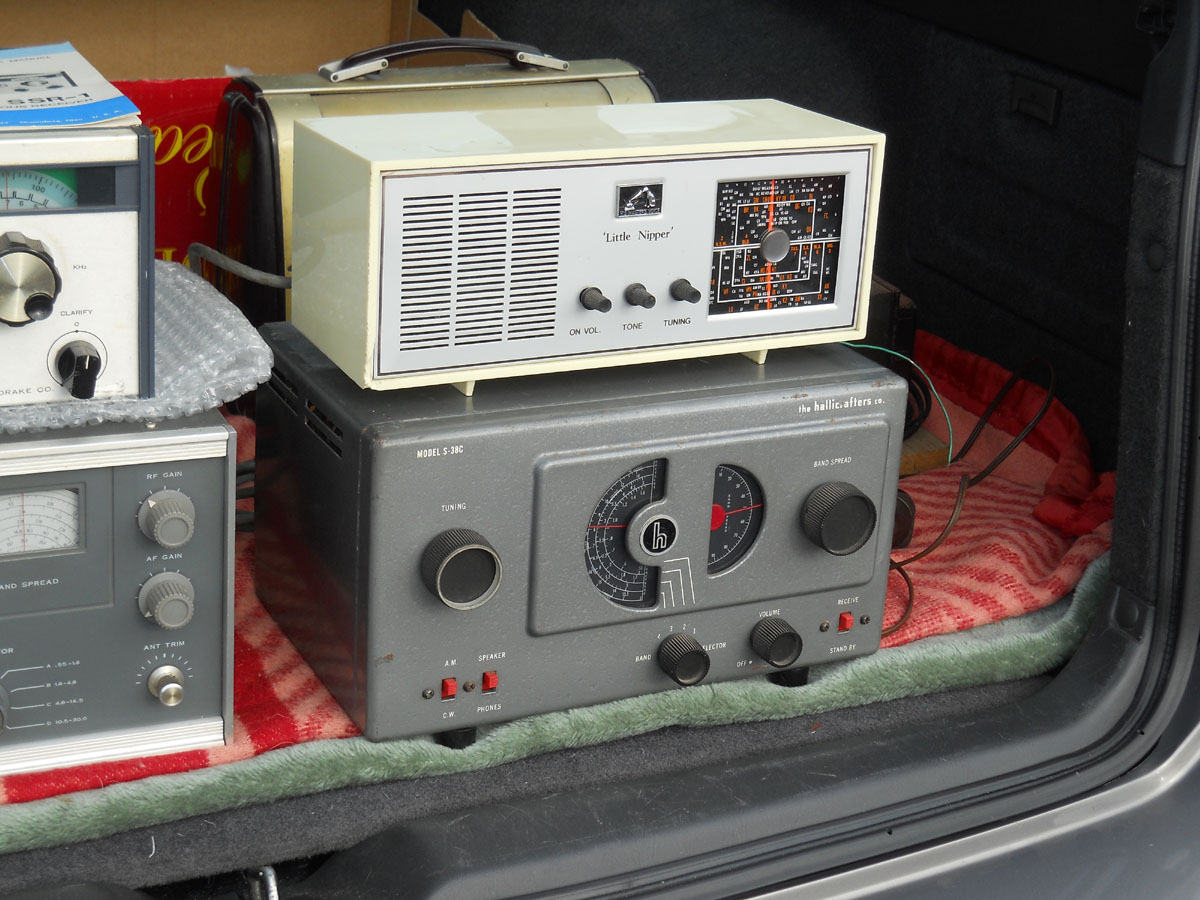
On my way around the boot sales I also saw this Hallicrafters radio and I thought of you and took a photo of it the only thing was I have no idea what model it is?
Our book: “SolderSmoke — Global Adventures in Wireless Electronics”http://soldersmoke.com/book.htmOur coffee mugs, T-Shirts, bumper stickers: http://www.cafepress.com/SolderSmokeOur Book Store: http://astore.amazon.com/contracross-20

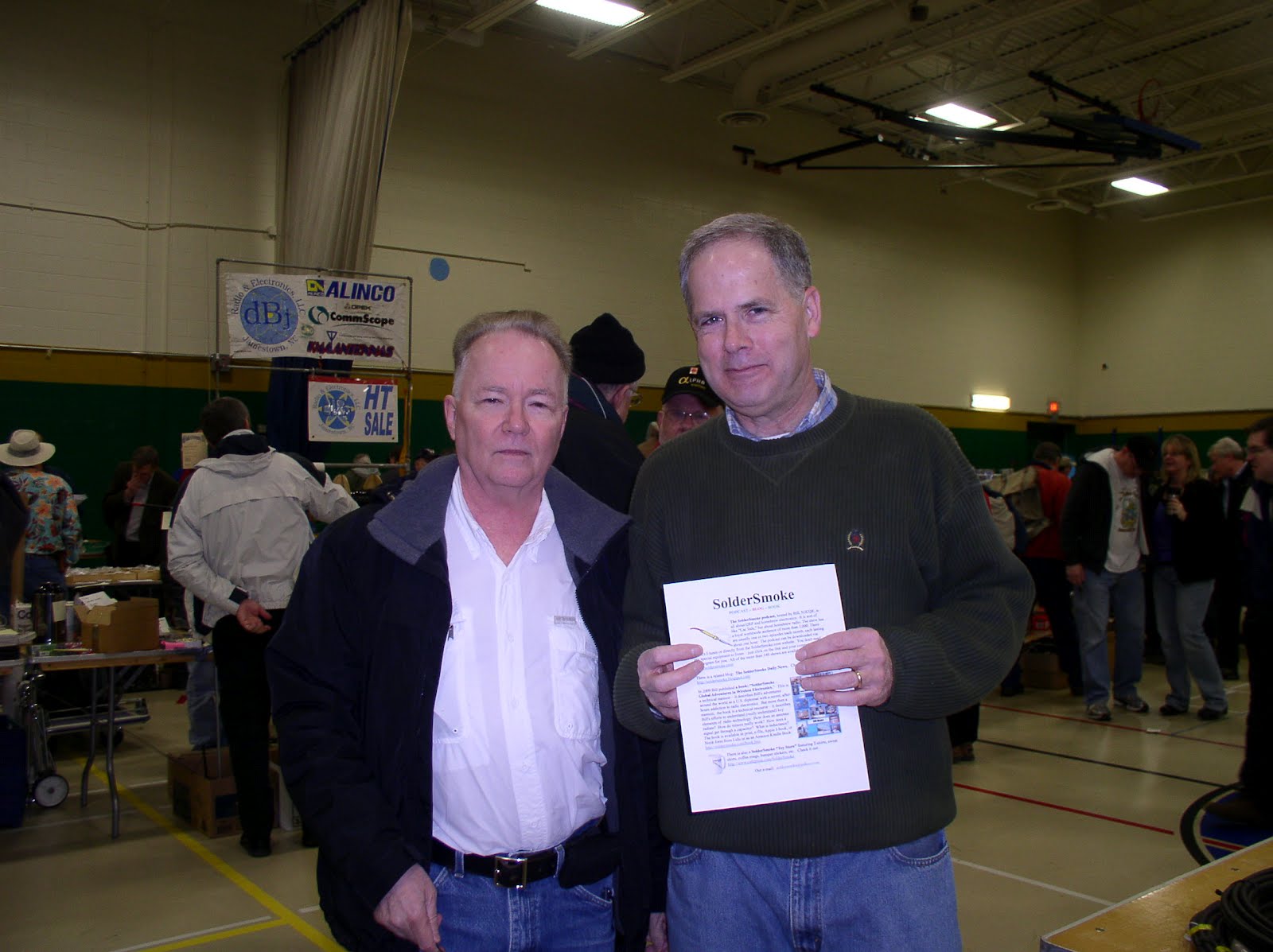
Billy and I went to the Vienna Wireless Association’s Winterfest hamfest yesterday. We had a great time and met many SolderSmoke fans. Above you can see me and Randy, N3UMW, the designer of our SolderSmoke logo. Thanks again Randy!
There’s Charles, AI4OT. Charles bought a copy of the SolderSmoke book at last year’s Winterfest. This year he dropped by to show us his tiny Steve Weber QRP rig in an Altoids tin. FB! And he was kind enough to talk-up the book, helping me make a few sales! Thanks Charles!
We managed to get rid of a bunch of junk, and only bought one item of new junk (a Hallicrafters S-38E receiver). And we got to show our friend (and aspiring homebrewer) John what a real hamfest is all about.
Thanks to the VWS for another great ‘fest.
Our book: “SolderSmoke — Global Adventures in Wireless Electronics”http://soldersmoke.com/book.htmOur coffee mugs, T-Shirts, bumper stickers: http://www.cafepress.com/SolderSmokeOur Book Store: http://astore.amazon.com/contracross-20
Michael, DL4MGM, sends us this report from a country in which “the knack” has deep linguistic and cultural roots. Wow, that’s my kind of hamfest! Test stations for homebrew gear. And the key-powered transmitter is a great idea. I know there is a lot of energy going into those straight keys — as a kid, my arm would hurt after an afternoon of unanswered CQs. Thanks Michael!
Hi Bill,
I do not know how big your german listener base is but in any case I want to draw your attention to the “Amateurfunk Tagung München” on 10th and 11th of March 2012. It is a german amateur radio convention which takes place every other year at the University of applied sciences in Munich. There is one speaker track with, mostly german, talks on a wide spectrum of topics related to our hobby. The organisers did a particularly good job in getting Joe Taylor, K1JT, as a speaker to talk on “Recent Advances in Amateur Weak Signal Communication” (10. at 17:00 local time). Needless to say that I’m looking forward to this. Apart from the talks there will be booths and exhibits from various groups and also some well known commercial sources of RF/microwave components, modules and the like.
Another highlight are the lab places, including personnel, where you can have your home brewed stuff tested up into the high double digit GHz range. I always take home new ideas from just strolling around there and looking at the things people bring for testing…
The last thing I want to mention is the current “operating and construction challenge” because it so right up our alley. It is something like an “Energy harvesting transmitter key”. The task is to build a 2m, 80m or 10m transmitter which is completely powered by the energy put into the key movement. In order not to stifle inovations, a lot of liberties are granted such as keying by foot. It will be allowed to pre-charge the energy storage component by keying up to to 10 “v”s with the transmitter turned off. As proof of operation, a 160 character random text message will have to be send to an adjoining room. Ranking criteria (in descending order) will be: – Peak transmitter power during transmission of the last character. – Construction and handling – Message errors – Keying speed / total transfer time – Tone quality and frequency stability Sounds like it will be a lot of fun… Here the link to the german site: http://www.darc.de/distrikte/c/amateurfunktagung-muenchen/
That’s all for now.
Keep going!
Kind regards from southern Germany de Michael, DL4MGM
Our book: “SolderSmoke — Global Adventures in Wireless Electronics”http://soldersmoke.com/book.htmOur coffee mugs, T-Shirts, bumper stickers: http://www.cafepress.com/SolderSmokeOur Book Store: http://astore.amazon.com/contracross-20