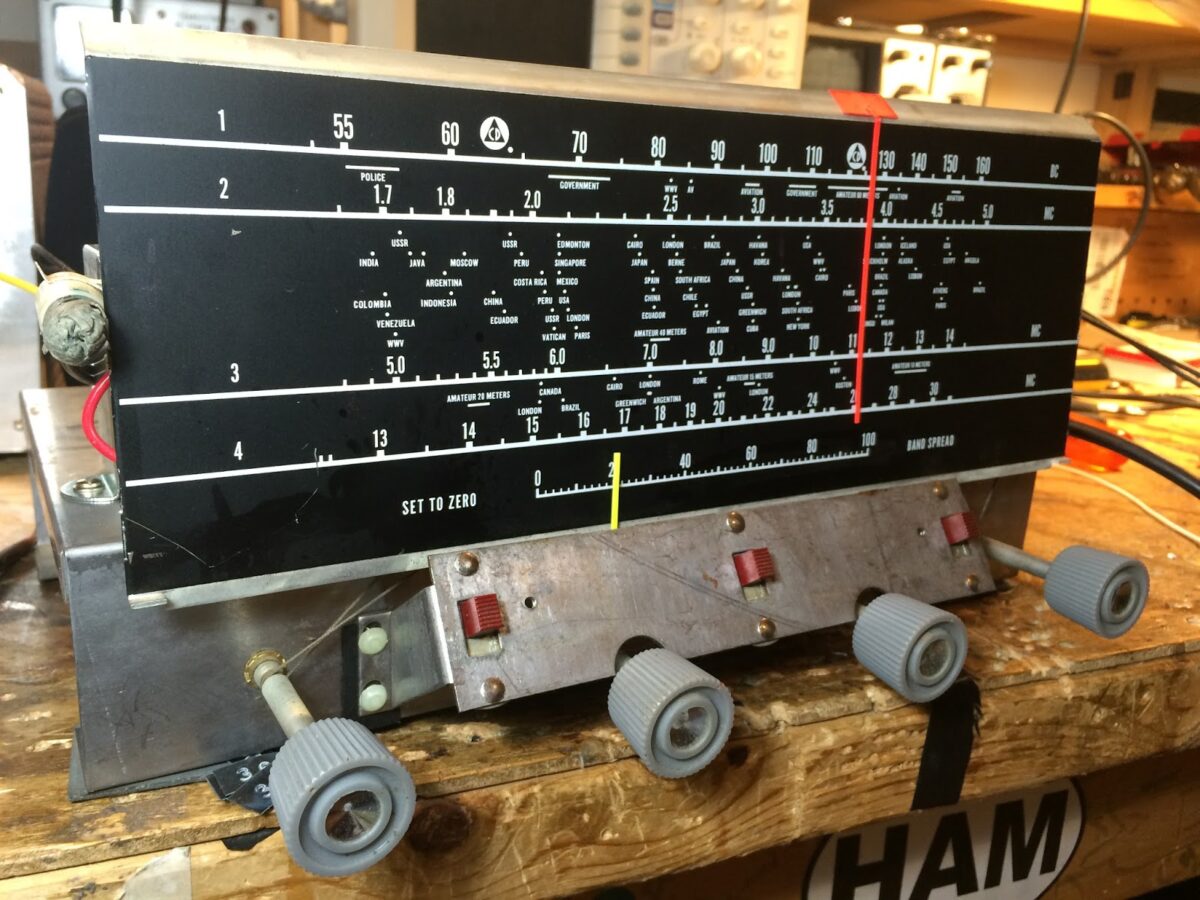
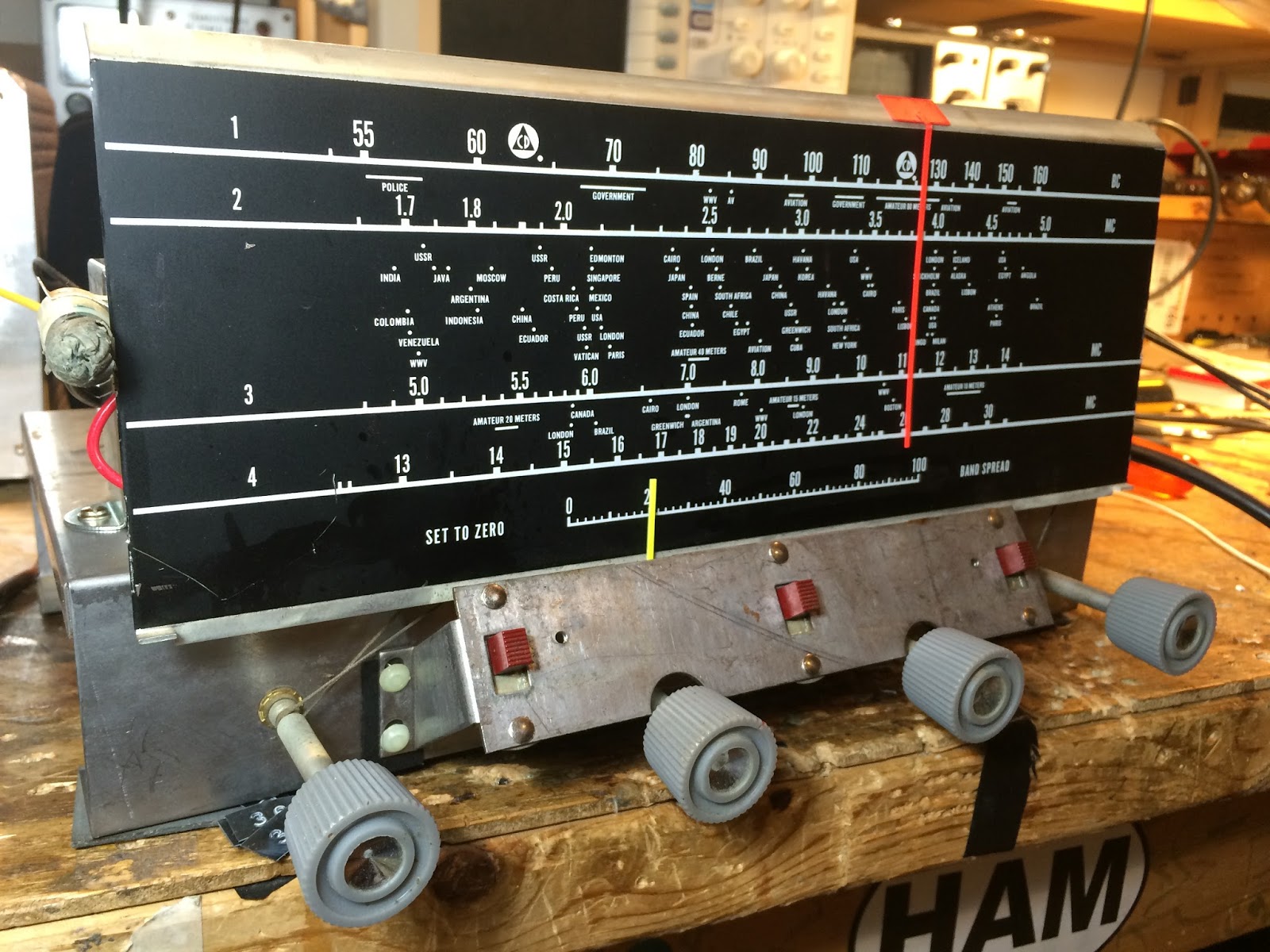
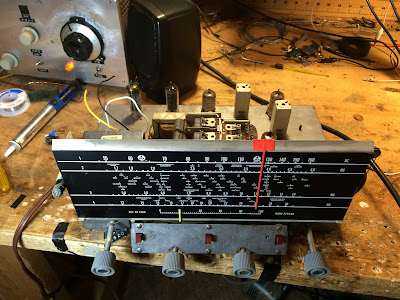
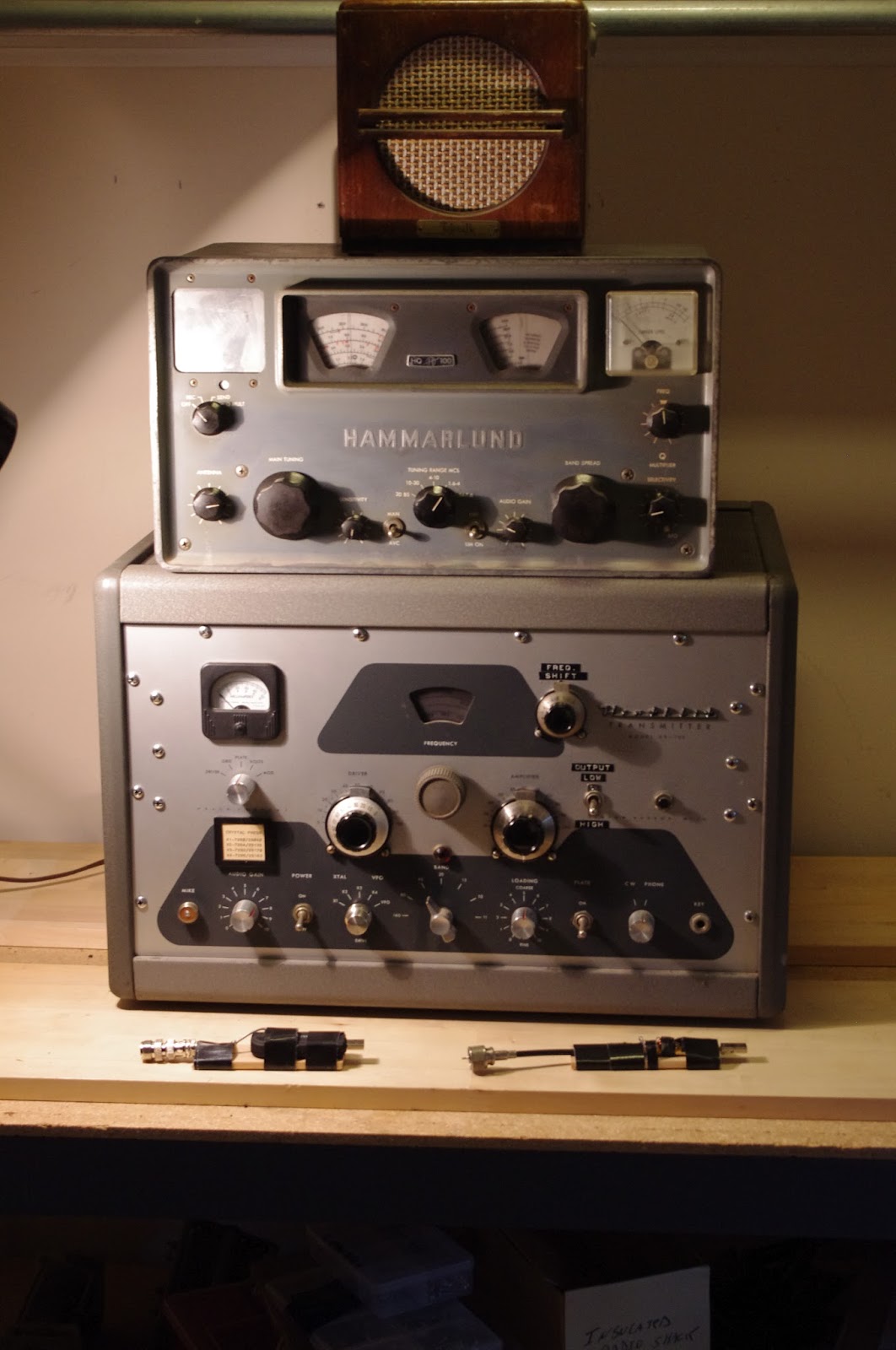
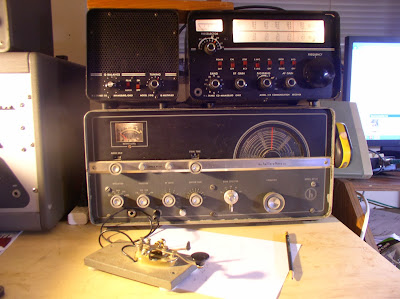
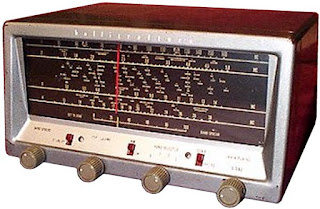
I am pleased to report my S-107 is restored to full function. Based on the build up of filth on it before cleaning, it is also cleaner than it has been for many years. The greasy dirt (I shudder to think what it was made of) in between the flutes of the control knobs has succumbed to a toothbrush and detergent. Who’d have thought what a difference clean controls would make in the overall appeal of a radio?
The S-107 was purchased without negotiation from a local and fellow member of the Long Island Mobile Radio Club for ten bucks. I cheerfully handed over a ten spot and drove home with this rig.
On the bench, the tubes lit, and I could hear a couple of AM stations, but it made an awful racket with 60/120 cycle hum. New electrolytic caps cured that. The chassis felt “hot” to the touch. Resistance checks on the HV-to-AC sides of the transformer confirmed that, thankfully, there were no shorts. On advice of some pros on this list and elsewhere, I removed a cap and resistor from the AC line to the chassis that Hallicrafters thought was a good idea. With a new three wire grounded plug, the chassis was now cold.
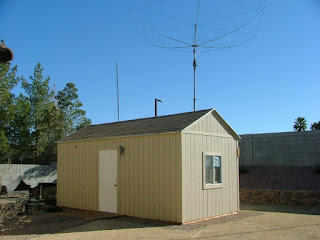
Alignment was done with an old Conar signal generator (my $1 victory from an old hamfest) and trusty Tek 465 with frequency counter connected to its rear connector. The double IF transformers peaked up, and so did the front end compression caps on all bands. And now, the radio really receives CW and SSB! With a simple dipole (my beam seems to have gotten sick from Irene and Sandy) I get good signals on 80, 40, and 20. Maybe next weekend I will have time to try the upper bands during daylight hours. But, the signal generator suggests they should be fine.
The ten buck receiver needed ten bucks worth of electrolytics. And I needed to buy a little 20 buck kit of Bristol Splined wrenches. (Nobody I thought to ask had a set to lend.) They were needed because: Another Hallicrafters bit of wonderment is that the setscrews in the control knobs need to be turned with these unusual wrenches that look like, but aren’t, hex keys. Well, I suppose I can say I have the wrenches if I decide to restore another Hallicrafters. I hear Collins has them too.
I think I mentioned that I had to restring both the band spread and main tuning with real dial cord. Another three bucks, perhaps. So, my ten buck receiver is still a bargain at around 40 bucks in all. And, I had a lot more than 40 bucks worth of fun. I spent part of the afternoon just listening to the receiver, it sounded so good. You know how it is when you first listen to a new receiver.
Now, next thing will be to see how it does making contacts with a Knight T-50. I know the T-50 is not quite QRP. I probably puts out about 25 or 30 watts.
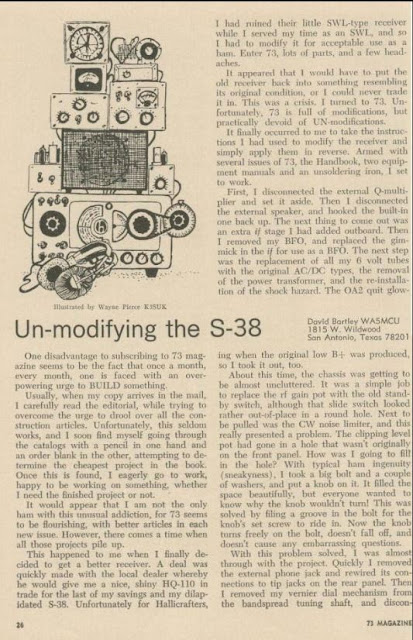
This will be about as close to my novice station as I am willing to fall. The original station had the T-50, but no VFO (which came with the T-50 I have now); but the receiver was an S-38E, which was, (collectors notwithstanding) a piece of crap. And it’s dangerous since it is really one of those transformerless AM radios in shortwave clothing. No wonder I only made a handful of contacts with it as a novice. I have no nostalgia for my old Hallicrafters S-38E. I hear folks recommend operating it with an isolation transformer. I have a better idea. Don’t plug it in.
I had so much fun with the S-107, though, I am starting to think about restoring an S-108 or an SX-110.