Category: Farhan
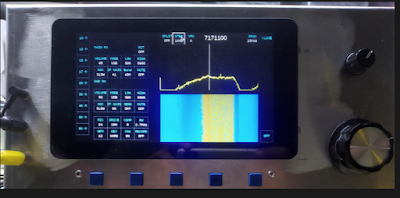
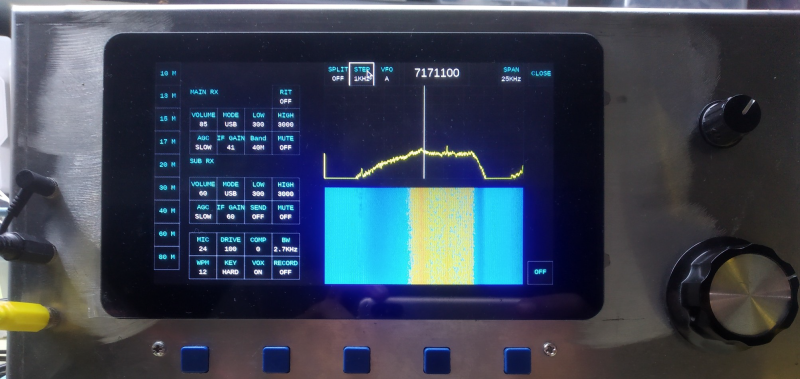
SolderSmoke FDIM Interview with Farhan VU2ESE — The sBITX is Coming!
Bob Crane W8SX — our correspondent in Dayton/Xenia — once again collected interview with FDIM presenters. Thanks Bob! Here is his talk with our friend Farhan:
http://soldersmoke.com/2022 VU2ESE.mp3
Here is a great post on the sBITX (May 30, 2022) from Farhan’s web site:
https://www.vu2ese.com/index.php/category/uncategorized/
Here is Farhan’s amazing presentation on the sBITX at the 2021 FDIM:
https://soldersmoke.blogspot.com/2021/11/farhans-amazing-knack-story-from.html
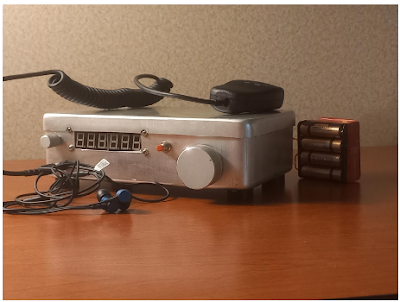
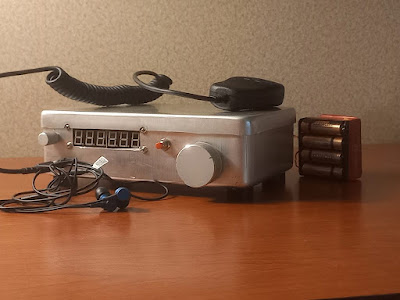
Farhan’s New Rig: Daylight Again! Analog!
In 10 seconds,
-
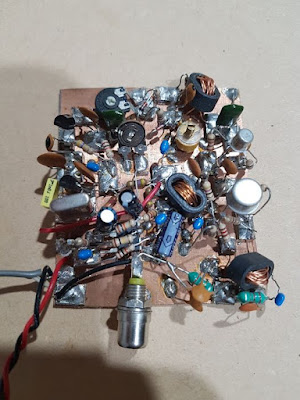
A high performance, 7MHz, 5 watt SSB rig
-
Draws just 24 mA of current
-
90 dB dynamic range, 80 dB close-in dynamic range
-
3D printed rock stable, slow tuning PTO with zero backlash.
-
3D printed toroids
-
You have all the parts in the junk box or you can buy them tonight at the vendor night.
-
Very stable, slow tuning VFO with no backlash
-
Costs less than 20 dollars to build, even in new parts.
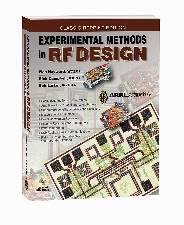
“Experimental Methods in RF Design” LADPAC Software Available FREE!
We’ve frequently said that is pays to check the W7ZOI web site. Tony G4WIF did just that and pointed us in that direction, noting that the LADPAC “Ladder Package” software is now available for download from that site.
Homebrewers will really want to have that package on their computers. There are all kinds of useful programs in that package: software for designing crystal filters and feedback amplifiers, a program that allows you to think systematically about receiver gain distribution and dynamic range, and many other useful things.
You can get the program here:
http://w7zoi.net/emerrata.html
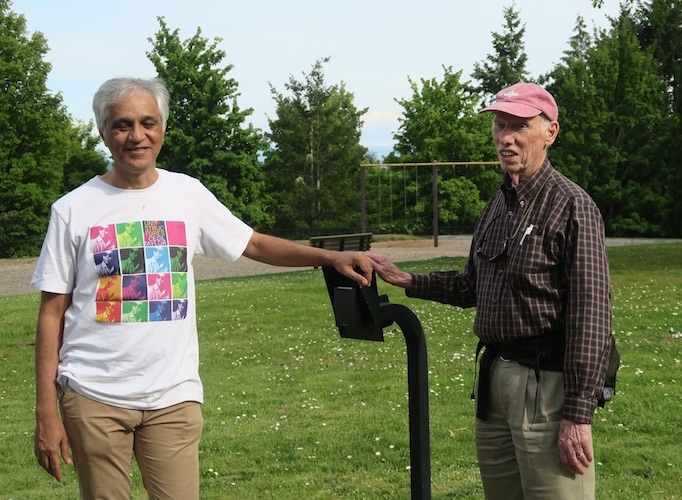
Also on Wes’s site is this May 22, 2022 picture of Farhan VU2ESE with EMRFD co-author Bob Larkin, W7PUA.
Thanks Wes!
Back to the 1970’s! Homebrew Keyboards! Don Lancaster’s TV Typewriter
– f
So many things from the video resonated with me:
— The importance of building and testing, stage by stage. The narrator admits “I might have screwed that up.”
— Homebrew keyboards! Make your own keyboard springs you pathetic appliance operators!
— Wood box.
— Origins of ASCI
— The scary 1970s. Indeed. I started High School in 1972.
— Schematic errors! Oh the humanity! Erratas.
— Appeals to the Digital Gods. (Not as powerful as The Radio Gods.)
— A Gimmick Twin Lead.
— “So many different disciplines went into building this thing…”
— A taste of the home computing revolution of the 1970s.
— Farhan is right — he was K3BYG. But that call now seems to belong to someone else.
Don Lancaster’s unofficial autobiography:
https://www.tinaja.com/glib/waywere.pdf
Clearly, Don Lancaster has The Knack!
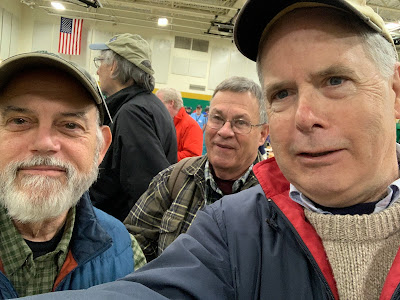
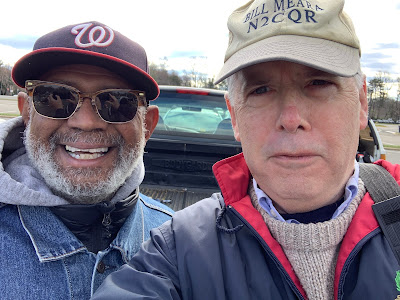
Vienna Wireless Winterfest Hamfest 2022
Exorcism Lite — Spur Suppressed on 17 meter Transmitter — Split TX/RX Station On The Air
2) Try putting a series LC shunt circuit tuned to 41 MHz at the output of the carrier oscillator (between the oscillator and the buffer).
3) Reduce the voltage to the oscillator/buffer. I have this on a pot, so I can adjust it down to the point where the remnant of the harmonic is no longer audible, while keeping the main carrier osc signal sufficiently strong.
It seemed to work. I could now hear the desired frequency for spotting, without the confusing tone from the spur.
Why had I been able to do this back in 2002 in the Azores using a simple trimmer cap to ground? My guess is that I was using my Drake 2-B as the receiver. The trimmer cap to ground may have reduced harmonic output. And I was probably cranking back the RF gain on the 2-B to the point where I could hear the desired signal but not the remnants of the spur. I have no RF gain control on the Barebones Barbados receiver that I am using in this project.
So, what’s the lesson from all this? Well, if you are faced with a serious technical problem, and you find yourself considering complicated and difficult solutions, go to the Dominican Republic for about a month (especially if it is January or February), and then take another look at the problem when you return. If you are unable to travel this far or for this long, taking a walk or taking a weekend break from a troublesome problem will likely have a similar mind-clearing effect.
The video above shows part of a February 1, 2022 QSO with Gar WA5FWC using the split TX/RX 17 meter rig. Gar is an amazing long-time SSB homebrewer who got his start with phasing rigs back in the day.
Exorcism Completed! Getting Rid of the Spur in my 17 meter SSB Transmitter using a TinySA (video)
To re-cap: The problem became evident when trying to “net” or “spot” my transmitter onto my receive frequency. Around 18.116 MHz, I could hear at least two tones in the receiver as I moved the transmitter frequency. I needed to get rid of the extra tone.
First, thanks to all who sent in suggestions. They came in literally from around the world, and this is a demonstration of the IBEW in action. I used or at least tried all of them. They were all good ideas.
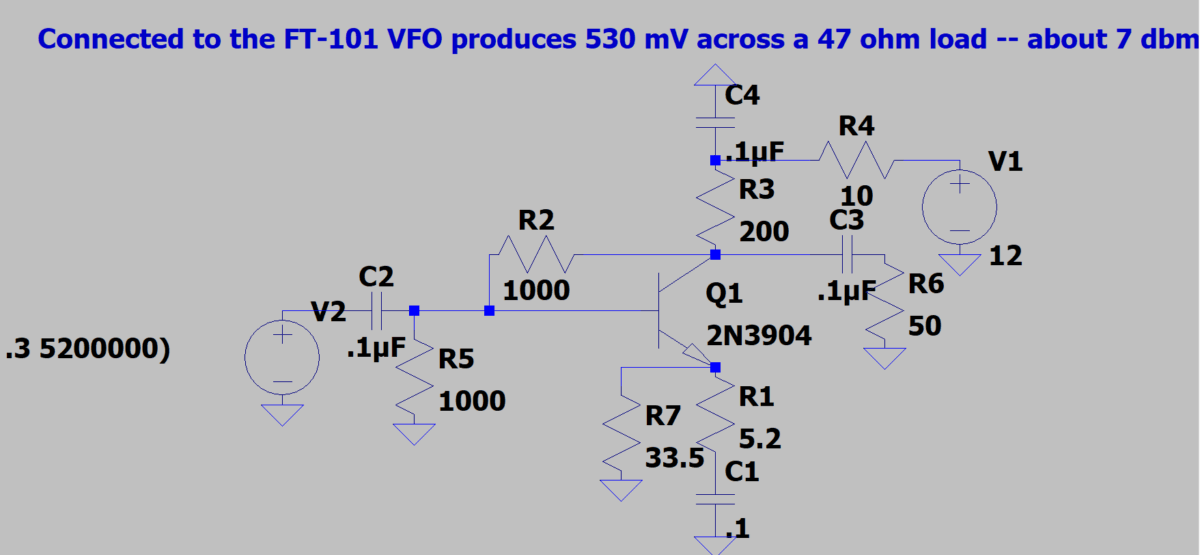
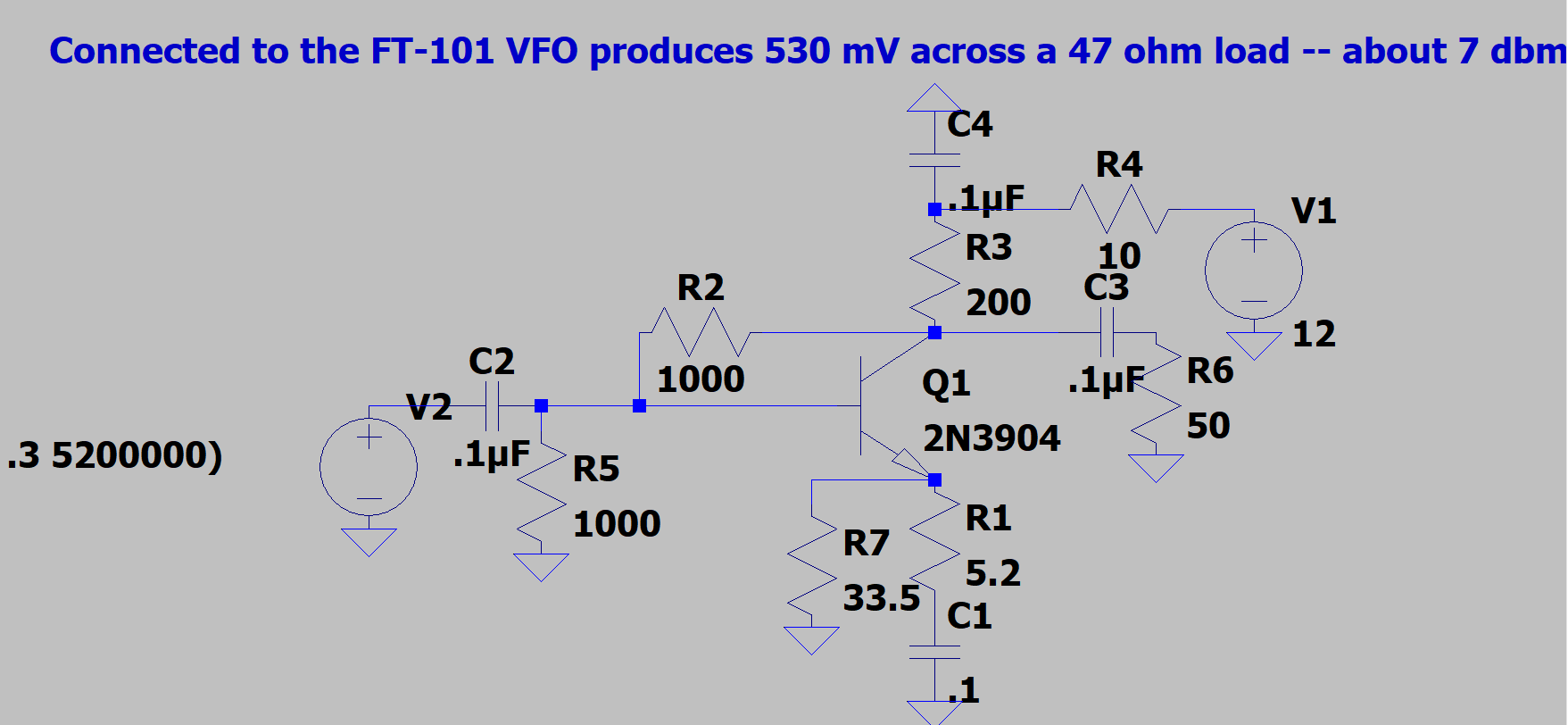
Following Vasily Ivananeko’s pseudonymous suggestion I rebuilt the carrier oscillator (apologies to G3YCC). I used the carrier oscillator/buffer circuit from Farhan’s BITX20.
Henk PA0EME said I should look at the signal level at the input ports of the NE602 mixer. Henk was right — the VXO input was far too high. I lowered it, but the problem persisted.
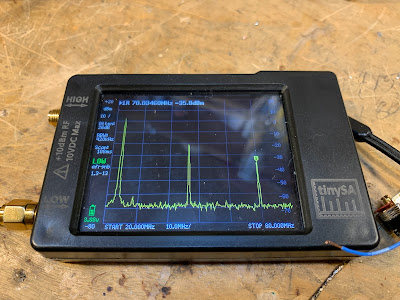
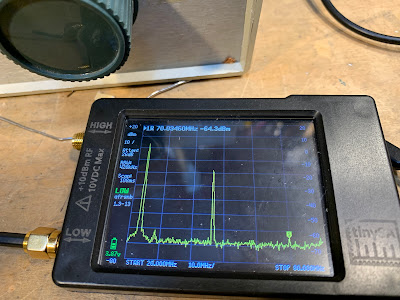
At first, I thought that the spur in question was so small that it would not show up on the air. I could not see it in the TX output using my TinySA spectrum analyzer. That was good news and bad news: Good that it was not showing up on the air, bad that I could not see it in the TinySA and use that image in the exorcism.
At first I thought that the spur was being caused by the 10th harmonic of the carrier oscillator and the third harmonic of the VXO. This seemed to fit. So, following VK3YE’s sage advice, I built a little 69 MHz series LC trap (using a coil sent by AA1TJ, on a board CNC’d by Pete N6QW). That trap succeeded spectacularly in crushing the 10 harmonic. Look at these before and after shots on the TinySA:
Spectacular right? But guess what? The problem was still there.
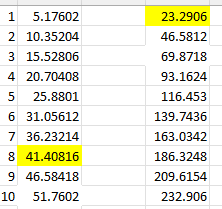
I scrutinized the situation once more. I realized that the spur would be more visible if I put the TinySA on the input of the transmitter’s PA (a JBOT amp designed by Farhan) as opposed to putting it on the output. Watching the spur and the needed signal move in the TinySA as I tuned the VXO, I realized that they were moving in opposite directions. This indicated that the spur was the result of a carrier oscillator harmonic MINUS a VXO-generated frequency (as the VXO frequency increased, the spur frequency decreased). Looking at my EXCEL spread sheet, I could see it: 8th harmonic of the carrier oscillator MINUS the main output of the VXO.
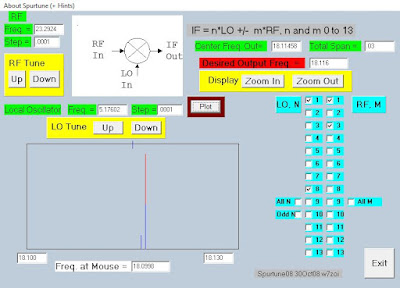
To confirm this, I plugged the values into W7ZOI’s Spurtune program. Yes, the spur popped up and moved as predicted.
For further confirmation I shut down the carrier oscillator by pulling the crystal from the socket, and then just clipped in a 5.176 MHz signal from my HP-8640B signal generator (thanks KB3SII and W2DAB). Boom! On the TinySA, the spur disappeared. Now I at least knew what the problem was: a harmonic from the carrier oscillator.
Following good troubleshooting practice, I turned off the gear and went to bed. When I woke up, an idea came to me: Before launching into a lot of filtering and shielding, just try running the carrier oscillator at a lower voltage, seeing if doing so might reduce the harmonic output. I disconnected the carrier oscillator board from the main supply and clipped in a variable voltage bench supply. Watching the signal on my TinySA, I watched as the spur completely disappeared as I reduced the voltage from around 13V to 10V (see video above). The main signal frequency level did not change much. I tested this by listening for the hated extra tones. They were gone. Exorcised.
Key lessons:
— Spur problems are difficult to troubleshoot. Armstrong’s superhet architecture is, of course, great, but this is definitely one of the pitfalls. Single conversion makes life easier. IF selection is very important. Choose wisely!
— When looking at the TinySA as you tune the rig, pay attention to which way the spur is moving. This provides an important clue regarding the combination of harmonic you are dealing with.
— The TinySA is a very useful tool. It seems like it is easier to use than the NanoVNA (which is also a fantastic tool).
— It can be fun and rewarding to re-visit old projects. In the years between original construction and the re-look, new test gear has become available, and the skill and experience of the builder has improved. So problems that once seemed insurmountable become fix-able.
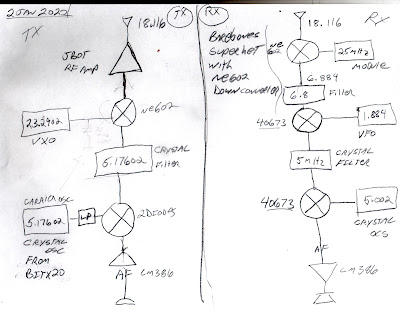
— Thinking through a problem and thinking about possible solutions is very important. It pays to step away from the bench to think and rest. Rome wasn’t built in a day. Here’s a rough block diagram that I drew up (noodled!) while trying to figure out this problem:
SolderSpace! N2CQR from Geostationary Orbit
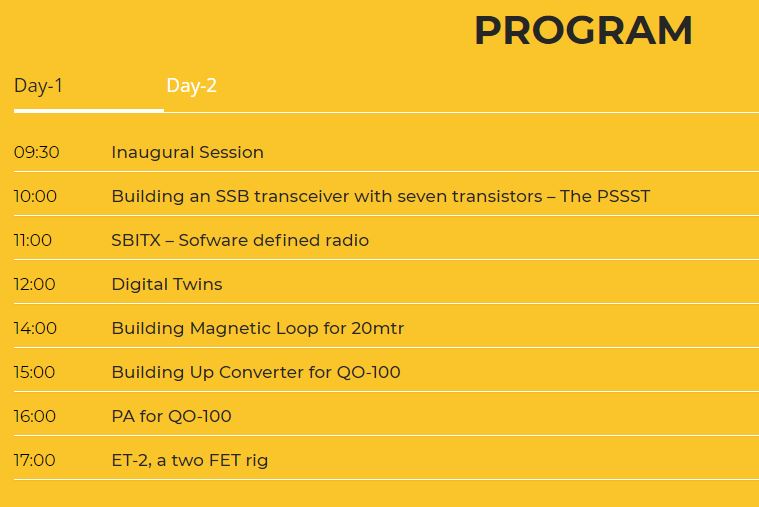
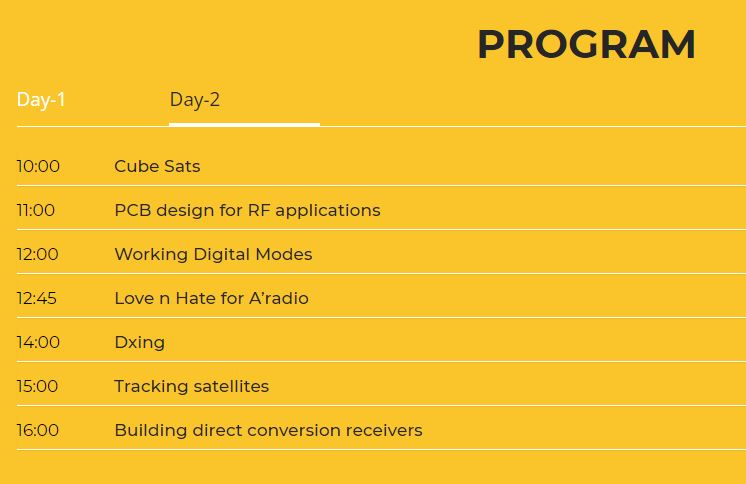
The Lamakaan Annual Radio Convention Starts Today!
Here’s a time zone converter: https://www.timeanddate.com/worldclock/converter.html?iso=20211211T043000&p1=505&p2=250&p3=137
Here is the Lamakaan Club’s YouTube Live Channel. https://www.youtube.com/watch?v=cRznKwGgvDo
I don’t know how we might be able to watch or listen via the QO100 satellite. The U.S. is not in the footprint of this bird. But there is a good WEBSDR receiver run by BATC and AMSAT DL: https://eshail.batc.org.uk/
Farhan’s Amazing Knack Story: From a Boyhood SW Receiver to the Design of the sBITX SDR
— Farhan talks about his practice of taking the pictures of new rigs with the new rig sitting atop the book that was most important in its design and construction. FB.
— I was really blown away by Farhan’s presentation of how the uBITX advertisement was inspired by and in many ways based on the Heathkit ad for an HW-101. Amazing.
— I learned a lot from Farhan’s discussion of SDR theory. I pledge to spend more time with this. I really like Farhan’s hybrid HDR/SDR approach.
— But I have a question: Farhan seems to say that we’d need a big expensive GOOGL computer to do the direct sampling HF SDR. But doesn’t the little RTL-SDR do just that? Without a GOOGL?
— Great to see Wes’s AFTIA being used in the sBITX.
— Really cool that Farhan has his mind on VHF transverters when designing the sBITX. I liked use of the TCXO module to free up one of the Si5351 clock outputs. FB. And great to include an idea from Hans in this rig.
Thanks very much to Farhan (who stayed up until 3 am to do this!) and to the RSGB for hosting.
Tribal Knowledge: Pete N6QW on “How to Make Things Work”
Check out Pete’s great advice here:
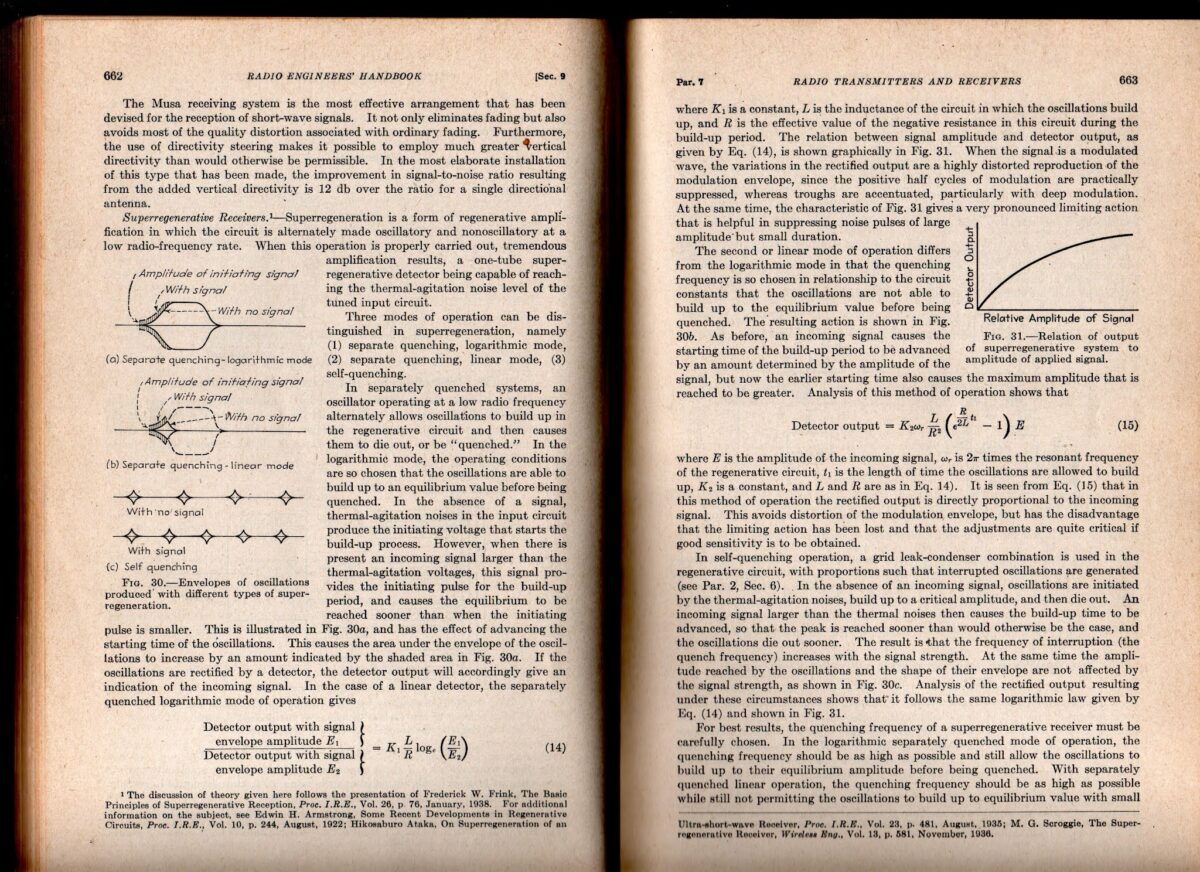
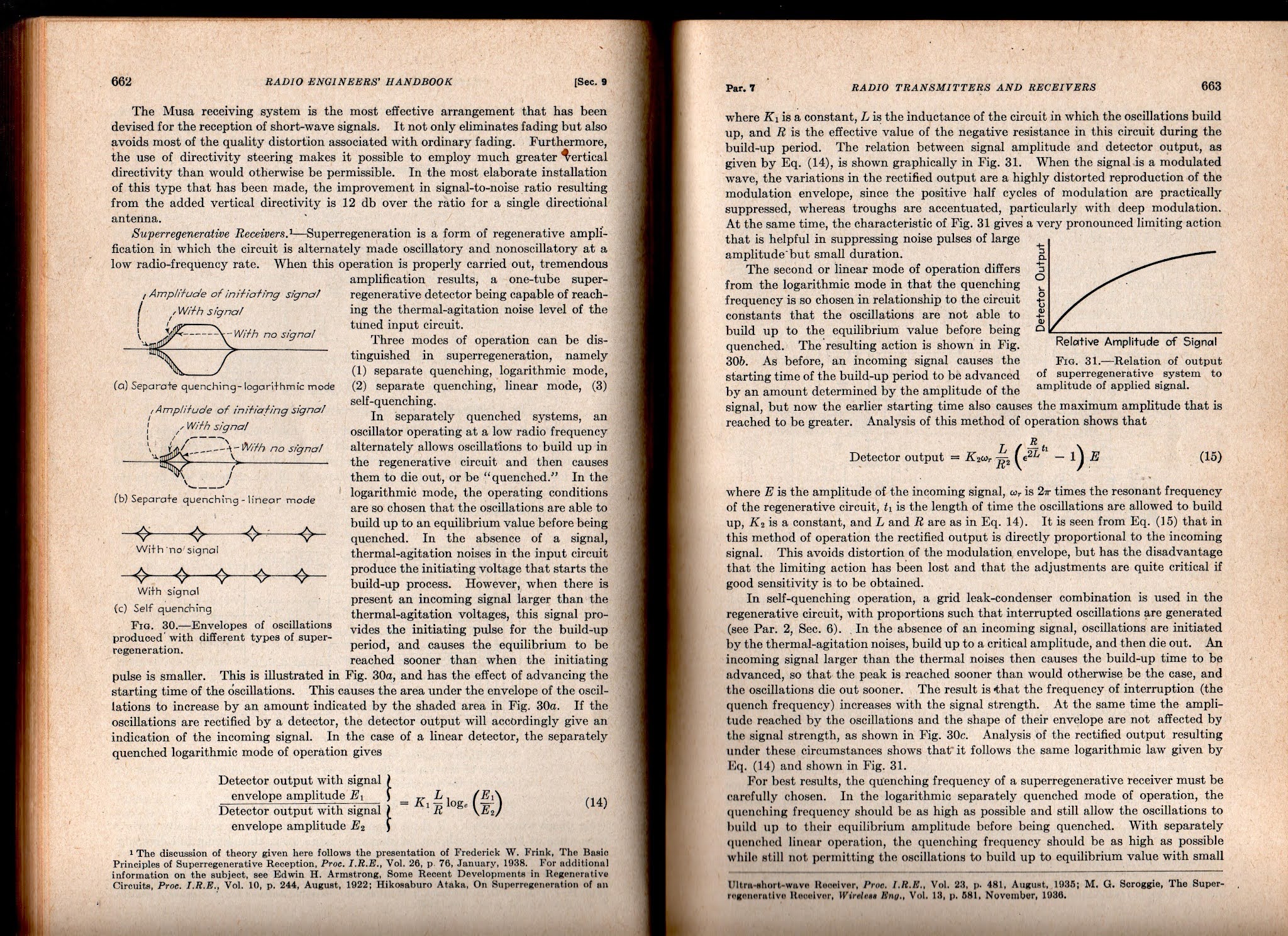
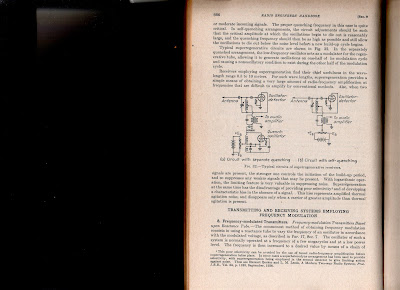
Super-Regeneration is Super-Strange
1BCG — 1921 Transatlantic Test and the Upcoming 100th Anniversary
On December 11, 2021 the American Radio Relay League, The Radio Club of America and the Antique Wireless Association will recreate these historic transmissions on 160 meters near the same location that was used in 1921, using a replica transmitter constructed by volunteers at the Antique Wireless Association. This special event is your opportunity to relive a historic moment in amateur radio history.
The operating schedule and frequency for the 1BCG Transatlantic Tests Special Event has not been established.
Additional details will be posted here when they are available.
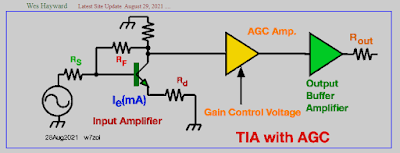
Adding Automatic Gain Control to the Termination Insensitive Amplifier
SolderSmoke Podcast #232 — Mythbuster, Pete’s Tube CW Rig, Pete’s DC RX and Simple SSB Rig, NanoVNA and TinySA, Very FB Mailbag
Frank Jones and the FMLA — Possible Victory?
IBEW Stickers: NASA, Johns Hopkins APL….
Cycle 25 Lookin Better Today: SFI 93 SN 47
Toobular! A Tube Transmitter
SR-160
Simple SSB rigs around the world!
KI7NSS’s Pacific 40
The Mythbuster and the Struggle Against the Urban Legend
W2EWL’s Cheap and Easy SSB
W4IMP’s IMP. Articles in ER by Jim Musgrove K5BZH and Jim Hanlon W8KGI
The Spirit of Homebrew SSB. From Electric Radio K5BZH December 1991
Reduced Front End Gain on the DIGITIA
Back on 17! HP3SS sells HBR receiver to Joe Walsh
Maybe another Moxon?
NanoVNA — Alan W2AEW helped solve mystery of why NanoVNA not providing accurate readout of circuit impedance. Over driving. Need attenuator.
TinySA — Limited Resolution Bandwidth. But you can listen with it! See video on blog.
— Google Feedburner to end e-mails from the blog 🙁
— Paul VK3HN — TIA AGC? Farhan and Paul looking into options
— Ciprian’s Romanian Mighty Mite
— Dino KL0S SolderSmoke GIF and graphical presentation on sideband inversion
— Allison KB1GMX helped me on 24 volts to IRF 510 issue.
— Dave K8WPE Wabi Sabi and Martha Stewart. And thanks for parts! 40673s!
— Steve N8NM building a 17 meter rig with 22.1184 crystals in a SuperVXO and a 4 MHz filter.
— Dean KK4DAS restoring an old Zenith. One hand behind your back OM.
— Pete Eaton debating SSB or DSB for 17. Go DSB Pete!
— Richard KN7FSZ a FB HBer. Asked about my solid-stating of Galaxy V VFO.
— Walter KA4KXX on benefits of no-tune BP filters like Farhan’s FB.
— Jack 5B4APL on Time Crystals and Homebrewing in the 4th dimension. FB OM!
— Moses K8TIY listens to the podcast with his young son Robert. Crank it in Robert!
— Farhan and the SBitx on Hack-A-Day
— Also Tom’s receiver from junked satellite rig on Hack-A-Day
— Todd K7TFC sent in beautiful message about the spirit of homebrewing. On the blog.
— Grayson KJ7UM was on Ham Radio Workbench with George Zaf
— AAron K5ATG running a uBitx with a homebrew tuner and antenna. Hope I can work him
— Heard Mike WA3O last night on 40 DIGITIA. Water cooled amplifier