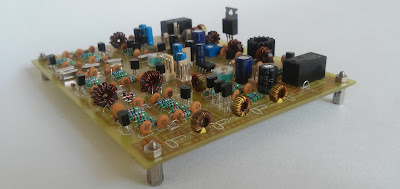
Update on Farhan’s BITX 40 Module

It is truly a thing of beauty: http://www.hfsigs.com/

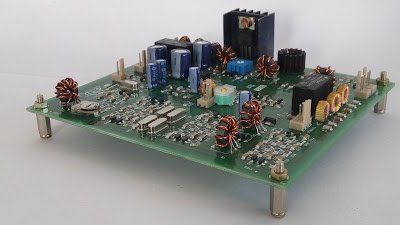
The boards come assembled (as seen above). You can then add peripherals and modify away. It is “hackable.”

Hackable

The BITX40 will inspire you to experiment. Modify it, mount it, tweak it, change it.
The PCB uses all analog large sized SMD components that are laid out on an easy to understand manner on a double sided board with broad tracks. This can be your main module around which you can start experimenting. There are jump-points from where you can add more modules like the DDS, more bands, better audio amplifier, etc. Imagination is your limit. You can separately increase the power amplifier’s supply voltage to 25 volts to be more than 20 watts of power : You will have to add a better heat sink. The mods are on the way!
The board can be installed inside any box that you like. Make your own station rigs, man-packs, trail radios or mount it in a cigar box and leave it on your bedside table. The tuning capacitor has been replaced by a varactor tuning so you can place the tuning knob anywhere as it only carries a DC voltage.

Farhan writes:

For the last few months we have been working bringing low cost, tested SSB boards. Finally they are here. Priced at Rs.2200 At the moment, they are available only in India until we sort out an inexpensive way to post them to other countries. Visit www.hfsigs.com and pick up one!

The BITX40v3 is a complete 7 MHz SSB transceiver on a board that puts out 5 watts of clean audio and it has a very crisp, all analog receiver. It is based on the popular BITX circuit. It is a high quality double side, PTH PCBs with machine assembled SMD components, hand wound coils and each of them is individually tested. All the connectors and wires needed are included in the kit.

Update on Farhan’s BITX 40 Module

It is truly a thing of beauty: http://www.hfsigs.com/

The boards come assembled (as seen above). You can then add peripherals and modify away. It is “hackable.”

Hackable

The BITX40 will inspire you to experiment. Modify it, mount it, tweak it, change it.
The PCB uses all analog large sized SMD components that are laid out on an easy to understand manner on a double sided board with broad tracks. This can be your main module around which you can start experimenting. There are jump-points from where you can add more modules like the DDS, more bands, better audio amplifier, etc. Imagination is your limit. You can separately increase the power amplifier’s supply voltage to 25 volts to be more than 20 watts of power : You will have to add a better heat sink. The mods are on the way!
The board can be installed inside any box that you like. Make your own station rigs, man-packs, trail radios or mount it in a cigar box and leave it on your bedside table. The tuning capacitor has been replaced by a varactor tuning so you can place the tuning knob anywhere as it only carries a DC voltage.

Farhan writes:

For the last few months we have been working bringing low cost, tested SSB boards. Finally they are here. Priced at Rs.2200 At the moment, they are available only in India until we sort out an inexpensive way to post them to other countries. Visit www.hfsigs.com and pick up one!

The BITX40v3 is a complete 7 MHz SSB transceiver on a board that puts out 5 watts of clean audio and it has a very crisp, all analog receiver. It is based on the popular BITX circuit. It is a high quality double side, PTH PCBs with machine assembled SMD components, hand wound coils and each of them is individually tested. All the connectors and wires needed are included in the kit.

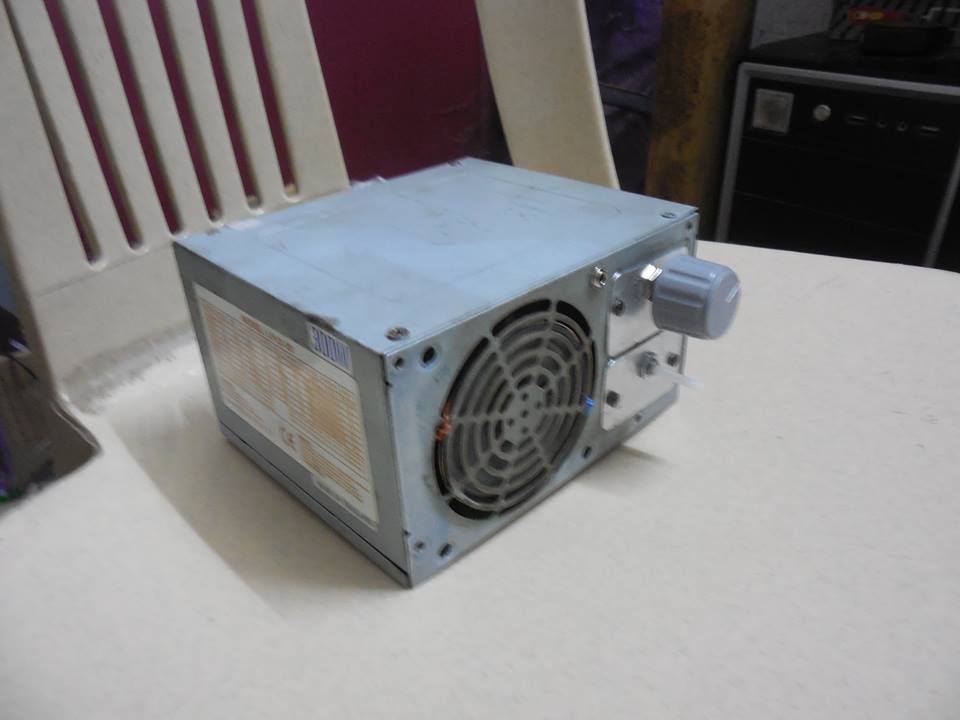
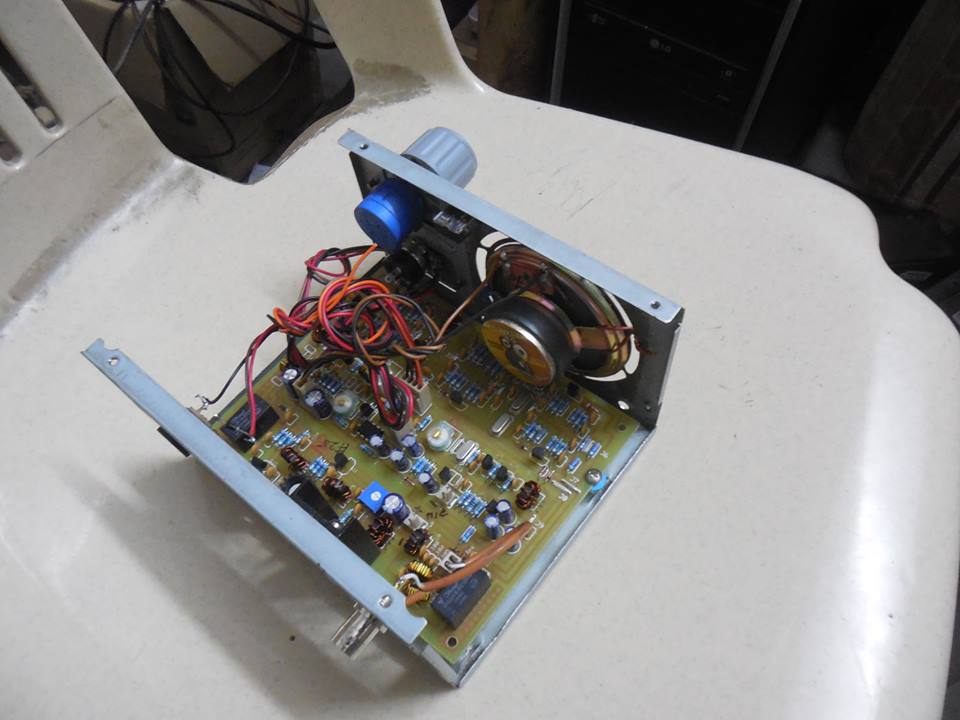
Re-purposed Computer Power Supply Box Provides a Home for a BITX Transceiver

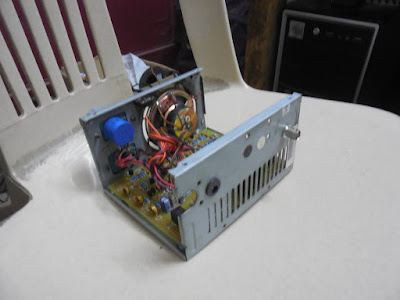
Jaydip VU3JOJ came up with a really inventive way to box up his new BITX transceiver. Nicely done. I especially like the way he put the speaker in the space intended for the fan. Very nice.

This appears to be one of the new BITX 40 meter “modules” described in yesterday’s blog post. FB! How fortunate the new board fits in the power supply boxes. That’s very lucky.

You know, I had an old computer power supply in my hand just yesterday. I almost threw it out. Obviously that would have been a mistake.

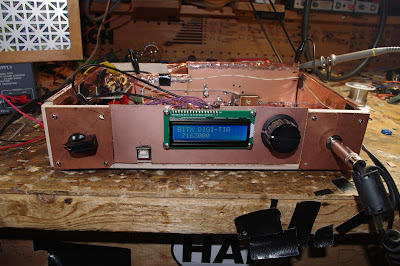
Today was a BITX day. Using my BITX DIGI-TIA on 40 I had a long QSO with Rich N3TDE. Rich has a BIT20 built from a Hendricks kit acquired at Dayton. He takes it with him on the Appalachian Trail.

A Really Nice Project: Farhan’s BITX40 Module

Wow, that board is a thing of beauty. And the story behind it is even more beautiful. Our friend Farhan took his famous BITX circuit, shifted it to 40 meters, and put the whole thing on one small board. It is now a module, but a module that makes up an entire SSB transceiver. The idea is that this module can provide a base for expansion and experimentation. You can add a digital display. Or a (gasp!) digital VFO. Or an RF amplifier. Or more bands. Or all of the above. It is a very cool idea.

Here is the most beautiful part: In an effort to help people who need help, Farhan has arranged for a collective of women to assemble the boards in their homes. They needed work, and Farhan gave it to them on good terms. Bravo Farhan!

In keeping with the earliest purpose of the BITX rigs (simple transceiver for Indian radio amateurs) this board is currently only available in India.

Check out the site:

The circuit description is especially good:

NP0 Is the Way to Go!

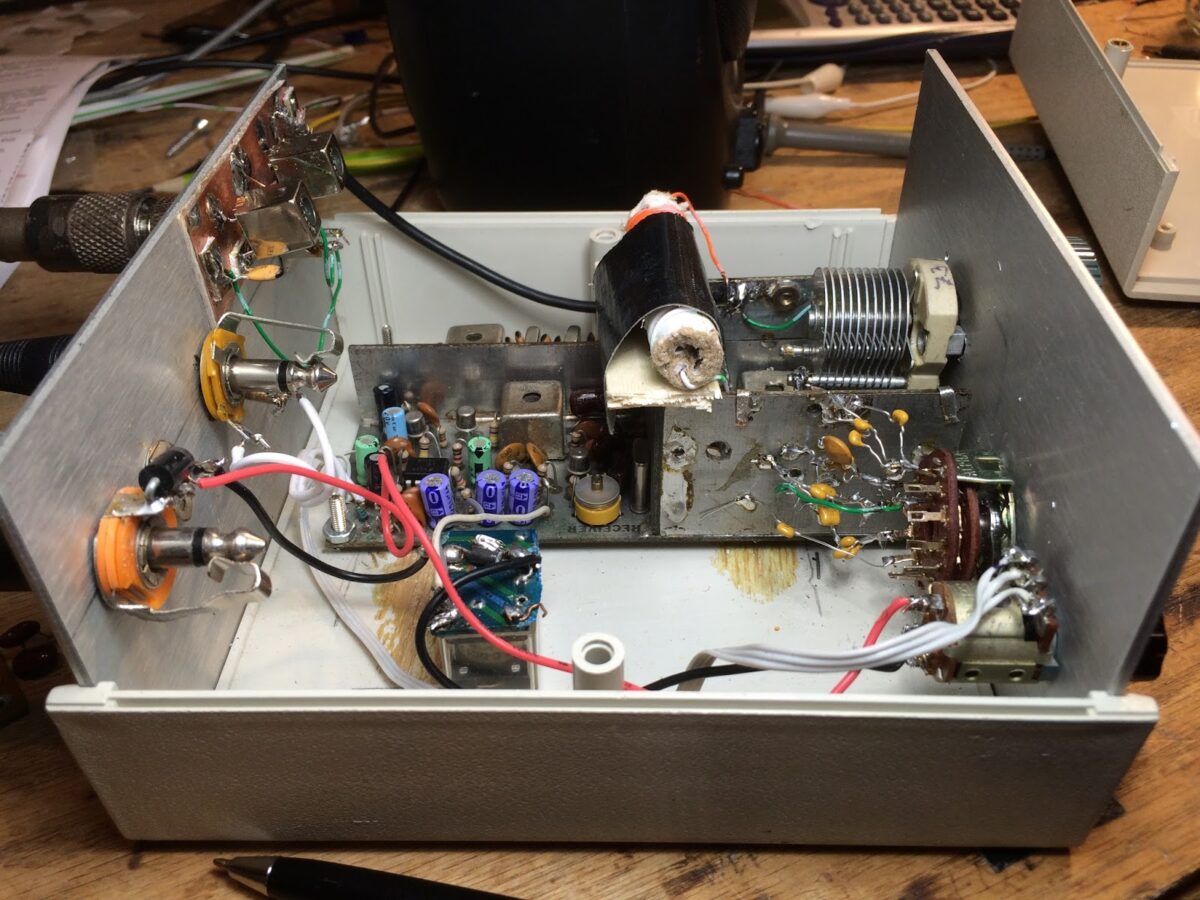
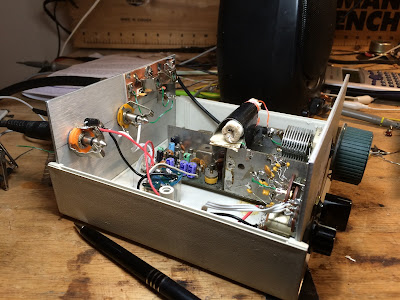
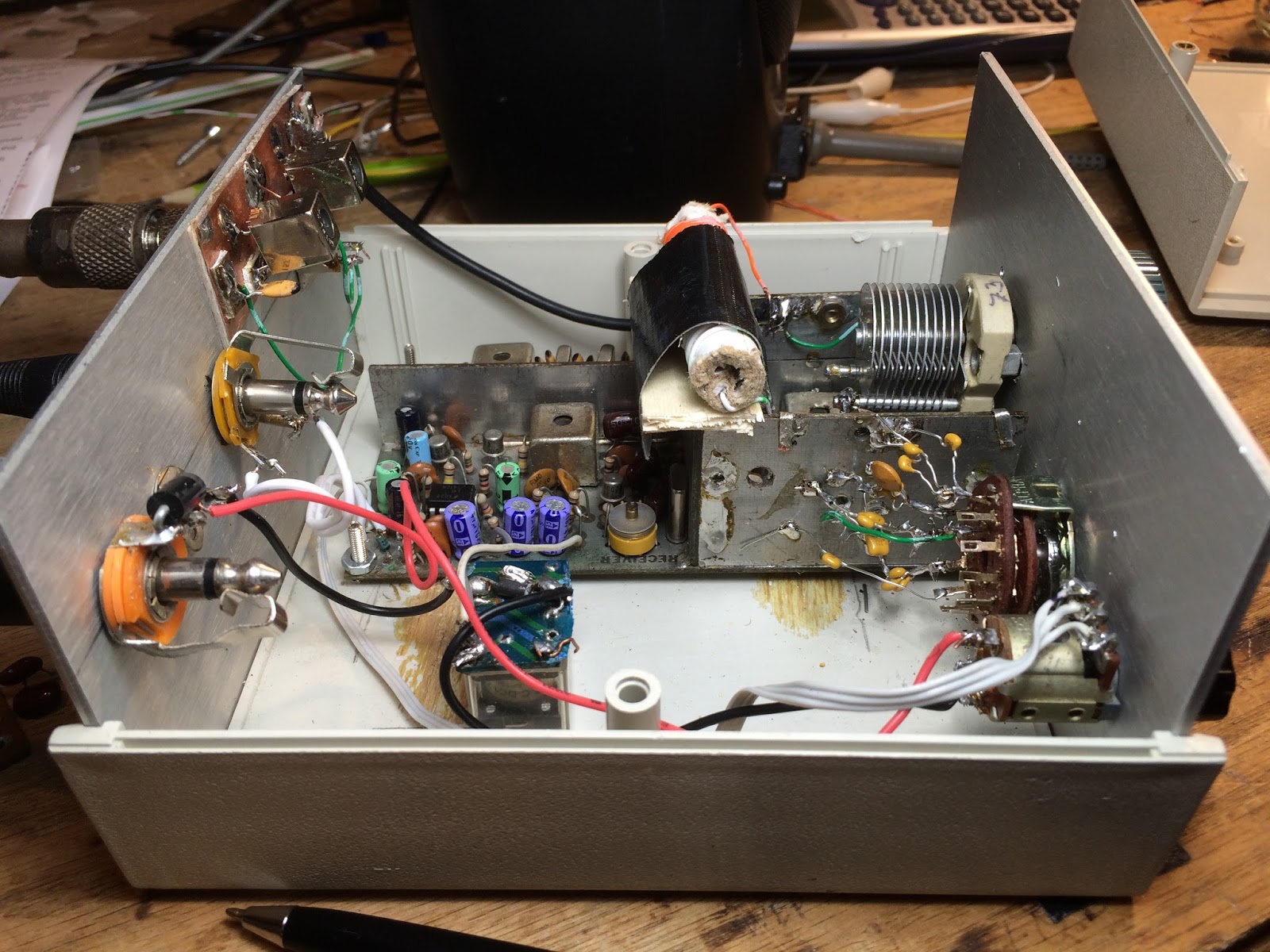
Much to the consternation of Pete “Digi” Juliano, I have been working on analog LC VFOs for simple superhet receivers. As described in earlier posts, I recently converted an old Barebones CW superhet to 40 meter SSB. At first, the VFO (2 -2.3 MHz) was not stable enough — it would slowly drift in frequency. (“We have a solution for that,” chuckled Pete.) My first effort at stabilization involved replacing the toroidal coil. The material in the core is sensitive to temperature changes and this can lead to instability. I found my traditional cardboard tube from a coat hanger, and made a coil of the needed inductance (you can see it in the pictures). This yielded some improvement in stability, but it was still drifting.

Next I tried taking out all the silver mica and disc ceramic caps in the LC circuit of the oscillator and replacing them with NP0 ceramic caps. The feedback caps are in the box below the tuning cap, but you can see some of the little NP0s on the outside of the box, connected to a rotary switch. This serves as the equivalent of variable “Bandset” variable cap, with the tuning cap serving as the “Bandspread.” I have seven switch positions, each covering about 40 KHz (with some overlap). This gives me all of the phone band and the bottom 30 kHz of the CW band.

Switching to NP0 caps really did the trick. The receiver is now very stable. When I told Farhan about my VFO woes, he mentioned that he’d had very good stability results with surface mount caps. I wonder if this success has more to do with those caps being NP0 than with their surface mount configuration.

Here is a good description of NP0:

NP0 Ceramic Capacitors are single-layer ceramic capacitors made from a mixture of titanates.

A NP0 ceramic capcitor is an ultrastable or temperature compensating capacitor. It is one of the most highly stable capacitors. It has very predictable temperature coefficients (TCs) and, in general, does not age with time.
NP0 stands for negative-positive 0 ppm/°C, meaning that for negative or positive shifts in temperature, the capacitance changes 0 part per million, meaning that it has a flat response across a wide range of temperatures; the capacitance of the NP0 capacitor stays constant (at the same value) despite variations in temperature.

From: http://www.learningaboutelectronics.com/Articles/What-is-a-NPO-ceramic-capacitor

But I think it is a stretch to claim that these marvelous caps do not “age with time!” That would be a really astounding property of the titanium dielectric. That would be a Negative-Positive Zero FLUX capacitor, right?

Putting Junk Mail to Excellent Use: Tony G4WIF’s Proto-boards


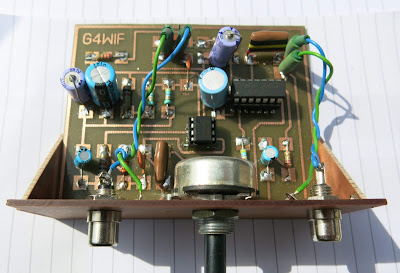
Tony’s Version of Audio Section of N6QW’s LBS Receiver

Tony Fishpool, G4WIF writes:

I’ve been intrigued by Pete’s matrix pad method. Of course, few of us have the machinery to mill them as Pete does, but etching is a possibility. Now some of Pete’s boards clearly have a lot of noodling behind them. His boards are quite big with little areas of pads and space between. The layout for the whole project has clearly been considered in advance.
I wanted a board that I could make modular, take little time to etch and adapt for the circumstances. These “proto-boards” are the result.

The project is Farhan’s “sweeperino” and one board is for the Si570, and the other the AD8307.
The Si570 board is now complete and working:


The PCB method is pure Chuck Adams. His videos on YouTube describe the toner transfer method better than I could.

The only difference for me is that my glossy paper comes free from travel agent brochures.
Just express a passing interest in Viking River Cruises and you will never pay for PCB paper ever again!
There is a free printing only version of the software I use, so if SolderSmoke listeners want to use the proto-board design, I will happily email them the files.


Kind regards
Tony G4WIF

Farhan’s Cool BITX 40 (video)

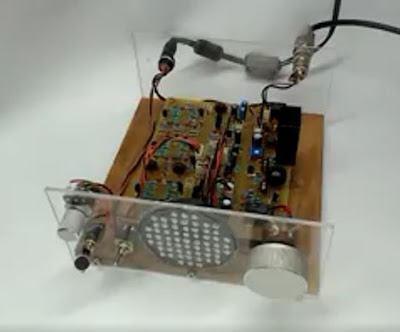
I especially like the wood base and the transparent front panel. But we have to send Farhan a D-104!

Check out the video of this rig in action:
Farhan posted:

The BITX40 has a redesigned crystal filter at 12 MHz that contributes to a very clear signal. Note the clarity on SSB and the absence of noise due to the three poles of filtering. This was charminar net on May 2, 2016. I couldn’t break-in. Probably because the tiny plug mounted mic was too far away from my mouth.

Soldersmoke Podcast #186 Is Available — April 1 Rap Up, Pi Talk from Pete, Collins and Raspberries, Bill’s Analog RX, Visits and Hamfests, MAILBAG

SolderSmoke podcast #186 is available:

— April 1 WireWrapRap Rap-up. Feedback from participants.

— Bench Reports:
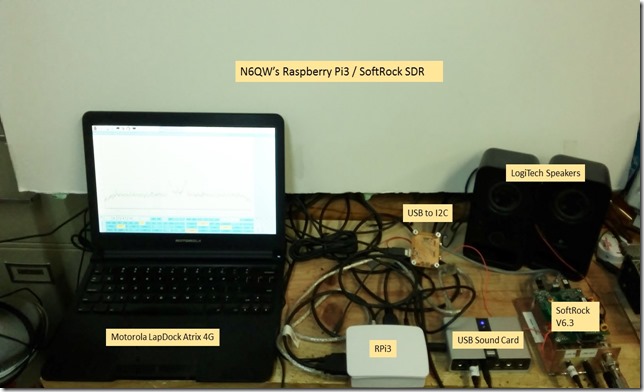
– Pete talks about his Raspberry Pi SDR DSP rig.
– Bill talks about on his Mate for the Mighty Midget Receiver and his R2 Frankenstein.

— A story from Pete’s youth: Cruising the “Miracle Mile” with a Heathkit “Ten-er.”

— Why do we need more RF amplification (in receivers) on 20 than on 40?

— Have you ever tuned the BFO freq in a superhet by the “sound of the noise?”

— A visit to Washington by Jonathan W0OX and family.

— Bill goes to Winterfest Hamfest with Armand WA1UQO

— Pete on the importance of balance (in life).

— Great interviews on QSO Today: Peter Parker, Grayson Evans, and Ashhar Farhan.

— MAILBAG:
– Paul Darlington M0XPD has a new book about life, travel, and the Dayton Hamvention.
– Michael AA1TJ QRV with a tuning fork at its 2,000th harmonic.
– Jonathan M0JGH living dangerously with homebrew QRP in Italy.
– Ben KC9DLM JoO with MMM
– Stefan DL1DF needs 3.579 MHz rock “with mojo.” We have it for you OM.

The music for SolderSmoke 186 was written and performed (the bass lines) by Pete’s son Tim. Thanks Tim!
Pete also suggested that we have some rap lyrics for this music, so renaissance man that he is, he composed some words. We are still looking for a performer.


Yo we solder no more – its wire wrap and cables
The cables connect to the small black box
hold on to your pants and pull up your socks
A cable goes here and a cable goes there
Turn on the switch and its Shazam all software


My Mate for the Mighty Midget Thermatron Receiver

A few days ago I received an e-mail from Jan PA3GSV — Jan is working on a receiver similar to my old Mate for the Might Midget and had some questions about how I’d handled the filter portion of the circuit. Then on Sunday, while listening to Eric’s interview with Farhan on the QSO Today podcast, I got so enthused that I felt compelled to work on a homebrew receiver. So out came the old Mate for the Mighty Midget. I built this thing in 1997-1998. It is described here:
In the above video I was listening on 75 meters to a very congenial early morning roundtable featuring W4CH, K5KBZ and others. I know, I know, this is the third or fourth video that I’ve made of this thing. This is almost as bad as 2B-mania. Or the Michigan Mighty Mite thing. I blame Jan. And Eric. And Farhan. And Grayson. And Lew McCoy!
Here is my e-mail exchange with Jan:
Bill:
I recently build the W1TS two tube xtal controlled transmitter, and am looking for a 80/40m companion for this that has a crystal filter.
At first, I wanted to build the “Simplex Super” and finally got hold of the 1700 kc crystals, but then they got lost in the mail…
Only part of a two box shipment arrived, with 455 kc fundamental frequency FT-241 crystals, so now I am looking for a diagram using a 455 kc IF. Jan

Jan: In this link you will find the schematic for the receiver I built.

I was not able to build the filter with the two 455 kc crystals. I could not obtain the needed crystals. I used two 455 kc IF transformers as described in my article. This resulted in a very broad frequency response but it was OK and quite good for AM.
Last year I put in a Toyo 455 kc SSB filter, but I did not match the impedances, so the results were not good. Your e-mail makes me want to work on this again!
Let me know how your receiver turns out.
73 Bill N2CQR
Thanks for your reply.
It is a neat looking little receiver.
And yes, I also have a cardboard box labeled “good junk” which is filled with stuff from ham fests J
Finally it will be put to good use!
I printed the article for some evening reading this week.
It will take me some time building this receiver, as there is some metalwork and mechanics involved.
I will let you know how the receiver turns out, and I am also curious what improvements you make on yours.
Thanks again, and I will let you know.
73 Jan PA3GSV

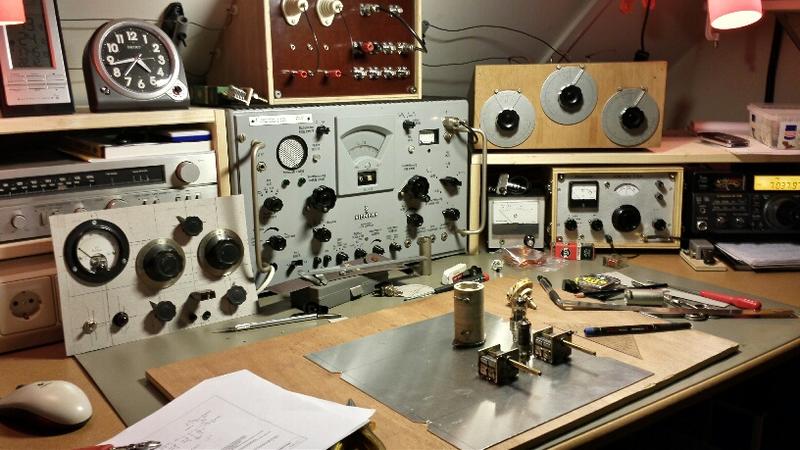
Wow, Jan has the Knack! Check out his station:

That’s the W1TS rig on the left. More pictures from Jan on his QRZ.com site. He too uses wood cabinets! I’m not alone! Here’s Jan, PA3GSV


Possibly the Best Ham Radio Interview Ever: Farhan on “QSO Today”


Stop what you are doing. Run — don’t walk — to the “QSO Today” website of Eric Guth 4Z1UG. There you will find his interview with Ashhar Farhan VU2ESE.

There is so much great information, inspiration and wisdom in this interview. I was so captivated by it that — even with the availability of the pause button — I was unable stop listening even for the time it would take to walk to the kitchen to refill my coffee cup. But at the same time, listening to Farhan describe the joy of bringing a new receiver into operation compelled me to go over to the bench — in mid-podcast — to tweak a receiver that I am working on.

In this podcast you will hear about how Farhan got started in ham radio, about his Elmers about the origins of the BITX, about the Minima and the new HF-1 rig, about Farhan’s spectrum analyzer project and about a new goodwill effort to send BITX circuitry to aspiring hams around the world, especially in developing countries.

Throughout you will hear Farhan speak of the importance of the book, Experimental Methods in RF Design.
I really do think this is the best ham radio interview I have ever heard. Congratulations and thanks to Eric and Farhan.
Here is the link:

A Major Change For SolderSmoke: Introducing the WireWrapRap Podcast!

A New Direction for SolderSmoke

Introducing Our New Podcast: “WireWrapRap”


Attentive listeners have probably noticed that for some time now the podcast has been drifting in a new direction. Some have been concerned by this change. I myself, as you know, have shared in many of these misgivings. But I have become convinced that it is time for a major change in direction. We’ve been doing this for more than ten years — we are one of the oldest ham radio podcasts. It is time for a change.
A number of people have encouraged me to make to this change. My co-host Pete Juliano N6QW is clearly the main influence. Pete has made me see the errors of my Ludite ways. He taught me that it is time to put away the Dymo tape and get with it with glowing numerals. Whenever I started getting enthused about VXOs or about Permeability Tuned Oscillators using brass screws moving through hand-wound coils, Pete was there to remind me of the beauty, simplicity, and efficiency of Arduino Microcontrollers and Si5351 chips. Paul Darlington M0XPD contributed an element of old world legitimacy to this push for modernity. Tom Hall AK2B was another influence — whenever I was on the verge of quitting, he’d Skype in from the Big Apple and get me back on the digital track. And we can’t forget Farhan over in India – as soon as he started putting Arduinos and Si570s in his Minima, I knew this was really, as the kids say, “a thing.”
So anyway, it is time for a change. I know many of you may find this shocking, so it is probably best for me to just go ahead and say it: We are changing the name of the podcast and we are changing its focus.
n Instead of SolderSmoke, the new name will be “WireWrapRap.” Wire wrap is the solder-less wiring technique often used in computer circuitry. We hope that the “Rap” thing will be especially helpful in attracting young people – especially those Maker Millennials — to the show. And, you know, soldering just seems so 20th century.
n Instead of traditional homebrew radio, the show will be focused on Mini Computers (especially the Raspberry Pi), Software Defined Radio, Digital Signal Processing, Microcontrollers (especially the Arduino), and the use of smart phones in ham radio
n Obviously this implies a move away from minimalist radio and QRP. So yes, we are going maximalist and we are going QRO. And we are getting more involved in contesting (see below).
Now I know what some of you are thinking – that this must be part of our long-standing quest for sponsorship and that this is all about money. But that’s only part of it. Yes, we have secured a lucrative sponsorship arrangement with a company involved in microcontrollers, small computers and smart phones that is focused on the millennial market. But we’re really doing this for the good of our listeners.
Don’t worry, you will find many of your favorite parts of SolderSmoke in the new show. They will be the same, only different. For example, instead of the “Bandsweep” segments that we used to do, now we are going to have “Codesweep” (and it’s not about Morse). Where we used to have SolderSmoke Mailbag, well, don’t worry — we are going to continue to have a segment that will allow for listener input. We going to call it “Pi Hole.” We’ll only be accepting listener input via TEXT messages or Tweets – we are, after all, trying to be modern. Along the same lines, we will be distributing the podcast exclusively via Soundcloud. So get with it gentlemen! Get into the cloud!
In the new and improved podcast we want to explore the new and exciting digital modes. We plan segments on all the new ones: PSK-99, Opera, WSPR, SNICKR, Throb, Thor, Piccolo, Oreo, Oregano, you know, all those weird sounds you’ve been hearing near what used to be considered the CW portion of the band. It will be such fun! I can’t wait to decode some Oregano!
Smart phones, are, of course, the future of ham radio, and we intend to be fully into those little magic boxes. I don’t know if you guys realize it, but all of that ugly dusty junk in your shack can be replaced by a few lines of code from the App Store. That room you used to call “the shack” can be converted into the Yoga studio or knitting room that your wife has been longing for! Now you can carry your station with you wherever you go and autonomously participate in contests from stations around the world. Imagine the thrill of learning that while you were playing golf or bowling, you were also WINNING a major DX contest from a “station” in Ulan Bator. And that ALL of your reports were 59! It’s like owning your own ham radio drone! Congrats old man. YOU WON! Welcome to the 21st century! That’s the kind of operation we are going to explore on WireWrapRap!
For those of you who are worrying that we might be abandoning our microphones, have no fear my friends, Pete and I remain committed phone operators. Only now, it will be DIGITAL VOICE. We’ll be squeezing our dulcet tones into a mere 800 Hz of bandwidth. This way we both sound exactly the same. Heck with this new technology everybody will sounds the same. How cool is that! We’ll all sound like a mix of Stephen Hawking’s synthesizer, Apple’s Siri, and MTV’s Max Headroom. The AM guys and the Enhanced SSB crew may need some time to get used to this, but c’mon fellas, it is time to get with it! There will be no more need to tweak all those menus for “presence” and “brightness” and “mid-range.” Heck no, we’ll all sound the same! Progress my friends, PROGRESS!
As I said, I had my doubts about this. But over the weekend I walked into the TV room and Elisa happened to be watching one of those “inspirational self-help” speakers on Direct TV, and you know what? He made a lot of sense. Change IS good! We have to EMBRACE the future! Impossible = “I’m possible!” Yea! So thank you Deepak Chopra! Thank you Pete Juliano! And welcome — all of you — to the WireWrapRap!
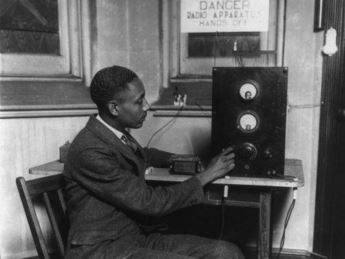
Dr. Rufus Turner, W3LF. Homebrew Hero and Radio Pioneer

Thanks to Farhan for alerting me to this great Hackaday article about a homebrew hero who was — sadly — unknown to most of us. He lived in Washington D.C., right down the road from where I live now. The Hackaday article leaves no doubt about it — Rufus Turner was one of us. He had THE KNACK. He was a true radio pioneer and homebrew hero. It is really a shame that we’ve known so little about him.

N6ORS’s Min-X Crosses the Pond on First Contact

Very cool! Reports on new phone rigs keep coming in. It is great to see them in their “still out on the bench” condition. And reports of the first contacts are always exciting. I like the MIN-X name. This is indeed another testament to the contributions made to the radio art by our friend Farhan.
Hello Bill,

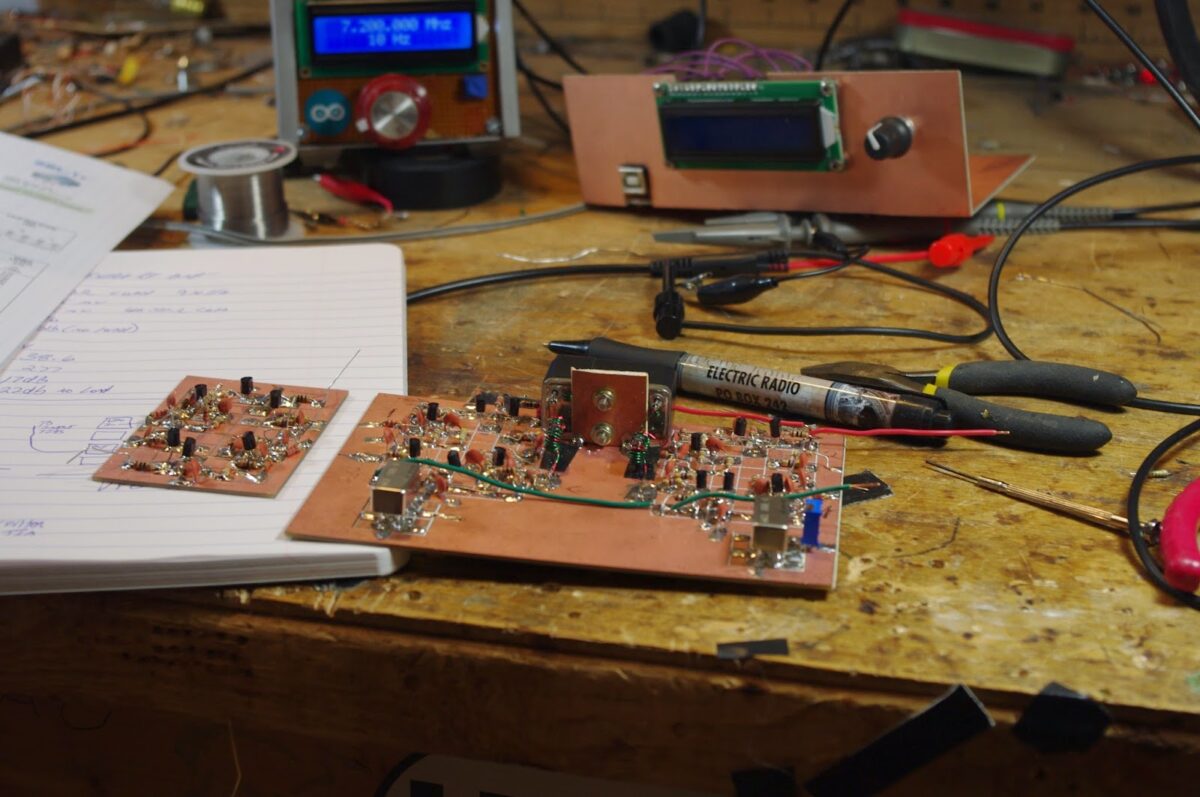
Well I just finished tweaking my new rig, I named it Min-X because I outright stole bits and piecesof the BITX and the Minima, thanks Ashhar. I made my first contact today and what a contact!
The contact was made with the rig as shown. The amp is a home brew FET push-pull.
I had a chat with Beth MW0VOW in South Wales! From Wisconsin to Wales on 15w PEP.
Oh, most of the rig was ‘noodled’ and constructed while enjoying you and Pete on the
SolderSmoke podcast.

Best 73,
Keith N6ORS

Farhan’s Secret Project: The SPECAN (Extremely Cool) (video)

I had been sworn to secrecy for so long, I thought I was going to burst. I almost hinted at this in the last podcast. But I didn’t. I kept the secret. But now Farhan has made public his latest creation:

http://hfsignals.blogspot.in/p/specan-reboot-of-w7zoi.html

This is really great. I want to build one. I have to build one. I NEED one of these.

Great work Farhan. Thanks for bringing the ham community another amazing piece of gear.

Our book: “SolderSmoke — Global Adventures in Wireless Electronics” http://soldersmoke.com/book.htm Our coffee mugs, T-Shirts, bumper stickers: http://www.cafepress.com/SolderSmoke Our Book Store: http://astore.amazon.com/contracross-20

Farhan’s ATU (and his new blog!)

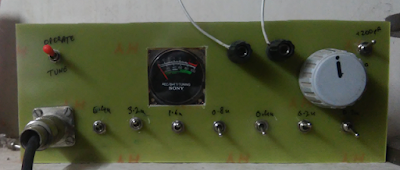
Farhan has built a very cool antenna tuner. More important, it is the subject of the first of what we hope will be many postings on his new VU2ESE blog. I really like the re-purposed Sony meter, and the homebrew feedline for the multi-band (80-6 meters) doublet. This is clearly a suitable antenna and tuner for the multiband Minima. I have been inspired! I hope to brew up some feedline soon! No more store-bought transmission line for me!

VU2ESE Blog: http://hfsignals.blogspot.com/p/about.html

VU2ESE Tuner Article: http://hfsignals.blogspot.com/2015/06/a-balanced-tuner.html

Our book: “SolderSmoke — Global Adventures in Wireless Electronics” http://soldersmoke.com/book.htm Our coffee mugs, T-Shirts, bumper stickers: http://www.cafepress.com/SolderSmoke Our Book Store: http://astore.amazon.com/contracross-20

SolderSmoke Podcast 177 Bicoastal Termination Insensitivity Unphased by Phase Noise

SolderSmoke Podcast #177 is available:
13 June 2015
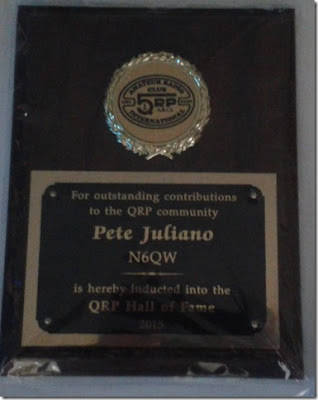
— PETE JULIANO INDUCTED INTO THE QRP HALL OF FAME
— Bench Reports: Bicoastal Bilateral Success: A Tale of Two Tias
Only 3 TIA rigs in the world? It depends…
Relay improvements in the BITX Builds
Straightening out amp problems
The many uses of copper foil
No phase noise or bleed-over troubles
Plug-in filters
Adjusting TIA amp gain on RX and TX (too much is not good!)
Getting the BITX to work with the CCI amp
Allison wisely prescribes 3 db pads
Curing hum by moving the power supply (duh!)
— Farhan’s New Minima — Crying out for an Si5351?
— Mike KL7R’s Web Site is Back (thanks to W8NSA)
SolderLex: Rigs or Radios? We go with Rigs
— A ham rite of passage: Build a Dipole!
— What does your shack look like at the end of a project?
— MAILBAG
The CORRECT pronunciation of Belthorn
Multiplication and Division by 4
W8NSA, Vietnam, a Transoceanic and a 9V Battery


Our book: “SolderSmoke — Global Adventures in Wireless Electronics” http://soldersmoke.com/book.htm Our coffee mugs, T-Shirts, bumper stickers: http://www.cafepress.com/SolderSmoke Our Book Store: http://astore.amazon.com/contracross-20

Termination Insensitivity — Only Three TIAs in the World?

Termination Insensitivity. Is this like when your girlfriend dumps you and you just don’t care?

No. It’s more like this:

http://www.n6qw.com/TIA.html

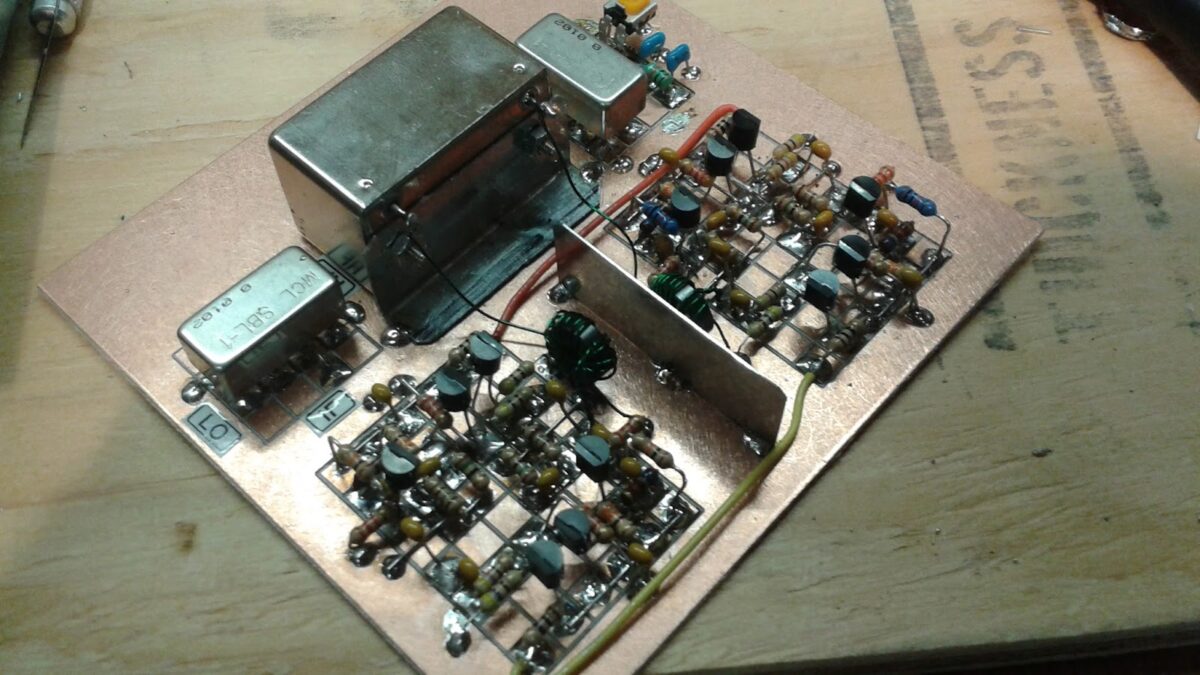
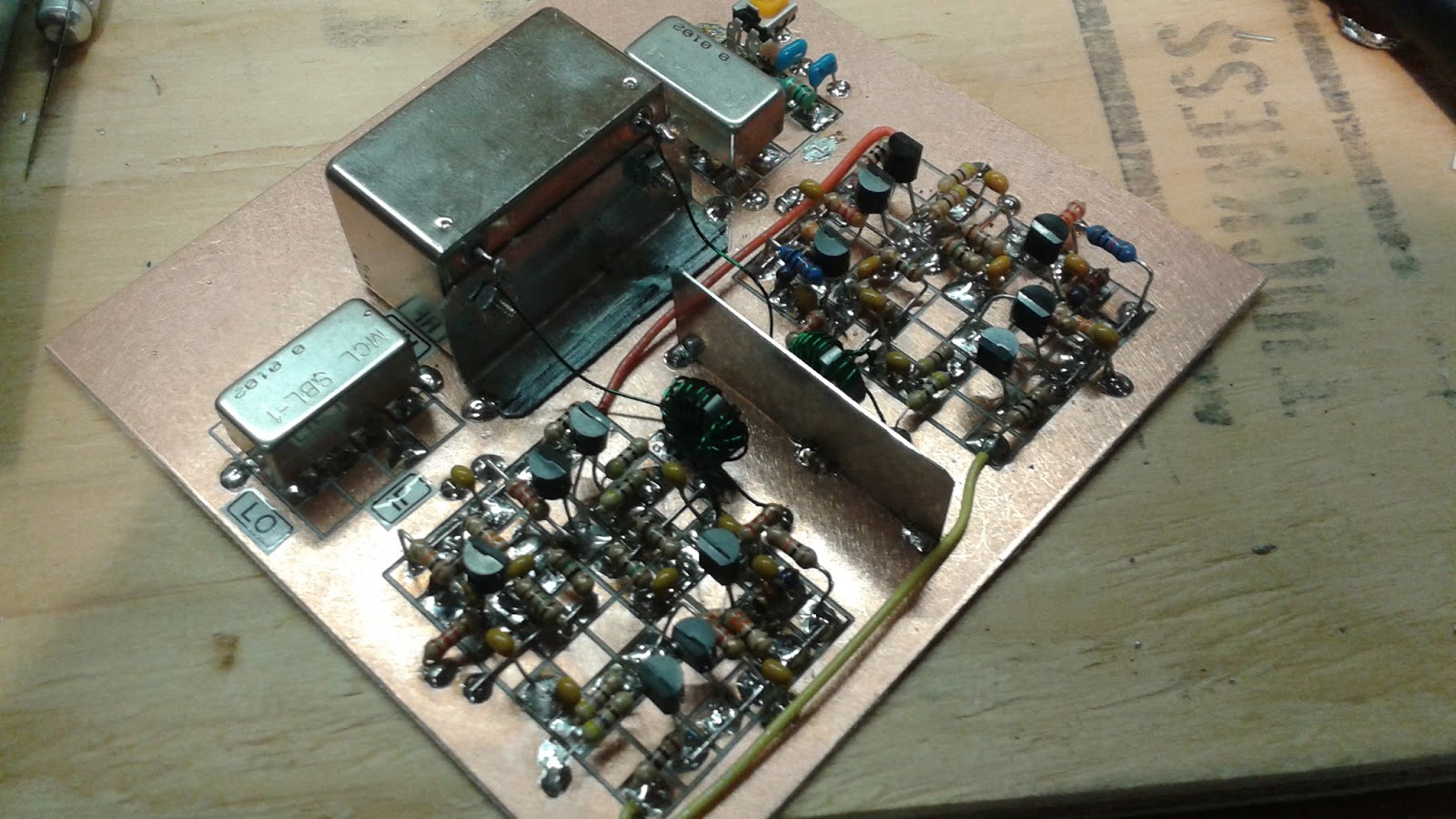
Wes Hayward and Bob Kopski developed the Termination Insensitive Amplifier circuit back in 2009. With a bidirectional rig it is important that the crystal filter face the same impedance in both directions. Simpler bidirectional amps are impedance “transparent” in that their input impedance depends on what is on the output (and vice versa). The circuit that Wes and Bob developed solved this problem: these amps always look like 50 ohms. That’s very useful. When I was building my earlier BITX rigs, Farhan suggested that I try the termination insensitive amp circuits. On my latest project I followed his suggestion. At the same time, Pete was building a new BITX, also using the TIA amps.

Pete wrote to Wes and Bob and asked if anyone had followed through on their 2009 article by building a rig using this circuit. Wes said that he was unaware of any TIA rigs. It turned out that Tom Hall up in New York City had built one (video below). So I guess Pete’s rig is TIA 2 and mine is TIA 3! (But I was thinking, because of Pete’s Italian ancestry, shouldn’t we call his rig a Zia?)
Please let us know if you know of any other TIAS (or ZIAS!) out there.

Here is Tom Hall’s very FB TIA:

Our book: “SolderSmoke — Global Adventures in Wireless Electronics” http://soldersmoke.com/book.htm Our coffee mugs, T-Shirts, bumper stickers: http://www.cafepress.com/SolderSmoke Our Book Store: http://astore.amazon.com/contracross-20

BITX DIGI-TIA Build Update #7: On The Air!

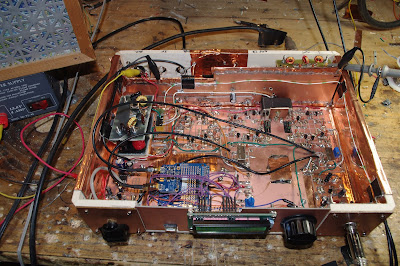
With lots of encouragement from Pete, I finally got the BITX DIGI-TIA on the air. The first contacts were made yesterday. I have it on 40 meter SSB. The finicky denizens of that audio-conscious band seemed to like the sound of the rig. I was almost reluctant to tell them it is homebrew (no need to stir up trouble!)
The plug in filter arrangement seems to work very well. This will allow me to put this rig on many other bands. All I have to do is build some additional filter boards and upload modified versions of the software. There is even space to make a plug-on socket for the crystal filter (the 9 MHz IF would not be cool for 17 meters).
I’m really pleased with the RF power chain (the original BITX chain). This time I built it all in a straight line along the back of the transceiver with lots of attention to shielding and grounding. There were no instability problems. The amplifiers did not try to be oscillators. I was shocked!
I did have to reduce the gain of the three termination insensitive transmit amplifiers. Using the chart in the 2009 Wes Hayward/Bob Kopski article, with just a few resistors you can set the gain. I had built them with 19.4 db gain each. This turned out to be too much — the slightest amount of audio into the SBL-1 was driving the amplifiers to peak output. So yesterday I changed all three amps to 15 db (I think that was what Farhan had in the original BITX). It only took me about 15 minutes and it seemed to take care of the problem. I am getting 7 or 8 watts out of the IRF-510.
T/R switching is very smooth and quiet using just two small 12V relays.
Thanks to Pete for the mil-pad boards and the encouragement (especially on the use of the Si5351). Thanks to Farhan for the BITX architecture. Thanks to Steve Smith for the Yaesu filter. Thanks to Wes and Bob for the TIA circuit. Thanks to Thomas in Norway for the Si5351 software. And Thanks to Allison for all the good advice.


Our book: “SolderSmoke — Global Adventures in Wireless Electronics” http://soldersmoke.com/book.htm Our coffee mugs, T-Shirts, bumper stickers: http://www.cafepress.com/SolderSmoke Our Book Store: http://astore.amazon.com/contracross-20

BITX DIGI-TIA Update #4

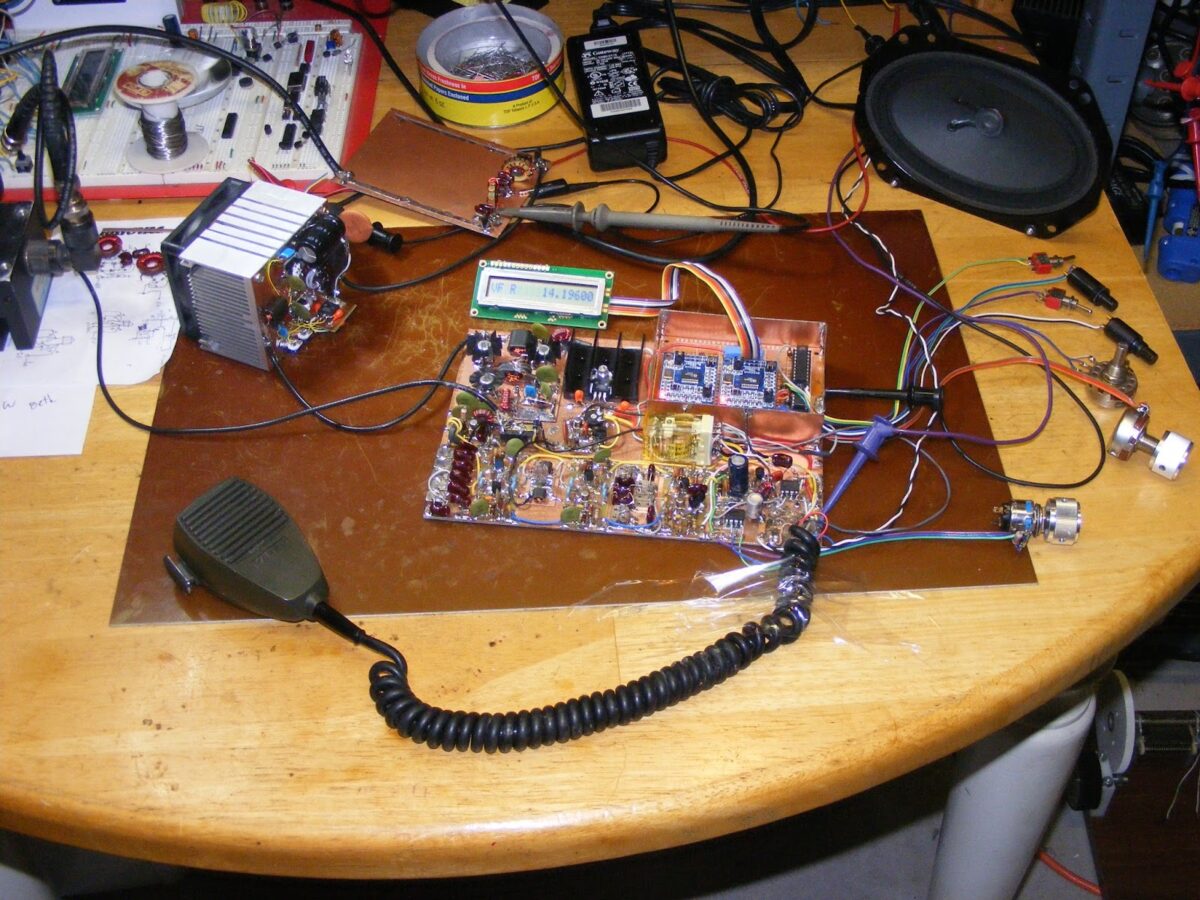
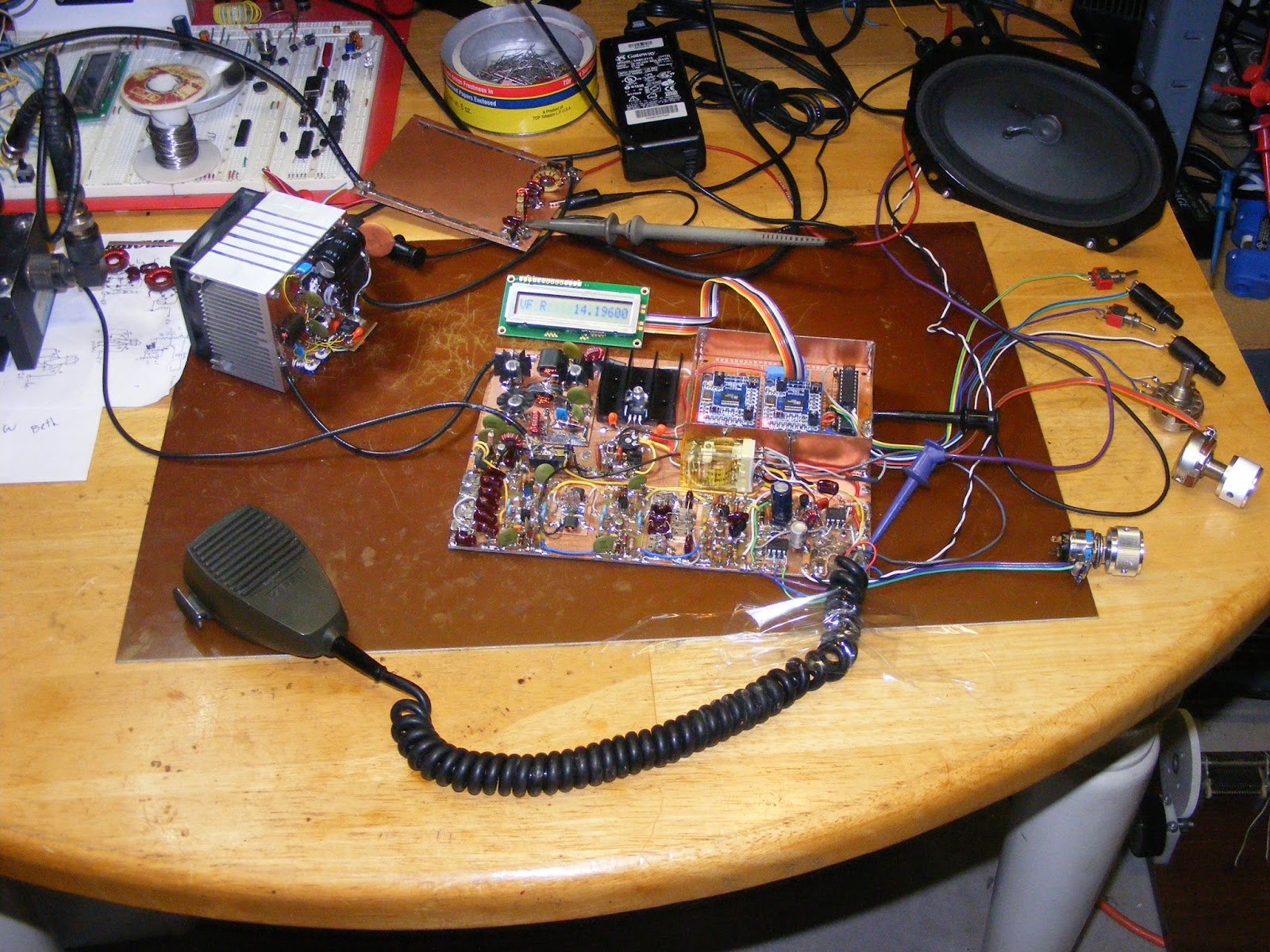
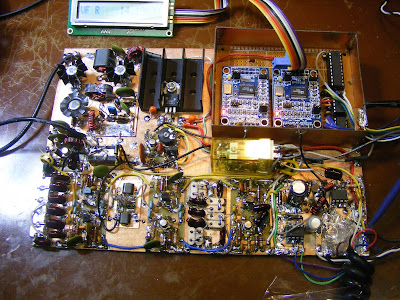
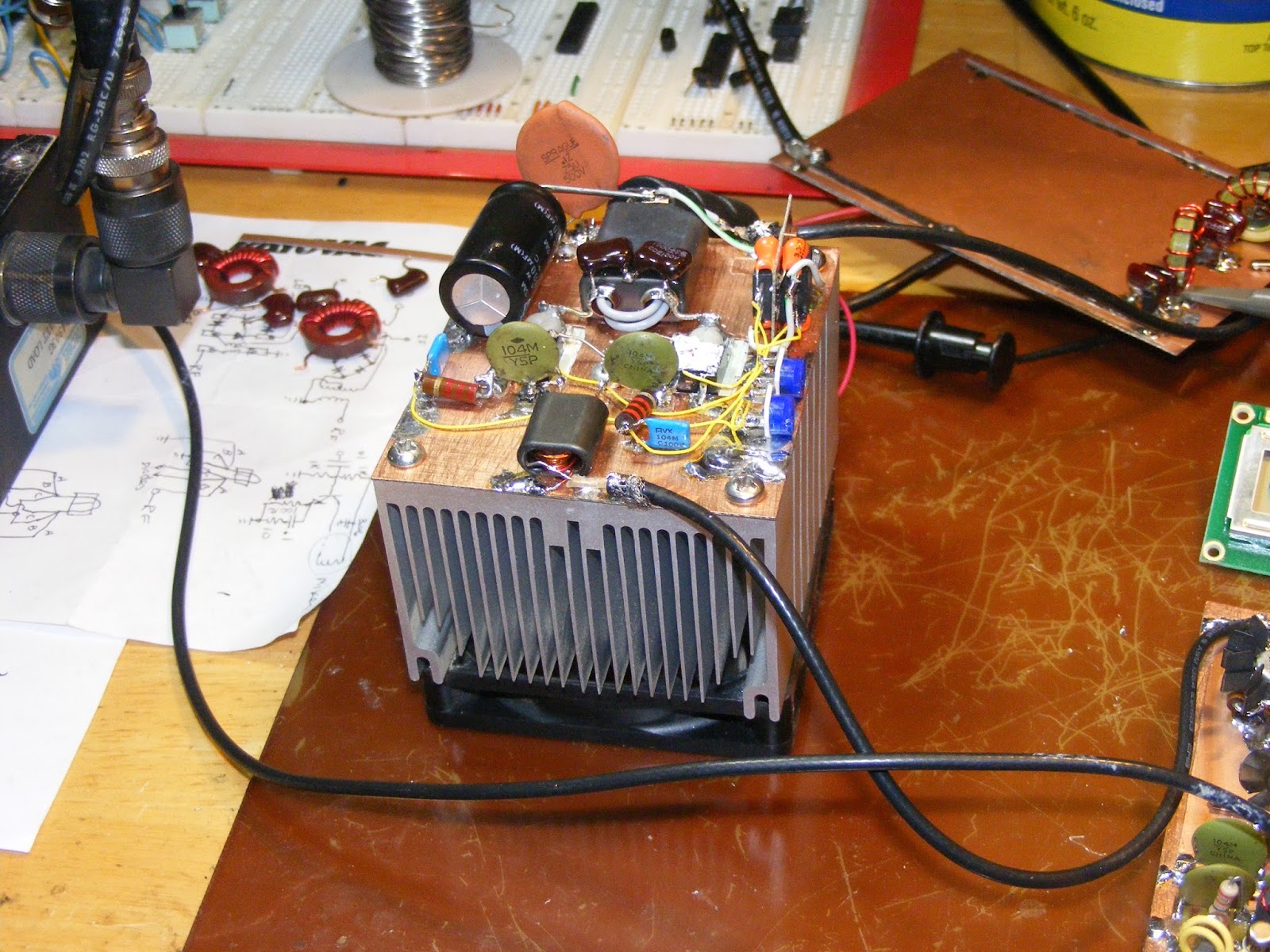
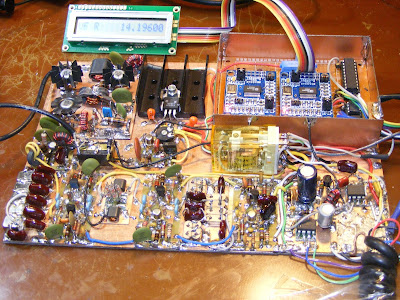
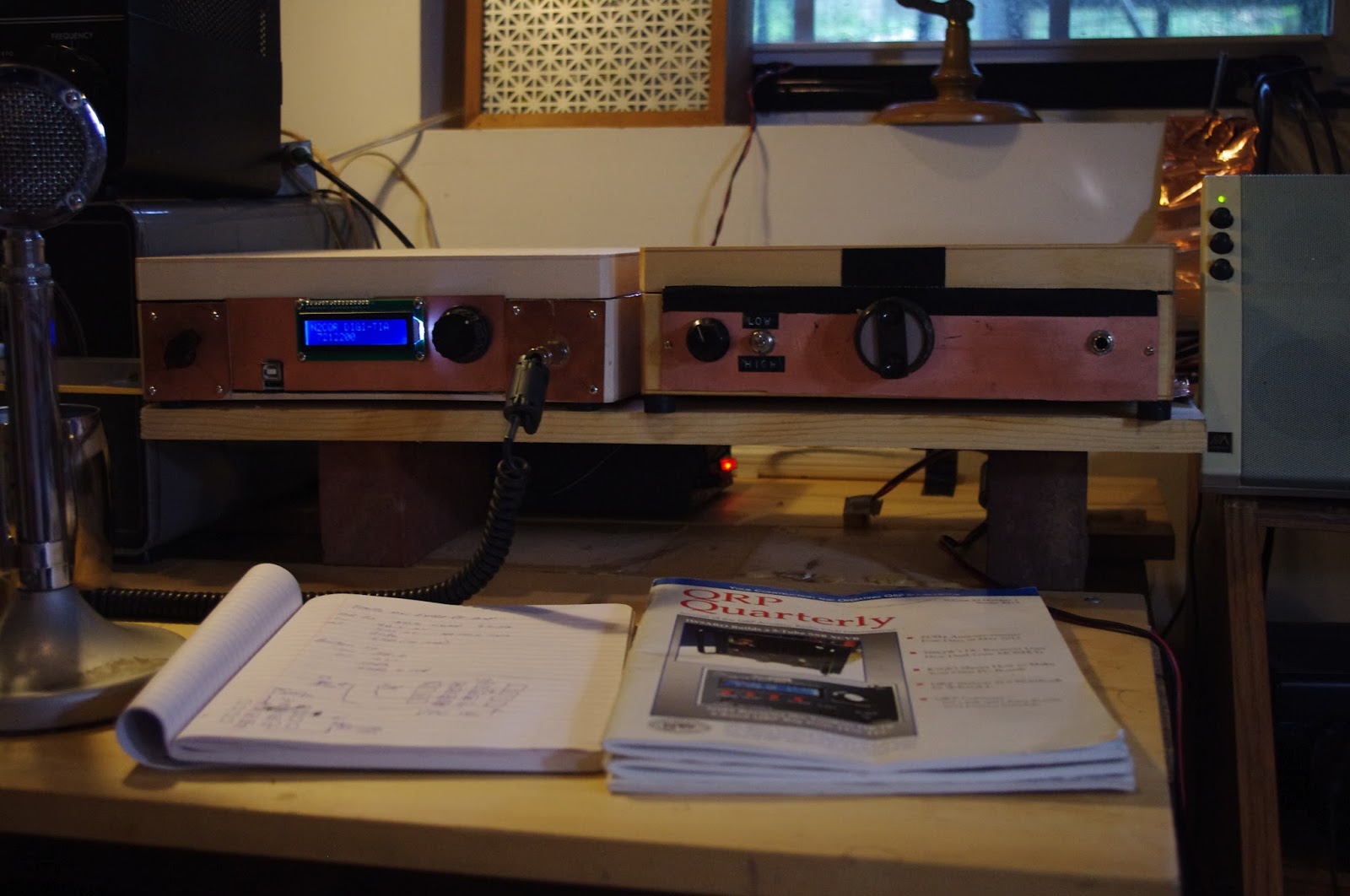
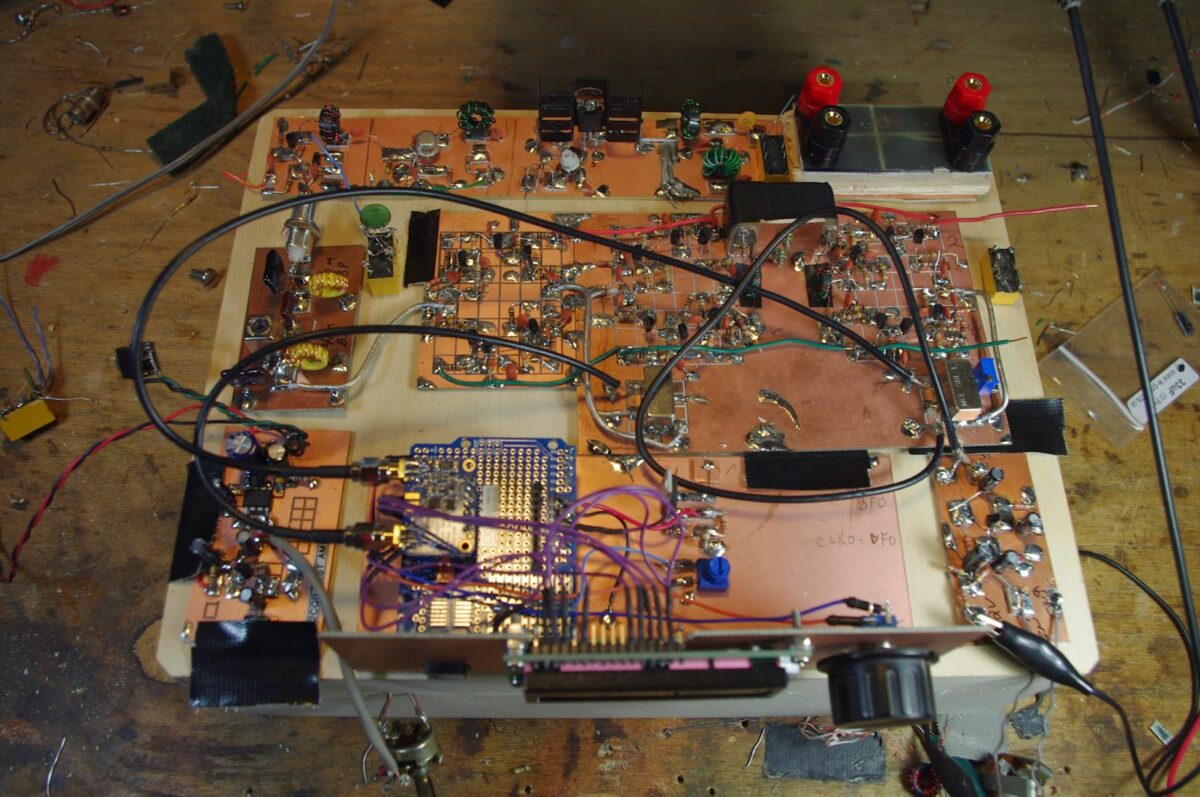
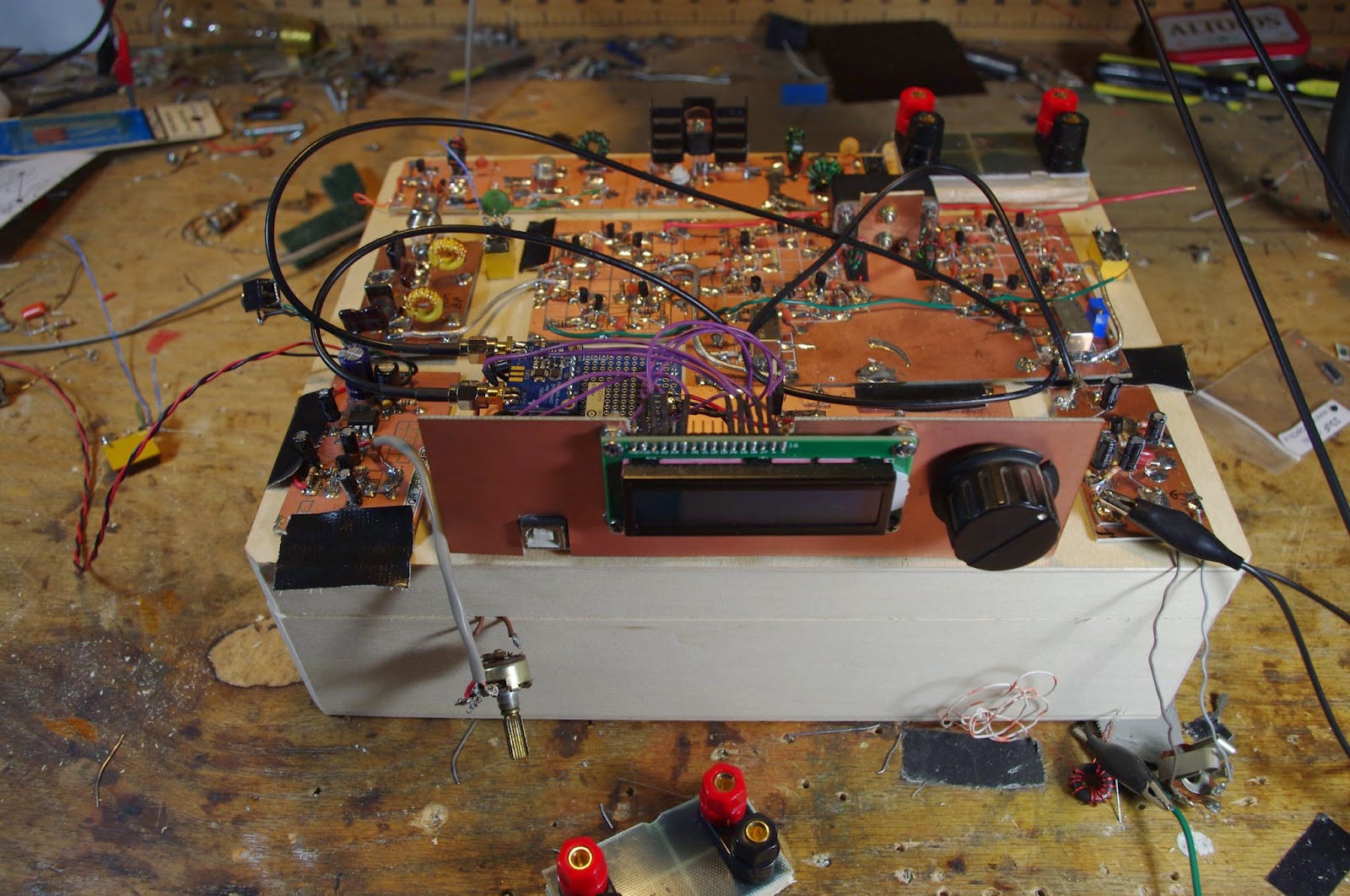
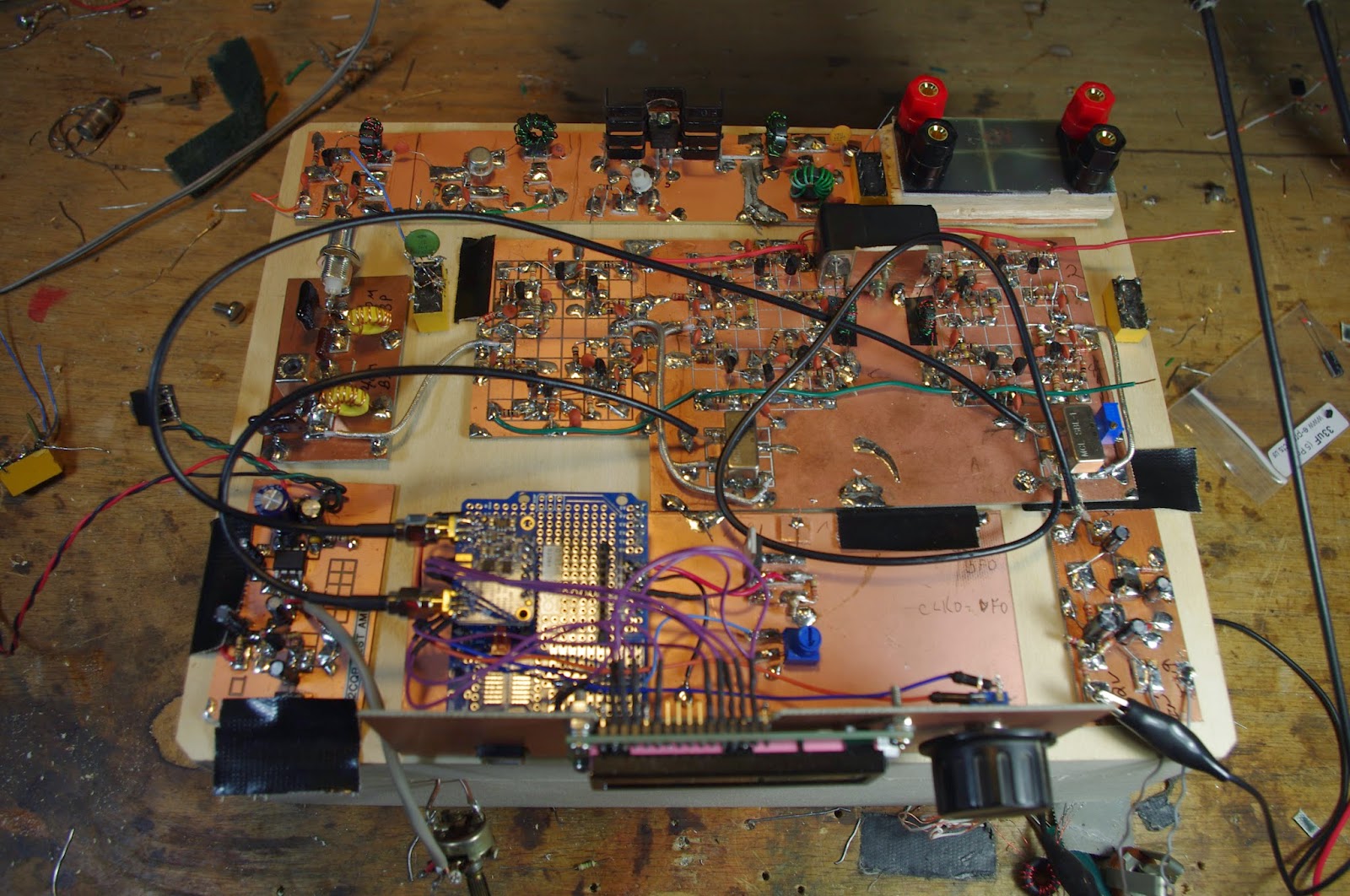
Lots of progress over the long weekend. Along the back you can see the three stages of the RF amplifier chain: 2N3904, 2N2218A, IRF510. I intend to add inter-stage shielding, and one long shield between the chain and the rest of the rig. Front and center is the Si5351 board (code by LA3PNA). Mic amp (which gave me a lot of trouble!) is to the right of the Si5351. AF (RX) amp is to the left (2N3904 and LM386). The big board in the center has the three Termination Insensitive Amplifiers (thanks Wes and Bob), the 9 MHz filter (thanks Steve Smith!) and the two SBL-1 mixers (thanks to Pete Juliano for the “mil-pad ” boards). And thanks to Farhan for the overall BITX concept and the TIA suggestion.
In the upper right you will see where the plug-in low-pass filter will plug in (a better picture appears below). I will use a similar plug-in for the band-pass filter. Combined with the BFO/VFO flexibility of the Si5351, this plug in feature should allow me to cover many bands with this rig. 

Our book: “SolderSmoke — Global Adventures in Wireless Electronics” http://soldersmoke.com/book.htm Our coffee mugs, T-Shirts, bumper stickers: http://www.cafepress.com/SolderSmoke Our Book Store: http://astore.amazon.com/contracross-20

SolderSmoke Podcast 176: Knack-Related Conditions: Termination Insensitivity, Sideband Inversion, Dongle Modification, Area 5351 Conspiracy Disorder

SolderSmoke Podcast #176 is available! (And it is GOOD!)

http://soldersmoke.com/soldersmoke176.mp3

16 May 2015

Bench Update:
Pete releases some magic (amplifier) smoke
Pete’s new termination-insensitive transceiver makes first contact
Bill goes Yaesu (well, just a filter)
Juliano Mill-Pad boards
Termination Insensitivity is not a personality disorder!
Flip those Bilat Boards! Pete’s cool technique for bilat building
Bill’s project notebook and stage testing
Installing the W6JFR EMRFD SBL-1 Bal-Mod Mod

AREA 5351: Myths, Urban Legends, and Conspiracy Theories about the Si5351

A Rule of Thumb for Sideband Inversion

Dongle Madness and the Dangers of Dongle Modification
What is a dongle?
24 Mhz to 1.7 GHz right out of the box
Modification for 0-29 MHz
Tapping the IF of a Drake 2-B
Getting another one for VHF-UHF
Dongling Meteors, Satellites and Airplanes

SPRAT cover AD9850 in 1988! Three cheers for SPRAT (and QQ and QST).

Elecraft’s new Rig

Our book: “SolderSmoke — Global Adventures in Wireless Electronics” http://soldersmoke.com/book.htm Our coffee mugs, T-Shirts, bumper stickers: http://www.cafepress.com/SolderSmoke Our Book Store: http://astore.amazon.com/contracross-20