JBOT Amplifier Installed in Azorean DSB Rig

I‘ve been remiss in posting to the blog, but I have a good excuse: I’ve been melting solder. I have working on the installation of my new Farhan-designed JBOT amplifier in my old Azorean DSB transceiver. I’m really enjoying this project, and I now see it as the first in a series. My shack has a number of creations that were built during the peak years of the last solar cycle, but have since fallen into disuse. Many of them were partially cannibalized — usually it was the RF amplifier that was taken out. The JBOT was just what I needed. I plan to refurbish all of these rigs, adding a bit of India to each one of them. This is very much in keeping with our “International Brotherhood of Electronic Wizards” ethos.

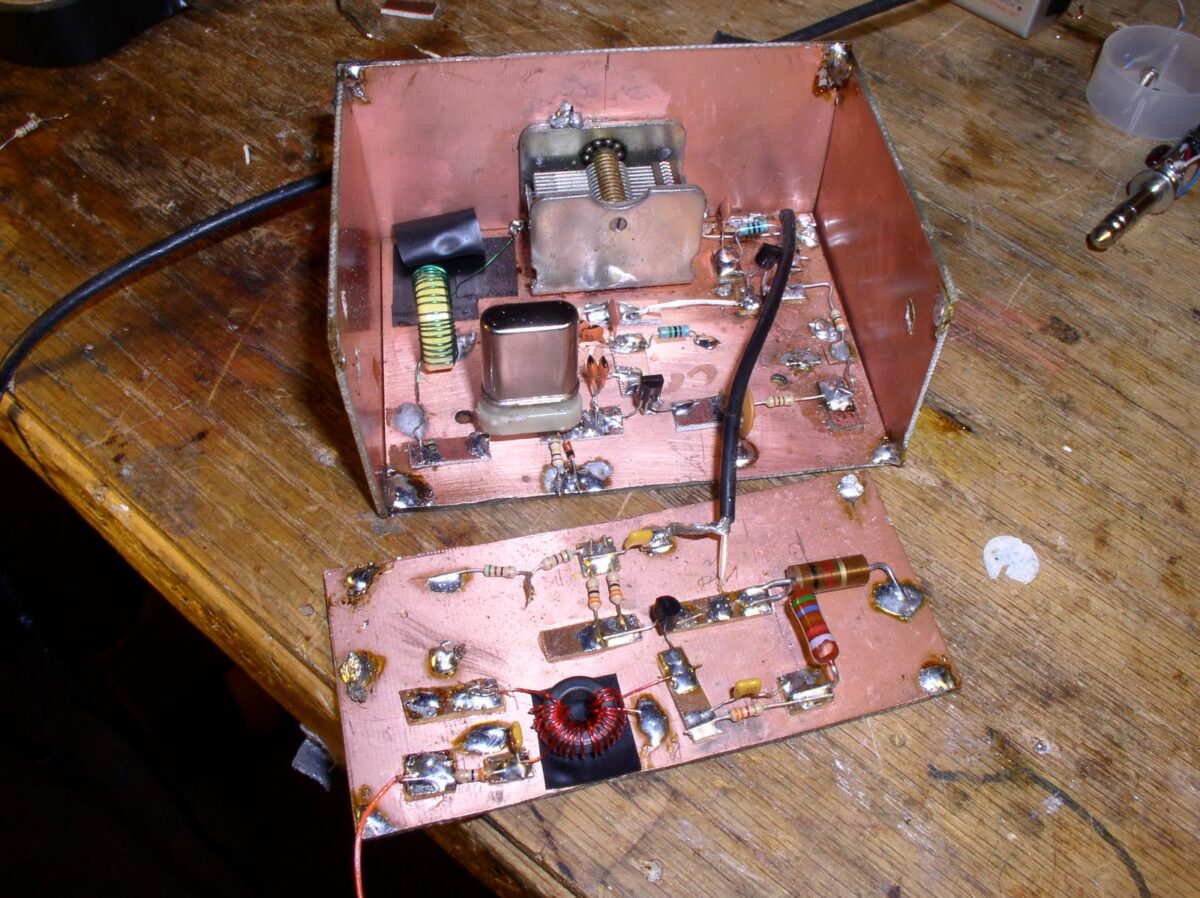
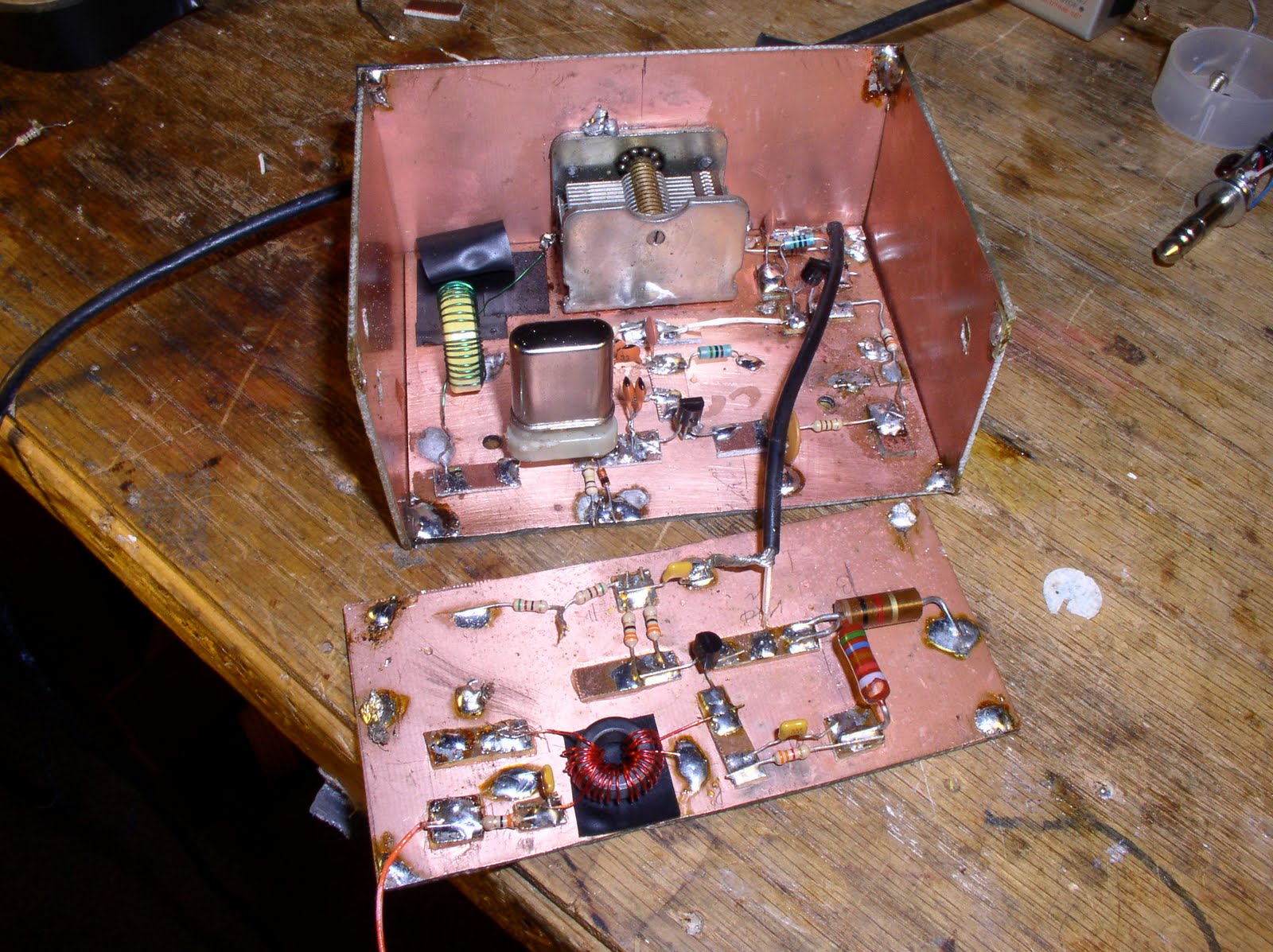
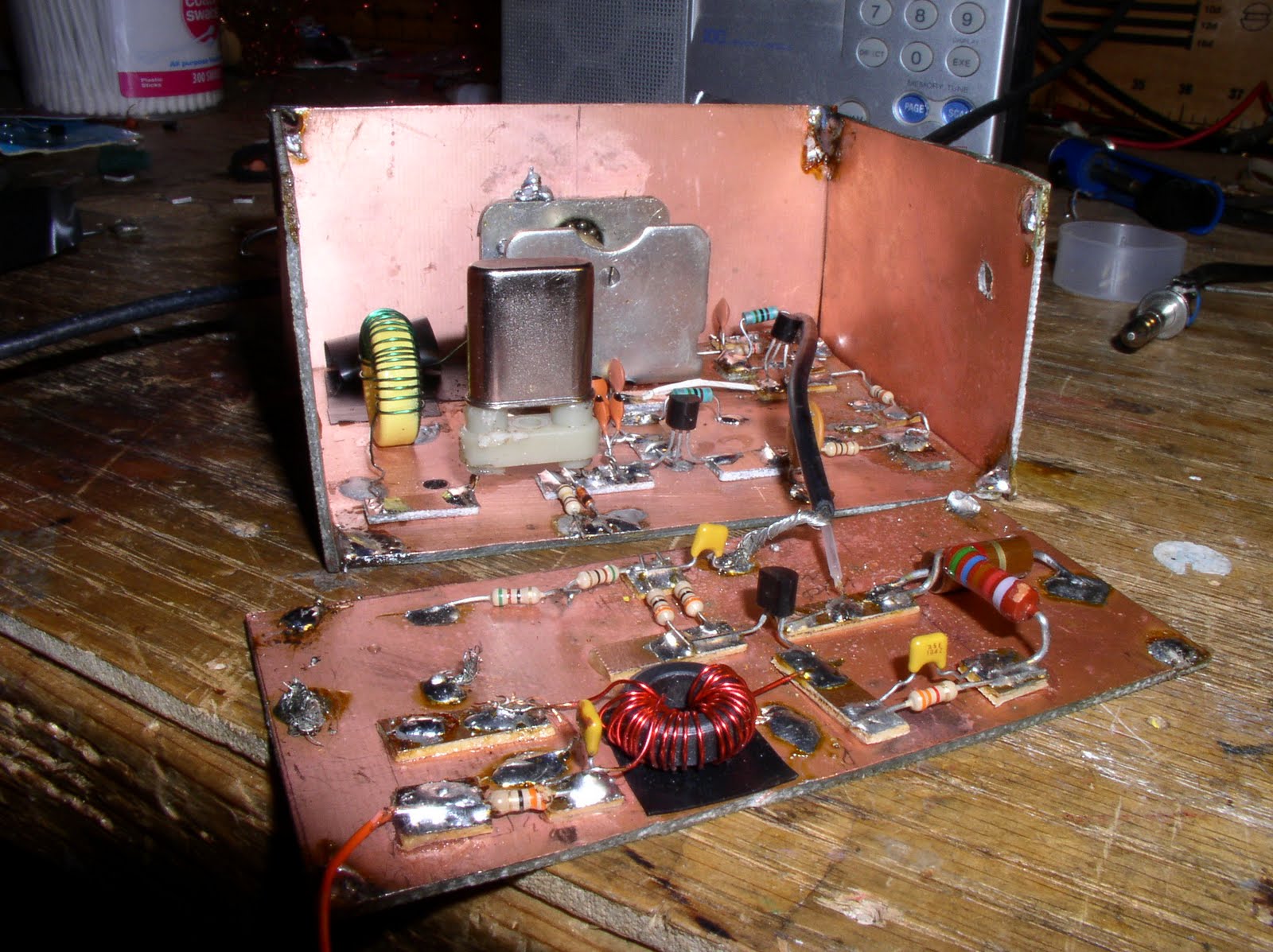
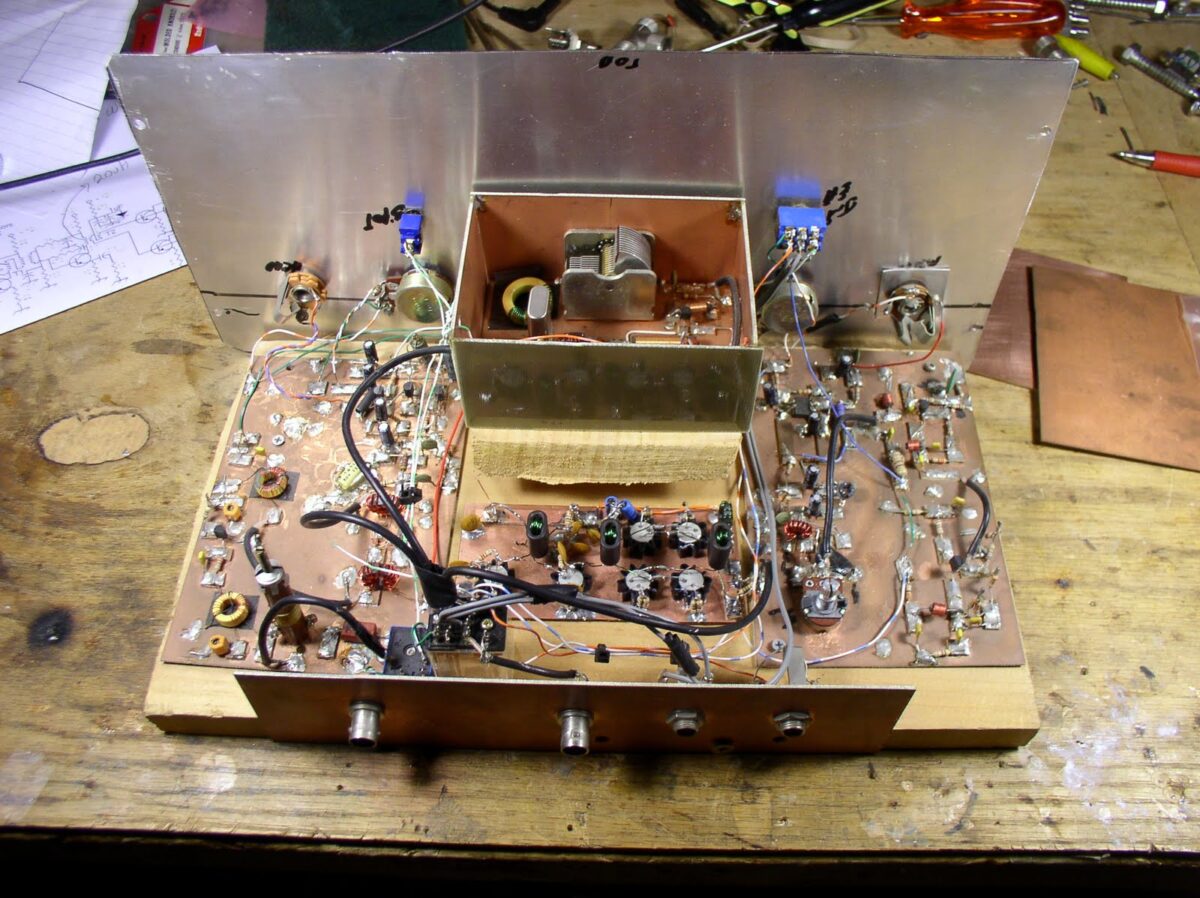
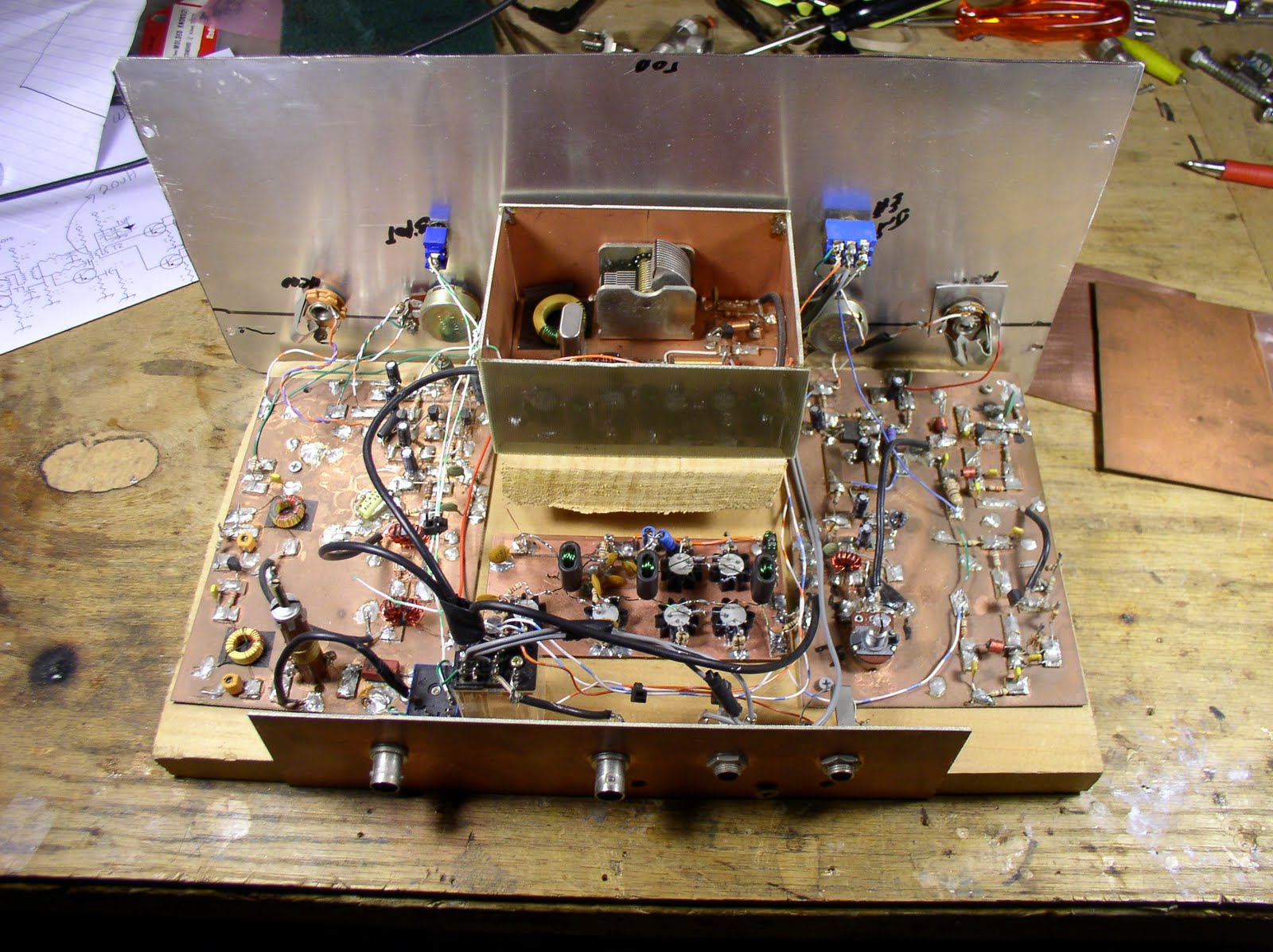
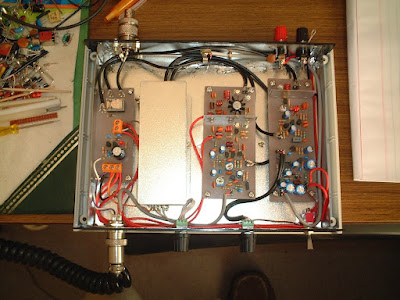
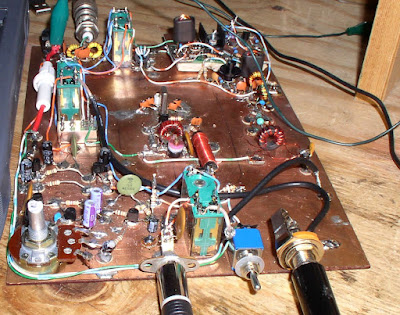
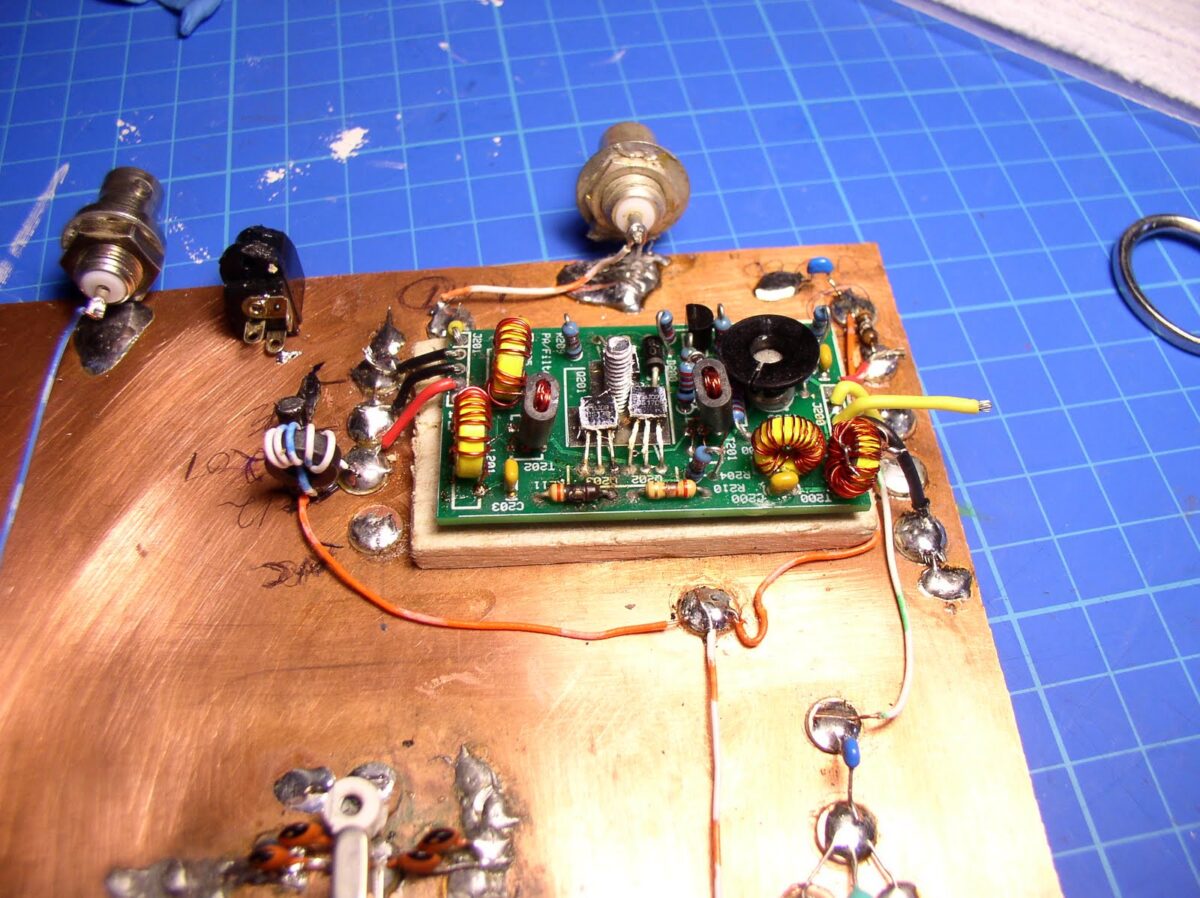
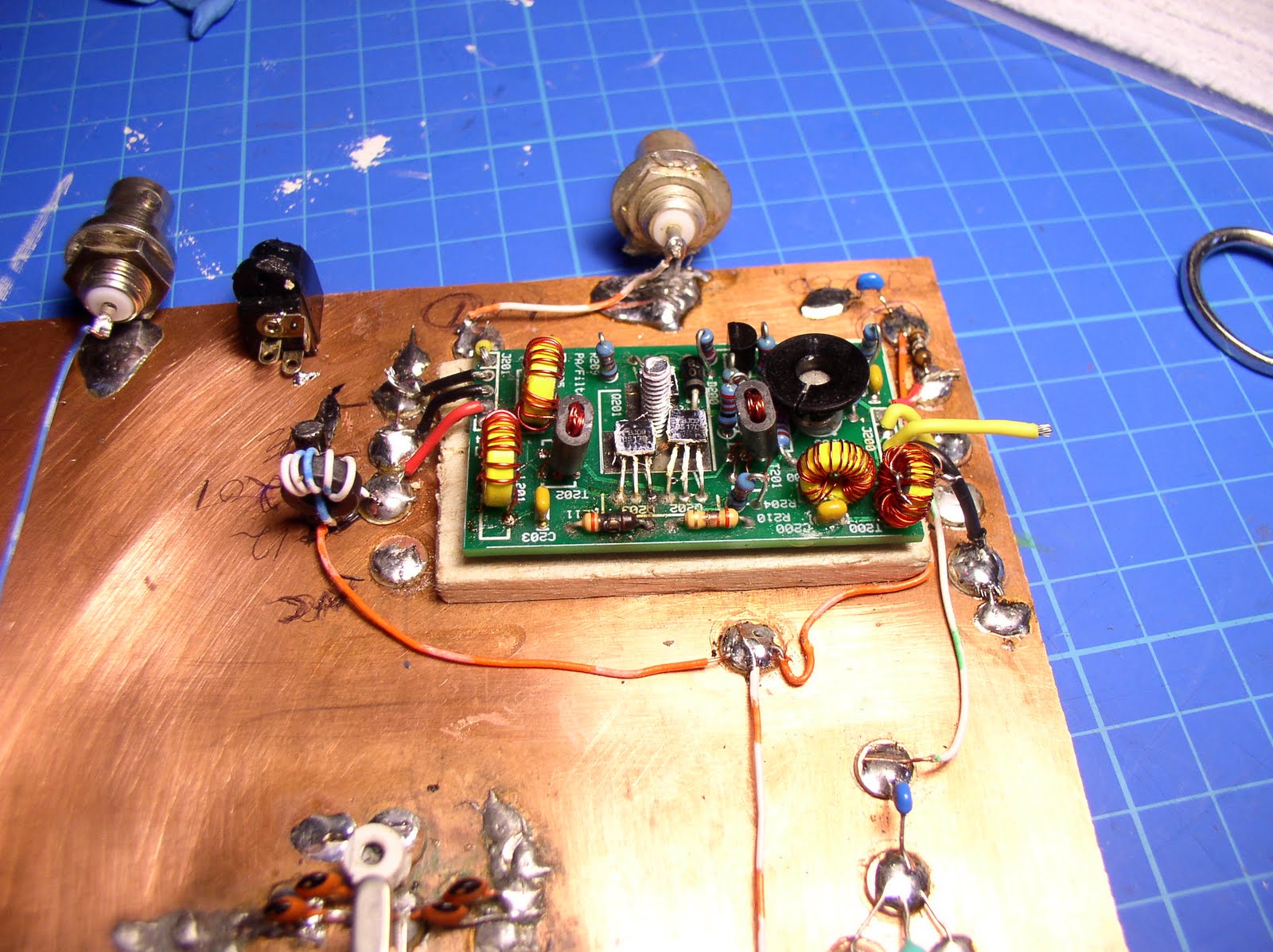
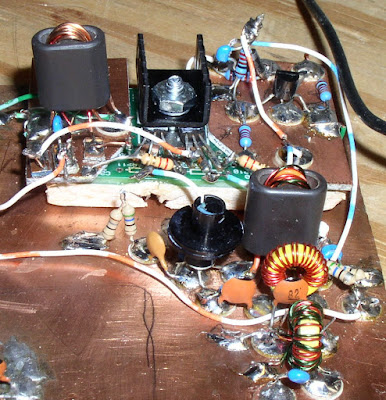
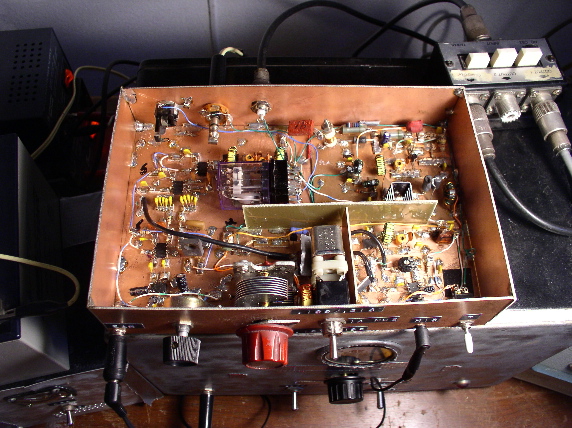
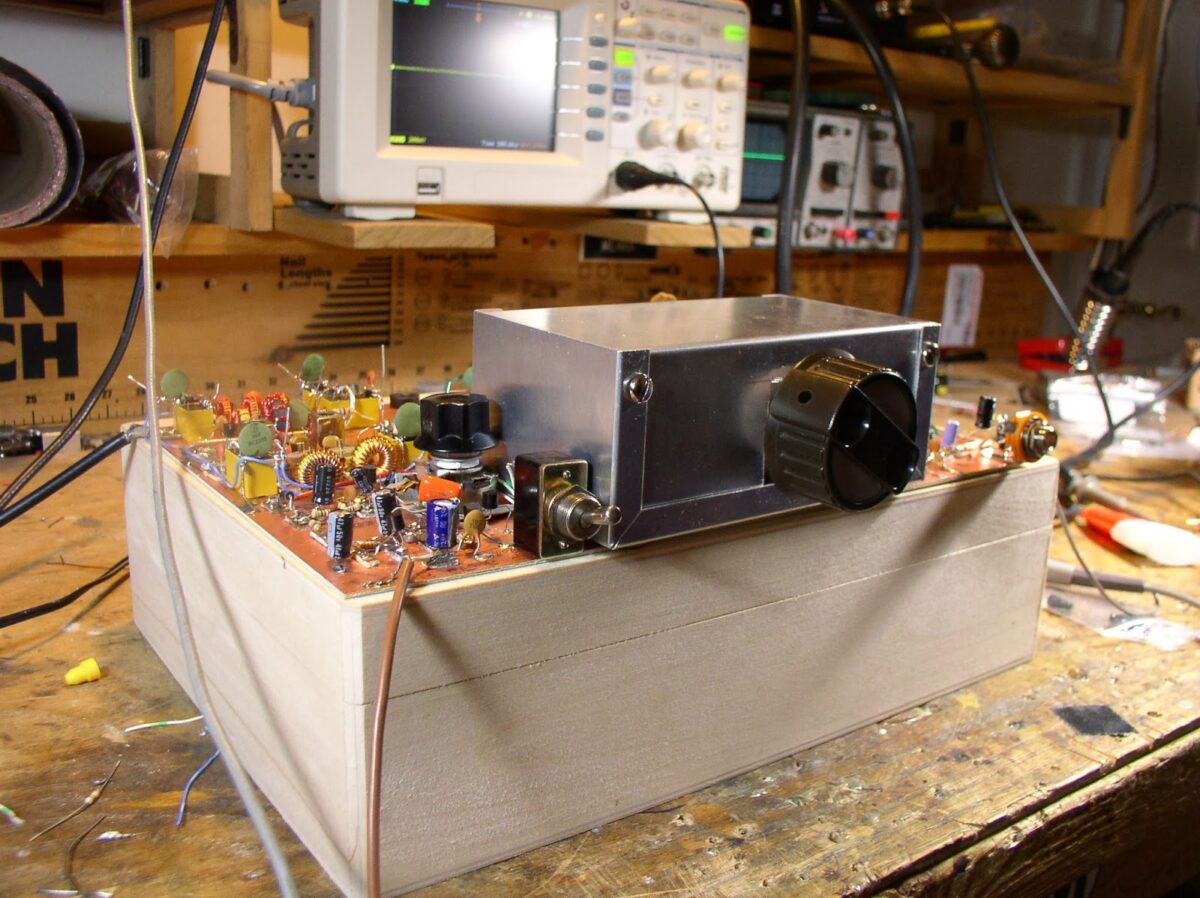
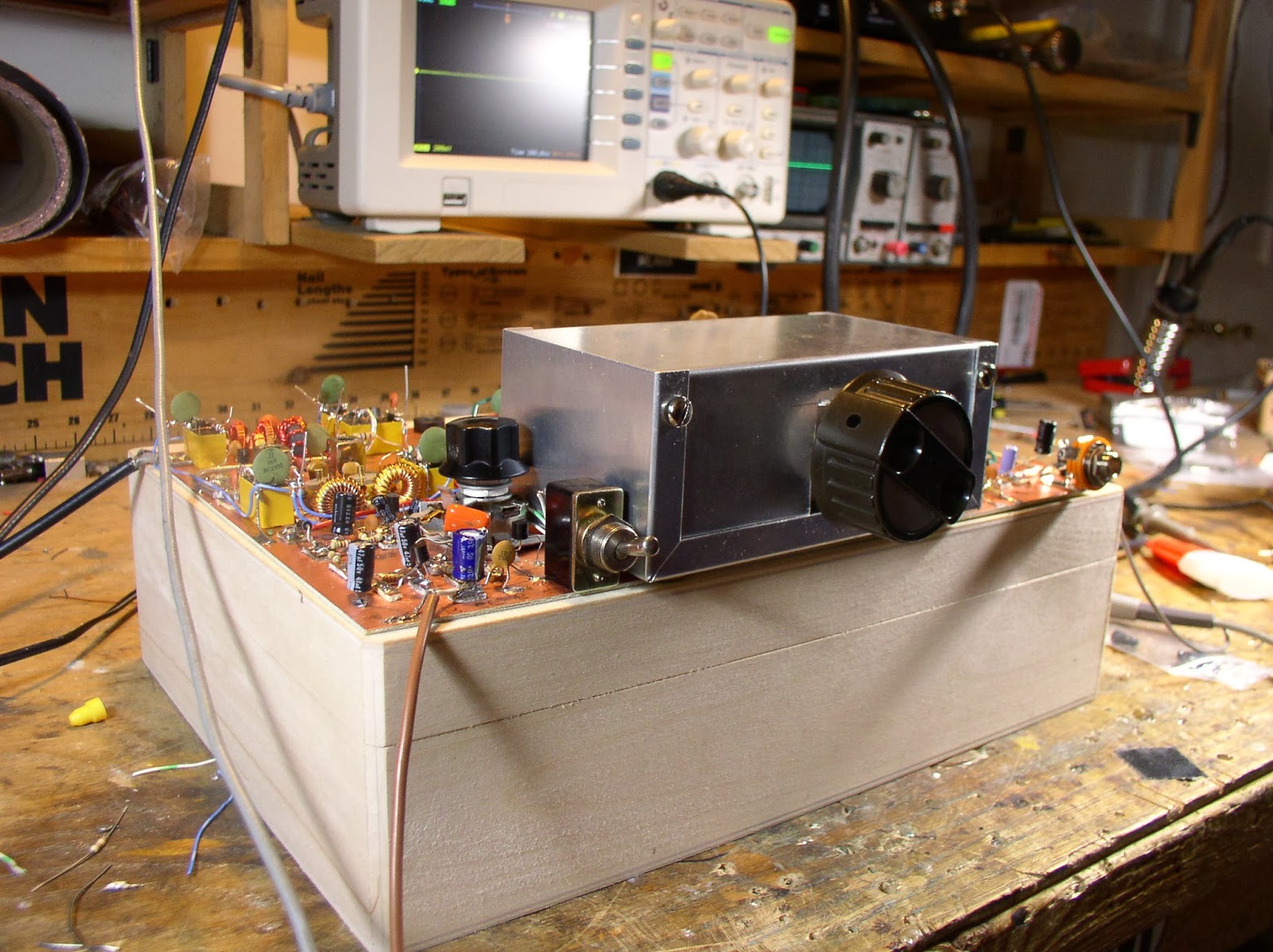
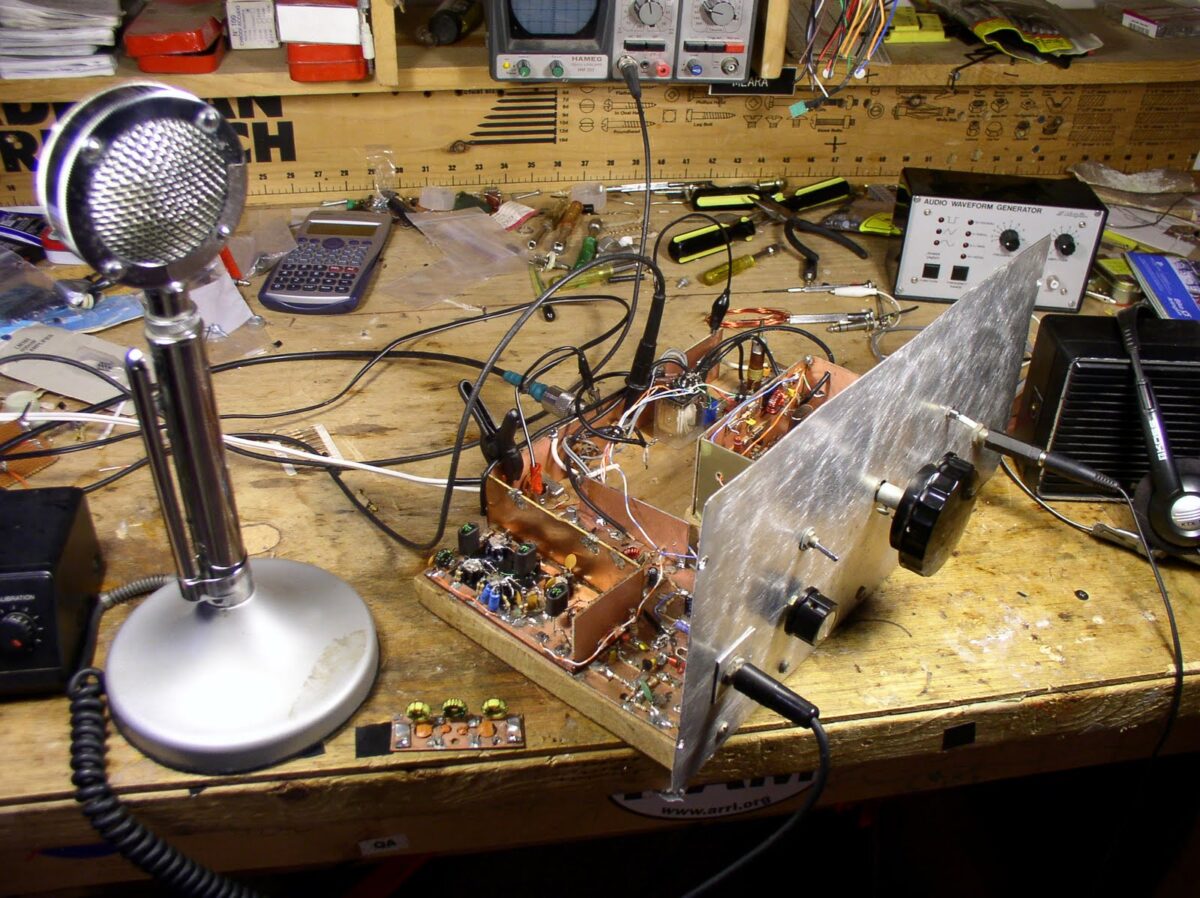
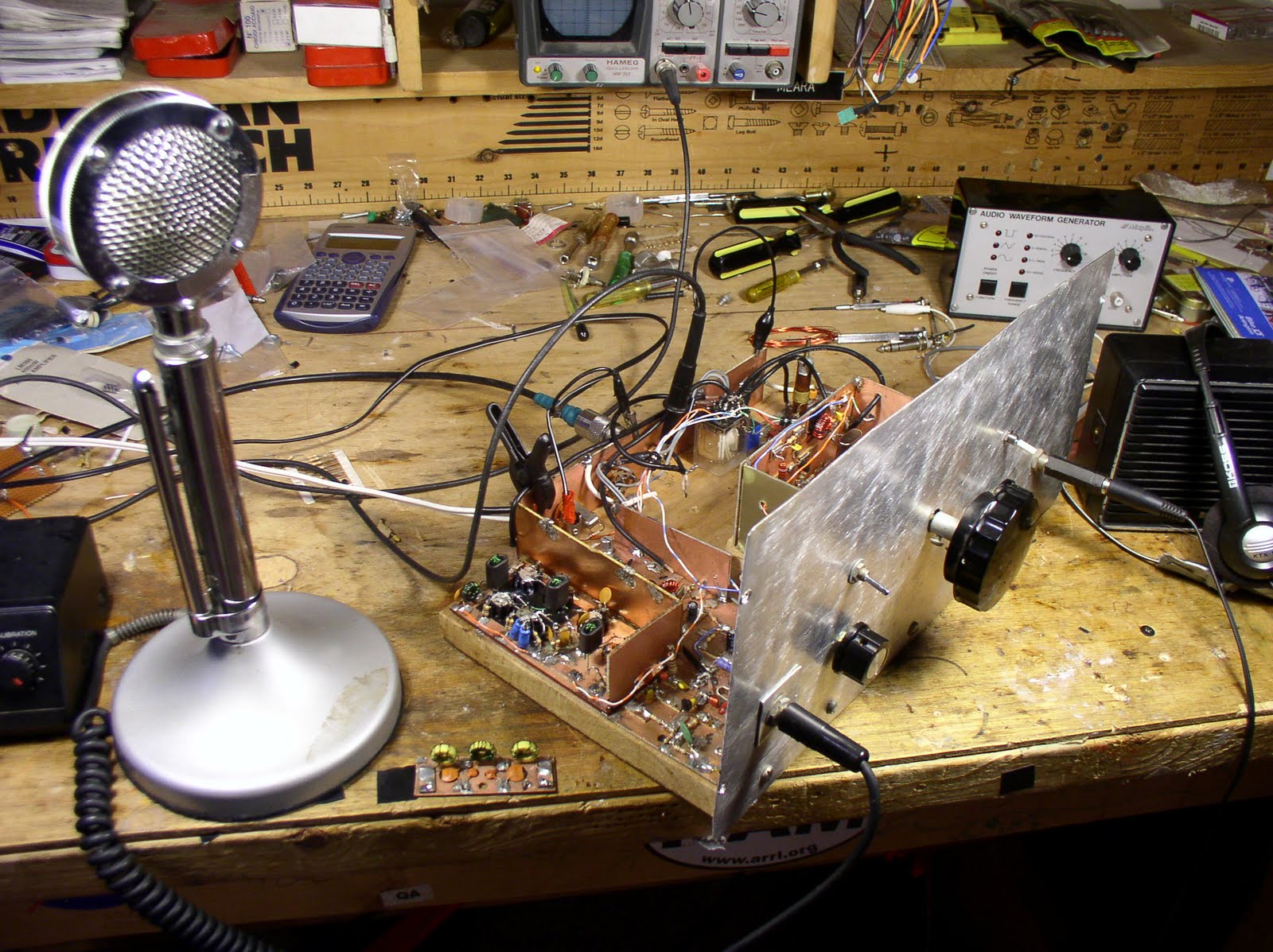
The installation went fairly well, but with all of the ups and downs that accompany this kind of project. The amp worked fine on the bench, fed with a signal generator and into a dummy load. But of course, life got more complicated when I installed it in the rig. Yes, it took off on me. This was no fault of the amplifier — I just needed to add some additional shielding. It is working fine now. See above. I moved it out of center stage and put it off in the corner to avoid feedback problems. More discussion of this in the next podcast (maybe this weekend).

Our book: “SolderSmoke — Global Adventures in Wireless Electronics”http://soldersmoke.com/book.htmOur coffee mugs, T-Shirts, bumper stickers: http://www.cafepress.com/SolderSmokeOur Book Store: http://astore.amazon.com/contracross-20
Pumpkin Pi and JBOT Gremlins

Maria wanted to go with a mathematical theme for this year’s Jack-0-Lantern. Pumpkin Pi!

I have been chasing some gremlins and banshees around my old Azores 17 meter DSB rig. The JBOT Amp worked fine into a dummy load, but of course things got a bit more complicated when I put it into the rig and connected it to an antenna. It would take off (like a banshee!) if the load was at all reactive. I think this is the result of inadequate shielding and inputs a bit too close to outputs. But it all settles down nicely when I put a transmatch in the antenna line and tune out the reactance. I may just leave it this way.

Output is a bit low — only about 1 Watt. I realize that at 18 MHz output should be dropping a bit, but I think I should be getting more. I THINK I’m giving it the recommended 1 milliwatt input. At some point I think Farhan mentioned the possible need to experiment with the number of turns on the secondary of the output transformer….

Our book: “SolderSmoke — Global Adventures in Wireless Electronics”http://soldersmoke.com/book.htmOur coffee mugs, T-Shirts, bumper stickers: http://www.cafepress.com/SolderSmokeOur Book Store: http://astore.amazon.com/contracross-20
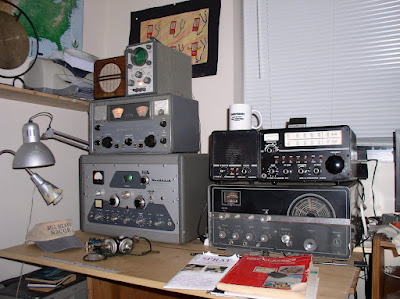
My New Shack Heating System: Heath, Halli, Hammarlund and Drake

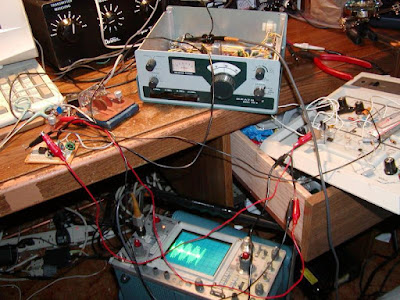
Temperatures dropped over the weekend and I had to fire up my new heating system for the SolderSmoke shack. See above. Heating by Heath, Halli, Hammarlund and Drake (sounds like a law firm doesn’t it?). I’m happy to report that those old filaments take the chill off quite nicely while adding a nice aroma to the room, along with some very pleasing lighting effects (I especially like the green glow from the DX-100 tuning dial).

The Azores-17 DSB JBOT project is (I think) complete. And I did include a low pass filter. In keeping with the finest of ham radio traditions, now that it is cold I will go out and work on an antenna.

Our book: “SolderSmoke — Global Adventures in Wireless Electronics”http://soldersmoke.com/book.htmOur coffee mugs, T-Shirts, bumper stickers: http://www.cafepress.com/SolderSmokeOur Book Store: http://astore.amazon.com/contracross-20

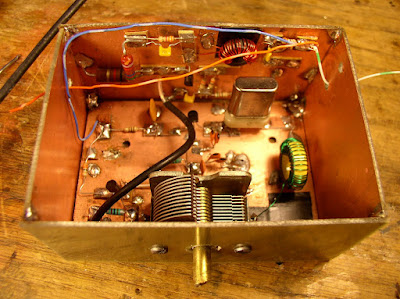
Azorean Oscillator Re-build

With my JBOT amp ready for installation, it was time to go back and check out the rest of the circuitry on my old Azorean DSB/Direct Conversion 17 meter “Magic Carpet” transceiver. I was surprised to find that the oscillator, well, wouldn’t oscillate. The MPF102 that I had in the main oscillator circuit was blown. I suspect voltage spikes from the T/R relay. I installed the required diode across the relay coil. (I seem to blow up a lot of MPF102s. Is it just me, or are these devices really fragile? They are junction FETs, not MOSFETS, so I thought of them as being more robust. But I seem to go through a lot of them.)

After messing around with the oscillator and buffer circuits, the nice clean Manhattan isolation pads that had been there at the start were all messed up, with big piles of solder with the ends of multiple axial leads stuck in there. I decided to start afresh. Out came the little PCB box that housed that housed the oscillator, buffer and amp stages. Off came the walls of the box. (When I built this thing the first time, I didn’t realize that I would need an amp to get to the 7 dbm needed to drive the diode ring. I ran out of room on the main board and ended up building the needed amplifier on the back wall of the box!)

So I got to build this little circuit again, ten years and three countries after the original build. It was fun. I like building oscillators. There is that satisfying sense of closure and completion when, at the end of the effort, you turn on your receiver and hear the tone from your creation.

There was also a fun little bit of troubleshooting. After rebuilding the oscillator circuit I noticed that applying power to the “on the wall” amplifier caused the oscillator to shut down. At the buffer, I was seeing RF in and RF out, but the whole thing would shut down when I powered up the next stage. Obviously there wasn’t a lot of BUFFERING going on! Sure enough, the MPF102 was bad. I replaced it from my dwindling supply, and all was right with the universe.

Now the amp goes in. But first I will build the low pass filter. I promise.

Our book: “SolderSmoke — Global Adventures in Wireless Electronics”http://soldersmoke.com/book.htmOur coffee mugs, T-Shirts, bumper stickers: http://www.cafepress.com/SolderSmokeOur Book Store: http://astore.amazon.com/contracross-20

My JBOT 5 Watt Linear (Farhan’s Design)

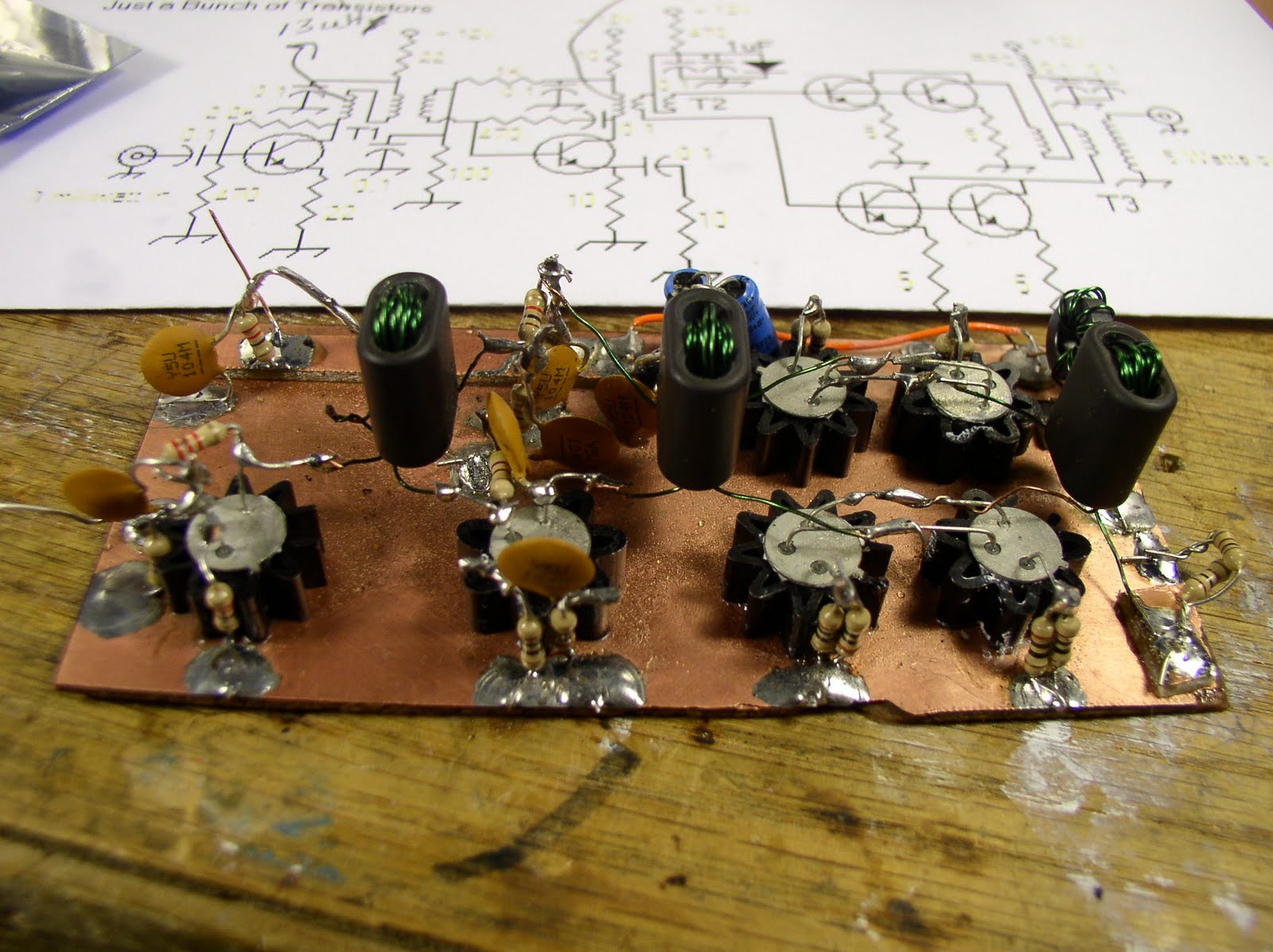
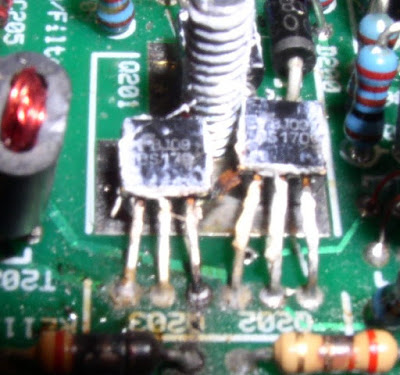
There it is — my version of Farhan’s JBOT 5 watt linear amplifier. JBOT stands for “Just a Bunch of Transistors.” But I think Farhan is being modest. I really like the design, especially the effort to make this something that hams around the world can reproduce from readily available parts. For example, Farhan’s original version used TV balun cores for the transformers. I didn’t have any of those around, but I found three “mystery spec” binocular cores in my junk box. They seem to be working just fine. (I tested them a bit: Farhan had written that FT 37-43 cores would work. T1 has seven turns trifilar. Seven turns on my mystery cores yielded 13uH. On an FT 37-43 core 7 turns yields around 20 uH. Close enough — these are, after all, broadband transformers.)

Note how closely my build follows Farhan’s schematic (which you can see in the background). When building this circuit, I just kept Farhan’s web page on my computer screen, and scrolled up and down from his schematic to the photo of his version.

This is the first linear amplifier that worked the first time I powered it up. It didn’t release any smoke, or leave transistor burn tattoos on fingers, or try to be a 14MHz oscillator.

This version is going into my Azores-built 17 meter DSB transceiver. See how nice it fits:
Our book: “SolderSmoke — Global Adventures in Wireless Electronics”http://soldersmoke.com/book.htmOur coffee mugs, T-Shirts, bumper stickers: http://www.cafepress.com/SolderSmokeOur Book Store: http://astore.amazon.com/contracross-20

Mike, KL7R’s HW-8 DSB Mod

The HW-8 rehab project of Ed, WA3WSJ, has led to a nice discussion on QRP-L about the possibility of using the HW-8 as a DSB rig. Mike, KL7R, did such a mod on his HW-8 many years ago and used it successfully in the field in Alaska. Read his story here:
http://kl7r.ham-radio.ch/hw8/hw8story.html

Nick, WA5BDU, and I have been discussing the possible need for an additional mod to put the HW-8’s final in linear mode. The picture above is of Mike’s rig, with the finals unbiased. Check out the scope. Looks pretty good to me!

Here’s the e-mail exchange:

Re: [QRP-L] WA3WSJ Heathkit HW-8 Rebuild Status

Monday, September 19, 2011 7:32 AM

From:

To:
“Bill Meara”
Cc:
qrp-l@mailman.qth.net, sigcom@juno.cm

I had the same thought regarding amplifier class, and Steve, WB6TNL also emailed the same observation.

The balanced modulator is inserted between the driver and final amplifier, which has no fixed bias and has its emitter grounded, so it’s definitely class-C. I do note that the balanced modulator is passive and probably has 6dB or more of loss, so you’re getting a pretty good drive reduction. And Mike said he adjusted the audio while watching the RF output until there was minimal flat topping on a scope. So I wonder if it’s possible to keep things fairly linear if the power is kept quite low?

At any rate, I love the idea. Here’s Mike in the 70s. He has an HW-8 he’s familiar with, and he’s reading SSDRA. Going over the simple DSB generation examples, he thinks — why not stick this in the RF train of my HW-8?

72-

Nick, WA5BDU

On 9/19/2011 4:36 AM, Bill Meara wrote: Nick: I enjoyed reading about your HW-8 adventure, especially the part about Mike’s work with this rig. I remember talking to him about it, and I’ve since come across some articles describing similar DSB mods. One thing that all of these plans lack, however, is a modification to the PA. It is Class C in the HW-8, and would need to be made linear for DSB service, correct? 73 Bill N2CQR

— On Sun, 9/18/11, Nick-WA5BDU wrote:

From: Nick-WA5BDU
Subject: Re: [QRP-L] WA3WSJ Heathkit HW-8 Rebuild Status
To: qrp-l@mailman.qth.net
Date: Sunday, September 18, 2011, 9:44 PM

Sounds like a great project (or projects!) Ed.

I’m working on an HW-8 also. Bought it at a hamfest this Spring at a
good price, but suspected it might have some issues. When I started
playing with it I noted that transmit power was down, the loading
control was stuck, and there was no sound from the receiver.

The receiver issue was the most challenging and I eventually tracked it
to a leaky transistor in the T/R circuit which was activating the mute
function even when key up. I suspect that the transistor’s problem may
have been due to the lack of a de-spiking diode on the T/R relay’s coil
so I added one.

So far I’m not keen on modifying the rig and am even keeping the RCA
connector (spent an outrageous $5 for a RCA to BNC adapter from Radio
Shack). Well, maybe not outrageous, but I’m pretty cheap. Other than the
diode, I did add a 1A fuse and a reverse polarized diode downstream of
it for reverse-polarity protection.

After going thoThe HW-8 rehab project of Ed, WA3WSJ, has led to a nice discussion on QRP-L about the possibility of using the HW-8 as a DSB rig. Mike, KL7R, did a mod on his HW-8 many years ago and used it successfully in the field in Alaska. Read his story here:
http://kl7r.ham-radio.ch/hw8/hw8story.html

Nick, WA5BDU, and I have been discussing the possible need for an additional mod to put the HW-8’s final in linear mode. The picture above is of Mike’s rig, with the finals unbiased. Check out the scope. Looks pretty good to me!

Here’s the e-mail exchange: ugh most of the alignment procedure (I don’t have a tool
that will reach the bottom coils of the dual-coil adjustable inductors),
the VFO looks good and the power output seems about right.

It was nice that QRP Afield and the Washington Salmon Run were going
right after I did my repairs, so I was able to make ten or so QSOs to
try it out. It also reaffirmed the idea that QSOs can come pretty easily
at 1 or 2 watts out — you don’t need the full pentawatt. I had my first
QSO with the rig the night before, when it was fitting that I worked a
guy running a HW-101 who said he also had a HW-8. Heath to Heath at
random — what are the odds?

I find that if I buy a used rig and have to work on it to get it going,
I develop a greater appreciation for it. If the repair is successful,
that is.
The HW-8 rehab project of Ed, WA3WSJ, has led to a nice discussion on QRP-L about the possibility of using the HW-8 as a DSB rig. Mike, KL7R, did a mod on his HW-8 many years ago and used it successfully in the field in Alaska. Read his story here:
http://kl7r.ham-radio.ch/hw8/hw8story.html

Nick, WA5BDU, and I have been discussing the possible need for an additional mod to put the HW-8’s final in linear mode. The picture above is of Mike’s rig, with the finals unbiased. Check out the scope. Looks pretty good to me!

Here’s the e-mail exchange:
The HW-8 has an interesting mixture of modern and semi-vintage (70s)
features. Some things I found interesting were –

It uses a LM3900 quad Norton op-amp for the active audio filter, one
stage of audio amplifier, and the sidetone oscillator.

The final amplifier is a 2N4427 with a small heat sink. According to the
data sheet it is rated for 1W output at 175MHz and has GWB of 500MHz.(I
assume that’s original — I was sort of surprised it wasn’t “house marked”.)

It has a direct conversion receiver but has a heterodyne frequency
generation system. The product detector is an MC1496 balanced modulator IC.

The VFO tunes the same linear scale 250kHz on each band, 8.645MHz to
8.895MHz with a reduction drive. Pretty state of the art for the 70s.

Heath rates power the old way with power /input/ of 3.5, 3.0, 3.0 and
2.5 watts input from 80 through 15.

Bandswitching, covers 80, 40, 20, 15 meters.

The audio output stage is a small transistor in a common emitter
configuration with a 1kΩ resistor in the collector lead.So it can only
put out a small amount of AF power and into a high impedance (1k)
load.Has a mono ¼ inch phone jack and no speaker.

Keying is by pulling 12V to ground like in a modern transceiver.There’s
a keying offset of 750 Hz and you tune to the HIGH side to get on frequency.

Antenna switching is done by a relay with adjustable drop-out time for
semi-QSK.

Relative power output meter, not used on receive.

While doing web searches on the HW-8, I came across the web site of
Mike, KL7R (SK), late co-host of Solder Smoke.

http://kl7r.ham-radio.ch/hw8/hw8story.html

The idea that he put the HW-8 on DSB with such a simple mod really
impressed me. I think I’m going to fool with some DSB stuff in the
future, although I’m not sure I’ll try it with the HW-8.

72,

Nick, WA5BDU

Our book: “SolderSmoke — Global Adventures in Wireless Electronics”http://soldersmoke.com/book.htmOur coffee mugs, T-Shirts, bumper stickers: http://www.cafepress.com/SolderSmokeOur Book Store: http://astore.amazon.com/contracross-20

Shack Rehab

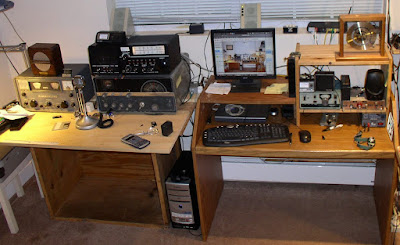
Every once in a while we all need to attack the clutter that grips our radio shacks. That’s what I was doing this weekend. I got rid of a lot of junk. And I reorganized the operating position. On the left is the HQ-100. I plan on putting the K2ZA DX-100 underneath the HQ-100. To the right is the famous Drake 2-B/Hallicrafters HT-37 combo. Next we have the roadkill Ubuntu computers. The laptop used in the production of the podcast is right behind the keyboard. To the right of the computers I have the HW-7 that we recently discussed. Next to it is my Ne-602-based 20 meter DSB transceiver. I plan to us the shelf above the HW-7 (where the clock is) for experimental rigs. To the right of the operating table I have some shelves that hold the beacon gear.

I have all the rigs on the operating table hooked up to an old MFJ coaxial switch, so it is easy to get them connected to the ether. I’m listening to 40 meter AM now. I did some Spanish language SW listening this morning: Radio Havana Cuba, Radio Marti, CBC Canada, Radio Japan, WWV…

Cleaning up proved very fruitful. I found an old portable DVD player — Elisa’s Mom now has a way of watching the many hours of family video that we have accumulated. I also found and rehabilitated some “family radio service” handi-talkies — the kids are using these to communicate with friends across the street. And I dusted off my old 2 meter Radio Shack HT. It works! I almost clipped it onto my belt as we were heading out today, but my kids would never allow me to be so techno-retro in public.

FIGHT ENTROPY!

Our book: “SolderSmoke — Global Adventures in Wireless Electronics”http://soldersmoke.com/book.htmOur coffee mugs, T-Shirts, bumper stickers: http://www.cafepress.com/SolderSmokeOur Book Store: http://astore.amazon.com/contracross-20

Homebrew VHF Phone from Down Under

Here’s some beautiful discrete component DSB VHF homebrew from John, VK3AJG:
—-
Hi Bill,

I know you like DSB transceivers, so I’m sending you a link to my 144Mhz
DSB transceiver which I’ve just completed.
Thought I would try and see if I could get the same circuits I use on HF
to work on VHF, turns out they do with a few minor tweaks.
Anyway here it is: http://members.ozemail.com.au/~jgprice/2M-DSB.html

Keep up the good work, love listening to your show.
Cheers
John Price

VK3AJG

T/R Success with WSPR

Thanks to everyone who sent in advice on my WSPR t/r troubles. I now have it all sorted out. In the image above you can see the cable from the serial port that carries the RTS T/R signal from the computer. It goes to a switching transistor that controls a relay that in turn switches the three relays that actually do T/R for the rig. One question: On the Linux computer the RTS signal seems to switch between +5 and -5 volts, but on the Windows machine it was +10 and -10. Why?
I’m really pleased to have the computer interface working. It is kind of neat to bring together the complex technology of the computer and the simple technology of a DSB/Direct Conversion rig.

SolderSmoke Podcast #132


http://soldersmoke.com/soldersmoke132.mp3

April 1, 2011
Fickle Finger of Fate: Lamp falls on QRSS Crystal
Another heroic computer repair
Sleuthing for RFI with Crystal Radios and Peter Frampton
The seductive allure of the British Regen
Watching the Space Station and the Space Shuttle
Packets from SPAAAACE
Don Vorgaard and the birth of SSB (and DSB!)
Electric Radio Magazine
SPRAT and the ZL2BMI DSB Rig
Jerri Elsworth’s 555 contest (Did I win?)
73 Magazine
QSO with Mike Bryce WB8VGE
Knack Job Opportunities at Make and Hack-a-Day
Chemical Tailoring of Crystal Mic Audio Response
Pi Day!
Sling Shots, Fishing Poles, and Antenna Launchings
MAILBAG!

SolderSmoke Podcast #132


http://soldersmoke.com/soldersmoke132.mp3

April 1, 2011
Fickle Finger of Fate: Lamp falls on QRSS Crystal
Another heroic computer repair
Sleuthing for RFI with Crystal Radios and Peter Frampton
The seductive allure of the British Regen
Watching the Space Station and the Space Shuttle
Packets from SPAAAACE
Don Vorgaard and the birth of SSB (and DSB!)
Electric Radio Magazine
SPRAT and the ZL2BMI DSB Rig
Jerri Elsworth’s 555 contest (Did I win?)
73 Magazine
QSO with Mike Bryce WB8VGE
Knack Job Opportunities at Make and Hack-a-Day
Chemical Tailoring of Crystal Mic Audio Response
Pi Day!
Sling Shots, Fishing Poles, and Antenna Launchings
MAILBAG!

Down-Under Double Sideband WSPR

Peter Parker, VK3YE, is one of the real DSB Gurus. When I got started in the world of double-wide RF, I would frequently turn to his web site for ideas and inspiration. So you can imagine my delight in getting this e-mail from him (his DSB WSPR video is embedded above):

Hi Bill,
Discovered SolderSmoke a few weeks back and love the show.
You might be interested that another DSB WSPR station is on air.
A video demo appears at http://www.youtube.com/watch?v=2aUHNRgV7kw It’s still very crude (eg manual T/R switching) and the receiver is getting false spots. However the transmitter is working very well, with some long distance spots.
73, Peter VK3YE

The Last Roman Rig: New WSPR DSB Transceiver

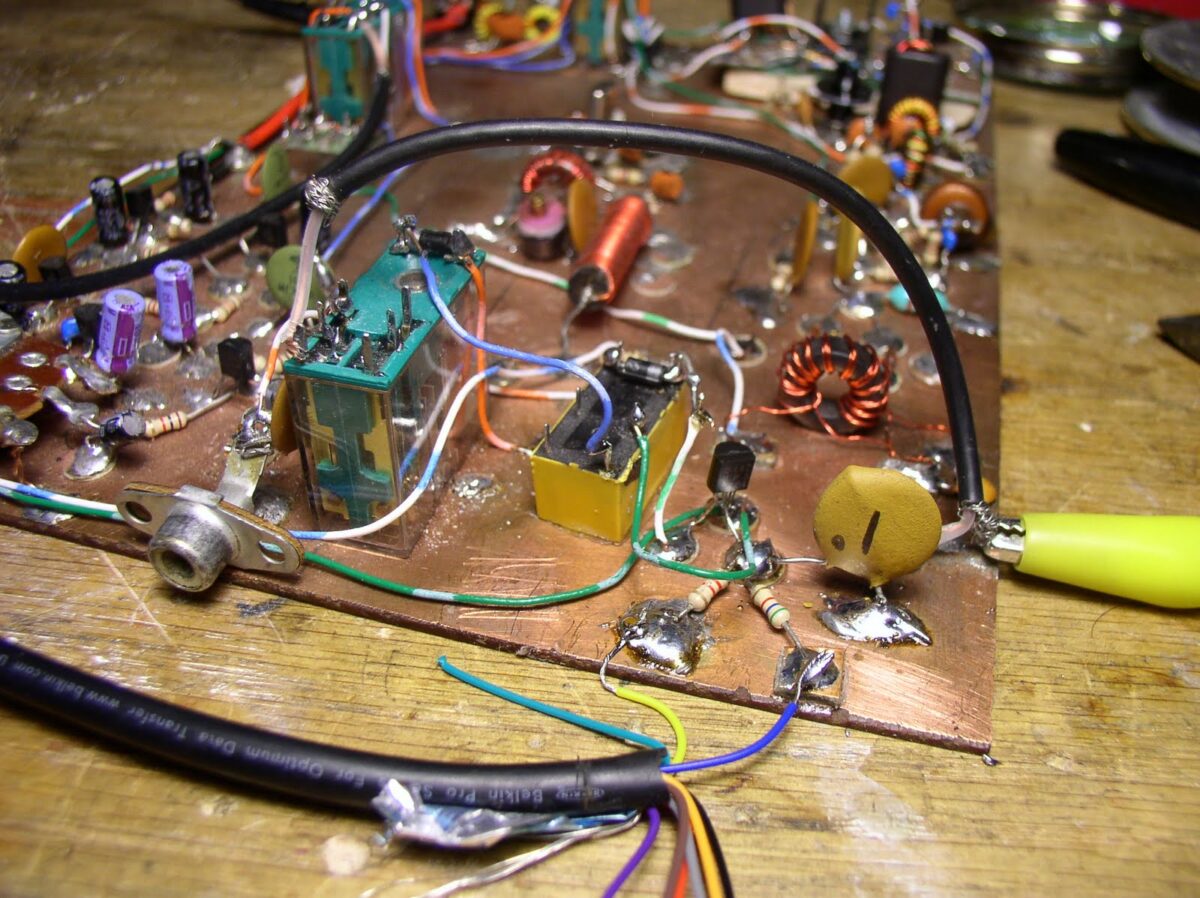
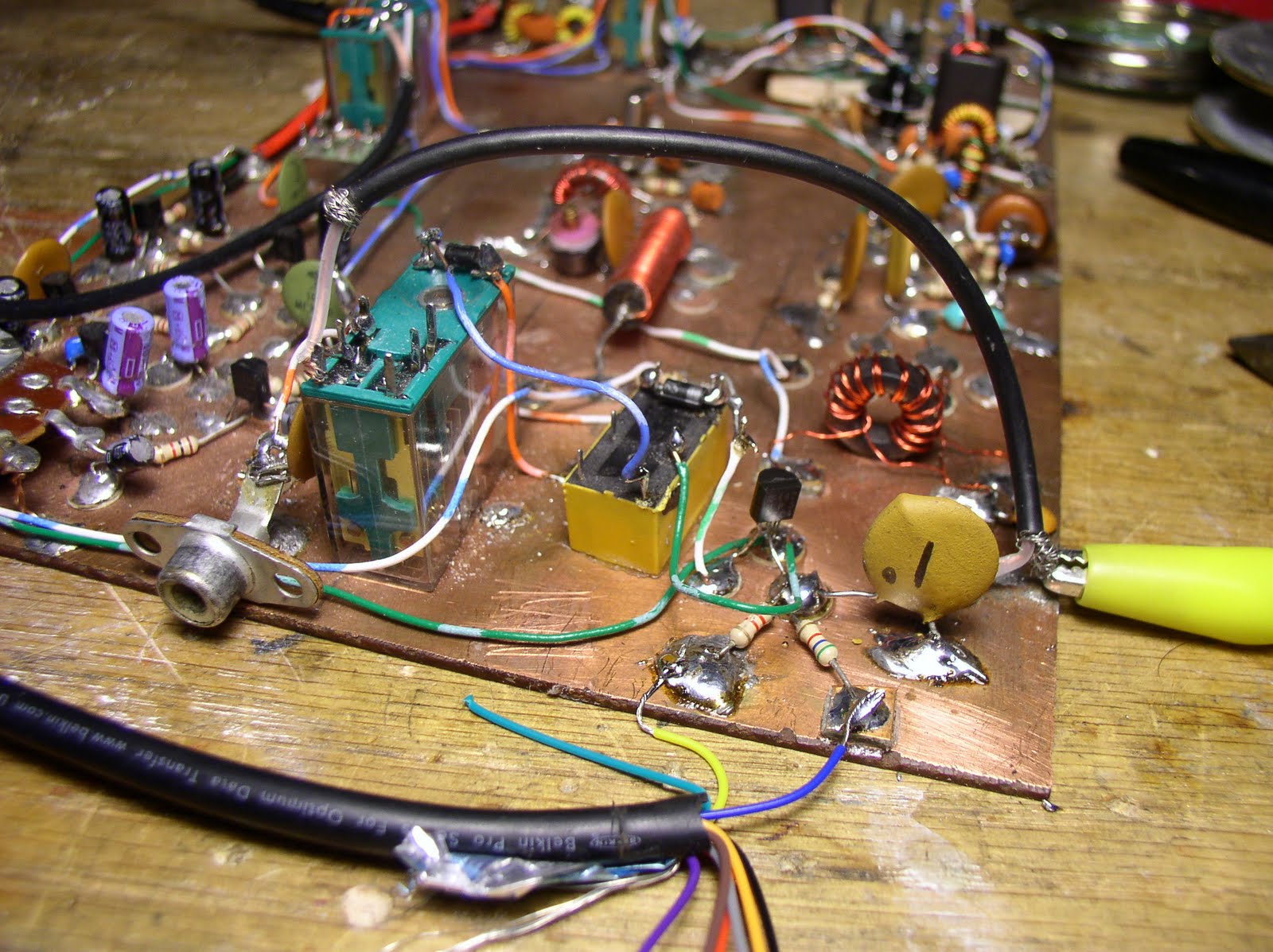
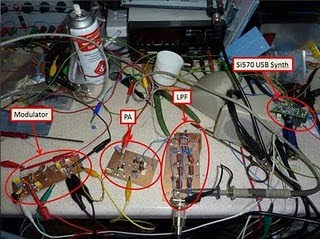
They are coming to pack up my soldering iron next week, so I’m afraid this will be my last Roman creation. You can see the W3PM Colpitts oscillator in the center. The KA7EXM AF amp is in the lower left. The Softrock-based Manhattanized PA is in the upper right. To the right of the oscillator is a classic W1FB two diode balanced modulator. You see three big green relays. The top one switches the antenna and 12 volts during T/R switching. The middle one switches the audio amp input, the bottom one switches the audio amp output. (I use the same AF amp for receive and transmit, just switching around the input and output.)

It works fine and has sent and received WSPR sigs. I think it will also do PSK-31 with the FLDIGI program. I could use a one more stage of RF amplification between the balanced modulator and the PA driver amp. Also, the AF impedance match between the KA7EXM amp and the balanced modulator nees work: Roger’s circuit was deisgned to drive high impedance phones. That balanced modulator circuit has about 50 ohms at each port. Ideas?

I was thinking of calling it the Achilles. But I think I will go with “L’Aquilone” (The Kite”).

Above Board: Manhattan-izing an SMT kit

A while back, Tony Parks very kindly sent me one of his wonderful Softrock RXTX V6.3 Software Defined Radio kits. I took a shot at it, but it turns out that I’m not very good with surface mount construction using small parts. I’ve gotten very used to the Manhattan style. Still, I did manage to build one of the Power Amplifier modules, and I put it to good use in a DSB WSPR transceiver I’ve been building (see above) . It worked great. For a while… Then it released some smoke.

I started trouble shooting and it was at this point that I REALLY began to miss good ole’ Manhattan (you see, I was born there, and I went to Manhattan College, so I guess this helps explain the affinity). It was difficult to get to components mounted under the board. The whole thing was the size of my thumb… I know, whine, whine, whine… Luddite Geezer-ism strikes again. SPARK FOREVER!

It turns out that the problem was caused by the fact that my shack is just not well suited for this kind of construction. There is a lot of stuff floating around. Conductive stuff. Look closely at the picture below and you will see what I mean. You will see what caused the release of the smoke. Look at the leads on the PA transistor on the left. That’s a little bit of stray wire that found its way to the WRONG place. Note the toasted source resistor just below!

Anyway, after a trying to fix this thing, I finally gave up and decided to use the circuit, but in Manhattan form. Everything up top. No SMT. Bigger coil cores. The temperature sensing circuitry went off to the right. The output transformer went off to the left, and the driver stage went down below the kit’s board. Here is what it looks like now. Again, it works great.

I want to thank Tony and the Softrock guys for giving me this experience. Their kits are wonderful and are really making a tremendous contribution to the hobby. I strongly recommend them. The instructions are great, much like those of the old Heathkits. But for me, I’ll take Manhattan.

YET ANOTHER HB DSB QRP WSPR Station! And more “inverted FSK”!

Paul, M0XPD, reports that he has joined the DSB revolution and has put a homebrew DOUBLE Sideband WSPR signal on the air. The rig is pictured above. So I can no longer claim to be the ONLY DSB WSPR station in the world. FB Paul. For more details go to Paul’s site:
http://m0xpd.blogspot.com/2010/05/homebrewed-whispers.html

This was the second time in a week that I’ve found someone else doing the same nutty thing that I’ve been doing. The first incident involved G0XAR. I found him transmitting upside down FSK on 30 meters. Again, I am no longer alone…
Note that both of my colleagues in radio eccentricity are from Britain, a land that takes justifiable pride in its eccentric boffins!

Homebrew QRP Contest… With DSB!

Walford Electronics Brendon 80m DSB kit

Hi Bill
I trust all is well and that the roadkill PCs are not fighting back. Thought you might like to hear about a new contest we are trying here in the UK. Having assisted lots of new knack victims to build their first rigs at the 3 Bath Buildathons we thought we should encourage them to get on the air – 30 QRP DSB rigs on 80m all at once – now that’s what I call a contest.
We have opened it up to any QRP voice radio to cover the QRP appliance operators but homebrewers get extra points. Not sure how much support we are going to get but there is a £50 voucher for Walford Electronics kits up for grabs.
Hopefully this will be a fun contest with freindly extended exhanges rather than the all too common ‘599 1002 73 QRZ’. Picture is the Walford Electronics Brendon 80m DSB kit in all its glory.
73, Steve, G0FUW

50 stations receive my 20 mW DSB Ubuntu WSPR signals

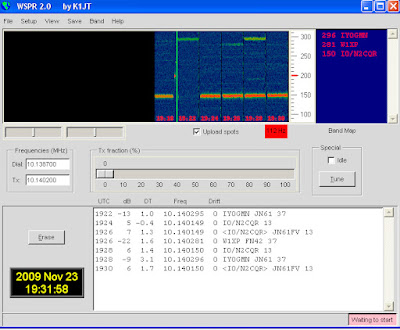
In less than a week of intermittent WSPR operations with the new Ubuntu WSPR 2.0, 50 stations have received my awesome 20 mW Double Sideband HB WSPR signal. (Am I still the only station in the world running WSPR DSB?) 49 of the stations have been in Europe. The only across-the-pond report comes from W1XP. Only once was my signal above the noise level — that was with a neighbor, Andrea, IW0HK. Above you can see the screenshot of his reception of my signal.

You Linux-masters out there might be able to help me with a couple of things: WSPR 2.0 seems to stop running if I leave it alone for a few hours (maybe it opposes un-attended beacon operations!) And I also have what I think is an un-related problem: The computer (a Tecra 8100) goes into some sort of deep sleep mode (a coma really) if I leave it alone for a few more hours. I’ve tried playing with all the Ubuntu power managment and screen-save settings. And I’ve gone back into the bios and the set-up section on the computer to change the sleep modes, etc. No luck.

Happy Thanksgiving to all our American readers! We will be having turkey with all the fixings here in Rome today.

I0/N2CQR WINS CQ WW DX CONTEST!!!!

I’m proud to report that in the category “Homebrew QRP Double-Sideband Phone, Western Trastevere” I think I’m the winner! I came in with massive point count of 7! And guess what — ABSOLUTELY ALL of the reports I received were 59! Even when it seemed like I had to repeat my call 59 times!
The rig I used is pictured above. More details at:
http://www.gadgeteer.us/PORTABLE.html

My 75 Meter “Kickpanel” DSB Rig

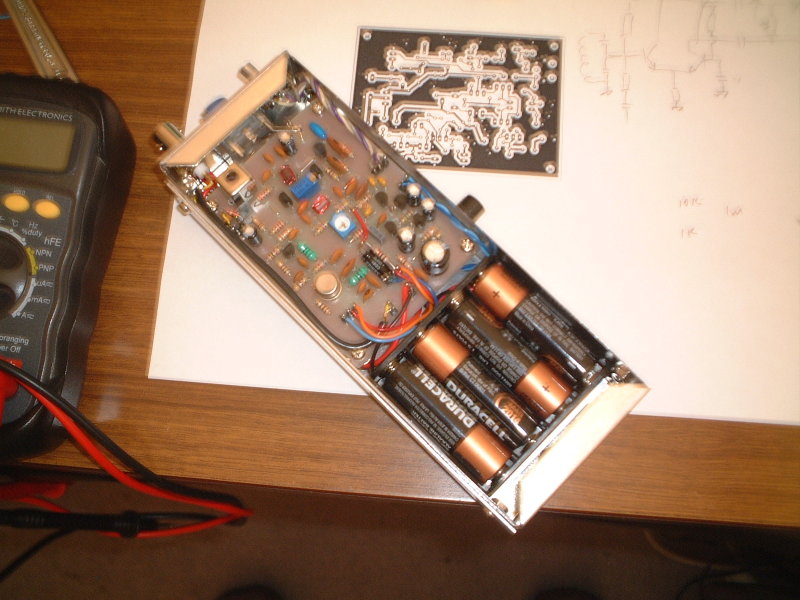
I’ve been talking about it so long, I thought I should let you guys have a look at it. The box on the top is N3ZI’s FB freq counter. It sits on the top cover of the TX — the cover is made from the side panel of a dead computer that I found on a street in London. The metal cabinet is a “kickpanel” — the kind of thing they often put on the bottoms of frequently used doors. Mine was purchased at Farmer Brother’s Hardware on Fulham Road, London. One switch is for T/R. The other is for spotting (netting). I put the LED in there so I wouldn’t forget to turn it off (and because Billy likes LEDs!) Circuit diagrams and LTSpice models appear in previous blog posts.

Moving inside, we see that the “chassis” is actually a kitchen cutting board, this one from a Dyas store in Windsor, England. In the lower left there’s a board with the AF (mic) amp. Center front is the VFO box (elevated above the main chassis by wooden blocks in order to put the tuning cap in a comfortable position). The balanced modulator is on the left. The long rectangular board in the center-right is the 4 stage amplifier. Note the black wire suspended above the connectors — that’s an antenna for the oscillator — it allows me to hear the oscillator signal with my Drake 2-B while in “spotting” mode (while putting the TX and the RX on the same freq.)

HAPPY NEW YEAR FROM ROME!