SolderSmoke Daily News — Ham Radio Blog
Serving the worldwide community of radio-electronic homebrewers. Providing blog support to the SolderSmoke podcast: http://soldersmoke.com
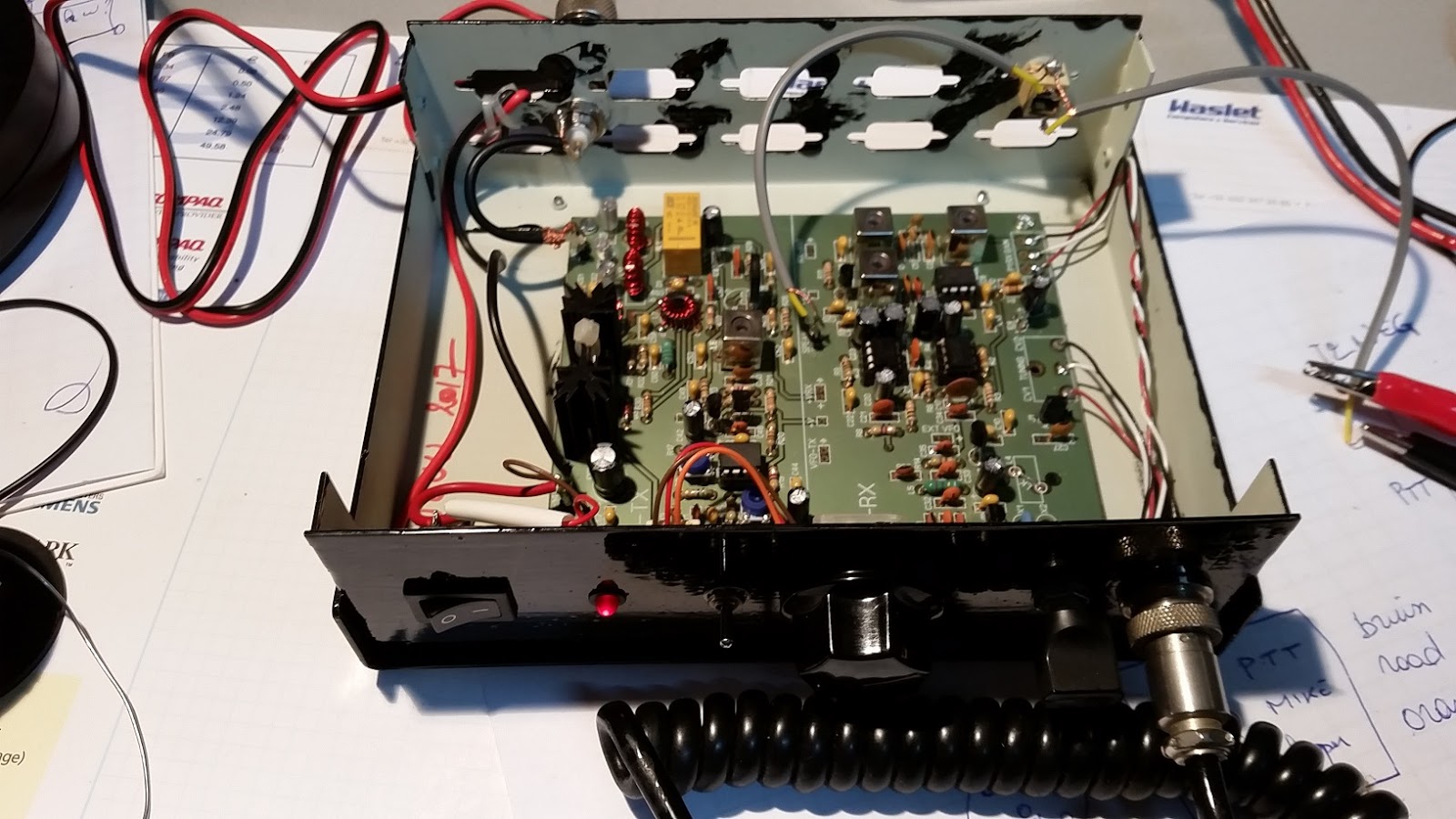
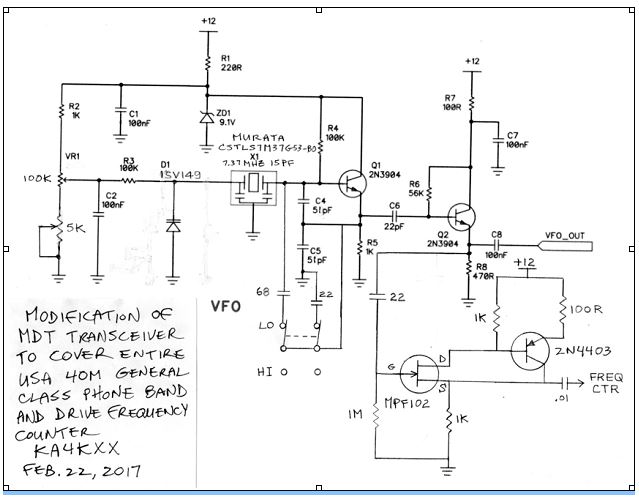
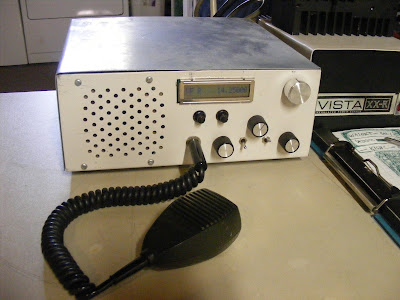
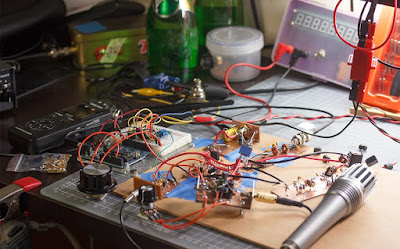
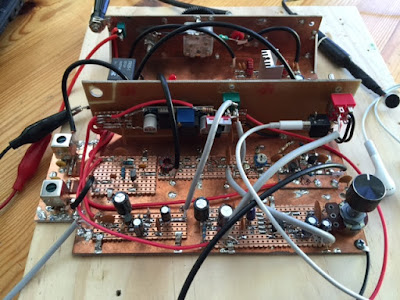
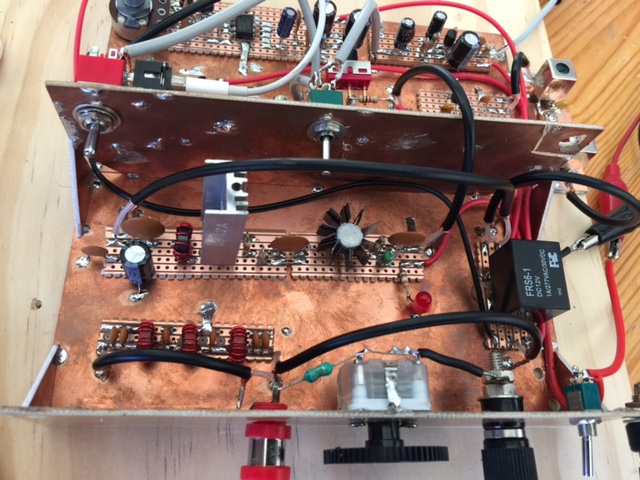
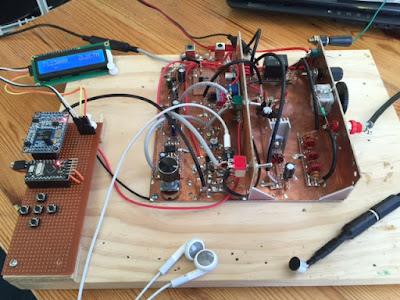
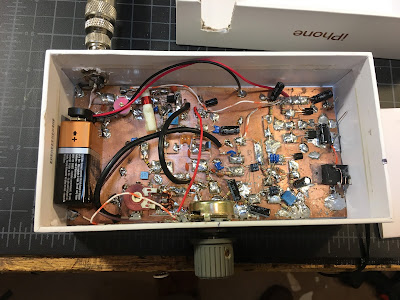
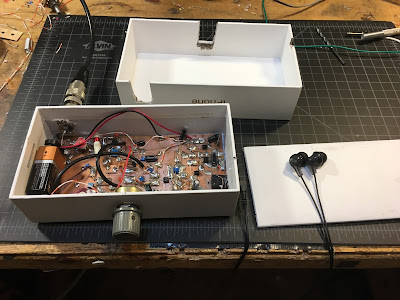
A while back we ran a post about the MDT 40 DSB rig out of Australia. Walter KA4KXX liked the design so much that he built his own version and, with it, made his first homebrew phone contacts. I always say that DSB is a great way to break into the world of microphones. Walter is obviously on the right path — not only did he come up with a nice Al Fresco DSB rig, but he modified the VFO to get additional coverage and to incorporate a frequency counter. FB Walter!
Walter KA4KXX writes:
Since I earned my Ham Radio license in about 1979, I have always operated only on CW since I like to build all my own equipment, but recently at the SolderSmoke website I discovered the MDT 40 Meter DSB Transceiver, and decided this was the design I had always been looking for to finally build and operate on phone.
After I made my first phone contact after only 5 minutes of trying, just a few weeks ago, I was so excited I sent an email thanking designer Leon of ozqrp.com.
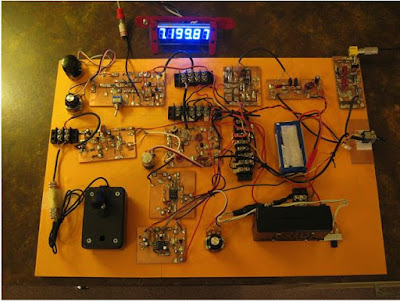
Then I modified the VFO further to cover the entire 40 meter USA General Class License phone band, which is 7.175 – 7.300, in two overlapping steps. I also added a 5K fine frequency adjustment, used a more friendly 1SV149 Varactor diode which I purchased on EBay at very low cost, and also added a high impedance buffer (found at the website listed below) to the VFO to drive a frequency counter.
http://www.arising.com.au/people/Holland/Ralph/buffer/highimpedanceprobe.htm
I was able to implement these modifications very easily since I always make my own un-crowded state-by-stage Manhattan style circuit boards and build first on a breadboard.
So far I am very pleased with the results.
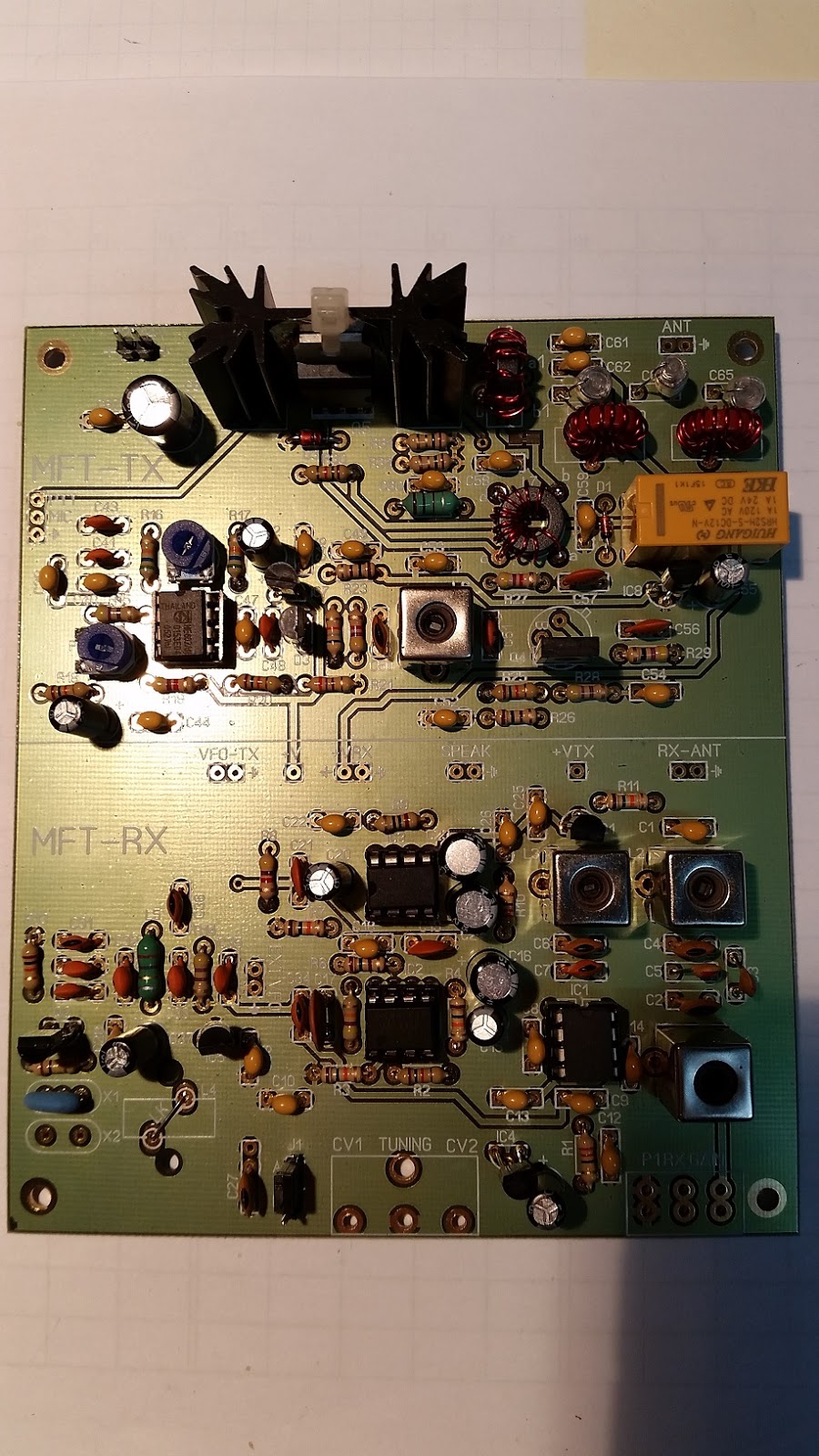
Dave AA7EE has a very cool blog post on his version of the famed ZL2BMI DSB transceiver (seen above). As usual, Dave puts most of us to shame with his excellent non-ugly construction and enviable in-focus macrophotography.
Check it out:
https://aa7ee.wordpress.com/2012/07/29/half-of-the-zl2bmi-dsb-transceiver-a-simple-80m-direct-conversion-receiver/
That’s Keith N6ORS’s MIN-X transceiver. Keith explains that it has circuitry from the BITX, the Minima and even from the ZL2BMI DSB rig. We featured the MIN-X before, when it was still outside the box:
http://soldersmoke.blogspot.com/2016/01/n6orss-min-x-crosses-pond-on-first.html
I was on twenty today with my BITX, finishing up a rather disheartening contact with a fellow who told me that he is a “checkbook operator.” I was trying to encourage this fellow to build something simple — perhaps a Michigan Mighty Mite? He told me that he might give it a try, but only 16 years from now, after he retires. It was like a case of the Anti-Knack! Then Keith N6ORS saved the day by calling in with his beautiful MIN-X HOMEBREW transceiver. We had a nice talk — Keith mentioned the beauty of Pete’s “Blue Rig.” That’s HB2HB (phone) QSO #5 for me. Thanks Keith!
Bill,
That was great fun!
I was just tuning around and heard you mentioned the Michigan Mighty Mite
so I stopped to listen and realized it was you!
Well here was my chance for a homebrew to homebrew with ‘the man’ himself.
I wanted to record it but missed the chance.
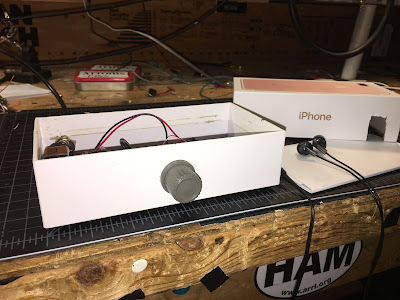
Here is the Min-x boxed up. the case is made from thrown away computer cases.
It runs about 70watts on 160,80 and 40 meters and about 35watts on 20 meters.
I promise to write it up, maybe even draw a schematic. hihi.
73,
Keith N6ORS
Here’ a short clip of the MINX in action:
I would like to claim an entry in the SolderSmoke Homebrew To Homebrew
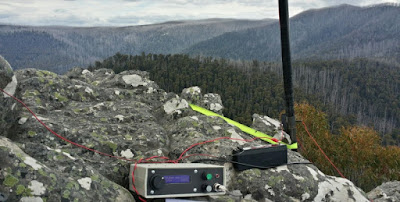
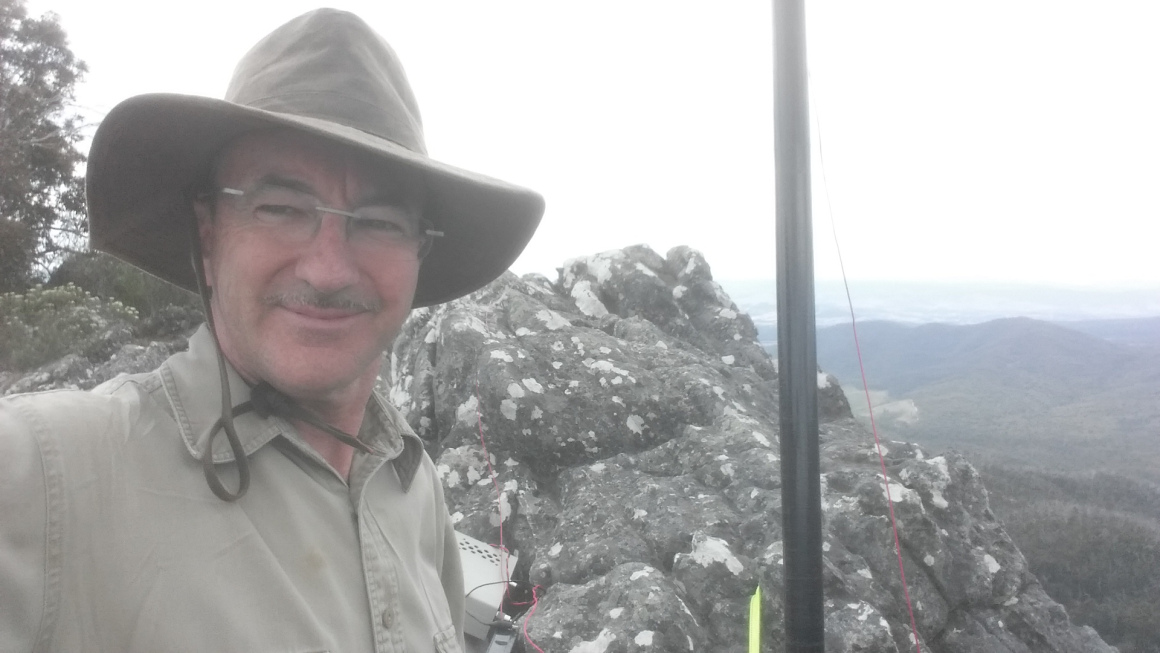
(HB2HB) log. Here’s the story. On Sunday 24th April 2016 I drove two
and a half hours north east of Melbourne into the edge of the Great
Australian Dividing Range, to climb two summits, for the fun of
operating my 40 meter SSB QRP (5 watt) rig in a beautiful, RF-quiet
setting, and to activate two Summits Of The Air (SOTA) peaks.
My first summit was Mount Bullfight
(http://www.sotawatch.org/summits.php?summit=VK3/VN-002), in the
Rubicon Ranges, at 1,490 meters ASL not high by American or European
standards but a good heart-racing climb through thick Australian bush.
After a successful activation with good signal reports into Tasmania
(VK7), around Victoria (VK3) and New South Wales (VK2), I descended,
and drove about 2 miles up the valley to an adjacent SOTA summit,
Pyramid Hill (1,314 meters) where the activation also went well. Just
as I was finishing up with the chasers, Peter Parker VK3YE called me,
operating portable from his beloved Chelsea Pier, and we had a very
pleasant beach-to-summit ragchew QSO. The RF path is about 62 miles.
Peter was running his MDT double sideband rig, with 2 watts. I was
using my MST400, with 5 watts SSB. Both rigs are kit radios from OzQrp
(http://www.ozqrp.com/). Both are assembled by hams — I built my
MST400 18 months ago and Peter was using the MDT rig that OzQrp
founder Leon, VK2DOB designed, built and kitted, the one he sent to
Peter for a YouTube review. So it was built by a ham, just not by
Peter.
Now, I know that there may be some, possibly even you Bill, who may
question the legitimacy of my claim on a coveted HB2HB log entry in
this particular case. I can assure you that we did experience the Joy
of QRP/P operation, Peter basking in the late afternoon Australian sun
on a beach and I on the mountain top. And to further add authenticity
to my HB2HB claim we discussed QRP, aerial experiments, and ‘whats on
your bench’ topics for a full 20 minutes.
However, I would not want to risk disturbing the wrath of the Radio
Gods with a dubious claim.
I admit that neither radio was scratch-built, on copper board
ugly-style, or had the form of a wild birds-nest of separate modules
and interconnections, with parts loosely screwed onto an Italian
chopping board or a discarded lump of wood. Indeed, neither can it be
claimed that both operators built their rigs. So I will take a
rejection of my request with acceptance and dignity, acknowledging
that you are duty-bound to maintain the highest of standards, and that
entry into the SolderSmoke HB2HB log is not to be granted without
proper consideration.
I do understand that you may feel that accepting this QSO could set a
dangerous precedent and risk opening the flood gates to a tsunami of
dubious HB2HB QSO claims from hams using minimal assembly rigs, like
some of the Elecrafts. Who knows, some individuals might even be
tempted to claim HB2HB QSOs from VHF FM hand-helds after managing to
screw on the rubber-ducky antenna. Even unboxing a shiny new
Yae-com-Wood is, to some, a form of ‘handiwork’.
Bill, the decision is yours. Peter VK3YE and I look forward to your
decision. Judge wisely.
73 from down under, Paul VK3HN, with agreement to this claim from Peter VK3YE.
Details of this day of activations are on my blog at:https://vk3hn.wordpress.com/
Peter’s MDT review is at: https://www.youtube.com/watch?v=2OtZeFkb1xw
Did you kill some chickens already? If you did, THANK YOU! If you don’t, then please enjoy a nice sancocho de gallina for me.
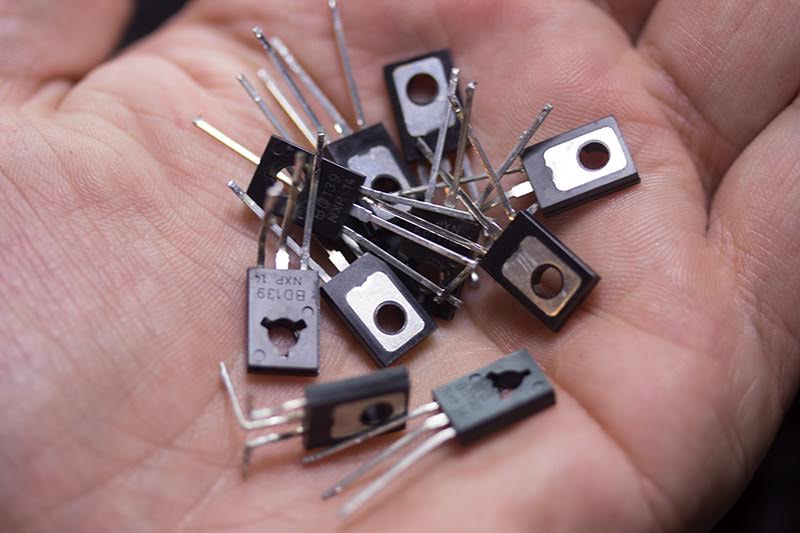
FAKE TRANSISTORS!!!!
I knew I couldn’t be screwing everything up so badly and VK3YE’s circuit couldn’t be so wrong.
I was getting nuts trying to understand why it wasn’t working, changing a single inductor could fry the final instantly or not getting any power out at all (?) also my final BD139 was getting extremely hot, and many of them died with no apparent reason (Page 149!!!!).
I ordered a “good” deal of BD139’s and BD140’s combo for an incredible low price from [A WEB SITE], I’ve ordered many *apparently good components from that site with no problems so far… mainly resistors and capacitors. Having tried everything to get my circuit working and after some quick online search about fake transistors from china my suspicions grew considerably and I remembered some -other- BD139’s I had ordered from Amazon some time ago.
I proceeded to solder the new transistors in place in my PA and Bingo! No more heating of the final and about the expected 0.5W out from my first DSB homebrew rig. I quickly reported to a fellow homebrewer in a local net and the report was amazing! 59 +10, the final transistor was comfortably warm to the touch and my mind could finally rest… lesson learned! What an electromagnetic achievement!
Just wanted to share my success Bill and thank you again for you book and you kind response.
Please say hi to Elisa and the Cristalinhos from a fellow Latin friend.
73/72 from Colombia!
Daniel
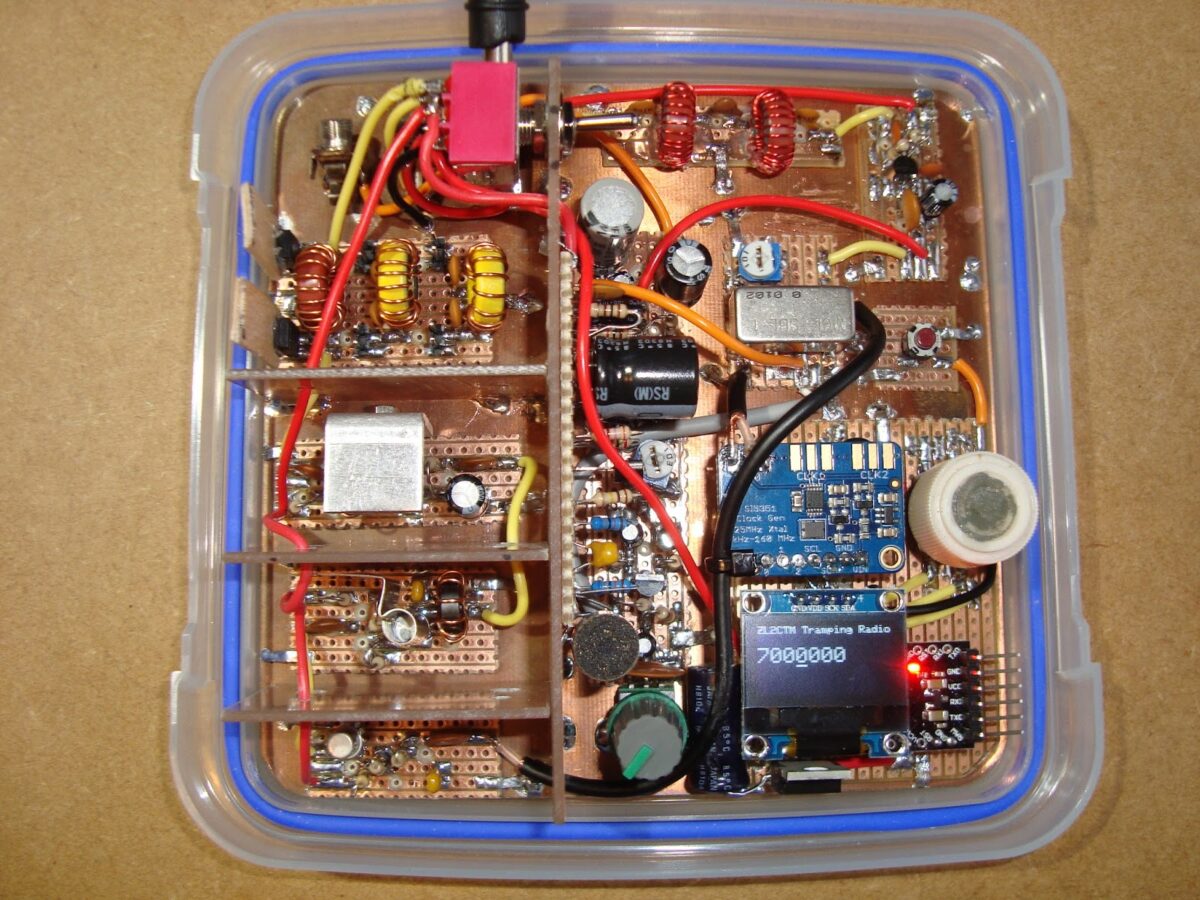
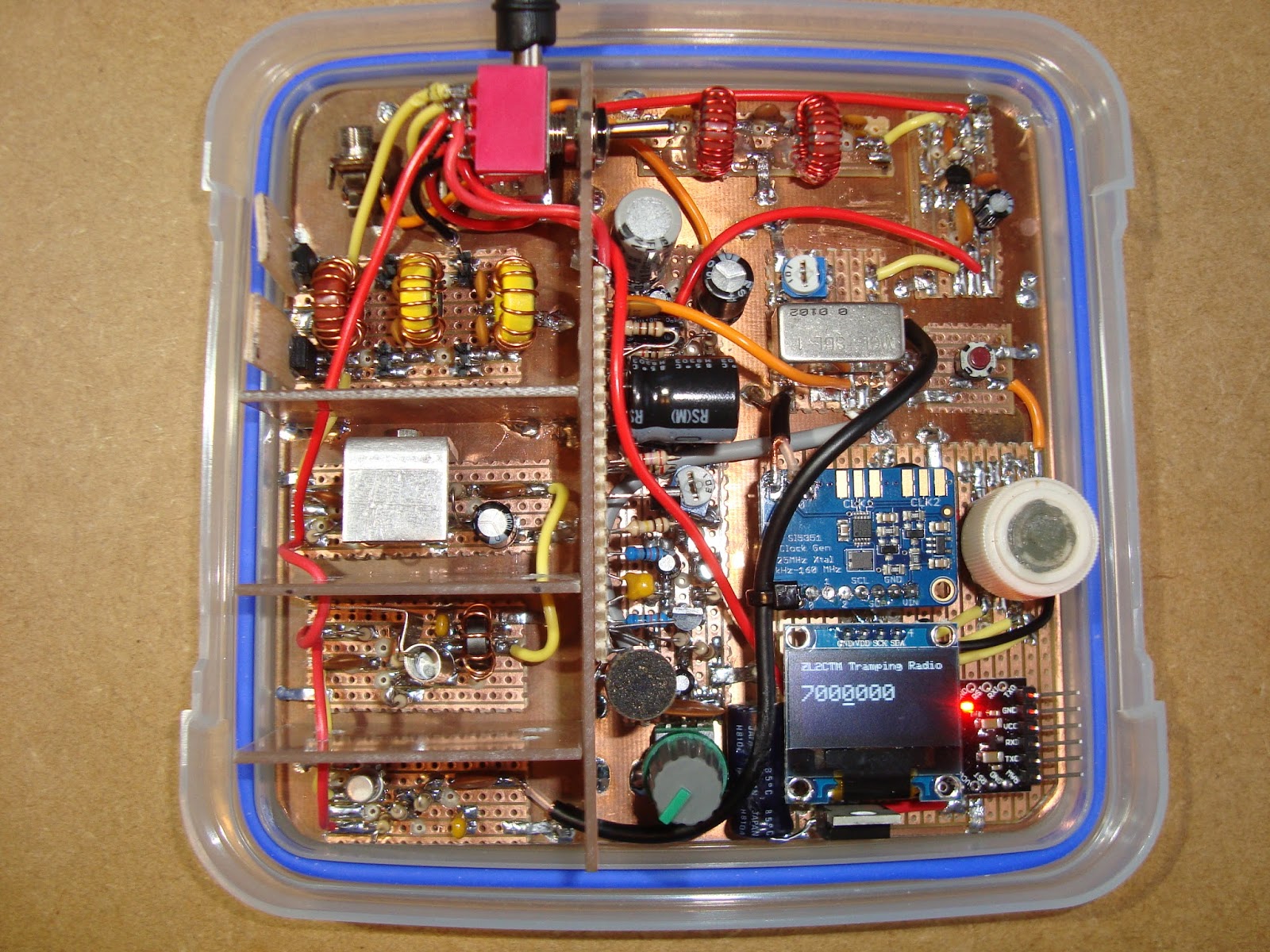
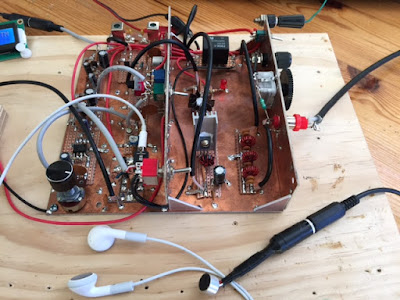
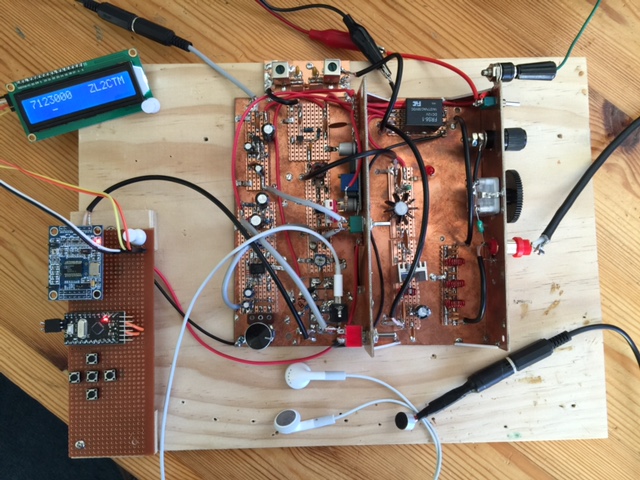
New Zealand and Australia seem to produce an amazingly high percentage of the world’s double sideband transceivers. Charlie ZL2CTM adds to the count. He took inspiration and circuitry from DSB hams in both countries and produced this beautiful DSB transceiver. It is obviously — as Charlie notes — chock full of soul. I definitely identify with his comment about “taming some kind of electro-mechanical machine” and also, of course, with his remark about the feelings that come with putting a homebrew rig on the air. So follow the advice of Charlie! Build a DSB rig and put it on the air! Make this your ham radio resolution for 2016! Give it a go!
I found Peter’s recording of the DSB signal being received by a DC receiver to be very interesting. We’ve long been warned about the very ironic incompatibility of DSB rigs and DC receivers.
In “W1FB’s Design Notebook,” Doug DeMaw wrote (p 171): It is important to be aware that two DSSC (DSB) transmitters and two DC receivers in a single communication channel are unsatisfactory. Either one is suitable, however, when used with a station that is equipped for SSB transmissions or reception. The lack of compatibility between two DSSC (DSB) transmitters and two DC receivers results from the transmitter producing both USB and LSB energy while the DC receiver responds to or copies both sidebands at the same time.” Bummer.
In essence, we’ve been warned that the simple DSB/DC rigs we’ve put on the air cannot communicate satisfactorily with similar rigs. We are, it seems, doomed to only speak with SSB/Superhet rigs.
The later portion of Peter’s second video allows us to hear just what happens when we try to listen to a DSB signal with a DC receiver: It sounds, well, unsatisfactory. I was trying to figure out why. Here are some ideas:
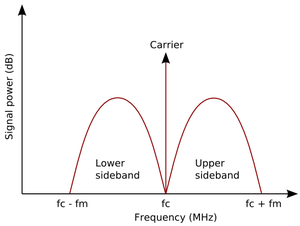
Simplify things by assuming we are transmitting only a single audio tone of 1000 Hz through our DSB transmitter. The rig’s VFO is at 7100 kHz. The 1 kHz tone results in signals at 7101 and 7099 kHz. Along comes somebody with a Direct Conversion receiver. If he were able to put (and keep) his receiver oscillator on EXACTLY 7100 kHz, he would end up (by taking the difference products from the product detector) with a 1 kHz tone resulting from the 7099 kHz signal AND a 1 kHz tone from the 7100 kHz signal. But there would be phase differences between these two signals, so you would end up with a less than pure 1kHz tone. (Did I get that right?) And if — as is likely — your local oscillator is a bit off frequency you’d get a real mess. If for example the local oscillator was at 7100.1 kHz, you’d have tones at 900 Hz (7100.1 – 7101) and 1.1 kHz (7100.1 – 7099). Yuck.
You might think you could just use the local oscillator in your DC receiver to replace the carrier in the DC receiver, turning it into an AM signal, then use an envelope detector as you would with any AM signal. But not so fast! For this to work your local oscillator would have to be not only at the same frequency as the original carrier, but also in the same phase. That is hard to do. (Hard, but possible — that is what they do with synchronous detectors using phase locked loops.)
I think you can actually hear many of the DC-DSB problems as Peter tries to tune in the DSB signal of VK7HKN using the DC receiver in the MDT transceiver. It is indeed unsatisfactory. But don’t worry. It is highly unlikely that when using a DSB rig you will encounter another DSB rig. I speak from experience on this. Pity.
Our book: “SolderSmoke — Global Adventures in Wireless Electronics” http://soldersmoke.com/book.htm Our coffee mugs, T-Shirts, bumper stickers: http://www.cafepress.com/SolderSmoke Our Book Store: http://astore.amazon.com/contracross-20
Brilliant! Great stuff! Lots of fun!
Another great idea from Peter Parker, VK3YE.
Our book: “SolderSmoke — Global Adventures in Wireless Electronics” http://soldersmoke.com/book.htm Our coffee mugs, T-Shirts, bumper stickers: http://www.cafepress.com/SolderSmoke Our Book Store: http://astore.amazon.com/contracross-20
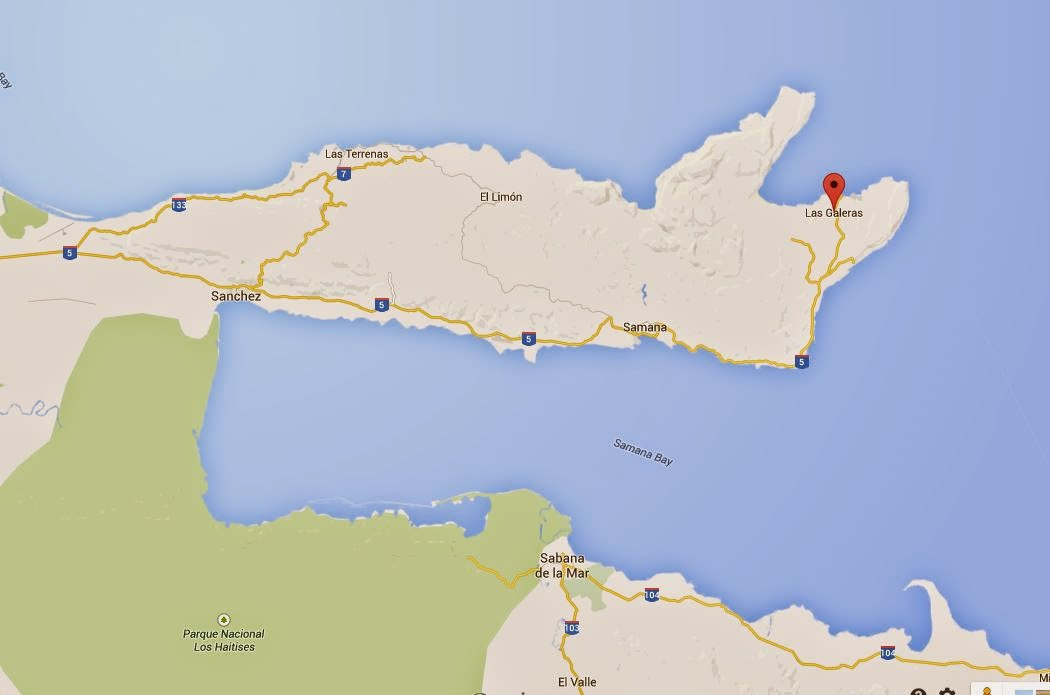
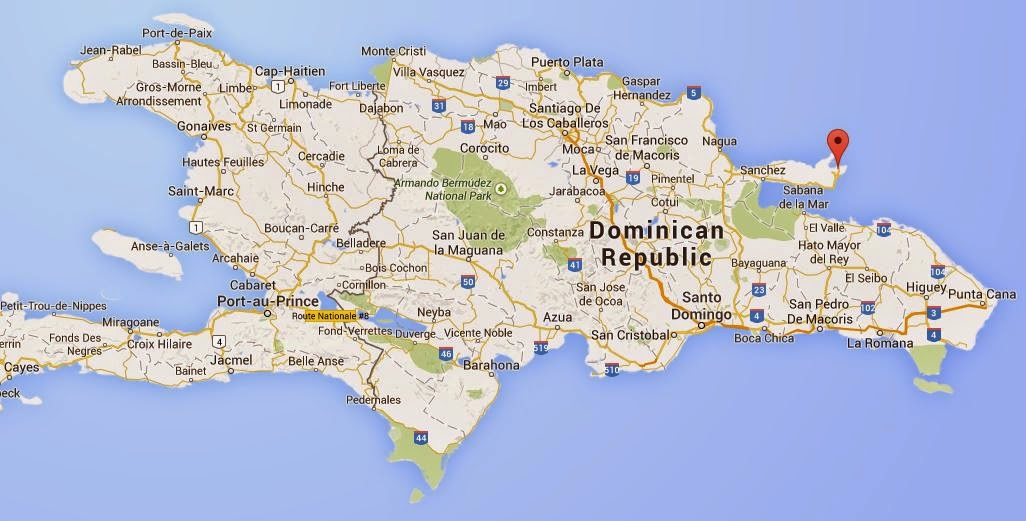
Look at the drawing above. That is the banner logo of Rod Newkirk’s column in QST magazine. For many years Rod regaled us with exciting reports on the activities of intrepid foreign radio amateurs, transmitting from exotic locations using ingeniously devised homebrew radio equipment. Look at the picture on the left side. See the palm trees? See the thatched roof shack with the dipole antenna? Well, that’s pretty close to what it was like for me out on the Samana Peninsula in the Dominican Republic last month.
The rig was my Azores-built, oft-modified, NE602-based, ceramic resonator DSB transceiver with a recently added India-designed BITX IRF510 RF amplifier chain. A little article I wrote about the ceramic resonator VXO was featured in SPRAT 127. My antenna was a half wave dipole strung up in the thatched roof. Power came from 10 AA Batteries. So this was the Double A, Double Sideband, Dipole DX-pedition.
I had given some thought to building an SSB rig for this trip, but because of the efforts of Peter Parker, VK3YE, I felt compelled to take a DOUBLE Sideband rig with me to the beach.
Here is an old (2006) video on the rig. The power amplifier has been significantly modified:
Here is some more information on the rig, including a schematic for the receiver and the SPRAT article on the Variable Ceramic Oscillator:
http://www.gadgeteer.us/PORTABLE.html
Here is the log book for my contacts.
C08KB MARCO IN CUBA
Our book: “SolderSmoke — Global Adventures in Wireless Electronics” http://soldersmoke.com/book.htm Our coffee mugs, T-Shirts, bumper stickers: http://www.cafepress.com/SolderSmoke Our Book Store: http://astore.amazon.com/contracross-20
SolderSmoke Podcast #168 is available.
22 November 2014
http://soldersmoke.com/soldersmoke168.mp3
The benefits of software inefficiency.
Don’t throw a wet blanket on computer baby steps.
DDS-ing Pete’s old boatanchors and Bill’s BITX.
Bill’s DSB amplifier woes: a JBOT unfairly scorned.
Getting ready for solar-powered beach DSB.
Michigan Mighty Mite Crystal Offer — FREE ROCKS!
Tribal knowledge: Beware of mistakes in published schematics!
QRO update: Working Japan on 17 meters.
Happy Thanksgiving!
Our book: “SolderSmoke — Global Adventures in Wireless Electronics” http://soldersmoke.com/book.htm Our coffee mugs, T-Shirts, bumper stickers: http://www.cafepress.com/SolderSmoke Our Book Store: http://astore.amazon.com/contracross-20
We did it AGAIN! Winners in the Homebrew Double-Sideband QRP Northern Virginia Category! Sweet! I can’t wait to pick up the trophy!
Our book: “SolderSmoke — Global Adventures in Wireless Electronics” http://soldersmoke.com/book.htm Our coffee mugs, T-Shirts, bumper stickers: http://www.cafepress.com/SolderSmoke Our Book Store: http://astore.amazon.com/contracross-20
This morning I was looking at F6FEO’s wonderful web site (Frank, KM4AXA is building the 28 Mhz DSB rig from Michel’s site) . The drawings have a nice JF1OZL feel to them.
Check out Michel’s site. Just hit the translate button if you have trouble with the French language:
http://f6feo.homebuilder.free.fr/index.html
Merci Michel!
Our book: “SolderSmoke — Global Adventures in Wireless Electronics” http://soldersmoke.com/book.htm Our coffee mugs, T-Shirts, bumper stickers: http://www.cafepress.com/SolderSmoke Our Book Store: http://astore.amazon.com/contracross-20
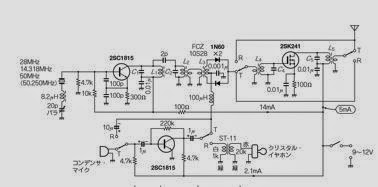
Wow. Looks like something Peter Parker would really like. This one was sent to me by Stephen, G7VFY. It comes from Japan:
http://www.cqpub.co.jp/hanbai/
Our book: “SolderSmoke — Global Adventures in Wireless Electronics” http://soldersmoke.com/book.htm Our coffee mugs, T-Shirts, bumper stickers: http://www.cafepress.com/SolderSmoke Our Book Store: http://astore.amazon.com/contracross-20
Podcast #156 is available:
http://soldersmoke.com/soldersmoke156.mp3
Special hour-long interview with Peter Parker, VK3YE
— Early experiences with radio
— CW
— DSB Gear
— Simple gear, and gear that is TOO simple
— VXOs, Super VXOs and Ceramic Resonators
— Building receivers
— Chips vs. Discrete
— Making the leap to SSB
— The Knob-less wonder and the BITX
— No need for a sophisticated workshop
— Advice for new phone QRPers
Our book: “SolderSmoke — Global Adventures in Wireless Electronics” http://soldersmoke.com/book.htm Our coffee mugs, T-Shirts, bumper stickers: http://www.cafepress.com/SolderSmoke Our Book Store: http://astore.amazon.com/contracross-20
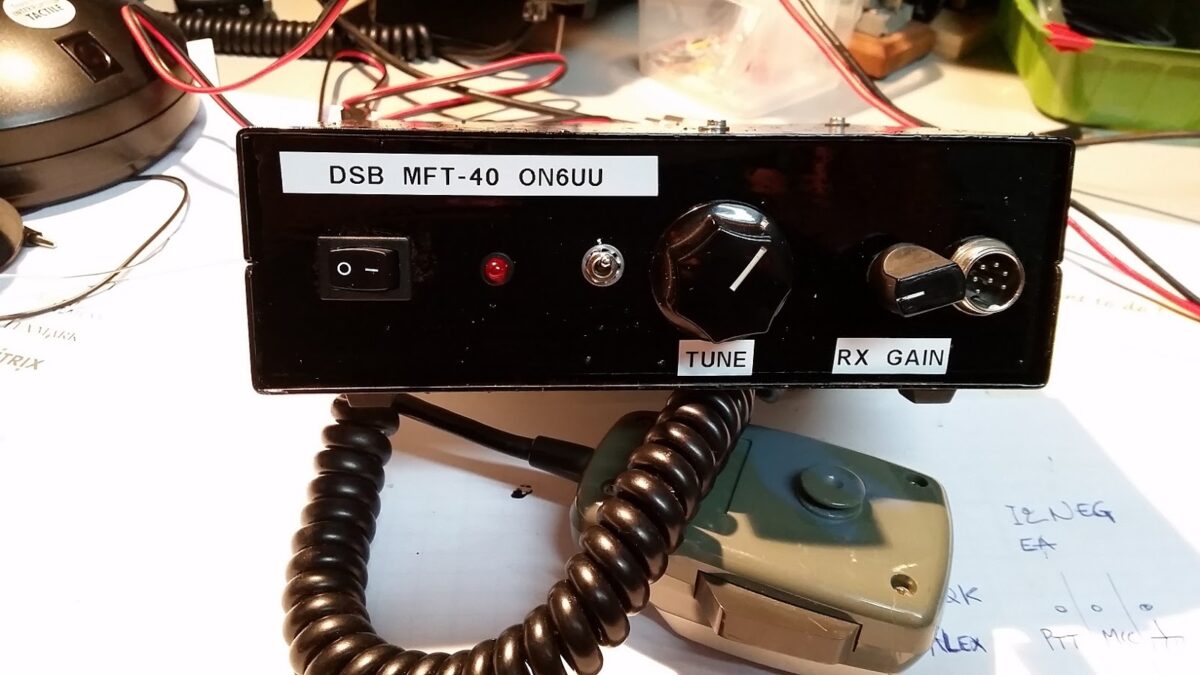
To QRP-L:
I have a JUMA TRX-1 cw and dsb transceiver. It seems to me that if I transmit an psk signal there would be two signals generated, one on usb and another on lsb. Is this correct? It does not seem like a good thing to do to me.
Thoughts?
73 Larry WB4HLX
—————————–
Larry:
I’ve been experimenting with DSB PSK for the last few weeks. Sure, you are using twice the needed bandwidth, but in this mode that means you are using only an additional 31 HERTZ! That’s not a lot. Also, if (as I am) you are using a Direct Conversion receiver, in your waterfall you will also be looking at two sets of frequencies — those going about 2 kHz above center AND 2kHz below. This helps you avoid causing interference: If the frequency looks clear on your screen, you can be reasonably sure you won’t be bothering anyone with your extra sideband.
This is similar to the AM question: there too you are using additional spectrum. But it is allowed.
Doug DeMaw and other esteemed technical gurus have promoted DSB as a useful mode that — through its relative circuit simplicity — encourages the building of homebrew gear. DeMaw wisely advised against using high power when running DSB.
I’ve been having fun with PSK DSB. I’ve had many contacts. I’m running less than one watt to a dipole. One curious thing that I’ve noticed: PSK seems to be sideband independent: When I tune in a PSK signal on my FLDIGI waterfall, the software will decode it even if I have the FLDIGI set for LSB or USB.
You might also want to try JT-65.
Good luck.
Glad to hear that I’m not alone. Center Glad to hear that I’m not alone.
73 Bill N2CQRhttp://soldersmoke.blogspot.com
Our book: “SolderSmoke — Global Adventures in Wireless Electronics” http://soldersmoke.com/book.htm Our coffee mugs, T-Shirts, bumper stickers: http://www.cafepress.com/SolderSmoke Our Book Store: http://astore.amazon.com/contracross-20
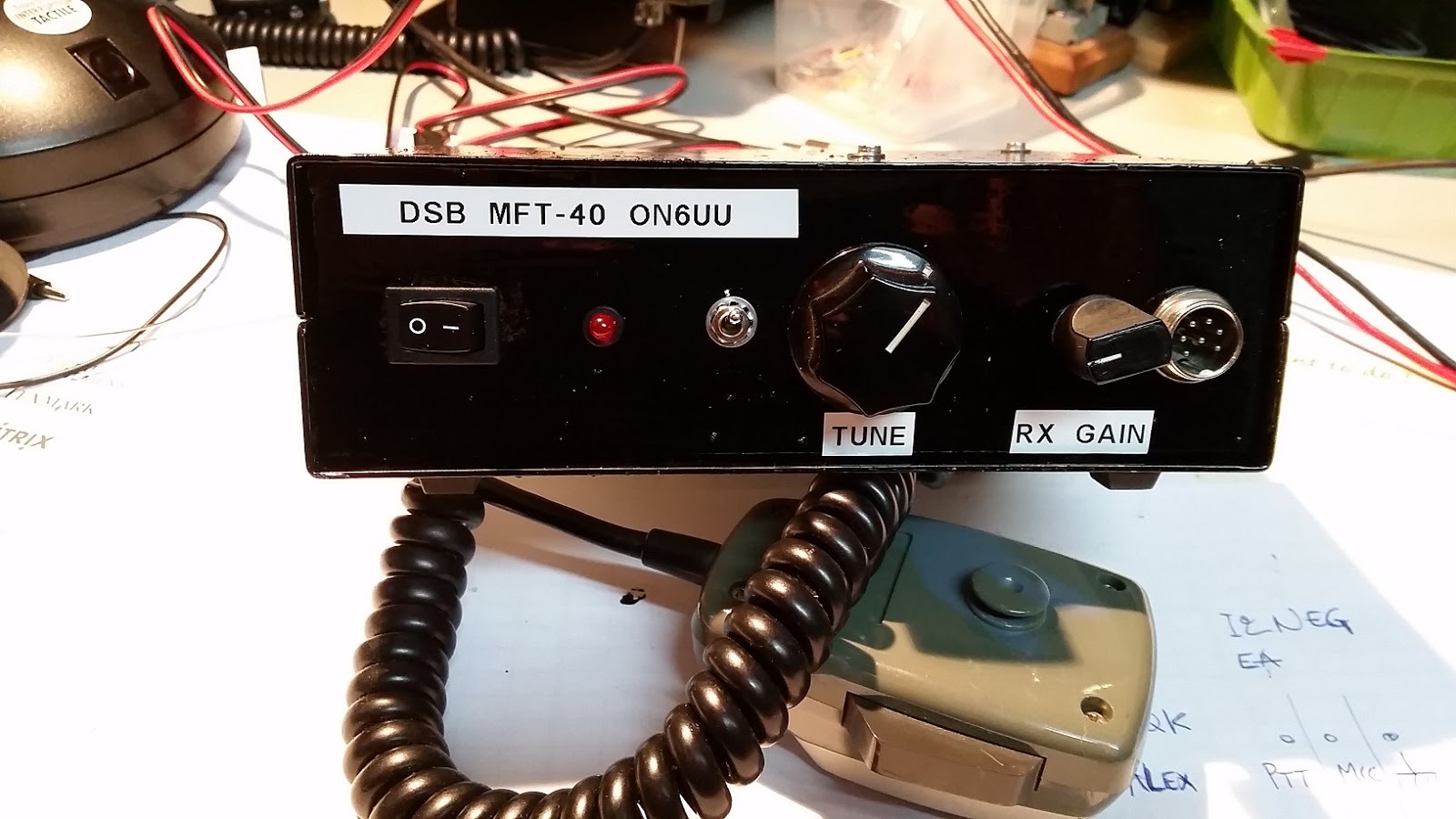
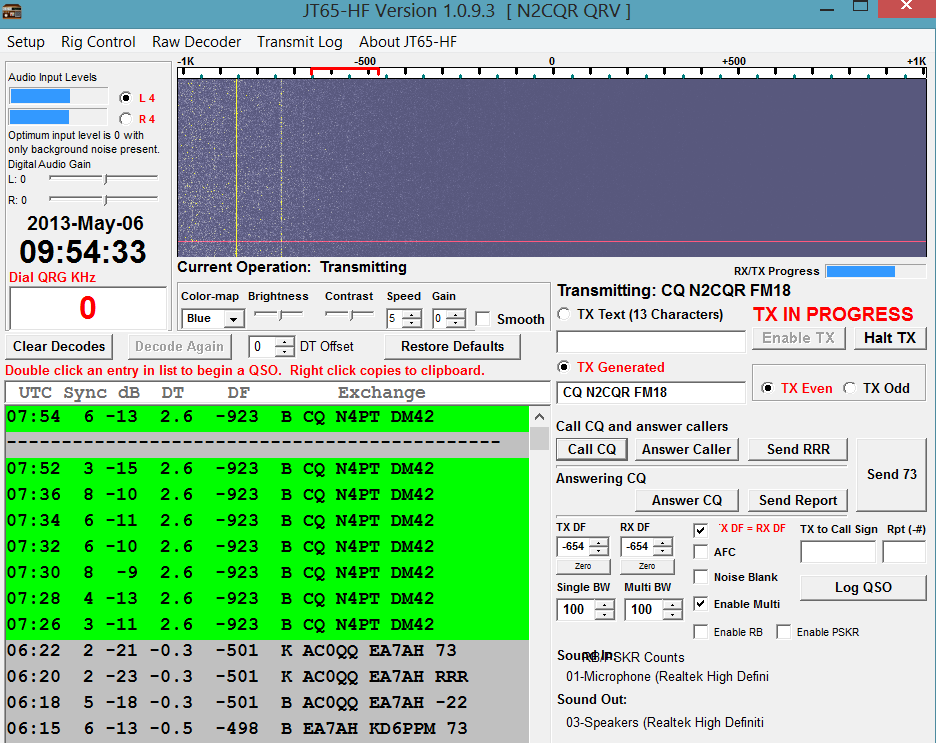
My six dollar DDS board hasn’t arrived yet, so this weekend I worked on the re-build of the 30 meter Direct Conversion/DSB transmitter that I built in Rome (originally for WSPR use). I was hoping to use this rig to make at least a few PSK-31 contacts. But I started seeing these strange looking sigs in the waterfall. I found out they are JT65 (JT for Joe Taylor). So I downloaded the program JT65-HF. I got the receiver going very quickly (it is a 40675 dual gate MOSFET followed by the audio amplifier out of Roger Hayward’s Ugly Weekender RX). The transmitter is just a two diode singly balanced modulator followed by the RF chain from Peter Parker’s Beach 40 Rig. QSOs seem imminent.
Our book: “SolderSmoke — Global Adventures in Wireless Electronics” http://soldersmoke.com/book.htm Our coffee mugs, T-Shirts, bumper stickers: http://www.cafepress.com/SolderSmoke Our Book Store: http://astore.amazon.com/contracross-20