38 Year HB Mystery Solved? Was it the phasing dots?

During the summer of 1976, at the age of 18, I made an audacious attempt to join the ranks of the true homebrewers. I tried to build a receiver. It was the Herring Aid 5 from the July 1976 issue of QST, a 40 meter Direct Conversion receiver intended for use with the famed Tuna Tin 2. As I have recounted (perhaps ad nauseum), I never got it to work. My recent encounter with the ORIGINAL Tuna Tin 2 (Mojo was transferred to my BITX17, and it definitely works better now) got me thinking about this painful experience. I decided to try again.

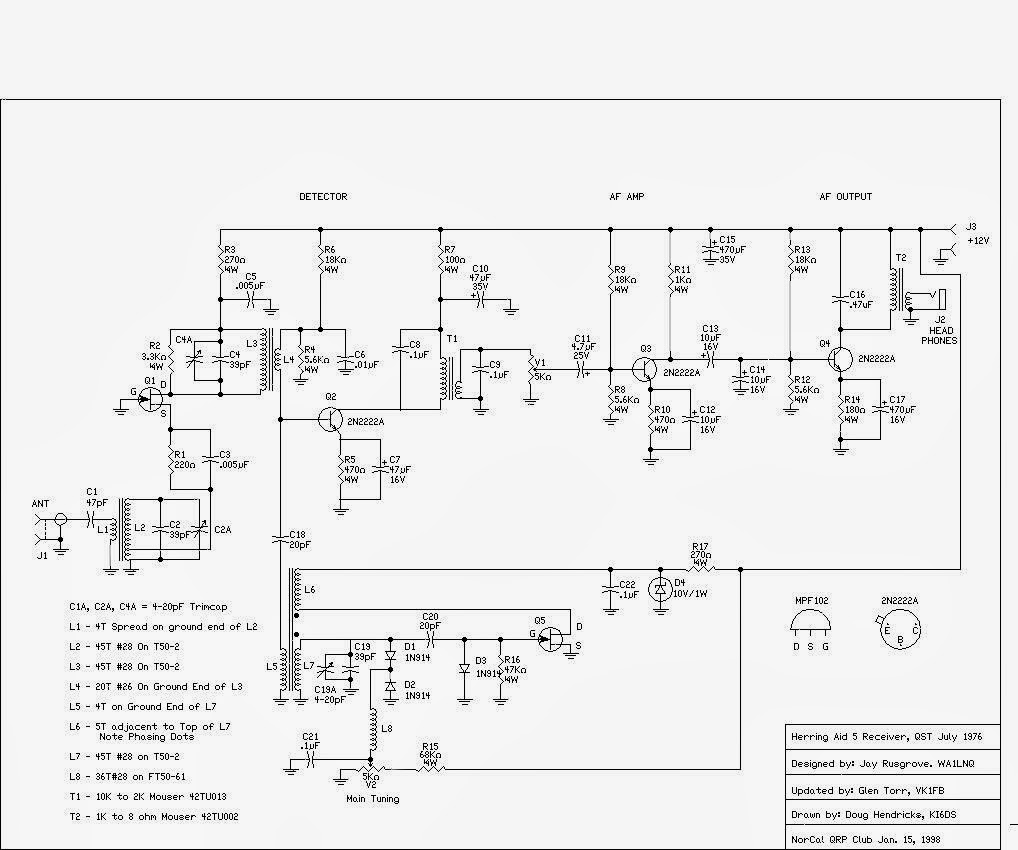
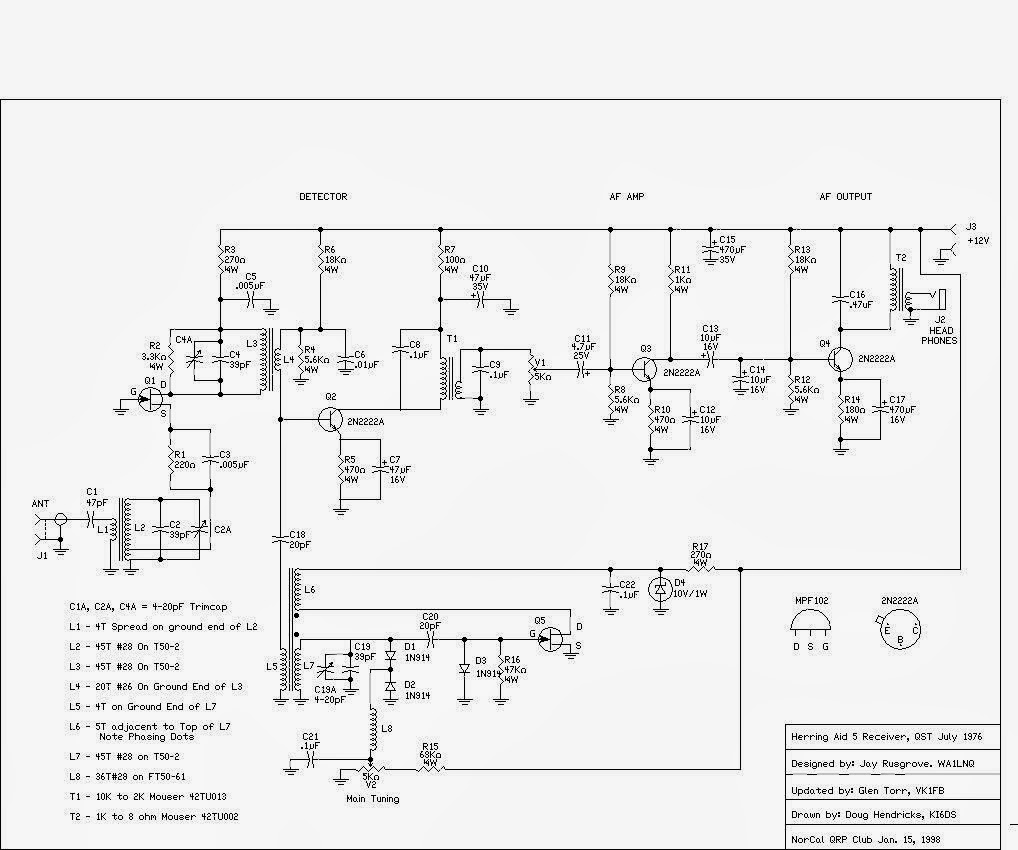
There is an updated NORCAL schematic for this rig. I found it (and some good articles) on the NJQRP club page. In the original, designer Jay Rusgrove, WA1LNQ, used only parts that could be found at Radio Shack stores. In the days before the internet and Mouser, this was a good idea. Instead of toroidal ferrite and iron powder coils, Jay built his coils around Radio Shack solonoidal 10 uH chokes.

The NORCAL version dispensed with the Radio Shack chokes, and used toroids. But I wanted to try to find out what went wrong 38 years ago. So I dug up some 10uH chokes.

I know that my problem was that I never got the oscillator working. I remember being able to hear signals with my “almost” receiver when I put my HT-37 in “CAL” mode and tuned through 40. I was so close! The Herring Aid was picking up RF from the HT-37 and using that in lieu of the LO energy that obviously wasn’t coming from my Herring Aid VFO. But WHY didn’t that oscillator work?

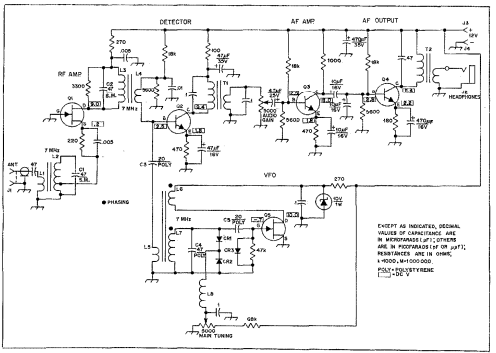
Today I started with the VFO. Again, it didn’t work! But now I have decades of troubleshooting experience under my belt. So I poked around a bit. Then I decided to look closely at the phasing.

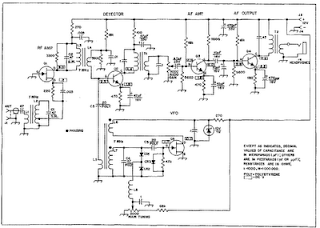
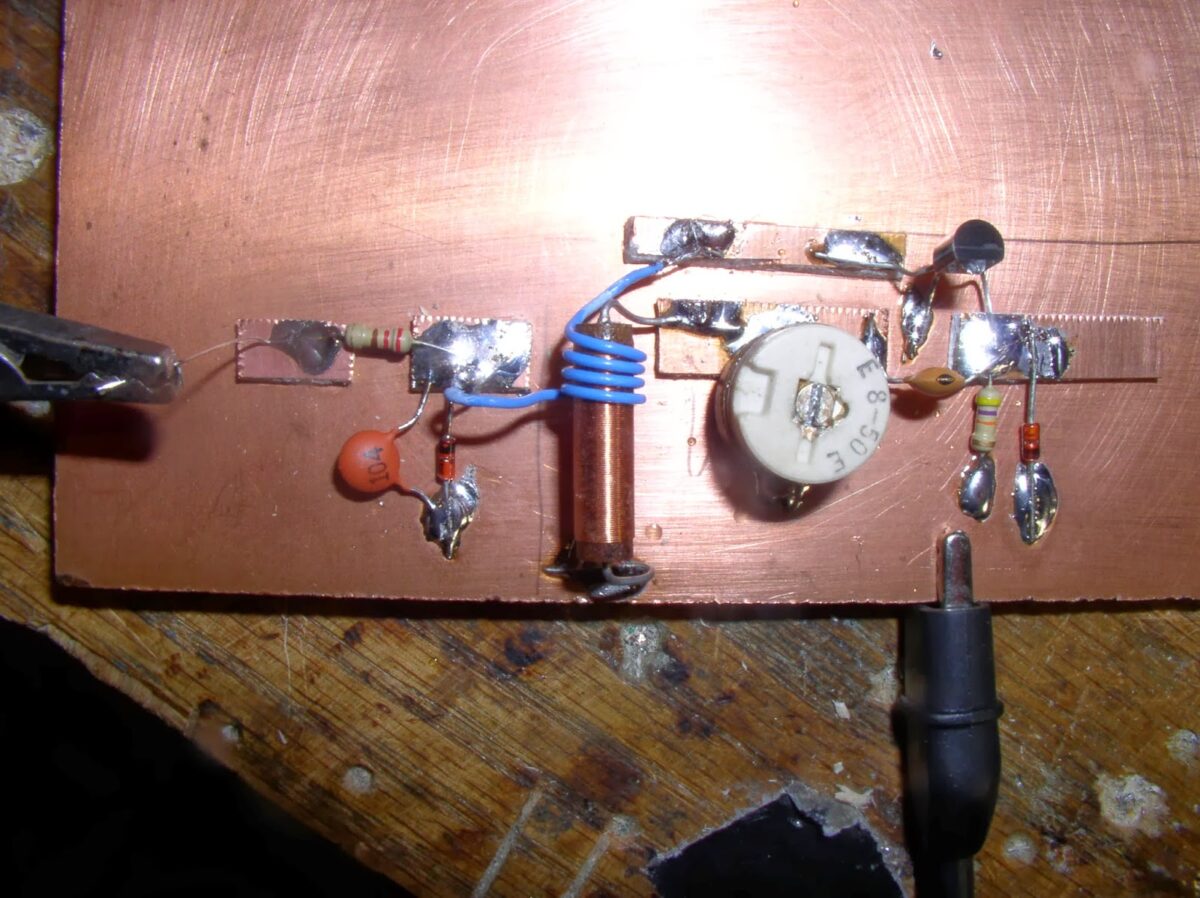
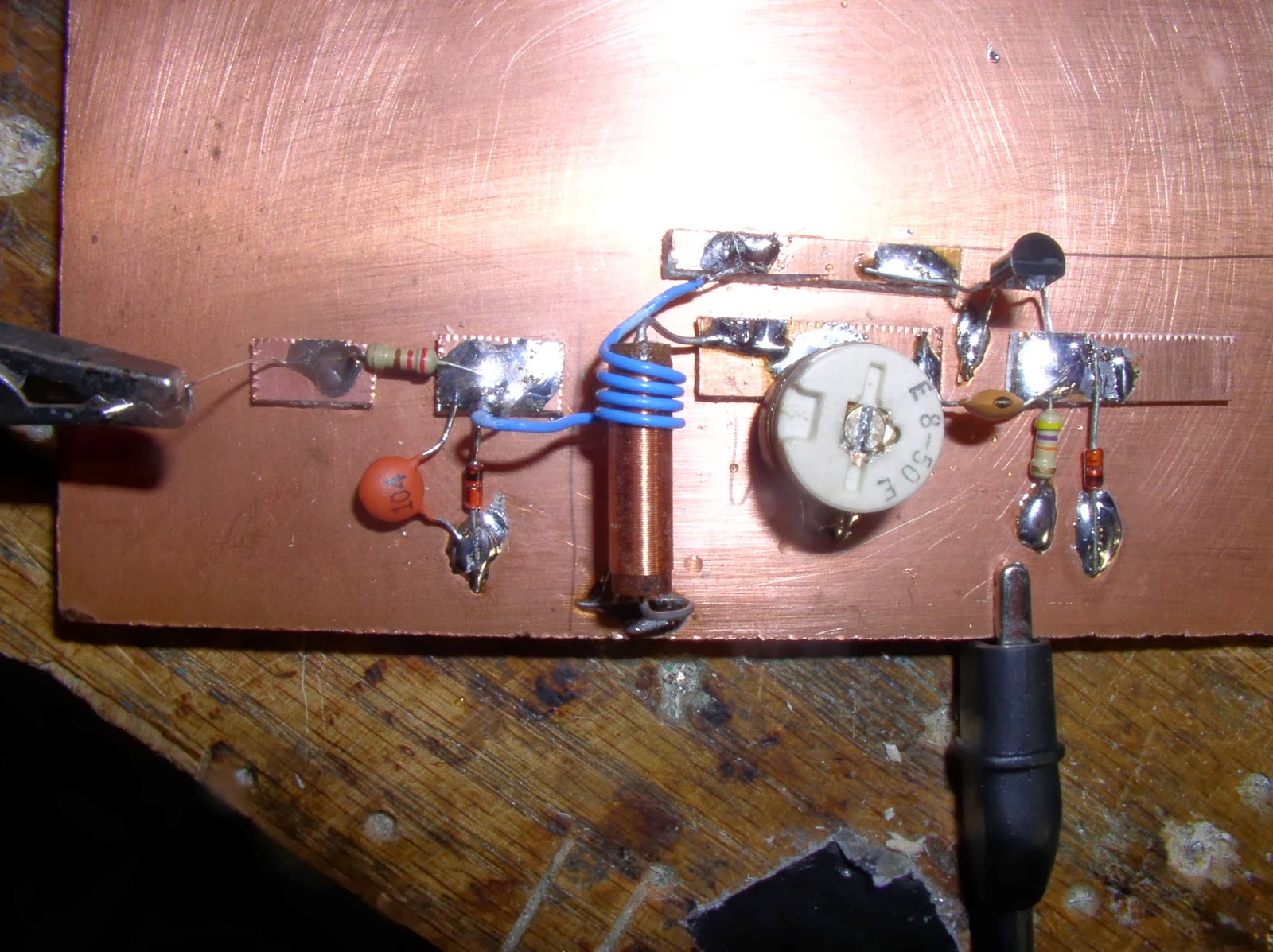
Take a look at the schematic(above) and the picture (below). L7 is the 10uH choke. L6 is 4 turns wound over it (or adjacent to it). Now, here is the key question: Look at the phasing dots. How would you guys connect those coils? For me, the schematic indicates that the TOP of L6 should go to the Zener and the BOTTOM of L6 should go to the drain of the JFET. The TOP of the choke should go over to C5, and BOTTOM of L6 should go to ground. Right? Or am I reading the phasing dots wrong?

Well, the oscillator was not oscillating in this configuration. Then I did something that I might not have known to try back in 1976: I reversed the phase of L6: I put the top of the coil to the Drain of the JFET and the bottom of the coil to the Zener. Bingo. The joy of oscillation. Now it works. (The picture below shows it as it is when the oscillator is working well.)

So, is there an error in that diagram? Was this not all my fault?
Aha! I just looked at the schematic of the NORCAL version. Check out the dots! I think that was the problem!
Our book: “SolderSmoke — Global Adventures in Wireless Electronics” http://soldersmoke.com/book.htm Our coffee mugs, T-Shirts, bumper stickers: http://www.cafepress.com/SolderSmoke Our Book Store: http://astore.amazon.com/contracross-20
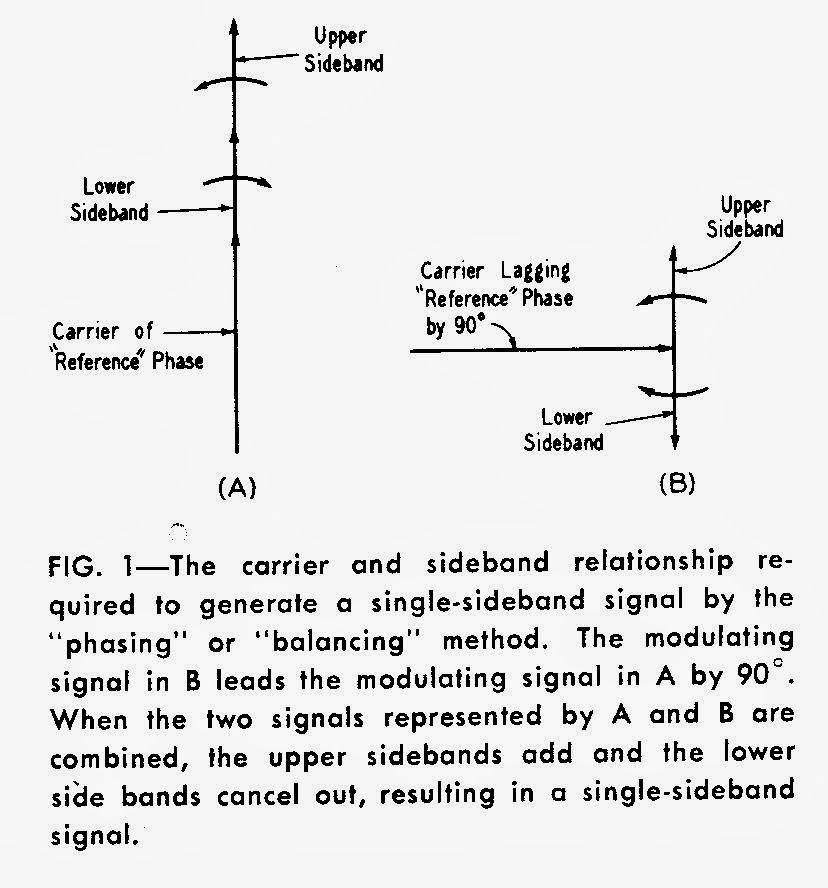
SolderSmoke Podcast #157: Peter Parker on Phasing Rigs

SolderSmoke Podcast #157 is available for download.
http://soldersmoke.com/soldersmoke157.mp3

December 27, 2013

— Santa Report: Rigol Scope at SolderSmoke HQ. Kites at VK3YE.
— Project updates: Bill’s BITX 40/20 build.
— Peter finishing up BITX40 (in a big box)
— BITX 17 (5 watts SSB) works JA, ZD7, ZS!
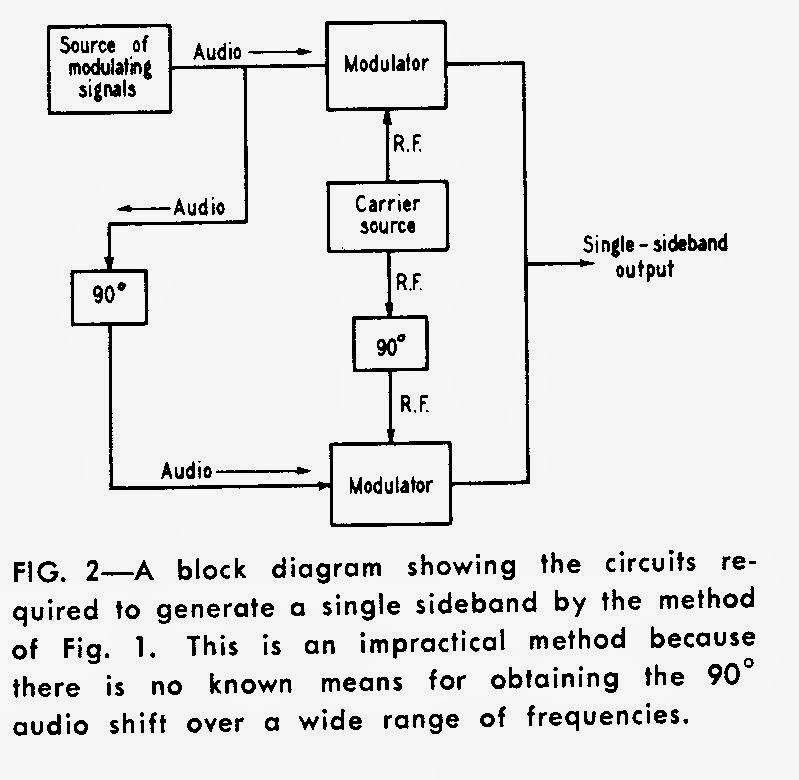
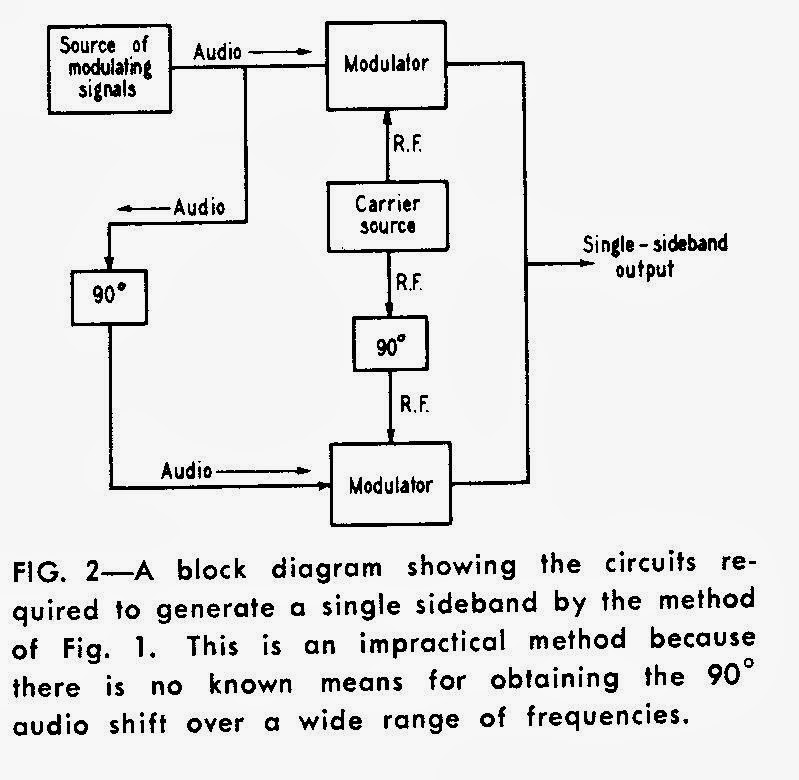
— The mystery, elegance, and gentleness of phasing SSB
— Phasing explained in 1970 ARRL SSB book
— Phasing SSB: From Hallicrafters HT-37 to SDR
— The SP5AHT Phasing Rig
— I & Q for you: The Binaural Experience
— Direct Conversion receivers and Software Defined Radios
— Simple DC receivers plugging into sound cards
— The joy of receiver building
— 144 MHz aircraft bounce (Melbourne to Sydney)
— VHF Across The Great Australian Bight

HAPPY NEW YEAR TO ALL!

Our book: “SolderSmoke — Global Adventures in Wireless Electronics” http://soldersmoke.com/book.htm Our coffee mugs, T-Shirts, bumper stickers: http://www.cafepress.com/SolderSmoke Our Book Store: http://astore.amazon.com/contracross-20
SolderSmoke Podcast #157: Peter Parker on Phasing Rigs

SolderSmoke Podcast #157 is available for download.
http://soldersmoke.com/soldersmoke157.mp3

December 27, 2013

— Santa Report: Rigol Scope at SolderSmoke HQ. Kites at VK3YE.
— Project updates: Bill’s BITX 40/20 build.
— Peter finishing up BITX40 (in a big box)
— BITX 17 (5 watts SSB) works JA, ZD7, ZS!
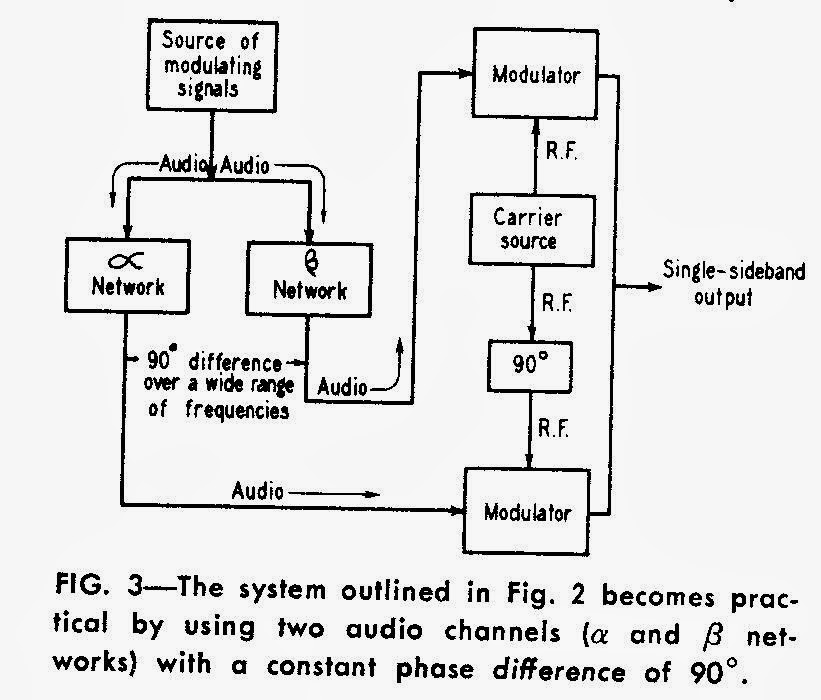
— The mystery, elegance, and gentleness of phasing SSB
— Phasing explained in 1970 ARRL SSB book
— Phasing SSB: From Hallicrafters HT-37 to SDR
— The SP5AHT Phasing Rig
— I & Q for you: The Binaural Experience
— Direct Conversion receivers and Software Defined Radios
— Simple DC receivers plugging into sound cards
— The joy of receiver building
— 144 MHz aircraft bounce (Melbourne to Sydney)
— VHF Across The Great Australian Bight

HAPPY NEW YEAR TO ALL!

Our book: “SolderSmoke — Global Adventures in Wireless Electronics” http://soldersmoke.com/book.htm Our coffee mugs, T-Shirts, bumper stickers: http://www.cafepress.com/SolderSmoke Our Book Store: http://astore.amazon.com/contracross-20
Simple Homebrew SDR

I know that “simple” and “homebrew” aren’t the words that come to mind when we think of Software Defined Radios, but minimalist guru Peter Parker, VK3YE, reminds us that with little more than an antenna, a diode, a crystal oscillator and a connection to the computer soundcard, you can dive into the world of SDR.

I’ve been doing this for some time now, but my receiver uses a 40673 dual gate MOSFET and a universal VXO from George Dobbs, G3RJV. I’ve been running mine with the FLDIGI and JT-65 HF programs. Peter’s video alerted me to the charms of SDRadio from Alberto, I2PHD. This is a very nice program. Of course, I’m always happy to add a dash of Italy to my operations. Thanks Peter! Thanks Alberto! Thanks George!

Our book: “SolderSmoke — Global Adventures in Wireless Electronics” http://soldersmoke.com/book.htm Our coffee mugs, T-Shirts, bumper stickers: http://www.cafepress.com/SolderSmoke Our Book Store: http://astore.amazon.com/contracross-20
Homebrew Adventures with JT65

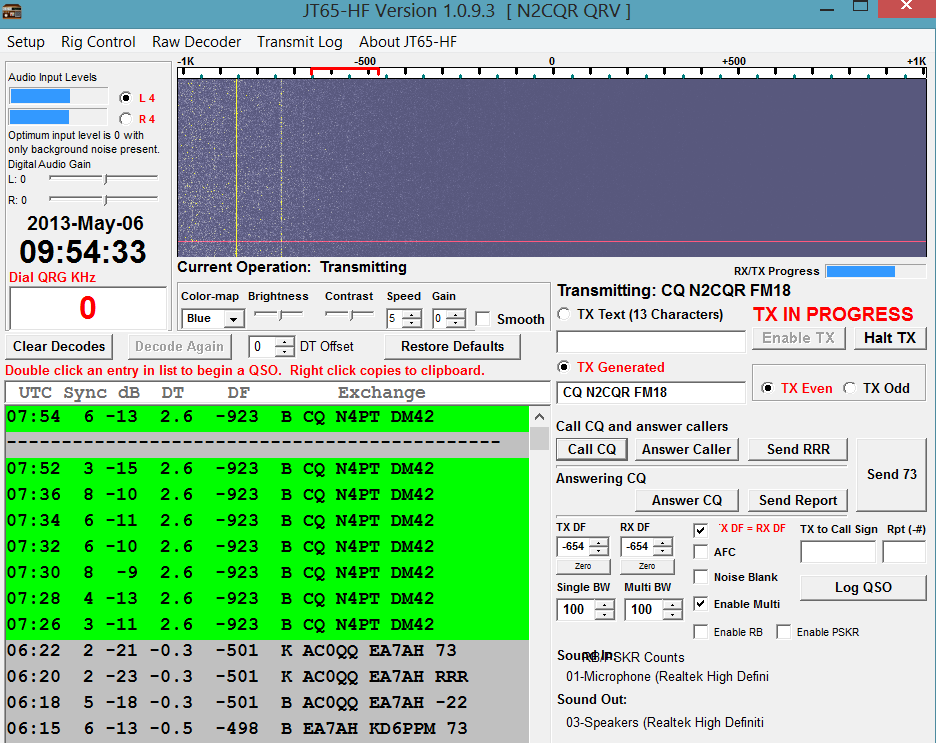
My six dollar DDS board hasn’t arrived yet, so this weekend I worked on the re-build of the 30 meter Direct Conversion/DSB transmitter that I built in Rome (originally for WSPR use). I was hoping to use this rig to make at least a few PSK-31 contacts. But I started seeing these strange looking sigs in the waterfall. I found out they are JT65 (JT for Joe Taylor). So I downloaded the program JT65-HF. I got the receiver going very quickly (it is a 40675 dual gate MOSFET followed by the audio amplifier out of Roger Hayward’s Ugly Weekender RX). The transmitter is just a two diode singly balanced modulator followed by the RF chain from Peter Parker’s Beach 40 Rig. QSOs seem imminent.

Our book: “SolderSmoke — Global Adventures in Wireless Electronics” http://soldersmoke.com/book.htm Our coffee mugs, T-Shirts, bumper stickers: http://www.cafepress.com/SolderSmoke Our Book Store: http://astore.amazon.com/contracross-20
Fabio’s Direct Conversion Receiver

Fabio, IK0IXI, is an electronic wizard from Civitavecchia, near Rome. Check out his very nice DC receiver. Note that wonderful direct conversion sound. Very cool that has it atop our beloved SPRAT. Below you can hear the effectiveness of the audio filter. Bravo Fabio!

Our book: “SolderSmoke — Global Adventures in Wireless Electronics” http://soldersmoke.com/book.htm Our coffee mugs, T-Shirts, bumper stickers: http://www.cafepress.com/SolderSmoke Our Book Store: http://astore.amazon.com/contracross-20
Long Lost Varactor Receiver Found!

SolderSmoke fans will recall that for a long time I have been looking for the radio magazine article that propelled me into a receiver construction project that failed and left me tech-traumatized. I tried to build a solid state receiver back in high school. All I remembered about it was that it was direct conversion and varactor-tuned. And that I couldn’t get it to work. I think the problem was in the oscillator.

Well, I think I found it. Chuck Adams and the qrp-tech guys were talking about a receiver project and someone mentioned the old Herring Aid Five, a receiver companion to the famed Tuna Tin Two. That got me thinking. The time of publication was exactly right: July 1976. I had just graduated from high school. This morning I renewed my ARRL membership and then immediately accessed the QST archives. Sure enough, the Herring Aid Five is varactor-tuned. That has to be it.

So this one is now definitely on my to-build list. I will finally get this receiver working. Sometimes projects take a long time… Thanks again to all those who helped me in this search.

Our book: “SolderSmoke — Global Adventures in Wireless Electronics” http://soldersmoke.com/book.htm Our coffee mugs, T-Shirts, bumper stickers: http://www.cafepress.com/SolderSmoke Our Book Store: http://astore.amazon.com/contracross-20