SolderSmoke Daily News — Ham Radio Blog
Serving the worldwide community of radio-electronic homebrewers. Providing blog support to the SolderSmoke podcast: http://soldersmoke.com

I think the most important stage of a direct conversion receiver is the mixer. This is the stage that takes the RF energy coming in from the antenna and — in one fell swoop — turns it into audio.
It is important to understand how this happens. I go into this in some detail in the SolderSmoke book. To summarize:
1) You have two signals going into a non-linear device. The way in which the smaller signal passes through the device — how much it is amplified or attenuated — depends on the instantaneous value of the larger signal. We are not just adding the two signals together.
2) The waveform that comes out will be a complicated repeating waveform. We know from Fourier that any complicated repeating waveform can be broken down into sine wave components.
3) When you analyze the complicated repeating waveforms coming out of the mixer, you will find that the sine wave components include a frequency that is the sum of the two inputs and another that is the difference between the two.
So lets suppose we have a non-linear device. We send in a signal from our oscillator at 7061 kHz. Coming in from the antenna we have a signal at 7060 kHz. The non-linear device will produce outputs at 14121 kHz (sum) and at 1 kHz (difference). We are interested in the difference frequency. We can HEAR that one. We feed it into our audio amplifiers and we can copy the Morse Code coming in. It will sound like a 1 kHz tone going on and off as the operator at the distant station presses his code key. (We don’t really have to worry about the 14121 kHz signal — it is easily eliminated by filters and would never make it through our audio amplifiers. And in any case we could not hear it.)
What can we use as a non-linear device? In this receiver we will use diodes. Diodes are extremely non-linear devices. They can be used as on-off switches, with one of the signals determining if they are on (conducting) or off (not conducting). When used like this they are “switching mixers.” In essence, a larger, controlling signal from the VFO will be turning the diodes on and off. Thus the signal coming in from the antenna will be chopped up by the switching action of the diode being turned on and off. This is non-linear mixing at its most extreme. It will definitely produce the sum and difference products we are looking for.
We could build the mixer with just one diode. You could apply the VFO signal to the diode to turn it on and off, and then feed the signal from the antenna into the same diode. You would get the sum and the difference product out the other end. You will see very simple direct conversion receivers intended for use in software defined radio schemes using just one diode. But this kind of circuit has a couple of serious shortcomingsq: it is susceptible to “AM breakthrough” and it is “lossy.”
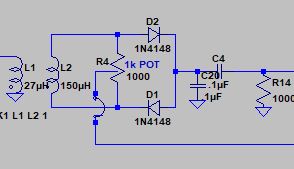
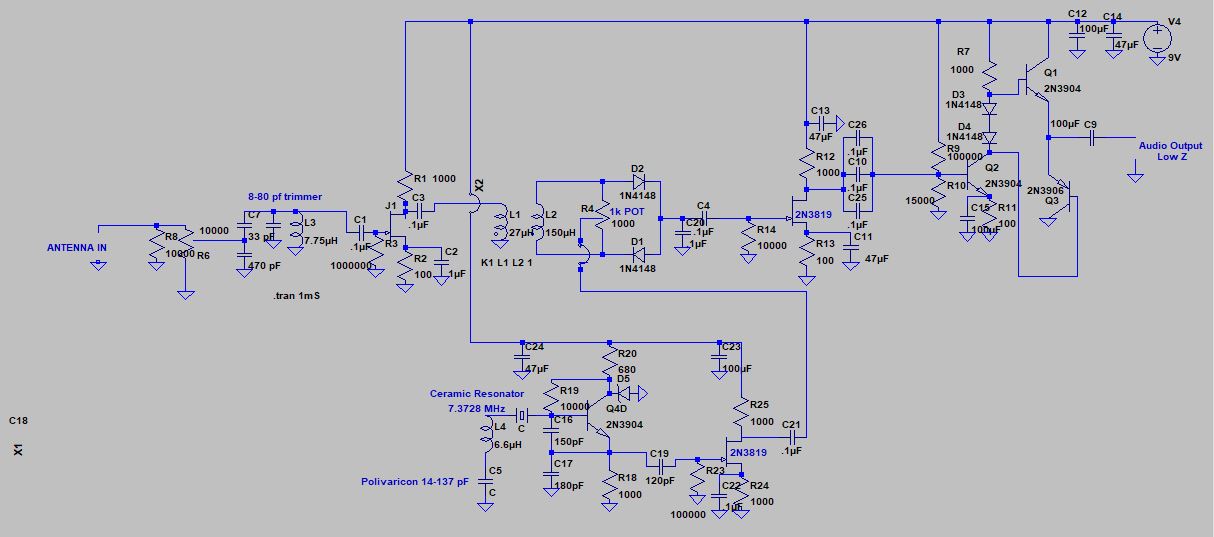
The circuit we are using addresses these problems by using two diodes. To reduce loss, one conducts during half of the oscillator signal’s cycle, the other during the other half. Here LTSpice is ueful. You can model this mixer and see in the simulator how each of the diodes handles half of the oscillator RF cycle, with both contributing to the AF signal we want at the output (the difference frequency). (The schematic above is from LTSpice but it is not ready for simulation. For this you should replace the variable resistor with two fixed 500 ohm resistors, and add two oscillators — one with the weak incoming RF signal and the other the strong local oscillator signal.)
The AM breakthrough problem is also addressed by the use of two diodes. Here’s the problem: If you are on 40 meters, there will be strong shortwave AM broadcast signals coming in from your antenna. Some will be so strong that they will get past your front-end filtering. If you were using just one diode, that diode might demodulate the AM signal — the AM carrier would mix with the AM sidebands and you would have an undesired audio signal heading for your AF amplifiers. Many of us have experienced this — you are trying to listen to ham radio SSB signals, but you can hear China Radio International playing in the background.
The two diodes take care of this easily. Look at the way an AM signal would reach the diodes. The carrier (and its sidebands) going through the top diode will be 180 degrees our of phase with the signal going into the lower diode. But the output of the diodes are joined together. They will cancel out. We say that for the RF signal coming through from the antenna, the circuit is “balanced.” That signal — in this case the undesired AM signal — will cancel out at the junction of the two diodes.
But to understand this circuit you must see what is NOT cancelled out. The signal from the VFO is hitting each diode with the SAME polarity at the same time. Look at the 1k variable resistor. So the signal from the VFO will NOT be cancelled out at the output. Nor will the mixing products produced in the diodes. That last sentence is the key to all of this. The sum and difference products that result from the mixing of the signal from the antenna and the signal from the VFO SURVIVE. They are not cancelled out.
We can easily select the one we want. An RF bypass capacitor connected from the output of the mixer to ground will get rid of most of the VFO signal (7061 kHz) and most of the sum product (14121 kHz) while passing the audio to the AF amplifiers.
When I built this detector I used a trifilar toroid out of a box of them that Farhan left with me back in May. I used two of the windings secondary and one of the windings for the primary. You might want to make a more simple transformer using an FT-43 type core. I recommend W8DIZ as a source.
I hope this explanation helps, and I hope I got it right. Let me know if you see any errors in my explanation. Tinker with the circuit when you build it. You should be able to get it going.
![]() |
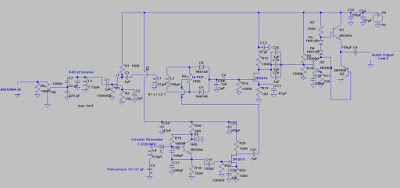
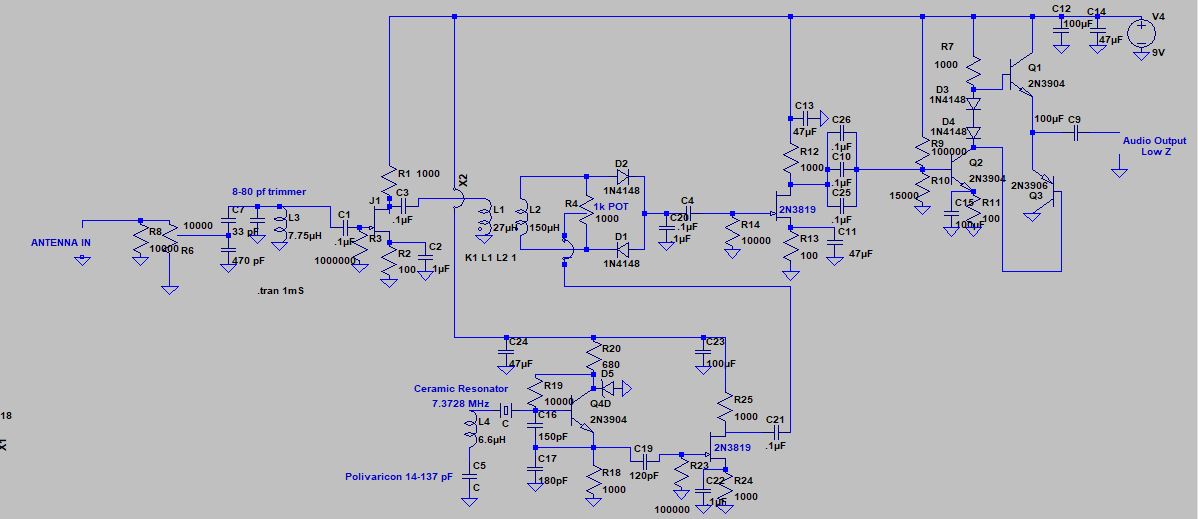
| Complete Schematic |
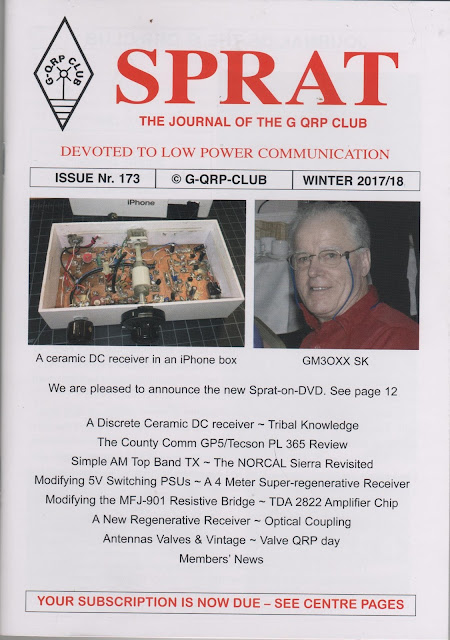
G-QRP very kindly put my little DC Receiver on the cover of issue Nr. 173. (Very sorry to see that GM3OXX has become a Silent Key. )
As we often say on the podcast, if you are not subscribing to this wonderful magazine, you are missing out on a lot of great ideas and circuits. Information on how to join the club and start receiving SPRAT can be found here: http://www.gqrp.com/join.htm It is only 22 bucks!
Reminder: Straight Key Night is upon us. It begins at midnight UTC 1 January. It is a great way to begin the new year. My HT-37 and my Drake 2-B are warming up now (and are helping to keep the shack warm on a very frigid day). HNY to all! 73 Bill
![]() |
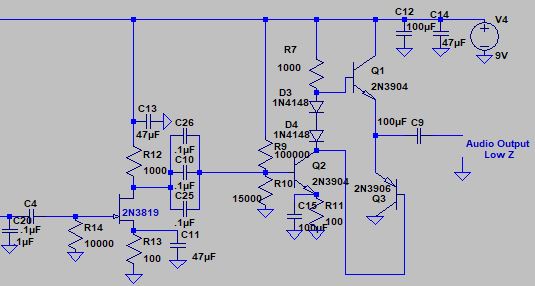
| DC RX VFO and Buffer |
![]() |
| The Big Picture |
9 December 2017
Santa Juliano
Forest fires, snow storms, and an earthquake.
Santa arrives from Hyderabad — uBITX in the house.
Radio history. First transtalantic amateur contacts.
Bill’s International Brotherhood Ceramic Discrete Direct Conversion Receiver Project.
— Goals — Build your own receiver. Really. From scratch. No cheating.
— How to get started. Get parts and tools.
— Stage by stage.
— VFO first — maybe build two.
Bill built two already
— Nephew is testing the first one.
— Polyvaricon limitations.
— Varactor limitations
— Variable cap limitation.
MEETING THE JULIANO STABILITY CRITERIA
Understanding the F5LVG mixer
Pete goes to the dark side with an SDR receiver.
Pete’s 800 Watt Amplifier gives him trouble. TRGHS.
People in the News
Cliff Stoll — Still Passionate about Electronics
Peter Parker — VHF/UHF By the Bay
Yardley Beers — Early SSB with “The Black Rose”
John Kraus — Moonbounce without the Moon.
MAILBAG
I’ve been holding off on making this video until I improved the stability. N6QW is vigilent! I only did this video after certifying that it meets the Juliano Stability Criteria. I had to dispense with the polyvaricon and go with an air variable.
We will be talking about this on the SolderSmoke podcast next weekend. I hope to put on the blog a stage-by-stage discussion of how to build this receiver.
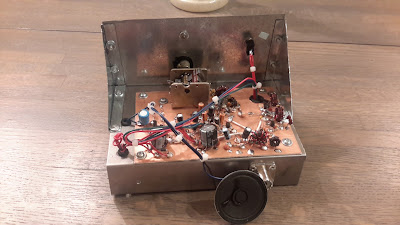
The dial from HI8P and the knob from a SW receiver that Elisa gave me definitely add soul to this new machine.
JOIN THE RANKS OF THE TRUE HOMEBREW RADO MAKERS! BUILD A RECEIVER! BUILD ONE OF THESE!
These are just a couple of short videos that I made for my nephew before sending him this receiver.
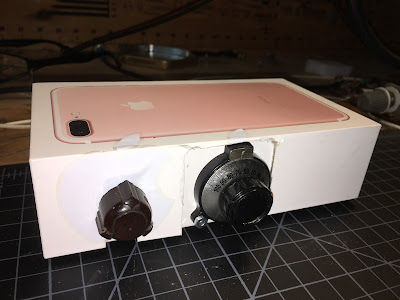
As you can hear, deafness is not a problem with this design! I did make some frequency stability improvements after this video was made — I think you can hear a bit of drift. Still, not bad for a very simple circuit using a polyvaricon superglued to the back of a cardboard box.
I’ll post more videos of the second version of this receiver. There are further improvements in frequency stability. My goal: “Juliano Si5351” levels of stable-ness.
When I built the first prototype of the iPhone DC receiver, I just reached into my junk box and used a polyvaricon capacitor for the main tuning control. It was marked PL 051. I was really pleasantly suprised at the stability of the Variable Ceramic Oscillator circuit. I could tune the entire 40 meter band with complete stability — Juliano levels of stability.
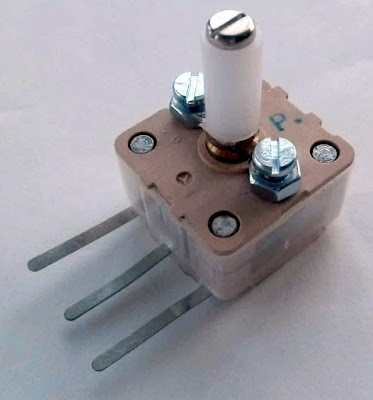
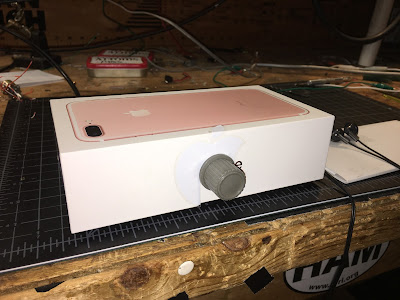
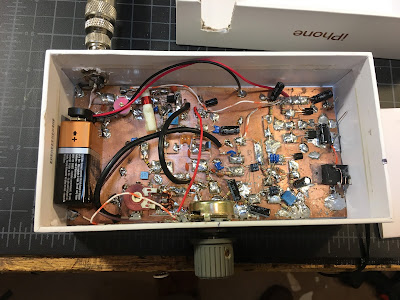
By the time I put the second version into its box (see above), I used a different polyvaricon (the one pictured below). It worked, but with this part the receiver drifted noticeably. So this morning I pulled it out and put in a second PL 051 Polyvaricon. Viola! Eccolo! Success. Drift eliminated. Rock stable.
Has anyone else noticed variations like this in the stabilty of polyvaricons?
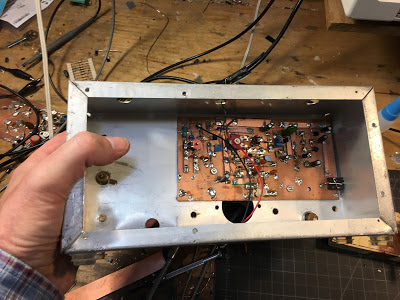
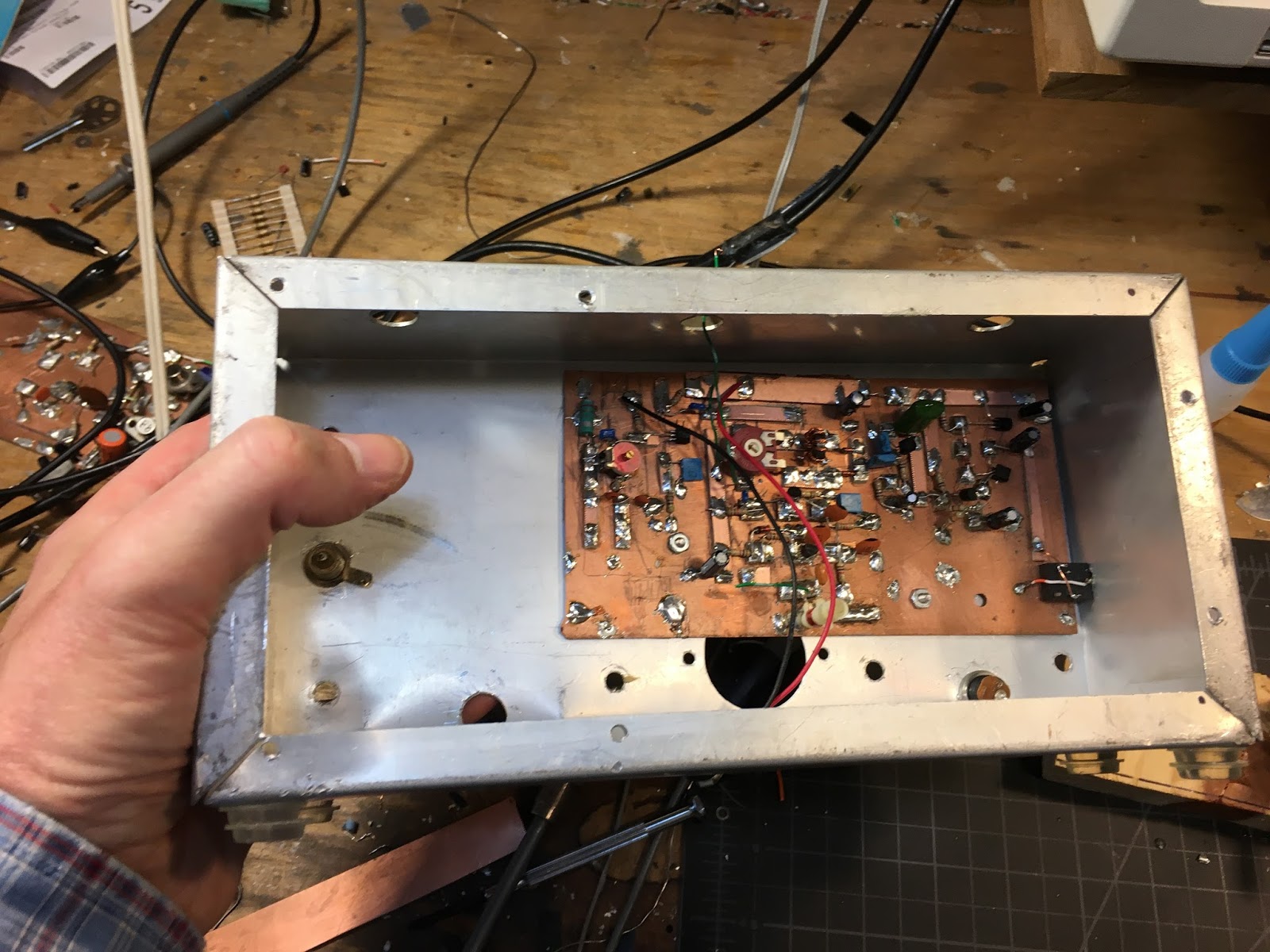
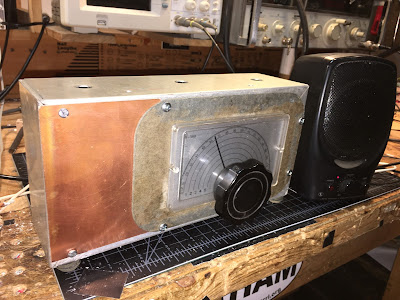
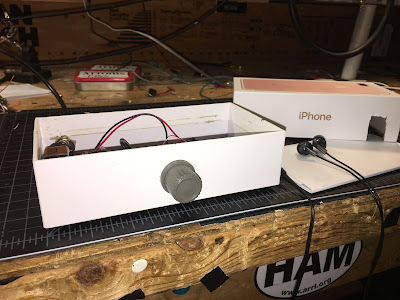
The dial in this version is an Archer device that has been kicking around in my junkbox for more than 20 years. I think it was given to me by my old friend Pericles HI8P — this adds a tremendous amount of soul to this new machine). The box is an old Bud aluminum chassis. Man, this thing sounds great. I will try to post a video soon.
![]() |
| Schematic updated 29 November 2017 |
![]() |
| DL3AO 1950 |
SolderSmoke Podcast #200 — TWO HUNDRED!!!!– Is available
http://soldersmoke.com/soldersmoke200.mp3
— Old friends on 17 meters.
— Another Knack Nobel in Physics.
— Hans Summers’ QCX transceiver: $50 IS THE NEW 10 GRAND!
— New Bands! 630 and 2200 Meters. BIG ANTENNAS!
— Nuke Powered QRP. No joke!
— The Challenge of UHF. Not for the faint of heart.
— Reginald Fessenden, Father of Phone.
PETE’S BENCH REPORT: The New Simple-ceiver. Soon to be a Transceiver.
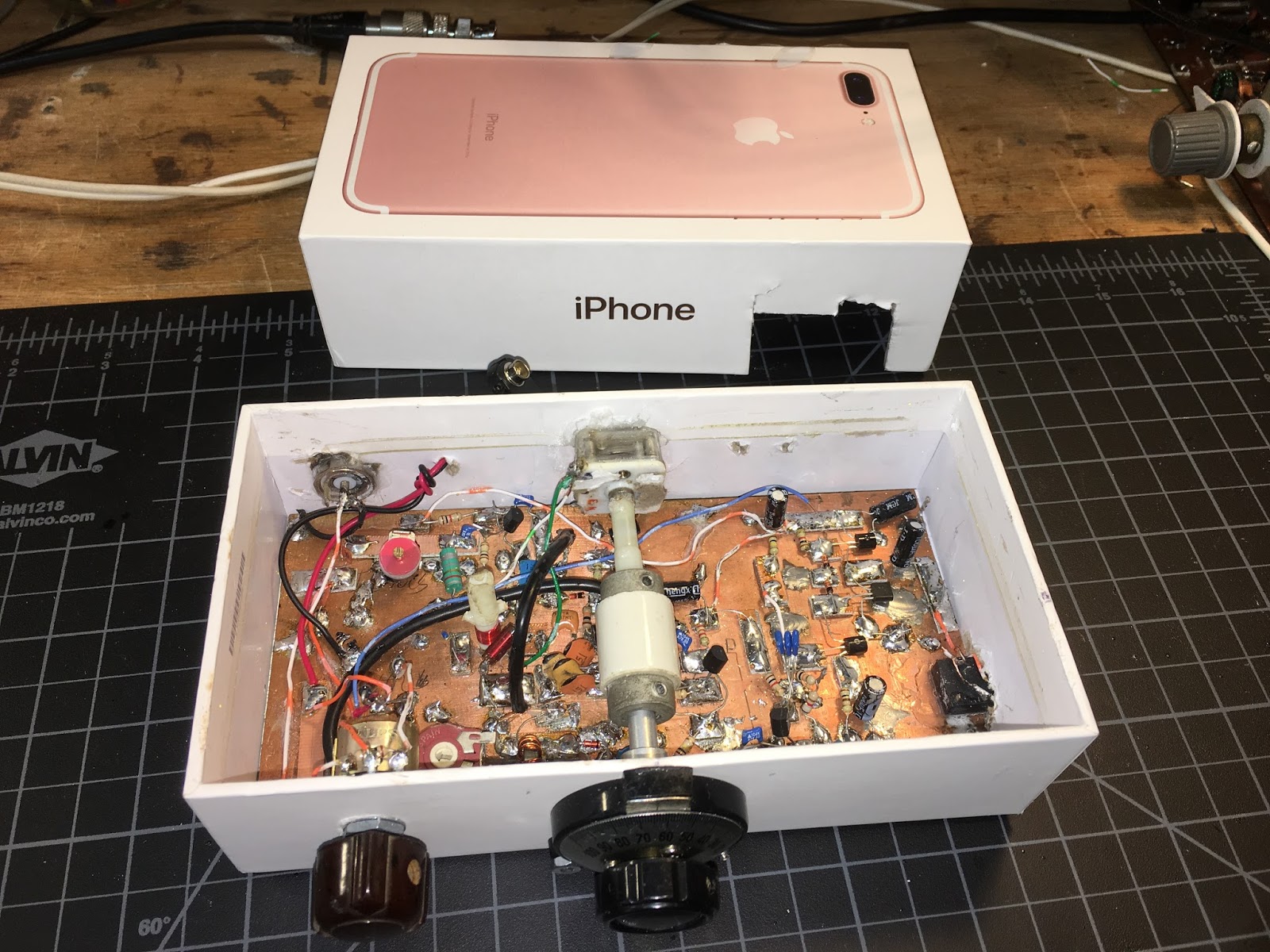
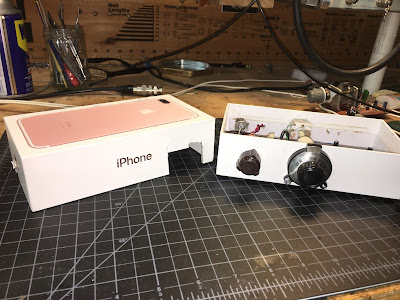
BILL’s BENCH REPORT: Discrete, Direct Conversion, Ceramic Receiver in iPhone Box.
THE EDUCATIONAL PORTION OF TODAY’s PROGRAM:
HOW TO TROUBLESHOOT A HOMEBREW RECEIVER.
MAILBAG.
![]() |
| DL3AO 1950 |
![]() |
| DL3AO 1950 |
SolderSmoke Podcast #200 — TWO HUNDRED!!!!– Is available
http://soldersmoke.com/soldersmoke200.mp3
— Old friends on 17 meters.
— Another Knack Nobel in Physics.
— Hans Summers’ QCX transceiver: $50 IS THE NEW 10 GRAND!
— New Bands! 630 and 2200 Meters. BIG ANTENNAS!
— Nuke Powered QRP. No joke!
— The Challenge of UHF. Not for the faint of heart.
— Reginald Fessenden, Father of Phone.
PETE’S BENCH REPORT: The New Simple-ceiver. Soon to be a Transceiver.
BILL’s BENCH REPORT: Discrete, Direct Conversion, Ceramic Receiver in iPhone Box.
THE EDUCATIONAL PORTION OF TODAY’s PROGRAM:
HOW TO TROUBLESHOOT A HOMEBREW RECEIVER.
MAILBAG.
![]() |
| DL3AO 1950 |
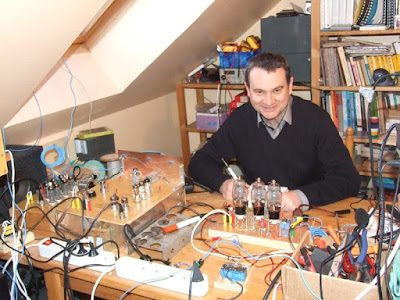
I came across OM F5LVG’s work in SPRAT. He has a wonderful website — it is in French, but Google Chrome translates is quite nicely.
http://oernst.f5lvg.free.fr/index.html
From the site’s introduction:
This site is dedicated to the construction and understanding of radio receivers. If you have dreamed of hearing a radio station with a receiver that you have built yourself, this site is for you. These are essentially direct conversion receivers and modern feedback detectors using only semiconductors, except for retrofitting. The described stations will accommodate amplitude modulation, single sideband (SSB) and telegraphy.
At the instigation of Bob N7SUR I’ve been working on a simple, easy-to-reproduce Direct Conversion receiver for 40 meters. I’m building this for my nephew John Henry, and I’m hoping this will be a circuit that others can use to break into the ELITE corp of successful ham receiver builders. Coincidentally Joh in Freiburg Germany is working on a very similar project — we have been comparing notes.
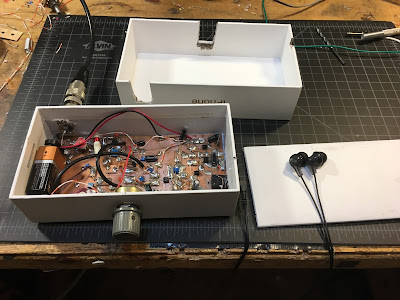
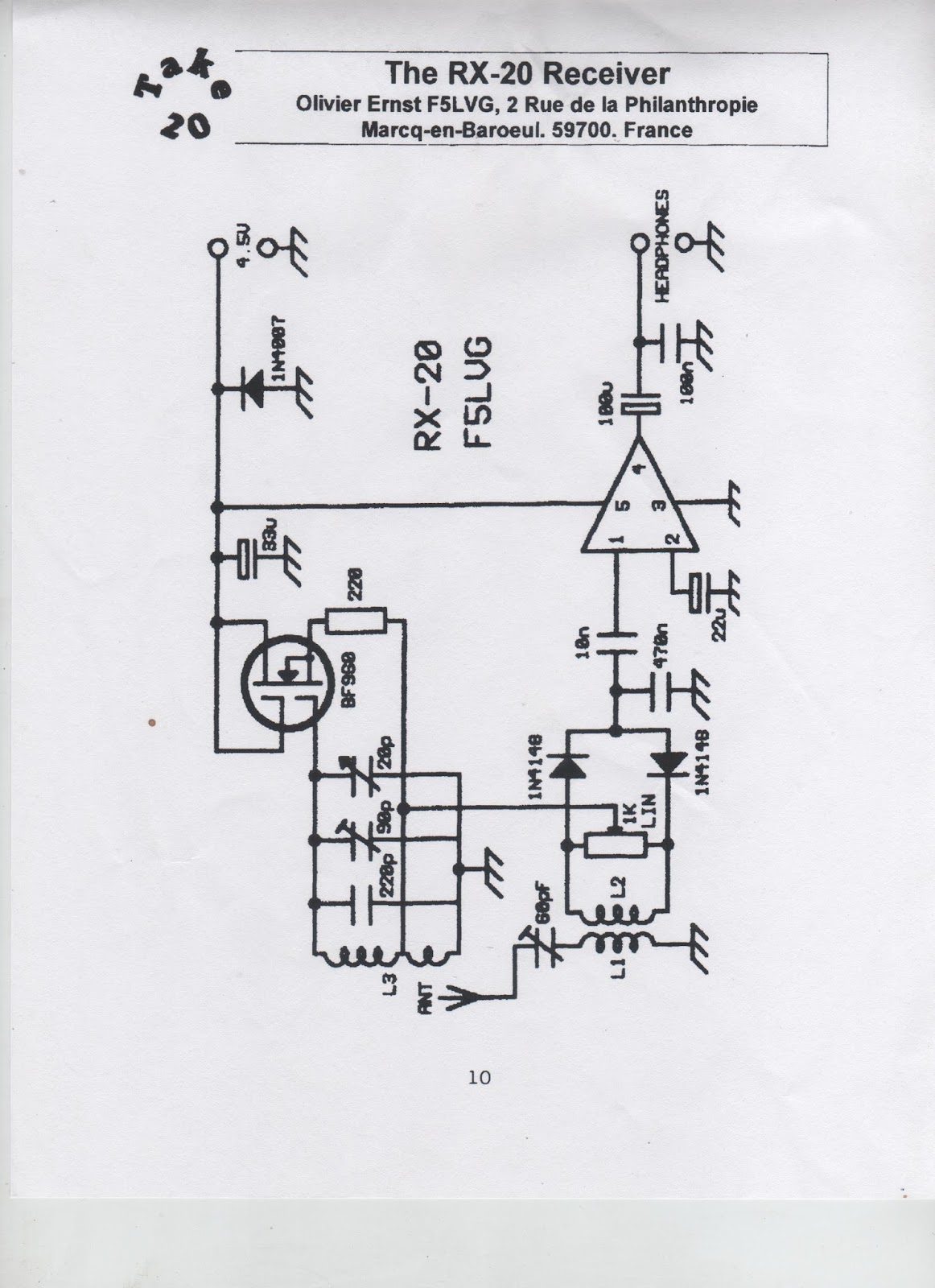
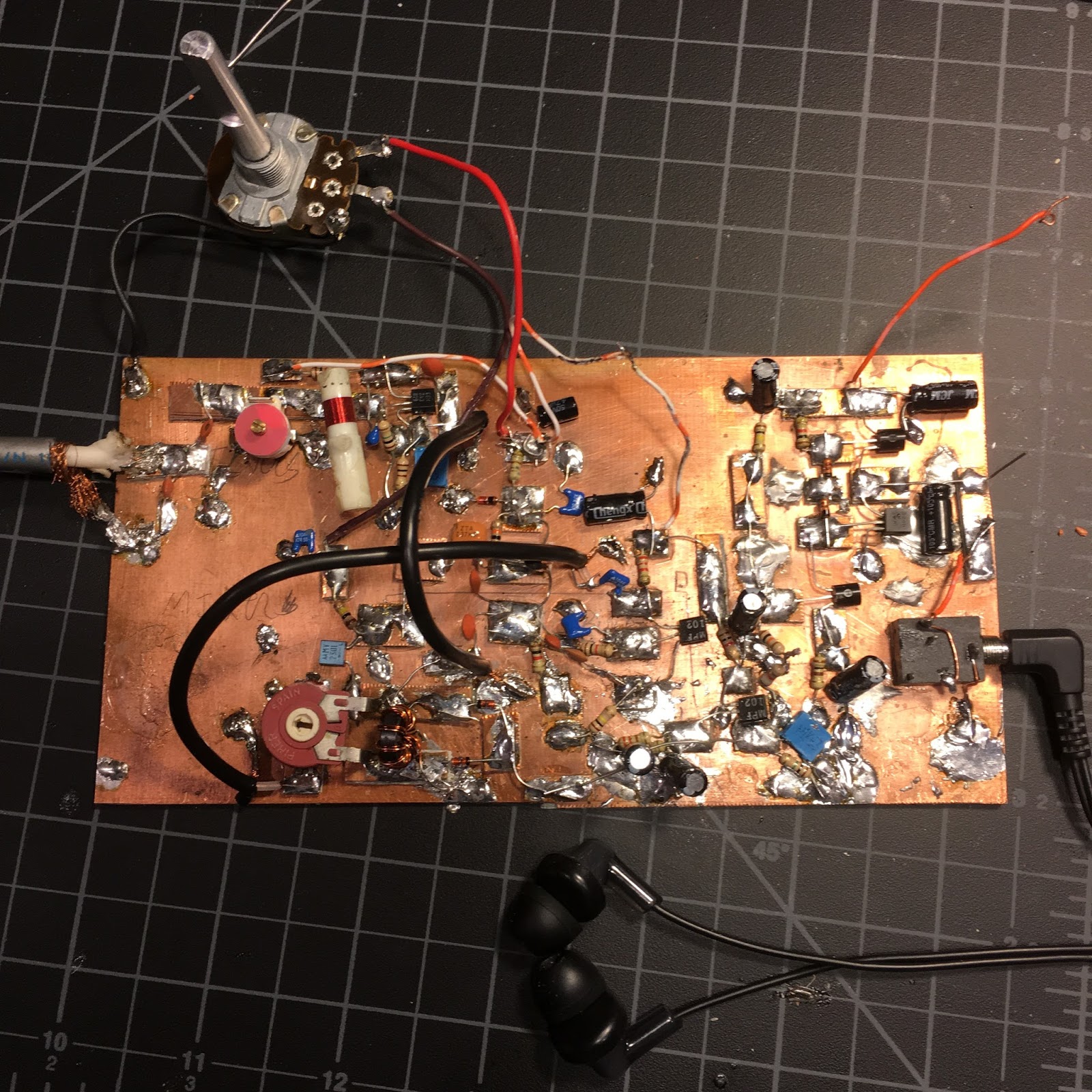
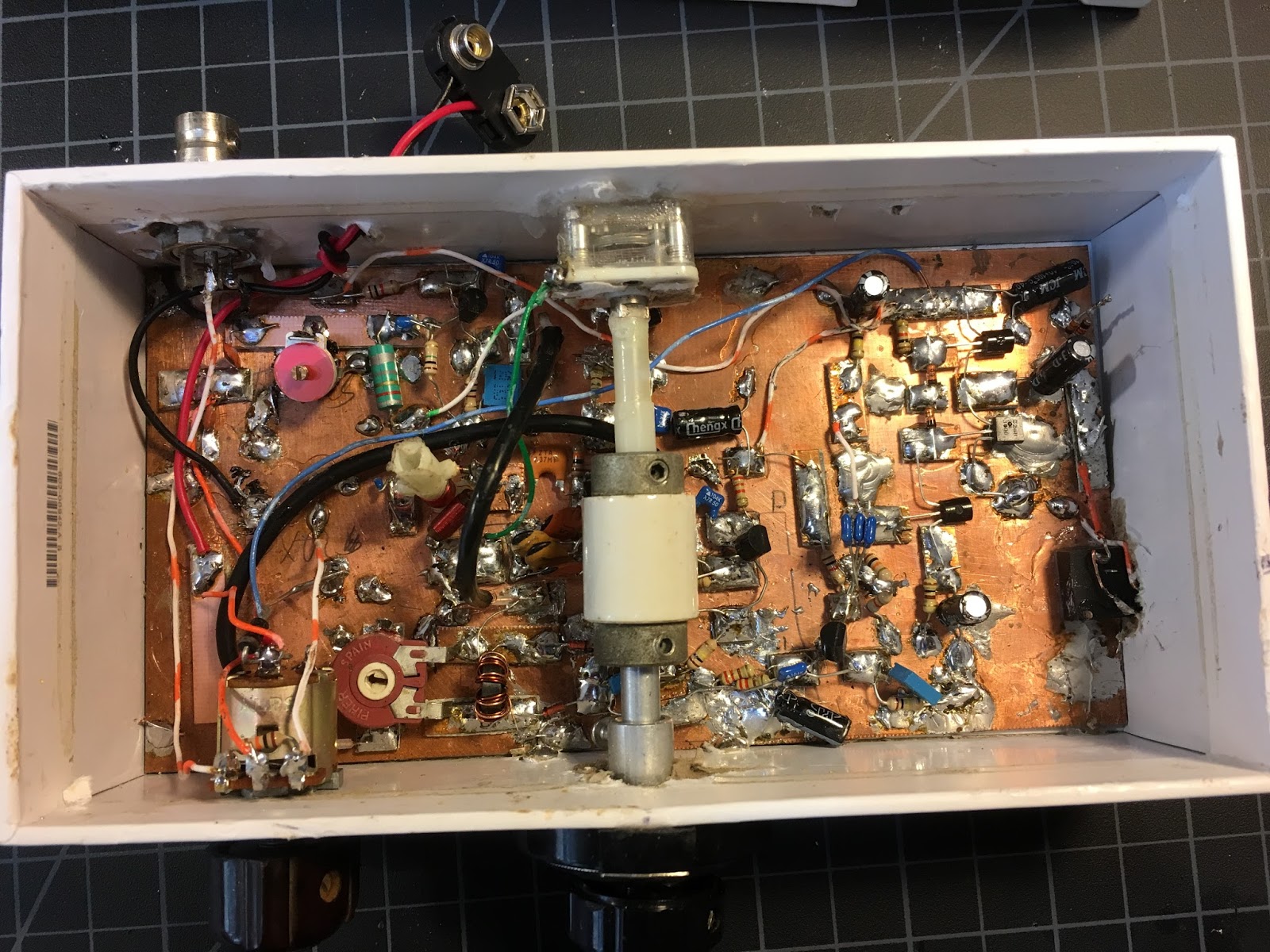
At first I used an FET detector described by Miguel PY2OHH. It worked, but at night the AM detection of powerful shortwave broadcast stations drowned out the amateur signals. So Joh and I started to explore detectors that would eliminate this problem. I went with a version of one described in SPRAT by F5LVG ( “The RX-20 Receiver”- see below). Very simple: A transformer to two back-to-back diodes with a 1K pot to balance the signal from the VFO. OM Olivier used a very, very cool transformer: he took two small, molded chokes and simply glued them together! 22uH choke as the primary, 100uH choke as the secondary. I went with one of the toroidal transformers that Farhan left me when he visited in May.
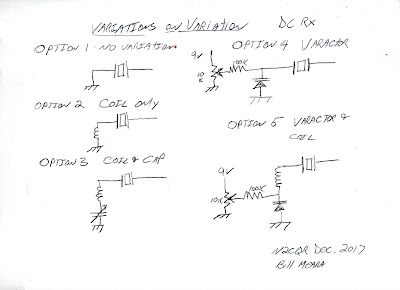
I’m using a varactor-controlled ceramic resonator VXO (no Si5351 in this one!) and a non-IC AF amp designed for use with ear buds (the world is awash in ear buds). It is a “singly balanced” design with the incoming RF signal being the one “balanced out” in the detector.
Last night the receiver passed the AM breakthrough test. The SW broadcast monsters were balanced out and kept at bay.
This morning the receiver passed The Boa Vista Rooster Detection Test. I fired up the receiver and heard an operator speaking Spanish with a Brazilian accent. When I heard the rooster crowing in the background I knew it was Helio PV8AL from Boa Vista Brazil. TRGHS — this little receiver is a winner.
I’ll try to post a schematic soon.
And hey — look at what wonderful IBEW (International Brotherhood of Electronic Wizards) project this is: Instigation and inspiration from Oregon. Some design ideas from Brazil. A French detector circuit described in a British QRP magazine. A transformer from India. A collaborator in Germany. And finally, the rooster of Boa Vista.
SolderSmoke Podcast #199 is available.
http://soldersmoke.com/soldersmoke199.mp3
2 September 2017
The Eclipse. The Floods.
Sawdust Regen gets John Henry off to a good start.
Voltage regulators as audio amplifiers
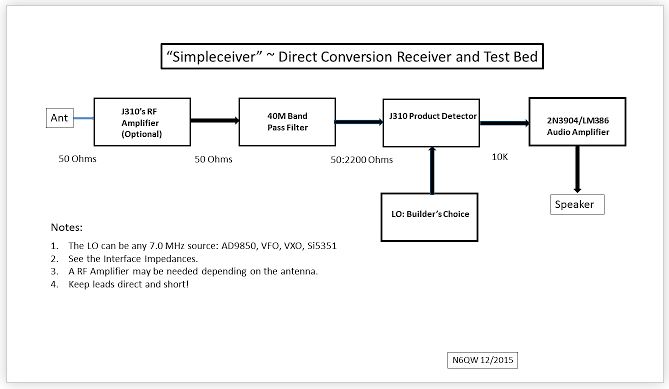
The return of the Simple-ceiver (Direct Conversion)
Ceramic Resonators
3D OLEDS
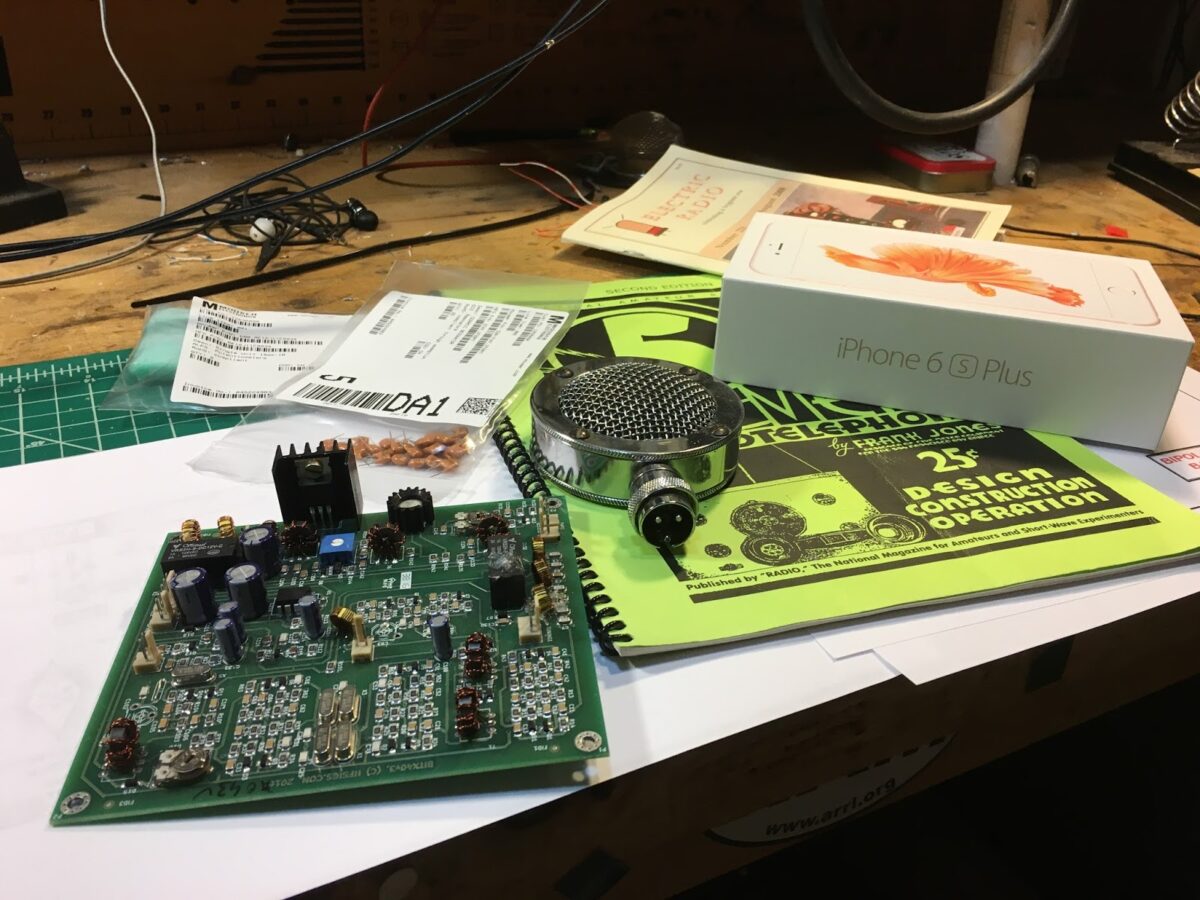
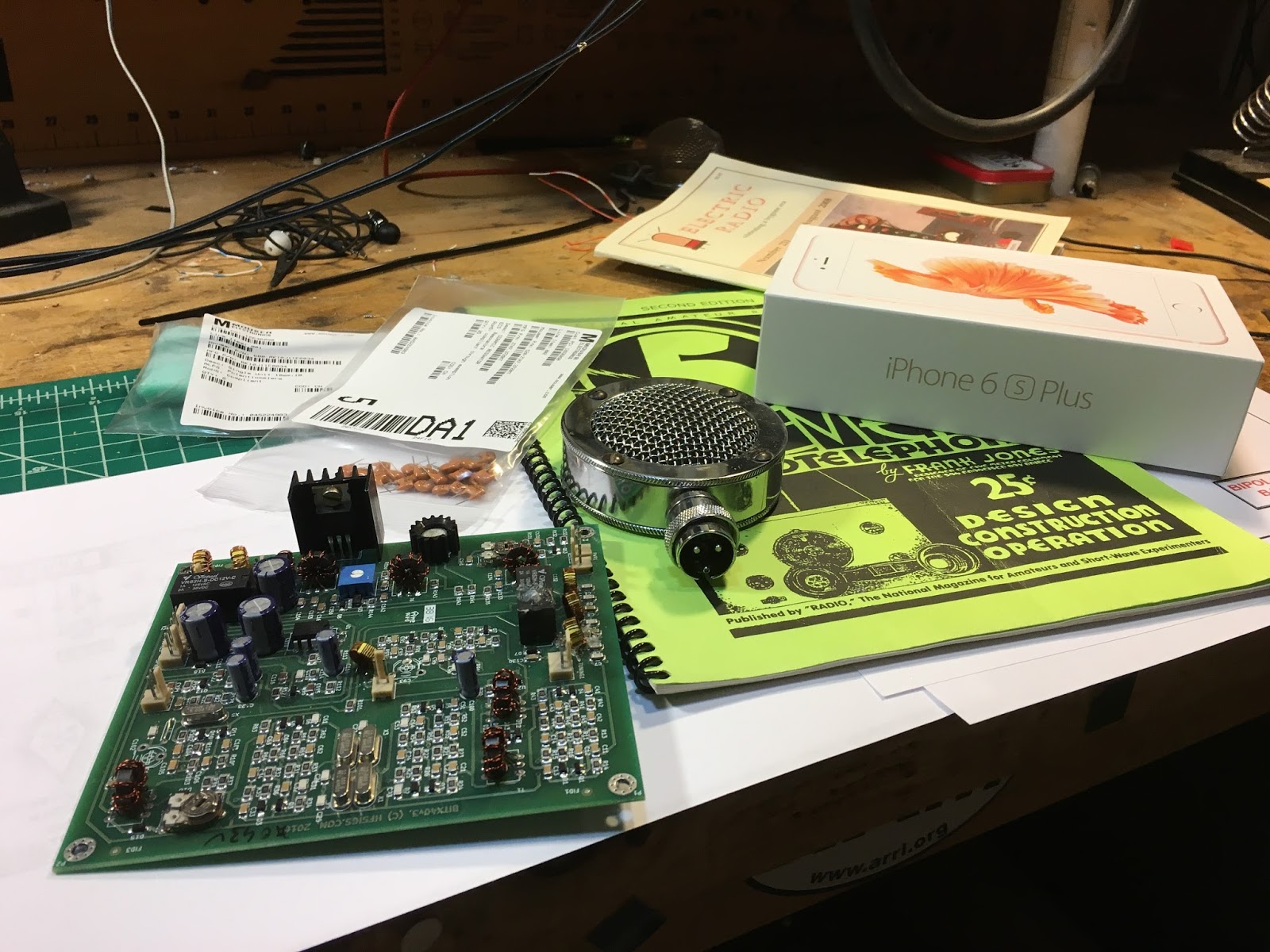
iPhone Boxes as rig enclosures
Electric Radio on Frank Jones
17 Meter Contacts
MAILBAG
Winter is approaching ladies and gentlemen, and it is time to think about radio projects. Bob N7SUR suggested a direct conversion receiver project. I think this is a great idea. As a kid, I had fallen victim to the idea that building receivers was “too hard” for radio amateurs. Not true! DC receivers to the rescue! Carry on with the DC revolution first launched by Wes W7ZOI in 1968.
Pete N6QW is providing guidance and tribal knowledge via his blog. For those of you who want to join the ranks of those who have defied the conventional wisdom and have broken through the “receivers are too hard” barrier. I say build yourself a DC receiver. Build it from scratch. Many of you already got your feet wet in homebrewing with the Michigan Mighty Mite project. Now it is time to jump into a DC receiver project.
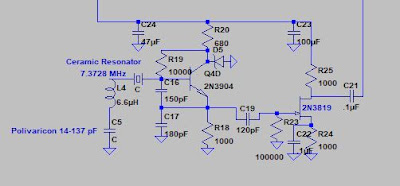
You folks already know what kind of VFO Pete will prefer: It will be an Si5351. That’s fine. But I will try to keep the banner of discrete component analog ludite-ism flying high. This morning I ordered a batch of 7.37 MHz ceramic resonators. I hope to pull them down into a significant portion of the 40 meter phone band. If this works, I will share the batch with anyone who wants to joining my Analog Army (remember the CBLA?). Note (above) that Pete has magnanimously left open the possibility of using a non-digital VFO. What a guy!
Check out Pete’s project here:
http://n6qw.blogspot.com/2017/08/a-new-line-of-transceivers-difx_19.html
Everything on Pete’s blog is worth reading, but this article was so good that I could not resist posting a link to it here.
Tribal knowledge from a leader of the homebrew tribe:
http://n6qw.blogspot.com/2017/08/a-new-line-of-transceivers-difx.html
Last Saturday I put the Tuna Tin Two Top together with my Herring Aid Five 38 (year) Special and the Indian key that Farhan gave me. I discovered that some of my 40 meter CW FT243 crystals had disappeared into the entropy of the shack. But I was able to find one for 7050 kHz. That was a bit of good luck because it turns out that 7050 is the frequency of a congenial group of operators known as the Straight Key Century Club. I felt right at home. I have been inducted. My SKCC number is 17272. Very QRP, don’t you think? It is almost a Vanity SKCC. Clearly, TRGHS.
I have been having excellent luck with this 7 transistor rig. I have had one contact each day since I put it on the air, all of them in response to my CQ calls. I’ve worked:
K1PUG Hank in Connecticut (twice)
W8HOG Jerry in Ohio
WA4GQG Kevin in North Carolina
WA2AAW Frank in New York
KM4FO Dwight in Kentucky