Category: DeMaw–Doug
SolderSmoke Podcast 187: 2nd Anniversary N6QW. Dayton. Bench Reports. Mailbag
SolderSmoke Podcast #187 is available:
http://soldersmoke.com/soldersmoke187.mp3
Second Anniversary of Pete Juliano’s arrival on the SolderSmoke Podcast.
Dayton and FDIM underway
Bench Reports:
Pete:
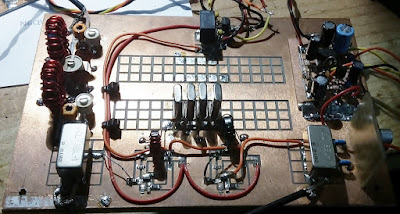
— Repurposing old Circuitry
— Pete’s small Display
— New Transmitter
— LBS in Japan and at Dayton
Bill:
— S38-E The lipstick has worn off.
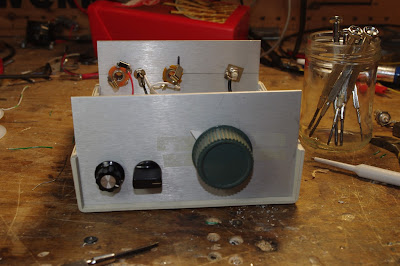
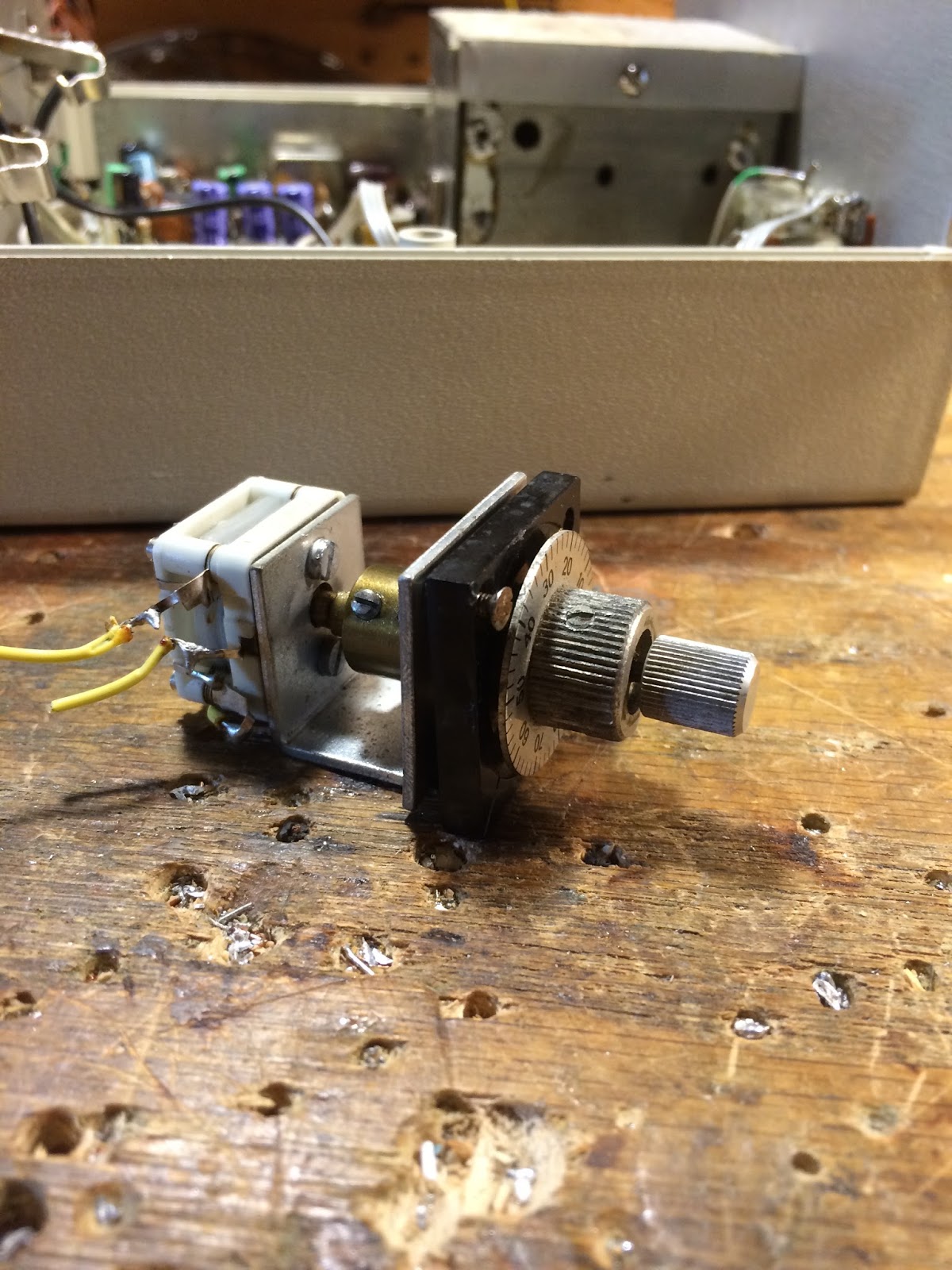
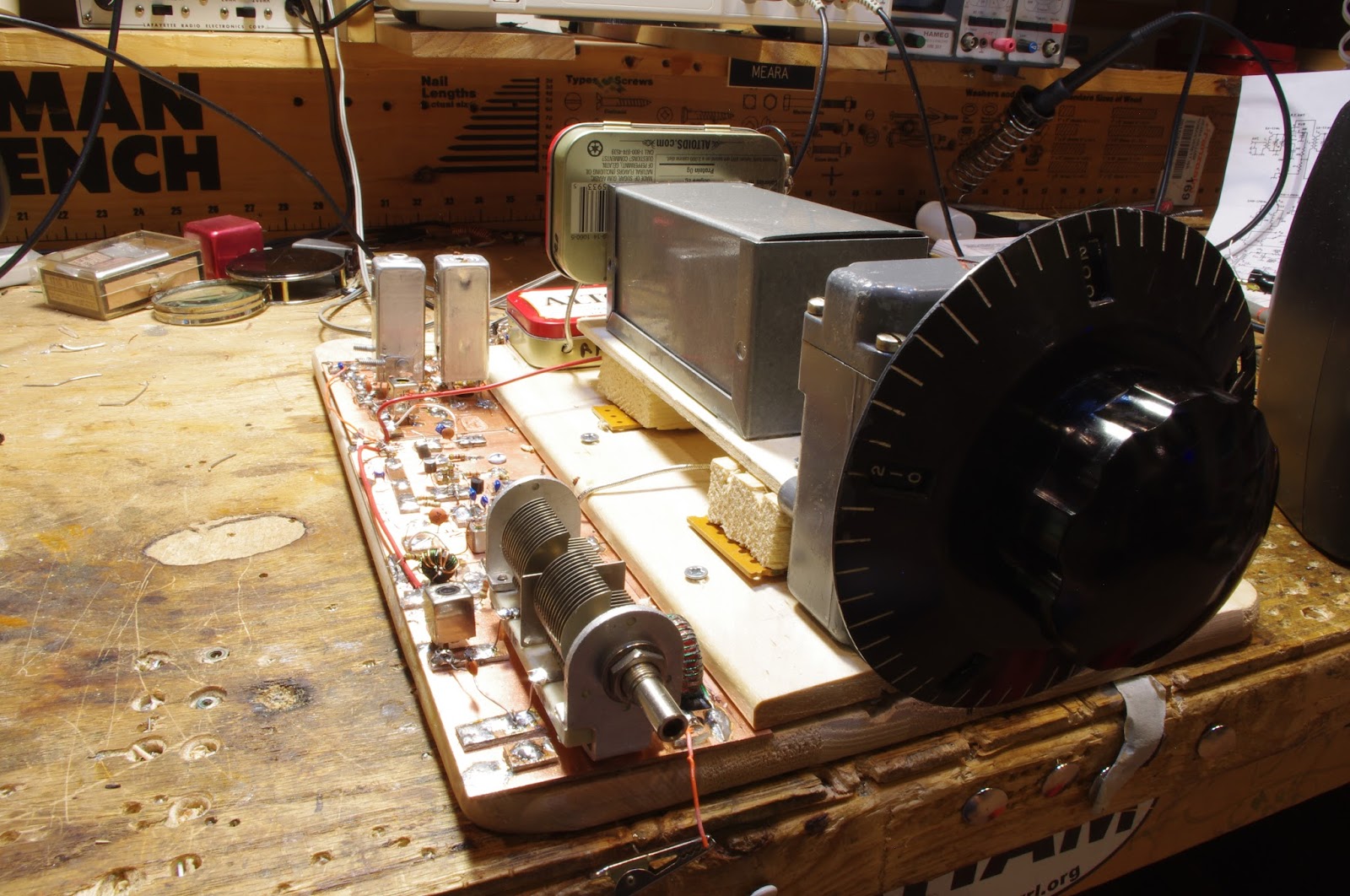
— Reduction drive for the Mighty Midget’s Mate
— Back to the Barbados Barebones Receiver:
Which LO to use for 40 Meters with a 5 MHz IF?
Sideband Inversion and “Lower Sideband” filters.
Eradicating WWV with parts from AA1TJ
Improving VFO stability
A bandspread/bandset arrangement with fixed caps
Soul in the Old Machine
“The Amateur is FRIENDLY…”
MAILBAG

A Lot of Soul in the Barbados Receiver
Polyvaricon Reduction Drive
Doug DeMaw’s Rigs Found, Donated to ARRL for Exhibit
http://www.arrl.org/news/museum-donates-doug-demaw-w1fb-homebrew-equipment
This is really good news (Thanks to Pete Eaton for the alert.)
I wonder if the Barebones “Barbados” Superhet was in this batch.
We KNOW where that Tuna Tin 2 is….
Our book: “SolderSmoke — Global Adventures in Wireless Electronics” http://soldersmoke.com/book.htm Our coffee mugs, T-Shirts, bumper stickers: http://www.cafepress.com/SolderSmoke Our Book Store: http://astore.amazon.com/contracross-20
Kansas Mighty Mite
Our book: “SolderSmoke — Global Adventures in Wireless Electronics” http://soldersmoke.com/book.htm Our coffee mugs, T-Shirts, bumper stickers: http://www.cafepress.com/SolderSmoke Our Book Store: http://astore.amazon.com/contracross-20
Broadening the Barebones Barbados Receiver
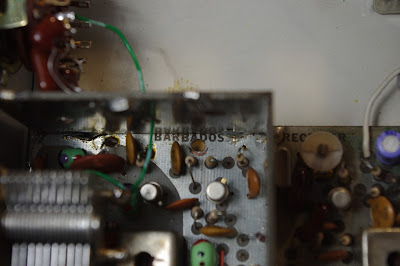
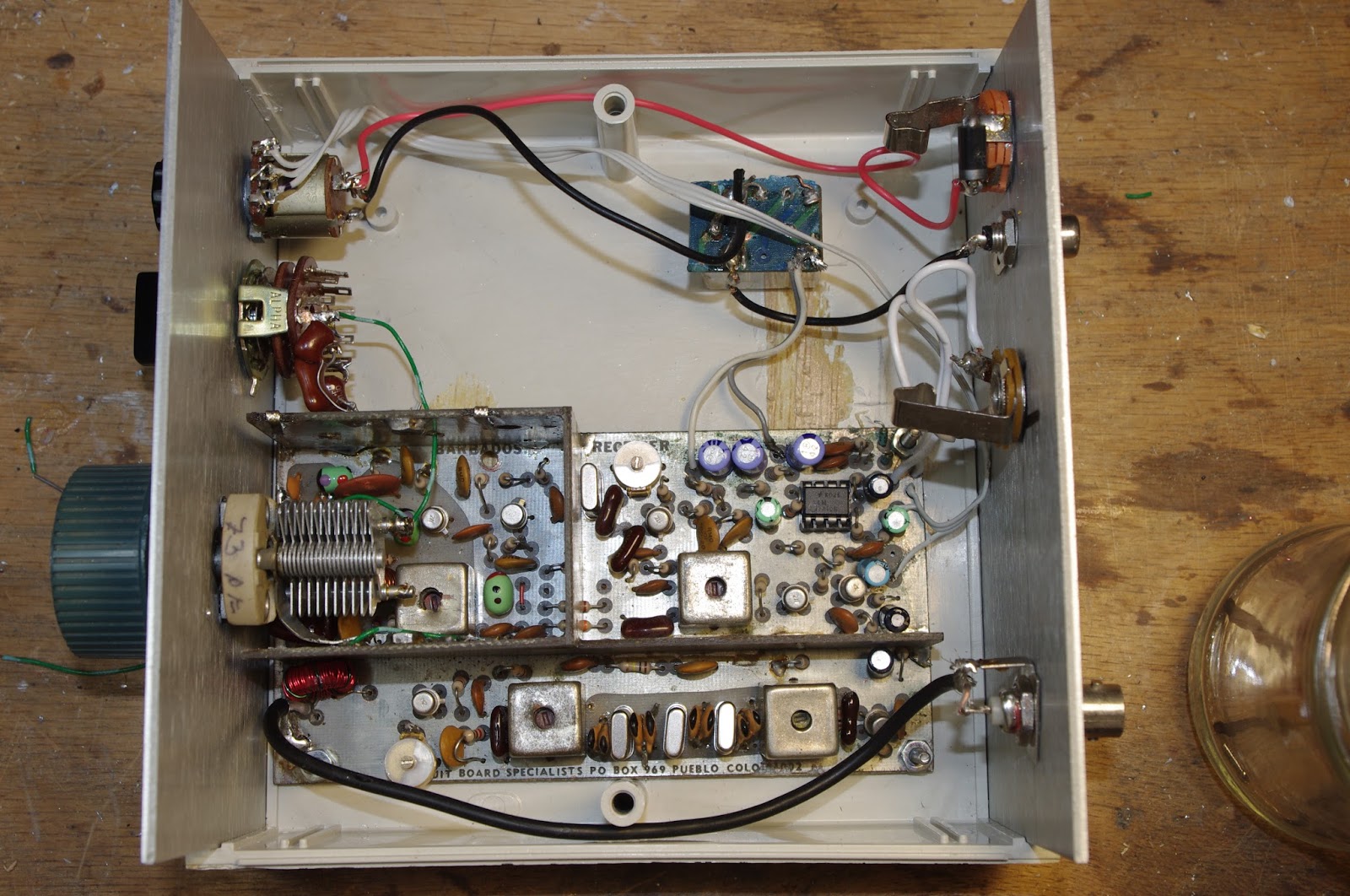
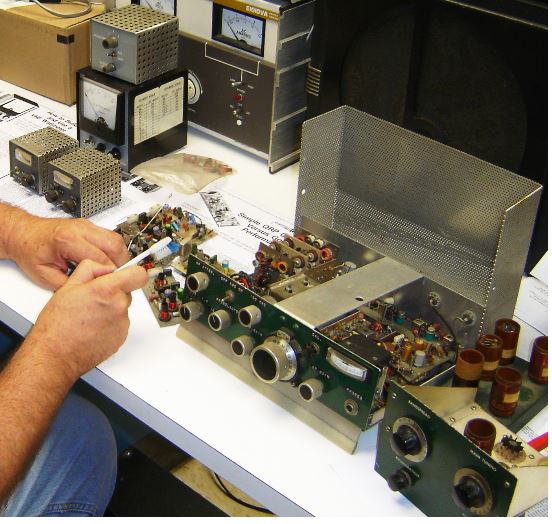
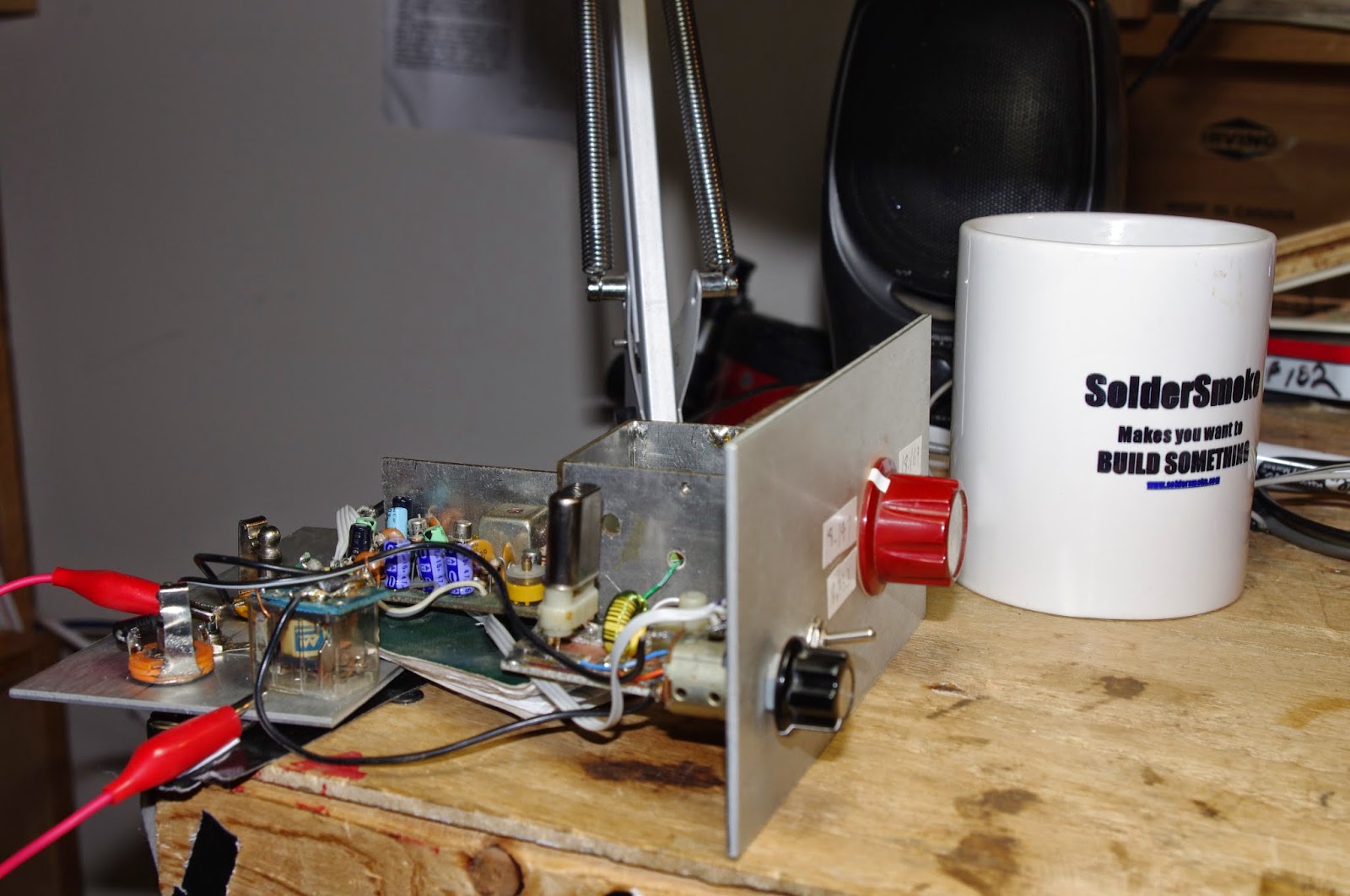
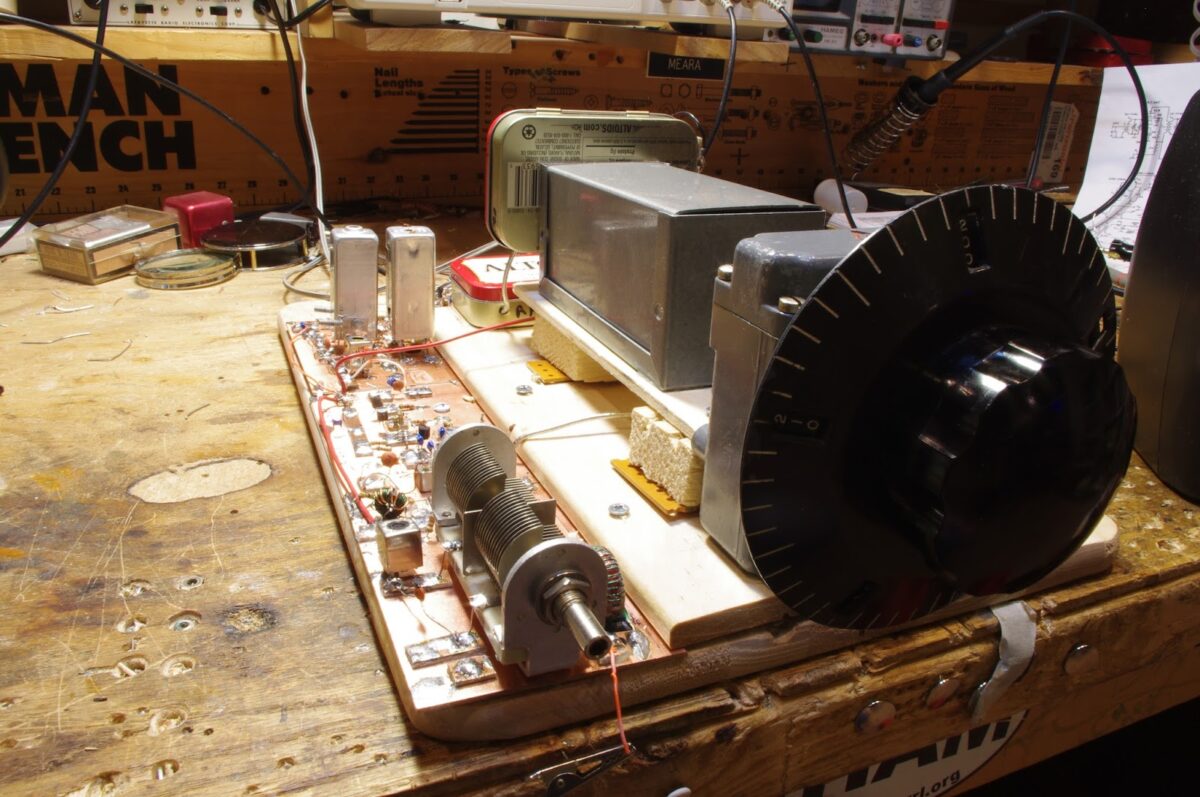
I‘ve been working on the crystal filter of the Barbados Barebones Superhet receiver. This was designed by Doug DeMaw in 1982. This one was built by Dale Parfitt W4OP and then repeatedly modified by me. It is now on 17 meters with a crystal-switchable VXO. Earlier I had made a very crude attempt to broaden the filter from its original very narrow CW configuration. This week I did this again, but this time I actually characterized the crystals and used Wes’s LDA and GPLA software (from EMRFD) to design the filter.
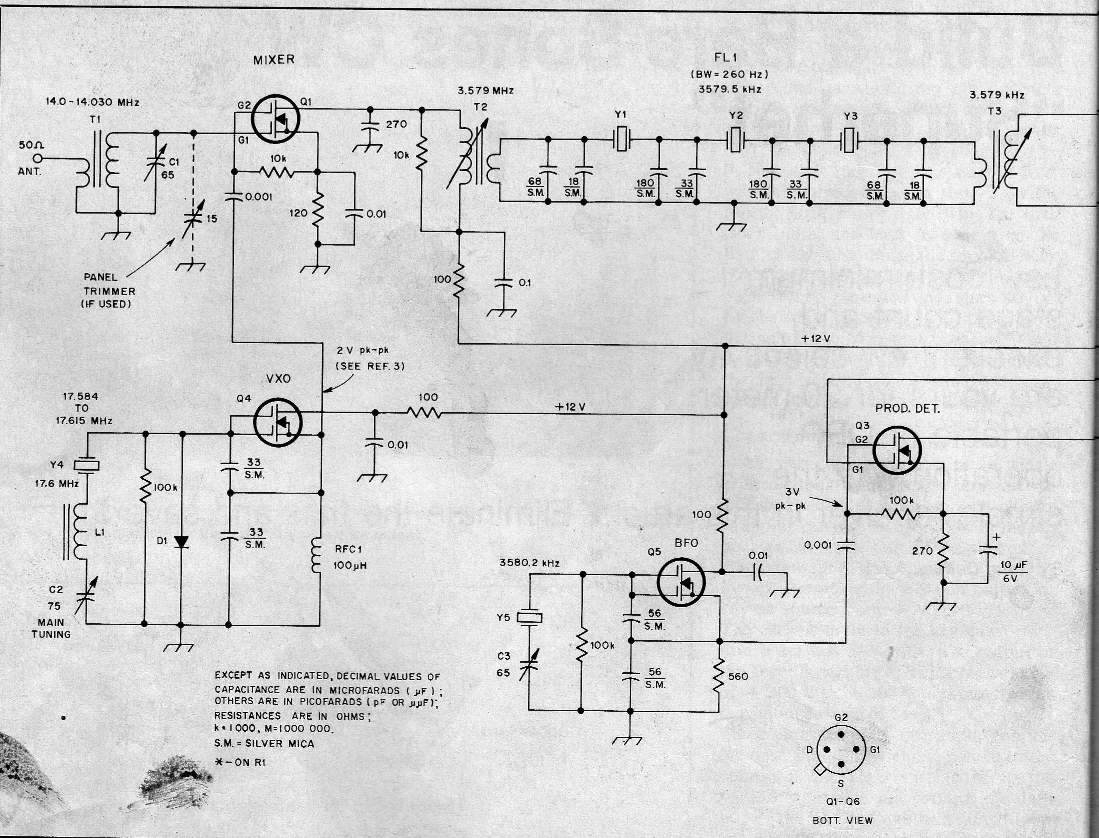
I played with the capacitor values and finally got the 3 kc bandwidth I wanted, but I’m having trouble getting rid of the ripple. I know this is dependent on the impedances at the two ends. The programs say I need 2000 ohms.
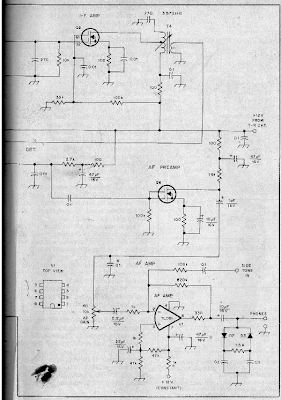
I’m kind of puzzled about how Doug DeMaw did this with his original design. For his crystals and his 250 Hz (!) bandwidth he said he needed 450 ohms. He used 4.7:1 turns ratio transformers at either end and said that by putting 10k resistors across these transformers he got the needed impedance. I can see how this would work looking into the gate of the 40673 IF amp, but looking back at the drain of the 40673 mixer, I’m not so sure that that would yield 10k. (See schematic below.)
But who am I to doubt Doug? So I assumed he was correct about the 10K and I re-wound the transformers with a 2:1 turns ratio, thinking that would get me closer to the needed 2k. But the ripple is still there. I guess I could use a return loss bridge at this point…
I don’t know whether this is worth messing with anymore. The receiver sounds nice. The 3kHz bandwidth gives it a nice sound, and the ripple doesn’t seem to be noticeable That FAR circuits board is tightly packed and difficult to work with. So, should I leave good enough alone, or should I proceed with fanatical ripple eradication. Any advice?
BTW: Why is it that receivers always seem to sound better when opened up (as above) on the workbench?

Our book: “SolderSmoke — Global Adventures in Wireless Electronics” http://soldersmoke.com/book.htm Our coffee mugs, T-Shirts, bumper stickers: http://www.cafepress.com/SolderSmoke Our Book Store: http://astore.amazon.com/contracross-20
Mailbag: Coils Wound Backwards, Last QSO 1981, Visions of Transistors Keeping Him Awake. Paul has THE KNACK

I’m just getting back into ham radio after 33 years (last QSO: 1981),
want to do it all through homebrew, seem to have the same mindset as
guys like you and Frank K0IYE, bought your book [love it and Frank’s],
and just “discovered” the Soldersmoke podcasts. I’ve been listening to
them with one ear as I bike to and from work (about 40 minutes each way, so it’s almost perfect). I’m employed as a digital geek, but yearn for the days of DeMaw’s prime (worked him once when he was W1CER), when the 40673 ruled. I’m very glad that, 40 years later, people like Farhan can weave discrete analog wonders, even if they later choose to use digital *control* (NOT DSP! No!).
I had to start somewhere with your podcasts archive, so I started with
2014 and really enjoyed your struggles with the Herring-Aid 5. My 1st
receiver was the “DC 80-10” by DeMaw from somewhere around 1970 in QST or the Handbook — used a CA3028 as the product detector — and I had similar struggles. While listening to it, I immediately thought “you wound the feedback coil backwards, you idiot!”
I got my license back in March 2014 and want very badly to get back on
the air with a homebrewed, or at least minimally-kitted, station. I’ve
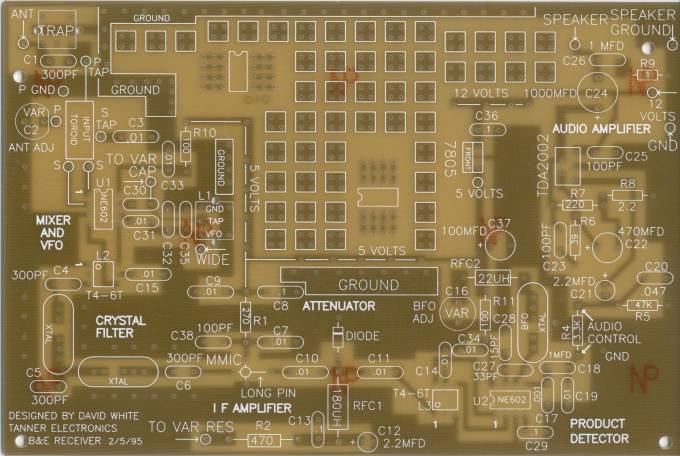
built the receiver: David White’s (WN5Y) Beginner’s and Experimenters
receiver[1] heavily modified, have a long wire antenna up, a decent RF
ground, and all the parts I need for QRP z-match tuner, swr meter, T/R
switch, sidetone, and IRF510-based transmitter. Target: 40m CW by the middle of December, 30m in the couple of months after that with a
fully-Manhattan-style Barebones Superhet and another IRF510
transmitter. Then one of these BitX things. It’s been a couple of
decades since I felt that there weren’t enough hours in the day. Some
nights I can’t sleep, what with all these transistors and simple analog
ICs whirling around…
Anyway, keep it up, I’ll be listening.
— Paul Lender, AD0HQ
[1] I built an Arduino/AD9850 DDS — a la AD7C — and used it to tune a
4-crystal filter (10-cent crystals from Tayda!) for the receiver with
the same Rigol scope that you use. I tried, really tried, to do it with
an analog RF signal generator. Change is good. Change is good.
Our book: “SolderSmoke — Global Adventures in Wireless Electronics” http://soldersmoke.com/book.htm Our coffee mugs, T-Shirts, bumper stickers: http://www.cafepress.com/SolderSmoke Our Book Store: http://astore.amazon.com/contracross-20
Arduino DDS meets Barebones Superhet (Video)
Our book: “SolderSmoke — Global Adventures in Wireless Electronics” http://soldersmoke.com/book.htm Our coffee mugs, T-Shirts, bumper stickers: http://www.cafepress.com/SolderSmoke Our Book Store: http://astore.amazon.com/contracross-20
Pete’s 17 Meter VXO Transceiver (Video)
Our book: “SolderSmoke — Global Adventures in Wireless Electronics” http://soldersmoke.com/book.htm Our coffee mugs, T-Shirts, bumper stickers: http://www.cafepress.com/SolderSmoke Our Book Store: http://astore.amazon.com/contracross-20
WA7MLH’s RD16HHF Amplifier
Our book: “SolderSmoke — Global Adventures in Wireless Electronics” http://soldersmoke.com/book.htm Our coffee mugs, T-Shirts, bumper stickers: http://www.cafepress.com/SolderSmoke Our Book Store: http://astore.amazon.com/contracross-20
FDIM Midnight Mojo Ceremony (Tuna Tin 2)
An important message From Rex,
Transcendental Titan of the Tuna Tin Twos:
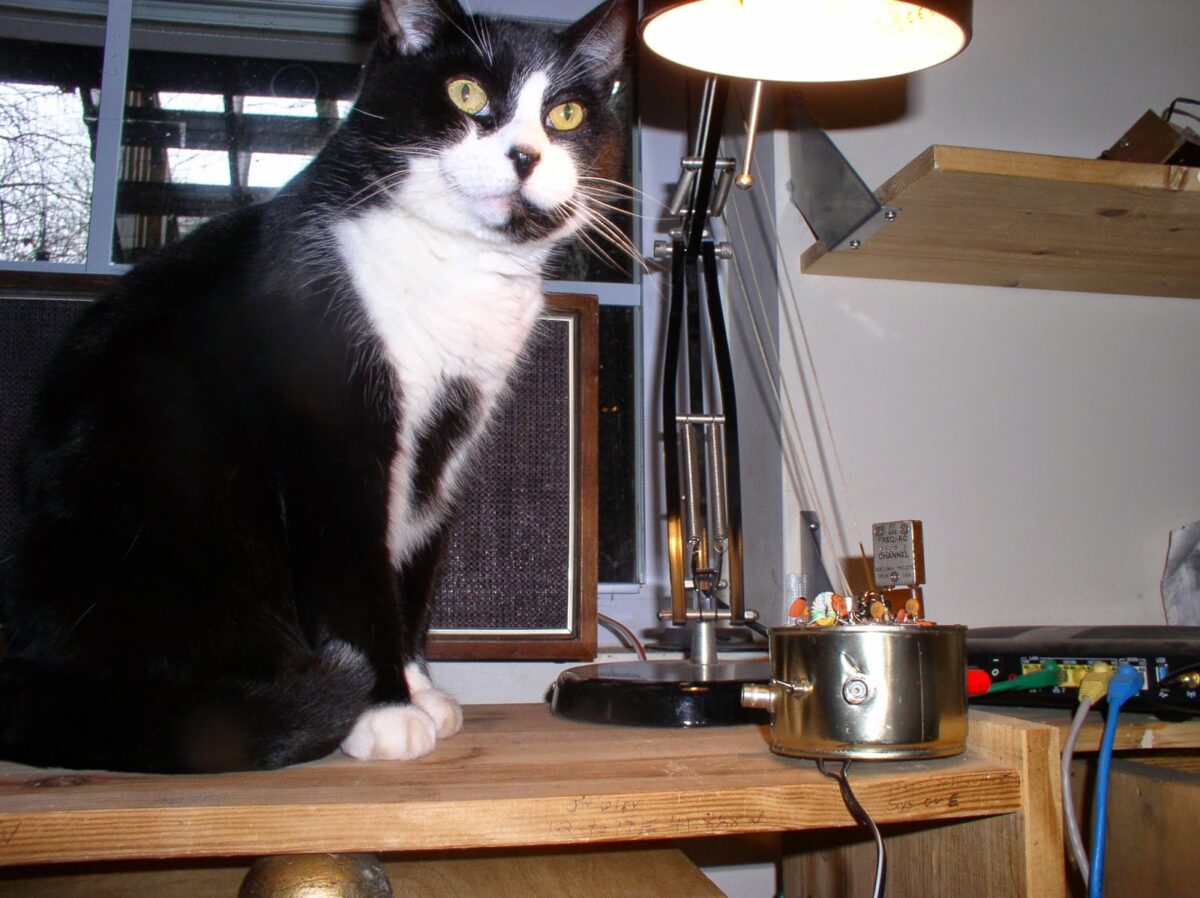
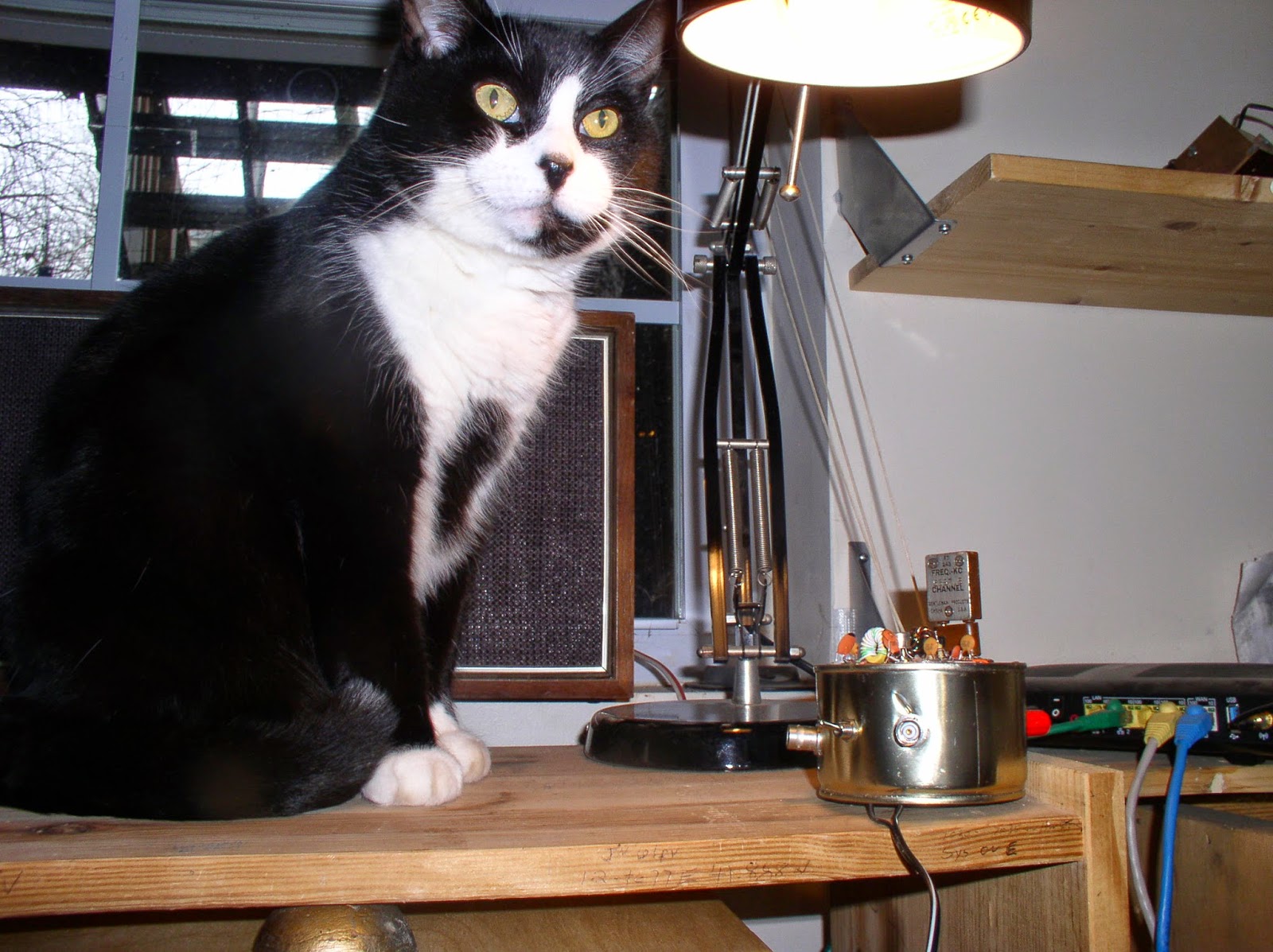
If you have a little QRP rebel in you, like me, and are a fan of Ancient Sacred Relic, i.e. The Original Tuna Tin 2 transmitter, and all things housed in round metal containers usually designed for fish products and pineapple, and maybe cats if VERY thoroughly cleaned, then you might want to bring your Tuna Tin 2 rig to FDIM!
Around midnight, after the scrum leaves the FDIM Club night gathering, there will be a Tuna Tin 2 Midnight MOJO ceremony! THE one and only ORIGINAL Tuna Tin 2 transmitter will be on hand for this solemn occasion where major QRP MOJO is transferred from the Ancient Sacred Relic into the tuna can inductees in attendance. Admission is free but you MUST bring a MOJOee tuna can housed rig for entrance to the ritual.
NO rectangular or mint tin equipment will be admitted!! NO unaccompanied minors OR adults OR adults who act like minors will be admitted.
TT2 QRP MOJO will be transferred….FUN will be had…..PRIZES will be raffled off!
If you think you might like to be there for the Tuna Tin 2 Midnight MOJO ceremony remember to pack a tuna can or reasonable facimile (307 (3 + 07/16″ diameter) industry standard 2 piece or 3 piece can) housed TT2 style rig in your travel bag!!
REMEMBER: NO rectangular or mint tin equipment will be admitted!! You must have a TT2 inspired rig in you personal possession to gain
admittance! NO exceptions!!
Respectfully submitted,
Rex W1REX The TUNA Tinman!
——————–
Our book: “SolderSmoke — Global Adventures in Wireless Electronics” http://soldersmoke.com/book.htm Our coffee mugs, T-Shirts, bumper stickers: http://www.cafepress.com/SolderSmoke Our Book Store: http://astore.amazon.com/contracross-20
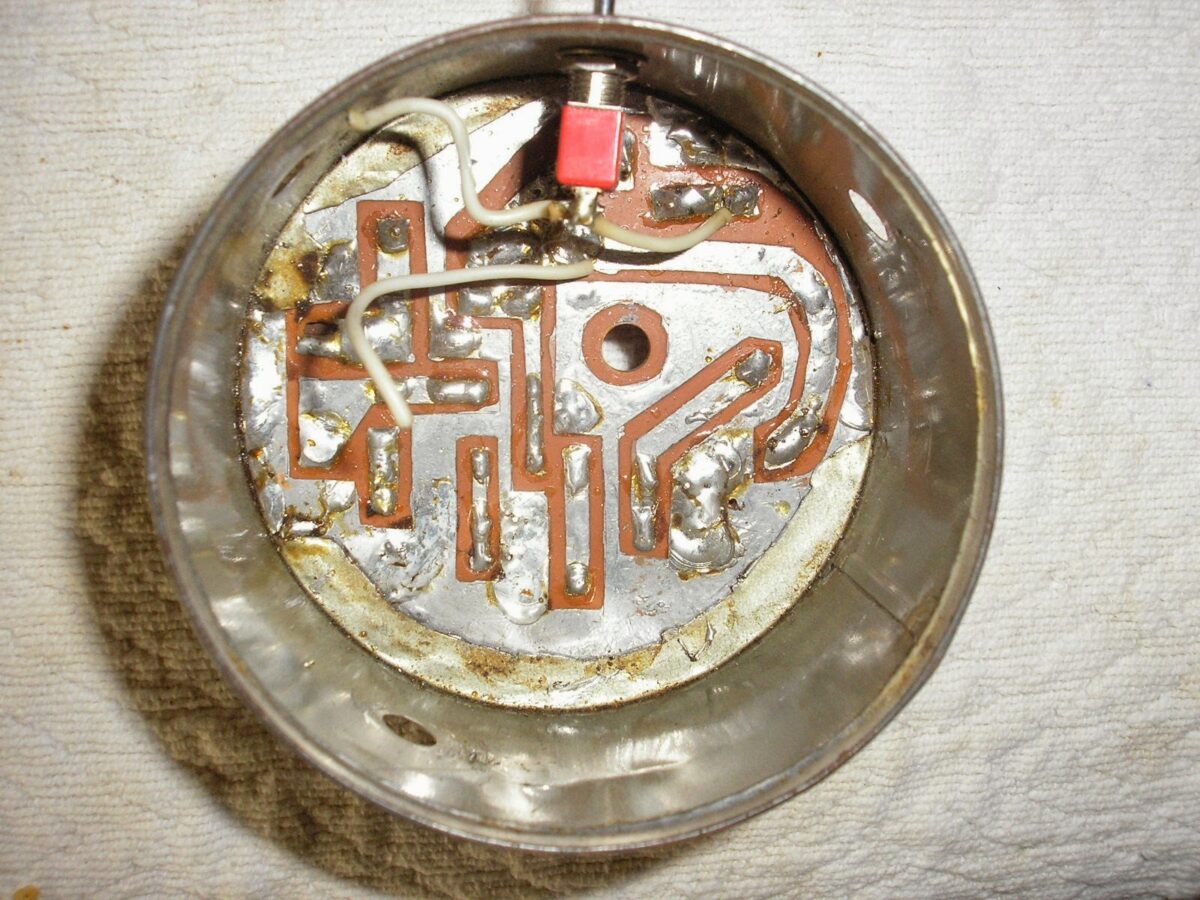
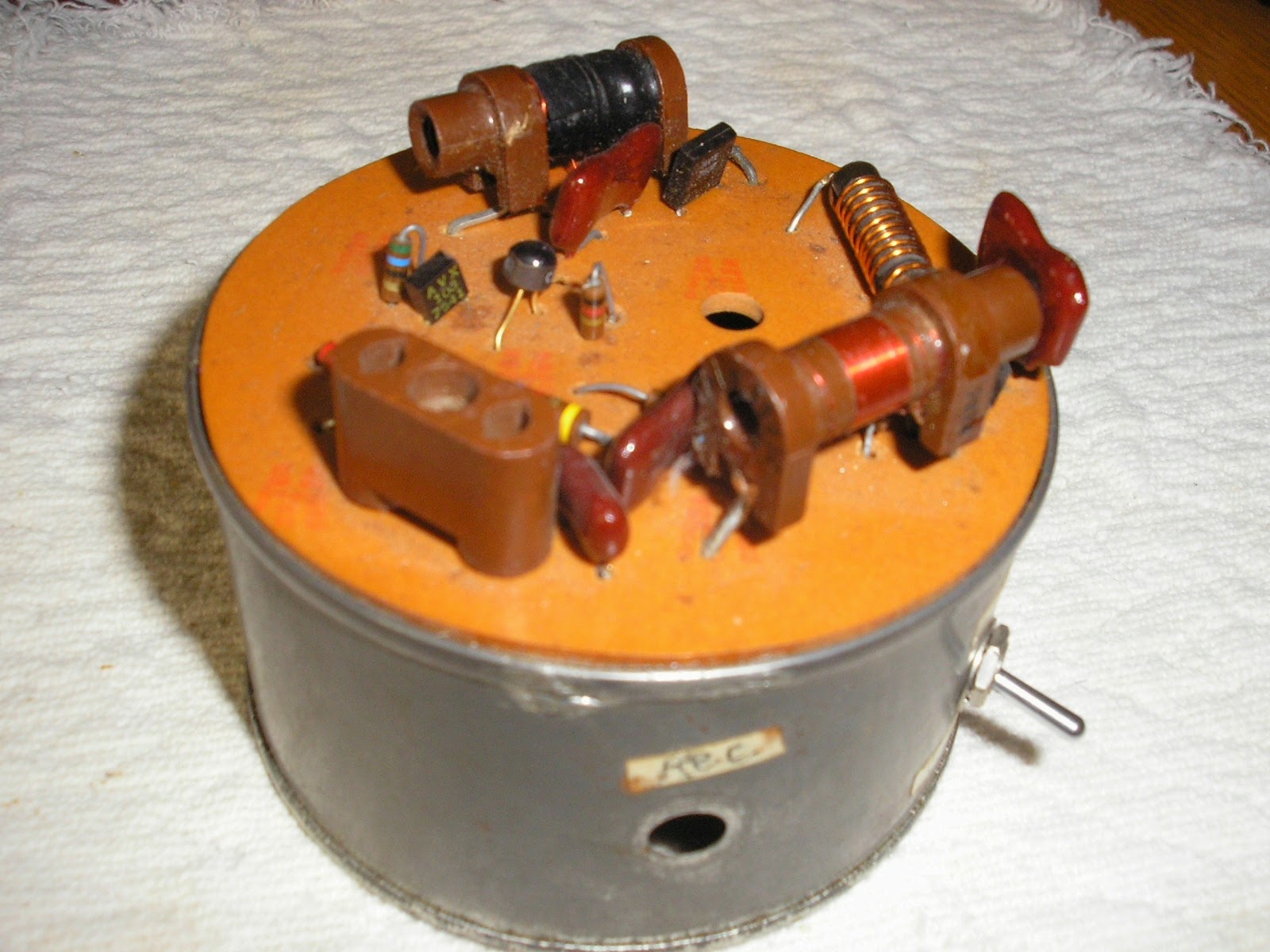
“That 70s Show”: Steve “Snort Rosin” Smith Restores a 70’s era Tuna Tin 2
Hi Bill,
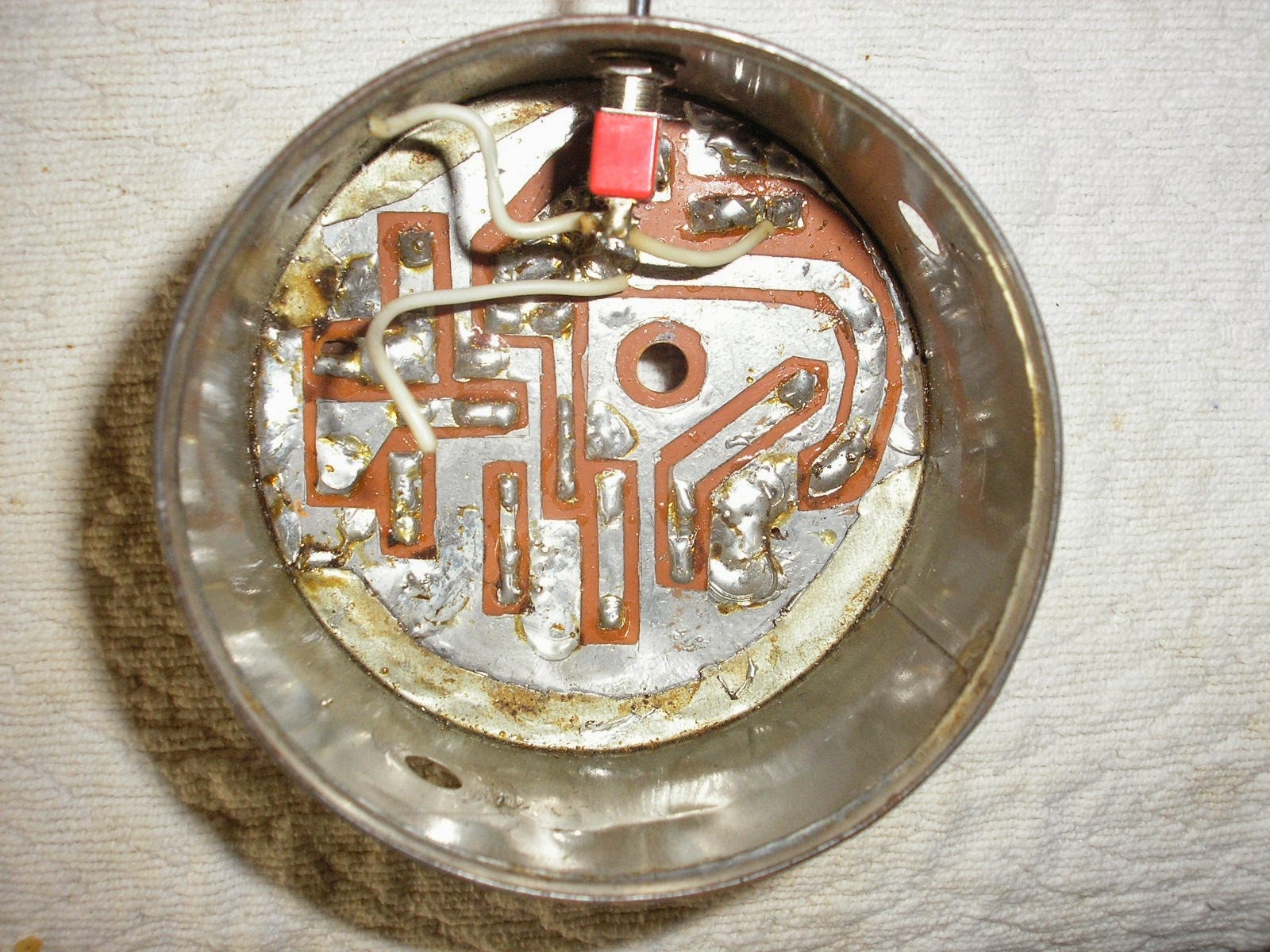
Your recent stories about your TT-2 and original TT-2 “mojo transfer” prompted me to resurrect my TT-2 ‘resto’ project.
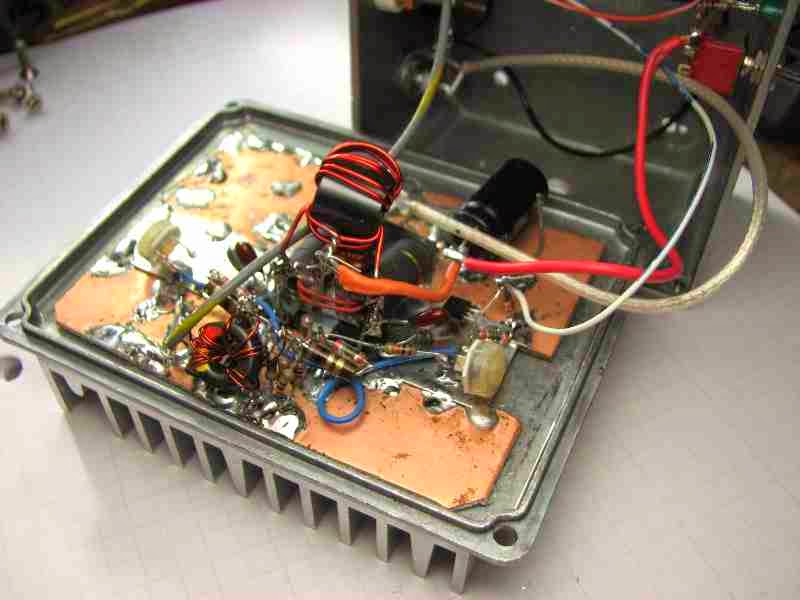
The attached photos show my 70s era TT-2 obtained for $5 from a QRP-L member. This is how I received it and you can see that it’s almost a duplicate copy of the original, complete with ‘phenolic’ substrate PC board material and hand-scrawled traces.
I have collected most of the components necessary to convert it to a look-alike of
By hand selecting the two transistors for max. power gain I hope to eek 300 mW out of the thing.
Anyway, hope you enjoy the shots and I’ll send more when it’s finished.
73…….Steve Smith WB6TNL
“Snort Rosin”
Our book: “SolderSmoke — Global Adventures in Wireless Electronics” http://soldersmoke.com/book.htm Our coffee mugs, T-Shirts, bumper stickers: http://www.cafepress.com/SolderSmoke Our Book Store: http://astore.amazon.com/contracross-20
A Short Video on my Herring Aid 5
Our book: “SolderSmoke — Global Adventures in Wireless Electronics” http://soldersmoke.com/book.htm Our coffee mugs, T-Shirts, bumper stickers: http://www.cafepress.com/SolderSmoke Our Book Store: http://astore.amazon.com/contracross-20
I Too Built a Tuna Tin 2
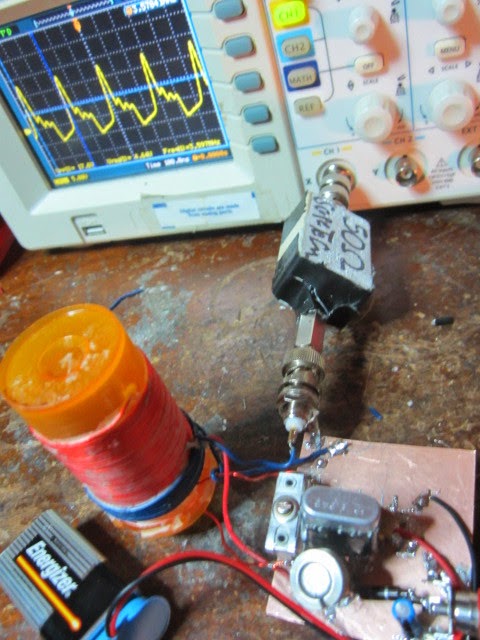
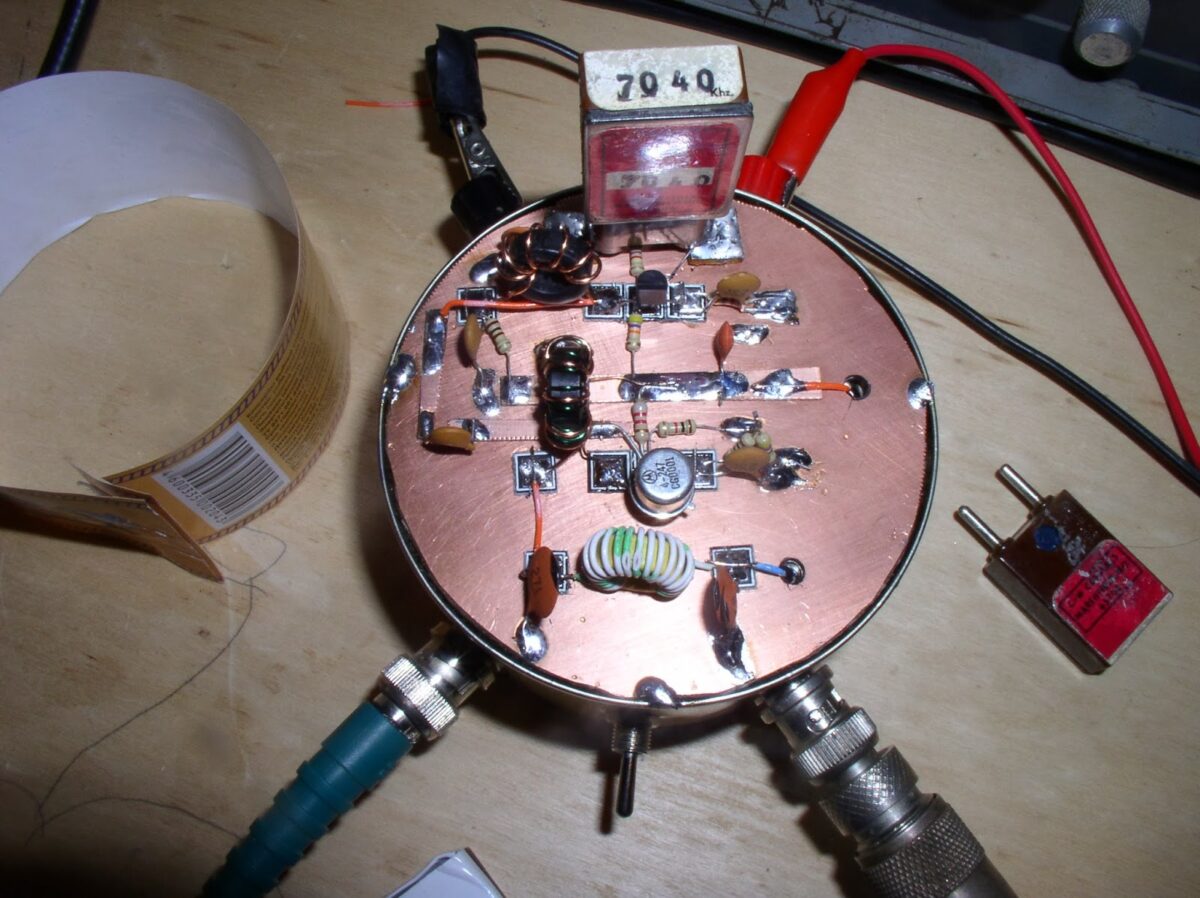
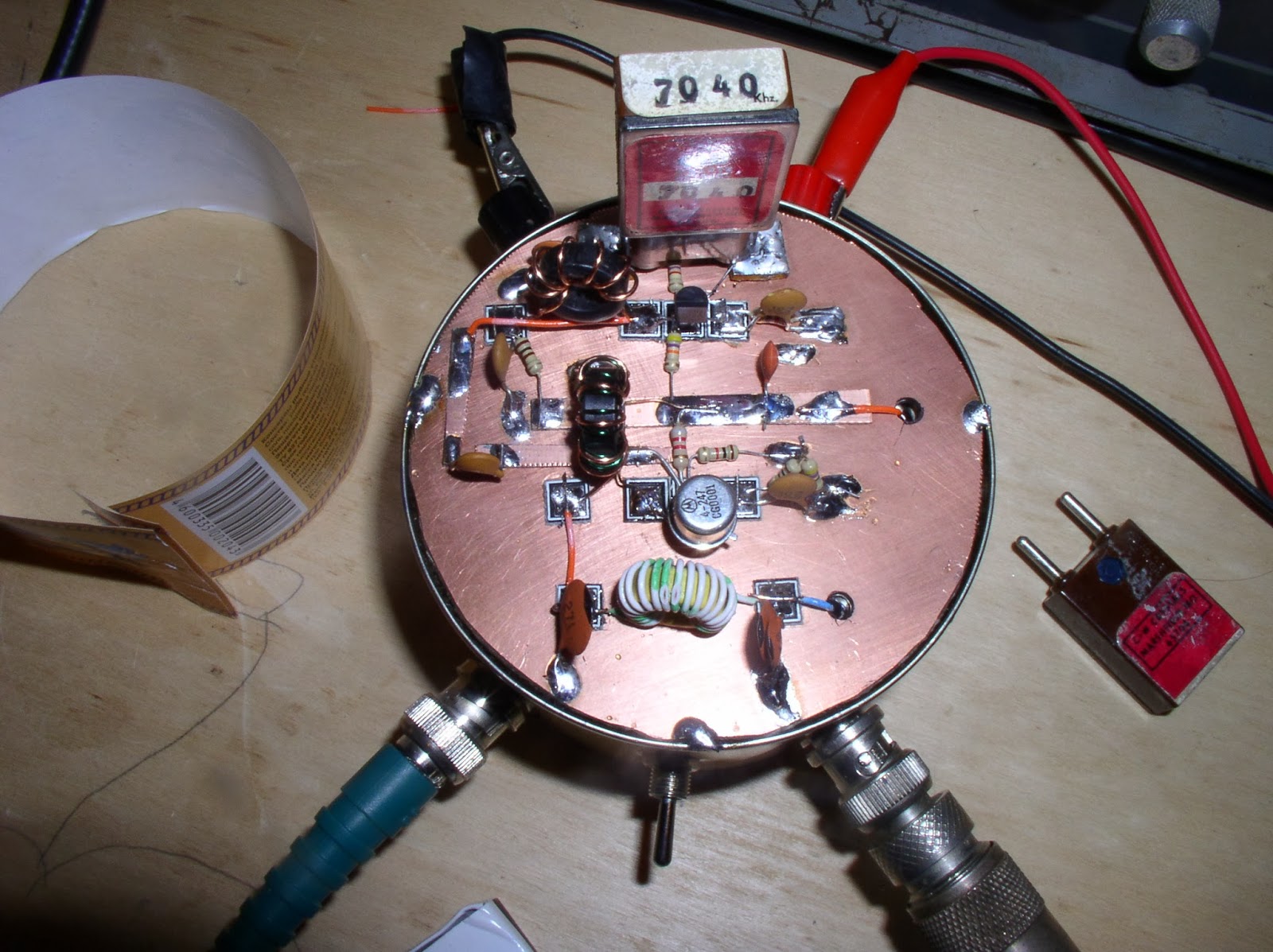
I didn’t plan on doing this. I didn’t even really want to do this. I’ve become a phone guy — I’m not into CW anymore. I figured I’d just finish the Herring Aid 5 receiver and settle the score from 1976 and that would be it. But everything I read about the Herring Aid 5 included references to the iconic Tuna Tin 2. Obviously I was also under the strong influence of my late February encounter with the original TT2 at the Vienna Wireless Winterfest. That Mojo is powerful stuff! Then my wife brought home this can of Russian tuna. The dimensions were perfect. Then I looked in my junkbox and found 40 meter CW crystals. That was it. I had to do it.
I built mine Manhattan style, using several of W1REX’s fantastic Me-pads. I also used as the final a transistor that Rex gave me at Winterfest. Thanks Rex. Soul in the New Machine.
I’m getting about 200 mW out. I;m on 7030 kHz and 7040 kHz and 7110 kHz. I have the TT2 up with my Drake 2-B (Herring Aid 5 integration will come later). I can feel the Mojo.
I just had my first contact with the TT2: I called CQ on 7110 and AB2RA came back. Jan was running 20 watts from an old 807 rig, listening with an old Hammarlund. So it was HB transmitter and vintage receivers on both ends! FB!
Our book: “SolderSmoke — Global Adventures in Wireless Electronics” http://soldersmoke.com/book.htm Our coffee mugs, T-Shirts, bumper stickers: http://www.cafepress.com/SolderSmoke Our Book Store: http://astore.amazon.com/contracross-20
Some notes on the Herring Aid 5
Sure, this receiver is not “state of the art.” But that’s the whole point. I wanted to finish the receiver project that I couldn’t finish back in 1976.
I tried to stick as close as possible to the original design and parts. NORCAL came up with an updated schematic in 1998 with parts that are more readily available. But Designer Jay Rusgrove was shooting for something that could be built with all the parts coming from Radio Shack. I think that is probably one of the factors that attracted me to the project way back when. That’s why Jay went with varactor tuning (no hard-to-get variable caps!). And that’s why he used coils that were wound on Radio Shack 10uH RF chokes (no need for hard-to-find toroidal cores). In this sense there is some common ground between the BITX rigs and the Herring Aid 5.
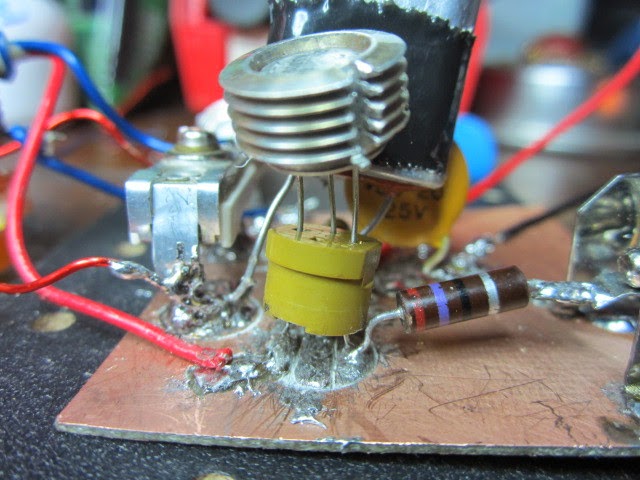
I stuck with the RF-choke as a coil idea for the VFO, but went with the NORCAL-prescribed toroids for the front end and mixer coils. (I may go back and try to use chokes in these circuits, but I’m not sure my junk-box will yield the kind of RF chokes that Jay used).
I wish I had known a few things when I was building this back in 1976: More knowledge about how to wind the coils would have been a big help. I wish I had realized that I could use a SW receiver to get the oscillator on the right frequency. I guess this was in the days before Ugly and Manhattan building techniques, but it would have been nice to know that there was no need to actually etch a board for this project (I did!).
The coils really are a bit tricky. Jay didn’t use any trimmer caps, so I guess you had to just hope that the front end coil and cap resonated somewhere near 40 meters. As for tuning the oscillator, Jay recommended scrunching and un-scrunching the turns on the RF choke. Yikes! Give me some trimmer caps!
I also found that you have to watch the level of the RF going from the oscillator to the mixer. Too much, and the receiver is deaf. Too little, same result. You need to experiment a bit with the number of turns on the pick-up coil from the oscillator.
The warnings about the pitfalls of that single BJT mixer were right on the mark: Lots of AM SW breakthrough. But I kind of like the background music. Strong RFI from local FM broadcast stations was another story (WMZQ is a country music station!). I reached into my junkbox and found a low-pass filter from a Heathkit DX-60. I just put that between the antenna and the receiver and the country music was GONE!
I really love this little receiver. I have it playing 40 meter CW as I type. It sounds great. I feel the urge to built a Tuna Tin 2 and put both of them on 40.
In the original Tuna Tin 2 article, Doug DeMaw notes that Jay Rusgrove was thinking of doing a companion receiver and says that he was thinking of calling it the “Clam Can 5” ! There were jokes about receivers for hams with “tin ears” and about there being “something fishy” about these rigs.
Thanks to Doug DeMaw and Jay Rusgrove and QST for bringing us these little circuits.
Our book: “SolderSmoke — Global Adventures in Wireless Electronics” http://soldersmoke.com/book.htm Our coffee mugs, T-Shirts, bumper stickers: http://www.cafepress.com/SolderSmoke Our Book Store: http://astore.amazon.com/contracross-20
Tuna Tin Mojo Transferred to BITX17!!!!!!
It happened at the Vienna Wireless Society’s Winterfest Hamfest today in Northern Virginia.
That is Doug DeMaw’s original Tuna Tin.
This may be the first time TT Mojo has been given to a phone rig.
Doug DeMaw would, I’m sure, approve.
Thanks Rex!
Our book: “SolderSmoke — Global Adventures in Wireless Electronics” http://soldersmoke.com/book.htm Our coffee mugs, T-Shirts, bumper stickers: http://www.cafepress.com/SolderSmoke Our Book Store: http://astore.amazon.com/contracross-20
The QRP Mojo Ceremony
More from Lobstercon (from N2HTT):
http://n2htt.net/2013/11/24/there-are-lobsters-in-the-woods/
And thanks to Pete, VE2XPL, for alerting me to all this.
Our book: “SolderSmoke — Global Adventures in Wireless Electronics” http://soldersmoke.com/book.htm Our coffee mugs, T-Shirts, bumper stickers: http://www.cafepress.com/SolderSmoke Our Book Store: http://astore.amazon.com/contracross-20
W4OP — Earth-Moon-Earth and Another Barebones Superhet
And his vintage projects here: http://www.parelectronics.com/vintage-radio-restoration.php
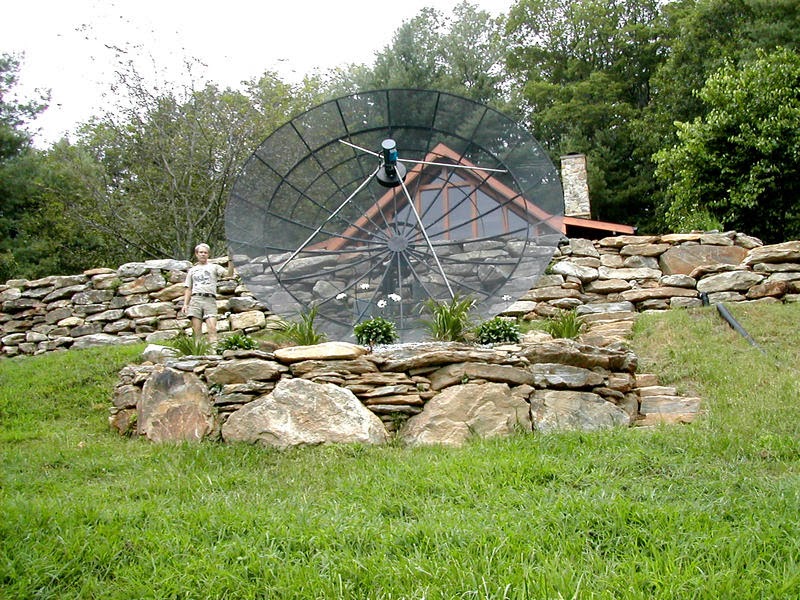
And here’s what Dale has been doing with the Moon (that’s his 15 foot dish in the picture):
Dale W4OP
for PAR Electronics, Inc.
http://www.parelectronics.com
Our book: “SolderSmoke — Global Adventures in Wireless Electronics” http://soldersmoke.com/book.htm Our coffee mugs, T-Shirts, bumper stickers: http://www.cafepress.com/SolderSmoke Our Book Store: http://astore.amazon.com/contracross-20
Standard Computer Crystals for 17 Meter SSB VXO and IF Filter
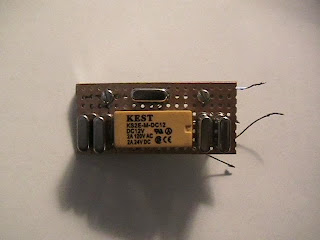
Pete Juliano, N6QW, is an electronic genius. The ideas in his SPRAT article will be of great use to all those who share in Doug DeMaw’s devotion to VXOs and reluctance to spend money. I’m really tempted to go back and re-do my BITX using Pete’s 11.52 MHz computer crystal super-VXO and 4.9152 IF (I could then take my expensive 23.1 MHz crystals and put them back in my Doug DeMaw Barebones Superhet). I also like Pete’s DPDT reed relay crystal switcher too. Three cheers for Pete Juliano, Doug DeMaw, and SPRAT! And thanks to WB9FLW for reminding us of Pete’s articles.
Hi Bill,
http://www.jessystems.com/SPRAT%20Article.pdf
https://www.homebrewradio.us/blog/wp-content/uploads/2013/11/2320MHz20VXO.jpg
Pete WB9FLW
Our book: “SolderSmoke — Global Adventures in Wireless Electronics” http://soldersmoke.com/book.htm Our coffee mugs, T-Shirts, bumper stickers: http://www.cafepress.com/SolderSmoke Our Book Store: http://astore.amazon.com/contracross-20