Daniel VE5DLD’s FOUR FB Saskatchewan SolderSmoke Direct Conversion Receivers

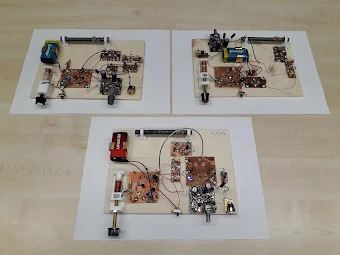
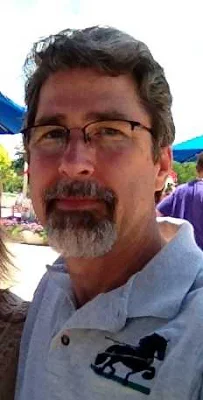
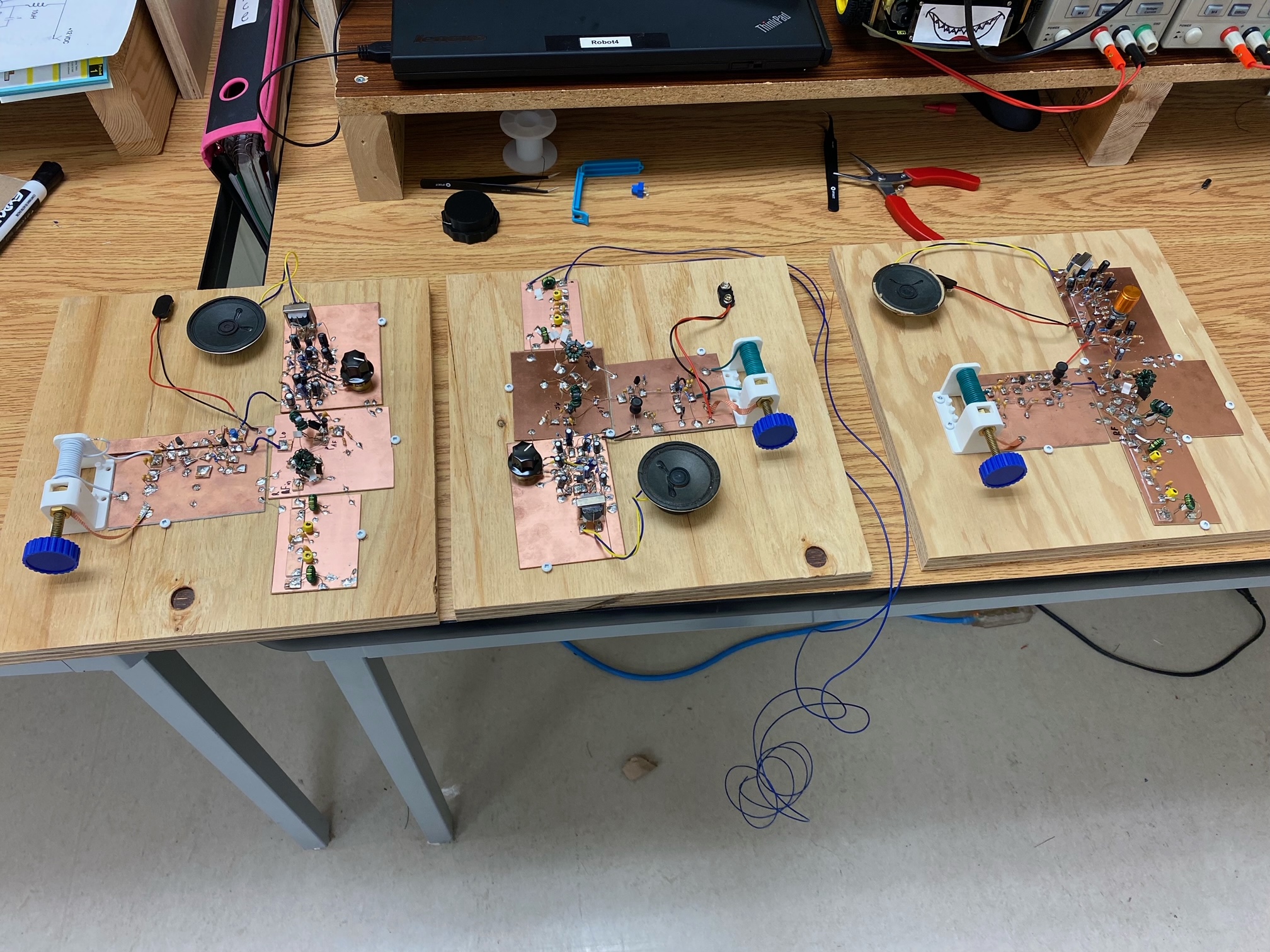
Daniel VE5DLD is a teacher in Regina, Saskatchewan, Canada. Back in early 2023 several lucky students joined him in building the SolderSmoke Direct Conversion receiver. We had asked people to build the receiver — we wanted to test the design before asking the local high school students to build it. Daniel and his students came through for us, and ended up having far more success than we did. Congratulations Daniel! Welcome to the Hall of Fame.

Daniel wrote:

Hi Bill! Yes, I had my own DC Receiver that I use every so often for fun and 3 built by my students. All working. We didn’t get any video because we just finished the school year and the kids left, but I’ve kept in contact with them and they told me they have been able to receive signals from their homes. The kids developed excellent troubleshooting skills gained large amounts of confidence in their ability to fix things. Over the next year, my students told about fixing their gaming consoles and fixing problems in their parent’s electronics. They are certainly no longer afraid of opening something up to see what is going on! And that’s what makes me the most happy! Yeah, you can just recognize myself and only mention that 3 students were able to build DC receivers.

And yes, the Michigan Mighty Mite was a fantastic gateway to home brewing!

Thanks for thinking of me and my students!

73
Daniel D.
VE5DLD
On June 19, 2023, Daniel wrote:

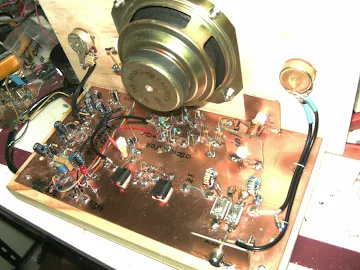
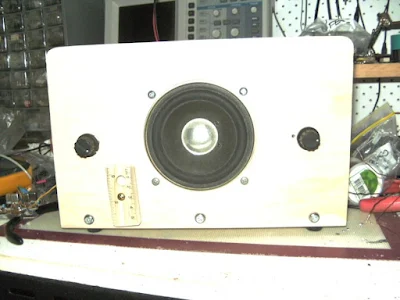
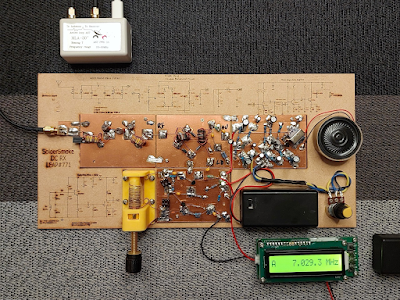
We got everything going and all 3 students now have receivers capable of inhaling RF. We 3D printed some knobs and hot glued them. We took one outside but didn’t hear any signals. Mid afternoon is not good for 40m. We will try again later this week and I’ll bring my KX3 to make sure there is a single for them to listen. This issue on that last radio was an improperly installed J310. The angle is was installed hid the problem well! Here are a few pictures of the completed rigs.
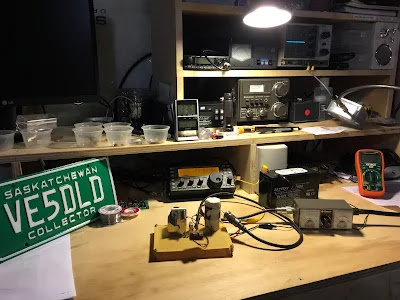
Back in 2015, Daniel built a Michigan Mighty Mite. I was pleased to be reminded that I had sent him the crystal. Go CBLA! For more info on Daniel’s transmitter see:
Thanks Daniel! 73
___________________________

Join the discussion – SolderSmoke Discord Server:

https://discord.gg/Fu6B7yGxx2

Documentation on Hackaday:

https://hackaday.io/project/190327-high-schoolers-build-a-radio-receiver

SolderSmoke YouTube channel:
Honorable Mention: Andreas DL1AJG’s THREE SolderSmoke Direct Conversion Receivers for Biologists

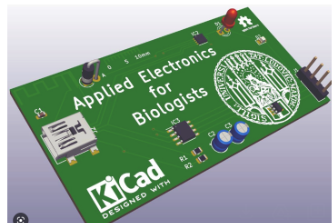
Andreas DL1AJG was another of those intrepid hams who, in the dark of winter 2023 took up the SolderSmoke Direct Conversion Receiver Challenge in order to test our receiver (before we pushed high school kids to build it). Andreas came to the task with a lot of useful teaching experience. At the time he was an academic biologist and had been teaching a course called “Applied Electronics for Biologists.” See:

https://soldersmoke.blogspot.com/2022/08/can-biologist-fix-radio.html

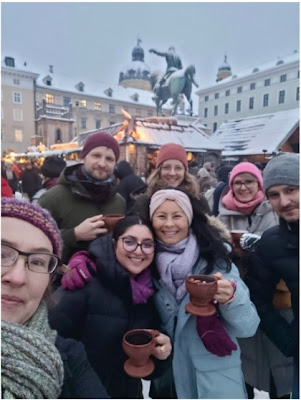
Some of Andreas’s students

I put these receivers in the “Honorable Mention” category only because they deviated a bit from the basic schematic: they used an indoor ferrite antenna, had an RF amplifier ahead of the mixer, and did not use a transformer in the AF amp. But they are very clearly the SolderSmoke DC receiver, they succeeded in inhaling RF, and Andreas and his students built them to help us.

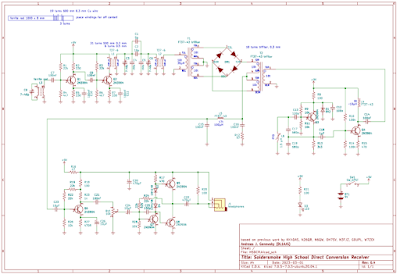
Here is the schematic they used:

Click on the image for a better view
Here is an e-mail exchange I had with Andreas when the scholatic dust had settled in June 2023:

Dear Bill,

Please my apologies for my late update on our DCR project. We started with the course in the semester break and once the semester started only a handful of students were able to finish their receiver. A long shelf of shame ….

Here is what we’ve got so far (those were finished at the end of April already). 3 nice DCRs completely sufficient to copy CW indoors without additional antennas starting from late afternoon. Strong stations can be heard all day. I found that coupling some 6m of wire with one or two windings to the ferrite core can boost the signal dramatically but can also increase noise.

The PTO is based on your design (Bill Meara N26QR & Dean KK4DAS) which was sparked by Farhan (VU2ESE) , except that I’ve swapped the FET for a NPN. The input amplifier and antenna is from the JUMA active ferrite antenna by Matti Hohtola (OH7SV), the band pass filter is from Hans Summers (G0UPL), the mixer and the headphone amplifier is inspired by Pete Juliano (N6QW), you told me that the diplexer (as well as the whole DCR idea) is attributed to Wes Hayward (W7ZOI) and the perfect schematics of Rick Scott (N3FJZ) where crucial to get me started in the first place. I enjoy keeping track of original sources, as I would do in science. This shows that even little achievements are based on the ideas of many other great people – and this is nothing to be ashamed of.

This was a lot of fun! Thank You!
Best and yours sincerely,
Andreas

Wow, the direct conversion re-engineering of education continues, this time at graduate-school level with biologists in Munich! Amazing.

Andreas points out that his group was also plagued by semester-related problems that caused many additions to the German shelf of shame. Let’s hope that someday soon these builders will come to their senses and join the ranks of those who have finished their homebrew projects.

Looking at the schematic (above) of Andreas’s project, there are a couple of significant differences from ours:

— Their AF amp used a transformer-less push-pull design. We had considered this but abandoned it thinking that it would be too complicated to explain the workings of this circuit to our students.

— Most significant, is Andreas’s use of a ferrite rod antenna and an RF amplifier. I think a simple 33 foot quarter wave antenna (with a ground or a counterpoise) might work better. But hey, to each his own! The important thing is that a number of these receivers were successfully built. They look beautiful.

Congratulations to Andreas and the successful Munich homebrewers!

———————————–

Thanks to Andreas DL1AJG. Welcome to the Hall of Fame.

————————————

Join the discussion – SolderSmoke Discord Server:

https://discord.gg/Fu6B7yGxx2

Documentation on Hackaday:

https://hackaday.io/project/190327-high-schoolers-build-a-radio-receiver

SolderSmoke YouTube channel:
Rick N3FJZ’s Early Completion of the SolderSmoke Direct Conversion Receiver Challenge

It was a cold day in early February 2023. Rick N3FJZ had responded to an early version of the SolderSmoke Direct Conversion Challenge:

I wrote:

Rick N3FJZ has completed his the direct conversion receiver that we will soon be building with students at a local high school. See video above.


We are hoping that a number of people will build the receiver as we designed it. Some folks have sent us versions of the receiver that they have built, but these versions often include significant deviations from our design, rendering them less-than-useful in checking our work. Rick built it just as we prescribed. His build is very useful in confirming the validity of our design. So if you are working on one of these receivers, I would encourage you to — for the moment — dispense with innovations and build it the way Rick did: as per the design we have been using.

We know that our design is not perfect. But we have decided to stick with it because it is very simple and very easy to explain. Examples: We know there is an impedance mismatch between the mixer and the AF amp. But fixing this would introduce complexity that we want to avoid. And the receiver works fine with the imperfection. We know that a push-pull AF amp would probably work better than the one we have. But we do not want to have to explain push-pull amps, biasing schemes, and PNP transistors in this short introductory course. So we stuck with three common-emitter AF amp circuits and an 1K-8ohm transformer.

Rick did a really excellent job not only in building this receiver, but also in documenting it. His diagrams and drawings are really superb. We will probably use these in our presentations to the students:


We will keep all of you informed on the progress of this project. We will begin this week. But if you are still working on the receiver, please send us your work, even if it comes in after we begin the course.

Thanks Rick!

————————————-

Thanks indeed Rick. Sorry it took so long to put you in the SolderSmoke Challenge Hall of Fame, but you are in now, and you definitely deserve it. Congratulations OM.

I especially like your finding the audio ourput transformer in an old transistor radio. Too often we see builders quit after discovering that Mouser or some other supplier no longer stocks the needed part. You show that homebrewers have other sources available, if they are willing to scrounge a bit. FB. I also liked the switch that helped compare the outputs of the two AF transformers. Very useful.

Thanks too for all the great videos and your really nice documentation — we have used your work quite a lot.

73 and welcome to the Hall of Fame!

Rick N3FJZ
____________________________

Join the discussion – SolderSmoke Discord Server:

https://discord.gg/Fu6B7yGxx2

Documentation on Hackaday:

https://hackaday.io/project/190327-high-schoolers-build-a-radio-receiver

SolderSmoke YouTube channel:

Stephen VK2BLQ’s Very FB EARLY build of the SolderSmoke Direct Conversion Receiver

This was back in the old days, long before we had Discord. It was early 2023, and we were getting ready to start the Direct Conversion receiver project at the local high school. I put out a version of the SolderSmoke Challenge: I asked people to build our receiver and let us know if it worked for them. Stephen VK2BLQ took us up on this and built the beautiful receiver you see above.

Thanks Stephen. Welcome to the Hall of Fame!

Stephen wrote:

Bill,


Don’t worry, you are not alone out there.

Here is my build; sorry that the front panel is overexposed and hard to see, but it is plywood.

I did follow the schematic but due to the contents of the junk box there have been some component changes.

The only thing that I had to buy was the 3/16 x 50 mm (2 inch) brass screw.

My calculations for the coils for the PTO and BPF were a little bit off necessitating padding down the PTO with a further 100 pF (easier than remaking the coil and mounting) and removing a few turns from the T50-6 toroids.

Like other people have found: the audio takes off at full volume; I am thinking but not yet tried adding decoupling between R5 (15K) and C2(47 uF). It isn’t the actual values of the electros as I had to use 100 uF so might be the audio output getting back into the earlier stage.

The tuning range I get is our 7000 to 7200 KHz and some shortwave stations above and below, Turning the screw is a little bit fiddly, but once tuned the vfo is quite stable and the audio sounds good.

Best wishes,

Stephen

VK2BLQ

Paul 9V1/KM7ABZ’s FB SINGAPORE SolderSmoke Direct Conversion Receiver

Wow, I had been feeling a bit discourged about the slow-down in receiver completions, then I woke up this morning and found this e-mail from Singapore. My faith in ham radio was restored. Welcome to the Hall of Fame Paul. You get extra credit for doing it from far-off and exotic Singapore.

Paul includes in his “proof of life” video not only some Malaysian SSB and some CW, but also some very close-by China Radio International. FB Paul.

I also liked the way Paul used the local library to burn the schematic of the receiver burned into the board upon which it was placed. And the library also 3D printed his PTO coil form.

And ET confirmed Proof of Life! FB!

Be sure to check out the really nice build description in Paul’s blog and Github page (links below):
Paul writes:

Hi Bill, Pete, and Dean,

I’ve finally made a “proof of life” video for you, plucking some CW, voice and shortwave signals from the 40 and 41m bands here in Singapore. What fun this was, and I am amazed at how well this works, even from the confines of my 15th floor apartment.


Thank you so much for laying down the challenge – it came at just the right time for me, rekindling my enthusiasm and electronics and radio. It even encouraged me to finally get my license – I’m newly minted general class KM7ABZ (yet to get a 9V1 conversion license for my home here in Singapore). I can honestly say that listening to the SolderSmoke and Ham Radio Workbench podcasts since 2018 or so was worth *at least* 50% on the exam… somehow I already knew a bunch of stuff by pure osmosis!

Everything went pretty smoothly with the build. The only real issue I had was adding some caps to tame persistent motor-boating in the audio amp. Other than that, the build follows the official SolderSmoke schematic and parts selections.

I used the laser cutters at our local library to cut and etch a custom base. The library is a great resource: it’s also where I printed the PTO former.

To get on the air from my apartment in Singapore, I’m using an MLA-30 Active Loop antenna, with a PLJ-1601 frequency counter attached to the PTO to take some of the guesswork out of tuning.


All the details of my build are published at https://leap.tardate.com/radio/soldersmokedcrx/ (from GitHub).


Cheers,
Paul
🎉KM7ABZ🎉 from 9V1 land

______________________________

Join the discussion – SolderSmoke Discord Server:

https://discord.gg/Fu6B7yGxx2

Documentation on Hackaday:

https://hackaday.io/project/190327-high-schoolers-build-a-radio-receiver

SolderSmoke YouTube channel:
Doug AA0MS’s FB SolderSmoke Direct Conversion Receiver: “This project has been a hoot!”

Doug built a really beautiful receiver, but reception was marred by a bad hum. It was quickly determined that this was caused by a noisy “wall wart” located close by. A re-location of the power supply remedied that, and allowed Doug to pull in some really nice signals.


Doug writes:

Had a lot of fun doing this over the past couple of weeks. Not my first DC receiver build–I built a Neophyte Receiver from QST years ago–but this one was the most fun. Thanks Bill, Dean, and the whole DCR challenge community–I’m learning a lot in my old age!

I’m a retired pastor who’s been fiddling with radio stuff since about 1991, and though I’ve been inactive for long periods of time, I’ve always enjoyed QRP and homebrewing (and I’ve built a bunch of kits, too, including my main rig, an Elecraft K2). It’s been a while since I had a halfway decent antenna up, but that’s in the works. As a boy I was at my dad’s side in his modest shack whenever he was building or operating (he was K8LZO back in the day), and one day while listening to shortwave broadcasts during the first Gulf war, I tuned around and heard some CW signals and decided it was time to learn the code and get my license. Anyway, this project has been a hoot, and I so appreciate all of you and your generosity with your experiences and experiments and successes and failures. Thanks! 73, Doug, AA0MS

Congratulations Doug and welcome to the Hall of Fame.

——————————

Join the discussion – SolderSmoke Discord Server:

https://discord.gg/Fu6B7yGxx2

Documentation on Hackaday:

https://hackaday.io/project/190327-high-schoolers-build-a-radio-receiver

SolderSmoke YouTube channel:

Ramakrishnan VU2JXN’s FB SolderSmoke Direct Conversion Receiver: “Extremely thrilled! Hooked!”

This is a really important Hall of Fame entry for us. This is our first completed SolderSmoke Direct Conversion Receiver from India (more will come).

Most importantly, this receiver was built by our good friend Ramakrishnan VU2JXN (ex VU3RDD). Ramakrishnan goes way back in SolderSmoke history. He was the one who first suggested (in 2006!) that our podcast needed a blog to go with it. This was the origin of the SolderSmoke Daily News. A short time later we announced the birth of Ramakrishnan’s daughter. That same daughter now has her ham license and will build a second receiver with her dad.

Ramakrishnan VU2JXN

The roots of this receiver are deep in India. When Dean and I first went to the local high school to talk about ham radio support, I carried with me a Direct Conversion Receiver inspired by Farhan VU2ESE. In fact, that receiver had a picture of Farhan and quotes from him taped to the wooden base. When Dean and I designed the receiver that we tried to build with the High School kids, we used an oscillator based on the DC receiver that Farhan was building with youngsters at Indian girl’s schools. That is the receiver design that we are using in this SolderSmoke Challenge.

Ramakrishnan is in Bangalore now, which is where he built this receiver. Ashish N6ASD is also there now, and is building a receiver.

Ramakrishnan writes:

This morning before I got ready to come to work, I got a few minutes
to turn on the radio and catch the morning nets. Extremely thrilled to
get this working. The PTO is very stable.

Needless to say, you folks convinced me to get back into homebrew
and you have hooked me into it with this project.

I am off to my ailing mother’s place tonight. I don’t have a station
there, but I am carrying a copyof EMRFD with me (I have two!).

I want to listen with this receiver as you all always say
and make simple modification to this receiver and improve it.

Again, couldn’t turn off from it even though I am at work! The bug has
caught me.

Here is some more video of Ramakrishnan’s receiver:


Congratulations Ramakrishnan. Welcome to the Hall of Fame!

——————————–

Join the discussion – SolderSmoke Discord Server:

https://discord.gg/Fu6B7yGxx2

Documentation on Hackaday:

https://hackaday.io/project/190327-high-schoolers-build-a-radio-receiver

SolderSmoke YouTube channel:
John KN6FVK’s FB Homebrew SolderSmoke Direct Conversion Receiver — Crickets Killed with Barkhausen-Be-Gone Spray!

I went to bed worrying about this one. John KN6FVK had been having a lot of problems. He had repeatedly reported hearing nothing (crickets!) when he fired up the receiver. Members of the Discord group had provided a lot of coaching, but still, CRICKETS! John had a good sense of humor. When I pointed out that oscillations in the AF amp are caused by a feedback path that meets “the Barkhausen criteria” John said he went to Lowes and bought a spray can of Barkhausen-Be-Gone. It seems to have worked. Actually I think John put some additional capacitance on the DC rail of the AF amp. In any case, he was going to wait for the evening for test out the fixed receiver. The time difference with California meant that I went to bed with fingers crossed. Happily the BBG spray and (more likely) the extra capacitance worked. John sent us some really nice videos of his receiver in action. I really like the inscriptions on his pine board. This should become “a thing.”

John writes:

I‘m very ok now…. — sigh / smile — THANK YOU ALL for your help and patience. As painful as this was, it was a lot of fun and I learned a lot. After I build an actual work bench, I might try this again (looks are important). But I’m definitely going to start playing with it and learning from it. On to Mods and Upgrades! Need to learn-up on this “Barkhausen” silliness too. -73

Here is John’s receiver pulling in CW (WB6CGJ):

Congratulations John, Welcome to the Hall of Fame.

——————————–

Join the discussion – SolderSmoke Discord Server:

https://discord.gg/Fu6B7yGxx2

Documentation on Hackaday:

https://hackaday.io/project/190327-high-schoolers-build-a-radio-receiver

SolderSmoke YouTube channel:

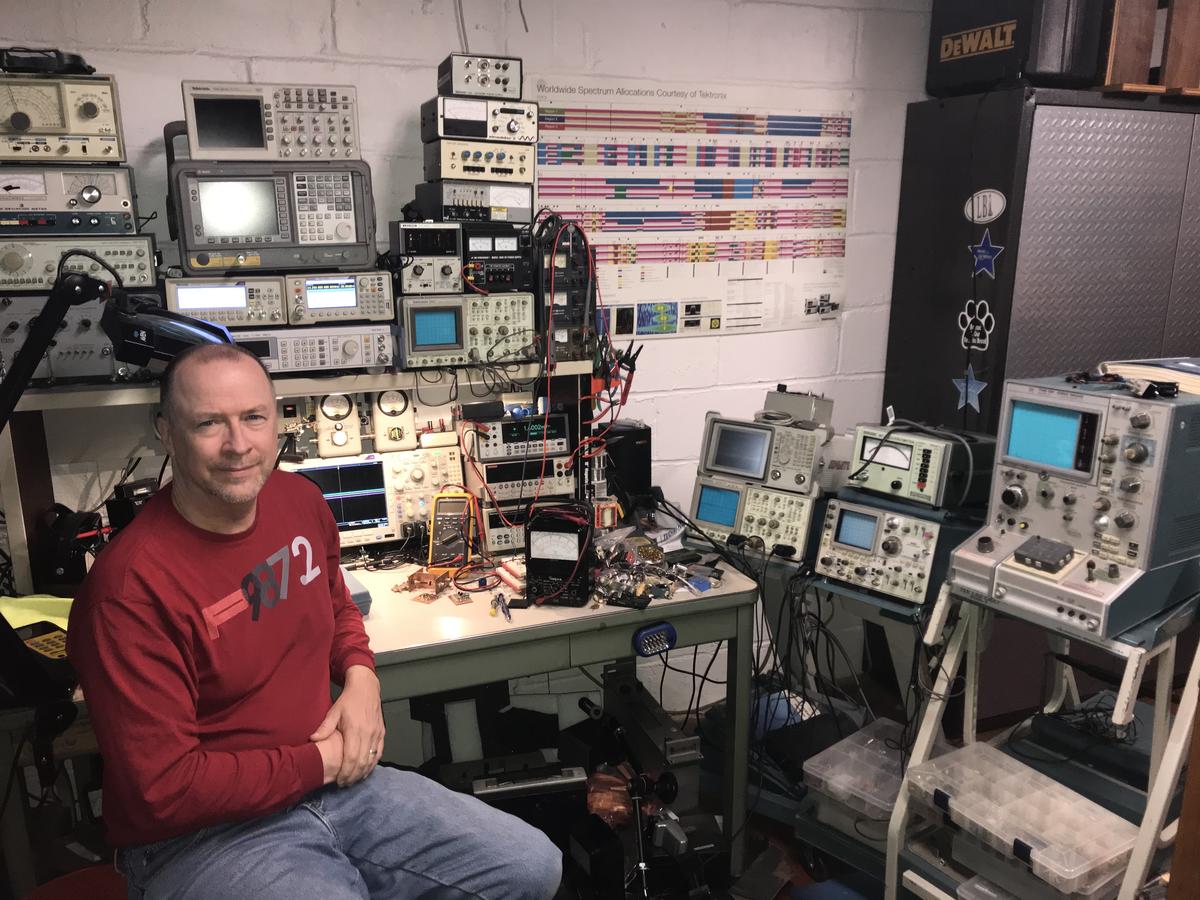
Alan Wolke W2AEW’s FB Homebrew SolderSmoke Direct Conversion Receiver

It is really and honor to have Alan Wolke W2AEW build one of our receivers. Alan is a true wizard. Armed with an amazingly popular YouTube channel, he has taught electronics and ham radio to thousands of grateful viewers worldwide. A Field RF Application Engineer for Tektronix, Alan has a special knack for showing us how to get the most out of our test gear.

So many times have I gone back to videos that Alan made years ago, just in an effort to refresh my memory on the insights that he shared. For example, it was from him that we learned how the diode ring mixer really works — what it really means to say that this mixer multiplies signals by 1 and -1. Alan even showed us how to get our ‘scopes to display the multiplication. This was all very cool and very typical of Alan’s work. His videos have been an important reference for this direct conversion receiver effort.

On this project, Alan dug into his junk box, only to discover to his dismay that he didn’t have the AF transformer that we recommended. I am sure that Alan could have whipped up several alternative circuits that did not require the transformer, but he wanted to build the receiver the way we recommended, so a slight delay took place while Mouser filled his order.

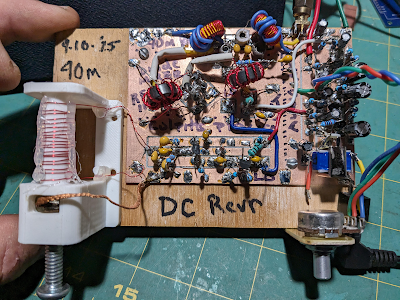
Alan did build the circut modularly, stage-by-stage, using the Manhattan method, but he admits to giving in to his temptation to use a very small board. This may be the most compact of our 60+ DC receivers. In an encouraging reminder that even the great ones worry about unwanted feedback, Alan writes:

Why am I always compelled to build as compactly as possible? I hope feedback doesn’t bite me in the butt!


Thank you Alan! And welcome to the Hall of Fame!

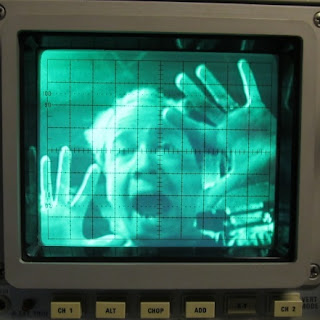
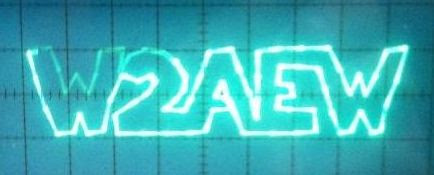
(This picture was created by displaying NTSC video from my digital camera on Alan’s old Tektronix 485 oscilloscope using a simple converter circuit that is described in a video on my YouTube page)
QR code for his YouTube site
X Y Screen
On the SolderSmoke Blog there are 41 posts tagged with “Wolke–Alan”:
Alan’s QRZ page:
———————————-

Join the discussion – SolderSmoke Discord Server:

https://discord.gg/Fu6B7yGxx2

Documentation on Hackaday:

https://hackaday.io/project/190327-high-schoolers-build-a-radio-receiver

SolderSmoke YouTube channel:

Phil W1PJE’s Amazing MIT SolderSmoke Direct Conversion Receiver

We are really pleased to see that Phil W1PJE has completed his direct conversion receiver and has thus joined the Hall of Fame. Congratulations Phil.

We are shamelessly calling this the “MIT receiver.” But the truth is that Phil’s job at MIT was not part of this project, and in fact distracted him from his radio building efforts. There was, however, one moment in which Phil had sent us a video of his receiver in progress. There was some audible fan noise in the background. Phil apologized, noting that the noise came from a nearby receiver that monitors upper atmosphere winds using meteors. Now that, my friends, is some cool MIT stuff.

Phil writes:

Hi Bill and Dean,

After a long hiatus (and a restrung antenna), I’m happy to report the Soldersmoke DC receiver is finally done and working well. The relatively long video above shows a tour from CW to SSB to AM to digital telemetry to time signal (CHU at 7.850 MHz). A bonus frequency counter was included to show the viewers where I was in the band. It’s not pretty but it works. I need to slow down the tuning but that is a future job. Sorry for the serious wobbly attempts to zero beat the AM carriers but I can fix that later… hmm.

Thanks for the fun and reminding me of a time when I was an undergrad at the EE bench. Modifications are next when I can find a few minutes.

73
Phil W1PJE

————————————————-

Join the discussion – SolderSmoke Discord Server:

https://discord.gg/Fu6B7yGxx2

Documentation on Hackaday:

https://hackaday.io/project/190327-high-schoolers-build-a-radio-receiver

SolderSmoke YouTube channel:

Louis W0IT Completes a Very Long-Term Goal and Finishes His Direct Conversion Receiver

Louis W0IT did what true homebrewers often have to do: he persevered in an effort to make his machine work. And he succeeded. Congratulations Louis. Welcome to the Hall of Fame.

Louis writes:

I rebuilt all the boards, new components except the band pass filter and the mica caps, all which looked to be working up to spec. I bought the squares as they are smaller than the ones I made and while harder in someways they kept the mess down. I bought some J310’s from Mouser and either the ones I had were less than optimal or I fixed something in the resolder. I ended up with 4 batches of those. They all tested different and the Mouser sourced ones had the lowest Vg (turn on voltage?) according to my 12$ tester at 1.65 V rather than 2.35 or 2.65 for the Amazon ones. The noise on it sounds almost identical to the noise on my Kenwood on the same antenna. Thanks Everyone. It’s part of a very long term goal.

A very nice post about ham radio in Thailand by Louis:
—————————-

Join the discussion – SolderSmoke Discord Server:

https://discord.gg/Fu6B7yGxx2

Documentation on Hackaday:

https://hackaday.io/project/190327-high-schoolers-build-a-radio-receiver

SolderSmoke YouTube channel:

Brian KA0PHJ’s CBLA SolderSmoke Direct Conversion Receiver

Brian KA0PHJ finished his receiver in early March, and has been adding mods ever since. He hopes to build another one for 80 meters and to use it with his Michigan Mighty Mite.

VIVA EL CBLA! VIVA!

Brian writes:

Bill,

I got my DCR finished in early march (built as designed), then added the RF gain, fine tune and frequency display.
Wow, what fun!!
Gave me an excuse to organize all my discrete components and finally buy a Rigol!
Now I plan to build one for 80m to go with the CBLA Michigan Mighty Might:)
Keep up with good work.
73,
Brian.
KA0PHJ

FB Brian! Congratulations!

———————————

Join the discussion – SolderSmoke Discord Server:

https://discord.gg/Fu6B7yGxx2

Documentation on Hackaday:

https://hackaday.io/project/190327-high-schoolers-build-a-radio-receiver

SolderSmoke YouTube channel:

Chris VK1CHW’s FB SolderSmoke Direct Conversion Receiver — With A Very Innovative Homebrew PTO Coil Form

Chris VK1CHW sent us the above “proof of life” video. And alive it is! FB Chris. I especially liked the approach he took to the coil form for the PTO: He is getting a 3D printed one, but in the meantime he improvised with some electrical conduit and a bolt. Improvise satisfies! FB Chris. Congratulations and welcome to the Hall of Fame.

———————————

Join the discussion – SolderSmoke Discord Server:

https://discord.gg/Fu6B7yGxx2

Documentation on Hackaday:

https://hackaday.io/project/190327-high-schoolers-build-a-radio-receiver

SolderSmoke YouTube channel:

Dave KD8KHP’s FB SolderSmoke Direct Conversion Receiver

Very cool build by Dave. That PTO coil form looks great. And the receiver sounds especially good on sideband. FB. Congratulations Dave!

Dave writes:

This was a fun build, and I learned something.

———————————

Join the discussion – SolderSmoke Discord Server:

https://discord.gg/Fu6B7yGxx2

Documentation on Hackaday:

https://hackaday.io/project/190327-high-schoolers-build-a-radio-receiver

SolderSmoke YouTube channel:

Rob VK5RC’s FB SolderSmoke Direct Conversion Receiver. MDS?

Rob VK5RC has completed his SolderSmoke direct conversion receiver. Congratulations Rob. And it is good to know what we have a Medical Doctor among our builders — this adds prestige and expertise to the project.

Rob measures a Minimum Discernible Signal at -95 dbm. I think that is kind of weak performance. Much depends, of course, on how you define “descernible.” Some books say you need a 10 db increase in audio. Others say you just need to be able to tell there is a signal there. I have gone with the latter definition and have measured MDS of around -120 dbm. I wonder why there is such a difference in measured MDS.

In any case, it is great to see Rob’s receiver inhaling all of that great Australian SSB (see video above). Thanks Rob, and congratulations.

Adrian M7EFO’s FB SolderSmoke Direct Conversion Receiver

Adrian has completed a very FB direct conversion receiver. Really nice work. It is especially pleasing to see that Adrian is a member of GQRP. FB Adrian. SSB above, CW in the video below. I think that China Radio International signal would be a good early target for your tinkering and mods. We fought a similar battle against Radio Marti.

Adrian writes:

Did it!!! It Works.! Receives CW, SSB,FT8. Awesome. Thanks Bill. Thanks Dean. It was fun. Now for the tinkering and modifications.

CW too. As an added bonus it picks up China Radio International radio whether I like it or not.😄

Hello. I live in East Barnet a suburb of London, UK.

I work as an electronic technician and tech support for a small company.

My rig is a Xeigu G90 with a home made dipole cut for 20 metres and 40 metres and run QRP at 5-10 watts, 5 watts FT8, I’ll save the kilowatts for boiling the kettle! I’m using an old PC server power supply.

The shack computer is a Raspberry Pi3 Raspberry Pi400 (Stolen Borrowed from my daughtercheeky). I am surprised at how well my set up works. Sometimes.
I am a member of the GQRP club and have started building some kits and homebrew in the Manhattan style.

Currently studying for my UK Intermediate licence with Bath Based Distance Learning.

Mike KA4CDN’s Engraved SolderSmoke Direct Conversion Receiver — Another VWS RX!

Mike KA4CDN is an experienced homebrewer and a member of the Vienna Wireless Society. He took the SolderSmoke challenge and built the direct conversion receiver. Congratulations Mike, and welcome to the Hall of Fame!

Mike writes:

The goal of the project was mainly to test my conversion of my Ender3 3D printer into an engraver for making PC boards. Thank you Bill and Dean for leading the project. It had been a while since my soldering iron was hot on an RF electronics project. It is amazing how fast I get rusty and forget stuff. Now I’m going to pick back up on my crystal filter that I started I think two years ago
;-( Awesome!

For more information on how you too can build the receiver:


Join the discussion – SolderSmoke Discord Server:

https://discord.gg/Fu6B7yGxx2

Documentation on Hackaday:

https://hackaday.io/project/190327-high-schoolers-build-a-radio-receiver

SolderSmoke YouTube channel:

Wes W4JYK’s FB SolderSmoke Direct Conversion Receiver by a Vienna Wireless Society Makers Group Member


I was very glad to see Wes W4JYK finish this reciever. Wes is a member of our local radio club — the Vienna Wireless Society, and is part of the club’s Makers Group.

Wes writes:

The DCR is up and running. Listened to East Cars Net along with a few other stations. Very cool! and good project.

Thanks Wes and congratulations on entering the Hall of Fame!
—————————————–

For more information on how you too can build the receiver:


Join the discussion – SolderSmoke Discord Server:

https://discord.gg/Fu6B7yGxx2

Documentation on Hackaday:

https://hackaday.io/project/190327-high-schoolers-build-a-radio-receiver

SolderSmoke YouTube channel:

Dave W2DAB’s NEW YORK CITY Homebrew SolderSmoke Direct Conversion Receiver. Manhattan Construction IN MANHATTAN! FB!

Dave W2DAB is a long-time friend of the SolderSmoke podcast. When Steve Silverman was moving out of NYC, Dave went on the subway down to lower Manhattan to retrieve (for me) Steve’s HP-8640B signal generator. And that thing is heavy! Months later I picked it up from Dave. Dave is also rumored to have participated in some of the SolderSmoke sticker operations in New York City. I will neither confirm nor deny his participation.

Dave obviously did a beautiful job on this receiver, and it sounds great. Dave’s reception is hampered by his high-rise location — he is currently limited to the use of a mag loop. I thought about suggesting that Dave take his receiver down to Central Park or to the banks of the East River, but I worry that this device might be too much even for the famously tolerant residents of the Big Apple.

By the way, that station Dave heard was Percy, KF2AT, right up the road from him on E 106th Street.

Dave writes:

The really nice part of this project is that it’s so broken down that I can understand all of the parts and I can keep working on this to make it better and better. Improvement and patience are necessary traits for successful home brewing. I don’t rule out a Park DCR Activation, as I like to say Manhattan construction is so much more interesting done in Manhattan.

(Percy KF2AT is also in Manhattan.)
Thanks a lot Dave, and congratulations, Welcome to the Hall of Fame!

————————–

For more information on how you too can build the receiver:


Join the discussion – SolderSmoke Discord Server:

https://discord.gg/Fu6B7yGxx2

Documentation on Hackaday:

https://hackaday.io/project/190327-high-schoolers-build-a-radio-receiver

SolderSmoke YouTube channel:

Chris M6CRD’s FB SolderSmoke Homebrew Direct Conversion Receiver

Chris M6CRD built a really nice looking recceiver. And it sounds great too, both on CW (above) and SSB (below).

Chris writes:

Hi Bill. It is using an audio transformer on the output but its an ebay one of unknown impedance. The description said 1.3k:8r but I have my doubts how accurate that is. The radio runs fine after I quenched some initial oscillation with larger caps on the power rail of the audio amp, its just a little quieter than I suspect it should be with the correct transformer.

I told Chris that Dean and I had also had some early trouble with AF transformers of questionable specifications. But in any case his receiver was clearly inhaling very nicely.

Congratulations Chris. Welcome to the Hall of Fame!

For more information on how you too can build the receiver:


Join the discussion – SolderSmoke Discord Server:

https://discord.gg/Fu6B7yGxx2

Documentation on Hackaday:

https://hackaday.io/project/190327-high-schoolers-build-a-radio-receiver

SolderSmoke YouTube channel: