A good radio morning at N2CQR

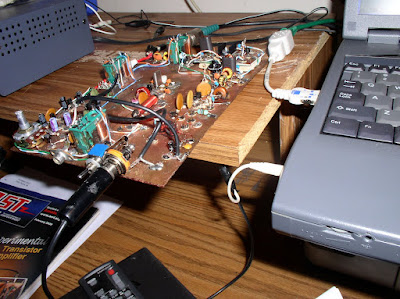
Today I had one of those really good ham radio mornings in the shack. My objective was to add one more amplifier stage between the balanced modulator and the power amplifier in my Roman WSPR DSB Direct Conversion transceiver. First I had to take the balanced modulator (trifilar transformer and two diodes in a singly balanced configuration) off the board and move back, closer to the AF input jack — I needed to make space for the new amplifier stage. For that stage I consulted Doug DeMaw’s books and Wes Hayward’s EMRFD. I went with a feedback amp using a 2N3904 in Class A.

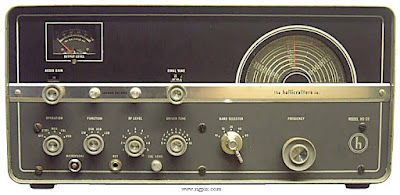
With coffee brewed and with my Drake 2-B tuned to the very congenial DX-60 net (75 meters AM on Sunday mornings), I turned to the junk box. It was like meeting old friends! I pulled out parts that Michael, AA1TJ had sent me. I pulled out others that had been sent by Jim, AL7RV. I got out my box of isolation pads that Jerry Felts, NR5A had sent in. Soon the parts were glued and soldered to a board that already had an AF amplifier designed by Roger Hayward, KA7EXM and a PA that is my “Manhattan-ized” version of Tony Park’s SDR rig PA. At the center of the board is little Colpitts oscillator that I took from a WSPR rig designed by Gene, W3PM — earlier in the week Gene had posted a comment on this blog saying he was pleased to see my call on his WSPR screen. I wonder if Gene realized that he was seeing the signal from an oscillator from his design! The laptop was provided by a listener who prefers to remain anonymous — thanks OM! Nearby, a copy of “Lid, Kid, Space Cadet” by Jeff K1NSS provided encouragement.

The rig passed the smoke test so I moved it over to the operating position and put it on the air. I got immediate gratification: the WSPRnet map right away showed my signal (now around 200 milliwatts) being received all round North America. You can watch this LIVE by going to http://wsprnet.org/drupal/wsprnet/map Just plug N2CQR into the “Call” box and hit UPDATE.

I know that WSPR is not everyone’s cup of tea, but I like it. It was fun to build this rig. While WSPR is almost exclusively a mode that uses store-bought equipment, I get a kick out of being one of very few ops using a homebrew transceiver in this mode. (Are there any others?)

Next steps: I need to figure out how to set up automatic switching (by the computer) from transmit to receive. And I want to make some PSK-31 contacts with this rig.

Thanks to all who contributed!

73 Bill

Cyber Monday Sale for SolderSmoke!

Knock 25% off your Lulu purchases. Tomorrow only.

Don’t just buy “SolderSmoke — Global Adventures in Wireless Electronics”
but check out these other fine Knack-related publications:

http://stores.lulu.com/6sj7comics
(“Lid, Kid, Space Cadet” “Sky Buddies” by Jeff K1NSS

http://stores.lulu.com/ian_g3roo (Ian, G3ROO’s amazing antenna book)

http://www.lulu.com/copperwood
(“Carl and Jerry” books — scroll down a bit)

http://stores.lulu.com/soldersmoke (SolderSmoke and Bill’s other book)

Big Lulu Sale this Weekend: Save 20%

When you go to Lulu, don’t just buy “SolderSmoke — Global Adventures in Wireless Electronics” but check out these other fine Knack-related publications:

http://stores.lulu.com/6sj7comics (“Lid, Kid, Space Cadet” “Sky Buddies” by Jeff K1NSS
http://stores.lulu.com/ian_g3roo (Ian, G3ROO’s amazing antenna book)
http://www.lulu.com/copperwood (“Carl and Jerry” books — scroll down a bit)
http://stores.lulu.com/soldersmoke (SolderSmoke and Bill’s other book — the other one is available in .pdf)

Put them all together in one package to save shipping. Help your wife with the Christmas shopping! Use the coupon code DONE and save 20%

From Italy to Virginia: Move update

We’re still in a temporary apartment, waiting to move into our new place. The new QTH has some good tall trees suitable for wire antenna support. I have my eye on a room for the shack.

Not much radio activity this summer. I do have my Sony shortwave receiver with me — I’ve been listening to 75 meter AM. My Heathkit VF-1/DX60 combo will be coming out of storage, so I may soon be joining in.

My kids got I-phones and are having a lot of fun with them. As we drive along they are in multimedia contact with friends back in Italy (and elsewhere), texting, e-mailing, Facebooking, video-texting, etc. The I-phone 4 is an amazing piece of gear.

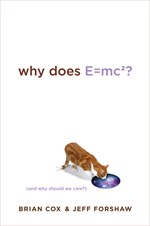
Summer reading: I kind of got bogged down in “Is God a Mathematician?” by Mario Livio. Good book, but as he gets deeper into it you really need to focus — I’ll get back to that when things settle down. I’m currently reading “Why does E=MC^2″by Brian Cox and Jeff Forshaw. I was attracted to the book because it promises to discuss the role of special relativity in things like toroidal tranformers. (There is a section called “Einstein in the Transformer in SolderSmoke — The Book.”) I like the authors’ approach to math: they actually explain where the formula for gamma in special relativity comes from.

Miami SolderSmoke

The family and I are now in Miami. We departed Rome on Thursday, made a quick visit to San Diego (to see my brother and his family) and are now in beautiful Miami, right on Biscayne Bay. We’ll be here for a few days. No radio activity to speak of — the move kept me quite busy. But I picked up a good book at the airport — “Is God A Mathematician?” by Mario Livio. It provides a lot of useful info on some of the math-in-electronics issues that we talk about on the podcast and in SolderSmoke — The Book.

It was hard to leave Rome, but we are happy to be back in the USA on the the 4th of July. We’ll watch the fireworks tonight.

“100 Feet Up In A Pine Tree, Soldering Iron Clinched In His Teeth”

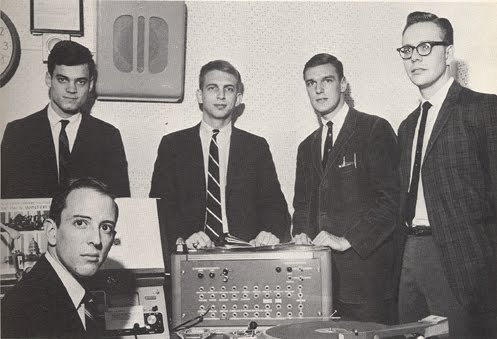
Radio Guys at University of Virginia, 1966

Hi Bill.

I emailed you once to the Yahoo! address, but thought I’d send an updated email to your soldersmoke address, in a desperate attempt to be mentioned in the gonging “SolderSmoke Mailbag”!

I learned of the podcast at May’s Hamvention. I wish I had known of the Four Days in May event, but this was the first Dayton I’ve ever been to.

I thought I’d mention that the ham club I’m involved with here in central Virginia, the University of Virginia club, is putting together a rhombic antenna out in the woods. Although more sweat (and hornet stings) than solder smoke is expected to come from this effort, I still thought it would be worthy of note within the realm of homebrew activity. I hope to have some photographs from our slingshot-and-fishing-line event. With a large crop of able-bodied 20-somethings at our disposal, we should be able to get this thing put together in short order (one of our new members even has extensive tree-climbing skills and a battery-powered soldering iron! If I can get a shot of him 100ft up a pine with the iron in his teeth, I will be sure to pass along). It is hoped that our new monster antenna will help us compete with our cross-state rivals, the Hokies of Virginia Tech. I will be sure to sacrifice a few chickens to Papa Legba prior to our outing.

There are definitely still young people interested in homebrew radio and I work everyday alongside many victims of “The Knack“. I’m working on spreading the SolderSmoke gospel to as many of them as possible, and letting them know of our library of “Sacred Texts”: EMRFD, Solid State Design, and Electronics of Radio, among others. And of course, some of our “Prophets” of the faith: Ashhar Farhan, the Haywards, and the late Doug DeMaw.

I also wanted to say that since I have a lengthy commute to and from the university, I’ve been listening to ALL of the soldersmoke podcasts, starting from the first one. I’m up to the summer of 2007 now. I found it very sad to hear of Mike KL7R’s death in Jan 2007 and I find that I do miss the back and forth banter the two of your shared on the podcasts. However, it is still a lot of fun to listen to and I’ve kept a small logbook of ideas from the episodes, building up a list of projects I hope to soon embark upon.

Best 73 and thank you for your podcasts.

Bert WF7I

The Amateur Scientist, Trivial Motors, Influential Books…


I got a nice e-mail from Keith, VE3TZF, that got me thinking about “The Amateur Scientist” by C.L. Strong. The Wiki article on this book is very interesting:
http://en.wikipedia.org/wiki/The_Amateur_Scientist
Check out the part about Forrest Mims.

Here’s Keith’s e-mail:

—-
Hello again Bill,

In your podcast you frequently make reference to the book, The Amateur Scientist.

This got me thinking back to what REALLY got me started along the path of building stuff for fun.

There were three books I remember reading over and over, even though at the time I had a very hard time really understanding what was on all of those pages. Those books were:

1. ‘Codes, Ciphers, and Secret Writing’, by Martin Gardner (unfortunately, he recently passed away).
2. Some type of ‘build yourself a science laboratory’ book.
3. Some type of ‘build electric motors‘ book.

I explicitly remember that one of the tasks in the ‘science laboratory’ book was to take a burnt out light bulb, etch around the neck, break it off, and turn it into a flask. The flask was supposed to sit on a stand that you already made out of wire (a coat hanger?). I’ve been trying all sorts keyword searches in Google to fine the name of the book. I’m sure I would recognize it if I saw it. Is this ‘The Amateur Scientist’? The closest I have gotten is “Build-it-yourself science laboratory: work like a scientist: build your own equipment, make real findings” by the Oregon Museum of Science and Industry. I’m still looking…

On the other hand, when you described the trivial electric motor, something twigged in my memory. I’ve built one of those! Many of those in fact! Decades ago! The ‘electric motor’ book made reference to 3 basic designs. They were called the ‘mini’, the ‘midi’, and the ‘maxi’. The ‘mini’ motor was in fact the trivial electric motor. The ‘midi’ motor used fixed magnets on the armature, and the ‘maxi’ motor used electromagnets only. I remember salvaging an old wooden pencil box, and stealing some of my mom’s knitting needles, to build the ‘maxi’ motor. I used a 6 volt lantern battery to power it. It worked extremely well, but got incredibly hot! And the sparks! I had not yet learned about volts, amps, and watts. Also at the time I was too young to get the mini/midi/maxi references to womens’ skirts.

After a little searching with Google, I hit the jackpot:

* “How to make and use electric motors”, Al G. Renner – 1974
* Text and diagrams give instructions for building the mini, midi, and maxi motors and for performing various experiments.

Now I just have to find a copy.

I’m currently spending a lot of time with my nephew, building blinking LED circuits, buzzers, motors, and listening to Morse code. He’s really getting into it, and I KNOW that this is important.

I just wanted you to know that your podcast (and excellent book) have far reaching impacts that you may have never intended.

-Keith Robert Murray VE3 TZF

G3ROO’s AMAZING Antenna Book

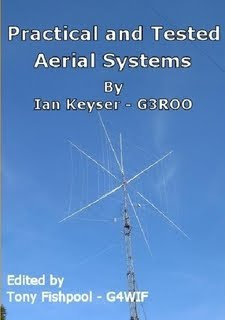
A few years back Ian Keyser, G3ROO, put together a really wonderful antenna book. It is very “down to earth,” very practical, very useful for hams seeking to succeed with homebrew antennas. The book was edited by another great person from G-QRP Club — Tony Fishpool, G4WIF. It has been out of print, but Ian has just made it available through Lulu.com.

Lulu is the printer who also handles my book: “SolderSmoke — Global Adventures in Wireless Electronics.” This means that you can order both books at the same time, perhaps saving on shipping costs. (But remember, for U.S., buyers shipping is free all summer long. ) And there is a 10 percent off sale for all buyers during the month of May (Coupon Code: FLOWERS).

Check out Ian’s book here:
http://www.lulu.com/product/paperback/practical-and-tested-aerial-systems/10904725

For more info on the SolderSmoke book, go here:
http://soldersmoke.com/book.htm

AF Amplifier Selected: From the Ugly Weekender

We went to ZooMarine yesterday. It is a kind of aquatic amusement park west of Rome. I knew that there would be a certain amount of waiting around while the kids defied gravity. A couple of SPRATs might not have been enough for this job, so, just to be safe, I also took with me the ARRL compendium “QRP Power.” This turned out to be a very good move, because while seated on a bench close to the entrance of the aptly named “Vertigo” ride, I found the AF amplifier circuit that I’ve been looking for (for my WSPR direct conversion receiver). It comes from a June 1992 QST article by Roger Hayward, KA7EXM. The AF amp in his “Ugly Weekender” DC receiver had just what I was looking for: discrete components (no IC’s), an input impedance suitable for a diode ring mixer, and an output impedance suitable for a computer sound card. Thanks Roger! I built the first stage and the active decoupler this morning. They are working fine.

I wanted to find a photo to go along with this article. While doing a Google image search, the cover of one of my favorite books unexpectedly popped up (see above). VE7BPO’s site explains why:

“A great reference for Ugly Constructing is The “Ugly Weekender” by Roger Hayward, KA7EXM and Wes Hayward, W7ZOI published in the August 1981 issue of QST. In fact, it was Wes and Roger who coined the term “Ugly Construction” when preparing this QST article. Wes was asked about this in 2009. The term was a takeoff from the 1958 book entitled The Ugly American by William Lederer and Eugene Burdick.

I didn’t know there was a connection between our construction technique and the book. I find it very appropriate. The good guy in the book is the “ugly” American. He is a practical, technically-oriented guy who puts his skills to use to help people.

For more background on ugliness see VE7BPO’s (beautiful) site:
http://www.qrp.pops.net/ugly.asp

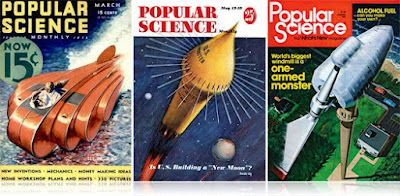
Pop Sci! 137 years of Popular Science. Free. Online.

I know I promised more about Faraday today, but I think Michael would agree that this story should take precedence. Niels, PA1DSP, reports that ALL 137 YEARS of Popular Science issues have been made available FREE ON-LINE. This is Billy’s favorite magazine. Amazing. We’re all going to have to quit hour jobs to have more time for this kind of thing! Three cheers for the publisher and for the boys at Google for making this possible. Here it is:
http://www.popsci.com/archives

Book Review (and a price reduction)

Lulu is having a sale this month. Just enter the coupon code IDES at checkout and save 10% on SolderSmoke — The Book
http://stores.lulu.com/store.php?fAcctID=3999032

Dale, G4IPZ wrote this review of the book:

It’s not often that I’ve come across a book that combines the fun of Amateur radio along with understandable explanations of difficult technical concepts as well as being a damn good read.
This book not only achieves this but does it perfectly.
It’s described on the back cover as “… the story of a secret, after-hours life in electronics.” Why after hours? Well because the author, Bill Meara (N2CQR, M0HBR, CU2JL) is a diplomat, a consul for the United states of America, having been posted to such diverse locations as Rome, London, Panama, El Salvador, the Dominican republic and many other places.
During his career as a diplomat his hobby of ham radio and in particular QRP and home-brewing has followed him around the world.
He admits that he did take time out for a while on meeting his future wife and then marrying her. Then, as so many of us have done before, he began to be drawn back into the hobby; the warmth of the shack, where on a cold night, he could sit clutching a hot coffee, listening to the bands, talking to friends and surrounded by the smell of solder smoke.
During his years as a diplomat-ham he has spent much of his free time trying to understand some of the whys and wherefores of the circuits he was building, attempting to build and attempting to fault find when they didn’t work. And so many of us have been right down that road!
And that explains what this book is; it’s a form of diary of Bill’s Eureka moments combined with an insight into his travels and life as a diplomat.
The technical range covered is quite large and despite all my years in electronics I found many of his eureka moments clarified some of my ingrained foggier thinking.
For example we all know how mixers work. Or do we? How many of us can actually explain what goes on even in the simplest of two diode balanced mixers? Most of us just accept that, by the black necromancy of radio in which we dabble, fearing the release the magical smoke at the wrong moment, it just mixes and that’s that.
But Bill took time to ask, query and eventually, by making notes to himself, come to understand what was going on. And his explanations of mixers and other such subjects are indeed highly illuminating. He explains semiconductor principles (Do you really understand hole flow versus electron flow?). And how about resonant circuits for example? Bill explains these and much more in a refreshing new way along with capacitors, crystals, and a host of other often accepted but often not fully understood truths that we, as amateurs just take for granted.
This is an ongoing life’s trip through the hobby which we all share with Bill, and remember that he is not a professional electronics engineer; he is a radio ham who wants to be more than an “appliance operator”.
He enjoys tinkering and has stuck with some pieces of equipment for more years than I will mention but it hasn’t stopped him working through the satellites and bridging the oceans on less watts than a nightlight.
And as well as his obvious love of his hobby, he introduces us to many of the other amateurs he has met on his travels and at his various postings. He paints a wonderful picture of the people that many of us may get to meet on the air but he’s been lucky enough to meet face to face.
And as well as doing all this he also ventured into the world of Pod-casting and blogging, the outputs which has reached thousands world-wide on his SolderSmoke website.
I cannot recommend this book too highly and I found that it was one which I couldn’t put down until I’d finished.
Dale Haines G4IPZ

My QSO with K4TWJ

Like everyone else I was saddened to hear of the passing of Dave Ingram. We’ve all been inspired by Dave’s magazine articles, columns, and by his books. I’ll always remember his QRP transmitter in a pen!
It was my privilege to talk to Dave once, on the air. I was on 30 meter CW with a brand new,scratch-built, HB QRP transceiver. I was in Virginia. I recognized Dave’s call, and was thrilled when he came back to mine. I told him I was running homebrew QRP, and that I’d found inspiration in his articles. I know he was happy to hear that.
73 OM!
Dave’s wife Sandy put a nice message on his blog: http://k4twj.blogspot.com

Happy New Year! SolderCake!

This is just so good, I felt the urge to share it immediately with the SolderSmoke community. Thanks Tom, and Happy New Year to all!

Bill:

Happy New Year!
I am yet another listener who discovered your podcast by accident and am now hooked. I also thoroughly enjoyed your book. Both take me back to the days of scrounged parts and burned fingers, building balanced modulators and an FM stereo transmitter that earned me an invitation to leave a great southern university.

To celebrate the new year, rising sunspot numbers, and your 120th podcast, I offer the attached photo of a Solder Cake. It features 120 rolls of 60/40 rosin core solder — several brands and gauges. The cake actually weighs 123 lbs. because the roll holding the soldering iron at the top is 4 lbs. It has zero calories, but definitely contains lead! It should be baked at less than 370 degrees, or the icing tends to run.

Why would anyone have 120 rolls of solder? I don’t remember precisely, but rumor has it that ebay and alcohol were involved.

73, and a wonderful new year to you and your family.

Thomas Keister M.D. N5RTF

A Fondness for Phasing


As the proud owner of a Hallicrafters HT-37, I have long had a fondness for phasing rigs. It took me a long time to figure out exactly how they manage to drop the carrier and one of the sidebands without the use of crystal filters. This was one of the technical understanding battles of my radio youth, and is detailed in SolderSmoke — The Book. (See the upper part of the right column of this blog for details on how to get the book.)

I was reminded of all this by a link sent in by Jim, AB3CV. It is an EDN design note, and describes a simple modern SSB generator using two phasing networks, three IC’s, and a handful of discrete components:
http://www.edn.com/contents/images/93099di.pdf

SolderSmoke Book: Review, 10% off in December (HUMBUG is the code)

During the month of December, if you enter the promotional code HUMBUG when checking out at the Lulu web site, you will get 10% off.

For shipping from a printer in the U.S. (probably better for N. American buyers) Click here: SolderSmoke USA Version

For shipping from a printer in the UK, Spain, or the USA (probably better for UK and other European buyers)
Click here: SolderSmoke EU Version

Here is a recent review from the Big Apple:

This is a charming little book about ham radio. I know, I know, who uses the word charming and ham radio in the same sentence? Well, I did and I hope I never see the word used in this context again. But, that’s the truth of it. Bill Meara is a charming guy and as might be expected, he wrote a charming book.

The book starts out by expressing the way many of us felt in our early years, filled with excitement and anticipation of the new and wondrous world of radio. And then, in the next breath, ponders how we, many of us mere children, ever survived the ordeal. Those were high voltage dangerous days before transistors! My favorite ‘early years’ story is about the power supply and the gift of the lightweight radio.

Many of the stories come from foreign countries where Bill has traveled as an employee of the United States government. These adventures give perspective to another important part of our hobby which is the camaraderie among hams and the things that are unique about us, no matter what part of the planet we come from. The stories from the Dominican Republic stand out in my mind. Particularly the Resistor Store and the Capacitor Store or if you wanted anything that involved winding wire you looked up a guy who hung around on a street corner. I think Bill was really impressed with the hams he met here. He writes with great excitement when describing some of these characters.

Not having an engineering background, Bill expresses, on several occasions, of being mystified by some popular explanations of electronic theory. Here I share common ground. I also had a problem with semiconductor theory and the common explanation of “hole flow”. As the author points out, it sometimes takes a library to understand these theories. Sometimes just one book doesn’t cut it. Bill’s explanation of semiconductor theory is as good as I’ve read anywhere. In fact, a lot of the technical asides were really excellent. I guess I didn’t expect them to be as in depth as they were.

Bill, the “Radio Fiend” also takes on a journey that requires him to get on the air with homebrew gear. The journey starts out with a failed direct conversion receiver and ends up years later with a DSB transceiver. I found this very interesting as well as entertaining.

SolderSmoke: A Global Adventure in Radio Electronics. is about us. I don’t think there is a ham alive that is not going to see himself within the words of this book.

Tom, ak2b

An amazing radio history book – FREE!


Robert, WP4PQV, sent us some links to a treasure trove of U.S. Navy electronics publications that have been placed on-line. My initial perusal of the collection took me to History of Communications in the U.S. Navy by Capt. Howeth. Here is one gem from this amazing book:

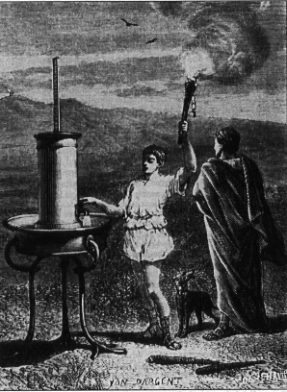
Emperor Tiberius ruled Rome from the island of Capri for 10 years, around 37 A.D., transmitting his orders by means of the heliograph.3 This indicates that the Romans, at this time, used some form of telegraphic code in the transmission of information.

Here is the link:
http://earlyradiohistory.us/1963hw.htm

The 1946 Navy Manual “Introduction to Radio Equipment” (and links to other books) can be found here:
http://hnsa.org/doc/radio/index.htm

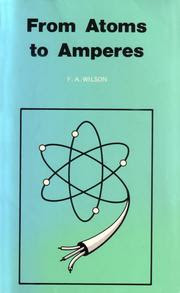
“From Atoms to Amperes” by F.A. Wilson

From Atoms to Amperes by F. A. Wilson
Published in 1989, Bernard Babani Publishing LTD (London, The Grampians, Shepherds Bush Road, London, W6 7NF)

I love this book. Mine is now held together by duct tape and crazy glue. Doug, WB5TKI, reports spotting a copy on sale on Amazon for $50 (go for it!). Here is a question for our British readers: Who is F.A. Wilson? There is almost nothing about him on the web, other than references to this and other similarly brilliant technical books. He was writing in the 1980s and 90s. What a great knack he has for explaining this stuff.
———————————————
First sentence:
We are not physicists whose mission in life is to dig deeply into the mysteries of the universe but people wishing to know something about what makes electricity tick.

Explains in crystal clear terms the absolute fundamentals behind electricity and electronics. Really helps you to discover and understand the subject, perhaps for the first time ever.

Have you ever:

• Wondered about the true link between electricity and magnetism? • Felt you could never understand the work of Einstein, Newton, Boltzmann, Planck and other early scientists? • Just accepted that an electron is like a little black ball? • Got mixed up with e.m.f. and p.d. ? • Thought the idea of holes in semiconductors is a bit much?

Then Help is at hand with this inexpensive book, in as simple a way as possible and without too much complex mathmematics and formulae.

Spy Radio: “The Looking Glass War”

Dave in Ireland alerted me to some interesting radio content in the John LeCarre spy novel “The Looking Glass War.” (I think presenting this excerpt is allowable under “fair use.”) Dave reports that the radio they are working on is the one pictured above. It is a British B2, SOE Type 3. The instructor obviously has the Knack, but the student seems a bit shaky.

—– The Looking Glass War: —–
(Fred Leiser is the agent, Johnson is the radio expert who is also mentioned to be Ham op)
‘You know the set then?’ Johnson asked.
‘The B2.’
‘OK. Official title, Type three, Mark two: runs on AC or a six-volt car battery, but you’ll be using the mains, right? They’ve queried the current where you’re going and it’s AC. Your mains consumption with this set is fifty-seven watts on transmit and twenty-five on receive. So if you do end up somewhere and they’ve only got DC, you’re going to have to borrow a battery, right?’
Leiser did not laugh.
‘Your mains lead is provided with adaptors for all continental sockets.’
‘I know.’
Leiser watched Johnson prepare the set for operation. First he linked the transmitter and receiver to the power pack by means of six-pin plugs, adjusting the twin claws on the terminals; having plugged in the set and turned it on, he joined the miniature Morse key to the transmitter and the earphones to the receiver.
‘That’s a smaller key than we had in the war,’ Leiser objected. ‘I tried it last night. My fingers kept slipping.’
Johnson shook his head.
‘Sorry, Fred; same size.’ He winked. ‘Perhaps your finger’s grown.’
‘All right, come on.’
Now he extracted from the spares box, a coil of multi-stranded wire, plastic covered, attaching one end to the aerial terminals. ‘Most of your crystals will be around the three megacycle mark, so you may not have to change your coil – get a nice stretch on your aerial and you’ll be a hundred per cent Fred; specially at night. Now watch the tuning. You’ve connected up your aerial, earth, key headphones and power pack. Look at your signal plan and see what frequency you’re on; dish out the corresponding crystal, right?’ He held up a small capsule of black Bakelite, guided the pins into the double socket – ‘Shoving the male ends into the doodahs, like so. All right so far, Fred? Not hurrying you, am I?’
‘I’m watching. Don’t keep asking.’
‘Now turn the crystal selector dial to “fundamental all crystals”, and adjust your wave band to match your frequency. If you’re on three and a half megs you want the wave-band knob on three to four, like so. Now insert your plug-in coil either way round, Fred; you’ve got a nice overlap there.’
Leiser’s head was supported in his hand as he tried desperately to remember the sequence of movements which once had come so naturally to him. Johnson proceeded with the method of a man born to his trade. His voice was soft and easy, very patient, his hands moving instinctively from one dial to another with perfect familiarity. All the time the monologue continued:
‘TRS switch on T for tune’; put your anode tuning and aerial matching on ten; now you can switch on your power pack, right?’ he pointed to the meter window. ‘You should get the three hundred reading, nearly enough, Fred. Now I’m ready to have a go: I shove my meter selector on three and twiddle the PA tuning till I get maximum meter reading; now I put her on six —-‘
‘What’s PA?’
‘Power Amplifier, Fred: didn’t you know that?’
‘Go on.’
‘Now I move the anode tuning knob till I get my minimum value – here you are! She’s a hundred with the knob on two, right? Now push your TRS over to S – S for send, Fred – and you’re ready to tune the aerial. Here – press the key. That’s right, see? You get a bigger reading because you’re putting power into the aerial, follow it?’
Silently he performed the brief ritual of tuning the aerial until the meter obediently dipped to the final reading.
‘And Bob’s your uncle!’ he declared triumphantly.

‘Now it’s Fred’s turn...’

Veterans’ Day Sale on SolderSmoke — The Book

Save on SoldersSmoke — The Book. Today only. Veterans’s Day Sale.

For shipping from a printer in the U.S. (probably better for N. American buyers) Click here: SolderSmoke USA Version

For shipping from a printer in the UK, Spain, or the USA (probably better for UK and other European buyers)
Click here: SolderSmoke EU Version

The two versions are identical, except for a minor difference in the paper used. That’s why the prices are a bit different.

Use coupon code THANKSVETS at checkout and save 11.11% on any purchase (up to a maximum savings of $100). Orders must be paid in U.S. Dollars. Discount cannot be used to pay for, nor shall be applied to, applicable taxes or shipping and handling charges. Promotional codes cannot be applied to any previous orders. No exchanges or substitutions allowed. Only one valid promotional code may be used per account. Offer expires on 11/11/09 at 11:59 PM GMT. Lulu.com reserves the right to change or revoke this offer at any time. Void where prohibited.