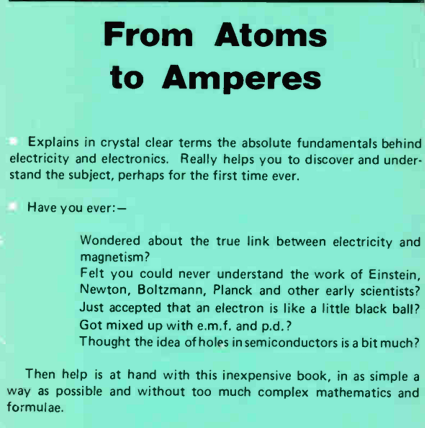
A Truly Great Book: “From Atoms to Amperes” by F.A. Wilson (Free Download)

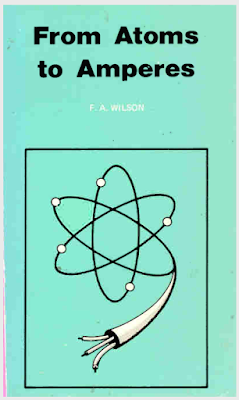
This is a really wonderful book. I’m glad worldradiohistory.com has found a way to make it available as a free download. This is the kind of book that you want to download and keep available for future study. The day will come, for example, when you will want to understand how Einstein’s special relativity explains how that transformer in your rig actually works. F.A. Wilson explains that, and much more. Here is the link:

Thanks to Joefish for the heads-up.

A Great Book on Oscillators (Analog LC Oscillators) by John F. Rider (Free!)

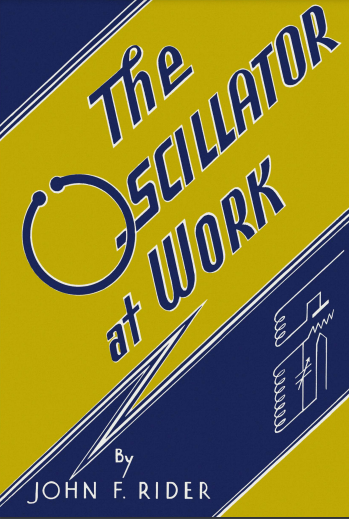
Thanks to Peter Parker VK3YE for alerting us to this wonderful 1940 book. John F. Rider — a real hero of electronic literature — does a great job in discussing the practical aspects of oscillator circuits.

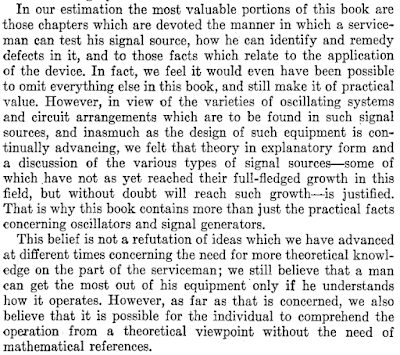
This excerpt from Rider’s foreword gives a sense of the approach taken in this book:

The book covers a lot of material. In addition to the standard oscillator circuits, he discussed multivibrators, relaxation oscillators and much more. There is a chapter on magnetostriction in which he shows that this property is the basis for crystal oscillators AND the mechanical filters that we are familiar with. In fact he seems to take what we would consider a mechanical filter and put it in the grid circuit of a tube to make an oscillator.

He discussed the modulation of oscillators. He describes the Heising modulator that caused young Jean Shepherd so much teenage heartache.

Download the book here:

SolderSmoke FDIM Interview: Jack Purdum W8TEE on the Challenges of Decoding CW by Software

In his interview with SolderSmoke correspondent Bob Crane, Jack Purdum made some very interesting comments about the challenges of decoding CW with software. He notes that W1AW’s code practice CW is perfect, but that below 18 wpm, they deliberately insert a “Farnsworth Delay” that increases the spacing between words — this complicates automatic CW decoding.

Jack also talked about the distinctiveness of different CW operators. Jack noted that W1AW has no real “fist” in this sense: “It has the personality of a stick!”

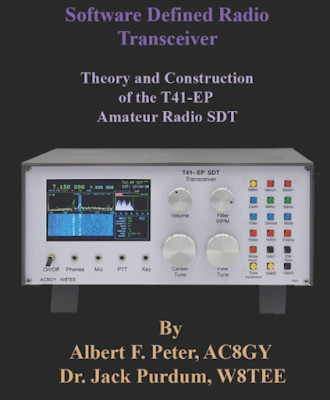
Jack mentioned that Pete Juliano had been reading book on SDR radios that Jack and Al Peter recently published: https://www.amazon.com/Software-Defined-Radio-Transceiver-Construction/dp/B09WYP1ST8/ref=sr_1_1?crid=2KPYAMPOW5P6J&keywords=DR.+Jack+Purdum&qid=1654598559&sprefix=dr.+jack+purdum%2Caps%2C40&sr=8-1

Here is our correspondent Bob Crane’s interview at FDIM 2022 with Jack Purdum: http://soldersmoke.com/2022 W8TEE.mp3

Thanks Bob. Thanks Jack.

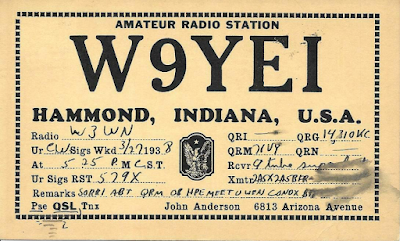
SolderSmoke Podcast #237 is available: TV Show! No! W9YEI’s 1939 TV. 1712 Rig. HQ-100. New SDR Rig and Book. JF3HZB’s VFO Digital Dial. FIELD DAY! PSSST. MAILBAG


SolderSmoke podcast #237 is available: http://soldersmoke.com/soldersmoke237.mp3

Travelogue — New York City! Stickers!
And about that trip to Los Angeles for the SolderSmoke Cable TV show…

Well, it fit in well with SolderSmoke’s UNFORGETTABLE appearance on the Oprah book club.
And TechieTatts? Daughter worried about listeners rushing to get tattoos — A risk we were willing to take.

https://in.pinterest.com/padmakumar10/techie-tatts/

This episode is sponsored by PartsCandy. GREAT test leads: https://www.ebay.com/usr/partscandy

Bill’s Bench

Tracking down Johnny Anderson’s 1939 or 1940 homebrew TV receiver.

https://soldersmoke.blogspot.com/search?q=Anderson
Working with Joh DL6ID.
Jean Shepherd’s January 1973 description.
FlickLives web site and Steve Glazer W2SG have lots of info on Shep and his friends.
Internet allows us to look at TV articles that were being published.
We’ve concluded: Probably 1939 or 1940, using an RCA 913 1 inch CRT tube.

Lots of ideas from IRE Journal, QST, and Gernsback magazines.
Quite an achievement! Amazing how much pre-war TV progress there was.

17-12 rig
All boxed up and working DX!
Figured out how to display both 17 and 12 on the same LED. https://www.youtube.com/watch?v=kAmmFZyFu8w
Drain protector for speaker cover. Copper tape to cover horrible cabinet making.
I think I need a Hex Beam.

Hammarlund HQ-100
Needed some maintenance.
I started to look more closely at it.
Got the Q-Multiplier to work — it really adds a lot on CW.
Makes me feel guilty about all the QF-1s…
Using the 100kc calibrator with a 455 kc crystal as a BFO,
keeping Q multiplier below oscillation point.
Moved the BFO switch to the front panel. Helps a lot.
Need to fix the S-meter AVC circuitry.
Much more sturdy than the S-38E.
S-38E 1957-61 $54.95 5 tubes. AC/DC.
HQ-100 1956-60 $169 10 or 11 tubes. Power supply, regulator.
You get what you pay for.

Pete’s Bench

Jack Purdum and Al Peter’s new SDR rig and book (featured on the SS blog Amazon ad).
JF3HZB’s beautiful digi VFO.
Backpack antenna for Field Day?
Pipsqueak Disaster — Too simple?
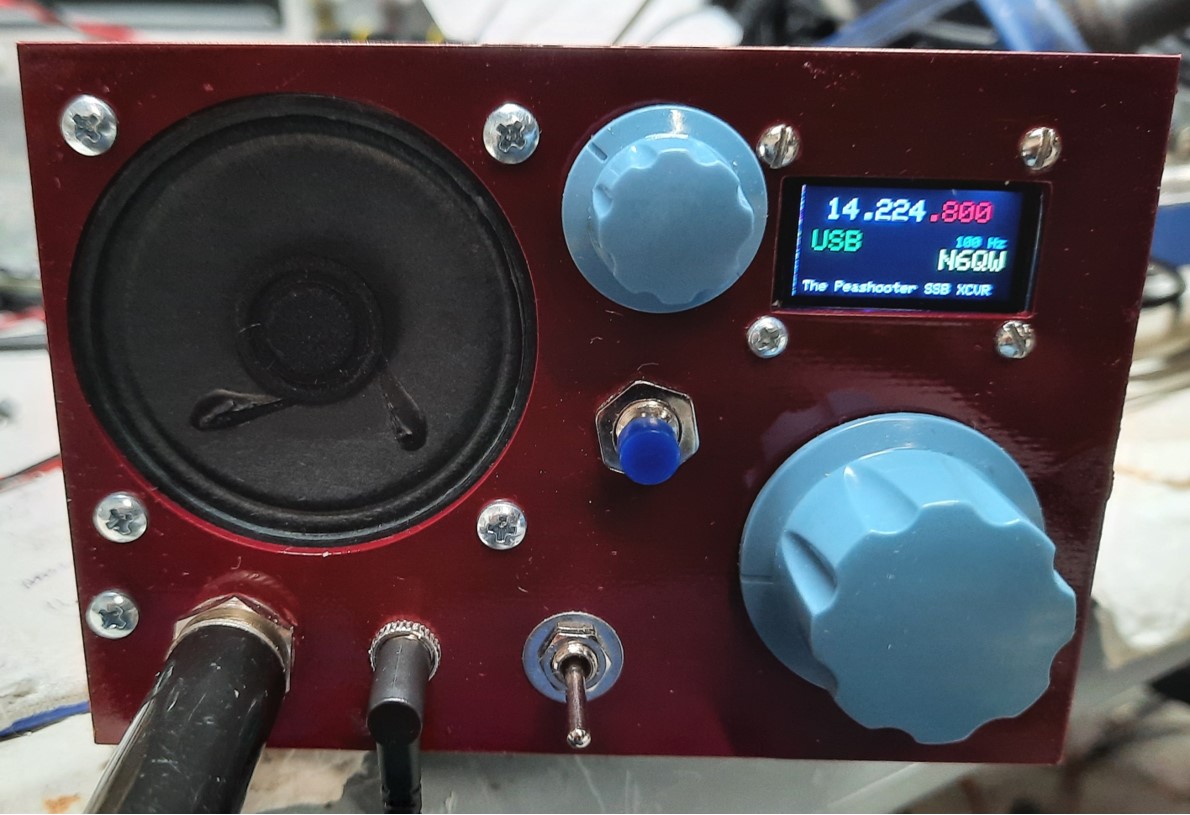
Peashooter Eye Candy.
Build Something Different.

MAILBAG

James W0JKG CBLA — Others are building MMM too!
SM4WWG // Jörgen Wonderful message. Joined GQRP. No longer “wrong.”
Dennis WC8C Libraries for Max2870 board.
Jack NG2E Progress on the Right to Repair movement.
Jim K9JM Someone cutting into our business with Solder candles!
Chuck WB9KZY Correctly identified the location of the IBEW sticker. As did Dan Random.
Dave Bamford (who lives nearby) suitably impressed.
Farhan wrote to us about a video on Don Lancaster. Homebrew keyboards! Yea!
Dean KK4DAS QRP to the Field. HB2HB 40 SSB QRP I feel virtuous.
Todd K7TFC likes my ingenious use of the drain screen as the speaker protector on the 17-12 rig.
Todd had good thoughts on granular approach to homebrewing as seen in the Don Lancaster video.
Lex PH2LB HORRIFIED by my reverse polarity protection circuit. This is a touchy subject! (as is WD-40!)
Rogier PA1ZZ sending great info on SWL and numbers stations.
Jesse N5JHH — The guy who made the IBEW stickers — Liked the NYC stickers.
Steve N8NM has a new antenna article on his blog: https://n8nmsteve.blogspot.com/
Randy AB9GO Agrees — Can’t GIVE old ‘scopes away.
Dino SV1IRG Liked the 17-12 rig videos.
Steve Hartley G0FUW Murphy’s Law of Enclosures.
Ralph AB1OP FB on the 17-12 Rig.
Roberto XE1GXG –Our correspondent in Guadalajara. Petulant, irritable people on the computer scene.

Have some gear looking for a good home: Tek 465 ‘scope from Jim AL7R W8NSA. SBE Transceivers. Windsor Signal Generator. Let me know if you are interested and can either pick up or arrange shipping.


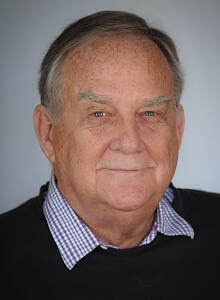
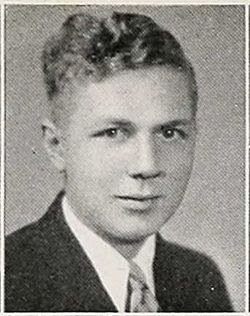
John Anderson W9YEI Homebrew Hero

Back to the 1970’s! Homebrew Keyboards! Don Lancaster’s TV Typewriter

Even though it is outside my normal analog comfort zone, I really liked this video. Farhan sent it to me, along with this note:

————–

As a kid, do you remember Don Lancaster’s books? I learnt most of my digital electronics from him. I still have the 7 dollar video generator book on my shelf. He predates the Homebrew Computer Club. In fact, he is probably the reason for the HCC, because he put in the pieces that were used by others like the two Steves to build their own computers.
His most brilliant hack was to build a “TV typewriter” out of standard TTL parts that were just coming out in the surplus market. For $120, you could, if you build etched your own PCBs and managed to pry parts of fellow builder’s dead fingers, build a circuit that, if you typed your name, it showed up on the TV screen! Never mind that dad wanted to get back to watching football or mom wanted the kitchen counter to be cleared out. Those days, parents had no appreciation for their kids being on TV, I guess.
In an earlier hack, he encouraged people through his articles in Radio Electronics to build their own Qwerty keyboard. With this in hand, you could, um .. um… well type something and sit back. There was nothing to connect it to. The fun thing was, there were no key switches available. You had to build those as well. Wind your own springs, make your own keytops, Once it was built, you could use a VOM to check that the ASCII bits corresponding to the key you held down would correctly show up on the 7 data lines. I guess the girls were surely impressed. You just needed to carry the power supply with +5, -5v, +12v, the keyboard itself, an ASCII chart and a VOM to school to show off.
Jokes apart, he kept building things and builds them to this day. His TTL cookbook and CMOS cookbooks were the goto books for almost all digital elecctronics hackers. It is a pity that no one acknowledges his knack. He has scanned in a few of his books on his 1990s www.tinaja.com. Check https://www.tinaja.com/ebooks/cmoscb.pdf
Why does it concern us? He is K3BYG, that’s why.

– f


———–

So many things from the video resonated with me:

— The importance of building and testing, stage by stage. The narrator admits “I might have screwed that up.”

— Homebrew keyboards! Make your own keyboard springs you pathetic appliance operators!

— Wood box.

— Origins of ASCI

— The scary 1970s. Indeed. I started High School in 1972.

— Schematic errors! Oh the humanity! Erratas.

— Appeals to the Digital Gods. (Not as powerful as The Radio Gods.)

— A Gimmick Twin Lead.

— “So many different disciplines went into building this thing…”

— A taste of the home computing revolution of the 1970s.

— Farhan is right — he was K3BYG. But that call now seems to belong to someone else.

Don Lancaster’s unofficial autobiography:

https://www.tinaja.com/glib/waywere.pdf

Clearly, Don Lancaster has The Knack!

Bill Talking about Homebrew Radio with L’Anse Creuse Amateur Radio Club (Michigan) — February 2, 2022 (Video)

This was a very nice meeting. We just talked homebrewing and why it is such an important part of ham radio. Video above

Topics included:

— Jean Shepherd
— Being “Electrically Inclined”
— The Herring Aid 5
— Radio Clubs around the world
— The Shame Shelf
— Making mistakes, releasing smoke
— Errors in ham radio magazines and schematics
— The importance of understanding the circuit
— The Michigan Mighty Mite
— Building a power supply for the HW-32A
— The origins of the SolderSmoke podcast
— Knack stories, the IBEW and what we all have in common
— The importance of books
Thanks to The L’Anse Creuse ARC for the invitation.

“From Crystal Sets to Sideband” — A Great Book about Homebrew Radio by Frank Harris K0IYE (FREE!)

I first came across the above picture of K0IYE’s inspirational, completely homebrew station many years ago in the pages of “World Radio” magazine. I have already linked to Frank’s book many times over the years, but it is so good that I regularly feel compelled to write about it again. Frank updates the book. Just check out the introduction to his website. Frank even has a Spanish language version of his book. All for free. Thank you Frank.


The introduction to Frank’s web site:

Over the last century amateur radio has evolved into numerous different
hobbies. Some hams enjoy weekend contests in which they try to
contact as many stations as possible. Others talk to as many of the
world’s 341 call areas as possible and collect QSL cards to prove it. Other
hams just like to ragchew with friends. Still others communicate over
long distances at UHF frequencies using satellites, meteorites, aurora and
other substitutes for a sunspot-charged ionosphere. Some hams provide
communications for their communities during emergencies.

Many of us have returned to the early days of radio by building our own
equipment from scratch. Most home builders start by building QRP (low
power) transmitters. If this doesn’t satisfy your urge to build something,
you can move on to build the entire station. That is what this website is about.


https://www.qsl.net/k0iye/

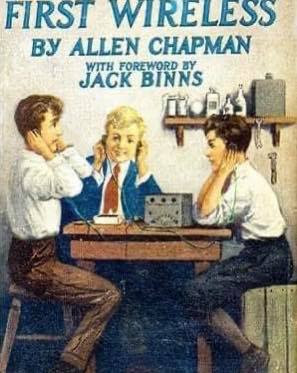
“First Wireless” 1922 book by Allen Chapman with Foreword by Jack Binns (free download)

The cover caught my eye. Thanks to the K9YA Telegraph for posting it. I think it captures the allure of radio that most of us felt when we were kids of this age.

Fortunately this 1922 book is available for free download:

It is all about radiotelephone. They are phone guys. Just like us.

And they were homebrewers. They had The Knack. From Chapter II:

Another thing that drew the boys together was their keen interest in anything pertaining to science. Each had marked mechanical ability, and would at any time rather put a contrivance together by their own efforts than to have it bought for them ready made. It was this quality that had made them enthusiastic regarding the wonders of the wireless telephone.

And they correctly viewed wireless telephony as being similar to Aladin’s lamp. I remember writing that my homebrew DSB transceiver was like Aladin’s magic carpet, carrying my voice from the Azores to friends around the world. From Chapter III:

They had already heard and read enough of the wireless telephone to realize that it was one of the greatest marvels of modern times. It seemed almost like something magical, something which, like the lamp of Aladdin, could summon genii who would be obedient to the call.

This is a reminder of how young the radio art is. This book came out just three years before my father was born. Many of us have in our shacks working rigs that are half as old as radio itself.

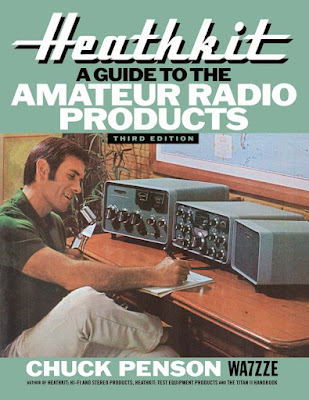
Chuck Penson’s Amazing New Book about Heathkit Amateur Products

I was very pleased to read that Chuck Penson WA7ZZE was publishing a book about Heathkit’s amateur radio products. His book is a really great guide, providing a lot of fascinating information, stuff that even those of us who have spent decades with pieces of Heath gear didn’t know. For example, I never knew that an after-market dial had been available for the HW-101. And I didn’t know that the Indian names used for many of the Heath rigs (Comanche, Apache, etc.) resulted from a suggestion from Roger Mace’s wife, who was Native American.

Chuck’s book arrived just as I was putting my DX-40 novice transmitter back on the air after almost 50 years. TRGHS. Who knew that there were TWO versions of the DX-40? I didn’t, but Chuck did, and his book explained how to spot the difference (flashlight through the side vents — I have the very slightly more modern version).
When I opened the book for my first peek inside, the page opened to the QF-1 Q multiplier. I immediately felt guilty about having brutally cannibalized several (well maybe more than several) of these things. But right there in the text Chuck repeats my justification for the carnage: He notes that the tuning cap has a nice 14:1 turns ratio. Exactly. How could I NOT pull those beautiful variable caps out of that old regen device, for re-use in superhet receivers and BITX transceivers?

This is a wonderful book that belongs in the workshop libraries of all those who have used and loved Heathkits over the years.

Order yours here:

Thanks a lot Chuck for making such a great contribution to the radio art and to ham radio literature.

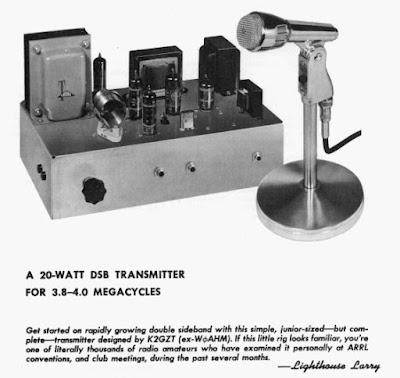
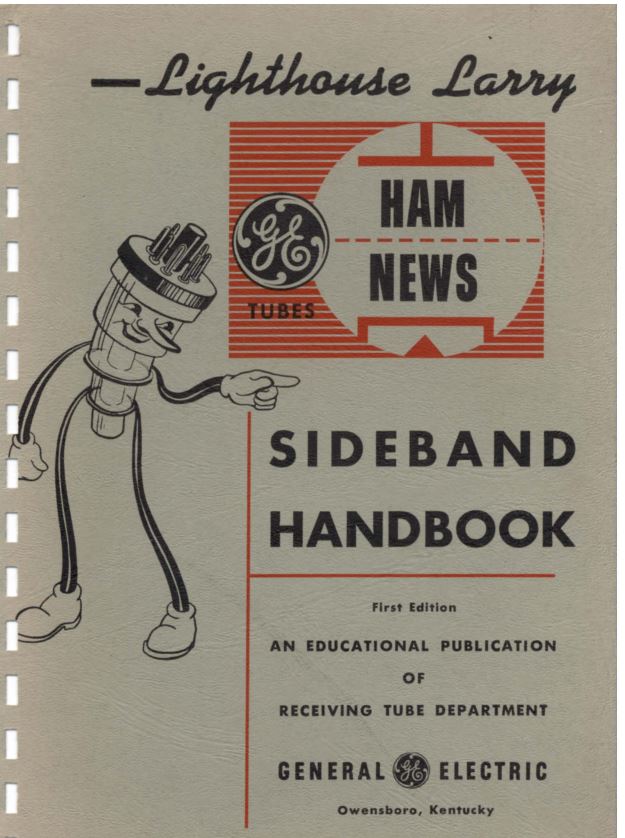
Lighthouse Larry’s GE Sideband Handbook

There is lot of information about early SSB and DSB operations in the GE Sideband Handbook (1961). Lighthouse Larry is very informative. Early in the book there is a guide to help homebrewers select intermediate frequencies that will work well in SSB and DSB rigs.

Here is the book. Remember, we are dealing with tubes and high voltage here: one hand behind your back. Volts jolt but mills kill!

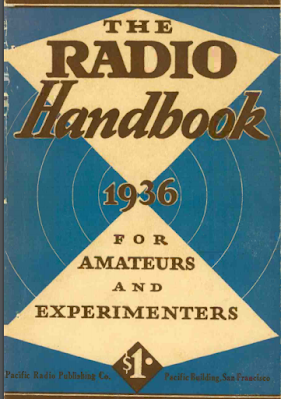
Much SSB Tribal Knowledge in Bill Orr’s 1959 Handbook

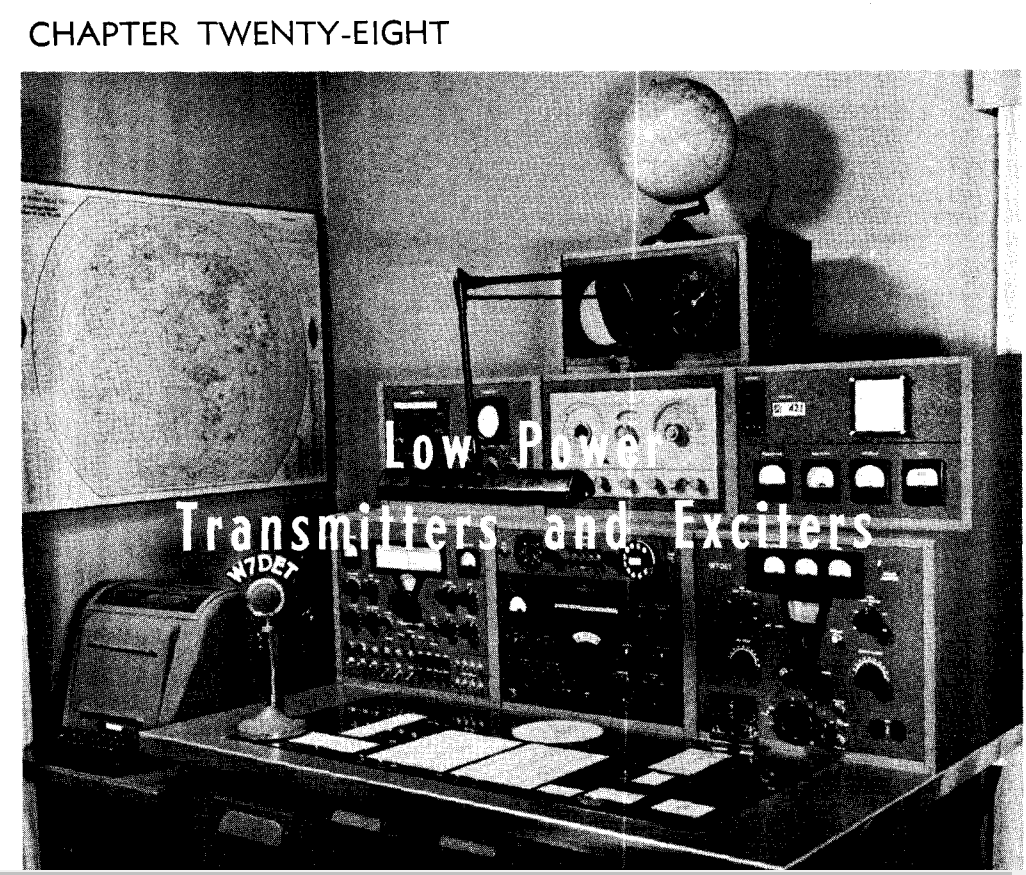
There is a lot of really excellent information and tribal knowledge in the 1959 issue of Bill Orr’s Radio Handbook. I was especially taken by Chapter 17 (SSB) and Chapter 28 (Low Power Transmitters and Exciters).

Looking at the 1959 SSB rigs, I don’t see any information that points to the origin of the LSB/USB convention. Most of these rigs — especially the phasing rigs — include provisions for switching to either sideband.

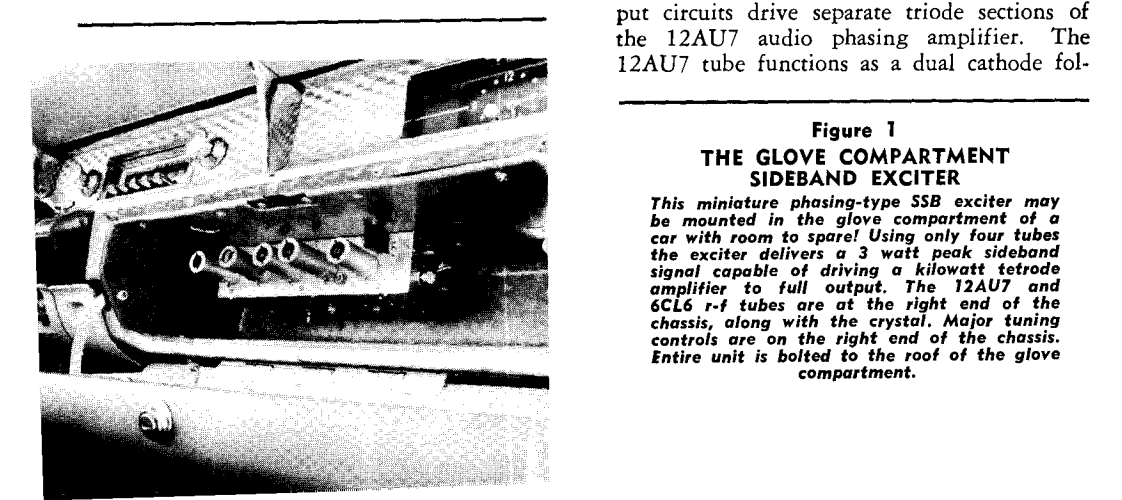
Check out the “Glove Compartment Sideband Exciter.”

Here is the link to the Orr book:

http://www.rsp-italy.it/Electronics/Books/_contents/radio/The%20radio%20handbook%2015th%20-%20William%20I%20Orr%20-%201959.pdf

Thanks to Tony K3DY for sending us the link that led us to this book. There are many other great books there: http://www.rsp-italy.it/Electronics/Books/indexhtm

Grayson Evans KJ7UM on the Ham Radio Workbench Podcast

OM Grayson was on the HRWB podcast with George Zaf and company. This was a really informative and entertaining session. For example, when asked if special precautions are needed when working with thermatrons, Grayson replies, “Well, try not to swallow anything… and don’t sit on the thermatrons.” Words to live by my friends. Grayson’s story about cooking Tektronix scopes in a refrigerator re-purposed as an oven (after cleaning the ‘scope with a Home Depot power washer) is the kind of practical advice that readers of this blog REALLY NEED!


But seriously, I learned a lot just listening to Grayson talk about thermatrons with George and the HRWB crew.


The interview includes nice shout-outs to SolderSmoke, SPRAT/G-QRP, and Electric Radio magazine.

Stay to the end for some thermatron-related password management advice from George.

Thanks to Grayson and to all the folks at HRWB.

A Homebrewer

That is Homer Price, the lead character in two books by Robert McCloskey, published in 1943 and 1951. The thing in the valise is Homer’s pet skunk. Of course.

More info here:

Homer is clearly a fellow we need to know more about. I have ordered the book.

SolderSmoke Podcast #227: Solar System, SDR, Simple SSB, HA-600A, BITX17, Nesting Moxons? Mailbag

SolderSmoke Podcast #227 is available:


Travelogue

Mars is moving away. Jupiter and Saturn close in the sky. And the Sun is back in action – Cycle 25 is underway. Also, the earliest sunset is behind us. Brighter days are ahead.


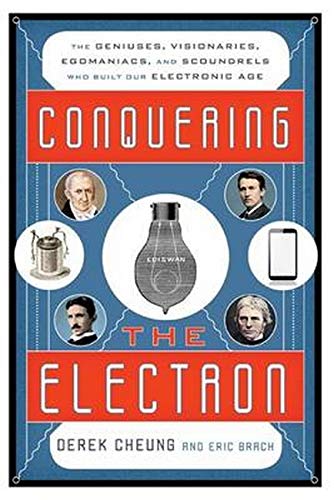
Book Review: “Conquering the Electron” With a quote from Nikola Tesla.


No real travel for us: Hunkered down. Lots of COVID cases around us. Friends, relatives, neighbors. Be careful. You don’t want to be make it through 10 months of pandemic only to get sick at the very end. SITS: Stay In The Shack.


Pete’s Bench and Tech Adventures:

Backpack SDR keithsdr@groups.io

Hermes Lite 2

Coaching SSB builders

G-QRP talk

A new source for 9 MHz crystal filters


Bill’s Bench:

Fixing the HA-600A Product Detector. Sherwood article advice. Diode Ring wins the day. Fixing a scratchy variable capacitor. Studying simple two diode singly balanced detectors. Polyakov. Getting San Jian frequency counter for it.

Fixing up the 17 meter BITX. Expanding the VXO coverage. Using it with NA5B’s KiwiSDR.


Resurrecting the 17 meter Moxon. But WHY can’t I nest the 17 meter Moxon inside a 20 meter Moxon? They do it with Hex beams. Why so hard with Moxons? DK7ZB has a design, but I’ve often heard that this combo is problematic. Any thoughts? I could just buy a 20/17 Hex-beam but this seems kind of heretical for a HB station.


Suddenly getting RFI on 40 meters. Every 50-60 Hz. Please tell me what you think this is (I played a recording).


MAILBAG:

Dean KK4DAS’s Furlough 40/20

Adam N0ZIB HB DC TCVR

Tony G4WIF G-QRP Vids. Video of George Dobbs.

Grayson KJ7UM Collecting Radioactive OA2s. Why?

Pete found W6BLZ Articles

Rogier KJ6ETL PA1ZZ lost his dog. And we lost ours.

Steve Silverman KB3SII — a nice old variable capacitor from Chelsea Radio Company.

Dave K8WPE thinks we already have a cult following.

Dan W4ERF paralleling amps to improve SNR.

Jim W8NSA — An old friend.

Pete Eaton WB9FLW The Arecibo collapse

John WB4GTW old friend… friend of:

Taylor N4TD HB2HB


And finally, we got lots of mail about our editorial. No surprise: Half supportive, half opposed. Obviously everyone is entitled to their opinion. And we are free to express ours. It’s a free country, and we want it to stay that way. That is why we spoke out.


Yesterday the Electoral College voted, finalizing the results. All Americans should be proud that the U.S. was able to carry out a free and fair national election with record turn out under difficult circumstances. And all loyal Americans should accept the results. That’s just the way it works in a democracy.


We are glad we said what we said. It would have been easier and more pleasant to just bury our heads in the sand and say nothing. But this was a critically important election and we felt obligated as Americans to speak out. We’d do it again. And in fact we reserve the right to speak out again if a similarly important issue arises.
Andreas Spiess (The Guy with Swiss Accent) — Workshop Tips

Thanks to Paul Taylor VK3HN for alerting me to the YouTube channel of Andreas Spiess. There are lots of great projects there, including several videos on building an Oscar 100 ground station.

In the video above, Andreas talks about his lab/workshop. He is more focused on digital projects than I am, but I found many of his tips applicable to the analog world. And of course the more digitally oriented readers will find Andreas’s observations especially useful.

I was sold on this video when Andreas reached to his book shelf and showed us Tracey Kidder’s “Soul of the New Machine.” That is the book that brought the word “soul” into the SolderSmoke lexicon.

There are many great videos on Andreas’s channel. I found his Playlists page to be a good way to see the many different catergories of his projects:

https://www.youtube.com/c/AndreasSpiess/playlists

Thanks Andreas.

Mars: Book Review, Martian Propagation, Martian Moons as VHF Repeater Sites

In SolderSmoke #224 I mentioned the Mars Trilogy by Kim Stanley Robinson. I found a book review in The New Yorker (see below). In Red Mars they mention that there is no ionospheric propagation on Mars. W1PJE and K1RID point out that this is incorrect — there is ionospheric propagation on Mars. K1RID provides a link to a really detailed NASA study of this question (it includes discussion of the effect on propagation of Martian dust storms — good to know!). Finally, 2E0CHK suggests placing VHF repeaters on the two moons of Mars. I found a good article about the overhead passes of these moons. See below for all.

AND REMEMBER: THE ELSER-MATHES CUP REMAINS UNCLAIMED!


Here’s a review from The New Yorker:

https://www.newyorker.com/books/page-turner/our-greatest-political-novelist

———————————-

Hello Pete and Bill,

Listened to your latest SolderSmoke podcast. Enjoyable as always. But you should correct the record: Mars does have an ionosphere!


The peak daytime electron density (“M2 layer”) is low in altitude – perhaps 130+ km, about our E region – and density is like our E region too (5-10x lower than our F region). So for the Mark Watneys carrying their Homebrew rig and inverted V, probably only a few hundred km to the first skip zone. More NVIS flavor than anything else.

Fun to think about. You should go and test it out!

73
Phil W1PJE
————————————————-

BTW, this made the rounds in our club last year:


dit dit

73 de Ed, K1RID
Newburyport Electronics & Radio Society
www.K1YRD.org


——————————————

Hey Bill,
No skip on Mars ?
No ionosphere ?
Every cloud has a silver lining, even if Mars doesn’t have any clouds 😉
Mars has two moons.
Could be paradise for Moon Bounce aficionados. No ionosphere or F layer to get in the way. VHF can get around corners after all.
———————————–
Here is an article describing the overhead passes of the two Martian moons:

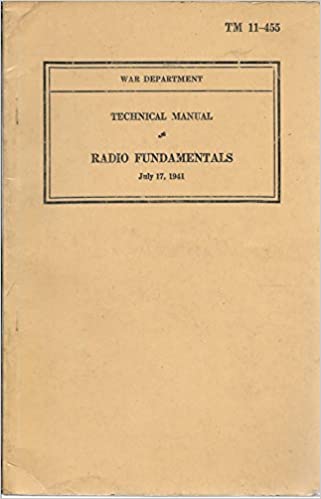
Technical Manual 11-455 — Radio Fundamentals — July 17, 1941

This is an illuminating little book. It was published by the U.S. War Department on July 17, 1941, less than five months before Pearl Harbor. Far from being dated, this book contains a lot of great explanations of — as the title indicates — the fundamentals of radio. I turned to it this morning for a little refresher on the physics of regenerative feedback.

You can get your own paper copy here:


Or here:


Or you can read a slightly more recent edition (1944!) online (free) here:


Please let me know if you find this book useful.