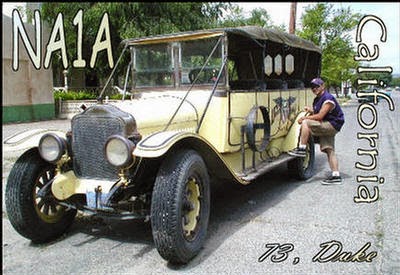
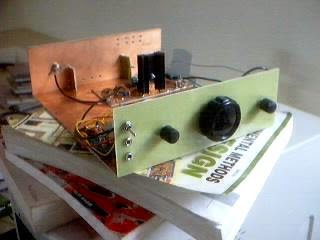
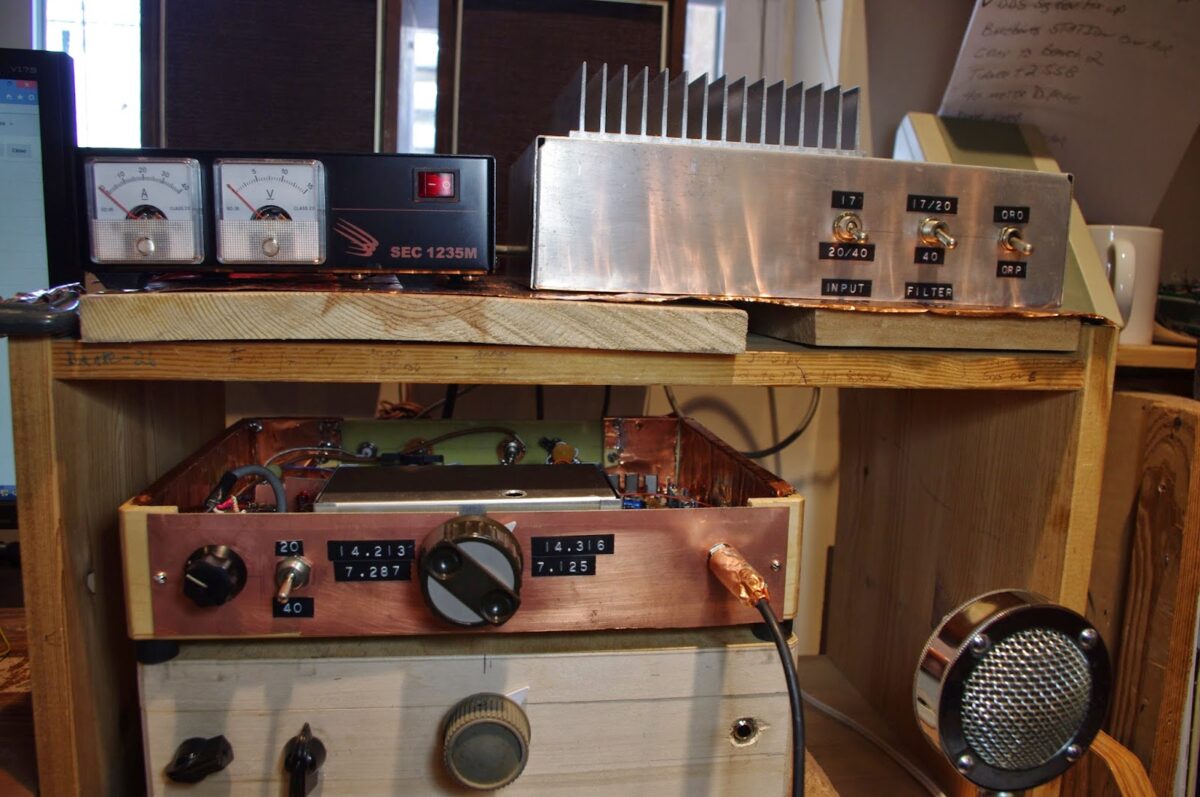
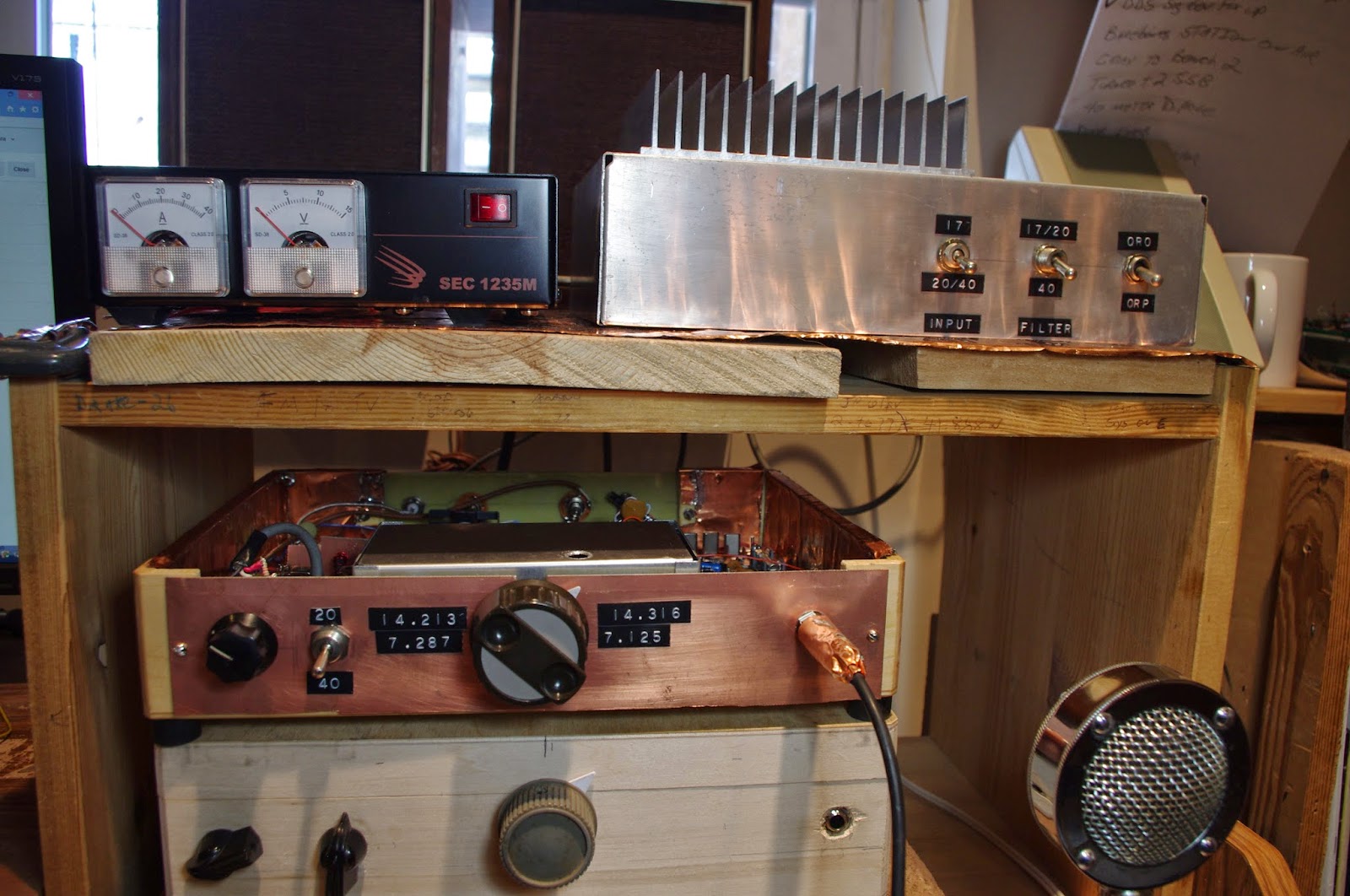
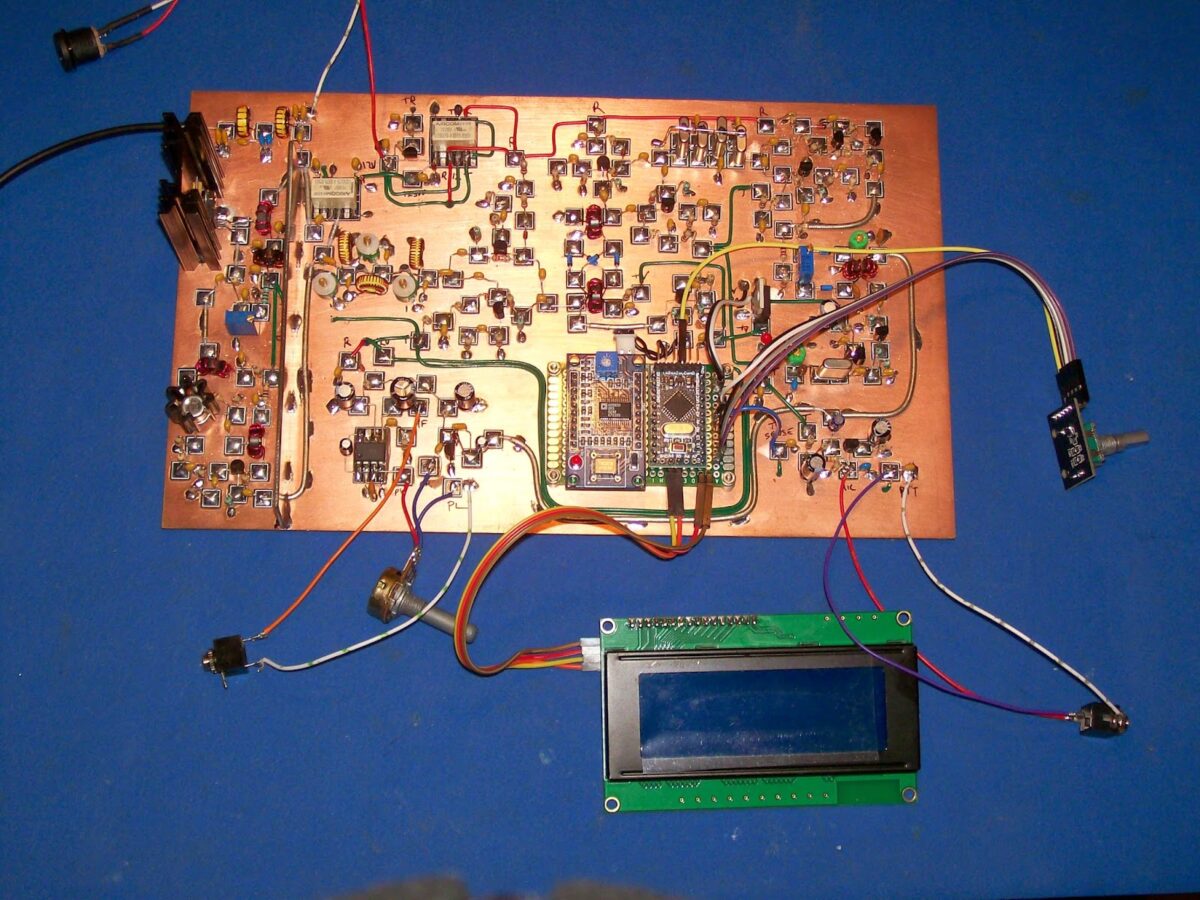
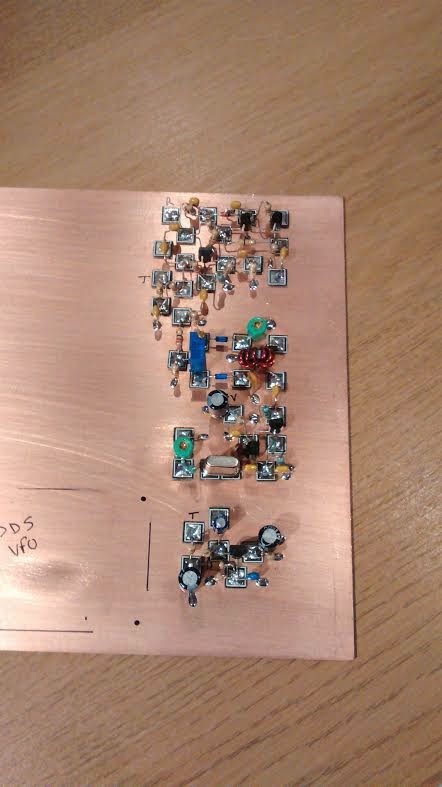
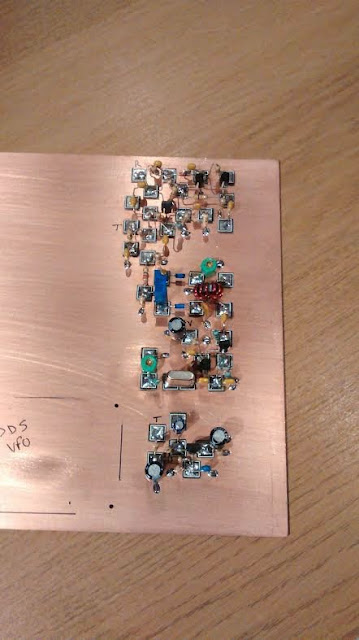
I had a nice QSO with Duke, NA1A, out there in Irvine, California on Sunday. Duke has a deep interest in the quality of SSB signals — he is part of the ESSB group. So I was pleased when he said my BITX 17 sounded good. He recorded a little bit of my transmission. Click below to listen to the BITX 17 tran-continental, with some help from my CCI amplifier (120 W PEP) and my 17 meter Moxon antenna.
Happy Arduino Day! Pete’s Belthorn III Transceiver (with cool color display) Bill’s BITX 20 (that used to be a BITX20/40) AD9850 DDS added to Barebones Superhet Jean Shepherd on Parasitic Oscillations, Obsession, and Madness Simple Test Gear for the Homebrewer Digital Oscilloscopes and their amazing capabilities Dongles and other great stuff in SPRAT 162 The BIG St. Patrick’s Day Solar Flare VK6MV’s Amazing Rhombic (+) VK7XX (Dos Equis!) A Bit of BITX History Pete going KX3 QRO
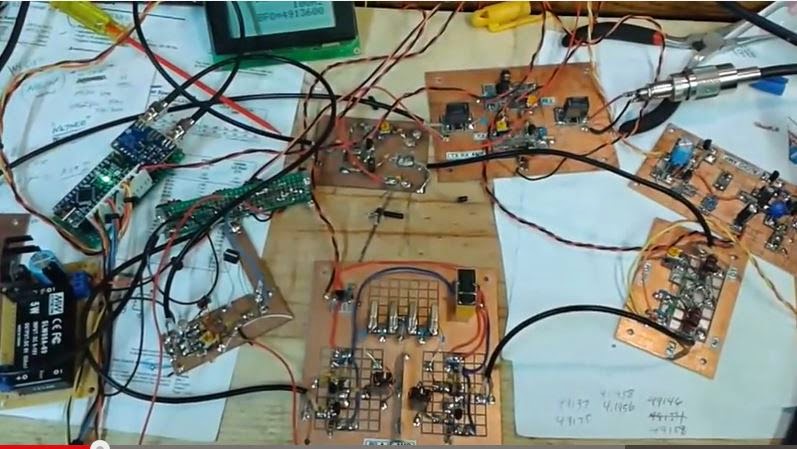
I came across what appears to be an early version of Farhan’s description of the design and initial construction of the BITX 20 (see below); this version has some interesting information on the origins of this important rig. The picture below shows the designer himself working on that first BITX20. It is from a CNN video. I know Farhan is sick of seeing this old video, so I present here only the shot of the designer’s hands at work on the original transceiver.
Some thoughts from the designer, Ashhar Farhan, VU2ESE:
This transceiver was designed during a six hour flight from Europe with paper, pencil and the basic calculator built into my cell phone. It was soldered in three sittings over three days. Very little went wrong during the construction. It was one of those easy designs. The only mistake that I made during construction was that I soldered one of transistors in reverse. The design worked as ‘advertised’. I guess that extensively using feed back amplifiers provides designers with greater repeatability. Also, I realized, a little late in life though, that detailed forethought and ‘mental’ home-brewing is important for a clean design. The linear chain was initially unstable. It tended to oscillate in the 14MHz band as well as around 500 KHz. I traced the 14MHz oscillations to a choke that I was using at the output of the balanced modulator. It has been removed. The 500 KHz oscillations were because of excessive gain in the driver and pre-driver stages. From 5 ohms, the emitter degeneration has been increased to 10 ohms and better bypassing on the power rail has eliminated the oscillations.The receiver is as hot as I need it to be on 20 meters. Signals from USA, Europe, South Africa and of course India were heard with clarity reminiscent of a clean Direct-conversion receiver on the first evening. The transmitter is powerful enough for local rag chew and it is a modest challenge for DX. VU2PEP has an excellent two element beam at 20 meters at about 40 feet height. DX is easy for OM Paddy who uses the rig regularly. We netted LA2FKA within the first 20 minutes of firing up the rig. No, I don’t offer PCBs. I don’t repair rigs. I don’t offer kits. I might do a PCB for this rig (I hate PCBs, they hamper experimentation). This transceiver is dedicated to the memory of OM Juggie, SK (VU2JH) who was a great organizer of India hams, he wrote technical articles in Electronics For You magazine about amateur radio, spurring many to take on ham radio as a hobby. He organized the Millennium Ham Meet in the year 2000. He was always searching for a good and simple homebrew SSB transceiver. He died young. He gave me my first morse key.
Bench Report: Pete’s Progress on the Let’s Build Something Rig: http://www.jessystems.com/LBS_Detail.html Ben’s cool case for his LBS rig Bill’s Tale of Woe: QRO troubles with the BITX 40 — QRO amplifier taking off on 40 (but not 17) — Criticism and public humiliation on 40 — Troubleshooting — Suggestions from Allison — A sad realization about my VFO frequency selection — Exorcism needed — Pete suggests a digital solution — Wow, my ‘scope has an FFT! Almost a spectrum analyzer! — Some thoughts on trouble shooting — On the meaning of “BASTA!” The Spring 2015 Issue of Hot Iron http://www.walfords.net More on Pete’s KX3 Encouraging other hams to build
That has to be one of the best-looking scratch-built homebrew BITX20s. Pete and I agreed that it looks almost too good to take out into the field. But that is where Colin took it. His BITX was designed for Summits on the Air, and the radio gods rewarded him for his efforts with VK DX. Well done Colin!
Hi Bill and Pete.
Well it just worked out that weather was going to be bearable this morning but getting worse through the weekend. I’m really want to ramp up my SOTA score so I’m trying to get out as much as I can. I switched my plans to an early morning activation on one of the local hills. The hill, called Sharp Haw, is a little lump on the edge of the Yorkshire Dales, it’s not very high at all, but it is worth 1pt for SOTA.
The early morning time window brought the possibility of VK QSOs via long path on 20m. I looked at the VOACAP prediction for propagation and it suggested a peak at 0800utc.
I was actually late getting up, my alarm clock batteries have decided they’ve had enough. Despite the late start, I still managed to get on the air by 0725, hearing a strong Australian accent on the power up frequency of the BITX, 14.200, was a good sign.
At 0737, I was called by VK1DI. I had to turn the AF gain up, but sure enough, the signal was workable and we exchanged reports, 55 for him, 33 for me. Within the space of less than 20 minutes, I had 4 VKs logged, the strongest being VK3DET, giving me a 56. The other two stations were VK3CAT and VK2IO. I also worked an Asiatic Russian station amongst others.
I’m over the moon, I might even apply for my SSB thousand miles per watt wallpaper!
I still find it magical that 25 volts into a bit of 7/0.2 wire can transport your voice across 15,000 miles! Amazing!
Oh man, I was struggling yesterday. I guess I had been lulled into a false sense of security by the phenomenal ease with which I had put my BITX 17 on the air, then added a 120 watt amplifier, all without any sign of the dreaded feedback and parasitic oscillations that had plagued almost all of my previous projects. So when I decided to add the low pass filter and the switching/relay arrangements needed to use the amplifier with my BITX 20/40 rig, I kind of expected a similar trouble-free experience. WRONG! And you know what? I think guys on 40 and 20 are a bit less forgiving and collegial than the folks on 17. As I struggled to exorcise the transceiver, I’d make some changes then hopefully go out onto the airwaves and call CQ, looking for a signal report. Well, I got them. Many were not accompanied by call signs. I’d be in contact with someone who was trying to help, and — as we were trying to figure out what it might be — we’d be bombarded with harsh, sometimes angry, anonymous commentary: “YOU’RE 20 kcs WIDE!” “Are you on AM?” “You have a CARRIER!” One fellow scornfully told me “That little QRP rig of yours is not ready for prime time.” Ouch. (I didn’t realize we were on prime time. Isn’t this AMATEUR radio?) Others would answer my CQ by announcing that I was “on the wrong frequency.” Others would respond (off frequency) and tell me I was distorted — I’d ask them to tune me in, then they would say, “Oh yea, you are OK — you were just on the wrong frequency.” Some of these guys seemed to be under the impression that there are “channels” on 40 meters. It was a real disheartening mess. Then came the saving grace. I got the e-mails that appear below. WOW! My faith in ham radio was renewed! In the 18 months that I’ve been running the BITX rigs, I’ve never once worked another station using a homebrew rig. But Rick and I were 3/4 of the way there yesterday. And he was using a direct conversion receiver of his own design, with a PTO in an enclosure made from “flattened out tin-plated food tins.” Fantastic! It was as if the radio gods had arranged all this to pull me out of the depths of parasitic despair! Thanks Rick! A video of his receiver picking up my BITX 20/40 appears above. Pete and I will talk about the actual troubleshooting in the next podcast. I am HOPING to have it fixed by then. I may have to sacrifice some chickens to Papa Legba.” ……………. Bill,
I’m a long-time SolderSmoke podcast listener, and today one of my ham radio dreams came true.
I was listening to 40 meters today on my homebrew direct conversion receiver, and I heard your call. At first I didn’t believe it was you, but there you were.
At first I just sat there dumbfounded, just listening, but soon realized that I should make a video of this “rare DX” (rare DX for me hi hi), and post it on YouTube for you to review.
My apologies for the low audio in the video. I was using my iPhone and its inboard mic leaves a lot to be desired, but the best audio of you is at 0:13, 0:50, and again at 2:12 into the video.
Heard you on 7.16 MHz, Sunday 2-22-2015 at 10:15 a.m. local east-coast time (15:15 UTC).
I’m located in Manchester Maryland (North – Central Maryland). My homebrew 40 meter rig is a PTO tuned direct conversion receiver with all discrete components. My antenna is a simple wire dipole about 6 feet above the ground just outside by workroom window.
Below are links to the YouTube video of your QSO , and the schematic the DSB transceiver that you were received on. The rig is one that I designed, based on the published works of many home-brewers from the web. I call it the Lakeside 40 (in homage to Peter Parker’s Beach 40 transceiver).
So far I only completed the receiver section, and hope to complete the transmitter sometime this summer so I can use the rig at Lake Marburg (at Codorus State Park in PA), thus the “Lakeside” in the rig’s name. http://youtu.be/emsKg5n5-0c
Yes, what a coincidence with the PTO! That’s the same WA6OTP PTO design I based my PTO on.
I created a webpage tonight(very much a work in progress) so you can see the details of how I constructed my PTO in the Lakeside 40, as well as my rendition of a BITX 20. Click the [Permeability Tuned Oscillator], or [My rendition of a Bitx 20] links on the left of the page.
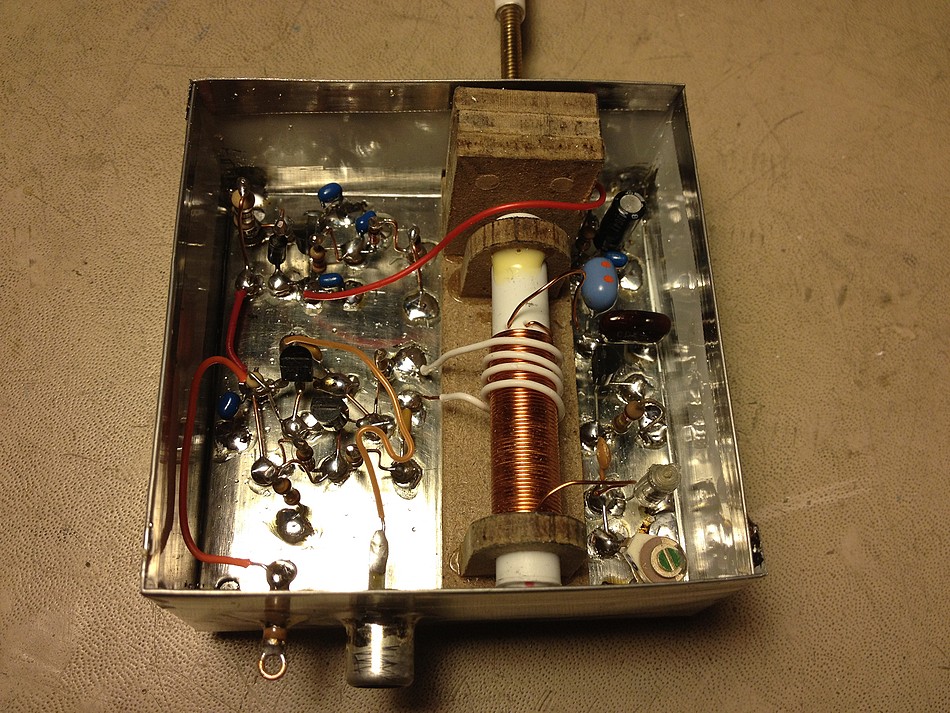
The ground plane for the Manhattan construction (and RF tight enclosure for the PTO) are made from flattened out tin plated food cans, and the coil-form for the PTO is cut from Masonite wall panel material with my scroll saw.
Don’t get discouraged from the less than enthusiastic response from the others about your signal, pay them no mind; I’m sure they simply didn’t realize the significance of what it represented. To me, your signal was the most perfect signal I have ever heard. It was perfect because I know (from your pod-casts, and my attempts at homebrew) what it took for it to be produced. Its existence, and the fact that I successfully received it on my little homebrew rig too, represents the fundamental core foundation of Amateur radio; experimentation, building equipment with your own hands from scratch, expanding ones knowledge in the radio art, and most important, having fun and enjoying the excitement that comes from using gear that *you* built.
I cannot put into words how significant hearing your signal was for me today – thank you! My biggest regret is that I didn’t have a means of transmitting yet on 40 meters, and my Bitx 20 is not ready yet, perhaps in the future we can have homebrew to homebrew QSO’s where we can fine-tune our designs and tweak things (however we’ll have go above 7.175 MHz, or 14.225 MHz since I only hold a General ticket at the moment).
SolderSmoke Podcast #172 is available http://soldersmoke.com/soldersmoke172.mp3 16 February 2015 Bench Reports: Pete under the gun to finish SSB transceiver project. NEW VIDEO: http://youtu.be/hbLXW0sHTFo Bill fixes his BITX 2040 Oscillator (Bandsweep!) Next: LP filter for 120 watt amp. Bill’s 13 dollar Chinese freq counter (Blue! With anti-wobble tape!) Bill’s next rig: Chipped to the Max, DDS, SBL-1s, plug in filters! Radio Shack going under and JAN no longer making crystals. Mighty Mite Project: Let’s get them DONE! An easy way to get Q or ESR measurements on crystals? SI5351 as a crystal substitute. DuWayne’s Scalar Network Analyzer lights up the internet! The Portable SDR rig — Pete almost goes to the dumpster! Report from the cutting edge: Pete’s new Elecraft KX3. MAILBAG: Meeting W7ZOI and WA7MLH at a hamfest. Instant Messaging with Farhan
These little frequency counters from China have a lot of potential. And they add a dash of digital color to an otherwise bland analog hamshack. I got mine on e-bay. My BITX17 has now been “accessorized” with 1) A rotatable Moxon antenna (big improvment!) 2) A 120 watt Communications Concepts Linear amplifier (another big improvement) and 3) This digital frequency readout. What next?
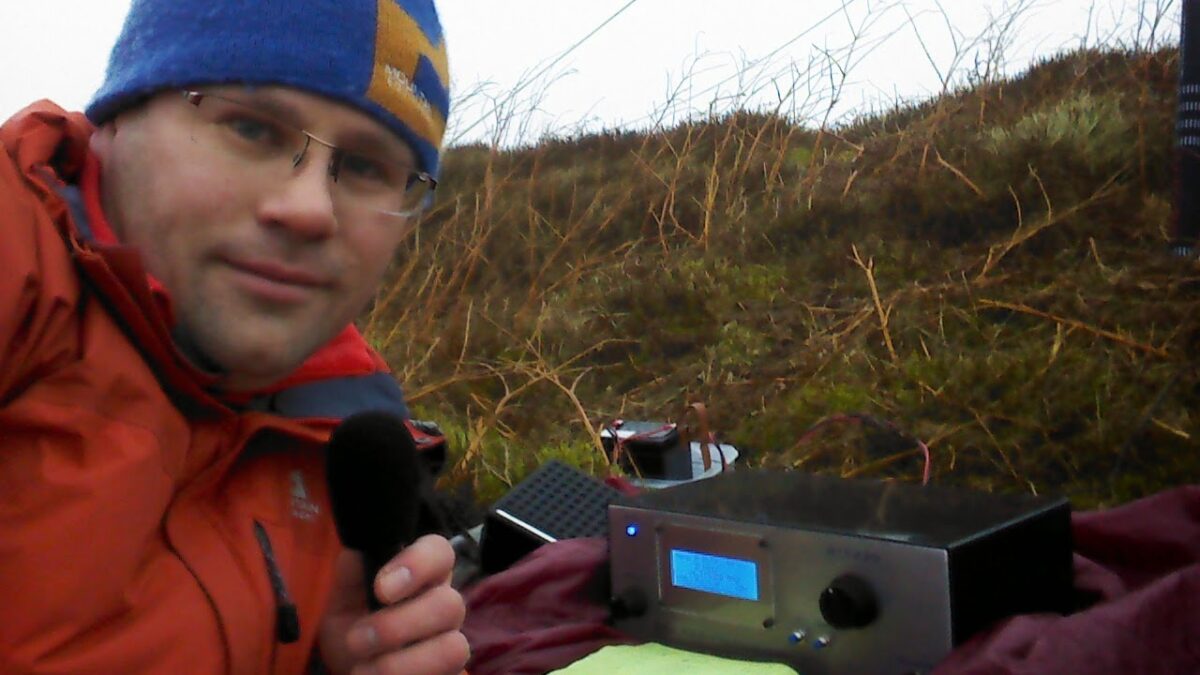
I love this video. Colin finished his BITX a week or so ago and has been waiting for an opportunity to test it. Over the weekend he braved the winter of Northern England and, with his son, set up his new rig out in his snow-covered garden. Appropriately for a first contact with scratch-built rig, the circuitry was unencumbered by any kind of case or box. That’s the way it should be done! Well done Colin! You are well and truly a member of the International Brotherhood of Electronic Wizards, and the diagnosis of “The Knack” has been confirmed (a severe case, it appears).
Hi Pete and Bill,
It’s been a lovely fine day here in West Yorkshire, so I took a table out into the garden and set up my BITX circuit on it. I set up my SOTA dipole on a 9m fishing pole.
I heard a strong German station calling CQ, so I gave him a call and hoped for the best!
How amazing to contact someone in another country using a rig and mic you’ve made yourself! Do I qualify as a REAL radio ham now? Do I have a confirmed case of the knack? 🙂
Although I may appear underwhelmed in the video, (besides the air punches!), I did really get a kick out of the QSO.
73 and huge thanks to both of you for the encouragement and support.
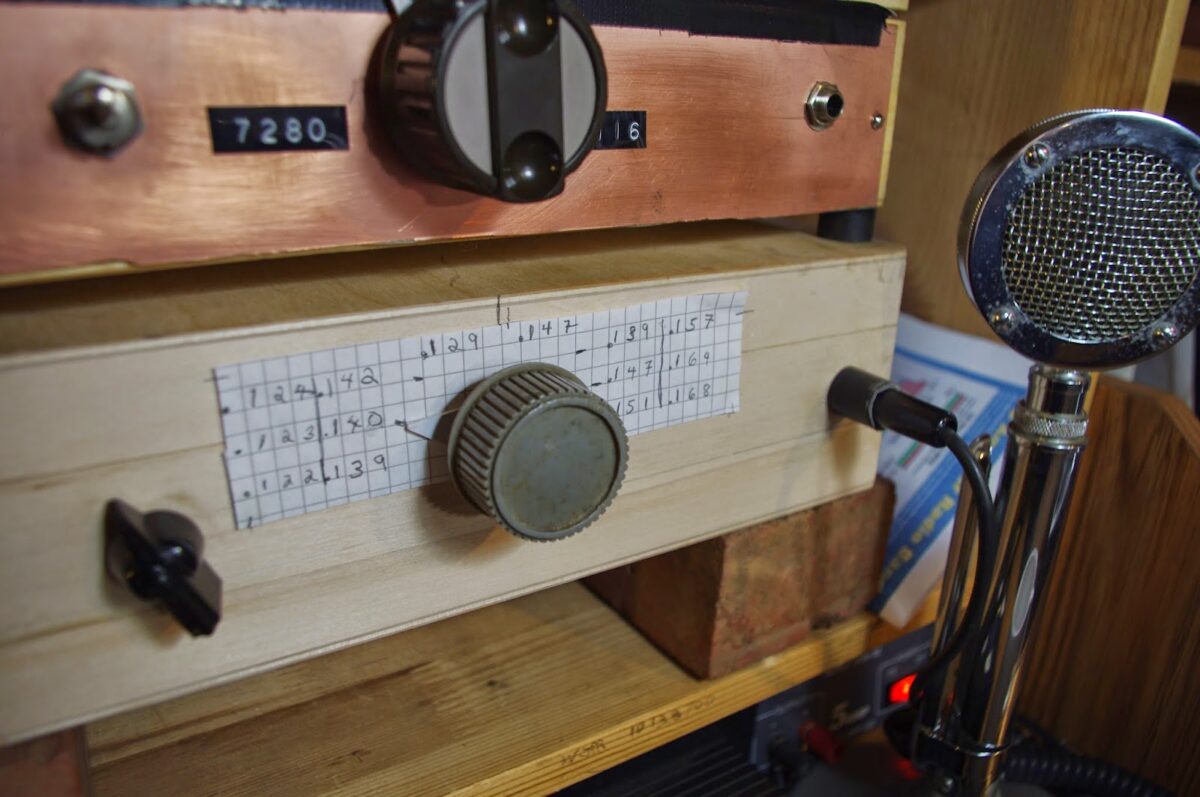
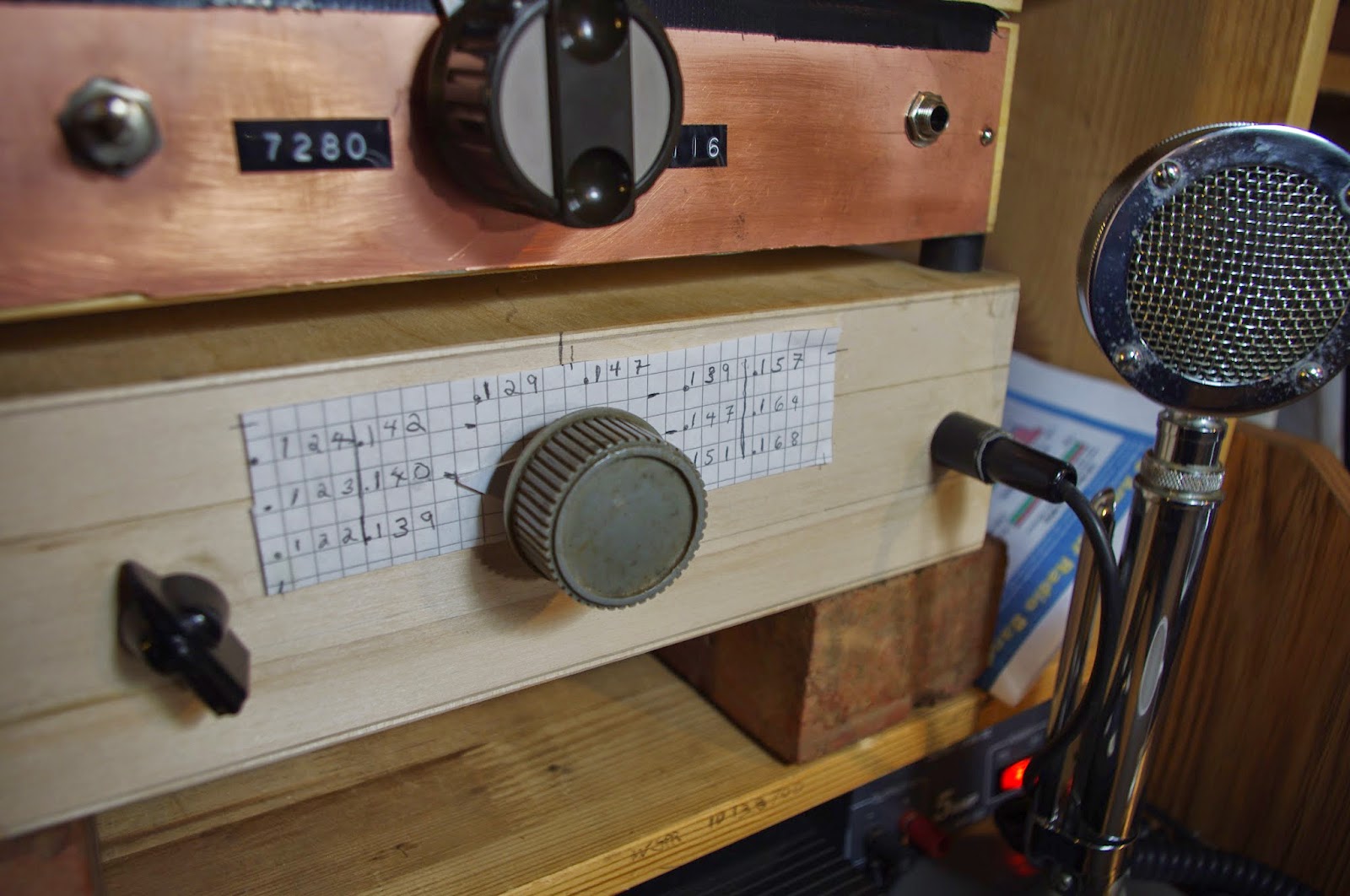
I’ve been getting tired of being in the dark about the frequency on which my BITX17 was operating. So I pulled out some graph paper, my frequency counter, and a pencil. You will see two frequencies at each point — that’s because I use two crystals, switched by the black knob on the left. I realize this paper and pencil approach is hopelessly out of date, but I see it as “appropriate technology” for a discrete component all-analog transceiver. Pete set me straight on how to come up with the numbers: VXO frequency minus ACTUAL carrier oscillator/BFO freq. After doing this I took great delight in going on the air and asking guys with fancy “glowing numerals” rigs to compare their freq readout with my pencil and graph paper readouts: they were painfully close. But I am not slipping completely into stubborn Luddite-ism; this weekend I worked on a DDS-based AD9850/Arduino VFO with I-Q output based on Paul M0XPD’s Kanga-UK Arduino Shield. STAY TUNED!
Wow, that is one beautiful BITX. Nicely done Colin. But I must say that you are exhibiting an almost inhuman degree of patience! Who needs a case? Fire that thing up and make the traditional “still-on-the-workbench” initial contact.
Hi Guys,
I loved the last SolderSmoke, it was another great episode. It really does amaze me, that a few years ago, hams were saying that it was too difficult to build your own gear that would be anywhere near to the commercial stuff, but here we are with Arduinos etc bringing powerful functionality to the masses. I couldn’t have imagined building an SSB rig with a pretty and functional LCD screen when I started in ham radio.
Bill, first regens, now SDRs? Amazing! I exchanged a few words with George Dobbs about your change of heart towards regenerative receivers, he seemed genuinely pleased. 🙂
Pete, your Si5351 work with the pretty displays is cool, I can see me getting pretty hooked! I have the Si5351 board, Paul M0XPD advised me to buy it. I’d love to build another SSB rig in a smaller box for regular SOTA activating. I must look into the pretty little displays and have a play with the Si5351. I notice that Hans Summers has now put out a cheap Si5351 based kit, handy for us guys in Eu. http://www.hanssummers.com/synth.html
I finished building my BITX board yesterday but wanted to have a sleep before applying power! Today I carefully checked the circuit for errors and found none, phew! I fired the rig up gently, watching the current carefully. I wound up the TX bias to 50mA as stated in the MKARS80 instructions, all went well. I plugged in the mic and spoke – BANG! – Everything went off. Oops – I had used a 500mA fuse for initial safety and forgot to swap it for the bigger one! I fitted a 1.6A fuse and hey presto, all was fine. I was absolutely amazed and to be honest, rather proud of myself. I think the TX is a little bit too hot, my meter is showing about 6W on voice peaks- eek! The rig seems to be perfectly behaved though, no wierd effects seem to be happening. I can just turn the bias down a bit, right?
Anyway, I was happy with my progress so I finished for the day. I still need to investigate and probably tweak the carrier suppression.
I spent a short while talking into a dummy load, using my FT817 to monitor the transmission. My 2yr old son was interested in my voice coming out of the 817’sspeaker!
Thanks for all the guidance and help along the way, I’m elated that I’ve built a voice rig that works! I’ve attached a pic of my finished board, I only just squeezed the circuit on, but isn’t she pretty? 🙂
Can’t wait to get the rig built into it’s case and score that first QSO.
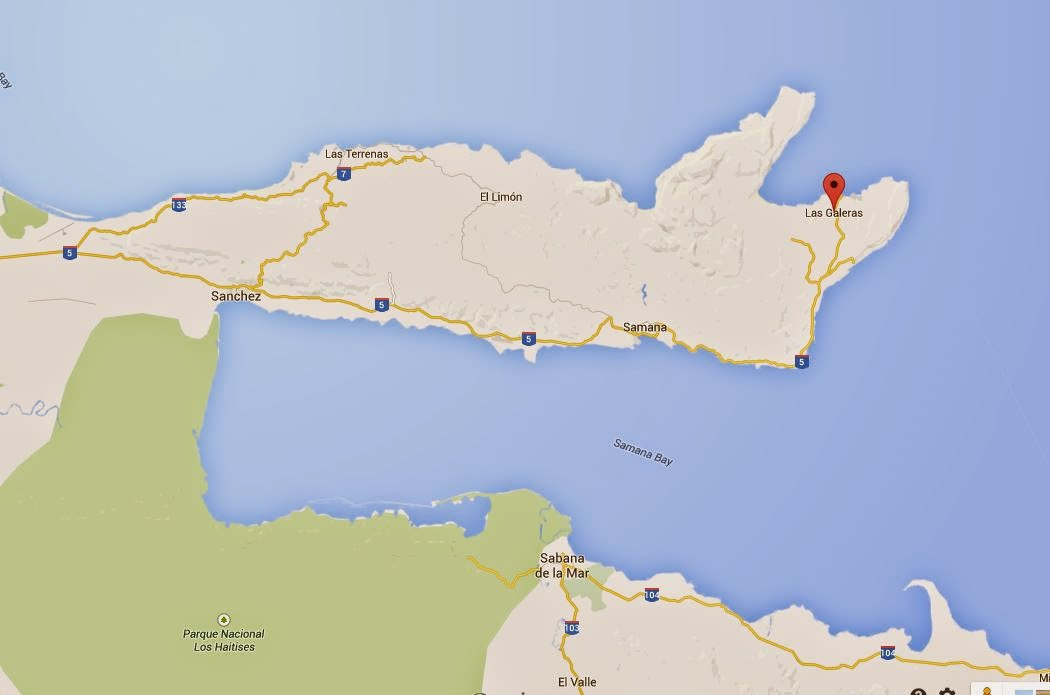
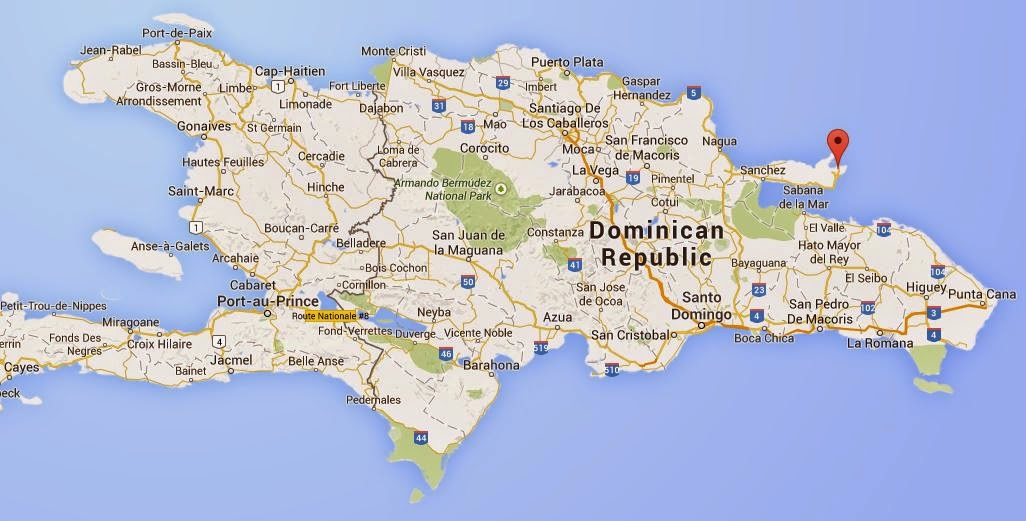
Look at the drawing above. That is the banner logo of Rod Newkirk’s column in QST magazine. For many years Rod regaled us with exciting reports on the activities of intrepid foreign radio amateurs, transmitting from exotic locations using ingeniously devised homebrew radio equipment. Look at the picture on the left side. See the palm trees? See the thatched roof shack with the dipole antenna? Well, that’s pretty close to what it was like for me out on the Samana Peninsula in the Dominican Republic last month.
I set up the station under the thatched roof in this picture:
The red pins mark the spot:
Here I am, tuning the rig while looking across Bahia Rincon:
The rig was my Azores-built, oft-modified, NE602-based, ceramic resonator DSB transceiver with a recently added India-designed BITX IRF510 RF amplifier chain. A little article I wrote about the ceramic resonator VXO was featured in SPRAT 127. My antenna was a half wave dipole strung up in the thatched roof. Power came from 10 AA Batteries. So this was the Double A, Double Sideband, Dipole DX-pedition. I had given some thought to building an SSB rig for this trip, but because of the efforts of Peter Parker, VK3YE, I felt compelled to take a DOUBLE Sideband rig with me to the beach. Here is an old (2006) video on the rig. The power amplifier has been significantly modified:
Here is some more information on the rig, including a schematic for the receiver and the SPRAT article on the Variable Ceramic Oscillator:
8P6AE (BARBADOS) COULD BARELY HEAR ME, BUT GOOD QSO
18 DECEMBER 2014
N4USA DAVE IN FLOYD, VA. FAIRS NET. (KK4WW.COM)
KE4UGF DON ALSO FAIRS, NICE GUYS. FUN CONTACTS!
KA4ROG ROGER NORTH OF ORLANDO
19 DECEMBER 2014
WB2HPV GUIDO TALKING TO ITALIANS EVERY MORNING FROM WAYNE NJ. HE HAD TROUBLE HEARING ME.
CONDITIONS SEEMED POOR, BUT I WAS HEARING AUSTRALIAN STATIONS
W8GEO GEORGE IN THE INTERCON NET. HEARD ME. ALSO ON INTERCON: KA4AOQ AND 6Y5MP (JAMAICA) ALSO HEARD ME.
N4PD PAUL
W3JXY/4 NAT IN KEY WEST
N1FM TOM, NORTH OF MIAMI SOLID QSO.
KM4MA PAUL IN ORLANDO WITH MARITIME MOBILE NET.
20 DECEMBER 2014
NA2LF LLOYD IN NY
WB8YWR JIM IN DALLAS
KM4MA.
W1AW/3 IN MARYLAND (TOOK ME A WHILE TO GET HIM)
21 DECEMBER 2014 NICE 4 WAY SPANISH LANGUAGE QSO:
KI4PZE MIGUEL
CO8OT JUAN IN SANTIAGO DE CUBA
WA4RME RAFA IN CHARLESTON S.C.
C08KB MARCO IN CUBA
Here is a short video showing the station and the location. Note the little birds (Golondrinas or Swallows) flying by. They nest in the thatched roof. They often got confused and flew inside the house. Billy and Maria rescued many of them. Whales breed in this bay in January and February. There are also manatees. It is really a beautiful place.
There were obviously other attractions (!) so I didn’t spend a lot of time on the radio — just a half hour or so every now and then. But it was really very satisfying to carry this little homebrew device with me, set it up in this amazing place, and use it to send my voice across mountains and hundreds of miles of ocean. I built this rig in the Azores and have used it in the UK, France, Italy and the Dominican Republic. It contains circuits devised by members of the British QRP club and by my friend Farhan in India. The ceramic resonator circuit is something I cooked up on my own. The microphone is from my old Sony Walkman and the pen that serves as its support is from that wonderful magazine “Electric Radio.” In short, there is a lot of soul in this little machine. And it was a lot of fun to take it to the beach. Thanks to Elisa for finding us this wonderful place. And to Rod Newkirk and QST for the DX inspiration.
Pete and I congratulated Colin on the First Sigs heard by his BITX (sort of like First Light for a telescope.) He is clearly following the advice offered by Farhan in the original BITX20 article: Take a break when the receiver is done; sit back to enjoy the sounds of success. I told Colin that having a small error in the build, then finding it and fixing it, well, that’s icing on the cake OM. This also shows the benefit of having an oscilloscope. Here is Colin’s report:
Hi Pete and Bill,
I really enjoyed the latest SolderSmoke! I think you two have got a winning formula, humour interspersed with valuable technical knowledge. Some podcasts are just too serious, there’s nothing wrong with having fun in your hobby!
Progress is slow here, as always, but each week I have managed to move a little bit further forward. This week I aligned my BITX band pass filter and made a rough measurement of my crystal filter using the DDS signal generator that I built last week.
My oscilloscope is a Tektronix 465, older than me I believe! Of course there is no fancy signal level readout like the modern digital scopes, so I had to just peak the injected signal through the crystal filter and measure the frequency using a frequency counter connected to the IF amp. I followed the BITX ver 3 build instructions and my results seemed to match very closely to the Indian kit. I’m going to set my BFO at the -20dB from peak level as suggested in the ver3 instructions, I guess I can fine tune the setting later.
At first I had no signal making it out of the last RX IF amp, I traced the signal right through to the base of the first transistor but then the signal was lost. I had thought that band conditions were poor when I tried my BITX in RX last week when in fact it turns out that I’d made a small mistake building the IF amplifier that follows the crystal filter! I had wired the 4k7 resistor in the wrong place! I made the circuit good and hey presto, lots of signal coming out of the amp!
I was eager to give the receiver another try. On Fridays work finishes at 1pm, so a great chance to try out my rig during daylight hours. I hooked up the rig to a random piece of wire and I was amazed by the great noises coming from the speaker! I hadn’t even set the BFO but voices were just leaping out. Man that rig has a lot of AF gain! I obtained a switched 10k log pot which I intend to use for power on and AF gain so hopefully the volume control will be OK. As a side note, it was nice to hear HF0YOTA down in the CW portion, I’m guessing that it is youngsters on the air station, I must do a search on the call later.
73, Colin M1BUU
So the little signal generator has already earned it’s keep. I guess I can would have been scratching my head for a while without it!
Wow, quite a bit of progress at M1BUU since our last look (see below). I must admit, that Arduino DDS board looks quite nice sitting there in the VFO territory. In his original BITX20 article Farhan recommends a pause before the construction of the final portions of the transmitter — the builder is advised to sit back and enjoy the receiver that has just been created. Colin is at that point! Congratulations Colin. He has noted that his board is a bit(x) smaller than mine. Maybe he should stick with Farhan’s recommendation and build the PA and driver on a separate board. This will also help prevent the dreaded oscillations — no need to tempt fate or anger the radio gods!
Hi Pete,
Another great SolderSmoke episode this weekend, I really like the humour between you and Bill! I listened to SS whilst melting solder on my BITX project.
I had really wanted to get my BITX working as a receiver before the end of the weekend, but Lewis Hamilton and his (successful) bid to become Formula 1 World Champion, put an end to that idea! I also decided that I wanted to buy some better quality capacitors for the band pass filter, so I’ve ordered them today.
I fired up the receiver chain for the first time this evening from where the BPF should be, right through to the AF amp, I’m pleased to report that I seem to have created a working superhet receiver! I heard some BC breakthrough at certain points of the tuning range and the rig receives the second harmonic of my Rishworth Buildathon 40m transmitter beautifully (on right part of dial too!). I hadn’t tested the RX IF amps or AF amp before, but they seem to be doing just fine.
I’m so pleased to have got so far, and I’m very pleased with the build. That big copper clad board doesn’t look so big now, but I think I have room for the TX/RX switch, BPF, RF driver, RF PA and LPF which I still need to add.
Thanks for the encouragement and advice so far, I doubt I’d be feeling so elated at this point without it!
This is going to be a really cool rig!
73, Colin M1BUU
Hi Colin,
Two words come to mind: Absolutely Superb! Wow that is such a work of art. I may never show another one of my projects as you have set the standard and benchmark.
You also have demonstrated building from the back end which we discussed in SS168. Now what you have built is a part of the test system.
Really outstanding. Be sure and video your 1st qso and share on You Tube.
With advice and tribal knowledge from N6QW and MeSquares from W1REX, Colin M1BUU, is making excellent progress on his BITX. I see that he has some territory on the board reserved for a DDS VFO. That’s fine, but here’s and idea for Colin and other builders: Why not build it with the standard VFO first and then add the DDS or Si570 VFO later, perhaps as an external accessory? That way you get the experience of building an LC VFO — the full BITX experience.
Yea, it is hard to imagine Paul M0XPD as a newcomer to the hobby such a short time ago — he is definitely now in the ranks of the esteemed digital Elmers.
And yes Colin, we do hope you avoid unwanted oscillations. Because of Farhan’s great design you have a good shot at avoiding this plague. But be prepared OM. It happens to the best of us. A lot. Stiff upper lip! Never give in!
*************
Hi Bill, I enjoyed your video about your Arduino experiment. You bet me to it! I’m really looking forward to getting my version of an Arduino powered BITX up and running.
Steady progress is being made, yesterday I added my first bidirectional amplifier to the build. I now have the mic amp, BFO, balanced modulator and first amp completed. I tested the BFO on it’s own and got a respectable looking signal out of it and with a good swing below 10MHz.
Next I need to add the crystal filter, second IF amp and mixer. Pete’s video will help for the mixer! BTW, I’m using the ver3 schematic but I intend to use the ver1 band pass filter.
I set out building the circuit following the N2CQR layout diagram but I’ve already run short on space! I do have a good excuse though, my board is smaller than yours (10″x6″).
Despite my best intentions, I’m falling back towards old habits of making my circuits physically small. I’m using MeSquares in order to try and force myself to space things out a bit. I do hope that I don’t end up with any unwanted coupling!
I must try hard to leave lots of space between the next bits of circuit.
I was listening to SolderSmoke 104 today and Paul M0XPD was introduced as a new ham. Little did we know that Paul would become such a big player!
Edwin did a beautiful job on his BITX. This is an excellent example of stage-by-stage construction. This is his THIRD BITX. On the second one he got all the parts from an old television and a washing machine. That’s the true BITX spirit! I want an S Meter! There is more information on his blog: http://pa1ed.blogspot.nl/
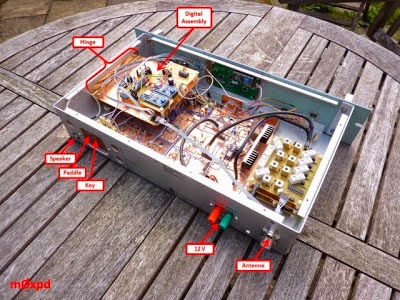
Paul, MOXPD, has put his BITX-based rig in a proper box. In spite of his recent collaboration with famed miniturizer Pete Juliano, Paul used a BIG box. It is not quite milk carton size, but it is getting there. Well done Paul. I really like the way Paul kept the digital and analog elements in different dimensions. The digi bit is sort of floating above the main analog board (almost in a “cloud”!). In SolderSmoke 163 Pete Juliano mentioned a downside of this kind of stacking: it makes it hard to get to the main board. Paul ingeniously solved this problem by putting the digital board on a hinge. Excellent. This will prevent you from becoming “unhinged” when the time comes to fix or modify the main board. Here are all the details on Paul’s project: http://m0xpd.blogspot.co.uk/2014/07/boxing-clever.html