Category: BITX20
Walter KA4KXX Operates his FB Al-Fresco HB Scratch-Built BITX 75 (Video)
Dear Bill N2CQR:
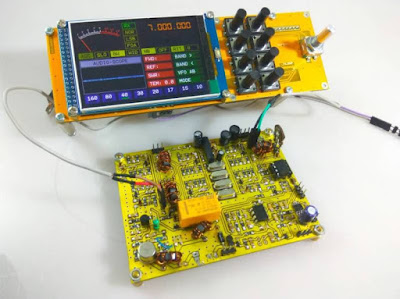
KC1FSZ’s Peppermint III Homebrew BITX with Mods
Bruce KC1FSZ
The Triple Scratch-Built BITX Club — Do you qualify for membership?
N2CQR Wins a Contest AGAIN!
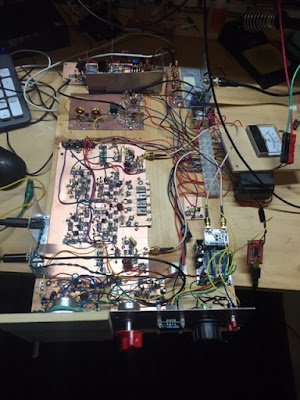
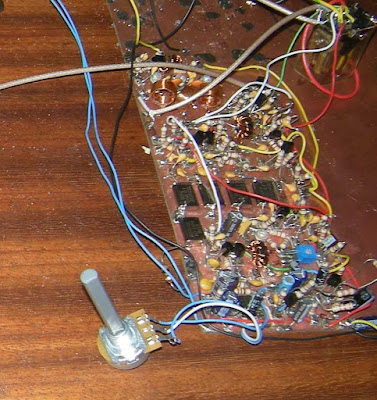
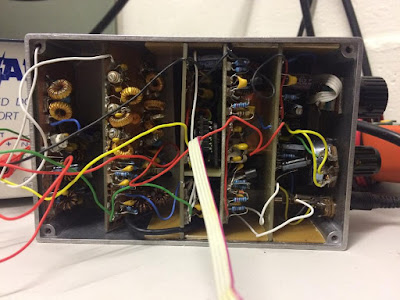
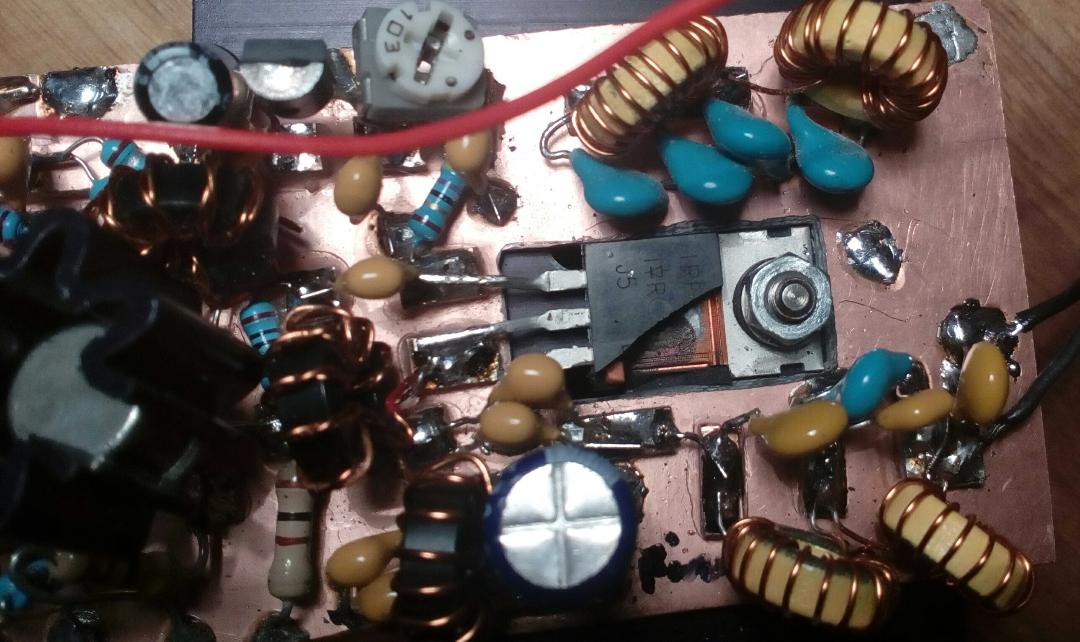
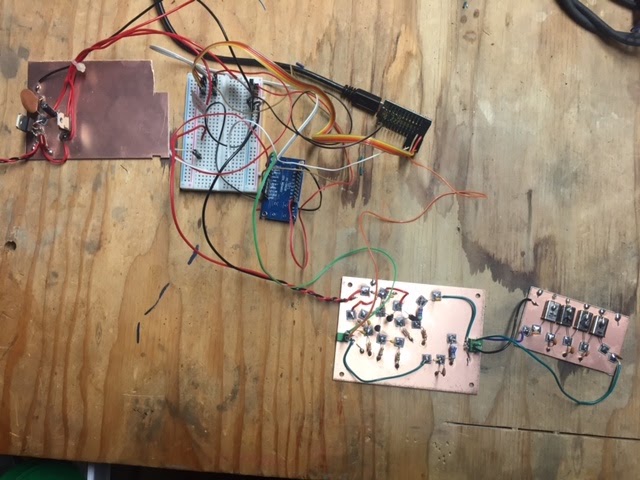
This past weekend I dusted off my old scratch-built, all-analog, no-chips BITX20. (THREE CHEERS FOR FARHAN AND HIS BITX DESIGN!) I hooked it up to my trusty CCI .1KW (note decimal point) amplifier and my new 135 foot store-bought doublet. This all happened just as the Worked All Europe DX contest was kicking off, with lots of activity on 20. TRGHS. I was in. My contest operating style was in the category of “relaxed-casual-noncompetitive.” I took a lot of breaks. In fact there were more breaks than non-breaks. You have to pace yourself in the contest world.
My results:
8 SEPT: DF0HQ, SN7D, GM6X, DP6A, S51A, DL0HN, DB0HX, OZ5E, DJ5MW, HG7T, IK4UPB, VY2ZM, G6XX, EF1A, LZ5R, 9A5W, YP0C, F6HQP, DL7ON, HB9DQL, ON6NL, DA0WRTC, 9 SEPT: EI7M, P3X, RU1A, DP7D, SP2KPD, DL0WW.
P3X might not count because, you see, Cyprus is considered to be in ASIA. Really?
Anyway, I ‘m assuming that I am the winner in the homebrew, discrete component , all-analog transceiver category. Woo Hoo!
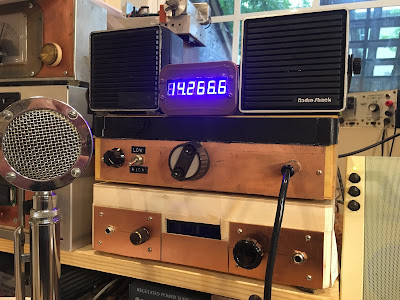
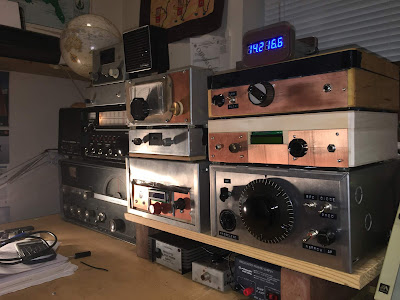
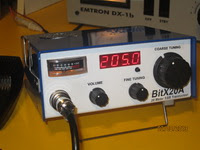
The contest rig is pictured above. Before you point to the glowing numerals and cry foul, realize that the little Altoids box between the two speakers holds a San Jian frequency counter that was deliberately kept OUTSIDE the BITX box. So it is more of an outboard accessory. I can run the BITX 20 without the digital assist — I have an old fashioned non-digital dial pointer to indicate frequency. The “Low – High” switch you see switches the VFO from the low portion of the 20 meter phone band to the higher part of the band. The box below the BITX 20 holds the uBITX.
Seriously though, I was quite pleased with the performance of the doublet.
SolderSmoke #205 Solstice, Mars, Antennas, Displays, Phasing Fix, VFOs, Lexicon, MAILBAG
June 23, 2018
SolderSmoke Podcast #205 is available:
http://soldersmoke.com/soldersmoke205.mp3
— Summer solstice. Mars Observations. Graduations. Internships. Fathers Day.
— Antenna Angst: Pete’s tribander and Bill’s Moxon. Insulation and resonance?
— Pete’s work on color displays.
— Bill goes back to fix up older projects:
— Fixing the Frankenstein Phasing RX. Found an open choke!
— Tightening up the HRO Dial.
— Achieving Juliano Criteria stability on a BITX20 VFO.
— Lexicon additions: “Scratch Built” “Hardrock Radio”
https://english.stackexchange.com/questions/39551/where-does-the-saying-made-from-scratch-originate
— PastaPete: http://www.pastapete.com/
MAILBAG:
Bob Crane W8SX Corrspondent at FDIM
Ralph AB1OP Building LBS
Bruce KC1FSZ Digital Pot
Jason W5IPA uBITX in Juliano Blue
Rogier KJ6ETL ON THE AIR WITH A uBITX
Special thanks to Tim Walford for 25 years of Hot Iron.
Digital Pot
No, this is not some on-line mail order thing. Bruce KC1FSZ has done something that I find both amazing and horrifying: he using a “digital potentiometer” as the AF gain control in his BITX. Remember when pots were simple and pure, when they were just a metal wiper that ran across a crescent of carbon of increasing resistance? Well, those happy days are apparently behind us my friends. What now? Will we have endless discussions about where to find the driver for the 10k pot? Will Facebook or Amazon or Microsoft secretly seize control of the data on our AF gain, perhaps to sell us hearing aids? But enough of my ludism. Good going Bruce. AGC beckons.
Hi:
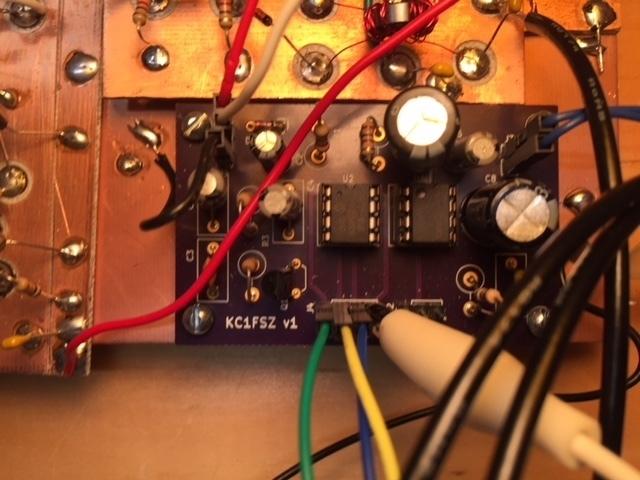
I’ve built a few BITX rigs from scratch now and I’m starting to move to a modular approach using fabricated PCBs to make it easier/faster to build/mix/match the stages. My audio amplifier module is based on the LM386. I know others have moved away from this chip, but it still works for me.
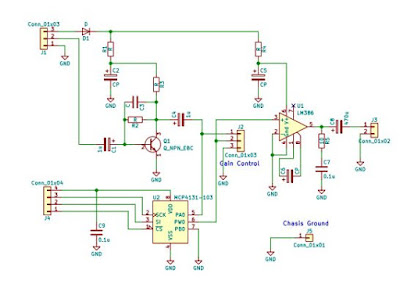
I’ve added one feature to my audio amp stage that opens up some good possibilities. Instead of the traditional potentiometer between the AF preamp and the LM386, I’ve inserted a digital potentiometer (MCP4131-103) that is controlled by three extra pins on the microcontroller. The digital pot lists for $0.81 on Mouser so it’s no more expensive than a physical pot and it’s way more versatile.
Why do this?
- The module is quick to make if you’re building a lot of rigs.
- AF gain can be controlled via the CAT port.
- AGC control can be done in software. This enables all kinds of fancy AGC “attack” and “release” controls that can be seen in the docs for commercial rigs.
- This is an enabling feature for remote ops, which is why I did this in the first place.
- AF gain can be controlled using the same encoder (different mode) as is used to control frequency, etc. if you wanted to build a more compact rig.
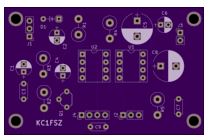
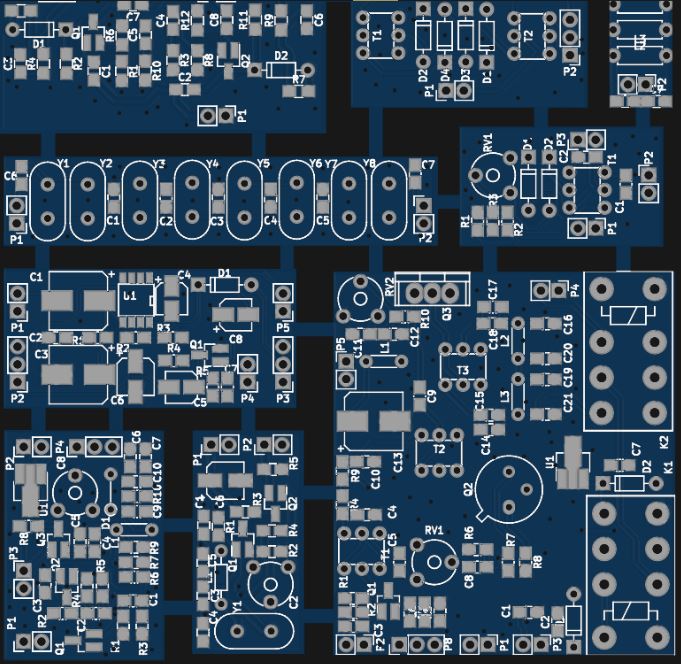
The board is shown below. This is one of my first forays into KiCAD/PCBs/etc. so it’s probably not as “tight” as it could be. Also, I’m using through-hole components so it’s old-school building. But the board only costs $7 on OSHPark and it’s pretty quick to wire up. Anyone who wants to order one from them drop me a line and I’ll send you the link.
Schematic below.
73s,
Bruce KC1FSZ
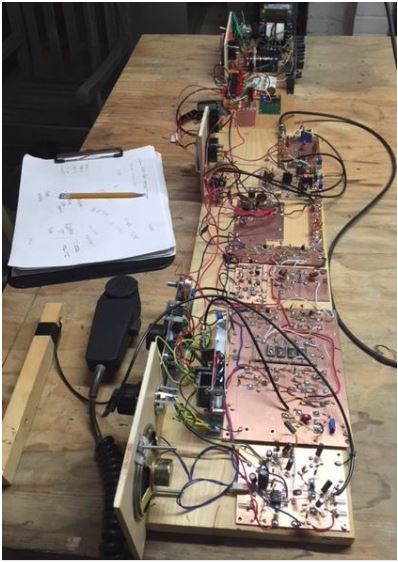
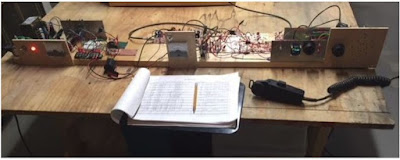
KC1FSZ’s Above Board, Al Fresco, Free Range, QRO, 4-Foot-Long, Wood-Based BITX
COULD THIS BE THE WORLD’S BIGGEST BITX?
HB2HB QSO with KC1FSZ and his Al Fresco Scratch-built BITX
Here’s a follow-up message from Bruce:
Hi Bill:
Termination Insensitive Amp Boards from VU3ZMV — Eagle Files

Bill:
The TIA , I tried to realise two such on a double sided pcb measuring less than an inch.
It mounts one TIA on each side. I suppose one could simply homebrew.
It has provision for 5 pin berg (male right angle) and would be easy to plug into the main board. We may not need PTH except the connector. We can use bare pins soldering on either side.
Here are the eagle files I created.
Termination Insensitive Amp Boards from VU3ZMV — Eagle Files

Bill:
The TIA , I tried to realise two such on a double sided pcb measuring less than an inch.
It mounts one TIA on each side. I suppose one could simply homebrew.
It has provision for 5 pin berg (male right angle) and would be easy to plug into the main board. We may not need PTH except the connector. We can use bare pins soldering on either side.
Here are the eagle files I created.
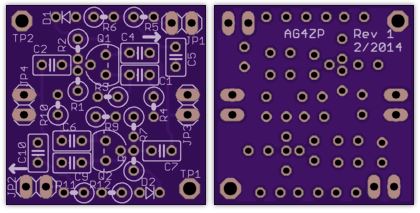
Another Source for BITX Amp Boards – AG4ZP
Thanks for sharing (the infor on the modular BITX boards). I actually had a similar idea a number of years ago and designed a small PCB for the ubiquitous BITX amplifier design. I have the project shared on OSH Park and you can get three of them shipped for $5.
The project is shared here.
73,
Ryan AG4ZP
https://oshpark.com/shared_projects/6mnfQQ6e
Modular BITX Boards
I’ve had a few emails regarding the modular BiTX build and I probably should clarify a few things. First, ON6RF has posted his gerber files on the link at Hackaday.com that I originally posted – just scroll down to around the middle of page to the ‘Files’ section. Since he has placed these in the public domain they are available to anyone that cares to download them. But, because it is HIS work, I’m not comfortable forwarding the files myself. I don’t know if he follows it but I’m sure that he can keep track of how many downloads have occurred and I’m certain he would be gratified to know that his work is appreciated. What I have offered is to make my gerber file for the motherboard available and, if I can manage it, I will post it here in the files section in the Modular BiTX folder. I will also include the pdf files that I created for each of the module showing component placement and values.
As for acquiring the circuit boards, as I stated earlier, I use PCBWAY.com for production. Their prices are excellent and the turn-around time is hard to beat. The cost of the panelized pc board for me was $5.00 for 10 boards with DHL shipping costs of $22.00 for a total of $27.00. I ordered the boards late on a Monday and DHL delivered the finished boards the following Monday morning. Their website says boards that measure 100X100 mm or smaller cost $5.00 for 10 boards so whether you order 1 or 10, the cost is the same. To complete the build you will need 3 boards to have enough bi-directional amp modules so, if you’re interested in following thru with building a modular version, you could perhaps join with two other interested parties and split the cost between you. With 3 boards you will be able to build a complete transceiver and have 2 extra modules for experimentation for every section except the bi-directional amps. As an example, on my first prototype I built the double balanced mixer as designed and a second one using an ADE-1 to compare the results. For the record, there was absolutely no noticeable difference between the two. I also built a 4-crystal filter as designed and an 8-crystal QER filter on a second board for comparison. There was a definite difference between these two modules.
I hope this clears up some of the questions and I’m still available via direct email to answer questions specific to my build or class presentation. I’m currently working on the assembly manual for my class and when finished I will post it also in the files section.
–73– Mike — W0MNE
AE7KI (VK2APG), FT8, and WAS on a BITX20
K.P.S. Kang’s Minimalist VXOs (and one for the BITX)

FDIM: Bob Crane Interviews Ashhar Farhan VU2ESE
At Dayton, Bob Crane interviewed our friend Farhan VU2ESE. Farhan shared insights on the BITX, the Minima and future rigs.
Farhan was inducted into the QRP Hall of Fame at this year’s FDIM event.
You can listen to the interview here:
http://soldersmoke.com/FDIM17VU2ESE.mp3
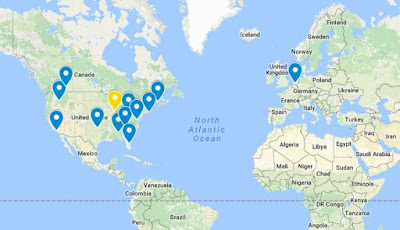
Put Yourself on the BITX Map
On Jun 9, 2017, at 4:53 PM, Doug W wrote:
Seeing the topics for regional operator lists got me thinking. If words are good, pictures are better. I set up a google map that you can add yourself too to help visualize where everyone is located. I was going to add people that responded to the other topics but out of respect for privacy (and my laziness) this should be entirely opt in only. The map is only accessible with the link below. The interface is reasonably intuitive but I will do my best to explain how to add yourself.
go to
https://drive.google.com/open?id=1Oa_egVdStSJBF5C7mpS6MXrkces&usp=sharing
type your address in the search bar on the top of the map (the box with the magnifying glass to the right)
hit enter or click the magnifying glass
verify the location displayed
click add to map at the bottom of the box that pops up
now click the pencil/edit icon at the bottom right of the box
change the highlighted address to your call sign and click save at the bottom left of the box
you can also add more information to your spot if you choose to
bookmark the link and check back as more people add themselves
I am making this sound much more complicated than it is. If anyone can describe the process better please do.
Indonesian BITX: Check out the BRITX
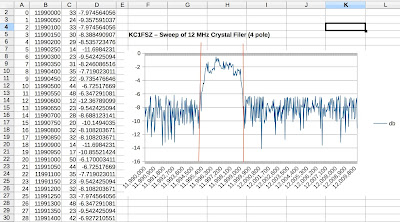
Homebrew Peppermint BITX: KC1FSZ Goes Scratch-built and Sweeps a Filter
Hi Bill/Pete:
With low expectations (and wires that are too long), I ran a few seeps and then downloaded the data onto my computer for analysis. No fancy software here, I’m just using Excel. When I put the data into a line chart in Excel, what emerged from the jumble of seemingly random numbers was a thing of beauty: a 3.5 KC passband right below 12 MHz. It’s the next stage beyond the Joy of Oscillation: The Joy Of Selectivity!