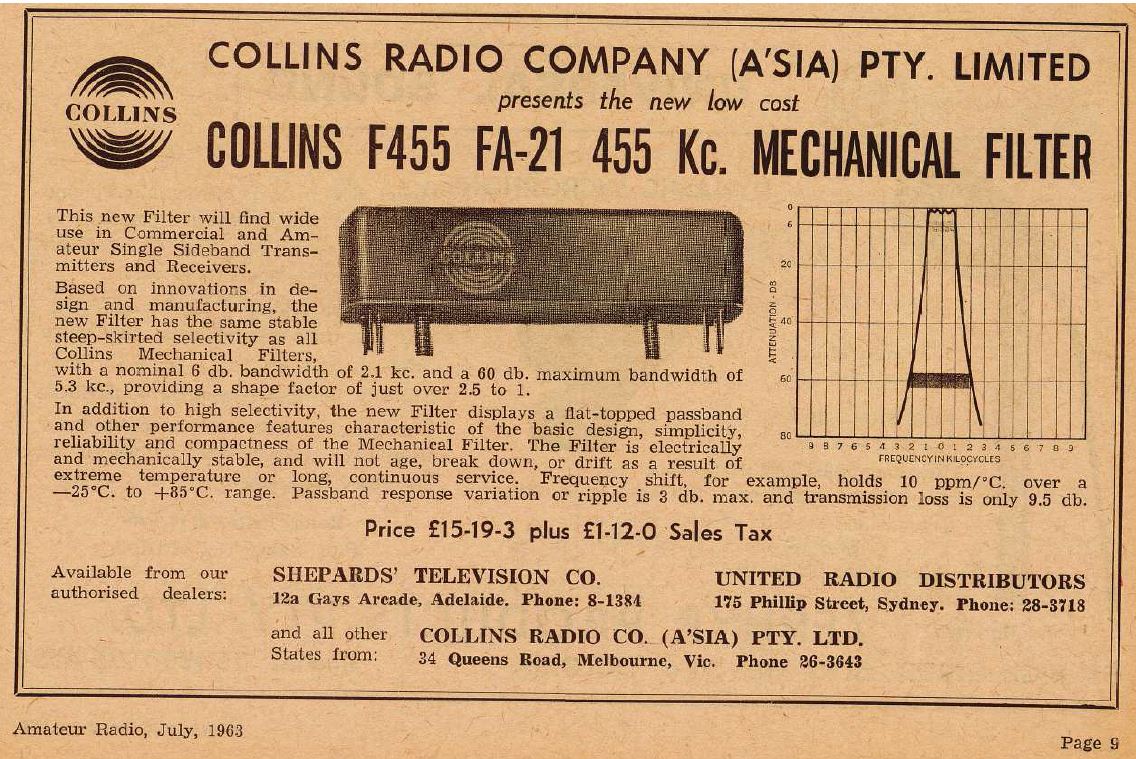
Peter VK2EMU sent me this ad a while back. He said he regretted being unable to send a filter — all he could send was the ad. Thanks Peter — I think that ad is a work of art. Radio art. Thanks too to all those who sent me mechanical filters. Pete sent the first one (it is currently in my HRO-ish receiver), then two more (both inside SBE transceivers, where they will remain — it would be a sin to cannibalize those beautiful rigs.) Then Mike Herr WA6ARA sent one as did Brad. Brad assures me that the one he sent was boxed up by Art Collins himself! Thanks again guys.
Brad wrote:
To:soldersmoke@yahoo.com
Jun 23 at 7:49 AM
Kudos to Pete for 60 years! And I’ve always thought he was much younger than you……
Catching up on your podcast, I was surprised to learn that no one answered your call for a spare filter.
I’m one of those older guys who is making his way back after leaving amateur radio in 1968 for girls and/or recreational drugs.
No one told me that The Force (electro-motive, that is) would require me to catch up on all the junk I would have acquired during my nearly 50 years away from the hobby (see list below).
A recent impulse purchase, the most beautiful thing with tubes ever made (SX-42), happened to be near Newington. On the way home I visited ARRL HQ hoping they had some sort of a chapel where I could perform an act of penance and ask for guidance in dealing with my affliction. Apparently, this is the equivalent of asking a crack dealer where the closest Narcotics Anonymous meeting is held. I ended up buying a copy of “200 Meters and Down” and have since acquired a couple of Atwater Kent projects.
My place is full now, and my sweetheart would like back the half of her garage I’ve slowly taken by electronic eminent domain. It seems that for every 100 pounds that departs to a ham fest, 125 pounds comes back. Is this considered a normal ratio?
In order to be able to tell her that I have, indeed, gotten rid of something, I’ll be sending you a F 455 filter (QRZ address OK?).
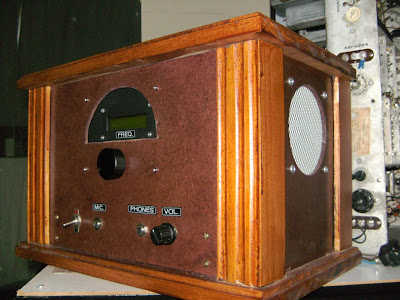
Now that, my friends, is a BEAUTIFUL uBITX. Stephen VK2BLQ put that one together. Peter VK2TPM helped him get the KD8CEC software into his Raduino (Stephen had trouble getting it to compile on his Raspberry Pi). For me there is good news and bad news here. The bad news is that I can no longer tell people that mine is the only “wooden box” rig that they will ever work. The good news is that I am no longer alone.
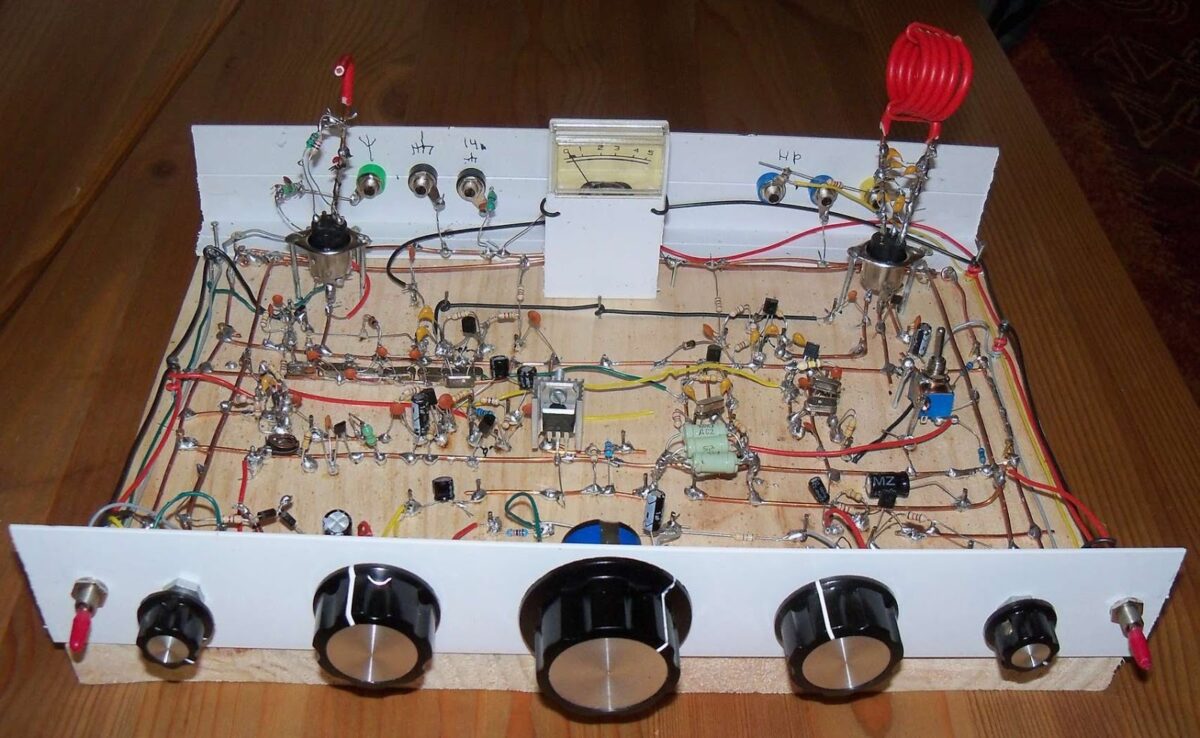
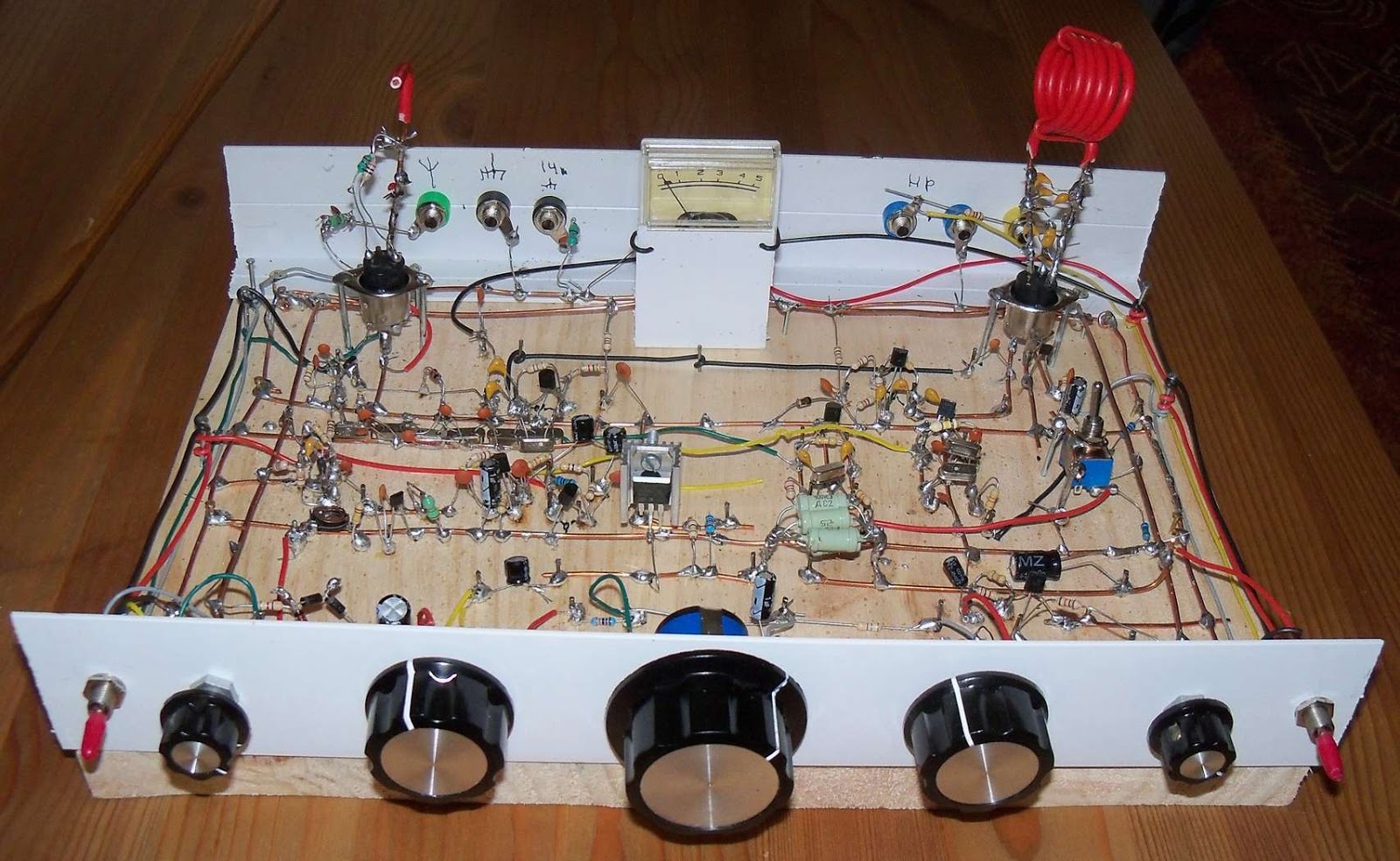
Pete WB9FLW reminds us that Olivier F5LVG has LONG been using copper nails and wood boards to build amazing rigs. See above for one magnificent example. That, my friends, is a superhet receiver. Inspirational!
A few posts back we asked for nominations for the official name of this technique. We still have to consult with Steve Silverman on this, but the nominations are:
Armand WA1UQO (perhaps reflecting his proximity to Washingotn DC) “Wire-Tapping”
Gary Hinson: “Coffin Dodging” (sounds a bit dodgy to me).
And the front runner so far, from Melbourne, Australia — drum roll please:
Peter Parker: “NAILBOARDING.” (Peter thinks he nailed it with that one. I tend to agree.)
Be sure to read about Peter’s ankle manacles — he apparently uses them to get a good ground (sea) plane while running pedestrian mobile on the sea shore. Peter is DEDICATED!
Jean Shepherd used to say that in life, many of us come to a fork in the road: down one path lies success. Down the other, ham radio flea markets. Alan Yates is proving Shep to be WRONG. I have fond memories of Billy and I building many versions of Alan’s trivial electric motor. We look forward to his virtual reality.
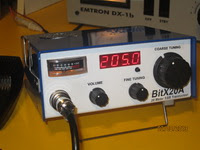
I’ve had several very nice conversations with Gerry AE7KI (aka VK2APG). His Australian accent sets him apart from the other Tennessee stations. Last time we talked Gerry mentioned having competed Worked All States with his BITX20 (below). Very cool.
Gerry also alerted me to a new digital mode created by Joe Taylor. This one is called FT8. Gerry is using it to good effect on the 6 meter band. Here is Peter Marks’ initial reaction to FT8:
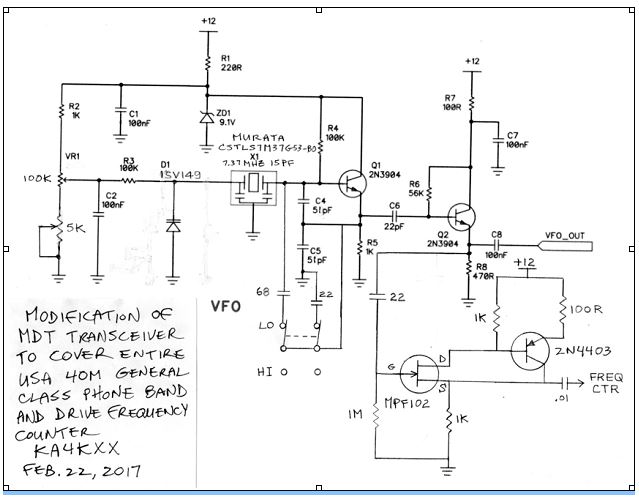
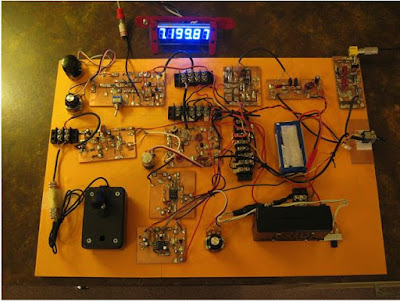
A while back we ran a post about the MDT 40 DSB rig out of Australia. Walter KA4KXX liked the design so much that he built his own version and, with it, made his first homebrew phone contacts. I always say that DSB is a great way to break into the world of microphones. Walter is obviously on the right path — not only did he come up with a nice Al Fresco DSB rig, but he modified the VFO to get additional coverage and to incorporate a frequency counter. FB Walter! Walter KA4KXX writes: Since I earned my Ham Radio license in about 1979, I have always operated only on CW since I like to build all my own equipment, but recently at the SolderSmoke website I discovered the MDT 40 Meter DSB Transceiver, and decided this was the design I had always been looking for to finally build and operate on phone. After I made my first phone contact after only 5 minutes of trying, just a few weeks ago, I was so excited I sent an email thanking designer Leon of ozqrp.com.
Then I modified the VFO further to cover the entire 40 meter USA General Class License phone band, which is 7.175 – 7.300, in two overlapping steps. I also added a 5K fine frequency adjustment, used a more friendly 1SV149 Varactor diode which I purchased on EBay at very low cost, and also added a high impedance buffer (found at the website listed below) to the VFO to drive a frequency counter. http://www.arising.com.au/people/Holland/Ralph/buffer/highimpedanceprobe.htm I was able to implement these modifications very easily since I always make my own un-crowded state-by-stage Manhattan style circuit boards and build first on a breadboard. So far I am very pleased with the results.
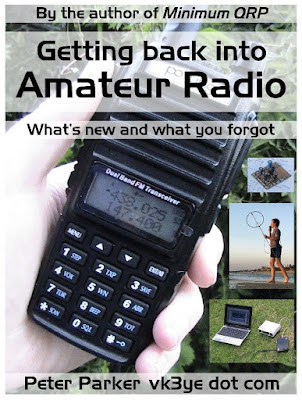
Homebrew Hero Peter Parker has a new book on the market. I was really taken by his description of the joys of restoring older gear. Peter really nails it. Here is an excerpt:
Vintage Equipment
The collection, restoration and use of historical equipment is another movement in amateur radio. The musty smell of warming dust, the heavy clunk of rotary switches and the velvet smoothness of precision tuning drives are joys of every use. Such sensuality is absent from modern plastic-fronted, wobbly-knobbed transceivers. Old rig cabinets felt they had something in them. A kick would hurt you more than them. And etched panel markings confirmed they were built to last. Unlike today’s dainty push buttons with stunted travel and disembodied beep, toggle switches showed you where they stood. Weight, life and play made adjusting controls for nulls and peaks (as often required) both a pleasure and occasional frustration. Even if only as mechanical backlash on a bad tuning dial, it was as if the equipment was telling you something, like a ridden horse does through its reins. Not like newer gear’s lack of tactility which is like a ‘dead fish’ handshake, all take and no give. There are psychic as well as physical joys. The thrill of bringing neglected or dead equipment to life drives many. It’s an underestimated skill. You start with nothing and almost anything done represents progress when building from scratch. Whereas with a repair it is very easy to render something that’s 80% good completely useless with a careless drop or slip. More about ‘Getting back into Amateur Radio’ is at http://home.alphalink.com.au/~parkerp/gettingback.htm & the video at https://www.youtube.com/watch?v=g4ktP5K4x-I
Rob VK4FFAB wrote a really nice series on how to get started with the LTSPICE circuit simulator. I’m sure these articles will also have a lot to offer for those of us who’ve been using LTSPICE for a while now. Thanks Rob! Rob’s articles can be found here: http://vk4ffab.info/lt-spice-for-radio-amateurs/
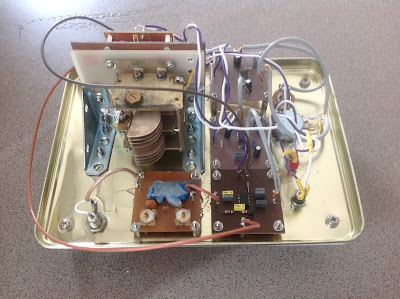
The enclosure came first, then the radio. The Homebrew challenge – build something in a Christmas Biscuit tin – only one rule, no mains power.
Step one – eat the contents.
VK2WI is an Australian version of W1AW and transmits weekly new bulletins on a number of bands from 160m to 23cm. On 80m the frequency is 3595kHz, so let’s build a DC receiver for that.
I used a 7190kHz crystal, divided by 2 with a 74HC74 to get 3595kHz. The rest of the radio is pretty standard – double tuned front end, NE612 mixer, followed by a TL071 and a LM386. The reduction drive on the tuning cap gives a band spread of about +/- 300Hz.
The boards are all 2 inch x 2 inch and made on a PCB mill that I was given a few years ago.
There should be enough room in the bottom of the tin a pack of 8 C cells to make the radio truly portable. Next step is to fit an audio low pass filter.
It is a pleasure to sit on the rear porch and listen to the Sunday night broadcast on a home brewed radio, while eating the contents of another identical tin – I wonder what I will do with that one?
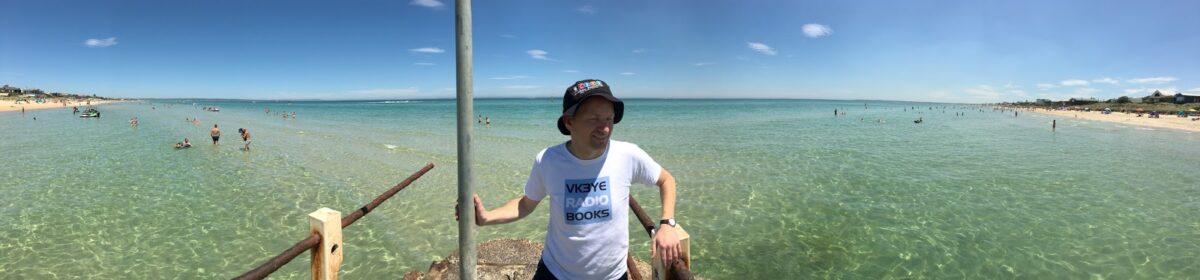
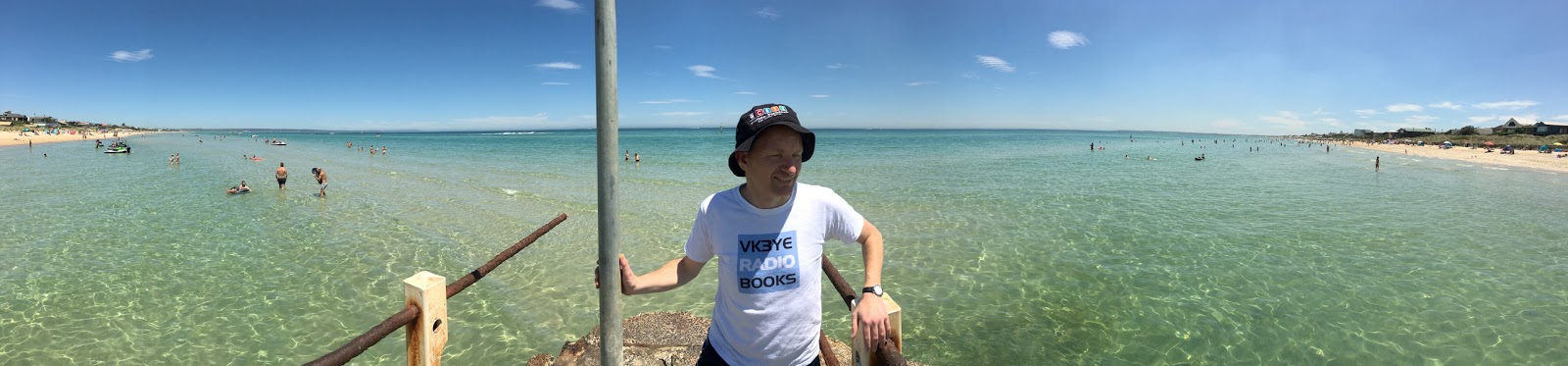
Last weekend Homebrew Hero Peter Parker VK3YE hosted another of his amazing twice-yearly QRP events. It was at a park near the iconic Chelsea Pier in Melbourne. Peter Marks VK2TPM sent a very nice write-up with pictures: http://blog.marxy.org/2017/02/qrp-by-bay.html And a nice audio report: http://s3.marxy.org.s3.amazonaws.com/audio/QRP_By_the_Bay_2017.wav Peter Marks reports that most of the on-the-air activity was on the 120 foot ham band (40 meters for you modernists).Many BITX40’s were on display.
Report from Pete on BITX 40 Session with California radio club.
Update on the BITX40 Module Revolution — Check out the BITXHACKS page. Send in contributions. — BITX20 mailing list very active. — Raduino! — Interview with Farhan with W5KUB — Eliminating the commercial gear. — BITX 40s on the beach in Australia. FB
Bench Reports:
Pete: — Color Displays! — KWM-4 — OLED MADNESS!
Bill: — Fixing up the old HT-37 HT37 to HT37 QSO with W1ZB — Dabbling in VHF with Ramsey Aircraft band receiver. NOT FUN. — Going all IC with Si5351 OLED NE602 rig. — BANDSWEEP — OLED Noise and the Active Decoupling solution.
Using LTSPICE as a diagnostic or understanding tool.
Of Waterfalls, Homebrew Rigs and Casual Critics on 40 meters. Words of Wisdom from W8JI.
LEXICON: HAYWIRE TOMBSTONE BIKESHEDDING from Todd K7TFC
Some great recent interviews by Eric 4Z1UG: Ian G3ROO Origins of ROO Regen at age 8 Hans Summers G0UPL Balloons! NO COMMECIAL GEAR David White WN5Y ELECTROLUMINESCENT RECEIVER EXPLAINED Rob Sherwood NC0B
MAILBAG:
Chris KD4PBJ’s BITX 40 with improved stability Jerry W0PWE built a DIGITIA! Very nice. Worked Keith N6ORS and heard me! TRGHS Mike AB1YK’s Al Fresco Scratch built BITX. But give that LC VFO another chance Mike! Steve N8NM 30 meter rig with salvaged CB LC VFO. FB Keith N6ORS Franken SDR rig with parts from the 1980s. FB SKN Bandscan from Mike WA6ARA I worked W1PID Jim! What is Mikele up to? Rocking Johannesburg and Kirghizstan via local repeaters:
There is so much great homebrewing going on down-under. It makes me jealous. And so much of it is for phone. FB. I really like VK3YE’s sand graphic proclaiming to the world (or at least to the beach!) that a BITX40 to BITX40 contact had been made.
Looks like both rigs were using VK3YE’s ceramic resonator mod for the VFO.
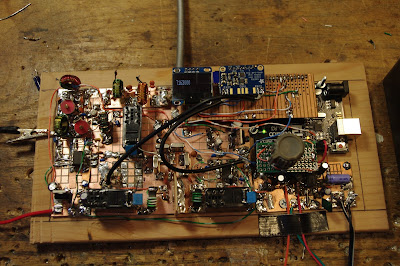
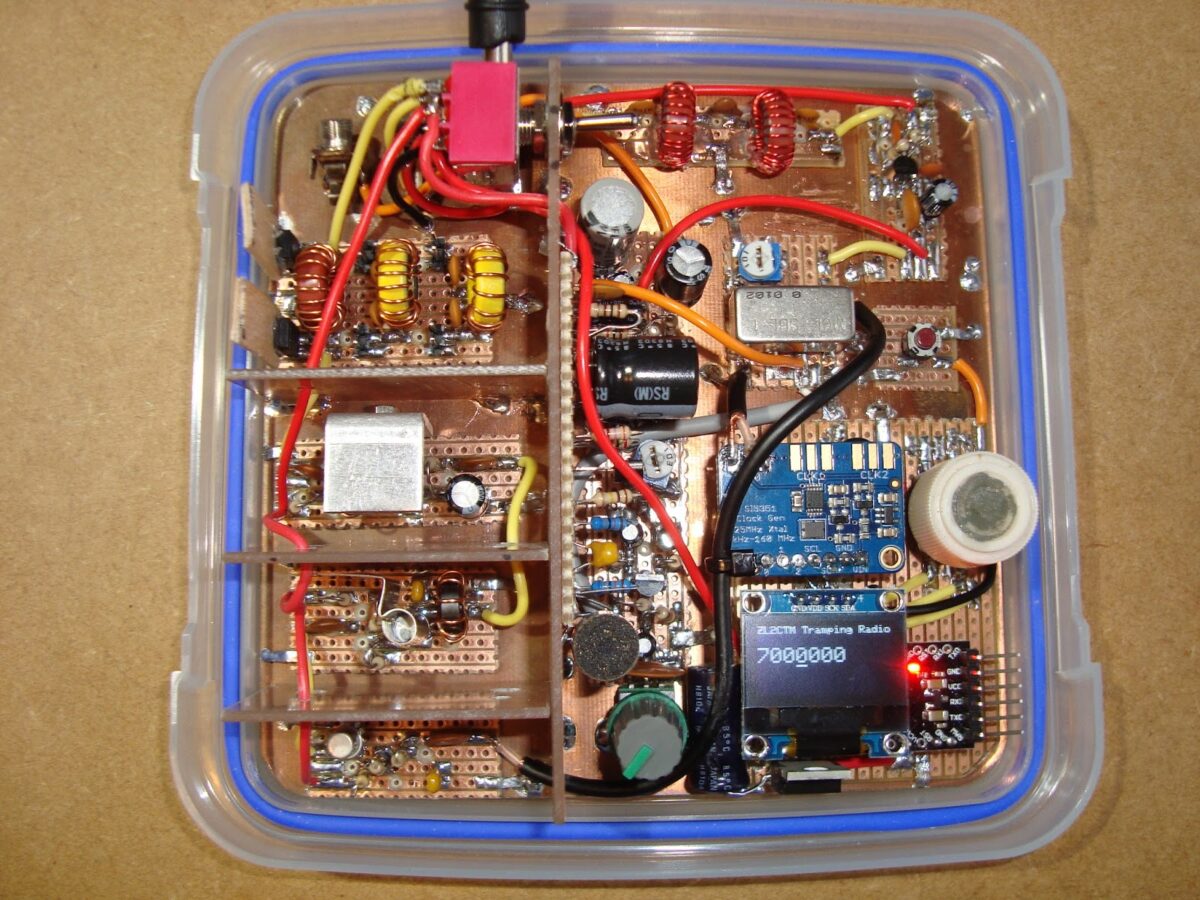
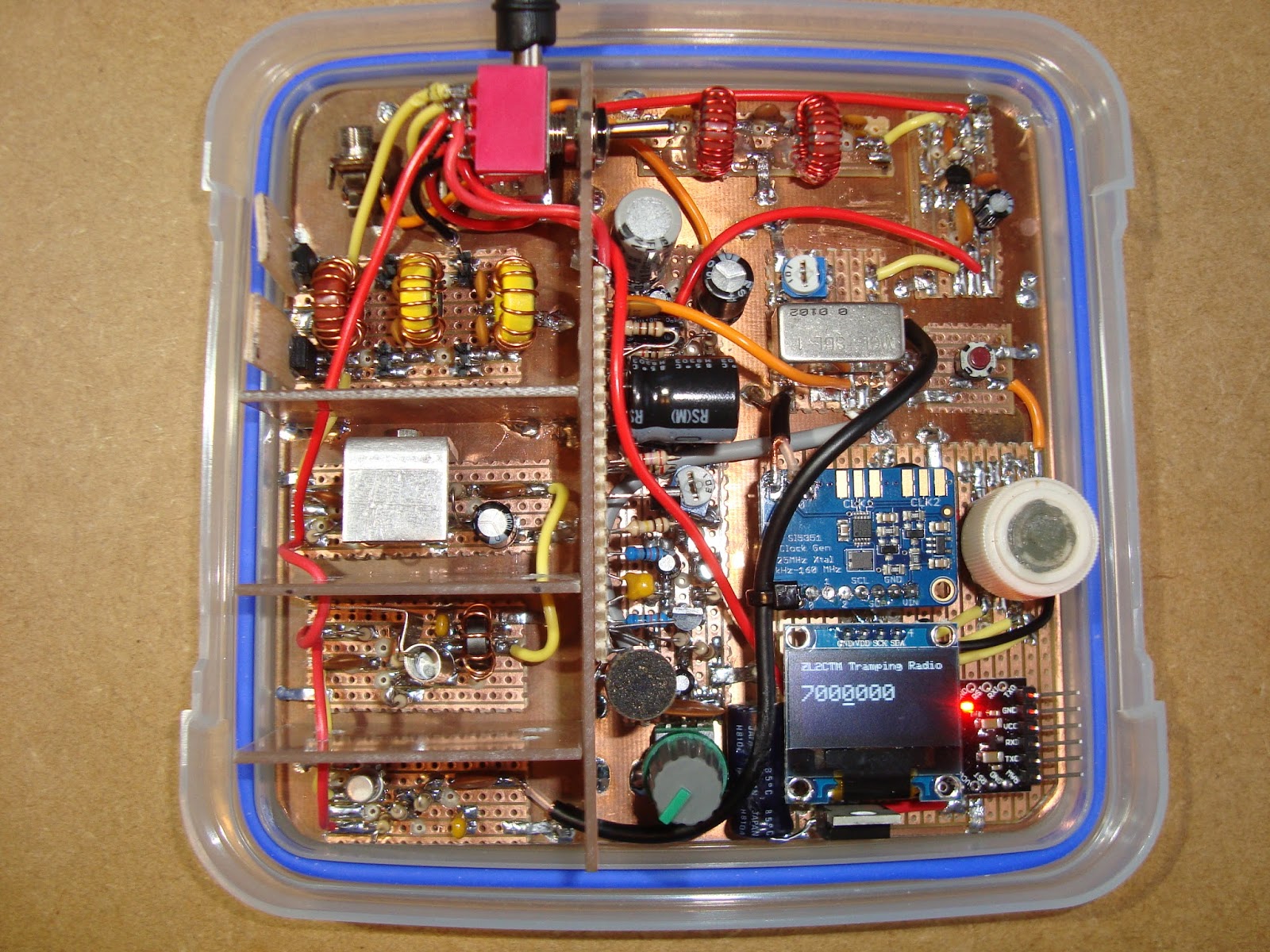
So many great Double Sideband projects come from Down Under. There are the various versions of the famed ZL2BMI rig. And Peter Parker VK3YE has long been the acknowledged guru of DSB. In fact, Peter sent me an enthusiastic e-mail about the new ZL DSB rig pictured above — his e-mail arrived before the message (below) from the intrepid builder. I detect a bit of the “Tucker Tin” influence in this rig. (But perhaps this one is more Tupper than Tucker!) Charlie’s work has graced out blog posts before: http://soldersmoke.blogspot.com/search?q=zl2ctm
You asked recently on the podcast for listeners to let you know what they had on their work bench. Well I’ve been working on a tramping (hiking) radio, which is now complete. It’s a DSB 5W rig designed for 80, 40 and 20m, as well as our New Zealand mountain safety radio system. I designed everything in LTSpice as was suggested by Pete, N6QW. That was great, as I could ‘desolder’ components with the mouse and instantly see what impact it had on the output. An amazing tool that’s free! I highly recommend it.
Once again I’ve used upside down strip board for each stage, which are tacked down onto an un-etched copper board (earth plane). That seems to work really well for me.
The rig uses an Arduino mini driving a small OLED screen and a Si5351 DDS. The Si5351 is going straight into a SBL-1, which seems to work fine too. The AF strip is a 2N3904 before a LM386, which has enough drive to run a speaker. The TX amplifier is a three stage one with shielding between each stage. It’s made up of two 2N2222A stages followed by a BD139. That in turn is followed by three simple filters, one each for 80, 40 and 20m.
The next project will be a proper SSB rig using a crystal filter salvaged from an old Codan 7727. Like this one, it will use an Arduino and a Si5351.
Finally, I am certainly no expert in homebrew, but I hope my ‘dabbling’ will help inspire others to pick up the soldering iron and give it a go. If I can do it, then anybody can! There is certainly a great sense of achievement to operate a rig you built yourself.
Regards, and thanks to you and Pete for all your inspiration.