
Aeronautical Mobile Contact from the Dominican Republic

767

On the morning of January 9, 2020, I was up early, sitting alone out in my open-air tropical hamshack on Bahia Rincon on the Samana peninsula of the Dominican Republic. I had been looking at the stars. As the sky brightened I was listening to band noise from a still-dead 20 meter band on my uBITX.

Skies were partly cloudy. The Big Dipper hung upside down in front of me. I had also seen Corvus, Scorpio, Andromeda, and Leo. There were a few meteors and one bright satellite.

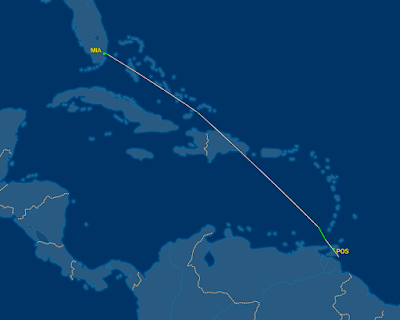
But 20 was quiet… until, suddenly, BOOM! A very loud and clear SSB signal came through. It was KX4WE/Aeronautical Mobile. Mike was in a 767. I called him and he came back right away, giving me a 57 report. He gave his position as 170 miles Northwest of San Juan, Puerto Rico. He was heading to Port-o-Spain, Trinidad from Miami. We had a quick QSO — it reminded me a lot of my contacts with the MIR space station from Santo Domingo in the mid-1990s. Suddenly Mike’s signal dropped very significantly. I figured that he had moved further south and was no longer line-of-site with me. I had some hills to my south and they were now attenuating Mike’s signal. I could hear him working M0NKL. We were Mike’s only two contacts on 20.

I realized later that had I looked up, I might have seen the lights of the plane. Below is the track of the aircraft. He was at 35,000 feet when he passed over the DR.
This contact was a lot of fun. Thanks Mike!


Transit of Mercury, 11 November 2019, and a Transit of Venus and Some Sunspots from 2012

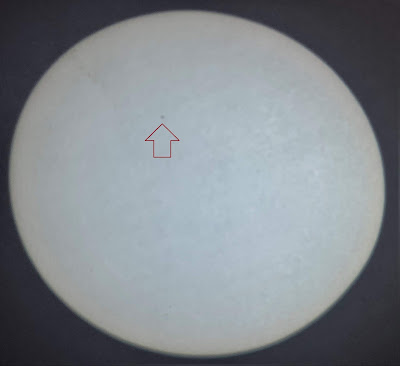
Above: Transit of Mercury, November 11, 2019 as I saw it from Northern Virginia using a 4.5 inch reflector with image projected onto a white paper. Elisa took the picture with her I-phone. Arrow shows Mercury. I almost missed it — Billy texted from college to remind me of the big event.

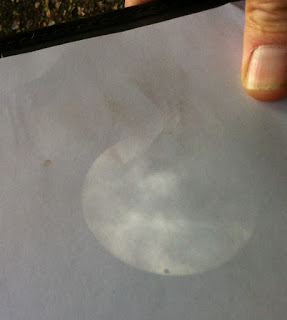
Above: Transit of Venus June 6, 2012 as seen from Northern Virginia. Billy (age 13) took the picture with his I-phone 4. Venus is much bigger, much closer and much easier to see. Near the bottom edge of the solar disc.
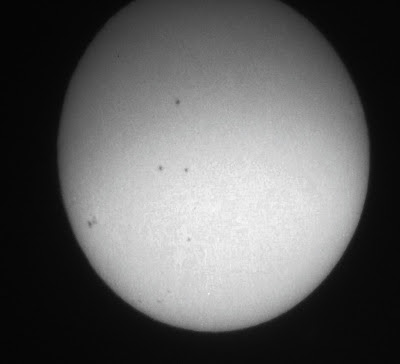
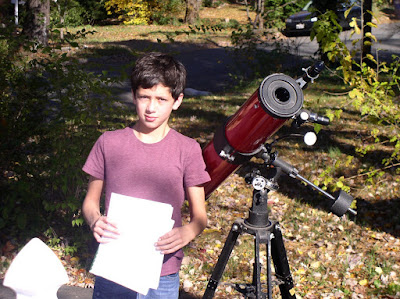
Above; Billy on November 12, 2011 with the 4.5 inch Tasco Reflector that was used on BOTH the Venus and Mercury transits (we projected the image on paper). On this day we were using our newfound solar photography expertise to take a picture of sunspots (our picture below).

Ah, those were the days! Many spots back then. None now.

Nobel Prize winner Joe Taylor, K1JT, Talks to a Radio Club

Really great to see this session with Nobel Prize winner Joe Taylor, K1JT.
I liked his comments on his use of his retirement office at Princeton, University.
I also liked his slide on how far below the noise level you can go with various modes.
And then there was his reminder to 1) RTFM and 2) be sure to check the EME delay box so that your software will get the timing right when working earth-moon-earth.

“Pulsars keep good time.”

Two Videos from Other Kinds of Workshops — Dobson Makes a Telescope, Peter Builds an Airplane


Above you can watch a video showing the legendary John Dobson making a big telescope. Born in Beijing, Dobson is the former Hindu monk who left the monastery to show people how to make big telescopes out of shipping tubes and port-hole glass. Think of it as the BITX of amateur astronomy. Dobson is the founder of the “sidewalk astronomy” movement — that’s when you set up your ‘scope on an urban sidewalk and show the wonders of the universe (or at least the solar system) to passers-by. We did this in London with Saturn. (Some of the cynical Londoners couldn’t believe it was real — they thought I had a transparency in the scope tube.) Dobson developed a very simple and popular method of mounting telescope tubes — the “Dobsonian” method.

More on Dobson here: https://en.wikipedia.org/wiki/John_Dobson_(amateur_astronomer)

Below you can see a short update on Peter’s homebrew airplane.

ANOTHER Nobel Prize Winner with THE KNACK

When I heard that the guys who ran the LIGO gravitation wave experiment won this year’s Nobel Prize for physics, something told me that at least one of those involved in this historic detection of weak distant signals would have THE KNACK. It did not take me long to confirm this. Rainer Weiss (above) definitely has had the THE KNACK all his life. And what an interesting life it is. Check it out:
http://www.sciencemag.org/news/2016/08/meet-college-dropout-who-invented-gravitational-wave-detector

Knackish excerpts:

The family soon had to flee again, when U.K. Prime Minister Neville Chamberlain signed an accord ceding parts of Czechoslovakia to Germany. They heard the news on the night of 30 September 1938, while on vacation in the Tatra Mountains in Slovakia. As Chamberlain’s address blared from the hotel’s massive radio, 6-year-old Rainer stared in fascination at the glowing array of vacuum tubes inside the cabinet. The hotel emptied overnight as people fled to Prague.

As a teenager, Weiss developed two passions: classical music and electronics. Snapping up army surplus parts, he repaired radios out of his bedroom. He even made a deal with the local toughs: If they left him alone as he lugged radios to and from the subway, he’d fix theirs for free. “They would steal things and I would have to fix them,” he says. “It wasn’t a good deal.”

Weiss was drawn to tinkering partly as a reaction to his family’s cerebral atmosphere. “This is a German-refugee kid with very self-consciously cultured parents, and he’s rebelling against them by doing things with his hands,” Benjamin says. “But he’s surely not rejecting doing things with his head.”

He applied to MIT to study electrical engineering so that he could solve a problem in hi-fi—how to suppress the hiss made by the shellac records of the day. But electrical engineering courses disappointed him, as they focused more on power plants than on hi-fi. So Weiss switched to physics—the major that had, he says, the fewest requirements.

Pre-eclipse Solar Observation

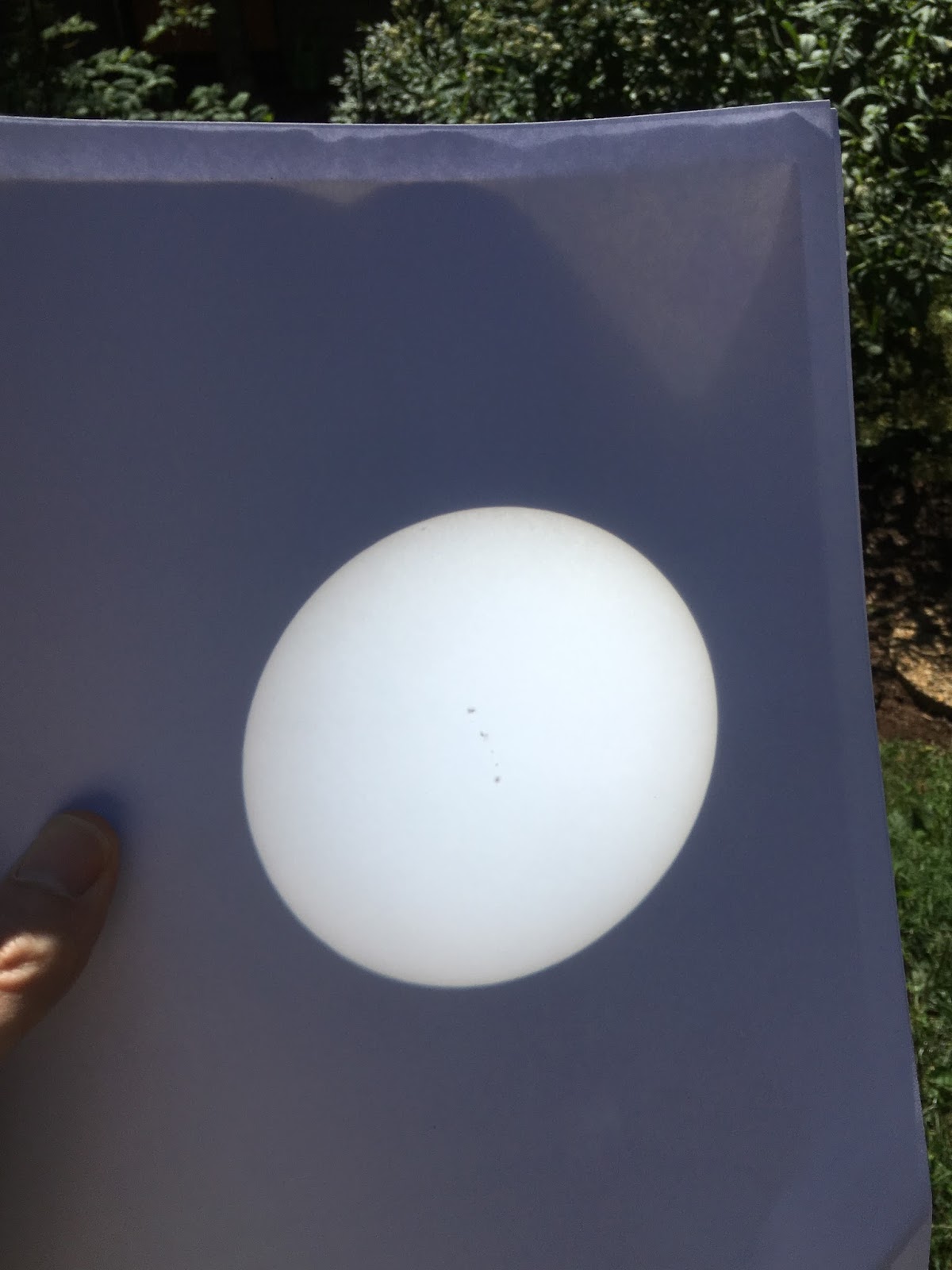
I’m not sure if I’ll be able to get a look at the eclipse tomorrow — I’ll be at work, and in any case Washington DC will be far from the zone of totality. But all the eclipse talk made me want to get my old 4 inch reflector telescope out today for at least one solar observation. And yes, I know not to look through the ‘scope. I projected the image onto a piece of white paper. Notice the three large sunspots at the center of the solar disk. Pretty cool.

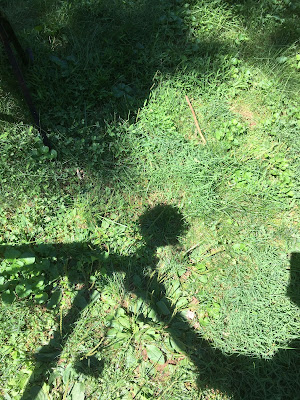
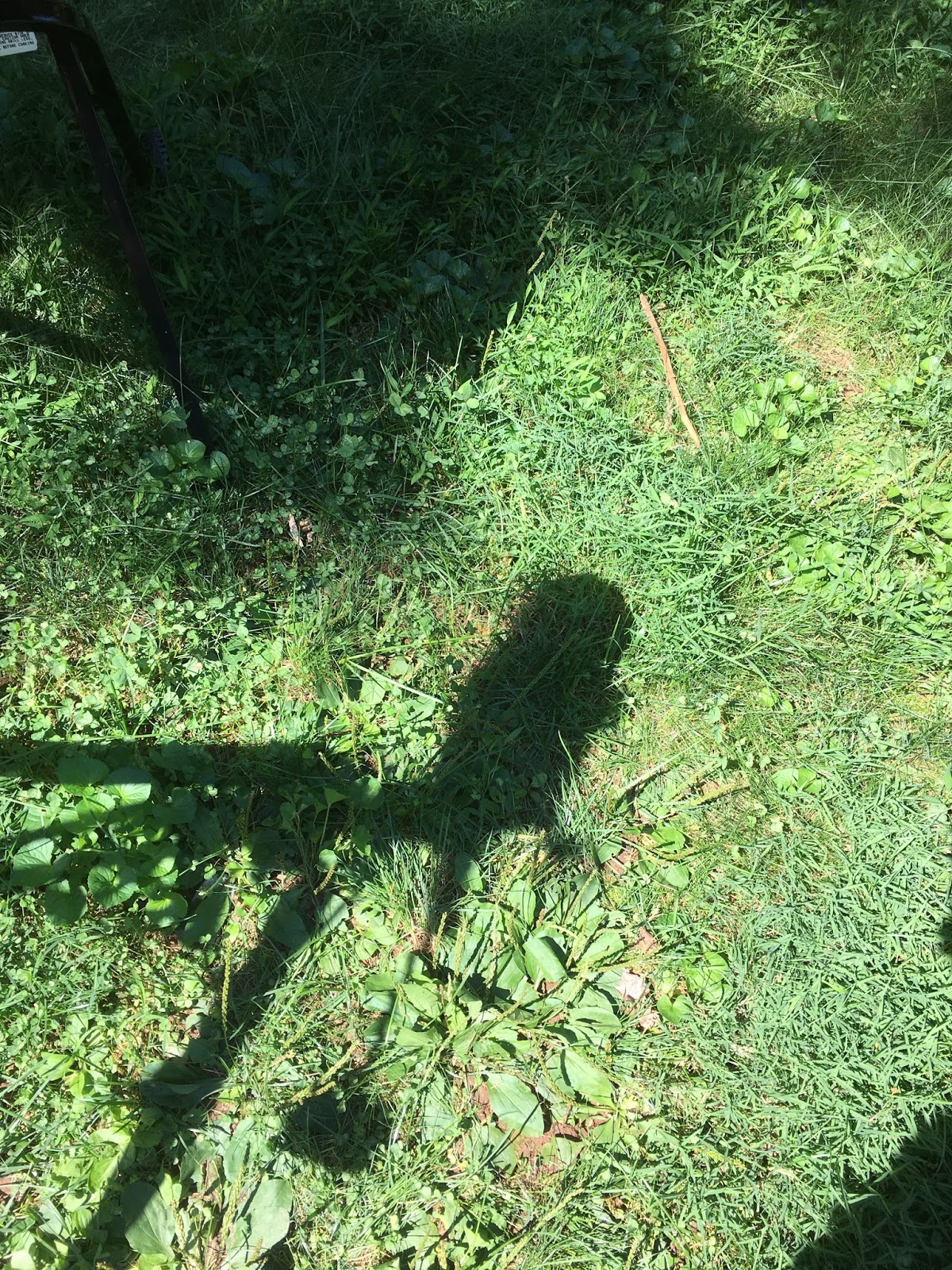
BTW, it is easy to aim the scope at the sun without endangering your eyesight. Don’t ever put your eye to an eyepiece (even on the spotting or aiming ‘scope) when ole’ sol is in the sky! Instead, just look at the shadow that the scope tube is casting on the ground. Make it circular and you will be very close to having the main tube aimed at the sun. See below.


I like to have the eyepiece aimed down at the ground or well above horizontal to avoid the danger of someone accidentally walking through the powerful sunbeam coming out of the eyepiece. You do have to be careful, especially if there are kids around.

Gravitational Waves, A GREAT VIDEO, Phasing, and Joe Taylor K1JT

Wow, you really have to spend 20 minutes and watch the video (above). It is really well done. I loved it. I give it FIVE SOLDERING IRONS!

And big news today! They did it! Gravitational waves finally detected. Here is a good New York Times article that includes a recording of the signal, a nice NYT video that has a good explanation (with phasing!) of how lasers are used in the massive detectors, and mention of Joe Taylor, K1JT, whose Nobel Prize winning work contributed to this great discovery.

http://www.nytimes.com/2016/02/12/science/ligo-gravitational-waves-black-holes-einstein.html?partner=rss&emc=rss&_r=0

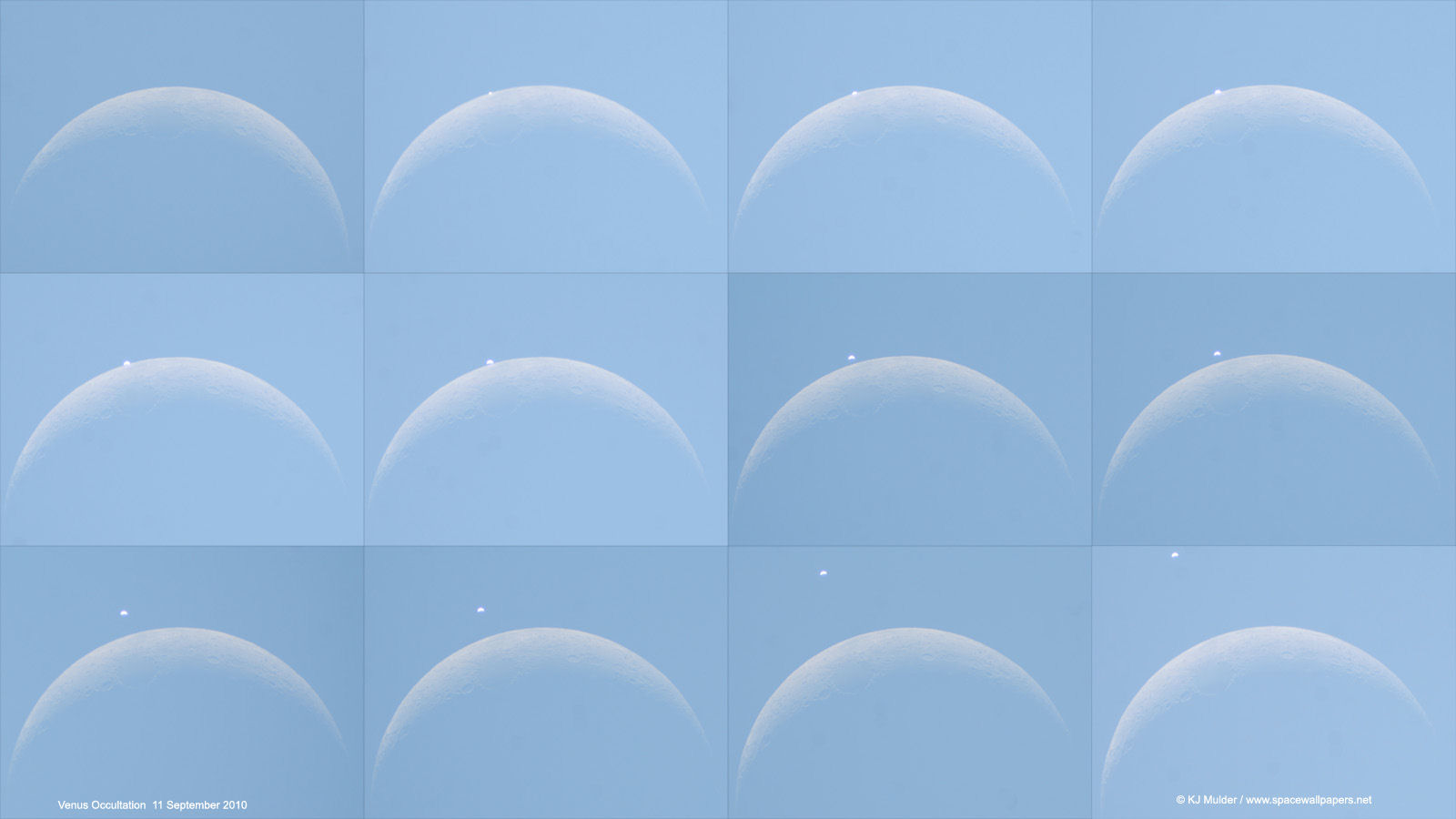
Daytime Occultation of Venus TODAY! LUNCHTIME (on East Coast)

Thanks to my Michael EI0CL for alerting us to this. It will happen today, very conveniently at lunchtime on the East Coast of North America. I may have to bring my Soviet binoculars to work.

Details here: http://spaceweather.com/

It has already been a nice day for astronomy here in the wilds of Northern Virgina. National Public Radio on Sunday alerted me to the fact that Mars is high in the pre-dawn sky. Our friend Armand e-mailed alerting me to possible clear skies this morning. The leaves are down and no longer obstructing my view of the Southern sky. With my six inch telescope I got a very nice view of Jupiter and the four Galilean moons. We are pretty far away from Mars at this point, so I could see no surface feaures, but it is always nice to see that distinctively red disk. And Venus is poised to disappear behind the moon.

Good luck with Venus and the Moon. Please send in reports.

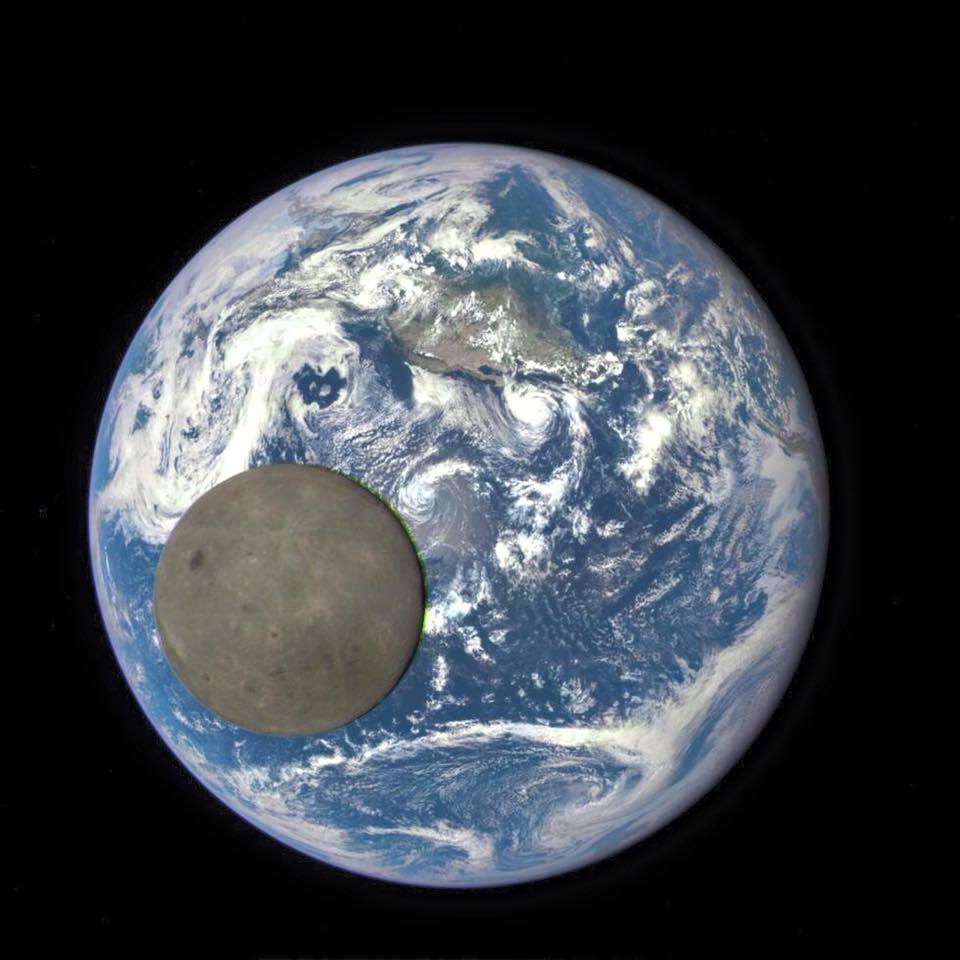
And speaking of occultations, check this one out (thanks to Farhan for the alert):

The moon passed between Nasa’s Deep Space Climate Observatory and the Earth, allowing the satellite to capture this rare image of the moon’s far side in full sunlight. We normally don’t see this side of the moon. As the moon is tidally locked to the earth and doesn’t rotate, we only ever see the one face from the earth. Awesome shot!

Listening UP for KIC 846

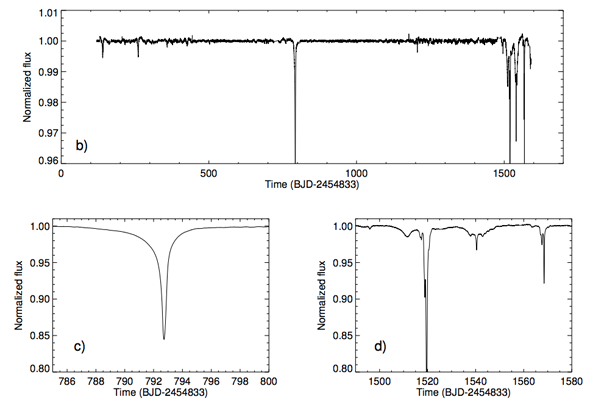
How's SETI's investigation of peculiar star KIC 846 2852 going? @EricCMack checks in https://t.co/4roQ7nbDk9

Since October 16, the SETI institute has been using its Allen Telescope Array to observe KIC 846 2852 over a wide range of radio frequencies (1 to 10 GHz), looking for any artificial signals. Keep in mind that this star system is relatively far, roughly 1400 light-years away. That’s more distant than the Orion Nebula, and getting there (if you feel the need) would require a 23 million year ride in our fastest rocket. But more to the point, any signals detectable here on Earth would have to be exceptionally powerful.
We’re continuing to analyze the data. In another week, our SETI team will once again observe KIC 846 2852 using some new receivers being affixed to the Allen Array – known as Antonio feeds – that will increase the sensitivity by a factor of two. Check this space.
Meanwhile, consider KIC 846 2852 as something suggestive of cosmic company, but no more than a suggestion.

Real DX: The Mysterious Flicker of KIC 846

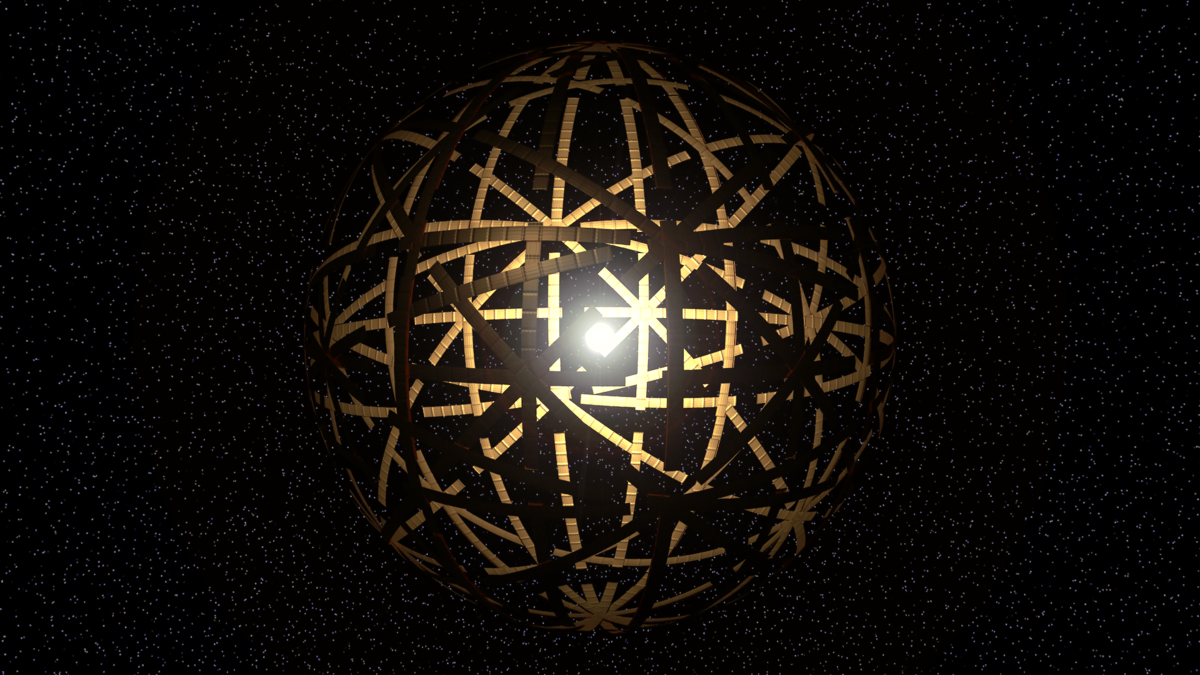
Artist's conception of a Dyson Sphere. Image Credit: Kevin Gill via Flickr CC By SA 2.0
Artist conception of a Dyson Sphere Alien Mega-structure

This story somehow seemed appropriate for Halloween. But it is for real (this is Halloween, not April 1!). The role of amateur scientists in this matter is especially interesting, as is the radio-astronomy follow-up. Stay tuned!

A VERY Quiet Shack, 4850 Feet Below the Surface

Michael Rainey’s underground shack in Vermont is undeniably cool, but these folks have REALLY gone deep. They are almost a mile down, blocking out that nasty cosmic ray QRN, building sensitive detectors to QSO with some extremely elusive DX: DARK MATTER.

SEE IF YOU CAN SPOT THE TEK ‘SCOPE.

Wonderful video. Thanks to Ira Flatow and Science Friday.

SolderSmoke Podcast #170 Double A DX-pedition, SI5351, Mighty Mites, Phasing Dreams

SolderSmoke Podcast #170 is available:

http://soldersmoke.com/soldersmoke170.mp3

Bill’s Double A, DSB, Dipole, Dominican DX-pedition.
Living the “How’s DX?” Dream
Seeing the Southern Cross with Soviet Binoculars
Pete goes remote
SI5351 a chip with a lot of potential
Pete’s experiments with Nokia LCD displays
Michigan Mighty Mites around the world
The Postal Stream Roller
Steve Silverman’s very kind variable cap offer
MOXON modeling with EZNEC
Aspirations for 2015

Our book: “SolderSmoke — Global Adventures in Wireless Electronics” http://soldersmoke.com/book.htm Our coffee mugs, T-Shirts, bumper stickers: http://www.cafepress.com/SolderSmoke Our Book Store: http://astore.amazon.com/contracross-20

At the Comet

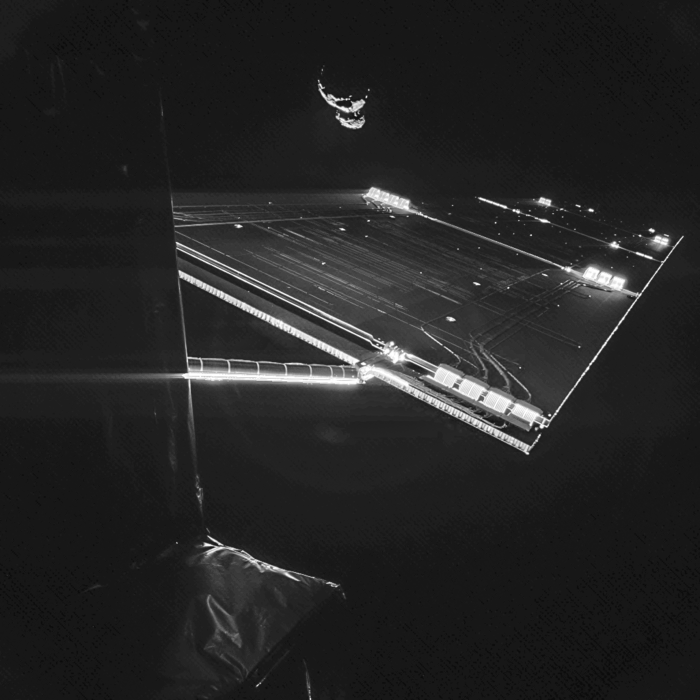
That’s an awe-inspiring “selfie”! This looks like something out of Kubrick’s “2001 — A Space Odyssey.” Congratulations to the European Space Agency!

Using the CIVA camera on Rosetta’s Philae lander, the spacecraft have snapped a ‘selfie’ at comet 67P/Churyumov–Gerasimenko. The image was taken on 7 September from a distance of about 50 km from the comet, and captures the side of the Rosetta spacecraft and one of Rosetta’s 14 m-long solar wings, with 67P/C-G in the background. Two images with different exposure times were combined to bring out the faint details in this very high contrast situation.

Our book: “SolderSmoke — Global Adventures in Wireless Electronics” http://soldersmoke.com/book.htm Our coffee mugs, T-Shirts, bumper stickers: http://www.cafepress.com/SolderSmoke Our Book Store: http://astore.amazon.com/contracross-20

Smart-Phone Cosmic Ray Detector

http://hackaday.com/2014/10/17/detect-cosmic-rays-with-your-smartphone-using-crayfis/
I find this cosmic ray project very appealing.

Also, Adam Fabio over on Hackaday recently posted a Hack-let on ham radio:
http://hackaday.com/2014/10/17/hacklet-19-ham-radio/

Our book: “SolderSmoke — Global Adventures in Wireless Electronics” http://soldersmoke.com/book.htm Our coffee mugs, T-Shirts, bumper stickers: http://www.cafepress.com/SolderSmoke Our Book Store: http://astore.amazon.com/contracross-20

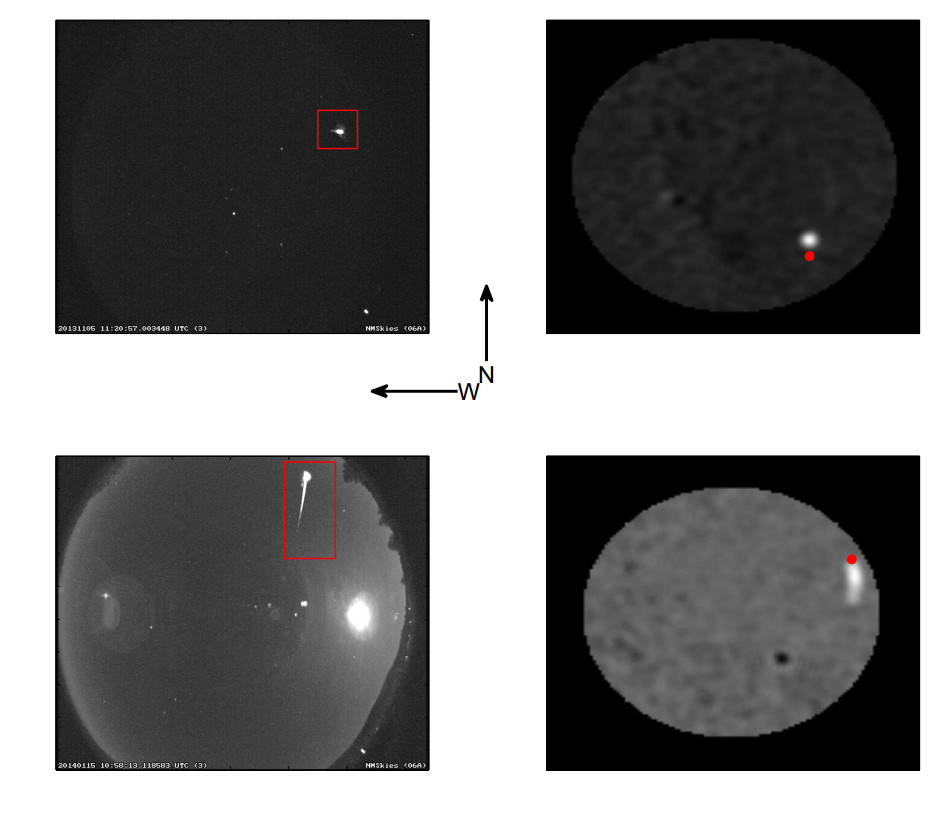
Fireballs Emitting RF at HF!

Yea, and that damn gamma ray bust static has been totally messing up the 12 meter band! Someone should complain to the FCC!

https://medium.com/the-physics-arxiv-blog/1382596c320d

Our book: “SolderSmoke — Global Adventures in Wireless Electronics” http://soldersmoke.com/book.htm Our coffee mugs, T-Shirts, bumper stickers: http://www.cafepress.com/SolderSmoke Our Book Store: http://astore.amazon.com/contracross-20

Some DX That You Can Never Work. Never.

There is some amazing info in this site. It is worth reading.

https://medium.com/starts-with-a-bang/the-disappearing-universe-d7447467c63a

Our book: “SolderSmoke — Global Adventures in Wireless Electronics” http://soldersmoke.com/book.htm Our coffee mugs, T-Shirts, bumper stickers: http://www.cafepress.com/SolderSmoke Our Book Store: http://astore.amazon.com/contracross-20

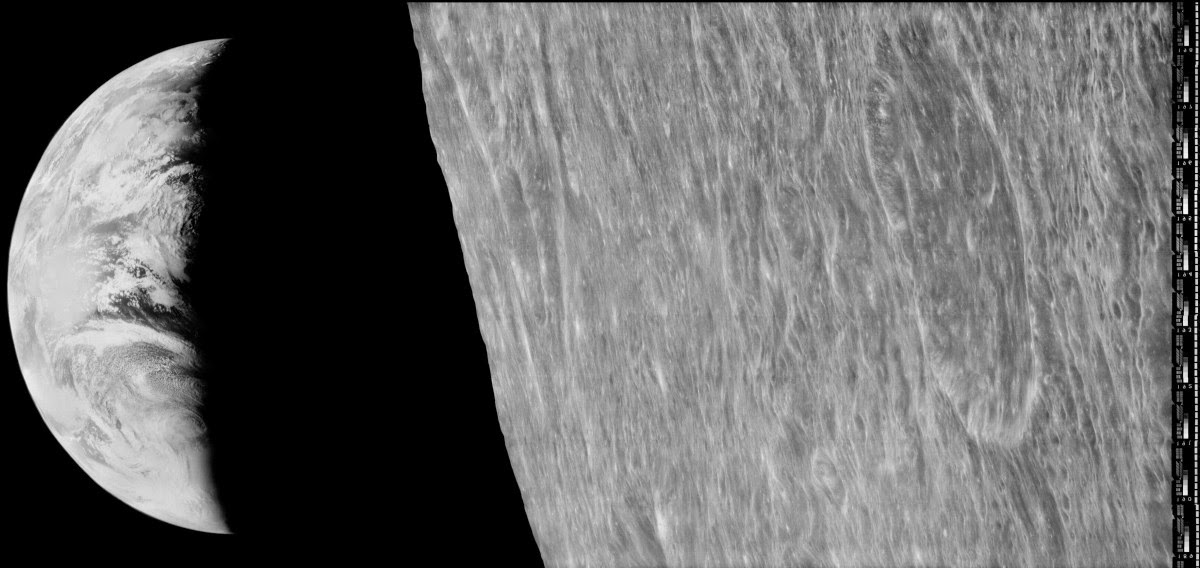
Hackers Recover 1960’s Moon Pictures

http://www.wired.com/2014/04/lost-lunar-photos-recovered-by-great-feats-of-hackerdom-developed-at-a-mcdonalds/

Thanks to Mark, K6HX, for alerting me to this wonderful project.

Our book: “SolderSmoke — Global Adventures in Wireless Electronics” http://soldersmoke.com/book.htm Our coffee mugs, T-Shirts, bumper stickers: http://www.cafepress.com/SolderSmoke Our Book Store: http://astore.amazon.com/contracross-20

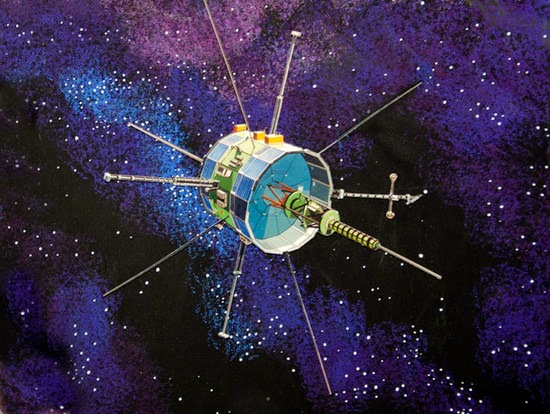
A Worthy Cause: Help Save the ISEE-3 Spacecraft!

http://www.rockethub.com/projects/42228-isee-3-reboot-project-by-space-college-skycorp-and-spaceref

Here is an excerpt from the above website:

Our plan is simple: we intend to contact the ISEE-3 (International Sun-Earth Explorer) spacecraft, command it to fire its engine and enter an orbit near Earth, and then resume its original mission – a mission it began in 1978. ISEE-3 was rechristened as the International Comet Explorer (ICE). If we are successful it may also still be able to chase yet another comet.

Working in collaboration with NASA we have assembled a team of engineers, programmers, and scientists – and have a large radio telescope fully capable of contacting ISEE-3. If we are successful we intend to facilitate the sharing and interpretation of all of the new data ISEE-3 sends back via crowd sourcing.

Time is short. And this project is not without significant risks. We need your financial help. ISEE-3 must be contacted in the next month or so and it must complete its orbit change maneuvers no later than mid-June 2014. There is excitement ahead as well: part of the maneuvers will include a flyby of the Moon at an altitude of less than 50 km.

Our team members at Morehead State University, working with AMSAT-DL in Germany, have already detected the carrier signals from both of ISEE-3’s transmitters. When the time comes, we will be using the large dish at Morehead State University to contact the spacecraft and give it commands.
Thanks to Dave, WA8JNM, for the heads up on this.

Our book: “SolderSmoke — Global Adventures in Wireless Electronics” http://soldersmoke.com/book.htm Our coffee mugs, T-Shirts, bumper stickers: http://www.cafepress.com/SolderSmoke Our Book Store: http://astore.amazon.com/contracross-20