SolderSmoke Daily News — Ham Radio Blog
Serving the worldwide community of radio-electronic homebrewers. Providing blog support to the SolderSmoke podcast: http://soldersmoke.com

Big doings at the Newbury Park Lab of N6QW. A new antenna is in the works. Lots of noodling underway. Much tribal knowledge is being dispensed (FREE!) via Pete’s blog:
http://n6qw.blogspot.com/
Our book: “SolderSmoke — Global Adventures in Wireless Electronics” http://soldersmoke.com/book.htm Our coffee mugs, T-Shirts, bumper stickers: http://www.cafepress.com/SolderSmoke Our Book Store: http://astore.amazon.com/contracross-20
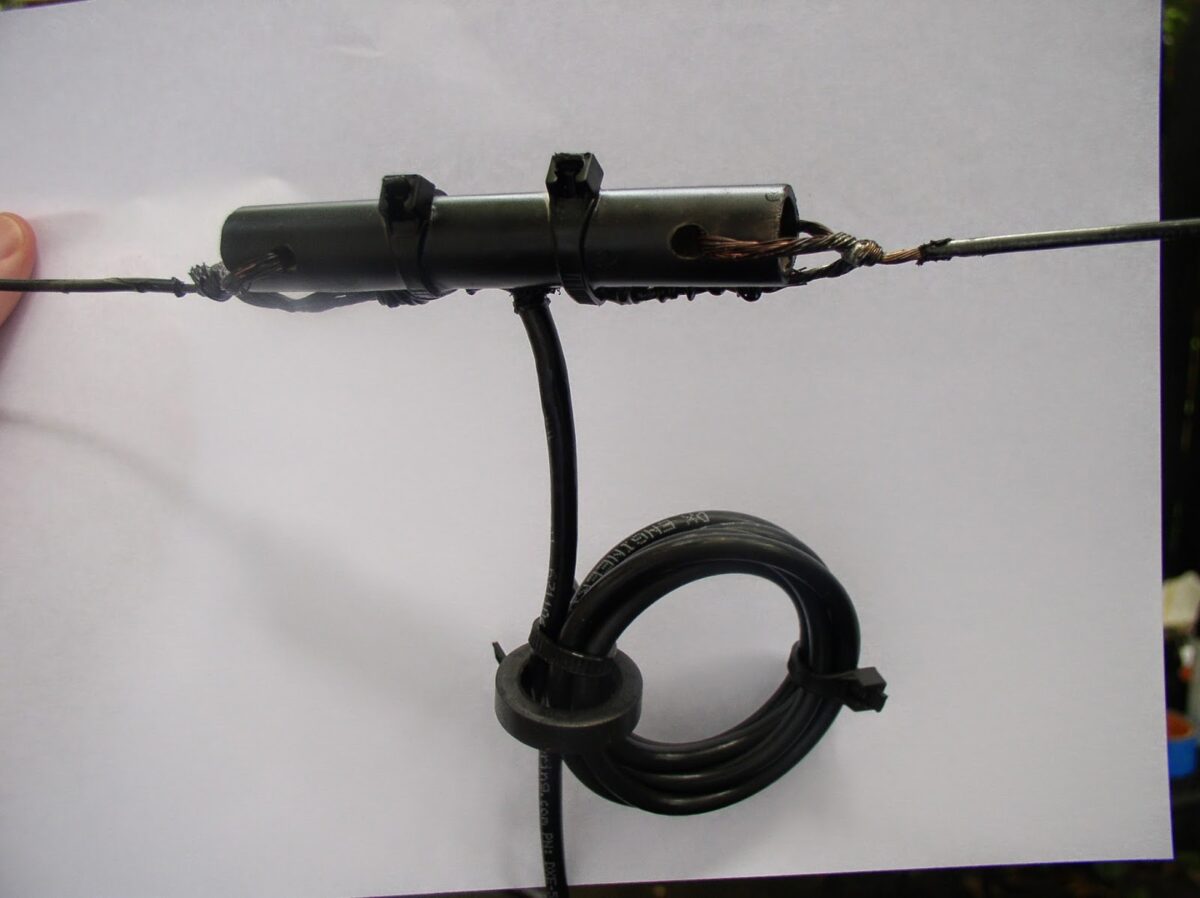
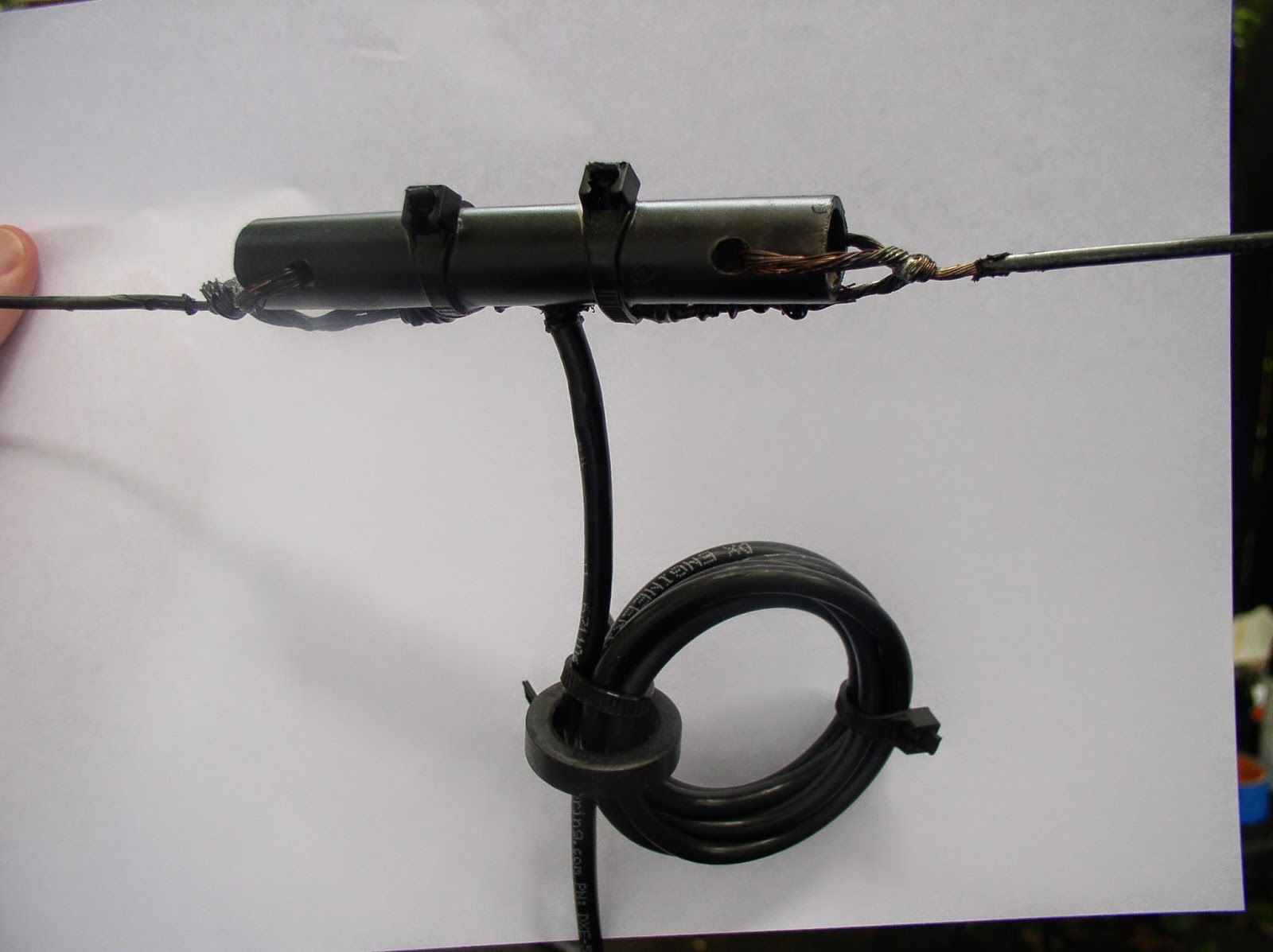
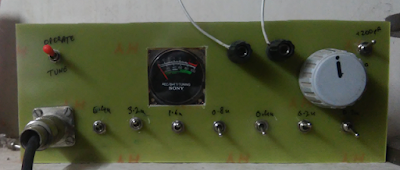
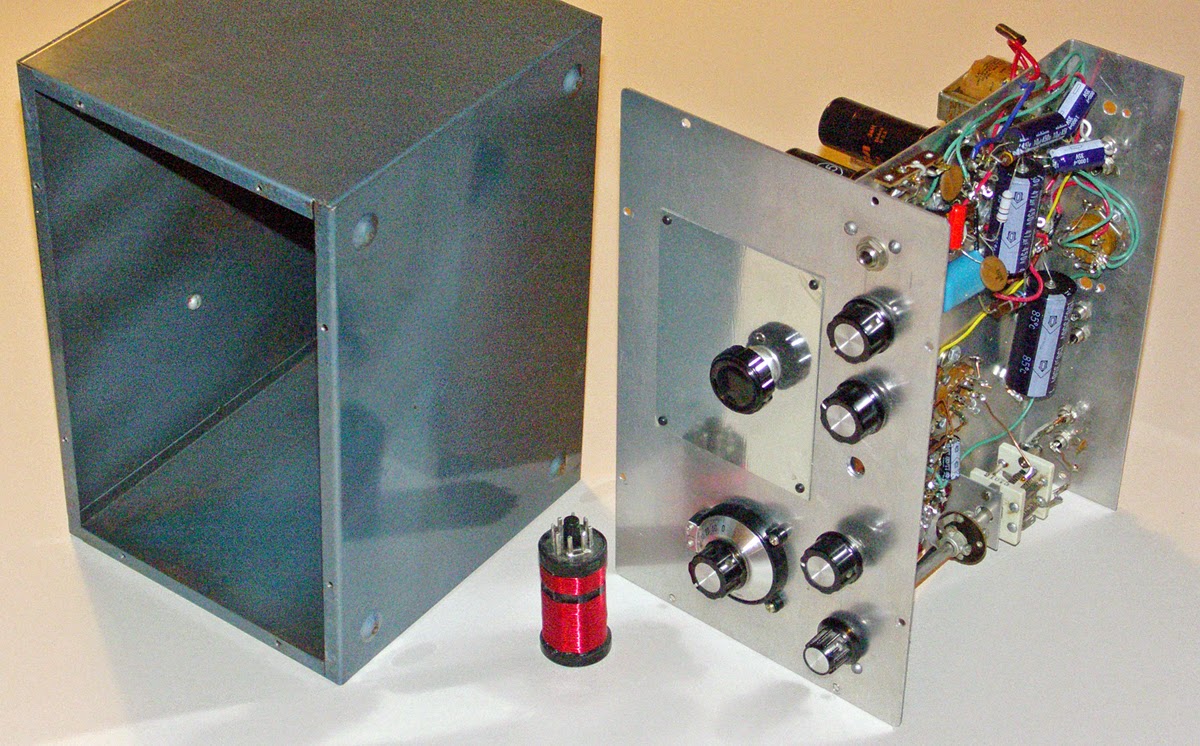
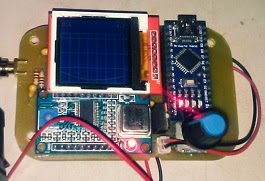
Farhan has built a very cool antenna tuner. More important, it is the subject of the first of what we hope will be many postings on his new VU2ESE blog. I really like the re-purposed Sony meter, and the homebrew feedline for the multi-band (80-6 meters) doublet. This is clearly a suitable antenna and tuner for the multiband Minima. I have been inspired! I hope to brew up some feedline soon! No more store-bought transmission line for me!
VU2ESE Blog: http://hfsignals.blogspot.com/p/about.html
VU2ESE Tuner Article: http://hfsignals.blogspot.com/2015/06/a-balanced-tuner.html
Our book: “SolderSmoke — Global Adventures in Wireless Electronics” http://soldersmoke.com/book.htm Our coffee mugs, T-Shirts, bumper stickers: http://www.cafepress.com/SolderSmoke Our Book Store: http://astore.amazon.com/contracross-20
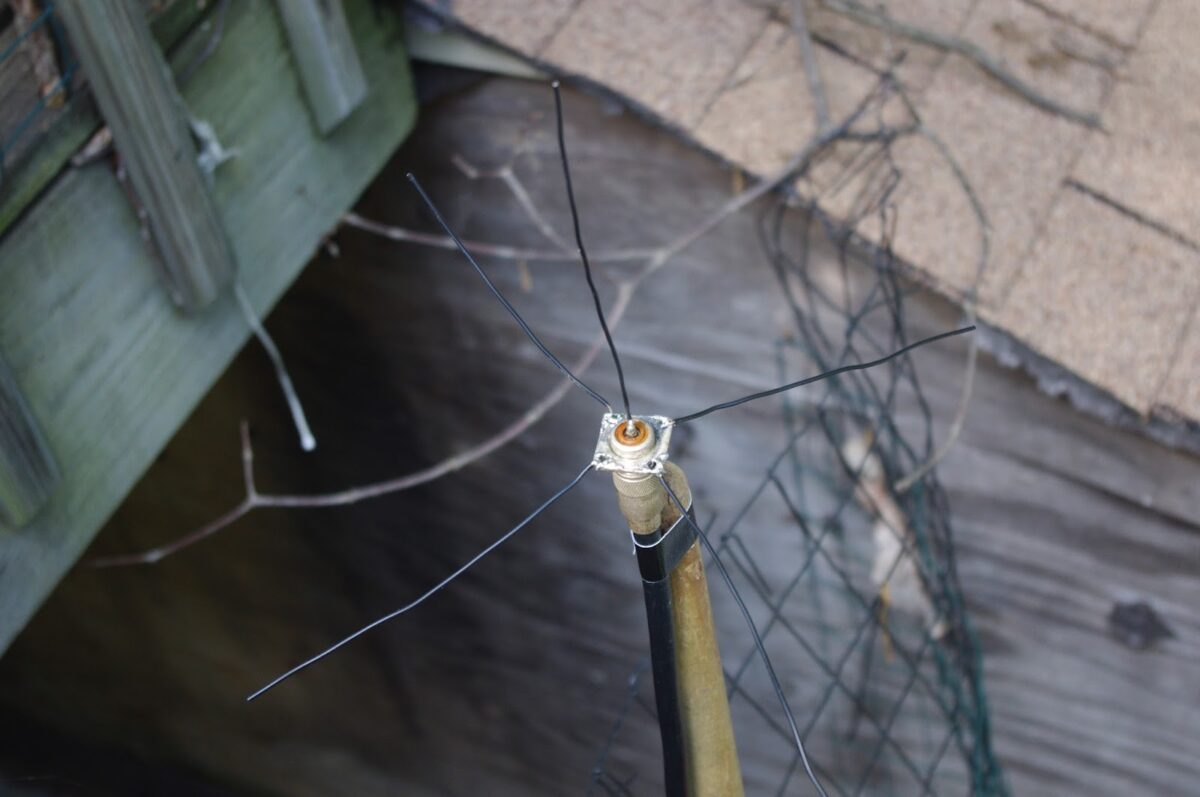
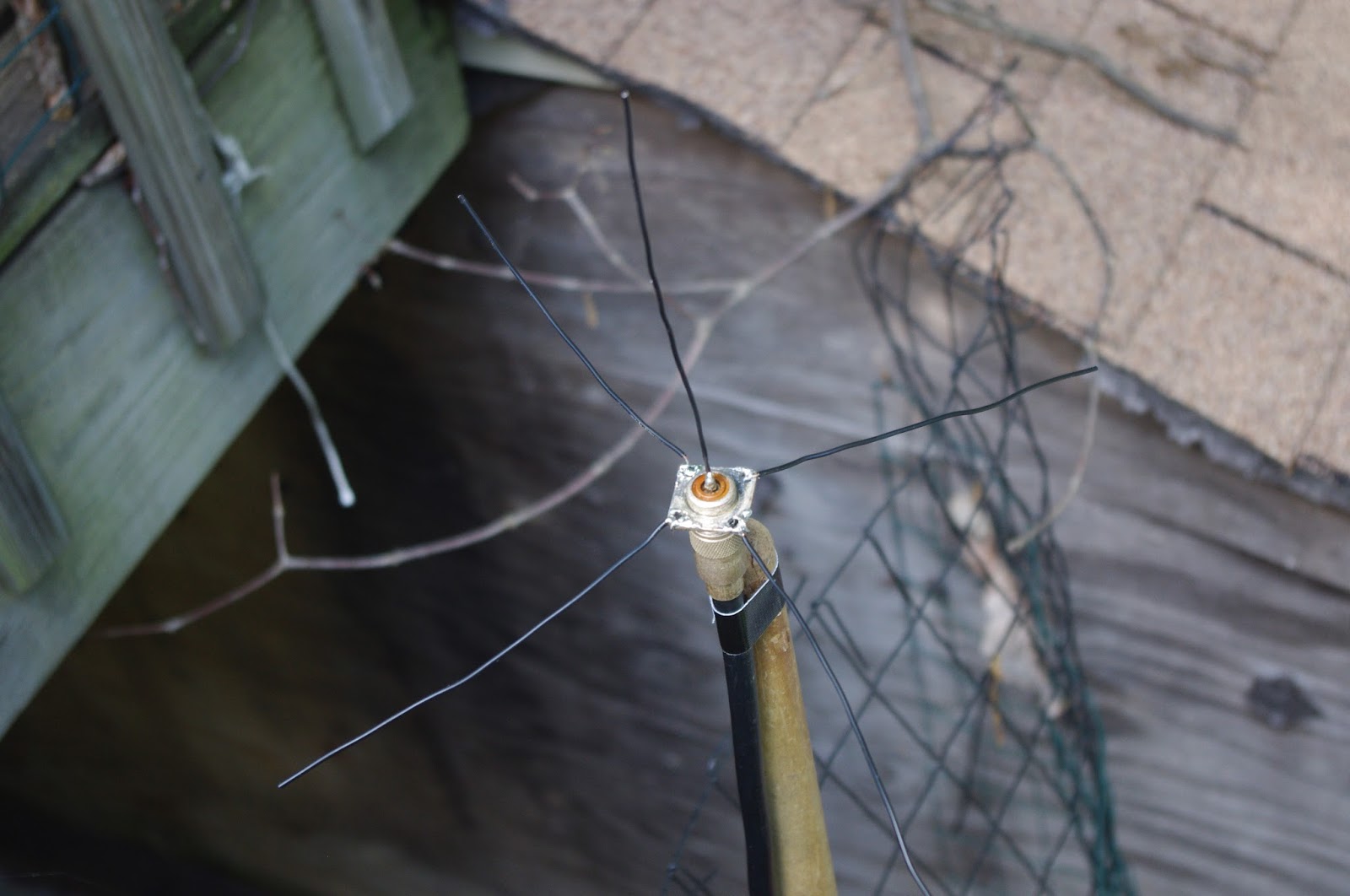
I’ve been playing around with a little $13 DVB-T SDR Dongle receiver. These devices normally tune 24 MHz to 1.7 GHz, but I modified the first one I had so that it would tune the HF bands. Pete then sent me another one, which I vowed to keep unmodified, thinking that it would be fun to use it to listen to the many small Cube-Sats that are up there. Most have downlinks (and Morse Code beacons) in the 470 MHz range. I whipped together a simple ground-plane antenna for this band (One 6 inch copper wire as the receive element with 4 five inch groundplane elements).
I then went to the “Heavens Above” website, plugged in my location, and clicked on “Amateur satellites.” This gave me a very accurate schedule of satellite passes. I started listening.
First I heard (and saw in the HDSDR waterfall) the CW beacon of the Prism satellite at 7:05 am EDT today. Prism is from the University of Tokyo and was launched from Japan.
Then Cubesat XI-V at 0711 EDT.
Cubesat XI-IV was heard at 0813 EDT. The Cubesats are from Japan and were launched from Russia.
ITUsPAT was heard at 1422 EDT. The I is for “Istanbul”
Finally, I monitored a pass of the Japanese FO-29 satellite aka JAS-2 at 1611. Wow, this was like old times on the RS-10 and RS-12 satellites. Lots of CW and SSB stations in the downlink passband. Lots of fun.
At 470 MHz the Doppler shift of a low-earth orbit satellite is quite noticeable, and helps confirm that you are in fact receiving sigs from an orbiting device.
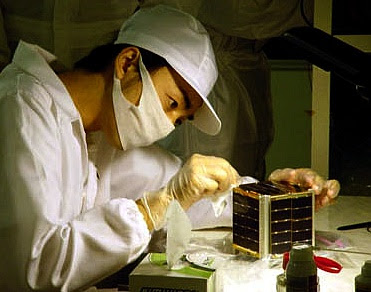
I thought it was pretty cool to take a $13 DVB-T Dongle, connect it to a small, copper-wire antenna, and use it all to receive signals from some 4″x4″x4″ cubes in orbit of the Earth.
Our book: “SolderSmoke — Global Adventures in Wireless Electronics” http://soldersmoke.com/book.htm Our coffee mugs, T-Shirts, bumper stickers: http://www.cafepress.com/SolderSmoke Our Book Store: http://astore.amazon.com/contracross-20
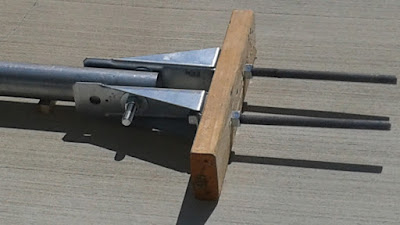
More on Ian’s antenna here: http://vk6ysf.com/vk3mo_visit.htm
Our book: “SolderSmoke — Global Adventures in Wireless Electronics” http://soldersmoke.com/book.htm Our coffee mugs, T-Shirts, bumper stickers: http://www.cafepress.com/SolderSmoke Our Book Store: http://astore.amazon.com/contracross-20
Last week during the big St. Patrick’s day solar eruption/CME impact I (with the help of the radio gods) managed to work Roy VK6MV in Western Australia. (A video of Roy working QRP pedestrian mobile stations in the UK appears above.) Could it have been that that miraculous contact was ALSO my first ever homebrew SSB to homebrew SSB QSO? I e-mailed Roy to find out. Alas, it was not. But OM Roy sent some interesting info on his station and especially his antenna. Excerpts from his e-mail:
Hi Bill
Thanks for the qso and the email.
yes another ‘fadeout’ but we have had many over the years haven’t we ?
Things have changed a lot since 1963 when I had my first license as G3SML.
We came to Aus in 1977 with 3 sons and now have 24 Grandies 13 Grandchildren; 11 Great Grandchildren.
I liked the early Plessey IC’s when they came out ~
Carry on with home brew and get that personal enjoyment out of it, it gives you a boost I am sure. NO I was not on the home brew I was on the Icom IC740 which I bought about 5 years ago at the WA Hamfest it had a fault of jumping to different frequencies, etc. I could not find its intermittent fault at all, but on the internet a ‘W’ ham in your country posted the same fault with explanations etc,
and it cured it,
So I was on that Rig + a home brew linear pair of old 813’s in Grounded Grid and a Voltage doubler for the + 2 kv, I could not get the smoothing caps for that voltage so got hold of 3 metal canned ones 800 volt, then got some plastic drain pipe to insulate the cans from ground & then put them all in series with equalising resistors,
and it worked.
Yes I was on the rhombic ~ amazing antenna for a fixed point to point contacts ~
why a rhombic you may ask well when in the Uk I used to work VK2NN [and others] Tom with his farm of rhombics his setup much larger, and I thought one day I would love to put one up. Eventually with our moving to Aus’ then came down here with its 8+ acres the opportunity led itself to put one up, and as I used to work into Europe/UK a lot that direction picked. first I put one up a bigger one than now, but it did not work that good. Moral the longer you go the higher it needs to be
So a smaller version tried using the contours of the land at a height above sea level of 1260 feet asl helps. Using 12 gauge usa hard drawn copper wire I needed winches and turnbuckles etc to pull it up, one end is on the 60 ft tower, the others on assorted Wooden Poles +
The termination R for the rhombic is a 3 element TH3 Tribander ~
think of it why waste power into a whopper of a Resistor ~
this is not my idea but came from ~ Nano VK6UN why not connect it to another antenna with how to do it came from now SK Les Moxon G6XN
a clever man how to make a balun out of old ferrite rods from transistor radios,
Will close now my half a dozen lines of text are expanding to much
Cheers have fun Roy VK6MV
Our book: “SolderSmoke — Global Adventures in Wireless Electronics” http://soldersmoke.com/book.htm Our coffee mugs, T-Shirts, bumper stickers: http://www.cafepress.com/SolderSmoke Our Book Store: http://astore.amazon.com/contracross-20
I’ll be listening. 🙂
73,
–Kirk Kleinschmidt, NT0Z
Rochester, MN
Editor, 1990 ARRL Handbook
Technical Editor, Ham Radio for Dummies
QST Assistant Managing Editor, 1988-1994
Ham Radio Columnist since 1989 for:
Popular Communications
Monitoring Times and now,
The Spectrum Monitor (www.thespectrummonitor.com)
Our book: “SolderSmoke — Global Adventures in Wireless Electronics” http://soldersmoke.com/book.htm Our coffee mugs, T-Shirts, bumper stickers: http://www.cafepress.com/SolderSmoke Our Book Store: http://astore.amazon.com/contracross-20
SolderSmoke Podcast #170 is available:
http://soldersmoke.com/soldersmoke170.mp3
Bill’s Double A, DSB, Dipole, Dominican DX-pedition.
Living the “How’s DX?” Dream
Seeing the Southern Cross with Soviet Binoculars
Pete goes remote
SI5351 a chip with a lot of potential
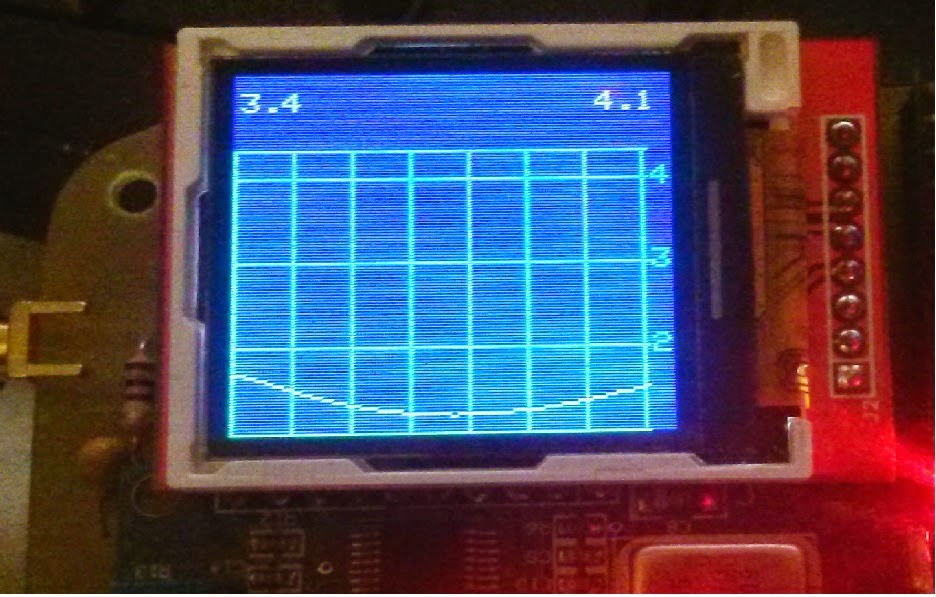
Pete’s experiments with Nokia LCD displays
Michigan Mighty Mites around the world
The Postal Stream Roller
Steve Silverman’s very kind variable cap offer
MOXON modeling with EZNEC
Aspirations for 2015
Our book: “SolderSmoke — Global Adventures in Wireless Electronics” http://soldersmoke.com/book.htm Our coffee mugs, T-Shirts, bumper stickers: http://www.cafepress.com/SolderSmoke Our Book Store: http://astore.amazon.com/contracross-20

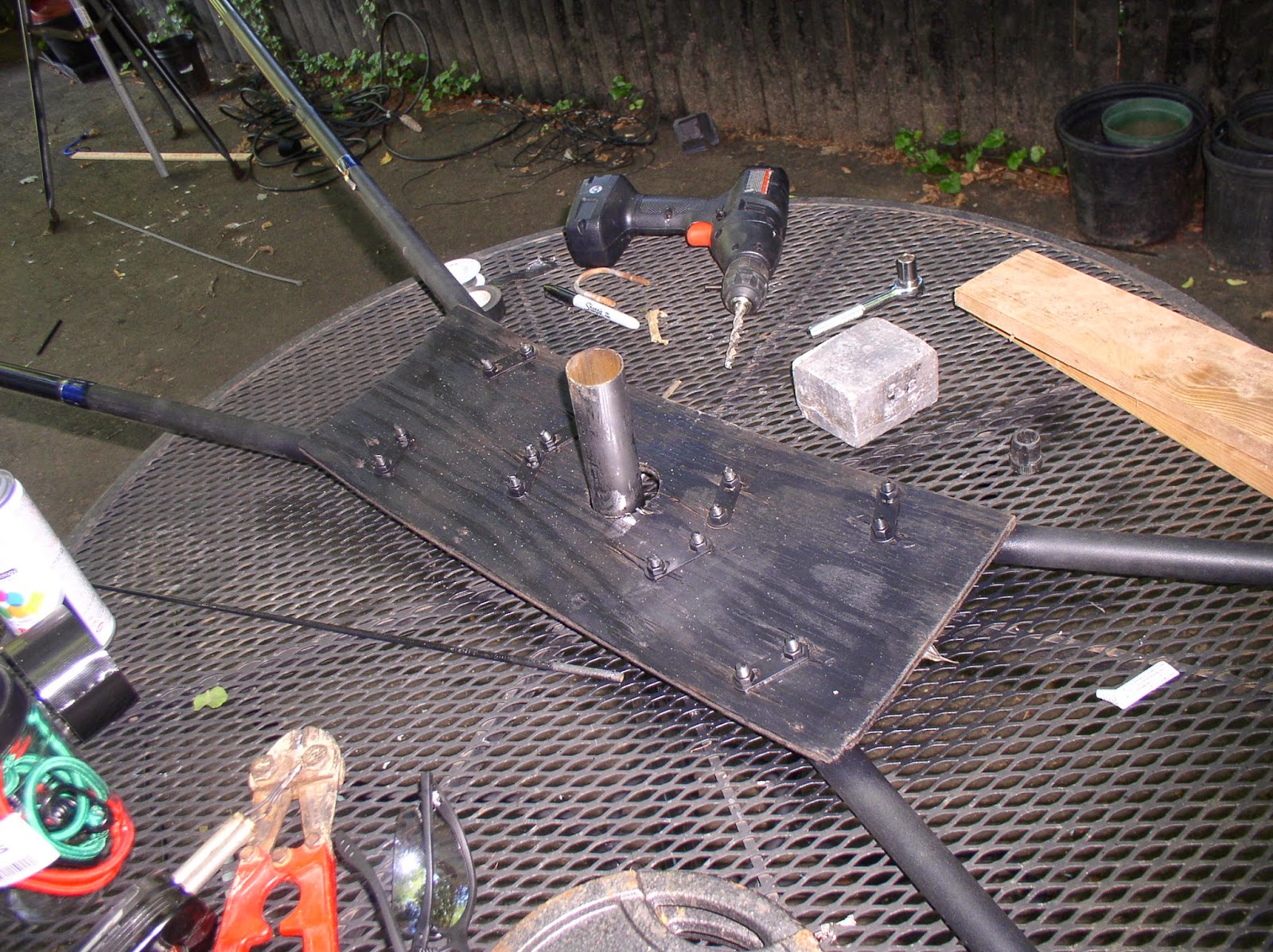
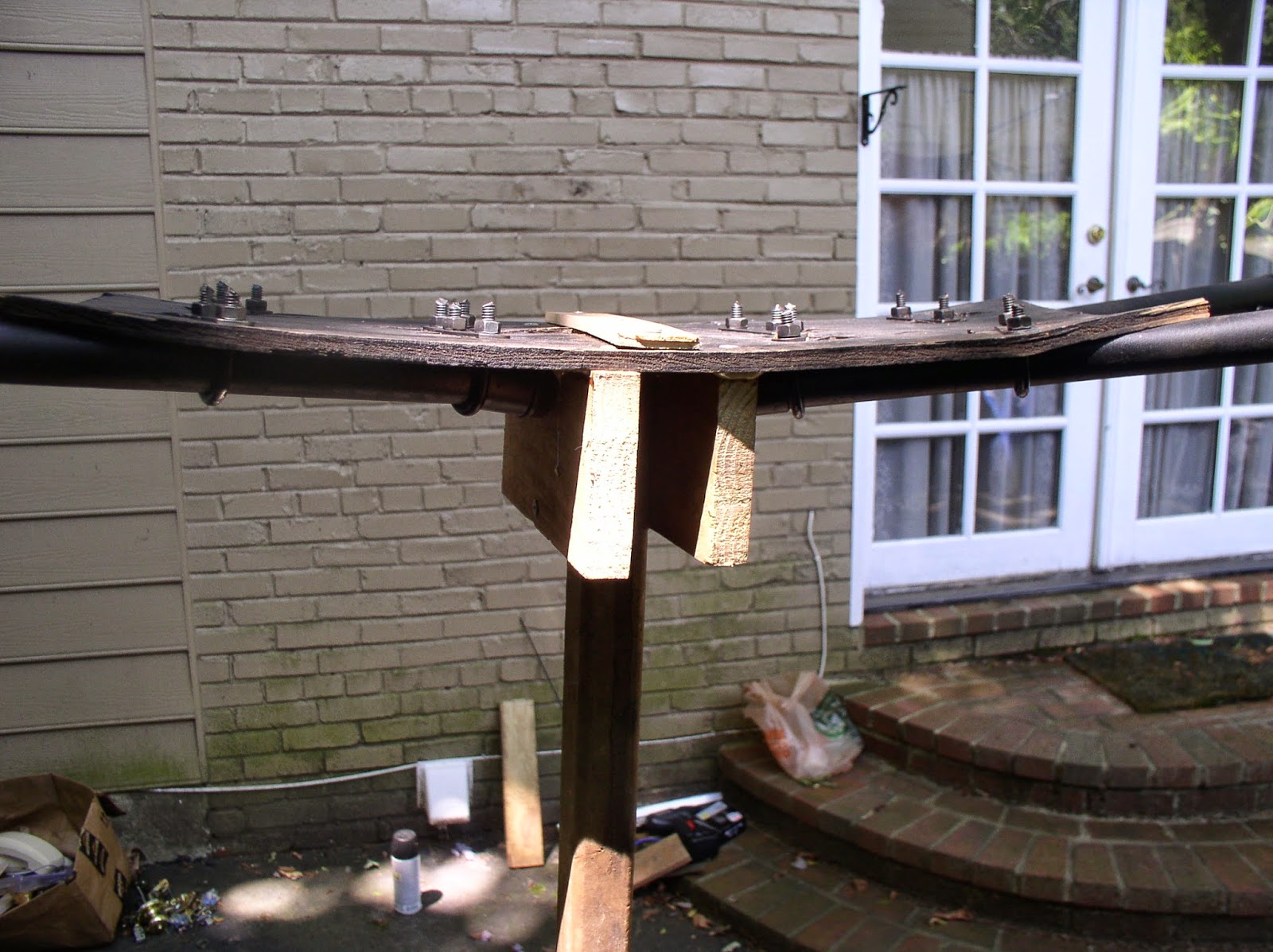
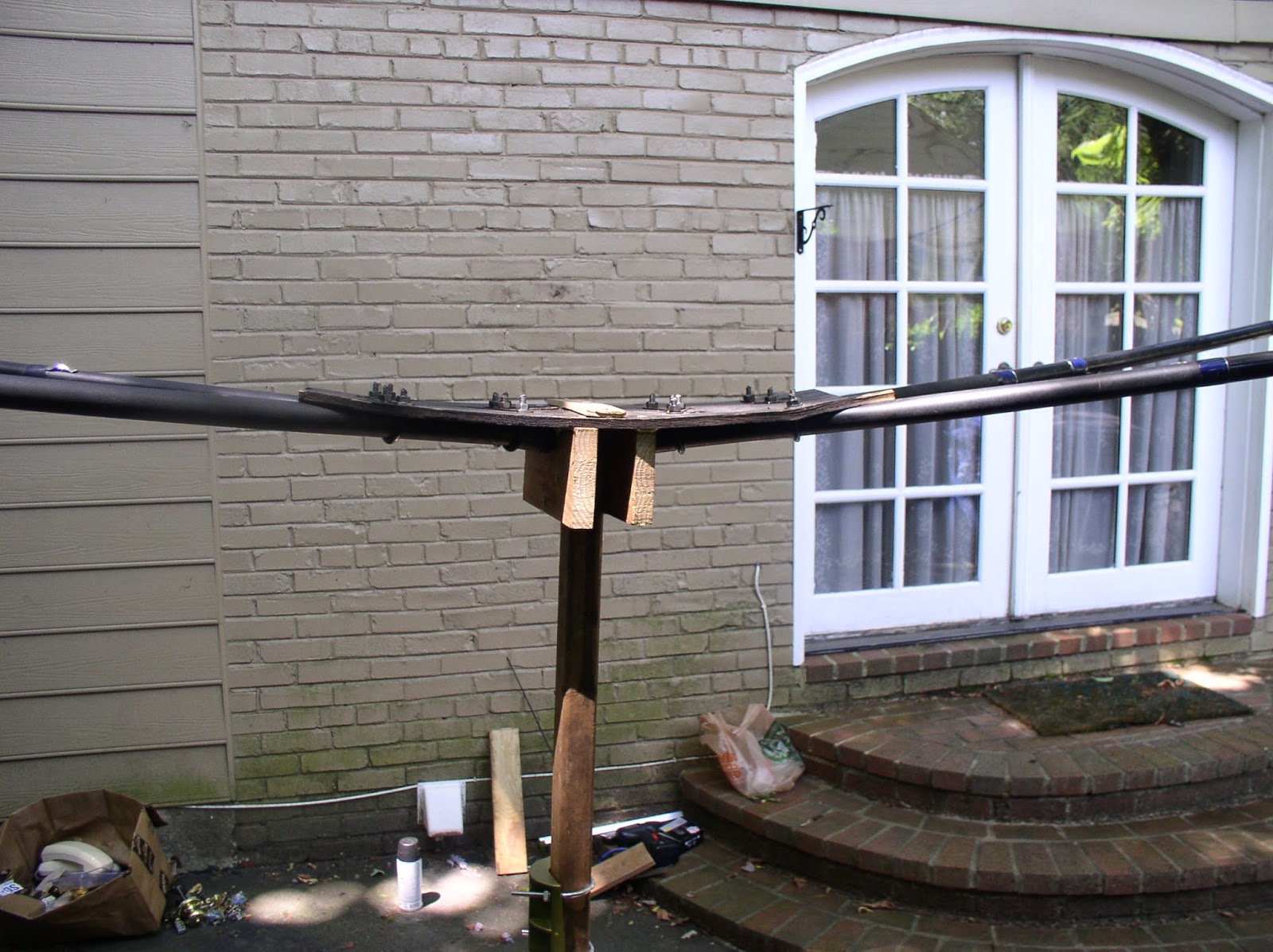
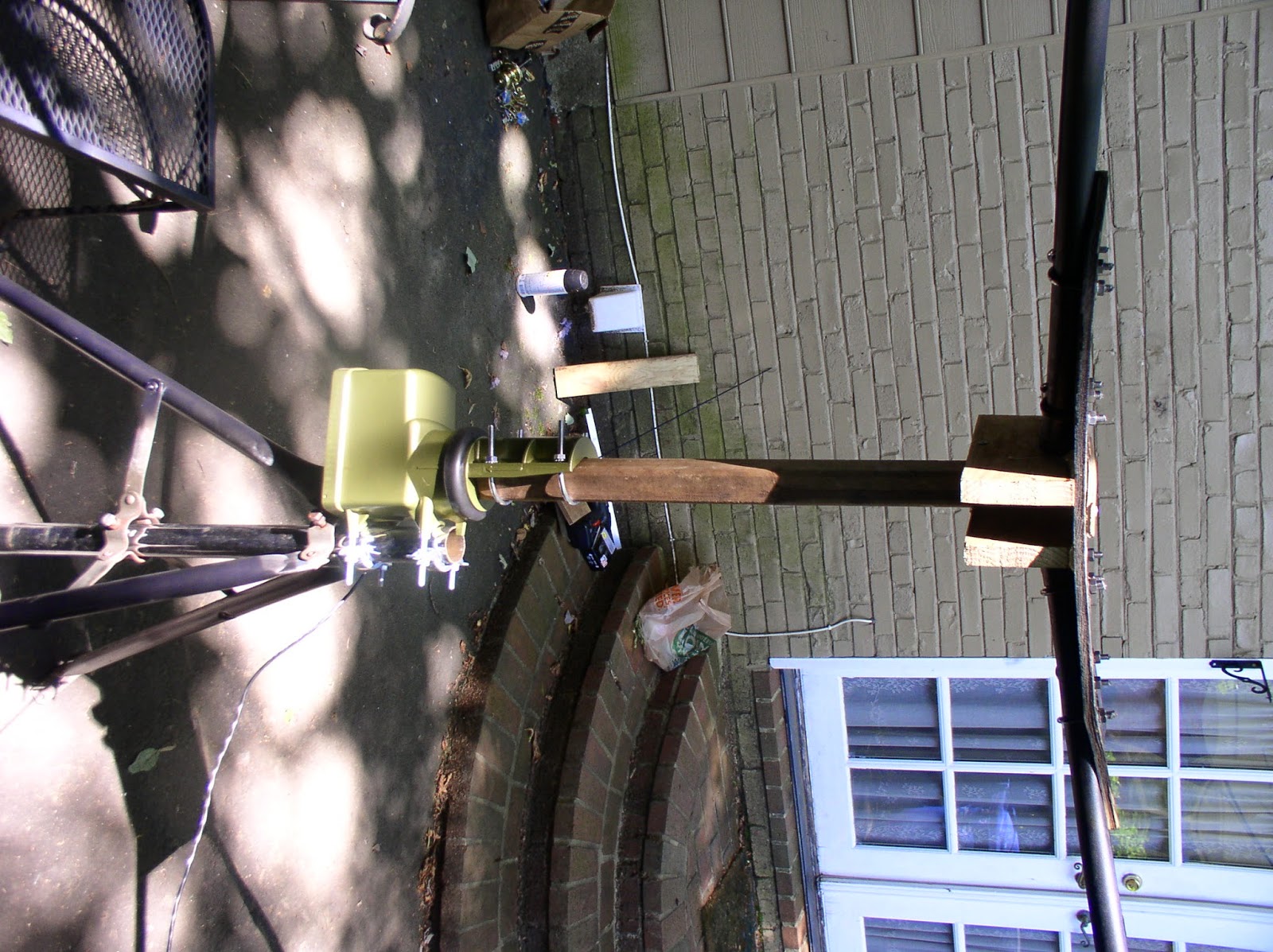
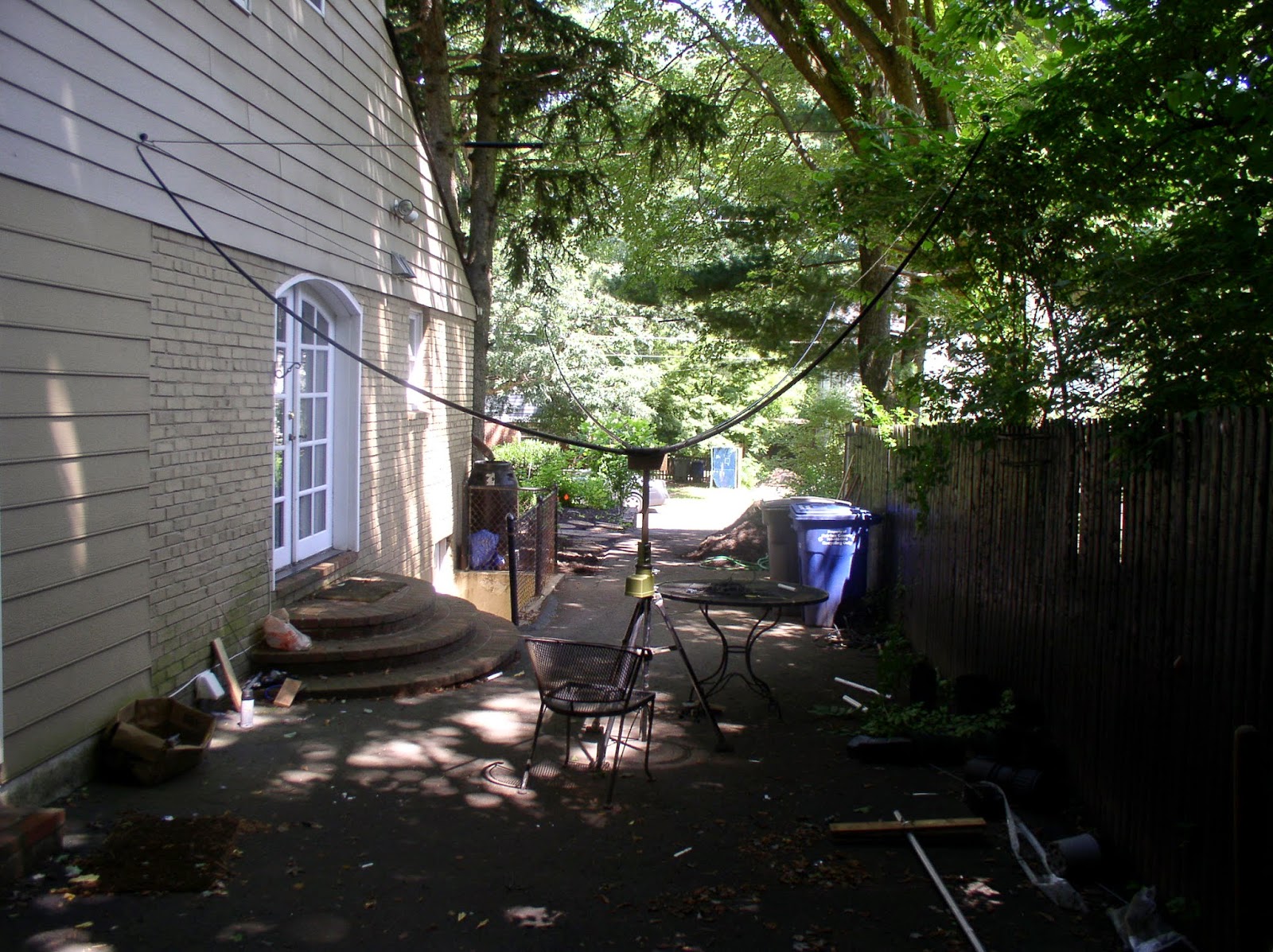
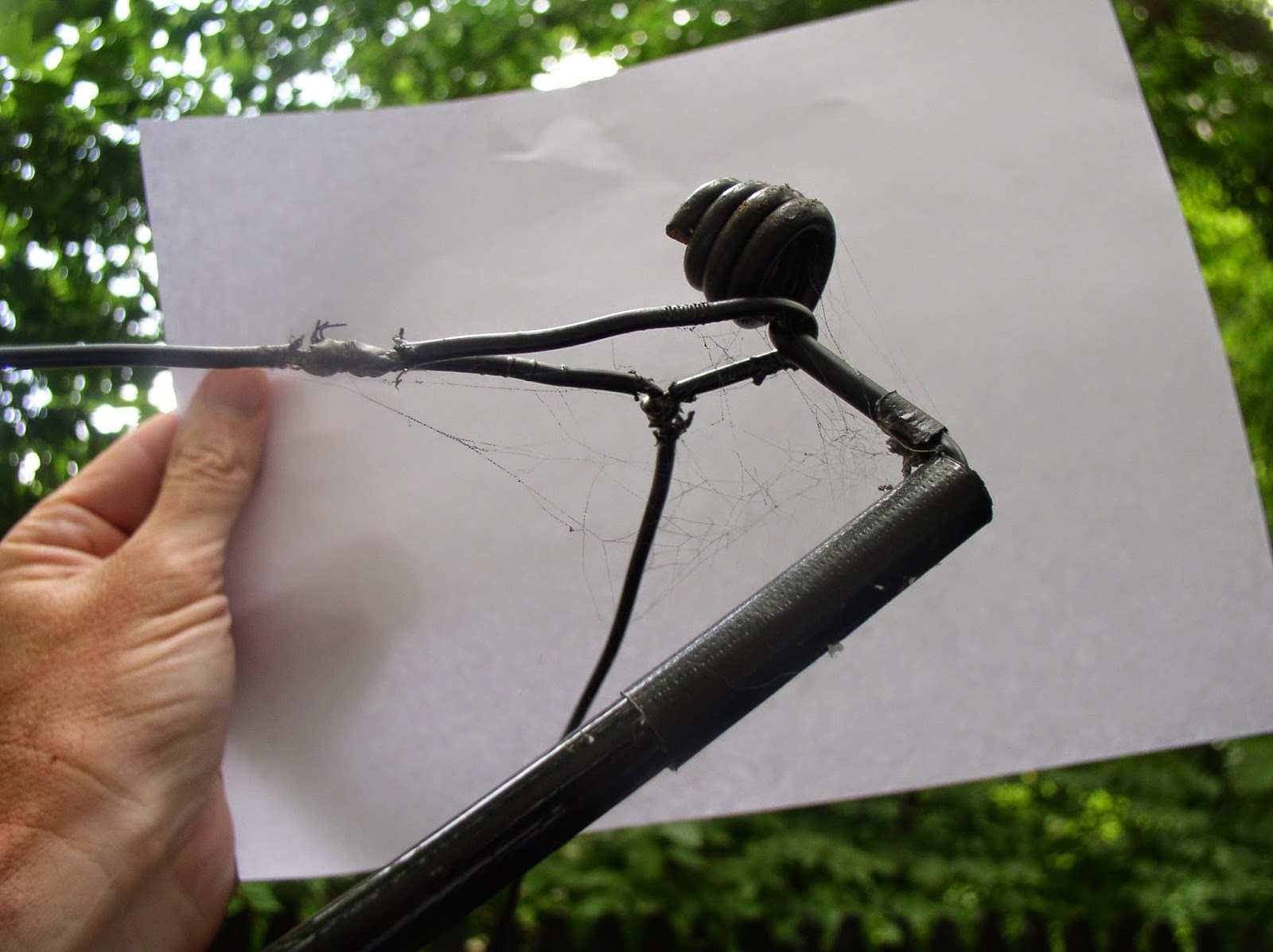
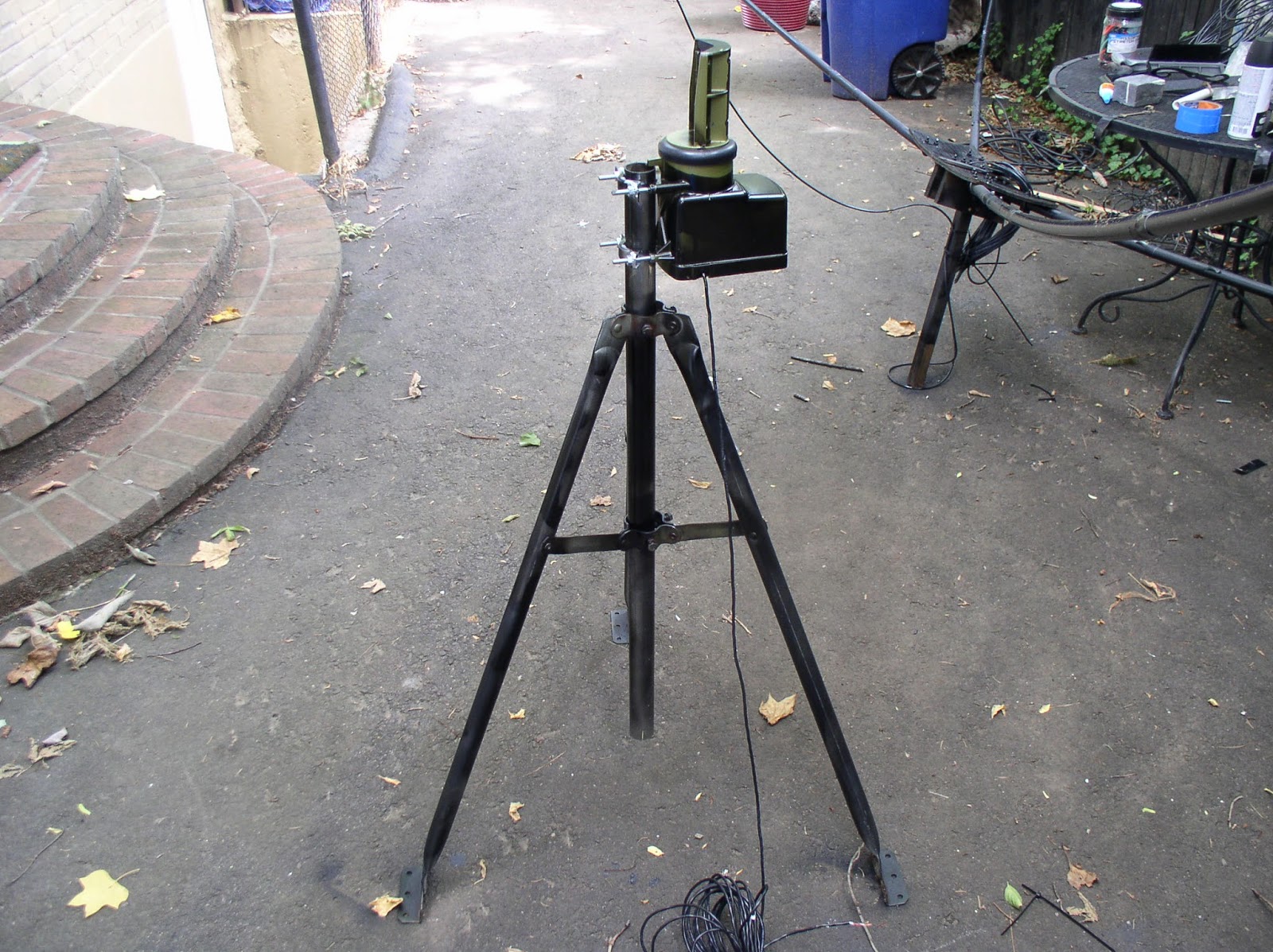
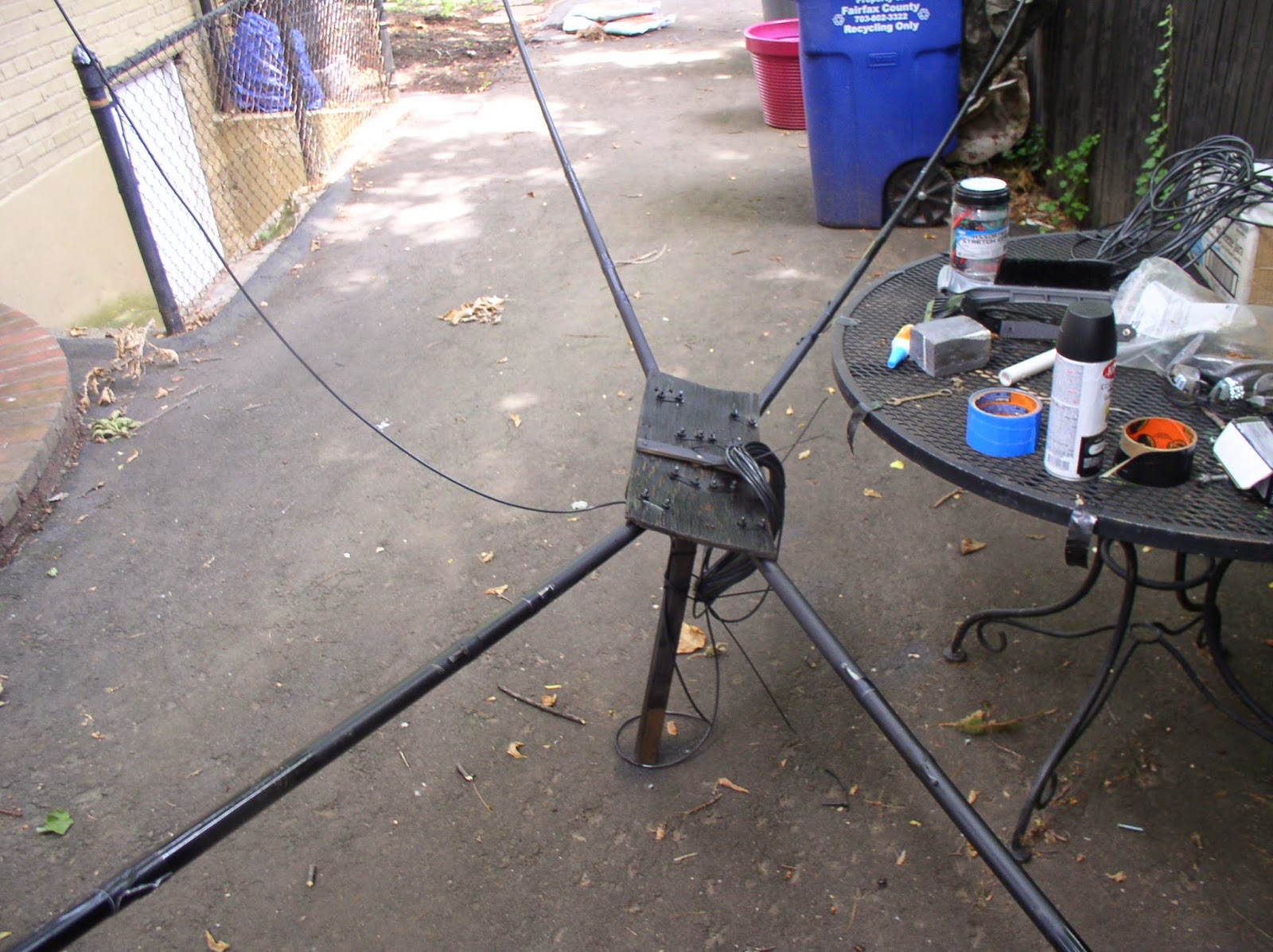
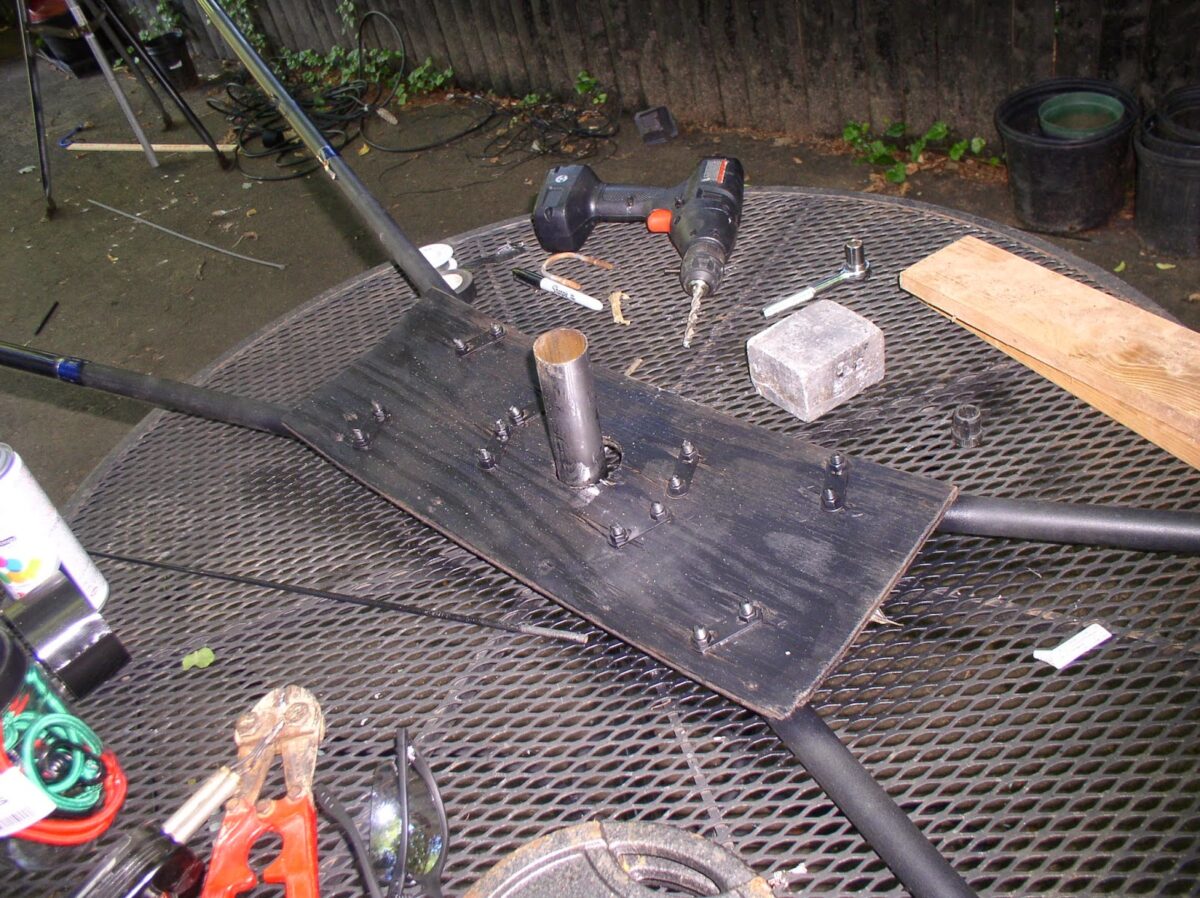
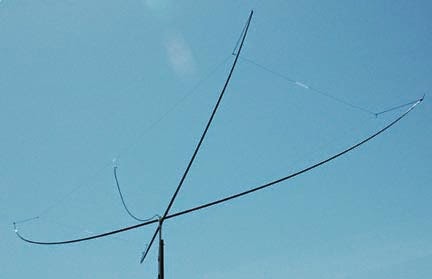
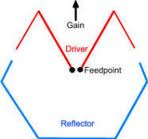
I’ve been put together a fishing pole MOXON antenna for 17 meters. It will be used with my 5 Watt BITX rig. I need something to spin it around. I know that many of the cheap TV rotators don’t hold up very well. I had one die quickly out in the Azores. There seems to be several brands out there, but the rotators and the control boxes look suspiciously similar.
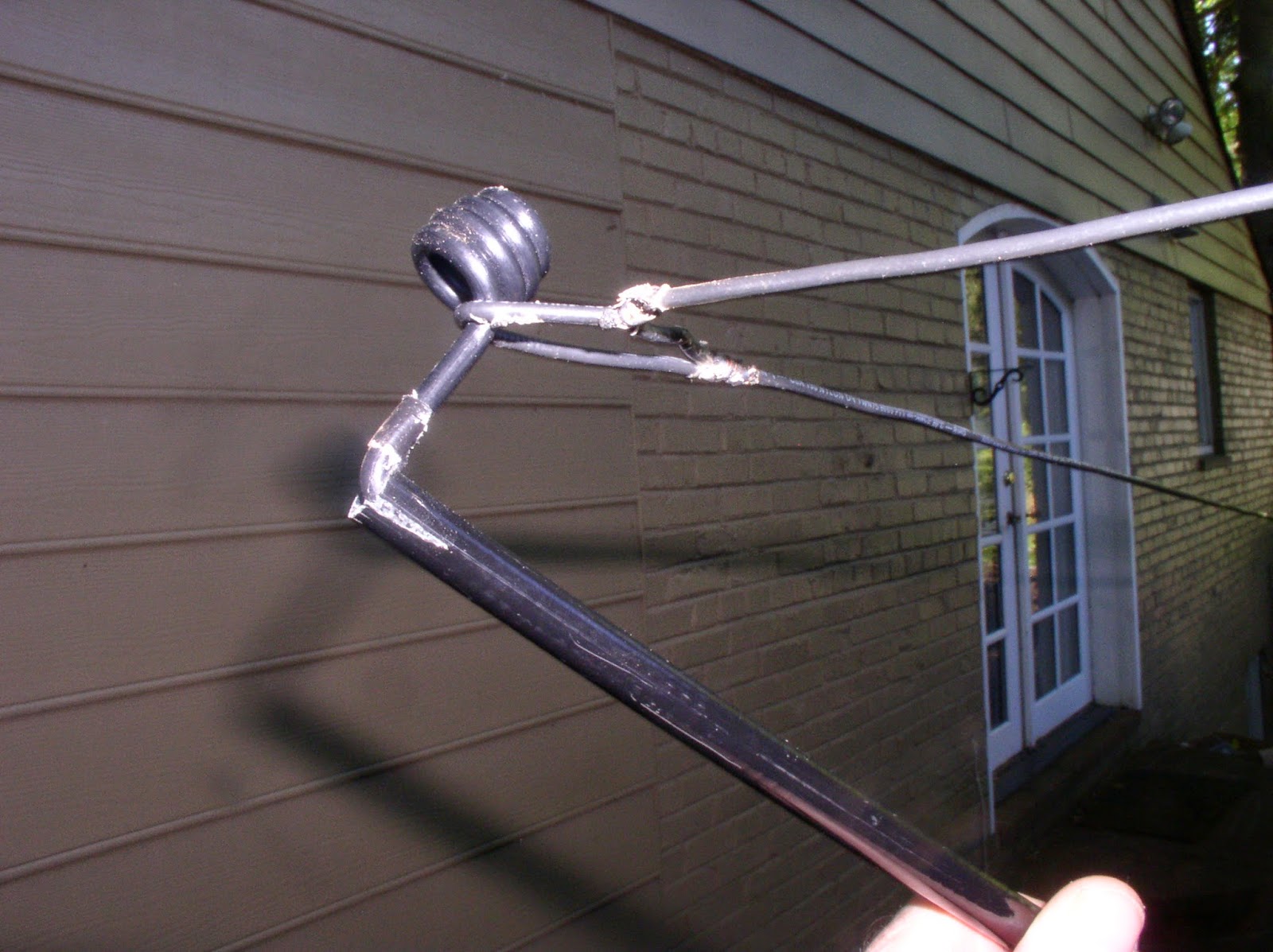
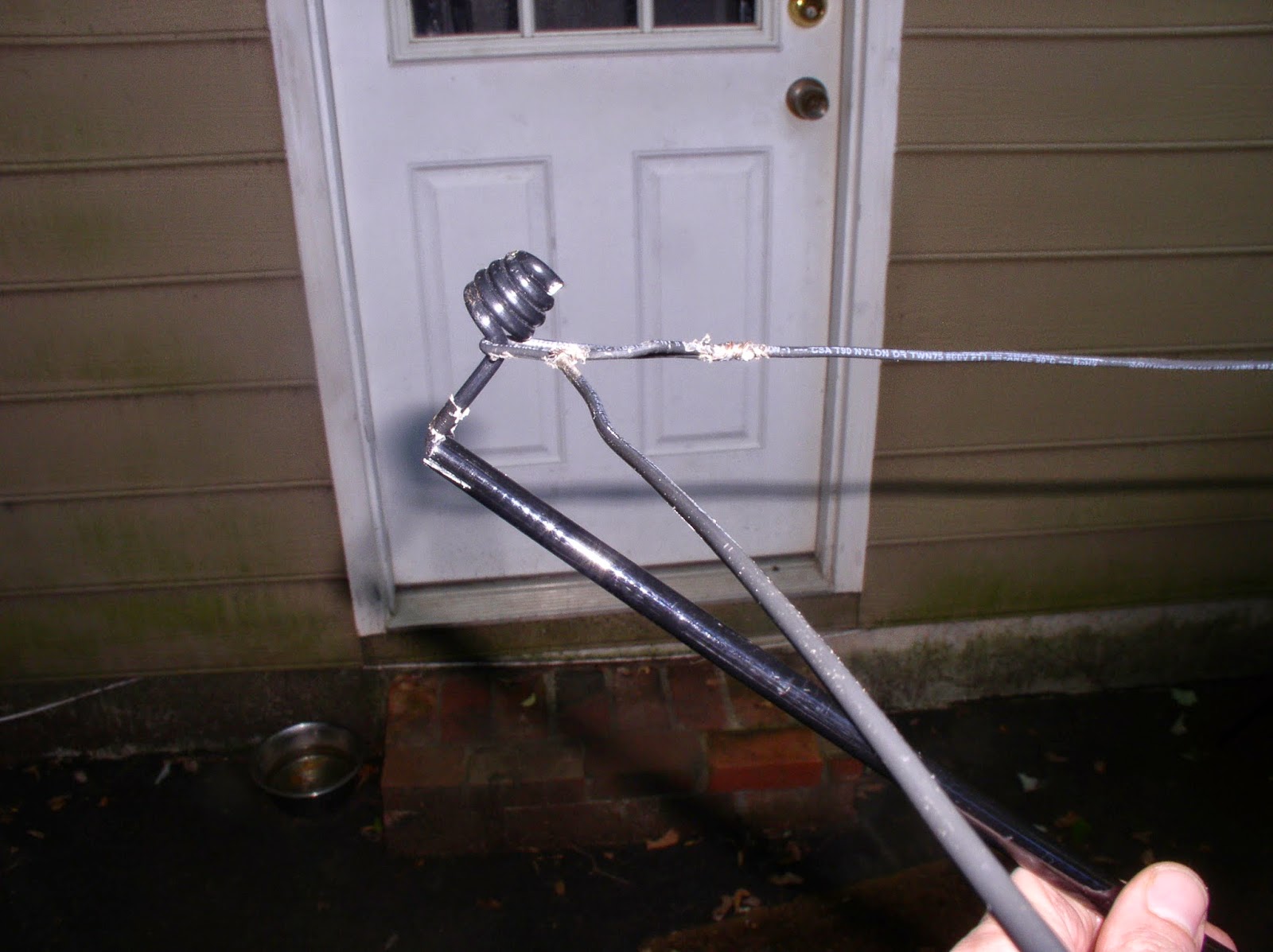
I came up with a pretty cool way of affixing the corners of the antenna elements to the fishing poles. That coil-like thing is the wire part of a bungee cord. It fits nicely into the end of the fiberglass pole. You have to be sure to get the pole length and the element dimensions properly proportioned, with a sufficient amount of bend in the poles.
Our book: “SolderSmoke — Global Adventures in Wireless Electronics” http://soldersmoke.com/book.htm Our coffee mugs, T-Shirts, bumper stickers: http://www.cafepress.com/SolderSmoke Our Book Store: http://astore.amazon.com/contracross-20
An outSTANDING Wave video from Alan! Check out the comments from new hams on the YouTube page: Alan has a real knack (!) for explaining technical material, and for imparting real understanding.
Our book: “SolderSmoke — Global Adventures in Wireless Electronics” http://soldersmoke.com/book.htm Our coffee mugs, T-Shirts, bumper stickers: http://www.cafepress.com/SolderSmoke Our Book Store: http://astore.amazon.com/contracross-20
That’s what I have in mind. I ordered four fiberglass “crappie” poles yesterday. I have a tripod for the roof. What should I use to spin this thing around? A TV rotor is an obvious solution, but the last time I used one it didn’t hold up too well. There is always the Armstrong method…
Here’s AE6AC’s site:
http://www.moxonantennaproject.com/ae6ac/ae6ac.htm
Our book: “SolderSmoke — Global Adventures in Wireless Electronics” http://soldersmoke.com/book.htm Our coffee mugs, T-Shirts, bumper stickers: http://www.cafepress.com/SolderSmoke Our Book Store: http://astore.amazon.com/contracross-20
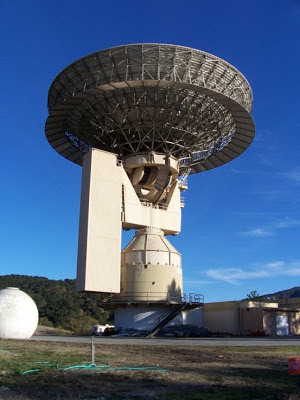
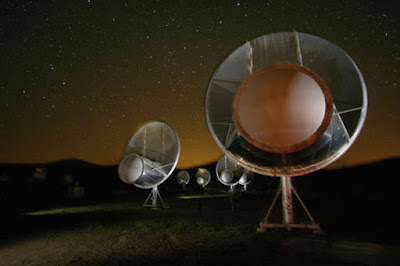
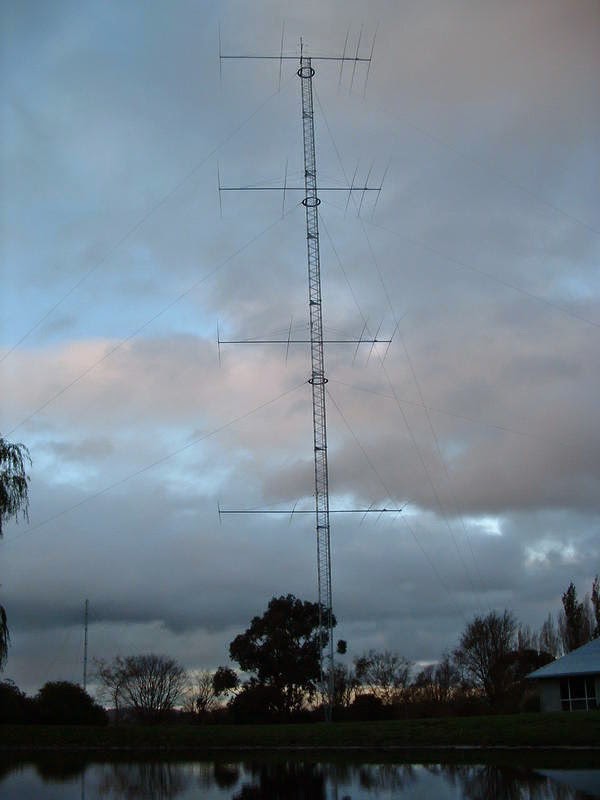
Mama mia! That’s an antenna! This is the skyhook that the very hip people in yesterday’s video (scroll down) are using to send very cool messages to Gliese 526. With a setup like that, they may have a shot at a QSO!
More on the antenna here: http://www.jamesburgdish.org/
As I suspected, real hams (not the hipsters!) are doing the tech work.
Our book: “SolderSmoke — Global Adventures in Wireless Electronics” http://soldersmoke.com/book.htm Our coffee mugs, T-Shirts, bumper stickers: http://www.cafepress.com/SolderSmoke Our Book Store: http://astore.amazon.com/contracross-20
After I replaced the 6U8 first mixer tube on the trusty Drake 2-B I tuned around a bit on 15 meters. IZ4NIC was loud, all the way from Bologna. I gave him a call and we had a nice QSO in Italian. then I talked to F4GBU. I was using my 40 meter dipole, but I thought I might do better with my 17 meter dipole (it is higher up in the trees). I called CQ 15 and got into a very nice QSO with Jim, W0JLG in Wichita. Jim has a very impressive collection of Boatanchors. We were soon joined by Stu, W7FE. Stu was using a Central Electronics 100v from the early 1960s. Wow, the three of us had a nice long contact.
The QSO was a real trip down memory lane for me: My sister Trish is visiting us. We had been talking about how when we were kids she would come into the shack to watch me try to talk to people… with the very same HT-37 and Drake 2B. I was 15 and she was 10. That was 39 years ago! Here we were again, sitting in front of the same old rig. It was a lot of fun.
Stu has some great info on his very impressive radio shack. You guys will really enjoy a visit to his QRZ.com site: http://www.qrz.com/db/W7FE
And check out his switching system for all those rigs: http://www.qsl.net/w7fe/
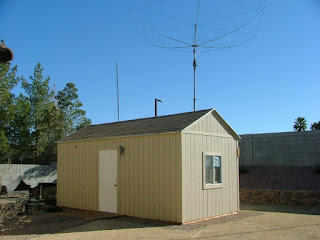
Wow, his site makes me want o move out to the shed and put up a hex beam!
Our book: “SolderSmoke — Global Adventures in Wireless Electronics” http://soldersmoke.com/book.htm Our coffee mugs, T-Shirts, bumper stickers: http://www.cafepress.com/SolderSmoke Our Book Store: http://astore.amazon.com/contracross-20
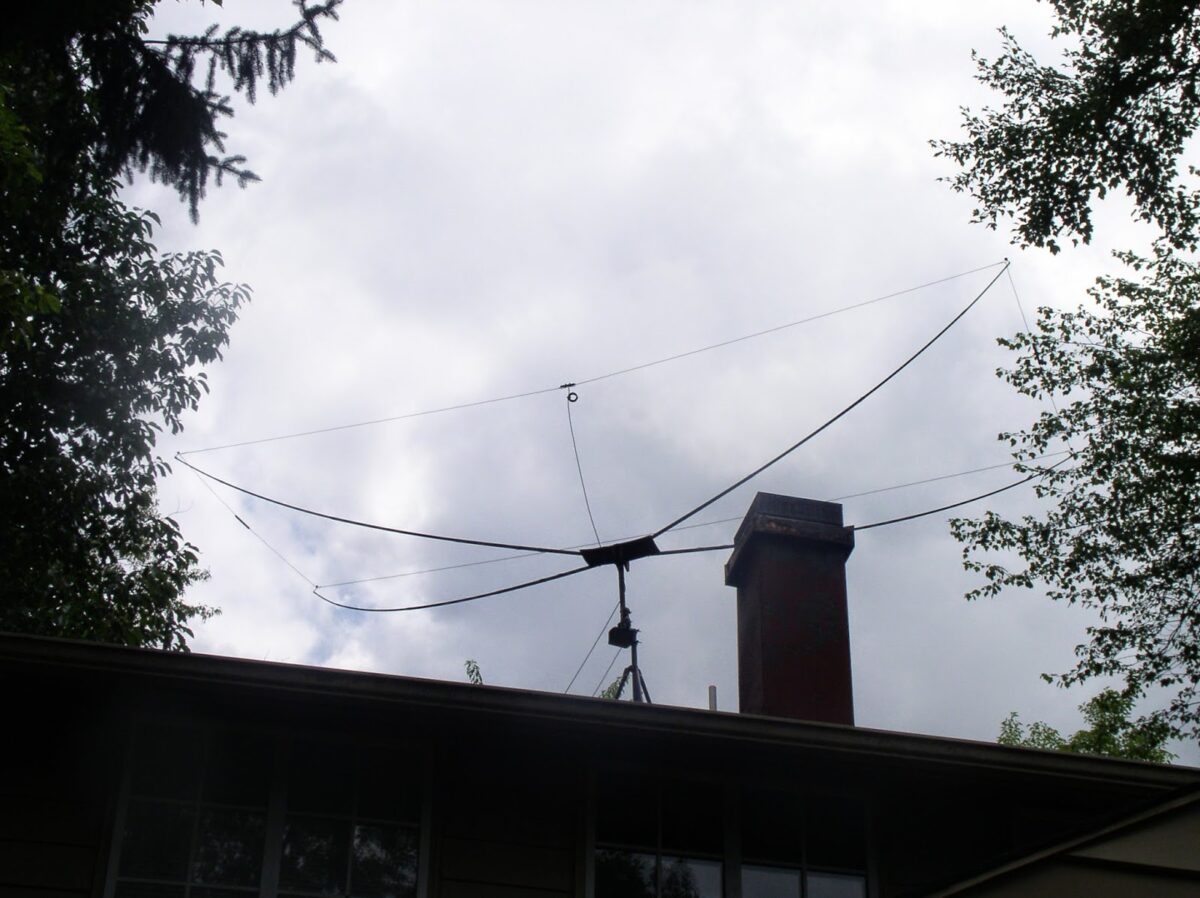
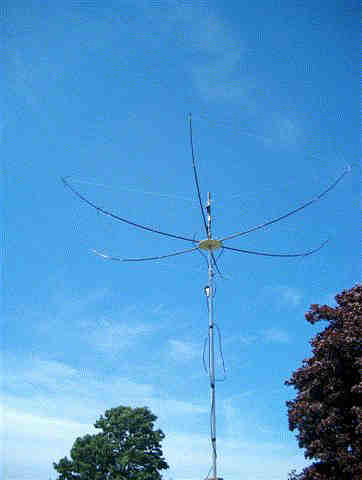
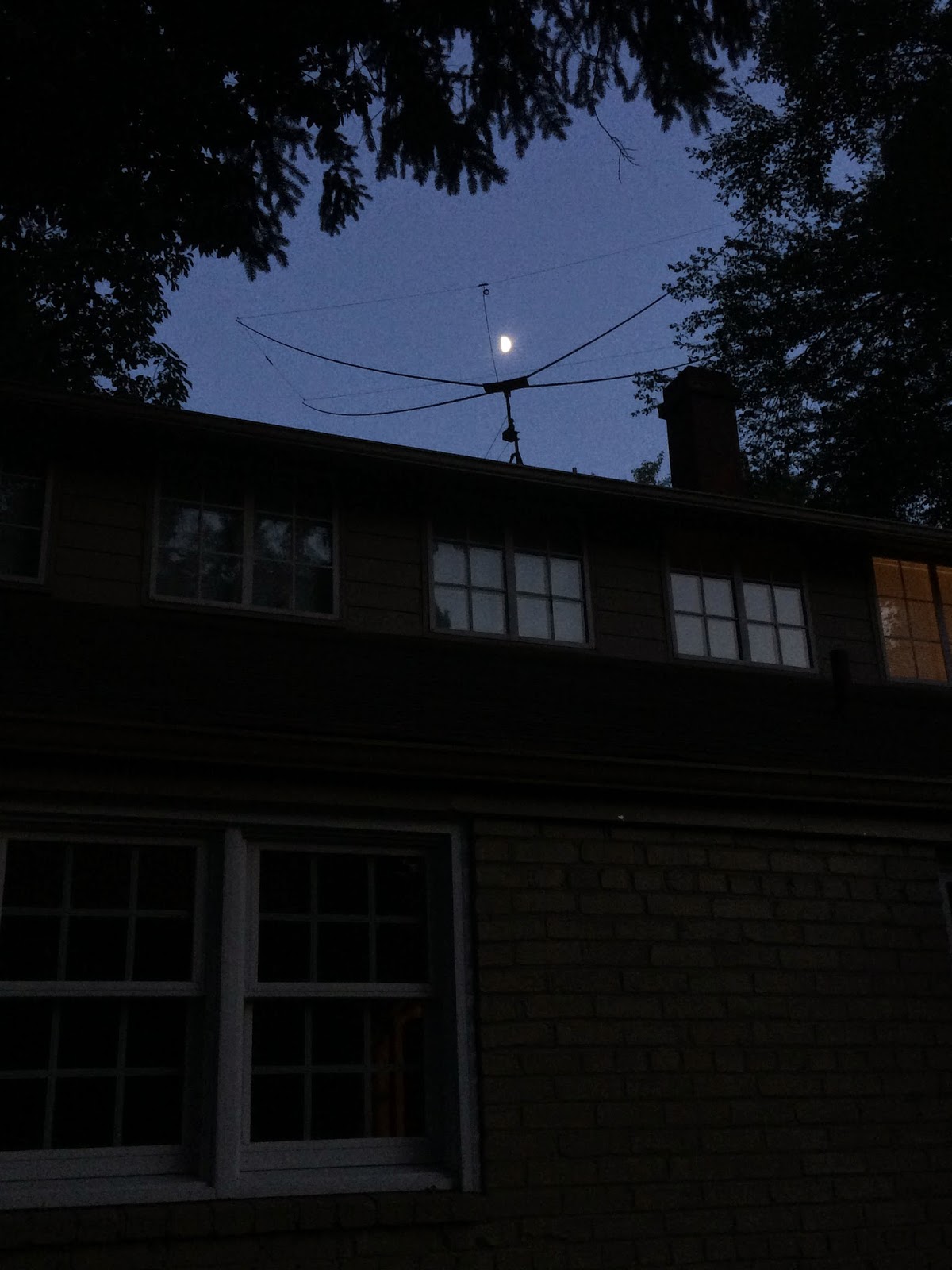
I’ve been hearing a lot about hex beams, and I think I’d like to build one. Maybe for 17 and 20 meters.
W1GQL has a lot of good info on these antennas on his site. I also found his discussion of Russian CW to be very interesting:
What I really like to do with my CW, however is to operate CW in the Russian language. Years ago I taught myself the cyrillic morse code and can use it. Not as fast as the International Morse code but at a usable speed of maybe 15-20 wpm. I have had many contacts with Russian stations and really surprised them coming back to them in fluent Russian. It turns out that Russian hams nowadays don’t use the cyrillic morse code often and are no longer even required to learn it to get their licenses. Newer Russian hams don’t even understand their own language well in CW. But if you can hitch up with an older ham that does, it is great. I had a QSO a few years ago with a ham licensed right after WW2. He told me that our QSO in Russian was the very first one he had ever had with someone outside Russian using cyrillic morse code. That gives you and idea of how unusual it is. Russian hams use the International morse code when communicating with each other even.
Our book: “SolderSmoke — Global Adventures in Wireless Electronics” http://soldersmoke.com/book.htm Our coffee mugs, T-Shirts, bumper stickers: http://www.cafepress.com/SolderSmoke Our Book Store: http://astore.amazon.com/contracross-20
I’m really getting into the SETI Live project. Whenever I get a chance I go to the SETI Live page, log on, and classify a few signals. Today I was looking at the tech aspects of the antenna array. Very interesting, and very appealing to homebrewers. They are making use of dishes that were made for TV reception. And they are using software-defined receiver systems. All of this makes upgrades relatively easy.
Jill Tartar of “Contact” fame is running this project.
Check it out: http://www.seti.org/ata
So, I’ll be I’ll be using a big array to listen (watch really) for the REAL DX on .5 to 11.2 Gigahertz. I’ll let you guys know if I hear any “new ones”!
Our book: “SolderSmoke — Global Adventures in Wireless Electronics”http://soldersmoke.com/book.htmOur coffee mugs, T-Shirts, bumper stickers: http://www.cafepress.com/SolderSmokeOur Book Store: http://astore.amazon.com/contracross-20
Wow, sometimes scratch-built homebrewing can be a frustrating masochistic activity. Who among us at one point or another hasn’t sat back from the bench and wondered why he didn’t take up stamp collecting? But then sometimes the radio gods are smiling on you, the smoke stays inside the components, the antenna rope doesn’t break, oscillators osc and amplifiers amp and all is right with the universe. I had one of those days yesterday.
The RF feedback measures I described earlier took care of that problem very nicely. Conditions on 17 were not that good yesterday, but as soon as the sun was up I started hearing stations. I called Phil, K5ACR, in Oklahoma and he came right back to me. He said the signal sounded OK, but he thought I might have been driving it a bit too hard. I backed off a bit and he said it sounded very nice.
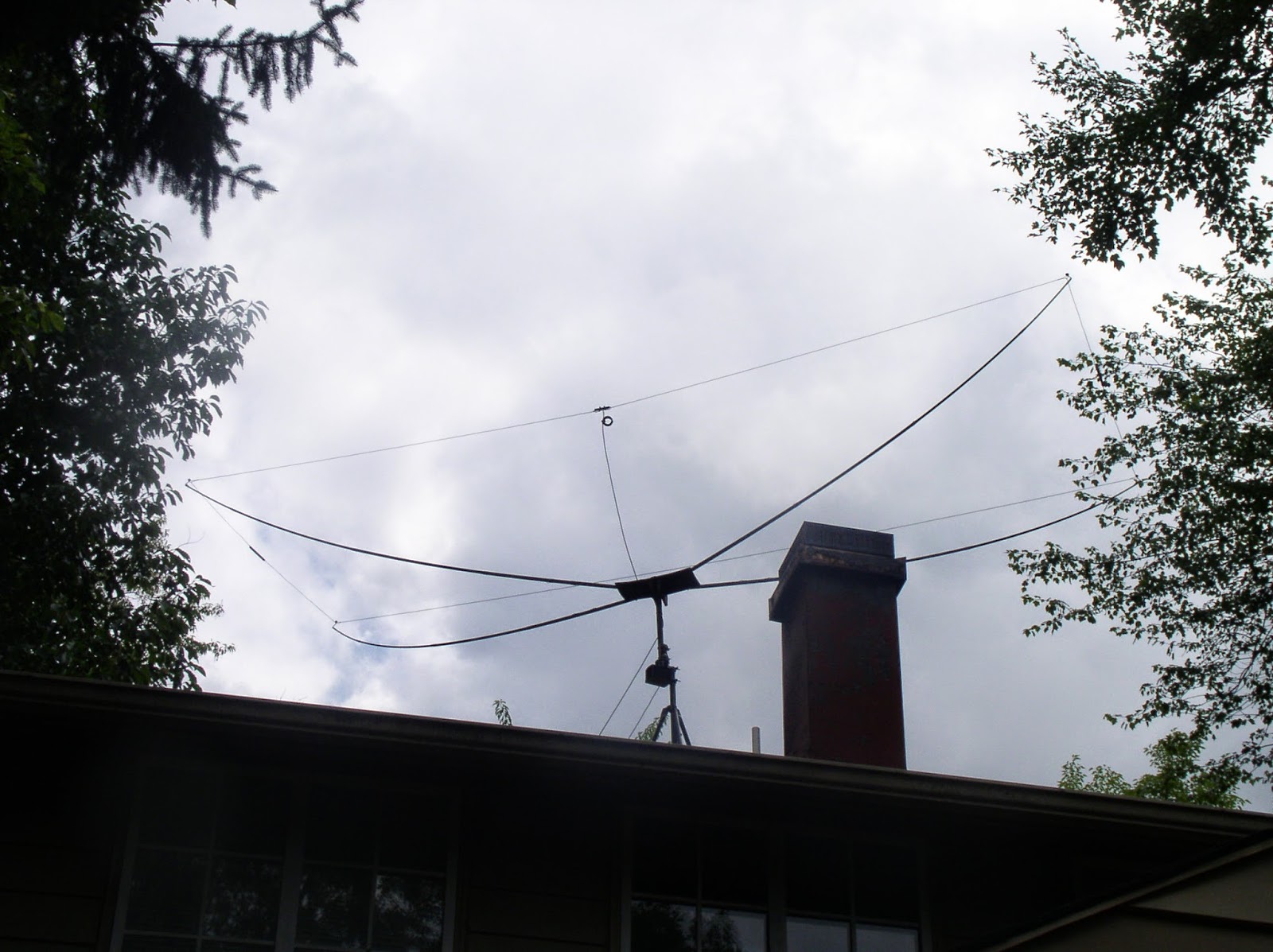
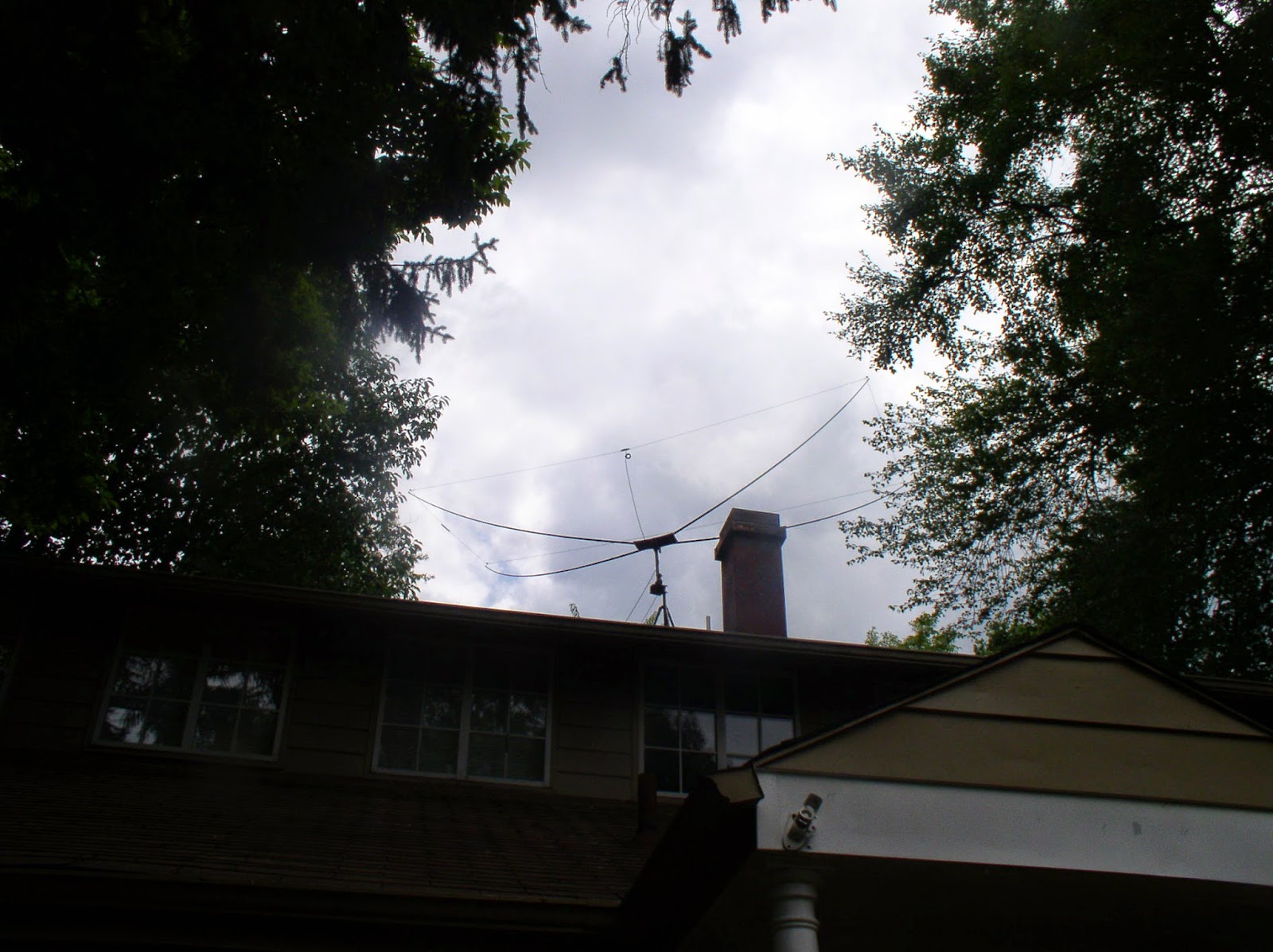
Our weather was really disturbingly pleasant yesterday (we’re not supposed to be out in T-shirts on January 31). I took advantage of it and went out with my fishing pole and sling shot (the neighbors love it) and got a line over just the right branch. This allowed me to turn my low-to-the ground 17 meter inverted Vee into a proper dipole, up about 15 meters or so.
Back to the shack and K5USI said I was booming into Mississippi’s Gulf Coast. I turned off my 20 watt linear and he could hear me just fine barefoot. Then I worked K2BQ in Florida. All stations report that the signal sounds very nice.
I remembered that I did a QST article about this transmitter a few years back. I can’t find it on the web, but here is an old page that describes it as it was in the last solar cycle:
http://www.gadgeteer.us/17SSB.HTM
Our book: “SolderSmoke — Global Adventures in Wireless Electronics”http://soldersmoke.com/book.htmOur coffee mugs, T-Shirts, bumper stickers: http://www.cafepress.com/SolderSmokeOur Book Store: http://astore.amazon.com/contracross-20