SolderSmoke Podcast #246: PeteGPT! DC RX, Si5351, Franklin osc, Cuban DSB, Hex beams, uBITX mods, DX, 10 meters, MAILBAG

SolderSmoke Podcast #246 is available:

AUDIO PODCAST: http://soldersmoke.com/soldersmoke246.mp3

YouTube VIDEO: (247) SolderSmoke Podcast #246: uBITX, Hex Beam, DX, High School DC RX, 10 meter SSB Rig, MAILBAG – YouTube

The AI Deep Fake Threat! PeteGPT!

Hearing Aid info: I can hear the cymbals in my audiogram adjusted Airpods.

Update on the TJ DC RX project – Several receivers working! https://hackaday.io/project/190327-high-schoolers-build-a-radio-receiver

Sunil’s company provides Nano/Si5351 combos. With the KD8CEC software. Very cool. http://amateurradiokits.in They have a new SSB dual band transceiver – the Airpal.

Mark AJ6CU helping me. Sent me Nanos with KD8CEC software. His uBITX Settings Editor seems very cool. https://github.com/AJ6CU/uBITX-Settings-Editor/releases/tag/V2-beta-1 Thanks Mark.

Franklin Oscillators.

Cuban Islander and Jaguey info. Send more!

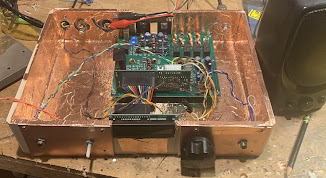
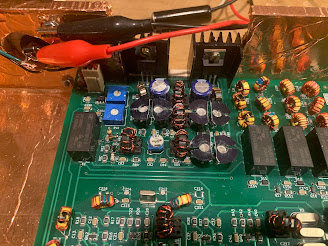
Fixing up uBITX 2 How Bill blew up TWO Raduino Nanos. My results with the KB1GMX mods. (see below)

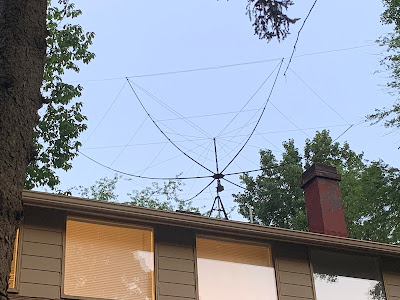
Hex Beam work: Adding 10 and 15 meter elements. But now I can hear AM breakthrough from WFAX 1220 AM (5 kW during the day), So I made a high pass filter.

Made first contacts on 15 and 10: Argentina, Brazil, Dominican Republic.

First contacts with both India VU3TPW and China BA4TB. SSB homebrew.

sBITX news. Taking orders!

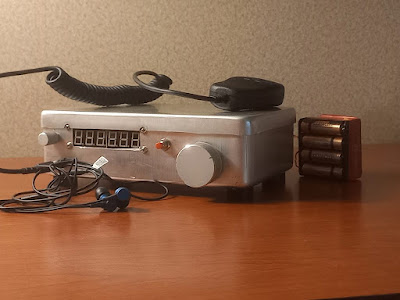
Pete’s 10 Meter SSB Project

Mailbag:

–Wes W7ZOI provided great info and analysis on the Franklin oscillator. And lots of great tech info on other topics: http://w7zoi.net/oldtech/ponder.html Thanks Wes!
–Lex PH2LB. uBITX mods. TO-18 Heatsinks. New stickers (see above).
–Kostos SV3ORA and Hans G0UPL about the Franklin Oscillator.
–Listening to HRWB 178: Great stuff, many old friends: George KJ6VU moved to Oregon. Thomas K4SWL on the show. Ben, an old friend of Pete’s, mentions John Zaruba K2ZA – the guy who gave me the DX-100. Wonderful connections.
–Thanks to Todd VE7BPO for sending me another AADE LC meter. I need it for the SSSS.
–Nick MONTV planning a 15/10 meter dualband SSB rig. Me too! See video.
–Trevor Woods in W. Australia – The portrait in Artie Moore’s shack. Chuck WB9KZY – Willam Ramsay
–LA6NCA Helge three tube RX. Regen or DC? Mike Masterson WN2A and I discuss.
–Mike WU2D video on Retro QRP rigs – Steve G0FUW discusses Severn rig long in the works –started 1983 and nearly finished!
–Tim Hunkin of Secret Life fame did video with speaker made from potato ship bag. Discussed with Tony G4WIF and others. Also, Tim has an amazing video on cutting holes in metal. On the SolderSmoke blog.
–Bob Crane W8SX will be covering FDIM for SolderSmoke!
–Glen VE3DNL working on a more sophisticated DC RX.
–Craig KC2LFI from the beach on Grand Cayman. FB.
–Steve EI5DD reports We have changed our name – The May Issue of the HAM RADIO IRELAND Magazine, Ireland’s only independent magazine for the Radio Experimenter: https://docdro.id/SHH0VEy
–Mike EI0CL on 15 meters with Dean KK4DAS. FB
–Howard N3FEL of the Penn Wireless Association wants to do a group build of a DC RX.
–Martin LW9DTR in Buenos Aires looking for help with the code for an AD9850
–Todd K7TFC – always helping other homebrewers.
–Really thoughtful message from Kevin WN7Z
uBITX 2
My KB1GMX mods to uBITX 2

An Antenna for the High-School Direct Conversion Receiver (and Next Steps in the Project)

We have reached the point where we have to decide on an antenna for the high-school direct conversion receiver. It needs to be simple and easy. It needs to be something that students can easily install from a bedroom window in an apartment or a town house.

We thought about an End Fed Half Wave, but 66 feet of wire seemed to be too much, and the EFHW would require both coax and the construction of a transformer. That seemed like too much.

So here is what happens with just 33 feet of wire (1/4 wave on 40 meters), with another 33 feet as a counterpoise. I found that the counterpoise worked just as well spread out on the bedroom floor as it did hanging out the window along the outside of the building. As you can see in the video, the counterpoise is really necessary with this kind of antenna. It makes a big difference.

We know that the students could have dispensed with the counterpoise by connecting the copper clad boards to a cold water pipe, but that might be difficult for them. So we went with the counterpoise.

After the antenna demonstration I ramble on a bit about the high-school construction project, and where the students could go from here.

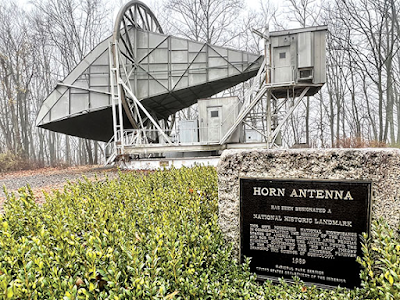
Save the Antenna!

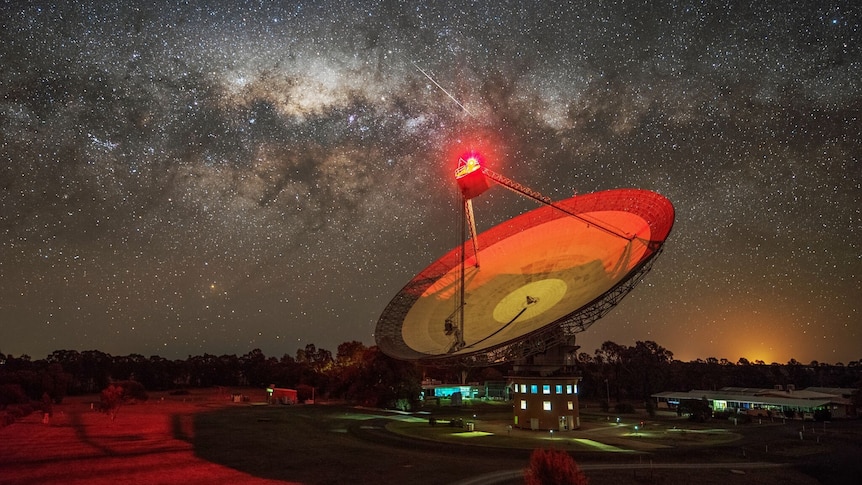
SolderSmoke fans have an interest in saving this antenna because it is the site of one of the most amazing RF troubleshooting stories of all time: Wilson and Penzias were trying to track down some noise. At one point they thought it might be the result of bird droppings. Uh, no, it was really the result of the Big Bang! Please sign the petition:

R-390s, KWM-2s, Airplanes, and Magnetic Loops — A Really Interesting Interview with Ted Robinson K1QAR

Eric Guth 4Z1UG has a really interesting interview with Ted Robinson K1QAR.

I really enjoyed hearing Ted’s inspiring story:

https://www.youtube.com/watch?v=SUUzlKMMANg

https://www.qsotoday.com/podcasts/K1QAR

Listeners will like the discussion of the R-390 and the KWM-2. And his talk about airplanes. And the joy of repair.

Here is Ted’s QRZ.com page: https://www.qrz.com/db/K1QAR

Thanks Eric! Thanks Ted!

An Especially Good (Old) SolderSmoke Podcast

February 22, 2008
— We were in Rome.
— I read a 1931 QST ad sent to me by my fellow “Hambassador” David Cowhig, WA1LBP; David was in Okinawa when he sent it.
— I describe Wes Hayward’s comments about Pat Hawker, G3VA.
— I talk about getting on the air with my HW-8 (after fixing it!), re-tubing my Drake 2-B, and putting up a 30AWG antenna in Rome.
— I describe meeting up with Roman hams (including amplifier manufacturer I0ZY!) and visiting the local radio club.
— The Science Museum in Florence, Italy.
— DSB from Rome with my NE602 rig.
— Tony Fishpool and Graham Firth’s Test Gear book.
— An important corollary to Murphy’s Law.
— Listening to SolderSmoke from safari, under the Southern Cross in South Africa.
— Ron Sparks calls in from Dubai.
You can put on a playlist of all the SolderSmoke podcasts here:

VK3IO’s Wonderful Antenna Tuning System

I have been ridiculed because my manual antenna tuner (that is screwed into the wall of our car port) requires me to step outside into the cold or heat to change bands.
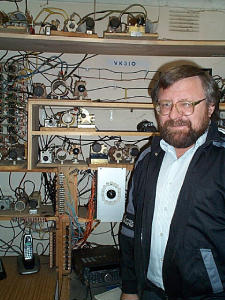
On August 18, 2022 — with my Hex Beam, not with the tuner — I worked Ron VK3IO on 20 SSB. Check out Ron’s antenna tuning system. He used the same balanced tuner that I use, but he has them set up for FIVE bands. FB. The wire antenna was working very well — with 100 watts to the wire Ron was booming into Northern Virginia.

Ron’s QRZ.com page:

Watch out for those spiders Ron!

SolderSmoke Podcast #239: Hex DX, VFO Temp Comp, DC RX, Polyakov!, DX-100, Wireless Set, Farhan’s “Daylight Again” HDR rig, MAILBAG

N2CQR Hex Beam Aimed at Europe


SolderSmoke #239 is available for download:

http://soldersmoke.com/soldersmoke239.mp3

TRAVELOGUE:

James Webb Space Telescope. Mars returning to opposition in early December.

BILL’S BENCH

Hex Beam K4KIO – on roof – TV Rotor – 20-17-12 Lots of fun. Working Japan regularly, Australia, South Africa on long path 17,000 miles. 52 countries SSB since July 11.

VFOs and Temp stabilization. Dean KK4DAS found my ceramic resonator VFO for DC receiver drifty. He was right. So I built a real LC Colpitts VFO. Got me into temp stabilization. A new hobby! An obsession. HT-37 and Ht-32 parts. Ovens? WU2D’s second VFO video. Understanding thermal drift and how to address it. Split stator caps. Cut and try.

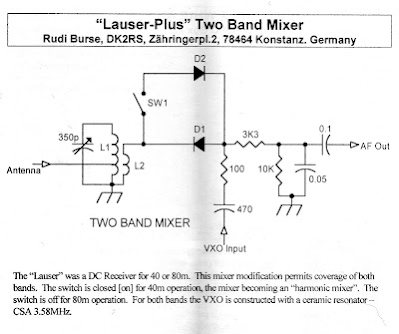
Built a Polyakov DC Receiver. https://soldersmoke.blogspot.com/2010/03/polyakov-plus-dual-band-receiver-with.html Lauser Plus. Lauser = Imp or Young Rascal! DK2RS. He used a ceramic Resonator VXO at 3.58 MHz. Mine works great on 40 with VFO running 3.5 — 3.65 MHz. See schematic below.

On 40 AM with DX-100 and MMMRX. DX-100 died. 12BY7 VFO buffer went bad. How common is failure in this tube type? Nice QSO with Tim WA1HLR about the DX-100.

Got my Dominican license: HI7/N2CQR! SSSS on the way. Thanks to Radio Club Dominicano and INDOTEL.

Getting more active in the Vienna Wireless Society.

BOOK REVIEW:

“The History of the Universe in 21 Stars” by Giles Sparrow. Written during the pandemic. Published by Welbeck, in London. https://www.amazon.com/History-Universe-21-Stars-imposters/dp/1787394654 Also: From “Atoms to Amperes” by F.A. Wilson available for download. See blog.

SHAMELESS COMMERCE DIVISION:

Todd K7TFC getting ready to launch “Mostly DIY RF.” I used his TIA boards in my 1712 rig. He will have boards like this and much more. Stay tuned.

I need more viewers on YouTube. They want 4,000 hours IN A CALENDAR YEAR! Please watch!

FARHAN’S NEW “DAYLIGHT AGAIN” RIG. Analog. VFO. Comments, observations. We need to get him on the podcast. Maybe two shows: SDR and HDR.

PETE’S BENCH

Time very limited. But still sharing lots of tribal wisdom.

Wireless set with tubes!

Tool recommendation – Air compressor

MAILBAG:

Farhan VU2ESE – Speaking of big antennas “Whenever I look at the huge construction cranes in Hyderabad, I always think how one could make 160m, 4 element yagi using it as a boom..

Todd K7TFC in Spain, spotting Log Periodics in Madrid.

Andreas DL1AJG: Can Biologists fix Radios?

Janis AB2RA Wireless Girl. Expert on Hammarlunds. And was my first contact with the Tuna Tin 2. She too was HB!

Peter Parker VK3YE on Owen Duffy VK1OD

Lex PH2LB on homebrew radio

Would this really be homebrew? Mail from H-A-D article on FM receiver

F4IET a DSB rig from France

Ciprian got his ticket YO6DXE

Josh G3MOT sent us a good video about the Vanguard satellite and IGY.

Dave Wilcox K8WPE bought Chuck Penson’s Heathkit book.

Rogier — So many great articles and links from PA1ZZ

Bill AH6FC Aloha. Retiring. Wants to build. Mahalo!

Grayson KJ7UM Working on an Si5351. Gasp.

Mike KE0TPE viewing YouTube while monitoring 6 meters. He will have a lot of time to watch!

Chris KD4PBJ spotted Don KM4UDX from VWS FB

Mark WB8YMV building a superhet. Having trouble with 455 kc IF can filter.

Walter KA4KXX Great comment on the Daylight Again rig.

Ramakrishnan Now VU2JXN was VU3RDD. Found lost Kindle with SolderSmoke book on it. Building SDR rig from junk box. Trouble with the LM386.

Pete, Farhan and Tony: Shelves of Shame

Daylight Again by Farhan
The Polyakov receiver I built yesterday (from SPRAT 110, 2002!)

Hex DX! First Long-Haul Contact with the New Hex Beam – VK4KA on 20 SSB

This morning at around 1345 UTC I had the chance to try out my new Hex beam on some “down under” DX. 9,548 miles, 15,222 km The DX Spot page told me that VK4KA was on 14.255 MHz. QRZ.com said the beam heading for me was 270 degrees. He was quite strong. He was working a fairly huge pileup, going through callsign numbers. He was on the 6s when I tuned in, so I had some time to test the Hex beam. Above you can see a rough front-to-back test. Below you can see a comparison with my old 75 meter doublet.

A few minutes after the second video, in spite of the pileup I called VK4KA and made the contact. I congratulated him on his homebrew Moxon. https://www.qrz.com/db/VK4KA

It was fun to reach Australia with the new antenna.

Hex Beam at N2CQR

I got my K4KIO Hex Beam up on the roof yesterday. I think it looks pretty good! It is in the same spot that I had my beloved Moxon. Curse you Nor’Easter!

Putting this thing in the air made me appreciate the relative simplicity of the Moxon. It had just four poles, not six. It weighed just nine pounds, not 25. It was significantly smaller. On the other hand, that antenna just gave me one band — I have 20, 17 and 12 on this one, and I could add three more. Also, this one is a lot more rugged, and is likely to survive the next Nor’Easter.

It was fun spinning it around. First QSO was DX on 20 SSB: EA1HDZ. This morning I spoke to KP3CQ in Puerto Rico. Later, I was listening to ZS3Y — he was faint until I tried him on long-path. He was transmitting on the long path and was much stronger when I pointed in that direction.

I kept the 75 meter doublet — I just put it on another tripod. So I will be able to continue to use that antenna for 40 meter AM contacts (I’ve been having a lot of those lately).

Homebrew Variable Capacitors — VU2NIL’s Antenna Tuner (and other projects from Basanta)

OM Basanta VU2NIL built a very nice antenna tuner using homebrew variable capacitors (above). After seeing this, I feel unworthy — I used FACTORY-MADE variable capacitors. I feel like such an appliance operator. I hang my head in shame.

Details on Basanta’s tuner are here: https://www.qsl.net/vu2nil/projects/20210/20210.html

More project from him here: https://www.qsl.net/vu2nil/

And more here (his blog): https://vu2nil.blogspot.com/

Basanta has obviously made great contributions to the radio art. Thanks Basanta. And thanks to Alain F4IET for alerting me to Basanta’s work.

SolderSmoke FDIM Interview: Adam K6ARK and his 2.6 gram Mini-Pixie SMD Transceiver

I’ve not bee a big fan of the super-simple Pixie transceiver, but Adam K6ARK could make me a believer.

Our correspondent Bob Crane W8SX interviewed Adam at FDIM. You can listen to the interview here: http://soldersmoke.com/2022 K6ARK.mp3

The video above shows Adam’s tiny Pixie in action in the California desert. His rig is about the size of a postage stamp and weighs about 2.6 grams. FB Adam.

Adam did a lot better with his Pixie than I did with my far larger and more complicated SST transceiver. He also did better than I did on 40 when I was using my ET-2 (two FET) transceiver.

I liked how Adam recorded in the field the CW from his rig, I also liked his key (!) and his EFHW antenna and “tuner.” Adam’s ability to cope with no CW sidetone was also admirable.

Adam’s YouTube channel is here: https://www.youtube.com/c/K6ARKPortableRadio

Thanks to Adam and to Bob Crane.

Thomas K4SWL — SOTA Activation on Bearwallow Mountain, North Carolina (video)

Thomas put out a very nice video of his recent activation of Bearwallow Mountain in western North Carolina. Really nice. It was fun to see the QSOs and the logging as he did it. Very cool that he worked Christian F4WDN — Jack NG2E also worked F4WDN on a recent activation in the Shenandoah area of Virginia.

More details on the activation here:

Thanks Thomas!

1BCG — The 100th Anniversary of the Trans-Atlantic Test

Thanks to the Antique Wireless Association for this really wonderful video, and for their involvement in the 100th anniversary event. Special thanks to Ed K2MP.

On December 11, 2021, the 1BCG team in Connecticut had some technical difficulties. As we all know, that is part of being a radio amateur. Details of the problems are presented here:

http://1bcg.org/1BCG/the-special-event-transmitter/

Phil W1PJE managed to hear and record some of the 2021 transmission (Thanks Phil). Listen here:

https://drive.google.com/file/d/1uPvD9Qh-VJTnyDzOPPSrYfbksks8sQsx/view?usp=sharing

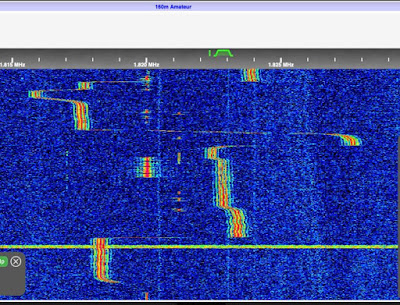
Phil also sent this spectrogram of the signal.


Good thing Paul Godley ran into Harold Beverage on the ship going over.

And imagine me complaining about having to step out into the carport to adjust my antenna — Godley had to trek one mile THROUGH SEA-WEED to adjust his. Respect.

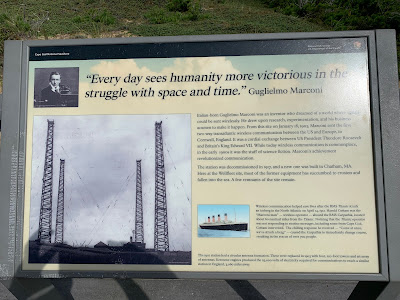
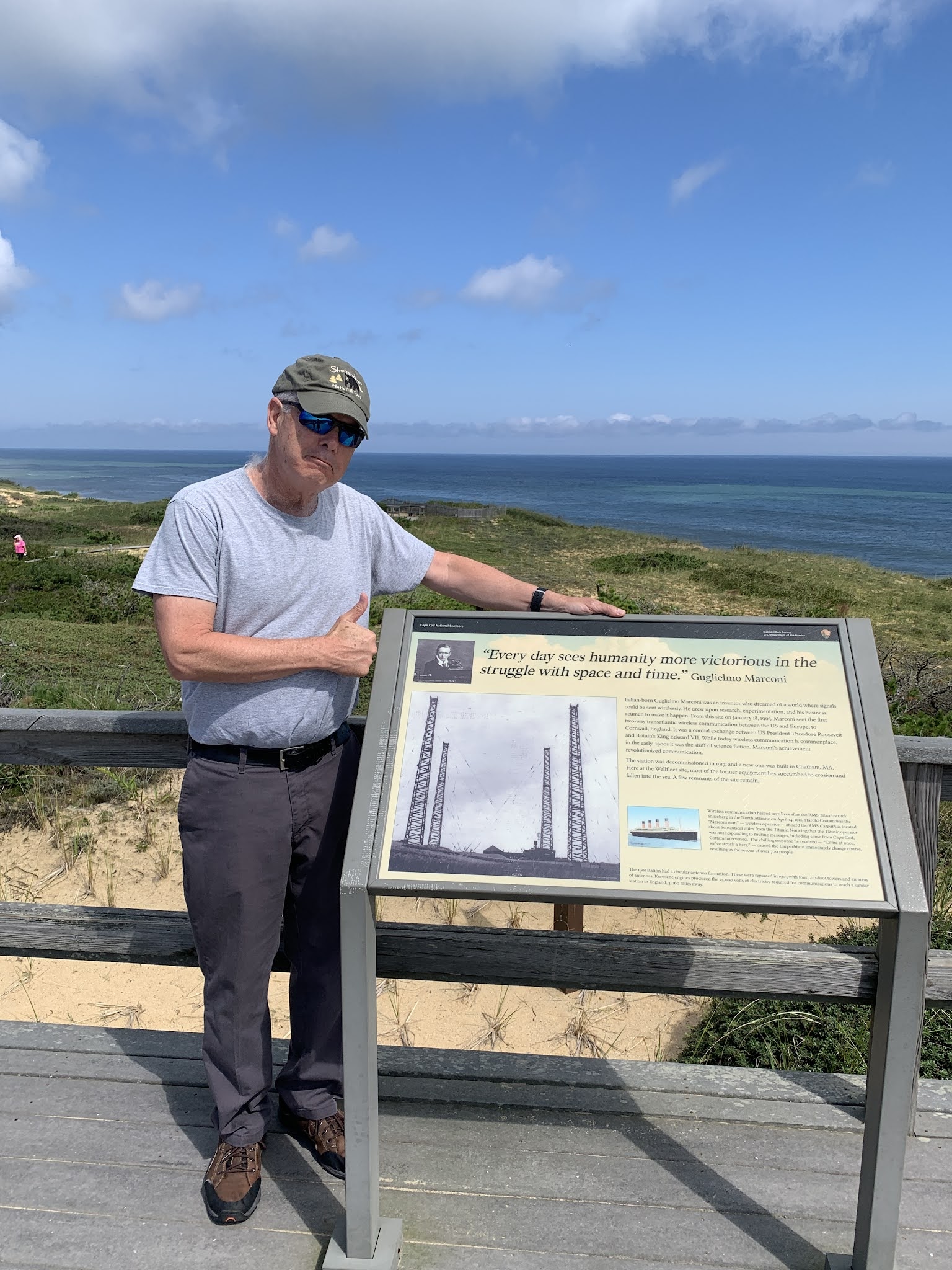
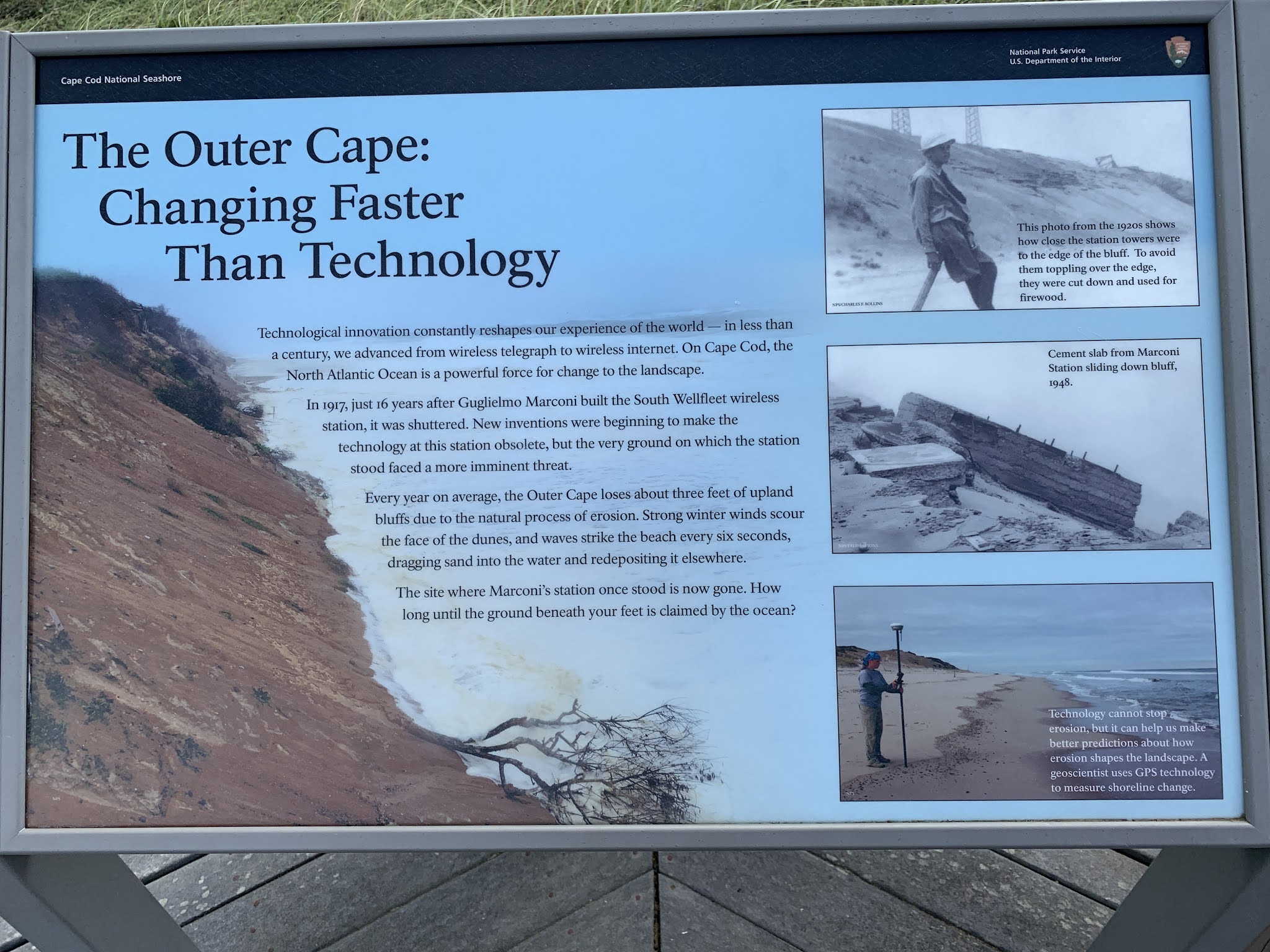
Visiting the Site of Marconi’s Wireless Station at Wellfleet, Massachusetts

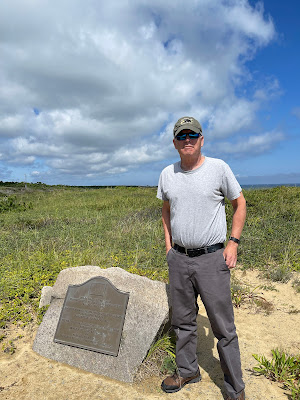
We were in Boston and the Cape Cod area this week. We stopped off at the Marconi Wireless site at Wellfleet, Mass.

This is from the National Park Service web site:

Spanning the Ocean

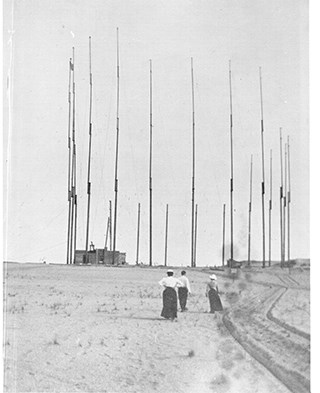
For Marconi the ‘great thing’ was to transmit wireless signals across the Atlantic. He built stations at Poldhu, England, Glace Bay, Nova Scotia, and South Wellfleet, Massachusetts. At this stage of wireless technology relatively long electromagnetic waves were used as signals. Transmitting great distances, therefore, required great sensitivity of receivers and tremendous power. Originally, huge rings of masts were installed to support the needed antennas. When storms destroyed them, they were replaced by sets of four wooden towers, 210 feet in height. Power requirements were tremendous. Keroseneburning engines produced 2,200 volts. When fed to a Tesla transformer, the voltage was stepped up to 25,000 volts – the energy needed to transmit longwave signals so far. It was from the Glace Bay station that the first successful two-way transatlantic wireless test message was sent on December 17, 1902.
A black and white photo of a man and two women standing in an open area facing a building next to a tall circular array of thin antennas.
The original wireless array.

Impacting Lives

January 18, 1903 the first public two-way wireless communication between Europe and America occurred. With elation, communiques from President Theodore Roosevelt and King Edward VII were translated into international Morse code at the South Wellfleet and English stations, respectively, and were broadcast.

Ocean-going vessels quickly adopted Marconi apparatus to receive news broadcasts, and soon ship-to-shore transmittals were a major operation. Business and social messages could be sent for fifty cents a word. The South Wellfleet station became the lead North American facility for this function. The station’s effectiveness was limited however, so broadcasts were made between 10 pm and 2 am when atmospheric conditions were best.

This brought little enthusiasm from local residents, who endured the sounds of the crashing spark from the great three-foot rotor supplied with 30,000 watts. The sound of the spark could be heard four miles downwind from the station. Eventually, the novelty of wireless telegraphy waned. However, the need for communication at sea remained high. Effective communication resulted in numerous sea rescues, culminating in the Carpathia’s wireless-aided rescue of over 700 people from the Titanic in 1912.

For fifteen years the South Wellfleet sparkgap transmitter continued in commercial use. Skilled telegraphers sent out messages at the rate of 17 words a minute, and station CC (Cape Cod) served in effect as the first “Voice of America.”

https://www.nps.gov/caco/learn/historyculture/marconi.htm

SST — QRP On The Beach

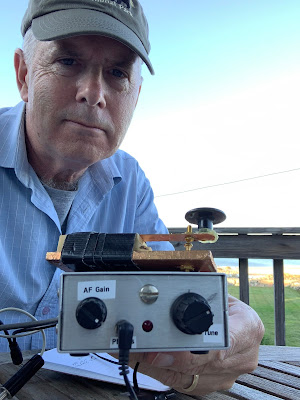
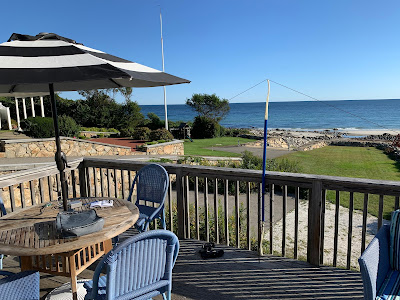
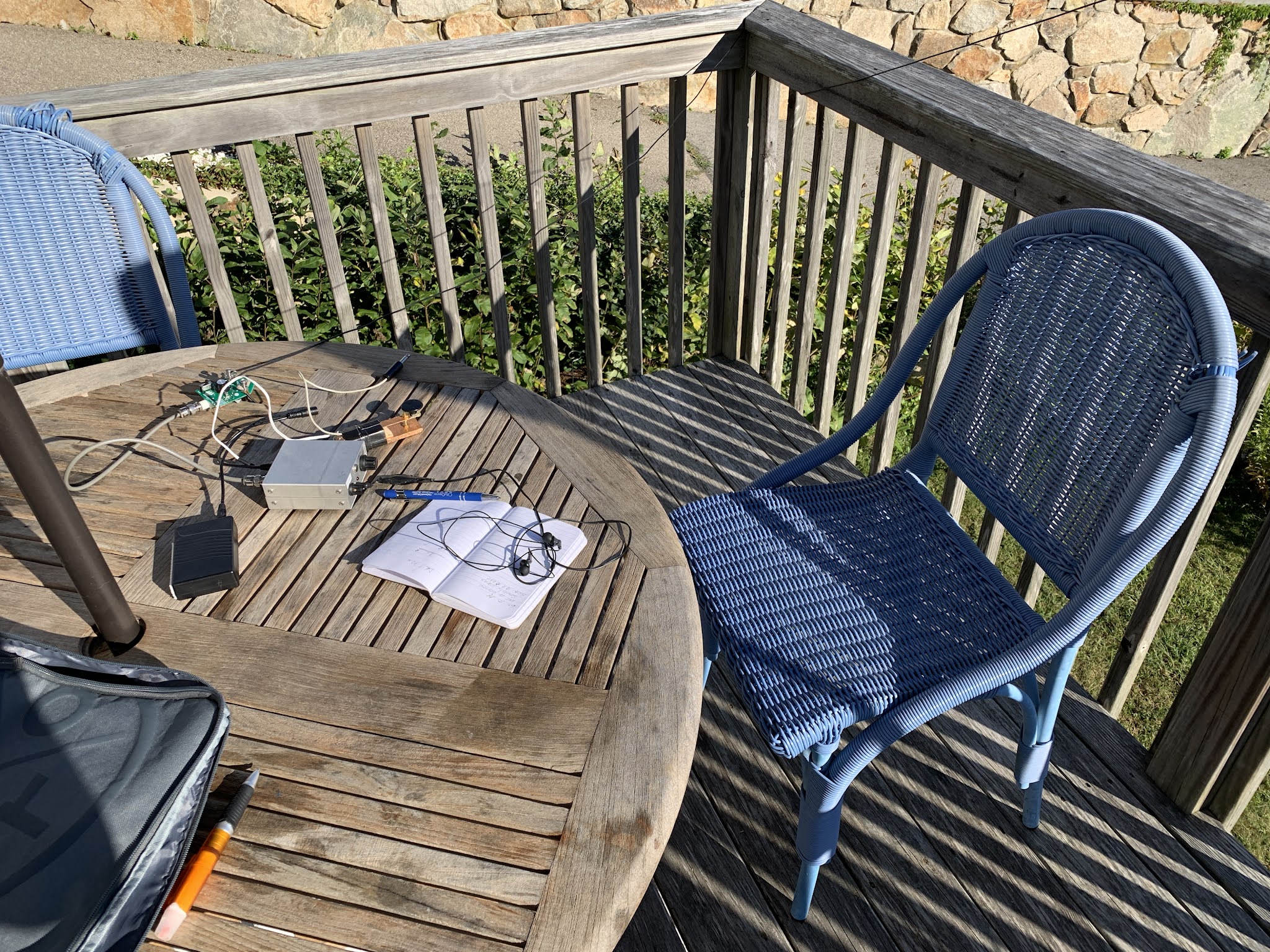
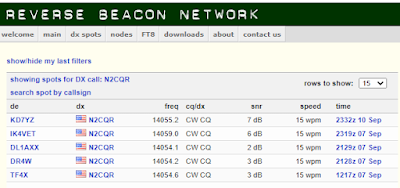
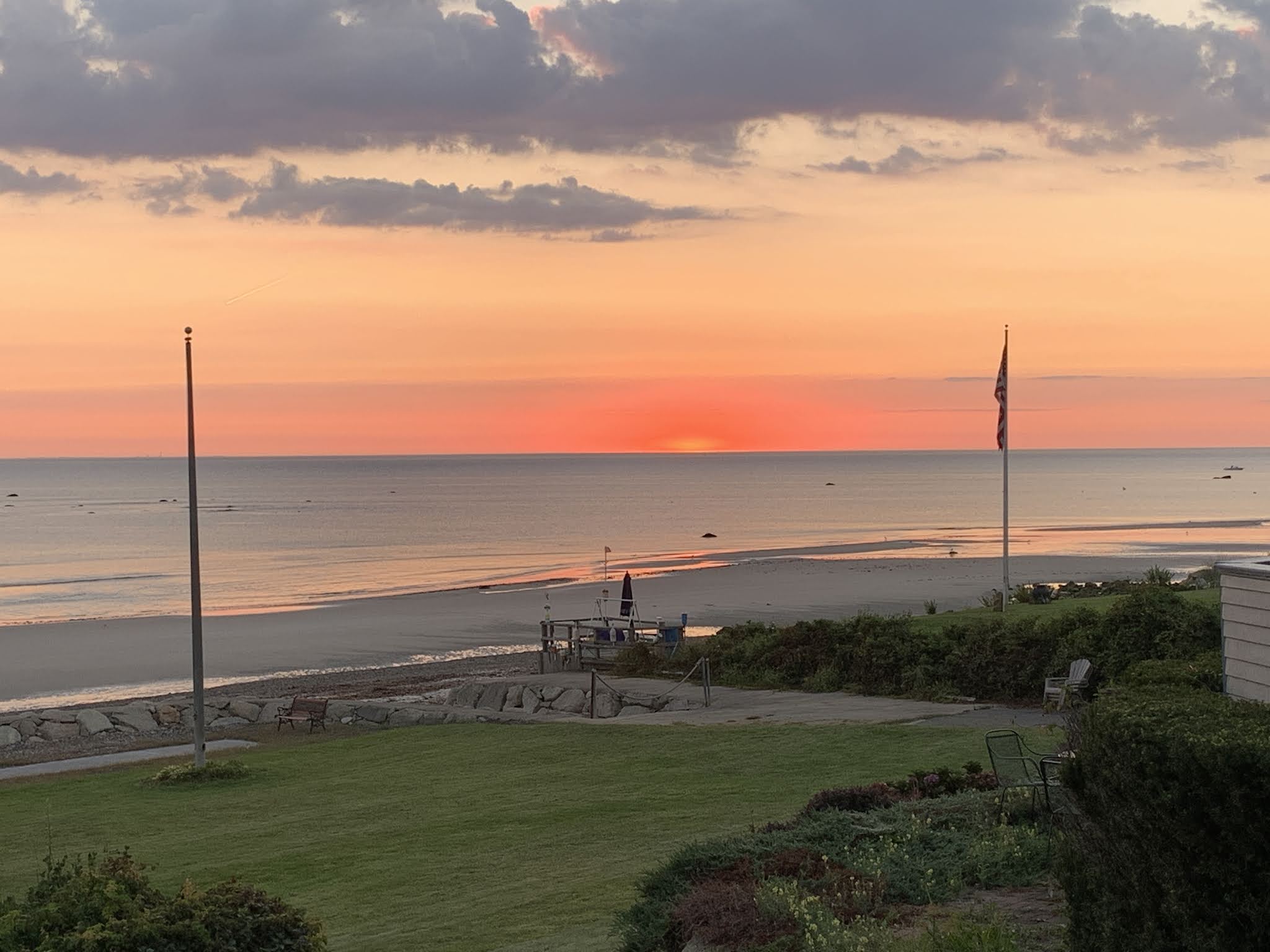
Up in a beach house on Cape Cod Bay in Massachusetts, I put the SST on 20 meters using an End-fed Half Wave antenna and QRP-guys tuner. Conditions were pretty bad, with solar storms causing disturbances in propagation, but I did manage to get picked up by RBN skimmers in Iceland, Germany and Italy (see below). And I had one nice QRP-QRP contact with DK4AN.
I was having trouble getting out until I used the oar to raise the central portion of the half wave antenna — that’s where the current is.
Thanks again to Bob KD4EBM for sending me the SST.

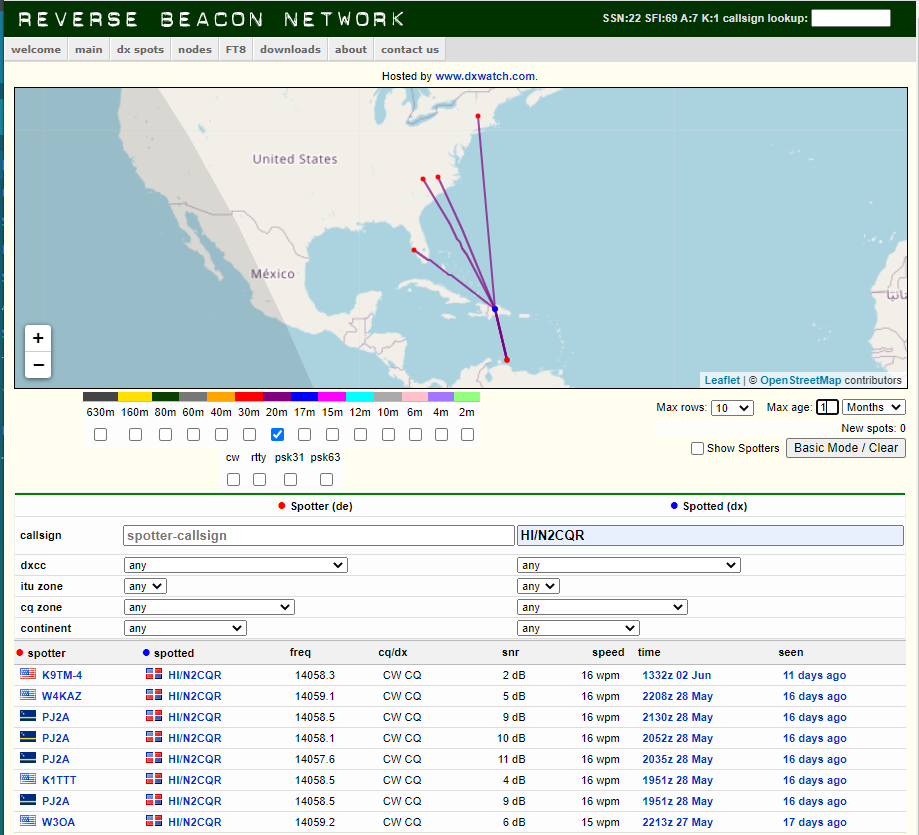
Santo Domingo Shack on 12th Floor Balcony — SST QRP CW

June 2021. We were in Santo Domingo, Dominican Republic. At this point we were in a 12th floor apartment in the center of the city. I would take my SST 20 meter CW transceiver and EFHW antenna out on the balcony. I made no contacts from this location, but one of my CQs was picked up by K9TM on the Reverse Beacon Network (see below). All the other RBN spots were the result of calls from the eastern tip of the island. (Click on the RBN image for a clearer view.)

QRP – QRP Contact from Dominican Republic

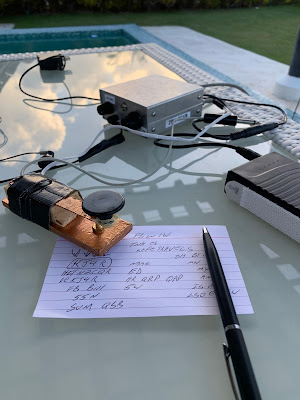
It took some brass pounding on my homebrew key, but on May 28, 2021 I made a real QSO from the eastern tip of the island of Hispaniola. KJ4R came back to my CQ near 14.060 MHz. I was running just 1-2 watts from my SST transceiver to an end-fed half wave antenna. Ed KJ4R was in South Carolina running 5 watts, also to an EFHW antenna. TRGHS. Thanks Ed. And thanks to Bob Scott KD4EBM and Wayne Burdick N6KR.