![]() |
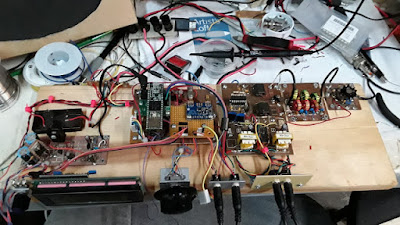
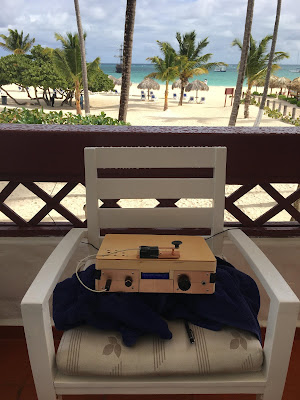
| Bill’s Bavaro DR Beach Station uBITX in the box, HB key |
Back to Bill’s Bench:
![]() |
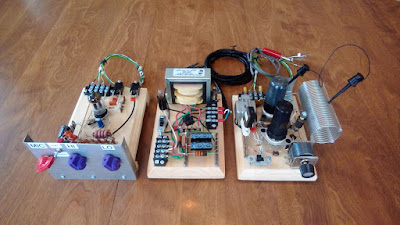
| Pete’s Plank SDR When you know stuff, you can do stuff! |
SolderSmoke Daily News — Ham Radio Blog
Serving the worldwide community of radio-electronic homebrewers. Providing blog support to the SolderSmoke podcast: http://soldersmoke.com
![]() |
| Bill’s Bavaro DR Beach Station uBITX in the box, HB key |
Back to Bill’s Bench:
![]() |
| Pete’s Plank SDR When you know stuff, you can do stuff! |
Pretty cool and very useful. You can also do this by using the Modulator symbol, but I found this technique easier and more straightforward.
But be sure to watch all the way to the end of the video. Early on, he forgets the step that causes the carrier to stay in the simulation, but then shows how to correct this. In the process we learn how to create a DSB (suppressed carrier) signal in LTSpice.
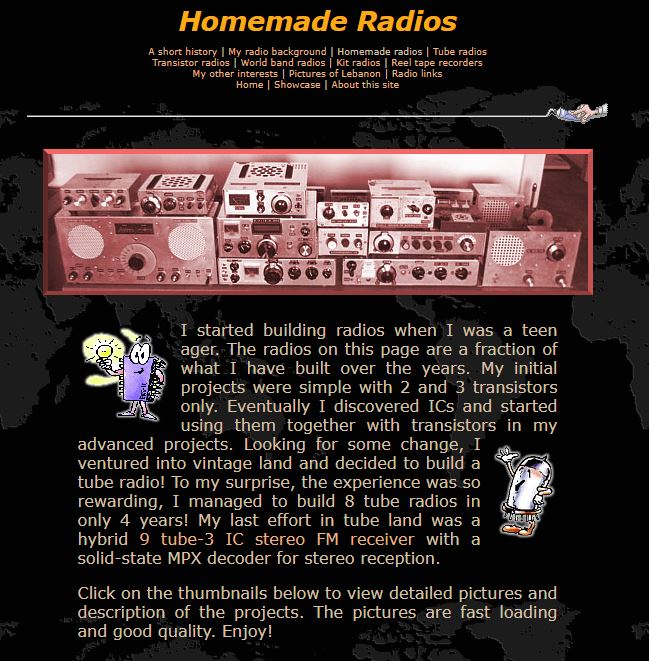
I found this site through Paul VK3HN. He took the AM detector circuit for his AM receiver from one these Lebanese homebrew radios.
There is some really great information on this wonderful website. It has been online for some 20 years — I wish I had found it earlier. The author shares his Knack story — this is a wonderful example of the International Brotherhood of Electronic Wizards (IBEW).
http://www.midcenturyradios.com/index.html
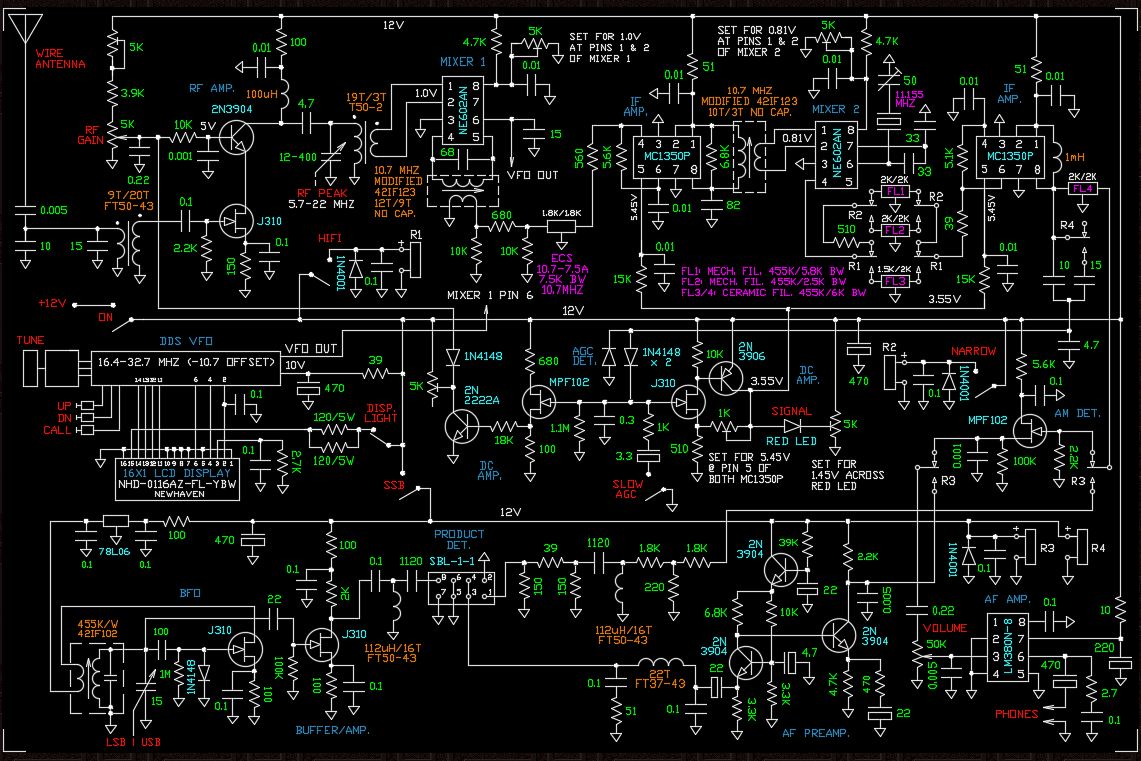
And he has very cool schematics, really well done. Click on image to enlarge:
I’m always delighted when I check the SolderSmoke blog and YouTube list (right hand column of the blog) and find a new post from Paul VK3HN. And this morning’s post is especially good.
Paul has built an AM receiver. Above you can see his video. Here is his blog post with details:
https://vk3hn.wordpress.com/2019/12/06/8-band-superhet-am-receiver/
This is the kind of blog post that makes you want to heat up the soldering iron and start searching through the junk box. I’m thinking about putting Paul’s 6 kHz filter in my 40 meter HRO-ish receiver. And I may make use of his AM detector circuit. And maybe I can put that same receiver on 75 and 160… And then there are the SW broadcast bands… See what I mean?
Thanks Paul. 73
I liked the groundhogs.
More info:
http://www.amrally.com/
On January 23, 2019 on 20 meters I talked to Barry K6ZA. He is near San Francisco. I was running my Hallicrafters HT-37 with my Drake 2B. I was really pleased to discover that the guy I was talking to loves these two pieces of gear as much as I do.
Barry said he wished I could record his voice coming out of the HT-37. My iPhone came to the rescue.
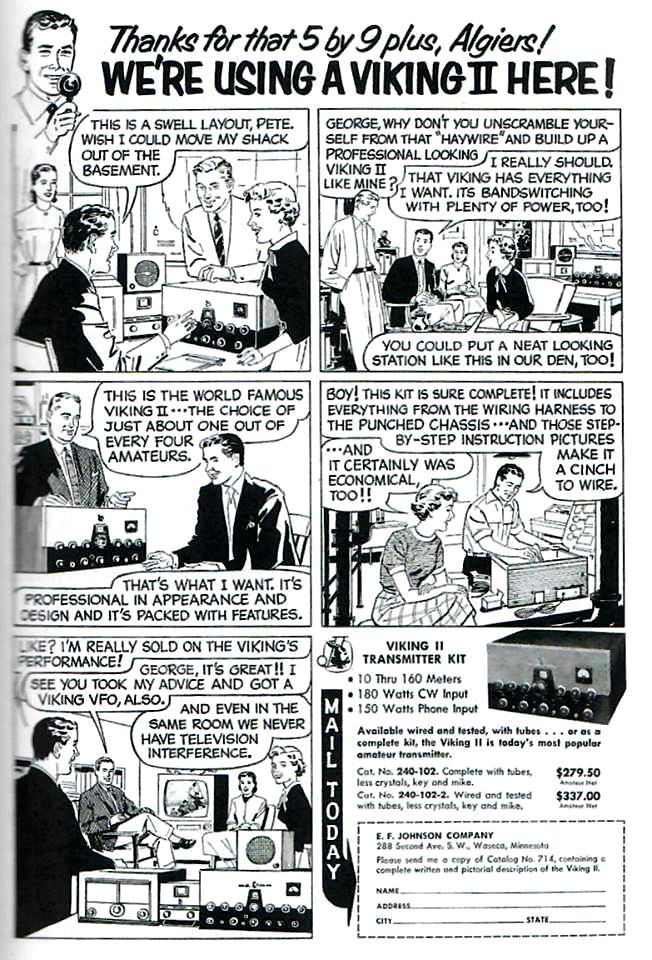
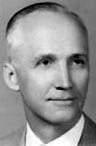
Thanks to W0VLZ for this wonderful 13 minute recording of Edgar F Johnson’s 50th Anniversary speech. There is a lot of great radio history in this speech. Highly recommended.
Just click here to listen:
https://www.prismnet.com/~nielw/EFJohnson/EFJ50thTalk.wav
EF Johnson’s hometown bio:
http://www.wasecaalums.com/public/389.cfm
W2NBC was booming in on 3885 kHz AM this evening. I took a look at his QRZ.com page and found this video. Very nice.
I’ve been on 75 meter AM with the K2ZA DX-100 and my new 135 foot doublet antenna.
C’mon back to radiotelephone Mike. There is more to life than dots and dashes!
I was listening to 7290 kHz with my BITX this morning and I heard W4GON say his AM rig is homebrew. So of course I fired up the DX-100 and the HQ-100 and gave Joel a call. Conditions were terrible but we had some support from the radio gods.
From Joel’s QRZ.com page: “It uses a pair of 6L6s in Push-Pull Class AB1 high level plate and screen modulating a 6146. I still have a lot of work to do on this rig, like building an enclosure, but it works and I just couldn’t help but getting on the air with it!”
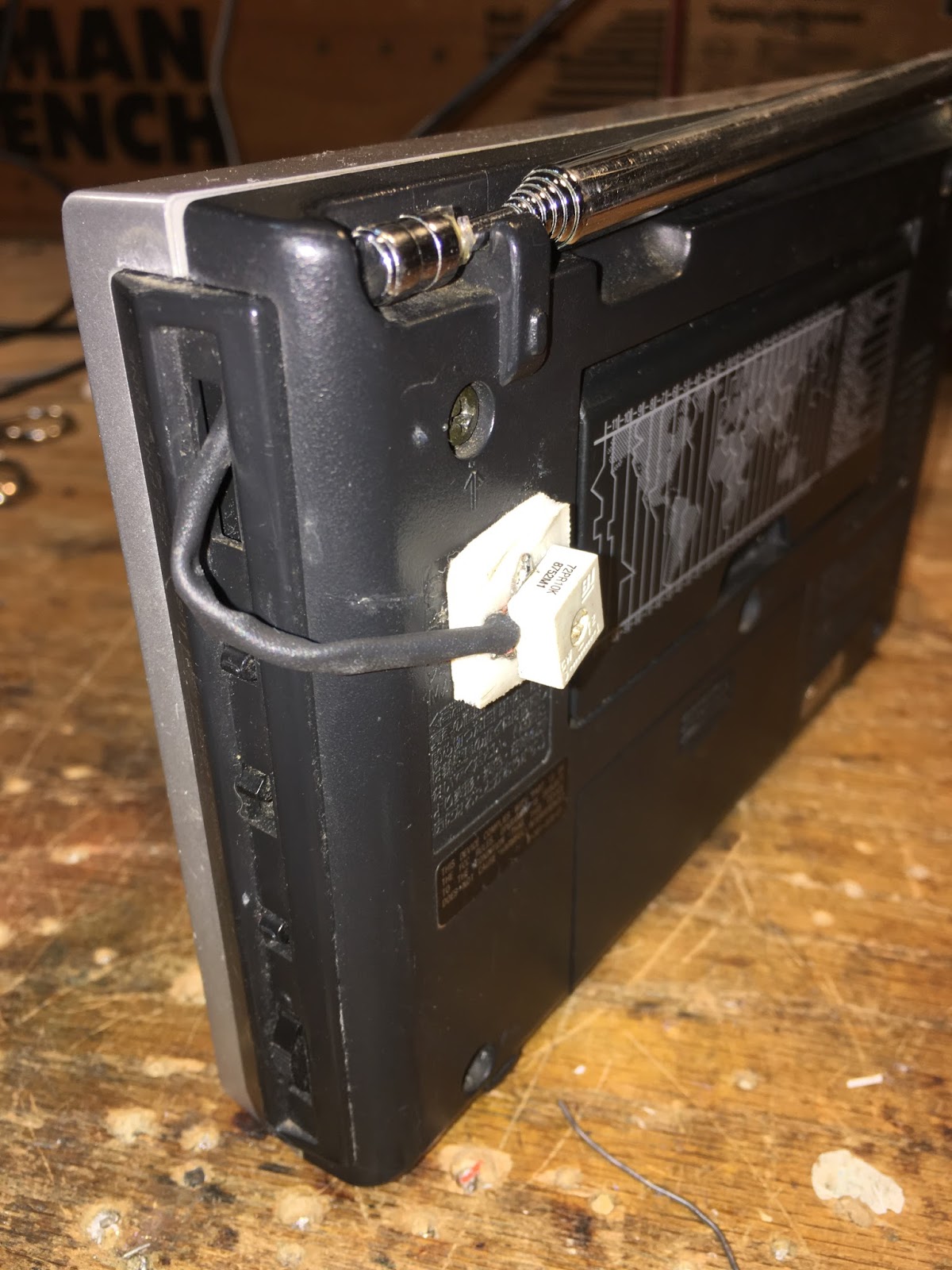
A few years ago my wife got me this nice little Sony ICF-SW7600GR receiver. On the front it proclaims that it is “AM DUAL CONVERSION” and “PLL SYNTHESIZED.” It has a BFO, and a filter of suitable width for SSB. It also has a synchronous detector — it generates an internal carrier that matches the frequency and phase of the carrier being transmitted by the SW broadcast (or ham AM) transmitter. This helps overcome the selective fading that often plagues AM signals. Sony advises switching to USB or LSB once the synchronous generator locks onto the carrier. Pretty cool.
The BFO is the reason I wanted this receiver. And wouldn’t you know, when I dropped it, it landed EXACTLY on the little BFO fine tune control pot. It was as if the Radio Gods disliked all the fancy digi PLL synchronous IC circuitry.
I tried without success to find the value of the destroyed pot. Finally, last week I just decided to have a look in there to see if I could just figure it out.
On the board I could see that the pot only connected at two places, so I figured it would be a varactor circuit on the BFO with one end of the pot to DC and the wiper to the varactor diode. I figured I’d try a 10K pot.
This seems to have been some good radio intuition. It works. I went with a small trimmer because it is less obtrusive and because once I set the BFO in the right spot, I think the de facto channelization of the 40 meter ham band will keep most of the SSB sigs in tune. And the Sony only tunes in 1 kHz increments. If necessary I can move the BFO a bit with a small screwdriver. I just glued the trimmer pot onto the back of the receiver — two wires covered by heat shrink run back into the circuitry.
10k might be a bit too small. Maybe 100k would be better? As it is, I can move the BFO above and below the “zero beat” point, and I don’t need more range. Mouser has a small trimmer pot with a tuning wheel that looks like it might fit, so I may try for a proper repair.
Very cool video. We have visited VE7ZWZ’s amazing shack before. This time he takes us inside a BIG commercial AM transmitter that he has modified for use on the amateur bands.
I know that he had the plate voltage turned off, but I still felt myself cringing when he reached up to touch the plate connectors on those enormous thermatrons. The filaments were on, adding to my unease. Dude, don’t do that! And if you are standing INSIDE the transmitter, keeping one hand behind your back might not be as beneficial as it normally would be.
His comments on his VFO were interesting. I was kind of disappointed that he went with a varactor circuit. A varactor? Amidst all those bread slicer variable caps? It just doesn’t seem right. (And BTW they are bread slicers, NOT “potato slicers.”) But I kind of liked the heater–thermistor–insulation set up that keeps the VFO at constant temperature.
I thought it was interesting that these transmitters were kept on, with the tubes glowing for years at a time.
Thanks Mr. Carlson, for another great video!
(Link to video appears below.)
Stephen G7VFY sent me the link to Mike WU2D’s Retro-QRP video. In the last month spoken to Mike at least twice on 40 and 75 meter AM. Stephen was responding to a post I did about a 1958 18 milliwatt solid state QRP rig.
Mike’s video is really wonderful. I’ve never been into military surplus, but this video made me think I might want an ARC-5. The rig Mike builds and tests is very similar to our beloved Michigan Mighty Mite. His description of the build and the testing procedures he used will be of great interest to those who’ve built the MMM rigs. And he made some contacts. Finally, there is a cameo appearance by Paris Hilton. And she is holding a HOT transistor! Wow!
Mike has a real talent for making these kinds of videos. Thanks a lot Mike — see you on 40. And thanks Stephen (Stephen has sent us so much great stuff over the years, including a fantastic box of British valves.) Pete: See how nice it is to get back to QRP?
Here’s Mike’s YouTube Channel. I love the intro:
https://www.youtube.com/channel/UCN7RQv_qmzhzuJV1HhJ4OEA
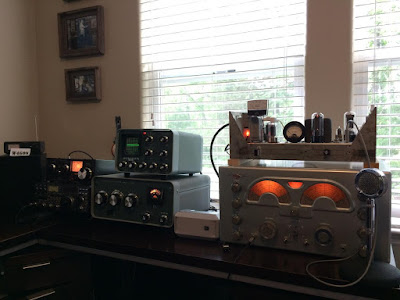
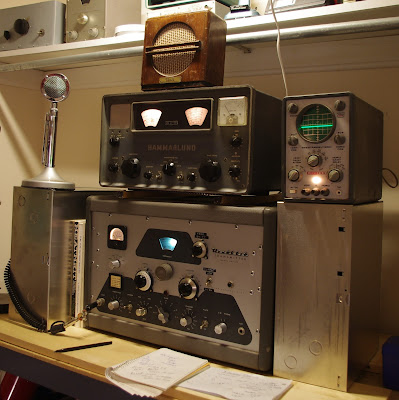
Steve VE7SL recently discussed Heathkit’s wise use of the color green in the VF-1 and DX-100 frequency readouts. The power of green is visible in the above photo of the N2CQR AM station. (I used this gear to check into the Old Military Radio Net and the Lonely Guys’ Net on 75 meters on Saturday). Note the VF-1 on the shelf in the upper left, and the awesome green oscilloscope trace. Juliano Blue is all well and good, but let’s not deny THE POWER OF GREEN.
Steve’s discussion (and cool Knack story):
http://ve7sl.blogspot.com/2017/01/the-green-glow.html
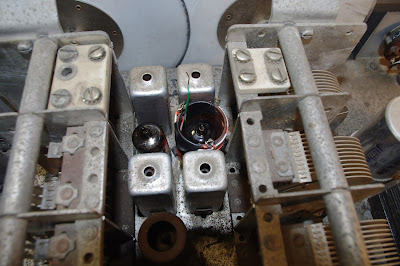
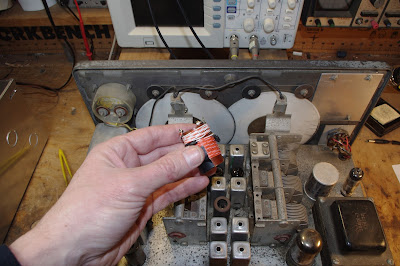
And here is how I sample the oscillator frequency for the digital counter. I use an old trick: I wrap some wire around the oscillator or mixer tube. I made the coil out of an old coil form. I had to play around with the number of turns to get suitable pickup on both 160 and 40 meters. The San Jian board allows for IF freq offset. I use a similar arrangement on the transmit side with the DX-100. By the way, the box that houses the two displays is the carcass of one of the Heath QF-1 Q multipliers from which I heartlessly pulled the nice reduction drive variable caps for use in my BITX rigs.
![]() |
| Add caption |
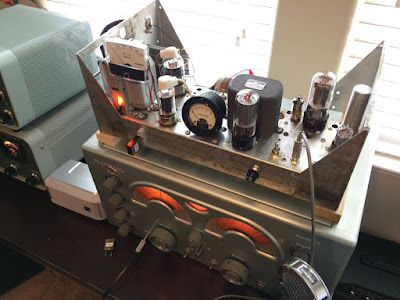
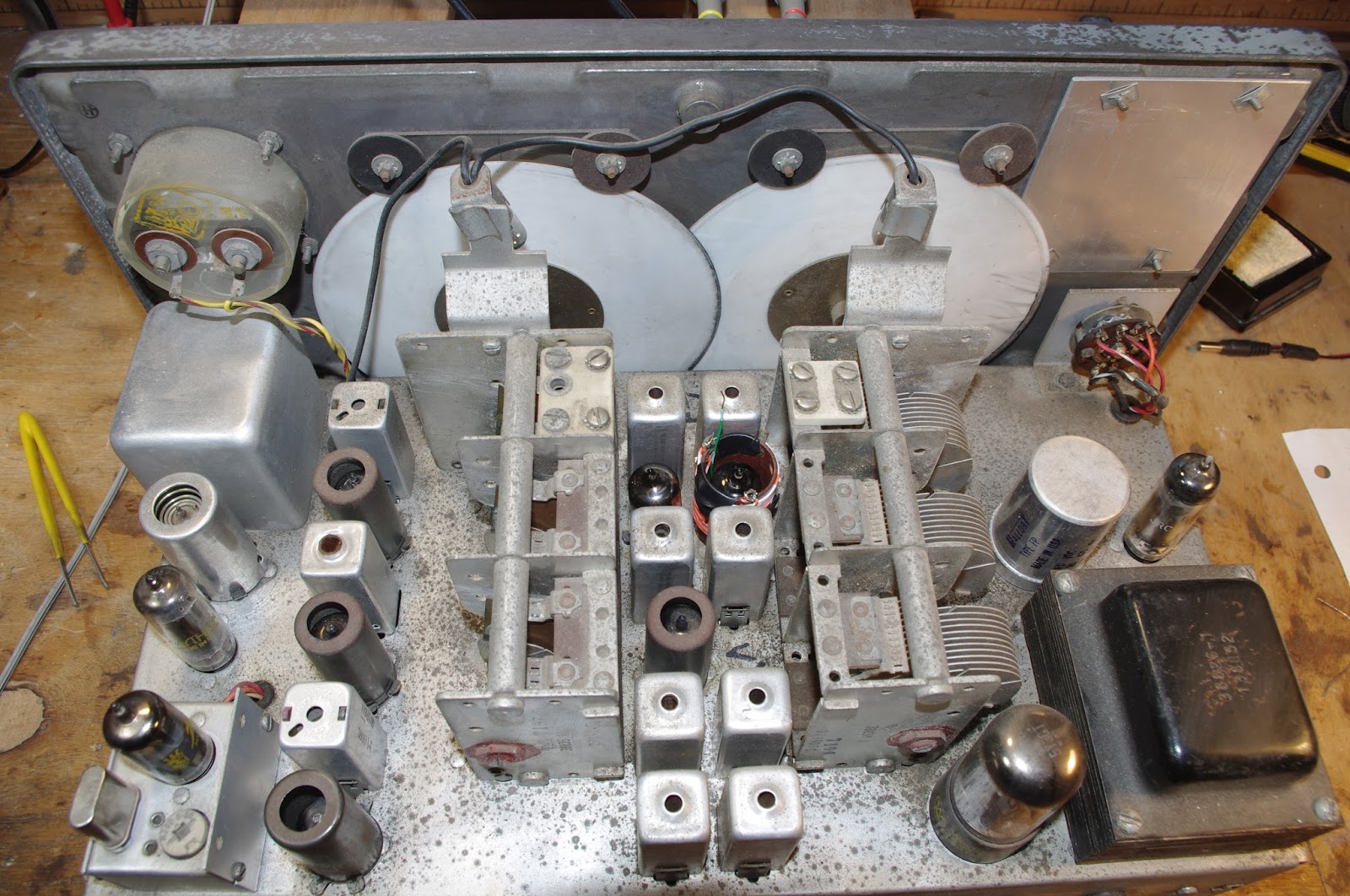
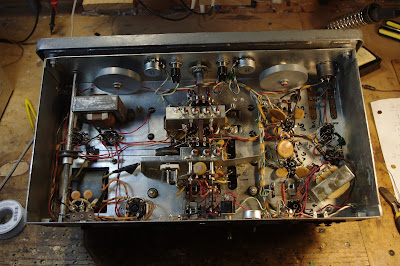
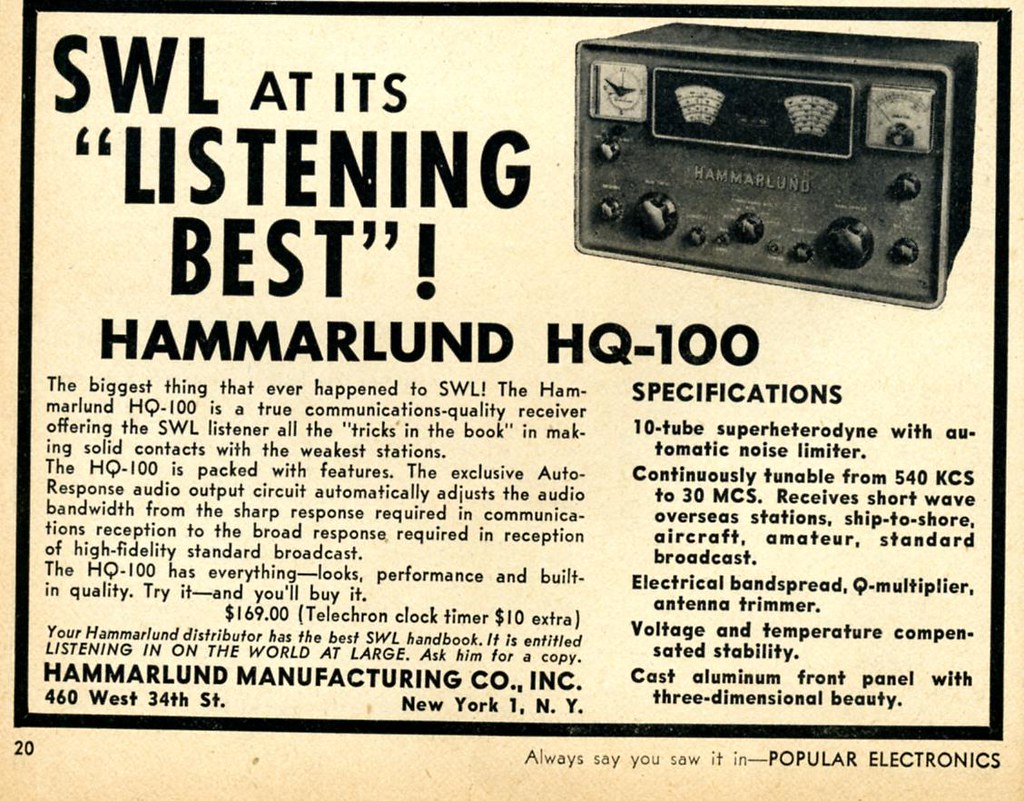
I continue to work on this old beast. I picked it up in the Dominican Republic around 1994. One of the IF transformers had gone open. I fixed that. Had to replace the AF output transformer too. And the variable cap that tunes the antenna. Check out the flywheels! And the rope and pulley thing. You don’t find those kinds of things in any of those fancy modern rigs.
Earlier I had removed “the exclusive Auto-Response audio output circuit.” See:
http://soldersmoke.blogspot.com/2016/02/snowed-in-audio-mods-on-hammarlund-hq.html
Today I installed a simple feedback network in the AF amplifiers (as prescribed here:
http://www.amwindow.org/tech/htm/hqaudiomods.htm
It sounds nice now. The rest of the bands have been ravaged by some sort of solar event, but 160 seems to be benefiting — signals last night and this morning were quite strong. I was being heard by WA1HLR way up in Maine.
UPDATE 20 Feb 2016: After installing the feedback network mentioned above, I noticed a big increase in AC hum. It was not the electrolytics. I reversed the feedback mod and the hum went away. But the receiver continues to sound a lot better with the removal of the Auto-Response output circuit.

Feb 10 at 7:40 AM
Hi Bill and Pete,
My work is closed today due to the snow so I wanted to show you what I’ve been up to.
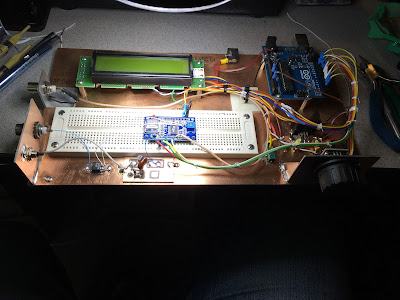
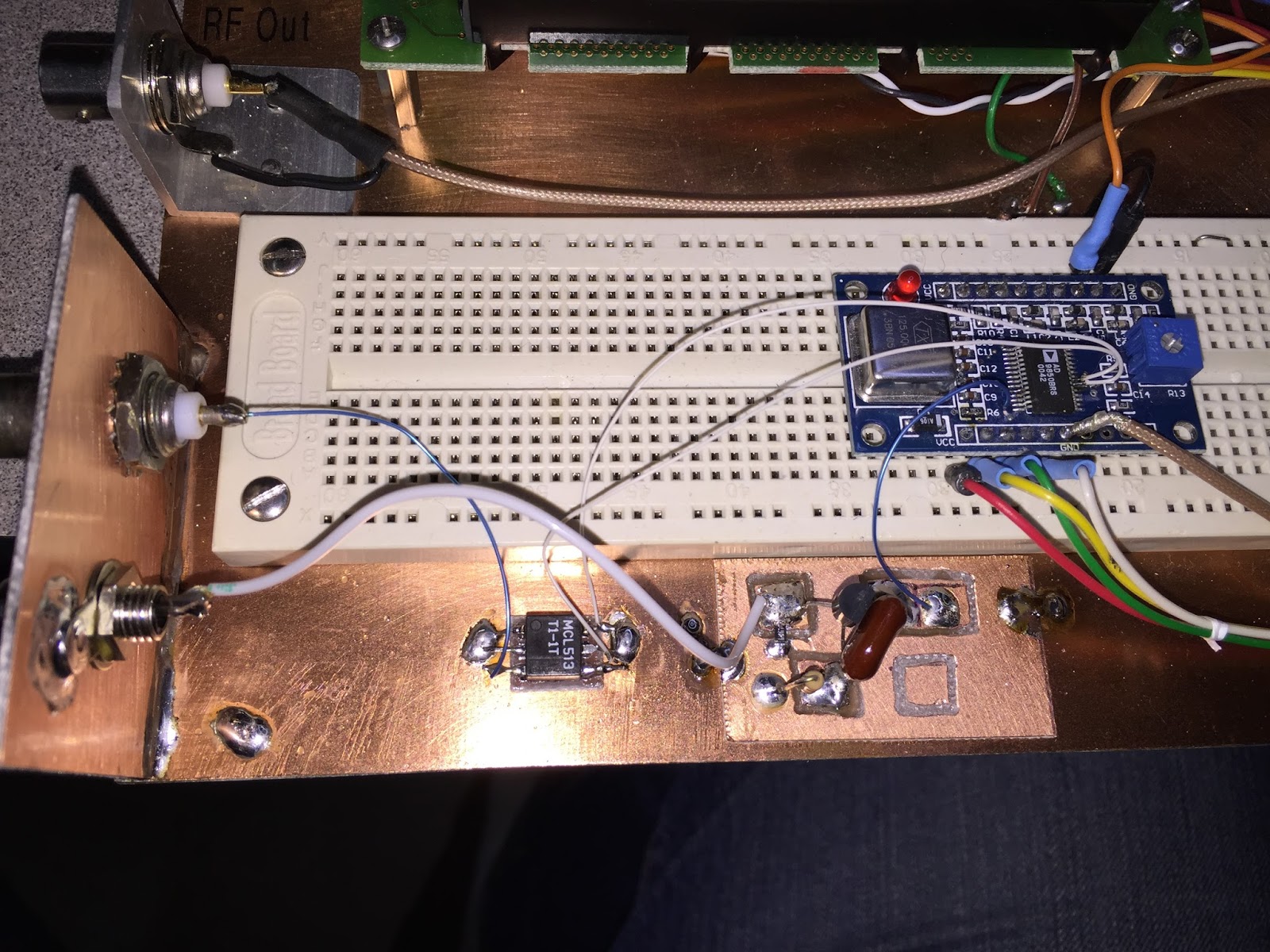
I built sort of a test fixture a while back for those cheapie EBay AD9850 boards based on AD7C’s DDS circuit using an Arduino Uno as a controller.
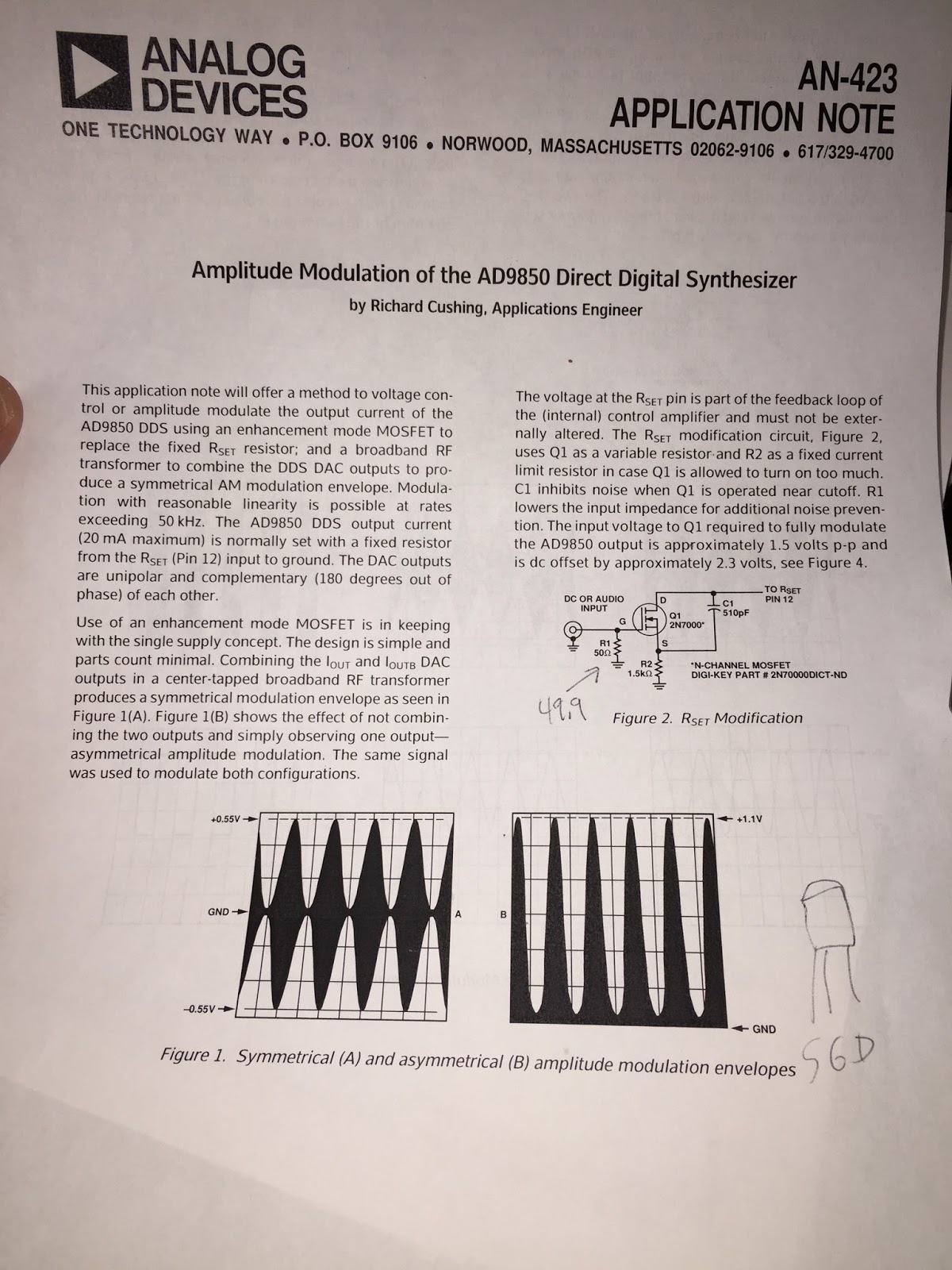
Last summer someone posted a link to Analog Devices App note AN-423 on QRP-Tech I think.
It was always on my list of things to try.
Armed with a schematic of the eBay DDS gleaned from Doug Pongrance’s website, I got to work. It involved cutting a trace or two on the DDS board using an X-Acto knife.
Two outputs of the DDS chip are fed into a wideband transformer as in the app note’s second page and I hung a scope probe off the secondary of the transformer.
Basically you are removing the Rset resistor on the DDS board (marked R6 on mine) and using a 2N7000 MOSFET as an electronic version variable resistor and modulating the MOSFET.
This lead to much frustration over the afternoon. No output on the scope!! Did I make an error or connect something up wrong? I was using the 600 ohm output of my HP652A audio generator. I thought about it during lunch and decided to try the 50 ohm output. Bingo!! At the 3V RMS range setting on the generator I now have some kind of signal. Not a nice sine wave shaped AM output but at least something resembling a clipped sine wave. The circuit is really touchy as far as needing a hefty audio signal in. The output of my iPhone at max volume doesn’t turn on the DDS chip.
I set the DDS for 1200 kHz and can listen to it on a Radio Shack portable radio. Varying the audio generator varies the received tone on the radio just like I was expecting.
I just need to figure out what’s up with the audio levels.
Chris
KD4PBJ