Of Waterfalls, SDRs, and Homebrew Analog Rigs: Words of Wisdom from W8JI

W8JI


It happened again today. Conditions were good and I was BOOMING into the NYC area on 40 meters. 40 over. Everyone liked the signal and said it sounded great. Except for one anonymous grump who chimed in to say that I was “9 kc wide.” I imagine he was basing this on a quick look at his super-dooper SDR waterfall, without any consideration of signal strength or the characteristics of his own receiver. Sigh. The Waterfall Police had struck again.

OM W8JI gives a great description of the pitfalls of this kind of “you’re-too-wide-because-my waterfall-says-so” reasoning. Check it out. And keep it handy in preparation for your next encounter with the 40 meter Waterfall Police.

https://www.w8ji.com/checking_bandwidth_with_receiver.htm

Boatanchors! HT-37 to HT-37 contact with W1ZB

Jerry W1ZB and I met up on 40 a week or so ago. He was running a Hallicrafters HT-37. This spurred me to clear up the T/R problem that had knocked me out of the competition on Straight Key Night (I’m sure I would have won!). One spray of DeOxit D5 on the HT37 relay contacts was all it took. Jerry and I set up a schedule for this morning on 40 minutes. Above you can see a short video of the first part of our HT-37 to HT-37 contact.

Jerry has an amazing collection of beautiful old tube radios. Check out his QRZ.com page:
https://www.qrz.com/lookup/w1zb

BTW: Speaking of old rigs talking to identical old rigs: Last night on 40 I worked TI2NF in San Jose, Costa Rica. He was running a Collins KWM-2 to a Collins 30-L1. It was real nice to talk to somebody who was using an unusual rig. Right after we finished, VE3OCZ called TI2NF. VE3OCZ was ALSO running a KWM-2 to a 30-L1. TRGHS.

Boxed-up and Looking Good: An End to “HRO Al Fresco”

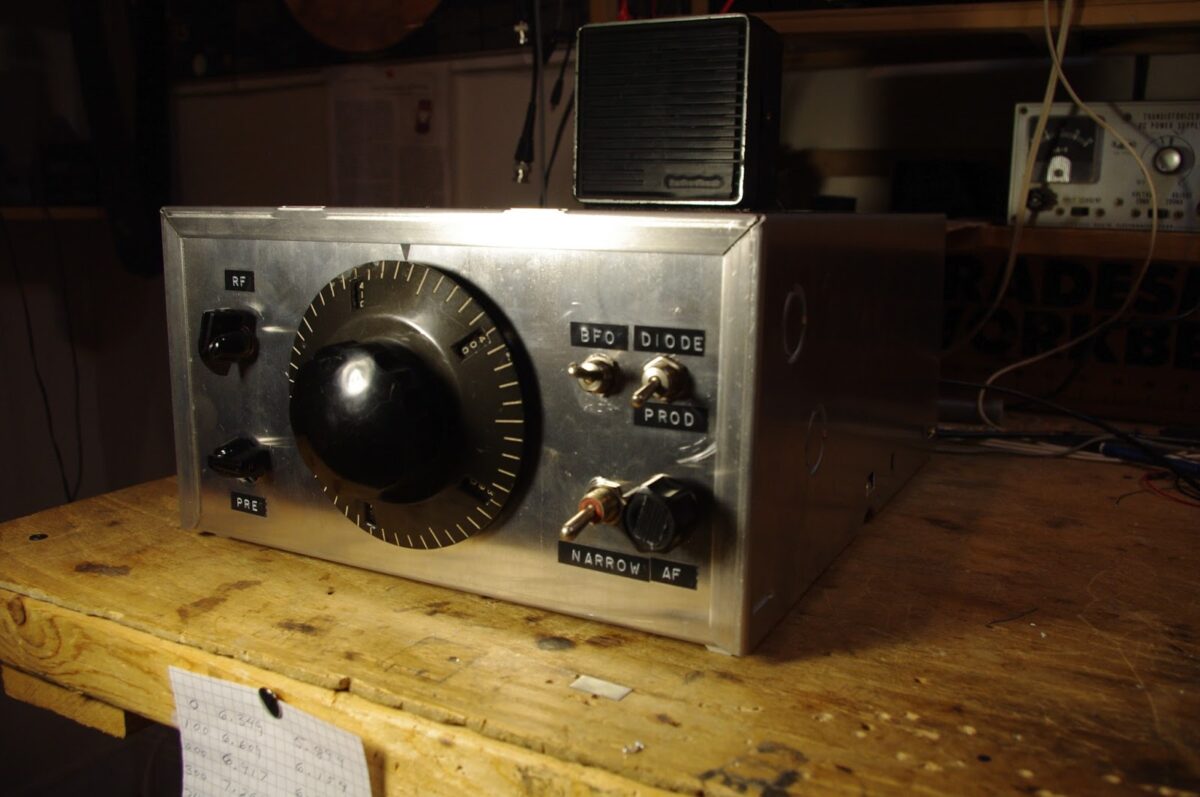
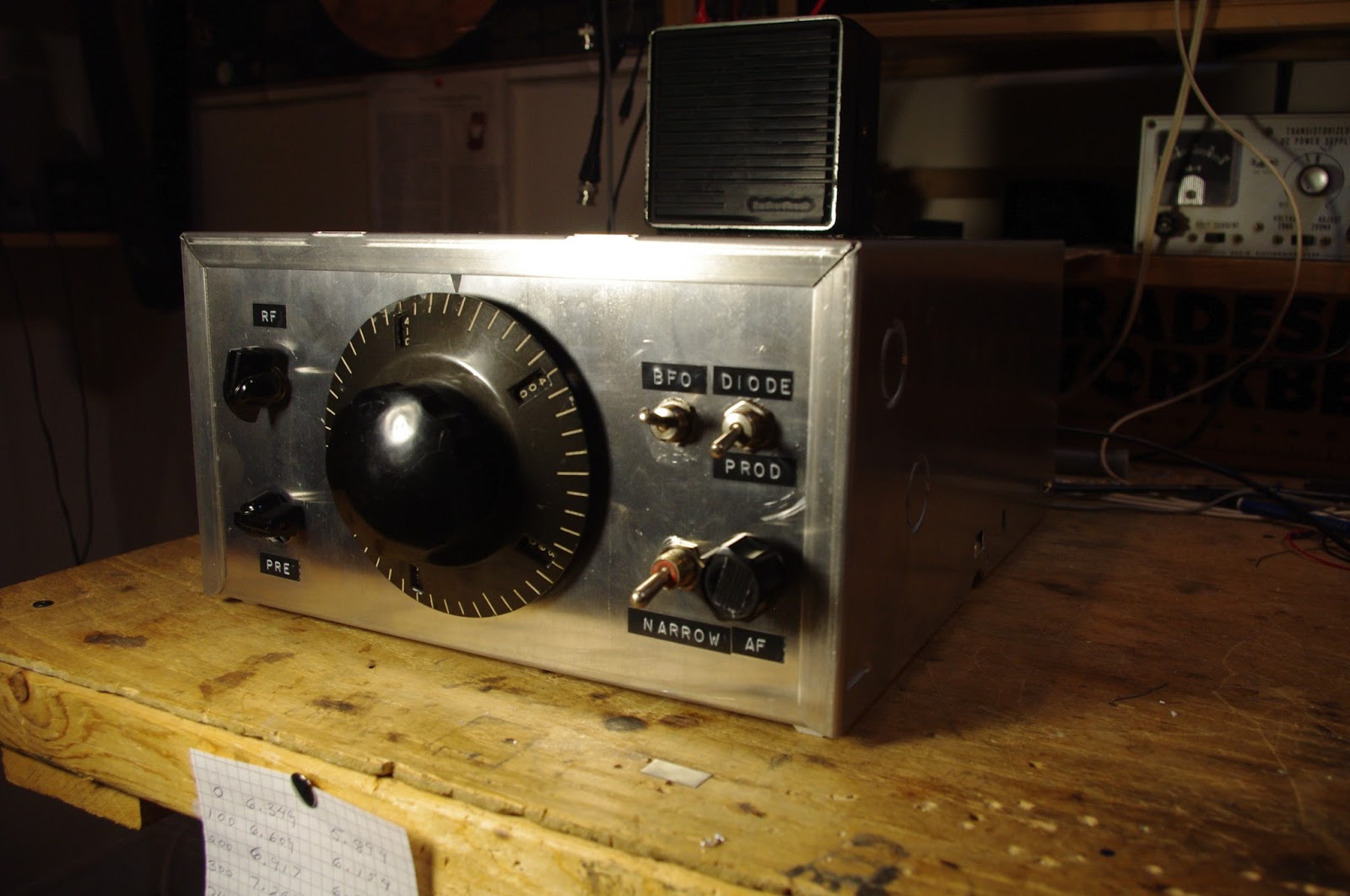
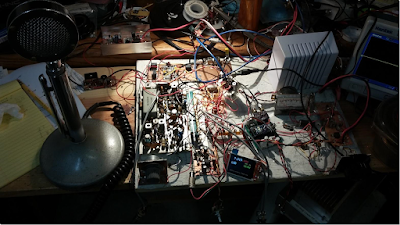
The “al fresco” phase has ended for my HRO receiver project. As has happened with homebrew projects around the world, this rig was literally pushed aside on the workbench to make room for BITX-40 Module Mania. I began to worry that the circuitry of the HRO receiver might suffer damage from the various kinds of electronic construction mayhem that take place on our workbenches. Also, I wanted to see what it would look like in the nice big metal box that Tim Sutton had sent me (thanks again Tim.) And I was hoping that the box would help with the AM broadcast breakthrough that I sometimes hear with this receiver. So, as you can see, I have good excuses for declaring Basta! on the HRO Al Fresco.

I think it looks great. Black on silver is very cool. It sounds great. I’m listening to 40 right now. Thanks to Armand WA1UQO for the very cool HRO dial that got this all started.

TRGHS! HB2HB! Homebrew Extravaganza on 40 Meters!

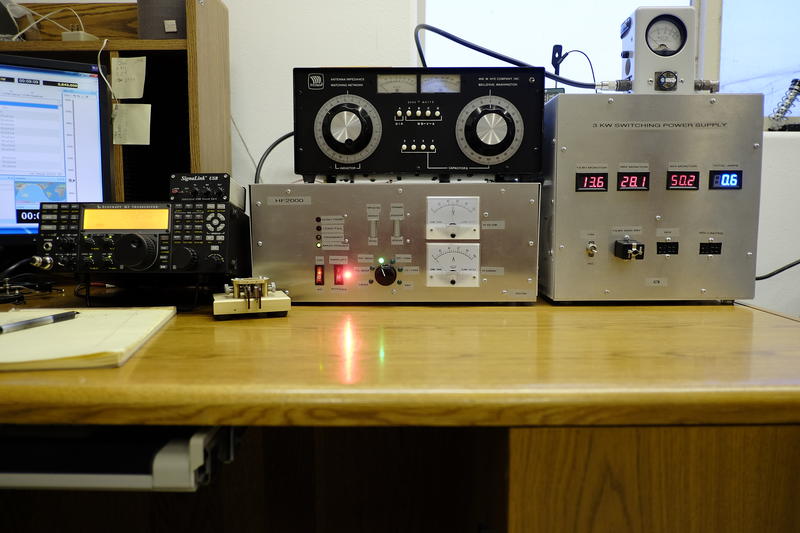
AC7M HB Amp and HB Power Supply
I was flying solo last night. Everyone else in the house was out. So I turned to ham radio for some company. And I was rewarded.


I called CQ with my BITX DIGI-TIA rig and was immediately answered by Doc AC7M in far-off Twin Peaks, Idaho. Doc was running a K3 to a homebrew solid state full gallon amp. And get this — Doc had also homebrewed the 3 kw switching power supply. I looked at my store-bought supply and felt like an appliance operator. I hang my head in shame.

As we discussed solid state amplifiers, we were joined by another builder of silicon after-burners: Don K9AQ, who called in from a beautiful cabin in rural Wisconsin. Don’s amp is based on the venerable EB-104 design.

Both Don and Doc talked about the work of W6PQL. He has a really amazing site devoted to homebrew solid stat amps, and he is selling lots of great boards and parts for this kind of project:
http://www.w6pql.com/

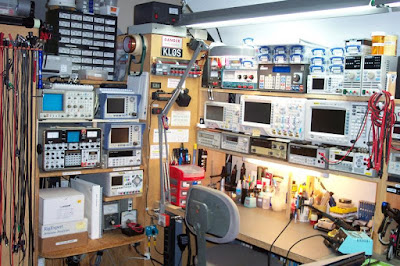
As I finishing up with Don and Doc, I got a very welcome call from an old friend from the SolderSmoke community: Dino KL0S. He as booming in from Williamsburg, Va. Dino has an amazing workshop. He is building a serious vertical antenna for 160 meters. Dino is going for the DX.

Dino’s Bench


At this point Mike WA3O in Pittsburgh called in. And get this: Mike heard me on his new BITX 40 Module. The Radio Gods Have Spoken! (TRGHS!). We switched up to 7.285 MHz where I fired up my BITX 40 Module for a BITX40-BITX40 QSO (albeit not at QRP levels).
We should definitely make more use of 7.285 for BITX40 and other HB QRP SSB QSOs. 1930 EST (0030 Z) seems like a good time.

Finally, just when I was thinking that things couldn’t get any better, they did: Armand WA1UQO called in from Richmond. Armand and I collaborate on parts acquisition at Virginia hamfests. We specialize in the contents of the musty cardboard boxes found under the tables. We discussed the DISRUPTIVE influence of Farhan’s BITX 40: All around the world, other homebrew projects are being literally pushed aside on workbenches to make room for that fantastic little module from Hyderabad.

I was very pleased to hear that Armand is building an analog VFO for his module, using a coil in the 4 uH range, wound on a piece of cardboard tube from a coathanger. The inspiration for this kind of coil (which I now have in THREE rigs) came from Farhan, who used sipping straws from fast-food restaurants as coil forms in a sig generator that he built years ago. This week, seeing a Facebook picture of my daughter and me in a restaurant with drinking glasses in front of us, Farhan asked if I had brought home the straws.

Moonbounce on 40

Well, we were talking about it on 40. This just proves that there is more to 40 meter SSB than the never-ending quest for audio “brilliance,” “presence,” “body” and “sparkle.” I was working at the bench yesterday when I heard Frank NC1I telling another fellow about his 35 years of experience with moonbounce. Wow, you don’t hear that kind of talk on 40 every day. Frank also said that the contact I was listening to was one of very few HF contacts that he has made in recent years. I just had to jump in to encourage him to get on 40 more regularly. He seemed impressed with my BITX40 Module (which I was using). I warned him of the buffoonery that can be found on the band, but told him not to be deterred by it — there are a lot of FB hams on 40.

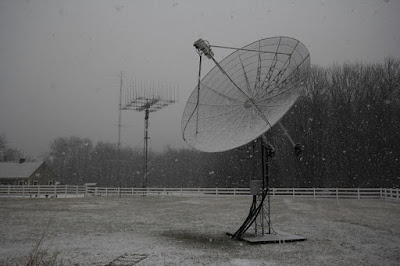
Above you can see Frank’s amazing antenna farm. The dish is for 23 cm EME. Behind the you can see his 70 cm array. That is 48 (FORTY EIGHT!) end-mounted Yagis, aimed into space.

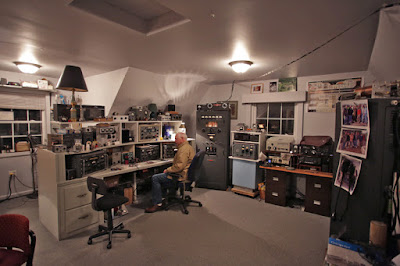
Check out Frank’s QRZ.com page: http://www.qrz.com/db/NC1I He has some great pictures of his shack. In case you are wondering why he has so many rotator control boxes, remember that the dish and the Yagi array need two each (azimuth AND elevation).

HB2HB: Butch K0BS with a KWM2 and a Hombrew 4-1000 Amp

Wow! Now THAT is a shack! This morning I heard Butch K0BS and his friends on 40 meter SSB. I knew I was listening to the voices of kindred spirits when I heard them talk about a drifting VFO and the need to heat up the filaments of an ART-13. As the group was shutting down to begin their preparations for Thanksgiving dinners, I gave Bruce a call with my BITX 40 Module. He was on a KWM-2 (the rig that had been drifting a bit) and a homebrew 4-1000 amplifier. I told him that I think a bit of VFO drift is a sign of good character.

You really need to check out the pictures on Bruce’s QRZ.com page:

https://www.qrz.com/db/K0BS

Happy Thanksgiving to all who are celebrating the holiday.

HB2HB! Pete Talks to Famed SSDRA Project Builder Jeff Damm WA7MLH

Jeff “Roadkill” Damm
Wow, THE RADIO GODS HAVE SPOKEN (TRGHS). Pete gets on 40 with his new-old FPM5 homebrew rig and works homebrew legend Jeff Damm WA7MLH, who was also running a homebrew SSB rig. HB2HB! For those of you who don’t know, Jeff is the guy who built many of the inspirationally ugly rigs in Solid State Design for the Radio Amateur. Pete’s second QSO was with SolderSmoke podcast listener K7ADD. TRGHS!

Hi Bill,
Was on 40M yesterday with the FPM5 rig and after finishing a QSO was called by WA7MLH (Jeff Damm –the road kill guy and protégé of Wes Hayward). Jeff was operating portable 7 in NW Montana running a homebrew 40 Watt SSB transceiver off of batteries being charged by a solar panel. Now that is real radio. I thanked him once again for sending me a goodie box about 5 years ago and am still using those parts.
Later after another QSO was called by K7ADD, Ben, and he couldn’t wait to tell me he was a long time SS listener and stated listening to SS made him take a whole new interest in ham radio –especially building stuff.
So you never know.

Pete

My Extroverted BITX40 — On (but not in) a Box

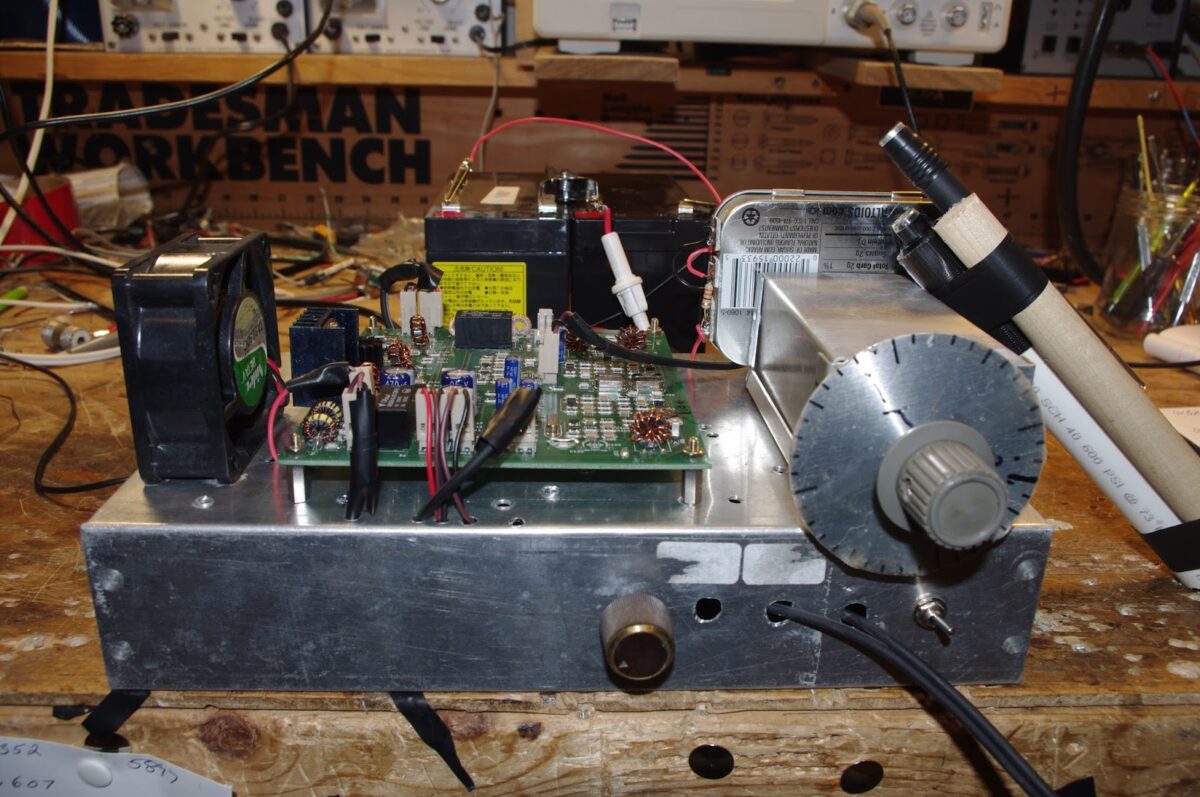
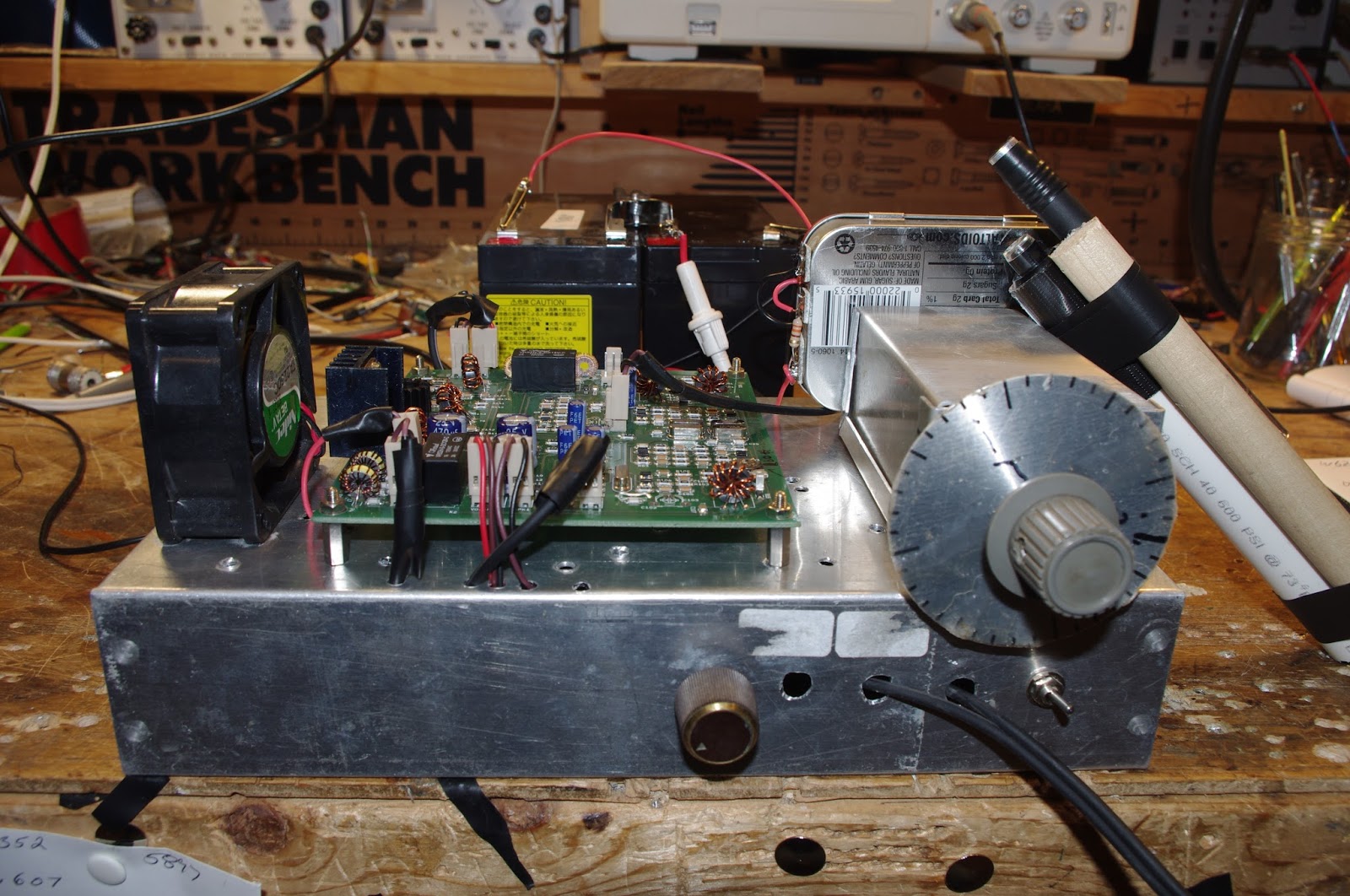
I was going to put the BITX40 Module in a box today, but I just couldn’t bring myself to do it. That board looks too good to be hidden inside a box. So I put it topside. That’s the analog VFO to the right. You can see a fan off to the left — that is perhaps temporarily in lieu of a large heat sink for the final. You can see the two Gel cells in the background. I am indeed running 24 volts to the final, and am putting out about 20 watts. I had three nice contacts today on 40: WB2RON up on Long Island said I was “20 over”. Later I worked W1SJ in N. Vermont — I was 5-9. Then — icing on the cake — DK1NO in Stuttgart. I was 5-8. TRGHS.

I kind of like this arrangement — it has the “three dimensional” feel of an old tube rig. This obviously wouldn’t be good for portable operations, but I am not planning on going portable. There is a lot of room under the chassis. I could put a digital VFO in there and put in a switch so that I can easily go from digital to analog.

Reverse Polarity Protection

When I opened the package from India and saw Farhan’s s beautiful board with all those little SMD parts, I immediately worried about frying those parts by accidentally reversing the polarity of the 12 volt DC input. Believe me, this can happen. It is especially likely during the early, enthusiastic testing and experimenting that takes place in the days after the arrival of a new rig. So, my friends: Save yourselves the agony of fried components! Don’t let your BITX 40 Module go up in smoke! Install a simple reverse polarity protection circuit BEFORE you start working with your new board.

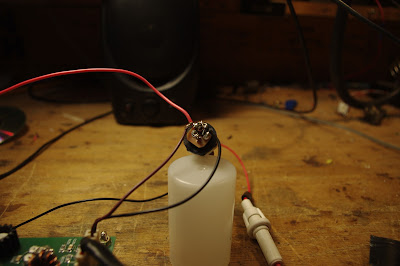
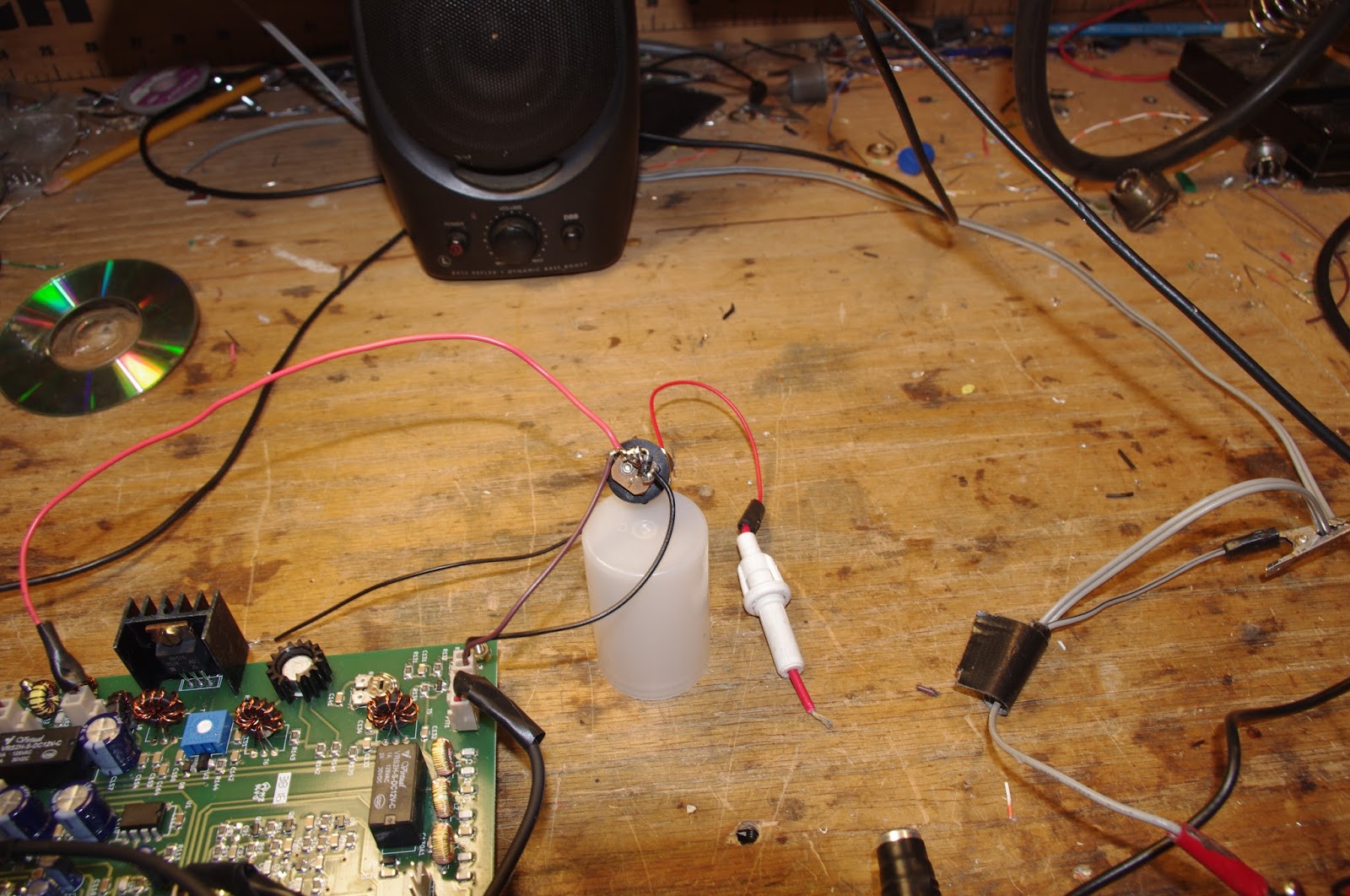
Here is what I did: I just took a diode (a fairly hefty diode) and I soldered it in between the pins of that neat little circular power jack that Farhan sent with the module. Be sure to solder it in so that it does NOT conduct if you have connected the power correctly. The arrow should be pointing to positive terminal. Then put a fuse (3 amp or even a 2 amp) in the line from the connector to the power supply or battery. If you don’t have a holder you can try just soldering the fuse into the line.

With these two little parts, you can save yourself a lot of grief: If (WHEN!) you connect red to black and black to red, that diode will conduct like crazy and will blow the fuse. You’ll just have to replace the fuse (and not the module).

On the Air with the BITX 40 Module

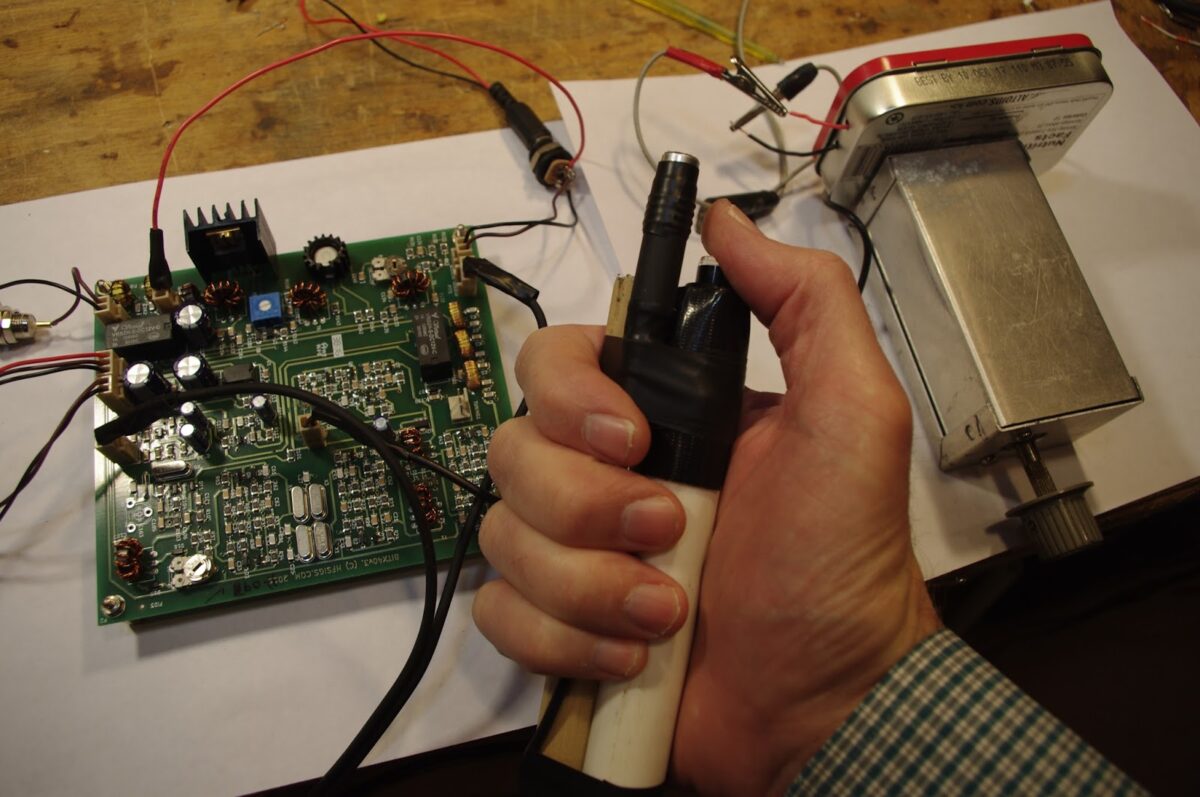
This morning I built a mic/PTT for the BITX 40. I used the little electret element that Farhan sent with the rig. The element sits atop the plastic tube from a pen. For the push-to-talk I used a little push switch that locks down (on) until you push it again (which opens it). This is very convenient — you don’t wear your thumb muscles out on long “old buzzard” transmissions! I used some PVC pipe and some wooden dowel to make the thing a bit ergonomic. It is held together with Gorilla tape.

It works great! I put the rig on the air this morning and very quickly worked KD3TB up in Pennsylvania — Irwin was testing his K3. Then I worked KM4LWP — James was only a mile or so from me, running 3 watts from a KX3. Then Mario, K2ZGW called in. Everyone said the rig sounds great.

In the picture above you see the rig, the mic and (on the right) the VFO.

On the Air with the BITX 40 Module

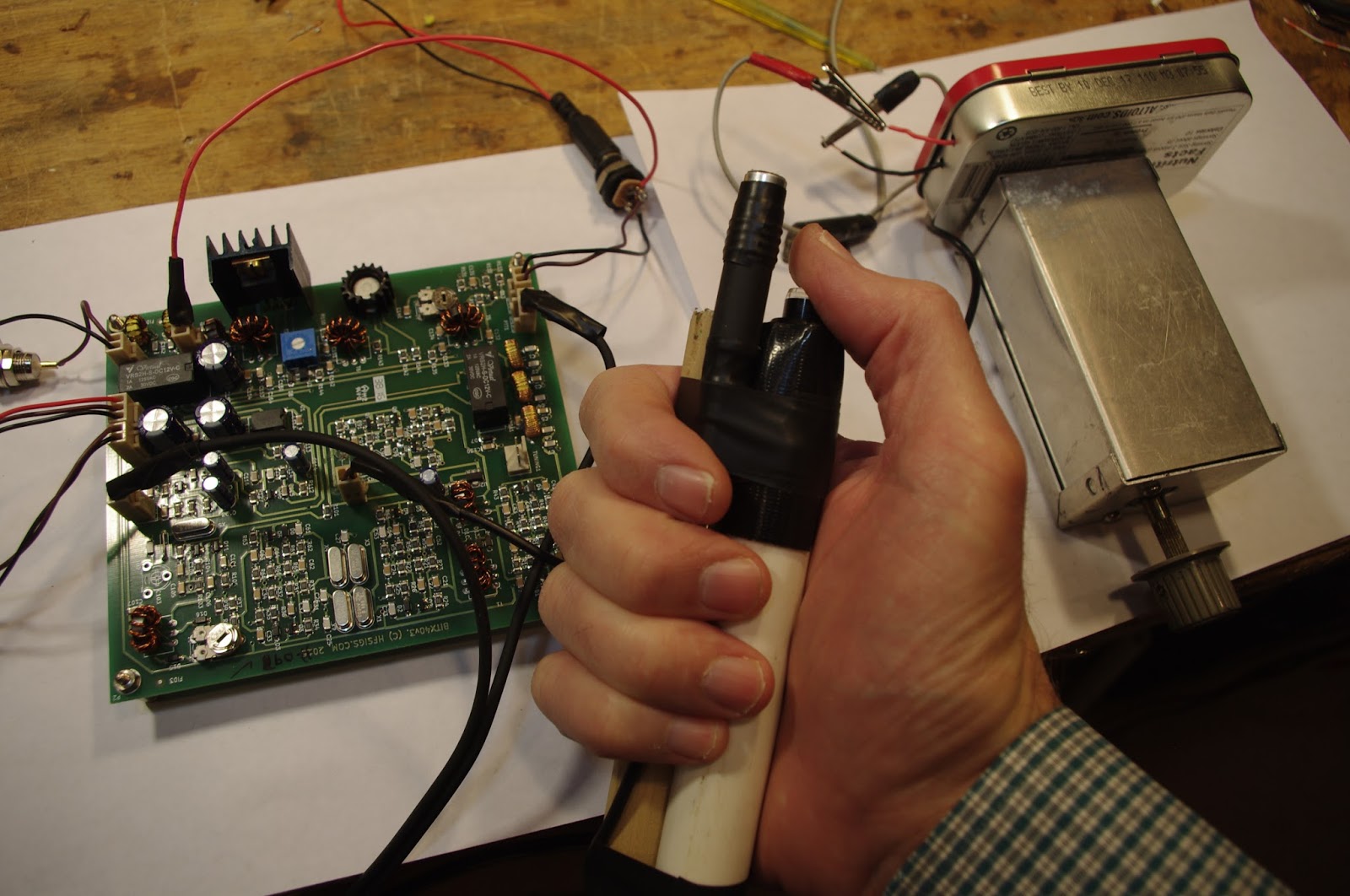
This morning I built a mic/PTT for the BITX 40. I used the little electret element that Farhan sent with the rig. The element sits atop the plastic tube from a pen. For the push-to-talk I used a little push switch that locks down (on) until you push it again (which opens it). This is very convenient — you don’t wear your thumb muscles out on long “old buzzard” transmissions! I used some PVC pipe and some wooden dowel to make the thing a bit ergonomic. It is held together with Gorilla tape.

It works great! I put the rig on the air this morning and very quickly worked KD3TB up in Pennsylvania — Irwin was testing his K3. Then I worked KM4LWP — James was only a mile or so from me, running 3 watts from a KX3. Then Mario, K2ZGW called in. Everyone said the rig sounds great.

In the picture above you see the rig, the mic and (on the right) the VFO.

It’s Ugly, But It Gets You There: Pete’s Latest Rig

That, my friends is an extreme example of what we mean when we use the word “rig.” This magnificent machine sent Pete’s melodious voice across the mighty Pacific several times during the recent CQ WW contest.

Pete wrote to Jun:

Hi Jun,
This weekend is the CQ World Wide SSB contest and I just worked three JA stations on 40 Meters. The time 1400 UTC. I must confess that I was using 600 watts to my droopy dipole but they came back on the first call. So there are paths open and perhaps 600 watts was overkill but the timing seems like it works for a good path to the west coast. Along the way I also worked a station in Hawaii (KH6).
See if you can find some 813 tubes as they make a great grounded grid linear amplifier tube and a pair will give you 600 watts. see http://www.ohio.edu/people/postr/bapix/813amp.htm
The rig I was using is shown below. The mainboard came from a Hallicrafters FPM 300 (late 1960) to which I added the Rx Tx Mixer (SBL-1), my stock 2N3904 bi-directional amp board, the 2N2222 + BD139 driver stage using the EMRFD circuit and a 2SC2075 final which gives about 3 watts. This in turn drives an intermediate SS amp to 100 watts and then the SB200 to 600 watts. The FPM 300 used a 9.0 MHz IF frequency.
Of course no rig today from N6QW would be complete without a Si5351 and the color TFT display. Rounding this out is an LM386 audio amp stage. Cosmetically the rig doesn’t look pretty but sure works well.
73’s
Pete N6QW
(The comments about the 813s are kind of SHOCKING, coming from a member of the QRP Hall of Fame!)

Hacking the Hackable BITX 40 Module: VFO is the Way to Go!

I am having a lot of fun with Farhan’s new BITX 40 Module. I think I’m doing exactly what Farhan intended people to do with this rig: work on it, modify it, improve it.

I’ve been working on frequency stability. I was, I admit, skeptical from the start about the stability of a thumb-sized, SMD, varactor-tuned VFO with a ferrite or iron powder toroidal coil. Don’t get me wrong — it worked. But it drifted. It seems to me that it would be asking too much to expect a VFO like this to be drift-free. (But I may be wrong — are there any SMD, varactor-tuned VFOs out there that DON’T drift?)

First I thought it might be the 9 uH metallic core toroid. So I replaced that with a 10uH choke — no ferrite or iron powder in there. That seemed to help a bit, but SSB QSOs would still quickly drift into Donald Duck chatter. Then I thought it might be the varactor diode. I let it warm up. A lot. Still, it drifted. Then I thought it might be the trimmer cap, so I took it off the board. No change. During this process I noticed that even slight pressure on the board caused the rig to shift frequency. I began to suspect that the drift was just structural — a consequence of the physical characteristics of the SMD parts and the board. To get VFOs stable I’ve had to build them big: 10 X 10pf NP0 caps to make one 100 pf cap, large air-core coils, and big sturdy variable caps. I’d isolate the frequency determining elements in a box separate from the powered components. This little VFO just looked too small to be stable.

So faced with drift, at first I asked myself, “What would Pete do?” I took an AD9850/Arduino combination off the shelf and plugged the output into the “DDS” jack Farhan had placed on the board. I removed the 10uH choke. Viola! With the DDS tuned to 4.7 – 5 MHz, the receiver worked great. I briefly tried to updated the Arduino code to take into account the 12 MHz IF (so I could get an accurate frequency readout), but ran into the old painful Arduino IDE problems: Now it is claiming there are library problems. Not wanting to suffer through another round of digi-agony, I left well-enough alone. I used the DDS with the old code for one day.

But of course, I was not satisfied. Attaching a DDS or PLL synthesizer to the BITX 40 Module just didn’t seem right. Heck, it was kind of like just hooking up my FeelTech Chinese sig gen to the DDS jack. Farhan’s rig is simple, beautiful and ANALOG. The parts are small, but you can see them. You can put your scope probe on the collector of Q7 and see what is going on. DDS or PLL. It is a REAL HARDWARE-DEFINED RIG. So I decided to build a VFO. Pete calls VFO’s “grief machines” but for me, the grief machines are those little Arduino beasts. To each his own.

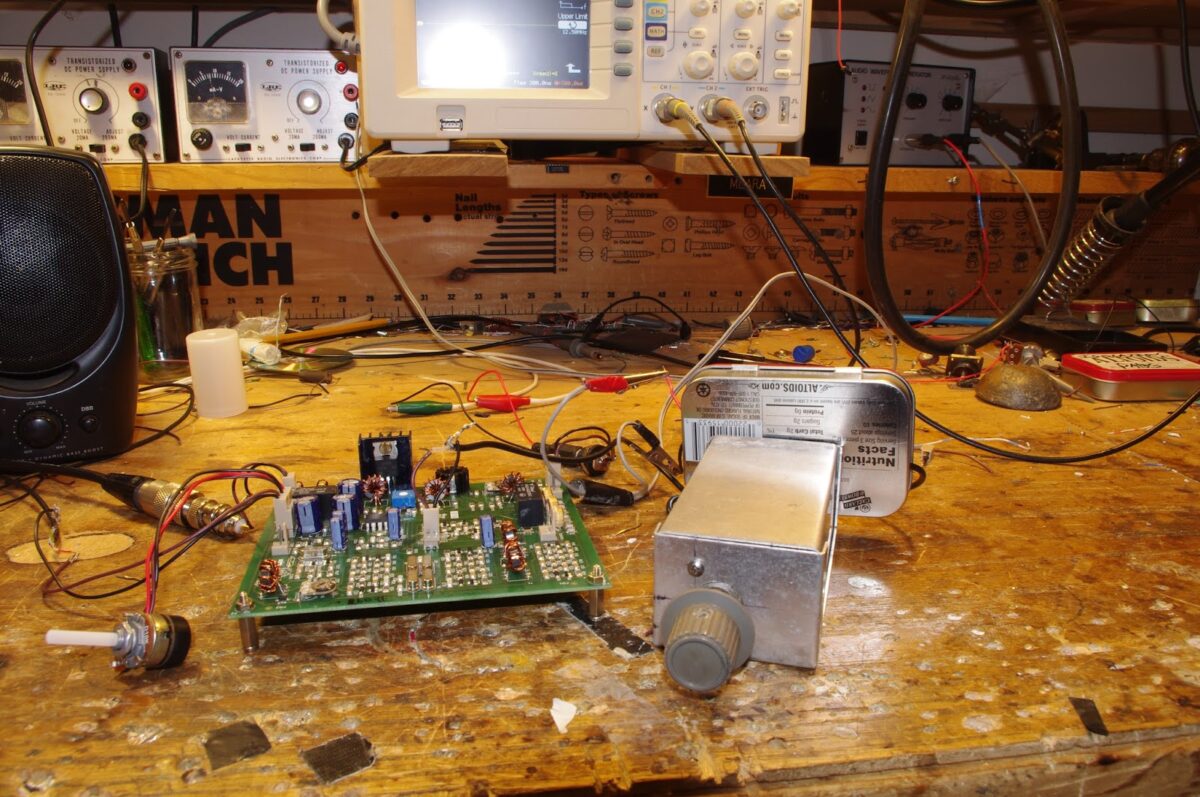
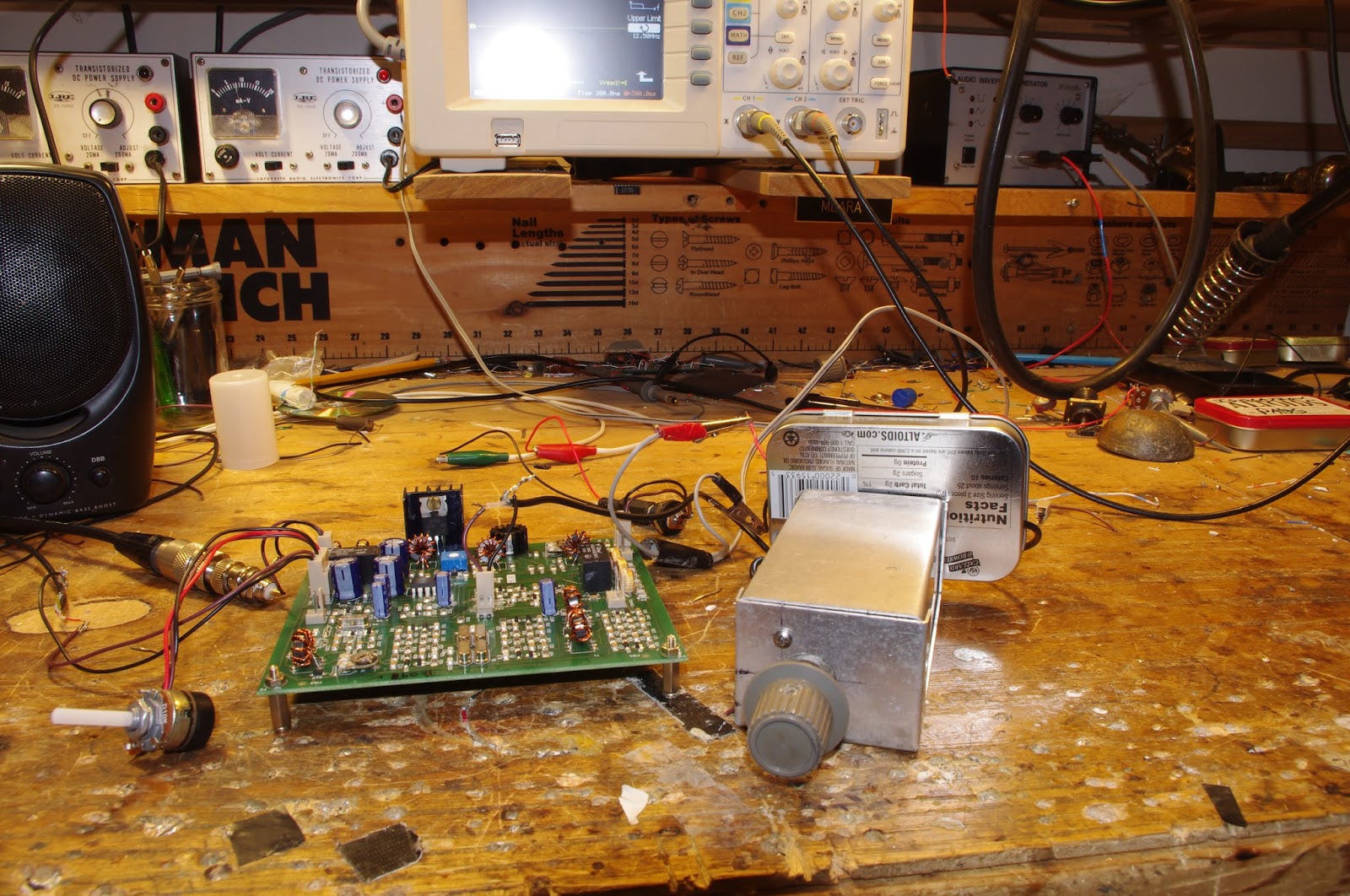
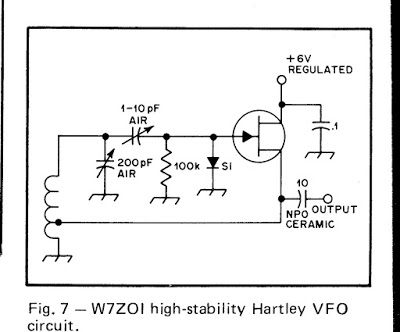
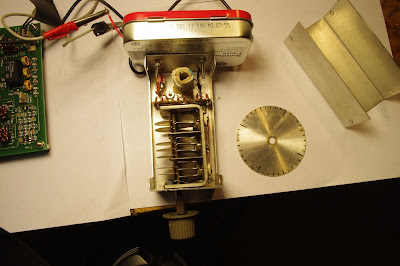
When I build a VFO, I start with the variable capacitor and the reduction drive. I found a nice one (with reduction drive) in my junk box. I tunes from 40 pf to 56 pf. I decided to use the super-simple Hartley circuit presented by Wes Hayward W7ZOI in SSDRA (page 34, fig 7).

I went with a 4.4 uH air core coil (wound on a cardboard tube from a coat hanger). Consultation with on-line resonant frequency calculators showed that I’d need to put about 180 pf in parallel with the variable cap. For this, I used a bunch (maybe 10?) of small value NP0 caps in parallel. This really helps keep the VFO stable.

As I did with my HROish receiver, I put the coil and the caps in one box, with the MPF-102 and associated parts in an attached Altoids tin. Everything was glued and bolted down very solidly.

I only built the actual oscillator stage — I decided to use the buffer amps on Farhan’s board.

The oscillator started right up. I had to add and then take away some turns on the coil to get it to run in the desired range. Then I plugged it into the DDS jack — the receiver was working immediately.

I noticed, however, that it seemed a bit less sensitive than it had been with the AD9850 DDS. And when I grabbed the wire going into the DDS connector, audio output jumped dramatically. It took me a few minutes to figure that out: I think the output from my VFO was not adequately turning on the diodes in the diode ring. When I grabbed the wire, I was putting a lot of noise into the mixer port, probably turning the diodes more fully on (but also letting a lot of noise through).

Fixing this problem part was fun: Looking at the BITX 40 schematic, I saw that the two 1000pf feedback caps in the original oscillator were still in the circuit. I figured those caps would be sending a lot of my VFO energy to ground. So I fired up my hot air rework station and deftly removed C91, the 1000 pf cap that is connected to the base of Q9. Instantly the receiver started inhaling as it had with the DDS VFO. That was a very satisfying fix.

This whole VFO project was very satisfying. It was all done in one day, and all the parts came out of my junk box. I think I ended up with an LO frequency source that matches up in a pleasing way with the analog circuitry in Farhan’s rig. And here is bonus that I think is just what Farhan had in mind: this kind of circuit adds a definite homebrew element to the module rig.

I found that this external VFO improved stability significantly. I don’t know if it is as stable as the DDS, but with the external VFO the receiver no longer drifts away as I listen to SSB signals.

A Package from Hyderabad: Farhan’s BITX 40 Module Arrives in Virginia

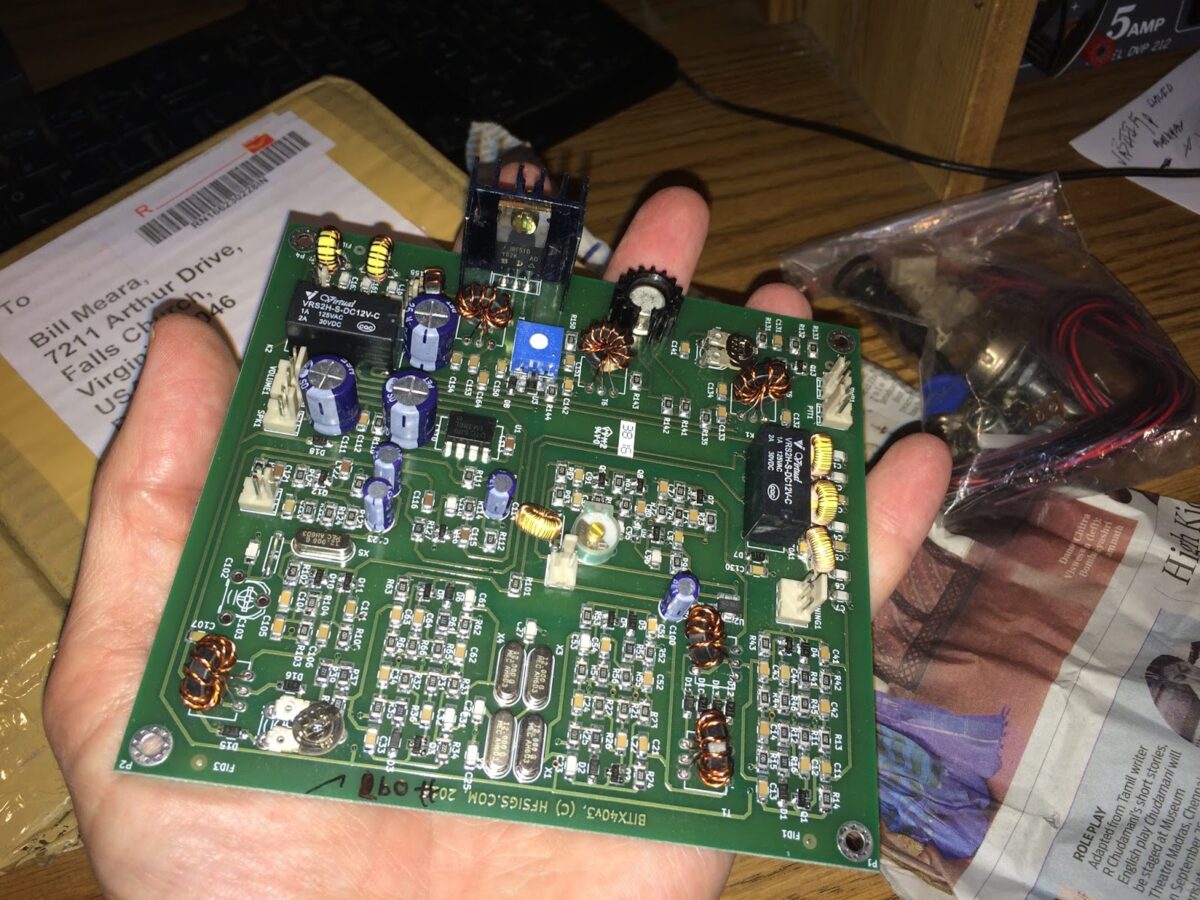
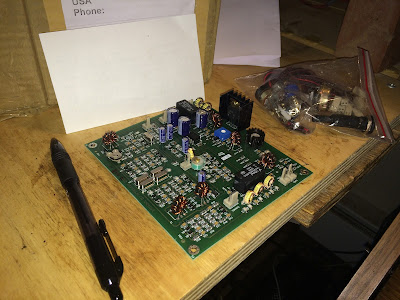
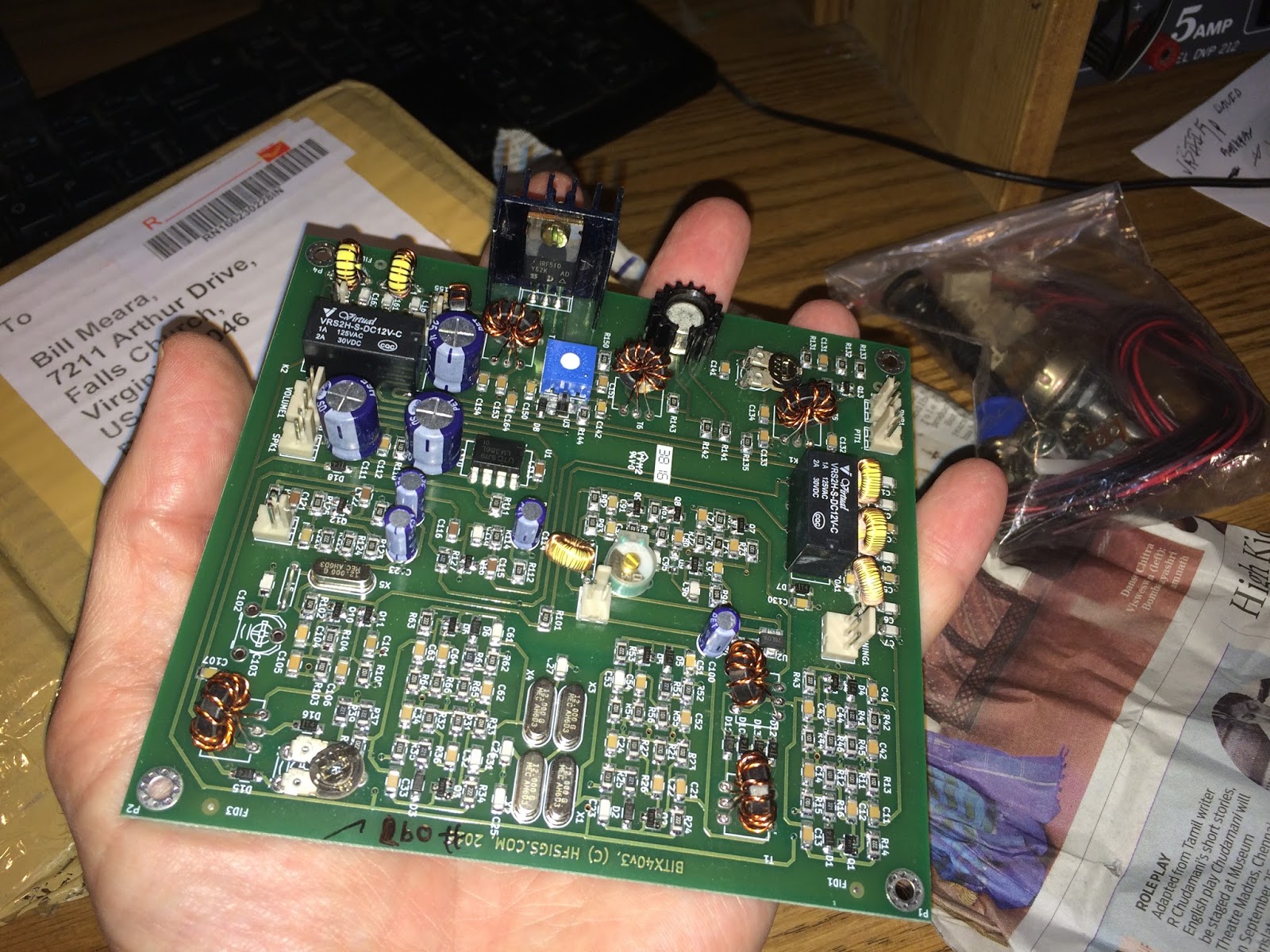
I am having a really EXCELLENT radio morning here at SolderSmoke East coast HQ. I made some progress on the Armand HRO receiver — just squaring away some of the too-long leads and improving the shielding a bit. Then I was looking out the window as the mailman arrived. What was that little box he was leaving us? Wow! A box from Hyderabad! The BITX 40 module arrived, wrapped in a very interesting piece of Hyderabad newspaper. Very FB. Thanks Farhan. I will surely be writing and talking about this rig in the weeks to come.

UPDATE: I just realized that the BITX module fits very nicely into a TenTec TPC-45 cabinet that Armand gave me a while back. TRGHS.

HB2HB! KW4KD and N2CQR (video)

A couple weeks ago I ran into Jim KW4KD on 40 meter SSB. Jim is in Chattanooga, Tennessee. He was running a modern “black box” rig, but he mentioned that he had on the shelf two complete homebrew stations, one of which was for 40 meter SSB. He hadn’t used this gear in 40 years. I encouraged him to blow the dust off and get it on the air. Yesterday, Jim did just that. We met up on 40, first at 1730 local (my time) and again at 1930. Excellent! Another HB2HB contact. Check out the video (above). Thanks Jim.

If you run into someone who mentions having some old homebrew gear, encourage them to blow the dust off and get it on the air.

Jim’s SSB rig:


Update on Farhan’s BITX 40 Module

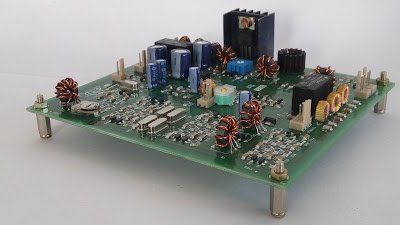
It is truly a thing of beauty: http://www.hfsigs.com/

The boards come assembled (as seen above). You can then add peripherals and modify away. It is “hackable.”

Hackable

The BITX40 will inspire you to experiment. Modify it, mount it, tweak it, change it.
The PCB uses all analog large sized SMD components that are laid out on an easy to understand manner on a double sided board with broad tracks. This can be your main module around which you can start experimenting. There are jump-points from where you can add more modules like the DDS, more bands, better audio amplifier, etc. Imagination is your limit. You can separately increase the power amplifier’s supply voltage to 25 volts to be more than 20 watts of power : You will have to add a better heat sink. The mods are on the way!
The board can be installed inside any box that you like. Make your own station rigs, man-packs, trail radios or mount it in a cigar box and leave it on your bedside table. The tuning capacitor has been replaced by a varactor tuning so you can place the tuning knob anywhere as it only carries a DC voltage.

Farhan writes:

For the last few months we have been working bringing low cost, tested SSB boards. Finally they are here. Priced at Rs.2200 At the moment, they are available only in India until we sort out an inexpensive way to post them to other countries. Visit www.hfsigs.com and pick up one!

The BITX40v3 is a complete 7 MHz SSB transceiver on a board that puts out 5 watts of clean audio and it has a very crisp, all analog receiver. It is based on the popular BITX circuit. It is a high quality double side, PTH PCBs with machine assembled SMD components, hand wound coils and each of them is individually tested. All the connectors and wires needed are included in the kit.

Update on Farhan’s BITX 40 Module

It is truly a thing of beauty: http://www.hfsigs.com/

The boards come assembled (as seen above). You can then add peripherals and modify away. It is “hackable.”

Hackable

The BITX40 will inspire you to experiment. Modify it, mount it, tweak it, change it.
The PCB uses all analog large sized SMD components that are laid out on an easy to understand manner on a double sided board with broad tracks. This can be your main module around which you can start experimenting. There are jump-points from where you can add more modules like the DDS, more bands, better audio amplifier, etc. Imagination is your limit. You can separately increase the power amplifier’s supply voltage to 25 volts to be more than 20 watts of power : You will have to add a better heat sink. The mods are on the way!
The board can be installed inside any box that you like. Make your own station rigs, man-packs, trail radios or mount it in a cigar box and leave it on your bedside table. The tuning capacitor has been replaced by a varactor tuning so you can place the tuning knob anywhere as it only carries a DC voltage.

Farhan writes:

For the last few months we have been working bringing low cost, tested SSB boards. Finally they are here. Priced at Rs.2200 At the moment, they are available only in India until we sort out an inexpensive way to post them to other countries. Visit www.hfsigs.com and pick up one!

The BITX40v3 is a complete 7 MHz SSB transceiver on a board that puts out 5 watts of clean audio and it has a very crisp, all analog receiver. It is based on the popular BITX circuit. It is a high quality double side, PTH PCBs with machine assembled SMD components, hand wound coils and each of them is individually tested. All the connectors and wires needed are included in the kit.

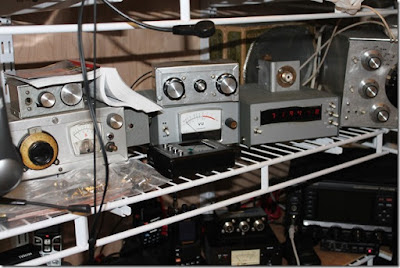
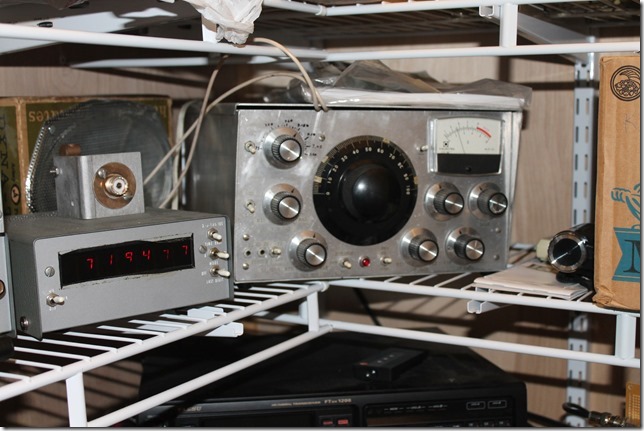
Blowing the Dust Off of KW4KD’s Homebrew Station from the 1970s

KW4KD CW TRANSMITTER
I got on 40 meter SSB over the weekend and spoke to Jim KW4KD. He was on a modern commercial rig, but then he told me he had some homebrew gear on his shelf… Wow, it is magnificent. A complete CW station (with homebrew keyer) AND an SSB rig. I immediately launched a campaign to get Jim to fire that gear up and to provide opportunities for more HB2HB contacts. Here is his description of the equipment:


Hi Bill,

It was a blast to get to chat with you too.
Just listening to the audio on this end, I can tell you’ve put a lot of time and effort into getting what you have there up and running.
Never once touched the dial on this end. So your radio gets a A+ for stability too.
Read your Bio on QRZ and sounds like you’ve been a few places, and seen a few things, and that unto itself would make a great contact . But for me, the fact that you are out there building, and I ‘m getting to hear the fruits of your efforts, is ham radio at its best.
Attached are pictures of the gear that made up my station back in the 70’s.
FWIW: At that time my call was WB4YQC.
(But for the record, these shots were taken today.)
In those days I had two setups (Both on 40 mtrs).
A CW station, using separate Xmtr & Rcvr, And a SSB xcvr.
By themselves the CW xmtr ran 8 to 10 watts, and the SSB unit probably hit 5 Watts peak (on a good day).

Like you, I had a separate linear. But in my case I used a pair of 6DQ5’s (TV Sweep tubes) that would run about 180 watts input, (Nothing Solid State, that I could afford, could make that kind of power back in then). The linear is still here, but stashed away in a closet somewhere, so not shown in today’s set of pictures.

As an Add-On for the SSB unit, I built a Frequency Counter, and used it as a digital dial.
The counter is unique in that it supports two inputs (one for the VFO, and the other for the Xtal BFO). In the 2 input mode, the counter is an UP/Down counter.
The Xcvr’s BFO runs at 9Mhz, while the VFO runs at ~2Mhz. So the counter counts up on one pass, and then down on the 2nd. At the end of the 2nd pass, it updates the Display with the final tally. (i.e, the effective TX/RX freq)

The cases for the Xmtr & Xcvr were designed by me, but were built by a friend who had access to a metal brake. Internally none of the units are especially pretty, as the were always works in progress.

I’ll have to dust off the linear. Its been at least 40 yrs since its seen AC.. Not sure what kind of shape the electrolytics are in.

Probably need to apply power slowly. I’ll see if I can round up an Autotransformer.

As far as posting on your blog, if you think it will encourage others, I’d be flattered if you did;
However, before anybody asks, (assuming that they might) there’re no schematics. Everything was built from sketches made on envelopes and napkins, which have long since disappeared. And even if they did exist, not sure today that you’d be able to find some of the ICs & transistors that the units use.

Again, it was my pleasure to catch you on the band today, & look forward to getting to hear you again.

73 Jim (KW4KD)
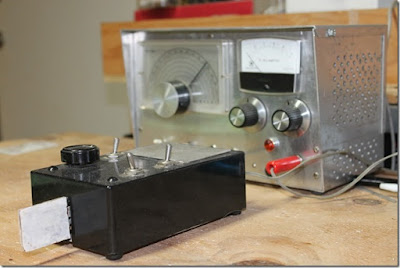
KW4KD CW TRANSMITTER WITH HB KEYER

40 Meter CW receiver on Left
40 meter SSB transceiver with freq counter