National Dial and Gearbox Problem Resolved

Thanks to all who offered advice and assistance. With help from you guys — and especially from Pete Juliano N6QW — I think I have this fixed.

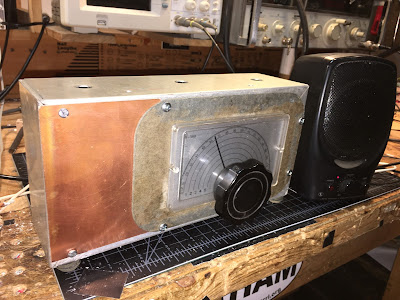
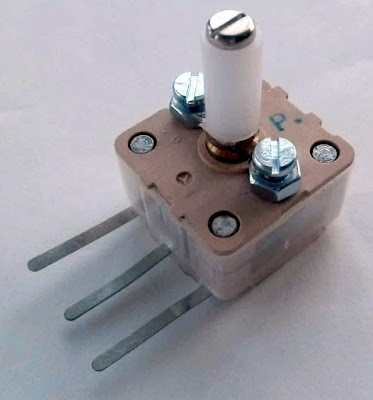
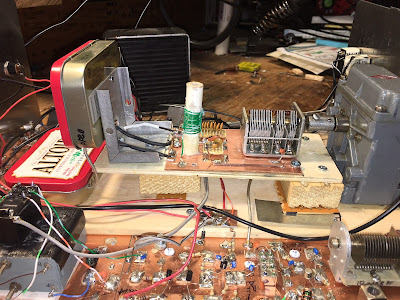
Pete was right — the problem was really with the variable capacitor. The one I was using was kind of stiff and irregular in its motion. I found another one in the junk box that was easier to turn (it has one set of ball bearings). This fixed most of the problem.

I also spent more time making sure the shaft of the cap lined up perfectly with the shaft of the gear box. This also helped a lot.

I realize now that some of the “stickiness” that I occasionally feel while tuning may be coming from the dial — not from the gear box. It looks like my dial took a hit that slightly bent one portion of it. It seems that the numbers have a bit of trouble clicking over on that portion of the dial. Some lubricant may help there. But I can live with it.

The receiver now tunes very smoothly and I can go right back to a frequency and find the signal exactly where I left it. There does seem to be a very slight difference depending on whether I “approach from above” or “approach from below” — but this is not a big deal.

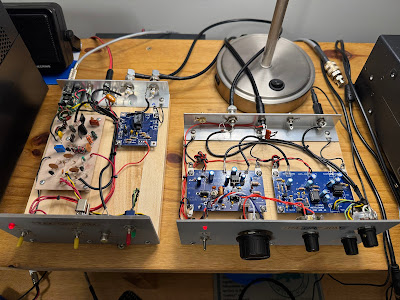
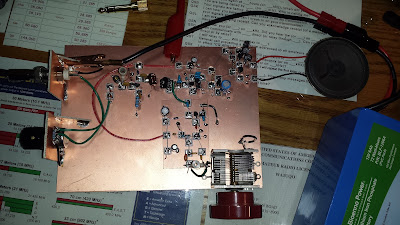
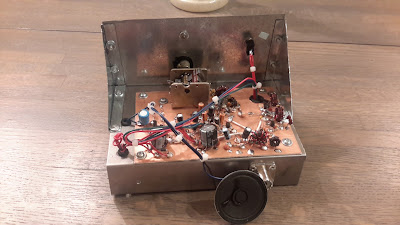
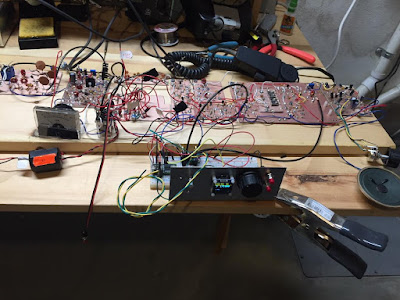
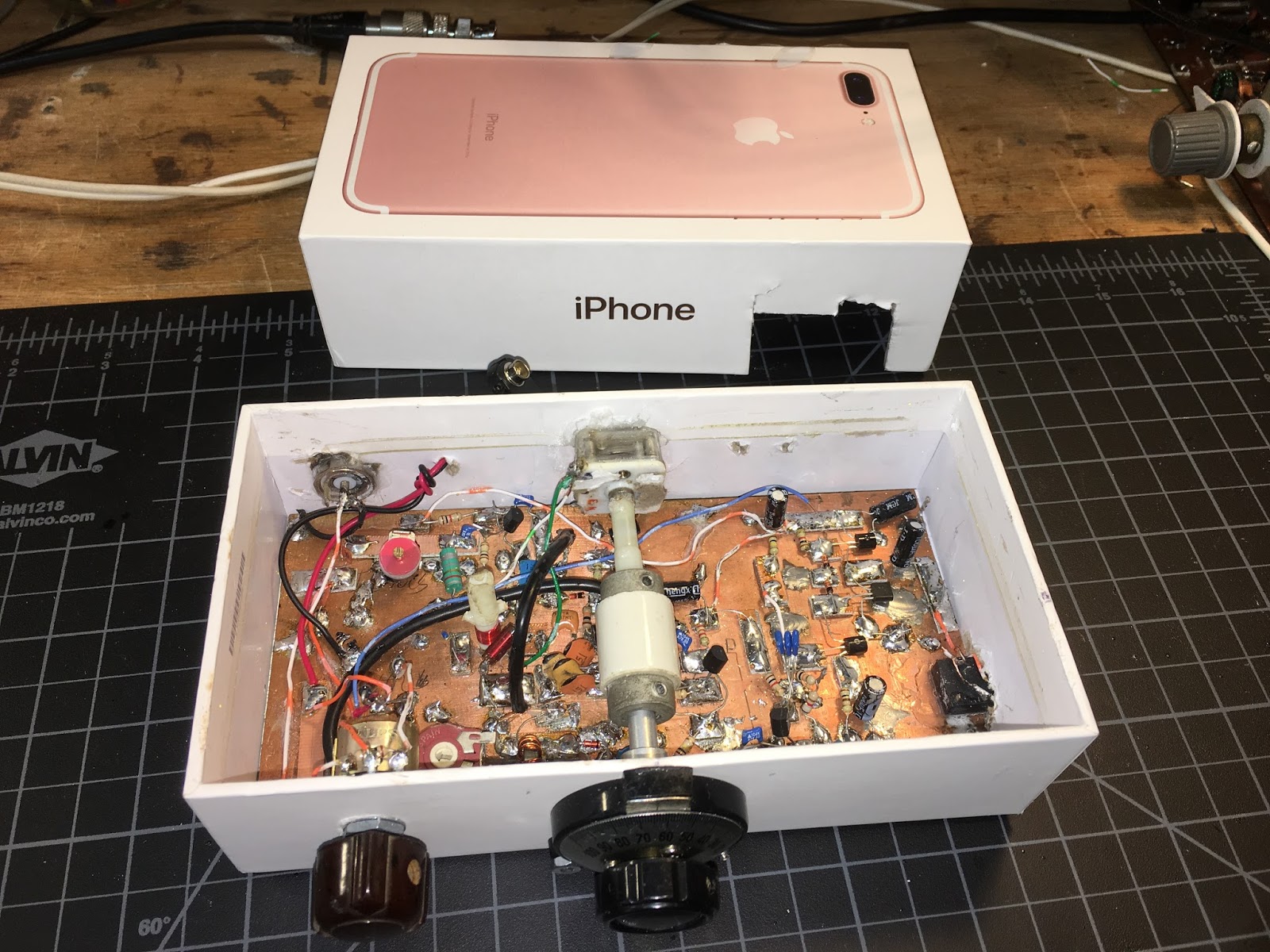
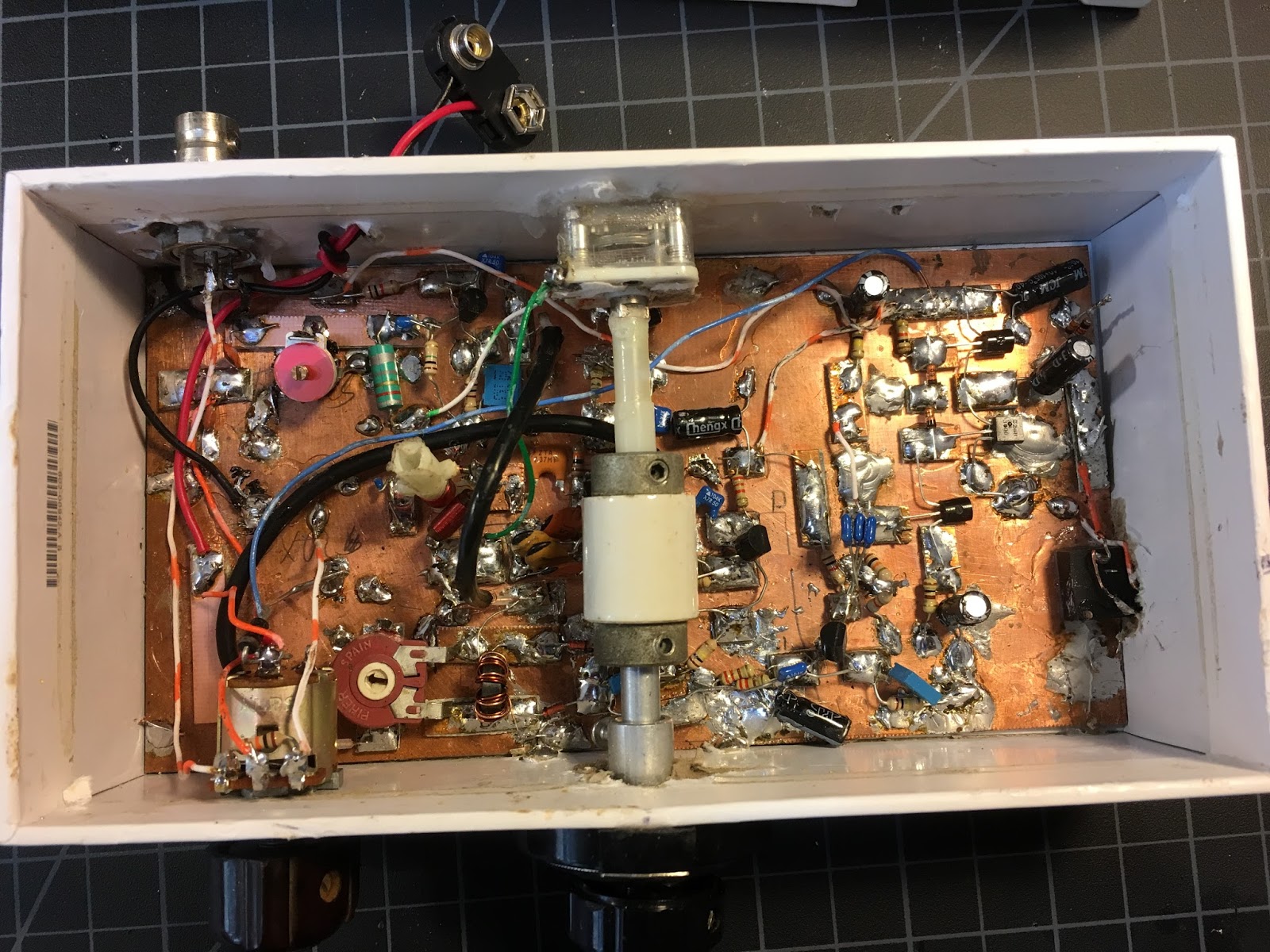
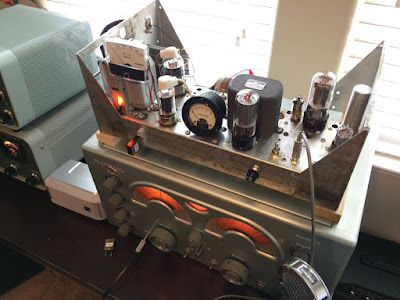
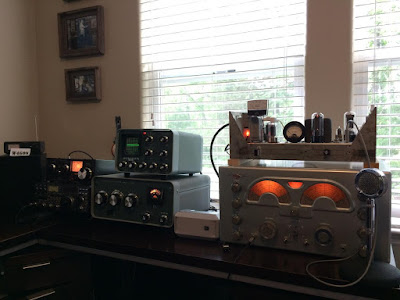
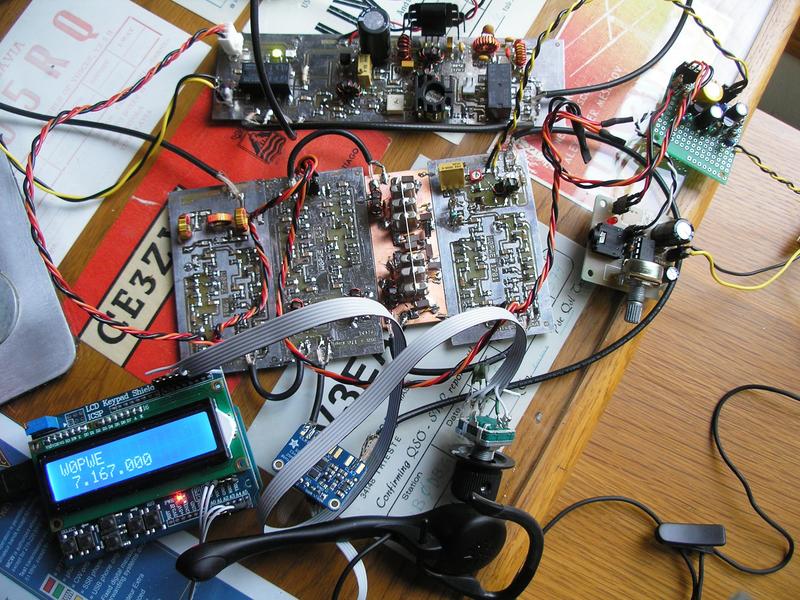
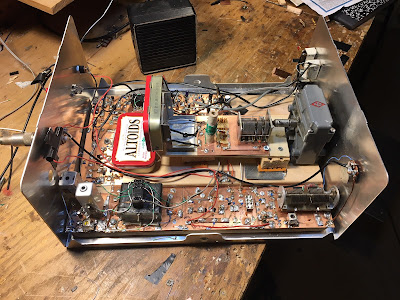
Check out the pictures of the receiver and the VFO. Note the “cardboard from a coat hanger” coil form. The winding is held in place with nail polish varnish. I had planned on having the variable cap, the coil , and the associated fixed caps all in a box for better thermal stability, but the VFO is very stable even without the box. I have the VFO running 455 kc ABOVE the signal frequency. It runs from about 7455 kc to about 7800 kc. I could have set it up to run 455 kc BELOW the signal freq. That would have made it a bit more stable (it is easier to attain VFO stability at lower frequencies) but VFO is so stable that I probably won’t mess with it. I followed DeMaw’s rules: Physical stability, NP0 caps. For the NP0 caps, put several of them in parallel to get the desired capacitance value. Keep heat-producing active components away from the coils and caps.

Thanks again to Armand WA1UQO for giving me this amazing piece of radio history. And thanks to Tim Sutton for the big box that holds this receiver.

James Millen knew what he was doing. See: http://www.isquare.com/millen/millen-page.htm
Homebrew Juju — HB2HB

Oh man, last night the Radio Gods were on my side. I only had about a half hour on 40 SSB, but I had some really nice QSOs. WB2HJK George in NYC was very interested in the BITX revolution. W3BT in Philadelphia is a kind-hearted OT who ran an ENORMOUS Yagi atop a row-house in the city — the antenna extended over the street and TWO of his neighbors houses. Never had a TVI problems. FB. SS listener WA3O Mike called in — Mike is the fellow who gave me my HW-7. Mike has been running his uBITX into a homebrew 500 watt LDMOS amp. FB Mike.

Then the real miracle happened. Just as I was about to throw the switch, Glenn KU4NO called. I decided to give him a report. But then he said something I rarely hear: “My rig is homebrew too!” I checked the log — I had spoken to Glenn before, but our last QSO was in December 2001. I was in the Azores. Glenn was on the same homebrew rig. We had a nice talk about his rig. FB.

Glenn told me that in all his years on the air, he has only had a few contacts with other homebrew stations. He had a list of them: 1) W4ZCB, 2) N6ORS (FB! SS Listener!), N2CQR (“No wait — I just heard you but we didn’t talk.”) and W2JUQ. I will tell Glenn that he needs to add CU2JL to the list — that was me in 2001 and I was indeed homebrew DSB.)

To top it all off, Dino KL0S was listening and recorded the final part of the QSO. See below. (The video might take a few minutes to load.)

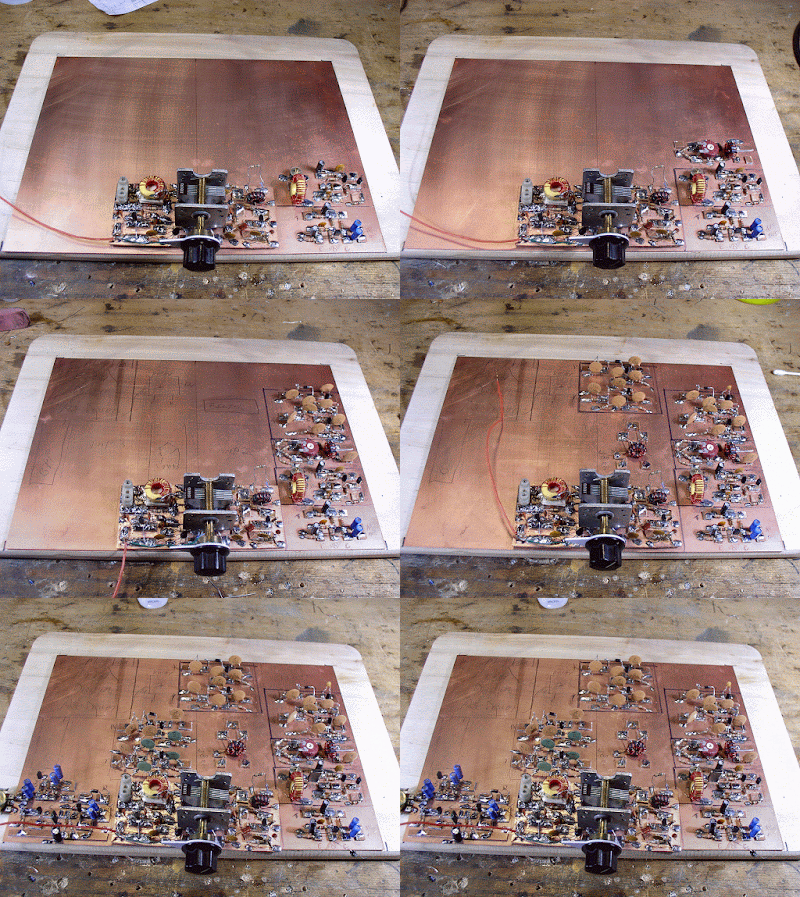
In honor of that FB night on 40 I am re-posting the animated GIF of my BITX-17 build. I hope it doesn’t make you seasick!

Also, I think we need to add a term to the SolderSmoke lexicon: Juju. As in Homebrew Juju. See: https://en.wikipedia.org/wiki/Juju Right? What do you think Steve Silverman?


An Epic Evening on 40 Meters

I had a good night on 40 meters last night. The Radio Gods were obviously with me.

First I called CQ and VP2EIH on Anguilla responded. Nice to start with a whiff of DX.

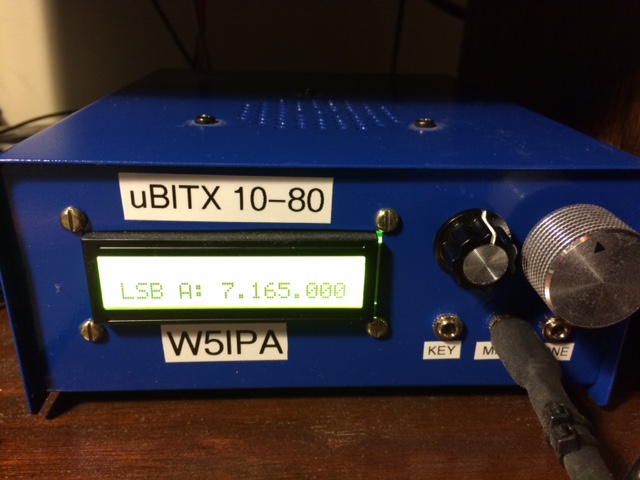
Then Jason W5IPA called in and said he wanted to try out his uBITX! See the pictures below. FB!

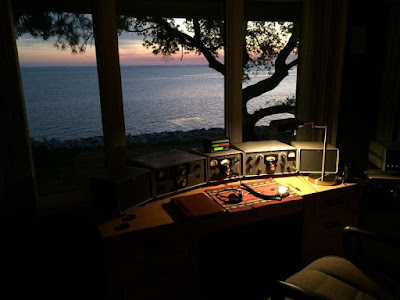
Then I got a call from K5WDW on Hilton Head Island — Dexter runs Collins gear from an ocean-front shack (see above). Check out his QRZ page.


Then WA4PUB called in. Dave has been on the air since 1948 and was a student of legendary ham and radio astronomer John Kraus. Dave has directional antennas on 40 — when he switched the pattern he went from LOUD to barely detectable. FB. Check out Dave’s homebrew rig below.

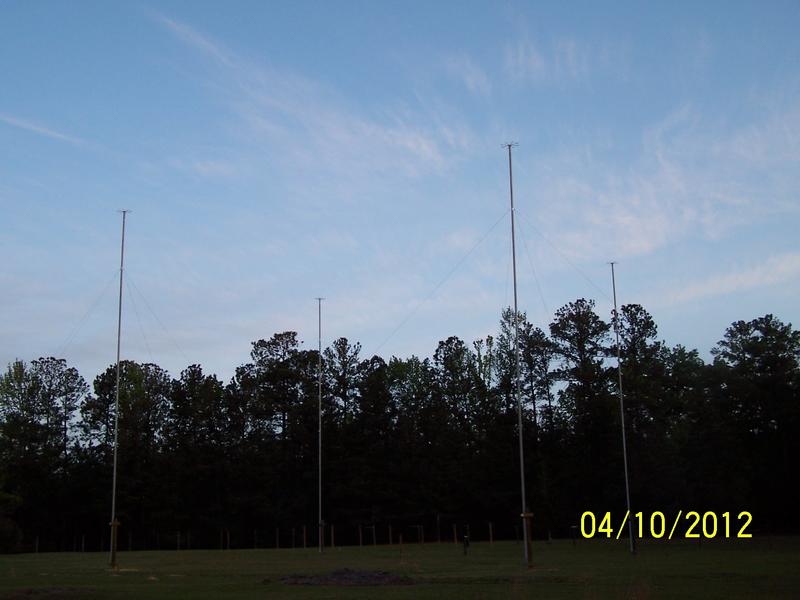
Finally Gary W7DO joined us. He has a big 4 Square on 40 that also has some really impressive directional properties. See below for a look at his 80 meter 4 Square.

TRGH


WA$PUB
W7DO 80 meter 4 Square


WA1UQO’s Discrete Ceramic DC Receiver

Armand writes:

The attached picture is your DC receiver. A little tweaking left to do as the range right now is ~ 7.44Mhz to 7.032Mhz. I used one of Farhan’s trifillars and a couple of air coils that you gave me last year. Listening to the Wisconsin QSO party as I type.

FB Armand! The receiver looks great. I hope others will follow your lead and build this simple little receiver for 40.

N8NM’s “20 Dollar Bill” DC Receiver

Steve N8NM wrote:

I call it “The $20 Bill” because it contains about $20 in junkbox parts and complies with Bill’s discreet component, hardware defined radio ethos.
73 – Steve N8NM


I replied:

Excellent Steve. Very nice.

Your post caused me to fire up my DC RX — I was listening on 40 earlier today. I think the world needs MORE 40 meter direct conversion receivers.


Too bad about the regulator IC chip. We need to get you an 8 volt Zener so that you can bring that receiver into a state of discrete component purity.

DISCRETE HDR FOREVER!


73 Bill N2CQR

HB2HB QSO with KC1FSZ and his Al Fresco Scratch-built BITX

I had some good luck on the ham bands last weekend. First, I was called by Bruce KC1FSZ — this time he was on his Al Fresco scratch-built BITX-on-a-board. FB. The next day, I called CQ on what seemed like an empty 17 meter band. I heard someone come back — it sounded like DX. I had to swing the Moxon a bit — oddly, I thought, to the south-east. FR5FC was calling me from Reunion Island. TRGHS.

Here’s a follow-up message from Bruce:

Hi Bill:


Great to catch up with you on 40m yesterday. I was using the Peppermint II which is a scratch-build of the BITX-40 for the most part, although I did my own digital VFO/BFO and made a few other modifications in order to be able to use it on 80m. It took about 8 months of noodling to get the thing to work, but it was a great learning experience.

As discussed, I’m working on a 24V power supply (LM723 + 2N3055) and a push-pull IRF510 final so that I can get some more power.

I got a few more Williams-Sonoma Peppermint Bark tins off of EBay so I’m ready to start boxing things up as soon as the linear is working.

73s,

Bruce KC1FSZ

Discrete Ceramic 40 Meter Direct Conversion Receiver in Action (Video) — BUILD THIS THING!

I’ve been holding off on making this video until I improved the stability. N6QW is vigilent! I only did this video after certifying that it meets the Juliano Stability Criteria. I had to dispense with the polyvaricon and go with an air variable.

We will be talking about this on the SolderSmoke podcast next weekend. I hope to put on the blog a stage-by-stage discussion of how to build this receiver.

The dial from HI8P and the knob from a SW receiver that Elisa gave me definitely add soul to this new machine.

JOIN THE RANKS OF THE TRUE HOMEBREW RADO MAKERS! BUILD A RECEIVER! BUILD ONE OF THESE!

Videos of iPhone Box DC Receiver

These are just a couple of short videos that I made for my nephew before sending him this receiver.

As you can hear, deafness is not a problem with this design! I did make some frequency stability improvements after this video was made — I think you can hear a bit of drift. Still, not bad for a very simple circuit using a polyvaricon superglued to the back of a cardboard box.

I’ll post more videos of the second version of this receiver. There are further improvements in frequency stability. My goal: “Juliano Si5351” levels of stable-ness.

Polyvaricon Variations — Polyvaricons Are Not all The Same


When I built the first prototype of the iPhone DC receiver, I just reached into my junk box and used a polyvaricon capacitor for the main tuning control. It was marked PL 051. I was really pleasantly suprised at the stability of the Variable Ceramic Oscillator circuit. I could tune the entire 40 meter band with complete stability — Juliano levels of stability.


By the time I put the second version into its box (see above), I used a different polyvaricon (the one pictured below). It worked, but with this part the receiver drifted noticeably. So this morning I pulled it out and put in a second PL 051 Polyvaricon. Viola! Eccolo! Success. Drift eliminated. Rock stable.

Has anyone else noticed variations like this in the stabilty of polyvaricons?

The dial in this version is an Archer device that has been kicking around in my junkbox for more than 20 years. I think it was given to me by my old friend Pericles HI8P — this adds a tremendous amount of soul to this new machine). The box is an old Bud aluminum chassis. Man, this thing sounds great. I will try to post a video soon.

iPhone Direct Conversion Receiver with Variable Ceramic Oscillator

A while back Bob N7SUR got us talking about winter projects. Receivers. Of course, Pete and I quickly went down different paths. Pete is making great progress with lots of interesting digital circuitry. He is going over to the dark side. Check it out here:

I went with simplicity. Extreme simplicity. Direct Conversion (thanks Wes!). Discrete components. No chips. Analog Oscillator. 40 meters — monoband.

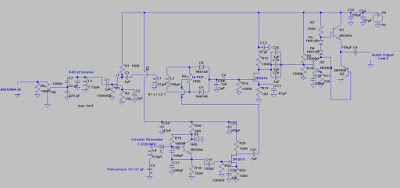
Schematic updated 29 November 2017
There it is. You can click on the picture to make it larger. Here is an outline of the circuitry:

— Single tuned circuit bandpass filter preceded by a simple pot that serves as a gain control.
— JFET RF amp
— Singly balanced passive mixer inspired by F5LVG’s RX-20 in SPRAT 100. For the coil I used one of the many trifilar toroids that Farhan gave me.
— The local oscillator is the coolest stage. I used a 7.37 MHz ceramic resonator and a circuit inspired by Miguel PY2OHH. With a polivaricon I can tune the entire 40 meter band. I put a reduction drive int here to make tuning easier.
— The AF amp is an op-amp free design. It works well into ear buds or into a computer speaker.
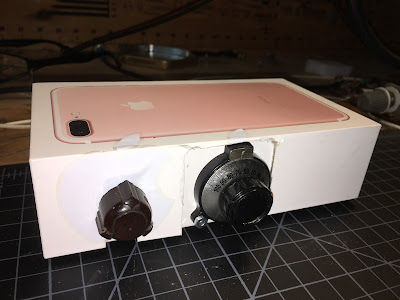
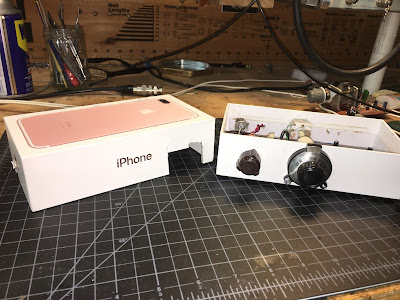
— Perhaps in an effort to catch the attention of the younger generation, I built it into an iPhone box.

Please let me know if you spot any flaws in the circuit, or see any places where it might be improved.

More to follow. This prototype is now in the mail, en route to my nephew John Henry who will be testing it for me.

Amazing Homebrew/Boatanchors QSOs on 40 –Six solder melters in a row!

Al W8VR
After a day of happy tinkering with the Direct Conversion receiver I’ve been working on, I turned off the soldering iron and got on 40 meter SSB with my BITX Digi-Tia.

First — Steve W4IJ came back to my CQ. Steve is a boatanchor enthusiast and has written for Electric Radio magazine. FB.

W4IJ Boatanchors

When Steve signed off, I got into a contact with Pete W8NBO. We had spoken before and he had told me of a homebrew transmitter he’d built as a kid. This time I asked for details: It was a 6AG7 oscillator to a 6L6 amplifier. He ran it with an S38 (brave man!). He described what must have been a very painful effort to hack (literally) the needed holes in the transmitter chassis using just a spike, a hammer and a file. I told him this brought back my memories of similarly painful chassis work (mine was for a power supply for a Heath HW-32A).

At this point we were joined by Arnie, W2HDI. Arnie’s rig is in Stowe Vermont, but he was running it remote from the South of France where he and his wife were celebrating their 50th wedding anniversary. Arnie shared with us memories of similar chassis pain — his were related to an external modulator that he built for a DX-40. I think he said that all he had was a hole punch and a file. Oh, the humanity!

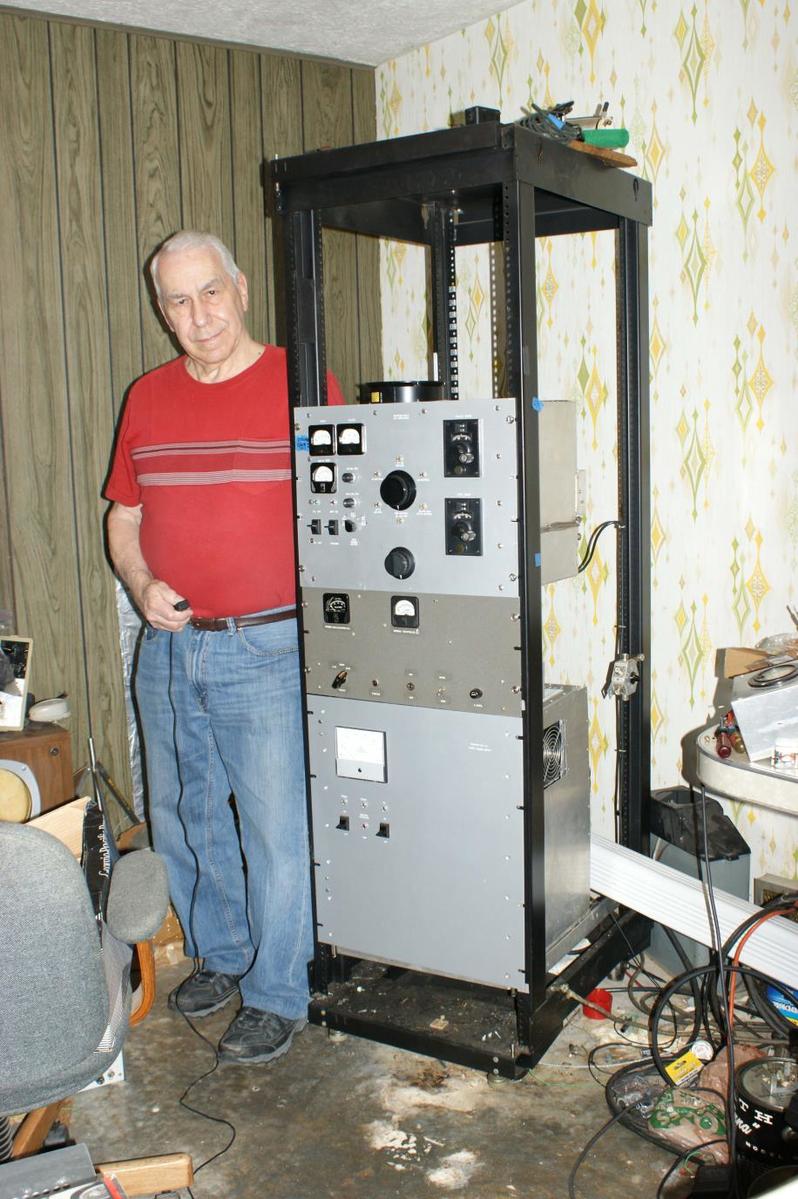
Then Al W8VR joined the conversation. Al said that he’s been in the game so long that his early rigs were built using cigar boxes as chassis. I pointed to a connection: I noted that my BITX rigs are enclosed in what could be considered cigar boxes. Al’s QRZ page picture has a magnificent AM rack rig that he said was actually built twice. There is also an HRO-60 in the picture. FB. Check it all out at Al’s web site. Click on the mic for the write ups, the key for the pictures. http://www.w8vr.org/

Then Dennis K0EOO called in. Holy Cow! Dennis and I spoke not long ago. You may recall my enthusiastic write up of his beautiful 1974 SSB rig:
and

This was almost too much. Rarely will you spontaneously come across so many hams who have melted so much solder. FB.

Icing on the cake: When I returned to the bench, I fired up the DC receiver and heard Mike KN4EAR talking about his BITX40. I switched to the Digi-Tia and gave Mike a call. He reports making many contacts with his rig. FB.

TRGHS.

SolderSmoke Podcast 199 Eclipse, Regen, BITX, DC RX, 3D OLEDS, Iphone Boxes, Mailbag

SolderSmoke Podcast #199 is available.

http://soldersmoke.com/soldersmoke199.mp3

2 September 2017

The Eclipse. The Floods.

Sawdust Regen gets John Henry off to a good start.
Voltage regulators as audio amplifiers

The return of the Simple-ceiver (Direct Conversion)

Ceramic Resonators

3D OLEDS

iPhone Boxes as rig enclosures

Electric Radio on Frank Jones

17 Meter Contacts

MAILBAG

Thermatrons Al Fresco: W4GON’s FB HB AM Rig

I was listening to 7290 kHz with my BITX this morning and I heard W4GON say his AM rig is homebrew. So of course I fired up the DX-100 and the HQ-100 and gave Joel a call. Conditions were terrible but we had some support from the radio gods.

From Joel’s QRZ.com page: “It uses a pair of 6L6s in Push-Pull Class AB1 high level plate and screen modulating a 6146. I still have a lot of work to do on this rig, like building an enclosure, but it works and I just couldn’t help but getting on the air with it!”


I think it is a thing of beauty.

Video (Audio) of N2CQR (me) on 40 Meters with BITX DIGI-TIA

This was the icing on the cake. Ruben AC2RJ up in New York was monitoring as I called CQ with my BITX Digi-Tia last night on 40 meters. He recorded the contacts that ensued. I was really glad that he recorded VE3XBO describing his experiences with a BITX 40 Module at his local radio club — The WAX Group of the Barrie Radio Club in Ontario.

Farhan’s module is really starting to show up more often on the band. On the 19th of April I talked to Bruce KC1FSZ — he was on his Peppermint Bark BITX 40. And on March 30 I talked to Josh KE8CPD on his BITX 40.

Click on the arrow (above) to listen to Ruben’s recording. Ruben has a nice YouTube channel here:
https://www.youtube.com/channel/UCXClX_GBzFQIiqTwgnt8qxA

DiFX! My New NE602 Rig is On the Air

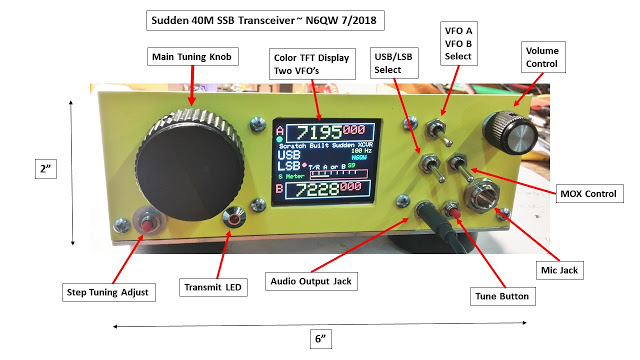
Pete would call this a DiFX: a transceiver that is Different from a BITX. This started with my effort to get an Si5351 working with a little 1 inch square OLED screen. Tom Hall AK2B helped me with the software (thanks Tom). Once I got that done, I figured I could build a simple receiver with a homebrew 11 MHz crystal filter, two NE602 chips, and an LM386 AF amplifier. That was working great, then Pete told me to turn it into a transceiver. I used some of Pete’s boards (thanks Pete).

The Epiphyte transceivers also use two NE602’s, but they ingeniously switch the BFO and VFO between the two chips. I didn’t switch the oscillators — instead I switched the inputs and outputs of the two chips using two DPDT relays (thanks Jim). A third DPDT relay switches the antenna between T and R, and turns on and off the PA stage and the AF amplifier.

This is a DIFX, but there is some BITX circuitry in there. The power amplifier stages are right out of the BITX Module, as is the AF amplifier (thank again Farhan).

The only real problem I ran into had to do with the very low power out of the NE602 VFO mixer on transmit and the impedance matching between the NE602 and the PA chain. I had to increase the gain on the first RF amp (pre-driver) using ideas from Steve Weber’s 40 meter SSB CW QST contest rig (thanks Steve). I experimented with various connections between the NE602 and the BP filter. Finally I got it going.

The heat sink on this one is different too: it is just the chassis. The IRF 510 is bolted (insulated) to the aluminum box.

I fired it up this afternoon and in spite of horrible conditions on 40, quickly had a nice rag chew with KJ4ZMV in Indiana. I haven’t even built a mic amp yet! I am running the D-104 right into the NE602 balance modulator. There are no signs of unwanted modulation or spurs.

FB! TRGHS! VIVE LA DIFFERENCE!

Hot Water BITX 40

Fred’s idea really resonated with me. My first SSB rig was an HW-32A, the 20 meter version of the rig shown above. If — as I suspect — these rigs are anything like the HW-101, they are not aging well. Heath’s drive for economy resulted in rigs that don’t hold up to well over time. I remember the sound of the plastic HW-101 dial clutch cracking when I pushed the button.

BITX40 Modules to the rescue! Put a mono-band board inside an old mono-band rig. There are a lot of possibility here. Some ideas:

— Put that Heath VFO to use. Maybe convert it to solid state. Or just put the LCD from an Si5351 in the window (Pete did this with an HW-101).

— Get the S-Meter wiggling.

— Keep the final amplifier circuitry in there and let the BITX drive it. This will give you a QRO option. (Uh oh, we’re in trouble again!)

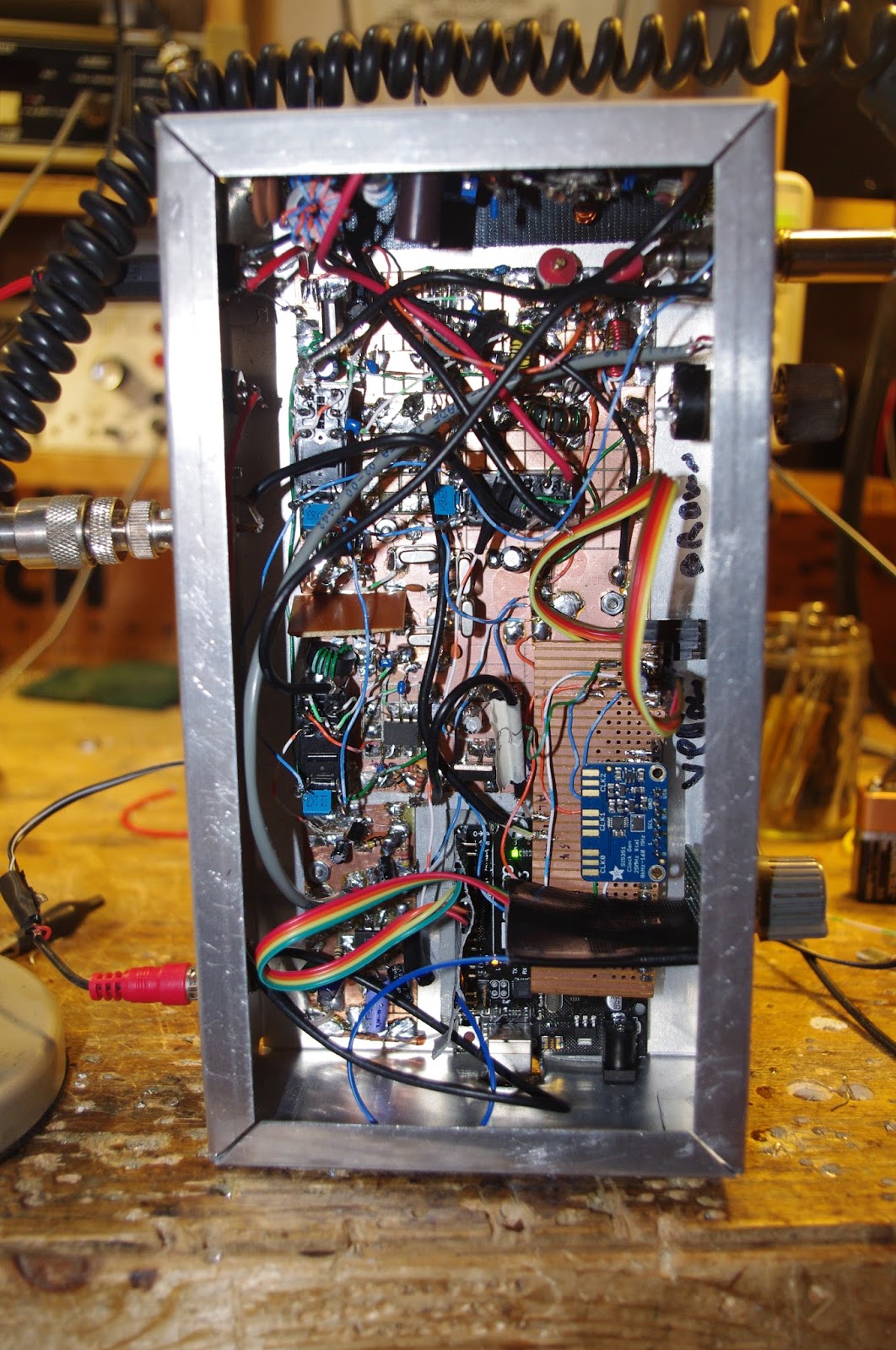
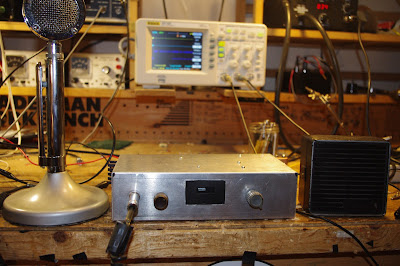
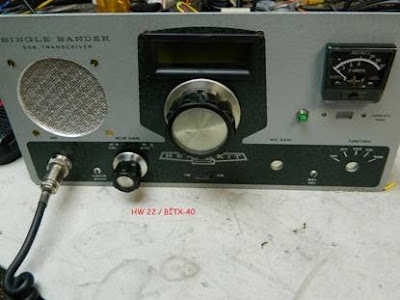
Hello Fellows,
Attached is a picture of my BITX-40 V3 adapted to a Heath kit Single Bander HW22. This is a work in progress but what a neat way to bring an old boat anchor into the present.
The only parts of the HW 22 used were the front panel and case and knobs. Modifications yet to be incorporated include: AGC , a USB port on the front panel to access the Arduino, and a PTT/CW mode switch.
I enjoy your pod cast and web site…Best of 73 KC5RT.

Hearing the Roosters from Boa Vista, Brazil


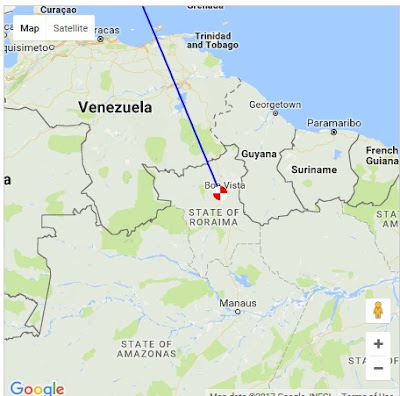
The ham radio day got off to a good start at N2CQR yesterday. 40 meters was open in the morning and PV8AL was calling CQ. Helio had a strong signal, due in large part to his 3 element 40 meter yagi. Helio lives on a farm outside Boa Vista, Brazil. As he spoke, I could clearly hear the roosters crowing in the Amazonian dawn. Very cool. It brought me back to mornings in the Dominican Republic, and in Central America. It also reminded me of one of my first DSB contacts from the Azores — I could hear the parakeets of Amadeu CT2HGL in Coimbra, Continental Portugal. Obrigado Helio! Obrigado Amadeu!