Category: 40 meters
Young Jean Shepherd Gets Hung-Up On Ham Radio
Oh man, we’ve all been there: OBSESSION with ham radio. Shep went over the top and didn’t sleep all weekend when his homebrew transmitter was finally neutralized and started to put out a decent signal on 40 meter CW.
One of my favorite lines in this episode is about how, before the neutralization, the transmitter had had so many parasitics that it would continue to transmit for two hours AFTER Shep turned it off, “and all on the wrong frequencies.”
I found this while searching for other Shep references to Johnny Anderson, the guy who built the TV receiver. Please let me know if you know of any other Shep references to Johnny.
Here is the program. Skip ahead to 20:50
EXCELSIOR!
The Homebrew Spirit of the Radio Amateur
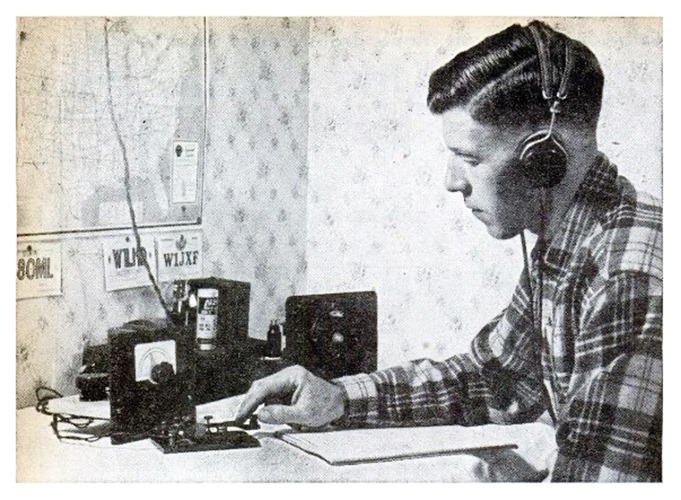
I just liked this picture. It seems to capture the pride and satisfaction that comes from getting on the air with homebrew gear. It’s obviously a simple QRP station, but it is all homebrew. And — from the QSL cards on the wall — we can see that he has had some success with it. The map on the wall is of the United States and the QSLs are from the east coast and the mid-west, so my guess is that he’s probably on 80 or 40. FB OM.
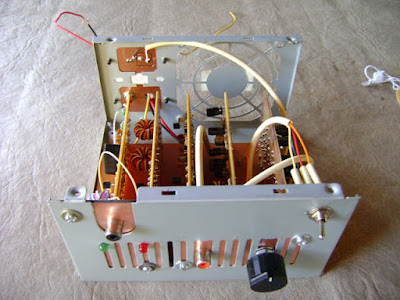
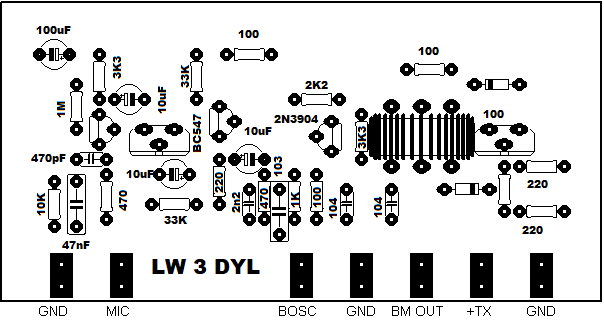
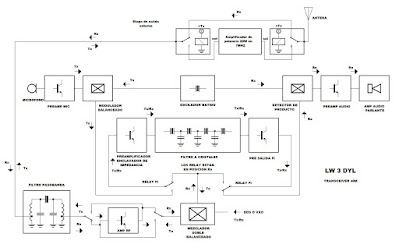
Argentine SSB (BLU) Homebrew from Guillermo LW3DYL
Really nice work. BLU is Spanish for SSB. (Juliano BLU?)
But I think Guillermo needs to build ONE MORE BOARD! A VFO or a VXO. Analog. To finish the job. Guillermo tells me this is in the works — he selected an IF of 11.0592 MHz specifically so that he can use a variable oscillator built around a 4 MHz ceramic resonator.
Complete schematic and PC board patterns on his site:
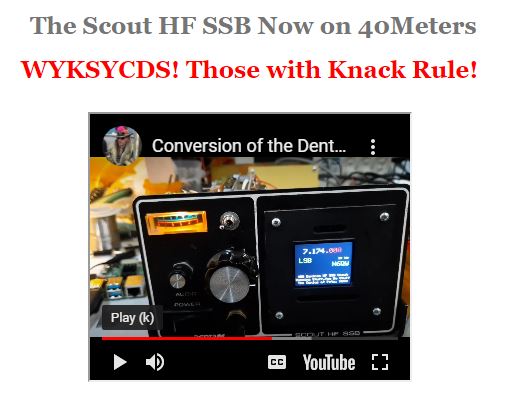
N6QW On 40 Meters with a Civil Air Patrol Dentron Scout — WYKSYCDS
SolderSmoke Podcast #227: Solar System, SDR, Simple SSB, HA-600A, BITX17, Nesting Moxons? Mailbag
Mars is moving away. Jupiter and Saturn close in the sky. And the Sun is back in action – Cycle 25 is underway. Also, the earliest sunset is behind us. Brighter days are ahead.
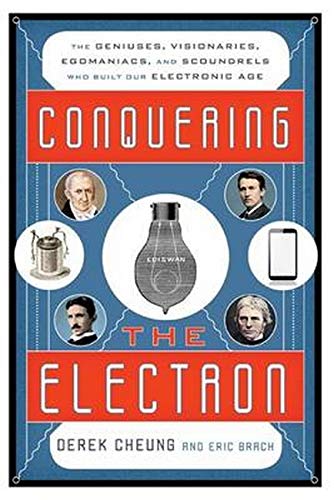
Book Review: “Conquering the Electron” With a quote from Nikola Tesla.
No real travel for us: Hunkered down. Lots of COVID cases around us. Friends, relatives, neighbors. Be careful. You don’t want to be make it through 10 months of pandemic only to get sick at the very end. SITS: Stay In The Shack.
Pete’s Bench and Tech Adventures:
Backpack SDR keithsdr@groups.io
Hermes Lite 2
Coaching SSB builders
G-QRP talk
A new source for 9 MHz crystal filters
Bill’s Bench:
Fixing the HA-600A Product Detector. Sherwood article advice. Diode Ring wins the day. Fixing a scratchy variable capacitor. Studying simple two diode singly balanced detectors. Polyakov. Getting San Jian frequency counter for it.
Fixing up the 17 meter BITX. Expanding the VXO coverage. Using it with NA5B’s KiwiSDR.
Resurrecting the 17 meter Moxon. But WHY can’t I nest the 17 meter Moxon inside a 20 meter Moxon? They do it with Hex beams. Why so hard with Moxons? DK7ZB has a design, but I’ve often heard that this combo is problematic. Any thoughts? I could just buy a 20/17 Hex-beam but this seems kind of heretical for a HB station.
Suddenly getting RFI on 40 meters. Every 50-60 Hz. Please tell me what you think this is (I played a recording).
MAILBAG:
Dean KK4DAS’s Furlough 40/20
Adam N0ZIB HB DC TCVR
Tony G4WIF G-QRP Vids. Video of George Dobbs.
Grayson KJ7UM Collecting Radioactive OA2s. Why?
Pete found W6BLZ Articles
Rogier KJ6ETL PA1ZZ lost his dog. And we lost ours.
Steve Silverman KB3SII — a nice old variable capacitor from Chelsea Radio Company.
Dave K8WPE thinks we already have a cult following.
Dan W4ERF paralleling amps to improve SNR.
Jim W8NSA — An old friend.
Pete Eaton WB9FLW The Arecibo collapse
John WB4GTW old friend… friend of:
Taylor N4TD HB2HB
And finally, we got lots of mail about our editorial. No surprise: Half supportive, half opposed. Obviously everyone is entitled to their opinion. And we are free to express ours. It’s a free country, and we want it to stay that way. That is why we spoke out.
Yesterday the Electoral College voted, finalizing the results. All Americans should be proud that the U.S. was able to carry out a free and fair national election with record turn out under difficult circumstances. And all loyal Americans should accept the results. That’s just the way it works in a democracy.
We are glad we said what we said. It would have been easier and more pleasant to just bury our heads in the sand and say nothing. But this was a critically important election and we felt obligated as Americans to speak out. We’d do it again. And in fact we reserve the right to speak out again if a similarly important issue arises.
HB-2-HB Contact! N4TD’s Amazing Homebrew 20 and 40 meter SSB Transceiver
Hi Bill,
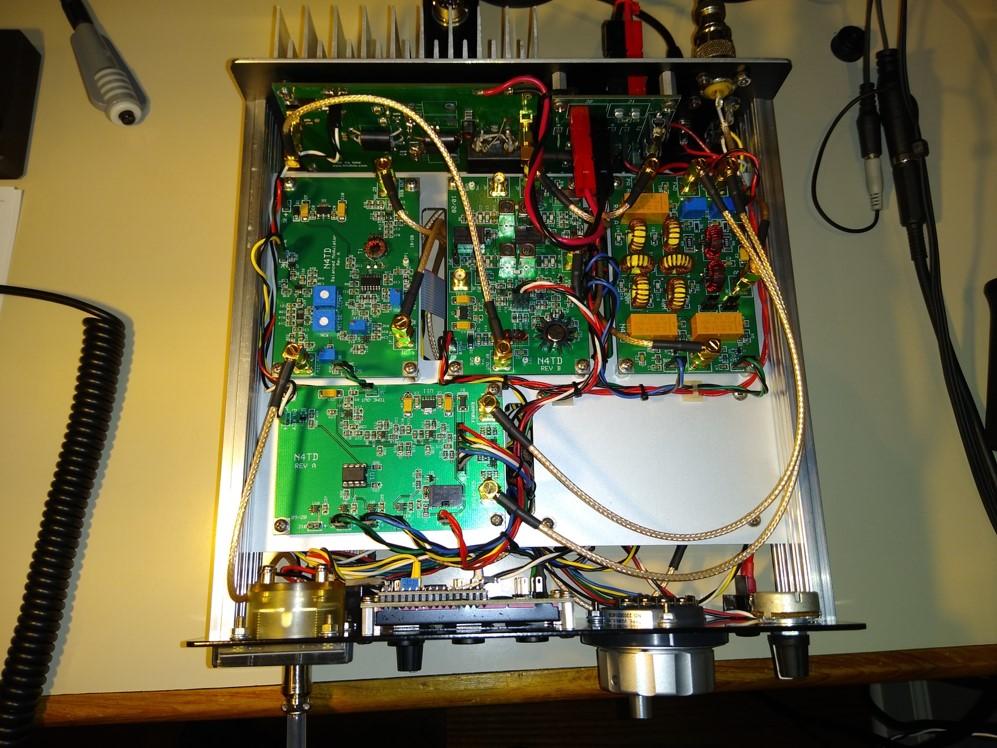
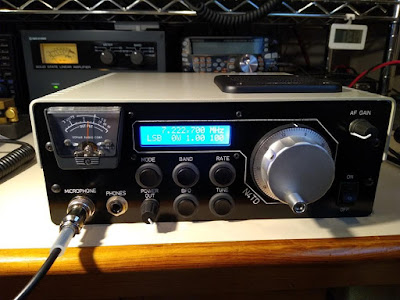
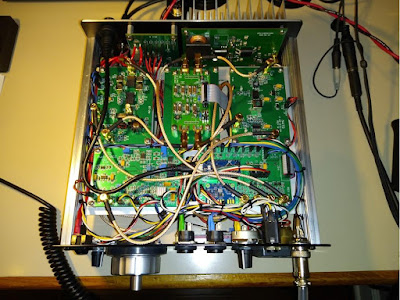
It was great to work you homebrew to homebrew. As you said, that doesn’t happen very often. I used a modular architecture for this radio. The module size is the ExpressPCB miniboard size, so they are less expensive and all the same size so they can be moved around. All the boards are homebrew except for the final amplifier module. The PA module I got from 60dbm in Ukraine through eBay. I had tested this module before and found it to be solid, and it was more economical than building the PA from scratch. It delivers 50W+ and has been reliable through all my sometimes abusive testing.
73 Taylor N4TD
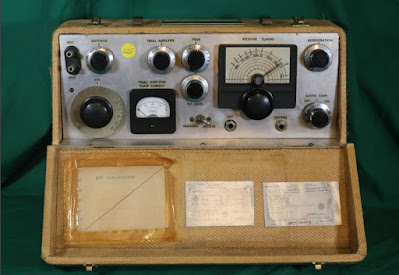
A Suitcase Portable 40 Meter CW Station from 1951
Wow. Check this out:
http://www.skywaves.ar88.net/homebrew/W9FKC.pdf
A very nice rig built by an amazing homebrewer
And thanks to Al Klase N3FRQ for putting that wonderful web site together.
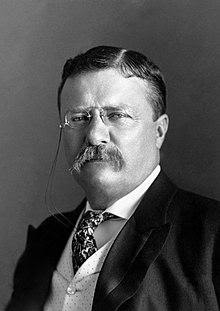
Teddy Roosevelt on Homebrewing: “The Ham in the Arena”
Overcoming the Complexity of the Michigan Mighty Mite: Walter’s Sunrise Net Special
From Walter KA4KXX
June 21, 2020
Michigan Mighty-Mite: Why So Complicated?
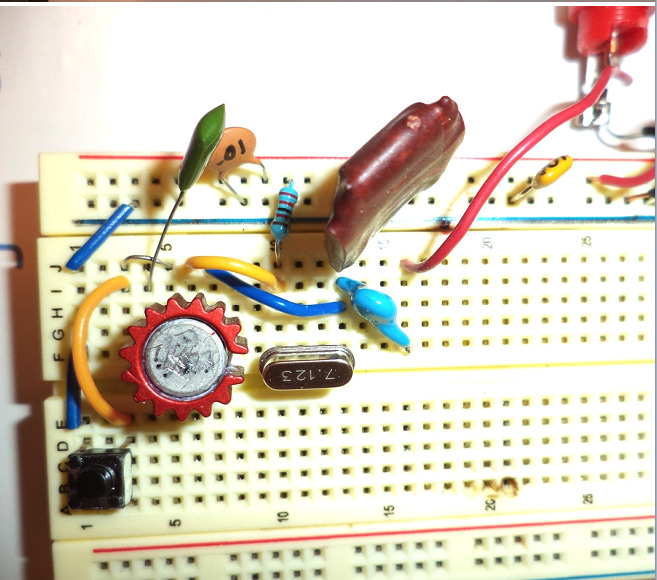
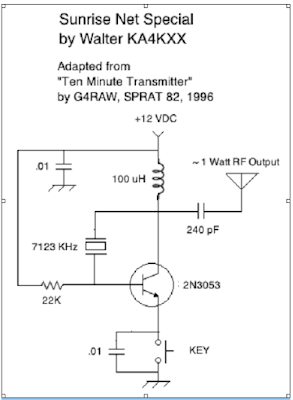
The April 2020 issue of QRP Quarterly magazine featured an article by Bob Rosier K4OCE which included a schematic for a “Ten Minute Transmitter” by G4RAW (SK), which apparently first appeared in SPRAT 82 in 1996.
It is even simpler than the Michigan Mighty Mite, so this transmitter can truly be built on a solderless breadboard in about 15 minutes, because a complex coil is not required.
The only tuning needed was for me to establish the correct value of the output series capacitor.
This rig allowed me to check-in to the Sunrise Net (see details in blue text on my QRZ page) today on my very first attempt, and landed me a 549 signal report from 250 miles away.
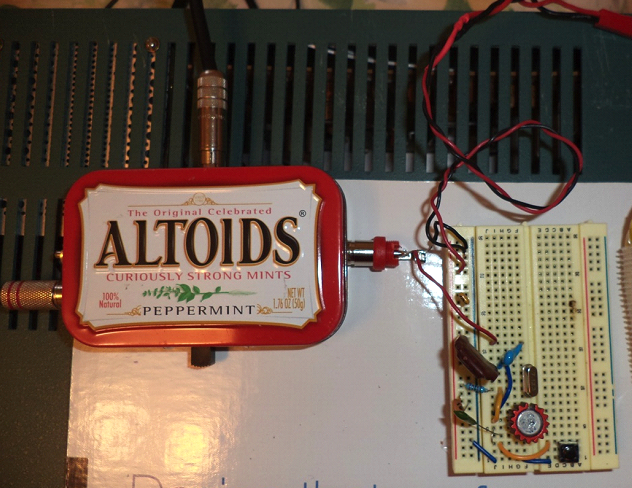
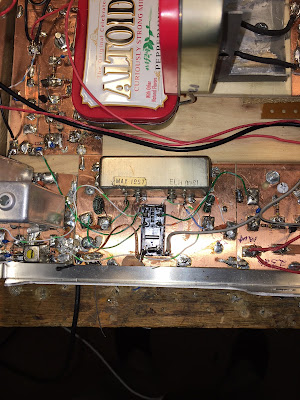
The first photo shows the transmitter connected to a Transmit/Receive Switch mounted in an Altoids box. In the Transmit position the antenna is disconnected from my 1979 Heathkit HR-1680 receiver, which then coincidentally supplies a sidetone at an ideal volume level. That little black pushbutton which can be seen in the second photo serves as my key, and works just fine for a five-minute daily QNI on the Sunrise Net.
Of course, part of the secret is having a crystal exactly on the Net frequency, and I have a few left, free to whomever in the Eastern U.S. is interested in building one of these simple Sunrise Net Special Transmitters and participating in our Net.
Video on Galaxy V VFO IN USE with BITX40 Module — 40 meter Bandsweep
Check out that fancy frequency readout. No glowing numerals here. But it does the job.
N5GTF’s FULLY INDOOR Quarantine Receiver and Antenna
Will, KF4IZE’s Beautiful Boatanchors
Will was on a Swan Cygnet 270 that he had recently picked up on e-bay.
More on Will KF4IZE here: https://www.qrz.com/lookup/d/kf4ize
TRGHS: Hearing K5HCT Through a Single 12AU7 Tube with 12 Volts on the Plate (Video)
The lower portion of the column on the right-hand side of this blog is where I put links to interesting blogs, YouTube channels, and web sites. Yesterday one of the links there led me to the above video. It presents a regen receiver using one 12AU7 tube and a 12 volt power supply. Wow! I have many of those tubes. And at 12 volts I am unlikely to electrocute myself. Count me in.
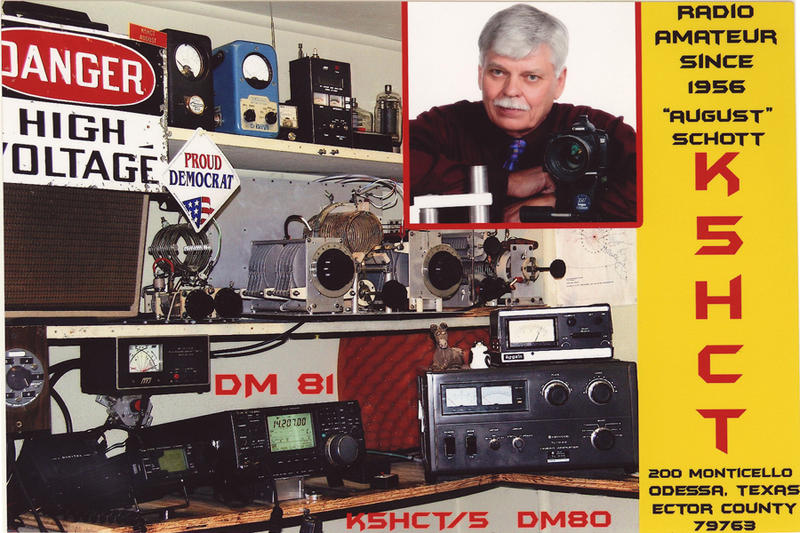
In the final minute or so of the video, the builder tunes around the 40 meter phone band. Suddenly I heard a familiar voice. It wasn’t recorded long enough for the callsign to be heard, but I was pretty sure it was our old friend August, K5HCT (Here Comes Texas) from Odessa.
Odessa, Texas is a good skip distance from both California and Virginia, so Pete and I have both talked to August many times. When I was testing out new homebrew contraptions, August was often there to help me out.
I was pretty sure it was August in the video. I checked with Pete — he too recognized the voice. Then I got an e-mail response from August — yea, it was him.
On the air, I often recognize a voice before I hear a callsign. In this case it happened via a somewhat wobbly regen and the internet.
THE RADIO GODS HAVE SPOKEN.
Now where did I leave those 12AU7s?
ZL2CTM’s Inspirational Tramping Transceivers (videos)
Charlie Morris ZL2CTM is working on portable (tramping) transceivers. Check out his amazing and innovative enclosures and circuit boards. Really nice. A great way to keep that beautiful circuitry visible.
More details on Charlie’s blog:
https://zl2ctm.blogspot.com/2019/12/40m-ssb-tramping-rig.html
Thanks Charlie. Happy trails! 73
SPRAT, the FETer, DLR headphones, and recent QSOs on the ET-2
Yesterday we had QSO #13 on the ET-2. This was with Jim W1PID. In an earlier contact Jim told me I had some chirp. I fiddled with the coupling cap and the bias pot and am now T9! These days, chirp is an endearing, nostalgic problem to have. Thanks for the report and QSOs Jim!
Contact #9 was with Fred K9SO. He is in Wisconsin and QRZ.com put our distance at 633 miles. That is our DX record so far. Not bad for 92 milliwatts to a dipole on 40 meters.
Most of my contacts come as a result of pleas for assistance on DX Summit or the SKCC Sked page. But I did make one “random” contact: Contact #6 with N2VGA. He just heard my CQ and gave me a call. FB.
I checked to see if OM Glen Yingling W2UW — the guy who started all this with his ET-1 — is still around. He became a silent key in 2012. But his ideas live on…
SPRAT 137 (Winter 2008/09) has a great article by QRP hero G3XBM. Roger built a version of the ET-1. His was for 80 meters and he called it the FETer. FB. I was struck by his estimate of the sensitivity of the ET-1 receiver: -100 dbm. I measured the N0WVA receiver (the one that I am using) has having a minimum discernible signal of -93 dbm. Pretty close. We may be at the limit of what you can expect from a single transistor receiver.
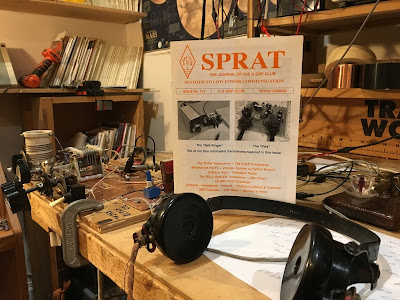
SPRAT 137 had something else that really resonated with me. G3YVF had an article on a minimalist rig using only one 6V6 tube. Geoff opened the article with this warning “Don’t try this unless you have a set of balanced armature type DLR ‘phones as they are really sensitive.” I have a collection of old headphones that I picked up at hamfests in London years ago. When building the ET-2, I checked all the old phones for sensitivity. A set marked DLR was the most sensitive. So Geoff’s observation had been independently confirmed. QRP Quarterly had an article comparing the sensitivities of old headphones — we should dig that article up.
SPRAT #137 is a reminder of what a great resource SPRAT — The Journal of the GQRP Club — really is. As we say on SolderSmoke, if you are not a SPRAT subscriber you are just wrong! Here is how to join GQRP and subscribe to SPRAT: http://www.gqrp.com/join.htm
Direct Conversion (videos)
Here are a couple of videos from 2017 (never posted before). I built a little 40 meter Direct Conversion receiver for my nephew John Henry.
Whenever we work on circuitry like this, we should be be grateful for Wes Hayward W7ZOI who, in a 1968 QST article, reminded us of this important but until-then forgotten technique.
More information on this project appears in these links:
https://soldersmoke.blogspot.com/2017/10/a-direct-conversion-iphone.html
https://soldersmoke.blogspot.com/2017/11/iphone-direct-conversion-receiver-with.html
Minimalist Masochism at Solar Minima — But More Contacts with the ET-2
![]() |
| Dylan Thoams |
“Rage, rage against the dying of the light”
I thought of that line from Dylan Thomas’s poem when I read on G3XBM’s web site that we are kind of at the very bottom of the solar cycle. Roger wrote on 22 October: “Solar flux is 64 and the SSN 0. A=5 and K=0. As far as I am aware this is the lowest solar flux this solar minimum.”
I also thought of this as I pounded brass (Indian brass!) in an effort to make a few more contacts with my ET-2 two transistor rig. Obviously venturing forth on 40 meters with just TWO transistors (one for transmit and one for receive) and crystal control AT SOLAR MINIMA is not for the faint of heart. It is almost a Dylan-esque act of defiance.
I have had to resort to pleas for help on the DX Summit, the SolderSmoke blog, and the SKCC Schedule page. Fortunately for me, the brotherhood has sprung to my support.
W1PID (who gave me contact #3) also gave me contact #4 on 21 October.
W4KAC in Hickory NC was contact #5. This was on 22 October. This was the only marginal contact so far. He was running 5 W into an end fed half wave.
Yesterday was a big day for the ET-2. I had two solid contacts:
#6 was N2VGA in New York UPDATE: Larry N2VGA confirmed by e-mail that this was a “random” contact — not the result of my on-line pleas for assistance. He just heard my CQ and responded. FB.
#7 was K4CML in Newport News, Va. He switched to QRP himself at 2.5 watts for a nice 2X QRP contact.
Looking at my Rigol ‘scope, I now think I’m putting out about 150 milliwatts. Not bad for a single J310. I may have to invest in a heat sink.
40 seems most cooperative in the morning (around 0930 local) and again in the afternoon (around 1630 local).
Thanks to all who have helped. I will try to make a few more.
Single Transistor Regen Has QSO Potential (Video)
In my previous blog post I’d expressed skepticism about using a single transistor regen on the air. But over the years I’ve learned to give new receivers a chance. They usually don’t work perfectly on the first try. You have to work with them. It is almost as if you have to peak and tweak a lot in order to get them to properly inhale signals from the ether.
That has been the case with this little receiver. I found some silly mistakes in my construction. And I decided to try some more sensitive headphones. I ditched the 1000 to 8 ohm AF transformer. And I added a very small variable cap for fine tuning.
The results are amazing. See video above. It performs as well as most of the direct conversion receivers I’ve built. It is remarkably stable.
I do think I could make contacts with this receiver. I might eventually go the full ET-1 route and try to do it with a single switched FET, but I think my next step will be to built a single transistor crystal controlled transmitter on the same piece of wood, and try to make some contacts with a two-transistor rig.
Switching to a Mechanical Filter from 1967 for my HRO-ish Receiver (with video)
![]() |
| From RSGB Handbook 1982 |
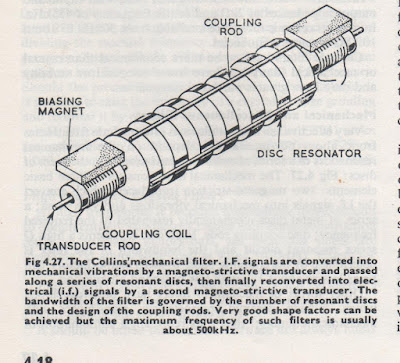
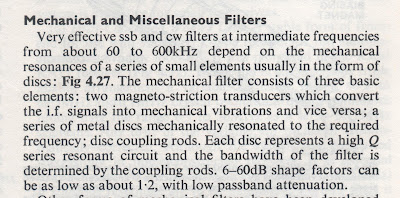
Having overcome the difficulties with the National NPW Dial and Gearbox, I turned my attention to the 455 kHz filter. I had been using this old Toyo CM – 455 kc filter (Date stamped August 1969). CM stands for “Crystal-Mechanical.” These filters are hybrid with some of the features of a crystal filter and some of the features of a mechanical filter. For more details go here:
https://soldersmoke.blogspot.com/2016/04/the-meaning-of-cm-in-toyo-cm-455-filter.html
I was disappointed by the CM filter. It seemed very lossey, and it just didn’t seem to be of sufficiently high Q — it seemed very broad. I could hear the other side of zero beat. It was barely a “single signal” receiver, and being “single signal” is the whole point of a superhet.
I remembered that Pete Juliano had sent me a Japanese-made 455 kc mechanical filter. Maybe this would do better. Last night I did a quick comparison test and — wow — Pete’s filter was much better. The Fifth Edition of the RSGB Handbook seems to agree with my assessment, noting that mechanical resonator filters were superior to the Crystal Mechanical hybrids (see pages 4.17 and 4.18)
Pete’s filter is from the Kokusai Electric Company. Part# MF 455 ZL. (Date stamped May 1967). “ZL”indicates lower sideband. I checked and indeed the passband goes from just above 452 kc up to about 454.5 kc. This is a 40 meter receiver and SSB on 40 is LSB, so this filter would work perfectly right? Not so fast! Sideband inversion had to be considered.
I was running my VFO from about 7455 to 7755 kHz. This means that the modulated incoming signal would be SUBTRACTED FROM the VFO signal to get to the 455 kHZ IF. And when that knd of subtraction happens, we have sideband inversion. The LSB signal will look like a USB signal when it reaches the filter.
My BFO was running right at 455 kHz, using a ceramic resonator at that frequency. I briefly considered just shifting it down to 452 kHz, but this proved to be difficult. Then I got a better idea.
I could just shift the VFO down to 6545 to 6845 kHz. This would mean that the VFO frequency would be subtracted from the incoming modulated frequency. There would be no sideband inversion. I had been thinking about doing this frequency shift anyway, thinking that VFO stability gets better as you go lower in frequency.
REMEMBER THE RULE: If you are subtracting the modulated (signal) frequency from the frequency of the local oscillator or VFO, only then will you have sideband inversion. See:
https://soldersmoke.blogspot.com/2015/05/sideband-inversion.html
Moving the VFO was easy. I am using a variable capacitor with several variable caps on the same rotor. I just moved from the smallest variable cap to the middle variable cap — this added capacitance to the system and lowered the frequency. I also added three additional turns on the coil. This put me very close to where I needed the frequency to be. I added one additional 9 pf cap and this put the VFO freq right where I wanted it.
I was really glad to include Pete’s filter in this receiver. The mechanical resonator technology fits very well with the very mechanical old-tech theme of this project (it already had a gearbox — a mechanical filter seemed to fit right in). It is a fascinating device — it is almost like having a set of tuning forks all tuned to 455 kc (see above for the RSGB description of how it works). And having it from from Pete adds a TREMENDOUS amount of mojo, juju, and soul to the new machine.
Icing on the cake: As I type this, I am listening to Fred K3ZO converse in Spanish with hams all through South America. Fred preceded me by three decades at the U.S. Embassy in Santo Domingo, but when I got there the local hams were still talking about him — he was much loved and admired by the Dominican hams. TRGHS. See Fred’s story here (scroll down a bit): http://www.gadgeteer.us/DRDISP.HTM