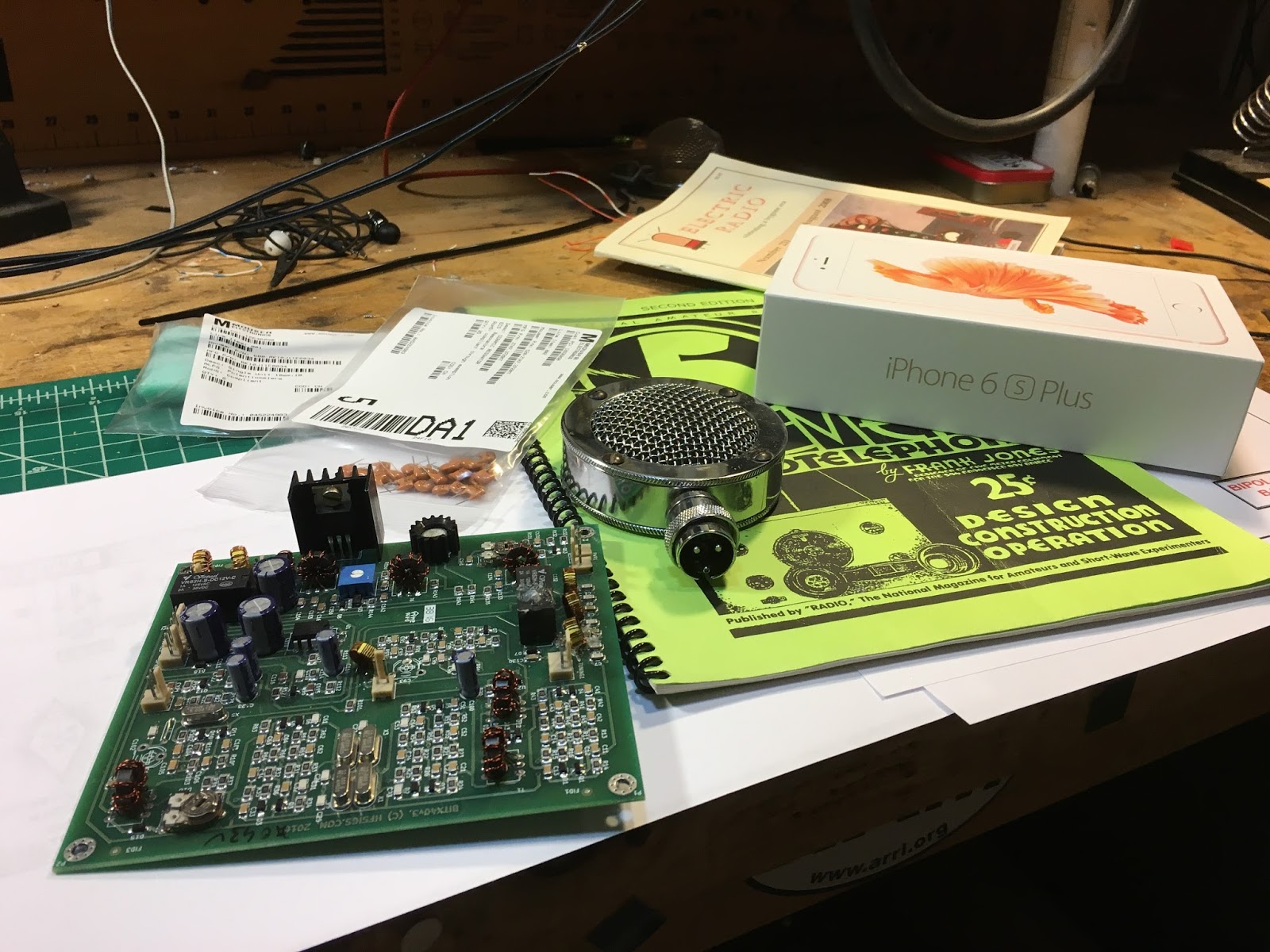
Solar Cycle 25 is underway. The Solar Flux Index and Sunspot numbers are up considerably. I have dusted off my old BITX17 transceiver. This time around I am using it in conjunction with a waterfall display provided online by NA5B’s KiwiSDR receiver, which is located about 9 miles east of me. This SDR receiver allows me to see the entire 17 meter band. It was this panoramic display that made me pay more attention to the fact that the Variable Crystal Oscillator (VXO) that I am using in this rig prevented me from tuning the lower 10 kHz of the 17 meter phone band (18.110 — 18.120 MHz).
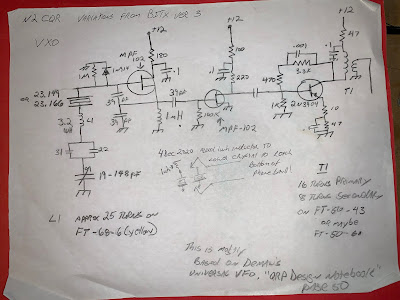
I use two crystals switched by a relay to cover the band. One is at 23.149 MHz, the other at 23.166 MHz. The crystal filter is at 5MHz. With a coil and some caps I could move the frequencies of the oscillator enough to cover 18.120 to 18.168 MHz (top of the band).
When I first built this thing, I kind of wrote off the lower 10 kHz of the phone band. I couldn’t get the oscillator to work that low, and I was already satisfied with the top 48 kHz. But the NA5B waterfall often showed SSB stations in that lower part of the band. I wanted to talk to them. So I started thinking about how to do this.
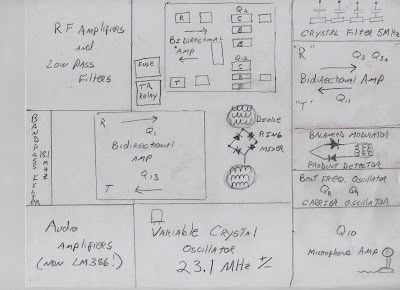
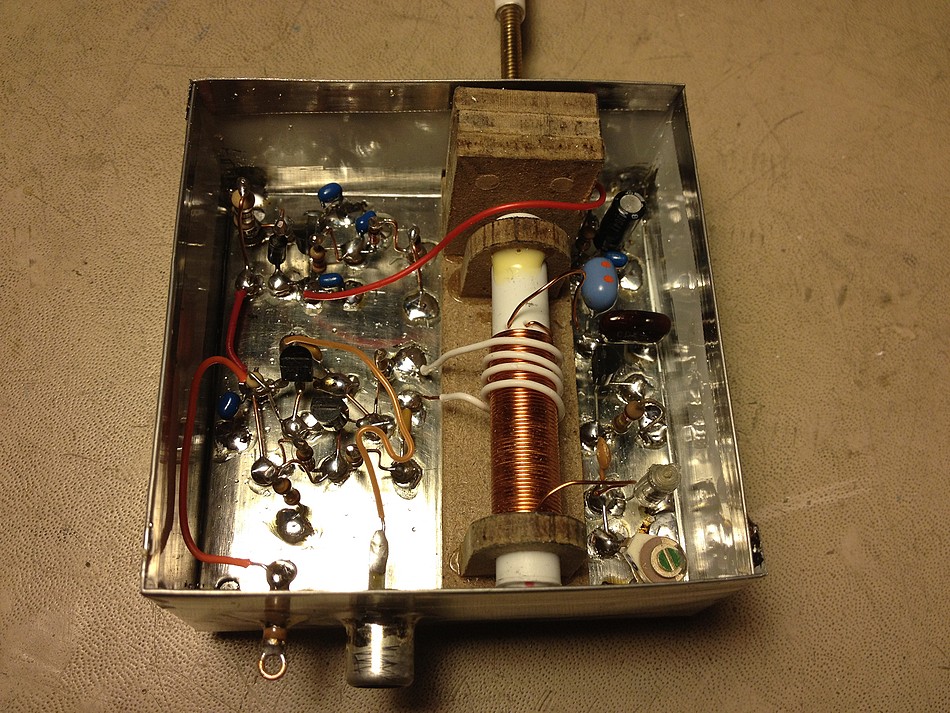
Looking at my schematic (above) I remembered that most of the frequency lowering was done by L1, a 3.2uH toroid. I figured that to go a bit lower, I would just have to add inductance. But I didn’t want to lower the frequency provided by BOTH crystals — I just wanted to bring the frequency with the lower crystal down a bit.
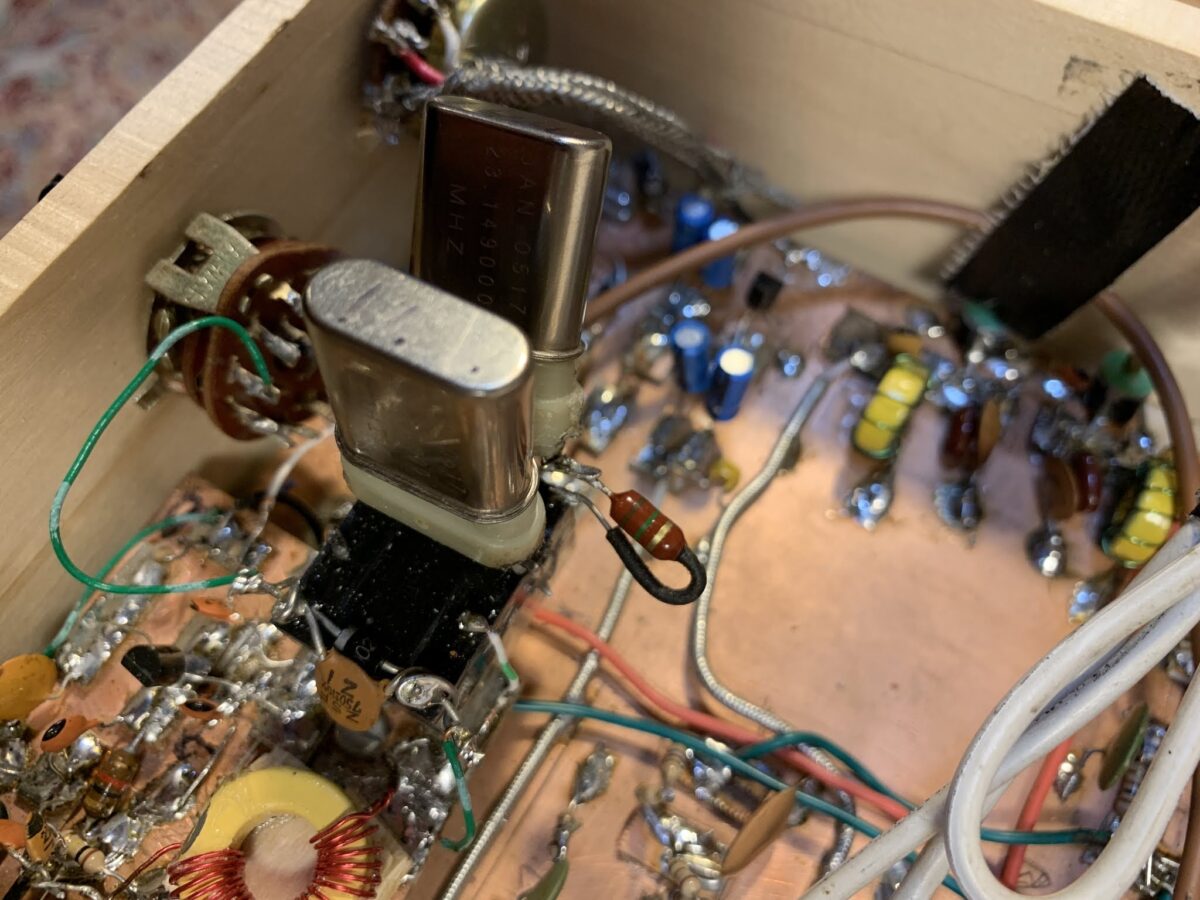
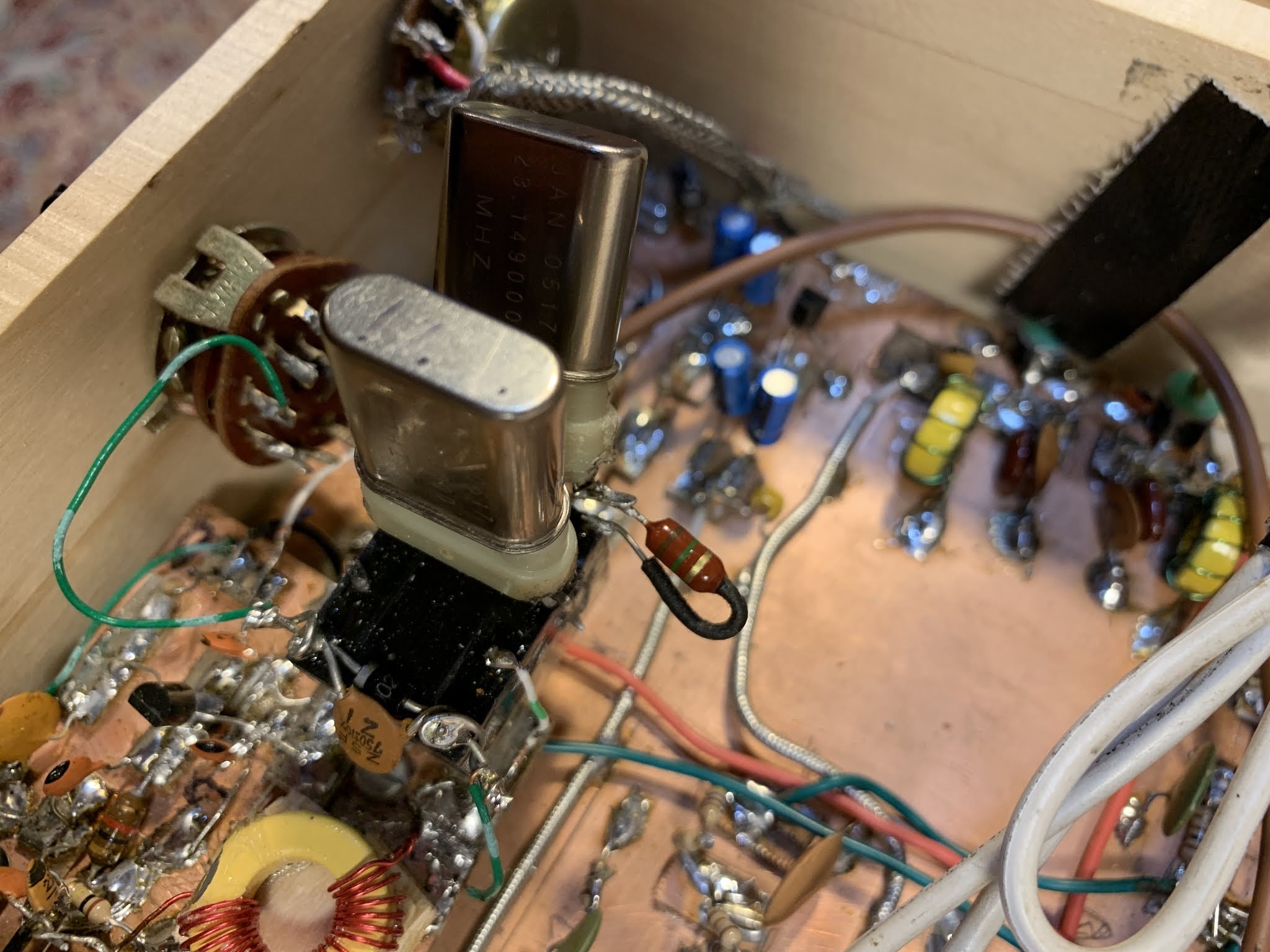
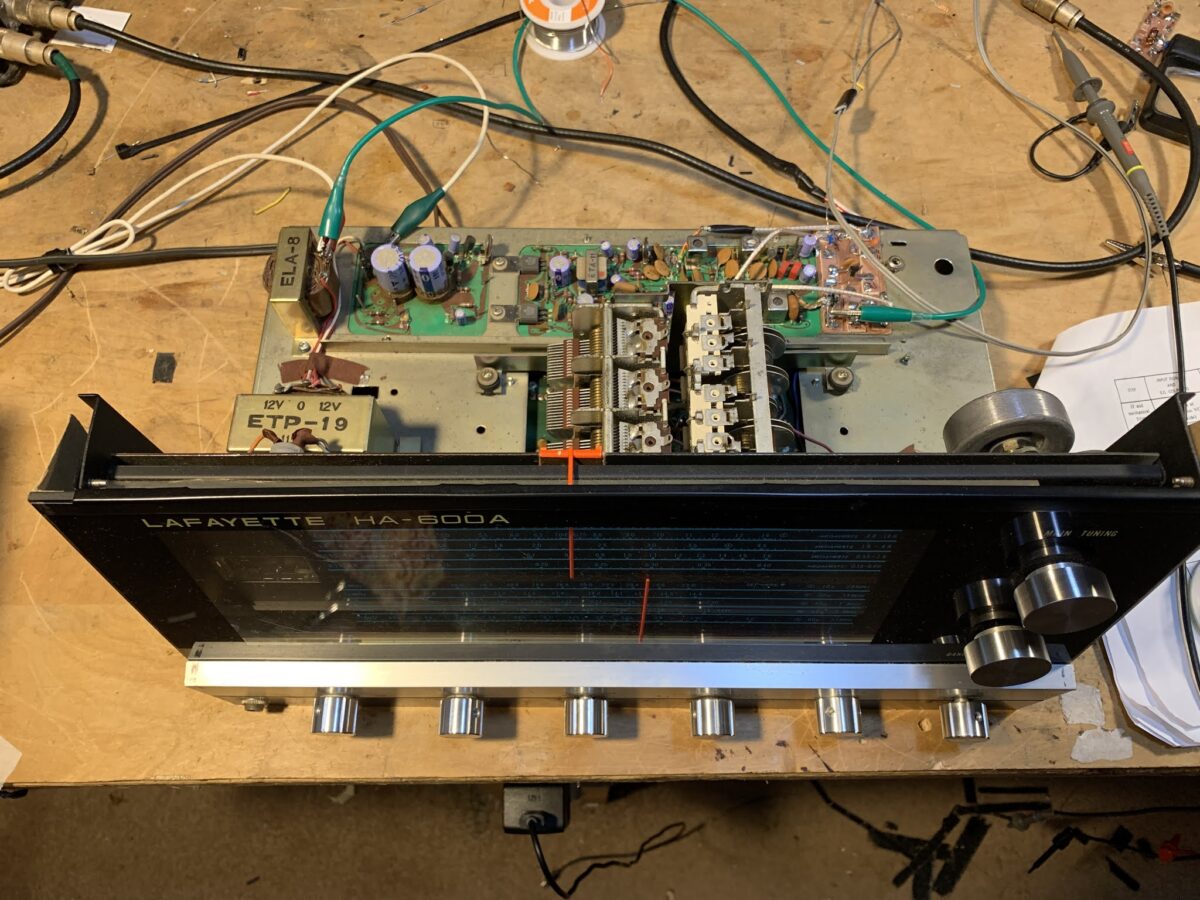
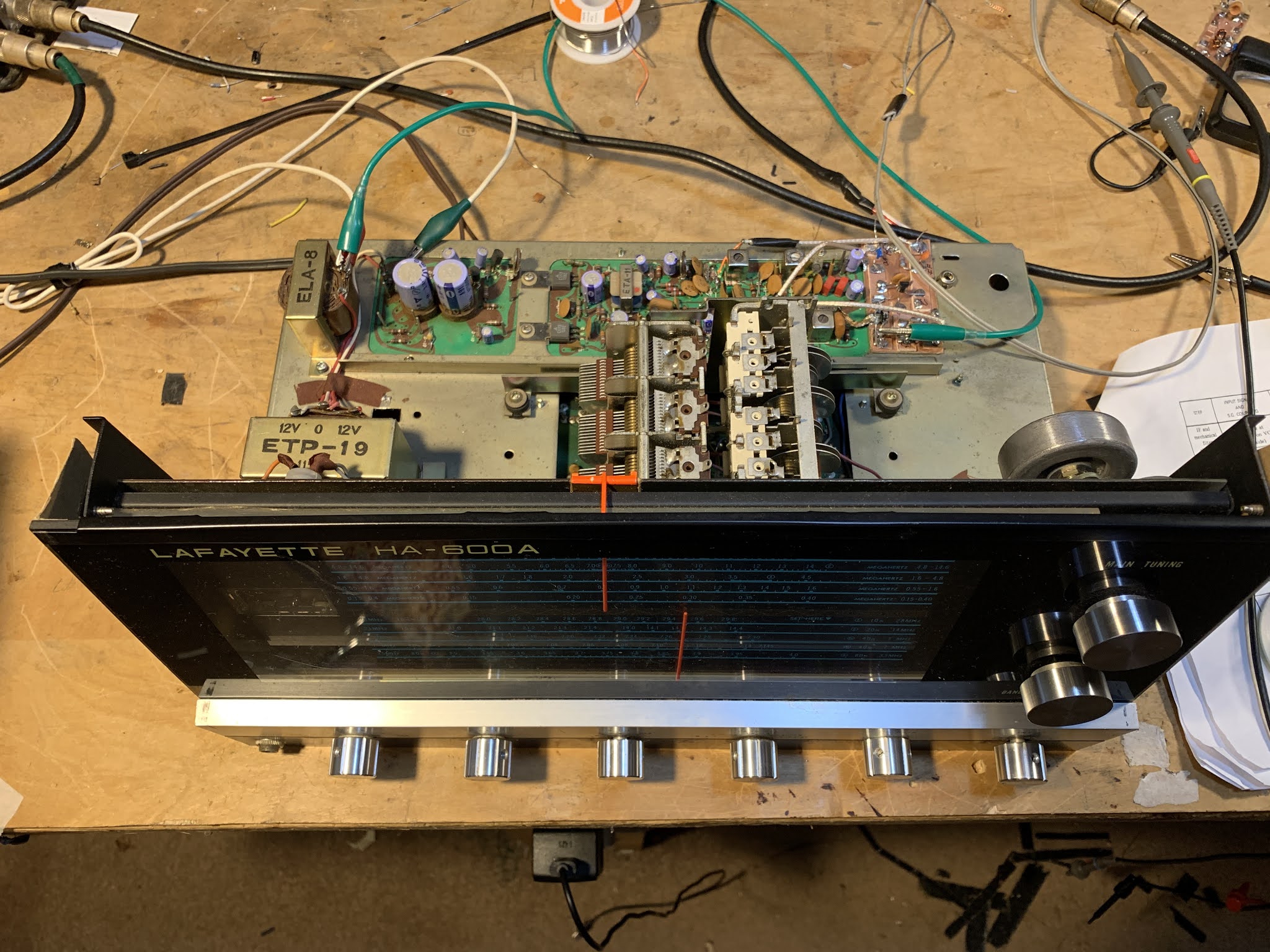
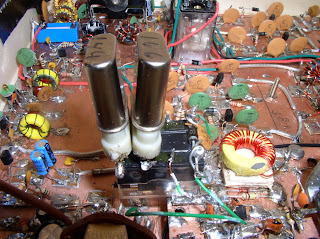
In my junkbox I found a 1 uH coil. I disconnected the lower lead of the 23.149 MHz crystal from its connection to the relay. I soldered the 1 uH coil between the crystal and the relay (see picture above). This moved the lower limit down to 18.087 MHz.
Now crystal one provides 18.087 – 18.144 MHz
crystal two provides 18.137 – 18.167 MHz
So now I have the whole phone band. Bob is my uncle. TRGHS.
This was a very quick and satisfying little fix. As Pete says WYKSYCDS: when you know stuff you can do stuff. Indeed. And as I re-build and repair gear that I built years ago, I am often reminded that as time goes by, we learn more. We end up knowing more and being able to do more.
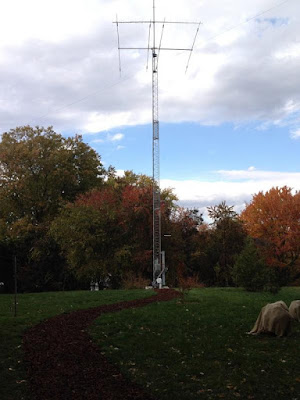
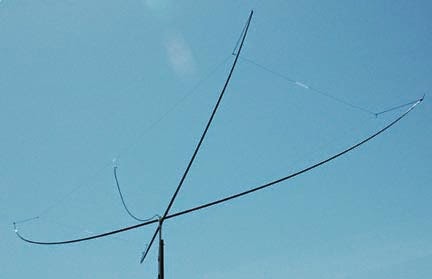
I am also planning on rebuilding my 17 meter Moxon; this time I will make it better and stronger.
In my last post I put up a time lapse GIF of my BITX 17 build from about six years ago. Above you can see my drawing explaining what each of the stages that you see popping up on the board were. More diagrams here: https://soldersmoke.blogspot.com/2013/11/bitx-build-update-19-layout-vxo-bal-mod.html And a lot more info on this build are available on this blog. Just use the search box for build updates (but be aware that this search will also bring up updates on later projects).
Above is a slightly out-of-focus video tour of the board. I’m posting this stuff partly in reaction to the news that the BITX 40 module is no longer for sale. I hope these posts will serve as a reminder that it is quite possible to homebrew from scratch your own BITX transceiver. This is a fun and rewarding project. Three cheers for Farhan!
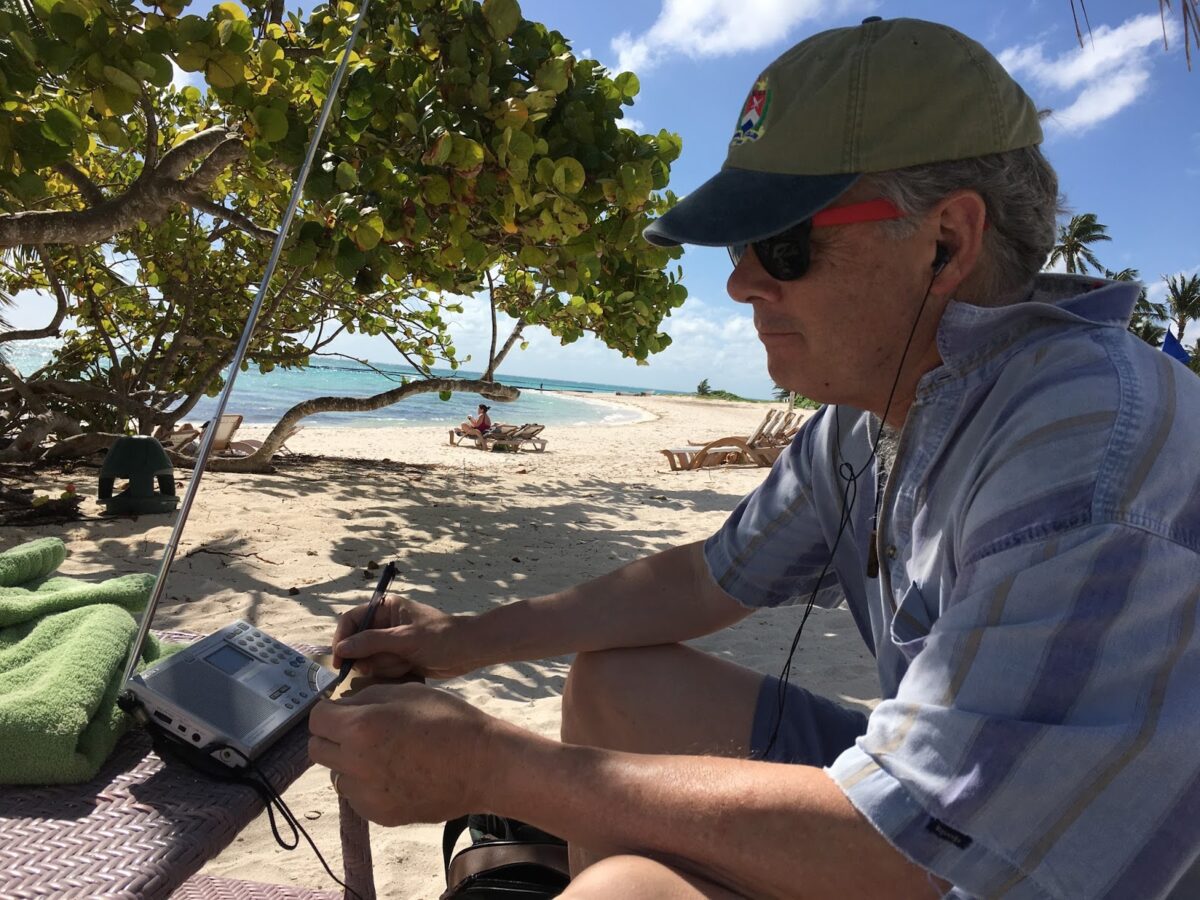
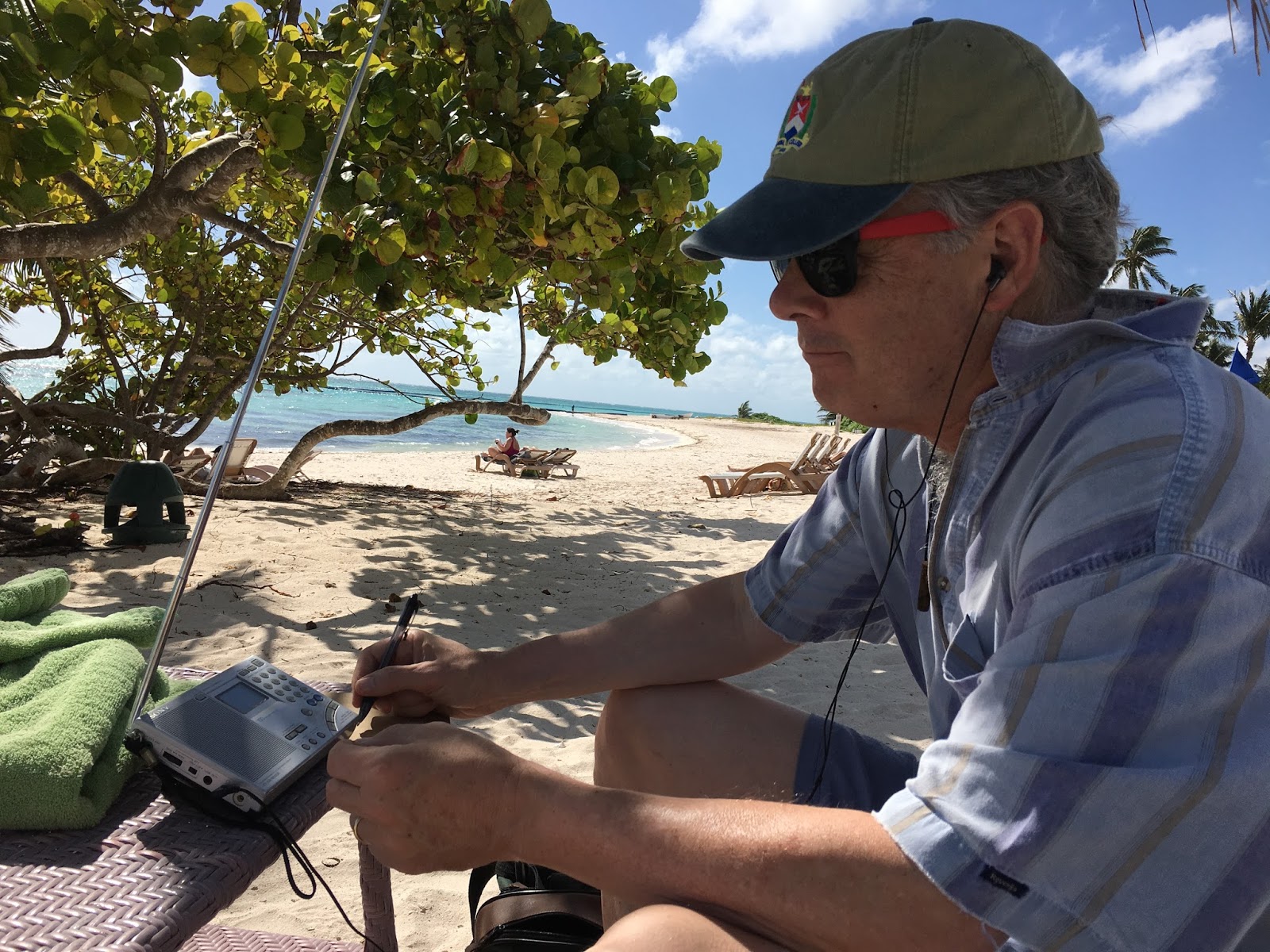
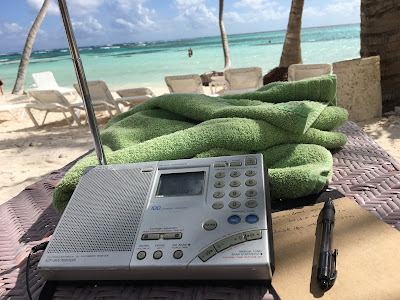
Oh man, I wish I was still there. It was 85F and very nice on Christmas Eve on the Eastern tip of the Island of Hispaniola in the Dominican Republic. I wasn’t transmitting — this time I was just doing some listening with my trusty Sony SW receiver. But it did occur to me that the palm trees would have been EXCELLENT antenna supports.
On December 24, 2017 around midday on 17 meter SSB I heard:
NE2Q, NO4FR, IZ2LSR, N4DIR, PA1CC, N4LO, EA7JR, MI0TLG, VE1IOU, PA3WB, IU5FFM, KD4POK, HK2RMR, KB5VUM AND KG9DW I was just using the little telescoping antenna that comes with the Sony.
On December 26, 2017 also around midday I heard on 20 meter CW K8GL AND ZS1C. They were in contact — I was located between them.
I am now back in Virginia where it is 15F, dark and windy.
SolderSmoke Podcast #200 — TWO HUNDRED!!!!– Is available http://soldersmoke.com/soldersmoke200.mp3 — Old friends on 17 meters. — Another Knack Nobel in Physics. — Hans Summers’ QCX transceiver: $50 IS THE NEW 10 GRAND! — New Bands! 630 and 2200 Meters. BIG ANTENNAS! — Nuke Powered QRP. No joke! — The Challenge of UHF. Not for the faint of heart. — Reginald Fessenden, Father of Phone. PETE’S BENCH REPORT: The New Simple-ceiver. Soon to be a Transceiver. BILL’s BENCH REPORT: Discrete, Direct Conversion, Ceramic Receiver in iPhone Box. THE EDUCATIONAL PORTION OF TODAY’s PROGRAM: HOW TO TROUBLESHOOT A HOMEBREW RECEIVER. MAILBAG.
SolderSmoke Podcast #200 — TWO HUNDRED!!!!– Is available http://soldersmoke.com/soldersmoke200.mp3 — Old friends on 17 meters. — Another Knack Nobel in Physics. — Hans Summers’ QCX transceiver: $50 IS THE NEW 10 GRAND! — New Bands! 630 and 2200 Meters. BIG ANTENNAS! — Nuke Powered QRP. No joke! — The Challenge of UHF. Not for the faint of heart. — Reginald Fessenden, Father of Phone. PETE’S BENCH REPORT: The New Simple-ceiver. Soon to be a Transceiver. BILL’s BENCH REPORT: Discrete, Direct Conversion, Ceramic Receiver in iPhone Box. THE EDUCATIONAL PORTION OF TODAY’s PROGRAM: HOW TO TROUBLESHOOT A HOMEBREW RECEIVER. MAILBAG.
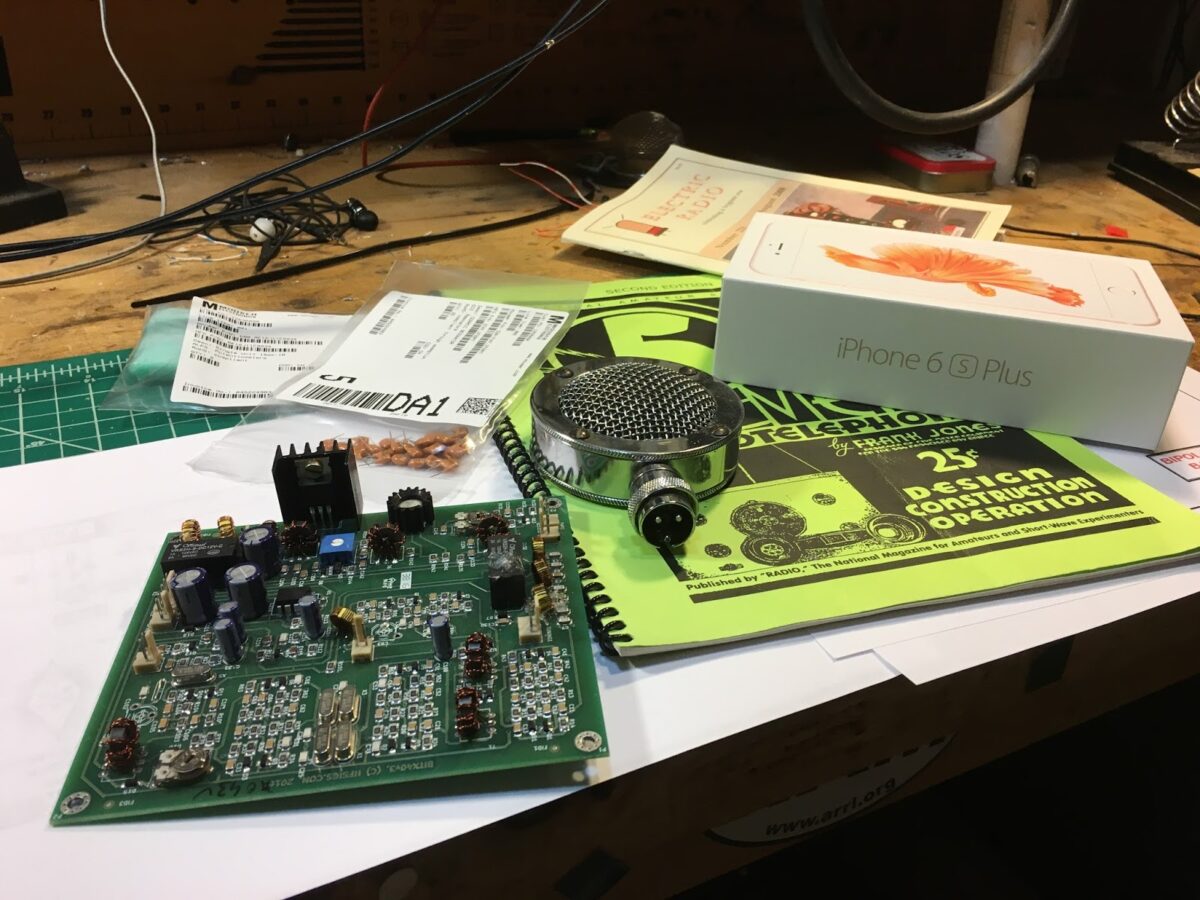
SolderSmoke Podcast #199 is available. http://soldersmoke.com/soldersmoke199.mp3 2 September 2017 The Eclipse. The Floods. Sawdust Regen gets John Henry off to a good start. Voltage regulators as audio amplifiers The return of the Simple-ceiver (Direct Conversion) Ceramic Resonators 3D OLEDS iPhone Boxes as rig enclosures Electric Radio on Frank Jones 17 Meter Contacts MAILBAG
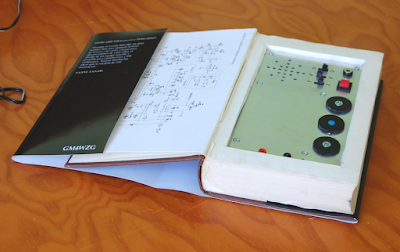
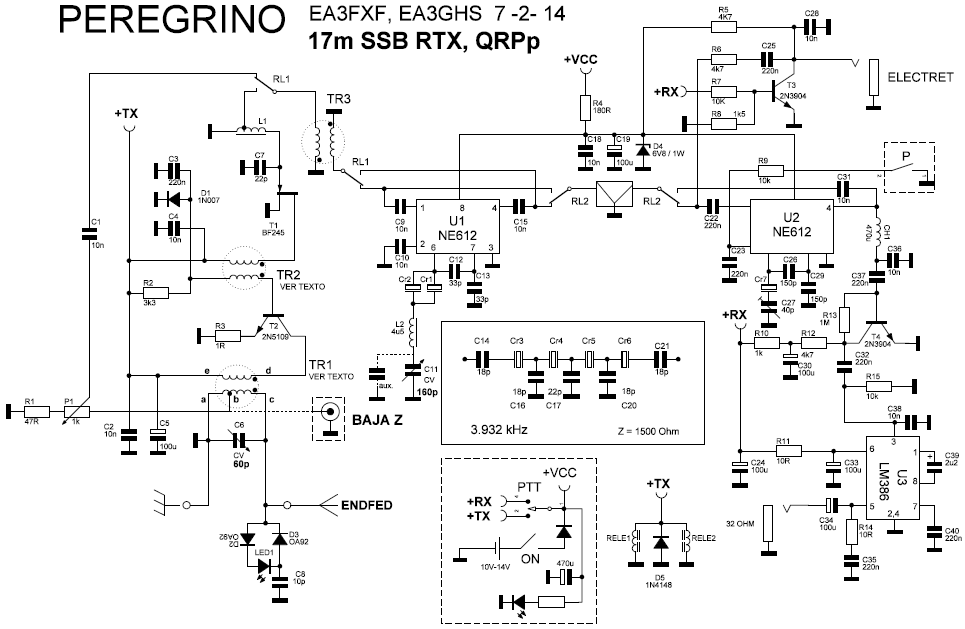
On the G-QRP list guys have been talking about the Peregrino. This is a nice little homebrew rig out of Spain. Peregrino = Pilgrim and usually refers to people who are hiking along the Trail of Santiago that runs through the North of Spain to Santiago de Compostela. I’m normally averse to chips, but this little rig uses two very understandable NE602s and an equally understandable LM386. It has a homebrew crystal filter. I like it. GM4WZG came up with a really wonderful enclosure for his rig. This reminded me of the time I put a QRSS transmitter inside a copy of “The DaVinci Code.” The Spanish guys have a nice site that describes the rig. Google Translate should help, but even without it you can get most of the info you need from the schematic, chart, and foto gallery. Check it out: http://ea3ghs.qrp.cat/peregrino.html
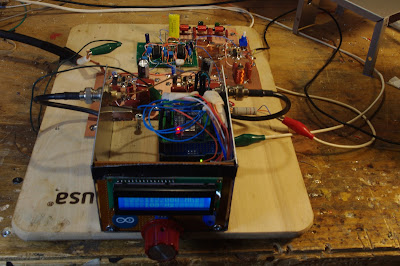
The Radio Gods were smiling upon me this morning. I started out on 17 meters and had three nice contacts with European stations: OH5CZ, a young fellow near Helsinki; HB8DQL; then RM2D in Moscow. FB. Then Pete showed up on the Skype. As he has said on his blog, he is still struggling with a family medical emergency, but I am happy to report that he is coping well, making good use of his can-do project manager background and his good sense of humor. It was great to see him. Inspired by my talk with Pete, with 40 meter AM playing in the background, I turned to my R2 FRANKENSTEIN phasing receiver. Last night I completed the 90 degree phase shift network. This is built around two quad op-amp chips and is designed to take the audio output from the two DC receivers and create a 90 degree phase difference between them. I tested this stage by sending the same audio into each set of op amps. I then put one scope probe in the output of one chain of op amps, and the other probe on the output on the other chain. Wow. Bingo. 90 degrees of phase shift across the 300 — 3000 Hz audio spectrum. Emboldened by this positive result, I put the completed stages together this morning. They passed the smoke test. Then I tuned to 40 meters. Wow again! As promised, opposite sideband rejection without resort to crystal filters.But as luck would have it, I ended up with a configuration that suppressed the Lower Sideband. For 40 meters, obviously I needed to suppress the other side of zero beat. But all I had to do to remedy this was to reach into the DDS box and switch the I and Q jumpers on the M0XPD/Kanga UK Arduino AD9850 shield. This switch put me on LSB. Very cool.
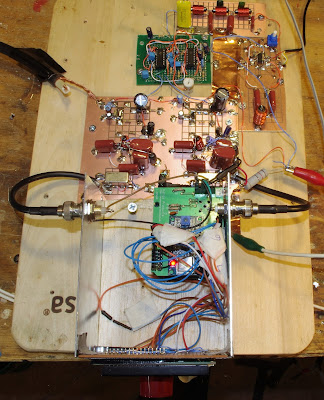
Here is a view from above:
The AD9850/Arduino DDS box is in the bottom center. Above that, near the center of the picture, is the board (from N6QW) with the two SBL-1 mixers and the initial AF amp stages. The small green board above that is the IC phase shift network. At the top of the picture you see the 3000 Hz low pass filter. Below that, the board with the little blue pot has an IC AF amplifier and a 300 HZ high pass filter.
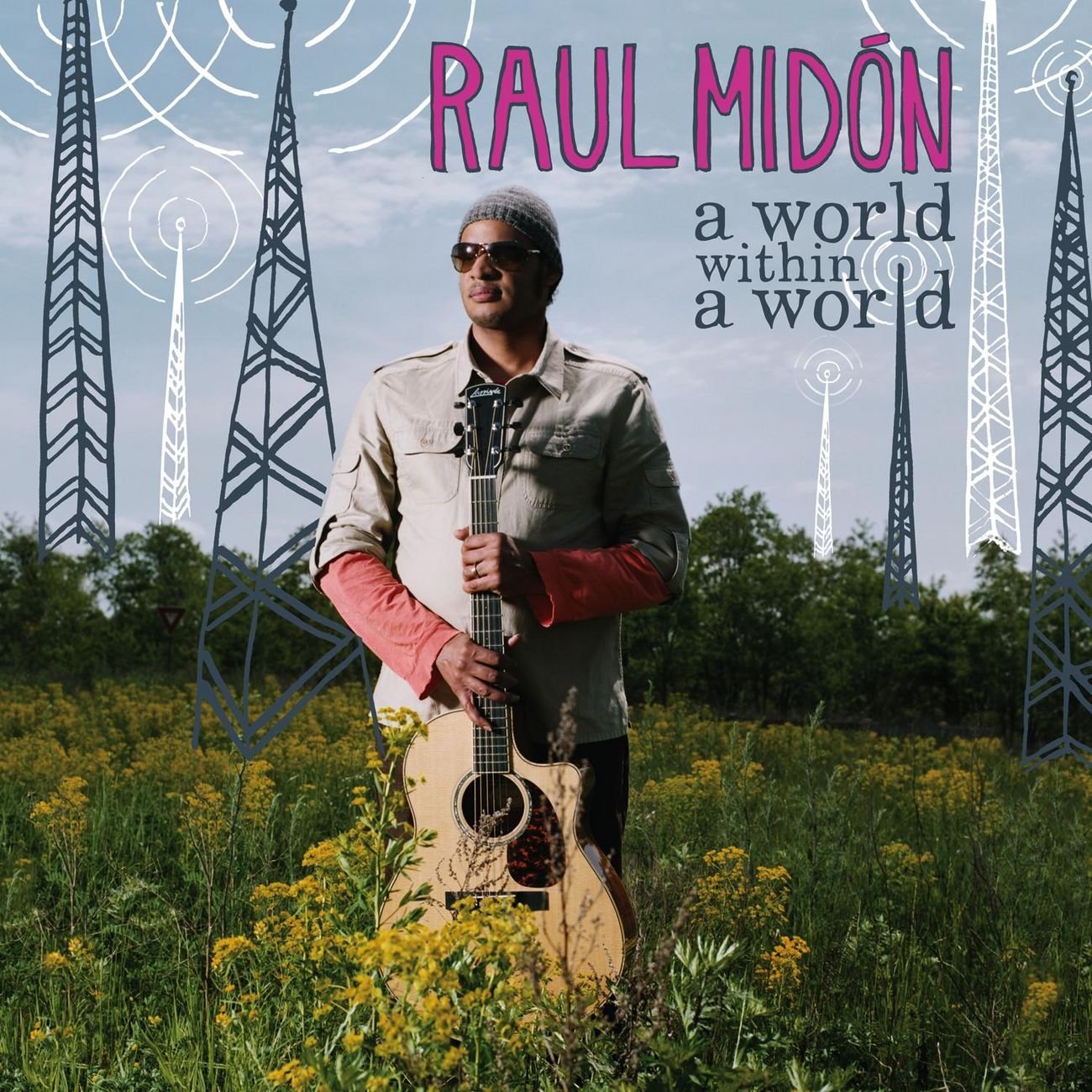
In our last podcast I mentioned that I had a very interesting contact on 17 meters with Raul Midon AE3RM. This morning Raul’s song “Tembererana” popped up on my Pandora feed. The song is great, but is was the album cover that attracted my attention.
Raul has an amazing personal history. Born in Argentina, he and his twin brother have been blind since birth. They have both obviously triumphed — his brother is a NASA engineer.
From the Wiki: Midón’s album State of Mind was released on May 10, 2005. The album features a guest performance with Stevie Wonder, one of his idols, another one with Jason Mraz, and a song written in tribute to Donny Hathaway entitled “Sittin’ In The Middle.” Midón is an avid amateur radio enthusiast,[2] and in this song he also incorporates his call sign (KB5ZOT) by using Morse code.
Here is his QRZ page: http://www.qrz.com/db/KB5ZOT In it he writes: “He has been an amateur radio enthusiast since Mrs. Redmond introduced he and his brother to the hobby back when they both attended the New Mexico School for the Visually Handicapped.” Good work Mrs. Redmond!
Here is Raul’s antenna in Maryland. Maybe he was thinking of this when he designed the album cover!
Oh man, I was struggling yesterday. I guess I had been lulled into a false sense of security by the phenomenal ease with which I had put my BITX 17 on the air, then added a 120 watt amplifier, all without any sign of the dreaded feedback and parasitic oscillations that had plagued almost all of my previous projects. So when I decided to add the low pass filter and the switching/relay arrangements needed to use the amplifier with my BITX 20/40 rig, I kind of expected a similar trouble-free experience. WRONG! And you know what? I think guys on 40 and 20 are a bit less forgiving and collegial than the folks on 17. As I struggled to exorcise the transceiver, I’d make some changes then hopefully go out onto the airwaves and call CQ, looking for a signal report. Well, I got them. Many were not accompanied by call signs. I’d be in contact with someone who was trying to help, and — as we were trying to figure out what it might be — we’d be bombarded with harsh, sometimes angry, anonymous commentary: “YOU’RE 20 kcs WIDE!” “Are you on AM?” “You have a CARRIER!” One fellow scornfully told me “That little QRP rig of yours is not ready for prime time.” Ouch. (I didn’t realize we were on prime time. Isn’t this AMATEUR radio?) Others would answer my CQ by announcing that I was “on the wrong frequency.” Others would respond (off frequency) and tell me I was distorted — I’d ask them to tune me in, then they would say, “Oh yea, you are OK — you were just on the wrong frequency.” Some of these guys seemed to be under the impression that there are “channels” on 40 meters. It was a real disheartening mess. Then came the saving grace. I got the e-mails that appear below. WOW! My faith in ham radio was renewed! In the 18 months that I’ve been running the BITX rigs, I’ve never once worked another station using a homebrew rig. But Rick and I were 3/4 of the way there yesterday. And he was using a direct conversion receiver of his own design, with a PTO in an enclosure made from “flattened out tin-plated food tins.” Fantastic! It was as if the radio gods had arranged all this to pull me out of the depths of parasitic despair! Thanks Rick! A video of his receiver picking up my BITX 20/40 appears above. Pete and I will talk about the actual troubleshooting in the next podcast. I am HOPING to have it fixed by then. I may have to sacrifice some chickens to Papa Legba.” ……………. Bill,
I’m a long-time SolderSmoke podcast listener, and today one of my ham radio dreams came true.
I was listening to 40 meters today on my homebrew direct conversion receiver, and I heard your call. At first I didn’t believe it was you, but there you were.
At first I just sat there dumbfounded, just listening, but soon realized that I should make a video of this “rare DX” (rare DX for me hi hi), and post it on YouTube for you to review.
My apologies for the low audio in the video. I was using my iPhone and its inboard mic leaves a lot to be desired, but the best audio of you is at 0:13, 0:50, and again at 2:12 into the video.
Heard you on 7.16 MHz, Sunday 2-22-2015 at 10:15 a.m. local east-coast time (15:15 UTC).
I’m located in Manchester Maryland (North – Central Maryland). My homebrew 40 meter rig is a PTO tuned direct conversion receiver with all discrete components. My antenna is a simple wire dipole about 6 feet above the ground just outside by workroom window.
Below are links to the YouTube video of your QSO , and the schematic the DSB transceiver that you were received on. The rig is one that I designed, based on the published works of many home-brewers from the web. I call it the Lakeside 40 (in homage to Peter Parker’s Beach 40 transceiver).
So far I only completed the receiver section, and hope to complete the transmitter sometime this summer so I can use the rig at Lake Marburg (at Codorus State Park in PA), thus the “Lakeside” in the rig’s name. http://youtu.be/emsKg5n5-0c
Yes, what a coincidence with the PTO! That’s the same WA6OTP PTO design I based my PTO on.
I created a webpage tonight(very much a work in progress) so you can see the details of how I constructed my PTO in the Lakeside 40, as well as my rendition of a BITX 20. Click the [Permeability Tuned Oscillator], or [My rendition of a Bitx 20] links on the left of the page.
The ground plane for the Manhattan construction (and RF tight enclosure for the PTO) are made from flattened out tin plated food cans, and the coil-form for the PTO is cut from Masonite wall panel material with my scroll saw.
Don’t get discouraged from the less than enthusiastic response from the others about your signal, pay them no mind; I’m sure they simply didn’t realize the significance of what it represented. To me, your signal was the most perfect signal I have ever heard. It was perfect because I know (from your pod-casts, and my attempts at homebrew) what it took for it to be produced. Its existence, and the fact that I successfully received it on my little homebrew rig too, represents the fundamental core foundation of Amateur radio; experimentation, building equipment with your own hands from scratch, expanding ones knowledge in the radio art, and most important, having fun and enjoying the excitement that comes from using gear that *you* built.
I cannot put into words how significant hearing your signal was for me today – thank you! My biggest regret is that I didn’t have a means of transmitting yet on 40 meters, and my Bitx 20 is not ready yet, perhaps in the future we can have homebrew to homebrew QSO’s where we can fine-tune our designs and tweak things (however we’ll have go above 7.175 MHz, or 14.225 MHz since I only hold a General ticket at the moment).
I like it! You and I may be the only people in the world with that kind of VXO range control switch on the front panel!
I checked my VXO. I run it at around 23 MHz. I use two single crystals, also switched by a relay.
The 23.144 rock tunes from 23.127 to 23.151 24 kHz
The 23.166 rock goes from 23.144 to 23.168 24 kHz
So I could have had 48 kHz were it not for the overlap. As it is, I get 41 kHz. Not bad.
The reason I went with this LO freq was that I had these crystals from the Dale Parfitt/Doug DeMaw Barebones Barbados Receiver. DeMaw had used color burst rocks for a 3.579 MHz IF, but Dale shifted up to 5 MHz. I could occasionally hear WWV! (But with the 3.579 I heard W1AW in the IF!)
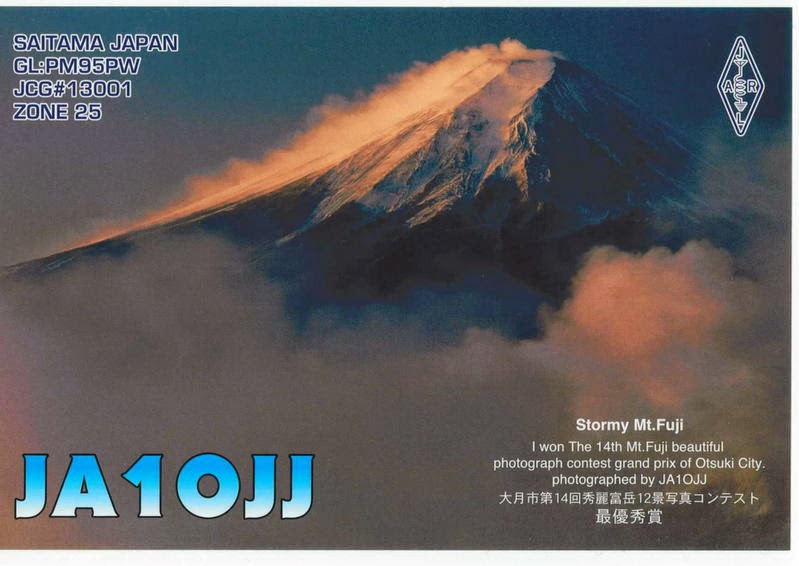
The solar flux index was only 151 this morning, but grey line conditions to Japan were very good. Yoshi, JA1OJJ, was booming in on 17 meters. We had a nice chat. He said I was 55. His 5 element quad helped a lot!
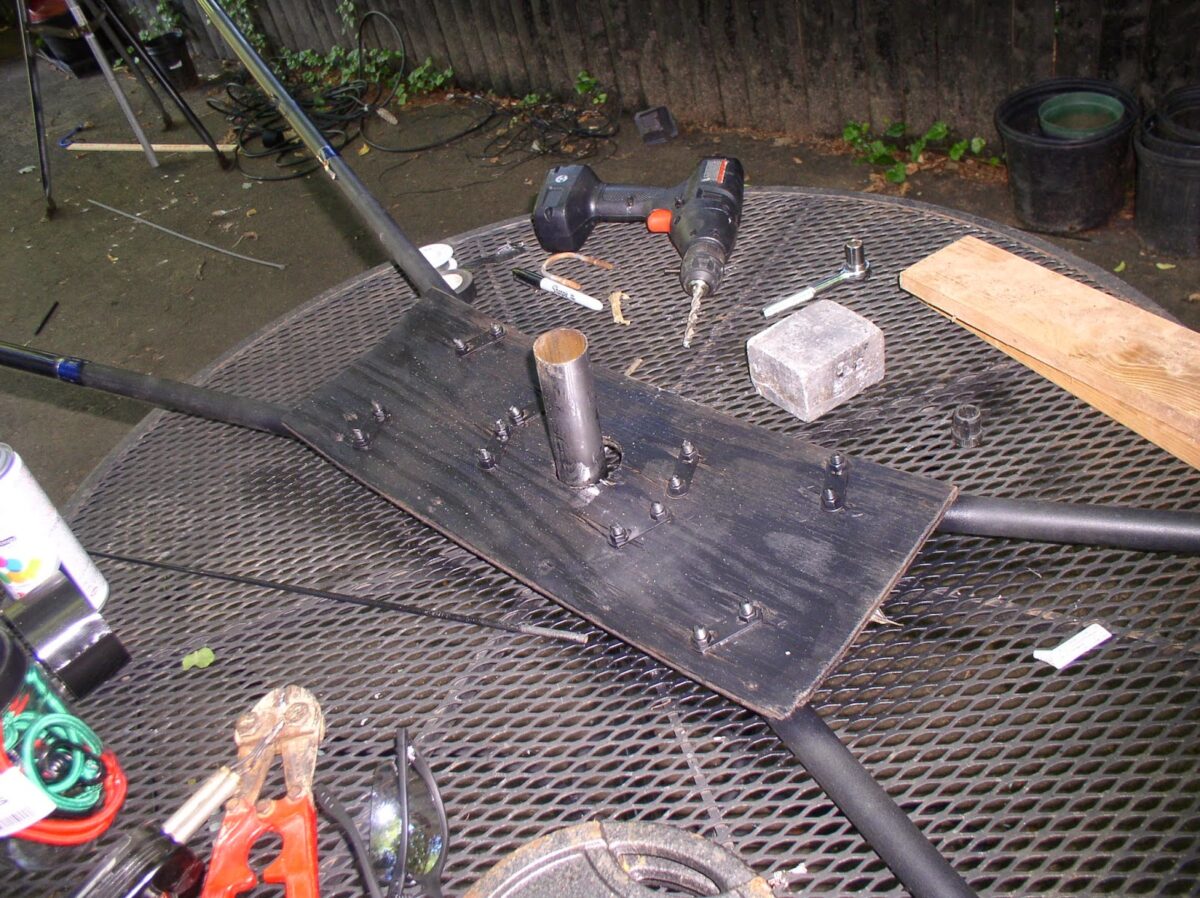
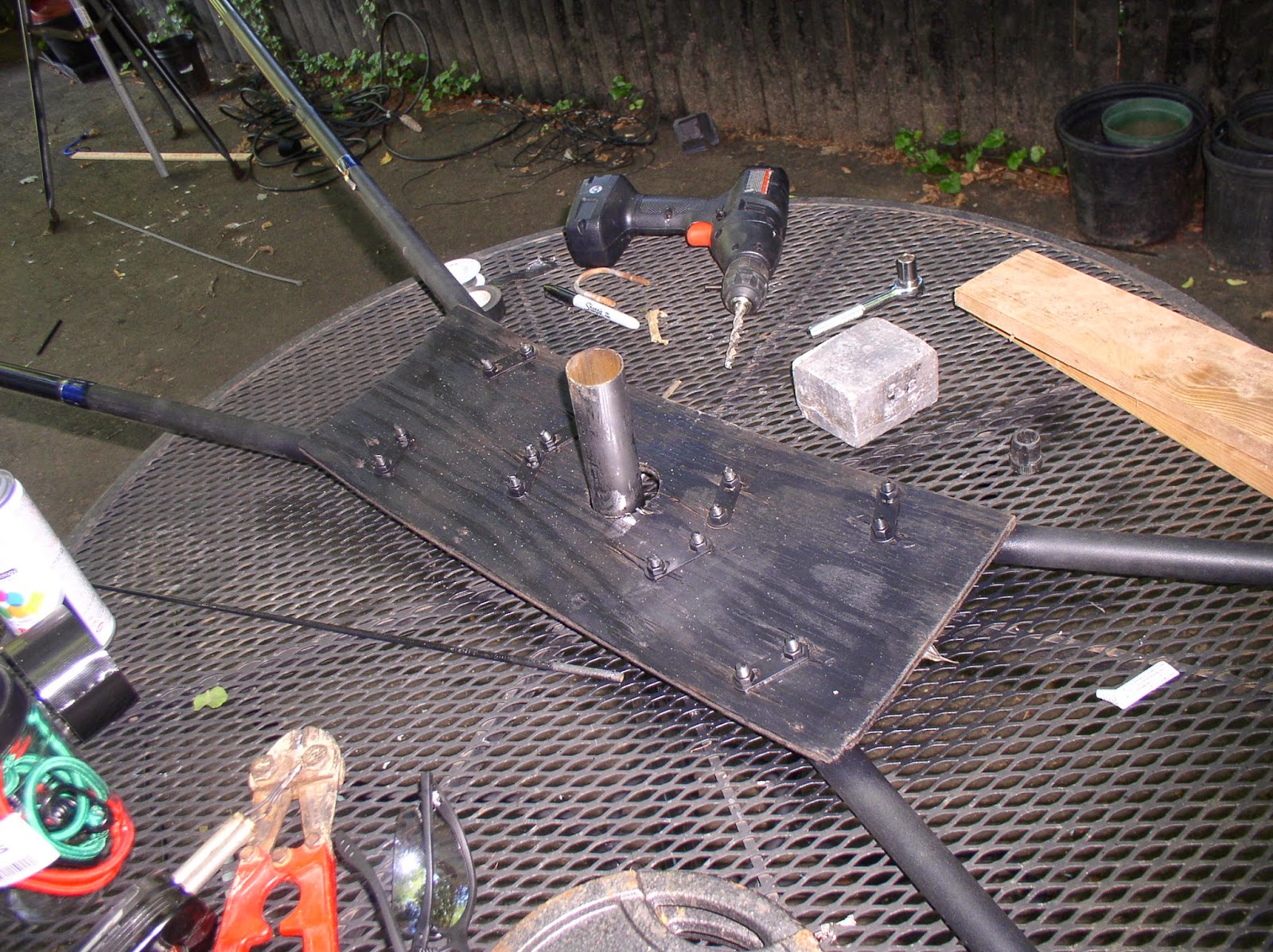
I’ve been put together a fishing pole MOXON antenna for 17 meters. It will be used with my 5 Watt BITX rig. I need something to spin it around. I know that many of the cheap TV rotators don’t hold up very well. I had one die quickly out in the Azores. There seems to be several brands out there, but the rotators and the control boxes look suspiciously similar.
Is there any brand out there that is more robust and reliable than rest?
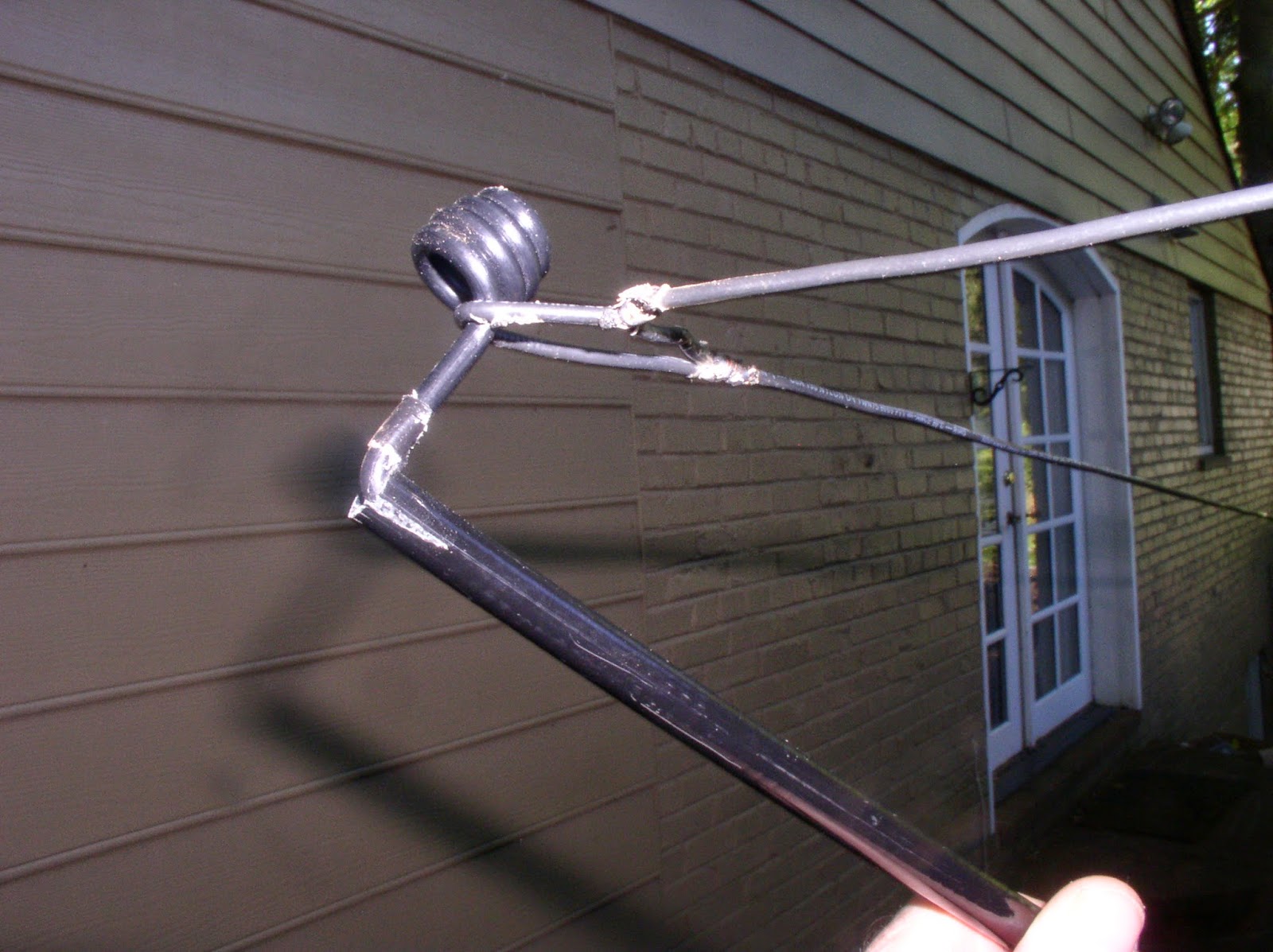
I came up with a pretty cool way of affixing the corners of the antenna elements to the fishing poles. That coil-like thing is the wire part of a bungee cord. It fits nicely into the end of the fiberglass pole.You have to be sure to get the pole length and the element dimensions properly proportioned, with a sufficient amount of bend in the poles.
Eduardo, EA3GHS, sent this to me. It looks like a wonderful bilateral SSB rig for 17 meters. They said they wanted a “daylight” rig (for a daytime band) because in Spain the religious pilgrims walk all day and are tired at night. Hence 17 for Los Peregrinos!
That’s what I have in mind. I ordered four fiberglass “crappie” poles yesterday. I have a tripod for the roof. What should I use to spin this thing around? A TV rotor is an obvious solution, but the last time I used one it didn’t hold up too well. There is always the Armstrong method… Here’s AE6AC’s site: http://www.moxonantennaproject.com/ae6ac/ae6ac.htm
I got tired of popping the hood and manually changing my VXO crystals. First I tried to switch the rocks using a rotary switch on the front panel, but I think the leads were too long and the output was kind of squirrely. So I dug around in the junk box and found a 12 volt double pole double throw relay. I put the crystal sockets across the two poles and ran leads from the armature terminals to the crystal terminals. I use the rotary switch to activate the relay. I cover about 41 kHz of the 17 meter band with the two crystals.
17 meters has been in great shape. On November 16 I had a very nice contact with Syd, ZS1TMJ in Glenwilliam, South Africa. That’s about 8000 miles on 5 watts SSB.
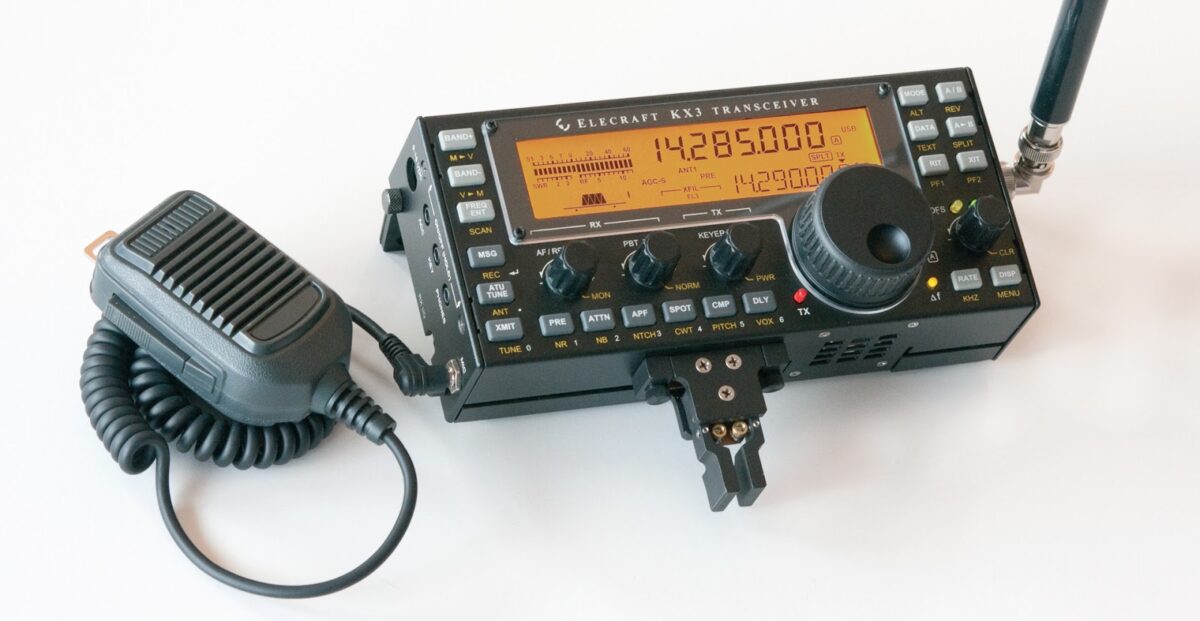
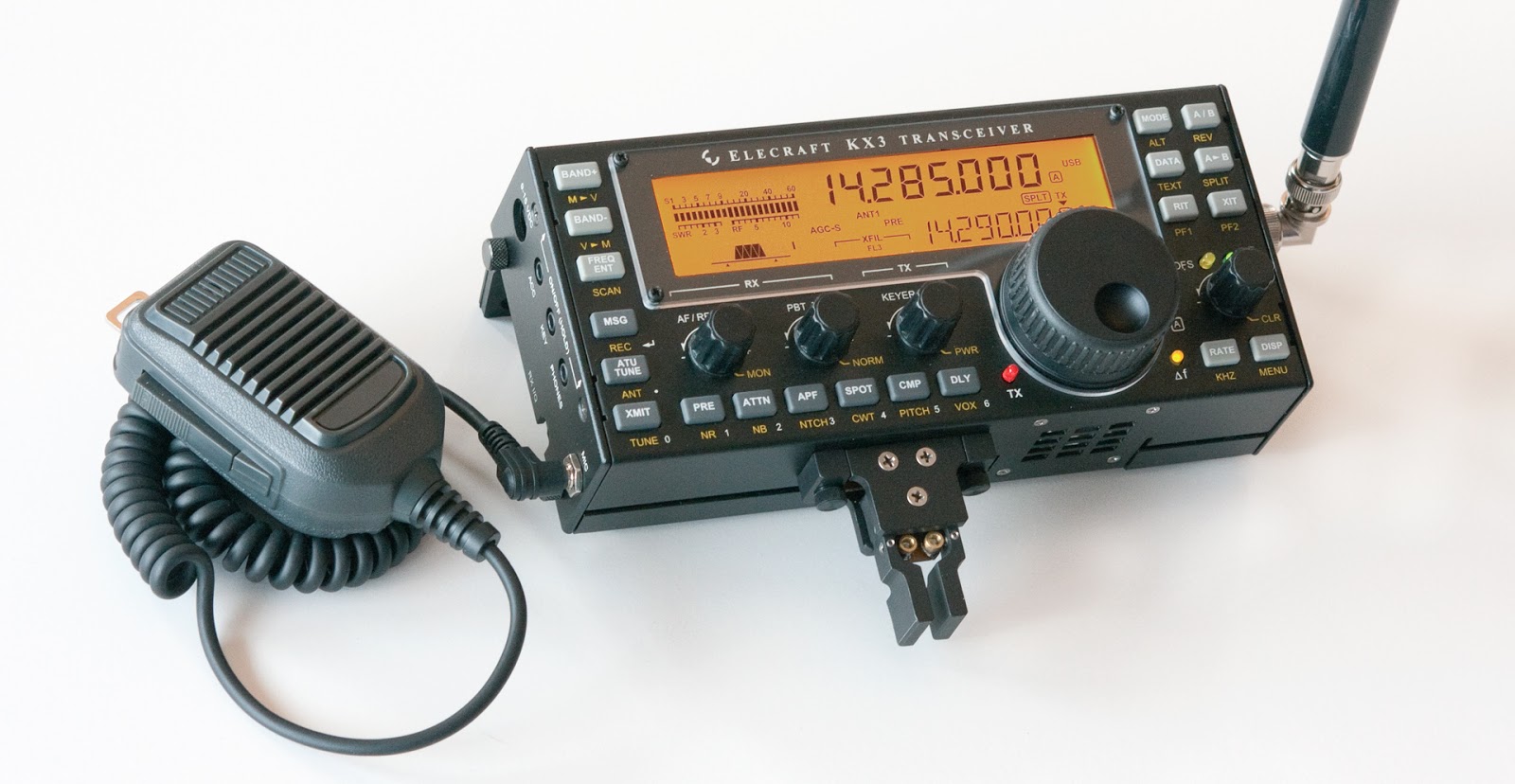
Kelly, WB0WQS, was trying out a new KX3 that his wife had given him as a present. The radio gods must like that low-power rig because, in what seems like a deliberate demonstration of the awesome power of QRP phone, Kelly’s first QSO was with another QRP operator: me! The sun was going down and taking 17 meters with it, but neither of us missed a word. We talked about SolderSmoke and our mutual friend, Jerry, NR5A — Kelly had known Jerry when they were teenage hams. Good luck with the new rig Kelly!