Author: William Meara
Mitch NK3H’s FB SolderSmoke Direct Conversion Receiver — “Incredibly satisfying!”
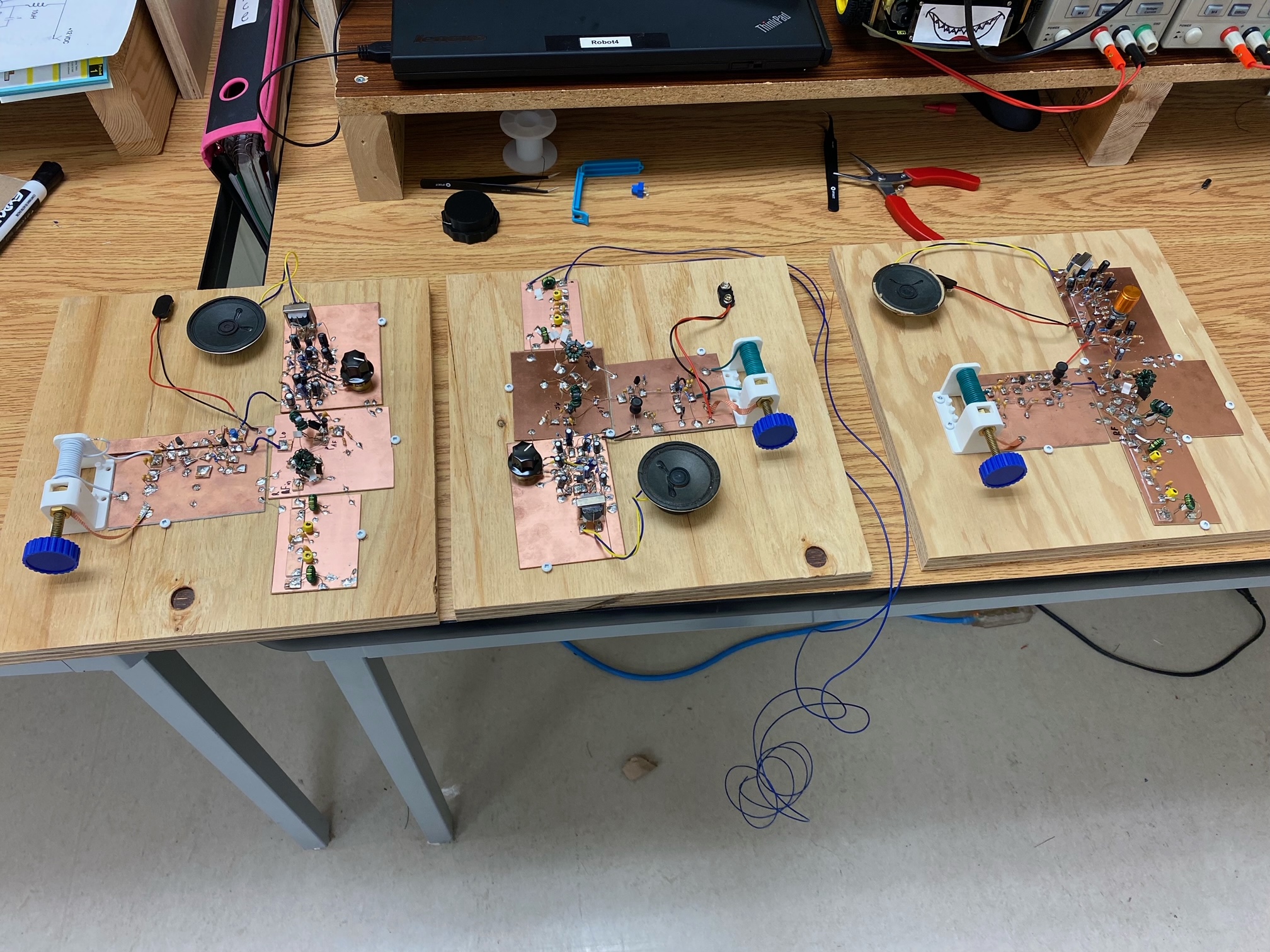
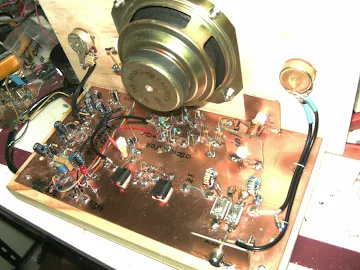
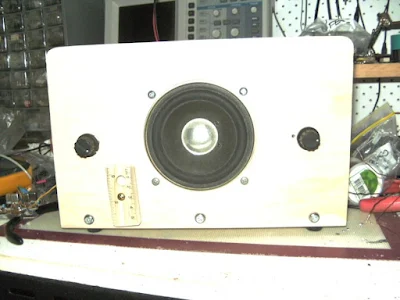
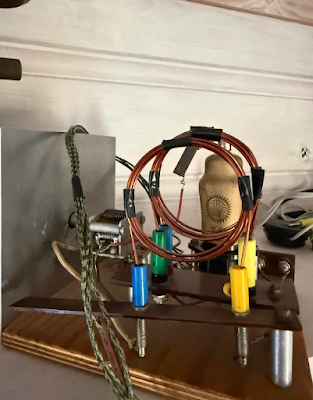
Wow, Mitch NK3H has built a really nice receiver. (He says it is not pretty, but those of us who have built one or who are in the process know that it looks great.) The SSB really sounds good also.
Mitch writes:
It’s not pretty but it works! Incredibly satisfying. In answer to the questions, (1) though I ‘d built a few small Manhattan style boards (e.g., Michigan Mighty Mite) this was more complicated. I’ve been using W1REX’s island cutter to create isolated areas on the copper clad board, rather than pasting on pieces of circuit board. But the islands are a little small for as many as four connections on one island, as in most of the transistor bases. Inevitably a component lead would inadvertently contact the ground plane and all bets were off. Tracking down the shorts was challenging. (2) Once I got to the audio amplifier board I carefully laid out all of the components before starting to solder. But as I finished each stage and was ready for the next, I always seemed to be missing a resistor or two. I’d search the desk and the floor — very frustrating. Turns out the speaker magnet was collecting and hiding the missing resistors. Lesson learned. (3) Next I’m hoping to build a transceiver. Still looking for the right project, probably a little more digital than this wonderful DCR.
Mitch obviously learned a lot during this project. I had similar experiences with pads on the same level as the surrounding board — I found that the 1 or 2 mm of elevation provided by the Manhattan pads prevented a lot of inadvertent shorts to ground. And I too “lost” (temporarily) a lot of components to the magnet in the speaker.
Good luck with the next projects Mitch. With the Michigan Mighty Mite and the DCR under your belt you are ready to go. Maybe a Double Sideband transmitter to go with the DCR? Or, as you said, perhaps something more digital. There is a lot of good ham experience with the Si5351 digital VFOs. Or maybe even an SDR rig.
Thanks Mitch. Congratulations and welcome to the Hall of Fame.
———————–
Join the discussion – SolderSmoke Discord Server:
Documentation on Hackaday:
https://hackaday.io/project/
SolderSmoke YouTube channel:
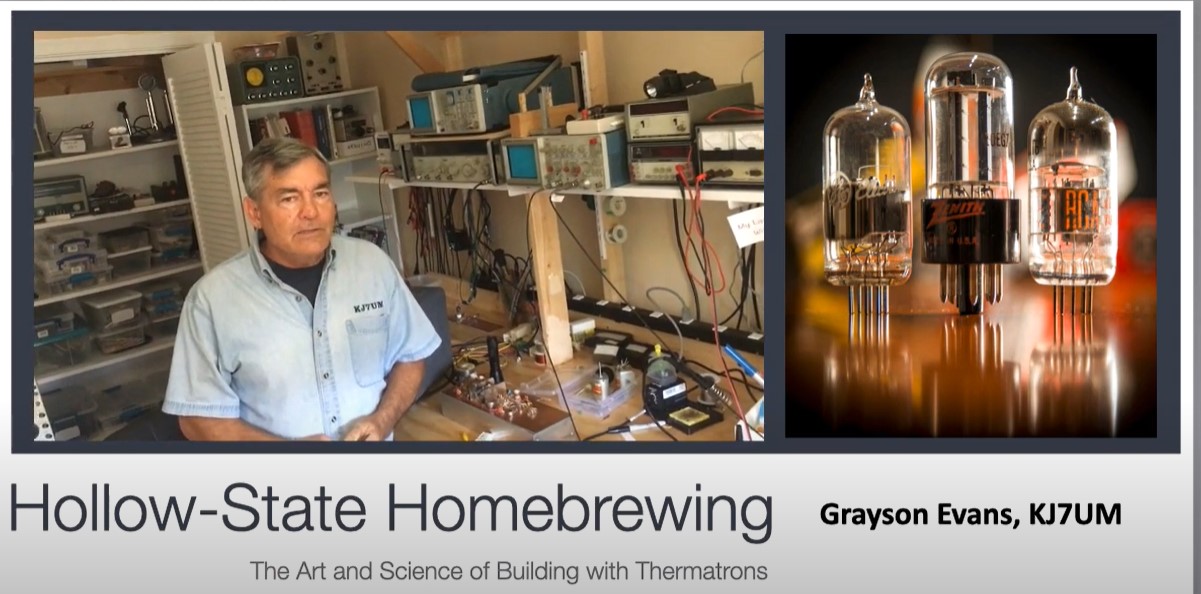
Grayson Evans KJ7UM Interview at Four Days in May at the Dayton Hamvention 2025
Bill K7WXW’s FB SolderSmoke Direct Conversion Receiver
Join the discussion – SolderSmoke Discord Server:
Documentation on Hackaday:
https://hackaday.io/project/
SolderSmoke YouTube channel:
Hall of Fame: The SolderSmoke Direct Conversion Receiver — 80 Completed Receivers, 7 Honorable Mentions, Built in 15 Countries — Many More Receivers Being Built.
Please let us know if you spot any errors, or if we have inadvertently missed anyone. Don’t worry about being late to the game — the challenge continues. All of the info is still available (see below).
So far 80 completed receivers, with 7 honorable mentions. Receivers built in 15 countries.
For more information on how you too can build the receiver:
Join the discussion – SolderSmoke Discord Server:
Documentation on Hackaday:
https://hackaday.io/project/
SolderSmoke YouTube channel:
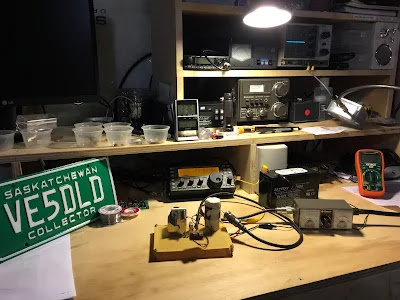
Daniel VE5DLD’s FOUR FB Saskatchewan SolderSmoke Direct Conversion Receivers
Join the discussion – SolderSmoke Discord Server:
Documentation on Hackaday:
https://hackaday.io/project/
SolderSmoke YouTube channel:
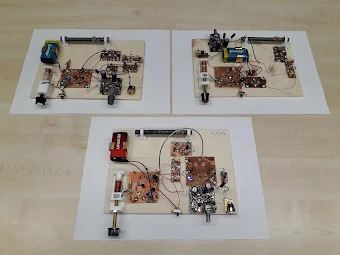
Honorable Mention: Andreas DL1AJG’s THREE SolderSmoke Direct Conversion Receivers for Biologists
Andreas DL1AJG was another of those intrepid hams who, in the dark of winter 2023 took up the SolderSmoke Direct Conversion Receiver Challenge in order to test our receiver (before we pushed high school kids to build it). Andreas came to the task with a lot of useful teaching experience. At the time he was an academic biologist and had been teaching a course called “Applied Electronics for Biologists.” See:
https://soldersmoke.blogspot.com/2022/08/can-biologist-fix-radio.html
Dear Bill,
Join the discussion – SolderSmoke Discord Server:
Documentation on Hackaday:
https://hackaday.io/project/
SolderSmoke YouTube channel:
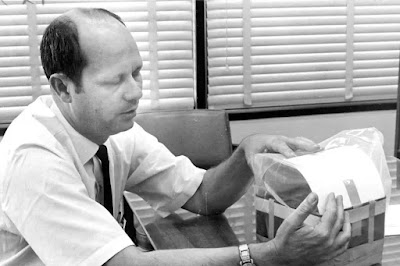
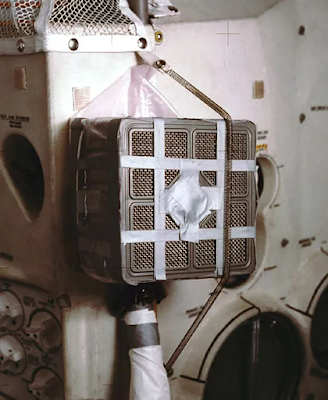
Duct Tape and a Hero of Apollo 13
Rick N3FJZ’s Early Completion of the SolderSmoke Direct Conversion Receiver Challenge
It was a cold day in early February 2023. Rick N3FJZ had responded to an early version of the SolderSmoke Direct Conversion Challenge:
I wrote:
Rick N3FJZ has completed his the direct conversion receiver that we will soon be building with students at a local high school. See video above.
Join the discussion – SolderSmoke Discord Server:
Documentation on Hackaday:
https://hackaday.io/project/
SolderSmoke YouTube channel:
Stephen VK2BLQ’s Very FB EARLY build of the SolderSmoke Direct Conversion Receiver
MIT’s Haystack Observatory and Dr. Herb Weiss
He spent the bulk of his career developing radar when there was none in the United States. He joined the Radiation Lab at MIT, which was just being established to support the war effort during World War II, designing radars for ships and aircraft. In 1942, when England was in the throes of its air war with the Nazis, Herb went to England and installed radar in planes with a novel navigation system that he and a team had designed for the Royal Air Force. He later spent three years at the Los Alamos, New Mexico, laboratory improving instruments for the A-bomb. After seeing the need for a continental defense network against the Soviet missile threat, he returned to MIT to build it. If not for Herb, there also likely would be no MIT Haystack Observatory, a pioneering radio science and research facility.”
Okay. I was born in New Jersey, and my first acquaintance with electronics was about the age of 12 or 13. We had a battery-operated radio, which didn’t work, and I asked around about what do we do about it. They referred me to a man two blocks away, who was a radio ham it turned out. So I carried this monster with the big horn and, I guess, the dog sitting on the speaker to his house. We went down in the basement, and I was just fascinated. I was hooked right then and there. A year later I became a radio ham at the age of 13, 14 and literally have been in the field ever since, until I retired. I was fortunate enough to go to MIT as an undergraduate, and most of the people I ran into of that vintage didn’t really have a hands-on feeling for electronics. By the time I got to MIT, I had built all kinds of things, including a TV set. Then it turned out that NBC was just trying to get their TV set on the air in New York on top of the Empire State Building.”
—
Phil Erickson
Paul 9V1/KM7ABZ’s FB SINGAPORE SolderSmoke Direct Conversion Receiver
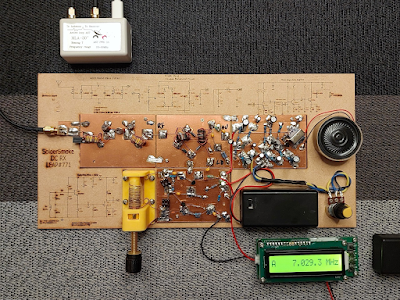
I used the laser cutters at our local library to cut and etch a custom base. The library is a great resource: it’s also where I printed the PTO former.
To get on the air from my apartment in Singapore, I’m using an MLA-30 Active Loop antenna, with a PLJ-1601 frequency counter attached to the PTO to take some of the guesswork out of tuning.
KM7ABZ
from 9V1 landJoin the discussion – SolderSmoke Discord Server:
Documentation on Hackaday:
https://hackaday.io/project/
SolderSmoke YouTube channel:
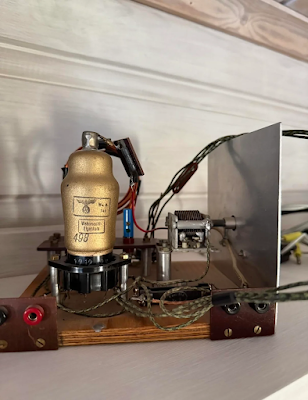
WWII Homebrew In Norway
The Computer Hardware of the Apollo Program
On the importance of taking a break.
Thomas K4SWL has a good post about the importance of taking a break from radio. Following up on this, I noted that “taking a break” is often a good way of finding a solution to a difficult problem. I noted that I have confirmed this — it has worked for me. Pete Juliano N6QW recently announced that he is taking a break from the MHST project. That is a good idea. A solution will likely emerge.
I noted that there is some evidence backing up our suspicion about the benefits of breaks. I earlier shared some comments from Harry Cliff’s excellent book, “How to make an Apple Pie from Scratch.”
https://soldersmoke.blogspot.com/2024/04/cloud-chamber-finale.html
Harry also wrote about the usefullness of taking breaks. In 1917 Ernest Rutherford was having trouble understanding the presence of some hydrogen nuclei. Harry writes:
“Again, he was forced to put his work on hiatus to go on a mission to the United States in the summer of 1917, but it turned out to be one of those useful breaks when stepping away from a problem lets your mind slowly work out the problem in the background. When Rutherford got back to the lab in September he had the answer…”
There are many other examples.
So, if you get stuck, take a break!
Peter Parker VK3YE finds a Homebrew Double Sideband Transceiver at an Australian Hamfest
Doug AA0MS’s FB SolderSmoke Direct Conversion Receiver: “This project has been a hoot!”
Join the discussion – SolderSmoke Discord Server:
Documentation on Hackaday:
https://hackaday.io/project/
SolderSmoke YouTube channel:
Ramakrishnan VU2JXN’s FB SolderSmoke Direct Conversion Receiver: “Extremely thrilled! Hooked!”
This is a really important Hall of Fame entry for us. This is our first completed SolderSmoke Direct Conversion Receiver from India (more will come).
Most importantly, this receiver was built by our good friend Ramakrishnan VU2JXN (ex VU3RDD). Ramakrishnan goes way back in SolderSmoke history. He was the one who first suggested (in 2006!) that our podcast needed a blog to go with it. This was the origin of the SolderSmoke Daily News. A short time later we announced the birth of Ramakrishnan’s daughter. That same daughter now has her ham license and will build a second receiver with her dad.
The roots of this receiver are deep in India. When Dean and I first went to the local high school to talk about ham radio support, I carried with me a Direct Conversion Receiver inspired by Farhan VU2ESE. In fact, that receiver had a picture of Farhan and quotes from him taped to the wooden base. When Dean and I designed the receiver that we tried to build with the High School kids, we used an oscillator based on the DC receiver that Farhan was building with youngsters at Indian girl’s schools. That is the receiver design that we are using in this SolderSmoke Challenge.
Ramakrishnan is in Bangalore now, which is where he built this receiver. Ashish N6ASD is also there now, and is building a receiver.
Ramakrishnan writes:
Needless to say, you folks convinced me to get back into homebrew
and you have hooked me into it with this project.
Again, couldn’t turn off from it even though I am at work! The bug has
caught me.
Join the discussion – SolderSmoke Discord Server:
Documentation on Hackaday:
https://hackaday.io/project/
SolderSmoke YouTube channel:
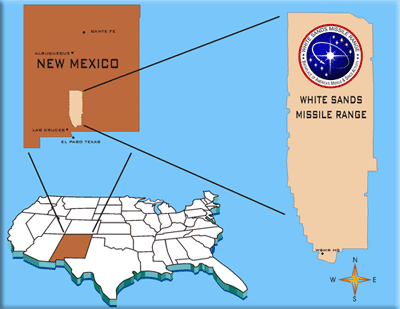
Wow! DOVAD and Doppler at White Sands Missile Range
EI7GL has a really interesting blog post about a VHF system used at White Sands to accurately track early rocket tests: https://ei7gl.blogspot.com/2025/05/369-mhz-doppler-radar-antenna-at-white.html
He has nice picture of the antenna. The plaque has the interesting info:
The plaque on display reads as follows…
“36.9 Megahertz Helix Antenna Doppler Velocity and Position (DOVAP)
Reference Transmitter Antenna
Developed during World War II by the Germans as part of a V-2 guidance and control system, DOVAP traced the course of a rocket using the Doppler Effect caused by a target moving relative to a ground transmitter and receiving stations.
Unlike radar, Dovap did not allow scientists to “see” the rocket on a screen. Instead, it sent up radio waves, which were received and rebroadcast back to earth by the rocket. The returned waves combined with the original ground broadcast and produced a musical tone which varied with the rocket’s speed – the faster the rocket, the higher the pitch.
DOVAP data was extremely accurate: it could place a rocket’s position at 100 miles up within 50 feet. It could collect data at the extreme altitudes of 100 to 300 miles. Dovap’s disadvantage was that it took 3 to 4 weeks to reduce the data.
The antenna is a helix because of its physical and electronic characteristics. A helix is simple to construct and operate, provides necessary signal gain and directivity, and can be operated in several modes or polarizations.
The DOVAP system provided trajectory data and ground guidance for most of the early rocket systems: Corporal, Sergeant, Honest John, Little John, Redstone, and Aerobee Upper Atmosphere programs.
This particular antenna was built in the mid-1960s near C Station. Like much of the early instrumentation used here, it was designed and built at White Sands Missile Range.
Erected by White Sands Missile Range Museum. (Marker Number 06.099.)”