Our book: “SolderSmoke — Global Adventures in Wireless Electronics” http://soldersmoke.com/book.htm Our coffee mugs, T-Shirts, bumper stickers: http://www.cafepress.com/SolderSmoke Our Book Store: http://astore.amazon.com/contracross-20
SolderSmoke Daily News — Ham Radio Blog
Serving the worldwide community of radio-electronic homebrewers. Providing blog support to the SolderSmoke podcast: http://soldersmoke.com
Our book: “SolderSmoke — Global Adventures in Wireless Electronics” http://soldersmoke.com/book.htm Our coffee mugs, T-Shirts, bumper stickers: http://www.cafepress.com/SolderSmoke Our Book Store: http://astore.amazon.com/contracross-20
I think the really cool thing about this is the “self echo.” Listen carefully when the operator in the video turns it over to the G station. At first I thought they were doubling, or perhaps another station was on frequency. But then I realized that when he releases the push to talk, the first signal he hears is his own signal, bouncing back from the Moon! c is real!
Our book: “SolderSmoke — Global Adventures in Wireless Electronics” http://soldersmoke.com/book.htm Our coffee mugs, T-Shirts, bumper stickers: http://www.cafepress.com/SolderSmoke Our Book Store: http://astore.amazon.com/contracross-20
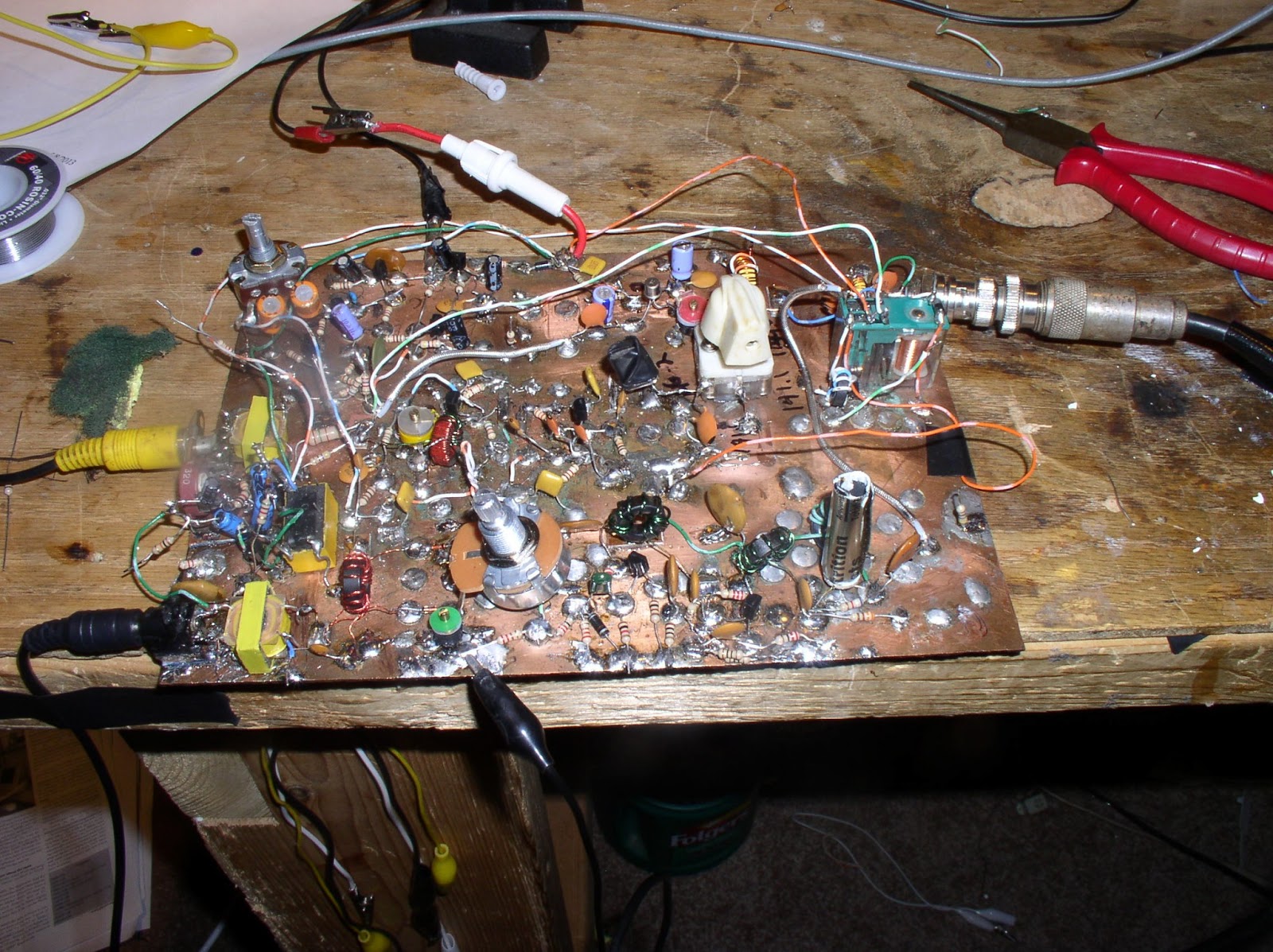
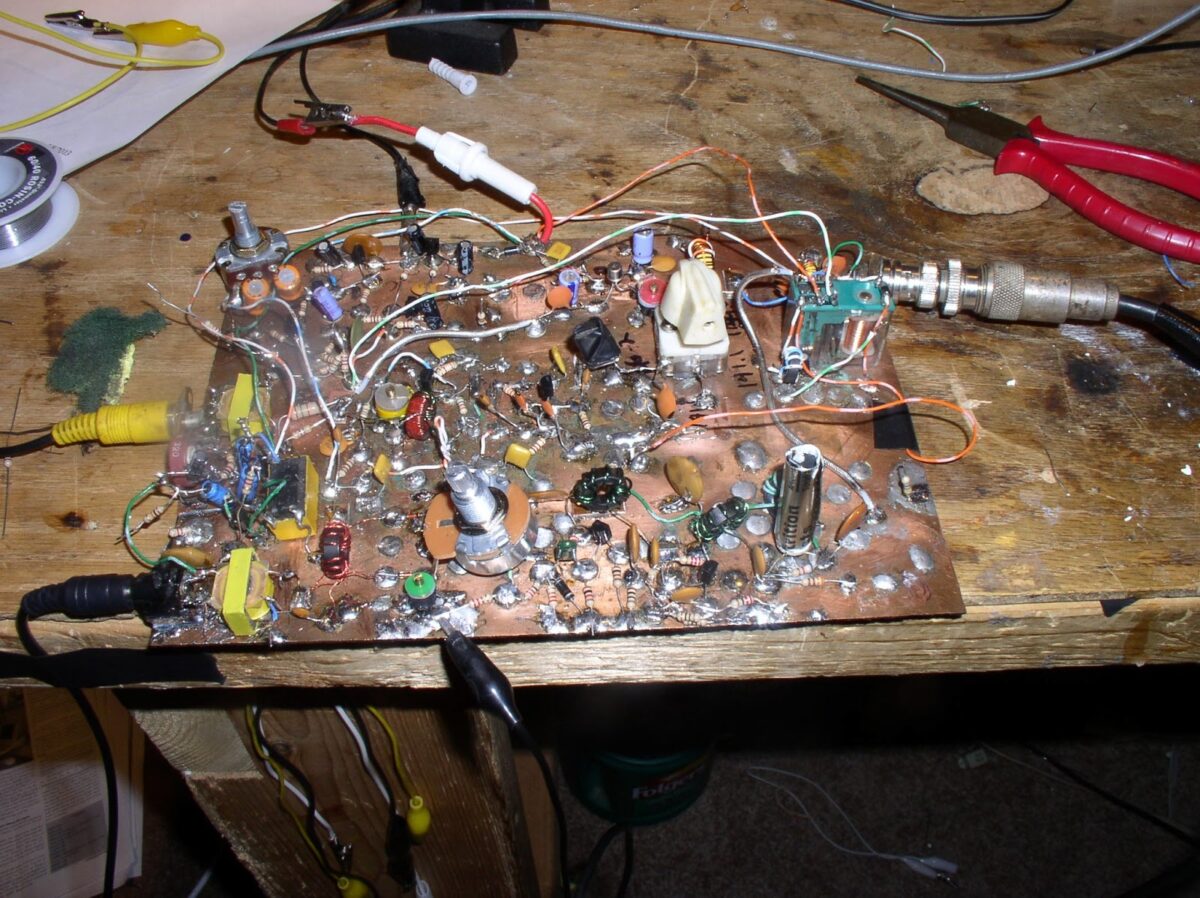
It’s ugly but it gets you there. I finally got the little 30 meter DSB/Direct Conversion transceiver that I built in Rome working on PSK-31 and JT-65. It features a VXO circuit from George Dobbs, an AF amplifier designed by Roger Hayward, and an RF amp chain designed by Peter Parker. It produces about 1 watt of RF. At first I was manually switching the rig from transmit to receive, but this got old real fast, so I built a little VOX circuit — the AF from the sound card does the switching. Last night I fired it up on PSK-31 and stations were calling me (including one fellow in Cuba). Then I went to JT-65 and had a complete QSO with KT1B. Another this morning with K0ASK. It is kind of fun to combine the simple (this rig) with the complex (the computer and these digi modes). I find that I can work both JT65 and PSK 31 while keeping the VXO at 10.139 MHz.
Our book: “SolderSmoke — Global Adventures in Wireless Electronics” http://soldersmoke.com/book.htm Our coffee mugs, T-Shirts, bumper stickers: http://www.cafepress.com/SolderSmoke Our Book Store: http://astore.amazon.com/contracross-20
Our book: “SolderSmoke — Global Adventures in Wireless Electronics” http://soldersmoke.com/book.htm Our coffee mugs, T-Shirts, bumper stickers: http://www.cafepress.com/SolderSmoke Our Book Store: http://astore.amazon.com/contracross-20
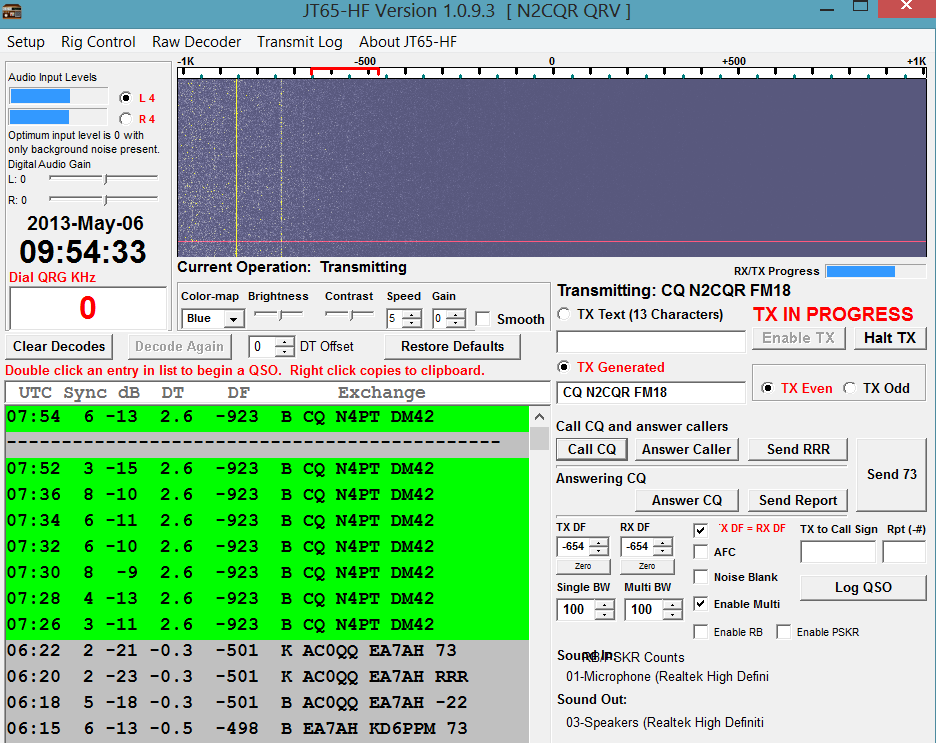
My six dollar DDS board hasn’t arrived yet, so this weekend I worked on the re-build of the 30 meter Direct Conversion/DSB transmitter that I built in Rome (originally for WSPR use). I was hoping to use this rig to make at least a few PSK-31 contacts. But I started seeing these strange looking sigs in the waterfall. I found out they are JT65 (JT for Joe Taylor). So I downloaded the program JT65-HF. I got the receiver going very quickly (it is a 40675 dual gate MOSFET followed by the audio amplifier out of Roger Hayward’s Ugly Weekender RX). The transmitter is just a two diode singly balanced modulator followed by the RF chain from Peter Parker’s Beach 40 Rig. QSOs seem imminent.
Our book: “SolderSmoke — Global Adventures in Wireless Electronics” http://soldersmoke.com/book.htm Our coffee mugs, T-Shirts, bumper stickers: http://www.cafepress.com/SolderSmoke Our Book Store: http://astore.amazon.com/contracross-20
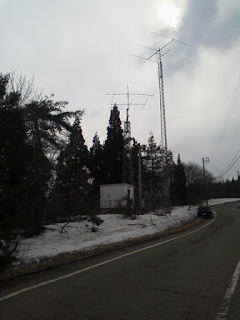
I was at the workbench this morning, working on a 30 meter DC/DSB transceiver. I had the Barebones superhet tuned to white noise on 17 meters. Then I heard a strong CQ that sounded like DX. It was Ely, JH0JDV. He was the only signal on the band. We had a very nice contact, no problems at all. I was running my normal 10 watts to a dipole. Afterwards I Googled him. Wow, he has a REAL radio shack! FB Ely!
Our book: “SolderSmoke — Global Adventures in Wireless Electronics” http://soldersmoke.com/book.htm Our coffee mugs, T-Shirts, bumper stickers: http://www.cafepress.com/SolderSmoke Our Book Store: http://astore.amazon.com/contracross-20
Our book: “SolderSmoke — Global Adventures in Wireless Electronics” http://soldersmoke.com/book.htm Our coffee mugs, T-Shirts, bumper stickers: http://www.cafepress.com/SolderSmoke Our Book Store: http://astore.amazon.com/contracross-20
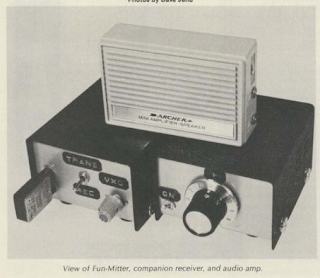
Last night I called CQ on 20 CW (with my Arduino keying the homebrew transmitter!) and was answered by Mark, WA0RBR. I Googled the call and found that Mark is quite a homebrewer. He wrote a nice series of articles for 73 magazine in the early 80’s. Here they are:
http://mikeyancey.com/73mag/listauthor.php?Author=WA0RBR
Our book: “SolderSmoke — Global Adventures in Wireless Electronics” http://soldersmoke.com/book.htm Our coffee mugs, T-Shirts, bumper stickers: http://www.cafepress.com/SolderSmoke Our Book Store: http://astore.amazon.com/contracross-20

http://www.lulu.com/shop/grayson-evans/hollow-state-design/paperback/product-20987562.html

http://www.lulu.com/spotlight/soldersmoke

Our book: “SolderSmoke — Global Adventures in Wireless Electronics” http://soldersmoke.com/book.htm Our coffee mugs, T-Shirts, bumper stickers: http://www.cafepress.com/SolderSmoke Our Book Store: http://astore.amazon.com/contracross-20
http://www.economist.com/node/21576780
Our book: “SolderSmoke — Global Adventures in Wireless Electronics” http://soldersmoke.com/book.htm Our coffee mugs, T-Shirts, bumper stickers: http://www.cafepress.com/SolderSmoke Our Book Store: http://astore.amazon.com/contracross-20

From a message from Chuck Adams, K7QO, to the QRP-Tech list:
OK, the rush is on. I figured out what I want to do and now
the race is on to use up over 1,000,000 parts before the
estate sale. :0)
And you know I have to show this to every one, whether any
one uses it or not is up to them. I fell into the following MUPPET
technique through trial and error.
Manhattan Construction: Jim, K8IQY, 1998 winning of Dayton contest
started it.
<http://www.k8iqy.com>
<http://wdv.com/Electronics/Fab/ManhattanConstructionTechniques.pdf>
and then there is the variation on this using the ‘Island cutter’ or
a special
diamond circular shaped drill for making pads. Generates hazard
dust and
I have yet to see some one that can make the same pad every time. I
don’t know of a tutorial online that shows using a drill stop to get
uniformity. IMHO.
Ugly Construction:
<http://www.qrp.pops.net/ugly.asp>
<http://www.arrl.org/files/file/Product%20Notes/chapter_1.pdf>
<http://www.sm0vpo.com/blocks/deadbug_0.htm>
<http://www.alg.myzen.co.uk/radio/qrp/ucw.htm>
and about 16,000,000 other sites with a Google search engine.
Professional Construction:
<http://www.youtube.com/watch?v=xm9vW2I-41g>
And using all of the above I’ll call the ‘MUPPET Construction’ for
Manhattan-Ugly-Professional Placement Experimental Technique
for construction of electronic circuits.
Now, unless you have been hiding in a cave for about 20 years,
all of the above should be familiar to you, except MUPPET. For
lack of a better name, it is the term I will use for collecting all
the techniques together to build something.
OK. Going to the known techniques. What is it that you like and
don’t like? How about expense to get started, other than the parts?
Ugly. Requires a supply of high valued >1Mohm resistors for standoffs.
But is is quick and easy. Some times difficult to debug for some else
that did not build the circuit. What is this gismo here for? …
Manhattan. Nasty super glue and doing the layout. Harbor Freight or
similar punch, some people have difficulty finding. Takes time to place
the pads and let them set.
PCB. Layout time. AND, something no one bothered to mention.
Drilling a lot of holes and getting them all centered is a royal pain.
——————————————–
You still are going to be out some expense for equipment. For MUPPET
you will need a PCB shear/cutter and some cheap items for doing
PCB etching. Don’t give me grief about the muriatic acid. Just
kill it with backing soda when you are done and flush.
Here is an example out of the gate. Just a simple VXO test fixture
to determine why I could not get constant startup on a VXO in a project.
<http://www.k7qo.net/p4110006.jpg>
Then I got excited about not having to drill holes, I can do Manhattan
layouts and as you will see I magically came across a tool that costs
very little and makes things entirely repeatable as many times as you
want.
For the Manhattan projects and my stuff spread around the Internet
like bread crumbs in a fairy tale, I constantly get emails about how
I laid the project out and what software did I use and how I wrote it.
This new technique uses expressPCB for the layout. I just the layout
on the top layer. ExpressPCB, for economical reasons, does not
print out the top layer so that you can easily use the toner transfer
method to make a PCB.
Here is how I get around that limitation. I generate the PCB and
then ‘print’ it out, but not to my Samsung laser printer. I print it to
a ‘PDF’ printer, i.e. the image is sent to a file and converted in the
process to PDF format. I can now manipulate that to ‘reflect it’
about the vertical to get a reverse image, like you do for iron on
shirts, in PDF format and then print that. So now I can do double
sided boards if I ever want to. The reversal is done using a package
called PDFjam for linux and is most likely available for windows.
OK. Here is the most valuable tool for PCB layouts.
<http://www.k7qo.net/p4120009.jpg>
Using the vector board I get exact distances desired between
component legs and when I bend them they will sit FLAT on the
surface of the PCB. And before removing the component from
the board, I cut the leads sticking through the other side to get
the exact same length every time. As it turns out, it is about
0.1″, the same and the standard IC pin spacing and the same
snap points in ExpressPCB. I use 0.1″ SMT pad sizes for the
solder points and 0.2″ spacing in most cases so that I get
the neatest placement possible.
I can use the vector board edge to bend resistors to get
vertical placement on PCBs in kits and here. Each one
will look almost exactly the same. Try it. You’ll like it.
OK, here is a XTAL OSC that I built up in less than an hour,
from start to finish. Yes, you can do it quicker. But I wanted
to able to reproduce the circuits numerous times, if needed,
and now I can easily share them without having to go through
hoops to get the same layout to you or any one else.
<http://www.k7qo.net/p4120007.jpg> Board before populating.
<http://www.k7qo.net/p4120008.jpg> See how neat the transistor sits?
<http://www.k7qo.net/p4120013.jpg> XTAL OSC complete.
<http://www.k7qo.net/p4120014.jpg> Running 11.040MHz crystal.
Side effects. You can do, on the PCB plane on the sides:
Ugly mods and add ons or replacements for larger projects.
Manhattan pad placement for mods, add-ons, etc.
Note. With judicious placement of text, you can document
parts placement for help in building and later showing
someone where you put things and why. Also will help
in debugging something years later.
And just as an experiment. I promise not to cheat.
I will, at 2200UTC, right after posting this email, I will go back
to the lab. I will not eat, nor will I rest until I have done the following
two projects from scratch.
1. Project 001. The HP 8640jr project.
2. Project 004. The G3UUR xtal osc and parameter fixture from QQ.
I want to do this and then show-and-tell the items at tomorrows
flea market/hamfest at DeVry Institute here in PHX AZ and the
AZ QRP luncheon just down the street at the burger place.
FYI and enjoy,
chuck, k7qo (the lab rat #2, since #1 is already taken in NH) 🙂
Our book: “SolderSmoke — Global Adventures in Wireless Electronics” http://soldersmoke.com/book.htm Our coffee mugs, T-Shirts, bumper stickers: http://www.cafepress.com/SolderSmoke Our Book Store: http://astore.amazon.com/contracross-20
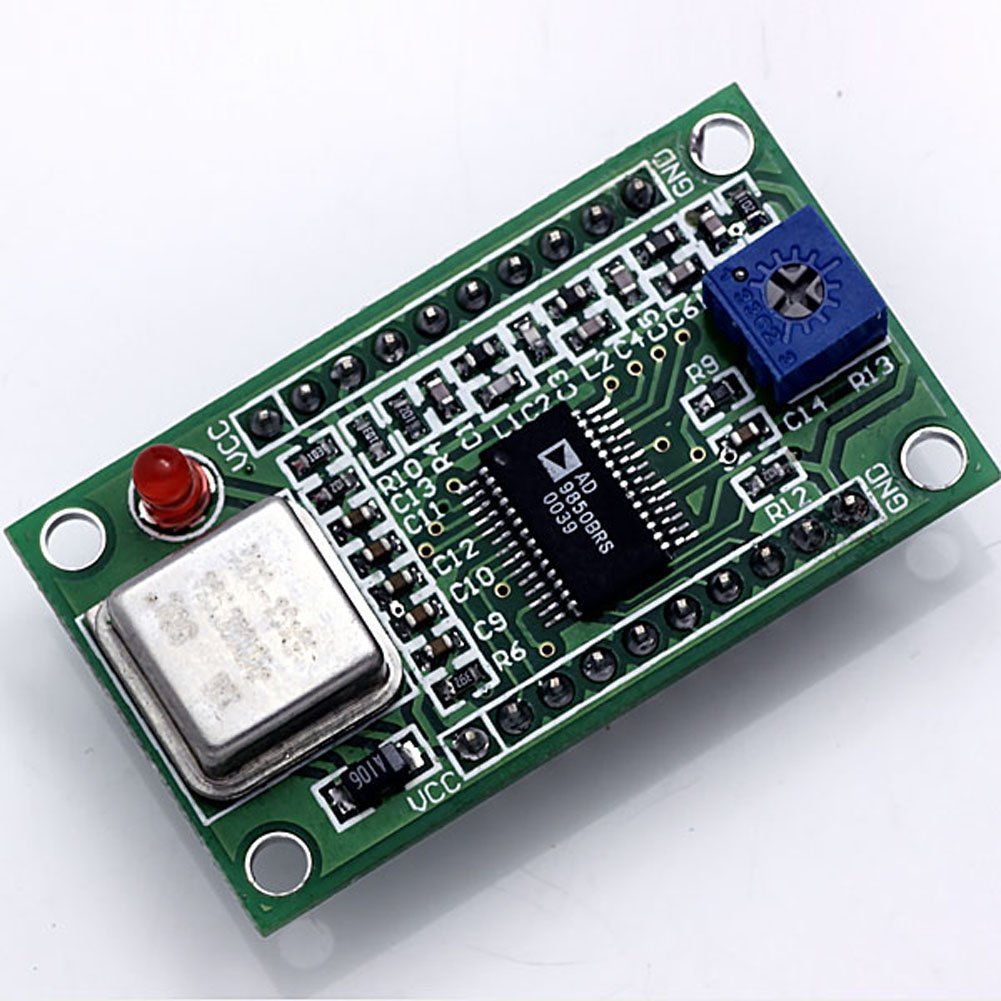
I just bought one of these. I hope to hook it up to an Arduino and turn it into a VFO. Or a signal generator. Six bucks!
http://www.amazon.com/dp/B009I7DR7E/ref=pe_175190_21431760_3p_M3T1_ST1_dp_1
Our book: “SolderSmoke — Global Adventures in Wireless Electronics” http://soldersmoke.com/book.htm Our coffee mugs, T-Shirts, bumper stickers: http://www.cafepress.com/SolderSmoke Our Book Store: http://astore.amazon.com/contracross-20
A few years ago Alan, VK2ZAY, showed Billy and me how to make a very simple DC motor. This one looks even simpler. I’m guessing that the bottom of the coil is making intermittent contact, setting up flux lines that get torqued by the magnets’ field.
Our book: “SolderSmoke — Global Adventures in Wireless Electronics” http://soldersmoke.com/book.htm Our coffee mugs, T-Shirts, bumper stickers: http://www.cafepress.com/SolderSmoke Our Book Store: http://astore.amazon.com/contracross-20

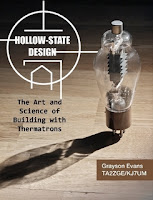
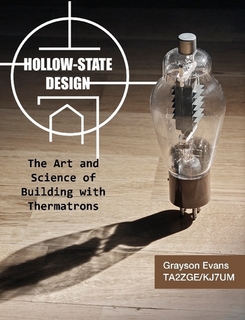
Our friend Grayson’s book about hollow-state radio is now available. It looks like a great addition to the radio art. Available from Lulu:
http://www.lulu.com/shop/grayson-evans/hollow-state-design/paperback/product-20987562.html
Our book: “SolderSmoke — Global Adventures in Wireless Electronics” http://soldersmoke.com/book.htm Our coffee mugs, T-Shirts, bumper stickers: http://www.cafepress.com/SolderSmoke Our Book Store: http://astore.amazon.com/contracross-20

Are you a super fan of STAR WARS, STAR TREK, GAME OF THRONES, LORD OF THE RINGS, or BATTLESTAR GALACTICA? Are you a GAMER who owns every console and maxes out trophies and achievements? Do you have an outrageous collection of TOYS and/or COMIC BOOKS? Are you passionate about MATHEMATICS, PHYSICS, or BIOLOGY? Do you build ROBOTS or PROGRAMS for fun? Are you obsessed with SUPER HEROES? Are you a D&D or WoW fanatic? Do you love everything SCI-FI? Are you ARDUINO proficient? Do you know at least 100 digits of Pi?Is your IQ at least two standard deviation above the mean? Do you consider yourself a GEEK or a NERD?
Submit a tape and possibly win 100K.
Our book: “SolderSmoke — Global Adventures in Wireless Electronics” http://soldersmoke.com/book.htm Our coffee mugs, T-Shirts, bumper stickers: http://www.cafepress.com/SolderSmoke Our Book Store: http://astore.amazon.com/contracross-20
Mike, KL7R, was a fan of McGyver. Mike would have liked this:
http://blog.makezine.com/2013/04/22/5-4-3-2-1-things-about-lee-zlotoff/
Our book: “SolderSmoke — Global Adventures in Wireless Electronics” http://soldersmoke.com/book.htm Our coffee mugs, T-Shirts, bumper stickers: http://www.cafepress.com/SolderSmoke Our Book Store: http://astore.amazon.com/contracross-20
Take a look at Michael’s Razor Rig, made from parts salvaged from his electric razor. I was thinking that perhaps on the receive side a fox-hole receiver made with a rusty Gillette blade would fit in nicely with the shaving theme. Very glad to see the AA1TJ blog getting more active.
http://aa1tj.blogspot.com/2013/04/talking-to-france-via-my-electric-razor.html
Our book: “SolderSmoke — Global Adventures in Wireless Electronics” http://soldersmoke.com/book.htm Our coffee mugs, T-Shirts, bumper stickers: http://www.cafepress.com/SolderSmoke Our Book Store: http://astore.amazon.com/contracross-20
Our book: “SolderSmoke — Global Adventures in Wireless Electronics” http://soldersmoke.com/book.htm Our coffee mugs, T-Shirts, bumper stickers: http://www.cafepress.com/SolderSmoke Our Book Store: http://astore.amazon.com/contracross-20
Our book: “SolderSmoke — Global Adventures in Wireless Electronics” http://soldersmoke.com/book.htm Our coffee mugs, T-Shirts, bumper stickers: http://www.cafepress.com/SolderSmoke Our Book Store: http://astore.amazon.com/contracross-20

Anyhow I had finished programming and tuning a large batch of radios and today I was making my rounds to deliver them to the various offices. My route was from Bozeman (where my shop is) to West Yellowstone (where I used to jump out of) … through the North side of Yellowstone Park to Gardiner), then following the Yellowstone river north up the Paradise Valley (where I grew up as kid) to Livingston (where I live now). I must say it’s an absolutely beautiful drive that took me to 6 of my delivery points. This time of year Yellowstone Park is closed to normal traffic, but official Gov’t use is permitted, so you see very few other vehicles, it’s a pretty neat time of year to be in the Park.
Anyhow 73’s,